

Prevalence of intimate partner violence and abuse and associated factors among women enrolled into a cluster randomised trial in northwestern Tanzania
Open accessThe DOI matches its Crossref record; 31 of the 31 references it cites were found in a registry or an index.
Abstract
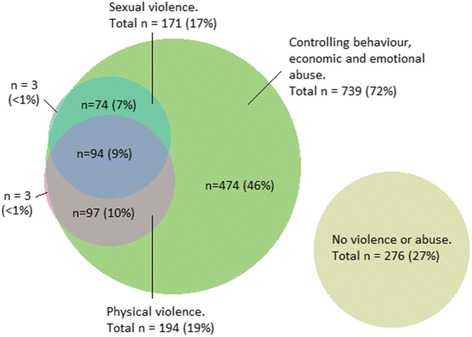
BACKGROUND: Intimate partner violence (IPV) is recognised as an important public health and social problem, with far reaching consequences for women's physical and emotional health and social well-being. Furthermore, controlling behaviour by a partner has a similar impact on women's well-being, yet little is known about the prevalence of this type of behaviour and other related abuses in Tanzania and in other sub-Saharan African countries. METHODS: We conducted a cross-sectional study to determine the lifetime and past 12-month prevalence of physical and sexual IPV, economic abuse, emotional abuse and controlling behaviour among ever-partnered women in Mwanza, Tanzania. Women (N = 1049) were enrolled in an ongoing trial (Maisha study) to assess the impact of microfinance combined with gender training on participants' experience IPV, and other related outcomes. Interviews were conducted by same sex interviewers to collect information about socio-demographic characteristics, experiences of specific acts of IPV and abuse, and symptoms of poor mental health status. RESULTS: Overall, about 61% of women reported ever experiencing physical and/or sexual IPV (95% CI: 58-64%) and 27% (95% CI: 24-29%) experienced it in the past 12 months. Partner controlling behaviour was the most prevalent type of abuse with 82% experiencing it in their lifetime and 63% during the past 12 months. Other types of abuses were also common, with 34% of women reporting economic abuse and 39% reporting emotional abuse during the past 12 months. The prevalence of IPV and abuses varied by socio-demographic characteristics, showing much higher prevalence rates among younger women, women with young partners and less educated women. After we adjusted for age and socio-economic status, physical violence (OR = 1.8; 95% CI: 1.3-2.7) and sexual violence (OR = 2.8; 95% CI: 1.9-4.1) were associated with increased reporting of symptoms of poor mental health. Similarly, experience of abuse during the past 12 months was associated with increased reporting of symptoms of poor mental health. CONCLUSIONS: The high prevalence of IPV and abuses and its strong links with symptoms of poor mental health underline the urgent need for developing and testing appropriate interventions in settings like Tanzania to tackle both violence and abusive behaviours among intimate partners. TRIAL REGISTRATION: ClinicalTrials.gov - ID NCT02592252 , registered retrospectively on 13 August 2015.
Overview
The claims and statistics of this paper haven’t been checked yet.
Free: it reads the open-access text and checks the first 5 claims that cite a source we can check. Create a free account to check every claim.
Integrity signals
Registry
Cites
Statistics
Figures
Verification
Claims the paper makes
The claims and statistics of this paper haven’t been checked yet.
Free: it reads the open-access text and checks the first 5 claims that cite a source we can check. Create a free account to check every claim.
Claims other papers make about this one
Each is checked against this paper’s own text: does it say what the citing paper says it does?
The cited source says what the claim attributes to it.
In the citing paper
“Experiencing economic abuse was found to be significantly and negatively associated with self-esteem [31], psychosocial health [45], and positively associated with symptoms of psychological distress [37].”
From Examining the impact of economic abuse on survivors of intimate partner violence: a scoping review (2022) · cites this paper as [37]
Self-check
Percentages, sums and reported differences re-computed from the paper’s own numbers.
The self-check needs the paper’s full text.
Citations
Cites
Hao (2015) · doi:10.1002/14651858 · Cited by 11,321
Health consequences of intimate partner violence
Campbell, J. C. (2002) · The Lancet · doi:10.1016/s0140-6736(02)08336-8 · Cited by 4,055
Garcia-Moreno, C., Jansen, H. A., Ellsberg, M., Heise, L., & Watts, C. H. (2006) · The Lancet · doi:10.1016/s0140-6736(06)69523-8 · Cited by 3,176 · cited 2×
“Questions asking about each type of violence and abuse were adapted from the WHO Violence Against Women instrument (Table 1) [18].”
MethodResultSelf-citationEllsberg, M., Jansen, H. A., Heise, L., Watts, C. H., & Garcia-Moreno, C. (2008) · The Lancet · doi:10.1016/s0140-6736(08)60522-x · Cited by 1,820 · cited 3×
“This is consistent with findings from other studies [5, 24, 25].”
BackgroundResultSelf-citationThe Global Prevalence of Intimate Partner Violence Against Women
Devries, K. M., Mak, J. Y. T., García-Moreno, C., Petzold, M., Child, J. C., Falder, G., Lim, S., Bacchus, L. J., Engell, R. E., Rosenfeld, L., et al. (2013) · Science · doi:10.1126/science.1240937 · Cited by 1,460 · cited 7×
“To our knowledge, this is one of the first studies to examine the prevalence of emotional and economic abuse and controlling behaviour in a relationship in an African setting.”
BackgroundResultInfluentialSelf-citationAbramsky, T., Watts, C. H., Garcia-Moreno, C., Devries, K., Kiss, L., Ellsberg, M., Jansen, H. A., & Heise, L. (2011) · BMC Public Health · doi:10.1186/1471-2458-11-109 · Cited by 1,413
Self-citationDevries, K. M., Mak, J. Y., Bacchus, L. J., Child, J. C., Falder, G., Petzold, M., Astbury, J., & Watts, C. H. (2013) · PLoS Medicine · doi:10.1371/journal.pmed.1001439 · Cited by 1,258
Self-citationBeyond SEM: General latent variable modeling
Muthén, B. O. (2002) · Behaviormetrika · doi:10.2333/bhmk.29.81 · Cited by 1,074
Mental and Physical Health and Intimate Partner Violence against Women: A Review of the Literature
Dillon, G., Hussain, R., Loxton, D., & Rahman, S. (2013) · International Journal of Family Medicine · doi:10.1155/2013/313909 · Cited by 992 · cited 1×
“Women who experience IPV show more physical symptoms of poor health, and more days out of work and injuries than women who have not been abused [5, 7].”
BackgroundThe global prevalence of intimate partner homicide: a systematic review
Stöckl, H., Devries, K., Rotstein, A., Abrahams, N., Campbell, J., Watts, C., & Moreno, C. G. (2013) · The Lancet · doi:10.1016/s0140-6736(13)61030-2 · Cited by 955 · cited 1×
“Globally, it is estimated that about 30% of women will experience physical and/or sexual violence from an intimate partner during their lifetime [1], and that one in three homicides among women are by an intimate partner [2].”
BackgroundSelf-citation
Research works printed but not linked: 1
- WHO A user’s guide to the self-reporting questionnaire (SRQ) 1994 Geneva World Health Organization
Cited by
Economic Abuse as an Invisible Form of Domestic Violence: A Multicountry Review
Postmus, J. L., Hoge, G. L., Breckenridge, J., Sharp-Jeffs, N., & Chung, D. (2020) · Trauma, Violence, & Abuse · doi:10.1177/1524838018764160 · Cited by 288
Cash transfers, polygamy, and intimate partner violence: Experimental evidence from Mali
Heath, R., Hidrobo, M., & Roy, S. (2019) · Journal of Development Economics · doi:10.1016/j.jdeveco.2019.102410 · Cited by 197
“The consequences of IPV are extensive and include the direct physical and mental harm of women that hinders their ability to reach their full potential (Mary Ellsberg et al. 2008; Kapiga et al. 2017).”
BackgroundExamining the impact of economic abuse on survivors of intimate partner violence: a scoping review
Johnson, L., Chen, Y., Stylianou, A., & Arnold, A. (2022) · BMC Public Health · doi:10.1186/s12889-022-13297-4 · Cited by 177
“Experiencing economic abuse was found to be significantly and negatively associated with self-esteem [31], psychosocial health [45], and positively associated with symptoms of psychological distress [37].”
BackgroundMethodRoy, S., Hidrobo, M., Hoddinott, J. F., & Ahmed, A. (2019) · The Review of Economics and Statistics · doi:10.1162/rest_a_00791 · Cited by 161
“IPV has multiple malign consequences for women’s physical and mental health (Ellsberg et al., 2008; Kapiga et al., 2017) and is the leading cause of women’s death by homicide (Devries et al.”
Spousal age difference and associated predictors of intimate partner violence in Nigeria
Adebowale, A. S. (2018) · BMC Public Health · doi:10.1186/s12889-018-5118-1 · Cited by 109
“The Creative Commons Public Domain Dedication waiver (http://creativecommons.org/publicdomain/zero/1.0/) applies to the data made available in this article, unless otherwise stated. reported IPV is more common in Southern Africa and Central Africa and increasingly in Nigeria [12].”
BackgroundResultInfluentialSemahegn, A., Torpey, K., Manu, A., Assefa, N., Tesfaye, G., & Ankomah, A. (2019) · Reproductive Health · doi:10.1186/s12978-019-0726-5 · Cited by 123
Kapiga, S., Harvey, S. E., Mshana, G. H., Hansen, C. H., Mtolela, G. J., Madaha, F., Hashim, R., Kapinga, I., Mosha, N. R., Abramsky, T., et al. (2019) · The Lancet Global Health · doi:10.1016/s2214-109x(19)30316-x · Cited by 100
Self-citationSocial and economic empowerment of women through financial inclusion: empirical evidence from India
Pal, M., Gupta, H., & Joshi, Y. C. (2021) · Equality Diversity and Inclusion An International Journal · doi:10.1108/edi-04-2021-0113 · Cited by 154
Mwanukuzi, C., & Nyamhanga, T. M. (2021) · Reproductive Health · doi:10.1186/s12978-020-01058-8 · Cited by 93
Mannell, J., Lowe, H., Brown, L. J., Mukerji, R., Devakumar, D., Gram, L., Jansen, H. A. F. M., Minckas, N., Osrin, D., Prost, A., et al. (2022) · BMJ Global Health · doi:10.1136/bmjgh-2021-007704 · Cited by 109
Dhungel, S., Dhungel, P., Dhital, S. R., & Stock, C. (2017) · BMC Women s Health · doi:10.1186/s12905-017-0441-8 · Cited by 91
“However, another study in Tansania found higher IPV against younger women [22] indicating that the IPV dependence on age of women may differ from country to country.”
The Trauma and Mental Health Impacts of Coercive Control: A Systematic Review and Meta-Analysis
Lohmann, S., Cowlishaw, S., Ney, L., O’Donnell, M., & Felmingham, K. (2024) · Trauma, Violence, & Abuse · doi:10.1177/15248380231162972 · Cited by 107
Ranganathan, M., Knight, L., Abramsky, T., Muvhango, L., Ngwato, T. P., Mbobelatsi, M., Ferrari, G., Watts, C. H., & Stöckl, H. (2019) · Journal of Interpersonal Violence · doi:10.1177/0886260519836952 · Cited by 89
“We also acknowledge the ambiguity around the definition and measurement of empowerment, with a variety of indicators used to operationalize the concept that can make it difficult to draw conclusions (Kabeer, 1994; Kapiga et al., 2017).”
Self-citationKebede, S. A., Weldesenbet, A. B., & Tusa, B. S. (2022) · BMC Women's Health · doi:10.1186/s12905-022-01656-7 · Cited by 48
“In the current analysis, educated women were less likely to experience IPV as compared to women who had no formal education, which has been confirmed in previous studies [23, 24].”
ResultBahati, C., Izabayo, J., Munezero, P., Niyonsenga, J., & Mutesa, L. (2022) · BMC Women s Health · doi:10.1186/s12905-022-01951-3 · Cited by 47
“Prior research has shown that women who experienced physical or sexual intimate partner violence have a risk of developing physical problems [3–5], including difficulty accessing and using antenatal care services for pregnant women [6], as well as mental health issues such as depression, anxiety, posttraumatic stress…”
Harvey, S. E., Lees, S. S., Mshana, G. H., Pilger, D., Hansen, C. H., Kapiga, S., & Watts, C. H. (2018) · BMC Women s Health · doi:10.1186/s12905-018-0546-8 · Cited by 41
“Baseline interviews with participants indicate a prevalence of physical and/or sexual IPV during the past 12 months of 27% (95% confidence interval: 24% to 29%) [17], confirming the Harvey et al.”
BackgroundSelf-citationDomains of common mental disorders in women reporting intimate partner violence
dos Santos, A. G., & Monteiro, C. F. D. S. (2018) · Revista Latino-Americana de Enfermagem · doi:10.1590/1518-8345.2740.3099 · Cited by 52
“A study of 1,049 women in Tanzania corroborates this information by showing that physical and sexual violence were associated with increased report of symptoms of poor mental health(43).”
BackgroundControlling behaviors and lifetime economic, emotional, physical, and sexual violence in Türkiye
Alkan, Ö., BAYHAN, Y. C., & Abar, H. (2023) · Journal of Public Health · doi:10.1007/s10389-023-01999-x · Cited by 39
“Several studies from various countries, including Nigeria (Igwe et al. 2021), Tanzania (Kapiga et al. 2017), India (Kanougiya et al. 2022), Saudi Arabia (Alquaiz et al. 2021), Spain (Domenech Del Rio and Sirvent Garcia Del Valle 2017), and Germany (Stöckl and Penhale 2015), which examine various types of violence, ind…”
InfluentialReese, B. M., Chen, M. S., Nekkanti, M., & Mulawa, M. I. (2017) · Journal of Interpersonal Violence · doi:10.1177/0886260517738775 · Cited by 40
“Intimate partner violence (IPV) is a serious public health concern in Tanzania (Garcia-Moreno, Jansen, Ellsberg, Heise, & Watts, 2006; Kapiga et al., 2017; Kazaura, Ezekiel, & Chitama, 2016; Ministry of Health Community Development Gender Elderly Children [MoHCDGEC], Ministry of Health [MoH],…”
BackgroundChilanga, E., Collin‐Vézina, D., Khan, M. N., & Riley, L. (2020) · BMC Public Health · doi:10.1186/s12889-020-09910-z · Cited by 44
Shubina, O., Mshana, G. H., Sichalwe, S., Malibwa, D., Mosha, N. R., Hashim, R., Nahay, F., Ayieko, P., Kapiga, S., & Stöckl, H. (2023) · Global Health Action · doi:10.1080/16549716.2023.2185967 · Cited by 37
“The estimated past-year prevalence of IPV perpetration was 28%, based on the reports of women in a MAISHA survey conducted in Mwanza [29].”
Self-citationKilgallen, J. A., Schaffnit, S. B., Kumogola, Y., Galura, A., Urassa, M., & Lawson, D. W. (2021) · Journal of Interpersonal Violence · doi:10.1177/08862605211050095 · Cited by 36
“IPV in the wider Mwanza region is not only common—around 60% of women report experiencing some form of IPV in their lifetime—but under many circumstances socially acceptable (Abramsky et al., 2019; Kapiga et al., 2017).”
BackgroundKatushabe, E., Asiimwe, J. B., & Bátwala, V. (2022) · BMC Pregnancy and Childbirth · doi:10.1186/s12884-022-04812-x · Cited by 29
“Data was collected using the World Health Organization (WHO) study questionnaire for assessing IPV among women [21] which has been used in IPV studies in subSaharan Africa [14, 22].”
MethodInfluentialTime for action: Intimate partner violence troubles one third of Ethiopian women
Yitbarek, K., Woldie, M. K., & Abraham, G. (2019) · PLoS ONE · doi:10.1371/journal.pone.0216962 · Cited by 31
Intimate partner violence and women’s labour force participation in Sub Saharan Africa
Tandrayen‐Ragoobur, V. (2018) · Community Work & Family · doi:10.1080/13668803.2018.1540400 · Cited by 34
“Whilst, younger age of women is often strongly associated with increased risk of intimate partner abuse (Abramsky et al., 2011; Kapiga et al., 2017; Kouyoumdjian et al., 2013), which subsequently decreases as young people progress through their thirties, higher rates of abuse are also observed…”
BackgroundWhy marry early? Parental influence, agency and gendered conflict in Tanzanian marriages
Baraka, J., Lawson, D. W., Schaffnit, S. B., Wamoyi, J., & Urassa, M. (2022) · Evolutionary Human Sciences · doi:10.1017/ehs.2022.46 · Cited by 32
“…partner violence in the wider Mwanza region is common (around 60% of women report experiencing some form of intimate partner violence in their lifetime), and under many circumstances it is deemed socially acceptable (Abramsky et al., 2019; Kapiga et al., 2017; see also Kilgallen et al., 2021).”
BackgroundRurangirwa, A. A., Mogren, I., Ntaganira, J., Govender, K., & Krantz, G. (2018) · BMJ Open · doi:10.1136/bmjopen-2018-021807 · Cited by 25
Fanslow, J., Malihi, Z., Hashemi, L., Gulliver, P., & Mcintosh, T. (2021) · BMJ Open · doi:10.1136/bmjopen-2020-044910 · Cited by 19
Knight, L., Ranganathan, M., Abramsky, T., Ngwato, T. P., Muvhango, L., Molebatsi, M., Stöckl, H., Lees, S. S., & Watts, C. H. (2019) · Prevention Science · doi:10.1007/s11121-019-01070-w · Cited by 19
“Similar to other Sub-saharan African settings, younger age < 35 years old is associated with physical and/or sexual IPV and emotional partner abuse in our cohort (Stöckl et al. 2014; Kapiga et al. 2017).”
BackgroundResultSelf-citationMshana, G. H., Peter, E., Malibwa, D., Aloyce, D., Kapiga, S., & Stöckl, H. (2021) · Social Science & Medicine · doi:10.1016/j.socscimed.2021.114606 · Cited by 26
Self-citationMelkam, M., Fentahun, S., Rtbey, G., Andualem, F., Nakie, G., Tinsae, T., Kassa, M. A., & Fente, B. M. (2024) · BMC Public Health · doi:10.1186/s12889-024-19012-9 · Cited by 24
“This finding is lower than other studies conducted in Tanzania 61% [29] and Uganda 56% [30].”
BackgroundResultWomen’s understanding of economic abuse in North-Western Tanzania
Pimentel, A. D. S., Mshana, G. H., Aloyce, D., Peter, E., Mchome, Z., Malibwa, D., Dwarumpudi, A., Kapiga, S., & Stöckl, H. (2021) · Women s Health · doi:10.1177/17455065211042180 · Cited by 26
Self-citationAye, W. T., Lien, L., Stigum, H., Schei, B., Sundby, J., & Bjertness, E. (2020) · BMJ Open · doi:10.1136/bmjopen-2020-037936 · Cited by 22
Handebo, S., Kassie, A., & Nigusie, A. (2021) · BMC Women s Health · doi:10.1186/s12905-021-01574-0 · Cited by 20
Men’s Reflections on Romantic Jealousy and Intimate Partner Violence in Mwanza, Tanzania
Aloyce, D., Stöckl, H., Malibwa, D., Peter, E., Mchome, Z., Dwarumpudi, A., Buller, A. M., Kapiga, S., & Mshana, G. H. (2022) · Violence Against Women · doi:10.1177/10778012221108421 · Cited by 24
“The main economic activities in Mwanza include fi shing, subsistence farming, and cattle keeping, but also small-scale gold mining and industrial manufacturing.”
BackgroundInfluentialSelf-citationDisclosure of intimate partner violence by men and women in Dar es Salaam, Tanzania
Christopher, E., Drame, N. D., Leyna, G. H., Killewo, J., Bärnighausen, T., & Rohr, J. K. (2022) · Frontiers in Public Health · doi:10.3389/fpubh.2022.928469 · Cited by 24
Hansen, C. H., Lees, S. S., Kapiga, S., Seeley, J., & Barnett, T. (2019) · Global Public Health · doi:10.1080/17441692.2019.1682027 · Cited by 21
“The prevalence of violence and abuse experiences, and associated factors, among the study participants have been reported elsewhere along with further results from the baseline survey (Kapiga et al., 2017).”
ResultSelf-citationCoping responses to intimate partner violence: narratives of women in North-west Tanzania
Dwarumpudi, A., Mshana, G. H., Aloyce, D., Peter, E., Mchome, Z., Malibwa, D., Kapiga, S., & Stöckl, H. (2022) · Culture Health & Sexuality · doi:10.1080/13691058.2022.2042738 · Cited by 21
“A study in Mwanza, Tanzania has highlighted how the prevalence of violence decreased with increasing level of education for women (Kapiga et al. 2017).”
Self-citationKiwuwa-Muyingo, S., & Kadengye, D. T. (2020) · Journal of Interpersonal Violence · doi:10.1177/0886260520969374 · Cited by 15
“For instance the cluster randomized trial in Tanzania reported that about 61% of women have ever experienced physical and/or sexual IPV in the past 12 months (Kapiga et al., 2017).”
BackgroundSelestine, V., Harvey, S. E., Mshana, G. H., Kapiga, S., & Lees, S. S. (2022) · Violence Against Women · doi:10.1177/10778012221077130 · Cited by 22
Self-citationNmadu, A. G., Jafaru, A., Dahiru, T., Joshua, I. A., Nwankwo, B., & Mohammed-Durosinlorun, A. A. (2022) · BMJ Open · doi:10.1136/bmjopen-2021-051626 · Cited by 24
Abramsky, T., Kapinga, I., Mshana, G. H., Lees, S. S., Hansen, C. H., Hashim, R., Stöckl, H., Kapiga, S., & Harvey, S. E. (2020) · PLoS ONE · doi:10.1371/journal.pone.0240112 · Cited by 15
“Higher education was also associated with a slight increase in risk of sexual IPV, in contrast to baseline where more highly educated women had lower risk of IPV [38].”
Self-citationVelloza, J., Davies, L. D., Ensminger, A. L., Theofelus, F. M., Andjamba, H., Kamuingona, R., Massetti, G. M., Coomer, R., Forster, N., & O’Malley, G. (2022) · Journal of Interpersonal Violence · doi:10.1177/08862605211073107 · Cited by 18
“…due to difficulties with reporting, social desirability bias, and fears of retribution or punishment from perpetrators, family members or friends, or others in the community (Chiang et al., 2018; Dartnall & Jewkes, 2013; Garcı́a-Moreno et al., 2013; Kapiga et al., 2017; Shamu et al., 2011, 2016).”
BackgroundCorporate Responses to Intimate Partner Violence
Branicki, L. J., Kalfa, S., Pullen, A., & Brammer, S. J. (2023) · Journal of Business Ethics · doi:10.1007/s10551-023-05461-6 · Cited by 18
“…costs of between 1% and 4% of global GDP (García-Moreno et al., 2015; Ribero & Sánchez, 2005), and multiple adverse impacts on women’s health (Ellsberg et al., 2008; Kapiga et al., 2017), including being the largest cause of women’s death by homicide (Carmichael et al., 2019; Devries et al., 2013).”
BackgroundBhatt, B., Bhatt, N., Karki, A., Giri, G., Baaniya, B., Neupane, B., Bogati, S., Mahaju, S., Poudel, A., Pokharel, S., et al. (2023) · Heliyon · doi:10.1016/j.heliyon.2023.e20117 · Cited by 20
“Intimate partner violence (IPV) is a serious, pervasive, and significant public health and social concern [1,2].”
BackgroundRoy, S., Hidrobo, M., Hoddinott, J. F., Koch, B., & Ahmed, A. (2022) · The Journal of Human Resources · doi:10.3368/jhr.0720-11014r2 · Cited by 21
“1 Given the multiple adverse consequences of IPV for women (Ellsberg et al. 2008; Kapiga et al. 2017) and their children (see Roy et al. 2019 for references) along withthegrowing use of cash transfers in low-and middle-income countrieswhere IPVis highly prevalent (Devries et al. 2013), cash…”
Chan, Y. Y., Rosman, A., Ahmad, N. A., Kasim, N. M., Razak, M. A. A., Omar, M., Aziz, F. A. A., Awaluddin, S. M., Yusof, M., Jamaluddin, R., et al. (2018) · Journal of Family Violence · doi:10.1007/s10896-018-0014-0 · Cited by 19
“The lifetime and past-year prevalence of any form of IPV among postpartum women were 4.94% (95% CI [3.81,6.39]) and 2.42% (95% CI [1.74,3.35]) respectively, with the highest prevalence being emotional violence , followed by physical and sexual violence .”
BackgroundInfluentialWhite, S. J., Bearne, L., Sweeney, A., & Mantovani, N. (2024) · Frontiers in Public Health · doi:10.3389/fpubh.2024.1450680 · Cited by 18
Žukauskienė, R., Kaniušonytė, G., Bakaitytė, A., & Truskauskaitė‐Kunevičienė, I. (2019) · Journal of Family Violence · doi:10.1007/s10896-019-00126-3 · Cited by 17
Bintabara, D., & Kibusi, S. M. (2018) · PLoS ONE · doi:10.1371/journal.pone.0201814 · Cited by 14
Perestrelo, E. D., Sanyang, S., & Jumaa, J. A. (2025) · Discover Public Health · doi:10.1186/s12982-025-00601-x · Cited by 15
“The prevalence could be higher, considering that SV is frequently underestimated due to social factors like fears of retribution from society [90, 91].”
Coping strategies for domestic violence: Testimony of women involved with drugs
Carvalho, M. R. D. S., de Oliveira, J. F., Gomes, N. P., Campos, L. M., de Almeida, L. C. G., & Santos, L. R. (2019) · Escola Anna Nery · doi:10.1590/2177-9465-ean-2018-0291 · Cited by 11
Burgueño, E., Carlos, S., del Burgo, C. L., Osorio, A., Stożek, M., Ndarabu, A., Muamba, P., Tshisuaka, P., & de Irala, J. (2017) · PLoS ONE · doi:10.1371/journal.pone.0189632 · Cited by 11
Sierra, J. O., García, A. G., de Luis, E. C., Pérez‐Sáenz, J., & Solana, R. A. (2021) · International Journal of Environmental Research and Public Health · doi:10.3390/ijerph18020566 · Cited by 16
“Worth noting, although most of the victims addressing IPV are females [6,17,19], it is known that males are also victims of females perpetrators, with a total of up to in between 20 to 30 percent of men recognizing being victims of this kind of behaviours in heterosexual relationships [20].”
BackgroundOjifinni, O. O., Maposa, I., & Ibisomi, L. (2021) · BMC Women s Health · doi:10.1186/s12905-021-01421-2 · Cited by 11
Woldie, S. A., Walker, G., Bergman, S., Diemer, K., Block, K., Armstrong, G., Kaba, M., & Vaughan, C. (2025) · BMJ Global Health · doi:10.1136/bmjgh-2024-017962 · Cited by 17
Aboagye, R. G., Dzirasah, K. D., Essuman, M. A., Adnani, Q. E. S., & Ahinkorah, B. O. (2025) · BMC Women s Health · doi:10.1186/s12905-025-03902-0 · Cited by 10
“Few studies have examined the association between controlling behaviour and IPV in SSA, especially in Uganda [23, 24], Mozam-bique [25], and Tanzania [26].”
A Qualitative Inquiry of the Causes of Economic Abuse Among Women in Intimate Relationships in Ghana
Boateng, J. D., & Tenkorang, E. Y. (2022) · Journal of Family Violence · doi:10.1007/s10896-022-00435-0 · Cited by 13
Pathways of romantic jealousy to intimate partner violence in Mwanza, northern Tanzania
Aloyce, D., Mshana, G. H., Peter, E., Malibwa, D., Buller, A. M., Mchome, Z., Kapiga, S., & Stöckl, H. (2023) · Family Relations · doi:10.1111/fare.12880 · Cited by 14
Self-citationBajunirwe, F., Maling, S., Adami, H., Ajayi, I. O., Volmink, J. A., Adebamowo, C., Laurence, C., Reid, T. G., Nankya-Mutyoba, J., Chiwanga, F. S., et al. (2018) · Cambridge Prisms Global Mental Health · doi:10.1017/gmh.2018.22 · Cited by 9
“Literature suggests that IPV may lead to depression and some interventions have been proposed to prevent IPV (Kapiga et al. 2017) in order to curb depression, but generally there is limited effort on the continent to tackle this public health problem (Chepuka et al. 2014).”
BackgroundResultLees, S. S., Marchant, M., & Desmond, N. (2019) · Journal of Interpersonal Violence · doi:10.1177/0886260519831373 · Cited by 9
“For example, in Mwanza, a baseline survey for a randomized cluster controlled study revealed that 61% of women reported ever experiencing physical and/or sexual IPV and 27% experienced it in the past 12 months (Kapiga et al., 2017).”
BackgroundSelf-citationTesfa, A., Dida, N., Girma, T., & Aboma, M. (2020) · Risk Management and Healthcare Policy · doi:10.2147/rmhp.s277310 · Cited by 13
“8% that is lower than the study conducted in Northern Tanzania 82%.(20) Whereas higher than the study conducted in Nigeria 28%(13) and the last 12-month experience of psychological violence in the East Wollega (63.”
ResultIntimate Partner Physical Violence During Pregnancy in Kenya: Prevalence and Risk Factors
Kiragu, A., Simon, D. J., Kacou, E. A., & Joseph, F. (2022) · Sexuality & Culture · doi:10.1007/s12119-021-09941-7 · Cited by 8
Mchome, Z., Mshana, G. H., Aloyce, D., Peter, E., Malibwa, D., Dwarumpudi, A., Kapiga, S., & Stöckl, H. (2020) · International Journal of Environmental Research and Public Health · doi:10.3390/ijerph17217937 · Cited by 13
“Previous research on sexual violence in Tanzania and in other sub-Saharan African countries, has focused on community perceptions of intimate partner violence [20], prevalence of intimate partner violence against women [7,21,22] and its association with HIV risk behaviors [12,23–25] and women’s first sexual intercours…”
BackgroundSelf-citationAdejimi, A. A., Akinyemi, O. O., Sekoni, O. O., & Fawole, O. I. (2022) · International Journal of Qualitative Studies on Health and Well-Being · doi:10.1080/17482631.2022.2128263 · Cited by 15
“of women experienced physical and/or sexual IPV in the past year (Kapiga et al., 2017).”
BackgroundAloyce, D., Stöckl, H., Mosha, N. R., Malibwa, D., Sichalwe, S., Hashim, R., Ayieko, P., Kapiga, S., & Mshana, G. H. (2024) · Journal of Family Violence · doi:10.1007/s10896-024-00706-y · Cited by 9
“Tanzania in particular has very high levels of IPV perpe-tration, with a study conducted in Mwanza establishing a 61% prevalence of physical and or sexual IPV perpetrated against women in the last 12 months (Kapiga et al., 2017).”
Self-citationMultilevel determinants of physical violence among ever-partnered women in South Africa
Puoeng, D., & Tsawe, M. (2024) · Archives of Women s Mental Health · doi:10.1007/s00737-024-01469-7 · Cited by 8
“The prevalence of physical violence is usually higher among women with lower levels of education, (Kapiga et al. 2017).”
Zerihun, T., Tesfaye, M., Deyessa, N., & Bekele, D. (2021) · BMJ Open · doi:10.1136/bmjopen-2020-045251 · Cited by 8
Bulterys, M. A., Mujugira, A., Nakyanzi, A., Wyatt, M. A., Kamusiime, B., Kasiita, V., Nalukwago, G. K., Nalumansi, A., Twesigye, C., Pisarski, E. E., et al. (2022) · AIDS and Behavior · doi:10.1007/s10461-022-03910-3 · Cited by 8
Njim, T. N., & Mbolingong, F. N. (2018) · BMC Research Notes · doi:10.1186/s13104-018-3979-0 · Cited by 7
Mshana, G. H., Malibwa, D., Aloyce, D., Peter, E., Mchome, Z., Kapiga, S., & Stöckl, H. (2022) · Journal of Social and Personal Relationships · doi:10.1177/02654075221097936 · Cited by 14
“…in households (including mobile phones) has increased the likelihood of intimate partner violence (Cardoso & Sorenson, 2017; Gibbs et al., 2021), a prevalent problem in Tanzania (Jakobsen, 2014; Kapiga et al., 2017; Mchome, Mshana, et al., 2020; Mshana et al., 2021; Vyas et al., 2015).”
BackgroundSelf-citationExploring social policy trajectories in Mainland Tanzania: Driving for gender-inclusive development?
Lambin, R. A., & Nyyssölä, M. (2022) · WIDER Working Paper Series · doi:10.35188/unu-wider/2022/169-3 · Cited by 9
The Effect of Education on Intimate Partner Violence: Evidence from an Education Reform in TanzaniaPreprint
Osorio, E. (2023) · SSRN Electronic Journal · doi:10.2139/ssrn.4526328 · Cited by 8
Dale, M. T. G., Aakvaag, H. F., Nissen, A., & Strøm, I. F. (2025) · BMC Public Health · doi:10.1186/s12889-025-22763-8 · Cited by 8
“In certain low-income countries, prevalence can exceed 40% [8, 9].”
InfluentialUNVEILING THE STRATEGIES USED BY WOMEN FOR CONFRONTING MARITAL VIOLENCE
Carneiro, J. B., Gomes, N. P., Estrela, F. M., Paixão, G. P. D. N., Romano, C. M. C., & Mota, R. S. (2019) · Texto & Contexto - Enfermagem · doi:10.1590/1980-265x-tce-2018-0396 · Cited by 6
Magnusson, F. L., Rogathi, J. J., Sigalla, G. N., Manongi, R. N., Rasch, V., Gammeltoft, T. M., & Meyrowitsch, D. W. (2021) · Acta Obstetricia Et Gynecologica Scandinavica · doi:10.1111/aogs.14062 · Cited by 8
Tenkorang, E. Y. (2024) · Social Science & Medicine · doi:10.1016/j.socscimed.2024.117078 · Cited by 5
Determinants of husbands' violence against women in Jordan
Masa’Deh, R., AlMomani, M. M., Masadeh, O., Jarrah, S., & Ali, N. M. A. (2022) · Nursing Forum · doi:10.1111/nuf.12700 · Cited by 8
Arumugaperumal, R., Ravichandhiran, G., Agadi, S., Muthuchamy, V., Danasekaran, R., Suganthi, S., & Maruthupandian, J. (2024) · Cureus · doi:10.7759/cureus.59825 · Cited by 6
“Similar to our study, Kapiga et al. also reported controlling behavior was the most prevalent type of abuse with 82% prevalence in lifetime suicidal behaviors and 63% during the past 12 months [15].”
ResultLuoga, P., Abihudi, S., Adam, J., & Mwakilasa, M. T. (2025) · BMC Women s Health · doi:10.1186/s12905-025-03760-w · Cited by 4
“Previous studies conducted in Tanzania, Kenya, Uganda, Ethiopia and Ghana have highlighted that men who consume alcohol are more likely to perpetrate IPV [23, 24, 28, 39, 42, 55], particularly physical abuse against their wives [28, 37, 38, 42, 56].”
InfluentialViolence and Homicide Following Partner Infidelity
Arnocky, S. A., Davis, A. C., Locke, A., McKelvie, L., & Vaillancourt, T. (2022) · Oxford University Press eBooks · doi:10.1093/oxfordhb/9780197502891.013.26 · Cited by 4
Lye, M.-S., Zarghami, M., Charati, J. Y., & Abdollahi, F. (2023) · Oman Medical Journal · doi:10.5001/omj.2023.51 · Cited by 4
Sierra, J. O., Garrido, N. M., García, A. G., López, A. C., & Pastor, T. C. (2023) · Children · doi:10.3390/children10020297 · Cited by 5
Johnson, L., & Winter, S. C. (2023) · American Journal of Community Psychology · doi:10.1002/ajcp.12666 · Cited by 8
Melaku, G., Abebe, M., Mulat, S. S., Kebede, S. S., & Getahun, S. B. (2023) · Journal of Multidisciplinary Healthcare · doi:10.2147/jmdh.s419473 · Cited by 4
Shields, M. E., Tonmyr, L., Pollock, N. J., González, A., Hovdestad, W., Tanaka, M., & MacMillan, H. L. (2024) · American Journal of Epidemiology · doi:10.1093/aje/kwae305 · Cited by 3
“Like NP-IPV, respondents were asked about experiencesduringthepast5yearsforthe3typesofrelationships, and physical/sexual IPV prevalence was defined as indicating the occurrence of at least 1 item in the 2 scales.”
InfluentialNduka, C. C., Omuemu, V. O., Tella, A., & Obi, D. C. (2023) · Journal of Community Medicine and Primary Health Care · doi:10.4314/jcmphc.v35i3.7 · Cited by 5
“47 But for lifetime experience, physical abuse had higher rates 47 and thus could be an indicator of the growing awareness of EA as a form of IPV.”
BackgroundOhurira, T., Iyer, H. S., Wagman, J. A., Hahn, J. A., & Bajunirwe, F. (2022) · Journal of Interpersonal Violence · doi:10.1177/08862605221086648 · Cited by 5
Kitulwatte, I. D. G., Gangahawatte, S., Muthulingam, T., Thivaharan, Y., Edirisinghe, A., Dissanayke, C., Jayathilaka, R., & Wijayarathne, P. (2023) · Forensic Science Medicine and Pathology · doi:10.1007/s12024-023-00622-5 · Cited by 5
“This is a well-known fact globally [19–21], and victims are commonly subjected to hitting, slapping, punching, kicking, burning and strangulation, often associated with fatal violence [20].”
Men’s Narratives of Sexual Intimate Partner Violence in Urban Mwanza, Northwestern Tanzania
Mchome, Z., Mshana, G. H., Malibwa, D., Aloyce, D., Dwarumpudi, A., Peter, E., Kapiga, S., & Stöckl, H. (2023) · Sexual Abuse · doi:10.1177/10790632231213831 · Cited by 6
“…none of them admitted to have ever coerced a partner to acquiesce unwanted sex — claims that are contradicted by the majority of the women in other studies in Mwanza (Kapiga et al., 2017; Mahenge & St¨ockl, 2021; Mchome et al., 2020) and in other settings in Tanzania (Mwanukuzi & Nyamhanga, 2021).”
BackgroundResultInfluentialSelf-citationPerestrelo, E. D., Jumaa, J. A., & Sanyang, S. (2023) · Research Square · doi:10.21203/rs.3.rs-3643933/v1 · Cited by 3
Melkam, M., Asnake, A. A., Negussie, Y. M., Bezie, M. M., Asmare, Z. A., Asebe, H. A., Seifu, B. L., & Fente, B. M. (2024) · Frontiers in Psychiatry · doi:10.3389/fpsyt.2024.1402704 · Cited by 4
Violence against women and its association with education levels in Mexico
Mosiño, A., & Rojas, C. Q. (2025) · International Journal of Educational Development · doi:10.1016/j.ijedudev.2025.103379 · Cited by 2
Armah‐Ansah, E. K., Adejumo, S. A., Ezekobe, E. E., Jalili, A., Ahmed, S., Oko-Oboh, E., Budu, E., & Omenka, C. O. (2025) · BMC Public Health · doi:10.1186/s12889-025-25220-8 · Cited by 9
“In the NDHS, violence information was obtained from ever-married and cohabiting women on violence committed by their current and former spouses/partners [62].”
Moeini, B., Jahanfar, S., Rezapur‐Shahkolai, F., Karami, M., Naghdi, A., & Rastegar, K. E. (2021) · Violence and Victims · doi:10.1891/vv-d-19-00139 · Cited by 3
Mathania, M., & Sirili, N. S. (2023) · Frontiers in Public Health · doi:10.3389/fpubh.2022.938624 · Cited by 2
“Our study findings conform to the findings of another study conducted in that and it revealed that at a young age, women are more at risk of experiencing IPV (18).”
BackgroundResultMcCulloch, F., Abramksy, T., Lawi, H., Lees, S. S., Mshana, G. H., Kapiga, S., & Harvey, S. E. (2023) · Evaluation and Program Planning · doi:10.1016/j.evalprogplan.2023.102248 · Cited by 2
Self-citationMatheson, K., Wornovitzky, D., Landry, J., & Anisman, H. (2023) · Frontiers in Psychology · doi:10.3389/fpsyg.2023.1286139 · Cited by 4
Aloyce, D., Stöckl, H., Mosha, N. R., Malibwa, D., Sichalwe, S., Hashim, R., Ayieko, P., Kapiga, S., & Mshana, G. H. (2024) · Journal of Public Health · doi:10.1007/s10389-024-02262-7 · Cited by 3
“In Tanzania, more than 40% of women report to have experienced IPV perpetrated by men in their lifetime (Kapiga et al. 2017; Tanzania Ministry of Health and Social Welfare 2016).”
Self-citationGeographic pattern of the prevalence of intimate partner violence against women in Zanjan (Iran)
Karamitanha, F., Ahmadi, F., & Abadi, V. F. (2024) · Frontiers in Psychology · doi:10.3389/fpsyg.2024.1347077 · Cited by 2
Metadata
- Authors
- Kapiga, S., Harvey, S., Muhammad, A. K., Stöckl, H., Mshana, G., Hashim, R., Hansen, C., Lees, S., & Watts, C.
- Affiliations
- London School of Hygiene & Tropical Medicine (GB)
- Mwanza Intervention Trials Unit (TZ)
- Corresponding author
- Kapiga, Saidi
- ORCID
- Venue
- BMC Public Health
- Published
- 2017-02-14
- Volume
- 17
- Issue
- 1
- Pages
- 190-190
- ISSN
- 1471-2458 (ISSN-L)
- PMC
- PMC5307886
- OpenAlex
- W2588801678
- Cited by
- 150
- References
- 30
- Citations by year
- 2026: 11 · 2025: 16 · 2024: 18 · 2023: 24 · 2022: 27 · 2021: 15 · 2020: 10 · 2019: 13 · 2018: 13 · 2017: 3
- FWCI
- 11.83
- Type
- journal article
- Language
- en
- Open access
- gold
- doi.org
- Licence
- cc-by
- Locations
- BMC Public Health (publishedVersion, cc-by)
- Europe PMC (PubMed Central) (publishedVersion, cc-by)
- PubMed Central (publishedVersion, cc-by)
- PubMed (publishedVersion)
- LSHTM Research Online (London School of Hygiene and Tropical Medicine) (acceptedVersion)
- DOAJ (DOAJ: Directory of Open Access Journals) (submittedVersion, cc-by-sa)
- Funders
- UKAID from the UK Department for International Development
- Anonymous donor
- Topics
- Social Sciences › Health › Intimate Partner and Family Violence
- Health Sciences › Medicine › Geriatrics and Gerontology › Elder Abuse and Neglect
- Social Sciences › Sociology and Political Science › Stalking, Cyberstalking, and Harassment
- Keywords
- intimate partner violence, physical violence, sexual violence, economic violence, emotional abuse, controlling behavior, prevalence, women's mental health, sociodemographic risk factors, microfinance, gender training, Mwanza, Tanzania, northwestern Tanzania, sub-Saharan Africa, young women, women's education
- MeSH terms
- Intimate Partner Violence, Adult, Aged, Mental Disorders, Cross-Sectional Studies, Family Characteristics, Female, Humans, Interpersonal Relations, Interviews as Topic, Male, Middle Aged, Surveys and Questionnaires, Sexual Partners, Tanzania, Women's Health Services, Prevalence, Young Adult
About these checks
Registry, retraction, Cites and statistics results are computed, not judged, with one exception: a printed reference that no index lists is read once by a model before it counts as a citation error. Claims are extracted by a model and kept only when their quote appears verbatim in the text; each cited source is then checked, with a model’s help, for whether it says what the claim relies on. Those verdicts can be wrong — read the claim’s quote and the cited source before relying on one.
Statistics and arithmetic are recomputed, not judged.
Confidence bands are shown only for fields calibrated on our annotated test set. None is calibrated yet, so no band is shown.
What counts as a claim ›How we measure confidence ›How we check this ›
Are you an author, or do you see a problem with this page? Request a review
Data sources
Bibliographic data: Semantic Scholar, OpenAlex, Crossref.
Contains information from the Semantic Scholar Academic Graph Datasets, made available under the ODC Attribution License (ODC-BY 1.0).
Semantic Scholar’s data is described in: Kinney, R., et al. (2023). The Semantic Scholar Open Data Platform. arXiv:2301.10140.
