

Prevalence of intimate partner violence and abuse and associated factors among women enrolled into a cluster randomised trial in northwestern Tanzania
Open accessThe DOI matches its Crossref record; 31 of the 31 references it cites were found in a registry or an index.
Abstract
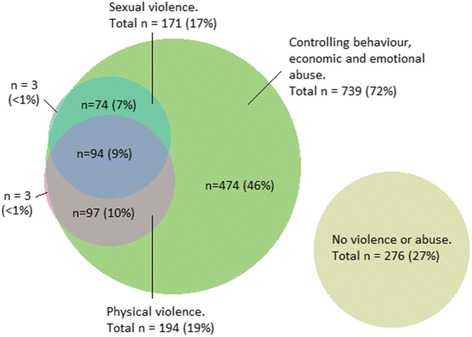
BACKGROUND: Intimate partner violence (IPV) is recognised as an important public health and social problem, with far reaching consequences for women's physical and emotional health and social well-being. Furthermore, controlling behaviour by a partner has a similar impact on women's well-being, yet little is known about the prevalence of this type of behaviour and other related abuses in Tanzania and in other sub-Saharan African countries. METHODS: We conducted a cross-sectional study to determine the lifetime and past 12-month prevalence of physical and sexual IPV, economic abuse, emotional abuse and controlling behaviour among ever-partnered women in Mwanza, Tanzania. Women (N = 1049) were enrolled in an ongoing trial (Maisha study) to assess the impact of microfinance combined with gender training on participants' experience IPV, and other related outcomes. Interviews were conducted by same sex interviewers to collect information about socio-demographic characteristics, experiences of specific acts of IPV and abuse, and symptoms of poor mental health status. RESULTS: Overall, about 61% of women reported ever experiencing physical and/or sexual IPV (95% CI: 58-64%) and 27% (95% CI: 24-29%) experienced it in the past 12 months. Partner controlling behaviour was the most prevalent type of abuse with 82% experiencing it in their lifetime and 63% during the past 12 months. Other types of abuses were also common, with 34% of women reporting economic abuse and 39% reporting emotional abuse during the past 12 months. The prevalence of IPV and abuses varied by socio-demographic characteristics, showing much higher prevalence rates among younger women, women with young partners and less educated women. After we adjusted for age and socio-economic status, physical violence (OR = 1.8; 95% CI: 1.3-2.7) and sexual violence (OR = 2.8; 95% CI: 1.9-4.1) were associated with increased reporting of symptoms of poor mental health. Similarly, experience of abuse during the past 12 months was associated with increased reporting of symptoms of poor mental health. CONCLUSIONS: The high prevalence of IPV and abuses and its strong links with symptoms of poor mental health underline the urgent need for developing and testing appropriate interventions in settings like Tanzania to tackle both violence and abusive behaviours among intimate partners. TRIAL REGISTRATION: ClinicalTrials.gov - ID NCT02592252 , registered retrospectively on 13 August 2015.
Overview
The claims and statistics of this paper haven’t been checked yet.
Free: it reads the open-access text and checks the first 5 claims that cite a source we can check. Create a free account to check every claim.
Integrity signals
Registry
Cites
Statistics
Figures
Verification
Claims the paper makes
The claims and statistics of this paper haven’t been checked yet.
Free: it reads the open-access text and checks the first 5 claims that cite a source we can check. Create a free account to check every claim.
Claims other papers make about this one
Each is checked against this paper’s own text: does it say what the citing paper says it does?
The cited source says what the claim attributes to it.
In the citing paper
“Experiencing economic abuse was found to be significantly and negatively associated with self-esteem [31], psychosocial health [45], and positively associated with symptoms of psychological distress [37].”
From Examining the impact of economic abuse on survivors of intimate partner violence: a scoping review (2022) · cites this paper as [37]
Self-check
Percentages, sums and reported differences re-computed from the paper’s own numbers.
The self-check needs the paper’s full text.
Citations
Cites
Hao (2015) · doi:10.1002/14651858 · Cited by 11,321
Health consequences of intimate partner violence
Campbell, J. C. (2002) · The Lancet · doi:10.1016/s0140-6736(02)08336-8 · Cited by 4,055
Garcia-Moreno, C., Jansen, H. A., Ellsberg, M., Heise, L., & Watts, C. H. (2006) · The Lancet · doi:10.1016/s0140-6736(06)69523-8 · Cited by 3,176 · cited 2×
“Questions asking about each type of violence and abuse were adapted from the WHO Violence Against Women instrument (Table 1) [18].”
MethodResultSelf-citationEllsberg, M., Jansen, H. A., Heise, L., Watts, C. H., & Garcia-Moreno, C. (2008) · The Lancet · doi:10.1016/s0140-6736(08)60522-x · Cited by 1,820 · cited 3×
“This is consistent with findings from other studies [5, 24, 25].”
BackgroundResultSelf-citationThe Global Prevalence of Intimate Partner Violence Against Women
Devries, K. M., Mak, J. Y. T., García-Moreno, C., Petzold, M., Child, J. C., Falder, G., Lim, S., Bacchus, L. J., Engell, R. E., Rosenfeld, L., et al. (2013) · Science · doi:10.1126/science.1240937 · Cited by 1,460 · cited 7×
“To our knowledge, this is one of the first studies to examine the prevalence of emotional and economic abuse and controlling behaviour in a relationship in an African setting.”
BackgroundResultInfluentialSelf-citationAbramsky, T., Watts, C. H., Garcia-Moreno, C., Devries, K., Kiss, L., Ellsberg, M., Jansen, H. A., & Heise, L. (2011) · BMC Public Health · doi:10.1186/1471-2458-11-109 · Cited by 1,413
Self-citationDevries, K. M., Mak, J. Y., Bacchus, L. J., Child, J. C., Falder, G., Petzold, M., Astbury, J., & Watts, C. H. (2013) · PLoS Medicine · doi:10.1371/journal.pmed.1001439 · Cited by 1,258
Self-citationBeyond SEM: General latent variable modeling
Muthén, B. O. (2002) · Behaviormetrika · doi:10.2333/bhmk.29.81 · Cited by 1,074
Mental and Physical Health and Intimate Partner Violence against Women: A Review of the Literature
Dillon, G., Hussain, R., Loxton, D., & Rahman, S. (2013) · International Journal of Family Medicine · doi:10.1155/2013/313909 · Cited by 992 · cited 1×
“Women who experience IPV show more physical symptoms of poor health, and more days out of work and injuries than women who have not been abused [5, 7].”
BackgroundThe global prevalence of intimate partner homicide: a systematic review
Stöckl, H., Devries, K., Rotstein, A., Abrahams, N., Campbell, J., Watts, C., & Moreno, C. G. (2013) · The Lancet · doi:10.1016/s0140-6736(13)61030-2 · Cited by 955 · cited 1×
“Globally, it is estimated that about 30% of women will experience physical and/or sexual violence from an intimate partner during their lifetime [1], and that one in three homicides among women are by an intimate partner [2].”
BackgroundSelf-citation
Research works printed but not linked: 1
- WHO A user’s guide to the self-reporting questionnaire (SRQ) 1994 Geneva World Health Organization
Cited by
Items 101–150 of 150
Mewoabi, S. D. D. (2022) · Texila international journal of public health · doi:10.21522/tijph.2013.10.01.art024 · Cited by 2
Partner Violence against Women in Zimbabwe: Prevalence, Forms, and Implications for Legislations
Dengezela, T. K., Makochekanwa, A., & Moyo, S. (2024) · Journal of Social Work in Developing Societies · doi:10.4314/jswds.v6i1.3 · Cited by 2
Tulu, C., Kiflu, E., Hirkisa, D., Kedir, Z., Abdurahim, L., Ganfure, G., Muhammed, J. J., Seyoum, K., Fikadu, G., & Mekonnen, A. (2019) · clinics in Mother and Child Health · Cited by 2
Carvalho, M. R. D. S., de Oliveira, J. F., Gomes, N. P., Matheus, F. A. V., da Silva, A. F., & Carvalho, C. D. S. (2022) · Texto & Contexto - Enfermagem · doi:10.1590/1980-265x-tce-2018-0516pt · Cited by 1
Mukthar, V. K., & Chemoiwa, R. (2024) · East African Journal of Health and Science · doi:10.37284/eajhs.7.1.2020 · Cited by 1
“Lifetime rates of general physical and/or sexual intimate partner/spouse violence have been found to be highest in Southeast Asia, the Mediterranean region and sub-Saharan Africa (Kapiga et al., 2017).”
BackgroundJacob, A. E., Mshana, G. H., Mosha, N. R., Hashim, R., Sichalwe, S., Malibwa, D., Kapiga, S., Ayieko, P., & Stöckl, H. (2024) · Global Health Action · doi:10.1080/16549716.2024.2397842 · Cited by 1
“The prevalence in Mwanza appears even higher with estimates of 61% and 27% for lifetime and the past 12 months, respectively [11].”
BackgroundResultSelf-citationDığrak, E., Akkoç, İ., Türk, C., Çetin, R. N., & Özdoğan, M. (2024) · Journal of Family Violence · doi:10.1007/s10896-024-00794-w · Cited by 2
“…investigating the effects of economic violence on psychological well-being have found a significant negative association between this type of violence and psychosocial health (Tenkorang, & Owusu, 2019) as well as a positive correlation with symptoms of psychological distress (Kapiga et al., 2017).”
Lineage norms, bride price-related factors, and intimate partner violence among Ghanaian women
Tenkorang, E. Y. (2025) · Sociological Spectrum · doi:10.1080/02732173.2025.2508796 · Cited by 2
“IPV is especially common in sub-Saharan Africa, where it has been documented that more than one-third of women experience physical and/or sexual violence in their lifetime (Kapiga et al. 2017; Muluneh et al. 2020; Tenkorang et al. 2013).”
Lineage Heterogamy and Intimate Partner Violence Among Women in Ghana
Tenkorang, E. Y. (2025) · Social Currents · doi:10.1177/23294965251338378 · Cited by 1
“Kapiga et al. (2017) discovered that about 61 percent of women in Mwanza, Tanzania, suffer physical and/or sexual violence.”
Joseph, M., & Msenda, N. (2020) · Journal of Education, Humanities and Sciences (JEHS) · Cited by 1
Adane, M., Kloos, H., Mezemir, Y., Muche, A., & Amsalu, E. (2023) · BMC Women's Health · doi:10.1186/s12905-023-02530-w · Cited by 1
“The rate in this study was also lower than found in several other studies [44–48].”
ResultIntimate Partner Violence During Adolescence: Utility of the EAV Scale as a Screening Instrument
Sierra, J. O., Garrido, N. M., Santamaría, J. C., García, A. G., López, A. C., & Fonseca‐Pedrero, E. (2023) · Springer eBooks · doi:10.1007/978-3-031-31547-3_122 · Cited by 1
Katushabe, E., Asiimwe, J. B., & Bátwala, V. (2021) · Research Square · doi:10.21203/rs.3.rs-832337/v1 · Cited by 1
Psychological Violence and Associated Factors Among Housemaid’s in Northwest Ethiopia.Preprint
Azanaw, K., Gelagay, A. A., & Lakew, A. M. (2020) · doi:10.21203/rs.3.rs-52769/v1 · Cited by 1
Таусинова, О. К. (2018) · Вестник Красноярского государственного педагогического университета им. В.П. Астафьева · doi:10.25146/1995-0861-2018-45-3-85 · Cited by 2
S. Vishnu Priya1, I. A. G. J. (2020) · Medico-Legal Update · doi:10.37506/mlu.v20i2.1093
Masarwa, R., Natan, M. B., Yonai, Y., Steinfeld, Y., & Berkovich, Y. (2021) · Violence Against Women · doi:10.1177/10778012211035808
“IPV is also associated with mental problems including depression, anxiety, phobias, posttraumatic stress disorder, suicide, and substance abuse (Kapiga et al., 2017).”
BackgroundMoulin-Stożek, M. (2021) · OSF Preprints (OSF Preprints) · doi:10.31219/osf.io/z7abf
Carvalho, M. R. D. S., de Oliveira, J. F., Gomes, N. P., Matheus, F. A. V., da Silva, A. F., & Carvalho, C. D. S. (2022) · Texto & Contexto - Enfermagem · doi:10.1590/1980-265x-tce-2018-0516en
Intimate Partner Violence During Adolescence: Utility of the EAV Scale as a Screening Instrument
Sierra, J. O., Garrido, N. M., Santamaría, J. C., García, A. G., López, A. C., & Fonseca‐Pedrero, E. (2023) · Springer eBooks · doi:10.1007/978-3-030-98711-4_122-1
Kinyondo, A., & Ntegwa, M. J. (2023) · The African Review · doi:10.1163/1821889x-bja10055 · Cited by 1
assessment of women's perception regarding domestic violence
على, م. (2023) · Helwan International Journal of Nursing Research and Practice · doi:10.21608/hijnrp.2023.187349.1061
Socio economic determinants of spousal violence against women in Myanmar
Mar, L. (2018) · Chula Digiverse · doi:10.58837/chula.the.2018.167
Abramsky, T., Guadarrama, D. S., Kapiga, S., Mtolela, G. J., Madaha, F., Lees, S. S., & Harvey, S. E. (2023) · PLOS Global Public Health · doi:10.1371/journal.pgph.0002497 · Cited by 2
“…towards a woman’s right to refuse sex are not strongly linked to physical IPV risk, also suggests that sexual coercion within intimate relationships, though often reinforced by physical violence, is a distinct phenomenon that transcends relationships with and without physical violence [32– 34].”
BackgroundSelf-citationMosha, I. H., Akyoo, W. O., & Ezekiel, M. J. (2023) · Journal of Asian and African Studies · doi:10.1177/00219096231215699 · Cited by 4
“Kapiga et al. (2017) revealed that the prevalence of IPV and abuses varied by socio-demographic characteristics, showing much higher prevalence rates among younger women, women with young partners and less educated women.”
COVID-19, pandemic lockdowns and intimate partner violence among HIV-positive women in Ghana
Tenkorang, E. Y., Adjei, A. P., Agyei-Yeboah, V., & Owusu, A. Y. (2024) · AIDS Care · doi:10.1080/09540121.2024.2312876 · Cited by 1
“Kapiga et al. (2017) reported about 61% of women in Tanzania experience physical and/or sexual violence, and some evidence shows that more than one-third of Ghanaian women experience various forms of IPV (Bowman, 2003; Tenkorang et al., 2013).”
Jansen, S., Niyonsenga, J., Nsabimana, E., Mihigo, B., Rutembesa, E., Slegh, H., & Mutabaruka, J. (2024) · SAGE Open · doi:10.1177/21582440241255440
“…who experienced DV have a risk of developing physical problems (Cheung et al., 2009; Imanishimwe et al., 2020; Kapiga et al., 2017), including difficulty accessing and using antenatal care services for pregnant women (Bahati et al., 2021), as well as mental health issues (Kapiga et al., 2017).”
Shukla, S., Mosha, N. R., Meyer, S. R., Harvey, S. E., Lees, S. S., Mshana, G. H., & Stöckl, H. (2024) · Social Science & Medicine · doi:10.1016/j.socscimed.2024.117513
Self-citationTanue, E. A., Chifen, H. N., Njouendou, A. J., Nyuydzedze, S. S., Laban, M. N., & Nsagha, D. S. (2025) · medRxiv · doi:10.1101/2025.02.25.25322852 · Cited by 1
“However, in the WHO African region, Eastern Mediterranean and South-East Asia regions, approximately 37% of ever-partnered women reportedly had experienced physical and/or sexual intimate partner violence at some point in their lives [4].”
Masath, F. B., & Mlyakado, B. P. (2025) · Journal of Interpersonal Violence · doi:10.1177/08862605251329493
“…of GBV in the country, university college students, regardless of age or gender, may have learned through modeling or observation of their caregivers, friends, or other community members in response to these elevated prevalence reports and widespread societal approval (Kapiga et al., 2017).”
InfluentialDrivers and dimensions of economic abuse against women in rural Tanzania
Bonsu, V. O., Breitkreuz, R. S., & Kaler, A. (2025) · Canadian Journal of African Studies / Revue canadienne des études africaines · doi:10.1080/00083968.2025.2486318
“…Antai, and Anthony 2014, 809); “refused to give her money for household necessities” (Falb et al. 2015); “refused money for household necessities” (Gupta et al. 2013); and a more recent study in Tanzania that discussed refusal “to give enough money for household expenses” (Kapiga et al. 2017, 3).”
Exploring the Determinants of Intimate Partner Violence in the Dar es Salaam Region, Tanzania
Matemba, G. B., Ndunguru, M. J., & Genda, E. L. (2025) · Pan-African Journal of Health and Environmental Science · doi:10.56893/ajhes2025v04i01.05
Giwa, A. (2025) · Sociological Inquiry · doi:10.1111/soin.70019 · Cited by 1
Matemba, G. B., Genda, E. L., & Ndunguru, M. J. (2025) · African Journal of Empirical Research · doi:10.51867/ajernet.6.3.50
“2% incidence due to cultural beliefs that support male sexual aggression (Kapiga et al., 2019).”
Kiwuwa-Muyingo, S., Mulwa, S. N., & Kadengye, D. T. (2025) · Journal of Interpersonal Violence · doi:10.1177/08862605251384943
Kebede, S. A., Weldesenbet, A. B., & Tusa, B. S. (2022) · Figshare · doi:10.6084/m9.figshare.19382428
Adane, M., Kloos, H., Mezemir, Y., Muche, A., & Amsalu, E. (2024) · Figshare · doi:10.6084/m9.figshare.26617048
Ojifinni, O. O., Maposa, I., & Ibisomi, L. (2021) · Figshare · doi:10.6084/m9.figshare.15122322
Moshi, F. V., & Buname, R. E. (2026) · BMC Women s Health · doi:10.1186/s12905-025-04203-2
Katushabe, E., Ndinawe, J., Abeneitwe, E., Agnes, K., Nakidde, G., Asiimwe, J. B., & Bátwala, V. (2026) · PLOS Global Public Health · doi:10.1371/journal.pgph.0002606 · Cited by 3
“A sample of 283 pregnant women were enrolled and screened for IPV using the WHO study questionnaire [1], which had been used in other sub-Saharan African IPV studies [67,68].”
Sekoni, O. O., Mall, S., & Christofides, N. J. (2026) · Violence and Victims · doi:10.1891/vv-2021-0231
Roychoudhury, P., Borah, R., & Yasmin, S. (2026) · International Journal of Health Sciences and Research · doi:10.52403/ijhsr.20260217
Women’s self-employment, business acumen, and emotional IPV: a longitudinal study in Tanzania
Shukla, S., Mshana, G. H., Mosha, N. R., Steinert, J., Krajewska, J., Harvey, S. E., Lees, S. S., Kapiga, S., & Stöckl, H. (2026) · BMC Women s Health · doi:10.1186/s12905-026-04369-3
Self-citationStephano, E. E., Mwalingo, T. P., Nyundo, A., & Mtoro, M. J. (2026) · Global Health Action · doi:10.1080/16549716.2026.2656563
“In Tanzania, male justification of wife-beating remains pervasive, with previous studies reporting that approximately 12%–61% of ever-married women have experienced physical or sexual violence from their partners [10,11].”
Patel, P., & Longchar, S. (2026) · Global Health Action · doi:10.1080/16549716.2026.2664941
“These findings are consistent with prior DHS-based analyses and national studies documenting heterogeneity in IPV prevalence within and across sub-Saharan African settings [36–38].”
Williams, A., Aiura, Y., Wood, S. N., Thiongo, M. N., Wamue-Ngare, G., Gichangi, P., & Decker, M. R. (2026) · PLOS Global Public Health · doi:10.1371/journal.pgph.0006351
“In Tanzania, 34% of women were found to report past-year economic violence using a 3-item scale [24].”
Women’s empowerment and experience of marital control in sub-Saharan Africa
Aboagye, R. G., Osborne, A., Okyere, J., Essuman, M. A., Aderoju, Y. B. G., Akombi-Inyang, B. J., & Ahinkorah, B. O. (2026) · Reproductive Health · doi:10.1186/s12978-026-02376-z · Cited by 1
“Given that many women are experiencing partner con-trol behaviours [33, 34] in SSA, it is important to study how empowering women could help curtail this problem.”
Juma, N. A., Bofu, R. M., Kessy, J., & Burke, J. (2026) · medRxiv · doi:10.64898/2026.09.01.26361973
Gandla, S., & Ghebremichael, M. (2026) · Tropical Medicine and Infectious Disease · doi:10.3390/tropicalmed11110297
Metadata
- Authors
- Kapiga, S., Harvey, S., Muhammad, A. K., Stöckl, H., Mshana, G., Hashim, R., Hansen, C., Lees, S., & Watts, C.
- Affiliations
- London School of Hygiene & Tropical Medicine (GB)
- Mwanza Intervention Trials Unit (TZ)
- Corresponding author
- Kapiga, Saidi
- ORCID
- Venue
- BMC Public Health
- Published
- 2017-02-14
- Volume
- 17
- Issue
- 1
- Pages
- 190-190
- ISSN
- 1471-2458 (ISSN-L)
- PMC
- PMC5307886
- OpenAlex
- W2588801678
- Cited by
- 150
- References
- 30
- Citations by year
- 2026: 11 · 2025: 16 · 2024: 18 · 2023: 24 · 2022: 27 · 2021: 15 · 2020: 10 · 2019: 13 · 2018: 13 · 2017: 3
- FWCI
- 11.83
- Type
- journal article
- Language
- en
- Open access
- gold
- doi.org
- Licence
- cc-by
- Locations
- BMC Public Health (publishedVersion, cc-by)
- Europe PMC (PubMed Central) (publishedVersion, cc-by)
- PubMed Central (publishedVersion, cc-by)
- PubMed (publishedVersion)
- LSHTM Research Online (London School of Hygiene and Tropical Medicine) (acceptedVersion)
- DOAJ (DOAJ: Directory of Open Access Journals) (submittedVersion, cc-by-sa)
- Funders
- UKAID from the UK Department for International Development
- Anonymous donor
- Topics
- Social Sciences › Health › Intimate Partner and Family Violence
- Health Sciences › Medicine › Geriatrics and Gerontology › Elder Abuse and Neglect
- Social Sciences › Sociology and Political Science › Stalking, Cyberstalking, and Harassment
- Keywords
- intimate partner violence, physical violence, sexual violence, economic violence, emotional abuse, controlling behavior, prevalence, women's mental health, sociodemographic risk factors, microfinance, gender training, Mwanza, Tanzania, northwestern Tanzania, sub-Saharan Africa, young women, women's education
- MeSH terms
- Intimate Partner Violence, Adult, Aged, Mental Disorders, Cross-Sectional Studies, Family Characteristics, Female, Humans, Interpersonal Relations, Interviews as Topic, Male, Middle Aged, Surveys and Questionnaires, Sexual Partners, Tanzania, Women's Health Services, Prevalence, Young Adult
About these checks
Registry, retraction, Cites and statistics results are computed, not judged, with one exception: a printed reference that no index lists is read once by a model before it counts as a citation error. Claims are extracted by a model and kept only when their quote appears verbatim in the text; each cited source is then checked, with a model’s help, for whether it says what the claim relies on. Those verdicts can be wrong — read the claim’s quote and the cited source before relying on one.
Statistics and arithmetic are recomputed, not judged.
Confidence bands are shown only for fields calibrated on our annotated test set. None is calibrated yet, so no band is shown.
What counts as a claim ›How we measure confidence ›How we check this ›
Are you an author, or do you see a problem with this page? Request a review
Data sources
Bibliographic data: Semantic Scholar, OpenAlex, Crossref.
Contains information from the Semantic Scholar Academic Graph Datasets, made available under the ODC Attribution License (ODC-BY 1.0).
Semantic Scholar’s data is described in: Kinney, R., et al. (2023). The Semantic Scholar Open Data Platform. arXiv:2301.10140.
