

Does coffee drinking have beneficial effects on bone health of Taiwanese adults? A longitudinal study
Open accessThe DOI matches its Crossref record; 45 of the 45 references it cites were found in a registry or an index.
Abstract
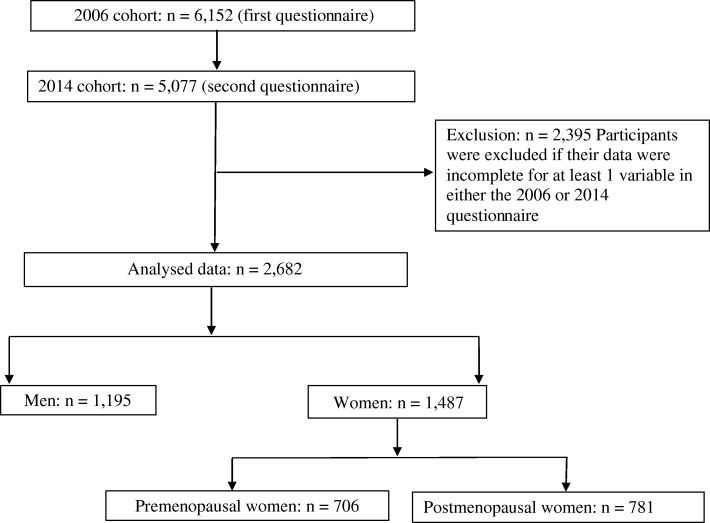
BACKGROUND: Results from studies investigating the association between coffee consumption and osteoporosis or bone mineral density (BMD) have been inconsistent. This longitudinal study was performed to assess the effect of coffee drinking on bone health of Taiwanese adults. METHODS: Data were retrieved from the Li-Shin (Landseed) Hospital in Taoyuan City. In 2006, 6152 participants completed a questionnaire on coffee drinking and other lifestyle factors. In 2014, 5077 of them were followed up. Nonetheless, a total of 2395 participants with incomplete data were excluded. The final analyses included 2682 participants comprising 1195 men and 1487 women (706 premenopausal and 781 postmenopausal). T-scores were derived from the osteo-sono assessment index (OSI) which is a surrogate of BMD. Coffee drinking was categorized as "no, medium, and high" based on the number of cups that were consumed per week in both 2006 and 2014. RESULTS: In general, medium and high coffee drinking were associated with higher T-scores. However, significant results were observed only among high drinkers (β = 0.158; P = 0.0038). Nonetheless, the test for linear trend was significant (P = 0.0046). After stratification by sex, medium and high coffee drinking were associated with higher T-scores. However, significant results were prominent only among high male drinkers (β = 0.237; P = 0.0067) and the test for trend was significant (P = 0.0161). Based on menopausal status, coffee drinking was associated with higher T-scores. Nevertheless, significant results were found only among premenopausal women (β = 0.233; P = 0.0355 and β = 0.234; P = 0.0152 for medium and high coffee drinking, respectively. The test for linear trend was significant (P = 0.0108). CONCLUSION: Coffee drinking was significantly associated with higher T-scores hence, a lower risk of osteoporosis in men and premenopausal women.
Overview
The claims and statistics of this paper haven’t been checked yet.
Free: it reads the open-access text and checks the first 5 claims that cite a source we can check. Create a free account to check every claim.
Integrity signals
Registry
Cites
Statistics
Figures
Verification
Claims the paper makes
The claims and statistics of this paper haven’t been checked yet.
Free: it reads the open-access text and checks the first 5 claims that cite a source we can check. Create a free account to check every claim.
Claims other papers make about this one
Each is checked against this paper’s own text: does it say what the citing paper says it does?
The source backs part of the claim, not all of it — or backs it for a different population, condition or comparison.
In the citing paper
“However, the association between caffeine intake and BMD or osteoporosis remains controversial from molecular studies and epidemiological studies of adult or elderly populations only [37–39].”
From Association between caffeine consumption and bone mineral density in children and adolescent: Observational and Mendelian randomization study (2023) · cites this paper as [37]
Experimental — accuracy not yet measured
Self-check
Percentages, sums and reported differences re-computed from the paper’s own numbers.
The self-check needs the paper’s full text.
Citations
Cites
An estimate of the worldwide prevalence and disability associated with osteoporotic fractures
Johnell, O., & Kanis, J. A. (2006) · Osteoporosis International · doi:10.1007/s00198-006-0172-4 · Cited by 4,704
European guidance for the diagnosis and management of osteoporosis in postmenopausal women
Kanis, J. A., McCloskey, E. V., Johansson, H., Cooper, C., Rizzoli, R., Reginster, J.-Y., & on behalf of the Scientific Advisory Board of the European Society for Clinical and Economic Aspects of Osteoporosis and Osteoarthritis (ESCEO) and the Committee of Scientific Advisors of the International Osteoporosis Foundation (IOF) (2013) · Osteoporosis International · doi:10.1007/s00198-012-2074-y · Cited by 2,948
A systematic review of hip fracture incidence and probability of fracture worldwide
Kanis, J. A., Odén, A., McCloskey, E. V., Johansson, H., Wahl, D. A., Cooper, C., & on behalf of the IOF Working Group on Epidemiology and Quality of Life (2012) · Osteoporosis International · doi:10.1007/s00198-012-1964-3 · Cited by 1,379
Coffee and Health: A Review of Recent Human Research
Higdon, J. V., & Frei, B. (2006) · Critical Reviews in Food Science and Nutrition · doi:10.1080/10408390500400009 · Cited by 1,090
Coffee and its Consumption: Benefits and Risks
Butt, M. S., & Sultan, M. T. (2011) · Critical Reviews in Food Science and Nutrition · doi:10.1080/10408390903586412 · Cited by 612
Quantitative Ultrasound in the Management of Osteoporosis: The 2007 ISCD Official Positions
Krieg, M.-A., Barkmann, R., Gonnelli, S., Stewart, A., Bauer, D. C., Del Rio Barquero, L., Kaufman, J. J., Lorenc, R., Miller, P. D., Olszynski, W. P., et al. (2008) · Journal of Clinical Densitometry · doi:10.1016/j.jocd.2007.12.011 · Cited by 387 · cited 3×
“Therefore, in clinical practice, QUS is not a gold standard for BMD measurement [2, 46].”
BackgroundMarques, E. A., Mota, J., & Carvalho, J. (2012) · AGE · doi:10.1007/s11357-011-9311-8 · Cited by 254
Hallström, H., Wolk, A., Glynn, A., & Michaëlsson, K. (2006) · Osteoporosis International · doi:10.1007/s00198-006-0109-y · Cited by 194
The Relationship between Metabolic Syndrome and Osteoporosis: A Review
Wong, S., Chin, K.-Y., Suhaimi, F., Ahmad, F., & Ima-Nirwana, S. (2016) · Nutrients · doi:10.3390/nu8060347 · Cited by 186
A high body mass index protects against femoral neck osteoporosis in healthy elderly subjects
Barrera, G., Bunout, D. C., Vivien Gattas, Z., de la Maza, M. P., Leiva, L., & Hirsch, S. (2004) · Nutrition · doi:10.1016/j.nut.2004.05.014 · Cited by 167
Cited by
Pharmacology of caffeine and its effects on the human body
Reddy, V. S., Shiva, S. M., Manikantan, S., & Ramakrishna, S. (2024) · European Journal of Medicinal Chemistry Reports · doi:10.1016/j.ejmcr.2024.100138 · Cited by 243
The effects of caffeine on bone mineral density and fracture risk
Berman, N., Honig, S., Cronstein, B. N., & Pillinger, M. H. (2022) · Osteoporosis International · doi:10.1007/s00198-021-05972-w · Cited by 92
Chau, Y.-P., Au, P. C.-M., Li, G. H., Sing, C., Cheng, V. K.-F., Tan, K. C. B., Kung, A. W. C., & Cheung, C. (2019) · The Journal of Clinical Endocrinology & Metabolism · doi:10.1210/clinem/dgz210 · Cited by 63
António, J., Newmire, D. E., Stout, J. R., Antonio, B. B., Gibbons, M., Lowery, L. M., Harper, J., Willoughby, D. S., Evans, C., Anderson, D., et al. (2024) · Journal of the International Society of Sports Nutrition · doi:10.1080/15502783.2024.2323919 · Cited by 63
“The authors speculated that these bone benefits may be related to the high antioxidant and anti-inflammatory properties of coffee [175].”
BackgroundHemmati, E., Mirghafourvand, M., Mobasseri, M., Shakouri, S. K., Mikaeli, P., & Farshbaf‐Khalili, A. (2021) · Journal of Education and Health Promotion · doi:10.4103/jehp.jehp_945_20 · Cited by 55
“[14] 8%–9% of bone fractures per year are caused by osteoporosis, which results in back pain, impaired quality of life, and interference with daily activities.[15] Bone mass in female in all age groups is significantly lower than male in the same age and race.”
BackgroundThe relationship between healthy lifestyles and bone health: A narrative review
Sheng, B., Li, X., Nussler, A. K., & Zhu, S. (2021) · Medicine · doi:10.1097/md.0000000000024684 · Cited by 46
“Moreover, a Taiwanese study found that coffee drinking is associated with a lower risk of osteoporosis inmales and premenopausal females.([63])”
Coffee Brews: Are They a Source of Macroelements in Human Nutrition?
Olechno, E., Puścion‐Jakubik, A., Socha, K., & Zujko, M. E. (2021) · Foods · doi:10.3390/foods10061328 · Cited by 42
Rychter, A. M., Ratajczak, A. E., Szymczak‐Tomczak, A., Michalak, M., Eder, P., Dobrowolska, A., & Krela‐Kaźmierczak, I. (2021) · Nutrients · doi:10.3390/nu13061863 · Cited by 32
“According to the recommendations of the World Health Organization, DXA is the gold standard in the diagnosis of osteoporosis and is used for the BMD classification: 1.”
MethodInfluentialWang, G., Fang, Z.-B., Liu, D.-L., Chu, S.-F., Li, H.-L., & Zhao, H.-X. (2022) · Frontiers in Endocrinology · doi:10.3389/fendo.2022.1008275 · Cited by 23
“Many epidemiological studies have been conducted to investigate the connection between coffee consumption and BMD, but the conclusions are controversial (17, 18, 20).”
BackgroundChanprasertpinyo, W., Punsawad, C., Khwanchuea, R., Sukkriang, N., Yincharoen, P., & Rerkswattavorn, C. (2023) · Journal of Orthopaedic Surgery and Research · doi:10.1186/s13018-023-04211-8 · Cited by 25
“Many studies also agree that the DXA T-score cutoff value cannot be used as the QUS T-score cutoff value [10, 11].”
ResultInfluentialLuo, J., Liu, M., Zheng, Z., Zhang, Y., & Xie, R. (2022) · Medicine · doi:10.1097/md.0000000000031984 · Cited by 18
“[27] Three cohort studies from Asia backed with the same finding.[22,28,29] Other research, however, contradicted this finding.”
ResultXu, J., & Zhai, T. (2024) · Calcified Tissue International · doi:10.1007/s00223-024-01184-6 · Cited by 17
“Postmenopausal Chinese women who did not drink coffee were also found to be more likely to develop osteoporosis [39].”
Hsu, T.-L., Tantoh, D. M., Chou, Y., Hsu, S., Ho, C., Lung, C.-C., Jan, C., Wang, L., & Liaw, Y. (2020) · Menopause The Journal of The North American Menopause Society · doi:10.1097/gme.0000000000001544 · Cited by 18
“Overweight and obesity were associated with a lower risk of osteoporosis in several studies.(1,11,13,45-48) Similar results were observed in our study.”
BackgroundResultSelf-citationDoes Drinking Coffee and Tea Affect Bone Metabolism in Patients with Inflammatory Bowel Diseases?
Ratajczak, A. E., Szymczak‐Tomczak, A., Zawada, A. E., Rychter, A. M., Dobrowolska, A., & Krela‐Kaźmierczak, I. (2021) · Nutrients · doi:10.3390/nu13010216 · Cited by 15
“Researchers observed a trend in a group with moderate consumption, which may suggest the T-score increases as the consumption of coffee increases [53].”
BackgroundZhang, S., Wu, S., Xia, B., He, Q., Mi, N., Zhao, J., Hu, L., Wang, D., Zheng, L., Sheng, P., et al. (2024) · Bone · doi:10.1016/j.bone.2024.117135 · Cited by 14
da Costa, M. S., Pontes, K. S. D. S., Guedes, M. R., Silva, M. I. B., & Klein, M. R. S. T. (2023) · Clinical Nutrition · doi:10.1016/j.clnu.2023.08.004 · Cited by 14
Chang, C.-M., Nfor, O. N., Ho, C., Chen, P.-H., Kung, Y.-Y., Hsu, S., Tantoh, D. M., Liaw, Y., Hsieh, C.-F., & Liaw, Y. (2020) · Journal of Multidisciplinary Healthcare · doi:10.2147/jmdh.s276395 · Cited by 15
Self-citationHsueh, Y., Huang, Y.-L., Chen, H.-H., Shiue, H.-S., Lin, Y., & Hsieh, R. (2021) · Frontiers in Endocrinology · doi:10.3389/fendo.2021.782174 · Cited by 13
“Employees aged 40–60 years in public and private organizations undergo an annual health examination, which is a benefit provided to employees in Taiwan.”
ResultInfluentialSelf-citationCaffeine and rheumatoid arthritis: A complicated relationship
Ingegnoli, F., Cavalli, S., Giudice, L., & Caporali, R. F. (2022) · Autoimmunity Reviews · doi:10.1016/j.autrev.2022.103117 · Cited by 13
Clinical features and shared mechanisms of chronic gastritis and osteoporosis
Han, T., Zhang, Y., Qi, B., Chen, M., Sun, K., Qin, X., Yang, B., He, Y., Ai-li, X., Wei, X., et al. (2023) · Scientific Reports · doi:10.1038/s41598-023-31541-8 · Cited by 11
Association of coffee intake with bone mineral density: a Mendelian randomization study
Yang, Y., Zhong, R., Xiong, X.-M., & Wang, C. (2024) · Frontiers in Endocrinology · doi:10.3389/fendo.2024.1328748 · Cited by 8
Wu, C., Nfor, O. N., Lu, W., Tantoh, D. M., & Liaw, Y. (2022) · The journal of nutrition health & aging · doi:10.1007/s12603-022-1796-6 · Cited by 7
“These results provide insight into genetic and lifestyle factors that contribute to osteoporosis in Taiwan and could be used as a reference for studies evaluating the disease and its associated variables.”
InfluentialSelf-citationLiu, Q., Tooki, T., Di, D., Zhou, H., Cui, Z., Zhang, R., Zhang, J., Yuan, T., Zhou, T., Luo, X., et al. (2023) · Archives of Osteoporosis · doi:10.1007/s11657-023-01329-4 · Cited by 7
“A longitudinal study has also reported that coffee consumption may reduce the risk of bone fractures in men and postmenopausal women [34].”
Cui, A., Xiao, P., He, J., Fan, Z., Xie, M., Chen, L., Zhuang, Y., & Wang, H. (2023) · PLoS ONE · doi:10.1371/journal.pone.0287756 · Cited by 6
Li, Y., Huang, M., Hua, Y., Hui, Z., Zhang, Y., Lin, Y., Du, J., Ni, C., & Wang, X. (2023) · Journal of Bone and Mineral Metabolism · doi:10.1007/s00774-023-01432-z · Cited by 4
Self-citationHubungan Kebiasaan Merokok Dan Mengkonsumsi Kafein Dengan Kejadian Osteoporosis Pada Usia Lanjut
Nugraheni, D. N., Basuki, S. W., Candrasari, A., & Hernawan, B. (2021) · JIMKI Jurnal Ilmiah Mahasiswa Kedokteran Indonesia · doi:10.53366/jimki.v9i1.368 · Cited by 3
“kelainan pada tulang yang ditandai dengan berkurangnya massa tulang dan kerusakan mikroarsitektur jaringan tulang yang menyakibatkan peningkatan kerapuhan dan terjadi patah tulang.(18) Pengukuran BMD (Bone Mineral Density) digunakan dalam mendiagnosis osteoporosis.”
InfluentialVerinda, S., & Herwana, E. (2020) · Jurnal Biomedika dan Kesehatan · doi:10.18051/jbiomedkes.2020.v3.70-76 · Cited by 5
Bukowska, A., Jurewicz, J., & Jabłońska, E. (2025) · International Journal of Occupational Medicine and Environmental Health · doi:10.13075/ijomeh.1896.02646 · Cited by 2
“The review on the association between caffeine consumption and bone strength considered only epidemiological surveys, mostly prospective cohort [34,37, 39–43, 46–48, 52, 53] 8 studies were cross-sectional [33,35,36,38,45,54–56] and only 4 were case-control studies [44,49–51].”
InfluentialAssociation between urine caffeine metabolites and bone mineral density: A population-based study
Tan, N., Shen, W., Tang, M., Liu, M., & Zhang, Y. (2023) · Medicine · doi:10.1097/md.0000000000035674 · Cited by 2
“[23,24] Nonetheless, other studies refute this conclusion, with one cross-sectional study of 100 premenopausal women in Spain reporting that coffee consumption negatively affected BMD as measured by quantitative ultrasonography.”
ResultThe effect of coffee consumption on three main bone disorders: a Mendelian randomization trial
Zhang, X., & Xu, J. (2024) · Journal of Bone and Mineral Metabolism · doi:10.1007/s00774-024-01533-3 · Cited by 1
He, Y., Zou, W., & Xiao, F. (2025) · BMC Musculoskeletal Disorders · doi:10.1186/s12891-025-08300-z · Cited by 1
“Despite a plethora of epidemiological research investigating the relationship between caffeine intake and BMD, results have frequently been inconsistent [19].”
Local Non Soy Isoflavone Attenuates Bone Loss In The Menopausal Women
Indrawan, I. W. A., Wıyasa, I. W. A., Hidayat, A., & Agustia, Q. P. (2022) · Asian Journal of Health Research · doi:10.55561/ajhr.v1i2.8 · Cited by 1
“This is due to several things, such as the estrogenic effect, antioxidant effect, and also the anti-inflammatory effect of coffee which might be due to the inhibition of inducible nitric oxide synthase and cyclooxygenase-2 (COX-2) expression in the inflammatory sites [20,21].”
BackgroundChanprasertpinyo, W., Punsawad, C., Sukkriang, N., Khwanchuea, R., Yincharoen, P., & Rerkswattavorn, C. (2021) · Research Square · doi:10.21203/rs.3.rs-153388/v1
Chanprasertpinyo, W., Punsawad, C., Sukkriang, N., Yincharoen, P., Khwanchuea, R., & Rerkswattavorn, C. (2021) · SSRN Electronic Journal · doi:10.2139/ssrn.3873134
Choi, H. G., Kim, S. Y., & Lee, S. W. (2023) · Research Square · doi:10.21203/rs.3.rs-2507409/v1
Coffee and Osteoporosis and the Risk of Bone Fractures
Surma, S., & Chudek, J. T. (2025) · Royal Society of Chemistry eBooks · doi:10.1039/9781839166853-00324
Coffee and Osteoporosis: The Risk of Falls and Bone Fractures
Kubilius, R., & Tamulevičiūtė-Prascienė, E. (2025) · Springer eBooks · doi:10.1007/978-3-031-93459-9_26
Association between coffee consumption and the risk of developing osteoporosis: a meta-analysis
Zheng, X.-X., Ni, B.-Q., Zheng, J.-Y., Chen, H., Yang, Y.-P., & Tung, T. (2026) · European journal of medical research · doi:10.1186/s40001-026-04708-y
“Similarly, a longitudinal study by Chang et al. in Taiwanese adults indicated that moderate coffee consumption might benefit bone health [11].”
Effect of Caffeine on the Skeletal System—A Review of Experimental Studies
Stanczak, P., Krzysztofik, W., Rudolf, W., Grzywnowicz, K., & Folwarczna, J. (2026) · Nutrients · doi:10.3390/nu18132089
“However, other studies have suggested that moderate coffee consumption may not adversely affect bone health and may even be beneficial [29,62,63].”
Metadata
- Authors
- Chang, H.-C., Hsieh, C.-F., Lin, Y.-C., Tantoh, D. M., Ko, P.-C., Kung, Y.-Y., Wang, M.-C., Hsu, S.-Y., Liaw, Y.-C., & Liaw, Y.-P.
- Affiliations
- Hsin Sheng College of Medical Care and Management (TW)
- Chung Shan Medical University (TW)
- Landseed Hospital (TW)
- National Yang Ming University (TW)
- Corresponding author
- Liaw, Yi-Ching
- Venue
- BMC Public Health
- Published
- 2018-11-20
- Volume
- 18
- Issue
- 1
- Pages
- 1273-1273
- ISSN
- 1471-2458 (ISSN-L)
- PMC
- PMC6245613
- OpenAlex
- W2900855285
- Semantic Scholar
- d2f27f19263227ffd081b9d804c91ae4d82b3bae
- Cited by
- 39
- References
- 45
- Citations by year
- 2026: 2 · 2025: 3 · 2024: 6 · 2023: 8 · 2022: 7 · 2021: 9 · 2020: 3 · 2019: 1
- FWCI
- 2.10
- Type
- journal article
- Language
- en
- Open access
- gold
- doi.org
- Licence
- cc-by
- creativecommons.org/licenses/by/4.0/ (tdm)
- Locations
- BMC Public Health (publishedVersion, cc-by)
- Europe PMC (PubMed Central) (publishedVersion, cc-by)
- PubMed Central (publishedVersion, cc-by)
- PubMed (publishedVersion)
- DOAJ (DOAJ: Directory of Open Access Journals) (submittedVersion)
- Funders
- Chung Shan Medical University and Landseed Hospital ((CSMU-LSH-103-02, CSMU-LSH-104-01, CSMU-LSH-105-01, and CSMU-LSH-106-01))
- Topics
- Health Sciences › Medicine › Pharmacology (medical) › Coffee research and impacts
- Health Sciences › Medicine › Orthopedics and Sports Medicine › Bone health and osteoporosis research
- Health Sciences › Medicine › Pathology and Forensic Medicine › Alcohol Consumption and Health Effects
- Keywords
- coffee consumption, bone health, bone mineral density, osteoporosis, T-score, menopausal status, premenopausal women, men, Taiwanese adults
- MeSH terms
- Adult, Aged, Coffee, Female, Humans, Longitudinal Studies, Male, Middle Aged, Osteoporosis, Surveys and Questionnaires, Risk, Taiwan, Bone Density
About these checks
Registry, retraction, Cites and statistics results are computed, not judged, with one exception: a printed reference that no index lists is read once by a model before it counts as a citation error. Claims are extracted by a model and kept only when their quote appears verbatim in the text; each cited source is then checked, with a model’s help, for whether it says what the claim relies on. Those verdicts can be wrong — read the claim’s quote and the cited source before relying on one.
Statistics and arithmetic are recomputed, not judged.
Confidence bands are shown only for fields calibrated on our annotated test set. None is calibrated yet, so no band is shown.
What counts as a claim ›How we measure confidence ›How we check this ›
Are you an author, or do you see a problem with this page? Request a review
Data sources
Bibliographic data: Semantic Scholar, OpenAlex, Crossref.
Contains information from the Semantic Scholar Academic Graph Datasets, made available under the ODC Attribution License (ODC-BY 1.0).
Semantic Scholar’s data is described in: Kinney, R., et al. (2023). The Semantic Scholar Open Data Platform. arXiv:2301.10140.
