

A systematic review and meta-analysis of adherence to physical activity interventions among three chronic conditions: cancer, cardiovascular disease, and diabetes
Open accessThe DOI matches its Crossref record; 66 of the 66 references it cites were found in a registry or an index.
Abstract
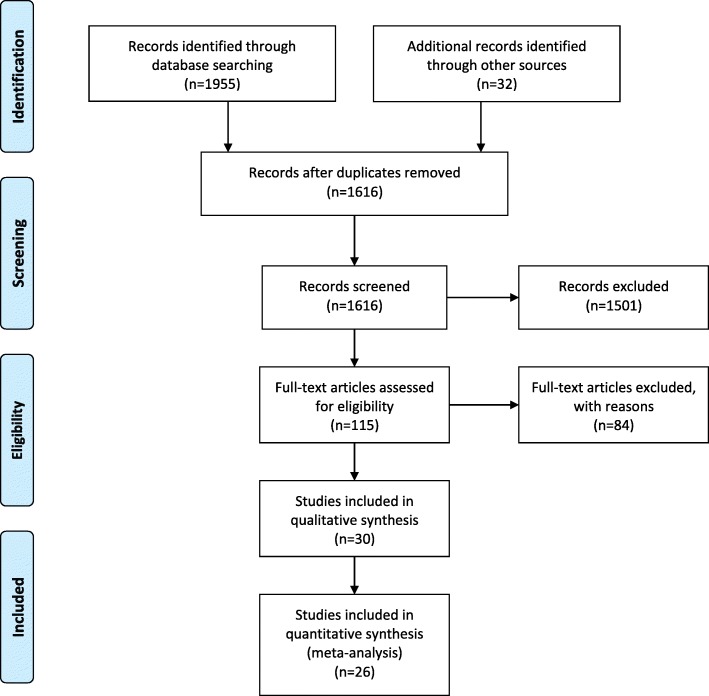
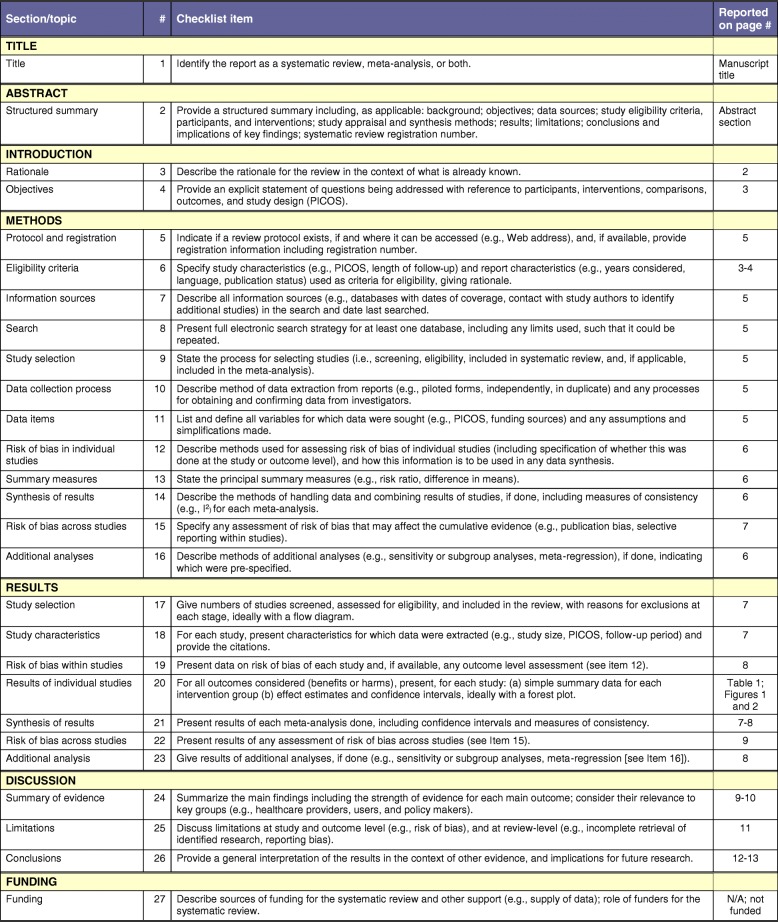
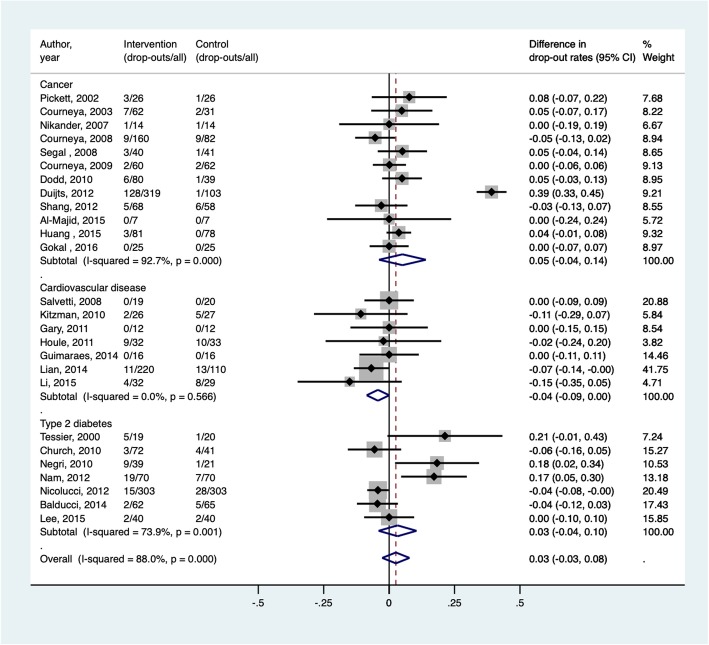
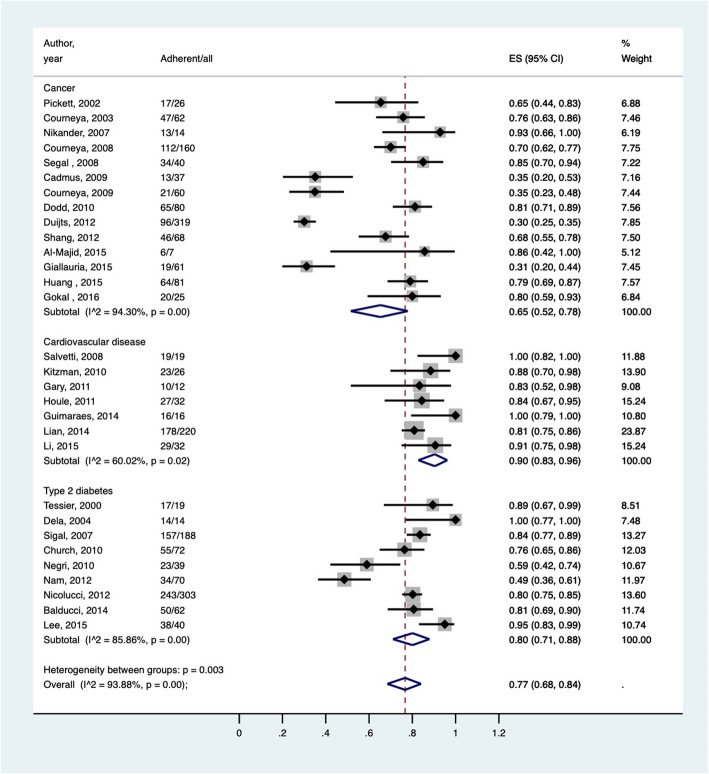
BACKGROUND: Physical activity is effective for the prevention and treatment of chronic disease, yet insufficient evidence is available to make comparisons regarding adherence to aerobic physical activity interventions among chronic disease populations, or across different settings. The purpose of this review is to investigate and provide a quantitative summary of adherence rates to the aerobic physical activity guidelines among people with chronic conditions, as physical activity is an effective form of treatment and prevention of chronic disease. METHODS: Randomized controlled (RCTs) trials where aerobic physical activity was the primary intervention were selected from PsychInfo, PubMed, CINAHL (Cumulative Index to Nursing and Allied Health Literature), Clinical Key, and SCOPUS from 2000 to 2018. Studies were included if the program prescription aligned with the 2008 aerobic physical activity guidelines, were at least 12 weeks in length, and included adult participants living with one of three chronic diseases. The data was extracted by hand and the PRISMA (preferred reporting items for systematic review and meta-analysis) guidelines were used to evaluate risk-of-bias and quality of evidence. Data were pooled using random-effect models. The primary outcome measure was program adherence and the secondary outcome measures were dropout and setting (e.g. home vs. clinic-based). Pooled effect sizes and 95% CiIs (confidence intervals) were calculated using random-effect models. RESULTS: The literature search identified 1616 potentially eligible studies, of which 30 studies (published between 2000 and 2018, including 3,721 participants) met the inclusion criteria. Three clinical populations were targeted: cancer (n = 14), cardiovascular disease (n = 7), and diabetes (n = 9). Although not statistically significant, adherence rates varied across samples (65, 90, and 80%, respectively) whereas dropout rates were relatively low and consistent across samples (5, 4, and 3%). The average adherence rate, regardless of condition, is 77% (95% CI = 0.68, 0.84) of their prescribed physical activity treatment. The pooled adherence rates for clinic-based and home-based programs did not differ (74% [95% CI, 0.65, 0.82] and 80% [95% CI, 0.65, 0.91], respectively). CONCLUSIONS: The current evidence suggests that people with chronic conditions are capable of sustaining aerobic physical activity for 3+ months, as a form of treatment. Moreover, home-based programs may be just as feasible as supervised, clinic-based physical activity programs.
Overview
The claims and statistics of this paper haven’t been checked yet.
Free: it reads the open-access text and checks the first 5 claims that cite a source we can check. Create a free account to check every claim.
Integrity signals
Registry
Cites
Statistics
Figures
Verification
Claims the paper makes
The claims and statistics of this paper haven’t been checked yet.
Free: it reads the open-access text and checks the first 5 claims that cite a source we can check. Create a free account to check every claim.
Claims other papers make about this one
Each is checked against this paper’s own text: does it say what the citing paper says it does?
The cited source says what the claim attributes to it.
In the citing paper
“no difference has been observed when comparing the adherence rates of patients with conditions like cancer, cardiovascular disease, and diabetes [63].”
From Key Factors Associated with Adherence to Physical Exercise in Patients with Chronic Diseases and Older Adults: An Umbrella Review (2021) · cites this paper as [63]
Self-check
Percentages, sums and reported differences re-computed from the paper’s own numbers.
The self-check needs the paper’s full text.
Citations
Cites
Preferred Reporting Items for Systematic Reviews and Meta-Analyses: the PRISMA statement
Moher, D., Liberati, A., Tetzlaff, J., Altman, D. G., & for the PRISMA Group (2009) · BMJ · doi:10.1136/bmj.b2535 · Cited by 83,823
Preferred reporting items for systematic reviews and meta-analyses: The PRISMA statement
Moher, D., Liberati, A., Tetzlaff, J., & Altman, D. G. (2010) · International Journal of Surgery · doi:10.1016/j.ijsu.2010.02.007 · Cited by 12,156 · cited 1×
“The PRISMA-P (preferred reporting items for systematic review and meta-analysis protocols) guidelines [25] were followed in the reporting of this systematic review protocol (see Figs.”
MethodHeart Disease and Stroke Statistics—2014 Update: A Report From the American Heart Association
Go, A. S., Mozaffarian, D., Roger, V. L., Benjamin, E. J., Berry, J. D., Blaha, M. J., Dai, S., Ford, E. S., Fox, C. S., Franco, S., et al. (2014) · Circulation · doi:10.1161/01.cir.0000441139.02102.80 · Cited by 5,215 · cited 1×
“Typical treatment for chronic disease involves managing symptoms with medication and accounts for 86% of the total health care expenses in the United States [11].”
BackgroundExercise as medicine - evidence for prescribing exercise as therapy in 26 different chronic diseases
Pedersen, B. K., & Saltin, B. (2015) · Scandinavian Journal of Medicine & Science in Sports · doi:10.1111/sms.12581 · Cited by 3,514
Heart disease and stroke statistics--2013 update: a report from the American Heart Association.
Go, A. S., Mozaffarian, D., Roger, V. L., Benjamin, E. J., Berry, J. D., Blaha, M. J., Dai, S., Ford, E. S., Fox, C. S., Franco, S., et al. (2013) · eScholarship (California Digital Library) · Cited by 2,601
Mediators and Moderators of Treatment Effects in Randomized Clinical Trials
Kraemer, H. C., Wilson, G. T., Fairburn, C. G., & Agras, W. S. (2002) · Archives of General Psychiatry · doi:10.1001/archpsyc.59.10.877 · Cited by 2,562
Taylor, R. S., Brown, A., Ebrahim, S., Jolliffe, J., Noorani, H., Rees, K., Skidmore, B., Stone, J. A., Thompson, D. R., & Oldridge, N. (2004) · The American Journal of Medicine · doi:10.1016/j.amjmed.2004.01.009 · Cited by 2,239
Exercise-Based Cardiac Rehabilitation for Coronary Heart Disease
Anderson, L., Oldridge, N., Thompson, D. R., Zwisler, A.-D., Rees, K., Martin, N., & Taylor, R. S. (2016) · Journal of the American College of Cardiology · doi:10.1016/j.jacc.2015.10.044 · Cited by 1,910
Physical activity and survival after breast cancer diagnosis
Holmes, M. D. (2005) · JAMA · doi:10.1001/jama.293.20.2479 · Cited by 1,772
Cited by
Items 101–200 of 275
Fuente-Vidal, A., Guerra-Balic, M., Noguera, O. R., Jerez‐Roig, J., & Montané, J. (2022) · International Journal of Environmental Research and Public Health · doi:10.3390/ijerph191610214 · Cited by 6
“Several studies were in line with this approach [11], most of which involved individuals with health conditions.”
ResultThe Bahraini food based dietary guidelines: a holistic perspective to health and wellbeing
Naja, F., Khaleel, S., Alhajeri, M., Ajlan, B. Y., Abulfateh, N. M., Alawadhi, A. G., Bowah, M. H. J., & Al‐Jawaldeh, A. (2023) · Frontiers in Public Health · doi:10.3389/fpubh.2023.1182075 · Cited by 6
García-Ortún, F., Jaén, Á., Solá, L., González-Gil, L., Garreta, R., & de la Sierra, A. (2022) · Medicina Clínica · doi:10.1016/j.medcli.2022.01.020 · Cited by 5
Jabardo-Camprubí, G., Bort‐Roig, J., Roca, R. D., Martín-Horcajo, M., Puig-Ribera, A. M., & McKenna, J. (2022) · Enfermería Clínica (English Edition) · doi:10.1016/j.enfcle.2022.04.007 · Cited by 6
Gomes, V. A., Santos, F. C., Saquetto, M. B., Ramos, T., Santos, S., Araujo, W., Rivas, P., Martinez, B. P., Barreto, A. P., Lima, M. C. C., et al. (2023) · Physical Therapy · doi:10.1093/ptj/pzad028 · Cited by 5
Caudroit, J., Lapointe, J., Comtois, Romain, A. J., & Bernard, P. (2024) · PsyArXiv (OSF Preprints) · doi:10.31234/osf.io/zyh36 · Cited by 5
Zhang, Y., Bellafronte, N. T., Najafitirehshabankareh, G., Jimenez, M. H., Jaeger-McEnroe, E., Plourde, H., Hendrickson, M., & Gillis, C. (2024) · European Journal of Surgical Oncology · doi:10.1016/j.ejso.2024.108743 · Cited by 4
Khairat, S., Kent, E. E., Geracitano, J., Mendis, K., Zhou, Z., Bailey, C., & Wood, W. A. (2026) · JMIR Cancer · doi:10.2196/78968 · Cited by 5
“…demonstrate patterns resonant with those in similarly designed health coaching interventions tested in cancer survivors [19,20], align with existing literature on the benefits of structured health coaching, and affirm that tailored interventions can significantly impact exercise adherence [36,37].”
Implementing a Clinical Decision Support Tool to Improve Physical Activity
McCarthy, M. M., Szerencsy, A. C., Taza-Rocano, L., Hopkins, S., Mann, D., Melkus, G. D., Vorderstrasse, A. A., & Katz, S. D. (2024) · Nursing Research · doi:10.1097/nnr.0000000000000714 · Cited by 4
“%) in interventions lasting at least 12 weeks, with no difference between clinic or home-based PA programs (Bullard et al., 2019).”
BackgroundCosta, J. V., Lucas, A. R., Mihalko, S. L., Brubaker, P. H., Marshall, A., Leitzelar, B. N., Wolle, B. R., Norton, S., Franco, R. L., Via, J. O., et al. (2025) · Pilot and Feasibility Studies · doi:10.1186/s40814-024-01580-7 · Cited by 4
Parker, N. H., Santos, A. D. C., Mintrone, R., Turner, K. L., Sutton, S. K., O’Connor, T. L., Huang, J. J., Lael, M., Cruff, S., Grassia, K., et al. (2025) · Healthcare · doi:10.3390/healthcare13030256 · Cited by 5
“Bullard et al. identified an average of 77% aerobic exercise adherence across studies intervening in populations with various chronic health challenges [56].”
Benefit of Ruesi Dadton on Oxidative Stress and Physical Performance: Quasi-Experimental Study
Khanthong, P., Natason, A., & Dechakhamphu, A. (2021) · Physical & Occupational Therapy In Geriatrics · doi:10.1080/02703181.2021.1980480 · Cited by 6
Chicaiza, K. M. C., & Jiménez, A. L. (2021) · QhaliKay Revista de Ciencias de la Salud · doi:10.33936/qkrcs.v5i3.3517 · Cited by 4
Jabardo-Camprubí, G., Bort‐Roig, J., Roca, R. D., Milà, R., Sitjà‐Rabert, M., McKenna, J., & Puig-Ribera, A. M. (2022) · Trials · doi:10.1186/s13063-022-06742-7 · Cited by 5
“Current interventions such as NW mainly focus on adopting PA recommendations without facing the main issue in public health: treatment adherence [28].”
BackgroundKronik hastalıklarda koruyucu rehabilitasyon yaklaşımları ve fiziksel aktivite
ÇALIKUŞU, H. R., Usluer, İ. N., & Tanrıverdi, M. (2023) · Anadolu Kliniği Tıp Bilimleri Dergisi · doi:10.21673/anadoluklin.1233191 · Cited by 7
COVID-19 and the Prevalence of Physical Inactivity
Mazaheri‐Tehrani, S., & Kelishadi, R. (2023) · Springer eBooks · doi:10.1007/978-981-99-1802-7_1 · Cited by 4
Magris, R., Monte, A., Nardello, F., Trinchi, M., Vigolo, N., Negri, C., Moghetti, P., & Zamparo, P. (2024) · European Journal of Applied Physiology · doi:10.1007/s00421-024-05596-y · Cited by 4
“…protocol had a very high compliance (92 ± 9%), whereas other training methods (i.e. aerobic training, high-intensity interval training, and resistance training) are less tolerated by this population, with an adherence that is often lower than 80% (Bullard et al. 2019; MacDonald et al. 2021).”
Alqahtani, S. M., Pavela, G., Pekmezi, D., Lein, D. H., Ford, E. W., & Fontaine, K. R. (2024) · JOSPT open. · doi:10.2519/josptopen.2024.1130 · Cited by 3
Pahmeier, I., Teti, A., & Braksiek, M. (2024) · Cogent Psychology · doi:10.1080/23311908.2024.2407694 · Cited by 4
“…without diabetes (Kennerly & Kirk, 2018; lees & Booth, 2004). they also showed low adherence in supervised programs accompanied by high dropout rates (Bullard et al., 2019). this presents a critical challenge in motivating and engaging individuals with t2D in regular sports and physical activities.”
Zhang, G., Xia, Y., Li, X., Zhang, Y., Xu, X., & Sun, T. (2025) · Patient Preference and Adherence · doi:10.2147/ppa.s547361 · Cited by 5
Leisure physical activity of people with and without chronic non-communicable diseases
Piza, T. F. D. T., Hodniki, P. P., dos Santos, S. A., Torquato, M. T. D. C. G., Calixto, A. A. S., Garcia, R. A. C., & Teixeira, C. R. D. S. (2020) · Revista Brasileira de Enfermagem · doi:10.1590/0034-7167-2019-0615 · Cited by 3
“0%, suggesting that people with chronic conditions are able to keep up on doing exercise for more than 3 months, under different degrees of supervision, at levels which are sufficient for health benefits(1).”
BackgroundInfluentialParbhakar, K. K., Farmer, J. W., & Quiñonez, C. (2021) · Journal of Public Health Dentistry · doi:10.1111/jphd.12455 · Cited by 4
“Incorporating a Gym Facility in a Lifestyle Medicine Practice for Patients with Diabetes Mellitus”
Nadolsky, K. Z., Baraki, A., & Nadolsky, S. (2022) · American Journal of Lifestyle Medicine · doi:10.1177/15598276221089898 · Cited by 2
Wasshenova, E. V., Boardley, D., Geers, A. L., Tull, M. T., & Steiner, V. (2022) · American Journal of Health Education · doi:10.1080/19325037.2022.2142334 · Cited by 3
Nketia, R. (2022) · International Journal of Multidisciplinary Studies and Innovative Research · doi:10.53075/ijmsirq/45645464535 · Cited by 3
St-Cyr, J., Saint‐Onge, K., Doré, I., & Gauvin, L. I. (2023) · Supportive Care in Cancer · doi:10.1007/s00520-023-08093-8 · Cited by 3
“Despite benefits and evidence-based guidelines (see Table 1 [7]), few cancer patients cumulate the recommended levels of PA [8–12].”
BackgroundNokes, K. M., Sokhela, D. G., Orton, P. M., Samuels, W. E., Phillips, J. C., Tufts, K. A., Perazzo, J. D., Chaiphibalsarisdi, P., Portillo, C., Schnall, R., et al. (2024) · Clinical Nursing Research · doi:10.1177/10547738241231626 · Cited by 3
“Bullard et al. (2019) conducted a systematic review of adherence rates to the WHO aerobic physical activity guidelines among people with different chronic conditions and identified a possible 1,616 randomized control trials conducted between 2000 and 2018.”
BackgroundMcNeely, M. L., Chan, K. M., Spychka, R. A., Nedeljak, J., Debenham, B. J., Jha, N., & Seikaly, H. R. (2024) · Cancers · doi:10.3390/cancers16091758 · Cited by 3
“Given the challenges and complexity of HNC, further pragmatic interdisciplinary research is warranted, and consideration should be given to integrating other supportive interventions such as nutrition.”
BackgroundSkov, C. D., Lindberg‐Larsen, M., Wiil, U. K., Varnum, C., Schmal, H., Jensen, C. M., & Holsgaard‐Larsen, A. (2024) · BMC Musculoskeletal Disorders · doi:10.1186/s12891-024-07878-0 · Cited by 3
“To account for potential drop-outs, we use a rate of 20% based upon evidence from a systematic review showing that dropout rates in RCTs on physical activity are within this percentage [32].”
MethodThe Effect of Spirituality on Adjustment to Chronic Breast Cancer: Case Study
Pourhosein, R., & Farsham, A. (2021) · Scholars Journal of Arts Humanities and Social Sciences · doi:10.36347/sjahss.2021.v09i05.005 · Cited by 3
“One of the most important of these diseases is cancer [2].”
BackgroundPérez, A. M. L., Coso, J. D., Luque‐Casado, A., Alonso, D. A., Peñacoba, C., Álvarez, F. D. V., & Collado‐Mateo, D. (2024) · Disability and Rehabilitation · doi:10.1080/09638288.2024.2322036 · Cited by 3
“Therefore, the study of the factors that can enhance adherence to exercise in people with long-term health conditions and older adults is necessary to achieve the desired benefits obtained with long-term exercise [13, 17].”
Garnsey, C. L., Gnall, K. E., Emrich, M., Park, C. L., Starkweather, A. R., Xu, W., Groessl, E. J., & Huedo-Medina, T. B. (2025) · American Journal of Health Promotion · doi:10.1177/08901171251315014 · Cited by 2
Giri, N., Norman, K., & Sturgiss, E. A. (2025) · BJGP Open · doi:10.3399/bjgpo.2024.0253 · Cited by 2
“7,8 While the optimum levels of engagement with PA can be different for each patient owing to individual limitations, lifestyle factors, time, and personal worldviews of PA, international guidelines indicate that any form of PA engagement is better than none and is a useful tool to enhance…”
Banharak, S., Potempa, K. M., Limpawattana, P., Pamungkas, R. A., Mahikul, W., Jeamjitvibool, T., Karaket, A., Siriprathum, S., & Ransinyo, K. (2025) · Vascular Health and Risk Management · doi:10.2147/vhrm.s521564 · Cited by 2
“Similarly, a previous study by Bullard et al (2019) highlighted that 10–12 weeks balances participant adherence and measurable outcomes, particularly for interventions involving lifestyle changes like dietary adjustments and physical activity.”
Health-economic evaluation of statins versus lifestyle changes for cardiovascular disease prevention
Gandjour, A. (2025) · PLoS ONE · doi:10.1371/journal.pone.0331176 · Cited by 2
“For behavioral counseling interventions, adherence rates in RCTs were estimated at 77% over 1–2 years [10], consistent with the relatively high adherence (>80”
Feter, J., Feter, N., Leal-Menezes, R., Hallal, P. C., & Umpierre, D. (2026) · Journal of sport and health science/Journal of Sport and Health Science · doi:10.1016/j.jshs.2026.101123 · Cited by 2
“8,38 Through collaborative efforts between healthcare professionals and patients, we can create sustainable strategies that encourage regular exercise, ultimately improving cardiovascular health outcomes in the diabetic population.”
Smith‐Turchyn, J., Sinclair, S., O’Loughlin, E. K., Innes, A., Richardson, J. A., Pillips, S., Beauchamp, M., Thabane, L., Wrosch, C., & Sabiston, C. M. (2026) · Supportive Care in Cancer · doi:10.1007/s00520-026-10366-x · Cited by 2
“Adherence rates were calculated for the AgeMatchPLUS group as a percentage of total sessions attended and tracked using weekly logs (a priori, we defined an adherence rate of 75% as demonstrating feasibility [9]).”
CHANG, S.-Y., Kim, J.-H., Lee, Y. K., Shin, H. T., Lee, C. H., Lee, S. J., Lee, H. K., Jeon, M. H., & Yoon, E.-J. (2026) · Clinics in Orthopedic Surgery · doi:10.4055/cios25474 · Cited by 2
“Although both groups showed acceptable adherence, based on the 70%–80% rate generally regarded as satisfactory in previous studies, 29) no significant intergroup differences were observed.”
Henriques, H. R., Pinto, J., Faria, J., & Silva, A. (2020) · New Trends in Qualitative Research · doi:10.36367/ntqr.3.2020.846-857 · Cited by 2
Aerobic Exercise, Metabolic Syndrome, and Lipid Profiles: Protocol for a Quantitative Review
Wood, G., Taylor, E., Murrell, A., Ng, V., Patil, A., van der Touw, T., Wolden, M., & Smart, N. A. (2021) · Journal of Clinical Exercise Physiology · doi:10.31189/2165-6193-10.2.42 · Cited by 2
College Student Physical Activity: A Systematic Review
Biber, D., Stoepker, P., Davis, A., & Ha, T. (2022) · Journal of Health Sports and Kinesiology · doi:10.47544/johsk.2022.3.2.4 · Cited by 2
“%) was much similar to a review of PA interventions with children (M = 89.5%, Howie & Staker, 2016), clinical adults (M = 73.7%, Vancampfort et al., 2016), and chronically ill adults (M = 77%, Bullard et al., 2019).”
ResultInfluentialBreast Cancer Management: The Role of Nutrition, Exercise and Psychosocial Well-being
Bora, S. J., Deka, D. J., Malakar, C., Kashyap, N., & Das, B. K. (2024) · Current Cancer Therapy Reviews · doi:10.2174/0115733947286944240223101937 · Cited by 2
All Exercise Should be Gender Inclusive
Adams, M. M. (2024) · ACSMʼs Health & Fitness Journal · doi:10.1249/fit.0000000000001031 · Cited by 2
Caudroit, J., St‐Amour, S., Lapointe, J., Romain, A. J., Comtois, A. S., Chevance, G., & Bernard, P. (2025) · Clinical Psychology in Europe · doi:10.32872/cpe.14851 · Cited by 2
“One reason is that designing an adapted PA intervention for those women is very challenging because the presence of depressive and anxiety symptoms decreases the PA engagement and adherence rate ( Bullard et al., 2019).”
Evidence Gap and Knowledge Map of Physical Activity Research in Diabetes in Iran: A Scoping Review
Sanjari, M., Esmaeili, S., Yarmohammadi, H., Atlasi, R., Aalaa, M., Larijani, B. A., & Nasli‐Esfahani, E. (2021) · Intern J Endocrinol Metab · doi:10.5812/ijem.110636 · Cited by 2
Mashudi, S., Sansuwito, T. B., Sulaiman, . N. S., Putri, D. R., & Hariyatmi, H. (2022) · International Journal of Health Sciences · doi:10.53730/ijhs.v6n3.12873 · Cited by 2
“004) was greater than previously reported (Beaudry et al., 2022; Bullard et al., 2019).”
ResultInfluentialVětrovský, T., Širanec, M., Frybova, T., Gant, I., Semerad, M., Miklíková, M., Bunc, V., Veselý, J., Stastny, J., Gřiva, M., et al. (2023) · Trials · doi:10.1186/s13063-023-07516-5 · Cited by 2
“Studies have consistently shown that patients with HFrEF have low physical activity levels, often falling short of recommended guidelines [7].”
BackgroundBarbera, S. T., García-Martínez, P., Sánchez-Martínez, J. M., Rodríguez-Herrera, M. Á., Ruíz-Hontangas, A., & Gámez-Paya, J. (2023) · Frontiers in Public Health · doi:10.3389/fpubh.2023.1294537 · Cited by 2
Lee, J., Kim, J., Ju, H. J., An, S. J., & Woo, B. (2024) · American Journal of Alzheimer s Disease & Other Dementias® · doi:10.1177/15333175241241891 · Cited by 2
“28,29 32 Clinical studies have re-ported positive effects of LTPA on glycated h Hemoglobin A1C (HbA1C), 33,34 triglycerides (TG), and cholesterol levels in individuals with diabetes compared to non-exercise comparison groups.”
BackgroundGroup-mediated exercise for chronic conditions: an urgent need for implementation and scale-up
Rees, T., Beauchamp, M. R., Stevens, M. R., Low, M., & Wainwright, T. W. (2025) · British Journal of Sports Medicine · doi:10.1136/bjsports-2024-109318 · Cited by 2
Technology and Human Connection to Prevent Diabetes in Rural United States
Dachel, T. A., & Mota, D. (2021) · The Journal for Nurse Practitioners · doi:10.1016/j.nurpra.2021.06.001 · Cited by 1
Keawtep, P., Kamnardsiri, T., Boripuntakul, S., Wichayanrat, W., Worakul, P., & Sungkarat, S. (2023) · Journal of Primary Care & Community Health · doi:10.1177/21501319231189961 · Cited by 1
Non-Communicable Diseases (NCDs) Information System
Agushybana, F., Purnami, C. T., & Dharminto, D. (2023) · Journal of Electronics Electromedical Engineering and Medical Informatics · doi:10.35882/jeeemi.v5i3.292 · Cited by 1
Flammer, F., Paraschiv-Ionescu, A., & Marques-Vidal, P. M. (2024) · BMC Cardiovascular Disorders · doi:10.1186/s12872-024-03755-9 · Cited by 1
“A recent meta-analysis suggested that adherence rates can be as high as 77% and do not differ between clinic and home-based programs [26].”
BackgroundDam, J., Eijsvogels, T. M. H., Verdijk, M. H. I., Janssen, A. M., van Bakel, B. M. A., Baltussen, L. E. H. J. M., Westert, G. P., & de Bruin, M. (2024) · The Journal of Cardiovascular Nursing · doi:10.1097/jcn.0000000000001095 · Cited by 1
Effect of the Occupational Engagement Home Program (MyHOeME©) for Older Persons in the Community
Dahlan, A., Haidhir, H., Makhtar, T. M. A. T., & Sahid, M. H. (2024) · Environment-Behaviour Proceedings Journal · doi:10.21834/e-bpj.v9i27.5628 · Cited by 1
Plotnikoff, R. C., Murphy, M., Wilczynska, M., Courneya, K. S., Brown, W. J., Sigal, R. J., & Lubans, D. R. (2024) · Journal of Physical Activity and Health · doi:10.1123/jpah.2024-0195 · Cited by 1
Abaraogu, U. O., Dall, P., Seenan, C., Rhodes, S., Gorely, T., McParland, J. L., Brittenden, J., Anieto, E. M., Booth, L., Gormal, C., et al. (2025) · Health Technology Assessment · doi:10.3310/zbng5240 · Cited by 1
Mezza, F., Lemmo, D., Freda, M. F., Tischler, V., Stephan, B. C. M., Mataró, M., & Sabatini, S. (2025) · Healthcare · doi:10.3390/healthcare13162071 · Cited by 1
Shallwani, S. M., Culos-Reed, S. N., Courneya, K. S., Williamson, T., Sellar, C. M., Lau, H., Joy, A. A., Easaw, J. C., Audoin, M., Pituskin, E., et al. (2025) · Current Oncology · doi:10.3390/curroncol32100560 · Cited by 2
“Based on the previous literature examining supervised exercise programs with cancer and older adult populations [10,11,42–44], the target attendance rate for this study was defined as participation in at least 70% of the sessions over the 12-week exercise program.”
Hadfield, J. I., Hulteen, R. M., Parsons, J. K., & Allaway, H. C. M. (2025) · Frontiers in Aging · doi:10.3389/fragi.2025.1712679 · Cited by 1
Устіменко, Я. О., & Lukyantseva, H. V. (2025) · Bulletin of Problems Biology and Medicine · doi:10.29254/2077-4214-2025-4-179-397-406 · Cited by 2
Duregon, F., Quinto, G., Vecchiato, M., Faggian, S., Borasio, N., Baioccato, V., Ortolan, S., Gasperetti, A., Ermolao, A., Neunhäeuserer, D., et al. (2025) · BMC Sports Science Medicine and Rehabilitation · doi:10.1186/s13102-025-01419-5 · Cited by 1
“The mid-term adherence rate in our intervention is comparable to other studies including specific chronic diseases, such as cancer (65%), cardio-vascular diseases (90%), and diabetes (80%), as reported in a systematic review and meta-analysis [43].”
Enhancing Multidimensional Health Benefits Through the Use of Mobile Leisure Application
Park, J. H., Lee, C. W., & Do, C. (2026) · Healthcare · doi:10.3390/healthcare14020246 · Cited by 2
“…and health behavior change [29], participants’ experiences indicate that platform-enabled access to diverse activity options encouraged regular participation and reinforced recognition of physical health benefits, including improved cardiovascular functioning and enhanced physical fitness [30–32].”
Li, J., Qian, Q., Zhu, Y., Zhu, Y., Li, W., Gao, T., Wang, X., Nan, J., Zhang, F., & Ma, Y. (2026) · International Journal of Behavioral Medicine · doi:10.1007/s12529-026-10443-9 · Cited by 2
Lashinsky, A., Knapová, L., Burda, M., Kaštovská, B., Sebera, M., Blaschová, D., Filo, R., Uhrova, V., Revilla, M., & Elavsky, S. (2026) · International Journal of Behavioral Medicine · doi:10.1007/s12529-025-10433-3 · Cited by 2
Yang, Q., Liu, B., Qin, S., Huang, J., & Zhang, Q. (2026) · Frontiers in Public Health · doi:10.3389/fpubh.2026.1789438 · Cited by 1
Physical function in lung transplant recipients: Clinical implications and rehabilitation strategies
Andrawes, R. R., Nourouzpour, S., Orchanian‐Cheff, A., Camacho, E., Park, J., Shore, J., Sheikholeslami, K., Minuk, L., Wickerson, L. M., Munawar, M., et al. (2026) · Transplantation Reviews · doi:10.1016/j.trre.2026.101020 · Cited by 1
Translation and Validation of the Exercise Adherence Rating Scale (EARS) in the Gujarati Language
Patel, K., Diwan, S., & Upadhyay, S. (2026) · International Journal of Research and Review · doi:10.52403/ijrr.20260454 · Cited by 1
Haesevoets, S., Muijsenberg, A. J. L., Cops, D., Harrison, S. L., Criel, M., Ruttens, D., Daenen, M., Spruit, M. A., Demeyer, H., & Burtin, C. (2026) · Chronic Respiratory Disease · doi:10.1177/14799731261438123 · Cited by 1
“36 Additionally, the adoption of wearable activity trackers is limited by unfamiliarity, poor understanding of PA metrics, and lack of confidence-building strategies.”
Relationship between anxiety and kinesiophobia in patients on renal replacement therapy
Uzeli, Ü. Ş., Doğan, M., Eser, B., & Doğan, İ. (2026) · Medicine · doi:10.1097/md.0000000000049319 · Cited by 1
“[9] The World Health Organization recommends that daily physical activities suggested for the general population also apply to individuals with chronic diseases.”
Kuhnow, A., & Workman, S. (2021) · Canadian Journal of General Internal Medicine · doi:10.22374/cjgim.v16i4.511 · Cited by 1
Sağınç, S., Demirci, N., & Karaca, A. (2020) · Spor Bilimleri Dergisi · doi:10.17644/sbd.705795 · Cited by 3
Çınaroğlu, S. (2021) · Journal of Diabetes & Metabolic Disorders · doi:10.1007/s40200-021-00856-6 · Cited by 1
Jeon, S., Park, C., Kim, J., Lee, J. H., Joe, S.-Y., Ko, Y. K., & Gim, J. (2023) · BMC Medical Genomics · doi:10.1186/s12920-023-01758-7 · Cited by 1
“Chronic diseases include hypertension, diabetes, hyperlipidemia, and many associations with cancer have also been known [1–3].”
BackgroundPerry, A., Baker, H., Aboaja, A. M., Wilson, L., Morris, S., & User, P. P. I. S. (2024) · Health Expectations · doi:10.1111/hex.13997 · Cited by 1
Social role of the ‘Bow-Wow Patrol’ in urban areas of Japan: a qualitative study
Hosokawa, Y., Ishii, K., Shibata, A., Yako-Suketomo, H., Suko, R., & Oka, K. (2024) · Scientific Reports · doi:10.1038/s41598-024-64079-4 · Cited by 1
Zarrouk, L.-A., Fruchart, É., & Guedj, M. (2024) · Movement & Sport Sciences - Science & Motricité · doi:10.1051/sm/2024012 · Cited by 1
Kang, E., Lee, H. W., Choi, J., & Ju, H. (2025) · Cancers · doi:10.3390/cancers17142394 · Cited by 1
“Unlike previous studies, this study did not show a significant difference in the rate of diagnosis of chronic disease between cancer survivors and non-cancer controls [14,19,35,36].”
Tummers, S. C. M. W., Hommersom, A., Lechner, L., Bemelmans, R., & Bolman, C. A. W. (2025) · Online Journal of Public Health Informatics · doi:10.2196/57977 · Cited by 1
Henriques, H. R., Pinto, J., Faria, J., & Augusto (2021) · Dialnet (Universidad de la Rioja) · doi:10.29352/mill0215.22231 · Cited by 1
Time bombs, sport and exercise science and the future of society
Tipton, M. (2019) · Experimental Physiology · doi:10.1113/ep087927 · Cited by 1
Shaw, J. F., Pilon, S., Vierula, M., & McIsaac, D. I. (2020) · Research Square · doi:10.21203/rs.3.rs-130918/v1 · Cited by 1
Physical Activity, Exercise, and Fitness
OH, P. I., Cotie, L. M., & Vanzella, L. M. (2023) · Autism and child psychopathology series · doi:10.1007/978-3-031-19964-6_46 · Cited by 1
Jabardo-Camprubí, G., Bort‐Roig, J., Roca, R. D., Martín-Horcajo, M., Puig-Ribera, A. M., & McKenna, J. (2021) · Research Square · doi:10.21203/rs.3.rs-154801/v1
“While they seem useful across studies, they can lose their effectiveness as in patients’ real lives ex and adapt (14, 32).”
BackgroundInfluentialLiving with a Smoker and Physical Inactivity across Eight Years in High-Risk Medical Patients
Holahan, C. J., Holahan, C. K., Lim, S., Powers, D. A., & North, R. J. (2021) · Behavioral Medicine · doi:10.1080/08964289.2021.1889458
“cular disease are emblematic of the central importance of physical activity to rehabilitation and recovery.(5) Physical activity among cancer survivors predicts”
BackgroundResultInfluentialPhysical activity and cardiovascular disease risk in women with polycystic ovary syndrome
Woodward, A. (2021) · Sheffield Hallam University · doi:10.7190/shu-thesis-00398 · Cited by 2
Effects of a Physical Exercise Program in Quality of Life of Breast Cancer Survivors
(2019) · Case Medical Research · doi:10.31525/ct1-nct04024280
The role of diet and physical activity in influencing the microbiota/microbiome
Murphy, E. A., & Velázquez, K. T. (2022) · Elsevier eBooks · doi:10.1016/b978-0-12-822130-3.00017-x · Cited by 1
Volders, E., de Groot, R. H. M., Bolman, C. A. W., & Lechner, L. (2021) · Research Square · doi:10.21203/rs.3.rs-267238/v1
Shaw, J. F., Pilon, S., Vierula, M., & McIsaac, D. I. (2020) · Research Square · doi:10.21203/rs.3.rs-43573/v1
“For example, Bullard et al.(40) reported a pooled adherence rate of 77% (95% CI 68%, 84”
BackgroundResultInfluentialLardiés, N. (2022) · El Servicio de Difusión de la Creación Intelectual (National University of La Plata) · doi:10.35537/10915/139334
Downs, B. W., Banik, S. P., Bagchi, M., Ghosh, R. B., Kushner, S. W., & Bagchi, D. (2022) · Elsevier eBooks · doi:10.1016/b978-0-12-822238-6.00024-8
García-Ortún, F., Jaén, Á., Solá, L., González-Gil, L., Garreta, R., & de la Sierra, A. (2022) · Medicina Clínica (English Edition) · doi:10.1016/j.medcle.2022.01.022
Jabardo-Camprubí, G., Bort‐Roig, J., Roca, R. D., Martín-Horcajo, M., Puig-Ribera, A. M., & McKenna, J. (2022) · Enfermería Clínica · doi:10.1016/j.enfcli.2022.04.005
Ramos, J. S., Chakraborty, R., Dalleck, L. C., Sarunic, K., Khadka, J., Haslam, T., & Nassaris, O. (2023) · Frontiers in Neurology · doi:10.3389/fneur.2022.1006221
Borchert, N., Eliasson, H., Hamne, G., Hodgson, K. L., Lyche, T., Mayer-Pelinski, R., Praesto, F., Radu, G., Sandström, U., & Stapleton, P. (2023) · PsyArXiv (OSF Preprints) · doi:10.31234/osf.io/a6zw8
Effect of resistance training on persistent pain after breast cancer treatment
Rasmussen, G. H. F. (2022) · VBN Forskningsportal (Aalborg Universitet) · doi:10.54337/aau488129639
Arasyi, H. A. N., Razantira, D. L., Rizqiyah, F. J., Prasetya, S. Z., Ernadiyanto, D. A., & Utomo, B. (2023) · Journal of Community Medicine and Public Health Research · doi:10.20473/jcmphr.v4i1.44310
How does the Chinese exercise of walnuts rotating lead to health?
Li, S. (2023) · Gazzetta Medica Italiana Archivio per le Scienze Mediche · doi:10.23736/s0393-3660.23.05019-2
Metadata
- Authors
- Bullard, T., Ji, M., An, R., Trinh, L., Mackenzie, M., & Mullen, S. P.
- Affiliations
- University of Illinois Urbana-Champaign (US)
- University of Toronto (CA)
- University of Delaware (US)
- Corresponding author
- Mullen, Sean P.
- Venue
- BMC Public Health
- Published
- 2019-05-24
- Volume
- 19
- Issue
- 1
- Pages
- 636-636
- ISSN
- 1471-2458 (ISSN-L)
- PMC
- PMC6534868
- OpenAlex
- W2947310117
- Semantic Scholar
- 11a182f6ac486f5dedba2104d2ef34e41585214b
- Cited by
- 255
- References
- 66
- Citations by year
- 2026: 24 · 2025: 34 · 2024: 46 · 2023: 41 · 2022: 42 · 2021: 46 · 2020: 17 · 2019: 5
- FWCI
- 3.24
- Type
- journal article
- Language
- en
- Open access
- gold
- doi.org
- Licence
- cc-by
- creativecommons.org/licenses/by/4.0/ (tdm)
- creativecommons.org/licenses/by/4.0/ (vor)
- Locations
- BMC Public Health (publishedVersion, cc-by)
- PubMed Central (publishedVersion, cc-by)
- PubMed (publishedVersion)
- TSpace (University of Toronto) (submittedVersion, cc-by)
- DOAJ (DOAJ: Directory of Open Access Journals) (submittedVersion, cc-by-sa)
- Topics
- Health Sciences › Medicine › Public Health, Environmental and Occupational Health › Physical Activity and Health
- Health Sciences › Medicine › Physiology (medical) › Cardiovascular and exercise physiology
- Health Sciences › Health Professions › General Health Professions › Mobile Health and mHealth Applications
- Keywords
- physical activity adherence, chronic disease, cancer, cardiovascular disease, diabetes mellitus, dropout, home exercise program, physical activity guidelines, exercise prescription, exercise sustainability
- MeSH terms
- Cardiac Rehabilitation, Adult, Cardiovascular Diseases, Chronic Disease, Diabetes Mellitus, Humans, Neoplasms, Patient Compliance, Exercise
About these checks
Registry, retraction, Cites and statistics results are computed, not judged, with one exception: a printed reference that no index lists is read once by a model before it counts as a citation error. Claims are extracted by a model and kept only when their quote appears verbatim in the text; each cited source is then checked, with a model’s help, for whether it says what the claim relies on. Those verdicts can be wrong — read the claim’s quote and the cited source before relying on one.
Statistics and arithmetic are recomputed, not judged.
Confidence bands are shown only for fields calibrated on our annotated test set. None is calibrated yet, so no band is shown.
What counts as a claim ›How we measure confidence ›How we check this ›
Are you an author, or do you see a problem with this page? Request a review
Data sources
Bibliographic data: Semantic Scholar, OpenAlex, Crossref.
Contains information from the Semantic Scholar Academic Graph Datasets, made available under the ODC Attribution License (ODC-BY 1.0).
Semantic Scholar’s data is described in: Kinney, R., et al. (2023). The Semantic Scholar Open Data Platform. arXiv:2301.10140.
