

A systematic review and meta-analysis of adherence to physical activity interventions among three chronic conditions: cancer, cardiovascular disease, and diabetes
Open accessThe DOI matches its Crossref record; 66 of the 66 references it cites were found in a registry or an index.
Abstract
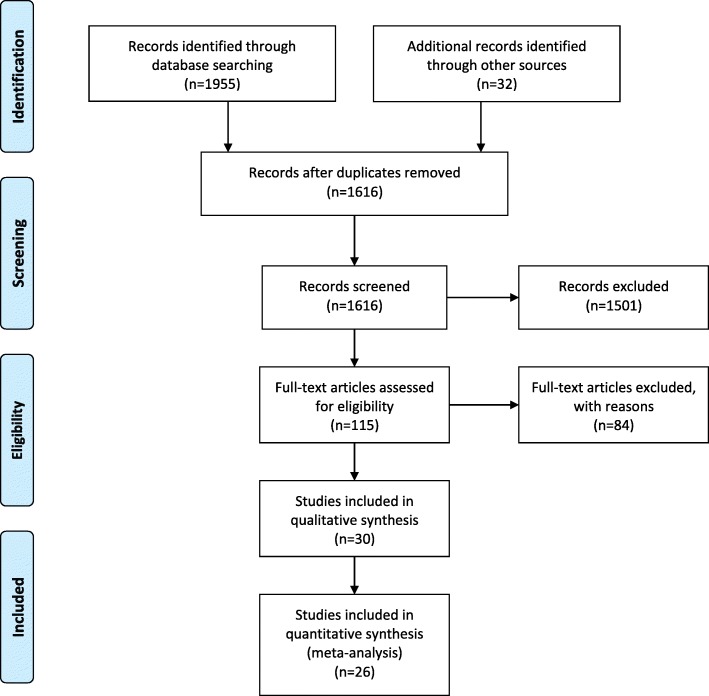
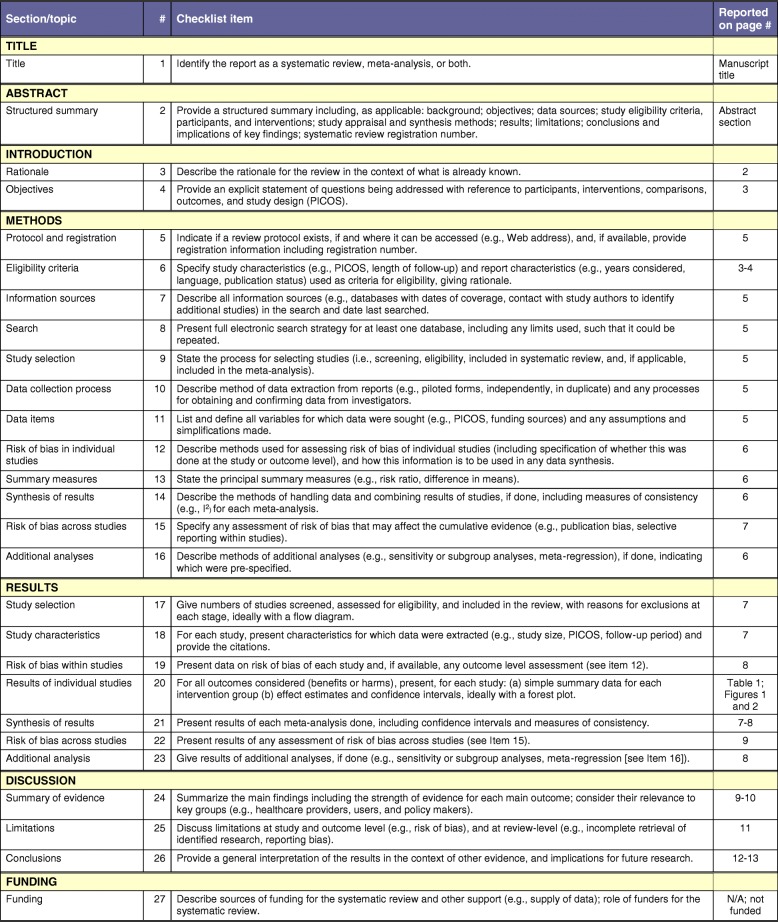
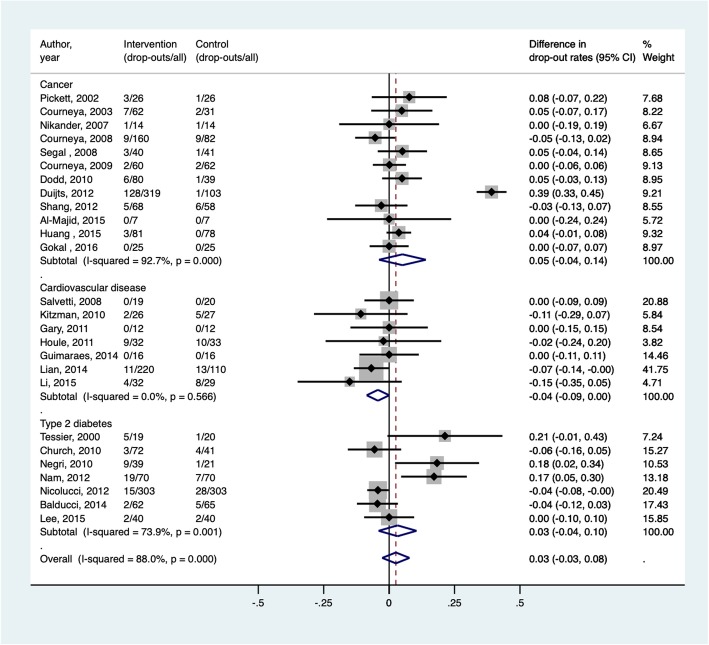
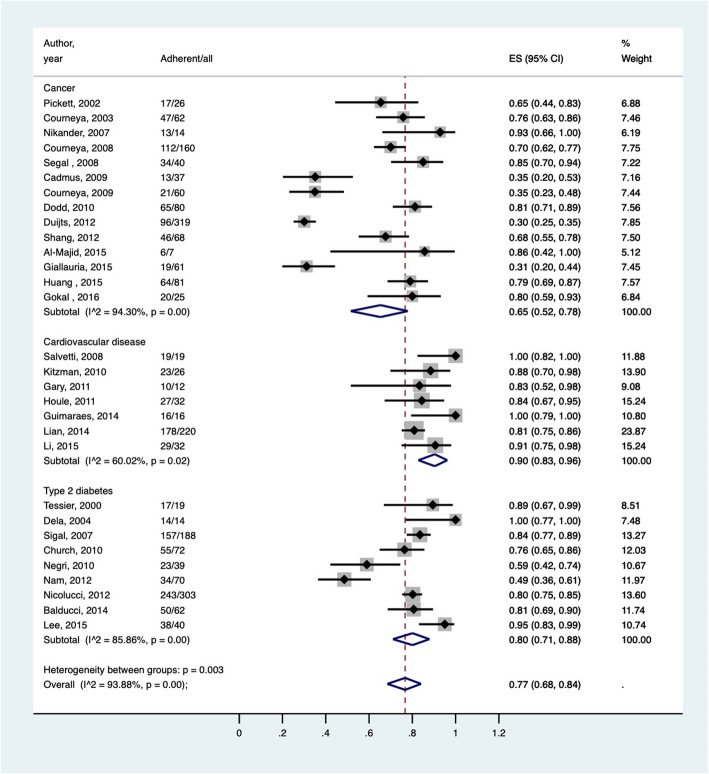
BACKGROUND: Physical activity is effective for the prevention and treatment of chronic disease, yet insufficient evidence is available to make comparisons regarding adherence to aerobic physical activity interventions among chronic disease populations, or across different settings. The purpose of this review is to investigate and provide a quantitative summary of adherence rates to the aerobic physical activity guidelines among people with chronic conditions, as physical activity is an effective form of treatment and prevention of chronic disease. METHODS: Randomized controlled (RCTs) trials where aerobic physical activity was the primary intervention were selected from PsychInfo, PubMed, CINAHL (Cumulative Index to Nursing and Allied Health Literature), Clinical Key, and SCOPUS from 2000 to 2018. Studies were included if the program prescription aligned with the 2008 aerobic physical activity guidelines, were at least 12 weeks in length, and included adult participants living with one of three chronic diseases. The data was extracted by hand and the PRISMA (preferred reporting items for systematic review and meta-analysis) guidelines were used to evaluate risk-of-bias and quality of evidence. Data were pooled using random-effect models. The primary outcome measure was program adherence and the secondary outcome measures were dropout and setting (e.g. home vs. clinic-based). Pooled effect sizes and 95% CiIs (confidence intervals) were calculated using random-effect models. RESULTS: The literature search identified 1616 potentially eligible studies, of which 30 studies (published between 2000 and 2018, including 3,721 participants) met the inclusion criteria. Three clinical populations were targeted: cancer (n = 14), cardiovascular disease (n = 7), and diabetes (n = 9). Although not statistically significant, adherence rates varied across samples (65, 90, and 80%, respectively) whereas dropout rates were relatively low and consistent across samples (5, 4, and 3%). The average adherence rate, regardless of condition, is 77% (95% CI = 0.68, 0.84) of their prescribed physical activity treatment. The pooled adherence rates for clinic-based and home-based programs did not differ (74% [95% CI, 0.65, 0.82] and 80% [95% CI, 0.65, 0.91], respectively). CONCLUSIONS: The current evidence suggests that people with chronic conditions are capable of sustaining aerobic physical activity for 3+ months, as a form of treatment. Moreover, home-based programs may be just as feasible as supervised, clinic-based physical activity programs.
Overview
The claims and statistics of this paper haven’t been checked yet.
Free: it reads the open-access text and checks the first 5 claims that cite a source we can check. Create a free account to check every claim.
Integrity signals
Registry
Cites
Statistics
Figures
Verification
Claims the paper makes
The claims and statistics of this paper haven’t been checked yet.
Free: it reads the open-access text and checks the first 5 claims that cite a source we can check. Create a free account to check every claim.
Claims other papers make about this one
Each is checked against this paper’s own text: does it say what the citing paper says it does?
The cited source says what the claim attributes to it.
In the citing paper
“no difference has been observed when comparing the adherence rates of patients with conditions like cancer, cardiovascular disease, and diabetes [63].”
From Key Factors Associated with Adherence to Physical Exercise in Patients with Chronic Diseases and Older Adults: An Umbrella Review (2021) · cites this paper as [63]
Self-check
Percentages, sums and reported differences re-computed from the paper’s own numbers.
The self-check needs the paper’s full text.
Citations
Cites
Preferred Reporting Items for Systematic Reviews and Meta-Analyses: the PRISMA statement
Moher, D., Liberati, A., Tetzlaff, J., Altman, D. G., & for the PRISMA Group (2009) · BMJ · doi:10.1136/bmj.b2535 · Cited by 83,823
Preferred reporting items for systematic reviews and meta-analyses: The PRISMA statement
Moher, D., Liberati, A., Tetzlaff, J., & Altman, D. G. (2010) · International Journal of Surgery · doi:10.1016/j.ijsu.2010.02.007 · Cited by 12,156 · cited 1×
“The PRISMA-P (preferred reporting items for systematic review and meta-analysis protocols) guidelines [25] were followed in the reporting of this systematic review protocol (see Figs.”
MethodHeart Disease and Stroke Statistics—2014 Update: A Report From the American Heart Association
Go, A. S., Mozaffarian, D., Roger, V. L., Benjamin, E. J., Berry, J. D., Blaha, M. J., Dai, S., Ford, E. S., Fox, C. S., Franco, S., et al. (2014) · Circulation · doi:10.1161/01.cir.0000441139.02102.80 · Cited by 5,215 · cited 1×
“Typical treatment for chronic disease involves managing symptoms with medication and accounts for 86% of the total health care expenses in the United States [11].”
BackgroundExercise as medicine - evidence for prescribing exercise as therapy in 26 different chronic diseases
Pedersen, B. K., & Saltin, B. (2015) · Scandinavian Journal of Medicine & Science in Sports · doi:10.1111/sms.12581 · Cited by 3,514
Heart disease and stroke statistics--2013 update: a report from the American Heart Association.
Go, A. S., Mozaffarian, D., Roger, V. L., Benjamin, E. J., Berry, J. D., Blaha, M. J., Dai, S., Ford, E. S., Fox, C. S., Franco, S., et al. (2013) · eScholarship (California Digital Library) · Cited by 2,601
Mediators and Moderators of Treatment Effects in Randomized Clinical Trials
Kraemer, H. C., Wilson, G. T., Fairburn, C. G., & Agras, W. S. (2002) · Archives of General Psychiatry · doi:10.1001/archpsyc.59.10.877 · Cited by 2,562
Taylor, R. S., Brown, A., Ebrahim, S., Jolliffe, J., Noorani, H., Rees, K., Skidmore, B., Stone, J. A., Thompson, D. R., & Oldridge, N. (2004) · The American Journal of Medicine · doi:10.1016/j.amjmed.2004.01.009 · Cited by 2,239
Exercise-Based Cardiac Rehabilitation for Coronary Heart Disease
Anderson, L., Oldridge, N., Thompson, D. R., Zwisler, A.-D., Rees, K., Martin, N., & Taylor, R. S. (2016) · Journal of the American College of Cardiology · doi:10.1016/j.jacc.2015.10.044 · Cited by 1,910
Physical activity and survival after breast cancer diagnosis
Holmes, M. D. (2005) · JAMA · doi:10.1001/jama.293.20.2479 · Cited by 1,772
Cited by
Physical activity, exercise, and chronic diseases: A brief review
Anderson, E., & Durstine, J. L. (2019) · Sports Medicine and Health Science · doi:10.1016/j.smhs.2019.08.006 · Cited by 993
Collado-Mateo, D., Lavín-Pérez, A. M., Peñacoba, C., Del Coso, J., Leyton-Román, M., Luque-Casado, A., Gasque, P., Fernández-del-Olmo, M. Á., & Amado-Alonso, D. (2021) · International Journal of Environmental Research and Public Health · doi:10.3390/ijerph18042023 · Cited by 791
“On the other hand, no difference has been observed when comparing the adherence rates of patients with conditions like cancer, cardiovascular disease, and diabetes [63].”
BackgroundLorito, C. D., Bosco, A., Booth, V., Goldberg, S. E., Harwood, R., & van der Wardt, V. (2020) · Preventive Medicine Reports · doi:10.1016/j.pmedr.2020.101139 · Cited by 136
Mirahmadizadeh, A., Khorshidsavar, H., Seif, M., & Sharifi, M. H. (2020) · Diabetes Therapy · doi:10.1007/s13300-019-00750-8 · Cited by 111
Lazzari, N. D., Niels, T., Tewes, M., & Götte, M. (2021) · Cancers · doi:10.3390/cancers13174478 · Cited by 107
“treatment setting was reported to be 10–13% [49,50].”
BackgroundJones, M. D., Clifford, B. K., Stamatakis, E., & Gibbs, M. T. (2024) · Sports Medicine · doi:10.1007/s40279-023-01983-1 · Cited by 117
Phulkerd, S., Thapsuwan, S., Chamratrithirong, A., & Gray, R. S. (2021) · BMC Public Health · doi:10.1186/s12889-020-10032-9 · Cited by 85
“Regular physical activity is recommended as an important component of healthy aging that can produce health benefits in improving mental and physical health, and functional status of older persons [34, 35].”
BackgroundMacDonald, C. S., Ried‐Larsen, M., Soleimani, J., Alsawas, M., Lieberman, D. E., Ismail, A. S., Serafim, L. P., Yang, T., Prokop, L., Joyner, M., et al. (2021) · Diabetes/Metabolism Research and Reviews · doi:10.1002/dmrr.3444 · Cited by 57
“,(22) the rate of adherence to aerobic exercise interventions among patients with T2D was estimated to be 80%, however, these results are associated with considerable heterogeneity (I(2) = 86%).(22) The adherence rates in the included studies varied from 49% to 100%.”
BackgroundDun, Y., Hu, P., Ripley-Gonzalez, J. W., Zhou, N., Li, H., Zhang, W., Chen, M., Zheng, Q., Cui, N., Wu, S., et al. (2022) · Age and Ageing · doi:10.1093/ageing/afac026 · Cited by 60
Shaw, J. F., Pilon, S., Vierula, M., & McIsaac, D. I. (2022) · Systematic Reviews · doi:10.1186/s13643-022-01966-9 · Cited by 56
“Page 10/13 Some authors have advocated the identi cation of participant-level ‘red ags’ to adherence as a way to personalize exercise program design and support.(45) However, this approach requires a thorough understanding of what participant characteristics may act as red ags.”
BackgroundResultEffect of Latin dance on physical and mental health: a systematic review
Liu, X., Soh, K. G., & Dev, R. D. O. (2023) · BMC Public Health · doi:10.1186/s12889-023-16221-6 · Cited by 58
“Regular physical activity is crucial for preventing chronic diseases, such as cardiovascular disease, obesity, and diabetes [49].”
BackgroundHuizinga, F., Westerink, N.-D. L., Berendsen, A. J., Walenkamp, A., Greef, M. H. G. D., Nijeweeme, J. O., de Bock, G. H., Berger, M. Y., & Brandenbarg, D. (2021) · Medicine & Science in Sports & Exercise · doi:10.1249/mss.0000000000002735 · Cited by 50
“Nevertheless, PA interventions must be designed specifically for survivors of cancer because this group typically shows lower adherence, higher dropout rates, and larger variability in adherence and dropout compared with patients who have other chronic diseases (61).”
Oncology and Cardiac Rehabilitation: An Underrated Relationship
Venturini, E., Iannuzzo, G., D’Andrea, A., Pacileo, M., Tarantini, L., Canale, M. L., Gentile, M., Vitale, G., Sarullo, F. M., Vastarella, R., et al. (2020) · Journal of Clinical Medicine · doi:10.3390/jcm9061810 · Cited by 51
“Moreover, exercise (E) programs, especially if supervised, improve QoL and physical function in cancer patients with different demographic and clinical characteristics (including C-type), during and after treatment [51].”
BackgroundLey, C., & Pütz, P. (2024) · Systematic Reviews · doi:10.1186/s13643-024-02538-9 · Cited by 51
“However, non-adherence in physiotherapy can be as high as 70%, particularly in unsupervised home exercise programmes [1, 3] and may differ among medical conditions [4].”
BackgroundThe multifactorial effect of obesity on the effectiveness and outcomes of cancer therapies
Lysaght, J., & Conroy, M. J. (2024) · Nature Reviews Endocrinology · doi:10.1038/s41574-024-01032-5 · Cited by 48
“A meta-analysis of adherence to physical activity in those with chronic disease showed a 65% adherence rate for a prescribed 12-week exercise programme among those with cancer, compared with 90% and 80% among those with cardiovascular disease and diabetes, respectively 115 .”
Safiri, S., Nejadghaderi, S. A., Karamzad, N., Kaufman, J. S., Carson‐Chahhoud, K., Bragazzi, N. L., Sullman, M. J. M., Beyranvand, M. R., Mansournia, M. A., Almasi‐Hashiani, A., et al. (2022) · Frontiers in Endocrinology · doi:10.3389/fendo.2022.879890 · Cited by 51
Framing physical literacy for aging adults: an integrative review
Petrusevski, C., Morgan, A. R., MacDermid, J. C., Wilson, M. G., & Richardson, J. A. (2021) · Disability and Rehabilitation · doi:10.1080/09638288.2021.2012841 · Cited by 53
Jie, S., Fu, A., Wang, C., & Rajabi, S. (2025) · Behavioral and Brain Functions · doi:10.1186/s12993-025-00273-2 · Cited by 42
“Furthermore, engaging in aerobic exercise has been associated with a lower risk of developing chronic conditions, including type 2 diabetes, high blood pressure, and some types of cancer [50].”
Lo, Y.-P., Chiang, S., Lin, C., Liu, H., & Chiang, L. (2020) · International Journal of Environmental Research and Public Health · doi:10.3390/ijerph18010101 · Cited by 47
Cooper, K., Alexander, L., Brandie, D., Brown, V. T., Greig, L., Harrison, I., MacLean, C., Mitchell, L., Morrissey, D., Moss, R. A., et al. (2023) · Health Technology Assessment · doi:10.3310/tfws2748 · Cited by 56
Pérez-Gisbert, L., Torres‐Sánchez, I., Ortíz‐Rubio, A., Mateo, A. C., López‐López, L., Martos, I. C., & Valenza, M. C. (2021) · International Journal of Environmental Research and Public Health · doi:10.3390/ijerph182312278 · Cited by 44
“There is evidence within the medical community that PA is an effective treatment of chronic diseases [13].”
BackgroundPhysical exercise as treatment for adults with type 2 diabetes: a rapid review
Ribeiro, A. K. P. D. L., Carvalho, J. P. R., & Bento-Torres, N. V. O. (2023) · Frontiers in Endocrinology · doi:10.3389/fendo.2023.1233906 · Cited by 48
Medical machine learning based on multiobjective evolutionary algorithm using learning decomposition
Wang, M., Li, X., Chen, L., & Chen, H. (2022) · Expert Systems with Applications · doi:10.1016/j.eswa.2022.119450 · Cited by 37
Wlazło, M., Szlacheta, P., Grajek, M. K., Staśkiewicz‐Bartecka, W., Rozmiarek, M., Malchrowicz-Mośko, E., & Korzonek-Szlacheta, I. (2025) · Applied Sciences · doi:10.3390/app15042086 · Cited by 40
Chen, X., Su, D., Chen, X., & Chen, Y. (2021) · BMC Public Health · doi:10.1186/s12889-021-11407-2 · Cited by 35
“In recent years, active participation in physical activity has also been highlighted as an important factor in promoting successful ageing, including reducing the risk of all-cause death [13], chronic disease [14], functional loss [15], reducing anxiety and depression [16, 17] and improving cognition [18].”
BackgroundVolders, E., Bolman, C. A. W., de Groot, R. H. M., Verboon, P., & Lechner, L. (2020) · International Journal of Environmental Research and Public Health · doi:10.3390/ijerph17072590 · Cited by 35
“These programs are generally face-to-face and offer detailed and intensive supervision [17].”
BackgroundInfluentialDugunchi, F., Mudgal, S. K., Marznaki, Z. H., Shirafkan, H., Abrotan, S., Jafarian, F., & Pourkia, R. (2024) · BMC Cardiovascular Disorders · doi:10.1186/s12872-024-03827-w · Cited by 34
“The impact of treatment adherence on effectively managing diseases and mitigating adverse outcomes is well-documented [12, 13].”
BackgroundShen, J., Yu, J., Zhang, H., Lindsey, M. A., & An, R. (2025) · Journal of sport and health science/Journal of Sport and Health Science · doi:10.1016/j.jshs.2025.101045 · Cited by 37
“60 (cid:1) 62 For example, mobile health (mHealth) Apps and wearable fitness trackers offer convenience and cost-effectiveness, allowing users to easily monitor their activity levels and receive real-time feedback.”
Self-citationAcceptance and Commitment Therapy on physical activity: A systematic review
Manchón, J., Quiles, M. J., Zarceño, E. L., & López-Roig, S. (2020) · Journal of Contextual Behavioral Science · doi:10.1016/j.jcbs.2020.07.008 · Cited by 35
Stavric, V., Kayes, N. M., Rashid, U., & Saywell, N. L. (2022) · Frontiers in Rehabilitation Sciences · doi:10.3389/fresc.2022.925620 · Cited by 36
“Given the added barriers experienced by these people (74), tailoring the intervention to the individual needs to be considered and addressed (75).”
BackgroundBarriers and Facilitators of Vestibular Rehabilitation: Patients and Physiotherapists’ Perspectives
Kalderon, L., Kaplan, A., Wolfovitz, A., Levy‐Tzedek, S., & Gimmon, Y. (2024) · Neurology Report · doi:10.1097/npt.0000000000000470 · Cited by 32
“36”
Sañudo, B., Sánchez-Oliver, A. J., Gavira, J. F., Gaser, D., Stöcker, N., Peralta, M., Marques, A., Papakonstantinou, S., Nicolini, C., & Sitzberger, C. (2024) · Sports Medicine - Open · doi:10.1186/s40798-024-00722-8 · Cited by 34
“…available data in the current review are in line with previous evidence reporting positive adherence outcomes in sport-related interventions for CaA with chronic diseases, reporting average adherence rates, regardless of condition (e.g., cancer, cardiovascular disease, and diabetes), of 77% [96].”
ResultMukherji, A. B., Lu, D., Qin, F., Hedlin, H., Johannsen, N. M., Chung, S., Kobayashi, Y., Haddad, F., Lamendola, C., Basina, M., et al. (2022) · JAMA Network Open · doi:10.1001/jamanetworkopen.2022.47858 · Cited by 20
General and Disease-Specific Health Indicator Changes Associated with Inpatient Rehabilitation
Grote, V., Unger, A., Böttcher, E., Muntean, M., Puff, H., Marktl, W., Mur, E., Kullich, W., Holasek, S. J., Hofmann, P., et al. (2020) · Journal of the American Medical Directors Association · doi:10.1016/j.jamda.2020.05.034 · Cited by 28
Association between Physical Activity and 32 Chronic Conditions among Spanish Adults
Sánchez, G. F. L., Mendiola, J., & Torres-Cantero, A. M. (2022) · International Journal of Environmental Research and Public Health · doi:10.3390/ijerph192013596 · Cited by 26
“[25] but also in other chronic diseases, with a total of 19 chronic conditions in the adjusted analyses.”
BackgroundTummers, S. C. M. W., Hommersom, A., Lechner, L., Bemelmans, R., & Bolman, C. A. W. (2022) · International Journal of Behavioral Nutrition and Physical Activity · doi:10.1186/s12966-022-01381-2 · Cited by 23
Xu, Z., Sun, W. J., Zhang, D., & Wong, S. Y. S. (2020) · International Journal of Geriatric Psychiatry · doi:10.1002/gps.5336 · Cited by 22
“Bullard et al's study found the overall adherence to physical activity was 77% and the dropout rates were around 4% among participants with cancer, cardiovascular disease, and diabetes.(43) However, all these studies focused on physical exercise.”
BackgroundVolders, E., de Groot, R. H. M., Bolman, C. A. W., & Lechner, L. (2021) · BMC Geriatrics · doi:10.1186/s12877-021-02429-x · Cited by 21
Lee, S. Y., Goh, A., Tan, K., Choo, P. L., Ong, P., Wong, W. P., & Wee, S. L. (2021) · European Review of Aging and Physical Activity · doi:10.1186/s11556-021-00273-x · Cited by 20
A mixed methods study of physical activity and quality of life in adolescents with Turner syndrome
Thompson, T., Zieba, B., Howell, S., Karakash, W., & Davis, S. (2020) · American Journal of Medical Genetics Part A · doi:10.1002/ajmg.a.61439 · Cited by 19
“…preventative health behavior that is grossly understudied in TS but has proven efficacious in other populations with similar comorbidities, including those at risk for CVD, osteoporosis, and mental health conditions (Bullard et al., 2019; Quirk, Blake, Tennyson, Randell, & Glazebrook, 2014).”
BackgroundEshete, A., Mohammed, S., Shine, S., Eshetie, Y., Assefa, Y. A., & Tadesse, N. S. (2023) · BMC Public Health · doi:10.1186/s12889-023-15642-7 · Cited by 22
Sierawska, O., & Sawczuk, M. (2023) · International Journal of Molecular Sciences · doi:10.3390/ijms242417287 · Cited by 19
“PA is recognised as one of the effective treatments for CVD, but patients with the disease have lower levels of PA than those without CVD [94].”
BackgroundLu, T., Denehy, L., Cao, Y., Cong, Q., Wu, E. Y., Granger, C. L., Ni, J., & Edbrooke, L. (2020) · Integrative Cancer Therapies · doi:10.1177/1534735420952887 · Cited by 20
Litchfield, I. J., Barrett, T. G., Hamilton-Shield, J. P., Moore, T. H., Narendran, P., Redwood, S., Searle, A., Uday, S., Wheeler, J., & Greenfield, S. (2023) · International Journal for Equity in Health · doi:10.1186/s12939-023-01976-6 · Cited by 19
“DSSP typically incorporate several interacting components that address various requirements of self-management including diabetes education [129], self-monitoring [130], lifestyle changes [131, 132]; and psychological resilience [62].”
BackgroundShams, F., Tai, A. M. Y., Kim, J., Boyd, M., Meyer, M., Kazemi, A., & Krausz, R. M. (2023) · Digital Health · doi:10.1177/20552076231203876 · Cited by 18
Larsen, R. F., Jarden, M., Minet, L. R., Frølund, U. C., Hermann, A. P., Breum, L., Möller, S., & Abildgaard, N. (2024) · European Journal Of Haematology · doi:10.1111/ejh.14215 · Cited by 20
“43 Although we were unable to detect the effect of the intervention at the group level, it may have been beneficial for some patients.”
Baños, R., Barretos-Ruvalcaba, M., Extremera, A. B., & Fuentesal-García, J. (2021) · Retos · doi:10.47197/retos.v42i0.87088 · Cited by 25
Al-walah, M. A., Donnelly, M., Cunningham, C., & Heron, N. (2023) · BMC Public Health · doi:10.1186/s12889-023-16885-0 · Cited by 19
Measuring Health: Wearables in Fitness Tracking, Stress Relief, and Sleep Management
Sieniawska, J., Proszowska, P., Madoń, M., Kotowicz, Z., Orzeł, A., Pich-Czekierda, A., & Sieniawska, D. (2024) · Journal of Education Health and Sport · doi:10.12775/jehs.2024.67.003 · Cited by 19
Katewongsa, P., Yousomboon, C., Haemathulin, N., Rasri, N., & Widyastari, D. A. (2021) · BMC Public Health · doi:10.1186/s12889-021-10736-6 · Cited by 17
“As a form of treatment, evidence shows that people with a chronic disease are quite capable of performing aerobic PA, either in the clinical or home setting [35, 45].”
BackgroundRolling out physical exercise and energy homeostasis: Focus on hypothalamic circuitries
Cavalcanti‐de‐Albuquerque, J. P., & Donato, J. (2021) · Frontiers in Neuroendocrinology · doi:10.1016/j.yfrne.2021.100944 · Cited by 17
Tele-yoga for the management of Parkinson disease: A safety and feasibility trial
James-Palmer, A., & Daneault, J. (2022) · Digital Health · doi:10.1177/20552076221119327 · Cited by 20
“These benchmarks are based on standards established in the literature(68) and the range of intervention adherence reported in previous intervention studies for similar interventions (physical activity and yoga) and populations (chronic health conditions and PD).(23,69,70) Technological challenges.”
MethodJimenez-Mazuelas, M. J., de Villar, N. G.-P., Casas-Albendea, S. D., Martínez‐Gimeno, M. L., Jiménez, S., & Carrere, M. T. A. (2024) · Journal of Bodywork and Movement Therapies · doi:10.1016/j.jbmt.2024.10.041 · Cited by 15
Woodward, A., Broom, D. R., Dalton, C., Metwally, M., & Klonizakis, M. (2022) · Journal of Physical Activity and Health · doi:10.1123/jpah.2022-0103 · Cited by 16
Road map for personalized exercise medicine in T2DM
Brinkmann, C. K. (2023) · Trends in Endocrinology and Metabolism · doi:10.1016/j.tem.2023.08.013 · Cited by 15
Silva, I., Moreira, C. S., Pedras, S., Oliveira, R., Veiga, C., Moreira, L. F., Santarém, D., Guedes, D., & Paredes, H. (2023) · Frontiers in Cardiovascular Medicine · doi:10.3389/fcvm.2023.1272897 · Cited by 15
Smith‐Turchyn, J., Sinclair, S., O’Loughlin, E. K., Innes, A., Vani, M. F., Beauchamp, M., Phillips, S. M., Richardson, J. L., Thabane, L., & Sabiston, C. M. (2024) · BMC Geriatrics · doi:10.1186/s12877-024-05495-z · Cited by 14
“Based on previously published data, a priori we defined the intervention would be feasible with an adherence rate of 70% [48].”
MethodDranebois, S., Lalanne‐Mistrih, M., Nacher, M., Thelusme, L., Deungoue, S., Demar, M., Dueymes, M., Alsibai, K. D., & Sabbah, N. (2022) · Frontiers in Endocrinology · doi:10.3389/fendo.2021.790326 · Cited by 14
Ramírez‐Vélez, R., Oteiza, J., de Tejerina, J. M. C. F., García-Alonso, N., Legarra‐Gorgoñon, G., Oscoz-Ochandorena, S., Arasanz, H., García‐Alonso, Y., Correa‐Rodríguez, M., & Izquierdo, M. (2022) · Trials · doi:10.1186/s13063-022-06608-y · Cited by 14
“Considering a potential dropout rate of <15–20% based on our previous exercise trials [60, 61], a total of 100 participants (50 per group) will be randomized.”
Joaquim, A. V., Amarelo, A. L., Antunes, P., Garcia, C., Leão, I. A. T., Vilela, E., Teixeira, M., Duarte, B., Vieira, M., Afreixo, V. M. A., et al. (2023) · Psychology Health & Medicine · doi:10.1080/13548506.2023.2240074 · Cited by 15
“After adjusting for an expected dropout rate of 30–40%, we aimed to recruit 80 participants (Bullard et al., 2019).”
BackgroundVolders, E., de Groot, R. H. M., Coumans, J. M. J., Bolman, C. A. W., & Lechner, L. (2021) · European Review of Aging and Physical Activity · doi:10.1186/s11556-021-00259-9 · Cited by 15
“Furthermore, older adults with chronic diseases have the lowest levels of PA [21, 22], mostly caused by experienced fatigue and pain [21, 23].”
BackgroundPractical guidelines for exercise prescription in different clinical populations
Komici, K., Bianco, A., Cuomo, A., Bianco, R., Illario, M., Guerra, G., Paoli, A., Schena, F., & Iaccarino, G. (2026) · Frontiers in Sports and Active Living · doi:10.3389/fspor.2026.1649549 · Cited by 12
“Across cancer, cardiovascular disease, and diabetes populations, the average adherence rate to physical activity interventions was 77%, with an overall dropout rate of 7.0% (16).”
InfluentialMorel, S., Hugon, G., Vitou, M., Védère, M., Fons, F., Rapior, S., Saint, N., & Carnac, G. (2021) · Nutrients · doi:10.3390/nu13124190 · Cited by 13
“These are partly the consequence of patient pathologies (fatigue, pain) which limits their participation in long-term physical activity compared to people without chronic illness [3,4].”
BackgroundHao, L., Goetze, S., Alessa, T., & Hawley, M. (2023) · Journal of Medical Internet Research · doi:10.2196/46622 · Cited by 14
“However, extra barriers caused by the symptoms of long-term conditions can reduce people’s adherence to the recommended PA level [6,8].”
Hormazábal‐Aguayo, I., Muñoz‐Pardeza, J., López‐Gil, J. F., Huerta‐Uribe, N., Chueca-Guindulain, M. J., Berrade‐Zubiri, S., Sánchez, E. B., Izquierdo, M., Ezzatvar, Y., & García‐Hermoso, A. (2024) · Frontiers in Endocrinology · doi:10.3389/fendo.2024.1354734 · Cited by 15
Your move: A precision medicine framework for physical activity in aging
de la Colina, A. N., Morris, T. P., Kramer, A. F., Kaushal, N., & Geddes, M. R. (2024) · npj Aging · doi:10.1038/s41514-024-00141-9 · Cited by 14
Schweda, S., Munz, B., Burgstahler, C., Niess, A. M., Roesel, I., Sudeck, G., & Krauß, I. (2022) · International Journal of Environmental Research and Public Health · doi:10.3390/ijerph19159469 · Cited by 13
“In a recent review the average adherence rate for clinic- and home-based PA interventions among cancer, cardiovascular disease or diabetes patients was reported to be 77% [68], indicating that adherence rates observed in our study are within an average range.”
BackgroundLópez-Ruiz, I., Lozano, F., Masia, M. D., & González-Gálvez, N. (2023) · Sports · doi:10.3390/sports11060115 · Cited by 12
“In this regard, the effects of physical activity programmes on the metabolic environment and systemic chronic inflammation, as well as adaptations at the vascular and cardiac tissue levels, have been described [36,37].”
BackgroundVargo, M. M., Gerber, L. H., Gilchrist, L. S., & Fisher, M. I. (2025) · Cancer Medicine · doi:10.1002/cam4.70626 · Cited by 10
Lee, Y.-S., Komar, J., & Chia, M. (2021) · Sports · doi:10.3390/sports9050069 · Cited by 13
“Compare this to a recent meta-analysis [21] that demonstrated a 74% average adherence rate and 3–5% dropout rate across populations with chronic diseases in exercise intervention studies, presenting a much more optimistic outlook on exercise adherence.”
ResultLi, Q., Cai, W., Li, Y., Zhang, R., Zeng, C., Ma, X., Barka, C. K., Zhang, C., Sun, T., & Xie, H. (2022) · Geriatrics and gerontology international/Geriatrics & gerontology international · doi:10.1111/ggi.14520 · Cited by 10
Physical activity among adults with type 2 diabetes mellitus in Jordan: a qualitative study
Momani, A., Al-Marzouqi, Z. K. D., Shhadeh, A. A., Ajlouni, K. M., ALBashtawy, M., Almomani, M. H., Jarrah, S., AlQahtani, S. A., & Ababneh, A. (2025) · Therapeutic Advances in Endocrinology and Metabolism · doi:10.1177/20420188251315658 · Cited by 16
Worthen‐Chaudhari, L., Crasta, J. E., Schnell, P., Lantis, K., Martis, J. E., Wilder, J., Bland, C., Hackney, M. E., & Lustberg, M. B. (2024) · Journal of Alzheimer s Disease · doi:10.1177/13872877241291440 · Cited by 11
Stockton, M. B., Ward, K. D., McClanahan, B. S., Weg, M. W. V., Coday, M., Wilson, N. Z., Relyea, G. E., Read, M. C., Connelly, S., Johnson, K., et al. (2023) · The Journal of Smoking Cessation · doi:10.1155/2023/5535832 · Cited by 12
“While the level of physical activity adherence we achieved is similar to that of other trials [72], it indicates the continuing challenge of encouraging long-term maintenance of physical activity in previously sedentary individuals who smoke.”
ResultMachacova, K., Polanská, H., Šteffl, M., Bártová, A., Novotná, B., & Holmerová, I. (2025) · Clinical Interventions in Aging · doi:10.2147/cia.s530709 · Cited by 8
“21,22 It is important to note that long-term exercise interventions (≥1 year) in older adults are safe and do not pose an increased risk.”
Pitchalard, K., Wimolphan, P., Singkhorn, O., Purkey, E., & Moonpanane, K. (2022) · Health Equity · doi:10.1089/heq.2021.0161 · Cited by 10
Zhou, R., Cui, Y., Zhang, Y., Jin, D., An, X., Duan, Y., Zhang, Y., Kang, X., & Lian, F. (2022) · Frontiers in Endocrinology · doi:10.3389/fendo.2022.838224 · Cited by 8
Levy, T., Huxley, K., Vuu, S., & Lewis, L. K. (2023) · Disability and Rehabilitation · doi:10.1080/09638288.2023.2296525 · Cited by 13
“For people with chronic conditions to benefit from physical activity programs, adherence is vital, and barriers can be even greater than in the general population with factors such as fatigue and pain contributing to low adherence rates [13].”
Cody, R., Kreppke, J.-N., Fischer, X., Faude, O., Beck, J., Brand, S., Hatzinger, M., Imboden, C., Kügerl, N., Lang, U. E., et al. (2023) · BMC Psychiatry · doi:10.1186/s12888-023-04834-5 · Cited by 8
Saint‐Onge, K., St-Cyr, J., Doré, I., & Gauvin, L. I. (2024) · BMC Health Services Research · doi:10.1186/s12913-024-11480-4 · Cited by 7
“Nevertheless, data show that people diagnosed with cancer do not reach these recommendations [10, 11].”
BackgroundDeka, P., Salahshurian, E., Ng, T. J., Buchholz, S. W., Klompstra, L. V., & Alonso, W. (2025) · Journal of Medical Internet Research · doi:10.2196/54524 · Cited by 9
“…achieve exercise adherence, the extent of lifestyle and behavioral changes needed to be made by a patient with HF, experiencing frequent peaks and troughs in symptoms, can be challenging and also different from patients with other chronic clinical conditions such as diabetes and hypertension [25].”
InfluentialDigitally Delivered, Group-Based Exercise Interventions for Older Adults: Scoping Review
Wing, D., Nichols, J. F., Parra, M. T., Barkai, H., & Moran, R. J. (2025) · Journal of Medical Internet Research · doi:10.2196/73578 · Cited by 8
“%) in healthy older adults [45] and the 60%-70% observed in clinically defined groups [46] engaged in live exercise interventions.”
Caudroit, J., Lapointe, J., Comtois, A. S., Romain, A. J., & Bernard, P. (2025) · Disability and Rehabilitation · doi:10.1080/09638288.2025.2488041 · Cited by 6
Brunet, J., Price, J., & Delluc, C. (2021) · Trials · doi:10.1186/s13063-020-04958-z · Cited by 8
Marec‐Bérard, P., Delrieu, L., Febvey‐Combes, O., Mongondry, R., Pérol, O., Moumjid, N., Boyle, H. J., Fervers, B., & Carretier, J. (2022) · Journal of Adolescent and Young Adult Oncology · doi:10.1089/jayao.2021.0044 · Cited by 7
“38 In a mixed-method pilot randomized-control trial, Wurz et al. reported adherence rates of 58%–92% for supervised sessions and 50%–92% for unsupervised sessions.”
Dropout predictors at gyms: a retrospective study
Oliveira, G. T. A., Pereira, L. C., Linhares, M., da Silva, L. R. F., Silva, P. R., & Elsangedy, H. M. (2021) · Revista Brasileira de Ciências do Esporte · doi:10.1590/rbce.43.e014220 · Cited by 9
“Adherence to exercise may influence various outcomes, such as pain, physical function, and chronic diseases (Bullard et al., 2019; Nicolson et al., 2017).”
BackgroundThe Feasibility and Efficacy of Remote App-Guided Home Exercises for Frozen Shoulder: A Pilot Study
Lin, Y.-J., Chung, C.-Y., Chen, C. P. C., Hsieh, Y., Wang, C.-F., & Chen, C.-C. (2024) · Healthcare · doi:10.3390/healthcare12111095 · Cited by 7
“Besides this participant, others had an average adherence rate of up to 82.3%, which is considered acceptable for physical activity interventions [40].”
BackgroundInfluentialO’Gorman, S. A., Miller, C. T., Rawstorn, J. C., Sabag, A., Sultana, R. N., Lanting, S. M., Keating, S. E., Johnson, N. A., & Way, K. L. (2023) · Journal of Clinical Medicine · doi:10.3390/jcm12041255 · Cited by 6
“We observed high attendance at exercise training sessions among both sexes, and while many exercise trials report similar rates (75–85%) [28,30,40], we believe this is the first study to examine sex differences in treatment fidelity among adults with T2D.”
Supportive Care Needs Survey: A reliability generalization meta-analysis
Lee, H., Jang, Y., & Jeong, Y. (2023) · Palliative & Supportive Care · doi:10.1017/s1478951522001791 · Cited by 7
Lindahl, M., Madsen, S., & Dresner, A. L. (2020) · European Journal of Physiotherapy · doi:10.1080/21679169.2020.1857436 · Cited by 6
“The study found no differences between clinic-based interventions and home-based aerobic exercise programs for patients with cancer, cardiovascular diseases, and diabetes [32].”
BackgroundWilczynska, M., Lubans, D. R., & Plotnikoff, R. C. (2021) · Psychology Health & Medicine · doi:10.1080/13548506.2021.1883684 · Cited by 6
Haddad, L. E., Peiris, C. L., Taylor, N. F., & McLean, S. M. (2023) · Patient Preference and Adherence · doi:10.2147/ppa.s383482 · Cited by 6
“However, adherence is reported to be low in populations with chronic conditions.(20,21) Bullard et al(21) found that across cancer, cardiovascular disease and type 2 diabetes mellitus populations, the average adherence rate to prescribed exercise was 77%.”
BackgroundAbate, H. K., Azagew, A. W., Zegeye, A. F., Tsega, S. S., Agimas, M. C., Mekonnen, H. S., Nega, G. A., Beko, Z. W., & Mekonnen, C. K. (2024) · PLoS ONE · doi:10.1371/journal.pone.0314389 · Cited by 5
Blinova, K. A., Мишина, И. Е., Ivanova, G. Е., & Березина, Е. В. (2025) · Bulletin of Rehabilitation Medicine · doi:10.38025/2078-1962-2025-24-2-107-119 · Cited by 5
Risco, R., Sebio-Garcia, R., González, R., Ubré, M., Dana, F., Iglesias-García, E., Martínez‐Palli, G., & On Behalf Of The Hospital Clínic de Barcelona Prehabilitation Group (2025) · Journal of Clinical Medicine · doi:10.3390/jcm14113813 · Cited by 6
“In support of these findings, a systematic review and meta-analysis by Bullard et al. [33] re-ported a mean adherence rate of 77% across physical activity interventions in patients with cancer, cardiovascular disease, and diabetes, reinforcing the relevance of structured and patient-centered…”
Alumona, C. J., Scott, D. R. M., Aladejebi, T., Kalu, M. E., Onyeso, O. K., Odole, A. C., Vogelsang, L., Singleton, J. F., & Awosoga, O. (2026) · International Journal of Behavioral Nutrition and Physical Activity · doi:10.1186/s12966-026-01877-1 · Cited by 8
Fakolade, A. O., Awadia, Z., Cardwell, K. L., McKenna, O. J., Venasse, M., Hume, T. A., Ludgate, J., Freedman, M. S., Finlayson, M. L., Latimer‐Cheung, A. E., et al. (2023) · Contemporary Clinical Trials Communications · doi:10.1016/j.conctc.2023.101222 · Cited by 5
“Participant adherence : Participant adherence to PAT-MS was slightly higher than other PA interventions in the chronic disease [61] and aging [62] literature, where 77% adherence, regardless of condition, has been reported.”
Shawahna, R., Jaber, M., Zmiro, A., & Kashkoush, S. (2024) · Scientific Reports · doi:10.1038/s41598-024-60876-z · Cited by 6
“Even though physical activity is a cornerstone in the management of T2DM, several studies have reported suboptimal levels of physical activity among T2DM patients 12,17–19 .”
BackgroundFu, X., Wang, C., Wang, Y., Gong, L., Liu, H., Shen, Z., Zhu, D., Zhang, J., Bai, J., Ren, R., et al. (2025) · Scientific Reports · doi:10.1038/s41598-025-06064-z · Cited by 7
“In response, many countries have adopted to promote healthy lifestyles, including physical activity interventions, as a novel approach to combat the rising prevalence of comorbidity 8 .”
O’Grady, H. K., Farley, C., Takaoka, A., Mayens, E., Bosch, J., Turkstra, L. S., & Kho, M. E. (2022) · Trials · doi:10.1186/s13063-022-06172-5 · Cited by 6
Metadata
- Authors
- Bullard, T., Ji, M., An, R., Trinh, L., Mackenzie, M., & Mullen, S. P.
- Affiliations
- University of Illinois Urbana-Champaign (US)
- University of Toronto (CA)
- University of Delaware (US)
- Corresponding author
- Mullen, Sean P.
- Venue
- BMC Public Health
- Published
- 2019-05-24
- Volume
- 19
- Issue
- 1
- Pages
- 636-636
- ISSN
- 1471-2458 (ISSN-L)
- PMC
- PMC6534868
- OpenAlex
- W2947310117
- Semantic Scholar
- 11a182f6ac486f5dedba2104d2ef34e41585214b
- Cited by
- 255
- References
- 66
- Citations by year
- 2026: 24 · 2025: 34 · 2024: 46 · 2023: 41 · 2022: 42 · 2021: 46 · 2020: 17 · 2019: 5
- FWCI
- 3.24
- Type
- journal article
- Language
- en
- Open access
- gold
- doi.org
- Licence
- cc-by
- creativecommons.org/licenses/by/4.0/ (tdm)
- creativecommons.org/licenses/by/4.0/ (vor)
- Locations
- BMC Public Health (publishedVersion, cc-by)
- PubMed Central (publishedVersion, cc-by)
- PubMed (publishedVersion)
- TSpace (University of Toronto) (submittedVersion, cc-by)
- DOAJ (DOAJ: Directory of Open Access Journals) (submittedVersion, cc-by-sa)
- Topics
- Health Sciences › Medicine › Public Health, Environmental and Occupational Health › Physical Activity and Health
- Health Sciences › Medicine › Physiology (medical) › Cardiovascular and exercise physiology
- Health Sciences › Health Professions › General Health Professions › Mobile Health and mHealth Applications
- Keywords
- physical activity adherence, chronic disease, cancer, cardiovascular disease, diabetes mellitus, dropout, home exercise program, physical activity guidelines, exercise prescription, exercise sustainability
- MeSH terms
- Cardiac Rehabilitation, Adult, Cardiovascular Diseases, Chronic Disease, Diabetes Mellitus, Humans, Neoplasms, Patient Compliance, Exercise
About these checks
Registry, retraction, Cites and statistics results are computed, not judged, with one exception: a printed reference that no index lists is read once by a model before it counts as a citation error. Claims are extracted by a model and kept only when their quote appears verbatim in the text; each cited source is then checked, with a model’s help, for whether it says what the claim relies on. Those verdicts can be wrong — read the claim’s quote and the cited source before relying on one.
Statistics and arithmetic are recomputed, not judged.
Confidence bands are shown only for fields calibrated on our annotated test set. None is calibrated yet, so no band is shown.
What counts as a claim ›How we measure confidence ›How we check this ›
Are you an author, or do you see a problem with this page? Request a review
Data sources
Bibliographic data: Semantic Scholar, OpenAlex, Crossref.
Contains information from the Semantic Scholar Academic Graph Datasets, made available under the ODC Attribution License (ODC-BY 1.0).
Semantic Scholar’s data is described in: Kinney, R., et al. (2023). The Semantic Scholar Open Data Platform. arXiv:2301.10140.
