

A systematic review and meta-analysis of adherence to physical activity interventions among three chronic conditions: cancer, cardiovascular disease, and diabetes
Open accessThe DOI matches its Crossref record; 66 of the 66 references it cites were found in a registry or an index.
Abstract
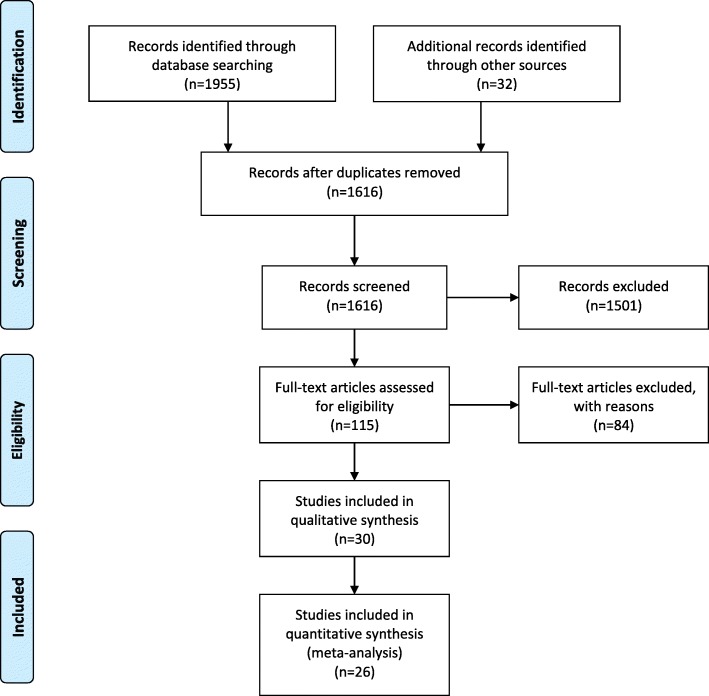
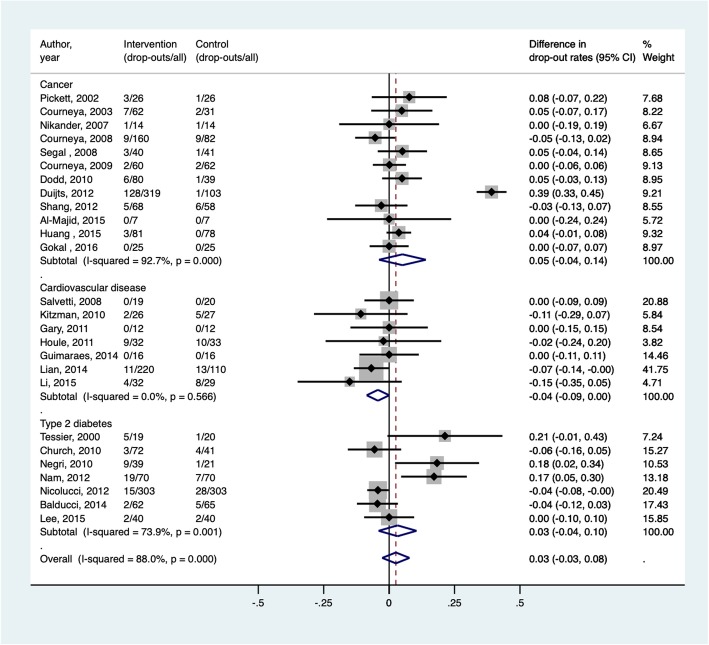
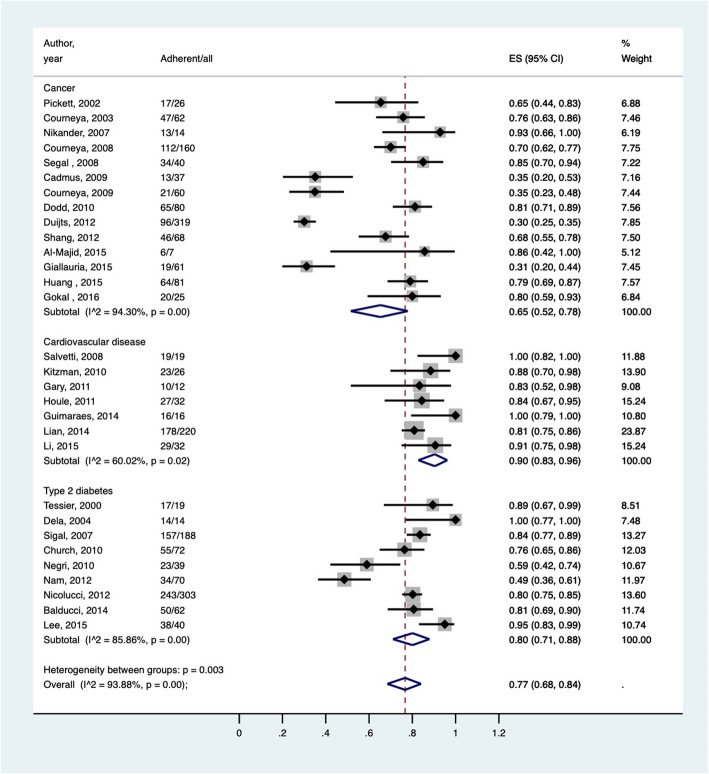
BACKGROUND: Physical activity is effective for the prevention and treatment of chronic disease, yet insufficient evidence is available to make comparisons regarding adherence to aerobic physical activity interventions among chronic disease populations, or across different settings. The purpose of this review is to investigate and provide a quantitative summary of adherence rates to the aerobic physical activity guidelines among people with chronic conditions, as physical activity is an effective form of treatment and prevention of chronic disease. METHODS: Randomized controlled (RCTs) trials where aerobic physical activity was the primary intervention were selected from PsychInfo, PubMed, CINAHL (Cumulative Index to Nursing and Allied Health Literature), Clinical Key, and SCOPUS from 2000 to 2018. Studies were included if the program prescription aligned with the 2008 aerobic physical activity guidelines, were at least 12 weeks in length, and included adult participants living with one of three chronic diseases. The data was extracted by hand and the PRISMA (preferred reporting items for systematic review and meta-analysis) guidelines were used to evaluate risk-of-bias and quality of evidence. Data were pooled using random-effect models. The primary outcome measure was program adherence and the secondary outcome measures were dropout and setting (e.g. home vs. clinic-based). Pooled effect sizes and 95% CiIs (confidence intervals) were calculated using random-effect models. RESULTS: The literature search identified 1616 potentially eligible studies, of which 30 studies (published between 2000 and 2018, including 3,721 participants) met the inclusion criteria. Three clinical populations were targeted: cancer (n = 14), cardiovascular disease (n = 7), and diabetes (n = 9). Although not statistically significant, adherence rates varied across samples (65, 90, and 80%, respectively) whereas dropout rates were relatively low and consistent across samples (5, 4, and 3%). The average adherence rate, regardless of condition, is 77% (95% CI = 0.68, 0.84) of their prescribed physical activity treatment. The pooled adherence rates for clinic-based and home-based programs did not differ (74% [95% CI, 0.65, 0.82] and 80% [95% CI, 0.65, 0.91], respectively). CONCLUSIONS: The current evidence suggests that people with chronic conditions are capable of sustaining aerobic physical activity for 3+ months, as a form of treatment. Moreover, home-based programs may be just as feasible as supervised, clinic-based physical activity programs.
Overview
The claims and statistics of this paper haven’t been checked yet.
Free: it reads the open-access text and checks the first 5 claims that cite a source we can check. Create a free account to check every claim.
Integrity signals
Registry
Cites
Statistics
Figures
Verification
Claims the paper makes
The claims and statistics of this paper haven’t been checked yet.
Free: it reads the open-access text and checks the first 5 claims that cite a source we can check. Create a free account to check every claim.
Claims other papers make about this one
Each is checked against this paper’s own text: does it say what the citing paper says it does?
The cited source says what the claim attributes to it.
In the citing paper
“no difference has been observed when comparing the adherence rates of patients with conditions like cancer, cardiovascular disease, and diabetes [63].”
From Key Factors Associated with Adherence to Physical Exercise in Patients with Chronic Diseases and Older Adults: An Umbrella Review (2021) · cites this paper as [63]
Self-check
Percentages, sums and reported differences re-computed from the paper’s own numbers.
The self-check needs the paper’s full text.
Citations
Cites
Preferred Reporting Items for Systematic Reviews and Meta-Analyses: the PRISMA statement
Moher, D., Liberati, A., Tetzlaff, J., Altman, D. G., & for the PRISMA Group (2009) · BMJ · doi:10.1136/bmj.b2535 · Cited by 83,823
Preferred reporting items for systematic reviews and meta-analyses: The PRISMA statement
Moher, D., Liberati, A., Tetzlaff, J., & Altman, D. G. (2010) · International Journal of Surgery · doi:10.1016/j.ijsu.2010.02.007 · Cited by 12,156 · cited 1×
“The PRISMA-P (preferred reporting items for systematic review and meta-analysis protocols) guidelines [25] were followed in the reporting of this systematic review protocol (see Figs.”
MethodHeart Disease and Stroke Statistics—2014 Update: A Report From the American Heart Association
Go, A. S., Mozaffarian, D., Roger, V. L., Benjamin, E. J., Berry, J. D., Blaha, M. J., Dai, S., Ford, E. S., Fox, C. S., Franco, S., et al. (2014) · Circulation · doi:10.1161/01.cir.0000441139.02102.80 · Cited by 5,215 · cited 1×
“Typical treatment for chronic disease involves managing symptoms with medication and accounts for 86% of the total health care expenses in the United States [11].”
BackgroundExercise as medicine - evidence for prescribing exercise as therapy in 26 different chronic diseases
Pedersen, B. K., & Saltin, B. (2015) · Scandinavian Journal of Medicine & Science in Sports · doi:10.1111/sms.12581 · Cited by 3,514
Heart disease and stroke statistics--2013 update: a report from the American Heart Association.
Go, A. S., Mozaffarian, D., Roger, V. L., Benjamin, E. J., Berry, J. D., Blaha, M. J., Dai, S., Ford, E. S., Fox, C. S., Franco, S., et al. (2013) · eScholarship (California Digital Library) · Cited by 2,601
Mediators and Moderators of Treatment Effects in Randomized Clinical Trials
Kraemer, H. C., Wilson, G. T., Fairburn, C. G., & Agras, W. S. (2002) · Archives of General Psychiatry · doi:10.1001/archpsyc.59.10.877 · Cited by 2,562
Taylor, R. S., Brown, A., Ebrahim, S., Jolliffe, J., Noorani, H., Rees, K., Skidmore, B., Stone, J. A., Thompson, D. R., & Oldridge, N. (2004) · The American Journal of Medicine · doi:10.1016/j.amjmed.2004.01.009 · Cited by 2,239
Exercise-Based Cardiac Rehabilitation for Coronary Heart Disease
Anderson, L., Oldridge, N., Thompson, D. R., Zwisler, A.-D., Rees, K., Martin, N., & Taylor, R. S. (2016) · Journal of the American College of Cardiology · doi:10.1016/j.jacc.2015.10.044 · Cited by 1,910
Physical activity and survival after breast cancer diagnosis
Holmes, M. D. (2005) · JAMA · doi:10.1001/jama.293.20.2479 · Cited by 1,772
Evidence for prescribing exercise as therapy in chronic disease
Pedersen, B. K., & Saltin, B. (2006) · Scandinavian Journal of Medicine & Science in Sports · doi:10.1111/j.1600-0838.2006.00520.x · Cited by 1,384
Umpierre, D. (2011) · JAMA · doi:10.1001/jama.2011.576 · Cited by 1,358
Bize, R., Johnson, J. A., & Plotnikoff, R. C. (2007) · Preventive Medicine · doi:10.1016/j.ypmed.2007.07.017 · Cited by 1,149
Church, T. S., Blair, S. N., Cocreham, S., Johannsen, N., Johnson, W., Kramer, K., Mikus, C. R., Myers, V., Nauta, M., Rodarte, R. Q., et al. (2010) · JAMA · doi:10.1001/jama.2010.1710 · Cited by 944
Cancer-related fatigue: the scale of the problem
Hofman, M., Ryan, J. L., Figueroa-Moseley, C. D., Jean-Pierre, P., & Morrow, G. R. (2007) · The Oncologist · doi:10.1634/theoncologist.12-s1-4 · Cited by 895
Multiple Chronic Conditions Among US Adults: A 2012 Update
Ward, B. W., Schiller, J. S., & Goodman, R. A. (2014) · Preventing Chronic Disease · doi:10.5888/pcd11.130389 · Cited by 845
Naci, H., & Ioannidis, J. P. A. (2013) · BMJ · doi:10.1136/bmj.f5577 · Cited by 630
Segal, R. J., Reid, R. D., Courneya, K. S., Sigal, R. J., Kenny, G. P., Prud'Homme, D. G., Malone, S. C., Wells, G. A., Scott, C. G., & Slovinec D'Angelo, M. E. (2009) · Journal of Clinical Oncology · doi:10.1200/jco.2007.15.4963 · Cited by 554
Home based versus centre based cardiac rehabilitation: Cochrane systematic review and meta-analysis
Dalal, H. M., Zawada, A., Jolly, K., Moxham, T., & Taylor, R. S. (2010) · BMJ · doi:10.1136/bmj.b5631 · Cited by 487
Daly, J., Sindone, A. P., Thompson, D. R., Hancock, K., Chang, E., & Davidson, P. (2002) · Progress in Cardiovascular Nursing · doi:10.1111/j.0889-7204.2002.00614.x · Cited by 464
Kitzman, D. W., Brubaker, P. H., Morgan, T. M., Stewart, K. P., & Little, W. C. (2010) · Circulation: Heart Failure · doi:10.1161/circheartfailure.110.958785 · Cited by 407
COURNEYA, K. S., FRIEDENREICH, C. M., QUINNEY, H. A., FIELDS, A. L. A., JONES, L. W., & FAIREY, A. S. (2003) · European Journal of Cancer Care · doi:10.1046/j.1365-2354.2003.00437.x · Cited by 381
Courneya, K. S., Sellar, C. M., Stevinson, C., McNeely, M. L., Peddle, C. J., Friedenreich, C. M., Tankel, K., Basi, S., Chua, N., Mazurek, A., et al. (2009) · Journal of Clinical Oncology · doi:10.1200/jco.2008.20.0634 · Cited by 378
Yang, Z., Scott, C. A., Mao, C., Tang, J., & Farmer, A. J. (2014) · Sports Medicine · doi:10.1007/s40279-013-0128-8 · Cited by 346
Exercise for the management of type 2 diabetes: a review of the evidence
Zanuso, S., Jimenez, A., Pugliese, G., Corigliano, G., & Balducci, S. (2010) · Acta Diabetologica · doi:10.1007/s00592-009-0126-3 · Cited by 282
Increasing and maintaining exercise and physical activity
Dishman, R. K. (1991) · Behavior Therapy · doi:10.1016/s0005-7894(05)80371-5 · Cited by 277
Physical activity, cardiovascular risk factors, and mortality among Finnish adults with diabetes
Hu, G., Jousilahti, P., Barengo, N. C., Qiao, Q., Lakka, T. A., & Tuomilehto, J. (2005) · Diabetes Care · doi:10.2337/diacare.28.4.799 · Cited by 265
Gerritsen, J. K. W., & Vincent, A. J. P. E. (2016) · British Journal of Sports Medicine · doi:10.1136/bjsports-2015-094787 · Cited by 246
Interventions to increase physical activity among aging adults: A meta-analysis
Conn, V. S., Valentine, J. C., & Cooper, H. M. (2002) · Annals of Behavioral Medicine · doi:10.1207/s15324796abm2403_04 · Cited by 240
Duijts, S. F. A., van Beurden, M., Oldenburg, H. S. A., Hunter, M. S., Kieffer, J. M., Stuiver, M. M., Gerritsma, M. A., Menke-Pluymers, M. B. E., Plaisier, P. W., Rijna, H., et al. (2012) · Journal of Clinical Oncology · doi:10.1200/jco.2012.41.8525 · Cited by 220
Physical activity programming and counseling preferences among cancer survivors: a systematic review
Wong, J. N., McAuley, E., & Trinh, L. (2018) · International Journal of Behavioral Nutrition and Physical Activity · doi:10.1186/s12966-018-0680-6 · Cited by 220
Self-citationDeterminants of exercise adherence and maintenance among cancer survivors: A systematic review
Kampshoff, C. S., Jansen, F., van Mechelen, W., May, A. M., Brug, J., Chinapaw, M. J., & Buffart, L. M. (2014) · International Journal of Behavioral Nutrition and Physical Activity · doi:10.1186/1479-5868-11-80 · Cited by 205
Exercise interventions for cancer patients: systematic review of controlled trials
Stevinson, C., Lawlor, D. A., & Fox, K. R. (2004) · Cancer Causes and Control · doi:10.1007/s10552-004-1325-4 · Cited by 200
Cardiac rehabilitation for people with heart disease: An overview of Cochrane systematic reviews
Anderson, L. J., & Taylor, R. S. (2014) · International Journal of Cardiology · doi:10.1016/j.ijcard.2014.10.011 · Cited by 187
Physical training may enhance β-cell function in type 2 diabetes
Dela, F., von Linstow, M. E., Mikines, K. J., & Galbo, H. (2004) · American Journal of Physiology-Endocrinology and Metabolism · doi:10.1152/ajpendo.00056.2004 · Cited by 187
Cadmus, L. A., Salovey, P., Yu, H., Chung, G., Kasl, S., & Irwin, M. L. (2009) · Psycho-Oncology · doi:10.1002/pon.1525 · Cited by 182 · cited 2×
“, 2009 [37] 50 24 weeks cancer breast 55.”
InfluentialEffects of aerobic physical exercise in the elderly with type 2 diabetes mellitus
Tessier, D., Ménard, J., Fülöp, T., Ardilouze, J., Roy, M.-A., Dubuc, N., Dubois, M., & Gauthier, P. (2000) · Archives of Gerontology and Geriatrics · doi:10.1016/s0167-4943(00)00076-5 · Cited by 181
von Gruenigen, V. E., Courneya, K. S., Gibbons, H. E., Kavanagh, M. B., Waggoner, S. E., & Lerner, E. (2008) · Gynecologic Oncology · doi:10.1016/j.ygyno.2007.12.026 · Cited by 152
Adherence to Moderate‐Intensity Exercise During Breast Cancer Therapy
Pickett, M., Mock, V., Ropka, M. E., Cameron, L., Coleman, M., & Podewils, L. (2002) · Cancer Practice · doi:10.1046/j.1523-5394.2002.106006.x · Cited by 117
for the Italian Diabetes Exercise Study (IDES) Investigators, Nicolucci, A., Balducci, S., Cardelli, P., Cavallo, S., Fallucca, S., Bazuro, A., Simonelli, P., Iacobini, C., Zanuso, S., et al. (2012) · Diabetologia · doi:10.1007/s00125-011-2425-9 · Cited by 115
Exercise Is Medicine: At Any Dose?
Eijsvogels, T. M. H., & Thompson, P. D. (2015) · JAMA · doi:10.1001/jama.2015.10858 · Cited by 112
Dodd, M. J., Cho, M. H., Miaskowski, C., Painter, P. L., Paul, S. M., Cooper, B. A., Duda, J., Krasnoff, J., & Bank, K. A. (2010) · Cancer Nursing · doi:10.1097/ncc.0b013e3181ddc58c · Cited by 111
Courneya, K. S., McKenzie, D. C., Mackey, J. R., Gelmon, K., Reid, R. D., Friedenreich, C. M., Ladha, A. B., Proulx, C., Vallance, J. K., Lane, K., et al. (2008) · Cancer · doi:10.1002/cncr.23379 · Cited by 109 · cited 2×
“…et al., 2008 [39] 81 24 weeks cancer prostate 65.75 clinic-based Al-Majid et al., 2015 [40] 14 12 weeks cancer breast 50.30 clinic-based Courneya et al., 2008 [41] 242 17 weeks cancer breast 50.00 clinic-based Dodd et al., 2010 [42] 119 12 weeks cancer breast, colorectal, or ovarian…”
InfluentialGokal, K., Wallis, D., Ahmed, S., Boiangiu, I., Kancherla, K., & Munir, F. (2016) · Supportive Care in Cancer · doi:10.1007/s00520-015-2884-5 · Cited by 107
Social Cognitive Theory in Diabetes Exercise Research: An Integrative Literature Review
Allen, N. A. (2004) · The Diabetes Educator · doi:10.1177/014572170403000516 · Cited by 105
Hair, B. Y., Hayes, S., Tse, C., Bell, M. B., & Olshan, A. F. (2014) · Cancer · doi:10.1002/cncr.28630 · Cited by 104 · cited 1×
“However, it has previously been reported that only 35% of women after breast cancer diagnosis [8], 32% of those with cardiovascular disease (CVD) [9], and 46% of people with diabetes met physical activity guidelines [10].”
BackgroundGuimaraes, G. V., de Barros Cruz, L. G., Fernandes-Silva, M. M., Dorea, E. L., & Bocchi, E. A. (2014) · International Journal of Cardiology · doi:10.1016/j.ijcard.2014.01.100 · Cited by 103 · cited 2×
“, 2014 [53] 32 12 weeks CVD hyper-tension 53.”
InfluentialHoule, J., Doyon, O., Vadeboncoeur, N., Turbide, G., Díaz, A., & Poirier, P. (2011) · Patient Education and Counseling · doi:10.1016/j.pec.2011.03.018 · Cited by 84
Gary, R. A., Cress, M. E., Higgins, M. K., Smith, A. L., & Dunbar, S. B. (2011) · Archives of Physical Medicine and Rehabilitation · doi:10.1016/j.apmr.2011.02.022 · Cited by 76
Nikander, R., Sievänen, H., Ojala, K., Oivanen, T., Kellokumpu-Lehtinen, P.-L., & Saarto, T. (2007) · Acta Oncologica · doi:10.1080/02841860600833145 · Cited by 67
Salvetti, X. M., Filho, J. A. O., Servantes, D. M., & de Paola, Â. A. V. (2008) · Clinical Rehabilitation · doi:10.1177/0269215508093331 · Cited by 61
Shang, J., Wenzel, J., Krumm, S., Griffith, K., & Stewart, K. (2012) · Cancer Nursing · doi:10.1097/ncc.0b013e318236a3b3 · Cited by 59 · cited 2×
“, 2012 [47] 126 20 weeks cancer breast, colorectal, or prostate 60.”
InfluentialPredictors of Exercise Intervention Dropout in Sedentary Individuals With Type 2 Diabetes
Nam, S., Dobrosielski, D. A., & Stewart, K. J. (2012) · Journal of Cardiopulmonary Rehabilitation and Prevention · doi:10.1097/hcr.0b013e31826be485 · Cited by 58
Al-Majid, S., Wilson, L. D., Rakovski, C., & Coburn, J. W. (2015) · Biological Research For Nursing · doi:10.1177/1099800414523489 · Cited by 56
Elizondo, J. V., Salami, J., Osondu, C. U., Ogunmoroti, O., Arrieta, A., Spatz, E. S., Younus, A., Rana, J. S., Virani, S. S., Blankstein, R., et al. (2016) · Journal of the American Heart Association · doi:10.1161/jaha.116.003614 · Cited by 56
Lian, X., Zhao, D., Zhu, M., Wang, Z., Gao, W. Q., Zhao, H., Zhang, D., Yang, Z., & Wang, L. (2013) · Preventive Medicine · doi:10.1016/j.ypmed.2013.10.020 · Cited by 50
Huang, H.-P., Wen, F., Tsai, J.-C., Lin, Y., Shun, S., Chang, H., Wang, J., Jane, S., Chen, M.-C., & Chen, M.-L. (2014) · Supportive Care in Cancer · doi:10.1007/s00520-014-2567-7 · Cited by 50
Sigal, R. J., Kenny, G. P., Boulé, N. G., Wells, G. A., Prud'homme, D., Fortier, M., Reid, R. D., Tulloch, H., Coyle, D., Phillips, P., et al. (2007) · Annals of Internal Medicine · doi:10.7326/0003-4819-147-6-200709180-00005 · Cited by 48
Supervised Walking Groups to Increase Physical Activity in Type 2 Diabetic Patients
Negri, C., Bacchi, E., Morgante, S., Soave, D., Marques, A., Menghini, E., Muggeo, M., Bonora, E., & Moghetti, P. (2010) · Diabetes Care · doi:10.2337/dc10-0877 · Cited by 48
Janevic, M. R., McLaughlin, S. J., & Connell, C. M. (2011) · Medical Care · doi:10.1097/mlr.0b013e3182422a52 · Cited by 38
Lee, S. F., Pei, D., Chi, M., & Jeng, C. (2015) · International Journal of Clinical Practice · doi:10.1111/ijcp.12679 · Cited by 35
Physical training may enhance -cell function in type 2 diabetes
Dela, F., Linstow, M., & Galbo, H. (2004) · Cited by 26
Giallauria, F., Gentile, M., Chiodini, P., Berrino, F., Mattiello, A., Maresca, L., Vitelli, A., Mancini, M. E., Grieco, A., Russo, A., et al. (2015) · Monaldi Archives for Chest Disease · doi:10.4081/monaldi.2014.45 · Cited by 22
Li, X., Xu, S., Zhou, L., Li, R., & Wang, J. (2015) · Nursing Research · doi:10.1097/nnr.0000000000000102 · Cited by 22
Balducci, S., Vulpiani, M. C., Pugliese, L., D’Errico, V., Menini, S., Salerno, G., Gargiulo, L., Ferretti, A., & Pugliese, G. (2014) · Acta Diabetologica · doi:10.1007/s00592-014-0571-5 · Cited by 15 · cited 2×
“, 2014 [59] 127 48 weeks diabetes type 2 60.”
InfluentialPerceptions of Change and Certainty Regarding the Self-as-Exerciser: A Multistudy Report
Mullen, S. P. (2011) · Journal of Sport and Exercise Psychology · doi:10.1123/jsep.33.5.710 · Cited by 11 · cited 1×
“Physical activity interventions lasting at least 12 weeks were included to align with expected dropout trends previously reported in the literature among people with and without clinical conditions [22, 23].”
Self-citation
Cited by
Physical activity, exercise, and chronic diseases: A brief review
Anderson, E., & Durstine, J. L. (2019) · Sports Medicine and Health Science · doi:10.1016/j.smhs.2019.08.006 · Cited by 993
Collado-Mateo, D., Lavín-Pérez, A. M., Peñacoba, C., Del Coso, J., Leyton-Román, M., Luque-Casado, A., Gasque, P., Fernández-del-Olmo, M. Á., & Amado-Alonso, D. (2021) · International Journal of Environmental Research and Public Health · doi:10.3390/ijerph18042023 · Cited by 791
“On the other hand, no difference has been observed when comparing the adherence rates of patients with conditions like cancer, cardiovascular disease, and diabetes [63].”
BackgroundLorito, C. D., Bosco, A., Booth, V., Goldberg, S. E., Harwood, R., & van der Wardt, V. (2020) · Preventive Medicine Reports · doi:10.1016/j.pmedr.2020.101139 · Cited by 136
Mirahmadizadeh, A., Khorshidsavar, H., Seif, M., & Sharifi, M. H. (2020) · Diabetes Therapy · doi:10.1007/s13300-019-00750-8 · Cited by 111
Lazzari, N. D., Niels, T., Tewes, M., & Götte, M. (2021) · Cancers · doi:10.3390/cancers13174478 · Cited by 107
“treatment setting was reported to be 10–13% [49,50].”
Background
Metadata
- Authors
- Bullard, T., Ji, M., An, R., Trinh, L., Mackenzie, M., & Mullen, S. P.
- Affiliations
- University of Illinois Urbana-Champaign (US)
- University of Toronto (CA)
- University of Delaware (US)
- Corresponding author
- Mullen, Sean P.
- Venue
- BMC Public Health
- Published
- 2019-05-24
- Volume
- 19
- Issue
- 1
- Pages
- 636-636
- ISSN
- 1471-2458 (ISSN-L)
- PMC
- PMC6534868
- OpenAlex
- W2947310117
- Semantic Scholar
- 11a182f6ac486f5dedba2104d2ef34e41585214b
- Cited by
- 255
- References
- 66
- Citations by year
- 2026: 24 · 2025: 34 · 2024: 46 · 2023: 41 · 2022: 42 · 2021: 46 · 2020: 17 · 2019: 5
- FWCI
- 3.24
- Type
- journal article
- Language
- en
- Open access
- gold
- doi.org
- Licence
- cc-by
- creativecommons.org/licenses/by/4.0/ (tdm)
- creativecommons.org/licenses/by/4.0/ (vor)
- Locations
- BMC Public Health (publishedVersion, cc-by)
- PubMed Central (publishedVersion, cc-by)
- PubMed (publishedVersion)
- TSpace (University of Toronto) (submittedVersion, cc-by)
- DOAJ (DOAJ: Directory of Open Access Journals) (submittedVersion, cc-by-sa)
- Topics
- Health Sciences › Medicine › Public Health, Environmental and Occupational Health › Physical Activity and Health
- Health Sciences › Medicine › Physiology (medical) › Cardiovascular and exercise physiology
- Health Sciences › Health Professions › General Health Professions › Mobile Health and mHealth Applications
- Keywords
- physical activity adherence, chronic disease, cancer, cardiovascular disease, diabetes mellitus, dropout, home exercise program, physical activity guidelines, exercise prescription, exercise sustainability
- MeSH terms
- Cardiac Rehabilitation, Adult, Cardiovascular Diseases, Chronic Disease, Diabetes Mellitus, Humans, Neoplasms, Patient Compliance, Exercise
About these checks
Registry, retraction, Cites and statistics results are computed, not judged, with one exception: a printed reference that no index lists is read once by a model before it counts as a citation error. Claims are extracted by a model and kept only when their quote appears verbatim in the text; each cited source is then checked, with a model’s help, for whether it says what the claim relies on. Those verdicts can be wrong — read the claim’s quote and the cited source before relying on one.
Statistics and arithmetic are recomputed, not judged.
Confidence bands are shown only for fields calibrated on our annotated test set. None is calibrated yet, so no band is shown.
What counts as a claim ›How we measure confidence ›How we check this ›
Are you an author, or do you see a problem with this page? Request a review
Data sources
Bibliographic data: Semantic Scholar, OpenAlex, Crossref.
Contains information from the Semantic Scholar Academic Graph Datasets, made available under the ODC Attribution License (ODC-BY 1.0).
Semantic Scholar’s data is described in: Kinney, R., et al. (2023). The Semantic Scholar Open Data Platform. arXiv:2301.10140.
