

A systematic review and meta-analysis of adherence to physical activity interventions among three chronic conditions: cancer, cardiovascular disease, and diabetes
Open accessThe DOI matches its Crossref record; 66 of the 66 references it cites were found in a registry or an index.
Abstract
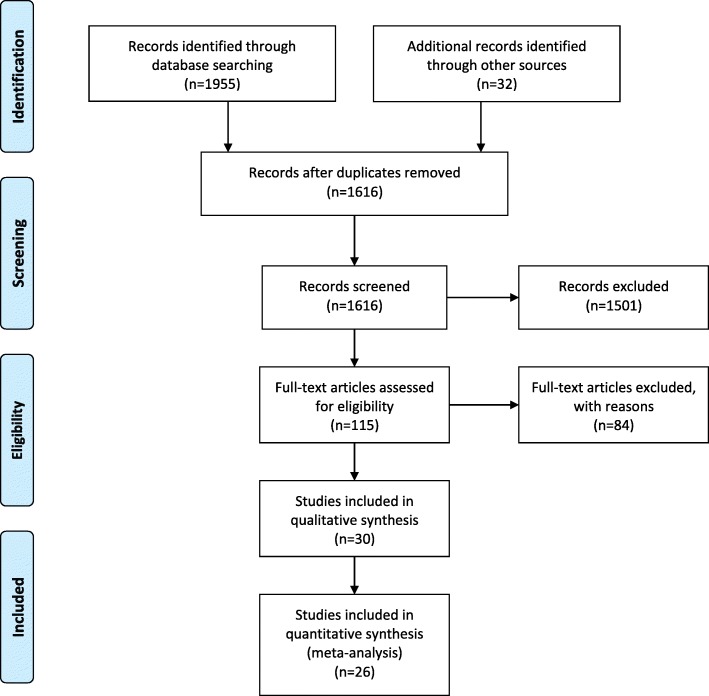
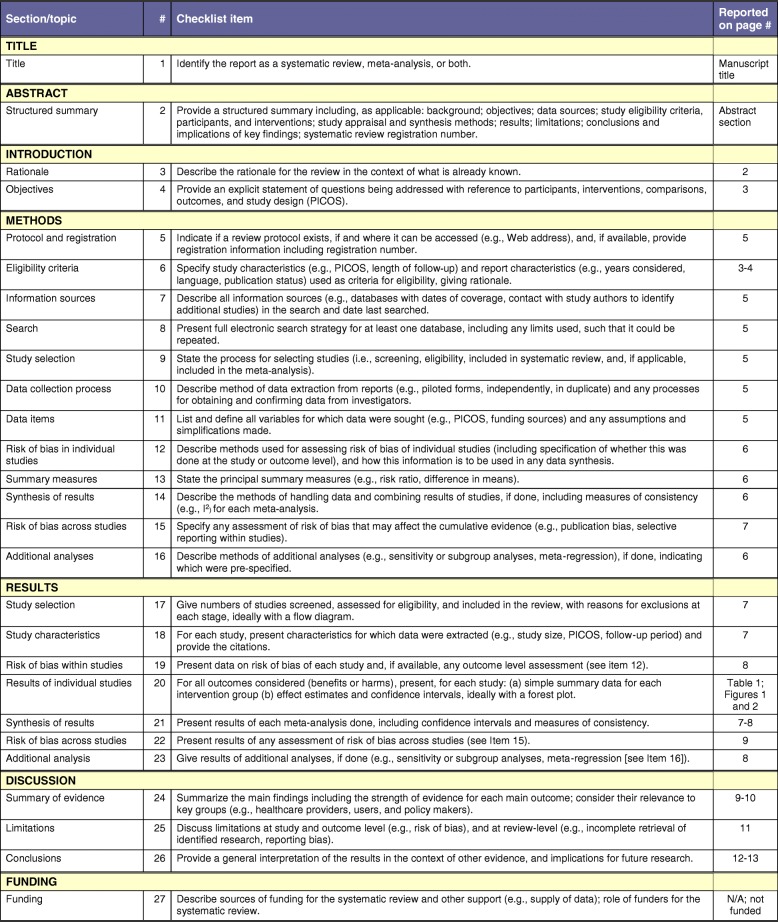
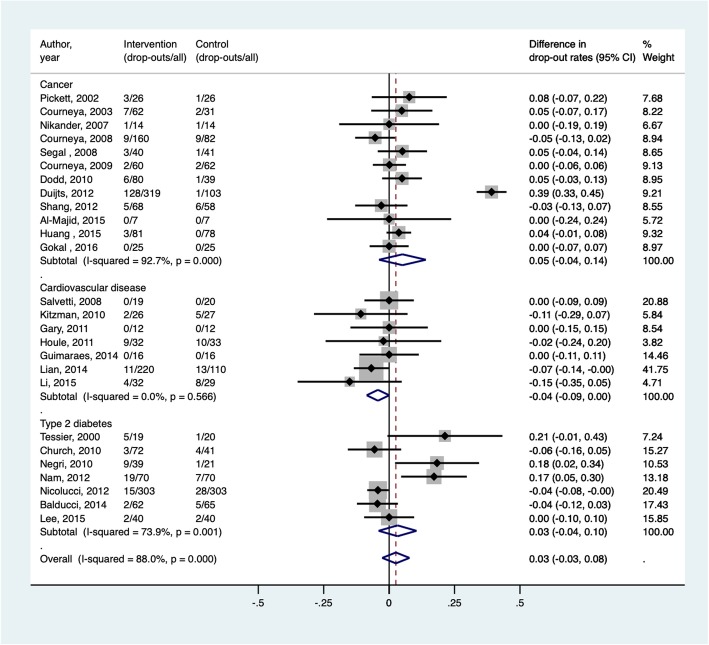
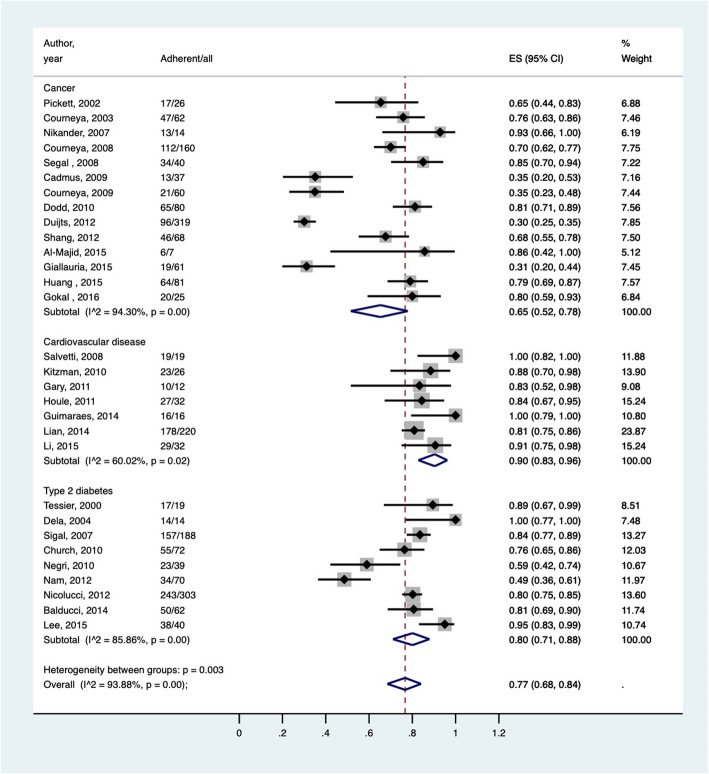
BACKGROUND: Physical activity is effective for the prevention and treatment of chronic disease, yet insufficient evidence is available to make comparisons regarding adherence to aerobic physical activity interventions among chronic disease populations, or across different settings. The purpose of this review is to investigate and provide a quantitative summary of adherence rates to the aerobic physical activity guidelines among people with chronic conditions, as physical activity is an effective form of treatment and prevention of chronic disease. METHODS: Randomized controlled (RCTs) trials where aerobic physical activity was the primary intervention were selected from PsychInfo, PubMed, CINAHL (Cumulative Index to Nursing and Allied Health Literature), Clinical Key, and SCOPUS from 2000 to 2018. Studies were included if the program prescription aligned with the 2008 aerobic physical activity guidelines, were at least 12 weeks in length, and included adult participants living with one of three chronic diseases. The data was extracted by hand and the PRISMA (preferred reporting items for systematic review and meta-analysis) guidelines were used to evaluate risk-of-bias and quality of evidence. Data were pooled using random-effect models. The primary outcome measure was program adherence and the secondary outcome measures were dropout and setting (e.g. home vs. clinic-based). Pooled effect sizes and 95% CiIs (confidence intervals) were calculated using random-effect models. RESULTS: The literature search identified 1616 potentially eligible studies, of which 30 studies (published between 2000 and 2018, including 3,721 participants) met the inclusion criteria. Three clinical populations were targeted: cancer (n = 14), cardiovascular disease (n = 7), and diabetes (n = 9). Although not statistically significant, adherence rates varied across samples (65, 90, and 80%, respectively) whereas dropout rates were relatively low and consistent across samples (5, 4, and 3%). The average adherence rate, regardless of condition, is 77% (95% CI = 0.68, 0.84) of their prescribed physical activity treatment. The pooled adherence rates for clinic-based and home-based programs did not differ (74% [95% CI, 0.65, 0.82] and 80% [95% CI, 0.65, 0.91], respectively). CONCLUSIONS: The current evidence suggests that people with chronic conditions are capable of sustaining aerobic physical activity for 3+ months, as a form of treatment. Moreover, home-based programs may be just as feasible as supervised, clinic-based physical activity programs.
Overview
The claims and statistics of this paper haven’t been checked yet.
Free: it reads the open-access text and checks the first 5 claims that cite a source we can check. Create a free account to check every claim.
Integrity signals
Registry
Cites
Statistics
Figures
Verification
Claims the paper makes
The claims and statistics of this paper haven’t been checked yet.
Free: it reads the open-access text and checks the first 5 claims that cite a source we can check. Create a free account to check every claim.
Claims other papers make about this one
Each is checked against this paper’s own text: does it say what the citing paper says it does?
The cited source says what the claim attributes to it.
In the citing paper
“no difference has been observed when comparing the adherence rates of patients with conditions like cancer, cardiovascular disease, and diabetes [63].”
From Key Factors Associated with Adherence to Physical Exercise in Patients with Chronic Diseases and Older Adults: An Umbrella Review (2021) · cites this paper as [63]
Self-check
Percentages, sums and reported differences re-computed from the paper’s own numbers.
The self-check needs the paper’s full text.
Citations
Cites
Preferred Reporting Items for Systematic Reviews and Meta-Analyses: the PRISMA statement
Moher, D., Liberati, A., Tetzlaff, J., Altman, D. G., & for the PRISMA Group (2009) · BMJ · doi:10.1136/bmj.b2535 · Cited by 83,823
Preferred reporting items for systematic reviews and meta-analyses: The PRISMA statement
Moher, D., Liberati, A., Tetzlaff, J., & Altman, D. G. (2010) · International Journal of Surgery · doi:10.1016/j.ijsu.2010.02.007 · Cited by 12,156 · cited 1×
“The PRISMA-P (preferred reporting items for systematic review and meta-analysis protocols) guidelines [25] were followed in the reporting of this systematic review protocol (see Figs.”
MethodHeart Disease and Stroke Statistics—2014 Update: A Report From the American Heart Association
Go, A. S., Mozaffarian, D., Roger, V. L., Benjamin, E. J., Berry, J. D., Blaha, M. J., Dai, S., Ford, E. S., Fox, C. S., Franco, S., et al. (2014) · Circulation · doi:10.1161/01.cir.0000441139.02102.80 · Cited by 5,215 · cited 1×
“Typical treatment for chronic disease involves managing symptoms with medication and accounts for 86% of the total health care expenses in the United States [11].”
BackgroundExercise as medicine - evidence for prescribing exercise as therapy in 26 different chronic diseases
Pedersen, B. K., & Saltin, B. (2015) · Scandinavian Journal of Medicine & Science in Sports · doi:10.1111/sms.12581 · Cited by 3,514
Heart disease and stroke statistics--2013 update: a report from the American Heart Association.
Go, A. S., Mozaffarian, D., Roger, V. L., Benjamin, E. J., Berry, J. D., Blaha, M. J., Dai, S., Ford, E. S., Fox, C. S., Franco, S., et al. (2013) · eScholarship (California Digital Library) · Cited by 2,601
Mediators and Moderators of Treatment Effects in Randomized Clinical Trials
Kraemer, H. C., Wilson, G. T., Fairburn, C. G., & Agras, W. S. (2002) · Archives of General Psychiatry · doi:10.1001/archpsyc.59.10.877 · Cited by 2,562
Taylor, R. S., Brown, A., Ebrahim, S., Jolliffe, J., Noorani, H., Rees, K., Skidmore, B., Stone, J. A., Thompson, D. R., & Oldridge, N. (2004) · The American Journal of Medicine · doi:10.1016/j.amjmed.2004.01.009 · Cited by 2,239
Exercise-Based Cardiac Rehabilitation for Coronary Heart Disease
Anderson, L., Oldridge, N., Thompson, D. R., Zwisler, A.-D., Rees, K., Martin, N., & Taylor, R. S. (2016) · Journal of the American College of Cardiology · doi:10.1016/j.jacc.2015.10.044 · Cited by 1,910
Physical activity and survival after breast cancer diagnosis
Holmes, M. D. (2005) · JAMA · doi:10.1001/jama.293.20.2479 · Cited by 1,772
Cited by
Items 201–275 of 275
WalkingPad: The Patient Experience in Peripheral Artery Disease
Silva, I. (2023) · Emerald Group Publishing Limited eBooks · doi:10.1108/978-1-83753-598-920231008
Ramos, E. J., Pereira, L. S. D. S., Guilarducci, M. J., Gomes, A. L., Guimarães, N. S., Cândido, F. G., Coelho, O. G. L., & Gomes, J. M. G. (2024) · HU Revista · doi:10.34019/1982-8047.2023.v49.43099
AL-Dalaen, B. D., & Alzayyat, A. (2024) · Jordan Journal of Nursing Research · doi:10.14525/jjnr.v3i2.07
Kanserli Olgularda Kardiyak Rehabilitasyon Perspektifi
Ata, G., & Yurdalan, S. U. (2024) · İstanbul Gelişim Üniversitesi Sağlık Bilimleri Dergisi · doi:10.38079/igusabder.1165916
Technologies for Diabetes, volume II
(2024) · Frontiers research topics · doi:10.3389/978-2-8325-5453-1
Huerta-Francisco, V. A., López, T. M. T., & Castañeda-Reyes, A. (2022) · Horizonte Sanitario · doi:10.19136/hs.a21n2.4063 · Cited by 1
Evaluarea aderenței la tratament a persoanelor cu diabet zaharat tip 2
Adasan, E., Vîrtosu, A., & Harea, D. (2024) · Public Health Economy and Management in Medicine · doi:10.52556/2587-3873.2024.5(102).12
Caudroit, J., Lapointe, J., Comtois, Romain, A. J., & Bernard, P. (2024) · PsyArXiv (OSF Preprints) · doi:10.31234/osf.io/zyh36_v1
Developing an intensive aerobic exercise program after stroke: A pilot study
Schibler, B. M., Spinner, M., Naqvi, I. A., Stein, J. M., & Barbuto, S. (2025) · PM&R · doi:10.1002/pmrj.13374
“16,22,23 It is crucial that adherence and retention be assessed for any novel home exercise interventions early in the investigative process to identify shortcomings and modify accordingly before dedicating resources to larger trials or scalable programs.”
Pérez-Marqués, M., & Saldaña, M. D. M. (2025) · Health Behavior Research · doi:10.4148/2572-1836.1292
Perry, A., Moe‐Byrne, T., Schofield, J., Ashton, L., Siqueria, N., Knowles, S. E., Churchill, R. C., Colman, T., Parrott, S., & Williamson, K. (2025) · Health Expectations · doi:10.1111/hex.70246
Shi, H., Guo, Y., Dong, H., Pan, M., Li, C., Hou, X., Qian, Y., Ye, P., Ma, S., Liu, M., et al. (2025) · Journal of Thoracic Disease · doi:10.21037/jtd-2025-966
“Previous research by Bullard et al. (19) demonstrated through a retrospective study that among chronic pulmonary disease patients undergoing rehabilitation, lung cancer patients showed the lowest adherence rates to postoperative rehabilitation training.”
Caudroit, J., Lapointe, J., Comtois, A. S., Romain, A. J., & Bernard, P. (2025) · Single Case in the Social Sciences · doi:10.15763/issn.1936-9298.2025.2.3.1-14
Effects of Nordic Walking on Physical Fitness in Patients with Cancer: A Systematic Review
Casanovas-Álvarez, A., Mur‐Gimeno, E., Masià, J., Fernández-Jané, C., & Sebio-Garcia, R. (2025) · Cancers · doi:10.3390/cancers17193170
“Adherence to supervised sessions exceeded 90% in two of the three studies—a figure comparable to, or better than, other exercise programs in cancer care [32,33].”
MyEveryCise: A method for everyday exercise using ‘an activity of daily living’ as a cue
Tada, H., Shinohara, M., Teramoto, A., Satake, S., Krell‐Roesch, J., Matsumoto, S., Yamada, M., Satoh, T., Kawano, R., Suzuki, K., et al. (2025) · Journal of Alzheimer s Disease · doi:10.1177/13872877251385170
Romanova, E. N., Parot'kin, D. O., Burzhunova, M. G., Климова, Ю. А., Mandrik, L., Мансур, Н., Trube, E. E., Gurievscaia, N., Musa, G., Montemurro, N., et al. (2025) · SN Comprehensive Clinical Medicine · doi:10.1007/s42399-025-02224-4
“When there are accompanying risk factors and a history of chronic somatic diseases, careful regulation of physical activity intensity is necessary during rehabilitation [28].”
Shaw, J. F., Pilon, S., Vierula, M., & McIsaac, D. I. (2022) · Figshare · doi:10.6084/m9.figshare.19687057
Tummers, S. C. M. W., Hommersom, A., Lechner, L., Bemelmans, R., & Bolman, C. A. W. (2023) · Figshare · doi:10.6084/m9.figshare.22614605
Tummers, S. C. M. W., Hommersom, A., Lechner, L., Bemelmans, R., & Bolman, C. A. W. (2023) · Figshare · doi:10.6084/m9.figshare.22614602
Tummers, S. C. M. W., Hommersom, A., Lechner, L., Bemelmans, R., & Bolman, C. A. W. (2023) · Figshare · doi:10.6084/m9.figshare.22614611
Volders, E., de Groot, R. H. M., Bolman, C. A. W., & Lechner, L. (2021) · Figshare · doi:10.6084/m9.figshare.16570852
Volders, E., de Groot, R. H. M., Bolman, C. A. W., & Lechner, L. (2021) · Figshare · doi:10.6084/m9.figshare.16570855
Volders, E., de Groot, R. H. M., Bolman, C. A. W., & Lechner, L. (2021) · Figshare · doi:10.6084/m9.figshare.16570846
Větrovský, T., Širanec, M., Frybova, T., Gant, I., Semerad, M., Miklíková, M., Bunc, V., Vesely, J., Stastny, J., Gřiva, M., et al. (2023) · Figshare · doi:10.6084/m9.figshare.23972811
Shaw, J. F., Pilon, S., Vierula, M., & McIsaac, D. I. (2022) · Figshare · doi:10.6084/m9.figshare.19687072
Lee, S. Y., Goh, A., Tan, K., Choo, P. L., Ong, P. H., Wong, W. P., & Wee, S.-L. (2021) · Figshare · doi:10.6084/m9.figshare.16767355
Shaw, J. F., Pilon, S., Vierula, M., & McIsaac, D. I. (2022) · Figshare · doi:10.6084/m9.figshare.19687066
Shaw, J. F., Pilon, S., Vierula, M., & McIsaac, D. I. (2022) · Figshare · doi:10.6084/m9.figshare.19687051
Sañudo, B., Sánchez-Oliver, A. J., Gavira, J. F., Gaser, D., Stöcker, N., Peralta, M., Marques, A., Papakonstantinou, S., Nicolini, C., & Sitzberger, C. (2024) · Figshare · doi:10.6084/m9.figshare.26721258
Shaw, J. F., Pilon, S., Vierula, M., & McIsaac, D. I. (2022) · Figshare · doi:10.6084/m9.figshare.19687054
Katewongsa, P., Yousomboon, C., Haemathulin, N., Rasri, N., & Widyastari, D. A. (2021) · Figshare · doi:10.6084/m9.figshare.14385298
Lee, S. Y., Goh, A., Tan, K., Choo, P. L., Ong, P. H., Wong, W. P., & Wee, S.-L. (2021) · Figshare · doi:10.6084/m9.figshare.16767352
Sañudo, B., Sánchez-Oliver, A. J., Gavira, J. F., Gaser, D., Stöcker, N., Peralta, M., Marques, A., Papakonstantinou, S., Nicolini, C., & Sitzberger, C. (2024) · Figshare · doi:10.6084/m9.figshare.26721255
Tummers, S. C. M. W., Hommersom, A., Lechner, L., Bemelmans, R., & Bolman, C. A. W. (2023) · Figshare · doi:10.6084/m9.figshare.22614608
Shaw, J. F., Pilon, S., Vierula, M., & McIsaac, D. I. (2022) · Figshare · doi:10.6084/m9.figshare.19687060
Shaw, J. F., Pilon, S., Vierula, M., & McIsaac, D. I. (2022) · Figshare · doi:10.6084/m9.figshare.19687048
Ramírez‐Vélez, R., Oteiza, J., de Tejerina, J. M. C. F., García-Alonso, N., Legarra‐Gorgoñon, G., Oscoz-Ochandorena, S., Arasanz, H., García‐Alonso, Y., Correa-Rodríguez, M., & Izquierdo, M. (2022) · Figshare · doi:10.6084/m9.figshare.20462373
Katewongsa, P., Yousomboon, C., Haemathulin, N., Rasri, N., & Widyastari, D. A. (2021) · Figshare · doi:10.6084/m9.figshare.14385289
Katewongsa, P., Yousomboon, C., Haemathulin, N., Rasri, N., & Widyastari, D. A. (2021) · Figshare · doi:10.6084/m9.figshare.14385295
Katewongsa, P., Yousomboon, C., Haemathulin, N., Rasri, N., & Widyastari, D. A. (2021) · Figshare · doi:10.6084/m9.figshare.14385301
Katewongsa, P., Yousomboon, C., Haemathulin, N., Rasri, N., & Widyastari, D. A. (2021) · Figshare · doi:10.6084/m9.figshare.14385292
Phulkerd, S., Thapsuwan, S., Chamratrithirong, A., & Gray, R. S. (2021) · Figshare · doi:10.6084/m9.figshare.13535854
Shaw, J. F., Pilon, S., Vierula, M., & McIsaac, D. I. (2022) · Figshare · doi:10.6084/m9.figshare.19687063
Flammer, F., Paraschiv-Ionescu, A., & Marques-Vidal, P. M. (2024) · Figshare · doi:10.6084/m9.figshare.25210585
O’Grady, H. K., Farley, C., Takaoka, A., Mayens, E., Bosch, J., Turkstra, L., & Kho, M. E. (2022) · Figshare · doi:10.6084/m9.figshare.19445680
Effects of a physical exercise program on quality of life of breast cancer survivors
Joaquim, A. I. V. N. (2023) · Portuguese National Funding Agency for Science, Research and Technology (RCAAP Project by FCT)
Proyecto de intervención para la promoción de la actividad física en los parques de Soria
Monge Antón, A. (2024) · UVaDOC UVaDOC University of Valladolid Documentary Repository (University of Valladolid)
Aerobna zmogljivost odraslih udeležencev delavnice “Ali sem fit?”
Koren, P. (2024) · Repository of the University of Ljubljana (University of Ljubljana)
Phansikar, M. (2021) · Illinois Digital Environment for Access to Learning and Scholarship (University of Illinois at Urbana-Champaign)
Types of adapted physical activities and motivation among young people with intellectualdisabilities
Pinard-Janvier, Y. (2023) · HAL
Actividad Física en personas con Enfermedades Cardiovasculares: revisión narrativa
Pérez Rivarés, B., & López‐Laval, I. (2021) · Zaguan (University of Zaragoza Repository)
Pérez-Maletzki, J. (2024) · Repository of Digital Objects for Teaching Research and Culture (University of Valencia)
Hennessy, D. (2023) · FedUni ResearchOnline (Federation University Australia)
Pallas, M. (2021) · NVA (Nasjonalt vitenarkiv)
Henriques, H. R., Pinto, J., Faria, J. S., & Augusto (2021) · Portuguese National Funding Agency for Science, Research and Technology (RCAAP Project by FCT)
Individuals’ experiences of quality of life in type 2 diabetes : a literature-based study
Kidane, A., & Lahdo, M. L. (2024) · KTH Publication Database DiVA (KTH Royal Institute of Technology)
Hayvon, J. C. (2026) · Issues in Mental Health Nursing · doi:10.1080/01612840.2025.2585046
“…by a combination of walking, cycling, and public transportation can help combat physical inactivity and sedentary lifestyles at a population level, with notable impacts on diabetes, cardiovascular disease, other chronic illnesses, and depression as a mental health challenge (Bullard et al., 2019).”
Patient Engagement in Mobile Health for Community‐Dwelling Older Adults: A Systematic Review
Kim, Y. P., & Ha, Y. K. (2026) · International Journal of Older People Nursing · doi:10.1111/opn.70062
Tassone, V. K., Lin, Q., Li, G. H., Rao, A., Duscio, V., Mathur, T., Uthayakumar, H., Sohail, S. Z., Kar, S., Quesnel, D. A., et al. (2026) · Psychotherapy and Psychosomatics · doi:10.1159/000550802 · Cited by 1
Fernandes, F. F. (2022) · Portuguese National Funding Agency for Science, Research and Technology (RCAAP Project by FCT)
Joseph, R. P., Pituch, K. A., Yu, F., Salisbury, D. L., & Maxfield, M. (2026) · JMIR Formative Research · doi:10.2196/82494
“The observed retention rate of 88% was comparable with, or slightly higher than average rates reported in reviews and meta-analyses of health behavior change trials of similar durations [54], including PA interventions [12,55], lending support for feasibility of the intervention approach.”
Richard, C. (2022) · theses.fr (ABES) · doi:10.70675/d82aa0b8z4532z415ez8c68za915a23dac45
Weiss, J., & Pahmeier, I. (2026) · Diabetologie und Stoffwechsel · doi:10.1055/s-0046-1820031
Arsh, A., Afaq, S., Carswell, C., & Siddiqi, N. (2026) · Global Implementation Research and Applications · doi:10.1007/s43477-026-00239-0
Logan, J. G., Chauntry, A. J., Zhao, H., Park, S., & Stoner, L. (2026) · Sports Medicine · doi:10.1007/s40279-026-02483-8
“While moderate-to-vigorous intensity physical activity interventions are effective at reducing CVD risk [2, 3], long-term compliance is often low [4].”
Bao, H., Yu, T., Wang, J., Yin, H., Gao, Y., & Mao, Y. (2026) · Frontiers in Public Health · doi:10.3389/fpubh.2026.1844470
“Evidence from physical-activity interventions shows that adherence varies across populations and delivery settings, while behavior-change components such as goal setting, self-monitoring, and feedback may support adherence in some contexts (31, 32).”
Alkhamees, N. H., Gilyana, M., Al-Mhanna, S. B., & Batrakoulis, A. (2026) · Healthcare · doi:10.3390/healthcare14182911
“Family or caregiver support, culturally appropriate program adaptation, motivational interviewing, goal setting, and ongoing personalized feedback may further strengthen long-term engagement [47,93,94].”
Barraud, A., Lanièpce, A., Cabé, J., Segobin, S. H., Pitel, A., & Cabé, N. (2026) · Addictive Behaviors Reports · doi:10.1016/j.abrep.2026.100749
“…(Giesen et al., 2016; Hallgren et al., 2017a) with a substantially higher dropout rate of 40,3% than that observed for other severe mental illnesses (Stubbs et al., 2016; Vancampfort et al., 2016) or chronic conditions such as cancer, cardiovascular diseases, and diabetes (Bullard et al., 2019).”
CUOMO, S. (n.d.) · Institutional Research Information System University of Turin (University of Turin) · Cited by 1
ปัจจัยทำนายความร่วมมือในการปฏิบัติกิจกรรมทางกายในผู้ป่วยโรคปอดอุดกั้นเรื้อรัง
Waraphan, C., Wattanakitkrilert, D., Sriprasong, S., & Kongpolprom, N. (2022) · Nursing Science Journal of Thailand
Exercise as anticancer medicine? Evidence, mechanisms and implementation in oncology
Schmidinger, M., Huebner-Resch, I., & Shariat, S. F. (2026) · Cancer Treatment Reviews · doi:10.1016/j.ctrv.2026.103222
Metadata
- Authors
- Bullard, T., Ji, M., An, R., Trinh, L., Mackenzie, M., & Mullen, S. P.
- Affiliations
- University of Illinois Urbana-Champaign (US)
- University of Toronto (CA)
- University of Delaware (US)
- Corresponding author
- Mullen, Sean P.
- Venue
- BMC Public Health
- Published
- 2019-05-24
- Volume
- 19
- Issue
- 1
- Pages
- 636-636
- ISSN
- 1471-2458 (ISSN-L)
- PMC
- PMC6534868
- OpenAlex
- W2947310117
- Semantic Scholar
- 11a182f6ac486f5dedba2104d2ef34e41585214b
- Cited by
- 255
- References
- 66
- Citations by year
- 2026: 24 · 2025: 34 · 2024: 46 · 2023: 41 · 2022: 42 · 2021: 46 · 2020: 17 · 2019: 5
- FWCI
- 3.24
- Type
- journal article
- Language
- en
- Open access
- gold
- doi.org
- Licence
- cc-by
- creativecommons.org/licenses/by/4.0/ (tdm)
- creativecommons.org/licenses/by/4.0/ (vor)
- Locations
- BMC Public Health (publishedVersion, cc-by)
- PubMed Central (publishedVersion, cc-by)
- PubMed (publishedVersion)
- TSpace (University of Toronto) (submittedVersion, cc-by)
- DOAJ (DOAJ: Directory of Open Access Journals) (submittedVersion, cc-by-sa)
- Topics
- Health Sciences › Medicine › Public Health, Environmental and Occupational Health › Physical Activity and Health
- Health Sciences › Medicine › Physiology (medical) › Cardiovascular and exercise physiology
- Health Sciences › Health Professions › General Health Professions › Mobile Health and mHealth Applications
- Keywords
- physical activity adherence, chronic disease, cancer, cardiovascular disease, diabetes mellitus, dropout, home exercise program, physical activity guidelines, exercise prescription, exercise sustainability
- MeSH terms
- Cardiac Rehabilitation, Adult, Cardiovascular Diseases, Chronic Disease, Diabetes Mellitus, Humans, Neoplasms, Patient Compliance, Exercise
About these checks
Registry, retraction, Cites and statistics results are computed, not judged, with one exception: a printed reference that no index lists is read once by a model before it counts as a citation error. Claims are extracted by a model and kept only when their quote appears verbatim in the text; each cited source is then checked, with a model’s help, for whether it says what the claim relies on. Those verdicts can be wrong — read the claim’s quote and the cited source before relying on one.
Statistics and arithmetic are recomputed, not judged.
Confidence bands are shown only for fields calibrated on our annotated test set. None is calibrated yet, so no band is shown.
What counts as a claim ›How we measure confidence ›How we check this ›
Are you an author, or do you see a problem with this page? Request a review
Data sources
Bibliographic data: Semantic Scholar, OpenAlex, Crossref.
Contains information from the Semantic Scholar Academic Graph Datasets, made available under the ODC Attribution License (ODC-BY 1.0).
Semantic Scholar’s data is described in: Kinney, R., et al. (2023). The Semantic Scholar Open Data Platform. arXiv:2301.10140.
