

What does it mean to conduct participatory research with Indigenous peoples? A lexical review
Open accessThe DOI matches its Crossref record; 82 of the 83 references it cites were found in a registry or an index.
Abstract
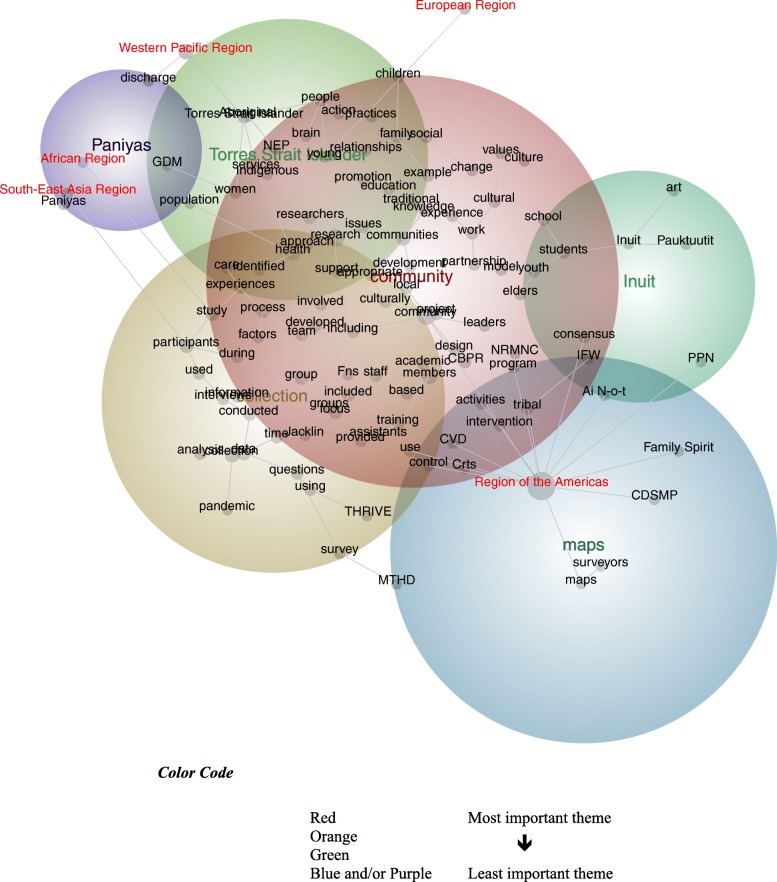
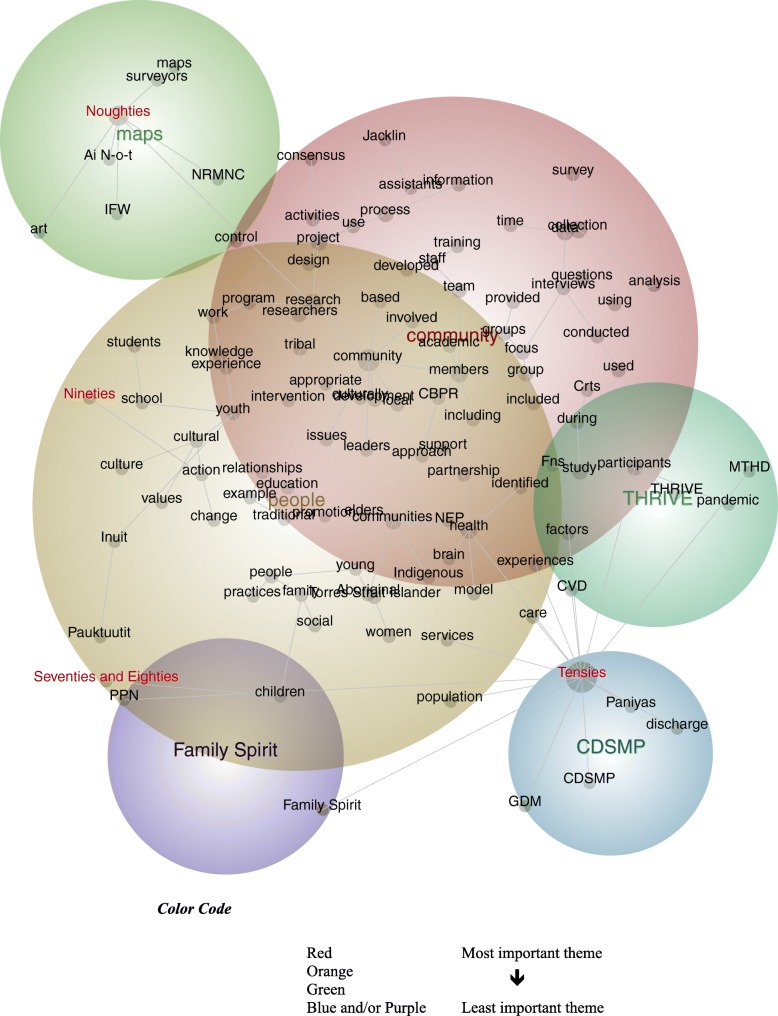
Background: To better understand and promote public health, participatory research with Indigenous peoples represents recommended practice, worldwide. However, due to the different ways such research is referred to, described, and used, it is unclear what might (and might not) warrant the term when collaborating with Indigenous peoples. As such, this article expands conceptual understandings of participatory research with Indigenous peoples, across timelines and regions. Method: Following a systematic search of 29 academic databases in April 2018, a lexical analysis of the methods sections was conducted, which were sourced from 161 publications across 107 journals. Results: The active involvement of Indigenous peoples in research that is expressly participatory is limited across all project phases. This might be because the ways in which Indigenous peoples were involved throughout were not reported – however, it might also be because Indigenous peoples were not involved in all project phases. Furthermore, descriptions differ by study location and publication timeframe – notably, studies in the region of the Americas chiefly refer to pandemics, surveyors, and art; and those published in the last two decades have given primacy to artifacts of interest. Conclusions: Findings from this corpus of data suggest participatory research with Indigenous peoples is not always described across different project phases; furthermore, it differs according to study location and publication timeframe. This offers considerable opportunity to further this important research area via alternative methodologies that award primacy to Indigenous expertise and agency.
Overview
The claims and statistics of this paper haven’t been checked yet.
Free: it reads the open-access text and checks the first 5 claims that cite a source we can check. Create a free account to check every claim.
Integrity signals
Registry
Cites
Statistics
Figures

Verification
Claims the paper makes
The claims and statistics of this paper haven’t been checked yet.
Free: it reads the open-access text and checks the first 5 claims that cite a source we can check. Create a free account to check every claim.
Claims other papers make about this one
Each is checked against this paper’s own text: does it say what the citing paper says it does?
The source backs part of the claim, not all of it — or backs it for a different population, condition or comparison.
In the citing paper
“Research relationships are established by meeting people and communities where they are at, engaging from a place of cultural humility, and making all efforts to be transparent and open (Dadich et al., 2019).”
From Indigenous Elder-centered methodology: research that decolonizes and indigenizes (2023) · cites this paper as Dadich et al., 2019
Experimental — accuracy not yet measuredThe source backs part of the claim, not all of it — or backs it for a different population, condition or comparison.
In the citing paper
“Importantly, direct comparisons between western and Indigenous research have demonstrated that Indigenous research is equally as valid if not more contextually and culturally salient than western research (Braun et al., 2014; Cox et al., 2021; Dadich et al., 2019; Mohatt et al., 2004; Rasmus, 2014; Saini, 2012).”
From Indigenous Elder-centered methodology: research that decolonizes and indigenizes (2023) · cites this paper as Dadich et al., 2019
Experimental — accuracy not yet measuredThe source backs part of the claim, not all of it — or backs it for a different population, condition or comparison.
In the citing paper
“Thus, CBPR has been adopted and is considered a best practice when engaging in research with Indigenous, marginalized, and oppressed populations (Dadich et al., 2019; Holkup et al., 2004; Lewis & Boyd, 2013; Stanton, 2014).”
From Indigenous Elder-centered methodology: research that decolonizes and indigenizes (2023) · cites this paper as Dadich et al., 2019
Experimental — accuracy not yet measuredThe source backs part of the claim, not all of it — or backs it for a different population, condition or comparison.
In the citing paper
“The use of CBPR invites participants to share their voices where they traditionally have had limited input, which is particularly important for research involving Indigenous Elders given their history with colonialism and the historical lack of consultation with Indigenous populations throughout research (Dadich et al., 2019; Smith, 2021).”
From Indigenous Elder-centered methodology: research that decolonizes and indigenizes (2023) · cites this paper as Dadich et al., 2019
Experimental — accuracy not yet measuredThe source backs part of the claim, not all of it — or backs it for a different population, condition or comparison.
In the citing paper
“The eight key principles of CBPR are also applicable and analogous to centering research to the Indigenous Elder and cultural knowledge:”
From Indigenous Elder-centered methodology: research that decolonizes and indigenizes (2023) · cites this paper as Dadich et al., 2019
Experimental — accuracy not yet measured
1 more claim about this paper
Create a free account to see every claim other papers make about this one.
Self-check
Percentages, sums and reported differences re-computed from the paper’s own numbers.
The self-check needs the paper’s full text.
Citations
Cites
Preferred Reporting Items for Systematic Reviews and Meta-Analyses: the PRISMA statement
Moher, D., Liberati, A., Tetzlaff, J., Altman, D. G., & for the PRISMA Group (2009) · BMJ · doi:10.1136/bmj.b2535 · Cited by 83,823
Preferred Reporting Items for Systematic Reviews and Meta-Analyses: The PRISMA Statement
Moher, D., Liberati, A., Tetzlaff, J., Altman, D. G., & The PRISMA Group (2009) · PLoS Medicine · doi:10.1371/journal.pmed.1000097 · Cited by 64,042
Preferred reporting items for systematic reviews and meta-analyses: the PRISMA Statement.
(2009) · PubMed Central · Cited by 44,859
Wang, G., Ma, R., Qiao, G., Wada, K., Aizawa, Y., & Satoh, T. (2015) · Integrative Medicine International · doi:10.1159/000368408 · Cited by 18,657
8 Decolonizing Methodologies: Research and Indigenous Peoples
Tuhiwai Smith, L. (2024) · Foundational Concepts of Decolonial and Southern Epistemologies · doi:10.21832/9781800418868-012 · Cited by 9,810
What is participatory research?
Cornwall, A., & Jewkes, R. (1995) · Social Science & Medicine · doi:10.1016/0277-9536(95)00127-s · Cited by 2,560
Evaluation of unsupervised semantic mapping of natural language with Leximancer concept mapping
Smith, A. E., & Humphreys, M. S. (2006) · Behavior Research Methods · doi:10.3758/bf03192778 · Cited by 1,205
From tokenism to empowerment: progressing patient and public involvement in healthcare improvement
Ocloo, J., & Matthews, R. (2016) · BMJ Quality & Safety · doi:10.1136/bmjqs-2015-004839 · Cited by 998
Denzin, N. K., & Lincoln, Y. S. (2005) · Journal of International Crisis and Risk Communication Research · Cited by 712
Indigenous Ways of Knowing: Implications for Participatory Research and Community
Cochran, P. A. L., Marshall, C. A., Garcia-Downing, C., Kendall, E., Cook, D., McCubbin, L., & Gover, R. M. S. (2008) · American Journal of Public Health · doi:10.2105/ajph.2006.093641 · Cited by 589
Leung, M. W. (2004) · International Journal of Epidemiology · doi:10.1093/ije/dyh010 · Cited by 565
What Is an Indigenous Research Methodology
Wilson, S. (2001) · Canadian journal of native education · Cited by 464
Choosing a qualitative data analysis tool: a comparison of NVivo and Leximancer
Sotiriadou, P., Brouwers, J., & Le, T.-A. (2014) · Annals of Leisure Research · doi:10.1080/11745398.2014.902292 · Cited by 454
International Journal of Circumpolar Health
(2011) · International Journal of Circumpolar Health · doi:10.3402/ijch.v70i3.17826 · Cited by 350
Sindre, G. M. (2017) · PCD Journal · doi:10.22146/pcd.25766 · Cited by 261
Oguoma, V. M., Nwose, E. U., Skinner, T. C., Digban, K. A., Onyia, I. C., & Richards, R. S. (2015) · BMC Public Health · doi:10.1186/s12889-015-2101-y · Cited by 236
Brunton, G., Thomas, J., O’Mara-Eves, A., Jamal, F., Oliver, S., & Kavanagh, J. (2017) · BMC Public Health · doi:10.1186/s12889-017-4958-4 · Cited by 232
Pathways to help‐seeking in bulimia nervosa and binge eating problems: A concept mapping approach
Hepworth, N., & Paxton, S. J. (2007) · International Journal of Eating Disorders · doi:10.1002/eat.20402 · Cited by 196
Ninomiya, M. E. M., & Pollock, N. J. (2016) · Social Science & Medicine · doi:10.1016/j.socscimed.2016.11.007 · Cited by 186
Healthcare in a land called PeoplePower: nothing about me without me
Delbanco, T., Berwick, D. M., Boufford, J. I., Edgman‐Levitan, Ollenschläger, G., Plamping, D., & Rockefeller, R. G. (2001) · Health Expectations · doi:10.1046/j.1369-6513.2001.00145.x · Cited by 180
Intergroup communication between hospital doctors: Implications for quality of patient care
Hewett, D. G., Watson, B. M., Gallois, C., Ward, M., & Leggett, B. A. (2009) · Social Science & Medicine · doi:10.1016/j.socscimed.2009.09.048 · Cited by 178
Hyndman, B., & Pill, S. (2017) · European Physical Education Review · doi:10.1177/1356336x17690312 · Cited by 167
Community-based participatory research: necessary next steps.
Faridi, Z., Grunbaum, J. A., Gray, B. S., Franks, A. L., & Simões, E. J. (2007) · PubMed Central · Cited by 150
Angus‐Leppan, T., Benn, S., & Young, L. (2010) · Business Strategy and the Environment · doi:10.1002/bse.675 · Cited by 143
Dankwa-Mullan, I., Rhee, K. B., Williams, K., Sanchez, I., Sy, F. S., Stinson, N., & Ruffin, J. (2010) · American Journal of Public Health · doi:10.2105/ajph.2010.191619 · Cited by 139
Video-Reflexive Ethnography in Health Research and Healthcare Improvement: Theory and Application
Iedema, R. A. M., Carroll, K., Collier, A., Hor, S.-Y., Mesman, J., & Wyer, M. (2018) · CRC Press eBooks · doi:10.1201/9781351248013 · Cited by 133
Methodology is content: Indigenous approaches to research and knowledge
Martin, B. (2017) · Educational Philosophy and Theory · doi:10.1080/00131857.2017.1298034 · Cited by 131
Achieving Effective Sustainable Management: A Small‐Medium Enterprise Case Study
Stewart, H., & Gapp, R. (2012) · Corporate Social Responsibility and Environmental Management · doi:10.1002/csr.1305 · Cited by 121
Charania, N. A. M. A., & Tsuji, L. J. S. (2012) · BMC Public Health · doi:10.1186/1471-2458-12-268 · Cited by 111
Impact of community participation in primary health care: what is the evidence?
Bath, J., & Wakerman, J. (2015) · Australian Journal of Primary Health · doi:10.1071/py12164 · Cited by 104
Glover, M., Kira, A., Johnston, V., Walker, N., Thomas, D., Chang, A. B., Bullen, C., Segan, C. J., & Brown, N. (2015) · Global Health Promotion · doi:10.1177/1757975914528961 · Cited by 101
10 years of KM theory and practices
Ribière, V., & Walter, C. (2013) · Knowledge Management Research & Practice · doi:10.1057/kmrp.2012.64 · Cited by 100
Allen, J., Mohatt, G. V., Rasmus, S. M., Hazel, K. L., Thomas, L., & Lindley, S. (2006) · Journal of Prevention & Intervention in the Community · doi:10.1300/j005v32n01_04 · Cited by 98
Couzos, S., Lea, T., Murray, R., & Culbong, M. (2005) · Ethnicity & Health · doi:10.1080/13557850500071038 · Cited by 96
Power and glory: applying participatory action research in public health
Baum, F. E. (2016) · Gaceta Sanitaria · doi:10.1016/j.gaceta.2016.05.014 · Cited by 90
Datta, R., Khyang, N. U., Prue Khyang, H. K., Prue Kheyang, H. A., Ching Khyang, M., & Chapola, J. (2015) · International Journal of Social Research Methodology · doi:10.1080/13645579.2014.927492 · Cited by 88
Participatory methods in pediatric participatory research: a systematic review
Haijes, H. A., & van Thiel, G. J. M. W. (2015) · Pediatric Research · doi:10.1038/pr.2015.279 · Cited by 79
Brunger, F., & Wall, D. (2016) · Qualitative Health Research · doi:10.1177/1049732316649158 · Cited by 75
Brown, D. W., Anda, R. F., Felitti, V. J., Edwards, V. J., Malarcher, A. M., Croft, J. B., & Giles, W. H. (2010) · BMC Public Health · doi:10.1186/1471-2458-10-311 · Cited by 72
Snijder, M., Shakeshaft, A. P., Wagemakers, A., Stephens, A., & Calabria, B. (2015) · BMC Public Health · doi:10.1186/s12889-015-2514-7 · Cited by 72
Computer assisted text analysis in the social sciences
Brier, A., & Hopp, B. (2010) · Quality & Quantity · doi:10.1007/s11135-010-9350-8 · Cited by 70
Innovating for Transformation in First Nations Health Using Community-Based Participatory Research
Kyoon-Achan, G., Lavoie, J., Avery Kinew, K., Phillips-Beck, W., Ibrahim, N., Sinclair, S., & Katz, A. (2018) · Qualitative Health Research · doi:10.1177/1049732318756056 · Cited by 69 · cited 1×
“2 Discovery Mode Concept Map (visible concepts: 100%, theme size: 60%) The team comprised health services researchers, physicians, Indigenous researchers, social scientists, data analysts, nurses, a community development specialist, and community-based experts and participants such as FNs [First Nations] Elders, healt…”
BackgroundMullany, B. C., Barlow, A., Neault, N. B., Billy, T., Jones, T., Tortice, I., Lorenzo, S., Powers, J., Lake, K., Reid, R., et al. (2012) · Prevention Science · doi:10.1007/s11121-012-0277-2 · Cited by 68
Participatory epidemiology: the contribution of participatory research to epidemiology
Bach, M., Jordan, S., Hartung, S., Santos-Hövener, C., & Wright, M. T. (2017) · Emerging Themes in Epidemiology · doi:10.1186/s12982-017-0056-4 · Cited by 61
Involving patients in understanding hospital infection control using visual methods
Wyer, M., Jackson, D. W., Iedema, R. A. M., Hor, S.-Y., Gilbert, G. L., Jorm, C. M., Hooker, C., O'Sullivan, M. V. N., & Carroll, K. (2015) · Journal of Clinical Nursing · doi:10.1111/jocn.12779 · Cited by 60
A Scientometric Analysis of Publications in the Journal of Business-to-Business Marketing 1993–2014
Young, L. C., Wilkinson, I., & Smith, A. (2015) · Journal of Business-to-Business Marketing · doi:10.1080/1051712x.2015.1021591 · Cited by 57
McHugh, T.-L., & Kowalski, K. C. (2010) · Action Research · doi:10.1177/1476750310388052 · Cited by 57
Emerging Themes in Epidemiology
Tam, C. C. (2006) · Cited by 51
Bell, E., Campbell, S., & Goldberg, L. R. (2015) · BMC Health Services Research · doi:10.1186/s12913-014-0660-8 · Cited by 47
Competing interests: the challenge to collaboration in the public sector
Young, L. C., & Denize, S. M. (2008) · International Journal of Sociology and Social Policy · doi:10.1108/01443330810852891 · Cited by 44
Morris, M. (2017) · Études/Inuit/Studies · doi:10.7202/1040147ar · Cited by 44
Dadich, A., Collier, A., Hodgins, M., & Crawford, G. B. (2018) · Qualitative Health Research · doi:10.1177/1049732318759492 · Cited by 44
Self-citationMishra, S. I., Luce, P. H., & Baquet, C. R. (2009) · Journal of Health Care for the Poor and Underserved · doi:10.1353/hpu.0.0160 · Cited by 43
Partnering with Indigenous student co-researchers: improving research processes and outcomes
Genuis, S. K., Willows, N. D., Nation, A. F., & Jardine, C. G. (2015) · International Journal of Circumpolar Health · doi:10.3402/ijch.v74.27838 · Cited by 40
Mohindra, K. S., Narayana, D., Harikrishnadas, C., Anushreedha, S. S., & Haddad, S. H. S. (2010) · BMC Public Health · doi:10.1186/1471-2458-10-149 · Cited by 40
Mackenzie, K., Such, E., Norman, P., & Goyder, E. (2018) · BMC Public Health · doi:10.1186/s12889-018-5768-z · Cited by 40
Munro, A., Shakeshaft, A. P., & Clifford, A. (2017) · Health & Justice · doi:10.1186/s40352-017-0056-z · Cited by 39
Talking About The Smokes: a large‐scale, community‐based participatory research project
Couzos, S., Nicholson, A., Hunt, J. M., Davey, M. E., May, J. K., Bennet, P. T., Westphal, D. W., & Thomas, D. (2015) · The Medical Journal of Australia · doi:10.5694/mja14.00875 · Cited by 36
Newark Community Collaborative Board (NCCB), Windsor, L. C., Benoit, E., Smith, D. C., Pinto, R. M., & Kugler, K. C. (2018) · Trials · doi:10.1186/s13063-018-2624-5 · Cited by 36
Dadich, A., & Doloswala, K. N. (2018) · BMC Health Services Research · doi:10.1186/s12913-018-3121-y · Cited by 36
Self-citationUse of Facebook by Local Health Departments
Trivedi, R., Shah, G. H., & Bangar, A. (2015) · Frontiers in Public Health · doi:10.13023/fphssr.0405.01 · Cited by 34
Blunt, W. M., Gill, D. P., Sibbald, S. L., Riggin, B., Pulford, R. W., Scott, R. S., Danylchuk, K. E., Gray, C. M., Wyke, S., Bunn, C., et al. (2017) · BMC Public Health · doi:10.1186/s12889-017-4926-z · Cited by 33
Pacheco, L. S., Hernández-Ontiveros, D. A., Íñiguez-Stevens, E., Brodine, S. K., Garfein, R. S., Santibanez, M. D. P., & Fraga, M. A. (2018) · BMC Public Health · doi:10.1186/s12889-018-6276-x · Cited by 33
Talking About The Smokes: summary and key findings
Thomas, D., Davey, M. E., Briggs, V. L., & Borland, R. (2015) · The Medical Journal of Australia · doi:10.5694/mja15.00464 · Cited by 30
A systematic method for search term selection in systematic reviews
Thompson, J., Davis, J., & MAZEROLLE, L. G. (2013) · Research Synthesis Methods · doi:10.1002/jrsm.1096 · Cited by 29
Thomas, D., Briggs, V. L., Couzos, S., Davey, M. E., Hunt, J. M., Panaretto, K. S., Sterren, A. E., Stevens, M., Nicholson, A., & Borland, R. (2015) · The Medical Journal of Australia · doi:10.5694/mja14.00874 · Cited by 28
Muhlack, E., Carter, D., Braunack‐Mayer, A., Morfidis, N., & Eliott, J. (2018) · BMC Public Health · doi:10.1186/s12889-018-5948-x · Cited by 27
O’Brien, K. M., van Dongen, J. M., Williams, A. J., Kamper, S. J., Wiggers, J., Hodder, R. K., Campbell, E. M., Robson, E. K., Haskins, R., Rissel, C. E., et al. (2018) · BMC Public Health · doi:10.1186/s12889-018-6300-1 · Cited by 27
Horno, T. W. C. O. M. A. E., SantoDomingo, A. F., Karikachaboquira, T. B. C. O., Castro-Díaz, L., & González-Uribe, C. (2016) · EcoHealth · doi:10.1007/s10393-016-1165-1 · Cited by 26
Mooney‐Somers, J., Olsen, A., Erick, W., Scott, R., Akee, A., & Maher, L. (2011) · Journal of Community & Applied Social Psychology · doi:10.1002/casp.1134 · Cited by 24
Flexible Roles for American Indian Elders in Community-Based Participatory Research
Whitewater, S., Reinschmidt, K. M., Kahn, C. B., Attakai, A., & Teufel‐Shone, N. I. (2016) · Preventing Chronic Disease · doi:10.5888/pcd13.150575 · Cited by 21
O’Donoghue, E., Clark, A., Richardson, M., Hodsoll, J., Nandha, S., Morris, E., Kane, F., O’Keeffe, D., Butler, L., & Jolley, S. (2018) · Trials · doi:10.1186/s13063-018-2789-y · Cited by 20
Pricing the national health insurance scheme in Qatar – opportunities and challenges
Göldner, F. M., Pearse, J., & Mazevska, D. (2015) · BMC Health Services Research · doi:10.1186/1472-6963-15-s2-a6 · Cited by 19
Josif, C. M., Barclay, L. M., Bar‐Zeev, S., Kildea, S. V., & Brittin, M. (2012) · Action Research · doi:10.1177/1476750312467832 · Cited by 19
Parker, W., & Becker‐Benton, A. (2016) · Frontiers in Public Health · doi:10.3389/fpubh.2016.00128 · Cited by 19
Do children with neurological disabilities use more inpatient resources: an observational study
Yuan, J.-X., McGowan, M., Hadjikoumi, I., & Pant, B. (2017) · Emerging Themes in Epidemiology · doi:10.1186/s12982-017-0059-1 · Cited by 16
Dadich, A. (2014) · Journal of Interprofessional Care · doi:10.3109/13561820.2013.874982 · Cited by 15
Self-citationNiyonsenga, T., Coffee, N. T., Fante, P. D., Høj, S. B., & Daniel, M. (2018) · BMC Health Services Research · doi:10.1186/s12913-018-3714-5 · Cited by 15
Discovering the value in using Leximancer for complex qualitative data analysis
Gapp, R., Stewart, H., Harwood, I. A., & Woods, P. (2013) · ePrints Soton (University of Southampton) · Cited by 11
Patient Involvement in Healthcare-Associated Infection Research: A Lexical Review
Dadich, A., & Wyer, M. (2018) · Infection Control and Hospital Epidemiology · doi:10.1017/ice.2018.62 · Cited by 11
Self-citationImplementing participatory research with an urban American Indian community: Lessons learned
Roberts, E., & Jetté, S. (2015) · Health Education Journal · doi:10.1177/0017896915570395 · Cited by 10
British Academy of Management Conference, Liverpool
Amankwah-Amoah, J. (2013) · Cited by 1
Research works printed but not linked: 5
- WHO (World Health Organization) Indigenous peoples & participatory health research 2003 Geneva WHO (World Health Organization)
- Denzin NK, Lincoln YS (eds.): Handbook of qualitative research, third edn. Thousand Oaks, CA: Sage Publications; 2005.
- Kovach M: Emerging from the margins: indigenous methodologies. In: Research as resistance: Revisiting critical, Indigenous, and anti-oppressive approaches. Second edn. Edited by Strega S, Brown L. Thousand Oaks, CA: Sage Publications; 2015.
- Denzin NK, Giardina MD: Introduction: Ethical futures in qualitative research. In: Ethical futures in qualitative research: Decolonizing the politics of knowledge. edn. Edited by Denzin NK, Lincoln YS. Walnut Creek, CA: Left Coast Press; 2007: 9–43.
- Gurd B: Qualitative data analysis – could I use NVivo or Leximancer? In: ANZAM (Australian and New Zealand Academy of Management) Conference. Perth, WA; 2012.
Cited by
Cornish, F., Breton, N., Moreno-Tabarez, U., Delgado, J., Rua, M., de-Graft Aikins, A., & Hodgetts, D. (2023) · Nature Reviews Methods Primers · doi:10.1038/s43586-023-00214-1 · Cited by 743
What Is Participatory Action Research?: Contemporary Methodological Considerations
Lenette, C. (2022) · Participatory Action Research · doi:10.1093/oso/9780197512456.003.0001 · Cited by 262
Egid, B. R., Roura, M., Aktar, B., Quach, J. A., Chumo, I., Dias, S., Hegel, G., Jones, L. P., Karuga, R., Lar, L., et al. (2021) · BMJ Global Health · doi:10.1136/bmjgh-2021-006978 · Cited by 139
Rustage, K., Crawshaw, A. F., Majeed‐Hajaj, S., Deal, A., Nellums, L. B., Ciftci, Y., Fuller, S., Goldsmith, L. P., Friedland, J. S., & Hargreaves, S. (2021) · BMJ Open · doi:10.1136/bmjopen-2021-053678 · Cited by 72
Snijder, M., Wagemakers, A., Calabria, B., Byrne, B., O’Neill, J., Bamblett, R., Munro, A., & Shakeshaft, A. P. (2020) · Australian Journal of Rural Health · doi:10.1111/ajr.12655 · Cited by 37
Metadata
- Authors
- Dadich, A., Moore, L., & Eapen, V.
- Affiliations
- Western Sydney University (AU)
- Liverpool Hospital (AU)
- Corresponding author
- Dadich, Ann
- Venue
- BMC Public Health
- Published
- 2019-10-29
- Volume
- 19
- Issue
- 1
- Pages
- 1388-1388
- ISSN
- 1471-2458 (ISSN-L)
- PMC
- PMC6819462
- OpenAlex
- W2982380508
- Cited by
- 39
- References
- 83
- Citations by year
- 2026: 4 · 2025: 8 · 2024: 7 · 2023: 8 · 2022: 4 · 2021: 6 · 2020: 2
- FWCI
- 0.64
- Type
- journal article
- Language
- en
- Open access
- gold
- doi.org
- Licence
- cc-by
- creativecommons.org/licenses/by/4.0/ (tdm)
- creativecommons.org/licenses/by/4.0/ (vor)
- Locations
- BMC Public Health (publishedVersion, cc-by)
- PubMed Central (publishedVersion, cc-by)
- PubMed (publishedVersion)
- UNSWorks (University of New South Wales, Sydney, Australia) (submittedVersion, cc-by-nc-nd)
- DOAJ (DOAJ: Directory of Open Access Journals) (submittedVersion, cc-by-sa)
- Topics
- Social Sciences › Health › Indigenous Health, Education, and Rights
- Social Sciences › Sociology and Political Science › Participatory Visual Research Methods
- Health Sciences › Medicine › Public Health, Environmental and Occupational Health › Community Health and Development
- Keywords
- participatory research, indigenous peoples, research collaboration, indigenous agency, scientific terminology, public health research, research reporting practices
- MeSH terms
- Indigenous Peoples, Humans, Community-Based Participatory Research
About these checks
Registry, retraction, Cites and statistics results are computed, not judged, with one exception: a printed reference that no index lists is read once by a model before it counts as a citation error. Claims are extracted by a model and kept only when their quote appears verbatim in the text; each cited source is then checked, with a model’s help, for whether it says what the claim relies on. Those verdicts can be wrong — read the claim’s quote and the cited source before relying on one.
Statistics and arithmetic are recomputed, not judged.
Confidence bands are shown only for fields calibrated on our annotated test set. None is calibrated yet, so no band is shown.
What counts as a claim ›How we measure confidence ›How we check this ›
Are you an author, or do you see a problem with this page? Request a review
Data sources
Bibliographic data: Semantic Scholar, OpenAlex, Crossref.
Contains information from the Semantic Scholar Academic Graph Datasets, made available under the ODC Attribution License (ODC-BY 1.0).
Semantic Scholar’s data is described in: Kinney, R., et al. (2023). The Semantic Scholar Open Data Platform. arXiv:2301.10140.
