

Trend analysis of cardiovascular disease mortality, incidence, and mortality-to-incidence ratio: results from global burden of disease study 2017
Open accessThe DOI matches its Crossref record; 49 of the 49 references it cites were found in a registry or an index.
Abstract
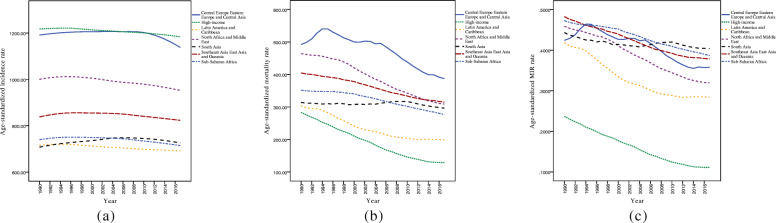
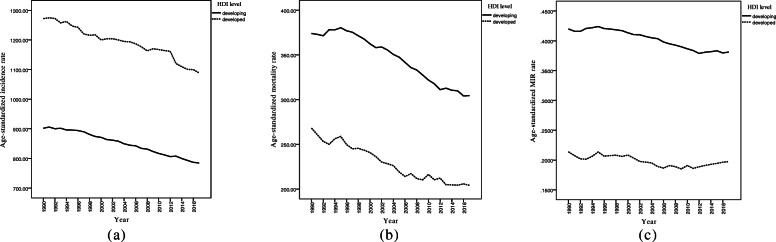
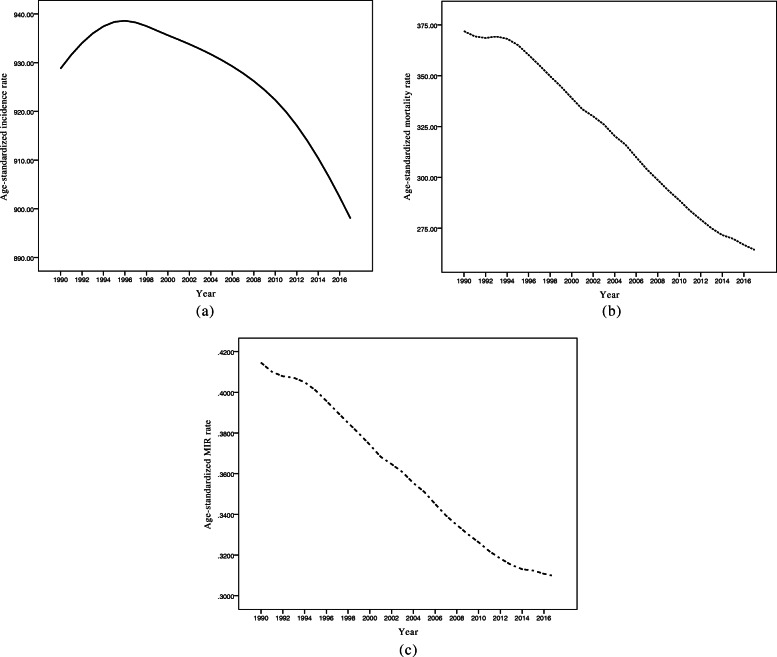
Background: Cardiovascular diseases (CVDs) are one of the global leading causes of concern due to the rising prevalence and consequence of mortality and disability with a heavy economic burden. The objective of the current study was to analyze the trend in CVD incidence, mortality, and mortality-to-incidence ratio (MIR) across the world over 28 years. Methods: The age-standardized CVD mortality and incidence rates were retrieved from the Global Burden of Disease (GBD) Study 2017 for both genders and different world super regions with available data every year during the period 1990–2017. Additionally, the Human Development Index was sourced from the United Nations Development Programme (UNDP) database for all countries at the same time interval. The marginal modeling approach was implemented to evaluate the mean trend of CVD incidence, mortality, and MIR for 195 countries and separately for developing and developed countries and also clarify the relationship between the indices and Human Development Index (HDI) from 1990 to 2017. Results: The obtained estimates identified that the global mean trend of CVD incidence had an ascending trend until 1996 followed by a descending trend after this year. Nearly all of the countries experienced a significant declining mortality trend from 1990 to 2017. Likewise, the global mean MIR rate had a significant trivial decrement trend with a gentle slope of 0.004 over the time interval. As such, the reduction in incidence and mortality rates for developed countries was significantly faster than developing counterparts in the period 1990–2017 (p < 0.05). Nevertheless, the developing nations had a more rather shallow decrease in MIR compared to developed ones. Conclusions: Generally, the findings of this study revealed that there was an overall downward trend in CVD incidence and mortality rates, while the survival rate of CVD patients was rather stable. These results send a satisfactory message that global effort for controlling the CVD burden was quite successful. Nonetheless, there is an urgent need for more efforts to improve the survival rate of patients and lower the burden of this disease in some areas with an increasing trend of either incidence or mortality.
Overview
The claims and statistics of this paper haven’t been checked yet.
Free: it reads the open-access text and checks the first 5 claims that cite a source we can check. Create a free account to check every claim.
Integrity signals
Registry
Cites
Statistics
Figures
Verification
Claims the paper makes
The claims and statistics of this paper haven’t been checked yet.
Free: it reads the open-access text and checks the first 5 claims that cite a source we can check. Create a free account to check every claim.
Claims other papers make about this one
Each is checked against this paper’s own text: does it say what the citing paper says it does?
In the citing paper
“Small reductions in depressive symptoms after psychological and educational interventions have been reported for primary care patients. 450”
From Time for united action on depression: a Lancet–World Psychiatric Association Commission (2022) · cites this paper as [450]
Self-check
Percentages, sums and reported differences re-computed from the paper’s own numbers.
The self-check needs the paper’s full text.
Citations
Cites
Lozano, R., Naghavi, M., Foreman, K., Lim, S., Shibuya, K., Aboyans, V., Abraham, J., Adair, T., Aggarwal, R., Ahn, S. Y., et al. (2012) · The Lancet · doi:10.1016/s0140-6736(12)61728-0 · Cited by 14,070
Roth, G. A., Abate, D., Abate, K. H., Abay, S. M., Abbafati, C., Abbasi, N., Abbastabar, H., Abd-Allah, F., Abdela, J., Abdelalim, A., et al. (2018) · The Lancet · doi:10.1016/s0140-6736(18)32203-7 · Cited by 8,600
Naghavi, M., Abajobir, A. A., Abbafati, C., Abbas, K. M., Abd-Allah, F., Abera, S. F., Aboyans, V., Adetokunboh, O., Afshin, A., Agrawal, A., et al. (2017) · The Lancet · doi:10.1016/s0140-6736(17)32152-9 · Cited by 4,821
Kyu, H. H., Abate, D., Abate, K. H., Abay, S. M., Abbafati, C., Abbasi, N., Abbastabar, H., Abd-Allah, F., Abdela, J., Abdelalim, A., et al. (2018) · The Lancet · doi:10.1016/s0140-6736(18)32335-3 · Cited by 4,081
Feigin, V. L., Forouzanfar, M. H., Krishnamurthi, R., Mensah, G. A., Connor, M., Bennett, D. A., Moran, A. E., Sacco, R. L., Anderson, L., Truelsen, T., et al. (2014) · The Lancet · doi:10.1016/s0140-6736(13)61953-4 · Cited by 3,899
Global, Regional, and National Burden of Cardiovascular Diseases for 10 Causes, 1990 to 2015
Roth, G. A., Johnson, C., Abajobir, A., Abd-Allah, F., Abera, S. F., Abyu, G., Ahmed, M., Aksut, B., Alam, T., Alam, K., et al. (2017) · Journal of the American College of Cardiology · doi:10.1016/j.jacc.2017.04.052 · Cited by 3,791
Johnson, C. O., Nguyen, M., Roth, G. A., Nichols, E., Alam, T., Abate, D., Abd-Allah, F., Abdelalim, A., Abraha, H. N., Abu-Rmeileh, N. M., et al. (2019) · The Lancet Neurology · doi:10.1016/s1474-4422(19)30034-1 · Cited by 3,264
The Global Burden of Cardiovascular Diseases and Risk Factors
Mensah, G. A., Roth, G. A., & Fuster, V. (2019) · Journal of the American College of Cardiology · doi:10.1016/j.jacc.2019.10.009 · Cited by 1,324
Global Epidemiology of Ischemic Heart Disease: Results from the Global Burden of Disease Study
Khan, M. A., Hashim, M. J., Mustafa, H., Baniyas, M. Y., Al Suwaidi, S. K. B. M., AlKatheeri, R., Alblooshi, F. M. K., Almatrooshi, M. E. A. H., Alzaabi, M. E. H., Al Darmaki, R. S., et al. (2020) · Cureus · doi:10.7759/cureus.9349 · Cited by 1,134
Lead Exposure and Cardiovascular Disease—A Systematic Review
Navas-Acien, A., Guallar, E., Silbergeld, E. K., & Rothenberg, S. J. (2007) · Environmental Health Perspectives · doi:10.1289/ehp.9785 · Cited by 1,112
Cited by
Items 101–200 of 693
McDermott, M., Khaing, P. H., Meah, M. N., Wang, K.-L., Craig, N. J., Loganath, K., Balmforth, C., van Beek, E. J. R., Norrie, J. D., McKinstry, B., et al. (2025) · JAMA Cardiology · doi:10.1001/jamacardio.2025.1763 · Cited by 21
A Prospective Study of Grip Strength Trajectories and Incident Cardiovascular Disease
Liu, W., Chen, R., Song, C., Wang, C., Chen, G., Hao, J., Wang, Y., & Yu, C.-X. (2021) · Frontiers in Cardiovascular Medicine · doi:10.3389/fcvm.2021.705831 · Cited by 21
Structural Aspects of Electrospun Scaffolds Intended for Prosthetics of Blood Vessels
Chernonosova, V. S., & Laktionov, P. P. (2022) · Polymers · doi:10.3390/polym14091698 · Cited by 21
Emerging evidence for glucagon-like peptide-1 agonists in slowing chronic kidney disease progression
Holliday, M. W., Frost, L. A., & Navaneethan, S. D. (2024) · Current Opinion in Nephrology & Hypertension · doi:10.1097/mnh.0000000000000976 · Cited by 22
Rising incidence of severe maxillofacial space infections in Germany
Meisgeier, A., Pienkohs, S. P., Dürrschnabel, F., Neff, A., & Halling, F. (2024) · Clinical Oral Investigations · doi:10.1007/s00784-024-05663-w · Cited by 21
Lipids, lipoproteins, and apolipoproteins: Associations with cognition and dementia
Rasmussen, I. J., Luo, J. M., & Frikke‐Schmidt, R. (2024) · Atherosclerosis · doi:10.1016/j.atherosclerosis.2024.118614 · Cited by 23
Du, M., Zhang, S., Liu, M., & Liu, J. (2025) · Journal of Infection and Public Health · doi:10.1016/j.jiph.2025.102654 · Cited by 22
Brai, A., Poggialini, F., Trivisani, C. I., Vagaggini, C., Tarchi, F., Francardi, V., & Dreassi, E. (2022) · Journal of Insects as Food and Feed · doi:10.3920/jiff2022.0090 · Cited by 20
Sisay, T., Mulate, M., Hailu, T., & Belete, T. M. (2024) · Heliyon · doi:10.1016/j.heliyon.2024.e24079 · Cited by 21
“[1,2].”
Zamani, M. M., Zarei, M., Nikbaf‐Shandiz, M., Gholami, F., Hosseini, A. M., Nadery, M., Shiraseb, F., & Asbaghi, O. (2022) · Frontiers in Nutrition · doi:10.3389/fnut.2022.1055517 · Cited by 22
“Studies with the following criteria were included: (1) RCTs with either parallel or crossover design; (2) used oral supplementation of saffron; (3) investigated the effects of saffron on any of the cardiovascular risk factors and the desired variables such as triglyceride (TG), total cholesterol (TC), low-density lipo…”
BackgroundMethodMiao, S., Ji, P., Zhu, Y., Meng, H., Jing, M., Sheng, R., Zhang, X., Ding, H., Guo, J., Gao, W., et al. (2025) · JMIR Medical Informatics · doi:10.2196/63186 · Cited by 22
“CVD is influenced by risk factors such as tobacco use, an unhealthy diet, physical inactivity, obesity, elevated blood pressure, abnormal blood lipids, and elevated blood glucose [3,4].”
Osuji, E., Prior, P. L., Suskin, N., Frisbee, J. C., & Frisbee, S. J. (2022) · American Journal of Preventive Cardiology · doi:10.1016/j.ajpc.2022.100376 · Cited by 20
“Cardiovascular diseases (CVD) are the leading cause of death globally [1] and, while mortality rates from CVD have trended downward in the last 30 years [2], the prevalence of people living with CVD has increased, subsequently increasing the associated burden on society [3].”
BackgroundPriya, V., Samridhi, S., Singh, N. K., Dash, D., & Muthu, M. S. (2023) · Molecular Pharmaceutics · doi:10.1021/acs.molpharmaceut.3c00830 · Cited by 19
TCN-Based Distal Force Feedback Strategy of a Vascular Interventional Surgery Robot
Wang, S., Shen, H., Liu, Z., & Xie, L. (2023) · IEEE Sensors Journal · doi:10.1109/jsen.2023.3345028 · Cited by 19
“V ASCULAR diseases stand as the primary threat to human life and health [1].”
BackgroundResearch development on gut microbiota and vulnerable atherosclerotic plaque
Zheng, S., Liu, Z., Liu, H., Lim, J. Y., Li, D. W. H., Zhang, S., Luo, F., Wang, X., Sun, C., Tang, R., et al. (2024) · Heliyon · doi:10.1016/j.heliyon.2024.e25186 · Cited by 20
Wong, C. W. Y., Li, P. W. C., Yu, D. S. F., Ho, B. M. H., & Chan, B. S. (2024) · Ageing Research Reviews · doi:10.1016/j.arr.2024.102266 · Cited by 21
Ma, J., Zhou, H., Fu, Q., & Lü, G. (2023) · BMC Public Health · doi:10.1186/s12889-023-15201-0 · Cited by 20
“A united society-wide approach to depression prevention is justified and is associated with measures such as reducing alcohol consumption, overlapping with the successful actions taken in many countries to reduce the prevalence of coronary heart disease and several types of cancer [44].”
BackgroundHassan, A., Luqman, A., Zhang, K., Ullah, M., Din, A. U., Xiaoling, L., & Wang, G. (2024) · World Journal of Microbiology and Biotechnology · doi:10.1007/s11274-024-04010-1 · Cited by 19
“Cardiovascular manifestations remain the leading cause of higher mortality and morbidity all over the World (Amini et al. 2021; Nigro et al. 2006; Cravioto 2003; Libby 2021; Ross 1986; Yang et al. 2022).”
Rad, F. S., Bitaraf, E., Jafarpour, M., & Juan, L. I. (2026) · JMIR Cardio · doi:10.2196/78499 · Cited by 23
“Cardiovascular diseases (CVDs) remain a leading cause of morbidity and mortality worldwide, underscoring the need for innovative, patient-centric approaches to diagnosis, treatment, and management [6,7].”
Dorobanţu, M., Halațiu, V.-B., Fronea, O. F. G., Bala, C.-G., Moldovan, H., Parepa, R. I., Rodean, I. P., Benedek, I., & Benedek, T. (2023) · International Journal of Molecular Sciences · doi:10.3390/ijms24032813 · Cited by 20
Wang, S., Liu, Z., Yang, W., Cao, Y., Zhao, L., & Xie, L. (2023) · IEEE Journal of Biomedical and Health Informatics · doi:10.1109/jbhi.2023.3289548 · Cited by 25
Hisamatsu, T., & Kinuta, M. (2023) · Journal of Atherosclerosis and Thrombosis · doi:10.5551/jat.rv22009 · Cited by 19
Multimorbidity and mortality among older patients with coronary heart disease in Shenzhen, China
Li, F., Wang, S., Li, X., Cheng, Z., Jin, C. S., Mo, C., Zheng, J., Liang, F., & Gu, D. (2024) · 老年心脏病学杂志:英文版 · doi:10.26599/1671-5411.2024.01.005 · Cited by 20
Brust, M., Gebhardt, W. A., ter Hoeve, N., Numans, M. E., & Jong, J. C. K. (2024) · Patient Education and Counseling · doi:10.1016/j.pec.2024.108279 · Cited by 22
Aguchem, R. N., Okagu, I. U., Okorigwe, E. M., Uzoechina, J. O., Nnemolisa, S. C., & Ezeorba, T. P. C. (2024) · Life Sciences · doi:10.1016/j.lfs.2024.122823 · Cited by 18
Gut microbiota and cardiovascular diseases axis
MOLDOVAN, D. C., Ismaiel, A., Fagoonee, S., Pellicano, R., Abenavoli, L., & DUMITRASCU, D. L. (2022) · Minerva Medica · doi:10.23736/s0026-4806.21.07527-3 · Cited by 20
Engagement with community liver disease management across the UK: a cross-sectional survey
Jarvis, H., Worsfold, J., Hebditch, V., & Ryder, S. D. (2021) · BJGP Open · doi:10.3399/bjgpo.2021.0085 · Cited by 18
“in morbidity and mortality has been seen over the past 50 years.(2) The main causes of liver disease in the UK are alcohol- related liver disease (ARLD) and nonalcoholrelated fatty liver disease (NAFLD), which is increasing in parallel with the obesity and type two diabetes mellitus (T2DM) epidemics seen in the UK and…”
BackgroundDebates in cardiac CT: Coronary CT angiography is the best test in asymptomatic patients
Meah, M. N., Maurovich‐Horvat, P., Williams, M. C., & Newby, D. E. (2022) · Journal of cardiovascular computed tomography · doi:10.1016/j.jcct.2022.02.001 · Cited by 21
Slavchev, S. H., Kornovski, Y. D., Yordanov, A. D., Ivanova, Y., Kostov, S. G., & Slavcheva, S. E. (2021) · Current Oncology · doi:10.3390/curroncol28050313 · Cited by 17
Ko, D.-K., Lee, H., Kim, D., Park, Y.-M., & Kang, N. (2024) · Progress in Neuro-Psychopharmacology and Biological Psychiatry · doi:10.1016/j.pnpbp.2024.111072 · Cited by 19
Verma, N., Setia, A., Mehata, A. K., Randhave, N. V., Badgujar, P., Malik, A. K., & Muthu, M. S. (2024) · Molecular Pharmaceutics · doi:10.1021/acs.molpharmaceut.4c00495 · Cited by 17
Chen, M., Li, Y., & Liu, X. (2024) · Food & Function · doi:10.1039/d4fo04969a · Cited by 17
Poniedziałek, B., Rosińska, J., Rzymski, P., & Fiołka, M. J. (2022) · Biomedicine & Pharmacotherapy · doi:10.1016/j.biopha.2022.113205 · Cited by 17
Prospects of Probiotic Adjuvant Drugs in Clinical Treatment
Ren, Z., Hong, Y., Huo, Y., Peng, L., Lv, H., Chen, J., Wu, Z., & Wan, C. (2022) · Nutrients · doi:10.3390/nu14224723 · Cited by 19
“, the types and probability of human diseases, including cancer [35], diabetes [36], cardiovascular disease [37], etc.”
BackgroundSayed, R. A., Mohamed, A. R., Shalaby, A., & Ibrahim, H. (2023) · Microchemical Journal · doi:10.1016/j.microc.2023.109334 · Cited by 17
Ramezankhani, A., Azizi, F., & Hadaegh, F. (2023) · Cardiovascular Diabetology · doi:10.1186/s12933-023-02008-x · Cited by 17
“Cardiovascular disease (CVD) is a serious health issue and remains the primary cause of disability and mortality worldwide [1].”
BackgroundA dynamic customer requirement mining method for continuous product improvement
Zhao, Q., Zhao, W., Guo, X., Zhang, K., & Yu, M. (2022) · Autonomous Intelligent Systems · doi:10.1007/s43684-022-00032-4 · Cited by 17
“…products; 2) applying dynamic change trends to the method, dynamic changes trend is mostly applied in the fields of climate [24, 25] and disease [26–28], mainly by predicting the future based on existing data so that appropriate countermeasures and suggestions can be prepared in advance.”
MethodAssociation between Shift Work Schedules and Cardiovascular Events in a Multi-Ethnic Cohort
Dicom, A. R., Huang, X., & Hilal, S. (2023) · International Journal of Environmental Research and Public Health · doi:10.3390/ijerph20032047 · Cited by 18
Stair-climbing interventions on cardio-metabolic outcomes in adults: A scoping review
Ghosal, A. M., & Chandrasekaran, B. (2023) · Journal of Taibah University Medical Sciences · doi:10.1016/j.jtumed.2023.10.003 · Cited by 16
Soares, M. A. G., Souza‐Silva, F., Alves, C. R., Vázquez, L., de Araújo, T. S., Serpa, C., & Chaves, O. A. (2024) · Scientia Pharmaceutica · doi:10.3390/scipharm92020032 · Cited by 16
Jiang, R., Fu, B., Li, R., Li, R., Chen, D. Z., Liu, Y., Xie, G., & Li, K. (2024) · Engineering Applications of Artificial Intelligence · doi:10.1016/j.engappai.2024.109480 · Cited by 16
“Arrhythmia is one of the most common types of cardiovascular disease, which is the leading cause of death worldwide (Amini et al., 2021).”
BackgroundLai, G., Zhao, Y., Yang, C., Zheng, Y., Sun, J., Zhao, Y., & Ding, M. (2024) · Nutrition Metabolism and Cardiovascular Diseases · doi:10.1016/j.numecd.2024.103840 · Cited by 16
Microtubule affinity regulating kinase 4: A promising target in the pathogenesis of atherosclerosis
Qin, Y., Li, H., Wang, S., Wang, Z., & Tang, C. (2021) · Journal of Cellular Physiology · doi:10.1002/jcp.30530 · Cited by 16
“Cardiovascular disease (CVD) is the leading cause of death worldwide and is the most serious health problem in the world (Amini et al., 2021; Roth et al., 2020).”
BackgroundImpact of the Educational Level on Non-Fatal Health Outcomes following Myocardial Infarction
Füller, D., Jaehn, P., Andresen-Bundus, H., Pagonas, N., Holmberg, C., Christ, M., Ritter, O., & Sasko, B. M. (2022) · Current Problems in Cardiology · doi:10.1016/j.cpcardiol.2022.101340 · Cited by 17
Zaleski, K. S., Matias, A. A., Gyampo, A. O., Giuriato, G., Lynch, M. M., Lora, B., Tomasi, T., Basso, E., Finegan, E., Schickler, J., et al. (2022) · Microvascular Research · doi:10.1016/j.mvr.2022.104436 · Cited by 17
Endoplasmic Reticulum Stress and Renin-Angiotensin System Crosstalk in Endothelial Dysfunction
Gaikwad, A. B., Sankrityayan, H., Rao, P. D., Shelke, V., Kulkarni, Y. A., & Mulay, S. R. (2022) · Current Molecular Pharmacology · doi:10.2174/1874467215666220301113833 · Cited by 15
Predicting heart disease using machine learning algorithms
Berdaly, A., & Abdiakhmetova, Z. (2022) · Journal of Mathematics Mechanics and Computer Science · doi:10.26577/jmmcs.2022.v115.i3.10 · Cited by 15
Whitmore, K., Zhou, Z., Ryan, J. D. M., Magnussen, C. G., Carrington, M. J., & Marwick, T. H. (2024) · European Journal of Preventive Cardiology · doi:10.1093/eurjpc/zwae026 · Cited by 15
Nammi, J., Pasala, R., Kotaru, S., Bandikolla, S. S., Andhe, N., & Gouravaram, P. R. (2024) · Cureus · doi:10.7759/cureus.58361 · Cited by 16
“Although a sudden increase in the prevalence of heart disease occurred in 2005 in the U.S., the total prevalence decreased steadily throughout the years (Figures 1 - 2 ) [2,3,10].”
BackgroundMethodGenetic Markers of Cardiovascular Disease
Varghese, T. P. (2024) · Current Problems in Cardiology · doi:10.1016/j.cpcardiol.2024.102588 · Cited by 15
Janwetchasil, P., Yindeengam, A., & Krittayaphong, R. (2024) · Journal of Cardiovascular Magnetic Resonance · doi:10.1016/j.jocmr.2024.101057 · Cited by 15
“Despite the advances in coronary artery disease (CAD) treatment, residual CAD-related risk remains high—especially in South Asians and Southeast Asians [1].”
BackgroundRohan, T. Z., Hafer, R., Duong, T., Dasgupta, R., & Yang, S. X. (2025) · Journal of Clinical Medicine · doi:10.3390/jcm14041110 · Cited by 15
Shi, Y. X., & Lan, J. (2021) · Reviews in Cardiovascular Medicine · doi:10.31083/j.rcm2204153 · Cited by 16
Cardiac Arrhythmia classification based on 3D recurrence plot analysis and deep learning
Zhang, H., Liu, C., Tang, F., Li, M., Zhang, D., Xia, L., Zhao, N., Li, S., Crozier, ., Xu, W., et al. (2022) · Frontiers in Physiology · doi:10.3389/fphys.2022.956320 · Cited by 20
“Cardiovascular Diseases (CVD) are a leading cause of death globally (Sahin and Ilgun, 2020; Amini et al., 2021).”
BackgroundThe therapeutic potential of sphingolipids for cardiovascular diseases
Bar, S. Y., Pintel, N., Alghne, H. A., Khattib, H., & Avni, D. (2023) · Frontiers in Cardiovascular Medicine · doi:10.3389/fcvm.2023.1224743 · Cited by 15
Chen, Y., Liu, J., Zhang, Q., Wang, Q., Chai, L., Chen, H., Li, D., Qiu, Y., Wang, Y., Shen, N., et al. (2023) · BMJ Open · doi:10.1136/bmjopen-2023-074134 · Cited by 21
Kazemi, Z., Emamgholipour, S., Daroudi, R., Ghorbani, A., Yunesian, M., Hassanvand, M. S., & Shahali, Z. (2022) · BMJ Open · doi:10.1136/bmjopen-2022-067573 · Cited by 15
“4 With increasing LoS, the average hospitalisation expenses for a patient who had a stroke increases.”
BackgroundQuezada‐Pinedo, H. G., Ahanchi, N. S., Cajachagua‐Torres, K. N., Obeso-Manrique, J. A., Huicho, L., Gräni, C., & Muka, T. (2023) · American Heart Journal Plus Cardiology Research and Practice · doi:10.1016/j.ahjo.2023.100335 · Cited by 21
“Cardiovascular diseases (CVDs) are collectively one of the main global causes of concern due to the rising prevalence, the resulting mortality and disability, along with heavy financial burden worldwide [1].”
Maharani, A., Sujarwoto, S., Praveen, D., Oceandy, D., Tampubolon, G., & Patel, A. A. (2024) · PLOS Digital Health · doi:10.1371/journal.pdig.0000476 · Cited by 15
Alwahsh, M., Alejel, R., Hasan, A., Abuzaid, H., & Al‐Qirim, T. M. (2024) · Metabolites · doi:10.3390/metabo14080438 · Cited by 17
“They include coronary heart diseases, cerebrovascular diseases, and myocardial infarction [9,10].”
BackgroundBehers, B. J., Behers, B. M., Stephenson-Moe, C. A., Vargas, I., Meng, Z., Thompson, A. J., Melchor, J., Wojtas, C. N., Rosario, M. A., Baker, J. F., et al. (2024) · Nutrients · doi:10.3390/nu16213617 · Cited by 16
Advanced passive 3D bioelectronics: powerful tool for the cardiac electrophysiology investigation
Shi, K., He, C., Pan, H., Liu, D., Zhang, J., Han, W., Xiang, Y., & Hu, N. (2025) · Microsystems & Nanoengineering · doi:10.1038/s41378-025-00891-w · Cited by 14
Arrifano, G. D. P., Alvarez-Leite, J. I., Macchi, B. D. M., Campos, N. F. S. D. S., Augusto‐Oliveira, M., Santos-Sacramento, L., Lopes-Araújo, A., Monteiro, J. R. S., Albuquerque-Santos, R., do Nascimento, J. L. M., et al. (2021) · Journal of Clinical Medicine · doi:10.3390/jcm10163630 · Cited by 15
Bennett, M., Pistillo, A., Recalde, M., Reyes, C., Freisling, H., & Duarte‐Salles, T. (2023) · BMJ Open · doi:10.1136/bmjopen-2022-066404 · Cited by 15
Jędrzejczak, K., Antonowicz, A., Makowski, Ł., Orciuch, W., Wojtas, K., & Kozłowski, M. (2023) · Process Safety and Environmental Protection · doi:10.1016/j.cherd.2023.06.041 · Cited by 14
Favere, K., fraeyenhove, J. V., Jacobs, G., Bosman, M., Eens, S., SUTTER, J. D., Miljoen, H., Guns, P., Keulenaer, G. W. D., Segers, V. F. M., et al. (2022) · American Journal of Physiology-Heart and Circulatory Physiology · doi:10.1152/ajpheart.00337.2022 · Cited by 14
Huang, C.-C., & Lee, M. (2025) · Surfaces and Interfaces · doi:10.1016/j.surfin.2025.106108 · Cited by 13
Chen, M., Wu, Y., & Chen, C. (2025) · Medical Science Monitor · doi:10.12659/msm.948948 · Cited by 13
“Cardiovascular diseases (CVDs) continue to be the leading cause of death worldwide, with projections estimating 23 million global deaths annually by 2030 [1].”
Sanchez, L. D., Sanchez-Aranguren, L. C., Marwah, M. K., Wang, K., Spickett, C. M., Griffiths, H. R., & Dias, I. H. K. (2022) · Advances in Redox Research · doi:10.1016/j.arres.2022.100030 · Cited by 18
Thomas, D., Pérez, V. D. J., & Sayed, N. (2022) · BMC Cardiovascular Disorders · doi:10.1186/s12872-022-02543-7 · Cited by 13
“Cardiovascular diseases (CVD) comprising of congenital heart disease, heart failure, stroke and hypertension contribute toward nearly one-third of all deaths worldwide [1, 2].”
Backgroundvon Gerich, H., Moen, H., & Peltonen, L. (2022) · Journal of Nursing Management · doi:10.1111/jonm.13802 · Cited by 13
“Despite the efforts in achieving a downward trend of disease prevalence in high-income countries (Amini et al., 2017), cardiovascular diseases are still an important cause of mortality globally, causing over 38% of premature deaths in 2019 (WHO, 2021).”
BackgroundMohajeri, M., & Cicero, A. F. G. (2023) · Nutrients · doi:10.3390/nu15030738 · Cited by 13
Ambient carbon monoxide and cardiovascular-related hospital admissions: A time-series analysis
Taheri, M., Nouri, F., Ziaddini, M., Rabiei, K., Pourmoghaddas, A., Islam, S. M. S., & Sarrafzadegan, N. (2023) · Frontiers in Physiology · doi:10.3389/fphys.2023.1126977 · Cited by 13
“The Global Burden of Disease (GBD) study demonstrated that cardiovascular diseases have been the leading cause of death since 1980 (Yang et al., 1998; Amini et al., 2021) and is one of the chronic, non-communicable diseases responsible for more than 12% of the global disease burden (Sadeghi et al.”
BackgroundMotamed, H., Mohammadi, M., Tayebi, Z., & Navaei, A. R. (2023) · SAGE Open Medicine · doi:10.1177/20503121221148609 · Cited by 13
Sharma, C., Singh, T. P., Thanigaimani, S., Nastasi, D. R., & Golledge, J. (2023) · Biomedicines · doi:10.3390/biomedicines11041178 · Cited by 13
Advancements and future directions in cardiac biomarker detection using lateral flow assays
da Silva, S. S., Cunha, M. L., Ayres, L. B., García, C. D., & Blanes, L. (2023) · Analytical Methods · doi:10.1039/d3ay01081c · Cited by 14
Huerta, C. T., Voza, F. A., Ortiz, Y. Y., Liu, Z., & Velazquez, O. C. (2023) · Frontiers in Cardiovascular Medicine · doi:10.3389/fcvm.2023.1236345 · Cited by 13
Nazli, S. A., Rosman, A., Kasim, N. A. M., Al-Khateeb, A. M., Ul-Saufie, A. Z., Radzi, A. B. M., Ibrahim, K. S., Kassim, S. S., & Nawawi, H. M. (2024) · Scientific Reports · doi:10.1038/s41598-024-53539-6 · Cited by 15
Hasani, W. S. R., Musa, K. I., Cheng, K. Y., & Dass, S. C. (2024) · BMC Public Health · doi:10.1186/s12889-024-19103-7 · Cited by 15
“For example, the findings from the GBD Study 2017 reported that nearly all countries, including developing countries and regions like Southeast Asia, experienced a significant declining trend in age-standardized CVD mortality rates from 1990 to 2017 [48].”
ResultMamaghani, E. A., Soleimani, A., & Zirak, M. (2024) · International Journal of Nursing Studies Advances · doi:10.1016/j.ijnsa.2024.100278 · Cited by 15
“…diseases in clinical medicine, and the trend of their incidence is increasing due to improved life expectancy, lifestyle changes, sedentary living, increased prevalence of metabolic diseases such as diabetes, environmental pollution, and increased tobacco consumption (Amini et al., 2021).”
Dopolani, S. F. A. S., Shahbazi, H., Lotfizadeh, M., & Naderimagham, S. (2025) · BMC Public Health · doi:10.1186/s12889-025-23516-3 · Cited by 13
“In recent years, CVDs have led to a significant decline in quality of life and life expectancy world-wide [4].”
Tchonkouang, R. D., Antunes, M. D. C., & Vieira, M. M. C. (2022) · Physiology · doi:10.5772/intechopen.103933 · Cited by 18
Cardiovascular disease and cognitive impairment
Boytsov, S. A., & Samorodskaya, I. V. (2022) · S S Korsakov Journal of Neurology and Psychiatry · doi:10.17116/jnevro20221220717 · Cited by 13
Critical Role of Cathepsin L/V in Regulating Endothelial Cell Senescence
Li, C., Liu, Z., Chen, M., Zhang, L., Shi, R., & Zhong, H. (2022) · Biology · doi:10.3390/biology12010042 · Cited by 12
“CVD, the leading cause of death worldwide, is projected to be responsible for more than 23 million deaths in 2030 around the world [4].”
BackgroundEarly Postoperative Cardiac Complications Following Heart Transplantation
Negargar, S., & Sadeghi, S. (2023) · Galen Medical Journal · doi:10.31661/gmj.v12i.2701 · Cited by 12
“C diseases (CVDs), one of the most drastic health problems and the most prevalent non-communicable diseases, are recognized as the leading cause of morbidity and mortality since they lead to more than 30% of all deaths all around the world [1-3].”
BackgroundYang, D., Li, Y., Tan, J., Li, W., Xu, Z., Xu, J., Xu, W., Hou, C., Zhou, J., Li, G., et al. (2023) · Advanced Healthcare Materials · doi:10.1002/adhm.202300340 · Cited by 12
Expanding roles of circRNAs in cardiovascular diseases
Liu, X., Yao, X., & Chen, L. (2024) · Non-coding RNA Research · doi:10.1016/j.ncrna.2024.02.001 · Cited by 14
“Cardiovascular disease (CVD) is the leading cause of mortality globally [56,57].”
BackgroundKwaśny, A., Łokieć, K., Uchmanowicz, B., Młynarska, A., Smereka, J., & Czapla, M. (2023) · Nutrition Metabolism and Cardiovascular Diseases · doi:10.1016/j.numecd.2023.06.010 · Cited by 14
Graph-based complex network features for the auscultation of mitral incompetence
Sankararaman, S. I. (2021) · Chinese Journal of Physics · doi:10.1016/j.cjph.2021.09.001 · Cited by 12
Denysyuk, H. V., Pires, I. M., & García, N. M. (2024) · PeerJ · doi:10.7717/peerj.17895 · Cited by 13
Kim, H. J., Oh, Y. H., Park, S. J., Song, J., Kim, K., Choi, D., Jeong, S., & Park, S. M. (2024) · Journal of the American Heart Association · doi:10.1161/jaha.124.035933 · Cited by 13
Khan, S. I., & Pachori, R. B. (2025) · Digital Signal Processing · doi:10.1016/j.dsp.2025.105244 · Cited by 11
Archambault, S. D., Abu-Qamar, O., Biery, D. W., Yaghy, A., Weber, B., & Waheed, N. K. (2025) · Eye · doi:10.1038/s41433-025-03780-8 · Cited by 13
“Cardiovascular disease (CVD) remains a pervasive and persistent global health concern, contributing significantly to worldwide morbidity and mortality [1–3].”
Bockarie, T., Shanker, A., Jalloh, M. B., Kamara, A. M., Odland, M. L., Wurie, H. R., Ansumana, R., Lamin, J. M., Witham, M. D., Oyebode, O. O., et al. (2025) · BMJ Open · doi:10.1136/bmjopen-2024-095825 · Cited by 12
Zhou, Y., Xu, H., Cheng, K., Chen, F., Zhou, Q., & Wang, M. (2022) · Journal of Functional Foods · doi:10.1016/j.jff.2022.105283 · Cited by 11
Takhttavous, A., Saberi‐Karimian, M., Hafezi, S. G., Esmaily, H., Hosseini, M., Ferns, G. A., Amirfakhrian, E., Ghamsary, M. G., Ghayour‐Mobarhan, M., & Alinezhad‐Namaghi, M. (2024) · Lipids in Health and Disease · doi:10.1186/s12944-024-02006-2 · Cited by 11
“Cardiovascular disease (CVD) is responsible for substantial declines in both the quality of life and lifespan, while simultaneously imposing a considerable economic strain on healthcare systems worldwide [3].”
BackgroundOrgans in orbit: how tissue chip technology benefits from microgravity, a perspective
Jogdand, A. H., Landolina, M., & Chen, Y. (2024) · Frontiers in Lab on a Chip Technologies · doi:10.3389/frlct.2024.1356688 · Cited by 11
“Cardiovascular diseases are a leading cause of mortality, affecting over 17 million people each year (Amini et al., 2021).”
BackgroundTroponin C gene mutations on cardiac muscle cell and skeletal Regulation: A comprehensive review
Aborode, A. T., Adesola, R. O., Idris, I., Adio, W. S., Scott, G. Y., Chakoma, M., Adereti, A. O., Onifade, I. A., Adeoye, A., Aluko, B. A., et al. (2024) · Gene · doi:10.1016/j.gene.2024.148651 · Cited by 12
Repurposing Metformin for the Treatment of Atrial Fibrillation: Current Insights
Sarkar, A., Fanous, K., Marei, I., Ding, H., Ladjimi, M. M., MacDonald, R. S., Hollenberg, M. D., Anderson, T. J., Hill, M. A., & Triggle, C. R. (2024) · Vascular Health and Risk Management · doi:10.2147/vhrm.s391808 · Cited by 11
Abciximab coated albumin nanoparticles of rutin for improved and targeted antithrombotic effect
Rout, S. K., Priya, V., Vikas, V., Mehata, A. K., & Muthu, M. S. (2022) · Journal of Drug Delivery Science and Technology · doi:10.1016/j.jddst.2022.103785 · Cited by 11
Metadata
- Authors
- Amini, M., Zayeri, F., & Salehi, M.
- Affiliations
- Shahid Beheshti University (IR)
- Corresponding author
- Zayeri, Farid
- Venue
- BMC Public Health
- Published
- 2021-02-25
- Volume
- 21
- Issue
- 1
- Pages
- 401-401
- ISSN
- 1471-2458 (ISSN-L)
- PMC
- PMC7905904
- OpenAlex
- W3131704889
- Cited by
- 636
- References
- 49
- Citations by year
- 2026: 56 · 2025: 132 · 2024: 176 · 2023: 154 · 2022: 93 · 2021: 25
- FWCI
- 81.06
- Type
- journal article
- Language
- en
- Open access
- gold
- doi.org
- Licence
- cc-by
- creativecommons.org/licenses/by/4.0/ (tdm)
- creativecommons.org/licenses/by/4.0/ (vor)
- Locations
- BMC Public Health (publishedVersion, cc-by)
- PubMed Central (publishedVersion, cc-by)
- PubMed (publishedVersion)
- DOAJ (DOAJ: Directory of Open Access Journals) (submittedVersion, cc-by-sa)
- Funders
- Shahid Beheshti University of Medical Sciences
- Topics
- Health Sciences › Medicine › Epidemiology › Healthcare Systems and Public Health
- Health Sciences › Medicine › Cardiology and Cardiovascular Medicine › Cardiovascular Health and Risk Factors
- Health Sciences › Medicine › Public Health, Environmental and Occupational Health › Global Health and Epidemiology
- Keywords
- cardiovascular disease, cardiovascular mortality, cardiovascular disease incidence, mortality-to-incidence ratio, temporal trends, Human Development Index, developed and developing countries, Global Burden of Disease 2017, disease burden
- MeSH terms
- Global Burden of Disease, Cardiovascular Diseases, Female, Humans, Male, Global Health, Incidence, Prevalence
About these checks
Registry, retraction, Cites and statistics results are computed, not judged, with one exception: a printed reference that no index lists is read once by a model before it counts as a citation error. Claims are extracted by a model and kept only when their quote appears verbatim in the text; each cited source is then checked, with a model’s help, for whether it says what the claim relies on. Those verdicts can be wrong — read the claim’s quote and the cited source before relying on one.
Statistics and arithmetic are recomputed, not judged.
Confidence bands are shown only for fields calibrated on our annotated test set. None is calibrated yet, so no band is shown.
What counts as a claim ›How we measure confidence ›How we check this ›
Are you an author, or do you see a problem with this page? Request a review
Data sources
Bibliographic data: Semantic Scholar, OpenAlex, Crossref.
Contains information from the Semantic Scholar Academic Graph Datasets, made available under the ODC Attribution License (ODC-BY 1.0).
Semantic Scholar’s data is described in: Kinney, R., et al. (2023). The Semantic Scholar Open Data Platform. arXiv:2301.10140.
