

The DOI matches its Crossref record; 29 of the 30 references it cites were found in a registry or an index; none of the 32 sources its claims cite is checked for support yet.
Social media use and social connectedness among adolescents in the United Kingdom: a qualitative exploration of displacement and stimulation
Open accessAbstract
Background: Connectedness to family and peers is a key determinant of adolescent mental health. Existing research examining associations between social media use and social connectedness has been largely quantitative and has focused primarily on loneliness, or on specific aspects of peer relationships. In this qualitative study we use the displacement hypothesis and the stimulation hypothesis as competing theoretical lenses through which we examine the complex relationship between social media use and feelings of connectedness to family and peers. Methods: In-depth paired and individual interviews were conducted with twenty-four 13–14-year-olds in two inner-city English secondary schools. Interviews were transcribed verbatim, coded and thematically analysed. Results: Analysis identified four themes: (i) ‘Displacement of face-to-face socialising’ (ii) ‘Social obligations’ (iii) ‘(Mis)Trust’ and (iv) ‘Personal and group identity’. Results indicated stronger support for the stimulation hypothesis than the displacement hypothesis. We found evidence of a complex set of reciprocal and circular relationships between social media use and connectedness consistent with a ‘rich-get-richer’ and a ‘poor-get-poorer’ effect for family and peer connectedness – and a ‘poor-get-richer’ effect in peer connectedness for those who find face-to-face interactions difficult. Conclusion: Our findings suggest that parents should take a measured approach to social media use, providing clear guidance, promoting trust and responsible time management, and acknowledging the role of social media in making connections. Understanding and sharing in online experiences is likely to promote social connectedness. Supporting young people to negotiate breathing space in online interactions and prioritising trust over availability in peer relationships may optimise the role of social media in promoting peer connectedness.
Overview
AI snapshot
Written from the paper’s full text.
TL;DR
This qualitative study used displacement and stimulation hypotheses to explore how social media use relates to family and peer connectedness among 13–14-year-olds in England. It found stronger support for stimulation than displacement, alongside complex reciprocal effects including rich-get-richer, poor-get-poorer, and poor-get-richer patterns.
Key findings
- Four themes were identified: “Displacement of face-to-face socialising,” “Social obligations,” “(Mis)Trust,” and “Personal and group identity.”
- Results indicated stronger support for the stimulation hypothesis than the displacement hypothesis, with social media often used to maintain or expand connections when face-to-face socialising was not possible.
- The authors describe a complex set of reciprocal and circular relationships, including a “rich-get-richer” and “poor-get-poorer” effect for family and peer connectedness, and a “poor-get-richer” effect in peer connectedness for those who find face-to-face interactions difficult.
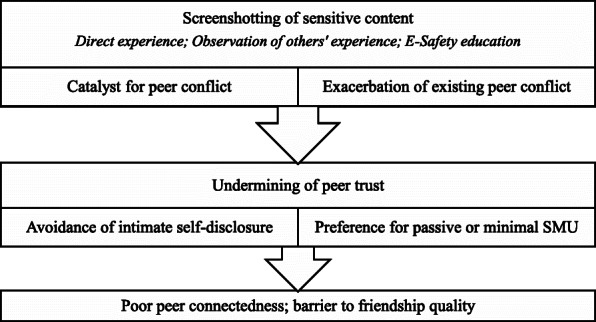
- Participants also described “over-stimulation” through obligations to be available and provide positive feedback, and fear of screenshotting undermined trust and peer connectedness.
Methods
- In-depth paired and individual interviews were conducted with 24 Year 9 students aged 13–14 years (19 girls and five boys) in February–March 2020.
- Interviews took place at two inner-city English secondary schools; 13 interviews were conducted, lasting between 45 min and an hour, using a topic guide developed with a young people’s advisory board.
- Interviews were transcribed verbatim, coded in NVivo 12, and thematically analysed using an inductive, reflexive approach from a critical realist perspective.
Limitations
- The paper states the sample size was somewhat smaller than planned due to COVID-19, with boys in particular under-represented.
- The paper states participants were not selected based on how much or why they used social media, so additional patterns of social media use may exist in this age group that were not captured.
- The paper states all participants were aged 13–14 and attended inner-city secondary schools in one area of the country, so caution should be exercised in generalising findings to other populations; the text also makes evident that findings rely on self-report and that participants were not asked to provide feedback on the findings.
Model-written summary. Check it against the paper before relying on it.
Integrity signals
Registry
Cites
Statistics
Figures
Verification
Claims the paper makes
61 Own result · 43 Own interpretation · 24 Not checked yet · 7 Own method · 2 No basis given
A result the paper reports from its own data — it cites no other source for it, so there is none to check. The quote shows it is in the paper.
In the paper
“We found evidence of a complex set of reciprocal and circular relationships between social media use and connectedness consistent with a ‘rich-get-richer’ and a ‘poor-get-poorer’ effect for family and peer connectedness – and a ‘poor-get-richer’ effect in peer connectedness for those who find face-to-face interactions difficult.”
§ Social media use and social connectedness among adolescents in the United Kingdom: a qualitative exploration of displacement and stimulation > Abstract > Results
plaincorrelational- Asserted: passes — The authors put it forward as true.
- Checkable: passes — It can be checked against evidence.
- Load-bearing: passes — The paper’s conclusions depend on it.
- Based: passes — The paper gives a reason why it holds.
A result the paper reports from its own data — it cites no other source for it, so there is none to check. The quote shows it is in the paper.
In the paper
“We found evidence of a complex set of reciprocal and circular relationships between social media use and connectedness consistent with a ‘rich-get-richer’ and a ‘poor-get-poorer’ effect for family and peer connectedness – and a ‘poor-get-richer’ effect in peer connectedness for those who find face-to-face interactions difficult.”
§ Social media use and social connectedness among adolescents in the United Kingdom: a qualitative exploration of displacement and stimulation > Abstract > Results
plaindirect- Asserted: passes — The authors put it forward as true.
- Checkable: passes — It can be checked against evidence.
- Load-bearing: passes — The paper’s conclusions depend on it.
- Based: passes — The paper gives a reason why it holds.
A result the paper reports from its own data — it cites no other source for it, so there is none to check. The quote shows it is in the paper.
In the paper
“Results indicated stronger support for the stimulation hypothesis than the displacement hypothesis.”
§ Social media use and social connectedness among adolescents in the United Kingdom: a qualitative exploration of displacement and stimulation > Abstract > Results
hedged- Asserted: passes — The authors put it forward as true.
- Checkable: passes — It can be checked against evidence.
- Load-bearing: passes — The paper’s conclusions depend on it.
- Based: passes — The paper gives a reason why it holds.
A result the paper reports from its own data — it cites no other source for it, so there is none to check. The quote shows it is in the paper.
In the paper
“This was generally reciprocated by participants, several whom trusted their parents or other family members to follow their social media accounts as a form of protection.”
§ Social media use and social connectedness among adolescents in the United Kingdom: a qualitative exploration of displacement and stimulation > Results > Social obligations
plain- Asserted: passes — The authors put it forward as true.
- Checkable: passes — It can be checked against evidence.
- Load-bearing: unclear — It is unclear whether the paper’s conclusions depend on it.
- Based: passes — The paper gives a reason why it holds.
A result the paper reports from its own data — it cites no other source for it, so there is none to check. The quote shows it is in the paper.
In the paper
“Participants’ own SMU was sometimes felt to displace face-to-face social activities that promote feelings of connectedness.”
§ Social media use and social connectedness among adolescents in the United Kingdom: a qualitative exploration of displacement and stimulation > Results > Displacement of face-to-face socialising
hedgedconditional- Asserted: passes — The authors put it forward as true.
- Checkable: passes — It can be checked against evidence.
- Load-bearing: passes — The paper’s conclusions depend on it.
- Based: passes — The paper gives a reason why it holds.
A result the paper reports from its own data — it cites no other source for it, so there is none to check. The quote shows it is in the paper.
In the paper
“However, those who were more frequent users again indicated that online interactions generally replaced face-to-face out of necessity.”
§ Social media use and social connectedness among adolescents in the United Kingdom: a qualitative exploration of displacement and stimulation > Results > Displacement of face-to-face socialising
hedgeddirect- Asserted: passes — The authors put it forward as true.
- Checkable: passes — It can be checked against evidence.
- Load-bearing: passes — The paper’s conclusions depend on it.
- Based: passes — The paper gives a reason why it holds.
A result the paper reports from its own data — it cites no other source for it, so there is none to check. The quote shows it is in the paper.
In the paper
“Participants felt they were expected to respond immediately to social media messages.”
§ Social media use and social connectedness among adolescents in the United Kingdom: a qualitative exploration of displacement and stimulation > Results > Social obligations
plain- Asserted: passes — The authors put it forward as true.
- Checkable: passes — It can be checked against evidence.
- Load-bearing: passes — The paper’s conclusions depend on it.
- Based: passes — The paper gives a reason why it holds.
A result the paper reports from its own data — it cites no other source for it, so there is none to check. The quote shows it is in the paper.
In the paper
“With adolescents in control of their own online profiles and content, social media was felt by some to provide opportunities for adults in their lives to demonstrate they trust young people to be responsible online, nurturing their independence.”
§ Social media use and social connectedness among adolescents in the United Kingdom: a qualitative exploration of displacement and stimulation > Results > Social obligations
hedgedconditional- Asserted: passes — The authors put it forward as true.
- Checkable: passes — It can be checked against evidence.
- Load-bearing: unclear — It is unclear whether the paper’s conclusions depend on it.
- Based: passes — The paper gives a reason why it holds.
A result the paper reports from its own data — it cites no other source for it, so there is none to check. The quote shows it is in the paper.
In the paper
“However, the fear of data misappropriation, such as screenshotting within broader peer networks, appeared to have led to widespread underlying feelings of mistrust, undermining peer connectedness.”
§ Social media use and social connectedness among adolescents in the United Kingdom: a qualitative exploration of displacement and stimulation > Results > Social obligations
hedgeddirect- Asserted: passes — The authors put it forward as true.
- Checkable: passes — It can be checked against evidence.
- Load-bearing: passes — The paper’s conclusions depend on it.
- Based: passes — The paper gives a reason why it holds.
A result the paper reports from its own data — it cites no other source for it, so there is none to check. The quote shows it is in the paper.
In the paper
“Several participants spoke of their parents or other family members following their social media accounts to keep an eye on them.”
§ Social media use and social connectedness among adolescents in the United Kingdom: a qualitative exploration of displacement and stimulation > Results > Social obligations
plain- Asserted: passes — The authors put it forward as true.
- Checkable: passes — It can be checked against evidence.
- Load-bearing: unclear — It is unclear whether the paper’s conclusions depend on it.
- Based: passes — The paper gives a reason why it holds.
- It may state two separate claims as one. 62
- Probably not a substantial claim. 30
A result the paper reports from its own data — it cites no other source for it, so there is none to check. The quote shows it is in the paper.
In the paper
“Analysis identified four themes: (i) ‘Displacement of face-to-face socialising’ (ii) ‘Social obligations’ (iii) ‘(Mis)Trust’ and (iv) ‘Personal and group identity’.”
§ Social media use and social connectedness among adolescents in the United Kingdom: a qualitative exploration of displacement and stimulation > Abstract > Results
plain- Asserted: passes — The authors put it forward as true.
- Checkable: passes — It can be checked against evidence.
- Load-bearing: passes — The paper’s conclusions depend on it.
- Based: passes — The paper gives a reason why it holds.
It may state two separate claims as one.
A result the paper reports from its own data — it cites no other source for it, so there is none to check. The quote shows it is in the paper.
In the paper
“While many participants accepted this etiquette as part of everyday peer relationships, others described it as time-consuming and ‘overwhelming’ (F15), with some feeling ‘forced’ (M4) to like or comment on a friend’s post.”
§ Social media use and social connectedness among adolescents in the United Kingdom: a qualitative exploration of displacement and stimulation > Results > Social obligations
plain- Asserted: passes — The authors put it forward as true.
- Checkable: passes — It can be checked against evidence.
- Load-bearing: passes — The paper’s conclusions depend on it.
- Based: passes — The paper gives a reason why it holds.
It may state two separate claims as one.
A result the paper reports from its own data — it cites no other source for it, so there is none to check. The quote shows it is in the paper.
In the paper
“In addition to maintaining stability within their social circle, SMU was also often credited with expansion of participants’ social circle through making new friends online, both by offering opportunities for new introductions, such as through a ‘mutual friend’ (F5), and by facilitating the development of friendships through initial online communication, which felt less intimidating than new face”
§ Social media use and social connectedness among adolescents in the United Kingdom: a qualitative exploration of displacement and stimulation > Results > Displacement of face-to-face socialising
plaindirect- Asserted: passes — The authors put it forward as true.
- Checkable: passes — It can be checked against evidence.
- Load-bearing: passes — The paper’s conclusions depend on it.
- Based: passes — The paper gives a reason why it holds.
It may state two separate claims as one.
A result the paper reports from its own data — it cites no other source for it, so there is none to check. The quote shows it is in the paper.
In the paper
“This was generally framed positively as overseeing participants’ SMU for their protection, either in terms of giving advice about data privacy or inappropriate posts (F17), or in more practical terms, whereby geographical tags can help parents locate young people if they are unable to contact them (M4).”
§ Social media use and social connectedness among adolescents in the United Kingdom: a qualitative exploration of displacement and stimulation > Results > Social obligations
plain- Asserted: passes — The authors put it forward as true.
- Checkable: passes — It can be checked against evidence.
- Load-bearing: fails — The paper’s conclusions may not depend on it.
- Based: passes — The paper gives a reason why it holds.
Probably not a substantial claim. The paper’s conclusions may not depend on it. It may state two separate claims as one.
A result the paper reports from its own data — it cites no other source for it, so there is none to check. The quote shows it is in the paper.
In the paper
“However, online peer interactions frequently took place when in-person socialising was not possible, helping to alleviate feelings of boredom and loneliness.”
§ Social media use and social connectedness among adolescents in the United Kingdom: a qualitative exploration of displacement and stimulation > Results > Displacement of face-to-face socialising
plaindirect- Asserted: passes — The authors put it forward as true.
- Checkable: passes — It can be checked against evidence.
- Load-bearing: unclear — It is unclear whether the paper’s conclusions depend on it.
- Based: passes — The paper gives a reason why it holds.
It may state two separate claims as one.
A result the paper reports from its own data — it cites no other source for it, so there is none to check. The quote shows it is in the paper.
In the paper
“Participants reported feeling obliged – in line with social norms – to respond promptly to messages from peers and to provide positive feedback on peers’ social media posts.”
§ Social media use and social connectedness among adolescents in the United Kingdom: a qualitative exploration of displacement and stimulation > Results > Social obligations
plain- Asserted: passes — The authors put it forward as true.
- Checkable: passes — It can be checked against evidence.
- Load-bearing: passes — The paper’s conclusions depend on it.
- Based: passes — The paper gives a reason why it holds.
It may state two separate claims as one.
In the paper
“We found some evidence of online enhanced self-disclosure in our sample – in line with the stimulation hypothesis – whereby features of online communication facilitate sharing of intimate information, leading to better quality relationships [28].”
§ Social media use and social connectedness among adolescents in the United Kingdom: a qualitative exploration of displacement and stimulation > Results > Social obligations
What the sources say
- Not checked yetcites [28] Desjarlais M, Joseph JJ. Socially interactive and passive technologies enhance friendship quality: an investigation of the mediating roles of online and offline self-disclosure. Cyberpsychol Behav Soc Netw. 2017;20(5):286–91. https://doi.org/10.1089/cyber.2016.0363. source
hedgeddirect- Asserted: passes — The authors put it forward as true.
- Checkable: passes — It can be checked against evidence.
- Load-bearing: passes — The paper’s conclusions depend on it.
- Based: passes — The paper gives a reason why it holds.
It may state two separate claims as one.
A result the paper reports from its own data — it cites no other source for it, so there is none to check. The quote shows it is in the paper.
In the paper
“One exception to this provided an example of a more complicated relationship with parents and felt a lack of trust to be left in charge of their own SMU, with implications for responding to adverse online experiences.”
§ Social media use and social connectedness among adolescents in the United Kingdom: a qualitative exploration of displacement and stimulation > Results > Social obligations
plainSingle case- Asserted: passes — The authors put it forward as true.
- Checkable: passes — It can be checked against evidence.
- Load-bearing: unclear — It is unclear whether the paper’s conclusions depend on it.
- Based: passes — The paper gives a reason why it holds.
It may state two separate claims as one.
A result the paper reports from its own data — it cites no other source for it, so there is none to check. The quote shows it is in the paper.
In the paper
“Participant F12 described the process of commenting and liking on others’ posts as ‘trading’ to boost perceived popularity for enhanced peer status.”
§ Social media use and social connectedness among adolescents in the United Kingdom: a qualitative exploration of displacement and stimulation > Results > Social obligations
plaindirectSingle case- Asserted: passes — The authors put it forward as true.
- Checkable: passes — It can be checked against evidence.
- Load-bearing: fails — The paper’s conclusions may not depend on it.
- Based: passes — The paper gives a reason why it holds.
Probably not a substantial claim. The paper’s conclusions may not depend on it.
A result the paper reports from its own data — it cites no other source for it, so there is none to check. The quote shows it is in the paper.
In the paper
“Whilst SMU enhanced feelings of connectedness through enabling participants to keep in touch with others, this was frequently accompanied by demanding expectations amongst peers.”
§ Social media use and social connectedness among adolescents in the United Kingdom: a qualitative exploration of displacement and stimulation > Results > Social obligations
plaincorrelational- Asserted: passes — The authors put it forward as true.
- Checkable: passes — It can be checked against evidence.
- Load-bearing: passes — The paper’s conclusions depend on it.
- Based: passes — The paper gives a reason why it holds.
It may state two separate claims as one.
A result the paper reports from its own data — it cites no other source for it, so there is none to check. The quote shows it is in the paper.
In the paper
“Where close friends were felt to be trustworthy, social media provided opportunities for self-disclosure, fostering intimacy in the relationship, and improving peer connectedness in a virtuous cycle.”
§ Social media use and social connectedness among adolescents in the United Kingdom: a qualitative exploration of displacement and stimulation > Results > Social obligations
plaindirect- Asserted: passes — The authors put it forward as true.
- Checkable: passes — It can be checked against evidence.
- Load-bearing: passes — The paper’s conclusions depend on it.
- Based: passes — The paper gives a reason why it holds.
It may state two separate claims as one.
A result the paper reports from its own data — it cites no other source for it, so there is none to check. The quote shows it is in the paper.
In the paper
“There were no systematic differences in opinions and experiences between participants from the two different schools or those interviewed individually compared to with others, so comparisons are not presented here.”
§ Social media use and social connectedness among adolescents in the United Kingdom: a qualitative exploration of displacement and stimulation > Results
plain- Asserted: passes — The authors put it forward as true.
- Checkable: passes — It can be checked against evidence.
- Load-bearing: unclear — It is unclear whether the paper’s conclusions depend on it.
- Based: passes — The paper gives a reason why it holds.
It may state two separate claims as one.
A result the paper reports from its own data — it cites no other source for it, so there is none to check. The quote shows it is in the paper.
In the paper
“As with family interactions, some participants pointed to the possibility of excessive SMU displacing time spent socialising in person with friends, leading some young people to ‘distance themselves from family and friends’ (M5).”
§ Social media use and social connectedness among adolescents in the United Kingdom: a qualitative exploration of displacement and stimulation > Results > Displacement of face-to-face socialising
hedgeddirectSingle case- Asserted: passes — The authors put it forward as true.
- Checkable: passes — It can be checked against evidence.
- Load-bearing: fails — The paper’s conclusions may not depend on it.
- Based: passes — The paper gives a reason why it holds.
Probably not a substantial claim. The paper’s conclusions may not depend on it. It may state two separate claims as one.
A result the paper reports from its own data — it cites no other source for it, so there is none to check. The quote shows it is in the paper.
In the paper
“This is evident in contrasting comments from F14, who was comfortable approaching their mother for help with online peer relationships, and F1, who felt that her parents’ dogmatic approach to social media prevented her reporting online sexual harassment in case she was no longer allowed to use certain apps.”
§ Social media use and social connectedness among adolescents in the United Kingdom: a qualitative exploration of displacement and stimulation > Results > Social obligations
plaindirectSingle case- Asserted: passes — The authors put it forward as true.
- Checkable: passes — It can be checked against evidence.
- Load-bearing: fails — The paper’s conclusions may not depend on it.
- Based: passes — The paper gives a reason why it holds.
Probably not a substantial claim. The paper’s conclusions may not depend on it.
A result the paper reports from its own data — it cites no other source for it, so there is none to check. The quote shows it is in the paper.
In the paper
“Those participants with parents who had demonstrated their trust reported feeling able to discuss and ask for advice on difficult issues encountered on social media, whereas those with less trusting parents felt reluctant to approach their parents for fear of repercussions.”
§ Social media use and social connectedness among adolescents in the United Kingdom: a qualitative exploration of displacement and stimulation > Results > Social obligations
boostedcorrelational- Asserted: passes — The authors put it forward as true.
- Checkable: passes — It can be checked against evidence.
- Load-bearing: unclear — It is unclear whether the paper’s conclusions depend on it.
- Based: passes — The paper gives a reason why it holds.
It may state two separate claims as one.
A result the paper reports from its own data — it cites no other source for it, so there is none to check. The quote shows it is in the paper.
In the paper
“This was sometimes accompanied by feeling overwhelmed by multiple messages or group chats, guilt associated with making excuses for unavailability or outright peer conflict if expectations were not met.”
§ Social media use and social connectedness among adolescents in the United Kingdom: a qualitative exploration of displacement and stimulation > Results > Social obligations
plaincorrelational- Asserted: passes — The authors put it forward as true.
- Checkable: passes — It can be checked against evidence.
- Load-bearing: passes — The paper’s conclusions depend on it.
- Based: passes — The paper gives a reason why it holds.
It may state two separate claims as one.
A result the paper reports from its own data — it cites no other source for it, so there is none to check. The quote shows it is in the paper.
In the paper
“Several participants explained their motivation for commenting on a friend’s post as an act of altruism to boost others’ self-esteem, stimulating peer connectedness through provision of emotional support and mutual respect (F4, F5, F10).”
§ Social media use and social connectedness among adolescents in the United Kingdom: a qualitative exploration of displacement and stimulation > Results > Social obligations
plaindirect- Asserted: passes — The authors put it forward as true.
- Checkable: passes — It can be checked against evidence.
- Load-bearing: unclear — It is unclear whether the paper’s conclusions depend on it.
- Based: passes — The paper gives a reason why it holds.
It may state two separate claims as one.
A result the paper reports from its own data — it cites no other source for it, so there is none to check. The quote shows it is in the paper.
In the paper
“Social network expansion was also highlighted as a key benefit of SMU, meeting new people, and maintaining contact with old friends outside of school and family members abroad.”
§ Social media use and social connectedness among adolescents in the United Kingdom: a qualitative exploration of displacement and stimulation > Results > Displacement of face-to-face socialising
plaindirect- Asserted: passes — The authors put it forward as true.
- Checkable: passes — It can be checked against evidence.
- Load-bearing: unclear — It is unclear whether the paper’s conclusions depend on it.
- Based: passes — The paper gives a reason why it holds.
It may state two separate claims as one.
In the paper
“Others gave opinions more aligned with the stimulation hypothesis, whereby online socialising facilitated offline interaction when they felt their own personalities to be ‘shy’ or socially ‘awkward’ (F6) – a social compensation effect [26].”
§ Social media use and social connectedness among adolescents in the United Kingdom: a qualitative exploration of displacement and stimulation > Results > Displacement of face-to-face socialising
What the sources say
- Not checked yetcites [26] Valkenburg PM, Peter J. Social consequences of the internet for adolescents: a decade of research. Curr Dir Psychol Sci. 2009;18(1):1–5. https://doi.org/10.1111/j.1467-8721.2009.01595.x. source
plaindirect- Asserted: passes — The authors put it forward as true.
- Checkable: passes — It can be checked against evidence.
- Load-bearing: fails — The paper’s conclusions may not depend on it.
- Based: passes — The paper gives a reason why it holds.
Probably not a substantial claim. The paper’s conclusions may not depend on it.
A result the paper reports from its own data — it cites no other source for it, so there is none to check. The quote shows it is in the paper.
In the paper
“Participants often discussed their online communication in obligation-related terms as a means of avoiding conflict with peers, or as a chore necessary to adhere to social norms.”
§ Social media use and social connectedness among adolescents in the United Kingdom: a qualitative exploration of displacement and stimulation > Results > Social obligations
plain- Asserted: passes — The authors put it forward as true.
- Checkable: passes — It can be checked against evidence.
- Load-bearing: unclear — It is unclear whether the paper’s conclusions depend on it.
- Based: passes — The paper gives a reason why it holds.
It may state two separate claims as one.
A result the paper reports from its own data — it cites no other source for it, so there is none to check. The quote shows it is in the paper.
In the paper
“Being available to take part in multiple online conversations simultaneously was felt to be ‘stressful’ and ‘a mess in my mind’ (M4), with ending conversations causing difficulty for several participants.”
§ Social media use and social connectedness among adolescents in the United Kingdom: a qualitative exploration of displacement and stimulation > Results > Social obligations
plain- Asserted: passes — The authors put it forward as true.
- Checkable: passes — It can be checked against evidence.
- Load-bearing: passes — The paper’s conclusions depend on it.
- Based: passes — The paper gives a reason why it holds.
It may state two separate claims as one.
The paper states this without a source or data behind it here, so there is nothing to check it against. The quote shows it is in the paper.
In the paper
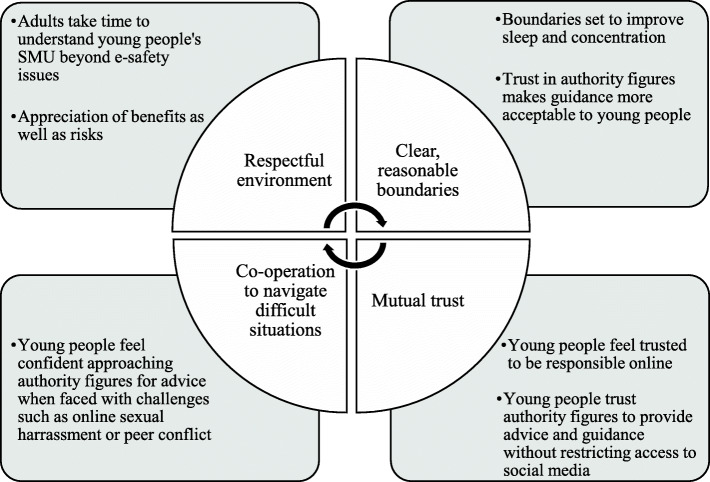
“Young people felt they were trusted to behave responsibly online and in turn trusted authority figures to provide guidance regarding challenges encountered without fear of access to social media being removed or restricted.”
§ Social media use and social connectedness among adolescents in the United Kingdom: a qualitative exploration of displacement and stimulation > Discussion > Parental understanding of social media use in young people
plain- Asserted: passes — The authors put it forward as true.
- Checkable: passes — It can be checked against evidence.
- Load-bearing: passes — The paper’s conclusions depend on it.
- Based: passes — The paper gives a reason why it holds.
It may state two separate claims as one.
A result the paper reports from its own data — it cites no other source for it, so there is none to check. The quote shows it is in the paper.
In the paper
“Perceived benefits of SMU that emerged in this sample included the expansion of social networks, the ability to keep in touch with friends and family (including those for whom geographical constraints prevent offline socialising), enhanced self-disclosure for socially awkward young people or among very close friends, and supporting identity development and feelings of belonging.”
§ Social media use and social connectedness among adolescents in the United Kingdom: a qualitative exploration of displacement and stimulation > Discussion > Findings in relation to displacement and stimulation hypotheses
plain- Asserted: passes — The authors put it forward as true.
- Checkable: passes — It can be checked against evidence.
- Load-bearing: passes — The paper’s conclusions depend on it.
- Based: passes — The paper gives a reason why it holds.
It may state two separate claims as one.
A result the paper reports from its own data — it cites no other source for it, so there is none to check. The quote shows it is in the paper.
In the paper
“The young people in our sample were thus acutely aware of the risks of identity theft and of engaging online with potentially dangerous strangers.”
§ Social media use and social connectedness among adolescents in the United Kingdom: a qualitative exploration of displacement and stimulation > Results > Social obligations
plain- Asserted: passes — The authors put it forward as true.
- Checkable: passes — It can be checked against evidence.
- Load-bearing: unclear — It is unclear whether the paper’s conclusions depend on it.
- Based: passes — The paper gives a reason why it holds.
It may state two separate claims as one.
A result the paper reports from its own data — it cites no other source for it, so there is none to check. The quote shows it is in the paper.
In the paper
“For many participants the risk of screenshots being taken and shared presented a substantial barrier to online self-disclosure (Fig. 1), with some saying they would not trust even close friends with sensitive information sent over social media.”
§ Social media use and social connectedness among adolescents in the United Kingdom: a qualitative exploration of displacement and stimulation > Results > Social obligations
plaindirect- Asserted: passes — The authors put it forward as true.
- Checkable: passes — It can be checked against evidence.
- Load-bearing: passes — The paper’s conclusions depend on it.
- Based: passes — The paper gives a reason why it holds.
It may state two separate claims as one.
A result the paper reports from its own data — it cites no other source for it, so there is none to check. The quote shows it is in the paper.
In the paper
“However, it was often the case that online peer interactions took place mainly when in person socialising was not possible, providing opportunities to socialise and maintain peer relationships online in the absence of offline opportunities.”
§ Social media use and social connectedness among adolescents in the United Kingdom: a qualitative exploration of displacement and stimulation > Discussion > Findings in relation to displacement and stimulation hypotheses
plaincorrelational- Asserted: passes — The authors put it forward as true.
- Checkable: passes — It can be checked against evidence.
- Load-bearing: passes — The paper’s conclusions depend on it.
- Based: passes — The paper gives a reason why it holds.
It may state two separate claims as one.
A result the paper reports from its own data — it cites no other source for it, so there is none to check. The quote shows it is in the paper.
In the paper
“Those experiencing increased SMU in place of family socialising tended to relay lower levels of family connectedness that preceded the SMU, with SMU used strategically to overcome feelings of loneliness in the home.”
§ Social media use and social connectedness among adolescents in the United Kingdom: a qualitative exploration of displacement and stimulation > Discussion > Findings in relation to displacement and stimulation hypotheses
hedgeddirect- Asserted: passes — The authors put it forward as true.
- Checkable: passes — It can be checked against evidence.
- Load-bearing: passes — The paper’s conclusions depend on it.
- Based: passes — The paper gives a reason why it holds.
It may state two separate claims as one.
A result the paper reports from its own data — it cites no other source for it, so there is none to check. The quote shows it is in the paper.
In the paper
“In addition to the positive aspects of SMU, young people reported feeling pressures of expectation around providing feedback on friends’ online posts and being constantly available for communication.”
§ Social media use and social connectedness among adolescents in the United Kingdom: a qualitative exploration of displacement and stimulation > Discussion > Findings in relation to displacement and stimulation hypotheses
plain- Asserted: passes — The authors put it forward as true.
- Checkable: passes — It can be checked against evidence.
- Load-bearing: passes — The paper’s conclusions depend on it.
- Based: passes — The paper gives a reason why it holds.
It may state two separate claims as one.
A result the paper reports from its own data — it cites no other source for it, so there is none to check. The quote shows it is in the paper.
In the paper
“Four themes were identified: i) ‘Displacement of face-to-face socialising’ (ii) ‘Social obligations’ (iii) ‘(Mis)Trust’ and (iv) ‘Personal and group identity’.”
§ Social media use and social connectedness among adolescents in the United Kingdom: a qualitative exploration of displacement and stimulation > Discussion
plain- Asserted: passes — The authors put it forward as true.
- Checkable: passes — It can be checked against evidence.
- Load-bearing: passes — The paper’s conclusions depend on it.
- Based: passes — The paper gives a reason why it holds.
It may state two separate claims as one.
A result the paper reports from its own data — it cites no other source for it, so there is none to check. The quote shows it is in the paper.
In the paper
“Others reserved any content sharing only for trusted close friends, and only using certain apps such as Snapchat where users are notified if someone has taken a screenshot.”
§ Social media use and social connectedness among adolescents in the United Kingdom: a qualitative exploration of displacement and stimulation > Results > Social obligations
plain- Asserted: passes — The authors put it forward as true.
- Checkable: passes — It can be checked against evidence.
- Load-bearing: unclear — It is unclear whether the paper’s conclusions depend on it.
- Based: passes — The paper gives a reason why it holds.
It may state two separate claims as one.
A result the paper reports from its own data — it cites no other source for it, so there is none to check. The quote shows it is in the paper.
In the paper
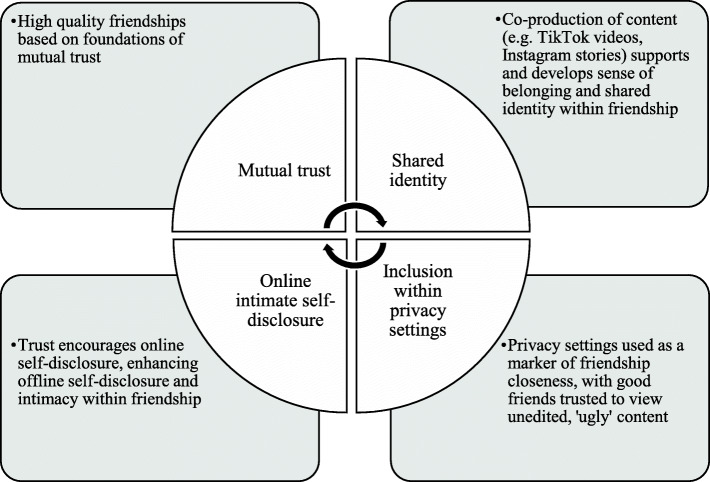
“Young people in our sample reported using social media to share experiences, such as passively watching entertaining content together with friends and family members, as well as actively co-producing content, with privacy settings used to demarcate friendship group boundaries to different degrees of closeness (Fig. 2).”
§ Social media use and social connectedness among adolescents in the United Kingdom: a qualitative exploration of displacement and stimulation > Discussion > Findings in relation to displacement and stimulation hypotheses
plain- Asserted: passes — The authors put it forward as true.
- Checkable: passes — It can be checked against evidence.
- Load-bearing: passes — The paper’s conclusions depend on it.
- Based: passes — The paper gives a reason why it holds.
It may state two separate claims as one.
What the paper did — it cites no source for this, so there is none to check. The quote shows it is in the paper.
In the paper
“The guide was developed following consultation with a young people’s advisory board – a group of 11–18-year-olds with experience in advising on the design of health-related research materials.”
§ Social media use and social connectedness among adolescents in the United Kingdom: a qualitative exploration of displacement and stimulation > Methods > Design and procedure
plain- Asserted: passes — The authors put it forward as true.
- Checkable: passes — It can be checked against evidence.
- Load-bearing: fails — The paper’s conclusions may not depend on it.
- Based: passes — The paper gives a reason why it holds.
Probably not a substantial claim. The paper’s conclusions may not depend on it.
In the paper
“An inductive, reflexive approach to thematic analysis was used from a critical realist (contextualist) perspective [25].”
§ Social media use and social connectedness among adolescents in the United Kingdom: a qualitative exploration of displacement and stimulation > Methods > Data analysis
What the sources say
- Not checked yetcites [25] Braun V, Clarke V. One size fits all? What counts as quality practice in (reflexive) thematic analysis? Qual Res Psychol. 2020;14:1–25.
plain- Asserted: passes — The authors put it forward as true.
- Checkable: passes — It can be checked against evidence.
- Load-bearing: passes — The paper’s conclusions depend on it.
- Based: passes — The paper gives a reason why it holds.
Probably not a substantial claim.
None of the sources cited for this claim have been checked yet.
In the paper
“Where used for communication purposes, online engagement and expansion of social networks were thought to be primarily with weak ties rather than with close family and friends, and as such, of little benefit to psychosocial well-being [11, 13].”
§ Social media use and social connectedness among adolescents in the United Kingdom: a qualitative exploration of displacement and stimulation > Introduction > The displacement and stimulation hypotheses
What the sources say
- Not checked yetcites [11] Kraut R, Patterson M, Lundmark V, Kiesler S, Mukophadhyay T, Scherlis W. Internet paradox: a social technology that reduces social involvement and psychological well-being? Am Psychol. 1998 Sep;53(9):1017–31. https://doi.org/10.1037/0003-066X.53.9.1017. source
- Not checked yetcites [13] Turkle S. Alone together: why we expect more from technology and less from each other. Hachette UK; 2017.
hedgeddirect- Asserted: fails — The authors may not put it forward as true.
- Checkable: passes — It can be checked against evidence.
- Load-bearing: fails — The paper’s conclusions may not depend on it.
- Based: passes — The paper gives a reason why it holds.
Probably not a substantial claim. The authors may not put it forward as true. The paper’s conclusions may not depend on it. It may state two separate claims as one.
- Rests on an assumption: The displacement and stimulation hypotheses, developed for internet use, are applicable to social media use.
In the paper
“This indicates that rather than being mutually exclusive theories, both the stimulation and displacement hypotheses may be possible, depending on both the amount and type of SMU [17].”
§ Social media use and social connectedness among adolescents in the United Kingdom: a qualitative exploration of displacement and stimulation > Introduction > The displacement and stimulation hypotheses
What the sources say
- Not checked yetcites [17] Nowland R, Necka EA, Cacioppo JT. Loneliness and social internet use: pathways to reconnection in a digital world? Perspect Psychol Sci. 2018 Jan;13(1):70–87. https://doi.org/10.1177/1745691617713052. source
hedgedconditional- Asserted: passes — The authors put it forward as true.
- Checkable: passes — It can be checked against evidence.
- Load-bearing: fails — The paper’s conclusions may not depend on it.
- Based: passes — The paper gives a reason why it holds.
Probably not a substantial claim. The paper’s conclusions may not depend on it. It may state two separate claims as one.
- Rests on an assumption: The displacement and stimulation hypotheses, developed for internet use, are applicable to social media use.
None of the sources cited for this claim have been checked yet.
In the paper
“Use of the internet for entertainment purposes – as a solitary, socially disengaged activity comparable to passive consumption of social media content without active engagement – is thought to displace time spent socialising with others offline, subsequently undermining social connectedness [11, 12].”
§ Social media use and social connectedness among adolescents in the United Kingdom: a qualitative exploration of displacement and stimulation > Introduction > The displacement and stimulation hypotheses
What the sources say
- Not checked yetcites [11] Kraut R, Patterson M, Lundmark V, Kiesler S, Mukophadhyay T, Scherlis W. Internet paradox: a social technology that reduces social involvement and psychological well-being? Am Psychol. 1998 Sep;53(9):1017–31. https://doi.org/10.1037/0003-066X.53.9.1017. source
- Not checked yetcites [12] Bessière K, Kiesler S, Kraut R, Boneva BS. Effects of internet use and social resources on changes in depression. Information, Community & Society. 2008 Feb 1;11(1):47–70. https://doi.org/10.1080/13691180701858851. source
hedgeddirect- Asserted: passes — The authors put it forward as true.
- Checkable: passes — It can be checked against evidence.
- Load-bearing: passes — The paper’s conclusions depend on it.
- Based: passes — The paper gives a reason why it holds.
Probably not a substantial claim.
- Rests on an assumption: The displacement and stimulation hypotheses, developed for internet use, are applicable to social media use.
None of the sources cited for this claim have been checked yet.
In the paper
“Family connectedness in particular has been found to buffer the negative effects of bullying and to be related to lower risk for suicide-related outcomes and depressive symptoms [3, 4].”
§ Social media use and social connectedness among adolescents in the United Kingdom: a qualitative exploration of displacement and stimulation > Introduction
What the sources say
- Not checked yetcites [3] McLoughlin LT, Spears BA, Taddeo CM, Hermens DF. Remaining connected in the face of cyberbullying: why social connectedness is important for mental health. Psychol Sch. 2019;56(6):945–58. https://doi.org/10.1002/pits.22232. source
- Not checked yetcites [4] Foster CE, Horwitz A, Thomas A, Opperman K, Gipson P, Burnside A, et al. Connectedness to family, school, peers, and community in socially vulnerable adolescents. Child Youth Serv Rev. 2017 Oct 1;81:321–31. https://doi.org/10.1016/j.childyouth.2017.08.011. source
plaindirect- Asserted: passes — The authors put it forward as true.
- Checkable: passes — It can be checked against evidence.
- Load-bearing: fails — The paper’s conclusions may not depend on it.
- Based: passes — The paper gives a reason why it holds.
Probably not a substantial claim. The paper’s conclusions may not depend on it. It may state two separate claims as one.
None of the sources cited for this claim have been checked yet.
In the paper
“Evidence also exists in support of an opposing theory, the stimulation hypothesis, whereby SMU enhances the user’s existing social resources through increased contact and maintenance of relationships [17, 18].”
§ Social media use and social connectedness among adolescents in the United Kingdom: a qualitative exploration of displacement and stimulation > Introduction > The displacement and stimulation hypotheses
What the sources say
- Not checked yetcites [17] Nowland R, Necka EA, Cacioppo JT. Loneliness and social internet use: pathways to reconnection in a digital world? Perspect Psychol Sci. 2018 Jan;13(1):70–87. https://doi.org/10.1177/1745691617713052. source
- Not checked yetcites [18] Best P, Taylor B, Manktelow R. I’ve 500 friends, but who are my mates? Investigating the influence of online friend networks on adolescent wellbeing. Journal of Public Mental Health. 2015 . source
hedgeddirect- Asserted: passes — The authors put it forward as true.
- Checkable: passes — It can be checked against evidence.
- Load-bearing: fails — The paper’s conclusions may not depend on it.
- Based: passes — The paper gives a reason why it holds.
Probably not a substantial claim. The paper’s conclusions may not depend on it.
- Rests on an assumption: The displacement and stimulation hypotheses, developed for internet use, are applicable to social media use.
What the paper did — it cites no source for this, so there is none to check. The quote shows it is in the paper.
In the paper
“Flexibility in the topic guide allowed interview participants to take the conversation in any direction they felt to be relevant to the broad issue of social media and mental health, reflecting on their own SMU as well as that of their peers. This flexibility was felt to be important in mitigating the impact of the adult researchers’ preconceptions about adolescent SMU, social connectedness and”
§ Social media use and social connectedness among adolescents in the United Kingdom: a qualitative exploration of displacement and stimulation > Methods > Design and procedure
plaindirect- Asserted: passes — The authors put it forward as true.
- Checkable: passes — It can be checked against evidence.
- Load-bearing: fails — The paper’s conclusions may not depend on it.
- Based: passes — The paper gives a reason why it holds.
Probably not a substantial claim. The paper’s conclusions may not depend on it. It may state two separate claims as one.
In the paper
“In direct contradiction to the displacement hypothesis (whereby strong social ties are displaced with weak ones) it has been suggested that adolescents are increasingly using social media to enhance the quality of existing friendships rather than seeking out new connections, leading to beneficial impacts on social connectedness and social and emotional support [17].”
§ Social media use and social connectedness among adolescents in the United Kingdom: a qualitative exploration of displacement and stimulation > Introduction > The displacement and stimulation hypotheses
What the sources say
- Not checked yetcites [17] Nowland R, Necka EA, Cacioppo JT. Loneliness and social internet use: pathways to reconnection in a digital world? Perspect Psychol Sci. 2018 Jan;13(1):70–87. https://doi.org/10.1177/1745691617713052. source
hedgeddirect- Asserted: fails — The authors may not put it forward as true.
- Checkable: passes — It can be checked against evidence.
- Load-bearing: fails — The paper’s conclusions may not depend on it.
- Based: passes — The paper gives a reason why it holds.
Probably not a substantial claim. The authors may not put it forward as true. The paper’s conclusions may not depend on it. It may state two separate claims as one.
- Rests on an assumption: The displacement and stimulation hypotheses, developed for internet use, are applicable to social media use.
In the paper
“A systematic and inclusive coding process was adopted, with coding applied flexibly to include unexpected data [25].”
§ Social media use and social connectedness among adolescents in the United Kingdom: a qualitative exploration of displacement and stimulation > Methods > Data analysis
What the sources say
- Not checked yetcites [25] Braun V, Clarke V. One size fits all? What counts as quality practice in (reflexive) thematic analysis? Qual Res Psychol. 2020;14:1–25.
plain- Asserted: passes — The authors put it forward as true.
- Checkable: passes — It can be checked against evidence.
- Load-bearing: fails — The paper’s conclusions may not depend on it.
- Based: passes — The paper gives a reason why it holds.
Probably not a substantial claim. The paper’s conclusions may not depend on it. It may state two separate claims as one.
In the paper
“However, peer popularity is a key aspect of identity development and sense of self in adolescence, and receipt of feedback to social media content may therefore still be an important contributor to well-being and peer connectedness for this age group [27].”
§ Social media use and social connectedness among adolescents in the United Kingdom: a qualitative exploration of displacement and stimulation > Results > Social obligations
What the sources say
- Not checked yetcites [27] Nesi J, Choukas-Bradley S, Prinstein MJ. Transformation of adolescent peer relations in the social media context: part 1—a theoretical framework and application to dyadic peer relationships. Clin Child Fam Psychol Rev. 2018;21(3):267–94. https://doi.org/10.1007/s10567-018-0261-x. source
hedgedconditional- Asserted: passes — The authors put it forward as true.
- Checkable: passes — It can be checked against evidence.
- Load-bearing: unclear — It is unclear whether the paper’s conclusions depend on it.
- Based: passes — The paper gives a reason why it holds.
It may state two separate claims as one.
A conclusion the paper draws from its own results — it cites no other source for it, so there is none to check. The quote shows it is in the paper.
In the paper
“This aligns with neither the displacement nor stimulation hypothesis. These participants seemed to reveal a sense of ‘over-stimulation’ or ‘hyper-connectedness’ with peers, whereby perceived excessive or duty-bound online communication no longer enhanced friendship quality but became a burden attached to friendships.”
§ Social media use and social connectedness among adolescents in the United Kingdom: a qualitative exploration of displacement and stimulation > Results > Social obligations
hedged- Asserted: passes — The authors put it forward as true.
- Checkable: passes — It can be checked against evidence.
- Load-bearing: passes — The paper’s conclusions depend on it.
- Based: passes — The paper gives a reason why it holds.
It may state two separate claims as one.
A conclusion the paper draws from its own results — it cites no other source for it, so there is none to check. The quote shows it is in the paper.
In the paper
“Whereas passive or excessive SMU may be perceived to displace face-to-face interaction, using social media explicitly for socialising may fulfil more of a stimulation function – enabling friends to ‘hang out’ (M4, M5) online when doing so in person is not possible.”
§ Social media use and social connectedness among adolescents in the United Kingdom: a qualitative exploration of displacement and stimulation > Results > Displacement of face-to-face socialising
hedgedconditional- Asserted: passes — The authors put it forward as true.
- Checkable: passes — It can be checked against evidence.
- Load-bearing: passes — The paper’s conclusions depend on it.
- Based: passes — The paper gives a reason why it holds.
It may state two separate claims as one.
What the paper did — it cites no source for this, so there is none to check. The quote shows it is in the paper.
In the paper
“Analysis was conducted primarily by LW, from the perspective of an adult using social media for direct communication with existing friends and family. LW acknowledges that her own experiences – both positive and negative – of SMU will unavoidably frame her interpretation of the data.”
§ Social media use and social connectedness among adolescents in the United Kingdom: a qualitative exploration of displacement and stimulation > Methods > Data analysis
plain- Asserted: passes — The authors put it forward as true.
- Checkable: passes — It can be checked against evidence.
- Load-bearing: fails — The paper’s conclusions may not depend on it.
- Based: passes — The paper gives a reason why it holds.
Probably not a substantial claim. The paper’s conclusions may not depend on it. It may state two separate claims as one.
A conclusion the paper draws from its own results — it cites no other source for it, so there is none to check. The quote shows it is in the paper.
In the paper
“Rather than a linear effect of displacement or stimulation, displacement or undermining of social connectedness seemed to present in a poor-get-poorer effect, whereas good quality relationships were further stimulated by SMU in a rich-get-richer effect.”
§ Social media use and social connectedness among adolescents in the United Kingdom: a qualitative exploration of displacement and stimulation > Results > Social obligations
hedgedconditional- Asserted: passes — The authors put it forward as true.
- Checkable: passes — It can be checked against evidence.
- Load-bearing: passes — The paper’s conclusions depend on it.
- Based: passes — The paper gives a reason why it holds.
It may state two separate claims as one.
A conclusion the paper draws from its own results — it cites no other source for it, so there is none to check. The quote shows it is in the paper.
In the paper
“This understanding that provision of positive feedback is expected rather than based on genuine positive evaluation of content may undermine the validating effect of receiving positive feedback oneself, leading some young people to view likes or comments received on their own content as a superficial form of popularity and undermining benefits to self-esteem.”
§ Social media use and social connectedness among adolescents in the United Kingdom: a qualitative exploration of displacement and stimulation > Results > Social obligations
hedgedconditionalSingle case- Asserted: passes — The authors put it forward as true.
- Checkable: passes — It can be checked against evidence.
- Load-bearing: passes — The paper’s conclusions depend on it.
- Based: passes — The paper gives a reason why it holds.
It may state two separate claims as one.
What the paper did — it cites no source for this, so there is none to check. The quote shows it is in the paper.
In the paper
“Participants were not asked to provide feedback on the findings.”
§ Social media use and social connectedness among adolescents in the United Kingdom: a qualitative exploration of displacement and stimulation > Methods > Data analysis
plain- Asserted: passes — The authors put it forward as true.
- Checkable: passes — It can be checked against evidence.
- Load-bearing: fails — The paper’s conclusions may not depend on it.
- Based: passes — The paper gives a reason why it holds.
Probably not a substantial claim. The paper’s conclusions may not depend on it.
In the paper
“These more potentially hollow popularity-based aspects of friendships are indicative of ‘weak’ ties – a superficial type of peer support compared to the deeper benefits of strong affective ties defined by close emotional, tangible support, mutual respect and trust [11].”
§ Social media use and social connectedness among adolescents in the United Kingdom: a qualitative exploration of displacement and stimulation > Results > Social obligations
What the sources say
- Not checked yetcites [11] Kraut R, Patterson M, Lundmark V, Kiesler S, Mukophadhyay T, Scherlis W. Internet paradox: a social technology that reduces social involvement and psychological well-being? Am Psychol. 1998 Sep;53(9):1017–31. https://doi.org/10.1037/0003-066X.53.9.1017. source
hedged- Asserted: passes — The authors put it forward as true.
- Checkable: passes — It can be checked against evidence.
- Load-bearing: fails — The paper’s conclusions may not depend on it.
- Based: passes — The paper gives a reason why it holds.
Probably not a substantial claim. The paper’s conclusions may not depend on it. It may state two separate claims as one.
A conclusion the paper draws from its own results — it cites no other source for it, so there is none to check. The quote shows it is in the paper.
In the paper
“SMU was thus felt to strengthen or maintain peer connectedness for those with reduced opportunities for offline socialising, providing a protective effect from the risks of poor peer connectedness or loneliness.”
§ Social media use and social connectedness among adolescents in the United Kingdom: a qualitative exploration of displacement and stimulation > Results > Displacement of face-to-face socialising
plaindirect- Asserted: passes — The authors put it forward as true.
- Checkable: passes — It can be checked against evidence.
- Load-bearing: passes — The paper’s conclusions depend on it.
- Based: passes — The paper gives a reason why it holds.
It may state two separate claims as one.
A conclusion the paper draws from its own results — it cites no other source for it, so there is none to check. The quote shows it is in the paper.
In the paper
“This emotive language seemed to convey a sense of excessive peer connectedness or over-stimulation emerging from unrealistic but increasingly normalised expectations of friendship.”
§ Social media use and social connectedness among adolescents in the United Kingdom: a qualitative exploration of displacement and stimulation > Results > Social obligations
hedgeddirect- Asserted: passes — The authors put it forward as true.
- Checkable: passes — It can be checked against evidence.
- Load-bearing: fails — The paper’s conclusions may not depend on it.
- Based: passes — The paper gives a reason why it holds.
Probably not a substantial claim. The paper’s conclusions may not depend on it.
What the paper did — it cites no source for this, so there is none to check. The quote shows it is in the paper.
In the paper
“Following coding of the complete dataset, initial themes were constructed and reviewed iteratively when examined against each interview, with thematic boundaries altered as necessary. Further amendments were made where appropriate following group discussion between the authors to review both codes and themes.”
§ Social media use and social connectedness among adolescents in the United Kingdom: a qualitative exploration of displacement and stimulation > Methods > Data analysis
plain- Asserted: passes — The authors put it forward as true.
- Checkable: passes — It can be checked against evidence.
- Load-bearing: fails — The paper’s conclusions may not depend on it.
- Based: passes — The paper gives a reason why it holds.
Probably not a substantial claim. The paper’s conclusions may not depend on it. It may state two separate claims as one.
A conclusion the paper draws from its own results — it cites no other source for it, so there is none to check. The quote shows it is in the paper.
In the paper
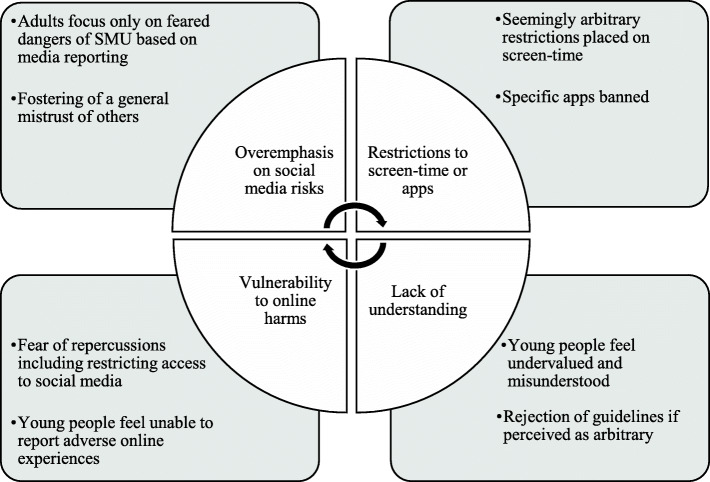
“Conversely, an existing lack of trust in relationships between young people and their parents may underpin a rejection of screen-time restrictions and a reluctance to report exposure to online harms, adding further to a sense of social distance and further undermining connectedness, consistent with a ‘poor-get-poorer’ effect (Fig. 4).”
§ Social media use and social connectedness among adolescents in the United Kingdom: a qualitative exploration of displacement and stimulation > Discussion > Parental understanding of social media use in young people
hedgedconditional- Asserted: passes — The authors put it forward as true.
- Checkable: passes — It can be checked against evidence.
- Load-bearing: passes — The paper’s conclusions depend on it.
- Based: passes — The paper gives a reason why it holds.
It may state two separate claims as one.
A conclusion the paper draws from its own results — it cites no other source for it, so there is none to check. The quote shows it is in the paper.
In the paper
“Rather than displacement weakening family connectedness here, an adult discourse of SMU displacing activities they perceived to be healthier had negative implications for highlighting differences between generational groups and reducing feelings of mutual respect and understanding.”
§ Social media use and social connectedness among adolescents in the United Kingdom: a qualitative exploration of displacement and stimulation > Results > Personal and group identity
plaindirect- Asserted: passes — The authors put it forward as true.
- Checkable: passes — It can be checked against evidence.
- Load-bearing: passes — The paper’s conclusions depend on it.
- Based: passes — The paper gives a reason why it holds.
It may state two separate claims as one.
In the paper
“One of few studies examining SMU and family connectedness, a cross-sectional survey of Canadian adolescents [29] found that heavy SMU (3 or more hours per day) was associated with greater odds of negative reported relationships between mothers and daughters, fathers and daughters and fathers and sons, but not mothers and sons.”
§ Social media use and social connectedness among adolescents in the United Kingdom: a qualitative exploration of displacement and stimulation > Discussion > Findings in relation to displacement and stimulation hypotheses
What the sources say
- Not checked yetcites [29] Sampasa-Kanyinga H, Goldfield GS, Kingsbury M, Clayborne Z, Colman I. Social media use and parent–child relationship: a cross-sectional study of adolescents. J Community Psychology. 2020;48(3):793–803. https://doi.org/10.1002/jcop.22293. source
plaincorrelational- Asserted: passes — The authors put it forward as true.
- Checkable: passes — It can be checked against evidence.
- Load-bearing: fails — The paper’s conclusions may not depend on it.
- Based: passes — The paper gives a reason why it holds.
Probably not a substantial claim. The paper’s conclusions may not depend on it. It may state two separate claims as one.
A conclusion the paper draws from its own results — it cites no other source for it, so there is none to check. The quote shows it is in the paper.
In the paper
“Feeling understood and respected by adults should encourage young people to accept and appreciate healthy boundaries established regarding their digital activities.”
§ Social media use and social connectedness among adolescents in the United Kingdom: a qualitative exploration of displacement and stimulation > Discussion > Implications
hedgedconditional- Asserted: passes — The authors put it forward as true.
- Checkable: fails — It may be too vague to check against evidence.
- Load-bearing: passes — The paper’s conclusions depend on it.
- Based: passes — The paper gives a reason why it holds.
Probably not a substantial claim. It may be too vague to check against evidence.
In the paper
“However, a broad range of views and experiences were captured in the sample, which were sufficient to enable rich themes to be generated [31].”
§ Social media use and social connectedness among adolescents in the United Kingdom: a qualitative exploration of displacement and stimulation > Discussion > Limitations
What the sources say
- Not checked yetcites [31] Braun V, Clarke V. To saturate or not to saturate? Questioning data saturation as a useful concept for thematic analysis and sample-size rationales. Qualitative research in sport, exercise and health. 2021;13(2):201–16. https://doi.org/10.1080/2159676X.2019.1704846. source
plaindirect- Asserted: passes — The authors put it forward as true.
- Checkable: passes — It can be checked against evidence.
- Load-bearing: passes — The paper’s conclusions depend on it.
- Based: passes — The paper gives a reason why it holds.
It may state two separate claims as one.
A conclusion the paper draws from its own results — it cites no other source for it, so there is none to check. The quote shows it is in the paper.
In the paper
“Different offline experiences and circumstances are likely to be accompanied by different online experiences, and caution should therefore be exercised in generalising findings from this study to other populations.”
§ Social media use and social connectedness among adolescents in the United Kingdom: a qualitative exploration of displacement and stimulation > Discussion > Limitations
hedgedcorrelational- Asserted: passes — The authors put it forward as true.
- Checkable: fails — It may be too vague to check against evidence.
- Load-bearing: fails — The paper’s conclusions may not depend on it.
- Based: passes — The paper gives a reason why it holds.
Probably not a substantial claim. It may be too vague to check against evidence. The paper’s conclusions may not depend on it. It may state two separate claims as one.
A conclusion the paper draws from its own results — it cites no other source for it, so there is none to check. The quote shows it is in the paper.
In the paper
“These age-related group differences – accentuated by divergent attitudes to SMU – have the potential to increase inter-generational discord, harming family connectedness through diminished feelings of mutual understanding and respect.”
§ Social media use and social connectedness among adolescents in the United Kingdom: a qualitative exploration of displacement and stimulation > Results > Personal and group identity
hedgedconditional- Asserted: passes — The authors put it forward as true.
- Checkable: passes — It can be checked against evidence.
- Load-bearing: passes — The paper’s conclusions depend on it.
- Based: passes — The paper gives a reason why it holds.
It may state two separate claims as one.
A conclusion the paper draws from its own results — it cites no other source for it, so there is none to check. The quote shows it is in the paper.
In the paper
“In restricting online self-disclosure, this fear and mistrust of social media audiences represent a limit to online peer connectedness, aligned to the displacement of good quality face-to-face social interactions with less intimate ones online.”
§ Social media use and social connectedness among adolescents in the United Kingdom: a qualitative exploration of displacement and stimulation > Results > Social obligations
plaindirect- Asserted: passes — The authors put it forward as true.
- Checkable: passes — It can be checked against evidence.
- Load-bearing: passes — The paper’s conclusions depend on it.
- Based: passes — The paper gives a reason why it holds.
It may state two separate claims as one.
A conclusion the paper draws from its own results — it cites no other source for it, so there is none to check. The quote shows it is in the paper.
In the paper
“With this supportive environment, young people are able to navigate online difficulties but also feel encouraged to share positive social media content with family members, promoting shared interests and family identity.”
§ Social media use and social connectedness among adolescents in the United Kingdom: a qualitative exploration of displacement and stimulation > Discussion > Parental understanding of social media use in young people
plaindirect- Asserted: passes — The authors put it forward as true.
- Checkable: passes — It can be checked against evidence.
- Load-bearing: passes — The paper’s conclusions depend on it.
- Based: passes — The paper gives a reason why it holds.
It may state two separate claims as one.
In the paper
“This is in line with previous research finding that adolescents’ time spent on instant messaging services enhances time spent face-to-face with friends, and subsequent quality of friendships [20].”
§ Social media use and social connectedness among adolescents in the United Kingdom: a qualitative exploration of displacement and stimulation > Discussion > Findings in relation to displacement and stimulation hypotheses
What the sources say
- Not checked yetcites [20] Bohn A, Buchta C, Hornik K, Mair P. Making friends and communicating on Facebook: implications for the access to social capital. Soc Networks. 2014 May 1;37:29–41. https://doi.org/10.1016/j.socnet.2013.11.003. source
plaindirect- Asserted: passes — The authors put it forward as true.
- Checkable: passes — It can be checked against evidence.
- Load-bearing: fails — The paper’s conclusions may not depend on it.
- Based: passes — The paper gives a reason why it holds.
Probably not a substantial claim. The paper’s conclusions may not depend on it. It may state two separate claims as one.
A conclusion the paper draws from its own results — it cites no other source for it, so there is none to check. The quote shows it is in the paper.
In the paper
“This supports a ‘poor-get-poorer’ or ‘social deterioration’ effect, whereby those who feel less connected to their family are likely to rely more on SMU for social interactions or to alleviate boredom at home, further compounding a lack of connectedness within the household.”
§ Social media use and social connectedness among adolescents in the United Kingdom: a qualitative exploration of displacement and stimulation > Discussion > Findings in relation to displacement and stimulation hypotheses
hedgeddirect- Asserted: passes — The authors put it forward as true.
- Checkable: passes — It can be checked against evidence.
- Load-bearing: passes — The paper’s conclusions depend on it.
- Based: passes — The paper gives a reason why it holds.
It may state two separate claims as one.
A conclusion the paper draws from its own results — it cites no other source for it, so there is none to check. The quote shows it is in the paper.
In the paper
“Combined with a general discomfort with online self-disclosure or fear of screenshotting among peers, this mistrust can simultaneously be perceived as a challenge to quality in peer relationships and interpreted as a constructive strategy for mitigating risk.”
§ Social media use and social connectedness among adolescents in the United Kingdom: a qualitative exploration of displacement and stimulation > Results > Social obligations
plaincorrelational- Asserted: passes — The authors put it forward as true.
- Checkable: passes — It can be checked against evidence.
- Load-bearing: passes — The paper’s conclusions depend on it.
- Based: passes — The paper gives a reason why it holds.
It may state two separate claims as one.
A conclusion the paper draws from its own results — it cites no other source for it, so there is none to check. The quote shows it is in the paper.
In the paper
“If, as our evidence suggests, the online social environment is an extension of relationships in the real world, fostering healthy connectedness with others offline is likely to maximise the social benefits and minimise the potential harms of social media for young people.”
§ Social media use and social connectedness among adolescents in the United Kingdom: a qualitative exploration of displacement and stimulation > Discussion > Implications
hedgedconditional- Asserted: passes — The authors put it forward as true.
- Checkable: fails — It may be too vague to check against evidence.
- Load-bearing: passes — The paper’s conclusions depend on it.
- Based: passes — The paper gives a reason why it holds.
Probably not a substantial claim. It may be too vague to check against evidence.
A conclusion the paper draws from its own results — it cites no other source for it, so there is none to check. The quote shows it is in the paper.
In the paper
“This co-production could improve peer connectedness through collaboratively working to achieve a common creative goal and sharing in a sense of accomplishment.”
§ Social media use and social connectedness among adolescents in the United Kingdom: a qualitative exploration of displacement and stimulation > Results > Personal and group identity
hedgedconditional- Asserted: passes — The authors put it forward as true.
- Checkable: passes — It can be checked against evidence.
- Load-bearing: fails — The paper’s conclusions may not depend on it.
- Based: passes — The paper gives a reason why it holds.
Probably not a substantial claim. The paper’s conclusions may not depend on it.
A conclusion the paper draws from its own results — it cites no other source for it, so there is none to check. The quote shows it is in the paper.
In the paper
“Healthy peer relationships in which there is trust, respect, and space to ignore digital notifications and messages are likely to benefit most from SMU that enables enhanced self-disclosure and increased closeness without feeling oppressive.”
§ Social media use and social connectedness among adolescents in the United Kingdom: a qualitative exploration of displacement and stimulation > Discussion > Implications
hedgedconditional- Asserted: passes — The authors put it forward as true.
- Checkable: fails — It may be too vague to check against evidence.
- Load-bearing: passes — The paper’s conclusions depend on it.
- Based: passes — The paper gives a reason why it holds.
Probably not a substantial claim. It may be too vague to check against evidence.
A conclusion the paper draws from its own results — it cites no other source for it, so there is none to check. The quote shows it is in the paper.
In the paper
“Focusing on developing trusting, attentive relationships with peers and parents offline is likely to optimise the potential for social media to further benefit social connectedness.”
§ Social media use and social connectedness among adolescents in the United Kingdom: a qualitative exploration of displacement and stimulation > Discussion > Implications
hedgedconditional- Asserted: passes — The authors put it forward as true.
- Checkable: fails — It may be too vague to check against evidence.
- Load-bearing: passes — The paper’s conclusions depend on it.
- Based: passes — The paper gives a reason why it holds.
Probably not a substantial claim. It may be too vague to check against evidence.
What the paper did — it cites no source for this, so there is none to check. The quote shows it is in the paper.
In the paper
“While our sample was diverse in their experiences of social media, they were not selected on the basis of how much they used SMU or for what reasons, therefore it is possible that some additional patterns of SMU may exist in this age group that were not captured.”
§ Social media use and social connectedness among adolescents in the United Kingdom: a qualitative exploration of displacement and stimulation > Discussion > Limitations
hedged- Asserted: passes — The authors put it forward as true.
- Checkable: passes — It can be checked against evidence.
- Load-bearing: fails — The paper’s conclusions may not depend on it.
- Based: passes — The paper gives a reason why it holds.
Probably not a substantial claim. The paper’s conclusions may not depend on it. It may state two separate claims as one.
A conclusion the paper draws from its own results — it cites no other source for it, so there is none to check. The quote shows it is in the paper.
In the paper
“Identity development and expression was thus supported by SMU, simultaneously stimulating connectedness to a wider peer network.”
§ Social media use and social connectedness among adolescents in the United Kingdom: a qualitative exploration of displacement and stimulation > Results > Personal and group identity
plaindirect- Asserted: passes — The authors put it forward as true.
- Checkable: passes — It can be checked against evidence.
- Load-bearing: passes — The paper’s conclusions depend on it.
- Based: passes — The paper gives a reason why it holds.
It may state two separate claims as one.
A conclusion the paper draws from its own results — it cites no other source for it, so there is none to check. The quote shows it is in the paper.
In the paper
“It may be that SMU for direct peer communication may stimulate connectedness and subsequent well-being to a point, whereas excessive communication and the associated expectations to respond might undermine these benefits.”
§ Social media use and social connectedness among adolescents in the United Kingdom: a qualitative exploration of displacement and stimulation > Discussion > Findings in relation to displacement and stimulation hypotheses
hedgedconditional- Asserted: passes — The authors put it forward as true.
- Checkable: passes — It can be checked against evidence.
- Load-bearing: passes — The paper’s conclusions depend on it.
- Based: passes — The paper gives a reason why it holds.
It may state two separate claims as one.
A conclusion the paper draws from its own results — it cites no other source for it, so there is none to check. The quote shows it is in the paper.
In the paper
“Considering peer and family connectedness together, this is also illustrative of a ‘poor-get-richer’ or ‘social compensation’ effect, whereby poor family connectedness leads to increased online socialising with friends and subsequent improved peer connectedness.”
§ Social media use and social connectedness among adolescents in the United Kingdom: a qualitative exploration of displacement and stimulation > Discussion > Findings in relation to displacement and stimulation hypotheses
plaindirect- Asserted: passes — The authors put it forward as true.
- Checkable: passes — It can be checked against evidence.
- Load-bearing: passes — The paper’s conclusions depend on it.
- Based: passes — The paper gives a reason why it holds.
It may state two separate claims as one.
A conclusion the paper draws from its own results — it cites no other source for it, so there is none to check. The quote shows it is in the paper.
In the paper
“In addition, the fear of data misappropriation such as screenshotting within broader peer networks appeared to have led to widespread underlying feelings of mistrust, thus undermining peer connectedness, and lending weight to the suggestion that broader SMU may discourage development of ‘strong ties’.”
§ Social media use and social connectedness among adolescents in the United Kingdom: a qualitative exploration of displacement and stimulation > Discussion > Findings in relation to displacement and stimulation hypotheses
hedgeddirect- Asserted: passes — The authors put it forward as true.
- Checkable: passes — It can be checked against evidence.
- Load-bearing: passes — The paper’s conclusions depend on it.
- Based: passes — The paper gives a reason why it holds.
It may state two separate claims as one.
What the paper did — it cites no source for this, so there is none to check. The quote shows it is in the paper.
In the paper
“Our sample size was somewhat smaller than planned due to the emergence of COVID-19, with boys in particular under-represented.”
§ Social media use and social connectedness among adolescents in the United Kingdom: a qualitative exploration of displacement and stimulation > Discussion > Limitations
plaindirect- Asserted: passes — The authors put it forward as true.
- Checkable: passes — It can be checked against evidence.
- Load-bearing: fails — The paper’s conclusions may not depend on it.
- Based: passes — The paper gives a reason why it holds.
Probably not a substantial claim. The paper’s conclusions may not depend on it. It may state two separate claims as one.
A conclusion the paper draws from its own results — it cites no other source for it, so there is none to check. The quote shows it is in the paper.
In the paper
“Where close friends were felt to be trustworthy, social media provided opportunities for self-disclosure, fostering intimacy in the relationship and improving peer connectedness in a ‘rich-get-richer’ or ‘social enhancement’ effect (Fig. 2).”
§ Social media use and social connectedness among adolescents in the United Kingdom: a qualitative exploration of displacement and stimulation > Discussion > Findings in relation to displacement and stimulation hypotheses
plaindirect- Asserted: passes — The authors put it forward as true.
- Checkable: passes — It can be checked against evidence.
- Load-bearing: passes — The paper’s conclusions depend on it.
- Based: passes — The paper gives a reason why it holds.
It may state two separate claims as one.
None of the sources cited for this claim have been checked yet.
In the paper
“This aligns to the 'digital Goldilocks hypothesis' [24] and other evidence of a curvilinear relationship between SMU and psychosocial adjustment [23], whereby moderate SMU is beneficial to well-being (compared to no use at all) but excessive use is associated with negative outcomes.”
§ Social media use and social connectedness among adolescents in the United Kingdom: a qualitative exploration of displacement and stimulation > Discussion > Findings in relation to displacement and stimulation hypotheses
What the sources say
- Not checked yetcites [24] Przybylski AK, Orben A, Weinstein N. How much is too much? Examining the relationship between digital screen engagement and psychosocial functioning in a confirmatory cohort study. J Am Acad Child Adolesc Psychiatry. 2020;59(9):1080–8. https://doi.org/10.1016/j.jaac.2019.06.017. source
- Not checked yetcites [23] Wang K, Frison E, Eggermont S, Vandenbosch L. Active public Facebook use and adolescents' feelings of loneliness: evidence for a curvilinear relationship. J Adolesc. 2018;67:35–44. https://doi.org/10.1016/j.adolescence.2018.05.008. source
plaincorrelational- Asserted: passes — The authors put it forward as true.
- Checkable: passes — It can be checked against evidence.
- Load-bearing: unclear — It is unclear whether the paper’s conclusions depend on it.
- Based: passes — The paper gives a reason why it holds.
It may state two separate claims as one.
The paper relies on this without support.
The displacement and stimulation hypotheses, developed for internet use, are applicable to social media use.
“The displacement hypothesis was formulated on the basis of internet use rather than social media specifically [11].”
The paper relies on this without support.
The themes identified by the researchers reflect the participants’ experiences rather than solely the researchers’ interpretations.
“We interpreted the data as adults who experienced adolescence in a time before social media existed and we reflected on this throughout the analytic process.”
Claims other papers make about this one
Each is checked against this paper’s own text: does it say what the citing paper says it does?
In the citing paper
“This indicates that lonely young people's digital media engagement, and the underpinning motivations for this engagement, cannot be summarized in simple terms; instead, it likely represents a diverse spectrum of individual circumstances. 48”
From Social media use, online experiences, and loneliness among young adults: A cohort study (2025) · cites this paper as [48]
Citations
Cites
Social network sites: definition, history, and scholarship
boyd, D. M., & Ellison, N. B. (2007) · Journal of Computer-Mediated Communication · doi:10.1111/j.1083-6101.2007.00393.x · Cited by 16,251
One size fits all? What counts as quality practice in (reflexive) thematic analysis?
Braun, V., & Clarke, V. (2021) · Qualitative Research in Psychology · doi:10.1080/14780887.2020.1769238 · Cited by 9,727
Internet paradox: A social technology that reduces social involvement and psychological well-being?
Kraut, R., Patterson, M., Lundmark, V., Kiesler, S., Mukophadhyay, T., & Scherlis, W. (1998) · American Psychologist · doi:10.1037/0003-066x.53.9.1017 · Cited by 4,793
Braun, V., & Clarke, V. (2021) · Qualitative Research in Sport, Exercise and Health · doi:10.1080/2159676x.2019.1704846 · Cited by 4,776
Alone together: why we expect more from technology and less from each other
Fernández Pedemonte, D. (2011) · Choice Reviews Online · doi:10.5860/choice.48-7239 · Cited by 4,608
Adolescence and the social determinants of health
Viner, R. M., Ozer, E. M., Denny, S., Marmot, M., Resnick, M., Fatusi, A., & Currie, C. (2012) · The Lancet · doi:10.1016/s0140-6736(12)60149-4 · Cited by 2,199
Social Consequences of the Internet for Adolescents: A Decade of Research
Valkenburg, P. M., & Peter, J. (2009) · Current Directions in Psychological Science · doi:10.1111/j.1467-8721.2009.01595.x · Cited by 920
Loneliness and Social Internet Use: Pathways to Reconnection in a Digital World?
Nowland, R., Necka, E. A., & Cacioppo, J. T. (2018) · Perspectives on Psychological Science · doi:10.1177/1745691617713052 · Cited by 783
Valkenburg, P. M., & Peter, J. (2007) · Journal of Computer-Mediated Communication · doi:10.1111/j.1083-6101.2007.00368.x · Cited by 776 · cited 2×
“A ‘rich-get-richer’ [19] effect appears to develop, with social media promoting further trust and family connectedness (Fig.”
BackgroundNesi, J., Choukas-Bradley, S., & Prinstein, M. J. (2018) · Clinical Child and Family Psychology Review · doi:10.1007/s10567-018-0261-x · Cited by 712
Cited by
Sorted by citations
Items 101–110 of 110
Clarifying the association between digital media engagement and risk taking
Zweben, D., Zaneski, L., Chiu, M., Green, H., Brooks-Justice, J., Dachs, A., Vince, M. A., Olino, T. M., Marshall, P., Steinberg, L. D., et al. (2026) · Technology in Society · doi:10.1016/j.techsoc.2026.103491
Behind the screen: Social media use and internalizing problems in adolescents
Berges, L., Ravensbergen, S. J., So, P., Hoogendijk, W. J. G., Bouter, D. C., & Mil, N. H. G.-V. (2026) · Journal of Affective Disorders · doi:10.1016/j.jad.2026.122341 · Cited by 1
Ding, N., & Li, C. (2026) · Deviant Behavior · doi:10.1080/01639625.2026.2713096
Digital Companionship: How AI Companions Influence Human Interpersonal Connections
Li, L. (2026) · SHS Web of Conferences · doi:10.1051/shsconf/202623602005
Connecting or Isolating: The Paradoxical Role of Social Media in Loneliness
Shukla, V., & Farooqi, S. R. (2026) · Basic and Applied Social Psychology · doi:10.1080/01973533.2026.2722367
Qiao, J., & Ji, M. (2026) · Behavioral Sciences · doi:10.3390/bs16091543
Ejem, A. A., Ogor, U. C., Ozioko, O. R., Igboke, A., Akanmode, O. A., Ibekwe, C., Okeke, S. V., Eze, C. C., Sam-Olaniyan, G. D., Nwokeocha, I. M., et al. (2026) · Societies · doi:10.3390/soc16090287
Sarayra, D., & Al-Makhamreh, S. (2026) · Child and Adolescent Social Work Journal · doi:10.1007/s10560-026-01184-5
Dinç, F., Çelik, İ., Aykan, E. B., Griffiths, M. D., & Bektaş, M. (2026) · Current Psychology · doi:10.1007/s12144-026-10134-4
Kent, M., & Takizawa, Y. (2026) · Australian Journal of Psychology · doi:10.1080/00049530.2026.2753864
Metadata
- Authors
- Winstone, L., Mars, B., Haworth, C. M. A., & Kidger, J.
- Affiliations
- University of Bristol (GB)
- University Hospitals Bristol NHS Foundation Trust (GB)
- Corresponding author
- Winstone, Lizzy
- Venue
- BMC Public Health
- Published
- 2021-09-24
- Volume
- 21
- Issue
- 1
- Pages
- 1736-1736
- ISSN
- 1471-2458 (ISSN-L)
- PMC
- PMC8464110
- OpenAlex
- W3199521301
- Semantic Scholar
- c493610232f3c50284a2a3722bc64de4491e064a
- Cited by
- 111
- References
- 30
- Citations by year
- 2026: 26 · 2025: 31 · 2024: 25 · 2023: 19 · 2022: 9 · 2021: 1
- FWCI
- 18.70
- Type
- journal article
- Language
- en
- Open access
- gold
- doi.org
- Locations
- BMC Public Health (publishedVersion, cc-by)
- Europe PMC (PubMed Central) (publishedVersion, other-oa)
- PubMed Central (publishedVersion, cc-by)
- PubMed (publishedVersion)
- Bristol Research (University of Bristol) (publishedVersion, cc-by)
- DOAJ (DOAJ: Directory of Open Access Journals) (submittedVersion, cc-by-sa)
- Explore Bristol Research (submittedVersion, cc-by)
- Funders
- National Institute for Health and Care Research (PD‐SPH‐2015)
- Leverhulme Trust
- Department of Health and Social Care (PD-SPH-2015)
- School for Public Health Research (Grant Reference Number PD-SPH2015, PD‐SPH‐2015)
- Topics
- Social Sciences › Sociology and Political Science › Impact of Technology on Adolescents
- Social Sciences › Education › Child Development and Digital Technology
- Social Sciences › Communication › Media and Digital Communication
- Keywords
- social media use, social connectedness, adolescents, displacement theory, peer relationships, family connectedness, trust, identity, adolescent mental health, inner-city youth
- MeSH terms
- Adolescent, Humans, Loneliness, Mental Health, Peer Group, Social Environment, Social Media
About these checks
Registry, retraction, Cites and statistics results are computed, not judged, with one exception: a printed reference that no index lists is read once by a model before it counts as a citation error. Claims are extracted by a model and kept only when their quote appears verbatim in the text; each cited source is then checked, with a model’s help, for whether it says what the claim relies on. Those verdicts can be wrong — read the claim’s quote and the cited source before relying on one.
A language model drew the claims from the paper on 2026-10-07, under version 3 of the claim definition (model deepseek-v4.1-flash, prompt extract-v3).
A second model labelled each claim on 2026-10-07 (model jev-1.13-20260917, definition revision gold-guideline-v0.2).
Statistics and arithmetic are recomputed, not judged.
Confidence bands are shown only for fields calibrated on our annotated test set. None is calibrated yet, so no band is shown.
What counts as a claim ›How we measure confidence ›How we check this ›
Are you an author, or do you see a problem with this page? Request a review
