

A peer group intervention implemented by community volunteers increased HIV prevention knowledge
Open accessThe DOI matches its Crossref record; 37 of the 38 references it cites were found in a registry or an index.
Abstract
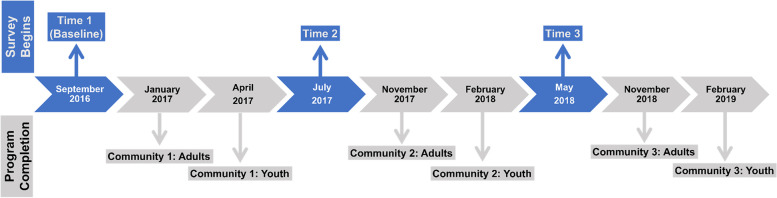
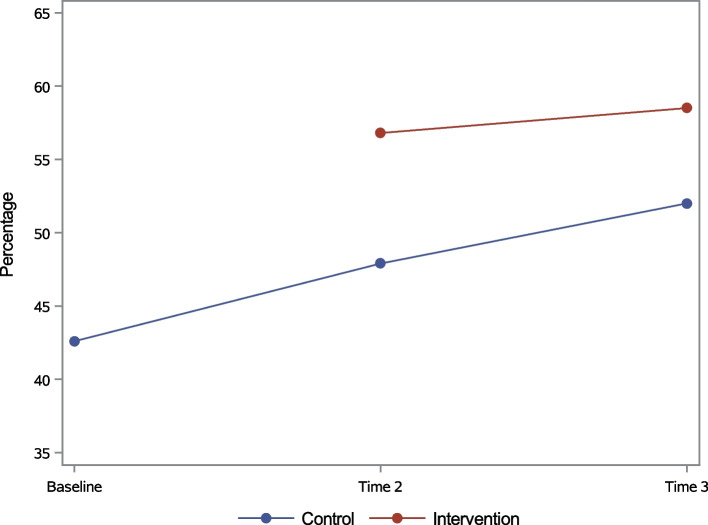
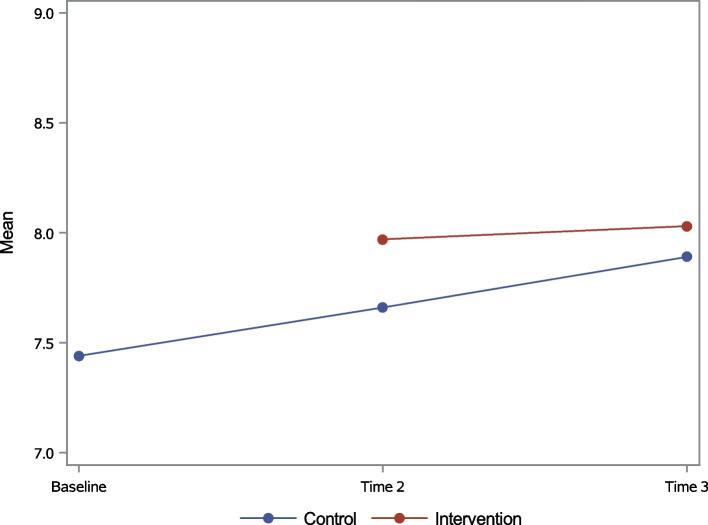
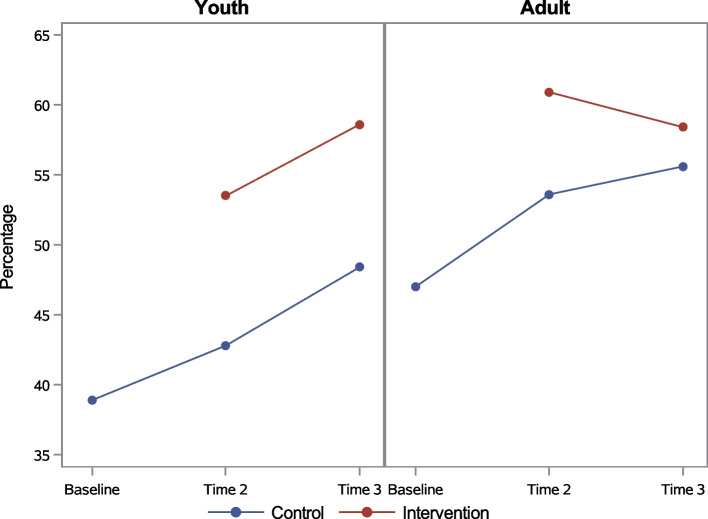
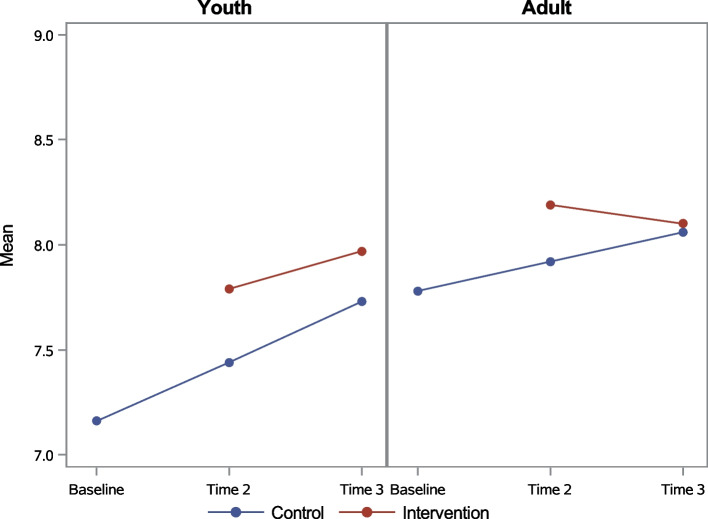
BACKGROUND: HIV prevention knowledge levels are low in sub-Saharan Africa. In our efficacy study, the Mzake ndi Mzake (Friend-to-Friend; hereafter Mzake) 6-session peer group intervention, delivered by health workers, improved HIV prevention knowledge and other outcomes in Malawi. To expand HIV prevention approaches, this implementation study tested whether the intervention remained effective when implemented by trained community volunteers. HIV prevention knowledge findings are presented. METHODS: Using a stepped wedge design, three communities implemented the Mzake program sequentially in randomly assigned order. Repeated surveys assessed outcomes, and participants served as controls until they completed the program. At Time 2, Community 1 became the intervention group, and at Time 3, Communities 1 and 2 were the intervention group. HIV prevention knowledge, the primary outcome, was assessed through two indicators: UNAIDS comprehensive knowledge (UNAIDS Knowledge), defined as correctly answering five HIV prevention questions (Yes/No), and a 9-item HIV/PMTCT Knowledge Index (number correct). Multivariate generalized estimating equation logistic regression (UNAIDS Knowledge) and mixed-effects regression models (HIV/PMTCT Knowledge Index) were used to assess knowledge controlling for five sociodemographic factors. RESULTS: In bivariate analyses of UNAIDS Knowledge, more persons answered correctly in the intervention group than the control group at Time 2 (56.8% vs. 47.9%, p < 0.01), but the difference was not significant at Time 3. In logistic regression, there was a significant linear increase in the proportion who correctly answered all questions in the control group, but the increase was significantly higher in the intervention group (log-odds estimate = 0.17, SE = 0.06, p-value < 0.01). The HIV/PMTCT Knowledge Index scores increased over time for both groups, but in the intervention group the increase was significantly higher than the control group (0.11 at Time 2; 0.21 at Time 3). In youth and adult subsamples analyses, the intervention was highly effective in increasing knowledge for youth, but not for adults. CONCLUSION: This implementation study showed that Mzake was effective in increasing HIV prevention knowledge when delivered by community members. Community approaches offer an important strategy to increase HIV prevention in rural communities without burdening healthcare systems. TRIAL REGISTRATION: ClinicalTrials.gov NCT02765659. Registered 06/05/2016.
Overview
The claims and statistics of this paper haven’t been checked yet.
Free: it reads the open-access text and checks the first 5 claims that cite a source we can check. Create a free account to check every claim.
Integrity signals
Registry
Cites
Statistics
Figures
Verification
Claims the paper makes
The claims and statistics of this paper haven’t been checked yet.
Free: it reads the open-access text and checks the first 5 claims that cite a source we can check. Create a free account to check every claim.
Claims other papers make about this one
Each is checked against this paper’s own text: does it say what the citing paper says it does?
The cited source says what the claim attributes to it.
In the citing paper
“The implementation order was determined by drawing community names from a basket”
From Applications and implementation considerations for stepped-wedge designs in sub-Saharan Africa: a systematic review (2026) · cites this paper as [78]
The cited source says what the claim attributes to it.
In the citing paper
“The stepped wedge design was chosen to efficiently use repeated measures, allowing participants to serve as controls until their community implemented the program. This design also facilitated phased implementation, ensuring all clusters received the intervention while enabling a rigorous evaluation of its effectiveness”
From Applications and implementation considerations for stepped-wedge designs in sub-Saharan Africa: a systematic review (2026) · cites this paper as [78]
The cited source says what the claim attributes to it.
In the citing paper
“Sample size calculations for the longitudinal step-wedge design study were carried out using simulations for two knowledge outcomes. Considering an attrition rate of 25%, a total sample size of 432 individuals per age group was proposed to ensure 80% statistical power for the detection of desired effect sizes.”
From Applications and implementation considerations for stepped-wedge designs in sub-Saharan Africa: a systematic review (2026) · cites this paper as [78]
The cited source says what the claim attributes to it.
In the citing paper
“Three communities were randomly assigned to implement the Mzake program sequentially.”
From Applications and implementation considerations for stepped-wedge designs in sub-Saharan Africa: a systematic review (2026) · cites this paper as [78]
The cited source says what the claim attributes to it.
In the citing paper
“In some studies, randomization was performed using a lottery or public draw method, which added an element of transparency and community involvement in the randomization process (29, 43, 78, 106).”
From Applications and implementation considerations for stepped-wedge designs in sub-Saharan Africa: a systematic review (2026) · cites this paper as [78]
Self-check
Percentages, sums and reported differences re-computed from the paper’s own numbers.
The self-check needs the paper’s full text.
Citations
Cites
Human agency in social cognitive theory.
Bandura, A. (1989) · American Psychologist · doi:10.1037/0003-066x.44.9.1175 · Cited by 8,263 · cited 2×
“Results also provide further evidence that peer group interventions guided by Bandura’s social-cognitive learning theory [19] are effective in increasing HIV prevention knowledge, confirming findings of previous systematic reviews and meta-analyses [6, 12–17].”
MethodResultWallerstein, N., & Duran, B. (2010) · American Journal of Public Health · doi:10.2105/ajph.2009.184036 · Cited by 2,318
The Joint United Nations Programme on HIV/AIDS
Nygren-Krug, H. (2018) · Oxford Scholarship Online · doi:10.1093/oso/9780190672676.003.0014 · Cited by 1,950
Diffusion Theory and Knowledge Dissemination, Utilization, and Integration in Public Health
Green, L. W., Ottoson, J. M., García, C., & Hiatt, R. A. (2009) · Annual Review of Public Health · doi:10.1146/annurev.publhealth.031308.100049 · Cited by 953 · cited 1×
“However, there are long delays between development of evidence-based interventions and their dissemination, and this has been widely noted throughout public health including HIV prevention programs in Africa [17].”
BackgroundMedley, A., Kennedy, C., O'Reilly, K., & Sweat, M. (2009) · AIDS Education and Prevention · doi:10.1521/aeap.2009.21.3.181 · Cited by 546
Mdege, N. D., Man, M.-S., Taylor (nee Brown), C. A., & Torgerson, D. J. (2011) · Journal of Clinical Epidemiology · doi:10.1016/j.jclinepi.2010.12.003 · Cited by 425 · cited 1×
“We also used a stepped wedge design, so that three communities started implementing Mzake sequentially in a randomly assigned order [25, 26].”
MethodStepped wedge designs could reduce the required sample size in cluster randomized trials
Woertman, W., de Hoop, E., Moerbeek, M., Zuidema, S. U., Gerritsen, D. L., & Teerenstra, S. (2013) · Journal of Clinical Epidemiology · doi:10.1016/j.jclinepi.2013.01.009 · Cited by 298
Noar, S. M. (2008) · AIDS and Behavior · doi:10.1007/s10461-007-9313-9 · Cited by 250
Harrison, A., Colvin, C. J., Kuo, C., Swartz, A., & Lurie, M. (2015) · Current HIV/AIDS Reports · doi:10.1007/s11904-015-0261-0 · Cited by 186
Dworkin, S. L., Pinto, R. M., Hunter, J., Rapkin, B., & Remien, R. H. (2008) · American Journal of Community Psychology · doi:10.1007/s10464-008-9183-y · Cited by 103
Mwale, M., & Muula, A. S. (2017) · BMC Public Health · doi:10.1186/s12889-017-4729-2 · Cited by 91
Persistent misconceptions about HIV transmission among males and females in Malawi
Sano, Y., Antabe, R., Atuoye, K. N., Hussey, L. K., Bayne, J., Galaa, S. Z., Mkandawire, P., & Luginaah, I. (2016) · BMC International Health and Human Rights · doi:10.1186/s12914-016-0089-8 · Cited by 80
Measuring implementation progress in kangaroo mother care
Bergh, A., Arsalo, I., Malan, A. F., Patrick, M. E., Pattinson, R. C., & Phillips, N. (2005) · Acta Paediatrica · doi:10.1080/08035250510028380 · Cited by 77
Socio-economic Inequality in Comprehensive Knowledge about HIV in Malawi
Chirwa, G. C., Sithole, L., & Jamu, E. (2019) · Malawi Medical Journal · doi:10.4314/mmj.v31i2.1 · Cited by 77
Faust, L., & Yaya, S. (2018) · BMC Public Health · doi:10.1186/s12889-018-6178-y · Cited by 76
Kabwama, S. N., & Berg‐Beckhoff, G. (2015) · Perspectives in Public Health · doi:10.1177/1757913915595831 · Cited by 68
Association between HIV/AIDS knowledge and stigma towards people living with HIV/AIDS in Botswana
Letshwenyo-Maruatona, S., Madisa, M., Boitshwarelo, T., George-Kefilwe, B., Kingori, C., Ice, G. H., Bianco, J. A., Marape, M., & Haile, Z. T. (2019) · African Journal of AIDS Research · doi:10.2989/16085906.2018.1552879 · Cited by 61
Albarracín, J., Albarracín, D., & Durantini, M. R. (2007) · AIDS and Behavior · doi:10.1007/s10461-007-9209-8 · Cited by 57
Ciampa, P. J., Skinner, S. L., Patricio, S. R., Rothman, R. L., Vermund, S. H., & Audet, C. M. (2012) · PLoS ONE · doi:10.1371/journal.pone.0048676 · Cited by 54
The Impact of Gender Norms on Condom Use among HIV-Positive Adults in KwaZulu-Natal, South Africa
Fladseth, K., Gafos, M., Newell, M., & McGrath, N. M. (2015) · PLoS ONE · doi:10.1371/journal.pone.0122671 · Cited by 53
Influence of faith-based organisations on HIV prevention strategies in Africa: a systematic review
Ochillo, M., van Teijlingen, E., & Hind, M. (2017) · African Health Sciences · doi:10.4314/ahs.v17i3.18 · Cited by 52
Implementation of kangaroo mother care: A randomized trial of two outreach strategies
Pattinson, R., Arsalo, I., Bergh, A., Malan, A. F., Patrick, M. E., & Phillips, N. (2005) · Acta Paediatrica · doi:10.1080/08035250510028399 · Cited by 46
Acceptability and Preferences among Men and Women for Male Involvement in Antenatal Care
Yende, N., Rie, A. V., West, N., Bassett, J., & Schwartz, S. (2017) · Journal of Pregnancy · doi:10.1155/2017/4758017 · Cited by 44
“Bend a Fish When the Fish Is Not Yet Dry”: Adolescent Boys’ Perceptions of Sexual Risk in Tanzania
Sommer, M., Likindikoki, S., & Kaaya, S. (2015) · Archives of Sexual Behavior · doi:10.1007/s10508-014-0406-z · Cited by 41
Meta-analyses on Behavioral Interventions to Reduce the Risk of Transmission of HIV
Vergidis, P. I., & Falagas, M. E. (2009) · Infectious Disease Clinics of North America · doi:10.1016/j.idc.2009.02.001 · Cited by 39
HIV Risk Reduction Intervention for Rural Adolescents in Malawi
Dancy, B. L., Jere, D. L., Kachingwe, S. I., Kaponda, C. P. N., Norr, J. L., & Norr, K. F. (2014) · Journal of HIV/AIDS & Social Services · doi:10.1080/15381501.2013.864173 · Cited by 37
Self-citationOutcomes of an HIV Prevention Peer Group Intervention for Rural Adults in Malawi
Kaponda, C. P. N., Norr, K. F., Crittenden, K. S., Norr, J. L., McCreary, L. L., Kachingwe, S. I., Mbeba, M. M., Jere, D. L., & Dancy, B. L. (2011) · Health Education & Behavior · doi:10.1177/1090198110378588 · Cited by 36
Self-citationChan, B. T., & Tsai, A. C. (2018) · Journal of the International AIDS Society · doi:10.1002/jia2.25169 · Cited by 36
Rosenberg, N. E., Hauser, B. M., Ryan, J., & Miller, W. C. (2016) · Sexually Transmitted Infections · doi:10.1136/sextrans-2016-052651 · Cited by 24
Aaro, L. E., Breivik, K., Klepp, K., Kaaya, S., Onya, H., Wubs, A. G., Helleve, A., & Flisher, A. J. (2011) · Health Education Research · doi:10.1093/her/cyq086 · Cited by 23
Likupe, G., Chintsanya, J., Magadi, M. A., Munthali, A., & Makwemba, M. (2020) · Sex Education · doi:10.1080/14681811.2020.1821181 · Cited by 23
(2010) · Sage eBooks · doi:10.4135/9781412961288.n44 · Cited by 22
Crittenden, K. S., Kaponda, C. P. N., Jere, D. L., McCreary, L. L., & Norr, K. F. (2015) · Social Science & Medicine · doi:10.1016/j.socscimed.2015.03.055 · Cited by 19
Self-citationDevelopment and psychometric evaluation of the patient’s HIV knowledge questionnaire (PHKQ)
Jackson, I. L., Okonta, J. M., & Ukwe, C. V. (2020) · International Journal of Clinical Pharmacy · doi:10.1007/s11096-020-00963-z · Cited by 19
Jere, D. L., Banda, C. K., Kumbani, L. C., Liu, L., McCreary, L. L., Park, C. G., Patil, C. L., & Norr, K. F. (2018) · BMC Public Health · doi:10.1186/s12889-018-5800-3 · Cited by 14
Self-citationBickton, F. M., & Lillie, T. (2019) · Malawi Medical Journal · doi:10.4314/mmj.v31i1.17 · Cited by 14
Maclure, R. (2017) · Social Inclusion · doi:10.17645/si.v5i3.991 · Cited by 11
Research works printed but not linked: 3
- Chirwa GC “Who knows more, and why?” Explaining socioeconomic-related inequality in knowledge about HIV in Malawi Sci Afr 2020 7 e00213
- Chirwa G Naidoo D Structural and social constraints in the teaching of life skills for HIV/AIDS prevention in Malawi primary schools South Afr J Child Educ 2014 4 1 61 79
- Chirwa GW. A case study of challenges facing the implementation of life skills education in primary schools in the Zomba District, Malawi. Unpublished master’s thesis), University of Witwatersrand, South Africa. 2009.
Cited by
Armini, L. N., Setiawati, E. P., Arisanti, N., & Hilmanto, D. (2024) · BMC Public Health · doi:10.1186/s12889-024-19692-3 · Cited by 21
Moyo, E., Moyo, P. N., Murewanhema, G., Mhlanga-Gunda, R., & Dzinamarira, T. (2025) · Discover Public Health · doi:10.1186/s12982-025-00468-y · Cited by 16
Kurniadi, A., Levy, J. A., & Johnson, T. P. (2025) · BMC Public Health · doi:10.1186/s12889-024-21232-y · Cited by 13
Condom use increased after a peer group intervention implemented by community volunteers in Malawi
Norr, K. F., Banda, C. K., Chang, C., Krishna, S., Kumbani, L. C., Liu, L., McCreary, L. L., & Patil, C. L. (2024) · BMC Public Health · doi:10.1186/s12889-024-18991-z · Cited by 12
Self-citationMaretalinia, Buston, E., Sari, M. H. N., Nuraeni, T., Sulyastini, N. K., & Sholihat, S. N. S. (2023) · Public Health of Indonesia · doi:10.36685/phi.v9i3.710 · Cited by 7
Metadata
- Authors
- Kumbani, L. C., Jere, D. L., Banda, C. K., Chang, C., Liu, L., McCreary, L. L., Patil, C. L., & Norr, K. F.
- Affiliations
- Kamuzu University of Health Sciences (MW)
- University of Illinois Chicago (US)
- Corresponding author
- Kumbani, Lily C.
- Venue
- BMC Public Health
- Published
- 2023-02-10
- Volume
- 23
- Issue
- 1
- Pages
- 301-301
- ISSN
- 1471-2458 (ISSN-L)
- PMC
- PMC9912512
- OpenAlex
- W4319985578
- Cited by
- 22
- References
- 38
- Citations by year
- 2026: 8 · 2025: 6 · 2024: 5 · 2023: 3
- FWCI
- 4.55
- Type
- journal article
- Language
- en
- Open access
- gold
- doi.org
- Licence
- cc-by
- creativecommons.org/licenses/by/4.0 (tdm)
- creativecommons.org/licenses/by/4.0 (vor)
- Locations
- BMC Public Health (publishedVersion, cc-by)
- PubMed Central (publishedVersion, other-oa)
- PubMed (publishedVersion)
- DOAJ (DOAJ: Directory of Open Access Journals) (submittedVersion, cc-by-sa)
- Funders
- National Institutes of Health (NR015409)
- Topics
- Health Sciences › Medicine › Infectious Diseases › HIV/AIDS Research and Interventions
- Health Sciences › Medicine › Public Health, Environmental and Occupational Health › Adolescent Sexual and Reproductive Health
- Health Sciences › Medicine › Epidemiology › HIV, Drug Use, Sexual Risk
- Keywords
- HIV prevention knowledge, peer group intervention, community volunteers, peer education, PMTCT knowledge, stepped wedge design, intervention implementation, youth, rural communities, Malawi
- MeSH terms
- Acquired Immunodeficiency Syndrome, Adolescent, Adult, Delivery of Health Care, Humans, Malawi, Peer Group, HIV Infections
About these checks
Registry, retraction, Cites and statistics results are computed, not judged, with one exception: a printed reference that no index lists is read once by a model before it counts as a citation error. Claims are extracted by a model and kept only when their quote appears verbatim in the text; each cited source is then checked, with a model’s help, for whether it says what the claim relies on. Those verdicts can be wrong — read the claim’s quote and the cited source before relying on one.
Statistics and arithmetic are recomputed, not judged.
Confidence bands are shown only for fields calibrated on our annotated test set. None is calibrated yet, so no band is shown.
What counts as a claim ›How we measure confidence ›How we check this ›
Are you an author, or do you see a problem with this page? Request a review
Data sources
Bibliographic data: Semantic Scholar, OpenAlex, Crossref.
Contains information from the Semantic Scholar Academic Graph Datasets, made available under the ODC Attribution License (ODC-BY 1.0).
Semantic Scholar’s data is described in: Kinney, R., et al. (2023). The Semantic Scholar Open Data Platform. arXiv:2301.10140.
