

Exploring the potential and limitations of deep learning and explainable AI for longitudinal life course analysis
Open accessPublished version of a preprint
The DOI matches its Crossref record; 64 of the 65 references it cites were found in a registry or an index.
Abstract
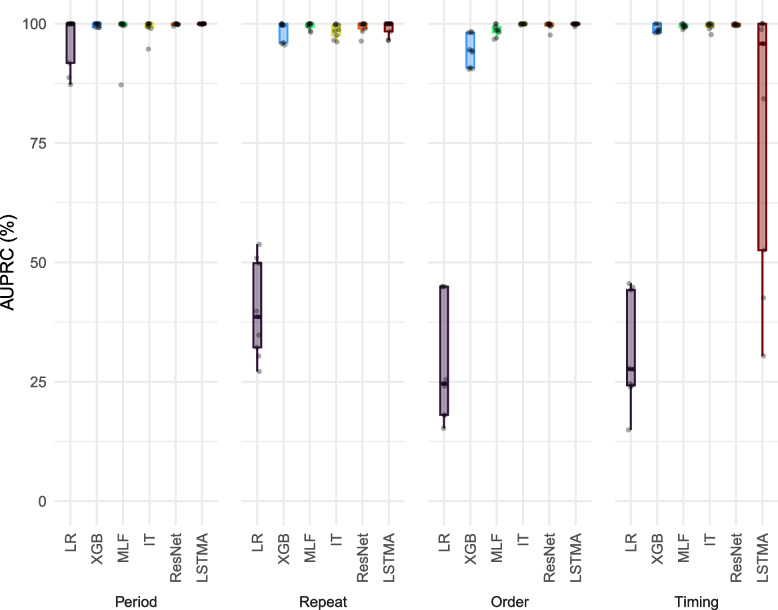
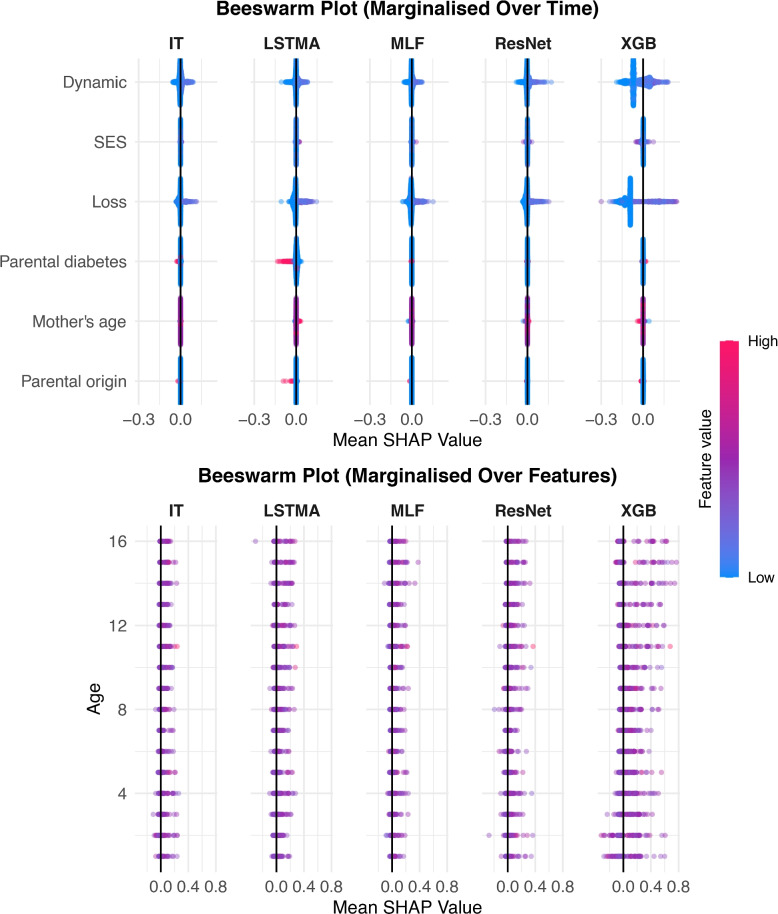
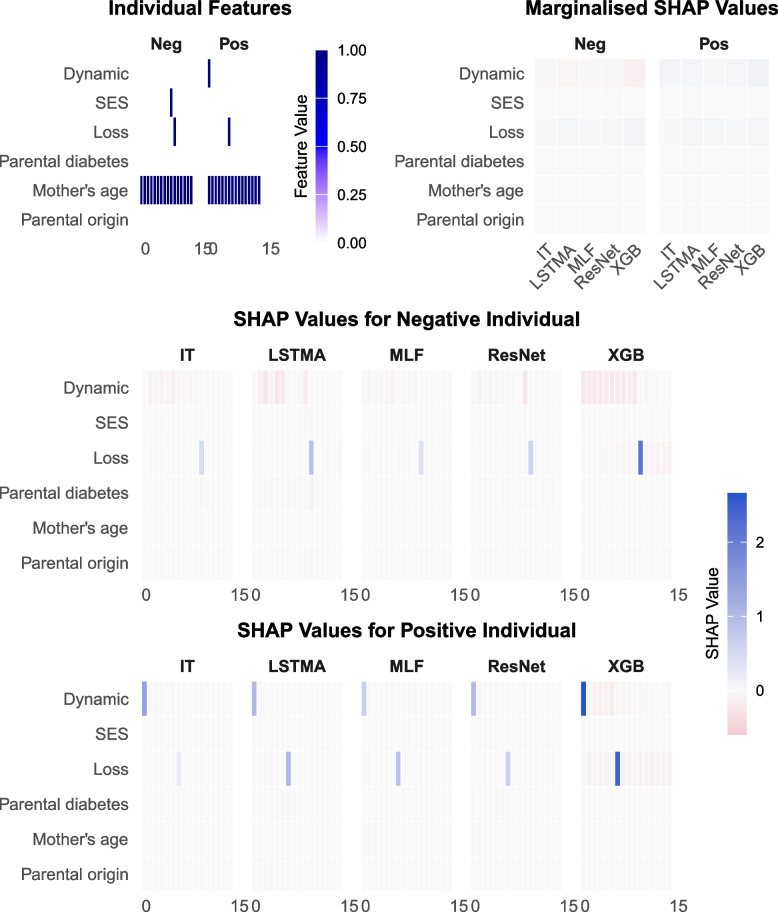
Background: Understanding the complex interplay between life course exposures, such as adverse childhood experiences and environmental factors, and disease risk is essential for developing effective public health interventions. Traditional epidemiological methods, such as regression models and risk scoring, are limited in their ability to capture the non-linear and temporally dynamic nature of these relationships. Deep learning (DL) and explainable artificial intelligence (XAI) are increasingly applied within healthcare settings to identify influential risk factors and enable personalised interventions. However, significant gaps remain in understanding their utility and limitations, especially for sparse longitudinal life course data and how the influential patterns identified using explainability are linked to underlying causal mechanisms. Methods: We conducted a controlled simulation study to assess the performance of various state-of-the-art DL architectures including CNNs and (attention-based) RNNs against XGBoost and logistic regression. Input data was simulated to reflect a generic and generalisable scenario with different rules used to generate multiple realistic outcomes based upon epidemiological concepts. Multiple metrics were used to assess model performance in the presence of class imbalance and SHAP values were calculated. Results: We find that DL methods can accurately detect dynamic relationships that baseline linear models and tree-based methods cannot. However, there is no one model that consistently outperforms the others across all scenarios. We further identify the superior performance of DL models in handling sparse feature availability over time compared to traditional machine learning approaches. Additionally, we examine the interpretability provided by SHAP values, demonstrating that these explanations often misalign with causal relationships, despite excellent predictive and calibrative performance. Conclusions: These insights provide a foundation for future research applying DL and XAI to life course data, highlighting the challenges associated with sparse healthcare data, and the critical need for advancing interpretability frameworks in personalised public health.
Overview
The claims and statistics of this paper haven’t been checked yet.
Free: it reads the open-access text and checks the first 5 claims that cite a source we can check. Create a free account to check every claim.
Integrity signals
Registry
Cites
Statistics
Figures
Verification
Claims the paper makes
The claims and statistics of this paper haven’t been checked yet.
Free: it reads the open-access text and checks the first 5 claims that cite a source we can check. Create a free account to check every claim.
Claims other papers make about this one
Each is checked against this paper’s own text: does it say what the citing paper says it does?
The source backs part of the claim, not all of it — or backs it for a different population, condition or comparison.
In the citing paper
“yet the XAI tools that would translate modifiable risk factor predictions into actionable individual guidance remain underdeveloped (Huang et al., 2025; Coupland et al., 2025).”
From A generative AI multi-agent framework with integrated XAI governance for cancer diagnostics: from multi-omics interpretation to lifestyle risk stratification (2026) · cites this paper as Coupland et al., 2025
Experimental — accuracy not yet measuredThe source backs part of the claim, not all of it — or backs it for a different population, condition or comparison.
In the citing paper
“SHAP applied to lifestyle and longitudinal epidemiological data has demonstrated predictive utility, but has been found to misalign with causal relationships in ways that limit actionability”
From A generative AI multi-agent framework with integrated XAI governance for cancer diagnostics: from multi-omics interpretation to lifestyle risk stratification (2026) · cites this paper as Coupland et al., 2025
Experimental — accuracy not yet measuredThe source backs part of the claim, not all of it — or backs it for a different population, condition or comparison.
In the citing paper
“The LRS Agent’s integration with its LLM backbone addresses the critical causal interpretation problem identified in SHAP applications to life course data (Coupland et al., 2025).”
From A generative AI multi-agent framework with integrated XAI governance for cancer diagnostics: from multi-omics interpretation to lifestyle risk stratification (2026) · cites this paper as Coupland et al., 2025
Experimental — accuracy not yet measuredThe source backs part of the claim, not all of it — or backs it for a different population, condition or comparison.
In the citing paper
“High SHAP attribution for a lifestyle feature does not imply that modifying that feature will reduce cancer risk; SHAP captures statistical association, not causal effect.”
From A generative AI multi-agent framework with integrated XAI governance for cancer diagnostics: from multi-omics interpretation to lifestyle risk stratification (2026) · cites this paper as Coupland et al., 2025
Experimental — accuracy not yet measuredThe cited source says what the claim attributes to it.
In the citing paper
“high SHAP attribution for a feature in a predictive model does not imply that modifying that feature will reduce cancer risk, because SHAP captures statistical association and not causal effect”
From A generative AI multi-agent framework with integrated XAI governance for cancer diagnostics: from multi-omics interpretation to lifestyle risk stratification (2026) · cites this paper as Coupland et al., 2025
1 more claim about this paper
Create a free account to see every claim other papers make about this one.
Self-check
Percentages, sums and reported differences re-computed from the paper’s own numbers.
The self-check needs the paper’s full text.
Citations
Cites
Vaswani, A., Shazeer, N., Parmar, N., Uszkoreit, J., Jones, L., Gomez, A. N., Kaiser, L., & Polosukhin, I. (2017) · arXiv · doi:10.48550/arxiv.1706.03762 · Cited by 120,404 · cited 2×
“By using these metrics, we ensure a comprehensive evaluation of model performance across all simulated LCPs. Additionally the AP score which is an approximation of AUPRC was used to determine the best parameters in the tuning process.”
BERT: Pre-training of Deep Bidirectional Transformers for Language Understanding
Devlin, J., Chang, M.-W., Lee, K., & Toutanova, K. (2018) · arXiv · doi:10.48550/arxiv.1810.04805 · Cited by 73,173 · cited 1×
“A final softmax layer provides classification probabilities.”
XGBoost: A Scalable Tree Boosting System
Chen, T., & Guestrin, C. (2016) · Proceedings of the 22nd ACM SIGKDD International Conference on Knowledge Discovery and Data Mining · doi:10.1145/2939672.2939785 · Cited by 54,569 · cited 2×
“These models are benchmarked against traditional methods, including logistic regression and XGBoost, to provide a comprehensive understanding of their strengths and limitations [37].”
A Unified Approach to Interpreting Model Predictions
Lundberg, S., & Lee, S.-I. (2017) · arXiv · doi:10.48550/arxiv.1705.07874 · Cited by 23,707 · cited 2×
“The term calibration describes the level of concordance between the model predictions and the actual observed outcomes, and it is imperative to consider this score particularly in risk modelling.”
From local explanations to global understanding with explainable AI for trees
Lundberg, S. M., Erion, G., Chen, H., DeGrave, A., Prutkin, J. M., Nair, B., Katz, R., Himmelfarb, J., Bansal, N., & Lee, S.-I. (2020) · Nature Machine Intelligence · doi:10.1038/s42256-019-0138-9 · Cited by 10,551 · cited 1×
“Model-agnostic approaches, such as Local Interpretable Model-Agnostic Explanations (LIME) and Anchors, approximate model behaviour with simpler interpretable models [26, 65, 66], but their sensitivity to parameter choices and instability in high-dimensional datasets limit their reliability.”
“Why Should I Trust You?”: Explaining the Predictions of Any Classifier
Ribeiro, M., Singh, S., & Guestrin, C. (2016) · Proceedings of the 2016 Conference of the North American Chapter of the Association for Computational Linguistics: Demonstrations · doi:10.18653/v1/n16-3020 · Cited by 6,682
The relationship between Precision-Recall and ROC curves
Davis, J., & Goadrich, M. (2006) · Proceedings of the 23rd international conference on Machine learning - ICML '06 · doi:10.1145/1143844.1143874 · Cited by 6,559 · cited 1×
“The AUPRC is particularly relevant for imbalanced datasets, as it captures the model’s ability to distinguish between the positive and negative classes [52].”
Deep Inside Convolutional Networks: Visualising Image Classification Models and Saliency Maps
Simonyan, K., Vedaldi, A., & Zisserman, A. (2013) · arXiv · doi:10.48550/arxiv.1312.6034 · Cited by 5,370 · cited 1×
“By using these metrics, we ensure a comprehensive evaluation of model performance across all simulated LCPs. Additionally the AP score which is an approximation of AUPRC was used to determine the best parameters in the tuning process.”
Deep learning for time series classification: a review
Ismail Fawaz, H., Forestier, G., Weber, J., Idoumghar, L., & Muller, P.-A. (2019) · Data Mining and Knowledge Discovery · doi:10.1007/s10618-019-00619-1 · Cited by 3,342 · cited 2×
“Additionally, DL architectures, such as recurrent neural networks (RNNs) and convolutional neural networks (CNNs), are uniquely equipped to handle multivariate time-series (MTS) data, preserving temporal information that is often lost in traditional methods [16].”
The Emergence and Development of Life Course Theory
Elder, G. H., Johnson, M. K., & Crosnoe, R. (2003) · Handbooks of Sociology and Social Research · doi:10.1007/978-0-306-48247-2_1 · Cited by 3,322
Research works printed but not linked: 6
- Zerveas G, Jayaraman S, Patel D, Bhamidipaty A, Eickhoff C. A Transformer-based Framework for Multivariate Time Series Representation Learning. Proc ACM SIGKDD Int Conf Knowl Discov Data Min. 2021;11(21):2114–24.
- Qi Q, Luo Y, Xu Z, Ji S, Yang T. Stochastic Optimization of Areas Under Precision-Recall Curves with Provable Convergence. Adv Neural Inf Process Syst. 2021;3:1752–65.
- Ismail AA, Gunady MK, Bravo HC, Feizi S. Benchmarking Deep Learning Interpretability in Time Series Predictions. Adv Neural Inf Process Sys. 2020;33:6441–52.
- Shrikumar A, Greenside P, Kundaje A. Learning Important Features Through Propagating Activation Differences. In: International conference on machine learning, PMIR. 2017;3145–53
- Muschalik M, Baniecki H, Fumagalli F, Kolpaczki P, Hammer B, Hüllermeier E. shapiq: Shapley Interactions for Machine Learning. In: The Thirty-eight Conference on Neural Information Processing Systems Datasets and Benchmarks Track. Vancouver; 2024.
- Heskes T, Sijben E, Bucur IG, Claassen T. Causal Shapley Values: Exploiting Causal Knowledge to Explain Individual Predictions of Complex Models. Adv Neural Inf Process Sys. 2020;33:4778–89.
Cited by
Beyond Explainable AI (XAI): An Overdue Paradigm Shift and Post-XAI Research DirectionsPreprint
Afroogh, S., Ahmed, S. I., Ahrweiler, P., Alvarez-Melis, D., Arief, M., Barakova, E. I., Bargagli-Stoffi, F. J., Bıyık, E., Chen, H., Chen, X. '., et al. (2026) · arXiv (Cornell University) · doi:10.48550/arxiv.2602.24176 · Cited by 9
“Model-Centered Interpretability (4.4) preserves the technical value of model analysis while eliminating XAI’s false explanatory claims about real-world phenomena.”
InfluentialTakefuji, Y. (2025) · Environmental Research · doi:10.1016/j.envres.2025.123125 · Cited by 7
Imani, M., Maroosi, A., Shojaei, S., Heidari, K., Hoseinzadeh, S. M., Daneshi, N., Saber, Z., Sajadi, N. A., & Mohammadzadeh, M. (2026) · American Heart Journal Plus Cardiology Research and Practice · doi:10.1016/j.ahjo.2026.100719 · Cited by 7
“However, these models have limitations, particularly in capturing complex, non-linear relationships between risk factors [8].”
Causal AI in Cardiac Arrhythmia: From Pattern Recognition to Mechanistic Insight
Abubaha, B., Aldwaik, S. A., Saife, S., Barqawi, Y. I., Omar, L., Sawafta, O., Sawalha, M., Nassar, H., Alqasem, Z., Khuffash, K., et al. (2026) · Clinical Cardiology · doi:10.1002/clc.70293 · Cited by 6
The time- and space-varying roles of human mobility in shaping urban dengue epidemicsPreprint
Mills, C. L., de Sousa, G. D. S., Neto, A. S. L., Furtado, V., Pei, S., Kraemer, M. U. G., & Donnelly, C. A. (2025) · medRxiv · doi:10.1101/2025.06.03.25328731 · Cited by 3
“Further causal limitations include the limitations of explainability metrics (such as SHAP values) for deep learning models when disentangling causal effects [42,45] (see Materials and methods).”
Scalable, open-access and multidisciplinary data integration pipeline for climate-sensitive diseases
Dasgupta, A., Pérez‐Fernández, I., Huynh, T., Mills, C. L., Nicholls, R. C., Sambaturu, P., Choisy, M., Wallom, D. C. H., Nguyen‐Duy, T., Inward, R. P. D., et al. (2025) · Wellcome Open Research · doi:10.12688/wellcomeopenres.24774.1 · Cited by 6
“Other future work may incorporate explainability metrics 38 – 40 to automatically capture how individual covariates (both climatic and socio-demographic) influence model predictions, thus providing further transparency for the user in understanding data-driven model processes (data ingestion, model…”
Takefuji, Y. (2025) · Cancer Letters · doi:10.1016/j.canlet.2025.218133 · Cited by 3
Wei, Z., Wang, G., Hu, Y., Zhou, C., Zhang, Y., & Wang, Y. (2025) · Translational Cancer Research · doi:10.21037/tcr-2024-2665 · Cited by 3
“Nonetheless, the exclusive application of machine learning may remain constrained by confounding variables and biases intrinsic to observational data (27,28).”
Scalable, open-access and multidisciplinary data integration pipeline for climate-sensitive diseases
Dasgupta, A., Pérez‐Fernández, I., Huynh, T., Mills, C. L., Nicholls, R. C., Sambaturu, P., Choisy, M., Wallom, D. C. H., Nguyen‐Duy, T., Inward, R. P. D., et al. (2025) · Wellcome Open Research · doi:10.12688/wellcomeopenres.24774.2 · Cited by 2
Beyond accuracy: Stabilizing feature importance in GWRF/RF for soil heavy metal mapping
Takefuji, Y. (2025) · Environmental Pollution · doi:10.1016/j.envpol.2025.127447 · Cited by 1
AI and Machine Learning in Health
Pham, T. D., Holmes, S., Chatzopoulou, D., & Coulthard, P. (2026) · Springer eBooks · doi:10.1007/978-3-032-11531-7_2 · Cited by 2
Breen, K., Coultas, J., Lee, S., Liu, L., Huggins, E., Fuentes, L. D. L., & Saban, K. L. (2026) · Current Epidemiology Reports · doi:10.1007/s40471-025-00377-3 · Cited by 2
“Even when using complex algorithms, post-hoc explainability methods such as SHap - ley Additive exPlanations (SHAP) values and partial depen - dence plots clarify how specific conditions drive predictions [ 41 ].”
FeatEHR-LLM: Leveraging Large Language Models for Feature Engineering in Electronic Health RecordsPreprint
Karami, H., Atienza, D., Thiran, J., & Ionescu, A. (2026) · arXiv (Cornell University) · doi:10.48550/arxiv.2604.22534 · Cited by 2
Barki, C., Chouchen, M., Sediri, A., Ceylan, H. İ., Rahmouni, H. B., Muntean, R. I., El-Seedi, H. R., Bragazzi, N. L., & Dergaa, I. (2026) · Frontiers in Systems Biology · doi:10.3389/fsysb.2026.1892418 · Cited by 1
Ghale, S., Oka, S., & Takefuji, Y. (2026) · Fuel · doi:10.1016/j.fuel.2026.139411 · Cited by 1
Lin, Z., Sim, Y.-J., Zhang, C. C., Wu, K., Sun, Z. X., Shangguan, Y., & Yan, L. (2026) · Primary Health Care Research & Development · doi:10.1017/s1463423626101364 · Cited by 1
“Traditional statistical models often struggle with high-dimensional and nonlinear relationships (Coupland et al ., 2025).”
Patare, D., & Nemade, P. D. (2026) · Iranian Journal of Science and Technology Transactions of Civil Engineering · doi:10.1007/s40996-026-02202-3 · Cited by 1
Wu, Y. (2026) · Birth Defects Research · doi:10.1002/bdr2.70095 · Cited by 1
“Few studies have systematically integrated NLP-derived features from diverse EHR text with advanced recurrent architectures and adaptive hyperparameter optimization for multi-syndrome risk prediction (Correia et al. 2025; Coupland et al. 2025; Borji et al. 2025).”
Takefuji, Y. (2026) · Civil Engineering Design · doi:10.1002/cend.70026 · Cited by 1
Babulal, G. M., Geddes, M. R., & Germine, L. T. (2025) · The Journals of Gerontology Series B · doi:10.1093/geronb/gbaf105
Takefuji, Y. (2025) · Journal of environmental chemical engineering · doi:10.1016/j.jece.2025.120094
Ojo, A., Osborne, A., Soladoye, A. A., Matope, E. M., Bamidele, D. B., & Olawade, D. B. (2026) · Intelligent Hospital · doi:10.1016/j.inhs.2026.100053
Młynarska, E., Bojdo, K., Mazur, O., Pawlak, K., Przybylak, A., Kustosik, N., Krawiranda, K., Rysz, J., & Franczyk, B. (2026) · Biomedicines · doi:10.3390/biomedicines14061301
“What is more, the SHAP values only relate to the predictive influence of exposures [104].”
Rodríguez-Córdoba, K. M. (2025) · Revista Científica Observatorio del Conocimiento · doi:10.51862/obsknow.n8a7
Chen, F., Wang, L., Liu, H., Khan, Q., Tang, B., & Bao, N. (2026) · Journal of Nanobiotechnology · doi:10.1186/s12951-026-04551-7
“DL techniques can recognize more complex relationships between the variables involved; however, the need for large amounts of data and the lack of interpretability remain drawbacks [217].”
Rodríguez-Córdoba, K. M., & Ávila-Díaz, W. D. (2026) · Frontiers in Artificial Intelligence · doi:10.3389/frai.2026.1923426
“However, as Clark et al. (2021), Funer (2022), and Coupland et al. (2025), 10.3389/frai.2026.1923426 Frontiers in Artificial Intelligence 07 frontiersin.org the unrestricted deployment of technology in healthcare can amplify pre-existing inequities if the digital divide and the social determinants…”
InfluentialSynthetic dreaming for state-conditioned epistemic exploration in neural networks
Lachiany, M. (2026) · Neural Networks · doi:10.1016/j.neunet.2026.109664
Liu, X., Yu, Z., Wang, X., Xie, R., Hou, M., & Liu, J. (2026) · Frontiers in Immunology · doi:10.3389/fimmu.2026.1881634
“SHAP and LIME can improve transparency by describing how a fi tted model allocates prediction contributions, but they cannot establish biological mechanisms, causal effects, or treatment targets (17, 18).”
kumar, J., Rao, J. B., Akhtar, N., Mandal, P., Soni, M., Bhatnagar, N. S., Banerjee, S., Bhan, S., Begum, T., & Tiwari, M. (2026) · Letters in Drug Design & Discovery · doi:10.1016/j.lddd.2026.100571
Nurhadi, N., Hartiwi, Y., Meisak, D., & Admaja, A. (2026) · Jurnal Teknik Informatika (Jutif)
Clinical Explainable AI as Evidence: Quantifying Claim–Evidence Gaps and a Practical Audit
Frez, J., Baloian, N. A., & Ahumada, L. (2026) · doi:10.1109/codassca69992.2026.00030
Wang, X., Liu, Y., Fu, P., Wei-juan, H., Ji, M., Tian, X., Ding, Y., & Liu, H. (2026) · Digital Health · doi:10.1177/20552076261503885
Metadata
- Authors
- Coupland, H., Scheidwasser, N., Katsiferis, A., Davies, M., Flaxman, S., Hulvej Rod, N., Mishra, S., Bhatt, S., & Unwin, H. J. T.
- Affiliations
- University of Copenhagen (DK)
- University of Oxford (GB)
- National University of Singapore (SG)
- University of Bristol (GB)
- Corresponding author
- Bhatt, Samir
- ORCID
- Venue
- BMC Public Health
- Published
- 2025-04-24
- Volume
- 25
- Issue
- 1
- Pages
- 1520-1520
- ISSN
- 1471-2458 (ISSN-L)
- PMC
- PMC12020094
- OpenAlex
- W4409733048
- Semantic Scholar
- f300efa3b33d4758768c9eb5b4d9f64b9ac7542e
- Cited by
- 26
- References
- 61
- Citations by year
- 2026: 17 · 2025: 9
- FWCI
- 10.43
- Type
- journal article
- Language
- en
- Open access
- gold
- doi.org
- Licence
- cc-by
- creativecommons.org/licenses/by/4.0 (tdm)
- creativecommons.org/licenses/by/4.0 (vor)
- Locations
- BMC Public Health (publishedVersion, cc-by)
- Research Square (acceptedVersion, cc-by)
- Europe PMC (PubMed Central) (publishedVersion, cc-by)
- PubMed Central (publishedVersion, cc-by)
- PubMed (publishedVersion)
- Research at the University of Copenhagen (University of Copenhagen) (publishedVersion, cc-by)
- DOAJ (DOAJ: Directory of Open Access Journals) (submittedVersion, cc-by-sa)
- Bristol Research (University of Bristol) (submittedVersion, cc-by)
- Funders
- Medical Research Council (MR/X020258/1)
- Novo Nordisk Fonden (NNF20OC0059309)
- Danish National Research Foundation (DNRF160)
- Independent Research Fund Project (1030-00171B)
- EPSRC (EP/V002910/2)
- Danish Research Council (reference1030-00171B)
- European Research Council (no. 101124807)
- TrygFonden
- National Research Foundation Singapore (NRF-NRFF15-2023-0010)
- National Institute for Health and Care Research (NIHR200908)
- Schmidt Family Foundation (G-22-63345)
- Topics
- Physical Sciences › Computer Science › Artificial Intelligence › Machine Learning in Healthcare
- Physical Sciences › Computer Science › Artificial Intelligence › Explainable Artificial Intelligence (XAI)
- Health Sciences › Health Professions › Health Information Management › Artificial Intelligence in Healthcare
- Keywords
- deep learning, explainable AI, life course epidemiology, longitudinal data, data sparsity, SHAP, causal inference, adverse childhood experiences, class imbalance, convolutional neural networks, recurrent neural networks, XGBoost, disease risk prediction
- MeSH terms
- Deep Learning, Artificial Intelligence, Humans, Longitudinal Studies
About these checks
Registry, retraction, Cites and statistics results are computed, not judged, with one exception: a printed reference that no index lists is read once by a model before it counts as a citation error. Claims are extracted by a model and kept only when their quote appears verbatim in the text; each cited source is then checked, with a model’s help, for whether it says what the claim relies on. Those verdicts can be wrong — read the claim’s quote and the cited source before relying on one.
Statistics and arithmetic are recomputed, not judged.
Confidence bands are shown only for fields calibrated on our annotated test set. None is calibrated yet, so no band is shown.
What counts as a claim ›How we measure confidence ›How we check this ›
Are you an author, or do you see a problem with this page? Request a review
Data sources
Bibliographic data: Semantic Scholar, OpenAlex, Crossref.
Contains information from the Semantic Scholar Academic Graph Datasets, made available under the ODC Attribution License (ODC-BY 1.0).
Semantic Scholar’s data is described in: Kinney, R., et al. (2023). The Semantic Scholar Open Data Platform. arXiv:2301.10140.
