

Exploring the potential and limitations of deep learning and explainable AI for longitudinal life course analysis
Open accessPublished version of a preprint
The DOI matches its Crossref record; 64 of the 65 references it cites were found in a registry or an index.
Abstract
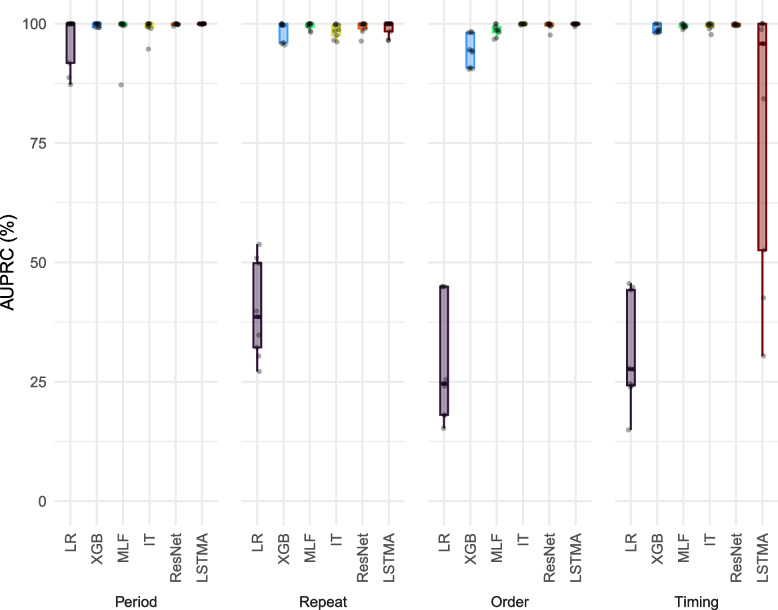
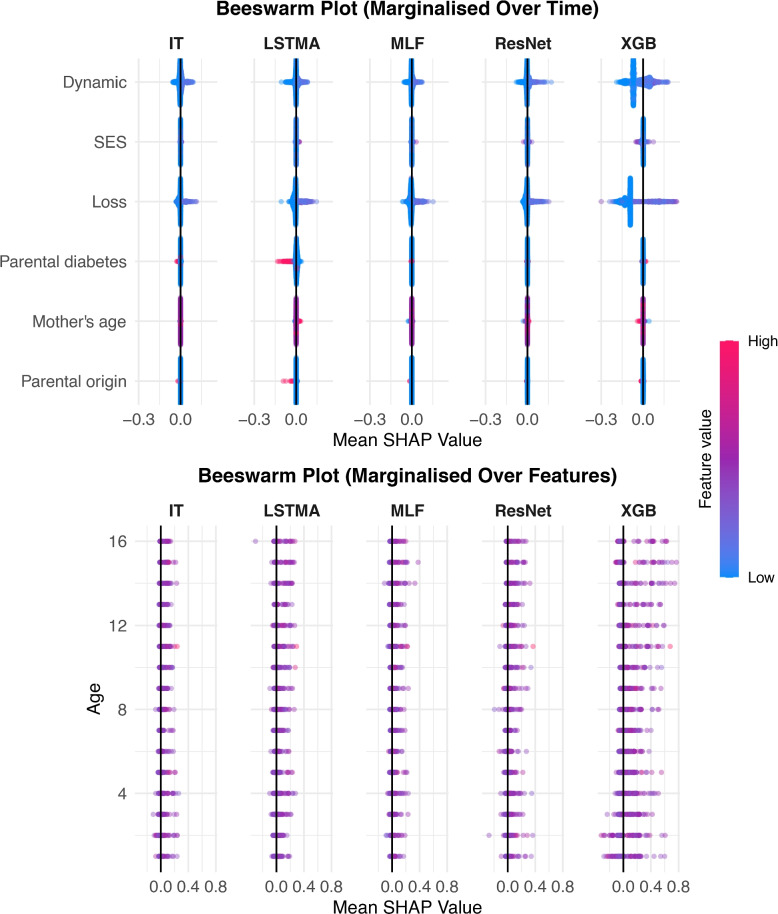
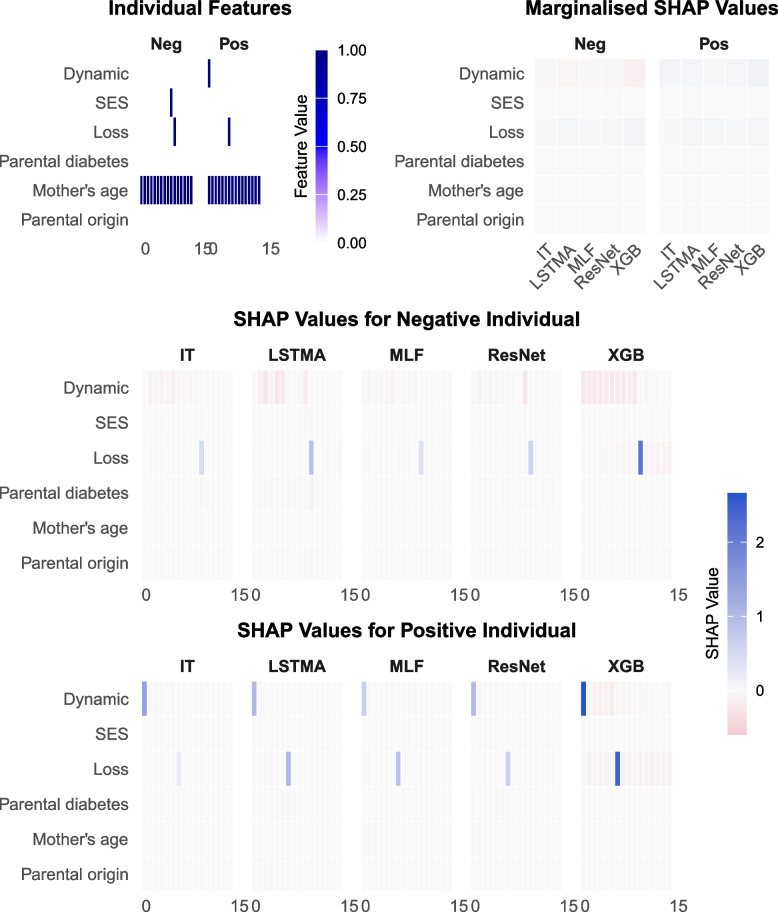
Background: Understanding the complex interplay between life course exposures, such as adverse childhood experiences and environmental factors, and disease risk is essential for developing effective public health interventions. Traditional epidemiological methods, such as regression models and risk scoring, are limited in their ability to capture the non-linear and temporally dynamic nature of these relationships. Deep learning (DL) and explainable artificial intelligence (XAI) are increasingly applied within healthcare settings to identify influential risk factors and enable personalised interventions. However, significant gaps remain in understanding their utility and limitations, especially for sparse longitudinal life course data and how the influential patterns identified using explainability are linked to underlying causal mechanisms. Methods: We conducted a controlled simulation study to assess the performance of various state-of-the-art DL architectures including CNNs and (attention-based) RNNs against XGBoost and logistic regression. Input data was simulated to reflect a generic and generalisable scenario with different rules used to generate multiple realistic outcomes based upon epidemiological concepts. Multiple metrics were used to assess model performance in the presence of class imbalance and SHAP values were calculated. Results: We find that DL methods can accurately detect dynamic relationships that baseline linear models and tree-based methods cannot. However, there is no one model that consistently outperforms the others across all scenarios. We further identify the superior performance of DL models in handling sparse feature availability over time compared to traditional machine learning approaches. Additionally, we examine the interpretability provided by SHAP values, demonstrating that these explanations often misalign with causal relationships, despite excellent predictive and calibrative performance. Conclusions: These insights provide a foundation for future research applying DL and XAI to life course data, highlighting the challenges associated with sparse healthcare data, and the critical need for advancing interpretability frameworks in personalised public health.
Overview
The claims and statistics of this paper haven’t been checked yet.
Free: it reads the open-access text and checks the first 5 claims that cite a source we can check. Create a free account to check every claim.
Integrity signals
Registry
Cites
Statistics
Figures
Verification
Claims the paper makes
The claims and statistics of this paper haven’t been checked yet.
Free: it reads the open-access text and checks the first 5 claims that cite a source we can check. Create a free account to check every claim.
Claims other papers make about this one
Each is checked against this paper’s own text: does it say what the citing paper says it does?
The source backs part of the claim, not all of it — or backs it for a different population, condition or comparison.
In the citing paper
“yet the XAI tools that would translate modifiable risk factor predictions into actionable individual guidance remain underdeveloped (Huang et al., 2025; Coupland et al., 2025).”
From A generative AI multi-agent framework with integrated XAI governance for cancer diagnostics: from multi-omics interpretation to lifestyle risk stratification (2026) · cites this paper as Coupland et al., 2025
Experimental — accuracy not yet measuredThe source backs part of the claim, not all of it — or backs it for a different population, condition or comparison.
In the citing paper
“SHAP applied to lifestyle and longitudinal epidemiological data has demonstrated predictive utility, but has been found to misalign with causal relationships in ways that limit actionability”
From A generative AI multi-agent framework with integrated XAI governance for cancer diagnostics: from multi-omics interpretation to lifestyle risk stratification (2026) · cites this paper as Coupland et al., 2025
Experimental — accuracy not yet measuredThe source backs part of the claim, not all of it — or backs it for a different population, condition or comparison.
In the citing paper
“The LRS Agent’s integration with its LLM backbone addresses the critical causal interpretation problem identified in SHAP applications to life course data (Coupland et al., 2025).”
From A generative AI multi-agent framework with integrated XAI governance for cancer diagnostics: from multi-omics interpretation to lifestyle risk stratification (2026) · cites this paper as Coupland et al., 2025
Experimental — accuracy not yet measuredThe source backs part of the claim, not all of it — or backs it for a different population, condition or comparison.
In the citing paper
“High SHAP attribution for a lifestyle feature does not imply that modifying that feature will reduce cancer risk; SHAP captures statistical association, not causal effect.”
From A generative AI multi-agent framework with integrated XAI governance for cancer diagnostics: from multi-omics interpretation to lifestyle risk stratification (2026) · cites this paper as Coupland et al., 2025
Experimental — accuracy not yet measuredThe cited source says what the claim attributes to it.
In the citing paper
“high SHAP attribution for a feature in a predictive model does not imply that modifying that feature will reduce cancer risk, because SHAP captures statistical association and not causal effect”
From A generative AI multi-agent framework with integrated XAI governance for cancer diagnostics: from multi-omics interpretation to lifestyle risk stratification (2026) · cites this paper as Coupland et al., 2025
1 more claim about this paper
Create a free account to see every claim other papers make about this one.
Self-check
Percentages, sums and reported differences re-computed from the paper’s own numbers.
The self-check needs the paper’s full text.
Citations
Cites
Vaswani, A., Shazeer, N., Parmar, N., Uszkoreit, J., Jones, L., Gomez, A. N., Kaiser, L., & Polosukhin, I. (2017) · arXiv · doi:10.48550/arxiv.1706.03762 · Cited by 120,404 · cited 2×
“By using these metrics, we ensure a comprehensive evaluation of model performance across all simulated LCPs. Additionally the AP score which is an approximation of AUPRC was used to determine the best parameters in the tuning process.”
BERT: Pre-training of Deep Bidirectional Transformers for Language Understanding
Devlin, J., Chang, M.-W., Lee, K., & Toutanova, K. (2018) · arXiv · doi:10.48550/arxiv.1810.04805 · Cited by 73,173 · cited 1×
“A final softmax layer provides classification probabilities.”
XGBoost: A Scalable Tree Boosting System
Chen, T., & Guestrin, C. (2016) · Proceedings of the 22nd ACM SIGKDD International Conference on Knowledge Discovery and Data Mining · doi:10.1145/2939672.2939785 · Cited by 54,569 · cited 2×
“These models are benchmarked against traditional methods, including logistic regression and XGBoost, to provide a comprehensive understanding of their strengths and limitations [37].”
A Unified Approach to Interpreting Model Predictions
Lundberg, S., & Lee, S.-I. (2017) · arXiv · doi:10.48550/arxiv.1705.07874 · Cited by 23,707 · cited 2×
“The term calibration describes the level of concordance between the model predictions and the actual observed outcomes, and it is imperative to consider this score particularly in risk modelling.”
From local explanations to global understanding with explainable AI for trees
Lundberg, S. M., Erion, G., Chen, H., DeGrave, A., Prutkin, J. M., Nair, B., Katz, R., Himmelfarb, J., Bansal, N., & Lee, S.-I. (2020) · Nature Machine Intelligence · doi:10.1038/s42256-019-0138-9 · Cited by 10,551 · cited 1×
“Model-agnostic approaches, such as Local Interpretable Model-Agnostic Explanations (LIME) and Anchors, approximate model behaviour with simpler interpretable models [26, 65, 66], but their sensitivity to parameter choices and instability in high-dimensional datasets limit their reliability.”
“Why Should I Trust You?”: Explaining the Predictions of Any Classifier
Ribeiro, M., Singh, S., & Guestrin, C. (2016) · Proceedings of the 2016 Conference of the North American Chapter of the Association for Computational Linguistics: Demonstrations · doi:10.18653/v1/n16-3020 · Cited by 6,682
The relationship between Precision-Recall and ROC curves
Davis, J., & Goadrich, M. (2006) · Proceedings of the 23rd international conference on Machine learning - ICML '06 · doi:10.1145/1143844.1143874 · Cited by 6,559 · cited 1×
“The AUPRC is particularly relevant for imbalanced datasets, as it captures the model’s ability to distinguish between the positive and negative classes [52].”
Deep Inside Convolutional Networks: Visualising Image Classification Models and Saliency Maps
Simonyan, K., Vedaldi, A., & Zisserman, A. (2013) · arXiv · doi:10.48550/arxiv.1312.6034 · Cited by 5,370 · cited 1×
“By using these metrics, we ensure a comprehensive evaluation of model performance across all simulated LCPs. Additionally the AP score which is an approximation of AUPRC was used to determine the best parameters in the tuning process.”
Deep learning for time series classification: a review
Ismail Fawaz, H., Forestier, G., Weber, J., Idoumghar, L., & Muller, P.-A. (2019) · Data Mining and Knowledge Discovery · doi:10.1007/s10618-019-00619-1 · Cited by 3,342 · cited 2×
“Additionally, DL architectures, such as recurrent neural networks (RNNs) and convolutional neural networks (CNNs), are uniquely equipped to handle multivariate time-series (MTS) data, preserving temporal information that is often lost in traditional methods [16].”
The Emergence and Development of Life Course Theory
Elder, G. H., Johnson, M. K., & Crosnoe, R. (2003) · Handbooks of Sociology and Social Research · doi:10.1007/978-0-306-48247-2_1 · Cited by 3,322
Towards A Rigorous Science of Interpretable Machine Learning
Doshi-Velez, F., & Kim, B. (2017) · arXiv · doi:10.48550/arxiv.1702.08608 · Cited by 3,121 · cited 2×
“The term calibration describes the level of concordance between the model predictions and the actual observed outcomes, and it is imperative to consider this score particularly in risk modelling.”
Deep learning for healthcare: review, opportunities and challenges
Miotto, R., Wang, F., Wang, S., Jiang, X., & Dudley, J. T. (2018) · Briefings in Bioinformatics · doi:10.1093/bib/bbx044 · Cited by 3,076
Ben-Shlomo, Y. (2002) · International Journal of Epidemiology · doi:10.1093/ije/31.2.285 · Cited by 3,038
Calibration: the Achilles heel of predictive analytics
On behalf of Topic Group ‘Evaluating diagnostic tests and prediction models’ of the STRATOS initiative, Van Calster, B., McLernon, D. J., van Smeden, M., Wynants, L., & Steyerberg, E. W. (2019) · BMC Medicine · doi:10.1186/s12916-019-1466-7 · Cited by 2,650
Scalable and accurate deep learning with electronic health records
Rajkomar, A., Oren, E., Chen, K., Dai, A. M., Hajaj, N., Hardt, M., Liu, P. J., Liu, X., Marcus, J., Sun, M., et al. (2018) · npj Digital Medicine · doi:10.1038/s41746-018-0029-1 · Cited by 2,648 · cited 1×
“The findings of this study build on existing research demonstrating the strengths of DL for longitudinal data analysis in healthcare [36, 58, 59].”
Shmueli, G. (2010) · Statistical Science · doi:10.1214/10-sts330 · Cited by 2,517
Time series classification from scratch with deep neural networks: A strong baseline
Wang, Z., Yan, W., & Oates, T. (2017) · 2017 International Joint Conference on Neural Networks (IJCNN) · doi:10.1109/ijcnn.2017.7966039 · Cited by 2,299
Scalable and accurate deep learning with electronic health records.
Rajkomar, A., Oren, E., Chen, K., Dai, A. M., Hajaj, N., Hardt, M., Liu, P. J., Liu, X., Marcus, J., Sun, M., et al. (2018) · eScholarship (California Digital Library) · Cited by 2,242
Tabular data: Deep learning is not all you need
Shwartz-Ziv, R., & Armon, A. (2022) · Information Fusion · doi:10.1016/j.inffus.2021.11.011 · Cited by 2,172 · cited 1×
“XGBoost performed well for simpler LCPs, however it was outper-formed by DL models as pattern complexity increased, supporting evidence that DL models are better suited for dynamic, high-dimensional data [54–56], despite XGBoost’s advantages in tabular datasets [57].”
Anchors: High-Precision Model-Agnostic Explanations
Ribeiro, M. T., Singh, S., & Guestrin, C. (2018) · Proceedings of the AAAI Conference on Artificial Intelligence · doi:10.1609/aaai.v32i1.11491 · Cited by 2,162 · cited 1×
“Model-agnostic approaches, such as Local Interpretable Model-Agnostic Explanations (LIME) and Anchors, approximate model behaviour with simpler interpretable models [26, 65, 66], but their sensitivity to parameter choices and instability in high-dimensional datasets limit their reliability.”
Using AUC and accuracy in evaluating learning algorithms
Huang, J., & Ling, C. X. (2005) · IEEE Transactions on Knowledge and Data Engineering · doi:10.1109/tkde.2005.50 · Cited by 2,148 · cited 1×
“Parental origin (European or non-European) is randomly assigned to match the distribution in the DANLIFE cohort where 98.6% of people had parents of European origin.”
InfluentialLife course epidemiology: Figure 1
Kuh, D., Ben-Shlomo, Y., Lynch, J., Hallqvist, J., & Power, C. (2003) · Journal of Epidemiology and Community Health · doi:10.1136/jech.57.10.778 · Cited by 2,019 · cited 3×
“Furthermore, the accumulation-of-risk model illustrates how repeated exposures can compound risk over time, such as chronic poverty exacerbating respiratory issues like asthma [3, 43].”
Inceptiontime: finding alexnet for time series classification
Ismail Fawaz, H., Lucas, B., Forestier, G., Pelletier, C., Schmidt, D. F., Weber, J., Webb, G. I., Idoumghar, L., Muller, P.-A., & Petitjean, F. (2020) · Data Mining and Knowledge Discovery · doi:10.1007/s10618-020-00710-y · Cited by 1,788
Can machine-learning improve cardiovascular risk prediction using routine clinical data?
Weng, S. F., Reps, J., Kai, J., Garibaldi, J. M., & Qureshi, N. (2017) · PLOS ONE · doi:10.1371/journal.pone.0174944 · Cited by 1,346 · cited 1×
“Within various healthcare applications, these models have proven to accurately predict disease risk for multiple outcomes using electronic health records (EHRs), including cardiovascular disease, cancer and diabetes [12–14].”
Sanity Checks for Saliency Maps
Adebayo, J., Gilmer, J., Muelly, M., Goodfellow, I., Hardt, M., & Kim, B. (2018) · arXiv · doi:10.48550/arxiv.1810.03292 · Cited by 1,294 · cited 1×
“By using these metrics, we ensure a comprehensive evaluation of model performance across all simulated LCPs. Additionally the AP score which is an approximation of AUPRC was used to determine the best parameters in the tuning process.”
Counterfactual explanations without opening the black box: automated decisions and the GDPR
Wachter, S., Mittelstadt, B., & Russell, C. (2017) · SSRN Electronic Journal · doi:10.2139/ssrn.3063289 · Cited by 1,061
Layer-Wise Relevance Propagation: An Overview
Montavon, G., Binder, A., Lapuschkin, S., Samek, W., & Müller, K.-R. (2019) · Lecture Notes in Computer Science · doi:10.1007/978-3-030-28954-6_10 · Cited by 750 · cited 1×
“By using these metrics, we ensure a comprehensive evaluation of model performance across all simulated LCPs. Additionally the AP score which is an approximation of AUPRC was used to determine the best parameters in the tuning process.”
Smith, G. D., Hart, C., Blane, D., & Hole, D. (1998) · BMJ · doi:10.1136/bmj.316.7145.1631 · Cited by 627 · cited 1×
“For instance, early-life adversities, such as childhood trauma or poverty, have been linked to adult-onset diseases, with the risk depending heavily on the timing, intensity and interplay with other exposures [7, 8].”
Aisenbrey, S., & Fasang, A. E. (2010) · Sociological Methods & Research · doi:10.1177/0049124109357532 · Cited by 602 · cited 1×
“They are particularly suited to these applications because of their ability to autonomously learn complex patterns and relationships directly from data, without requiring the pre-specification of their form or depending on strong assumptions [15].”
Swanson, K., Wu, E., Zhang, A., Alizadeh, A. A., & Zou, J. (2023) · Cell · doi:10.1016/j.cell.2023.01.035 · Cited by 597
Ruiz, A. P., Flynn, M., Large, J., Middlehurst, M., & Bagnall, A. (2021) · Data Mining and Knowledge Discovery · doi:10.1007/s10618-020-00727-3 · Cited by 476 · cited 2×
“While many DL models were initially developed for tasks like NLP or computer vision, many models have been adapted for application to MTS data which is distinct from life course data [35].”
Life Course Approaches to the Causes of Health Disparities
Jones, N. L., Gilman, S. E., Cheng, T. L., Drury, S. S., Hill, C. V., & Geronimus, A. T. (2019) · American Journal of Public Health · doi:10.2105/ajph.2018.304738 · Cited by 401 · cited 1×
“Between each layer is a layer of batch normalisation and a ReLU activation function.”
Adverse childhood experiences: towards a clear conceptual meaning
Kalmakis, K. A., & Chandler, G. E. (2014) · Journal of Advanced Nursing · doi:10.1111/jan.12329 · Cited by 390 · cited 1×
“Life course epidemiology seeks to understand these dynamics, revealing how early-life exposures, cumulative stressors, and critical developmental periods influence disease risk and health outcomes [2–6].”
Measuring the predictability of life outcomes with a scientific mass collaboration
Salganik, M. J., Lundberg, I., Kindel, A. T., Ahearn, C. E., Al-Ghoneim, K., Almaatouq, A., Altschul, D. M., Brand, J. E., Carnegie, N. B., Compton, R. J., et al. (2020) · Proceedings of the National Academy of Sciences · doi:10.1073/pnas.1915006117 · Cited by 322 · cited 1×
“Moreover, although DL architectures designed for MTS data, such as RNNs and Transformers, have out-performed traditional methods in many contexts, some studies have found evidence of epidemiological settings where DL models perform worse [18, 19].”
Amann, J., Vetter, D., Blomberg, S. N., Christensen, H. C., Coffee, M., Gerke, S., Gilbert, T. K., Hagendorff, T., Holm, S., Livne, M., et al. (2022) · PLOS Digital Health · doi:10.1371/journal.pdig.0000016 · Cited by 251 · cited 2×
“However, XAI methods remain limited in their ability to establish causal relationships, an issue that is especially pronounced in time-series data where confounding and sparsity complicate interpretability [33].”
A Review of Challenges and Opportunities in Machine Learning for Health
Ghassemi, M., Naumann, T., Schulam, P., Beam, A. L., Chen, I. Y., & Ranganath, R. (2018) · PubMed · doi:10.48550/arxiv.1806.00388 · Cited by 248 · cited 2×
“The term calibration describes the level of concordance between the model predictions and the actual observed outcomes, and it is imperative to consider this score particularly in risk modelling.”
The Cumulative Effect of Unemployment on Risks for Acute Myocardial Infarction
Dupre, M. E., George, L. K., Liu, G., & Peterson, E. D. (2012) · Archives of Internal Medicine · doi:10.1001/2013.jamainternmed.447 · Cited by 204
XCM: An Explainable Convolutional Neural Network for Multivariate Time Series Classification
Fauvel, K., Lin, T., Masson, V., Fromont, É., & Termier, A. (2021) · Mathematics · doi:10.3390/math9233137 · Cited by 177 · cited 1×
“In life course epidemiology, this capability is particularly valuable for identifying critical risk factors and key exposure periods that influence health outcomes, providing actionable insights for public health [27].”
Xie, F., Yuan, H., Ning, Y., Ong, M. E. H., Feng, M., Hsu, W., Chakraborty, B., & Liu, N. (2022) · Journal of Biomedical Informatics · doi:10.1016/j.jbi.2021.103980 · Cited by 153 · cited 3×
“The findings of this study build on existing research demonstrating the strengths of DL for longitudinal data analysis in healthcare [36, 58, 59].”
A life course approach to reproductive health: Theory and methods
Mishra, G. D., Cooper, R., & Kuh, D. (2010) · Maturitas · doi:10.1016/j.maturitas.2009.12.009 · Cited by 146 · cited 1×
“Finally, the temporal ordering of exposures has a substantial impact on the health trajectory [45].”
Nordic registry-based cohort studies: Possibilities and pitfalls when combining Nordic registry data
Maret-Ouda, J., Tao, W., Wahlin, K., & Lagergren, J. (2017) · Scandinavian Journal of Public Health · doi:10.1177/1403494817702336 · Cited by 132 · cited 2×
“The complexity of human health trajectories is shaped by the intricate interplay of biological, environmental, and social factors across the individuals’ lifespans [1].”
Explainable Prediction of Acute Myocardial Infarction Using Machine Learning and Shapley Values
Ibrahim, L., Mesinovic, M., Yang, K.-W., & Eid, M. A. (2020) · IEEE Access · doi:10.1109/access.2020.3040166 · Cited by 123 · cited 2×
“The term calibration describes the level of concordance between the model predictions and the actual observed outcomes, and it is imperative to consider this score particularly in risk modelling.”
Iparraguirre-Villanueva, O., Espinola-Linares, K., Flores-Castañeda, R. O., & Cabanillas-Carbonell, M. (2023) · Diagnostics · doi:10.3390/diagnostics13142383 · Cited by 118 · cited 1×
“Within various healthcare applications, these models have proven to accurately predict disease risk for multiple outcomes using electronic health records (EHRs), including cardiovascular disease, cancer and diabetes [12–14].”
Pollet, T. V., Stulp, G., Henzi, S. P., & Barrett, L. (2015) · American Journal of Primatology · doi:10.1002/ajp.22405 · Cited by 98
Chung, D. D., Pinson, M. R., Bhenderu, L. S. S., Lai, M. S., Patel, R. A., & Miranda, R. C. (2021) · International Journal of Molecular Sciences · doi:10.3390/ijms22168785 · Cited by 94 · cited 1×
“…exposures must occur to give rise to certain health consequences, such as the irreversible effects of alcohol exposure during the first trimester of pregnancy on the child’s organ development, leading to lifelong impacts on learning, behaviour, and predisposition to various chronic diseases [42].”
Agweyu, A., Opiyo, N., & English, M. (2012) · BMC Pediatrics · doi:10.1186/1471-2431-12-1 · Cited by 84
An Update on the Relevance of the Life Course Perspective for Social Work
Hutchison, E. D. (2019) · Families in Society The Journal of Contemporary Social Services · doi:10.1177/1044389419873240 · Cited by 81 · cited 1×
“However, traditional analytical methods, such as regression models and risk scoring, often fail to capture the full extent of the non-linear, multi-factorial relationships inherent in these processes [9, 10].”
May, H. T., Horne, B. D., Knight, S., Knowlton, K. U., Bair, T. L., Lappé, D. L., Le, V. T., & Muhlestein, J. B. (2017) · European Heart Journal - Quality of Care and Clinical Outcomes · doi:10.1093/ehjqcco/qcx017 · Cited by 80 · cited 1×
“For instance, an individual’s likelihood of a heart attack is greater if they have experienced depression previously [46].”
Westerlund, A. M., Hawe, J. S., Heinig, M., & Schunkert, H. (2021) · International Journal of Molecular Sciences · doi:10.3390/ijms221910291 · Cited by 77 · cited 1×
“SHAP is now one of the most widely used XAI methods in healthcare with a recent surge in studies using it to identify potential risk factors and disease mechanisms [30–32].”
Childhood Origins of Adult Lung Disease as Opportunities for Prevention
Grant, T. L., Brigham, E. P., & McCormack, M. C. (2020) · The Journal of Allergy and Clinical Immunology In Practice · doi:10.1016/j.jaip.2020.01.015 · Cited by 74 · cited 1×
“For instance, childhood exposure to passive smoking is more detrimental to lung function than the same exposure occurring in adulthood [41].”
Chen, S., Yu, J., Chamouni, S., Wang, Y., & Li, Y. (2024) · BMC Medicine · doi:10.1186/s12916-024-03566-x · Cited by 73 · cited 1×
“These qualities mean that DL models have the potential to transform life course epidemiology and the insights that can be gained from these vast datasets [17].”
Explainable deep learning in healthcare: A methodological survey from an attribution view
Jin, D., Sergeeva, E., Weng, W., Chauhan, G., & Szolovits, P. (2022) · WIREs Mechanisms of Disease · doi:10.1002/wsbm.1548 · Cited by 72
Rod, N. H., Bengtsson, J., Elsenburg, L. K., Taylor-Robinson, D. C., & Rieckmann, A. (2021) · The Lancet Public Health · doi:10.1016/s2468-2667(21)00158-4 · Cited by 70 · cited 2×
“For instance, early-life adversities, such as childhood trauma or poverty, have been linked to adult-onset diseases, with the risk depending heavily on the timing, intensity and interplay with other exposures [7, 8].”
Ground truth based comparison of saliency maps algorithms
Szczepankiewicz, K., Popowicz, A., Charkiewicz, K., Nałęcz-Charkiewicz, K., Szczepankiewicz, M., Lasota, S., Zawistowski, P., & Radlak, K. (2023) · Scientific Reports · doi:10.1038/s41598-023-42946-w · Cited by 58 · cited 1×
“…methods such as Integrated Gradients (IG), Deep Learning Important Features (DeepLIFT), and Layer-Wise Relevance Propagation (LRP) provide feature importance scores via backpropagation [61, 62] but struggle with capturing feature interactions and gen-eralising across architectures [63, 64].”
Sofrygin, O., van der Laan, M. J., & Neugebauer, R. S. (2017) · Journal of Statistical Software · doi:10.18637/jss.v081.i02 · Cited by 46 · cited 1×
“We used the simcausal [38] R package to generate a longitudinal dataset with a Directed Acyclic Graph (DAG) designed to reflect multiple exposure occurring over time as well as realistic temporal and inter-varia-ble dependencies.”
Smith, B. J., Smith, A. D. A. C., & Dunn, E. C. (2021) · Current topics in behavioral neurosciences · doi:10.1007/7854_2021_280 · Cited by 39 · cited 1×
“A final softmax layer provides classification probabilities.”
Nikièma, B., Gauvin, L. I., Zunzunegui, M. V., & Séguin, L. (2012) · BMC Pediatrics · doi:10.1186/1471-2431-12-141 · Cited by 35 · cited 1×
“The results from each convolutional layer as well as this additional layer are concatenated to produce the output of the inception module.”
Bjerre, L. M., Peixoto, C., Alkurd, R., Talarico, R., & Abielmona, R. (2024) · Global Epidemiology · doi:10.1016/j.gloepi.2024.100168 · Cited by 25 · cited 1×
“Moreover, although DL architectures designed for MTS data, such as RNNs and Transformers, have out-performed traditional methods in many contexts, some studies have found evidence of epidemiological settings where DL models perform worse [18, 19].”
Explainable machine learning prediction of ICU mortality
Chia, A. H. T., Khoo, M. S., Lim, A. Z., Ong, K. E., Sun, Y., Nguyen, B. P., Chua, M. C. H., & Pang, J. (2021) · Informatics in Medicine Unlocked · doi:10.1016/j.imu.2021.100674 · Cited by 19 · cited 1×
“These findings support broader concerns that post-hoc XAI methods struggle with high-dimensional, temporally structured data [24, 25, 30, 31].”
Translating Image XAI to Multivariate Time Series
Tronchin, L., Cordelli, E., Celsi, L. R., Maccagnola, D., Natale, M., Soda, P., & Sicilia, R. (2024) · IEEE Access · doi:10.1109/access.2024.3366994 · Cited by 16
Using Deep Learning to Classify Saccade Direction from Brain Activity
Kastrati, A., Płomecka, M. B., Wattenhofer, R. P., & Langer, N. (2021) · ACM Symposium on Eye Tracking Research and Applications (ETRA) · doi:10.1145/3448018.3458014 · Cited by 14 · cited 1×
“For instance, InceptionTime has performed well in physiological signal classification, such as ECG and EEG analysis [20, 21], and Transformers have revolutionised natural language processing (NLP) by achieving superior performance in tasks such as machine translation and text generation [22, 23].”
Davies, M., van Houten, C. S., Bengtsson, J., Elsenburg, L. K., Nielsen, K. K., Andersen, G. S., Damm, P., & Rod, N. H. (2023) · Diabetic Medicine · doi:10.1111/dme.15242 · Cited by 10 · cited 2×
“Parameters for the DAG were derived from a subset of the DANLIFE cohort as established in Davies et al. to ensure that the simulated data captures the important relationships present in life course data [39].”
InfluentialSelf-citationBorra, D., Andalò, A., Severi, S., & Corsi, C. (2020) · Computing in cardiology · doi:10.22489/cinc.2020.349 · Cited by 9 · cited 1×
“For instance, InceptionTime has performed well in physiological signal classification, such as ECG and EEG analysis [20, 21], and Transformers have revolutionised natural language processing (NLP) by achieving superior performance in tasks such as machine translation and text generation [22, 23].”
Towards a Rigorous Evaluation of Explainability for Multivariate Time SeriesPreprint
Saluja, R., Malhi, A. K., Knapič, S., et al. (2021) · arXiv (Cornell University) · doi:10.48550/arxiv.2104.04075 · Cited by 8 · cited 2×
“By using these metrics, we ensure a comprehensive evaluation of model performance across all simulated LCPs. Additionally the AP score which is an approximation of AUPRC was used to determine the best parameters in the tuning process.”
Invited commentary: deep learning—methods to amplify epidemiologic data collection and analyses
Quistberg, D. A., Mooney, S. J., Taşdizen, T., Arbeláez, P., & Nguyen, Q. C. (2024) · American Journal of Epidemiology · doi:10.1093/aje/kwae215 · Cited by 6 · cited 1×
“XGBoost performed well for simpler LCPs, however it was outper-formed by DL models as pattern complexity increased, supporting evidence that DL models are better suited for dynamic, high-dimensional data [54–56], despite XGBoost’s advantages in tabular datasets [57].”
Research works printed but not linked: 6
- Zerveas G, Jayaraman S, Patel D, Bhamidipaty A, Eickhoff C. A Transformer-based Framework for Multivariate Time Series Representation Learning. Proc ACM SIGKDD Int Conf Knowl Discov Data Min. 2021;11(21):2114–24.
- Qi Q, Luo Y, Xu Z, Ji S, Yang T. Stochastic Optimization of Areas Under Precision-Recall Curves with Provable Convergence. Adv Neural Inf Process Syst. 2021;3:1752–65.
- Ismail AA, Gunady MK, Bravo HC, Feizi S. Benchmarking Deep Learning Interpretability in Time Series Predictions. Adv Neural Inf Process Sys. 2020;33:6441–52.
- Shrikumar A, Greenside P, Kundaje A. Learning Important Features Through Propagating Activation Differences. In: International conference on machine learning, PMIR. 2017;3145–53
- Muschalik M, Baniecki H, Fumagalli F, Kolpaczki P, Hammer B, Hüllermeier E. shapiq: Shapley Interactions for Machine Learning. In: The Thirty-eight Conference on Neural Information Processing Systems Datasets and Benchmarks Track. Vancouver; 2024.
- Heskes T, Sijben E, Bucur IG, Claassen T. Causal Shapley Values: Exploiting Causal Knowledge to Explain Individual Predictions of Complex Models. Adv Neural Inf Process Sys. 2020;33:4778–89.
Cited by
Beyond Explainable AI (XAI): An Overdue Paradigm Shift and Post-XAI Research DirectionsPreprint
Afroogh, S., Ahmed, S. I., Ahrweiler, P., Alvarez-Melis, D., Arief, M., Barakova, E. I., Bargagli-Stoffi, F. J., Bıyık, E., Chen, H., Chen, X. '., et al. (2026) · arXiv (Cornell University) · doi:10.48550/arxiv.2602.24176 · Cited by 9
“Model-Centered Interpretability (4.4) preserves the technical value of model analysis while eliminating XAI’s false explanatory claims about real-world phenomena.”
InfluentialTakefuji, Y. (2025) · Environmental Research · doi:10.1016/j.envres.2025.123125 · Cited by 7
Imani, M., Maroosi, A., Shojaei, S., Heidari, K., Hoseinzadeh, S. M., Daneshi, N., Saber, Z., Sajadi, N. A., & Mohammadzadeh, M. (2026) · American Heart Journal Plus Cardiology Research and Practice · doi:10.1016/j.ahjo.2026.100719 · Cited by 7
“However, these models have limitations, particularly in capturing complex, non-linear relationships between risk factors [8].”
Causal AI in Cardiac Arrhythmia: From Pattern Recognition to Mechanistic Insight
Abubaha, B., Aldwaik, S. A., Saife, S., Barqawi, Y. I., Omar, L., Sawafta, O., Sawalha, M., Nassar, H., Alqasem, Z., Khuffash, K., et al. (2026) · Clinical Cardiology · doi:10.1002/clc.70293 · Cited by 6
The time- and space-varying roles of human mobility in shaping urban dengue epidemicsPreprint
Mills, C. L., de Sousa, G. D. S., Neto, A. S. L., Furtado, V., Pei, S., Kraemer, M. U. G., & Donnelly, C. A. (2025) · medRxiv · doi:10.1101/2025.06.03.25328731 · Cited by 5
“Further causal limitations include the limitations of explainability metrics (such as SHAP values) for deep learning models when disentangling causal effects [42,45] (see Materials and methods).”
Metadata
- Authors
- Coupland, H., Scheidwasser, N., Katsiferis, A., Davies, M., Flaxman, S., Hulvej Rod, N., Mishra, S., Bhatt, S., & Unwin, H. J. T.
- Affiliations
- University of Copenhagen (DK)
- University of Oxford (GB)
- National University of Singapore (SG)
- University of Bristol (GB)
- Corresponding author
- Bhatt, Samir
- ORCID
- Venue
- BMC Public Health
- Published
- 2025-04-24
- Volume
- 25
- Issue
- 1
- Pages
- 1520-1520
- ISSN
- 1471-2458 (ISSN-L)
- PMC
- PMC12020094
- OpenAlex
- W4409733048
- Cited by
- 26
- References
- 61
- Citations by year
- 2026: 17 · 2025: 9
- FWCI
- 10.43
- Type
- journal article
- Language
- en
- Open access
- gold
- doi.org
- Licence
- cc-by
- creativecommons.org/licenses/by/4.0 (tdm)
- creativecommons.org/licenses/by/4.0 (vor)
- Locations
- BMC Public Health (publishedVersion, cc-by)
- Research Square (acceptedVersion, cc-by)
- Europe PMC (PubMed Central) (publishedVersion, cc-by)
- PubMed Central (publishedVersion, cc-by)
- PubMed (publishedVersion)
- Research at the University of Copenhagen (University of Copenhagen) (publishedVersion, cc-by)
- DOAJ (DOAJ: Directory of Open Access Journals) (submittedVersion, cc-by-sa)
- Bristol Research (University of Bristol) (submittedVersion, cc-by)
- Funders
- Medical Research Council (MR/X020258/1)
- Novo Nordisk Fonden (NNF20OC0059309)
- Danish National Research Foundation (DNRF160)
- Independent Research Fund Project (1030-00171B)
- EPSRC (EP/V002910/2)
- Danish Research Council (reference1030-00171B)
- European Research Council (no. 101124807)
- TrygFonden
- National Research Foundation Singapore (NRF-NRFF15-2023-0010)
- National Institute for Health and Care Research (NIHR200908)
- Schmidt Family Foundation (G-22-63345)
- Topics
- Physical Sciences › Computer Science › Artificial Intelligence › Machine Learning in Healthcare
- Physical Sciences › Computer Science › Artificial Intelligence › Explainable Artificial Intelligence (XAI)
- Health Sciences › Health Professions › Health Information Management › Artificial Intelligence in Healthcare
- Keywords
- deep learning, explainable AI, life course epidemiology, longitudinal data, data sparsity, SHAP, causal inference, adverse childhood experiences, class imbalance, convolutional neural networks, recurrent neural networks, XGBoost, disease risk prediction
- MeSH terms
- Deep Learning, Artificial Intelligence, Humans, Longitudinal Studies
About these checks
Registry, retraction, Cites and statistics results are computed, not judged, with one exception: a printed reference that no index lists is read once by a model before it counts as a citation error. Claims are extracted by a model and kept only when their quote appears verbatim in the text; each cited source is then checked, with a model’s help, for whether it says what the claim relies on. Those verdicts can be wrong — read the claim’s quote and the cited source before relying on one.
Statistics and arithmetic are recomputed, not judged.
Confidence bands are shown only for fields calibrated on our annotated test set. None is calibrated yet, so no band is shown.
What counts as a claim ›How we measure confidence ›How we check this ›
Are you an author, or do you see a problem with this page? Request a review
Data sources
Bibliographic data: Semantic Scholar, OpenAlex, Crossref.
Contains information from the Semantic Scholar Academic Graph Datasets, made available under the ODC Attribution License (ODC-BY 1.0).
Semantic Scholar’s data is described in: Kinney, R., et al. (2023). The Semantic Scholar Open Data Platform. arXiv:2301.10140.
