

Interactive digital interventions to promote self-management in adults with asthma: systematic review and meta-analysis.
Open accessThe DOI matches its Crossref record; 41 of the 42 references it cites were found in a registry or an index.
Abstract
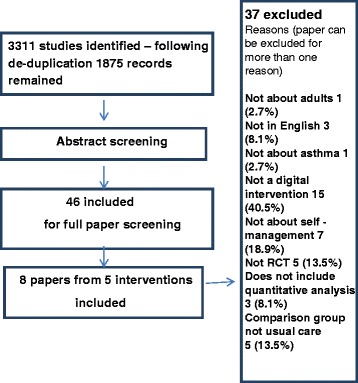
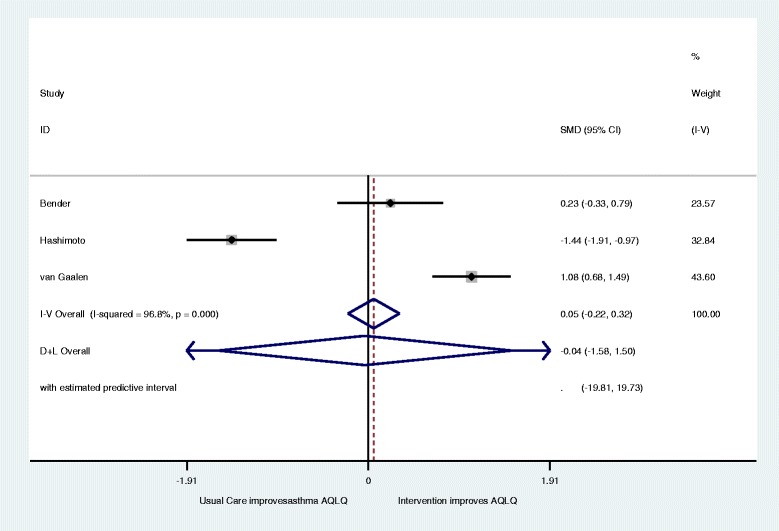
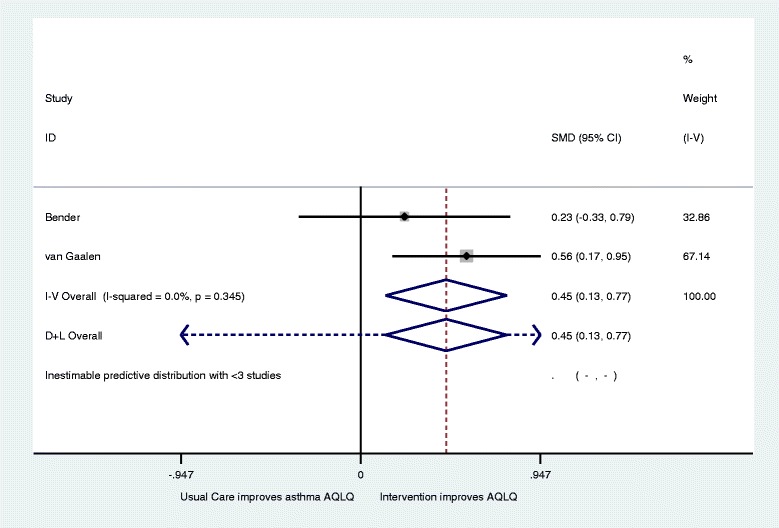
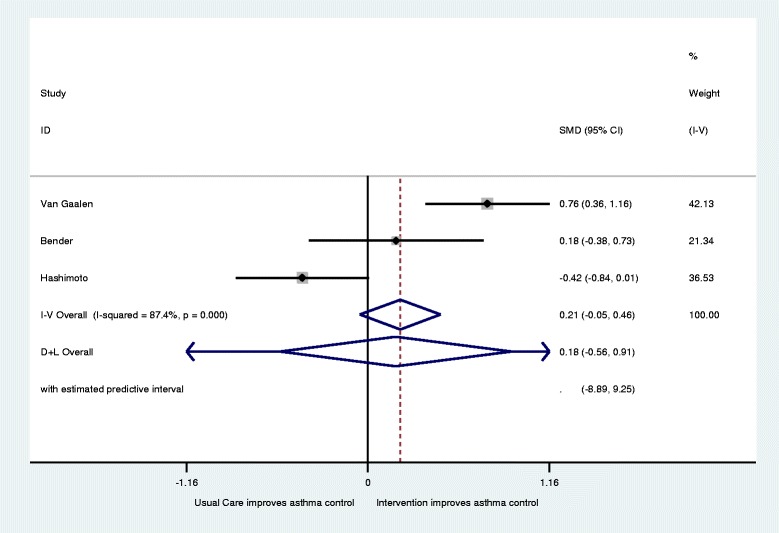
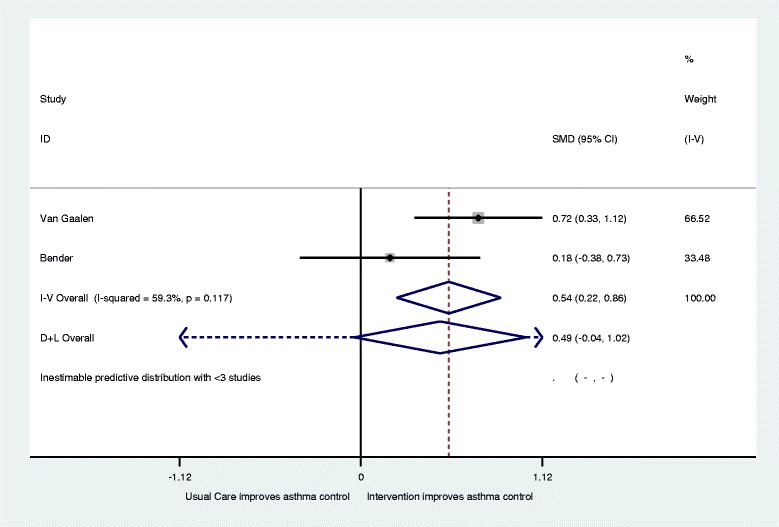
BACKGROUND: To identify, summarise and synthesise the evidence for using interactive digital interventions to support patient self-management of asthma, and determine their impact. METHODS: Systematic review with meta-analysis. We searched MEDLINE, EMBASE, CINAHL, PsycINFO, ERIC, Cochrane Library, DoPHER, TROPHI, Social Science Citation Index and Science Citation Index. The selection criteria requirement was studies of adults (16 years and over) with asthma, interventions that were interactive digital interventions and the comparator was usual care. Outcomes were change in clinical outcomes, cost effectiveness and patient-reported measures of wellbeing or quality of life. Only Randomised Controlled Trials published in peer-reviewed journals in English were eligible. Potential studies were screened and study characteristics and outcomes were extracted from eligible papers independently by two researchers. Where data allowed, meta-analysis was performed using a random effects model. RESULTS: Eight papers describing 5 trials with 593 participants were included, but only three studies were eligible for inclusion for meta-analysis. Of these, two aimed to improve asthma control and the third aimed to reduce the total dose of oral prednisolone without worsening control. Analyses with data from all three studies showed no significant differences and extremely high heterogeneity for both Asthma Quality of Life (AQLQ) (Standardised Mean Difference (SMD) 0.05; 95 % Confidence Interval (CI) 0.32 to -0.22: I2 96.8) and asthma control (SMD 0.21; 95 % CI -0.05 to .42; I2 = 87.4). The removal of the third study reduced heterogeneity and indicated significant improvement for both AQLQ (SMD 0.45; 95 % CI 0.13 to 0.77: I2 = 0.34) and asthma control (SMD 0.54; 95 % CI 0.22 to 0.86: I2 = 0.11). No evidence of harm was identified. CONCLUSION: Digital self-management interventions for adults with asthma show promise, with some evidence of small beneficial effects on asthma control. Overall, the evidence base remains weak due to the lack of large, robust trials.
Overview
The claims and statistics of this paper haven’t been checked yet.
Free: it reads the open-access text and checks the first 5 claims that cite a source we can check. Create a free account to check every claim.
Integrity signals
Registry
Cites
Statistics
Figures
Verification
Claims the paper makes
The claims and statistics of this paper haven’t been checked yet.
Free: it reads the open-access text and checks the first 5 claims that cite a source we can check. Create a free account to check every claim.
Claims other papers make about this one
Each is checked against this paper’s own text: does it say what the citing paper says it does?
The source backs part of the claim, not all of it — or backs it for a different population, condition or comparison.
In the citing paper
“The third review concluded, using low quality evidence, that remote monitoring interventions had small beneficial effects on asthma control [56]”
From Telemedicine in the OECD: An umbrella review of clinical and cost-effectiveness, patient experience and implementation (2020) · cites this paper as [56]
Experimental — accuracy not yet measured
Self-check
Percentages, sums and reported differences re-computed from the paper’s own numbers.
The self-check needs the paper’s full text.
Citations
Cites
Preferred Reporting Items for Systematic Reviews and Meta-Analyses: the PRISMA statement
Moher, D., Liberati, A., Tetzlaff, J., Altman, D. G., & for the PRISMA Group (2009) · BMJ · doi:10.1136/bmj.b2535 · Cited by 83,823
Preferred Reporting Items for Systematic Reviews and Meta-Analyses: The PRISMA Statement
Moher, D., Liberati, A., Tetzlaff, J., Altman, D. G., & The PRISMA Group (2009) · PLoS Medicine · doi:10.1371/journal.pmed.1000097 · Cited by 64,042 · cited 2×
“A registered protocol (PROSPERO 2014: CRD420140134 55) guided the conduct of this review [22], which is reported in adherence to the Preferred Reporting Items for Systematic Reviews and Meta-analyses (PRISMA) Statement [23].”
MethodBias in meta-analysis detected by a simple, graphical test
Egger, M., Smith, G. D., Schneider, M., & Minder, C. (1997) · BMJ · doi:10.1136/bmj.315.7109.629 · Cited by 56,722 · cited 1×
“Potential publication bias was assessed by using a funnel plot and Egger’s test [28].”
MethodPreferred reporting items for systematic reviews and meta-analyses: the PRISMA Statement.
(2009) · PubMed Central · Cited by 44,859
Quantifying heterogeneity in a meta‐analysis
Higgins, J. P. T., & Thompson, S. G. (2002) · Statistics in Medicine · doi:10.1002/sim.1186 · Cited by 36,763 · cited 1×
“Heterogeneity statistics were assessed by the Q statistic and I(2) statistics [29].”
MethodThe Cochrane Collaboration's tool for assessing risk of bias in randomised trials
Higgins, J. P. T., Altman, D. G., Gotzsche, P. C., Juni, P., Moher, D., Oxman, A. D., Savovic, J., Schulz, K. F., Weeks, L., Sterne, J. A. C., et al. (2011) · BMJ · doi:10.1136/bmj.d5928 · Cited by 33,817
Cochrane Handbook for Systematic Reviews of Interventions: Cochrane Book Series
(2008) · doi:10.1002/9780470712184 · Cited by 25,048 · cited 3×
“methods, rather than chance, with the following suggested ranges: no heterogeneity, I(2) = 0–25 %; moderate heterogeneity, I(2) = 25–50 %; large heterogeneity, I(2) = 50– 75 %; and extreme heterogeneity, I(2) = 75–100 % [27].”
MethodInfluentialDermyshi, E., Wang, Y., Yan, C., Hong, W., Qiu, G., Gong, X., & Zhang, T. (2017) · Neonatology · doi:10.1159/000454668 · Cited by 24,451
Wang, G., Ma, R., Qiao, G., Wada, K., Aizawa, Y., & Satoh, T. (2015) · Integrative Medicine International · doi:10.1159/000368408 · Cited by 18,657
GLOBAL STRATEGY FOR ASTHMA MANAGEMENT AND PREVENTION
PAUWELS, R. A. (1996) · Arerugī/Arerugi · doi:10.15036/arerugi.45.792 · Cited by 9,994
Jaeschke, R., Singer, J., & Guyatt, G. H. (1989) · Controlled Clinical Trials · doi:10.1016/0197-2456(89)90005-6 · Cited by 4,982 · cited 3×
“Van der Meer et al. used the 12-item Consumer Asthma Knowledge Questionnaire [31] and found no significant differences in improvements in asthma knowledge or inhaler technique between intervention and controls [31] using the standardised checklist of the Dutch Asthma Foundation [38].”
BackgroundMethodThe global burden of asthma: executive summary of the GINA Dissemination Committee Report
Masoli, M., Fabian, D., Holt, S., Beasley, R., & Program, G. I. F. A. (. (2004) · Allergy · doi:10.1111/j.1398-9995.2004.00526.x · Cited by 3,529 · cited 2×
“Sub-optimal control of asthma is common, with patient adherence to regular preventer medication such as inhaled corticosteroids (ICS) reported to be as low as 30 % [1], potentially leading to increased symptoms, increased risk of asthma attacks and reduced quality of life [2, 3].”
BackgroundWebb, T. L., Joseph, J., Yardley, L., & Michie, S. (2010) · Journal of Medical Internet Research · doi:10.2196/jmir.1376 · Cited by 2,517
Self-citationSelf-management education and regular practitioner review for adults with asthma
Gibson, P. G., Powell, H., Wilson, A., Abramson, M. J., Haywood, P., Bauman, A., Hensley, M. J., Walters, E. H., & Roberts, J. J. (2002) · Cochrane Database of Systematic Reviews · doi:10.1002/14651858.cd001117 · Cited by 1,377 · cited 1×
“Patient education and proactive self-management have been shown to improve clinical outcomes in people with asthma [4, 5].”
BackgroundInteractive Health Communication Applications for people with chronic disease
Murray, E., Burns, J., See Tai, S., Lai, R., & Nazareth, I. (2005) · Cochrane Database of Systematic Reviews · doi:10.1002/14651858.cd004274.pub4 · Cited by 722 · cited 1×
“There is evidence that well-designed IDIs can change patient health-related behaviour, improve patient knowledge and increase confidence for self-management of health problems [10, 11, 15].”
BackgroundSelf-citationBlood pressure control by home monitoring: meta-analysis of randomised trials
Cappuccio, F. P., Kerry, S. M., Forbes, L., & Donald, A. (2004) · BMJ · doi:10.1136/bmj.38121.684410.ae · Cited by 509 · cited 1×
“Patient education and proactive self-management have been shown to improve clinical outcomes in people with asthma [4, 5].”
BackgroundMoher, D., Pham, B., Lawson, M., & Klassen, T. (2003) · Health Technology Assessment · doi:10.3310/hta7410 · Cited by 500 · cited 1×
“Finally, we only considered studies published in peerreviewed journals in English as evidence suggests that limiting studies in this way does not introduce significant bias [24] but does save considerable resource.”
BackgroundPortnoy, D. B., Scott-Sheldon, L. A. J., Johnson, B. T., & Carey, M. P. (2008) · Preventive Medicine · doi:10.1016/j.ypmed.2008.02.014 · Cited by 451
Zurovac, D., Sudoi, R. K., Akhwale, W. S., Ndiritu, M., Hamer, D. H., Rowe, A. K., & Snow, R. W. (2011) · The Lancet · doi:10.1016/s0140-6736(11)60783-6 · Cited by 403
Panagioti, M., Richardson, G., Small, N., Murray, E., Rogers, A., Kennedy, A., Newman, S., & Bower, P. (2014) · BMC Health Services Research · doi:10.1186/1472-6963-14-356 · Cited by 301 · cited 1×
“Guided self-management for asthma is aimed at improving knowledge of the condition and increasing the ability of an individual to manage variations in their asthma [6].”
BackgroundSelf-citationIntegrating telecare for chronic disease management in the community: What needs to be done?
May, C. R., Finch, T. L., Cornford, J., Exley, C., Gately, C., Kirk, S., Jenkings, K. N., Osbourne, J., Robinson, A. L., Rogers, A., et al. (2011) · BMC Health Services Research · doi:10.1186/1472-6963-11-131 · Cited by 220 · cited 1×
“The successful implementation of IDIs into primary care will depend, at least in part, on their benefits and cost-effectiveness being clearly demonstrated to primary care clinicians [20, 21].”
BackgroundSelf-citationRasmussen, L. M., Phanareth, K., Nolte, H., & Backer, V. (2005) · Journal of Allergy and Clinical Immunology · doi:10.1016/j.jaci.2005.03.030 · Cited by 193 · cited 11×
“definition was based on a combination of respiratory symptoms and at least one objective measurement of asthma [37].”
BackgroundMethodInfluentialMcManus, R. J., Wilson, S., Delaney, B. C., Fitzmaurice, D. A., Hyde, C. J., Tobias, R. S., Jowett, S., & Hobbs, F. D. R. (1998) · BMJ · doi:10.1136/bmj.317.7172.1562 · Cited by 185
Digital Asthma Self-Management Interventions: A Systematic Review
Morrison, D., Wyke, S., Agur, K., Cameron, E. J., Docking, R. I., MacKenzie, A. M., McConnachie, A., Raghuvir, V., Thomson, N. C., & Mair, F. S. (2014) · Journal of Medical Internet Research · doi:10.2196/jmir.2814 · Cited by 174
Self-citationMurray, E. J., Burns, J., Tai, S. S., Lai, R., & Nazareth, I. (2005) · UCL Discovery (University College London) · Cited by 171
Self-citationA mobile telephone-based interactive self-care system improves asthma control
Liu, W.-T., Huang, C.-D., Wang, C.-H., Lee, K.-Y., Lin, S.-M., & Kuo, H.-P. (2011) · European Respiratory Journal · doi:10.1183/09031936.00000810 · Cited by 171 · cited 13×
“based their definition on clinical symptoms and physical examination, using the criteria for moderate to severe asthma as defined by the American Thoracic Society [36].”
BackgroundMethodResultInfluentialThe Living & Breathing Study: a study of patients' views of asthma and its treatment
Haughney, J., Barnes, G., Partridge, M. R., & Cleland, J. (2004) · Primary Care Respiratory Journal · doi:10.1016/j.pcrj.2003.11.007 · Cited by 148 · cited 1×
“Sub-optimal control of asthma is common, with patient adherence to regular preventer medication such as inhaled corticosteroids (ICS) reported to be as low as 30 % [1], potentially leading to increased symptoms, increased risk of asthma attacks and reduced quality of life [2, 3].”
BackgroundUpdate on asthma control in five European countries: results of a 2008 survey
Demoly, P., Gueron, B., Annunziata, K., Adamek, L., & Walters, R. D. (2010) · European Respiratory Review · doi:10.1183/09059180.00002110 · Cited by 145 · cited 1×
“Sub-optimal control of asthma is common, with patient adherence to regular preventer medication such as inhaled corticosteroids (ICS) reported to be as low as 30 % [1], potentially leading to increased symptoms, increased risk of asthma attacks and reduced quality of life [2, 3].”
BackgroundBender, B. G., Apter, A., Bogen, D. K., Dickinson, P., Fisher, L., Wamboldt, F. S., & Westfall, J. M. (2010) · The Journal of the American Board of Family Medicine · doi:10.3122/jabfm.2010.02.090112 · Cited by 121 · cited 11×
“Quit Line, offering free telephone based tobacco cessation information [35].”
BackgroundMethodInfluentialMcLean, S., Chandler, D., Nurmatov, U., Liu, J. L., Pagliari, C., Car, J., & Sheikh, A. (2010) · Cochrane Database of Systematic Reviews · doi:10.1002/14651858.cd007717.pub2 · Cited by 119 · cited 1×
“The small but significant improvement in for both asthma control and AQLQ, albeit based on only two studies, contrasts with evidence from other studies where no difference was found [18, 40].”
ResultUnderstanding patients with asthma and COPD: insights from a European study
Partridge, M. R., Negro, R. W. D., & Olivieri, D. (2011) · Primary Care Respiratory Journal · doi:10.4104/pcrj.2011.00056 · Cited by 92
Bussey‐Smith, K. L., & Rossen, R. D. (2007) · Annals of Allergy Asthma & Immunology · doi:10.1016/s1081-1206(10)60727-2 · Cited by 72
Hashimoto, S., Brinke, A. T., Roldaan, A. C., van Veen, I. H., Moller, G. M., Sont, J. K., Weersink, E. J. M., van der Zee, J. S., Braunstahl, G.-J., Zwinderman, A. H., et al. (2011) · Thorax · doi:10.1136/thx.2010.153411 · Cited by 70 · cited 19×
“found no significant difference in changes in FEV1 between intervention and usual care groups [34].”
BackgroundMethodResultInfluentialvan Gaalen, J. L., Beerthuizen, T., van der Meer, V., van Reisen, P., Redelijkheid, G. W., Snoeck-Stroband, J. B., Sont, J. K., & SMASHING Study Group (2013) · Journal of Medical Internet Research · doi:10.2196/jmir.2640 · Cited by 60
the SMASHING (Self-Management of Asthma Supported by Hospitals, I., van der Meer, V., van Stel, H. F., Bakker, M. J., Roldaan, A. C., Assendelft, W. J., Sterk, P. J., Rabe, K. F., & Sont, J. K. (2010) · Respiratory Research · doi:10.1186/1465-9921-11-74 · Cited by 57
Effectiveness of Telemedicine for Controlling Asthma Symptoms: A Systematic Review and Meta-analysis
Zhao, J., Zhai, Y.-K., Zhu, W.-J., & Sun, D.-X. (2015) · Telemedicine and e-Health · doi:10.1089/tmj.2014.0119 · Cited by 54 · cited 1×
“Previous reviews of internet-based interventions have generally focused on telemedicine, where support may not necessarily be interactive or tailored to the user, finding that these interventions improved medication adherence [16] but did not improve asthma symptom scores [17].”
BackgroundCost-Effectiveness of Internet-Based Self-Management Compared with Usual Care in Asthma
van der Meer, V., van den Hout, W. B., Bakker, M. J., Rabe, K. F., Sterk, P. J., Assendelft, W. J. J., Kievit, J., Sont, J. K., & on behalf of the SMASHING (Self-Management in Asthma Supported by Hospitals, I. (2011) · PLoS ONE · doi:10.1371/journal.pone.0027108 · Cited by 48 · cited 8×
“Van der Meer et al. McLean et al. BMC Pulmonary Medicine (2016) 16:83 Page 7 of 14 reported a significant improvement in the intervention group compared to usual care by the end of the intervention (difference 0.38 95%CI 0.20 to 0.56) [31].”
BackgroundInfluentialMcLean, S., & Sheikh, A. (2009) · Primary Care Respiratory Journal · doi:10.3132/pcrj.2009.00006 · Cited by 42 · cited 1×
“Previous reviews of internet-based interventions have generally focused on telemedicine, where support may not necessarily be interactive or tailored to the user, finding that these interventions improved medication adherence [16] but did not improve asthma symptom scores [17].”
BackgroundJuniper, E. F., Jenkins, C. R., Price, M. J., & James, M. (2002) · American Journal of Respiratory Medicine · doi:10.1007/bf03257170 · Cited by 38
Internet-Based Self-management Plus Education Compared With Usual Care in Asthma: A Randomized Trial
van der Meer, V., Bakker, M. J., van den Hout, W. B., Rabe, K. F., Sterk, P. J., Kievit, J., Assendelft, W. J. J., Sont, J. K., & for the SMASHING (Self-Management in Asthma Supported by Hospitals, I. (2009) · Annals of Internal Medicine · doi:10.7326/0003-4819-151-2-200907210-00008 · Cited by 6 · cited 1×
“There is evidence that well-designed IDIs can change patient health-related behaviour, improve patient knowledge and increase confidence for self-management of health problems [10, 11, 15].”
BackgroundDooley, G. (2014) · ePrints Soton (University of Southampton) · doi:10.15124/crd42014013455 · Cited by 1 · cited 1×
“A registered protocol (PROSPERO 2014: CRD420140134 55) guided the conduct of this review [22], which is reported in adherence to the Preferred Reporting Items for Systematic Reviews and Meta-analyses (PRISMA) Statement [23].”
Method
Research works printed but not linked: 3
- 8. Asthma UK. National Asthma Panel 2010. London: Asthma UK; 2010.
- 27. Green S, Higgins J, editors. The Cochrane Handbook for Systematic Reviews of Interventions. Chichester: Wiley; 2008.
- 31. Van der Meer V, Bakker MJ, van den Hout WB, Rabe KF, Sterk PJ, Kievit J, Assendelft WJ, Sont JK, SMASHING (Self-Management in Asthma Supported by Hospitals, ICT, Nurses and General Practitioners) Study Group. Internet- based self-management plus education compared with usual care in asthma: a randomized trial. Ann Intern Med. 2009;151(2):110-20. · DOI · Paper page
Cited by
Bringing health care to the patient: An overview of the use of telemedicine in OECD countries
(2020) · OECD Health Working Papers · doi:10.1787/8e56ede7-en · Cited by 539
Eze, N. D., Mateus, C., & Cravo Oliveira Hashiguchi, T. (2020) · PLoS ONE · doi:10.1371/journal.pone.0237585 · Cited by 345
“The third review concluded, using low quality evidence, that remote monitoring interventions had small beneficial effects on asthma control [56], while the fourth found limited evidence of the effect of home based remote monitoring to reduce health care utilization, quality of life and respiratory exacerbations in COP…”
BackgroundSystematic meta-review of supported self-management for asthma: a healthcare perspective
groups, F. T. P. A. R., Pinnock, H., Parke, H. L., Panagioti, M., Daines, L., Pearce, G., Epiphaniou, E., Bower, P., Sheikh, A., Griffiths, C. J., et al. (2017) · BMC Medicine · doi:10.1186/s12916-017-0823-7 · Cited by 291
“The effect on healthcare utilisation was inconsistent, confirmed by a recent review identified in the pre-publication update [62], though both showed improvement in symptoms [28] and/or quality of life [28, 47].”
BackgroundResultInfluentialCulture as a cure: Assessments of patient safety culture in OECD countries
(2020) · OECD Health Working Papers · doi:10.1787/6ee1aeae-en · Cited by 231
Digital Support Interventions for the Self-Management of Low Back Pain: A Systematic Review
Nicholl, B. I., Sandal, L. F., Stochkendahl, M. J., McCallum, M., Suresh, N., Vasseljen, O., Hartvigsen, J., Mork, P. J., Kjaer, P., Søgaard, K., et al. (2017) · Journal of Medical Internet Research · doi:10.2196/jmir.7290 · Cited by 182
“The search terms were selected with reference to previous systematic reviews of interactive digital interventions for hypertension [19,20] and asthma [21,22] and after discussion with the review team.”
MethodSelf-citation
Metadata
- Authors
- McLean, G., Murray, E., Band, R., Moffat, K. R., Hanlon, P., Bruton, A., Thomas, M., Yardley, L., & Mair, F. S.
- Affiliations
- University of Glasgow (GB)
- University College London (GB)
- University of Southampton (GB)
- NIHR Southampton Respiratory Biomedical Research Unit (GB)
- Corresponding author
- McLean, Gary
- ORCID
- Venue
- BMC Pulmonary Medicine
- Published
- 2016-05-23
- Volume
- 16
- Issue
- 1
- Pages
- 83-83
- ISSN
- 1471-2466 (ISSN-L)
- PMC
- PMC4876566
- OpenAlex
- W2406404368
- Semantic Scholar
- 599b458f27385c8cc75232e9d1eb06b84f853b6d
- Cited by
- 63
- References
- 42
- Citations by year
- 2026: 5 · 2025: 5 · 2024: 4 · 2023: 8 · 2022: 5 · 2021: 7 · 2020: 11 · 2019: 4 · 2018: 5 · 2017: 9
- FWCI
- 1.15
- Type
- journal article
- Language
- en
- Open access
- gold
- doi.org
- Licence
- cc-by
- Locations
- BMC Pulmonary Medicine (publishedVersion, cc-by)
- PubMed Central (publishedVersion, cc-by)
- PubMed (publishedVersion)
- Explore Bristol Research (acceptedVersion, cc-by)
- ENLIGHTEN (Jurnal Bimbingan dan Konseling Islam) (acceptedVersion)
- ePrints Soton (University of Southampton) (acceptedVersion)
- UCL Discovery (University College London) (acceptedVersion)
- Bristol Research (University of Bristol) (submittedVersion, cc-by)
- St Andrews Research Repository (St Andrews Research Repository) (submittedVersion, cc-by)
- Funders
- National Institute for Health Research (RP-PG- 1211-20001)
- Topics
- Health Sciences › Health Professions › General Health Professions › Mobile Health and mHealth Applications
- Health Sciences › Medicine › Pulmonary and Respiratory Medicine › Asthma and respiratory diseases
- Social Sciences › Psychology › Applied Psychology › Digital Mental Health Interventions
- Keywords
- asthma, self-management, asthma control, asthma quality of life, adults, patient-reported outcomes, cost-effectiveness
- MeSH terms
- Adult, Asthma, Humans, Quality of Life, Self Care, Randomized Controlled Trials as Topic, Telemedicine
About these checks
Registry, retraction, Cites and statistics results are computed, not judged, with one exception: a printed reference that no index lists is read once by a model before it counts as a citation error. Claims are extracted by a model and kept only when their quote appears verbatim in the text; each cited source is then checked, with a model’s help, for whether it says what the claim relies on. Those verdicts can be wrong — read the claim’s quote and the cited source before relying on one.
Statistics and arithmetic are recomputed, not judged.
Confidence bands are shown only for fields calibrated on our annotated test set. None is calibrated yet, so no band is shown.
What counts as a claim ›How we measure confidence ›How we check this ›
Are you an author, or do you see a problem with this page? Request a review
Data sources
Bibliographic data: Semantic Scholar, OpenAlex, Crossref.
Contains information from the Semantic Scholar Academic Graph Datasets, made available under the ODC Attribution License (ODC-BY 1.0).
Semantic Scholar’s data is described in: Kinney, R., et al. (2023). The Semantic Scholar Open Data Platform. arXiv:2301.10140.
