

Technology-assisted rehabilitation following total knee or hip replacement for people with osteoarthritis: a systematic review and meta-analysis
Open accessThe DOI matches its Crossref record; 57 of the 58 references it cites were found in a registry or an index.
Abstract
Background: To evaluate the effectiveness and safety of technology-assisted rehabilitation following total hip/knee replacement (THR/TKR). Methods: Six electronic databases were searched without language or time restrictions for relevant studies: MEDLINE, EMBASE, Cochrane Library, CINAHL, SPORTDiscus, Physiotherapy Evidence Database (PEDro); from inception to November 7th, 2018. Two reviewers independently applied inclusion criteria to select eligible randomised controlled trials (RCTs) that investigated the effectiveness of technology-based interventions, compared with usual care or no intervention for people undergoing THR/TKR. Two reviewers independently extracted trial details (e.g. patients’ profile, intervention, outcomes, attrition and adverse events). Study methodological quality was assessed using the PEDro scale. Quality of evidence was critically appraised using the Grading of Recommendations, Assessment, Development and Evaluation approach. Results: We identified 21 eligible studies assessing telerehabilitation, game- or web-based therapy. There were 17 studies (N = 2188) in post-TKR rehabilitation and 4 studies (N = 783) in post-THR rehabilitation. Compared to usual care, technology-based intervention was more effective in reducing pain (mean difference (MD): − 0.25; 95% confidence interval (CI): − 0.48, − 0.02; moderate evidence) and improving function measured with the timed up-and-go test (MD: -7.03; 95% CI: − 11.18, − 2.88) in people undergoing TKR. No between-group differences were observed in rates of hospital readmissions or treatment-related adverse events (AEs) in those studies. Conclusion: There is moderate-quality of evidence showed technology-assisted rehabilitation, in particular, telerehabilitation, results in a statistically significant improvement in pain; and low-quality of evidence for the improvement in functional mobility in people undergoing TKR. The effects were however too small to be clinically significant. For THR, there is very limited low-quality evidence shows no significant effects.
Overview
The claims and statistics of this paper haven’t been checked yet.
Free: it reads the open-access text and checks the first 5 claims that cite a source we can check. Create a free account to check every claim.
Integrity signals
Registry
Cites
Statistics
Figures

Verification
Claims the paper makes
The claims and statistics of this paper haven’t been checked yet.
Free: it reads the open-access text and checks the first 5 claims that cite a source we can check. Create a free account to check every claim.
Claims other papers make about this one
Each is checked against this paper’s own text: does it say what the citing paper says it does?
The source backs part of the claim, not all of it — or backs it for a different population, condition or comparison.
In the citing paper
“Telerehabilitation, using technology to provide healthcare, has shown consistently positive results in the recovery of several MSK conditions [27,28,29,30,31].”
From Digital Rehabilitation for Elbow Pain Musculoskeletal Conditions: A Prospective Longitudinal Cohort Study (2022) · cites this paper as [31]
Experimental — accuracy not yet measured
Self-check
Percentages, sums and reported differences re-computed from the paper’s own numbers.
The self-check needs the paper’s full text.
Citations
Cites
Preferred reporting items for systematic reviews and meta-analyses: the PRISMA Statement.
(2009) · PubMed Central · Cited by 44,859
Preferred reporting items for systematic reviews and meta-analyses: The PRISMA statement
Moher, D., Liberati, A., Tetzlaff, J., Altman, D. G., & the PRISMA Group* (2009) · Annals of Internal Medicine · doi:10.7326/0003-4819-151-4-200908180-00135 · Cited by 37,554
Cochrane Handbook for Systematic Reviews of Interventions: Cochrane Book Series
(2008) · doi:10.1002/9780470712184 · Cited by 25,048
Vos, T., Abajobir, A. A., Abate, K. H., Abbafati, C., Abbas, K. M., Abd-Allah, F., Abdulkader, R. S., Abdulle, A. M., Abebo, T. A., Abera, S. F., et al. (2017) · The Lancet · doi:10.1016/s0140-6736(17)32154-2 · Cited by 13,220
Vos, T., Allen, C., Arora, M., Barber, R. M., Bhutta, Z. A., Brown, A., Carter, A., Casey, D. C., Charlson, F. J., Chen, A. Z., et al. (2016) · The Lancet · doi:10.1016/s0140-6736(16)31678-6 · Cited by 7,253
Reliability of the PEDro Scale for Rating Quality of Randomized Controlled Trials
Maher, C. G., Sherrington, C., Herbert, R. D., Moseley, A. M., & Elkins, M. (2003) · Physical Therapy · doi:10.1093/ptj/83.8.713 · Cited by 4,808 · cited 1×
“Study methodological quality The PEDro scale [20] was used to determine the methodological quality of each study.”
MethodThe Innovator's Dilemma: When New Technologies Cause Great Firms to Fail
Christensen, C. M. (2013) · University of Maribor digital library (University of Maribor) · Cited by 3,821
GRADE guidelines: a new series of articles in the Journal of Clinical Epidemiology
Guyatt, G. H., Oxman, A. D., Schünemann, H. J., Tugwell, P., & Knottnerus, A. (2011) · Journal of Clinical Epidemiology · doi:10.1016/j.jclinepi.2010.09.011 · Cited by 3,094 · cited 2×
“sample size < 400, 95% CI overlaps no effect) and publication bias (visual inspection of funnel plots and Egger’s regression test) [24].”
BackgroundMethodA review of wearable sensors and systems with application in rehabilitation
Patel, S., Park, H., Bonato, P., Chan, L., & Rodgers, M. (2012) · Journal of NeuroEngineering and Rehabilitation · doi:10.1186/1743-0003-9-21 · Cited by 2,396
de Morton, N. A. (2009) · Australian Journal of Physiotherapy · doi:10.1016/s0004-9514(09)70043-1 · Cited by 2,201
Balance in elderly patients: the "get-up and go" test.
Mathias, S., Nayak, U. S., & Isaacs, B. (1986) · PubMed · Cited by 1,543
The Australian Orthopaedic Association National Joint Replacement Registry
Graves, S. E., Davidson, D., Ingerson, L., Ryan, P., Griffith, E. C., McDermott, B. F. J., McElroy, H. J., & Pratt, N. L. (2004) · Medical Journal of Australia · doi:10.5694/j.1326-5377.2004.tb05911.x · Cited by 1,101
Tech Adoption Climbs Among Older Adults
Perrin, M. A. A. A. (2017) · Cited by 1,069
Forest plots: trying to see the wood and the trees
Lewis, S., & Clarke, M. (2001) · BMJ · doi:10.1136/bmj.322.7300.1479 · Cited by 763 · cited 1×
“Between-trial heterogeneity was evaluated by visual inspection of the forest plots [25] and the I(2) statistic (I(2) < 50%: low to moderate; I(2) ≥ 50%: substantial; I(2) > 75% considerable heterogeneity) [26].”
MethodSystematic review of studies of patient satisfaction with telemedicine
Mair, F. (2000) · BMJ · doi:10.1136/bmj.320.7248.1517 · Cited by 734 · cited 1×
“Importantly, these innovative technologies empower consumers to take an active role in decision-making and disease management, resulting in improvements of overall health awareness, adherence to treatment and satisfaction [14].”
BackgroundCottrell, M. A., Galea, O. A., O’Leary, S. P., Hill, A. J., & Russell, T. G. (2017) · Clinical Rehabilitation · doi:10.1177/0269215516645148 · Cited by 708 · cited 1×
“A study showed that telerehabilitation in addition to usual care was more favourable than usual care alone, whilst treatment delivered solely via telerehabilitation was equivalent to face-to-face intervention for functional improvement in people with MSK conditions [16].”
Telerehabilitation: Review of the State-of-the-Art and Areas of Application
Peretti, A., Amenta, F., Tayebati, S. K., Nittari, G., & Mahdi, S. S. (2017) · JMIR Rehabilitation and Assistive Technologies · doi:10.2196/rehab.7511 · Cited by 558 · cited 1×
“Due to the increased life expectancy and the limited resources devoted to public health, the demand for effective and sustainable rehabilitation services seems mandatory in order to cope with the needs of the aging population [4].”
BackgroundTHE ROYAL AUSTRALASIAN COLLEGE OF SURGEONS
(1947) · Medical Journal of Australia · doi:10.5694/j.1326-5377.1947.tb27689.x · Cited by 518
Cramer, S. C., Dodakian, L., Le, V., See, J., Augsburger, R., McKenzie, A., Zhou, R. J., Chiu, N. L., Heckhausen, J., Cassidy, J. M., et al. (2019) · JAMA Neurology · doi:10.1001/jamaneurol.2019.1604 · Cited by 400 · cited 1×
“A growing body of literature supports the use of telerehabilitation in improving patient satisfaction and health outcomes for a diverse range of clinical conditions, such as neurological diseases [6, 7], stroke [8], cancer [9], cardiac and pulmonary rehabilitation [10].”
BackgroundRussell, T. G., Buttrum, P., Wootton, R., & Jull, G. A. (2011) · The Journal of Bone and Joint Surgery-American Volume · doi:10.2106/jbjs.i.01375 · Cited by 382 · cited 7×
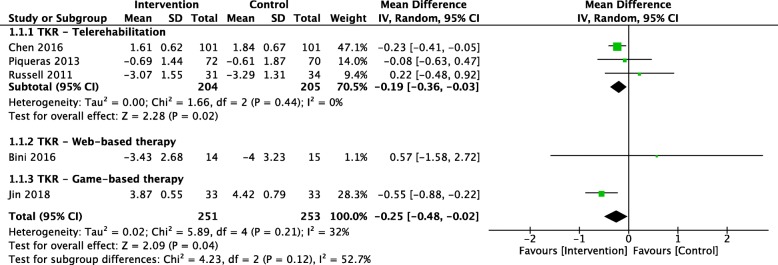
“Efficacy outcomes Pain Our pooled analysis of 5 studies (N = 504) [27, 32, 37, 42, 44] showed that technology-assisted rehabilitation significantly improved pain measured on an 0–10point visual analogue scale (VAS), compared to usual care, for people undergoing TKR (MD: -0.”
BackgroundMethodInfluentialMacedo, L. G., Elkins, M. R., Maher, C. G., Moseley, A. M., Herbert, R. D., & Sherrington, C. (2010) · Journal of Clinical Epidemiology · doi:10.1016/j.jclinepi.2009.10.005 · Cited by 362
Validity and Reliability of the 6-Minute Walk Test in a Cardiac Rehabilitation Population
Hamilton, D. M., & Haennel, R. G. (2000) · Journal of Cardiopulmonary Rehabilitation · doi:10.1097/00008483-200005000-00003 · Cited by 343 · cited 1×
“6minute walking test (6MWT) There were two RCTs (N = 258) [31, 41] assessed mobility via 6MWT (measured by metre; longer distance indicates better mobility) [46] showing technology-assisted rehabilitation is not significantly superior to usual care in people who underwent TKR (MD: 29.”
MethodMoffet, H., Tousignant, M., Nadeau, S., Mérette, C., Boissy, P., Corriveau, H., Marquis, F., Cabana, F., Ranger, P., Belzile, É. L., et al. (2015) · The Journal of Bone and Joint Surgery-American Volume · doi:10.2106/jbjs.n.01066 · Cited by 294 · cited 8×
“Importantly, the innovative devices or digital technologies should not be viewed as a distinct modality of care, Table 2 Summary of the quality of evidence and strength of recommendation according to Grading of Recommendations Assessment, Development and Evaluation (GRADE) criteria Certainty assessment No of (events/)…”
BackgroundMethodInfluentialA randomized controlled trial of home telerehabilitation for post-knee arthroplasty
Tousignant, M., Moffet, H., Boissy, P., Corriveau, H., Cabana, F., & Marquis, F. (2011) · Journal of Telemedicine and Telecare · doi:10.1258/jtt.2010.100602 · Cited by 236 · cited 1×
“Secondary outcomes Quality of life Six trials (TKR: N = 520; THR: N = 161) investigated the effect of telerehabilitation on quality of life (Table 1) [27, 33, 34, 36, 38, 44].”
BackgroundPiqueras, M., Marco, E., Coll, M., Escalada, F., Ballester, A., Cinca, C., Belmonte, R., & Muniesa, J. (2013) · Journal of Rehabilitation Medicine · doi:10.2340/16501977-1119 · Cited by 220 · cited 4×
“Importantly, the innovative devices or digital technologies should not be viewed as a distinct modality of care, Table 2 Summary of the quality of evidence and strength of recommendation according to Grading of Recommendations Assessment, Development and Evaluation (GRADE) criteria Certainty assessment No of (events/)…”
BackgroundMethodInfluentialParker, S. J., Jessel, S., Richardson, J. E., & Reid, M. C. (2013) · BMC Geriatrics · doi:10.1186/1471-2318-13-43 · Cited by 215 · cited 1×
“Additionally, older people may experience technological adoption barriers, such as concerns about the cost and battery life of the devices, as well as lack of familiarity with the technology [51].”
BackgroundEvidence of Benefit of Telerehabitation After Orthopedic Surgery: A Systematic Review
Pastora-Bernal, J. M., Martín-Valero, R., Barón-López, F. J., & Estebanez-Pérez, M. J. (2017) · Journal of Medical Internet Research · doi:10.2196/jmir.6836 · Cited by 206 · cited 1×
“For instance, the most recent systematic review only included 8 RCTs of post-TKR rehabilitation and 3 RCTs of post-THR rehabilitation and only provided a qualitative evaluation of those studies [15].”
BackgroundFung, V., Ho, A., Shaffer, J., Chung, E., & Gomez, M. (2012) · Physiotherapy · doi:10.1016/j.physio.2012.04.001 · Cited by 202 · cited 3×
“Similarly, in older adults with no prior experience with game consoles, most of them were highly motivated and expressed enjoyment in using the Wii Fit [39] and 86% of them were willing to continue the game therapy at home [40].”
BackgroundComparison of Clinic- and Home-Based Rehabilitation Programs After Total Knee Arthroplasty
Kramer, J. F., Speechley, M., Bourne, R., Rorabeck, C., & Vaz, M. (2003) · Clinical Orthopaedics & Related Research · doi:10.1097/01.blo.0000063600.67412.11 · Cited by 188
Shukla, H., Nair, Sr., & Thakker, D. (2017) · Journal of Telemedicine and Telecare · doi:10.1177/1357633x16628996 · Cited by 186
Bini, S., & Mahajan, J. (2017) · Journal of Telemedicine and Telecare · doi:10.1177/1357633x16634518 · Cited by 168 · cited 6×
“One trial of an educational software demonstrated positive user experiences, such as good clarity of instruction, ease of taking or sharing a video and ease of seeing their progress [44].”
BackgroundMethodInfluentialGill, S. D., & McBurney, H. (2012) · Archives of Physical Medicine and Rehabilitation · doi:10.1016/j.apmr.2012.08.211 · Cited by 148 · cited 1×
“Studies with a score of 7 or greater were considered “high quality” [23].”
BackgroundCheville, A. L., Moynihan, T., Herrin, J., Loprinzi, C., & Kroenke, K. (2019) · JAMA Oncology · doi:10.1001/jamaoncol.2019.0011 · Cited by 143 · cited 1×
“A growing body of literature supports the use of telerehabilitation in improving patient satisfaction and health outcomes for a diverse range of clinical conditions, such as neurological diseases [6, 7], stroke [8], cancer [9], cardiac and pulmonary rehabilitation [10].”
BackgroundAmatya, B., Galea, M. P., Kesselring, J., & Khan, F. (2015) · Multiple Sclerosis and Related Disorders · doi:10.1016/j.msard.2015.06.011 · Cited by 129 · cited 1×
“A growing body of literature supports the use of telerehabilitation in improving patient satisfaction and health outcomes for a diverse range of clinical conditions, such as neurological diseases [6, 7], stroke [8], cancer [9], cardiac and pulmonary rehabilitation [10].”
BackgroundTelehealth applications for outpatients with neuromuscular or musculoskeletal disorders
Howard, I. M., & Kaufman, M. S. (2018) · Muscle & Nerve · doi:10.1002/mus.26115 · Cited by 117 · cited 2×
“Healthcare providers embarking on careers in innovative technologies should be aware of current legal regulations to minimise risk [55].”
BackgroundHan, A. S. Y., Nairn, L., Harmer, A. R., Crosbie, J., March, L., Parker, D., Crawford, R., & Fransen, M. (2015) · Arthritis Care & Research · doi:10.1002/acr.22457 · Cited by 113 · cited 3×
“Western Ontario and McMaster Universities Osteoarthritis Index (WOMAC) Four trials reported change in WOMAC on a 5-point Likert scale (standardised to 0–4 for each subscale) [47] (N = 746) [27, 30, 32, 33], 3 trials reported pain (N = 560) [30, 32, 33] and stiffness (N = 371) subscales [27, 32, 33].”
BackgroundRichardson, B. R., Truter, P., Blumke, R., & Russell, T. G. (2016) · Journal of Telemedicine and Telecare · doi:10.1177/1357633x15627237 · Cited by 112 · cited 1×
“In addition, validity studies reported a good agreement between face-to-face and telehealth assessment of MSK disorders of the knee (exact agreement of primary pathoanatomical diagnoses was 67%) [53].”
BackgroundCotelli, M., Manenti, R., Brambilla, M., Gobbi, E., Ferrari, C., Binetti, G., & Cappa, S. F. (2019) · Journal of Telemedicine and Telecare · doi:10.1177/1357633x17740390 · Cited by 112 · cited 1×
“A growing body of literature supports the use of telerehabilitation in improving patient satisfaction and health outcomes for a diverse range of clinical conditions, such as neurological diseases [6, 7], stroke [8], cancer [9], cardiac and pulmonary rehabilitation [10].”
BackgroundChan, C., Yamabayashi, C., Syed, N., Kirkham, A., & Camp, P. G. (2016) · Physiotherapy Canada · doi:10.3138/ptc.2015-33 · Cited by 101 · cited 1×
“A growing body of literature supports the use of telerehabilitation in improving patient satisfaction and health outcomes for a diverse range of clinical conditions, such as neurological diseases [6, 7], stroke [8], cancer [9], cardiac and pulmonary rehabilitation [10].”
BackgroundVideo capture virtual reality: A decade of rehabilitation assessment and intervention
Weiss, P. L., Sveistrup, H., Rand, D., & Kizony, R. (2009) · Physical Therapy Reviews · doi:10.1179/108331909x12488667117339 · Cited by 83 · cited 1×
“Several studies have shown that game-based or VR-assisted rehabilitation provides a motivating environment for achieving different therapeutic goals [13].”
BackgroundCheok, G., Tan, D. M. L., Low, A. Y., & Hewitt, J. (2015) · Journal of the American Medical Directors Association · doi:10.1016/j.jamda.2015.06.010 · Cited by 80 · cited 1×
“For game-based therapy, trials in the current review did not report any AEs, but it is reported that dynamic movements followed by different games can increase falls risks or other MSK injuries [54].”
BackgroundChristiansen, C. L., Bade, M. J., Davidson, B. S., Dayton, M. R., & Stevens-Lapsley, J. E. (2015) · Journal of Orthopaedic & Sports Physical Therapy · doi:10.2519/jospt.2015.5593 · Cited by 77 · cited 1×
“In 2 studies, participants used the Wii balance board for weight-bearing and balance exercise training [28, 40].”
BackgroundVesterby, M., Pedersen, P. U., Laursen, M., Mikkelsen, S. S., Larsen, J. R., Søballé, K., & Jørgensen, L. B. (2016) · Acta Orthopaedica · doi:10.1080/17453674.2016.1256939 · Cited by 76 · cited 15×
“Nine RCTs (N = 1120, 69.7% of all participants, mean age = 67.6 years old) included people having post-TKR rehabilitation [27, 30–37] and 2 RCTs (N = 234, mean age = 69.2 years old) included people undergoing post-THR rehabilitation [29, 38].”
BackgroundInfluentialLi, J., Wu, T., Xu, Z., & Gu, X. (2013) · European Journal of Orthopaedic Surgery & Traumatology · doi:10.1007/s00590-012-1159-9 · Cited by 68 · cited 15×
“Nine RCTs (N = 1120, 69.7% of all participants, mean age = 67.6 years old) included people having post-TKR rehabilitation [27, 30–37] and 2 RCTs (N = 234, mean age = 69.2 years old) included people undergoing post-THR rehabilitation [29, 38].”
MethodInfluentialShaheed, C. A., Maher, C. G., Williams, K. A., & McLachlan, A. J. (2013) · Journal of Pain · doi:10.1016/j.jpain.2013.09.016 · Cited by 64 · cited 1×
“It concluded that the evidence was strong based on a PEDro score ≥5, which seems to be overestimated [49].”
BackgroundDigital health and patient safety
Agboola, S. O., Bates, D. W., & Kvedar, J. C. (2016) · JAMA · doi:10.1001/jama.2016.2402 · Cited by 64 · cited 1×
“but rather used as an aid/adjunct to bridge gaps or accelerate efficiency in existing healthcare delivery systems [52].”
BackgroundLin, F., Chen, M., & Li, P. (2016) · Patient Preference and Adherence · doi:10.2147/ppa.s102156 · Cited by 62 · cited 18×
“Nine RCTs (N = 1120, 69.7% of all participants, mean age = 67.6 years old) included people having post-TKR rehabilitation [27, 30–37] and 2 RCTs (N = 234, mean age = 69.2 years old) included people undergoing post-THR rehabilitation [29, 38].”
BackgroundMethodInfluentialHørdam, B., Sabroe, S., Pedersen, P. U., Mejdahl, S., & Søballe, K. (2010) · Scandinavian Journal of Caring Sciences · doi:10.1111/j.1471-6712.2009.00691.x · Cited by 47 · cited 3×
“2 years old) included people undergoing post-THR rehabilitation [29, 38].”
BackgroundMethodFicklscherer, A., Stapf, J., Meissner, K. M., Niethammer, T. R., Lahner, M., Wagenhäuser, M. U., Müller, P. E., & Pietschmann, M. F. (2016) · Archives of Medical Science · doi:10.5114/aoms.2016.59722 · Cited by 40 · cited 2×
“In another study, participants were equipped with two Wii game consoles on their legs to perform knee flexion or extension exercises [39].”
BackgroundCurrent Telerehabilitation Research With Older Adults at Home: An Integrative Review
Reeder, B., Chung, J., & Stevens‐Lapsley, J. E. (2016) · Journal of Gerontological Nursing · doi:10.3928/00989134-20160201-02 · Cited by 36 · cited 1×
“Compared to face-to-face rehabilitation, services delivered remotely via telephone or internet are more affordable and accessible, particularly for people living in rural areas [11].”
BackgroundComputer-Aided Multimedia Training in Orthopedic Rehabilitation
Eisermann, U., Haase, I., & Kladny, B. (2004) · American Journal of Physical Medicine & Rehabilitation · doi:10.1097/01.phm.0000137307.44173.5d · Cited by 34 · cited 3×
“Four trials (N = 757) reported user experience and showed similar levels of satisfaction with both the intervention and the control [40, 43, 44, 48].”
BackgroundCulliton, S. E., Bryant, D., MacDonald, S. J., Hibbert, K., & Chesworth, B. M. (2018) · The Journal of Arthroplasty · doi:10.1016/j.arth.2018.02.040 · Cited by 30 · cited 1×
“Four trials (N = 757) reported user experience and showed similar levels of satisfaction with both the intervention and the control [40, 43, 44, 48].”
BackgroundTelephone Follow-Up by Nurse After Total Knee Arthroplasty: Results of a Randomized Clinical Trial
Szöts, K., Konradsen, H., Solgaard, S., & Østergaard, B. (2016) · Orthopaedic Nursing · doi:10.1097/nor.0000000000000298 · Cited by 28 · cited 2×
“Western Ontario and McMaster Universities Osteoarthritis Index (WOMAC) Four trials reported change in WOMAC on a 5-point Likert scale (standardised to 0–4 for each subscale) [47] (N = 746) [27, 30, 32, 33], 3 trials reported pain (N = 560) [30, 32, 33] and stiffness (N = 371) subscales [27, 32, 33].”
BackgroundPark, K. H., & Song, M. R. (2017) · Orthopaedic Nursing · doi:10.1097/nor.0000000000000332 · Cited by 26
Foot and ankle service adaptation in response to COVID-19 and beyond
Feeley, I. H., McAleese, T., Clesham, K., Moloney, D. P., Crozier‐Shaw, G., Hughes, A. J., & Bayer, T. (2020) · Annals of Medicine and Surgery · doi:10.1016/j.amsu.2020.04.023 · Cited by 17
Wang, X., Hunter, D. J., Vesentini, G., Pozzobon, D., & Ferreira, M. (2019) · Osteoarthritis and Cartilage · doi:10.1016/j.joca.2019.02.474 · Cited by 11
Self-citation(1988) · PubMed
Research works printed but not linked: 2
- Higgins JP, Green S. Cochrane handbook for systematic reviews of interventions. Chichester, West Sussex: Wiley; 2011.
- Jin C, Feng YJ, Ni YJ, Shan ZL. Virtual reality intervention in postoperative rehabilitation after total knee arthroplasty: a prospective and randomized controlled clinical trial. Int J Clin Exp Med. 2018;11(6):6119-24.
Cited by
Effectiveness of Telerehabilitation in Physical Therapy: A Rapid Overview
Seron, P., Oliveros, M.-J., Gutierrez-Arias, R., Fuentes-Aspe, R., Torres-Castro, R. C., Merino-Osorio, C., Nahuelhual, P., Inostroza, J., Jalil, Y., Solano, R., et al. (2021) · Physical Therapy · doi:10.1093/ptj/pzab053 · Cited by 556
“Of these, 6, 4, and 1 reviews reported no difference between groups for clinical effectiveness evaluated as pain intensity, 29–31, 33– 35 functionality, 29, 30, 34, 35 and HRQL , 34 respectively.”
Suso-Martí, L., La Touche, R., Herranz-Gómez, A., Angulo-Díaz-Parreño, S., Paris-Alemany, A., & Cuenca-Martínez, F. (2021) · Physical Therapy · doi:10.1093/ptj/pzab075 · Cited by 215
Chaudhry, H., Nadeem, S., & Mundi, R. (2021) · Clinical Orthopaedics & Related Research · doi:10.1097/corr.0000000000001494 · Cited by 146
“In orthopaedics, the provision of ancillary services such as physiotherapy and rehabilitation has been studied more extensively than surgeon-provided assessments [27,38].”
BackgroundThe state of the art in telerehabilitation for musculoskeletal conditions
Baroni, M. P., Jacob, M. F., Rios, W. R. C., Fandim, J. V., Fernandes, L. G., Chaves, P. I., Fioratti, I., & Saragiotto, B. T. (2023) · Archives of Physiotherapy · doi:10.1186/s40945-022-00155-0 · Cited by 160
Xie, S., Wang, Q., Wang, L., Wang, L., Song, K., & He, C. (2021) · Journal of Medical Internet Research · doi:10.2196/21542 · Cited by 119
“Wang et al [62] showed that a telerehabilitation program (eg, telephone counseling/coaching, video conferencing) could be effective for pain control but not for functional improvement in patients after knee OA replacement surgery.”
Metadata
- Authors
- Wang, X., Hunter, D. J., Vesentini, G., Pozzobon, D., & Ferreira, M. L.
- Affiliations
- The University of Sydney (AU)
- Corresponding author
- Wang, Xia
- Venue
- BMC Musculoskeletal Disorders
- Published
- 2019-11-03
- Volume
- 20
- Issue
- 1
- Pages
- 506-506
- ISSN
- 1471-2474 (ISSN-L)
- PMC
- PMC6825714
- OpenAlex
- W2987661604
- Cited by
- 140
- References
- 58
- Citations by year
- 2026: 13 · 2025: 17 · 2024: 22 · 2023: 27 · 2022: 32 · 2021: 21 · 2020: 8
- FWCI
- 3.13
- Type
- journal article
- Language
- en
- Open access
- gold
- doi.org
- Licence
- cc-by
- creativecommons.org/licenses/by/4.0/ (tdm)
- creativecommons.org/licenses/by/4.0/ (vor)
- Locations
- BMC Musculoskeletal Disorders (publishedVersion, cc-by)
- PubMed Central (publishedVersion, cc-by)
- PubMed (publishedVersion)
- DOAJ (DOAJ: Directory of Open Access Journals) (submittedVersion, cc-by-sa)
- Funders
- Ramsay Research Foundation (na)
- Topics
- Health Sciences › Medicine › Surgery › Total Knee Arthroplasty Outcomes
- Health Sciences › Medicine › Public Health, Environmental and Occupational Health › Telemedicine and Telehealth Implementation
- Health Sciences › Health Professions › Physical Therapy, Sports Therapy and Rehabilitation › Musculoskeletal pain and rehabilitation
- Keywords
- technology-assisted rehabilitation, total knee arthroplasty, total hip arthroplasty, osteoarthritis, telerehabilitation, game-based therapy, online therapy, postoperative rehabilitation, analgesia, functional mobility, Timed Up and Go test, hospital readmission, adverse events
- MeSH terms
- Telerehabilitation, Walk Test, Humans, Osteoarthritis, Hip, Randomized Controlled Trials as Topic, Arthroplasty, Replacement, Hip, Arthroplasty, Replacement, Knee, Osteoarthritis, Knee
About these checks
Registry, retraction, Cites and statistics results are computed, not judged, with one exception: a printed reference that no index lists is read once by a model before it counts as a citation error. Claims are extracted by a model and kept only when their quote appears verbatim in the text; each cited source is then checked, with a model’s help, for whether it says what the claim relies on. Those verdicts can be wrong — read the claim’s quote and the cited source before relying on one.
Statistics and arithmetic are recomputed, not judged.
Confidence bands are shown only for fields calibrated on our annotated test set. None is calibrated yet, so no band is shown.
What counts as a claim ›How we measure confidence ›How we check this ›
Are you an author, or do you see a problem with this page? Request a review
Data sources
Bibliographic data: Semantic Scholar, OpenAlex, Crossref.
Contains information from the Semantic Scholar Academic Graph Datasets, made available under the ODC Attribution License (ODC-BY 1.0).
Semantic Scholar’s data is described in: Kinney, R., et al. (2023). The Semantic Scholar Open Data Platform. arXiv:2301.10140.
