

Technology-assisted rehabilitation following total knee or hip replacement for people with osteoarthritis: a systematic review and meta-analysis
Open accessThe DOI matches its Crossref record; 57 of the 58 references it cites were found in a registry or an index.
Abstract
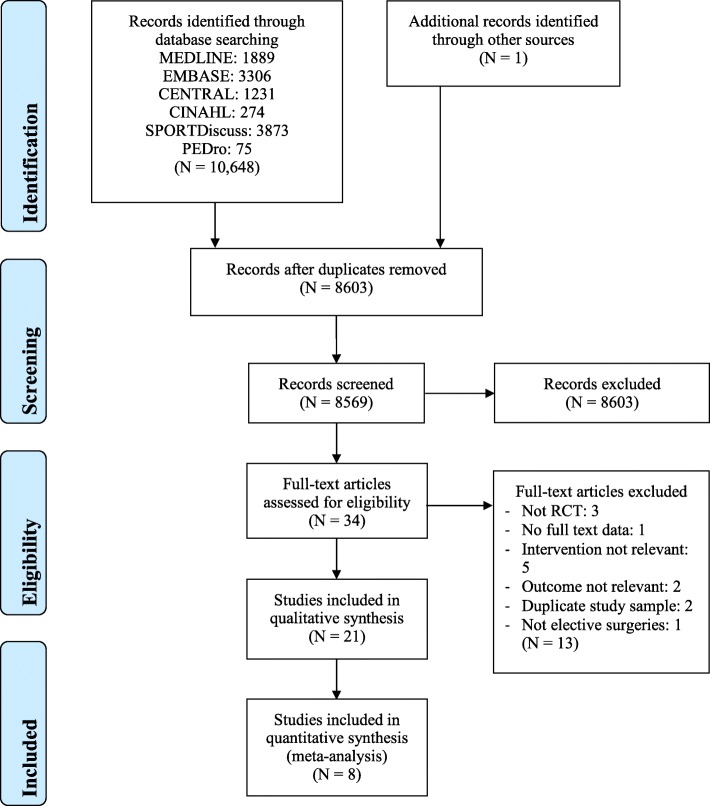
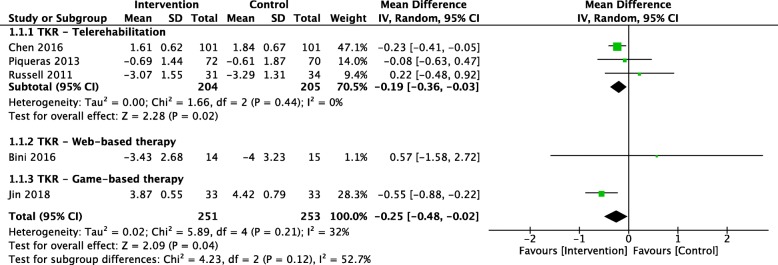
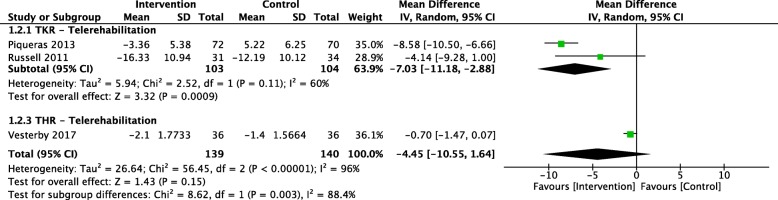
Background: To evaluate the effectiveness and safety of technology-assisted rehabilitation following total hip/knee replacement (THR/TKR). Methods: Six electronic databases were searched without language or time restrictions for relevant studies: MEDLINE, EMBASE, Cochrane Library, CINAHL, SPORTDiscus, Physiotherapy Evidence Database (PEDro); from inception to November 7th, 2018. Two reviewers independently applied inclusion criteria to select eligible randomised controlled trials (RCTs) that investigated the effectiveness of technology-based interventions, compared with usual care or no intervention for people undergoing THR/TKR. Two reviewers independently extracted trial details (e.g. patients’ profile, intervention, outcomes, attrition and adverse events). Study methodological quality was assessed using the PEDro scale. Quality of evidence was critically appraised using the Grading of Recommendations, Assessment, Development and Evaluation approach. Results: We identified 21 eligible studies assessing telerehabilitation, game- or web-based therapy. There were 17 studies (N = 2188) in post-TKR rehabilitation and 4 studies (N = 783) in post-THR rehabilitation. Compared to usual care, technology-based intervention was more effective in reducing pain (mean difference (MD): − 0.25; 95% confidence interval (CI): − 0.48, − 0.02; moderate evidence) and improving function measured with the timed up-and-go test (MD: -7.03; 95% CI: − 11.18, − 2.88) in people undergoing TKR. No between-group differences were observed in rates of hospital readmissions or treatment-related adverse events (AEs) in those studies. Conclusion: There is moderate-quality of evidence showed technology-assisted rehabilitation, in particular, telerehabilitation, results in a statistically significant improvement in pain; and low-quality of evidence for the improvement in functional mobility in people undergoing TKR. The effects were however too small to be clinically significant. For THR, there is very limited low-quality evidence shows no significant effects.
Overview
The claims and statistics of this paper haven’t been checked yet.
Free: it reads the open-access text and checks the first 5 claims that cite a source we can check. Create a free account to check every claim.
Integrity signals
Registry
Cites
Statistics
Figures

Verification
Claims the paper makes
The claims and statistics of this paper haven’t been checked yet.
Free: it reads the open-access text and checks the first 5 claims that cite a source we can check. Create a free account to check every claim.
Claims other papers make about this one
Each is checked against this paper’s own text: does it say what the citing paper says it does?
The source backs part of the claim, not all of it — or backs it for a different population, condition or comparison.
In the citing paper
“Telerehabilitation, using technology to provide healthcare, has shown consistently positive results in the recovery of several MSK conditions [27,28,29,30,31].”
From Digital Rehabilitation for Elbow Pain Musculoskeletal Conditions: A Prospective Longitudinal Cohort Study (2022) · cites this paper as [31]
Experimental — accuracy not yet measured
Self-check
Percentages, sums and reported differences re-computed from the paper’s own numbers.
The self-check needs the paper’s full text.
Citations
Cites
Preferred reporting items for systematic reviews and meta-analyses: the PRISMA Statement.
(2009) · PubMed Central · Cited by 44,859
Preferred reporting items for systematic reviews and meta-analyses: The PRISMA statement
Moher, D., Liberati, A., Tetzlaff, J., Altman, D. G., & the PRISMA Group* (2009) · Annals of Internal Medicine · doi:10.7326/0003-4819-151-4-200908180-00135 · Cited by 37,554
Cochrane Handbook for Systematic Reviews of Interventions: Cochrane Book Series
(2008) · doi:10.1002/9780470712184 · Cited by 25,048
Vos, T., Abajobir, A. A., Abate, K. H., Abbafati, C., Abbas, K. M., Abd-Allah, F., Abdulkader, R. S., Abdulle, A. M., Abebo, T. A., Abera, S. F., et al. (2017) · The Lancet · doi:10.1016/s0140-6736(17)32154-2 · Cited by 13,220
Vos, T., Allen, C., Arora, M., Barber, R. M., Bhutta, Z. A., Brown, A., Carter, A., Casey, D. C., Charlson, F. J., Chen, A. Z., et al. (2016) · The Lancet · doi:10.1016/s0140-6736(16)31678-6 · Cited by 7,253
Reliability of the PEDro Scale for Rating Quality of Randomized Controlled Trials
Maher, C. G., Sherrington, C., Herbert, R. D., Moseley, A. M., & Elkins, M. (2003) · Physical Therapy · doi:10.1093/ptj/83.8.713 · Cited by 4,808 · cited 1×
“Study methodological quality The PEDro scale [20] was used to determine the methodological quality of each study.”
MethodThe Innovator's Dilemma: When New Technologies Cause Great Firms to Fail
Christensen, C. M. (2013) · University of Maribor digital library (University of Maribor) · Cited by 3,821
GRADE guidelines: a new series of articles in the Journal of Clinical Epidemiology
Guyatt, G. H., Oxman, A. D., Schünemann, H. J., Tugwell, P., & Knottnerus, A. (2011) · Journal of Clinical Epidemiology · doi:10.1016/j.jclinepi.2010.09.011 · Cited by 3,094 · cited 2×
“sample size < 400, 95% CI overlaps no effect) and publication bias (visual inspection of funnel plots and Egger’s regression test) [24].”
BackgroundMethodA review of wearable sensors and systems with application in rehabilitation
Patel, S., Park, H., Bonato, P., Chan, L., & Rodgers, M. (2012) · Journal of NeuroEngineering and Rehabilitation · doi:10.1186/1743-0003-9-21 · Cited by 2,396
de Morton, N. A. (2009) · Australian Journal of Physiotherapy · doi:10.1016/s0004-9514(09)70043-1 · Cited by 2,201
Research works printed but not linked: 2
- Higgins JP, Green S. Cochrane handbook for systematic reviews of interventions. Chichester, West Sussex: Wiley; 2011.
- Jin C, Feng YJ, Ni YJ, Shan ZL. Virtual reality intervention in postoperative rehabilitation after total knee arthroplasty: a prospective and randomized controlled clinical trial. Int J Clin Exp Med. 2018;11(6):6119-24.
Cited by
Effectiveness of Telerehabilitation in Physical Therapy: A Rapid Overview
Seron, P., Oliveros, M.-J., Gutierrez-Arias, R., Fuentes-Aspe, R., Torres-Castro, R. C., Merino-Osorio, C., Nahuelhual, P., Inostroza, J., Jalil, Y., Solano, R., et al. (2021) · Physical Therapy · doi:10.1093/ptj/pzab053 · Cited by 556
“Of these, 6, 4, and 1 reviews reported no difference between groups for clinical effectiveness evaluated as pain intensity, 29–31, 33– 35 functionality, 29, 30, 34, 35 and HRQL , 34 respectively.”
Suso-Martí, L., La Touche, R., Herranz-Gómez, A., Angulo-Díaz-Parreño, S., Paris-Alemany, A., & Cuenca-Martínez, F. (2021) · Physical Therapy · doi:10.1093/ptj/pzab075 · Cited by 215
Chaudhry, H., Nadeem, S., & Mundi, R. (2021) · Clinical Orthopaedics & Related Research · doi:10.1097/corr.0000000000001494 · Cited by 146
“In orthopaedics, the provision of ancillary services such as physiotherapy and rehabilitation has been studied more extensively than surgeon-provided assessments [27,38].”
BackgroundThe state of the art in telerehabilitation for musculoskeletal conditions
Baroni, M. P., Jacob, M. F., Rios, W. R. C., Fandim, J. V., Fernandes, L. G., Chaves, P. I., Fioratti, I., & Saragiotto, B. T. (2023) · Archives of Physiotherapy · doi:10.1186/s40945-022-00155-0 · Cited by 160
Xie, S., Wang, Q., Wang, L., Wang, L., Song, K., & He, C. (2021) · Journal of Medical Internet Research · doi:10.2196/21542 · Cited by 119
“Wang et al [62] showed that a telerehabilitation program (eg, telephone counseling/coaching, video conferencing) could be effective for pain control but not for functional improvement in patients after knee OA replacement surgery.”
Digital health for quality healthcare: A systematic mapping of review studies
Ibrahim, M. S., Yusoff, H. M., Bakar, Y. I. A., Aung, M. M. T., Abas, M. I., & Ramli, R. A. (2022) · Digital Health · doi:10.1177/20552076221085810 · Cited by 138
Töre, N. G., Oskay, D., & Haznedaroğlu, Ş. (2022) · Clinical Rheumatology · doi:10.1007/s10067-022-06417-3 · Cited by 119
“It was also stated that patients were satisfied with the internet-based treatment approach [29].”
BackgroundInfluentialThe Effectiveness of Virtual Reality Rehabilitation in Patients with Knee and Hip Osteoarthritis
Byra, J., & Czernicki, K. (2020) · Journal of Clinical Medicine · doi:10.3390/jcm9082639 · Cited by 88
“[42] also noted very limited evidence for THA.”
BackgroundApplications of Digital Health Technologies in Knee Osteoarthritis: Narrative Review
Shah, N., Costello, K. E., Mehta, A., & Kumar, D. (2022) · JMIR Rehabilitation and Assistive Technologies · doi:10.2196/33489 · Cited by 65
“Prior reviews on digital health for the management of KOA were mostly systematic reviews [16-21].”
BackgroundTsang, M. P., Man, G. C. W., He, X., Chong, Y. C., Ong, M. T., & Yung, P. S. (2022) · Journal of Telemedicine and Telecare · doi:10.1177/1357633x221097469 · Cited by 78
“7 Secondly, patients and therapists may experience dif fi culties in the technical setup to implement telerehabilitation.”
InfluentialXiang, W., Wang, J., Ji, B.-J., Li, L., & Xiang, H. (2023) · Journal of Medical Internet Research · doi:10.2196/40735 · Cited by 63
Piech, J., & Czernicki, K. (2021) · Applied Sciences · doi:10.3390/app11094098 · Cited by 64
“Telerehabilitation increases motivation to home exercises and continuity of rehabilitation after discharge from the hospital [60,61].”
BackgroundMixed Reality Platforms in Telehealth Delivery: Scoping Review
Worlikar, H., Coleman, S., Kelly, J., O’Connor, S., Murray, A., McVeigh, T. P., Doran, J., McCabe, I., & O'Keeffe, D. T. (2023) · JMIR Biomedical Engineering · doi:10.2196/42709 · Cited by 51
“In a small number of studies, the home-based rehabilitation in the form of novel telerehabilitation have been used for patients undergoing surgical procedures, such as total hip replacement, total knee arthroplasty, and total knee replacement, as a postrecovery treatment measure [59-62].”
BackgroundEffectiveness of Telemedicine for Musculoskeletal Disorders: Umbrella Review
Bargeri, S., Castellini, G., Vitale, J. A., Guida, S., Banfi, G., Gianola, S., & Pennestrì, F. (2024) · Journal of Medical Internet Research · doi:10.2196/50090 · Cited by 59
Wang, Q., Lee, R., Hunter, S., & Chan, S. W. (2021) · Journal of Telemedicine and Telecare · doi:10.1177/1357633x20980291 · Cited by 44
Shim, G. Y., Kim, E. H., Lee, S. J., Chang, C. B., Lee, Y. S., Lee, J. I., Hwang, J. H., & Lim, J. (2023) · Archives of Orthopaedic and Trauma Surgery · doi:10.1007/s00402-023-04894-y · Cited by 39
“However, most adverse events were mild and some were not associated with the intervention according to a meta-analysis [34].”
BackgroundWang, H., Luo, P., Liu, S., Liu, Y., Zhang, X., & Li, J. H. (2024) · Journal of Medical Internet Research · doi:10.2196/55576 · Cited by 42
“Wang et al [64] investigated the effectiveness of telehealth interventions compared with usual care or no intervention in patients with OA who had undergone total knee replacement (TKR) or total hip replacement (THR).”
Design of a Multi-Sensors Wearable Platform for Remote Monitoring of Knee Rehabilitation
Tedesco, S. A., Torre, O. M., Belcastro, M., Torchia, P., Alfieri, D., Khokhlova, L., Komaris, D.-S., & O’Flynn, B. (2022) · IEEE Access · doi:10.1109/access.2022.3204969 · Cited by 44
“50 Tele-rehabilitation can also enhance patient compliance and 51 motivation, and complement the expert yet subjective judge52 ment of healthcare specialists, possibly leading to person53 alized therapies [8].”
BackgroundInfluentialDuong, V., Robbins, S. R., Dennis, S., Venkatesha, V., Ferreira, M. L., & Hunter, D. J. (2023) · JAMA Network Open · doi:10.1001/jamanetworkopen.2023.33172 · Cited by 35
“3) Gender identity Female 34 (67) 34 (67) 68 (67) Male 17 (33) 17 (33) 34 (33) Marital status Single 2 (4) 2 (4) 4 (4) Married or de facto 39 (77) 40 (78) 79 (78) Divorced or separated 7 (14) 2 (4) 9 (9) Widowed 3 (6) 7 (14) 10 (10) Cultural heritage African 1 (2) 0 1 (1) Asian 1 (2) 4 (8) 5 (5) White 49 (96) 43 (84)…”
Self-citationGamble, C. J., van Haastregt, J., van Isselt, E. F. V. D., Zwakhalen, S. M. G., & Schols, J. M. G. A. (2023) · Clinical Rehabilitation · doi:10.1177/02692155231217411 · Cited by 37
Yoo, J., Oh, M.-K., Lee, S.-U., & Lee, C. H. (2022) · Medicine · doi:10.1097/md.0000000000030852 · Cited by 35
Lippi, L., Ferrillo, M., Turco, A., Folli, A., Moalli, S., Refati, F., Perrero, L., Ammendolia, A., Alessandro de, S. I. R. E., & Invernizzi, M. (2023) · Medicina · doi:10.3390/medicina59112047 · Cited by 30
“…literature highlights a gap of knowledge in the fi eld of robotic ‐ assisted rehabilitation combined with a conservative approach, this novelty approach might o ff er promising results to enhance patient engagement and o ff er sustainable intervention for a highly prevalent disease such as KOA [70].”
BackgroundPritwani, S., Shrivastava, P., Pandey, S., Kumar, A., Malhotra, R., Maddison, R., & Devasenapathy, N. (2024) · JMIR mhealth and uhealth · doi:10.2196/47843 · Cited by 34
Segarra, B., Heras, N. B., Ortiz, M. V., Iborra, J. R., Martínez-Macías, O., & Cuesta-Peredó, D. (2020) · Journal of Orthopaedic Trauma · doi:10.1097/bot.0000000000001899 · Cited by 28
Sensor-based telerehabilitation system increases patient adherence after knee surgery
Höher, J., Lischke, B., Petersen, W. J., Mengis, N., Niederer, D., Stein, T., Stoffels, T., Prill, R., & Schmidt‐Lucke, C. (2023) · PLOS Digital Health · doi:10.1371/journal.pdig.0000175 · Cited by 28
“03%) 12:15 (44%:56%) 7:10 (41%:59%) 5:5 (50%:50%) Age [years] 26-30 1 30 [22-40] 31 [26-38] 26 [21-46] BMI [kg/m(2)] 25 [22–27] 25 [22-28] 25 [21-28] 25 [24-27] Smoking status nd 2 2 (7%) 1 (6%) 1 (10%) Diagnosis [%] ACL isolated 288 (48%) 10 (37%) 7 (41%) 3 (30%) ACL with meniscus involvement 126 (21%) 9 (34%) 6 (35%…”
ResultQuigley, A., Johnson, H., & McArthur, C. (2020) · Physiotherapy Canada · doi:10.3138/ptc-2020-0031-gee · Cited by 28
Nagel, J., Wegener, F., Grim, C., & Hoppe, M. W. (2024) · JMIR mhealth and uhealth · doi:10.2196/50616 · Cited by 29
“There is only 1 other systematic review on the effectiveness of digital health interventions for total hip arthroplasty [54].”
BackgroundPatiño, A., Soledad, M., & Ibarra-Vázquez, G. (2023) · Contemporary Educational Technology · doi:10.30935/cedtech/13416 · Cited by 42
“Also, Srimadhaven et al. (2020) adopted virtual reality as a technology with the potential to shift the traditional classroom paradigm with the new innovative teaching styles.”
BackgroundInfluentialThe Efficacy of Virtual Reality on the Rehabilitation of Musculoskeletal Diseases: Umbrella Review
Tang, P., Cao, Y., Vithran, D. T. A., Xiao, W., Wen, T., Liu, S., & Li, Y. (2025) · Journal of Medical Internet Research · doi:10.2196/64576 · Cited by 32
“A total of 14 studies gave the average age of patients, and in 4 of these studies [19-31, 33], the average age of patients was Additionally, these outcomes were assessed using the GRADE approach: 4 outcomes were rated as moderate, 8 outcomes as very low, 26 outcomes as low, and 1 outcome as high.”
InfluentialHu, Y., Yuan, X., Ye, P., Chang, C., Hu, Y., Zhang, W., & Li, K. (2023) · JMIR Serious Games · doi:10.2196/52022 · Cited by 30
Kamecka, K., Rybarczyk-Szwajkowska, A., Staszewska, A., Engelseth, P., & Kozłowski, R. (2021) · International Journal of Environmental Research and Public Health · doi:10.3390/ijerph181910135 · Cited by 18
Zavala-González, J., Martínez, D., & Gutiérrez‐Espinoza, H. (2022) · Clinical Rehabilitation · doi:10.1177/02692155221080546 · Cited by 22
“However, for total hip arthroplasty, there is very limited low-quality evidence that shows no significant effects.(5,6,12) Neuromuscular alterations have been described in the stabilizing muscles of the hip and knee after joint replacement, and for the treatment of these impairments, virtual reality have shown positiv…”
BackgroundGarcía-Sánchez, M., García‐Robles, P., Osuna‐Pérez, M. C., Lomas‐Vega, R., Obrero‐Gaitán, E., & Cortés‐Pérez, I. (2023) · Applied Sciences · doi:10.3390/app13074597 · Cited by 25
Foot and ankle service adaptation in response to COVID-19 and beyond
Feeley, I. H., McAleese, T., Clesham, K., Moloney, D. P., Crozier‐Shaw, G., Hughes, A. J., & Bayer, T. (2020) · Annals of Medicine and Surgery · doi:10.1016/j.amsu.2020.04.023 · Cited by 17
“This is a modification of tele-rehabilitation, which has shown much promise in hip and knee arthroplasty [20].”
The Use of Gamification in Patients Undergoing Hip Arthroplasty: Scoping Review
Fernandes, C. S., Magalhães, B. M. B. D. S., Gonçalves, F., Nogueira, P. C., & Santos, C. (2021) · Games for Health Journal · doi:10.1089/g4h.2020.0210 · Cited by 20
Hadamus, A., Błażkiewicz, M., Kowalska, A. J., Wydra, K. T., Grabowicz, M., Łukowicz, M., Białoszewski, D., & Marczyński, W. J. (2022) · Diagnostics · doi:10.3390/diagnostics12071595 · Cited by 18
“The number of total hips (THR) and knee replacement (TKR) surgeries has increased rapidly over the last decades [2,3,5].”
BackgroundThe evolution and mapping trends of mobile health (m-Health): a bibliometric analysis (1997–2023)
Alanzi, T. M., Rehman, S. U., Khan, M. A., & Istepanian, R. S. H. (2024) · mHealth · doi:10.21037/mhealth-23-20 · Cited by 22
Areias, A. C., Costa, F., Janela, D., Molinos, M., Moulder, R. G., Lains, J., Scheer, J. K., Bento, V., Yanamadala, V., & Correia, F. D. (2022) · Healthcare · doi:10.3390/healthcare10122349 · Cited by 15
“Patient participation [39] and adherence [40] may also be maximized through these approaches.”
BackgroundOlsen, S., Lim, X. M. L., Alder, G., Stavric, V., & Signal, N. (2024) · Disability and Rehabilitation Assistive Technology · doi:10.1080/17483107.2024.2435571 · Cited by 21
“…troubleshoot technical issues, in support of sustained use. the discrepancy between the evidence of clinical efficacy demonstrated by many Rts [85–87] and the low adoption rates in clinical practice [88,89] may be better understood in light of the central role that practical knowledge and skills…”
Borges, P. R. T., Resende, R. A., Dias, J. F., Mancini, M. C., & Sampaio, R. F. (2021) · Trials · doi:10.1186/s13063-021-05387-2 · Cited by 16
Malik, I. V., Devasenapathy, N., Kumar, A., Dogra, H., Ray, S., Gautam, D., & Malhotra, R. (2021) · Indian Journal of Orthopaedics · doi:10.1007/s43465-021-00405-6 · Cited by 13
Ginnetti, J. G., O’Connor, M. I., Chen, A. F., & Myers, T. G. (2022) · Journal of the American Academy of Orthopaedic Surgeons · doi:10.5435/jaaos-d-21-00247 · Cited by 13
Mark‐Christensen, T., Thorborg, K., Kallemose, T., & Bandholm, T. (2024) · Osteoarthritis and Cartilage Open · doi:10.1016/j.ocarto.2024.100530 · Cited by 17
“For telerehabilitation speci fi cally, one of the most MUA: manipulation under anesthesia. compelling arguments in favor of home-based telerehabilitation is that it motivates patients to exercise more than other modalities of physical rehabilitation [45].”
BackgroundThe Telemedicine-Based Pediatric Examination of the Back and Lower Limbs: A Narrative Review
Noutsios, C. D., Boisvert‐Plante, V., Laberge, E., Pérez, J., & Ingelmo, P. M. (2021) · Journal of Pain Research · doi:10.2147/jpr.s329173 · Cited by 12
Coulibaly, L. P., Poder, T. G., & Tousignant, M. (2021) · International Journal of Health Policy and Management · doi:10.34172/ijhpm.2021.150 · Cited by 13
“9 TR is a new approach in the rehabilitation field and is considered safe 10,11 and effective, 11-13 allows to reduce costs 14,15 (mostly with transportation) and improve quality of life 16 when compared to face-to-face rehabilitation.”
Barbosa, J. C., Comachio, J., Marques, A. P., Saragiotto, B. T., & Magalhães, M. O. (2023) · Trials · doi:10.1186/s13063-023-07651-z · Cited by 9
“Recent studies indicate that telerehabilitation can improve accessibility to healthcare services and increase patients’ adherence level to exercise programs due to its flexibility and convenience [20–22].”
BackgroundPritwani, S., Girotra, S., Shrivastava, P., Kumar, A., Swamy, A. M., Batra, S., Sharma, N., John, R., Praveen, D., Gara, S., et al. (2024) · BMC Musculoskeletal Disorders · doi:10.1186/s12891-024-08003-x · Cited by 13
“Rehabilitation following knee arthroplasty is essential to aid early and optimal functional recovery [2, 3].”
BackgroundVéras, M. M. S., Sigouin, J., Auger, C., Auger, L.-P., Ahmed, S., Boychuck, Z., Cavallo, S., Lévesque, M., Lovo, S., Miller, W. C., et al. (2025) · International Journal of Environmental Research and Public Health · doi:10.3390/ijerph22071091 · Cited by 16
Pang, D., Sun, A., Wang, F., Lu, J., Guo, Y., & Ding, W. K. (2023) · BioMedical Engineering OnLine · doi:10.1186/s12938-023-01158-z · Cited by 12
“Three reviews [18, 21, 23] showed that telerehabilitation shortened the TUG test compared with standard rehabilitation, and two reviews [19, 28] showed no significant difference in TUG scores between the two groups.”
BackgroundMethodResultInfluentialWang, X., Hunter, D. J., Robbins, S. R., Capistrano, S., Duong, V., Melo, L., Harris, A., & Ferreira, M. L. (2021) · BMJ Open · doi:10.1136/bmjopen-2020-041328 · Cited by 11
Self-citationCheng, Z., Li, J., Wu, W.-J., Yin, J., & Wang, X. (2025) · The Knee · doi:10.1016/j.knee.2025.05.011 · Cited by 10
Self-citationTenforde, A. S., Alexander, J. J., Alexander, M. S., Annaswamy, T. M., Carr, C. J., Chang, P. J., Díaz, M., Iaccarino, M. A., Lewis, S. B., Millett, C., et al. (2023) · PM&R · doi:10.1002/pmrj.13029 · Cited by 11
“47 More limited evidence documents outcomes using telehealth to increase physical activity in patients receiving active treatment for cancer or those living with cancer.”
BackgroundJanela, D., Costa, F., Molinos, M., Moulder, R. G., Lains, J., Bento, V., Scheer, J. K., Yanamadala, V., Cohen, S. P., & Correia, F. D. (2022) · International Journal of Environmental Research and Public Health · doi:10.3390/ijerph19159198 · Cited by 8
Pritwani, S., Pandey, S., Shrivastava, P., Kumar, A., Malhotra, R., Maddison, R., & Devasenapathy, N. (2023) · Disability and Rehabilitation · doi:10.1080/09638288.2023.2236012 · Cited by 8
“…the continuum of care is mainly driven by studies from high-income countries and may not be directly applicable to low-and middle-income countries [16]. in continuation of our effort [12,17] to document the challenges of patients undergoing knee replacement and find feasible ways to improve care,…”
BackgroundCan you be a manual therapist without using your hands?
Saragiotto, B. T., Sandal, L. F., & Hartvigsen, J. (2022) · Chiropractic & Manual Therapies · doi:10.1186/s12998-022-00457-x · Cited by 8
Patient Engagement Approaches in Total Joint Arthroplasty: A Review of Two Decades
Alokozai, A., Bernstein, D. N., Samuel, L. T., & Kamath, A. F. (2021) · Journal of Patient Experience · doi:10.1177/23743735211036525 · Cited by 8
Kulchitskaya, D. B., Fesyun, A. D., Самойлов, А. С., & Kolbakhova, S. N. (2022) · Bulletin of Rehabilitation Medicine · doi:10.38025/2078-1962-2022-21-2-46-52 · Cited by 7
Jansson, M. M., & Koivisto, J. (2023) · Games for Health Journal · doi:10.1089/g4h.2022.0101 · Cited by 8
Kokić, T., Pavić, R., Vuksanic, M., Jelica, S., Šumanovac, A., Banić, T., Ostović, H., & Kokić, I. Š. (2023) · Journal of Personalized Medicine · doi:10.3390/jpm13121716 · Cited by 9
“…effects of EMG-BF after THA, there are reports in the literature on the potential of this method for pain reduction, improvements in m. quadriceps femoris strength and range of motion, as well as improvement in the overall function in patients after different orthopedic surgical procedures [18–21].”
BackgroundMethodWang, G., Yang, M., Hong, M. R., Krauss, J., & Bailey, J. F. (2022) · JMIR Rehabilitation and Assistive Technologies · doi:10.2196/38214 · Cited by 8
“Adherence to exercises delivered through digital health programs has been shown to match or exceed that of in-person programs, and improved adherence is associated with better treatment outcomes for MSK needs [29-32].”
ResultKamecka, K., Foti, C., Gawinski, L. P., Matejun, M., Rybarczyk-Szwajkowska, A., Kiljański, M., Krochmalski, M., Kozłowski, R., & Marczak, M. (2022) · International Journal of Environmental Research and Public Health · doi:10.3390/ijerph191811521 · Cited by 9
“Two articles that we included in our review indicate that future research studies, notably randomized controlled trials, with a well-defined research protocol are needed to demonstrate the safety and long-term efficacy of innovative medical solutions, especially for post total hip replacement rehabilitation [36,37].”
BackgroundPriore, L. B. D., Perez, V. O., Briani, R. V., Farinelli, L. A. L. B., da Silva, J. D. C. P., Martins, O. M. G., Lopes, F. A., Amorim, A. B., Pappas, E., & de Azevedo, F. M. (2023) · BMC Musculoskeletal Disorders · doi:10.1186/s12891-023-06491-x · Cited by 7
“Furthermore, internet-based interventions may allow patients to assume a more active role in their rehabilitation, encouraging strategies as self-management and self-efficacy [33].”
BackgroundDigital Care Programs for Chronic Hip Pain: A Prospective Longitudinal Cohort Study
Janela, D., Costa, F. M. T. A., Areias, A. C., Molinos, M., Moulder, R. G., Jr., Laíns, J., Bento, V., Scheer, J. K., Yanamadala, V., Cohen, S. P., et al. (2022) · Healthcare · doi:10.3390/healthcare10081595 · Cited by 8
Man, S. S., Wen, H., Chiu, K. T., Wang, F., & Chan, A. H. S. (2024) · Healthcare · doi:10.3390/healthcare12171775 · Cited by 11
“To overcome potential barriers, healthcare providers should address issues such as access to technology and patient education and ensure the continuity of care through regular follow-ups and support.”
BackgroundBarbosa, J. C., da Luz, B. V., da Silva, B. F. P., Marques, A. P., Saragiotto, B. T., Comachio, J., & Magalhães, M. O. (2025) · Musculoskeletal Care · doi:10.1002/msc.70119 · Cited by 14
Moharam, S. A., ElSharkawy, M. S., ELkashef, A. M., Romeih, M. A., Rasool, A. O. A. R. E., & Shaheen, M. M. (2025) · BMC Anesthesiology · doi:10.1186/s12871-025-03316-3 · Cited by 8
“Also, it has gained increasing interest from researchers and clinicians for applications in various healthcare domains, such as neuroscience, physical therapy, psychology, rehabilitation, and surgery [1–3].”
Fernandes, C. S., Magalhães, B. M. B. D. S., Gomes, J. A., Lima, A., & Santos, C. (2022) · European Journal of Physiotherapy · doi:10.1080/21679169.2022.2126518 · Cited by 6
“The review studies identified in this population focussed only on virtual reality [9,11,14] or were not exclusively aimed at people after knee arthroplasty [10]; that is, they did not focus on the use of exergames.”
BackgroundResultMovement characteristics during customized exergames after total knee replacement in older adults
Janhunen, M., Löppönen, A., Walker, S., Punsár, T., Katajapuu, N., Cheng, S., Paloneva, J., Pamilo, K., Luimula, M., Korpelainen, R., et al. (2022) · Frontiers in Sports and Active Living · doi:10.3389/fspor.2022.915210 · Cited by 5
“An alternative method to conventional therapeutic exercise for patients with TKR is gamified exercising (Wang et al., 2019), also referred to as active video gaming or exergaming (Oh and Yang, 2010).”
MethodRehabilitation nach knieendoprothetischer Versorgung
Kladny, B. (2021) · Der Orthopäde · doi:10.1007/s00132-021-04175-9 · Cited by 5
Kulchitskaya, D. B., Fesyun, A. D., Самойлов, А. С., Kolbakhova, S. N., Gushchina, N. V., & Astakhova, K. A. (2022) · Problems of Balneology Physiotherapy and Exercise Therapy · doi:10.17116/kurort20229902132 · Cited by 5
Shaheen, A. A. M., Algabbani, M. F., Alshahrani, M., Alshahrani, F. M., Alsobayel, H., Omar, M. T. A., & Alsubiheen, A. M. (2025) · Bulletin of Faculty of Physical Therapy · doi:10.1186/s43161-024-00246-y · Cited by 9
“This result coincides with Wang and partially with García-Sánchez et al. [19, 22].”
Borges, P. R. T., Sampaio, R. F., Dias, J. F., Mancini, M. C., Ocarino, J. M., & Resende, R. A. (2024) · Pilot and Feasibility Studies · doi:10.1186/s40814-024-01521-4 · Cited by 8
How Can Gait Analysis Improve Total Hip Arthroplasty?
Karimanasseri, C. (2022) · Journal of Long-Term Effects of Medical Implants · doi:10.1615/jlongtermeffmedimplants.2022042591 · Cited by 4
Vibhuti, Sharma, N., Kataria, C., Kumar, N., Walia, S., & Singh, M. (2023) · IETE Journal of Research · doi:10.1080/03772063.2023.2245387 · Cited by 4
“Several aspects of this VR technique, including the ability to increase task difficulty, amusement, and reinforcement have indeed been found as factors that promote participant involvement in TKA lower extremity rehabilitation [2,13,27].”
InfluentialArippa, F., Scribante, A., Rocca, B., & Monticone, M. (2023) · Trials · doi:10.1186/s13063-023-07778-z · Cited by 4
“…and exercise therapy can lead to significant and lasting changes in physical impairment, pain, and quality of life of persons with other musculoskeletal and neurological disabilities [12, 13, 15– 17, 31, 32], it is still questioned if similar programs may have the same results on people with ULLy.”
ResultKnee arthroplasty: post-operative care, rehab-ilitation and follow-up
Leong, J. W., & Reed, M. R. (2021) · Orthopaedics and Trauma · doi:10.1016/j.mporth.2020.12.009 · Cited by 4
Nuhmani, S., AlBakheet, A., Alqahtani, G. N. H., AlDulaijan, R., AlHomiyn, M., & Saikhan, L. A. (2025) · Journal of Clinical Medicine · doi:10.3390/jcm14186576 · Cited by 4
Cai, C., Tiang, P. G., Ng, A., Fei, F. N. X., & Koh, W. L. (2026) · Physiotherapy Theory and Practice · doi:10.1080/09593985.2026.2635044 · Cited by 3
“Systematic reviews have since consolidated this evidence, showing that telerehabilitation can lead to statistically significant improvements in pain and function for patients following total knee arthroplasty (TKA) and those with knee OA (Plavoukou et al, 2025; Wang et al, 2019).”
InfluentialZhu, B., Zhu, D., Xue, X., Yang, H., & Zhang, S. (2025) · Journal of Medical Internet Research · doi:10.2196/56227 · Cited by 6
“To this end, remote OA rehabilitation using digital technologies (eg, telephones, websites, mobile apps) is rapidly evolving to alleviate the socioeconomic burden [28-30].”
Turner, M. J., Frost, N., Outar, L., O'Connor, H., Tóth, R., Tóth, L., Chadha, N. J., & Wood, A. G. (2025) · Frontiers in Psychology · doi:10.3389/fpsyg.2025.1557885 · Cited by 8
Barnett, R., Shakaib, N., Ingram, T. A., Jones, S., Sengupta, R., & Rouse, P. C. (2024) · PLoS ONE · doi:10.1371/journal.pone.0301668 · Cited by 3
Martínez, D., & Zavala-González, J. (2024) · Fisioterapia · doi:10.1016/j.ft.2024.01.006 · Cited by 1
Johns, N. A., McKenzie, D., Brady, B., Naylor, J., & Olver, J. (2025) · Clinical Rehabilitation · doi:10.1177/02692155251375382 · Cited by 2
“Digitalsolutions, as adjuncts totraditionalrehabili-tation therapy, provided in the acute and subacute phases post-knee replacement, have demonstrated small clinically insigni fi cant differences 10 and have not been researched in the chronic phase.”
Telerehabilitation in musculoskeletal disorders: a systematic review and meta-analysis
Moreira, L. D. M., da Silva, A. P., Scardovelli, T. A., Martini, S. C., & Boschi, S. R. M. D. S. (2025) · Journal of Health Informatics · doi:10.59681/2175-4411.v17.2025.1402 · Cited by 3
Nambi, G. S., Elayaperumal, S., Eswaramoorthi, V., & Muthukrishnan, R. (2026) · Hong Kong Physiotherapy Journal · doi:10.1142/s101370252650006x · Cited by 2
房, 金. (2021) · Nursing Science · doi:10.12677/ns.2021.105096 · Cited by 2
Kolbakhova, S. N., Koneva, E. S., Kulchitskaya, D. B., Strukov, R. N., & Khaptagaev, T. B. (2022) · Problems of Balneology Physiotherapy and Exercise Therapy · doi:10.17116/kurort20229906231 · Cited by 2
Zhang, D., Pan, L., Maimaitijuma, T., Liu, H., & Wu, H. (2021) · Journal of Healthcare Engineering · doi:10.1155/2021/5540834 · Cited by 2
RetractedTranslating Games Into Effective Health Results Using Digital Tools
Brito, D. V., & Oliveira, H. Z. (2021) · Advances in medical education, research, and ethics (AMERE) book series · doi:10.4018/978-1-7998-8824-6.ch004 · Cited by 2
Raghav, S., Singh, A. N., Mani, S., & Kumar, M. (2022) · Biosciences Biotechnology Research Asia · doi:10.13005/bbra/3001 · Cited by 2
Rajala, M., Holopainen, R., Kääriäinen, M., Kaakinen, P., & Meriläinen, M. H. (2023) · Nursing Open · doi:10.1002/nop2.1832 · Cited by 2
“The rehabilitation process after THR has been extensively studied (Domínguez- Navarro et al., 2018; Henderson et al., 2017; Li et al., 2017; Tugni et al., 2019; Wang et al., 2019), although current practices still partly rely on traditions (Wainwright et al., 2020).”
BackgroundA Device for Prehabilitation of Total Knee Replacement Surgery (Slider): Usability Study
Islam, R., Gooch, D., Karlakki, S. L., & Price, B. A. (2023) · JMIR Formative Research · doi:10.2196/48055 · Cited by 2
“Similarly, a meta-analysis found that technology-assisted rehabilitation programs for total joint replacements improved adherence and clinical outcomes such XSL • FO RenderX as pain and mobility [12].”
MethodTHE ROLE OF KNEE REPLACEMENT IN THE TREATMENT OF PATIENTS WITH GONARTHROSIS: REHABILITATION.
Rechkunova, O. A., Chernysheva, T. V., Михайлович, Г. А., Глухова, Т. В., & Shibin, V. A. (2023) · Современные проблемы науки и образования · doi:10.17513/spno.32738 · Cited by 1
Rigo, D., Fehring, L., Mortsiefer, A., & Meister, S. (2025) · JMIR Formative Research · doi:10.2196/68276 · Cited by 8
“Existing validated instruments tend to focus on specific use cases or diseases, which limits their utility for comparison across multiple DHSs and health care settings [20-22].”
Филюсович, Б. К., Gilmutdinova, L. T., Закиевич, А. Р., Gilmutdinov, A. R., Nurlygayanov, R. Z., & Gilmutdinov, B. R. (2025) · Bulletin of Rehabilitation Medicine · doi:10.38025/2078-1962-2025-24-6-100-109 · Cited by 1
Farì, G., Quarta, F., Bressi, F., RUSSA, R. L., Paolucci, T., & Bernetti, A. (2026) · Bioengineering · doi:10.3390/bioengineering13020136 · Cited by 5
“Despite existing limitations [9], TR has been shown to be a promising intervention, especially in terms of pain relief and improvements in joint function, both for individuals with KOA [10] and for those undergoing knee replacement [11].”
Jogo para o ensino de reabilitação na pessoa submetida a artoplastia da anca: estudo de caso
Fernandes, C. S., Soares, A. E., Amaral, C. X., Costa, E. F., Almeida, I. S. S., & Nogueira, P. M. A. (2020) · Revista Portuguesa de Enfermagem de Reabilitação · doi:10.33194/rper.2020.v3.s1.3.5765 · Cited by 2
A Model for Delivery of Orthopaedic Perioperative Education via Telehealth
Keener, A. S., & Howell, D. (2022) · Orthopaedic Nursing · doi:10.1097/nor.0000000000000852 · Cited by 1
“Another systematic review of the literature examined the effectiveness of technology-assisted rehabilitation delivered postoperatively to patients who had a THR or TKR due to osteoarthritis (Wang et al., 2019).”
BackgroundCutting-Edge Approaches in Arthroplasty: Before, during and after Surgery
Beckmann, J., Barrett, D. S., & Thienpont, E. (2022) · Journal of Personalized Medicine · doi:10.3390/jpm12101671 · Cited by 1
Metadata
- Authors
- Wang, X., Hunter, D. J., Vesentini, G., Pozzobon, D., & Ferreira, M. L.
- Affiliations
- The University of Sydney (AU)
- Corresponding author
- Wang, Xia
- Venue
- BMC Musculoskeletal Disorders
- Published
- 2019-11-03
- Volume
- 20
- Issue
- 1
- Pages
- 506-506
- ISSN
- 1471-2474 (ISSN-L)
- PMC
- PMC6825714
- OpenAlex
- W2987661604
- Semantic Scholar
- f85ebae0b336f3405541335c3ba03ced7e4701cd
- Cited by
- 140
- References
- 58
- Citations by year
- 2026: 13 · 2025: 17 · 2024: 22 · 2023: 27 · 2022: 32 · 2021: 21 · 2020: 8
- FWCI
- 3.13
- Type
- journal article
- Language
- en
- Open access
- gold
- doi.org
- Licence
- cc-by
- creativecommons.org/licenses/by/4.0/ (tdm)
- creativecommons.org/licenses/by/4.0/ (vor)
- Locations
- BMC Musculoskeletal Disorders (publishedVersion, cc-by)
- PubMed Central (publishedVersion, cc-by)
- PubMed (publishedVersion)
- DOAJ (DOAJ: Directory of Open Access Journals) (submittedVersion, cc-by-sa)
- Funders
- Ramsay Research Foundation (na)
- Topics
- Health Sciences › Medicine › Surgery › Total Knee Arthroplasty Outcomes
- Health Sciences › Medicine › Public Health, Environmental and Occupational Health › Telemedicine and Telehealth Implementation
- Health Sciences › Health Professions › Physical Therapy, Sports Therapy and Rehabilitation › Musculoskeletal pain and rehabilitation
- Keywords
- technology-assisted rehabilitation, total knee arthroplasty, total hip arthroplasty, osteoarthritis, telerehabilitation, game-based therapy, online therapy, postoperative rehabilitation, analgesia, functional mobility, Timed Up and Go test, hospital readmission, adverse events
- MeSH terms
- Telerehabilitation, Walk Test, Humans, Osteoarthritis, Hip, Randomized Controlled Trials as Topic, Arthroplasty, Replacement, Hip, Arthroplasty, Replacement, Knee, Osteoarthritis, Knee
About these checks
Registry, retraction, Cites and statistics results are computed, not judged, with one exception: a printed reference that no index lists is read once by a model before it counts as a citation error. Claims are extracted by a model and kept only when their quote appears verbatim in the text; each cited source is then checked, with a model’s help, for whether it says what the claim relies on. Those verdicts can be wrong — read the claim’s quote and the cited source before relying on one.
Statistics and arithmetic are recomputed, not judged.
Confidence bands are shown only for fields calibrated on our annotated test set. None is calibrated yet, so no band is shown.
What counts as a claim ›How we measure confidence ›How we check this ›
Are you an author, or do you see a problem with this page? Request a review
Data sources
Bibliographic data: Semantic Scholar, OpenAlex, Crossref.
Contains information from the Semantic Scholar Academic Graph Datasets, made available under the ODC Attribution License (ODC-BY 1.0).
Semantic Scholar’s data is described in: Kinney, R., et al. (2023). The Semantic Scholar Open Data Platform. arXiv:2301.10140.
