

Impact of a structured multicomponent educational intervention program on metabolic control of patients with type 2 diabetes
Open accessThe DOI matches its Crossref record; 33 of the 34 references it cites were found in a registry or an index.
Abstract
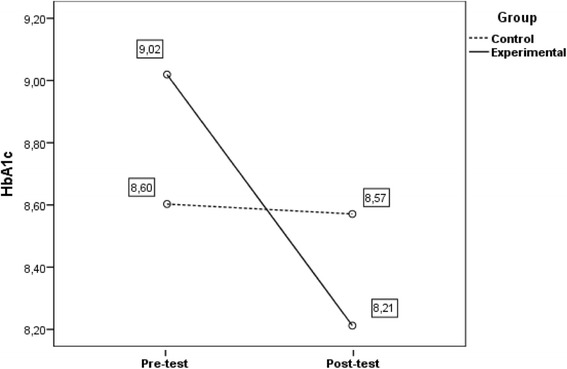
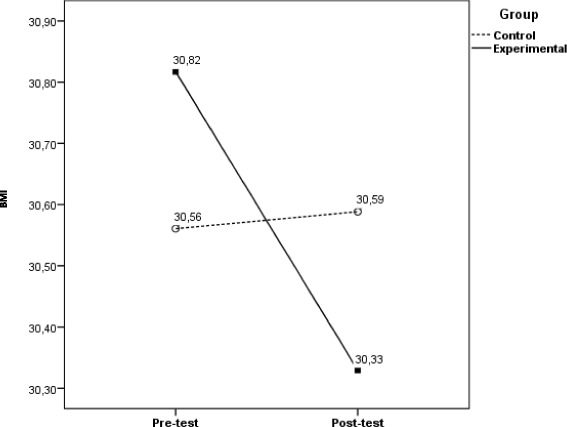
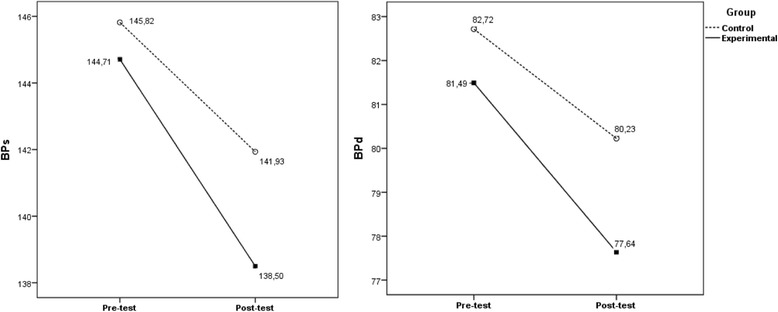
BACKGROUND: Diabetes is one of the most common metabolic disorders, with a high prevalence of patients with poor metabolic control. Worldwide, evidence highlights the importance of developing and implementing educational interventions that can reduce this burden. The main objective of this study was to analyse the impact of a lifestyle centred intervention on glycaemic control of poorly controlled type 2 diabetic patients, followed in a Community Care Centre. METHODS: A type 2 experimental design was conducted over 6 months, including 122 adults with HbA1c ≥ 7.5%, randomly allocated into Experimental group (EG) or Control Group (CG). EG patients attended a specific Educational Program while CG patients frequented usual care. Personal and health characterization variables, clinical metrics and self-care activities were measured before and after the implementation of the intervention. Analysis was done by comparing gains between groups (CG vs EG) through differential calculations (post minus pre-test results) and Longitudinal analysis. RESULTS: Statistical differences were obtained between groups for HbA1c and BMI: EG had a decrease in 11% more (effect-size r2 = .11) than CG for HbA1c (p < .001) and 4% more (effect-size r2 = .04) in BMI (p < .05). When controlling for socioeconomic characteristics and comorbidities that showed to be associated to each parameter in pre-test, from pre to post-test only EG participants significantly decreased HbA1c [Wilks' ʎ = .702; F(1,57) = 24.16; p < .001; ηp2 = .298; observed power = .998]; BMI values [Wilks' ʎ = .900; F(1,59) = 6.57; p = .013; ηp2 = .100; observed power = .713]; systolic Blood pressure [Wilks' ʎ = .735; F(1,61) = 21.94; p < .001; ηp2 = .265; observed power = .996] and diastolic Blood pressure [Wilks' ʎ = .795; F(1,59) = 15.20; p < .001; ηp2 = .205; observed power = .970]. CONCLUSIONS: The impact of a structured multicomponent educational intervention program by itself, beyond standard educational approach alone, supported in a Longitudinal analysis that controlled variables statistically associated with clinical metrics in pre-test measures, has demonstrated its effectiveness in improving HbA1c, BMI and Blood pressure values. TRIAL REGISTRATION: RBR-8ns8pb . (Retrospectively registered: October 30,2017).
Overview
The claims and statistics of this paper haven’t been checked yet.
Free: it reads the open-access text and checks the first 5 claims that cite a source we can check. Create a free account to check every claim.
Integrity signals
Registry
Cites
Statistics
Figures
Verification
Claims the paper makes
The claims and statistics of this paper haven’t been checked yet.
Free: it reads the open-access text and checks the first 5 claims that cite a source we can check. Create a free account to check every claim.
Claims other papers make about this one
Each is checked against this paper’s own text: does it say what the citing paper says it does?
The source backs part of the claim, not all of it — or backs it for a different population, condition or comparison.
In the citing paper
“A personalized educational approach to persons with DM, leveraging members of a multidisciplinary team, will lead to greater self-management skills.1459–1463”
From American Association of Clinical Endocrinology Clinical Practice Guideline: Developing a Diabetes Mellitus Comprehensive Care Plan-2022 Update. (2022) · cites this paper as [1463]
Experimental — accuracy not yet measured
Self-check
Percentages, sums and reported differences re-computed from the paper’s own numbers.
The self-check needs the paper’s full text.
Citations
Cites
1 retracted
Group based training for self-management strategies in people with type 2 diabetes mellitus
Deakin, T. A., McShane, C. E., Cade, J. E., & Williams, R. (2005) · Cochrane Database of Systematic Reviews · doi:10.1002/14651858.cd003417.pub2 · Cited by 862
Retracted(1998) · Cited by 36,049
Standards of Medical Care in Diabetes
Power, D. (2006) · Diabetes Care · doi:10.2337/diacare.29.02.06.dc05-1593 · Cited by 8,673
10-year follow-up of intensive glucose control in type 2 diabetes
Holman, R. R., Paul, S. K., Bethel, M. A., Matthews, D. R., & Neil, H. A. W. (2008) · New England Journal of Medicine · doi:10.1056/nejmoa0806470 · Cited by 7,751 · cited 1×
“In addition, evidence has highlighted the importance of developing and implementing interventions that can reduce this burden, by using intensive strategies to control blood glucose levels [9, 10], pointing lifestyle correction as one of the most important aims for people with type 2 diabetes [4, 11, 12].”
BackgroundNathan, D. M., Buse, J. B., Davidson, M. B., Ferrannini, E., Holman, R. R., Sherwin, R., & Zinman, B. (2009) · Diabetes Care · doi:10.2337/dc08-9025 · Cited by 3,834
The summary of diabetes self-care activities measure: results from 7 studies and a revised scale.
Toobert, D. J., Hampson, S. E., & Glasgow, R. E. (2000) · Diabetes Care · doi:10.2337/diacare.23.7.943 · Cited by 2,561 · cited 1×
“Self-care activities were assessed using the Summary of Diabetes Self-care Activities Scale [23, 24] that was translated and validated for Portuguese patients [25], a measure that has proven to be sensible to self-care behavioural change [24].”
MethodNonnormaland Categorical Data in Structural Equation Modeling
Finney, S. J., & DiStefano, C. (2013) · Structural Equation Modeling · doi:10.1108/978-1-62396-246-320251015 · Cited by 1,855
Effectiveness of Self-Management Training in Type 2 Diabetes
Norris, S. L., Engelgau, M. M., & Venkat Narayan, K. M. (2001) · Diabetes Care · doi:10.2337/diacare.24.3.561 · Cited by 1,846
Self-Management Education for Adults With Type 2 Diabetes
Norris, S. L., Lau, J., Smith, S. J., Schmid, C. H., & Engelgau, M. M. (2002) · Diabetes Care · doi:10.2337/diacare.25.7.1159 · Cited by 1,750
Warsi, A., Wang, P. S., LaValley, M. P., Avorn, J., & Solomon, D. H. (2004) · Archives of Internal Medicine · doi:10.1001/archinte.164.15.1641 · Cited by 732
Steinsbekk, A., Rygg, L., Lisulo, M., Rise, M. B., & Fretheim, A. (2012) · BMC Health Services Research · doi:10.1186/1472-6963-12-213 · Cited by 660
Standards of Medical Care in Diabetes—2015: Summary of Revisions
(2015) · Diabetes Care · doi:10.2337/dc15-s003 · Cited by 382
Increasing diabetes self-management education in community settingsA systematic review
NORRIS, S., NICHOLS, P., CASPERSEN, C., GLASGOW, R., ENGELGAU, M., JACKJR, L., SNYDER, S., CARANDEKULIS, V, ISHAM, G., & GARFIELD, S. (2002) · American Journal of Preventive Medicine · doi:10.1016/s0749-3797(02)00424-5 · Cited by 331
Assessing diabetes self-management: The Summary of Diabetes Self-Care Activities Questionnaire.
Toobert, D. J., & Glasgow, R. E. (1994) · Cited by 265
First diabetes prevalence study in Portugal: PREVADIAB study
Gardete‐Correia, L., Boavida, J. M., Raposo, J. F., Mesquita, A. C., Fona, C., Carvalho, R., & Massano‐Cardoso, S. (2010) · Diabetic Medicine · doi:10.1111/j.1464-5491.2010.03017.x · Cited by 260
Minet, L., Møller, S., Vach, W., Wagner, L., & Henriksen, J. E. (2010) · Patient Education and Counseling · doi:10.1016/j.pec.2009.09.033 · Cited by 229
Culturally appropriate health education for type 2 diabetes mellitus in ethnic minority groups
Hawthorne, K., Robles, Y., Cannings-John, R., & Edwards, A. G. (2008) · Cochrane Database of Systematic Reviews · doi:10.1002/14651858.cd006424.pub2 · Cited by 183
Brunisholz, K., Briot, P., Hamilton, S., Joy, E., Lomax, M., Barton, N., Cunningham, R., Cannon, W., & Savitz, L. (2014) · Journal of Multidisciplinary Healthcare · doi:10.2147/jmdh.s69000 · Cited by 167 · cited 1×
“Poor metabolic control has proven to be linked to the development of multiple complications, both acute and chronic, whose probability of appearance and aggravation can be reduced by improving glycaemic control and disease management [6].”
BackgroundDiabetes self-management education: A review of published studies
Clark, M. (2008) · Primary care diabetes · doi:10.1016/j.pcd.2008.04.004 · Cited by 143
An epidemiological overview of diabetes across the world
Meetoo, D., McGovern, P., & Safadi, R. (2007) · British Journal of Nursing · doi:10.12968/bjon.2007.16.16.27079 · Cited by 135
Schunk, M., Reitmeir, P., Schipf, S., Völzke, H., Meisinger, C., Thorand, B., Kluttig, A., Greiser, K. ‐., Berger, K., Müller, G., et al. (2012) · Diabetic Medicine · doi:10.1111/j.1464-5491.2011.03465.x · Cited by 97 · cited 1×
“Contributing to the prevention of earlier mortality and the decrease of patients’ quality of life [7] management of patients with complex diseases as type 2 diabetes, is a cornerstone of delaying and preventing complications and an important step towards improving clinical and metabolic outcomes, appropriate utilizati…”
Background[Psychometric analysis of diabetes self-care scale (translated and adapted to Portuguese)].
Bastos, F. D. S., Severo, M., & Lopes, C. M. M. (2007) · Portuguese National Funding Agency for Science, Research and Technology (RCAAP Project by FCT) · doi:10.20344/amp.836 · Cited by 78
Adachi, M., Yamaoka, K., Watanabe, M., Nishikawa, M., Kobayashi, I., Hida, E., & Tango, T. (2013) · BMC Public Health · doi:10.1186/1471-2458-13-467 · Cited by 57 · cited 1×
“Notwithstanding the statistical removal of the effect of the covariates, a significant interaction between within-subjects variables and the between-subjects factor remains, leading to the conclusion that only in experimental group participants a significantly decreased in clinical metrics can be verified, as identifi…”
ResultRichards, D. A., Coulthard, V., Borglin, G., & on behalf of the REFLECTION review team (2014) · Worldviews on Evidence-Based Nursing · doi:10.1111/wvn.12039 · Cited by 49 · cited 1×
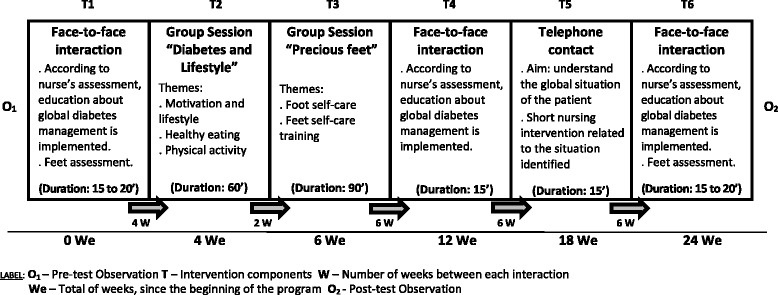
“This study has a type 2 experimental design [26], involving the measures of dependent variables before and after the implementation of an intervention and the manipulation of an independent variable (educational program designed vs.”
MethodPatients' Perspectives on Factors that Influence Diabetes Self-Care.
Shakibazadeh, E., Larijani, B. A., Shojaeezadeh, D., Rashidian, A., Forouzanfar, M., & Bartholomew, L. (2011) · Europe PMC (PubMed Central) · Cited by 44
Impact of a Diabetes Disease Management Program on Diabetes Control and Patient Quality of Life
Rasekaba, T. M., Graco, M., Risteski, C., Jasper, A., Berlowitz, D. J., Hawthorne, G., & Hutchinson, A. (2012) · Population Health Management · doi:10.1089/pop.2011.0002 · Cited by 36
Song, M., & Kim, H. (2007) · Journal of Clinical Nursing · doi:10.1111/j.1365-2702.2007.01800.x · Cited by 22
Yamashita, T., Kart, C. S., & Noe, D. A. (2011) · Journal of Behavioral Medicine · doi:10.1007/s10865-011-9392-y · Cited by 17
Likitmaskul, S., Wekawanich, J., Wongarn, R., Chaichanwatanakul, K., Kiattisakthavee, P., Nimkarn, S., Prayongklin, S., Weerakulwattana, L., Markmaitree, D., Ritjarean, Y., et al. (2002) · PubMed · Cited by 12
Multidisciplinary Interventions
Horton, E. S., Cefalu, W. T., Haines, S. T., & Siminerio, L. M. (2008) · The Science of Diabetes Self-Management and Care · doi:10.1177/0145721708321148 · Cited by 10
Heianza, Y., Suzuki, A., Fujihara, K., Tanaka, S., Kodama, S., Hanyu, O., & Sone, H. (2014) · Journal of Epidemiology & Community Health · doi:10.1136/jech-2014-204054 · Cited by 10
Menino, E., Dixe, M. D. A., Louro, M. A., & Roque, S. (2013) · Revista de Enfermagem Referência · doi:10.12707/riii1247 · Cited by 5
(2014) · PubMed Central
Research works printed but not linked: 7
- CDA. Clinical Practice Guidelines. Can J Diab, 2013; 37: 1.
- Duarte R Silva Nunes J Dores J Rodrigues E Raposo J Carvalho D Recomendações Nacionais da SPD para o tratamento da Hiperglicemia na Diabetes Tipo 2 - Versão resumida Rev Port Diab 2013 8 1 30 41
- Colagiuri R Girgis S Eigenmann C Gomez M Griffiths R National Evidence-Based Guideline for patient education in type 2 diabetes 2009 Diabetes Australia and the NHMRC Canberra, Australia
- Pinto, MR, Parreira, P, Basto, ML & Monico, L. Therapeutic Education: The design of an educational program protocol for primary care diabetes patients. Proceedings of 5th Euro Nursing &Medicare Summit, Rome, Italy, 2016b, p. 90.
- Levine D, Berenson M, Stephan D. Estatística: Teoria e aplicações usando Microsoft Excel em Português (6ª ed.). 2014. Rio de Janeiro: LTC.
- Bastos F Severo M Lopes C Propriedades psicométricas da escala de autocuidado com a diabetes traduzida e adaptada Acta Medica Port 2007 20 11 20 17624279
- Pinto MR, Parreira P & Basto ML. Resultados da intervenção de enfermagem na adequação do estilo de vida das pessoas com Diabetes Mellitus tipo 2. Uma Revisão Sistemática da literatura. Revista da UIIPS, 2014; 5:2:259–78.
Cited by
Blonde, L., Umpierrez, G. E., Reddy, S. S., McGill, J. B., Berga, S. L., Bush, M., Chandrasekaran, S., DeFronzo, R. A., Einhorn, D., Galindo, R. J., et al. (2022) · Endocrine Practice · doi:10.1016/j.eprac.2022.08.002 · Cited by 507
Rosenfeld, R. M., Grega, M. L., Karlsen, M. C., Dabrh, A. M. A., Aurora, R. N., Bonnet, J. P., Donnell, L., Fitzpatrick, S. L., Frates, E. P., Joy, E. A., et al. (2025) · American Journal of Lifestyle Medicine · doi:10.1177/15598276251325488 · Cited by 54
Galendi, J. S. C., Leite, R. G. O. F., Banzato, L. R., & Nogueira, V. D. S. N. (2022) · International Journal of Environmental Research and Public Health · doi:10.3390/ijerph19074243 · Cited by 33
“The educational/counseling programs were delivered by multi-professional teams in eight studies [35,36,39,41,47,48,53,54], practice nurse in six studies [37,38,40,42,43,59], dieticians (i.”
MethodZhou, F. L., Yeaw, J., Karkare, S. U., DeKoven, M., Berhanu, P., & Reid, T. (2018) · BMJ Open Diabetes Research & Care · doi:10.1136/bmjdrc-2018-000593 · Cited by 19
“Finally, a structured multicomponent educational intervention program led to improved A1C, body weight, and cardiovascular outcomes.(30) The PSPs discussed above are heterogeneous and include both one-to-one and group-based educational engagements, regular refill reminders, online educational interventions, and mailed…”
BackgroundEducational intervention in diabetic older adults of Jujuy
Rodríguez, P., & Mamani, B. (2021) · Community and Interculturality in Dialogue · doi:10.56294/cid20212 · Cited by 11
Metadata
- Authors
- do Rosário Pinto, M., Parreira, P. M. D. S., Basto, M. L., & dos Santos Mendes Mónico, L.
- Affiliations
- Escola Superior de Enfermagem de Coimbra (PT)
- Venue
- BMC Endocrine Disorders
- Published
- 2017-12
- Volume
- 17
- Issue
- 1
- Pages
- 77-77
- ISSN
- 1472-6823 (ISSN-L)
- PMC
- PMC5732440
- OpenAlex
- W2772318065
- Cited by
- 12
- References
- 34
- Citations by year
- 2025: 1 · 2024: 1 · 2023: 2 · 2022: 3 · 2021: 1 · 2019: 1 · 2018: 3
- FWCI
- 0.86
- Type
- journal article
- Language
- en
- Open access
- gold
- doi.org
- Licence
- cc-by
- Locations
- BMC Endocrine Disorders (publishedVersion, cc-by)
- Europe PMC (PubMed Central) (publishedVersion, cc-by)
- PubMed Central (publishedVersion, cc-by)
- PubMed (publishedVersion)
- DOAJ (DOAJ: Directory of Open Access Journals) (submittedVersion, cc-by-sa)
- Portuguese National Funding Agency for Science, Research and Technology (RCAAP Project by FCT) (submittedVersion, cc-by)
- Topics
- Health Sciences › Medicine › Endocrinology, Diabetes and Metabolism › Diabetes Management and Education
- Health Sciences › Medicine › Endocrinology, Diabetes and Metabolism › Diabetes, Cardiovascular Risks, and Lipoproteins
- Health Sciences › Medicine › Endocrinology, Diabetes and Metabolism › Diabetes Treatment and Management
- Keywords
- type 2 diabetes, diabetes self-management education, glycemic control, HbA1c, body mass index, blood pressure, lifestyle intervention, uncontrolled diabetes, self-care, socioeconomic factors, comorbidities, health behavior change
- MeSH terms
- Adult, Diabetes Mellitus, Type 2, Female, Follow-Up Studies, Humans, Life Style, Male, Metabolic Diseases, Middle Aged, Patient Education as Topic, Prognosis, Quality of Life, Self Care, Biomarkers, Early Intervention, Educational
About these checks
Registry, retraction, Cites and statistics results are computed, not judged, with one exception: a printed reference that no index lists is read once by a model before it counts as a citation error. Claims are extracted by a model and kept only when their quote appears verbatim in the text; each cited source is then checked, with a model’s help, for whether it says what the claim relies on. Those verdicts can be wrong — read the claim’s quote and the cited source before relying on one.
Statistics and arithmetic are recomputed, not judged.
Confidence bands are shown only for fields calibrated on our annotated test set. None is calibrated yet, so no band is shown.
What counts as a claim ›How we measure confidence ›How we check this ›
Are you an author, or do you see a problem with this page? Request a review
Data sources
Bibliographic data: Semantic Scholar, OpenAlex, Crossref.
Contains information from the Semantic Scholar Academic Graph Datasets, made available under the ODC Attribution License (ODC-BY 1.0).
Semantic Scholar’s data is described in: Kinney, R., et al. (2023). The Semantic Scholar Open Data Platform. arXiv:2301.10140.
