

Impact of Cotadutide drug on patients with type 2 diabetes mellitus: a systematic review and meta-analysis
Open accessThe DOI matches its Crossref record; 35 of the 35 references it cites were found in a registry or an index.
Abstract
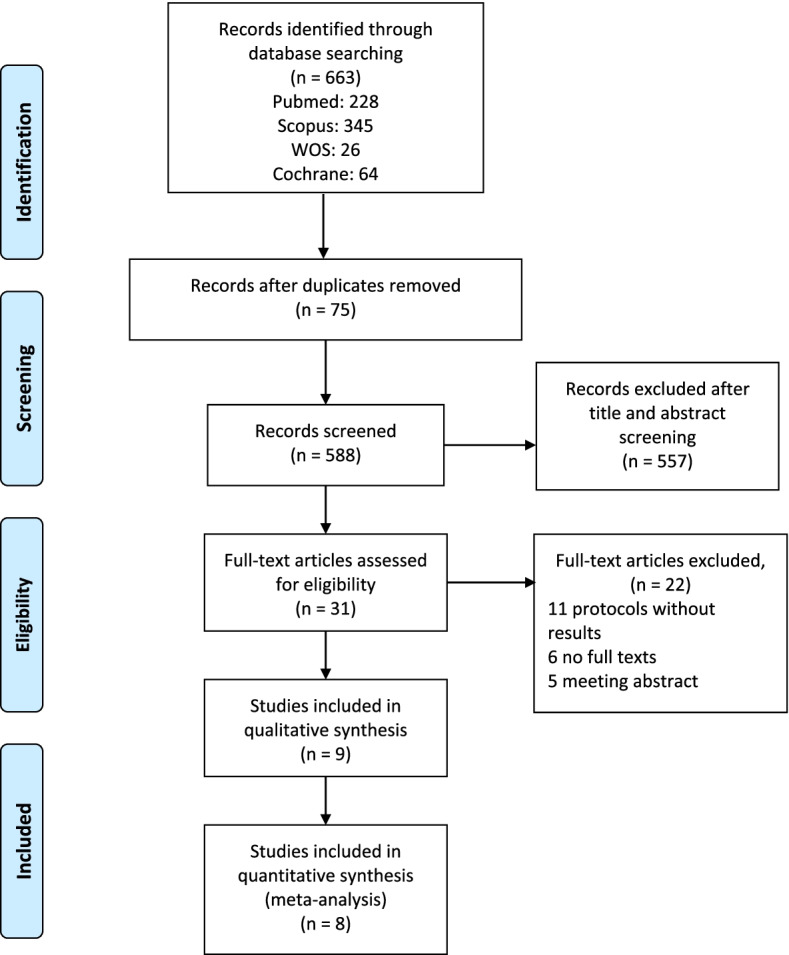
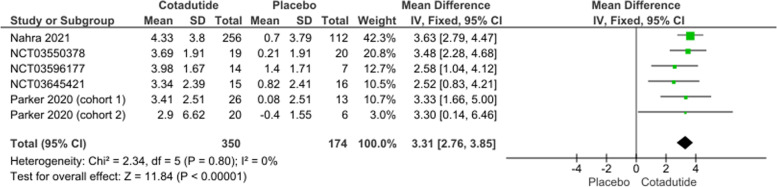
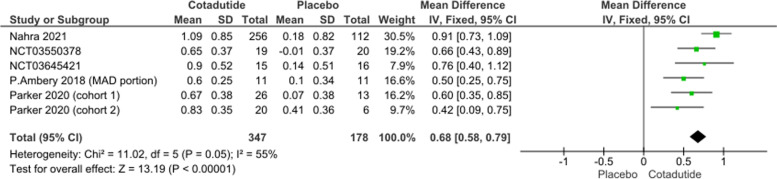
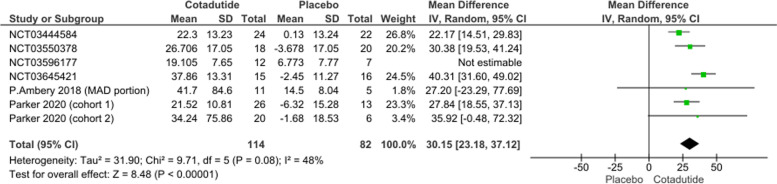
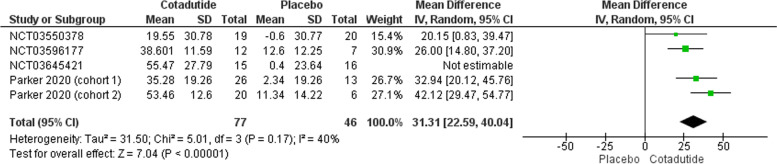
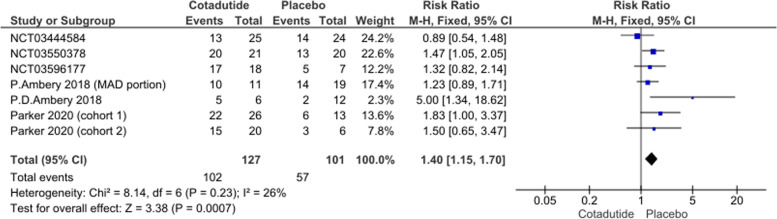
Background: The food and drug administration approved many drugs to treat diabetes mellitus, but those drugs do not have a noticeable effect on weight management. Recently, glucagon-like peptide 1 agonist known as Cotadutide serve as a potent drug in treating type 2 diabetes by reducing blood glucose levels and body weight indices. This study aimed to explore the safety and efficacy of Cotadutide as a treatment for type 2 diabetes individuals. Methods: A comprehensive literature search was done on different databases, including PubMed, Scopus, Web of Science, and Cochrane Library to capture all relevant articles using an established search strategy. The inclusion criteria were randomized controlled trials that assessed the safety and efficacy of Cotadutide versus placebo or any anti-diabetes drugs in patients with type 2 diabetes mellitus and a BMI between 22 kg/m 2 and 40 kg/m 2. We conducted the analysis using Revman software version 5.4. Results: We found 663 relevant articles. From which nine studies were included and subjected to qualitative analysis and eight for quantitative analysis. The pooled effect showed that Cotadutide was better than placebo in reducing body weight (kg) (Mean difference (MD) = 3.31, p < 0.00001), glycated hemoglobin (HbA 1c) (MD = 0.68, p > 0.00001), glucose area under the plasma concentration curve (AUC [0-4 h]) (MD = 30.15, p < 0.00001), and fasting plasma glucose over time (mg/dl) (MD = 31.31, p < 0.00001). Conclusion: Cotadutide is safe and effective in reducing plasma glucose levels, HbA 1c and body weight in individuals with type 2 diabetes. Trial registration: The study protocol was registered on PROSPERO (CRD: CRD42021257670).
Overview
The claims and statistics of this paper haven’t been checked yet.
Free: it reads the open-access text and checks the first 5 claims that cite a source we can check. Create a free account to check every claim.
Integrity signals
Registry
Cites
Statistics
Figures
Verification
Claims the paper makes
The claims and statistics of this paper haven’t been checked yet.
Free: it reads the open-access text and checks the first 5 claims that cite a source we can check. Create a free account to check every claim.
Claims other papers make about this one
Each is checked against this paper’s own text: does it say what the citing paper says it does?
The source backs part of the claim, not all of it — or backs it for a different population, condition or comparison.
In the citing paper
“Cotadutide's modest results, in addition to its high rate of treatment discontinuation due to adverse events, mirror those from Ali et al. [39]”
From Comparative Efficacy and Safety of Glucagon Receptor Agonists on Metabolic Outcomes: A Network Meta‐Analysis of Randomised Controlled Trials (2026) · cites this paper as [39]
Experimental — accuracy not yet measuredThe check wasn’t confident either way, so it gives no verdict — never disputed.
In the citing paper
“while tirzepatide promotes insulin secretion in murine islets exclusively via the GLP-1R, the peptide stimulates insulin secretion in human islets predominantly via the GIPR128.”
From Transforming obesity: The advancement of multi-receptor drugs (2024) · cites this paper as [128]
Experimental — accuracy not yet measuredIn the citing paper
“Our analysis aligns with prior meta‐analyses and systematic GRAs reviews.”
From Comparative Efficacy and Safety of Glucagon Receptor Agonists on Metabolic Outcomes: A Network Meta‐Analysis of Randomised Controlled Trials (2026) · cites this paper as [39]
Self-check
Percentages, sums and reported differences re-computed from the paper’s own numbers.
The self-check needs the paper’s full text.
Citations
Cites
The PRISMA 2020 statement: An updated guideline for reporting systematic reviews
Page, M. J., McKenzie, J. E., Bossuyt, P. M., Boutron, I., Hoffmann, T. C., Mulrow, C. D., Shamseer, L., Tetzlaff, J. M., Akl, E. A., Brennan, S. E., et al. (2021) · BMJ · doi:10.1136/bmj.n71 · Cited by 108,283
Measuring inconsistency in meta-analyses
Higgins, J. P. T., Thompson, S. G., Deeks, J. J., & Altman, D. G. (2003) · BMJ · doi:10.1136/bmj.327.7414.557 · Cited by 63,139
RoB 2: a revised tool for assessing risk of bias in randomised trials
Sterne, J. A. C., Savović, J., Page, M. J., Elbers, R. G., Blencowe, N. S., Boutron, I., Cates, C. J., Cheng, H.-Y., Corbett, M. S., Eldridge, S. M., et al. (2019) · BMJ · doi:10.1136/bmj.l4898 · Cited by 34,787 · cited 3×
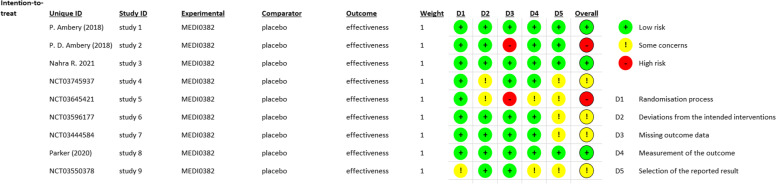
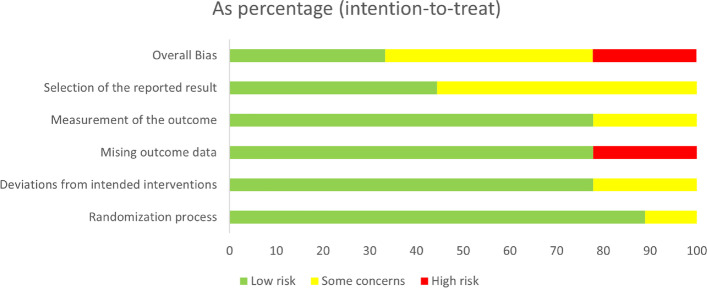
“Quality assessment Cochrane risk-of-bias tool for randomized trials (RoB 2) was applied to assess the quality of the selected RCTs [13].”
MethodInfluentialCochrane Handbook for Systematic Reviews of Interventions
(2019) · doi:10.1002/9781119536604 · Cited by 14,828
Type 2 diabetes: principles of pathogenesis and therapy
Stumvoll, M., Goldstein, B. J., & van Haeften, T. W. (2005) · The Lancet · doi:10.1016/s0140-6736(05)61032-x · Cited by 2,662 · cited 1×
“Type 2 diabetes mellitus is a long-term disease characterized by chronic insulin resistance and hyperglycemia that increases over time, resulting in increasing of insulin resistance leading to weight gain [2, 3].”
BackgroundTurner, R. C. (1999) · JAMA · doi:10.1001/jama.281.21.2005 · Cited by 2,375 · cited 1×
“In ten years, more than half of individuals with type 2 diabetes mellitus switch from oral monotherapy (usually Metformin) to insulin therapy to control their blood glucose levels [18].”
BackgroundHernandez, A. F., Green, J. B., Janmohamed, S., D'Agostino, R. B., Granger, C. B., Jones, N. P., Leiter, L. A., Rosenberg, A. E., Sigmon, K. N., Somerville, M. C., et al. (2018) · The Lancet · doi:10.1016/s0140-6736(18)32261-x · Cited by 1,829 · cited 1×
“Pre-clinical findings further suggest that the balance of activities at GLP-1 receptors and glucagon receptors was appropriate for both weight reduction and glycemic management [22].”
BackgroundDavies, M. J., Bergenstal, R., Bode, B., Kushner, R. F., Lewin, A., Skjøth, T. V., Andreasen, A. H., Jensen, C. B., DeFronzo, R. A., & for the NN8022-1922 Study Group (2015) · JAMA · doi:10.1001/jama.2015.9676 · Cited by 1,198
Regulation of hepatic glucose metabolism in health and disease
Petersen, M. C., Vatner, D. F., & Shulman, G. I. (2017) · Nature Reviews Endocrinology · doi:10.1038/nrendo.2017.80 · Cited by 1,133
Glucagon and regulation of glucose metabolism
Jiang, G., & Zhang, B. B. (2003) · American Journal of Physiology-Endocrinology and Metabolism · doi:10.1152/ajpendo.00492.2002 · Cited by 905 · cited 1×
“They also help people lose weight by reducing the appetite and increasing energy expenditure by optimizing metabolic reactions such as amino acid catabolism, and fatty acid oxidation [10].”
Background
Cited by
Boutari, C., DeMarsilis, A., & Mantzoros, C. S. (2023) · Diabetes Research and Clinical Practice · doi:10.1016/j.diabres.2023.110773 · Cited by 161
Transforming obesity: The advancement of multi-receptor drugs
Kusminski, C. M., Perez-Tilve, D., Müller, T. D., DiMarchi, R. D., Tschöp, M. H., & Scherer, P. E. (2024) · Cell · doi:10.1016/j.cell.2024.06.003 · Cited by 126
An update on peptide-based therapies for type 2 diabetes and obesity
Bailey, C. J., Flatt, P. R., & Conlon, J. M. (2023) · Peptides · doi:10.1016/j.peptides.2023.170939 · Cited by 111
Reza, M. S., Amin, R., Yasmin, R., Kulsum, W., & Ruhi, S. (2024) · Heliyon · doi:10.1016/j.heliyon.2024.e24536 · Cited by 109
“There are mainly two types of diabetes that are most frequently diagnosed are type 1 and type 2 [5,6].”
BackgroundType 2 Diabetes (T2DM) and Parkinson’s Disease (PD): a Mechanistic Approach
Sabari, S. S., Balasubramani, K., Iyer, M., Babu, H. W. S., Venkatesan, D., Gopalakrishnan, A. V., Narayanaswamy, A., Kumar, N. S., & Vellingiri, B. (2023) · Molecular Neurobiology · doi:10.1007/s12035-023-03359-y · Cited by 69
GLP-1R Signaling and Functional Molecules in Incretin Therapy
Wan, W., Qin, Q., Xie, L., Zhang, H., Wu, F., Stevens, R. C., & Liu, Y. (2023) · Molecules · doi:10.3390/molecules28020751 · Cited by 44
“Several OXM derivatives are under clinical trials, for example, cotadutide, a once-daily GCGR/GLP1R dual agonist, has shown promising impacts on glycemic control, body weight, and liver fat reduction [89].”
BackgroundAn Updated Approach to Antiobesity Pharmacotherapy: Moving Beyond the 5% Weight Loss Goal
Enright, C., Thomas, E., & Saxon, D. R. (2023) · Journal of the Endocrine Society · doi:10.1210/jendso/bvac195 · Cited by 32
“Cotadutide is another GLP-1 and glucagon receptor agonist with a similar safety and efficacy profile currently undergoing phase 2 trials [91].”
Intra-islet α-cell Gs signaling promotes glucagon release
Liu, L., EL, K. M., Dattaroy, D., Barella, L. F., Cui, Y., Gray, S. M., Guedikian, C., Chen, M., Weinstein, L. S., Knuth, E. R., et al. (2024) · Nature Communications · doi:10.1038/s41467-024-49537-x · Cited by 22
“Infact,severalGCGR/GLP-1R dual agonists are currently undergoing clinical trials for the treatment of diabetes, obesity, and nonalcoholic steatohepatitis 1,16 – 18 .”
Weight Loss Blockbuster Development: A Role for Unimolecular Polypharmacology
Zhou, Q., Li, G., Hang, K., Li, J., Yang, D., & Wang, M. (2024) · The Annual Review of Pharmacology and Toxicology · doi:10.1146/annurev-pharmtox-061324-011832 · Cited by 16
Perspectives in weight control in diabetes – SGLT2 inhibitors and GLP-1–glucagon dual agonism
Iqbal, N., Ambery, P., Logue, J., Mallappa, A., & Sjöström, C. D. (2023) · Diabetes Research and Clinical Practice · doi:10.1016/j.diabres.2023.110669 · Cited by 14
Ciccarelli, G., Giuseppe, G. D., Cinti, F., Moffa, S., Mezza, T., & Giaccari, A. (2023) · Diabetes/Metabolism Research and Reviews · doi:10.1002/dmrr.3668 · Cited by 11
“has been shown to reverse hepatic steatosis in murine models and there are currently various ongoing trials to evaluate its efficacy on the metabolic consequences of diabetes.(82) The weight‐lowering ef-”
Computational Peptide Design Cotargeting Glucagon and Glucagon-like Peptide-1 Receptors
Vishnoi, S., Bhattacharya, S., Walsh, E. M., Okoh, G., & Thompson, D. (2023) · Journal of Chemical Information and Modeling · doi:10.1021/acs.jcim.3c00752 · Cited by 14
Cazac, G.-D., Lăcătușu, C.-M., Grigorescu, E.-D., Foșălău, A.-B., Onofriescu, A., & Mihai, B. M. (2025) · Journal of Clinical Medicine · doi:10.3390/jcm14041042 · Cited by 10
“A systematic review and metanalysis concluded that cotadutide outperformed placebo over time in reducing body weight (mean difference [MD] = 3.31 kg, p 0.00001), HbA 1c levels (MD = 0.68%, p 0.00001), and fasting plasma glucose levels (MD = 31.31 mg/dL, p 0.00001) [86].”
InfluentialStachteas, P., Nasoufidou, A., Karakasis, P., Koiliari, M., Karagiannidis, E., Koufakis, T., Fragakis, N., & Patoulias, D. (2025) · Reviews in Cardiovascular Medicine · doi:10.31083/rcm39691 · Cited by 11
“A meta-analysis incorporating data from nine clinical studies confirmed the efficacy of cotadutide in lowering both HbA1c and fasting glucose levels, reinforcing its potential role in managing metabolic disease [42].”
Polyagonists in Type 2 Diabetes Management
Dissanayake, H. A., & Somasundaram, N. P. (2024) · Current Diabetes Reports · doi:10.1007/s11892-023-01530-2 · Cited by 8
Kim, T., Nason, S. R., ANTIPENKO, J. P., Finan, B., Shalev, A., DiMarchi, R. D., & Habegger, K. M. (2022) · Diabetes · doi:10.2337/db21-1018 · Cited by 12
Recent Trends in Peptide Drug Discovery and Development
Madge, H. Y. R., & Muttenthaler, M. (2024) · Royal Society of Chemistry eBooks · doi:10.1039/9781837674541-00023 · Cited by 6
Jiménez-Martí, E., Hurtado-Genovés, G., Aguilar-Ballester, M., Martínez‐Hervás, S., & Navarro, H. G. (2022) · Nutrients · doi:10.3390/nu14183775 · Cited by 7
“Finally, cotadutide has been studied in about 20 clinical trials, whose results have been reviewed in a recent meta-analysis that screened 663 relevant articles and included 8 investigations [109].”
BackgroundDutta, D., Kamrul-Hasan, A. B. M., Joshi, A. S., Dhall, A., Nagendra, L., & Sharma, M. (2025) · Indian Journal of Endocrinology and Metabolism · doi:10.4103/ijem.ijem_366_24 · Cited by 4
Abulehia, A., Ayesh, H., Ayesh, O., Jaber, D., Asad, T., Itbaisha, A., Abugharbieh, H., Gharbia, R., Abu‐Hilal, L. H., & Leon, B. G. C. (2026) · Endocrinology, Diabetes & Metabolism · doi:10.1002/edm2.70187 · Cited by 3
Kamrul-Hasan, A. B. M., Dutta, D., Nagendra, L., Basavarajappa, S. D., Girijashankar, H. B., Joshi, A., & Pappachan, J. M. (2025) · World Journal of Diabetes · doi:10.4239/wjd.v16.i12.112830 · Cited by 4
“Ali et al [17] published a systematic review (SR) and meta-analysis (MA) on the impact of cotadutide in patients with T2D in 2022.”
A review of survodutide: a new dual acting agonist
Yathindra, M. R., BHATTACHARJEE, A., PUNDIR, N., PATEL, P., Jacob, N. E., Jossy, P. E., & Seetharaman, R. (2026) · Minerva Endocrinology · doi:10.23736/s2724-6507.26.04406-4 · Cited by 2
Efficient Diabetes Detection using Hybrid Machine Learning Model
Gowri, A. S., Jose, P., Karthik, S. M., Shaheema, S. B., Karuppasway, K. M., & Balamurugan, R. (2024) · International Conference on Distributed Systems, Computer Networks and Cybersecurity (ICDSCNC) · doi:10.1109/icdscnc62492.2024.10939825
“Ali, Mahmoud M [15] has employed a Deep Neural Network (DNN).”
Doppi e tripli agonisti recettoriali nel trattamento del diabete mellito tipo 2
Pizzo, A., Paccagnella, M., Luca, F. D., & Candido, R. (2025) · L Endocrinologo · doi:10.1007/s40619-025-01710-0 · Cited by 1
Metadata
- Authors
- Ali, M. M., Hafez, A., Abdelgalil, M. S., Hasan, M. T., El-Ghannam, M. M., Ghogar, O. M., Elrashedy, A. A., & Abd-ElGawad, M.
- Affiliations
- Al-Azhar University (EG)
- German University in Cairo (EG)
- Kafrelsheikh University (EG)
- Venue
- BMC Endocrine Disorders
- Published
- 2022-04-29
- Volume
- 22
- Issue
- 1
- Pages
- 113-113
- ISSN
- 1472-6823 (ISSN-L)
- PMC
- PMC9055739
- OpenAlex
- W4225098447
- Cited by
- 23
- References
- 35
- Citations by year
- 2026: 1 · 2025: 5 · 2024: 6 · 2023: 9 · 2022: 2
- FWCI
- 0.78
- Type
- journal article
- Language
- en
- Open access
- gold
- doi.org
- Licence
- cc-by
- creativecommons.org/licenses/by/4.0 (tdm)
- creativecommons.org/licenses/by/4.0 (vor)
- Locations
- BMC Endocrine Disorders (publishedVersion, cc-by)
- PubMed Central (publishedVersion, cc-by)
- PubMed (publishedVersion)
- DOAJ (DOAJ: Directory of Open Access Journals) (submittedVersion, cc-by-sa)
- Funders
- The Science, Technology & Innovation Funding Authority
- Topics
- Health Sciences › Medicine › Endocrinology, Diabetes and Metabolism › Diabetes Treatment and Management
- Health Sciences › Medicine › Pharmacology (medical) › Pharmacology and Obesity Treatment
- Health Sciences › Medicine › Endocrinology, Diabetes and Metabolism › Diabetes Management and Research
- Keywords
- cotadutide, type 2 diabetes, GLP-1 receptor agonists, weight loss, HbA1c, fasting blood glucose, glycemic control, drug safety and efficacy
- MeSH terms
- Blood Glucose, Body Weight, Diabetes Mellitus, Type 2, Pharmaceutical Preparations, Humans, Peptides, United States, Randomized Controlled Trials as Topic
About these checks
Registry, retraction, Cites and statistics results are computed, not judged, with one exception: a printed reference that no index lists is read once by a model before it counts as a citation error. Claims are extracted by a model and kept only when their quote appears verbatim in the text; each cited source is then checked, with a model’s help, for whether it says what the claim relies on. Those verdicts can be wrong — read the claim’s quote and the cited source before relying on one.
Statistics and arithmetic are recomputed, not judged.
Confidence bands are shown only for fields calibrated on our annotated test set. None is calibrated yet, so no band is shown.
What counts as a claim ›How we measure confidence ›How we check this ›
Are you an author, or do you see a problem with this page? Request a review
Data sources
Bibliographic data: Semantic Scholar, OpenAlex, Crossref.
Contains information from the Semantic Scholar Academic Graph Datasets, made available under the ODC Attribution License (ODC-BY 1.0).
Semantic Scholar’s data is described in: Kinney, R., et al. (2023). The Semantic Scholar Open Data Platform. arXiv:2301.10140.
