

Impact of Cotadutide drug on patients with type 2 diabetes mellitus: a systematic review and meta-analysis
Open accessThe DOI matches its Crossref record; 35 of the 35 references it cites were found in a registry or an index.
Abstract
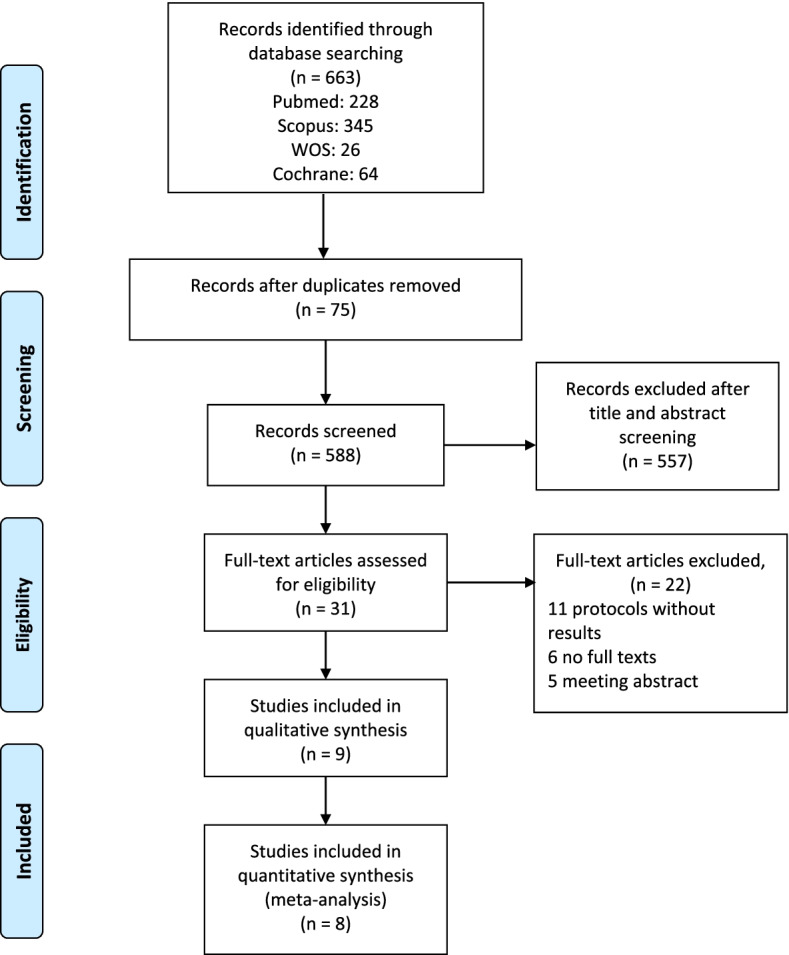
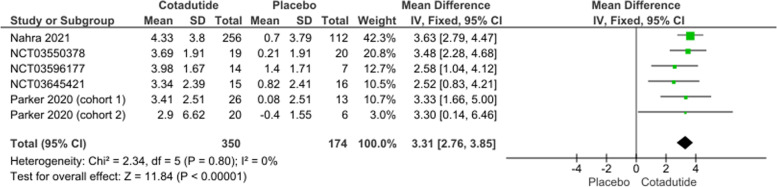
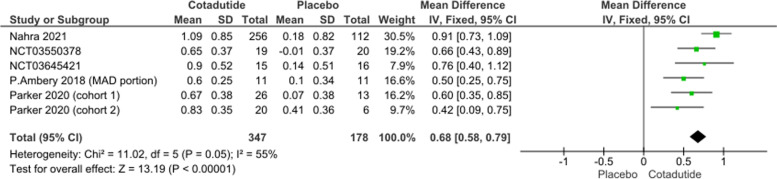
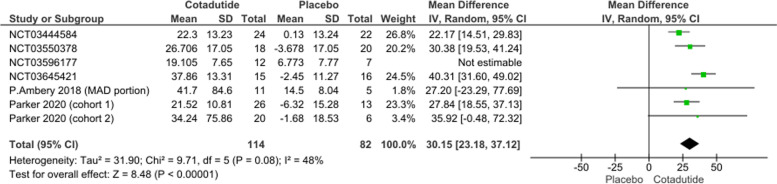
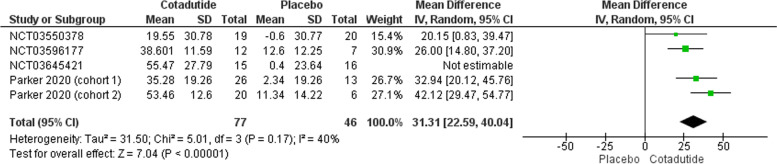
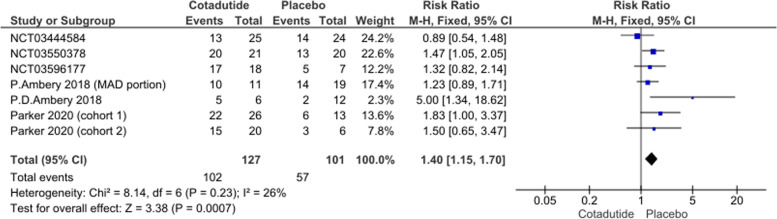
Background: The food and drug administration approved many drugs to treat diabetes mellitus, but those drugs do not have a noticeable effect on weight management. Recently, glucagon-like peptide 1 agonist known as Cotadutide serve as a potent drug in treating type 2 diabetes by reducing blood glucose levels and body weight indices. This study aimed to explore the safety and efficacy of Cotadutide as a treatment for type 2 diabetes individuals. Methods: A comprehensive literature search was done on different databases, including PubMed, Scopus, Web of Science, and Cochrane Library to capture all relevant articles using an established search strategy. The inclusion criteria were randomized controlled trials that assessed the safety and efficacy of Cotadutide versus placebo or any anti-diabetes drugs in patients with type 2 diabetes mellitus and a BMI between 22 kg/m 2 and 40 kg/m 2. We conducted the analysis using Revman software version 5.4. Results: We found 663 relevant articles. From which nine studies were included and subjected to qualitative analysis and eight for quantitative analysis. The pooled effect showed that Cotadutide was better than placebo in reducing body weight (kg) (Mean difference (MD) = 3.31, p < 0.00001), glycated hemoglobin (HbA 1c) (MD = 0.68, p > 0.00001), glucose area under the plasma concentration curve (AUC [0-4 h]) (MD = 30.15, p < 0.00001), and fasting plasma glucose over time (mg/dl) (MD = 31.31, p < 0.00001). Conclusion: Cotadutide is safe and effective in reducing plasma glucose levels, HbA 1c and body weight in individuals with type 2 diabetes. Trial registration: The study protocol was registered on PROSPERO (CRD: CRD42021257670).
Overview
The claims and statistics of this paper haven’t been checked yet.
Free: it reads the open-access text and checks the first 5 claims that cite a source we can check. Create a free account to check every claim.
Integrity signals
Registry
Cites
Statistics
Figures
Verification
Claims the paper makes
The claims and statistics of this paper haven’t been checked yet.
Free: it reads the open-access text and checks the first 5 claims that cite a source we can check. Create a free account to check every claim.
Claims other papers make about this one
Each is checked against this paper’s own text: does it say what the citing paper says it does?
The source backs part of the claim, not all of it — or backs it for a different population, condition or comparison.
In the citing paper
“Cotadutide's modest results, in addition to its high rate of treatment discontinuation due to adverse events, mirror those from Ali et al. [39]”
From Comparative Efficacy and Safety of Glucagon Receptor Agonists on Metabolic Outcomes: A Network Meta‐Analysis of Randomised Controlled Trials (2026) · cites this paper as [39]
Experimental — accuracy not yet measuredThe check wasn’t confident either way, so it gives no verdict — never disputed.
In the citing paper
“while tirzepatide promotes insulin secretion in murine islets exclusively via the GLP-1R, the peptide stimulates insulin secretion in human islets predominantly via the GIPR128.”
From Transforming obesity: The advancement of multi-receptor drugs (2024) · cites this paper as [128]
Experimental — accuracy not yet measured
Self-check
Percentages, sums and reported differences re-computed from the paper’s own numbers.
The self-check needs the paper’s full text.
Citations
Cites
The PRISMA 2020 statement: An updated guideline for reporting systematic reviews
Page, M. J., McKenzie, J. E., Bossuyt, P. M., Boutron, I., Hoffmann, T. C., Mulrow, C. D., Shamseer, L., Tetzlaff, J. M., Akl, E. A., Brennan, S. E., et al. (2021) · BMJ · doi:10.1136/bmj.n71 · Cited by 108,283
Measuring inconsistency in meta-analyses
Higgins, J. P. T., Thompson, S. G., Deeks, J. J., & Altman, D. G. (2003) · BMJ · doi:10.1136/bmj.327.7414.557 · Cited by 63,139
RoB 2: a revised tool for assessing risk of bias in randomised trials
Sterne, J. A. C., Savović, J., Page, M. J., Elbers, R. G., Blencowe, N. S., Boutron, I., Cates, C. J., Cheng, H.-Y., Corbett, M. S., Eldridge, S. M., et al. (2019) · BMJ · doi:10.1136/bmj.l4898 · Cited by 34,787 · cited 3×
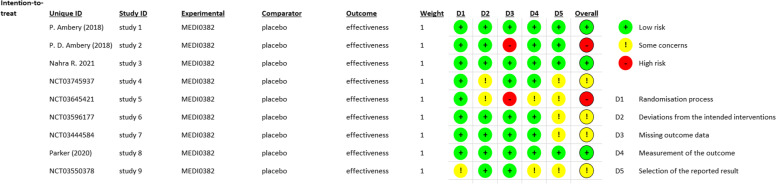
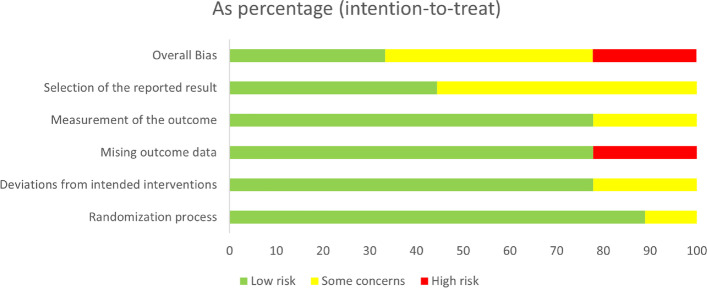
“Quality assessment Cochrane risk-of-bias tool for randomized trials (RoB 2) was applied to assess the quality of the selected RCTs [13].”
MethodInfluentialCochrane Handbook for Systematic Reviews of Interventions
(2019) · doi:10.1002/9781119536604 · Cited by 14,828
Type 2 diabetes: principles of pathogenesis and therapy
Stumvoll, M., Goldstein, B. J., & van Haeften, T. W. (2005) · The Lancet · doi:10.1016/s0140-6736(05)61032-x · Cited by 2,662 · cited 1×
“Type 2 diabetes mellitus is a long-term disease characterized by chronic insulin resistance and hyperglycemia that increases over time, resulting in increasing of insulin resistance leading to weight gain [2, 3].”
BackgroundTurner, R. C. (1999) · JAMA · doi:10.1001/jama.281.21.2005 · Cited by 2,375 · cited 1×
“In ten years, more than half of individuals with type 2 diabetes mellitus switch from oral monotherapy (usually Metformin) to insulin therapy to control their blood glucose levels [18].”
BackgroundHernandez, A. F., Green, J. B., Janmohamed, S., D'Agostino, R. B., Granger, C. B., Jones, N. P., Leiter, L. A., Rosenberg, A. E., Sigmon, K. N., Somerville, M. C., et al. (2018) · The Lancet · doi:10.1016/s0140-6736(18)32261-x · Cited by 1,829 · cited 1×
“Pre-clinical findings further suggest that the balance of activities at GLP-1 receptors and glucagon receptors was appropriate for both weight reduction and glycemic management [22].”
BackgroundDavies, M. J., Bergenstal, R., Bode, B., Kushner, R. F., Lewin, A., Skjøth, T. V., Andreasen, A. H., Jensen, C. B., DeFronzo, R. A., & for the NN8022-1922 Study Group (2015) · JAMA · doi:10.1001/jama.2015.9676 · Cited by 1,198
Regulation of hepatic glucose metabolism in health and disease
Petersen, M. C., Vatner, D. F., & Shulman, G. I. (2017) · Nature Reviews Endocrinology · doi:10.1038/nrendo.2017.80 · Cited by 1,133
Glucagon and regulation of glucose metabolism
Jiang, G., & Zhang, B. B. (2003) · American Journal of Physiology-Endocrinology and Metabolism · doi:10.1152/ajpendo.00492.2002 · Cited by 905 · cited 1×
“They also help people lose weight by reducing the appetite and increasing energy expenditure by optimizing metabolic reactions such as amino acid catabolism, and fatty acid oxidation [10].”
BackgroundUpdate on the treatment of type 2 diabetes mellitus
Marín-Peñalver, J. J., Martín-Timón, I., Sevillano-Collantes, C., & Cañizo-Gómez, F. J. D. (2016) · World Journal of Diabetes · doi:10.4239/wjd.v7.i17.354 · Cited by 647 · cited 1×
“which acts through various trajectories to inhibit gluconeogenesis and reduce the level of lipopolysaccharide, (b) insulin secretagogues, (c) alpha-glucosidase inhibitors, (d) dipeptidyl peptidase 4 inhibitors, and (e) sodiumglucose co-transporter-2 inhibitor [4].”
Backgroundvan Can, J., Sloth, B., Jensen, C. B., Flint, A., Blaak, E. E., & Saris, W. H. M. (2014) · International Journal of Obesity · doi:10.1038/ijo.2013.162 · Cited by 537 · cited 1×
“2014 investigated the effects of longacting GLP-1 receptor agonists (liraglutide) on gastric emptying and the result indicated that liraglutide at 3 mg significantly delays the gastric emptying [8].”
BackgroundPurnell, J. Q., Hokanson, J. E., Marcovina, S. M., Steffes, M. W., Cleary, P. A., & Brunzell, J. D. (1998) · JAMA · doi:10.1001/jama.280.2.140 · Cited by 469
Does obesity cause type 2 diabetes mellitus (T2DM)? Or is it the opposite?
Malone, J. I., & Hansen, B. C. (2019) · Pediatric Diabetes · doi:10.1111/pedi.12787 · Cited by 354
Nahra, R., Wang, T., Gadde, K. M., Oscarsson, J., Stumvoll, M., Jermutus, L., Hirshberg, B., & Ambery, P. (2021) · Diabetes Care · doi:10.2337/dc20-2151 · Cited by 323 · cited 3×
“Only 16% of participants acquired ADAs over a titer of 80, at which point the influence on pharmacokinetics was around two times higher than the population average [16] (ClinicalTrials.”
BackgroundAmbery, P., Parker, V. E., Stumvoll, M., Posch, M. G., Heise, T., Plum-Moerschel, L., Tsai, L.-F., Robertson, D., Jain, M., Petrone, M., et al. (2018) · The Lancet · doi:10.1016/s0140-6736(18)30726-8 · Cited by 298 · cited 7×
“Similar to these previous findings [6, 15], in phase 2a, Cotadutide (100–300 μg) significantly lowered blood glucose levels and body weight indices in overweight or obese Japanese people with type 2 diabetes throughout a 48-day treatment period compared to placebo.”
BackgroundResultInfluentialMeier, J. J., Gethmann, A., Götze, O., Gallwitz, B., Holst, J. J., Schmidt, W. E., & Nauck, M. A. (2006) · Diabetologia · doi:10.1007/s00125-005-0126-y · Cited by 276 · cited 2×
“These activities are supposed to be balanced by stimulating insulin release mediated by glucose, delayed gastric emptying, and enhanced oxidation of fatty acids [23, 24].”
BackgroundResultBoland, M. L., Laker, R. C., Mather, K., Nawrocki, A., Oldham, S., Boland, B. B., Lewis, H., Conway, J., Naylor, J., Guionaud, S., et al. (2020) · Nature Metabolism · doi:10.1038/s42255-020-0209-6 · Cited by 270 · cited 1×
“The decrease in hepatic glycogen contrasts with what would be expected from a GLP-1 mono-agonist, which would cause glycogen accumulation and exhibit glucagon receptor interaction [28].”
BackgroundFibroblast Growth Factor 21 Mediates Specific Glucagon Actions
Habegger, K. M., Stemmer, K., Cheng, C., Müller, T. D., Heppner, K. M., Ottaway, N., Holland, J., Hembree, J. L., Smiley, D., Gelfanov, V., et al. (2013) · Diabetes · doi:10.2337/db12-1116 · Cited by 245
Nauck, M. A., Petrie, J. R., Sesti, G., Mannucci, E., Courrèges, J.-P., Lindegaard, M. L., Jensen, C. B., & Atkin, S. L. (2016) · Diabetes Care · doi:10.2337/dc15-0165 · Cited by 233 · cited 1×
“This outcome is also seen with the GLP-1 receptor mono-agonists [33, 34].”
BackgroundPatel, N. S., Doycheva, I., Peterson, M. R., Hooker, J., Kisselva, T., Schnabl, B., Seki, E., Sirlin, C. B., & Loomba, R. (2015) · Clinical Gastroenterology and Hepatology · doi:10.1016/j.cgh.2014.08.039 · Cited by 173 · cited 1×
“5 percent relative decline in liver fat [30].”
BackgroundGuzman, C. B., Zhang, X. M., Liu, R., Regev, A., Shankar, S., Garhyan, P., Pillai, S. G., Kazda, C., Chalasani, N., & Hardy, T. A. (2017) · Diabetes, Obesity and Metabolism · doi:10.1111/dom.12958 · Cited by 172 · cited 1×
“Cotadutide has also been known to significantly reduce hepatic glycogen and steatosis, as well as having a beneficial effect on hepatic inflammation and fibrosis markers [26, 27].”
BackgroundLorenz, M., Pfeiffer, C., Steinsträßer, A., Becker, R. H. A., Rütten, H., Ruus, P., & Horowitz, M. (2013) · Regulatory Peptides · doi:10.1016/j.regpep.2013.04.001 · Cited by 149 · cited 1×
“2013 showed that short-acting GLP-1 receptor agonists (lixisenatide) at a dose of 20 μg daily lowers postprandial hyperglycemia excursions in individuals with type 2 diabetes mellitus, probably caused by the continuous slowing of stomach emptying [7].”
BackgroundWilcox, R., Kupfer, S., & Erdmann, E. (2008) · American Heart Journal · doi:10.1016/j.ahj.2007.11.029 · Cited by 138 · cited 1×
“The overall gain in weight can cause an increase in insulin resistance which is associated with high blood pressure, dyslipidemia, and a high risk of cardiovascular mortalities and morbidities such as non-fatal myocardial infarction or stroke, both before and after diagnosis of diabetes [20, 21].”
BackgroundParker, V. E. R., Robertson, D., Wang, T., Hornigold, D. C., Petrone, M., Cooper, A. T., Posch, M. G., Heise, T., Plum-Moerschel, L., Schlichthaar, H., et al. (2020) · The Journal of Clinical Endocrinology & Metabolism · doi:10.1210/clinem/dgz047 · Cited by 123 · cited 4×
“08% for Cotadutide versus placebo, respectively [17].”
BackgroundInfluentialGreen, J. B., Hernandez, A. F., D’Agostino, R. B., Granger, C. B., Janmohamed, S., Jones, N. P., Leiter, L. A., Noronha, D., Russell, R., Sigmon, K., et al. (2018) · American Heart Journal · doi:10.1016/j.ahj.2018.03.030 · Cited by 94 · cited 1×
“78, which implies that GLP-1 agonists can improve cardiovascular outcomes according to these data [31].”
BackgroundDouek, I. F., Allen, S. E., Ewings, P., Gale, E. A. M., Bingley, P. J., & for the Metformin Trial Group (2005) · Diabetic Medicine · doi:10.1111/j.1464-5491.2005.01475.x · Cited by 75 · cited 1×
“Insulin use causes weight gain, which can exceed 6 kg 20 in the first year after starting insulin medication [19].”
BackgroundAmbery, P. D., Klammt, S., Posch, M. G., Petrone, M., Pu, W., Rondinone, C., Jermutus, L., & Hirshberg, B. (2018) · British Journal of Clinical Pharmacology · doi:10.1111/bcp.13688 · Cited by 75 · cited 13×
“Similar to these previous findings [6, 15], in phase 2a, Cotadutide (100–300 μg) significantly lowered blood glucose levels and body weight indices in overweight or obese Japanese people with type 2 diabetes throughout a 48-day treatment period compared to placebo.”
BackgroundResultInfluentialQuast, D. R., Schenker, N., Menge, B. A., Nauck, M. A., Kapitza, C., & Meier, J. J. (2020) · Diabetes Care · doi:10.2337/dc20-0720 · Cited by 64 · cited 1×
“reported in 2020 that lixisenatide reduced the gastric emptying rate more than liraglutide [9].”
BackgroundAbdominal adiposity and liver fat content 3 and 12 months after gastric banding surgery
Heath, M. L., Kow, L., Slavotinek, J., Valentine, R., Toouli, J., & Thompson, C. H. (2009) · Metabolism · doi:10.1016/j.metabol.2008.05.021 · Cited by 40 · cited 1×
“Furthermore, the degree of liver fat loss with Cotadutide (39% reduction) was comparable to that shown in a small study of women three months following bariatric surgery (42% reduction) [29].”
ResultKumarathurai, P., Anholm, C., Fabricius-Bjerre, A., Nielsen, O. W., Kristiansen, O., Madsbad, S., Haugaard, S. B., & Sajadieh, A. (2017) · Journal of Hypertension · doi:10.1097/hjh.0000000000001275 · Cited by 39
Asano, M., Sekikawa, A., Kim, H., Gasser, R. A., Robertson, D., Petrone, M., Jermutus, L., & Ambery, P. (2021) · Diabetes, Obesity and Metabolism · doi:10.1111/dom.14412 · Cited by 38 · cited 3×
“Cotadutide has also been known to significantly reduce hepatic glycogen and steatosis, as well as having a beneficial effect on hepatic inflammation and fibrosis markers [26, 27].”
BackgroundLynch, A. M., Pathak, N., Flatt, Y. E., Gault, V. A., O'Harte, F. P. M., Irwin, N., & Flatt, P. R. (2014) · European Journal of Pharmacology · doi:10.1016/j.ejphar.2014.09.018 · Cited by 30 · cited 1×
“These activities are supposed to be balanced by stimulating insulin release mediated by glucose, delayed gastric emptying, and enhanced oxidation of fatty acids [23, 24].”
BackgroundHow to fight obesity with antidiabetic drugs: targeting gut or kidney?
Baretić, M., & Troskot, R. (2015) · PubMed · Cited by 5
Robertson, D. C., Parker, V., Ambery, P., Petrone, M., Wang, T., Heise, T., PLUM-MOERSCHEL, L., Jermutus, L., Hirshberg, B., & Meier, J. J. (2019) · Diabetes · doi:10.2337/db19-988-p · Cited by 5
Cited by
Boutari, C., DeMarsilis, A., & Mantzoros, C. S. (2023) · Diabetes Research and Clinical Practice · doi:10.1016/j.diabres.2023.110773 · Cited by 161
Transforming obesity: The advancement of multi-receptor drugs
Kusminski, C. M., Perez-Tilve, D., Müller, T. D., DiMarchi, R. D., Tschöp, M. H., & Scherer, P. E. (2024) · Cell · doi:10.1016/j.cell.2024.06.003 · Cited by 126
An update on peptide-based therapies for type 2 diabetes and obesity
Bailey, C. J., Flatt, P. R., & Conlon, J. M. (2023) · Peptides · doi:10.1016/j.peptides.2023.170939 · Cited by 111
Reza, M. S., Amin, R., Yasmin, R., Kulsum, W., & Ruhi, S. (2024) · Heliyon · doi:10.1016/j.heliyon.2024.e24536 · Cited by 109
“There are mainly two types of diabetes that are most frequently diagnosed are type 1 and type 2 [5,6].”
BackgroundType 2 Diabetes (T2DM) and Parkinson’s Disease (PD): a Mechanistic Approach
Sabari, S. S., Balasubramani, K., Iyer, M., Babu, H. W. S., Venkatesan, D., Gopalakrishnan, A. V., Narayanaswamy, A., Kumar, N. S., & Vellingiri, B. (2023) · Molecular Neurobiology · doi:10.1007/s12035-023-03359-y · Cited by 69
Metadata
- Authors
- Ali, M. M., Hafez, A., Abdelgalil, M. S., Hasan, M. T., El-Ghannam, M. M., Ghogar, O. M., Elrashedy, A. A., & Abd-ElGawad, M.
- Affiliations
- Al-Azhar University (EG)
- German University in Cairo (EG)
- Kafrelsheikh University (EG)
- Venue
- BMC Endocrine Disorders
- Published
- 2022-04-29
- Volume
- 22
- Issue
- 1
- Pages
- 113-113
- ISSN
- 1472-6823 (ISSN-L)
- PMC
- PMC9055739
- OpenAlex
- W4225098447
- Cited by
- 23
- References
- 35
- Citations by year
- 2026: 1 · 2025: 5 · 2024: 6 · 2023: 9 · 2022: 2
- FWCI
- 0.78
- Type
- journal article
- Language
- en
- Open access
- gold
- doi.org
- Licence
- cc-by
- creativecommons.org/licenses/by/4.0 (tdm)
- creativecommons.org/licenses/by/4.0 (vor)
- Locations
- BMC Endocrine Disorders (publishedVersion, cc-by)
- PubMed Central (publishedVersion, cc-by)
- PubMed (publishedVersion)
- DOAJ (DOAJ: Directory of Open Access Journals) (submittedVersion, cc-by-sa)
- Funders
- The Science, Technology & Innovation Funding Authority
- Topics
- Health Sciences › Medicine › Endocrinology, Diabetes and Metabolism › Diabetes Treatment and Management
- Health Sciences › Medicine › Pharmacology (medical) › Pharmacology and Obesity Treatment
- Health Sciences › Medicine › Endocrinology, Diabetes and Metabolism › Diabetes Management and Research
- Keywords
- cotadutide, type 2 diabetes, GLP-1 receptor agonists, weight loss, HbA1c, fasting blood glucose, glycemic control, drug safety and efficacy
- MeSH terms
- Blood Glucose, Body Weight, Diabetes Mellitus, Type 2, Pharmaceutical Preparations, Humans, Peptides, United States, Randomized Controlled Trials as Topic
About these checks
Registry, retraction, Cites and statistics results are computed, not judged, with one exception: a printed reference that no index lists is read once by a model before it counts as a citation error. Claims are extracted by a model and kept only when their quote appears verbatim in the text; each cited source is then checked, with a model’s help, for whether it says what the claim relies on. Those verdicts can be wrong — read the claim’s quote and the cited source before relying on one.
Statistics and arithmetic are recomputed, not judged.
Confidence bands are shown only for fields calibrated on our annotated test set. None is calibrated yet, so no band is shown.
What counts as a claim ›How we measure confidence ›How we check this ›
Are you an author, or do you see a problem with this page? Request a review
Data sources
Bibliographic data: Semantic Scholar, OpenAlex, Crossref.
Contains information from the Semantic Scholar Academic Graph Datasets, made available under the ODC Attribution License (ODC-BY 1.0).
Semantic Scholar’s data is described in: Kinney, R., et al. (2023). The Semantic Scholar Open Data Platform. arXiv:2301.10140.
