

Effects of GLP1RAs on pregnancy rate and menstrual cyclicity in women with polycystic ovary syndrome: a meta-analysis and systematic review
Open accessThe DOI matches its Crossref record; 57 of the 57 references it cites were found in a registry or an index.
Abstract
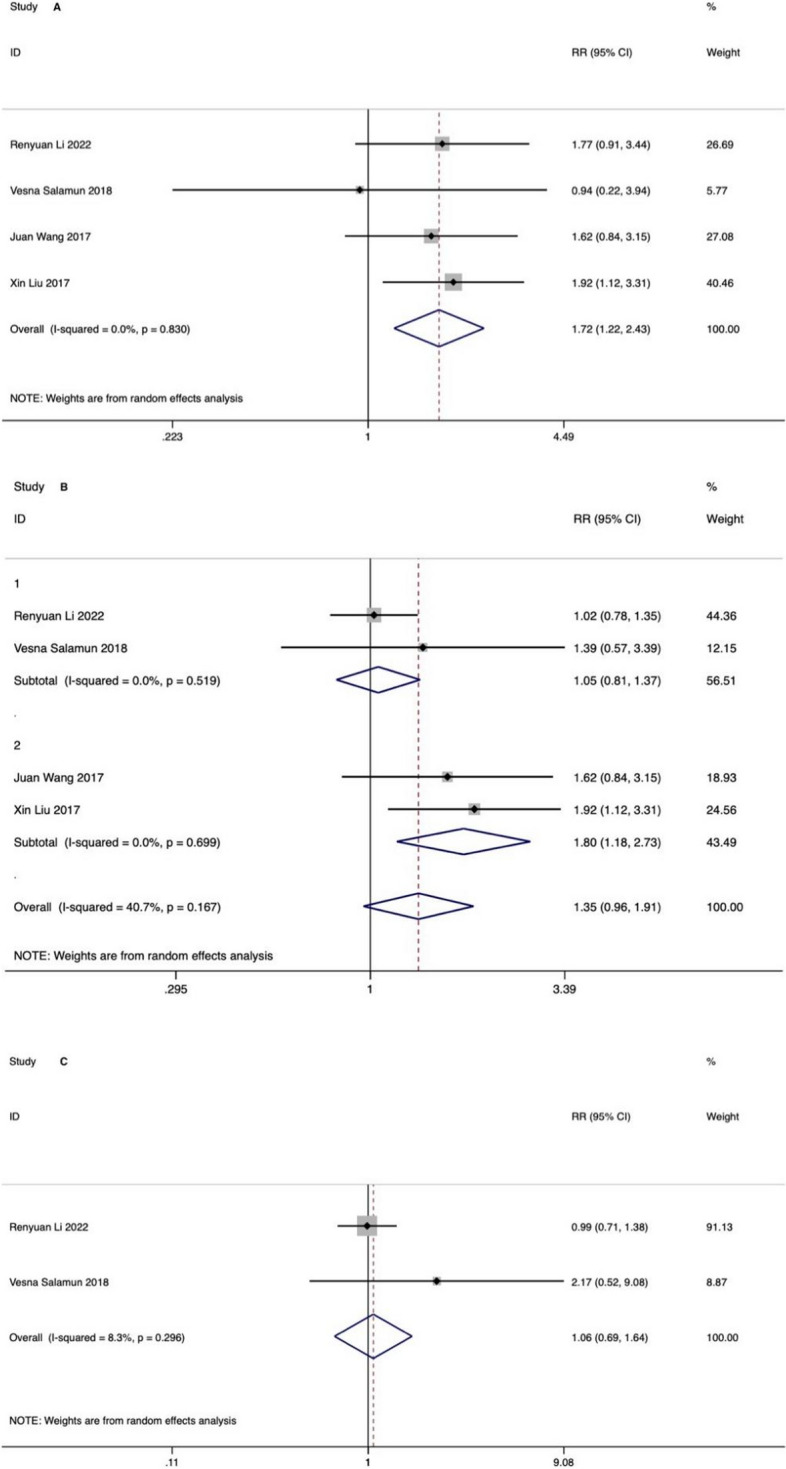
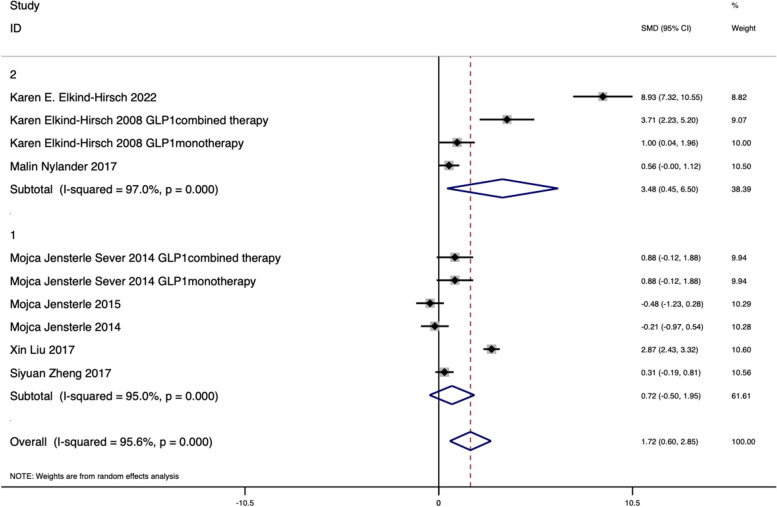
Purpose: This study was aimed to assess the effectiveness of Glucagon-like peptide 1 receptor agonists on pregnancy rate, menses, anthropometric and hormonal parameters in PCOS patients. Methods: We conducted searches of the published literature in PubMed, EMBASE, Cochrane Library, Web of Science up to September 2022. Data from randomized controlled trials were obtained to assess the effects of GLP1RAs in PCOS women. Weighted mean difference, standardized mean difference, and risks ratio were employed for effect size estimation using a random-effects model. Results: A total of 840 patients with 469 individuals in GLP1RAs group and 371 individuals in control group from 11 RCTs were included. GLP1RAs usage was associated with an improvement in natural pregnancy rate (RR: 1.72, 95% CI 1.22 to 2.43, P = 0.002, I 2 = 0%) and menstrual regularity (SMD: 1.72, 95% CI 0.60 to 2.85, P < 0.001, I 2 = 95.6%). There were no statistically significant differences in total pregnancy rate, IVF pregnancy rate between two groups, but total PR elevated in a short time after GLP1RAs as shown in subgroup analysis. Randomization to GLP1RAs treatment was associated with great improvement in HOMA-IR, BMI, WC, SHBG and a slight reduction in TT compared to control group. A decrease in TBF was seen in European population. GLP1RAs monotherapy was not superior to metformin when it came to fT, DHEAS, FAI. Conclusions: Prescription of GLP1RAs improves natural pregnancy rate, menstrual cyclicity and insulin sensitivity, anthropometrics, hormonal indexes in PCOS women.
Overview
The claims and statistics of this paper haven’t been checked yet.
Free: it reads the open-access text and checks the first 5 claims that cite a source we can check. Create a free account to check every claim.
Integrity signals
Registry
Cites
Statistics
Figures
Verification
Claims the paper makes
The claims and statistics of this paper haven’t been checked yet.
Free: it reads the open-access text and checks the first 5 claims that cite a source we can check. Create a free account to check every claim.
Claims other papers make about this one
Each is checked against this paper’s own text: does it say what the citing paper says it does?
The cited source says what the claim attributes to it.
In the citing paper
“A meta-analysis in women with polycystic ovary syndrome and overweight or obesity found that GLP-1 RA use was associated with improvements in menstrual regularity (standardized mean difference: 1.72, 95% CI 0.60, 2.85) compared to metformin or placebo, and spontaneous pregnancy rate (RR: 1.72, 95% CI 1.22, 2.43) compared to metformin.50”
From The expanding role of GLP-1 receptor agonists: a narrative review of current evidence and future directions (2025) · cites this paper as [50]
Self-check
Percentages, sums and reported differences re-computed from the paper’s own numbers.
The self-check needs the paper’s full text.
Citations
Cites
Bias in meta-analysis detected by a simple, graphical test
Egger, M., Smith, G. D., Schneider, M., & Minder, C. (1997) · BMJ · doi:10.1136/bmj.315.7109.629 · Cited by 56,722 · cited 1×
“Potential publication bias was evaluated by visual inspection of funnel plots as well as with Egger regression asymmetry test if the number of analyzed items was more than ten [36].”
MethodThe Cochrane Collaboration's tool for assessing risk of bias in randomised trials
Higgins, J. P. T., Altman, D. G., Gotzsche, P. C., Juni, P., Moher, D., Oxman, A. D., Savovic, J., Schulz, K. F., Weeks, L., Sterne, J. A. C., et al. (2011) · BMJ · doi:10.1136/bmj.d5928 · Cited by 33,817
Cochrane Handbook for Systematic Reviews of Interventions: Cochrane Book Series
(2008) · doi:10.1002/9780470712184 · Cited by 25,048
Dermyshi, E., Wang, Y., Yan, C., Hong, W., Qiu, G., Gong, X., & Zhang, T. (2017) · Neonatology · doi:10.1159/000454668 · Cited by 24,451
Mechanisms of Action and Therapeutic Application of Glucagon-like Peptide-1
Drucker, D. J. (2018) · Cell Metabolism · doi:10.1016/j.cmet.2018.03.001 · Cited by 2,170 · cited 1×
“GLP1RAs have recently become popular in diabetes and obese patients for its pronounced weight-losing effects, insulin-sensitizing function and additional cardiovascular protective benefits [13–16].”
BackgroundTeede, H., Deeks, A., & Moran, L. (2010) · BMC Medicine · doi:10.1186/1741-7015-8-41 · Cited by 1,565 · cited 1×
“The prevalence of infertility and menstrual disorders among PCOS women ranges from approximately 40% to 75%, and almost 40% PCOS patients fail to conceive spontaneously and turn to seek help from ART [1, 2, 44].”
Criteria, Prevalence, and Phenotypes of Polycystic Ovary Syndrome
Lizneva, D., Suturina, L., Walker, W., Brakta, S., Gavrilova-Jordan, L., & Azziz, R. (2016) · Fertility and Sterility · doi:10.1016/j.fertnstert.2016.05.003 · Cited by 1,358
Declaración PRISMA 2020: una guía actualizada para la publicación de revisiones sistemáticas
Page, M. J., McKenzie, J. E., Bossuyt, P. M., Boutron, I., Hoffmann, T. C., Mulrow, C. D., Shamseer, L., Tetzlaff, J. M., Akl, E. A., Brennan, S. E., et al. (2021) · Revista Española de Cardiología (English Edition) · doi:10.1016/j.rec.2021.07.010 · Cited by 1,313
Jellinger, P. S., Handelsman, Y., Rosenblit, P. D., Bloomgarden, Z. T., Fonseca, V. A., Garber, A. J., Grunberger, G., Guerin, C. K., Bell, D. S. H., Mechanick, J. I., et al. (2017) · Endocrine Practice · doi:10.4158/ep171764.appgl · Cited by 1,094 · cited 1×
“PCOS related obesity and IR also significantly increase the risk of diabetes mellitus, cardiovascular disease, and nonalcoholic steatohepatitis [9–11].”
BackgroundPyke, C., Heller, R. S., Kirk, R. K., Ørskov, C., Reedtz-Runge, S., Kaastrup, P., Hvelplund, A., Bardram, L., Calatayud, D., & Knudsen, L. B. (2014) · Endocrinology · doi:10.1210/en.2013-1934 · Cited by 876 · cited 1×
“Glucagon-like peptide 1 is one of the most thoroughly studied incretins and its receptors are widely expressed in pancreas, gastrointestinal tract, heart, and even brain [12].”
BackgroundStepto, N. K., Cassar, S., Joham, A. E., Hutchison, S. K., Harrison, C. L., Goldstein, R. F., & Teede, H. J. (2013) · Human Reproduction · doi:10.1093/humrep/des463 · Cited by 747
Yildiz, B. O., Bozdag, G., Yapici, Z., Esinler, I., & Yarali, H. (2012) · Human Reproduction · doi:10.1093/humrep/des232 · Cited by 704 · cited 2×
“The prevalence of infertility and menstrual disorders among PCOS women ranges from approximately 40% to 75%, and almost 40% PCOS patients fail to conceive spontaneously and turn to seek help from ART [1, 2, 44].”
BackgroundPregnancy complications in women with polycystic ovary syndrome
Palomba, S., de Wilde, M. A., Falbo, A., Koster, M. P. H., La Sala, G. B., & Fauser, B. C. J. M. (2015) · Human Reproduction Update · doi:10.1093/humupd/dmv029 · Cited by 691 · cited 1×
“Besides, they have a higher chance encountering complications during pregnancy or even beyond, including miscarriage, GDM, preeclampsia, premature delivery, increased perinatal mortality and a higher risk of metabolic disorders for offspring [45, 46].”
BackgroundChronic Low Grade Inflammation in Pathogenesis of PCOS
Rudnicka, E., Suchta, K., Grymowicz, M., Calik-Ksepka, A., Smolarczyk, K., Duszewska, A. M., Smolarczyk, R., & Meczekalski, B. (2021) · International Journal of Molecular Sciences · doi:10.3390/ijms22073789 · Cited by 680 · cited 1×
“Higher levels of inflammatory markers including CRP, IL-18, IL-6 and TNF-α in PCOS women have been widely reported [54, 55].”
BackgroundObesity and polycystic ovary syndrome
Barber, T. M., McCarthy, M. I., Wass, J. A. H., & Franks, S. (2006) · Clinical Endocrinology · doi:10.1111/j.1365-2265.2006.02587.x · Cited by 631
Glucagon-like peptide 1 in health and disease
Andersen, A., Lund, A., Knop, F. K., & Vilsbøll, T. (2018) · Nature Reviews Endocrinology · doi:10.1038/s41574-018-0016-2 · Cited by 543
Osibogun, O., Ogunmoroti, O., & Michos, E. D. (2020) · Trends in Cardiovascular Medicine · doi:10.1016/j.tcm.2019.08.010 · Cited by 423 · cited 1×
“PCOS related obesity and IR also significantly increase the risk of diabetes mellitus, cardiovascular disease, and nonalcoholic steatohepatitis [9–11].”
BackgroundObesity and polycystic ovary syndrome
Barber, T. M., & Franks, S. (2021) · Clinical Endocrinology · doi:10.1111/cen.14421 · Cited by 385 · cited 1×
“Up to 80% affected women are overweight or obese, and insulin resistance (IR) occurs in most PCOS patients even in normal-weight population [6–8].”
BackgroundExenatide Exerts a Potent Antiinflammatory Effect
Chaudhuri, A., Ghanim, H., Vora, M., Sia, C. L., Korzeniewski, K., Dhindsa, S., Makdissi, A., & Dandona, P. (2012) · The Journal of Clinical Endocrinology & Metabolism · doi:10.1210/jc.2011-1508 · Cited by 284
Elkind-Hirsch, K., Marrioneaux, O., Bhushan, M., Vernor, D., & Bhushan, R. (2008) · The Journal of Clinical Endocrinology & Metabolism · doi:10.1210/jc.2008-0115 · Cited by 276 · cited 8×
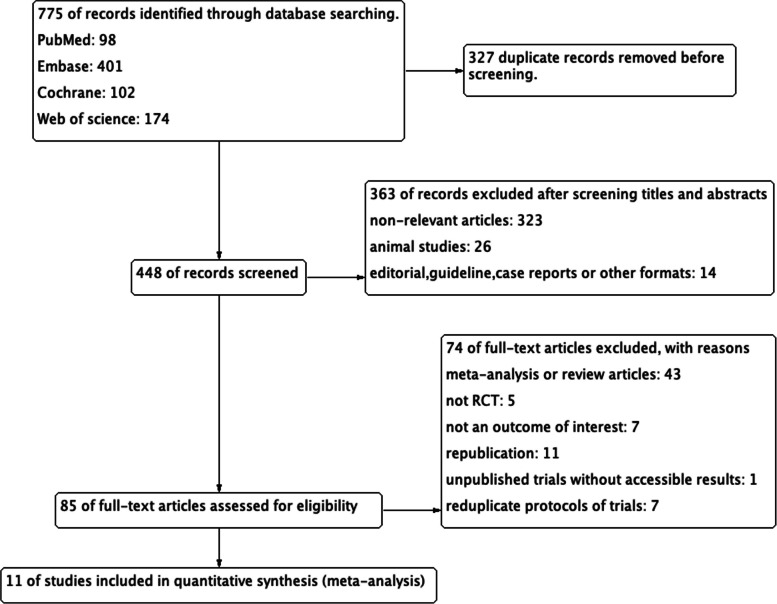
“Finally, a total of 11 studies were eligible for this meta-analysis [25–28, 35, 37–42].”
BackgroundMethodInfluentialBeyond fertility: polycystic ovary syndrome and long-term health
Cooney, L. G., & Dokras, A. (2018) · Fertility and Sterility · doi:10.1016/j.fertnstert.2018.08.021 · Cited by 270
Nonalcoholic fatty liver disease in women with polycystic ovary syndrome
Paschou, S. A., Polyzos, S. A., Anagnostis, P., Goulis, D. G., Kanaka-Gantenbein, C., Lambrinoudaki, I., Georgopoulos, N. A., & Vryonidou, A. (2020) · Endocrine · doi:10.1007/s12020-019-02085-7 · Cited by 231
Salamun, V., Jensterle, M., Janez, A., & Vrtacnik Bokal, E. (2018) · European Journal of Endocrinology · doi:10.1530/eje-18-0175 · Cited by 204 · cited 1×
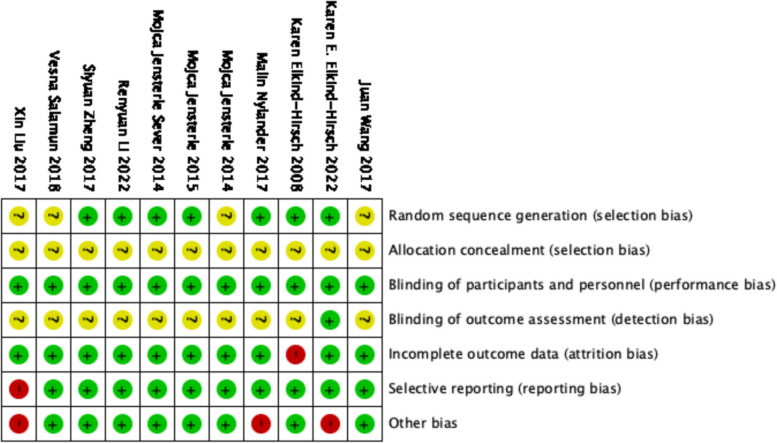
“The other four gave unspecific randomization procedure and had an unclear risk [27, 38, 40, 42].”
BackgroundElkind-Hirsch, K. E., Chappell, N., Shaler, D., Storment, J., & Bellanger, D. (2022) · Fertility and Sterility · doi:10.1016/j.fertnstert.2022.04.027 · Cited by 182 · cited 5×
“2, adequate method of random sequence generation was described in seven trials, including RAND program in Excel or computer-generated randomization list [25, 26, 28, 35, 37, 39, 41].”
BackgroundMethodInfluentialJensterle Sever, M., Kocjan, T., Pfeifer, M., Kravos, N. A., & Janez, A. (2014) · European Journal of Endocrinology · doi:10.1530/eje-13-0797 · Cited by 175
GLP-1 receptor agonists versus metformin in PCOS: a systematic review and meta-analysis
Han, Y., Li, Y., & He, B. (2019) · Reproductive BioMedicine Online · doi:10.1016/j.rbmo.2019.04.017 · Cited by 159
Polycystic Ovary Syndrome: The influence of environmental and genetic factors
Diamanti‐Kandarakis, E., Piperi, C., Argyrakopoulou, G., Spina, J., Papanastasiou, L., Bergiele, A. T., & Panidis, D. (2006) · HORMONES · doi:10.14310/horm.2002.11165 · Cited by 157
Liu, X., Zhang, Y., Zheng, S., Lin, R., Xie, Y., Chen, H., Zheng, Y., Liu, E., Chen, L., Yan, J., et al. (2017) · Clinical Endocrinology · doi:10.1111/cen.13454 · Cited by 148
Nylander, M., Frøssing, S., Clausen, H. V., Kistorp, C., Faber, J., & Skouby, S. O. (2017) · Reproductive BioMedicine Online · doi:10.1016/j.rbmo.2017.03.023 · Cited by 139
Beak, S. A., Heath, M. M., Small, C. J., Morgan, D. G., Ghatei, M. A., Taylor, A. D., Buckingham, J. C., Bloom, S. R., & Smith, D. M. (1998) · Journal of Clinical Investigation · doi:10.1172/jci610 · Cited by 133 · cited 1×
“Furthermore, It has been discovered that GLP1R mRNA expressed in thalamus and hypothalamus, indicating potential ability of GLP1RAs to regulate GnRH from the hypothalamic neurons via a specific GLP-1R [17, 18].”
BackgroundJensterle, M., Kravos, N. A., Pfeifer, M., Kocjan, T., & Janez, A. (2015) · Hormones · doi:10.1007/bf03401383 · Cited by 117
Jensterle, M., Salamun, V., Kocjan, T., Vrtacnik Bokal, E., & Janez, A. (2015) · Journal of Ovarian Research · doi:10.1186/s13048-015-0161-3 · Cited by 103 · cited 2×
“The other four gave unspecific randomization procedure and had an unclear risk [27, 38, 40, 42].”
BackgroundMolecular mechanisms by which GLP-1 RA and DPP-4i induce insulin sensitivity
Yaribeygi, H., Sathyapalan, T., & Sahebkar, A. (2019) · Life Sciences · doi:10.1016/j.lfs.2019.116776 · Cited by 102
Outeiriño-Iglesias, V., Romaní-Pérez, M., González-Matías, L. C., Vigo, E., & Mallo, F. (2015) · Endocrinology · doi:10.1210/en.2014-1978 · Cited by 99 · cited 1×
“For instance, GLP-1 and Exendin-4 can act on the gonadal axis, involving the hypothalamic kiss-1 system, to influence reproductive efficiency in female rats [51].”
BackgroundAbdalla, M. A., Deshmukh, H., Atkin, S., & Sathyapalan, T. (2021) · Therapeutic Advances in Endocrinology and Metabolism · doi:10.1177/2042018821989238 · Cited by 60
Li, R., Mai, T., Zheng, S., & Zhang, Y. (2022) · Archives of Gynecology and Obstetrics · doi:10.1007/s00404-022-06700-3 · Cited by 60
Guo, X., Zhou, Z., Lyu, X., Xu, H., Zhu, H., Pan, H., Wang, L., Yang, H., & Gong, F. (2022) · Hormone and Metabolic Research · doi:10.1055/a-1844-1176 · Cited by 59
Tao, X., Cai, L., Chen, L., Ge, S., & Deng, X. (2019) · Journal of Ovarian Research · doi:10.1186/s13048-019-0555-8 · Cited by 58
ALKHURIJI, A. F., Alomar, S. Y., Babay, Z. A., El‐Khadragy, M. F., Mansour, L. A., Allharbi, W. G., & Khalil, M. I. M. (2020) · Disease Markers · doi:10.1155/2020/6076274 · Cited by 55
Bertoccini, L., & Baroni, M. G. (2020) · Advances in Experimental Medicine and Biology · doi:10.1007/5584_2020_494 · Cited by 49 · cited 1×
“GLP1RAs have recently become popular in diabetes and obese patients for its pronounced weight-losing effects, insulin-sensitizing function and additional cardiovascular protective benefits [13–16].”
BackgroundGe, J. J., Wang, D., Song, W., Shen, S., & Ge, W. (2021) · Journal of Endocrinological Investigation · doi:10.1007/s40618-021-01666-6 · Cited by 49
Artunc-Ulkumen, B., Pala, H. G., Pala, E. E., Yavasoglu, A., Yigitturk, G., & Erbas, O. (2015) · Gynecological Endocrinology · doi:10.3109/09513590.2014.975686 · Cited by 45 · cited 1×
“Artunc-Ulkumen et al. found exenatide could protect endometrial and ovarian microenvironments against oxidative stress, fibrosis, and degeneration [56].”
BackgroundZheng, S., Zhang, Y., Long, T., Lu, J., Liu, X., Yan, J., Chen, L., Gong, Y., & Wang, F. (2017) · Obesity Medicine · doi:10.1016/j.obmed.2017.06.003 · Cited by 45
Li, W., Chen, Q., Xie, Y., Hu, J., Yang, S., & Lin, M. (2018) · Clinical Endocrinology · doi:10.1111/cen.13860 · Cited by 45
Wu, L., Wang, Y.-X., Zhan, Y., Liu, A.-H., Wang, Y., Shen, H., Wang, Y.-F., Wang, L., Tao, Z., & Wang, Y. (2021) · Peptides · doi:10.1016/j.peptides.2021.170624 · Cited by 44
Sun, L., Cheng, J., Jin, L., Bi, Y., Feng, W., Li, P., Shen, S., & Zhu, D. (2016) · Reproductive Sciences · doi:10.1177/1933719116635278 · Cited by 41
Basic research in PCOS: are we reaching new frontiers?
Ben‐Shlomo, I., & Younis, J. S. (2014) · Reproductive BioMedicine Online · doi:10.1016/j.rbmo.2014.02.011 · Cited by 39
Liu, Y., Li, J., Yan, Z., Liu, D., Ma, J., & Tong, N. (2021) · Frontiers in Endocrinology · doi:10.3389/fendo.2021.657889 · Cited by 39
Sun, Z., Li, P., Wang, X., Lai, S., Qiu, H., Chen, Z., Hu, S., Yao, J., & Shen, J. (2020) · International Journal of Endocrinology · doi:10.1155/2020/1484321 · Cited by 37 · cited 1×
“Sun et al. reported the contribution of GLP-1 to the regulation of ovarian granulosa cells proliferation and antiapoptosis, thereby promoting oocyte maturation in PCOS rats [53].”
BackgroundHoang, V., Bi, J., MohanKumar, S. M. J., & Vyas, A. K. (2015) · PLoS ONE · doi:10.1371/journal.pone.0126119 · Cited by 33
Livadas, S., Androulakis, I. I., Angelopoulos, N., Lytras, A., Papagiannopoulos, F., & Kassi, G. (2020) · Endocrinology Diabetes and Metabolism Case Reports · doi:10.1530/edm-19-0150 · Cited by 32
Singh, A., Fernandes, J. R. D., Chhabra, G., Krishna, A., & Banerjee, A. (2019) · Endocrine · doi:10.1007/s12020-019-01891-3 · Cited by 26
Xing, C., Lv, B., Zhao, H., Wang, D., Li, X., & He, B. (2021) · The Journal of Steroid Biochemistry and Molecular Biology · doi:10.1016/j.jsbmb.2021.105992 · Cited by 22
Case Report: Exenatide Use During Pregnancy
Williams, J., Pomeroy, N. E., Pop-Busui, R., Lash, R., Douyon, L., Chames, M., & Wyckoff, J. (2009) · The Endocrinologist · doi:10.1097/ten.0b013e3181a5875e · Cited by 21
Cardiovascular disease risk in offspring of polycystic ovary syndrome
Shawky, N. M. (2022) · Frontiers in Endocrinology · doi:10.3389/fendo.2022.977819 · Cited by 15
(2018) · Diabetes/Metabolism Research and Reviews · doi:10.1002/dmrr.3079 · Cited by 5
Legro, R. S. (2017) · Clinical Endocrinology · doi:10.1111/cen.13474 · Cited by 3
Research works printed but not linked: 1
- Vatankhah A Izadi M Rezvani ME Esmailidehaj M The effect of exenatide, a glucagon like peptide, on body weight, fasting blood glucose, lipid profile and Hba1c in rats with polycystic ovarian syndrome J Reprod Infertil 2016 17 2 201
Cited by
Efficacy and Safety of GLP-1 Medicines for Type 2 Diabetes and Obesity
Drucker, D. J. (2024) · Diabetes Care · doi:10.2337/dci24-0003 · Cited by 383
Moiz, A., Filion, K. B., Tsoukas, M. A., Yu, O. H. Y., Peters, T. M., & Eisenberg, M. J. (2025) · EClinicalMedicine · doi:10.1016/j.eclinm.2025.103363 · Cited by 157
Imbroane, M. R., LeMoine, F., & Nau, C. (2025) · American Journal of Obstetrics and Gynecology · doi:10.1016/j.ajog.2025.01.019 · Cited by 69
Pililis, S., Lampsas, S., Kountouri, A., Pliouta, L., Korakas, E., Livadas, S., Thymis, J., Peppa, Μ., Kalantaridou, S., Oikonomou, E. K., et al. (2024) · Medicina · doi:10.3390/medicina60101656 · Cited by 65
Emerging Frontiers in GLP-1 Therapeutics: A Comprehensive Evidence Base (2025)
Patel, S., & Niazi, S. K. (2025) · Pharmaceutics · doi:10.3390/pharmaceutics17081036 · Cited by 54
Metadata
- Authors
- Zhou, L., Qu, H., Yang, L., & Shou, L.
- Affiliations
- Hangzhou Normal University (CN)
- Corresponding author
- Shou, Lan
- Venue
- BMC Endocrine Disorders
- Published
- 2023-11-08
- Volume
- 23
- Issue
- 1
- Pages
- 245-245
- ISSN
- 1472-6823 (ISSN-L)
- PMC
- PMC10631119
- OpenAlex
- W4388496484
- Cited by
- 66
- References
- 57
- Citations by year
- 2026: 35 · 2025: 22 · 2024: 9
- FWCI
- 2.64
- Type
- journal article
- Language
- en
- Open access
- gold
- doi.org
- Licence
- cc-by
- creativecommons.org/licenses/by/4.0 (tdm)
- creativecommons.org/licenses/by/4.0 (vor)
- Locations
- BMC Endocrine Disorders (publishedVersion, cc-by)
- PubMed Central (publishedVersion, cc-by)
- PubMed (publishedVersion)
- DOAJ (DOAJ: Directory of Open Access Journals) (submittedVersion, cc-by-sa)
- Funders
- Medical Science and Technology Project of Zhejiang Province (2023RC234)
- Topics
- Health Sciences › Medicine › Reproductive Medicine › Ovarian function and disorders
- Health Sciences › Medicine › Public Health, Environmental and Occupational Health › Reproductive Health and Contraception
- Health Sciences › Medicine › Obstetrics and Gynecology › Gestational Diabetes Research and Management
- Keywords
- GLP-1 receptor agonists, polycystic ovary syndrome, pregnancy rate, menstrual cyclicity, insulin resistance, HOMA-IR, body mass index, sex hormone-binding globulin, total testosterone, free testosterone, dehydroepiandrosterone sulfate, free androgen index, metformin, in vitro fertilization pregnancy
- MeSH terms
- Female, Humans, Insulin Resistance, Metformin, Periodicity, Polycystic Ovary Syndrome, Pregnancy, Pregnancy Rate
About these checks
Registry, retraction, Cites and statistics results are computed, not judged, with one exception: a printed reference that no index lists is read once by a model before it counts as a citation error. Claims are extracted by a model and kept only when their quote appears verbatim in the text; each cited source is then checked, with a model’s help, for whether it says what the claim relies on. Those verdicts can be wrong — read the claim’s quote and the cited source before relying on one.
Statistics and arithmetic are recomputed, not judged.
Confidence bands are shown only for fields calibrated on our annotated test set. None is calibrated yet, so no band is shown.
What counts as a claim ›How we measure confidence ›How we check this ›
Are you an author, or do you see a problem with this page? Request a review
Data sources
Bibliographic data: Semantic Scholar, OpenAlex, Crossref.
Contains information from the Semantic Scholar Academic Graph Datasets, made available under the ODC Attribution License (ODC-BY 1.0).
Semantic Scholar’s data is described in: Kinney, R., et al. (2023). The Semantic Scholar Open Data Platform. arXiv:2301.10140.
