

Comparative analysis of the oral microbiota between iron-deficiency anaemia (IDA) patients and healthy individuals by high-throughput sequencing
Open accessPublished version of a preprint
The DOI matches its Crossref record; 60 of the 62 references it cites were found in a registry or an index.
Abstract
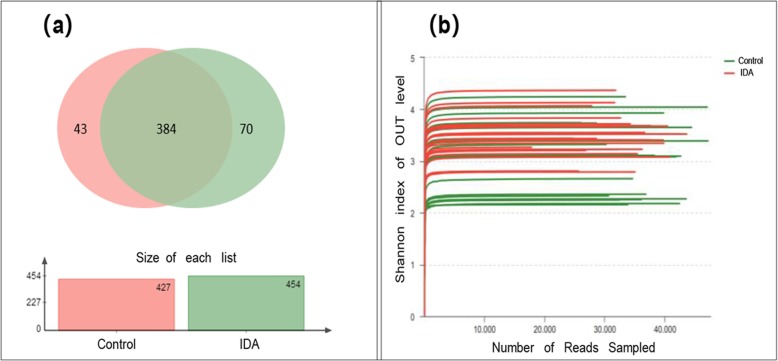
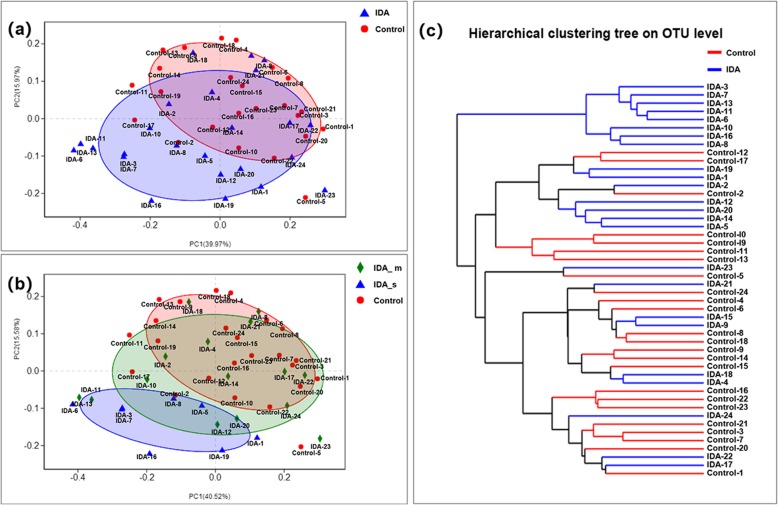
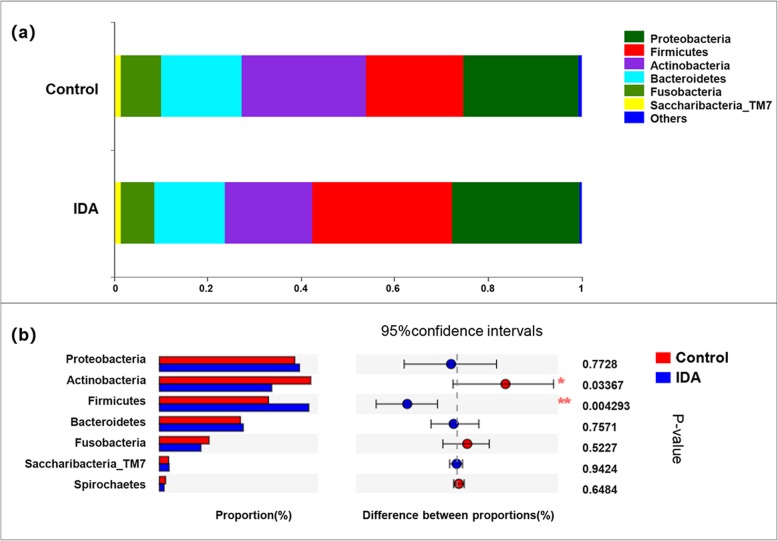
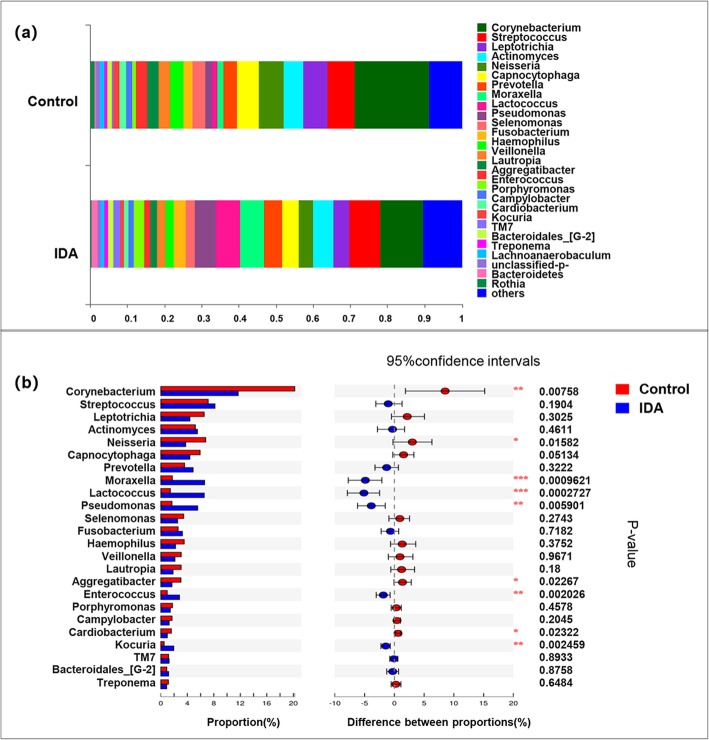
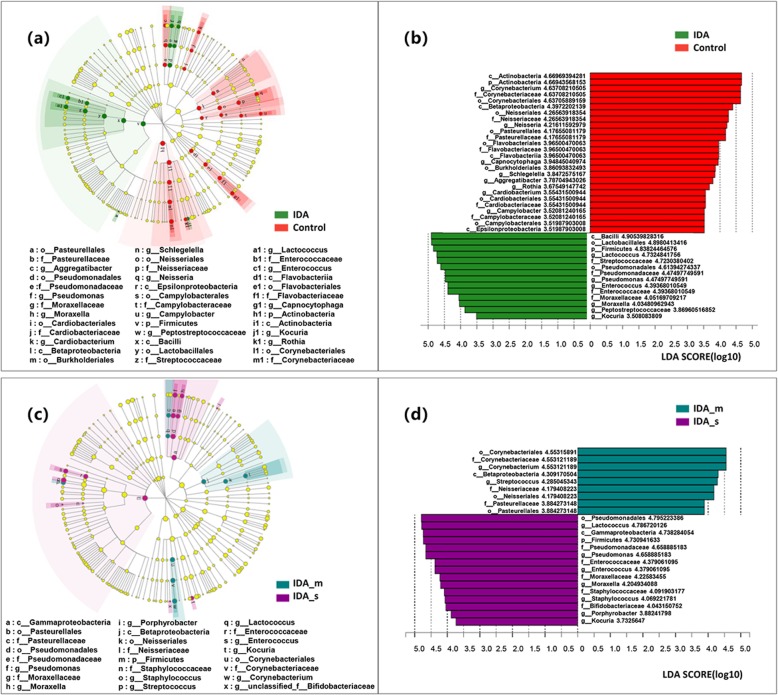
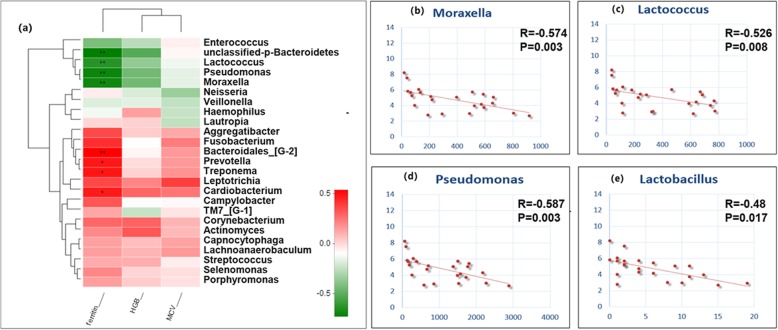
Background: The relationship between oral microbiota and IE (infective endocarditis) is well established. Opportunistic pathogens in normal oral flora enter the bloodstream through daily oral cleaning or invasive dental procedures, leading to the occurrence of infective endocarditis. An in vitro iron-deficient condition leads to a drastic community shift in oral microbiota with increasing proportions of taxa related to infective endocarditis. To investigate the relationship among insufficient iron supply, oral microbiota and the risk of IE and to conduct a population amplification study, iron-deficiency anaemia is used as an in vivo model. Methods: This cross-sectional study enrolled 24 primary iron-deficiency anemia (IDA) patients from 2015.6 to 2016.6 from the hematology department of West China Hospital, Sichuan University, and 24 healthy controls. High-throughput sequencing compared the dental plaque microbiota of 24 IDA (iron-deficiency anaemia) patients and 24 healthy controls. Results: Sequences were classified into 12 phyla, 28 classes, 50 orders, 161 genera and 497 OTUs (the IDA and control groups shared the same 384 OTUs). Iron deficiency leads to lower internal diversity in the oral flora. The abundances of genera Corynebacterium, Neisseria, Cardiobacterium, Capnocytophaga, and Aggregatibacter were significantly higher in healthy controls, while genera Lactococcus, Enterococcus, Lactobacillus, Pseudomonas and Moraxella showed higher proportions in the IDA group ( P < 0.05). The relative abundances of genera Lactococcus, Enterococcus, Pseudomonas and Moraxella were significantly negatively correlated with the concentration of serum ferritin ( P < 0.05). Conclusions: Without an increase of oral streptococci, the main pathogen of IE, it is difficult to determine whether IDA can increase the risk of IE. However, the iron-deficient condition did lead to changes in the oral microbiota community structure. The genera that showed higher proportions in the IDA group were frequently reported as antibiotic-resistant. As antibiotics are commonly recommended to prevent IE before dental procedures, this study offers new ideas of personalized prevention of IE.
Overview
The claims and statistics of this paper haven’t been checked yet.
Free: it reads the open-access text and checks the first 5 claims that cite a source we can check. Create a free account to check every claim.
Integrity signals
Registry
Cites
Statistics
Figures
Verification
Claims the paper makes
The claims and statistics of this paper haven’t been checked yet.
Free: it reads the open-access text and checks the first 5 claims that cite a source we can check. Create a free account to check every claim.
Claims other papers make about this one
Each is checked against this paper’s own text: does it say what the citing paper says it does?
In the citing paper
“while promoting higher carriage of specific bacteria [24]”
From High iron-mediated increased oral fungal burden, oral-to-gut transmission, and changes to pathogenicity of Candida albicans in oropharyngeal candidiasis (2022) · cites this paper as [24]
In the citing paper
“Iron-mediated changes to the C. albicans surface, specifically mannans levels (Figure 3(a) [16,30];) can thus affect periodontal disease and the cariogenic potential in the oral cavity, as well as alter the composition of the early colonizers of the oral cavity [24].”
From High iron-mediated increased oral fungal burden, oral-to-gut transmission, and changes to pathogenicity of Candida albicans in oropharyngeal candidiasis (2022) · cites this paper as [24]
Self-check
Percentages, sums and reported differences re-computed from the paper’s own numbers.
The self-check needs the paper’s full text.
Citations
Cites
Metagenomic biomarker discovery and explanation
Segata, N., Izard, J., Waldron, L., Gevers, D., Miropolsky, L., Garrett, W. S., & Huttenhower, C. (2011) · Genome Biology · doi:10.1186/gb-2011-12-6-r60 · Cited by 16,192 · cited 1×
“LEfSe was used to discover the microorganismal biomarker [28, 29], while other statistical analyses were car-”
MethodHabib, G., Lancellotti, P., Antunes, M. J., Bongiorni, M. G., Casalta, J.-P., Del Zotti, F., Dulgheru, R., El Khoury, G., Erba, P. A., Iung, B., et al. (2015) · European Heart Journal · doi:10.1093/eurheartj/ehv319 · Cited by 4,997
Baddour, L. M., Wilson, W. R., Bayer, A. S., Fowler, V. G., Tleyjeh, I. M., Rybak, M. J., Barsic, B., Lockhart, P. B., Gewitz, M. H., Levison, M. E., et al. (2015) · Circulation · doi:10.1161/cir.0000000000000296 · Cited by 3,232
Terpenning, M. S. (1992) · Clinics in Geriatric Medicine · doi:10.1385/1-59259-026-8:79 · Cited by 2,459
A systematic analysis of global anemia burden from 1990 to 2010
Kassebaum, N. J., Jasrasaria, R., Naghavi, M., Wulf, S. K., Johns, N., Lozano, R., Regan, M., Weatherall, D., Chou, D. P., Eisele, T. P., et al. (2014) · Blood · doi:10.1182/blood-2013-06-508325 · Cited by 2,075
Galaxy: A platform for interactive large-scale genome analysis
Giardine, B., Riemer, C., Hardison, R. C., Burhans, R., Elnitski, L., Shah, P., Zhang, Y., Blankenberg, D., Albert, I., Taylor, J., et al. (2005) · Genome Research · doi:10.1101/gr.4086505 · Cited by 2,026
Camaschella, C. (2015) · New England Journal of Medicine · doi:10.1056/nejmra1401038 · Cited by 1,678
Lopez, A., Cacoub, P., Macdougall, I. C., & Peyrin-Biroulet, L. (2016) · The Lancet · doi:10.1016/s0140-6736(15)60865-0 · Cited by 1,492
Mark, C., RivettJohn, G., Li, L., & Du, X. (2007) · doi:10.3760/cma.j.issn.1007-9742.2007.01.126 · Cited by 1,416
Anaemia in low-income and middle-income countries
Balarajan, Y., Ramakrishnan, U., Özaltin, E., Shankar, A. H., & Subramanian, S. (2011) · The Lancet · doi:10.1016/s0140-6736(10)62304-5 · Cited by 1,304
Iron in infection and immunity
Cassat, J. E., & Skaar, E. P. (2013) · Cell Host & Microbe · doi:10.1016/j.chom.2013.04.010 · Cited by 1,214
Intrinsic and acquired resistance mechanisms in enterococcus
Hollenbeck, B. L., & Rice, L. B. (2012) · Virulence · doi:10.4161/viru.21282 · Cited by 795
Lactoferrin—a multifunctional protein with antimicrobial properties
Farnaud, S., & Evans, R. W. (2003) · Molecular Immunology · doi:10.1016/s0161-5890(03)00152-4 · Cited by 738
Pyoverdine siderophores: from biogenesis to biosignificance
Visca, P., Imperi, F., & Lamont, I. L. (2007) · Trends in Microbiology · doi:10.1016/j.tim.2006.11.004 · Cited by 544
2015 ESC Guidelines for the management of infective endocarditis.
Habib, G., Lancellotti, P., Antunes, M. J., Bongiorni, M., Casalta, J., Zotti, F. D., Dulgheru, R., Khoury, G. E., Erba, P., Iung, B., et al. (2016) · Revista Española de Cardiología · doi:10.1016/j.rec.2015.12.002 · Cited by 525
Antimicrobial properties of lactoferrin
JENSSEN, H., & HANCOCK, R. (2009) · Biochimie · doi:10.1016/j.biochi.2008.05.015 · Cited by 509
Structure, function and regulation of Pseudomonas aeruginosa porins
Chevalier, S., Bouffartigues, E., Bodilis, J., Maillot, O., Lesouhaitier, O., Feuilloley, M. G. J., Orange, N., Dufour, A., & Cornelis, P. (2017) · FEMS Microbiology Reviews · doi:10.1093/femsre/fux020 · Cited by 423 · cited 1×
“have intrinsic resistance to antibiotics such as ampicillin, amoxicillin, tetracycline, aminoglycosides and vancomycin [51, 52].”
BackgroundPseudomonas aeruginosa adapts its iron uptake strategies in function of the type of infections
Cornelis, P., & Dingemans, J. (2013) · Frontiers in Cellular and Infection Microbiology · doi:10.3389/fcimb.2013.00075 · Cited by 382
Oral cavity contains distinct niches with dynamic microbial communities
Xu, X., He, J., Xue, J., Wang, Y., Li, K., Zhang, K., Guo, Q., Liu, X., Zhou, Y., Cheng, L., et al. (2015) · Environmental Microbiology · doi:10.1111/1462-2920.12502 · Cited by 335
Self-citationMicrobiology of Odontogenic Bacteremia: beyond Endocarditis
Parahitiyawa, N. B., Jin, L. J., Leung, W. K., Yam, W. C., & Samaranayake, L. P. (2009) · Clinical Microbiology Reviews · doi:10.1128/cmr.00028-08 · Cited by 327
Verbon, E. H., Trapet, P. L., Stringlis, I. A., Kruijs, S., Bakker, P. A. H. M., & Pieterse, C. M. J. (2017) · Annual Review of Phytopathology · doi:10.1146/annurev-phyto-080516-035537 · Cited by 241 · cited 2×
“The human body produces extracellular ironchelating glycoproteins, such as transferrin, ferritin, and lactoferrin, along with intracellular ferritin and haem to obtain elemental iron [11, 12].”
BackgroundAntibiotics in Endodontics: a review
Segura‐Egea, J. J., Gould, K., Şen, B. H., Jonasson, P., Cotti, E., Mazzoni, A., Sunay, H., Tjäderhane, L., & Dummer, P. M. H. (2017) · International Endodontic Journal · doi:10.1111/iej.12741 · Cited by 231
Role of Iron Uptake Systems in Pseudomonas aeruginosa Virulence and Airway Infection
Minandri, F., Imperi, F., Frangipani, E., Bonchi, C., Visaggio, D., Facchini, M., Pasquali, P., Bragonzi, A., & Visca, P. (2016) · Infection and Immunity · doi:10.1128/iai.00098-16 · Cited by 228
Rehncrona, S., Hauge, H. N., & Siesjö, B. K. (1989) · Journal of Cerebral Blood Flow & Metabolism · doi:10.1038/jcbfm.1989.9 · Cited by 198
Cell-surface signaling in Pseudomonas: stress responses, iron transport, and pathogenicity
Llamas, M. A., Imperi, F., Visca, P., & Lamont, I. L. (2014) · FEMS Microbiology Reviews · doi:10.1111/1574-6976.12078 · Cited by 176
2015 ESC Guidelines for the management of infective endocarditis
Habib, G., Lancellotti, P., Antunes, M. J., Bongiorni, M. G., Casalta, J.-P., Del Zotti, F., Dulgheru, R., El Khoury, G., Erba, P. A., Iung, B., et al. (2015) · Kardiologia Polska · doi:10.5603/kp.2015.0227 · Cited by 165
Antimicrobial Defense Systems in Saliva
van ‘t Hof, W., Veerman, E. C. I., Nieuw Amerongen, A. V., & Ligtenberg, A. J. M. (2014) · Monographs in Oral Science · doi:10.1159/000358783 · Cited by 156
Lactoferrin, a Pleiotropic Protein in Health and Disease
Mayeur, S., Spahis, S., Pouliot, Y., & Levy, E. (2016) · Antioxidants & Redox Signaling · doi:10.1089/ars.2015.6458 · Cited by 145
Tubiana, S., Blotière, P., Hoen, B., Lesclous, P., Millot, S., Rudant, J., Weill, A., Coste, J., Alla, F., & Duval, X. (2017) · BMJ · doi:10.1136/bmj.j3776 · Cited by 142
Microbe-mediated host defence drives the evolution of reduced pathogen virulence
Ford, S. A., Kao, D., Williams, D. F., & King, K. C. (2016) · Nature Communications · doi:10.1038/ncomms13430 · Cited by 141
Systematic Search for Present and Potential Portals of Entry for Infective Endocarditis
Delahaye, F., M’Hammedi, A., Guerpillon, B., de Gévigney, G., Boibieux, A., Dauwalder, O., Bouchiat, C., & Vandenesch, F. (2016) · Journal of the American College of Cardiology · doi:10.1016/j.jacc.2015.10.065 · Cited by 123
Iron requirement and search for siderophores in lactic acid bacteria
Pandey, A., Bringel, F., & Meyer, J.-M. (1994) · Applied Microbiology and Biotechnology · doi:10.1007/bf00173337 · Cited by 117
Juan, C., Torrens, G., González-Nicolau, M., & Oliver, A. (2017) · FEMS Microbiology Reviews · doi:10.1093/femsre/fux043 · Cited by 108
On the Iron Requirement of Lactobacilli Grown in Chemically Defined Medium
Imbert, M., & Blondeau, R. (1998) · Current Microbiology · doi:10.1007/s002849900339 · Cited by 102
Response ofPorphyromonas gingivalisto Heme Limitation in Continuous Culture
Dashper, S. G., Ang, C., Veith, P. D., Mitchell, H. L., Lo, A. W. H., Seers, C. A., Walsh, K. A., Slakeski, N., Chen, D., Lissel, J. P., et al. (2008) · Journal of Bacteriology · doi:10.1128/jb.01270-08 · Cited by 90
Oglesby-Sherrouse, A. G., Djapgne, L., Nguyen, A. T., Vasil, A. I., & Vasil, M. L. (2014) · Pathogens and Disease · doi:10.1111/2049-632x.12132 · Cited by 86
Heme Utilization by Pathogenic Bacteria: Not All Pathways Lead to Biliverdin
Wilks, A., & Ikeda-Saito, M. (2014) · Accounts of Chemical Research · doi:10.1021/ar500028n · Cited by 85
Dental Procedures and the Risk of Infective Endocarditis
Chen, P., Tung, Y., Wu, P. W., Wu, L., Lin, Y., Chang, C., Kung, S., & Chu, P. (2015) · Medicine · doi:10.1097/md.0000000000001826 · Cited by 84
Lactic acid bacteria: Micro-organisms able to grow in the absence of available iron and copper
Bruyneel, B., Woestyne, M. V., & Verstraete, W. (1989) · Biotechnology Letters · doi:10.1007/bf01089472 · Cited by 78
Scheers, N., Rossander-Hulthén, L., Torsdottir, I., & Sandberg, A. (2015) · European Journal of Nutrition · doi:10.1007/s00394-015-0857-6 · Cited by 76
Antibiotic-resistant enterococci
Gray, J. W., & PEDLER, S. J. (1992) · Journal of Hospital Infection · doi:10.1016/0195-6701(92)90149-g · Cited by 62
Ferro, J. M., & Fonseca, A. C. (2013) · Handbook of clinical neurology · doi:10.1016/b978-0-7020-4086-3.00007-2 · Cited by 57
Cloning and Expression of the Moraxella catarrhalis Lactoferrin Receptor Genes
Du, R.-P., Wang, Q., Yang, Y.-P., Schryvers, A. B., Chong, P., Klein, M. H., & Loosmore, S. M. (1998) · Infection and Immunity · doi:10.1128/iai.66.8.3656-3665.1998 · Cited by 46
(2015) · European Heart Journal · doi:10.1093/eurheartj/ehv488 · Cited by 46
The lactoferrin receptor complex in Gram negative bacteria
Beddek, A. J., & Schryvers, A. B. (2010) · BioMetals · doi:10.1007/s10534-010-9299-z · Cited by 43
Rhodes, E. R., Menke, S. M., Shoemaker, C. J., Tomaras, A. P., McGillivary, G., & Actis, L. A. (2007) · BioMetals · doi:10.1007/s10534-006-9058-3 · Cited by 42
Salivary Ferritin as a Predictive Marker of Iron Deficiency Anemia in Children
Jagannathan, N., Chandrasekar, T., Ramani, P., Premkumar, P., Natesan, A., & Sherlin, H. (2012) · Journal of Clinical Pediatric Dentistry · doi:10.17796/jcpd.37.1.ap20543762015370 · Cited by 39
The Role of Fur in the Transcriptional and Iron Homeostatic Response of Enterococcus faecalis
Latorre, M., Quenti, D., Travisany, D., Singh, K. V., Murray, B. E., Maass, A., & Cambiazo, V. (2018) · Frontiers in Microbiology · doi:10.3389/fmicb.2018.01580 · Cited by 38
Iron availability shapes the evolution of bacteriocin resistance in Pseudomonas aeruginosa
Inglis, R. F., Scanlan, P. D., & Buckling, A. (2016) · The ISME Journal · doi:10.1038/ismej.2016.15 · Cited by 37
The Influence of Iron Availability on Human Salivary Microbial Community Composition
Wang, R., Kaplan, A., Guo, L., Shi, W., Zhou, X., Lux, R., & He, X. (2012) · Microbial Ecology · doi:10.1007/s00248-012-0013-2 · Cited by 34
Self-citationSALIVA IRON AND FERRITIN LEVELS IN PATIENTS WITH THALASSEMIA AND IRON DEFICIENCY ANEMIA
Canatan, D., & Akdeniz, S. K. (2012) · Mediterranean Journal of Hematology and Infectious Diseases · doi:10.4084/mjhid.2012.051 · Cited by 32
Dunne, B., Marr, T., Kim, D., Andrews, D., Edwards, M., Merry, C., & Larbalestier, R. I. (2014) · Heart Lung and Circulation · doi:10.1016/j.hlc.2014.02.010 · Cited by 32
In vitro activity of deferoxamine against Porphyromonas gingivalis
Moon, J.-H., Herr, Y., Kim, S., & Lee, J. Y. (2011) · FEMS Microbiology Letters · doi:10.1111/j.1574-6968.2011.02357.x · Cited by 22
Salivary iron status in children with iron deficiency and iron overload.
Mishra, O. P., Agarwal, K. N., & Agarwal, R. (1992) · Journal of Tropical Pediatrics · doi:10.1093/tropej/38.2.64 · Cited by 19
Scott, D., Chan, E. C., & Siboo, R. (1996) · Canadian Journal of Microbiology (print) · doi:10.1139/m96-137 · Cited by 18
Transferrin as a source of iron for Campylobacter rectus
Grenier, D., & Tanabe, S. (2011) · Journal of Oral Microbiology · doi:10.3402/jom.v3i0.5660 · Cited by 17
Bergqvist, S. W., Sandberg, A., Andlid, T. A., & Wessling‐Resnick, M. (2005) · Journal of Agricultural and Food Chemistry · doi:10.1021/jf050892s · Cited by 16
Transferrin and Lactoferrin – Human Iron Sources for Enterococci
Lisiecki, P. (2017) · Polish Journal of Microbiology · doi:10.5604/01.3001.0010.6495 · Cited by 7
Hadfield, J., & David, S. (2016) · Nature Reviews Microbiology · doi:10.1038/nrmicro.2016.124 · Cited by 2 · cited 3×
“The nutrients of oral bacteria mainly come from saliva and gingival crevicular fluids [19].”
BackgroundInfluentialScheers, N., Rossander-Hulthén, L., Torsdottir, I., & Sandberg, A.-S. (2016) · Chalmers Publication Library (Chalmers University of Technology) · Cited by 1
Cited by
Rusu, I. G., Suharoschi, R., Vodnar, D. C., Pop, C. R., Socaci, S. A., Vulturar, R., Istrati, M., Moroșan, I., Fărcaș, A. C., Kerezsi, A. D., et al. (2020) · Nutrients · doi:10.3390/nu12071993 · Cited by 185
Wang, Y., Zeng, X., Yang, X., Que, J., Du, Q., Zhang, Q., & Zou, J. (2021) · BioMed Research International · doi:10.1155/2021/6637503 · Cited by 70
Self-citationTripathi, A., Nahar, A., Sharma, R., Kanaskie, T., Al-Hebshi, N., & Puri, S. (2022) · Journal of Oral Microbiology · doi:10.1080/20002297.2022.2044110 · Cited by 16
“It leads to a more diverse oral microbial community [24] while promoting higher carriage of specific bacteria [25].”
BackgroundScreening for prevalence and abundance of Capnocytophaga spp by analyzing NGS data: A scoping review
Jolivet‐Gougeon, A., & Bonnaure‐Mallet, M. (2020) · Oral Diseases · doi:10.1111/odi.13573 · Cited by 24
“Their presence has often been reported associated with eubiosis or their prevalence even elevated in healthy individuals (Tsai, 2018, Chen, 2018, Xi, 2019).”
BackgroundThe microbiomes of the eyelid and buccal area of patients with uveitic glaucoma
Shin, J. H., Lee, J. W., Lim, S., Yoon, B. W., Lee, Y., & Seo, J. H. (2022) · BMC Ophthalmology · doi:10.1186/s12886-022-02395-x · Cited by 13
Metadata
- Authors
- Xi, R., Wang, R., Wang, Y., Xiang, Z., Su, Z., Cao, Z., Xu, X., Zheng, X., & Li, J.
- Affiliations
- Sichuan University (CN)
- Corresponding author
- Li, Jiyao
- Venue
- BMC Oral Health
- Published
- 2019-11-21
- Volume
- 19
- Issue
- 1
- Pages
- 255-255
- ISSN
- 1472-6831 (ISSN-L)
- PMC
- PMC6873577
- OpenAlex
- W2990409389
- Cited by
- 24
- References
- 62
- Citations by year
- 2026: 2 · 2025: 4 · 2024: 3 · 2023: 4 · 2022: 8 · 2021: 1 · 2020: 2
- FWCI
- 3.19
- Type
- journal article
- Language
- en
- Open access
- gold
- doi.org
- Licence
- cc-by
- creativecommons.org/licenses/by/4.0/ (tdm)
- creativecommons.org/licenses/by/4.0/ (vor)
- Locations
- BMC Oral Health (publishedVersion, cc-by)
- Research Square (acceptedVersion, cc-by)
- Europe PMC (PubMed Central) (publishedVersion, cc-by)
- PubMed Central (publishedVersion, cc-by)
- PubMed (publishedVersion)
- DOAJ (DOAJ: Directory of Open Access Journals) (submittedVersion, cc-by-sa)
- Funders
- Young Scientists Fund (20151131200389)
- Sichuan Province Science and Technology Support Program (2016JY0006)
- Topics
- Health Sciences › Dentistry › Periodontics › Oral microbiology and periodontitis research
- Health Sciences › Medicine › Cardiology and Cardiovascular Medicine › Infective Endocarditis Diagnosis and Management
- Life Sciences › Biochemistry, Genetics and Molecular Biology › Molecular Biology › Gut microbiota and health
- Keywords
- iron deficiency anemia, oral microbiota, infective endocarditis, dental plaque, serum ferritin, opportunistic pathogens, Lactococcus, Enterococcus, Pseudomonas, Moraxella, antibiotic resistance, endocarditis prevention
- MeSH terms
- China, Cross-Sectional Studies, Humans, Iron, Mouth, Anemia, Iron-Deficiency, High-Throughput Nucleotide Sequencing, Microbiota
About these checks
Registry, retraction, Cites and statistics results are computed, not judged, with one exception: a printed reference that no index lists is read once by a model before it counts as a citation error. Claims are extracted by a model and kept only when their quote appears verbatim in the text; each cited source is then checked, with a model’s help, for whether it says what the claim relies on. Those verdicts can be wrong — read the claim’s quote and the cited source before relying on one.
Statistics and arithmetic are recomputed, not judged.
Confidence bands are shown only for fields calibrated on our annotated test set. None is calibrated yet, so no band is shown.
What counts as a claim ›How we measure confidence ›How we check this ›
Are you an author, or do you see a problem with this page? Request a review
Data sources
Bibliographic data: Semantic Scholar, OpenAlex, Crossref.
Contains information from the Semantic Scholar Academic Graph Datasets, made available under the ODC Attribution License (ODC-BY 1.0).
Semantic Scholar’s data is described in: Kinney, R., et al. (2023). The Semantic Scholar Open Data Platform. arXiv:2301.10140.
