

Correlation between latent categories of body image and sleep quality in adolescent orthodontic patients.
Open accessThe DOI matches its Crossref record; 42 of the 43 references it cites were found in a registry or an index; 4 of the 6 sources its claims cite were checked for support.
Abstract
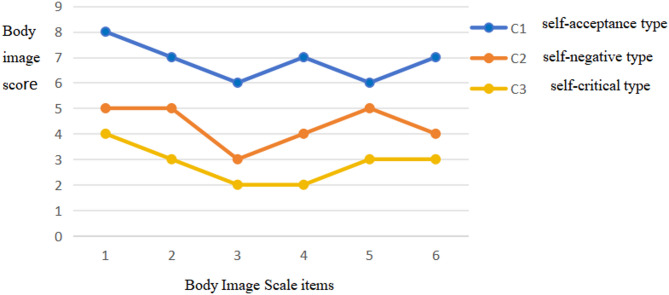
Objective: This study aimed to identify potential categories of negative body image among adolescent orthodontic patients and further examine the relationship between these categories and sleep quality.To provide evidence for clinical psychological intervention. Methods: A total of 322 adolescent orthodontic patients were randomly selected from six stomatological hospitals in Jiangsu and Zhejiang provinces, China, between June 2024 and February 2025. A field survey was conducted using a general information questionnaire, the Sociocultural Attitudes Towards Appearance Questionnaire-4 (SATAQ-4R), the Pittsburgh Sleep Quality Index (PSQI), and the Body Image Scale (BISS). Data were analyzed using latent profile analysis, χ 2 tests, and logistic regression. Results: Of the 322 surveys distributed, 311 valid responses were collected, yielding an effective response rate of 96.58%. The average body image score was 29.36 ± 6.13. Latent profile analysis identified three categories of body image: self-acceptance (11.90%, 37 cases), self-negative (60.77%, 189 cases), and self-critical (27.33%, 85 cases). χ 2 tests revealed significant differences related to gender, being an only child, education level, BMI, and SATAQ-4R scores (P < 0.05). Logistic regression analysis indicated that female gender, self-negative, and self-critical body image types were significant risk factors for poor sleep quality in this population (P < 0.05). Conclusions: Adolescent orthodontic patients exhibit heterogeneous body image perceptions, with negative body image serving as a risk factor for poor sleep quality. Clinical attention should be paid to female and adolescent orthodontic patients with higher appearance anxiety or peer pressure. Early psychological assessment and combined orthodontic-psychological intervention should be used to help improve their body image cognition and sleep quality..
Overview
CoChat Summary
## TL;DR
This multicenter cross-sectional study of 311 adolescent orthodontic patients found three latent body image profiles and showed that negative body image was associated with worse sleep quality. Female patients and those in the self-negative or self-critical body image groups had higher odds of poor sleep.
## Key findings
- Of 322 questionnaires distributed, 311 were valid, for an effective response rate of 96.58%.
- Latent profile analysis identified three body image categories: self-acceptance (11.90%, 37 cases), self-negative (60.77%, 189 cases), and self-critical (27.33%, 85 cases).
- The prevalence of poor sleep quality was 37.62% among the 311 adolescents.
- In multivariate logistic regression, female sex was associated with poor sleep quality (OR = 1.70, 95% CI: 1.032–2.803), and self-negative body image was also associated with poor sleep quality (OR = 3.969, 95% CI: 1.344–11.714); the abstract and conclusion also state self-critical body image was a risk factor, though the reported regression result shown here specifically quantifies self-negative.
## Methods
- Cross-sectional field survey of 322 adolescent orthodontic patients recruited from six stomatological hospitals in Jiangsu and Zhejiang provinces, China, from June 2024 to February 2025; 311 valid responses were analyzed.
- Participants were aged 12–18 years and had not yet started orthodontic appliance treatment; data were collected using a general questionnaire, SATAQ-4R, PSQI, and BISS.
- Analyses included latent profile analysis, chi-square tests, and multivariate logistic regression; model fit for LPA used AIC, BIC, aBIC, entropy, LMRT, and BLRT.
## Limitations
- The paper states that the regional socioeconomic homogeneity of the Jiangsu-Zhejiang sample may limit generalizability to populations with different orthodontic access or body image perceptions.
- The paper states that key confounders were not systematically assessed, including anxiety/depression comorbidity, academic stress, family dysfunction, caffeine intake, and circadian rhythm disorders.
- The paper states that reliance on self-report, a single 20-minute session, the PSQI’s 1-month recall window, lack of orthodontic-specific measures, missing clinical treatment-stage data, and no objective sleep measures or multi-informant validation limit interpretation and causal inference.
Model-written summary. Check it against the paper before relying on it.
Integrity signals
Registry
Cites
Statistics
Figures
Verification
Claims the paper makes
0 Valid · 4 Not valid · 1 Not checked · 21 Own results and interpretations
The cited sources that could be checked couldn’t confirm or dispute this claim.
In the paper
“Notably, there appears to be a complex interplay between sleep quality and body image, where negative body image may indirectly compromise sleep by triggering emotional problems like anxiety and depression. For instance, adolescents dissatisfied with their body image may ruminate on their appearance at night, leading to difficulties falling asleep or disrupted sleep [14].”
§ Correlation between latent categories of body image and sleep quality in adolescent orthodontic patients > Introduction
What the sources say
- Could not verifycites [14] Ye Y, Wang H, Liao X, Yu C, Zhang W. Stressful life events, sleep quality and Non-Suicidal Self-Injury in Chinese adolescents: the moderating effect of sensation seeking. BEHAV SCI-BASEL. 2024;14286. 10.3390/bs14040286. PMC11047468 38667082 sourceExperimental — accuracy not yet measured
The Introduction and Results discuss stressful life events as predictors of poor sleep quality, but do not address negative body image or appearance-related rumination. A search for body image, appearance dissatisfaction, anxiety, and depression found no passage describing the claimed pathway from body image through emotional problems to disrupted sleep. Page numbers are unavailable in our copy. (LLM, conf=0.77)
hedgedstates a possible cause- Asserted: passes — The authors put it forward as true.
- Checkable: passes — It can be checked against evidence.
- Load-bearing: passes — The paper’s conclusions depend on it.
- Based: passes — The paper gives a reason why it holds.
- Could not verify
The cited sources that could be checked couldn’t confirm or dispute this claim.
In the paper
“Secondly, there are methodological limitations. Traditional variable center analysis (such as regression model) [16] fails to reveal the underlying subtype structure of body image, and there may be qualitative differences in psychological responses of orthodontic patients.”
§ Correlation between latent categories of body image and sleep quality in adolescent orthodontic patients > Introduction
What the sources say
- Could not verifycites [16] Imani MM, Jalali A, Dinmohammadi M, Nouri P. The effect of orthodontic intervention on mental health and body image. Open Access Maced J Med Sci. 2018;6:1132–7. 10.3889/oamjms.2018.243. 29983816 PMC6026436 sourceExperimental — accuracy not yet measured
The Material and Methods section describes paired t-tests and Wilcoxon signed-rank tests, while the Discussion identifies sampling and follow-up as limitations. Neither section addresses whether variable-centered analysis or regression fails to reveal body-image subtypes (searched for regression, latent subtypes, and heterogeneous psychological responses). (LLM, conf=0.76)
plain- Asserted: passes — The authors put it forward as true.
- Checkable: passes — It can be checked against evidence.
- Load-bearing: passes — The paper’s conclusions depend on it.
- Based: passes — The paper gives a reason why it holds.
- Could not verify
A result the paper reports from its own data — it cites no other source for it, so there is none to check. The quote shows it is in the paper.
In the paper
“Logistic regression analysis indicated that female gender, self-negative, and self-critical body image types were significant risk factors for poor sleep quality in this population (P < 0.05).”
- Also stated in: § Multivariate logistic regression analysis of sleep quality and body image in adolescent orthodontic patients · hedged
“The results indicated that female adolescents (OR = 1.70, 95% CI: 1.032–2.803, P < 0.05) and those with a self-negative body image (OR = 3.969, 95% CI: 1.344–11.714, P < 0.05) had a significantly higher risk of poor sleep quality compared to male adolescents and those with a self-satisfactory body image (Table 4).”
§ Correlation between latent categories of body image and sleep quality in adolescent orthodontic patients > Abstract > Results
hedgedstates an associationn = 189 ·- Asserted: passes — The authors put it forward as true.
- Checkable: passes — It can be checked against evidence.
- Load-bearing: passes — The paper’s conclusions depend on it.
- Based: passes — The paper gives a reason why it holds.
- Also stated in: § Multivariate logistic regression analysis of sleep quality and body image in adolescent orthodontic patients · hedged
A result the paper reports from its own data — it cites no other source for it, so there is none to check. The quote shows it is in the paper.
In the paper
“The average body image score was 29.36 ± 6.13.”
- Also stated in: § Discussion · plain
“The results of this study revealed that the body image of adolescent orthodontic patients was generally low, with an average body image score of 29.36 ± 6.13 (out of a total score of 54).”
§ Correlation between latent categories of body image and sleep quality in adolescent orthodontic patients > Abstract > Results
plain- Asserted: passes — The authors put it forward as true.
- Checkable: passes — It can be checked against evidence.
- Load-bearing: unclear — It is unclear whether the paper’s conclusions depend on it.
- Based: passes — The paper gives a reason why it holds.
- Also stated in: § Discussion · plain
A result the paper reports from its own data — it cites no other source for it, so there is none to check. The quote shows it is in the paper.
In the paper
“Logistic regression analysis indicated that female gender, self-negative, and self-critical body image types were significant risk factors for poor sleep quality in this population (P < 0.05).”
- Also stated in: § Discussion · hedged
“The results of this study indicate that being female, having a self-negative body image, and having a self-critical body image are independent risk factors for poor sleep quality in adolescent orthodontic patients (p < 0.05).”
§ Correlation between latent categories of body image and sleep quality in adolescent orthodontic patients > Abstract > Results
hedgedstates a causen = 85 ·- Asserted: passes — The authors put it forward as true.
- Checkable: passes — It can be checked against evidence.
- Load-bearing: passes — The paper’s conclusions depend on it.
- Based: passes — The paper gives a reason why it holds.
- Also stated in: § Discussion · hedged
10 more claims
Create a free account to see all 26 claims and every source verdict.
- Probably not a substantial claim. 6
- It may state two separate claims as one. 7
Citations
Cites
The Pittsburgh Sleep Quality Index: a new instrument for psychiatric practice and research
Buysse, D. J., Reynolds, C. F., Monk, T. H., Berman, S. R., & Kupfer, D. J. (1989) · Psychiatry Research · doi:10.1016/0165-1781(89)90047-4 · Cited by 35,234 · cited 1×
“The scale was developed by Buysse et al. [21] and later translated and revised into Chinese by Liu Xianchen et al. [22].”
Development and validation of the sociocultural attitudes towards appearance questionnaire
Heinberg, L. J., Thompson, J. K., & Stormer, S. (1995) · International Journal of Eating Disorders · doi:10.1002/1098-108x(199501)17:1<81::aid-eat2260170111>3.0.co;2-y · Cited by 949
Beyond Body Image as a Trait: The Development and Validation of the Body Image States Scale
Cash, T. F., Fleming, E. C., Alindogan, J., Steadman, L., & Whitehead, A. (2002) · Eating Disorders · doi:10.1080/10640260290081678 · Cited by 684 · cited 1×
“The BISS, developed by Cash et al. and revised by Yang Xiaoying et al. [18, 19], was used to assess body satisfaction.”
Body Image among Adolescent Girls and Boys: A Longitudinal Study
Carlson Jones, D. (2004) · Developmental Psychology · doi:10.1037/0012-1649.40.5.823 · Cited by 537
Social Media and Body Image: Recent Trends and Future Directions
Vandenbosch, L., Fardouly, J., & Tiggemann, M. (2022) · Current Opinion in Psychology · doi:10.1016/j.copsyc.2021.12.002 · Cited by 403 · cited 1×
“According to Trauma Theory, negative life experiences such as school bullying and appearance-related discrimination can have long-lasting effects on adolescents’ body image [30].”
Schaefer, L. M., Harriger, J. A., Heinberg, L. J., Soderberg, T., & Kevin Thompson, J. (2017) · International Journal of Eating Disorders · doi:10.1002/eat.22590 · Cited by 380 · cited 1×
“The scale was developed by Buysse et al. [21] and later translated and revised into Chinese by Liu Xianchen et al. [22].”
Body Image and Health: Contemporary Perspectives
Grogan, S. (2006) · Journal of Health Psychology · doi:10.1177/1359105306065013 · Cited by 353
Insatisfação com a imagem corporal e fatores associados em adolescentes
de Carvalho, G. X., Nunes, A. P. N., de Moraes, C. L., & da Veiga, G. V. (2020) · Ciência & Saúde Coletiva · doi:10.1590/1413-81232020257.27452018 · Cited by 310 · cited 1×
“Second, orthodontic patients typically present with pre-existing issues such as misaligned teeth and facial asymmetry, which can heighten their awareness and sensitivity to their appearance [26, 27].”
de Valle, M. K., Gallego-García, M., Williamson, P., & Wade, T. D. (2021) · Body Image · doi:10.1016/j.bodyim.2021.10.001 · Cited by 221 · cited 1×
“This can be explained through several mechanisms: First, according to cognitive behavioral theory, negative body image is linked to increased rumination, where persistent negative thoughts activate the sympathetic nervous system, disrupting the sleep-wake cycle [36].”
Sociocultural context of women's body image
Paquette, M.-C., & Raine, K. (2004) · Social Science & Medicine · doi:10.1016/j.socscimed.2003.12.016 · Cited by 200 · cited 1×
“For adolescent orthodontic patients, abnormal dental or maxillofacial development can lead to negative body image perceptions, as features like misaligned teeth or facial asymmetry may induce feelings of inferiority and social withdrawal [7, 8].”
Application of orthodontic mini-implants in adolescents
Motoyoshi, M., Matsuoka, M., & Shimizu, N. (2007) · International Journal of Oral and Maxillofacial Surgery · doi:10.1016/j.ijom.2007.03.009 · Cited by 168 · cited 1×
“Orthodontic treatment in adolescents is a widely used approach to correct abnormal dental and maxillofacial development, aiming to enhance occlusal function, facial aesthetics, and mental health by aligning teeth and improving jaw relationships [1].”
The application of latent profile analysis in organizational behavior research
Kui, Y., Peng, J., & Zhang, J. (2020) · Advances in Psychological Science · doi:10.3724/sp.j.1042.2020.01056 · Cited by 150
Lian, Q., Su, Q., Li, R., Elgar, F. J., Liu, Z., & Zheng, D. (2018) · PeerJ · doi:10.7717/peerj.4330 · Cited by 99 · cited 1×
“If adolescent orthodontic patients perceive their appearance as inadequate or not meeting societal aesthetic standards, they may develop feelings of inferiority, helplessness, and depression, ultimately impacting their self-esteem and self-confidence [31].”
Twigge, E., Roberts, R., Jamieson, L., Dreyer, C. W., & Sampson, W. J. (2015) · European Journal of Orthodontics · doi:10.1093/ejo/cjv093 · Cited by 93 · cited 1×
“The period between 12 and 18 years is considered optimal for orthodontic intervention, as the maxillofacial bones are still developing, offering greater plasticity and more pronounced treat-ment effects [2].”
Deng, X., Wang, Y.-J., Deng, F., Liu, P.-L., & Wu, X. (2017) · American Journal of Orthodontics and Dentofacial Orthopedics · doi:10.1016/j.ajodo.2017.05.028 · Cited by 80 · cited 1×
“Second, orthodontic patients typically present with pre-existing issues such as misaligned teeth and facial asymmetry, which can heighten their awareness and sensitivity to their appearance [26, 27].”
Using Progress Feedback to Enhance Treatment Outcomes: A Narrative Review
de Jong, K., Douglas, S. R., Wolpert, M., Delgadillo, J., Aas, B., Bovendeerd, B., Carlier, I. V. E., Compare, A., Edbrooke-Childs, J. H., Janse, P. D., et al. (2024) · Administration and Policy in Mental Health and Mental Health Services Research · doi:10.1007/s10488-024-01381-3 · Cited by 74 · cited 1×
“For self-negative patients, cognitive behavioral intervention techniques can be integrated into chair-side operations, such as simultaneous interpretation of functional benefits when adjusting appliances (e.g., alignment can reduce the frequency of food impaction) [39].”
O’Driscoll, D. M., Landry, S. A., Pham, J., Young, A. C., Sands, S. A., Hamilton, G. S., & Edwards, B. A. (2019) · SLEEP · doi:10.1093/sleep/zsz186 · Cited by 52 · cited 1×
“Such mechanisms may be potentiated by anatomical characteristics specific to Chinese populations [43, 44].”
Body, image, and digital technology in adolescence and contemporary youth culture
Demaria, F., Pontillo, M., Vincenzo, C. D., Bellantoni, D., Pretelli, I., & Vicari, S. (2024) · Frontiers in Psychology · doi:10.3389/fpsyg.2024.1445098 · Cited by 52 · cited 1×
“According to Sociocultural Theory, the idealized images promoted by mass media and society can foster unrealistic aesthetic expectations [29].”
Adult orthodontics, motivations for treatment, choice, and impact of appliances: A qualitative study
Johal, A., Damanhuri, S. H., & Colonio-Salazar, F. B. (2024) · American Journal of Orthodontics and Dentofacial Orthopedics · doi:10.1016/j.ajodo.2024.02.009 · Cited by 51 · cited 1×
“Body image refers to an individual’s subjective perception and evaluation of their body, encompassing aspects such as appearance, body function, health, and gender identity [4].”
Constructs of poor sleep quality in adolescents: associated factors
Cavalcanti, L. M. L. G., Lima, R. A., Silva, C., de Barros, M. V. G., & Soares, F. C. (2021) · Cadernos de Saúde Pública · doi:10.1590/0102-311x00207420 · Cited by 45 · cited 1×
“These sleep disturbances not only impair physical health—such as weakened immunity and stunted growth—but also negatively affect mental well-being, contributing to issues like emotional dysregulation and cognitive decline [13].”
Body image as a predictor of nonsuicidal self-injury in women: A longitudinal study
Black, E. B., Garratt, M., Beccaria, G., Mildred, H., & Kwan, M. (2019) · Comprehensive Psychiatry · doi:10.1016/j.comppsych.2018.11.010 · Cited by 42 · cited 1×
“Current sleep research mainly focuses on ordinary adolescents [17], ignoring the unique psychological mechanism of orthodontic patients.”
Dental Aesthetics and Self-Esteem of Patients Seeking Orthodontic Treatment
Bahar, A. D., Sagi, M. S., Zuhairi, F. A. M., & Hassan, W. N. W. (2024) · Healthcare · doi:10.3390/healthcare12161576 · Cited by 33 · cited 2×
“The widespread societal standards of beauty and the pervasive dissemination of aesthetic ideals can lead adolescent orthodontic patients to develop unrealistic expectations regarding their appearance [28].”
The Effect of Orthodontic Intervention on Mental Health and Body Image
Imani, M. M., Jalali, A., Dinmohammadi, M., & Nouri, P. (2018) · Open Access Macedonian Journal of Medical Sciences · doi:10.3889/oamjms.2018.243 · Cited by 24 · cited 1×
“Traditional variable center analysis (such as regression model) [16] fails to reveal the underlying subtype structure of body image, and there may be qualitative differences in psychological responses of orthodontic patients.”
Relationship between dental occlusion and brain activity: A narrative review
Ulloa, S. S., Ordóñez, A. L. C., & Sardi, V. E. B. (2022) · The Saudi Dental Journal · doi:10.1016/j.sdentj.2022.09.001 · Cited by 24 · cited 1×
“Such mechanisms may be potentiated by anatomical characteristics specific to Chinese populations [43, 44].”
The association between self-esteem and aesthetic component of smile among adolescents
Gavic, L., Budimir, M., & Tadin, A. (2024) · Progress in Orthodontics · doi:10.1186/s40510-023-00508-w · Cited by 21 · cited 1×
“Common orthodontic issues, such as overcrowded or spaced teeth, misalignment, and jaw dysplasia, not only affect oral function but also have significant psychological and social implications for adolescents [3].”
Dadgar-Yeganeh, A., Hatcher, D. C., & Oberoi, S. (2021) · Journal of the World Federation of Orthodontists · doi:10.1016/j.ejwf.2021.01.001 · Cited by 17 · cited 1×
“Fifth, while focusing on direct body image-sleep correlations, we acknowledge that abnormal craniofacial morphology (e.g., mandibular retrusion) may exert indirect effects through pathways like upper airway dysfunction (OSA) or neurovegetative alterations [41, 42].”
Akram, U., Allen, S. F., Stevenson, J. C., Lazuras, L., Ackroyd, M., Chester, J., Longden, J., Peters, C., & Irvine, K. (2021) · Cognitive Processing · doi:10.1007/s10339-021-01039-0 · Cited by 17 · cited 1×
“Additionally, Social Comparison Theory posits that excessive upward social comparison lowers self-esteem and raises anxiety, which, in turn, may impair sleep quality through the hypothalamic-pituitary-adrenal (HPA) axis [37].”
Hu, Y., Liu, Q., & Ma, Z.-F. (2022) · The Journal of Psychology · doi:10.1080/00223980.2022.2134277 · Cited by 17 · cited 1×
“…used to dynamically display the treatment progress (such as the improvement of maxillary arch width and the increase of occlusal contact point), combined with the comparison map of stage occlusion relationship, so as to strengthen the positive cognition of patients on functional improvement [38].”
The effects of sleep on body image: examining the roles of depression, perceived stress, and anxiety
Rosenbaum, D. L., Gillen, M. M., & Bloomer, S. A. (2023) · Journal of American College Health · doi:10.1080/07448481.2023.2186153 · Cited by 17 · cited 1×
“The existing literature focuses on the middle and late stages of orthodontic treatment (such as 6 months after appliance wearing) [15], and lacks systematic evaluation of the baseline psychological state before treatment, which results in the inability to distinguish the effect of treatment itself…”
Body image among adolescents: what is its relationship with rejection sensitivity and self-efficacy?
Saylan, E., & Soyyiğit, V. (2023) · Clinical Child Psychology and Psychiatry · doi:10.1177/13591045231188411 · Cited by 16 · cited 1×
“This multi-dimensional construct is shaped by a combination of physiological, psychological, social, and cultural factors [5, 6].”
Body image dissatisfaction and associated factors in adolescents
de Carvalho, G. X., Nunes, A. P. N., de Moraes, C. L., & da Veiga, G. V. (2021) · Figshare · doi:10.6084/m9.figshare.14284154 · Cited by 16
Hoffmann, S., Cortés‐García, L., & Warschburger, P. (2018) · Journal of Adolescence · doi:10.1016/j.adolescence.2018.07.005 · Cited by 14 · cited 1×
“Research has shown that adolescent females tend to experience greater dissatisfaction with their weight and body shape compared to males [33], and such negative perceptions may disrupt sleep quality through neuroendocrine mechanisms [34].”
Yu, X., Langberg, J. M., & Becker, S. P. (2022) · Sleep Medicine · doi:10.1016/j.sleep.2022.01.017 · Cited by 14 · cited 1×
“Fifth, while focusing on direct body image-sleep correlations, we acknowledge that abnormal craniofacial morphology (e.g., mandibular retrusion) may exert indirect effects through pathways like upper airway dysfunction (OSA) or neurovegetative alterations [41, 42].”
Normal Sleep in Children and Adolescence
Agostini, A., & Centofanti, S. A. (2024) · Psychiatric Clinics of North America · doi:10.1016/j.psc.2023.06.001 · Cited by 13
What impact do personality traits have on self-perception of dental aesthetics?
Xu, Q., Du, W., & Lin, F. (2023) · Head & Face Medicine · doi:10.1186/s13005-023-00358-1 · Cited by 12 · cited 2×
“Numerous studies indicate that adolescents commonly experience issues such as insufficient sleep, poor sleep quality, insomnia, and disrupted sleep patterns [12].”
Pubertal status and body image: An inquiry into experiences of adolescents in Ghana and Kenya
Mahama, S., Weichold, K., Fehmer, N., Mvungu, E. N., & Natsuaki, M. N. (2024) · Journal of Research on Adolescence · doi:10.1111/jora.12953 · Cited by 11 · cited 1×
“For adolescent orthodontic patients, abnormal dental or maxillofacial development can lead to negative body image perceptions, as features like misaligned teeth or facial asymmetry may induce feelings of inferiority and social withdrawal [7, 8].”
Roulias, P., Vasoglou, G., Angelopoulos, G., Pandis, N., & Sifakakis, I. (2024) · BMC Psychology · doi:10.1186/s40359-024-01834-2 · Cited by 11 · cited 1×
“Research suggests that negative body image not only impacts mental well-being but may also decrease treat-ment adherence, indirectly influencing treatment outcomes [9].”
[Effect of body image in adolescent orthodontic treatment].
Minghui, P., Jing, K., & Deng, X. (2017) · PubMed Central · doi:10.7518/hxkq.2017.05.008 · Cited by 9
Nie, P., Teng, F., Wang, F., Shen, G., Zhu, M., & Yu, D. (2021) · American Journal of Orthodontics and Dentofacial Orthopedics · doi:10.1016/j.ajodo.2020.03.034 · Cited by 7 · cited 1×
“Adolescents with negative body image may have heightened expectations for treatment, which, if unmet, can increase psychological stress and dissatisfaction [10, 11].”
Yu, K., Xia, L., Chen, H.-H., Zou, T.-T., Zhang, Y., Zhang, P., Yang, Y., Wei, R.-M., Su, Z.-F., & Chen, G.-H. (2024) · Nature and Science of Sleep · doi:10.2147/nss.s491040 · Cited by 7 · cited 1×
“Females often face greater social comparison and the influence of social media, which can contribute to emotional regulation difficulties and, consequently, impaired sleep quality [35].”
Self-citationJalali‐Farahani, S., Amiri, P., Zarani, F., & Azizi, F. (2021) · Child Psychiatry & Human Development · doi:10.1007/s10578-021-01235-1 · Cited by 6 · cited 1×
“First, from a developmental psychology stand-point, adolescence is a critical phase for physiological changes in females, with the emergence of secondary sexual characteristics often leading to body image distress [32].”
Ye, Y., Wang, H., Liao, X., Yu, C., & Zhang, W. (2024) · Behavioral Sciences · doi:10.3390/bs14040286 · Cited by 5 · cited 1×
“For instance, adolescents dissatisfied with their body image may ruminate on their appearance at night, leading to difficulties falling asleep or disrupted sleep [14].”
Self-citationChen, Q., Liu, Q., & Wang, W. (2024) · Medicine · doi:10.1097/md.0000000000037131 · Cited by 2 · cited 1×
“…mechanism is established to identify negative experiences related to appearance (such as being derated for tooth protrusion) through traumatic event diary, and mindfulness regulation strategies (deep breathing combined with body scanning meditation) are taught to block rumination at night [40].”
Research works printed but not linked: 1
- Yang XY, Chen H, Gao X, Chen R. The role of social comparison in the influence of media on body image of female college students. Chin J Mental Health. 2010;24:51–4.
Cited by
Omar, S. M., Al‐Nafeesah, A., Alwabili, A., AlE'ed, A. A., & Adam, I. (2026) · International Journal of General Medicine · doi:10.2147/ijgm.s600482 · Cited by 1
Body image and maladaptive eating behaviors in Chinese early adolescents: a latent profile analysis
ZHANG, C., Han, Y., Cheng, S., & Qi, Y. (2026) · Frontiers in Psychology · doi:10.3389/fpsyg.2026.1879943
Metadata
- Authors
- Xu, C., Zhang, Y., Xiong, B., Wang, H., & Liang, M.
- Affiliations
- Nantong University (CN)
- Corresponding author
- Liang, Mengyao
- ORCID
- Liang, Mengyao
- Venue
- BMC Oral Health
- Published
- 2025-07-17
- Volume
- 25
- Issue
- 1
- Pages
- 1190-1190
- ISSN
- 1472-6831 (ISSN-L)
- PMC
- PMC12273009
- OpenAlex
- W4412490836
- Cited by
- 3
- References
- 42
- Citations by year
- 2026: 3
- FWCI
- 2.99
- Type
- journal article
- Language
- en
- Open access
- gold
- doi.org
- Licence
- cc-by-nc-nd
- creativecommons.org/licenses/by-nc-nd/4.0 (tdm)
- creativecommons.org/licenses/by-nc-nd/4.0 (vor)
- Locations
- BMC Oral Health (publishedVersion, cc-by-nc-nd)
- PubMed Central (publishedVersion, cc-by-nc-nd)
- PubMed (publishedVersion)
- DOAJ (DOAJ: Directory of Open Access Journals) (submittedVersion, cc-by-sa)
- Funders
- Nantong University Special Research Fund for Clinical Medicine (Grant No. 2024LY066)
- Topics
- Health Sciences › Dentistry › Orthodontics › Orthodontics and Dentofacial Orthopedics
- Social Sciences › Psychology › Clinical Psychology › Body Image and Dysmorphia Studies
- Social Sciences › Psychology › Clinical Psychology › Eating Disorders and Behaviors
- Keywords
- body image, sleep quality, negative body image, self-criticism, appearance anxiety, sociocultural attitudes toward appearance, gender differences, risk factors for poor sleep, psychological intervention
- MeSH terms
- Sleep Quality, Adolescent, Body Image, Child, China, Female, Humans, Male, Surveys and Questionnaires, Self Concept
About these checks
Registry, retraction, Cites and statistics results are computed, not judged, with one exception: a printed reference that no index lists is read once by a model before it counts as a citation error. Claims are extracted by a model and kept only when their quote appears verbatim in the text; each cited source is then checked, with a model’s help, for whether it says what the claim relies on. Those verdicts can be wrong — read the claim’s quote and the cited source before relying on one.
The claim verdicts this report counts are experimental: their accuracy is not yet measured.
A language model drew the claims from the paper on 2026-10-11, under version 3 of the claim definition (model deepseek-v4.1-flash, prompt extract-v3).
A second model labelled each claim on 2026-10-11 (model jev-1.13-20260917, definition revision gold-guideline-v0.2).
Cited sources are checked with a language model’s help (gpt-6-sol).
Statistics and arithmetic are recomputed, not judged.
Confidence bands are shown only for fields calibrated on our annotated test set. None is calibrated yet, so no band is shown.
What counts as a claim ›How we measure confidence ›How we check this ›
Are you an author, or do you see a problem with this page? Request a review
Data sources
Bibliographic data: Semantic Scholar, OpenAlex, Crossref.
Contains information from the Semantic Scholar Academic Graph Datasets, made available under the ODC Attribution License (ODC-BY 1.0).
Semantic Scholar’s data is described in: Kinney, R., et al. (2023). The Semantic Scholar Open Data Platform. arXiv:2301.10140.
