

The DOI matches its Crossref record; 33 of the 33 references it cites were found in a registry or an index.
Current patient perspectives of vulvovaginal candidiasis: incidence, symptoms, management and post-treatment outcomes
Open accessAbstract
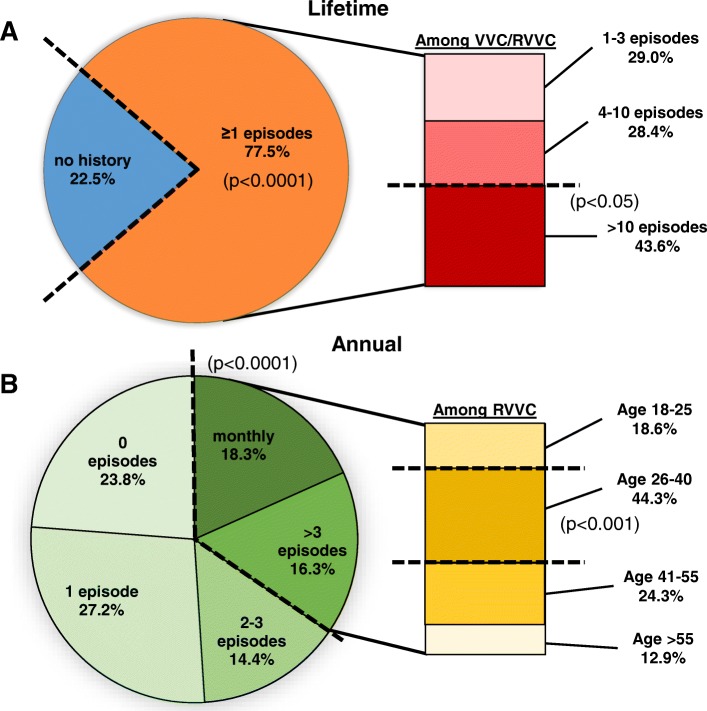
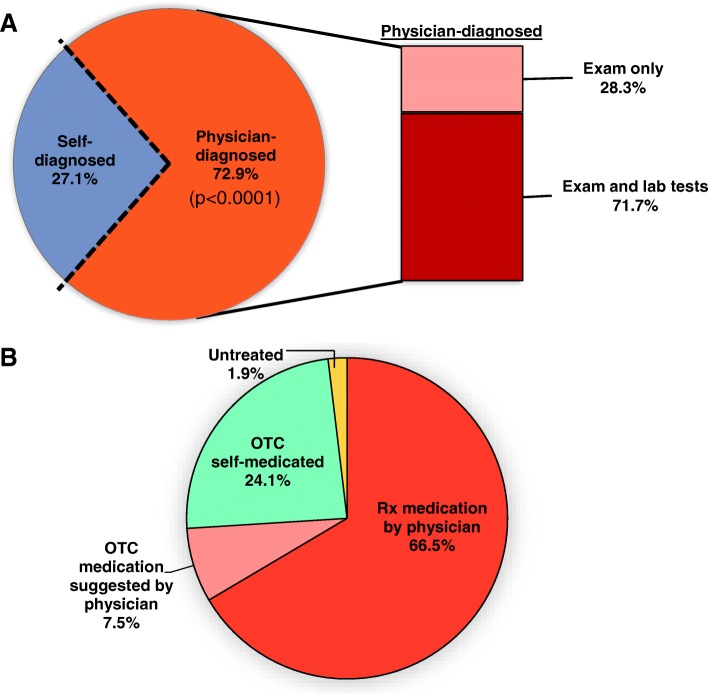
BACKGROUND: Vulvovaginal candidiasis (VVC) is a common infection affecting women worldwide. Reports of patterns/risk factors/trends for episodic/recurrent VVC (RVVC) are largely outdated. The purpose of this study was to obtain current patient perspectives of several aspects of VVC/RVVC. METHODS: Business cards containing on-line survey information were distributed to healthy volunteers and patients seeking standard, elective, or referral gynecologic care in university-affiliated Obstetrics/Gynecology clinics. The internet-based questionnaire was completed by 284 non-pregnant women (78% Caucasian, 14% African American, 8% Asian). RESULTS: The majority of the participants (78%) indicated a history of VVC with 34% defined as having RVVC. The most common signs/symptoms experienced were itching, burning and redness with similar ranking of symptoms among VVC and RVVC patients. Among risk factors, antibiotic use ranked highest followed by intercourse, humid weather and use of feminine hygiene products. A high number of respondents noted 'no known cause' (idiopathic episodes) that was surprisingly similar among women with a history of either VVC or RVVC. VVC/RVVC episodes reported were primarily physician-diagnosed (73%) with the remainder mostly reporting self-diagnosis and treating with over-the-counter (OTC) medications. Most physician-diagnosed attacks utilized a combination of pelvic examination and laboratory tests followed by prescribed antifungals. Physician-treated cases achieved a higher level of symptom relief (84%) compared to those who self-medicated (57%). The majority of women with RVVC (71%) required continual or long-term antifungal medication as maintenance therapy to control symptoms. CONCLUSIONS: Current patient perspectives closely reflect historically documented estimates of VVC/RVVC prevalence and trends regarding symptomatology, disease management and post-treatment outcomes.
Overview
The claims and statistics of this paper haven’t been checked yet.
Run the check — free, no account needed. It reads the open-access text and checks the sources it cites.
Integrity signals
Registry
Cites
Statistics
Figures
Verification
Claims the paper makes
The claims and statistics of this paper haven’t been checked yet.
Run the check — free, no account needed. It reads the open-access text and checks the sources it cites.
Claims other papers make about this one
Each is checked against this paper’s own text: does it say what the citing paper says it does?
The source backs part of the claim, not all of it — or backs it for a different population, condition or comparison.
In the citing paper
“In a 2016–2018 survey of 284 women, 71% of participants reported needing continual or long-term antifungal therapy to manage their symptoms (Yano et al., 2019).”
From Management of recurrent vulvovaginal candidosis: Narrative review of the literature and European expert panel opinion (2022) · cites this paper as Yano et al., 2019
Experimental — accuracy not yet measuredThe cited source says what the claim attributes to it.
In the citing paper
“Evidence shows that physician-treated cases achieved a higher level of symptom relief (84%) than self-medicated cases (57%) (Yano et al., 2019).”
From Management of recurrent vulvovaginal candidosis: Narrative review of the literature and European expert panel opinion (2022) · cites this paper as Yano et al., 2019
In the citing paper
“Women who reported having self-diagnosed an infection were less likely to report symptom relief compared with women who were diagnosed by a physician: 57% versus 84%, respectively. 19”
From Clinical challenges in diagnosis and treatment of recurrent vulvovaginal candidiasis (2022) · cites this paper as [19]
In the citing paper
“Possible reasons are connected with hyperglycemia in vaginal cells. It is associated with increased fungal adhesion and binding and also reduces the ability of neutrophils to perform effective phagocytosis of these cells [15,47].”
From Treatment of Vulvovaginal Candidiasis—An Overview of Guidelines and the Latest Treatment Methods (2023) · cites this paper as [15]
Self-check
Percentages, sums and reported differences re-computed from the paper’s own numbers.
The self-check needs the paper’s full text.
Citations
Cites
Sobel, J. D. (2007) · The Lancet · doi:10.1016/s0140-6736(07)60917-9 · Cited by 1,270
Self-citationCandida Infections of the Genitourinary Tract
Achkar, J. M., & Fries, B. C. (2010) · Clinical Microbiology Reviews · doi:10.1128/cmr.00076-09 · Cited by 736
Vulvovaginal candidiasis: Epidemiologic, diagnostic, and therapeutic considerations
Sobel, J. D., Faro, S., Force, R. W., Foxman, B., Ledger, W. J., Nyirjesy, P., Reed, B. D., & Summers, P. R. (1998) · American Journal of Obstetrics and Gynecology · doi:10.1016/s0002-9378(98)80001-x · Cited by 694
Self-citationGlobal burden of recurrent vulvovaginal candidiasis: a systematic review
Denning, D. W., Kneale, M., Sobel, J. D., & Rautemaa-Richardson, R. (2018) · The Lancet Infectious Diseases · doi:10.1016/s1473-3099(18)30103-8 · Cited by 639
Self-citationMaintenance Fluconazole Therapy for Recurrent Vulvovaginal Candidiasis
Sobel, J. D., Wiesenfeld, H. C., Martens, M., Danna, P., Hooton, T. M., Rompalo, A., Sperling, M., Livengood, C., Horowitz, B., Von Thron, J., et al. (2004) · New England Journal of Medicine · doi:10.1056/nejmoa033114 · Cited by 487
Self-citationSobel, J. D. (1997) · New England Journal of Medicine · doi:10.1056/nejm199712253372607 · Cited by 446
Self-citationEvaluation of Vaginal Complaints
Anderson, M. (2004) · JAMA · doi:10.1001/jama.291.11.1368 · Cited by 375
Epidemiology and pathogenesis of recurrent vulvovaginal candidiasis
Sobel, J. D. (1985) · American Journal of Obstetrics and Gynecology · doi:10.1016/s0002-9378(85)80003-x · Cited by 332
Self-citationPathogenesis and Treatment of Recurrent Vulvovaginal Candidiasis
Sobel, J. D. (1992) · Clinical Infectious Diseases · doi:10.1093/clinids/14.supplement_1.s148 · Cited by 277
Self-citationCharacterization of the Vaginal Micro- and Mycobiome in Asymptomatic Reproductive-Age Estonian Women
Drell, T., Lillsaar, T., Tummeleht, L., Simm, J., Aaspõllu, A., Väin, E., Saarma, I., Salumets, A., Donders, G. G. G., & METSIS, M. L. (2013) · PLoS ONE · doi:10.1371/journal.pone.0054379 · Cited by 270
Foxman, B., Muraglia, R., Dietz, J.-P., Sobel, J. D., & Wagner, J. (2013) · Journal of Lower Genital Tract Disease · doi:10.1097/lgt.0b013e318273e8cf · Cited by 261
Self-citationFidel, P. L., Barousse, M. M., Espinosa, T., Ficarra, M., Sturtevant, J. E., Martin, D. H., Quayle, A. J., & Dunlap, K. (2004) · Infection and Immunity · doi:10.1128/iai.72.5.2939-2946.2004 · Cited by 258
Self-citationPrevalence and risk factors for vaginal Candidacolonization in women with type 1 and type 2 diabetes
de Leon, E. M., Jacober, S. J., Sobel, J. D., & Foxman, B. (2002) · BMC Infectious Diseases · doi:10.1186/1471-2334-2-1 · Cited by 246
Self-citationVulvovaginal C andida albicans infections: pathogenesis, immunity and vaccine prospects
Cassone, A. (2014) · BJOG An International Journal of Obstetrics & Gynaecology · doi:10.1111/1471-0528.12994 · Cited by 206
Berg, A. O. (1984) · JAMA · doi:10.1001/jama.251.5.620 · Cited by 190
Recurrent vulvovaginal candidiasis
Blostein, F., Levin-Sparenberg, E., Wagner, J., & Foxman, B. (2017) · Annals of Epidemiology · doi:10.1016/j.annepidem.2017.08.010 · Cited by 180
Treatment of complicated Candida vaginitis: Comparison of single and sequential doses of fluconazole
Sobel, J. D., Kapernick, P. S., Zervos, M., Reed, B. D., Hooton, T., Soper, D., Nyirjesy, P., Heine, M. W., Willems, J., Panzer, H., et al. (2001) · American Journal of Obstetrics and Gynecology · doi:10.1067/mob.2001.115116 · Cited by 158
Self-citationCandida vaginitis: Self-Reported Incidence and Associated Costs
Foxman, B., Barlow, R., Dʼarcy, H., Gillespie, B., & Sobel, J. D. (2000) · Sexually Transmitted Diseases · doi:10.1097/00007435-200004000-00009 · Cited by 158
Self-citationRisk Factors for Vulvovaginal Candidiasis: A Case- Control Study among University Students
Geiger, A. M., & Foxman, B. (1996) · Epidemiology · doi:10.1097/00001648-199603000-00013 · Cited by 154
Candida Vaginitis: When Opportunism Knocks, the Host Responds
Peters, B. M., Yano, J., Noverr, M. C., & Fidel, P. L. (2014) · PLoS Pathogens · doi:10.1371/journal.ppat.1003965 · Cited by 153
Self-citationRepeated Vulvovaginal Fungal Infections Cause Persistent Pain in a Mouse Model of Vulvodynia
Farmer, M. A., Taylor, A. M. W., Bailey, A. L., Tuttle, A. H., MacIntyre, L., Milagrosa, Z. E., Crissman, H. P., Bennett, G. J., Ribeiro‐da‐Silva, A., Binik, Y. M., et al. (2011) · Science Translational Medicine · doi:10.1126/scitranslmed.3002613 · Cited by 149
Hurley, R., & de Louvois, J. (1979) · Postgraduate Medical Journal · doi:10.1136/pgmj.55.647.645 · Cited by 130
Yano, J., Noverr, M. C., & Fidel, P. L. (2011) · Cytokine · doi:10.1016/j.cyto.2011.11.021 · Cited by 104
Self-citationThe epidemiology of vulvovaginal candidiasis among university students.
Geiger, A. M., Foxman, B., & Gillespie, B. W. (1995) · American Journal of Public Health · doi:10.2105/ajph.85.8_pt_1.1146 · Cited by 99
Foxman, B., MARSH, J. V., Gillespie, B. W., & Sobel, J. D. (1998) · Journal of Women s Health · doi:10.1089/jwh.1998.7.1167 · Cited by 92
Self-citationGeiger, A. M., Foxman, B., & Sobel, J. D. (1995) · Sexually Transmitted Infections · doi:10.1136/sti.71.5.304 · Cited by 92
Self-citationHistory and new insights into host defense against vaginal candidiasis
Fidel, P. L. (2004) · Trends in Microbiology · doi:10.1016/j.tim.2004.03.006 · Cited by 85
Self-citationYano, J., Noverr, M. C., & Fidel, P. L. (2017) · mBio · doi:10.1128/mbio.00211-17 · Cited by 84
Self-citationSexual Transmission of Candida
Horowitz, B. J., EDELSTEIN, S. W., & LIPPMAN, L. (1987) · Obstetrical & Gynecological Survey · doi:10.1097/00006254-198710000-00019 · Cited by 82
Vulvovaginal Candidiasis in Postmenopausal Women
Fischer, G. O., & Bradford, J. A. (2011) · Journal of Lower Genital Tract Disease · doi:10.1097/lgt.0b013e3182241f1a · Cited by 76
Treatment Options for Vulvovaginal Candidiasis, 1993
Reef, S. E., Levine, W. C., McNeil, M. M., Fisher‐Hoch, S. P., Holmberg, S. D., Duerr, A. C., Smith, D., Sobel, J. D., & Pinner, R. W. (1995) · Clinical Infectious Diseases · doi:10.1093/clinids/20.supplement_1.s80 · Cited by 70
Self-citationPrevalence of Non-Albicans Candida Infections in Women with Recurrent Vulvovaginal Symptomatology
Mintz, J. D., & Martens, M. G. (2013) · Advances in Infectious Diseases · doi:10.4236/aid.2013.34035 · Cited by 27
Cited by
Sorted by citations
Pathogenesis and virulence of Candida albicans
Lopes, J. P., & Lionakis, M. S. (2021) · Virulence · doi:10.1080/21505594.2021.2019950 · Cited by 549
Immune responses to human fungal pathogens and therapeutic prospects
Lionakis, M. S., Drummond, R. A., & Hohl, T. M. (2023) · Nature Reviews Immunology · doi:10.1038/s41577-022-00826-w · Cited by 379
d’Enfert, C., Kaune, A.-K., Alaban, L. R., Chakraborty, S., Cole, N. L., Delavy, M., Kosmala, D., Marsaux, B., Fróis-Martins, R., Morelli, M., et al. (2020) · FEMS Microbiology Reviews · doi:10.1093/femsre/fuaa060 · Cited by 377
Guideline: Vulvovaginal Candidosis (AWMF 015/072, Level S2k)
Farr, A., Effendy, I., Frey Tirri, B., Hof, H., Mayser, P., Petricevic, L., Ruhnke, M., Schaller, M., Schaefer, A. P. A., Sustr, V., et al. (2021) · Mycoses · doi:10.1111/myc.13248 · Cited by 184
Pathogenesis and Clinical Relevance of Candida Biofilms in Vulvovaginal Candidiasis
Rodríguez‐Cerdeira, C., Martínez-Herrera, E. O., Carnero-Gregorio, M., López-Bárcenas, A., Fabbrocini, G., Fida, M., El-Samahy, M., & González-Cespón, J. L. (2020) · Frontiers in Microbiology · doi:10.3389/fmicb.2020.544480 · Cited by 132
Metadata
- Authors
- Yano, J., Sobel, J. D., Nyirjesy, P., Sobel, R., Williams, V. L., Yu, Q., Noverr, M. C., & Fidel, P. L.
- Affiliations
- Louisiana State University Health Sciences Center New Orleans (US)
- Wayne State University (US)
- Drexel University (US)
- Thomas Jefferson University Hospital (US)
- Tulane University (US)
- Corresponding author
- Fidel, Paul L.
- ORCID
- Venue
- BMC Women's Health
- Published
- 2019-03-29
- Volume
- 19
- Issue
- 1
- Pages
- 48-48
- ISSN
- 1472-6874 (ISSN-L)
- PMC
- PMC6441174
- OpenAlex
- W2940415202
- Cited by
- 270
- References
- 32
- Citations by year
- 2026: 30 · 2025: 35 · 2024: 45 · 2023: 35 · 2022: 44 · 2021: 47 · 2020: 24 · 2019: 9
- FWCI
- 22.77
- Type
- journal article
- Language
- en
- Open access
- gold
- doi.org
- Locations
- BMC Women s Health (publishedVersion, cc-by)
- PubMed Central (publishedVersion, cc-by)
- PubMed (publishedVersion)
- The Medicine Forum (submittedVersion, cc-by)
- DOAJ (DOAJ: Directory of Open Access Journals) (submittedVersion, cc-by-sa)
- Funders
- LSUHSC Foundation
- National Institute of General Medical Sciences (U54 GM104940)
- Topics
- Life Sciences › Immunology and Microbiology › Microbiology › Reproductive tract infections research
- Health Sciences › Medicine › Infectious Diseases › Antifungal resistance and susceptibility
- Health Sciences › Medicine › Urology › Urinary Tract Infections Management
- Keywords
- vaginal candidiasis, recurrent vulvovaginal candidiasis, patient perspectives, clinical symptoms, risk factors, antibiotic use, self-medication, antifungal therapy, maintenance therapy, physician diagnosis, prevalence
- MeSH terms
- Adult, Antifungal Agents, Candidiasis, Vulvovaginal, Cross-Sectional Studies, Female, Health Status, Humans, Middle Aged, Quality of Life, Surveys and Questionnaires, Risk Factors, Incidence, Treatment Outcome, Young Adult
About these checks
Registry, retraction, Cites and statistics results are computed, not judged, with one exception: a printed reference that no index lists is read once by a model before it counts as a citation error. Claims are extracted by a model and kept only when their quote appears verbatim in the text; each cited source is then checked, with a model’s help, for whether it says what the claim relies on. Those verdicts can be wrong — read the claim’s quote and the cited source before relying on one.
Statistics and arithmetic are recomputed, not judged.
Confidence bands are shown only for fields calibrated on our annotated test set. None is calibrated yet, so no band is shown.
What counts as a claim ›How we measure confidence ›How we check this ›
Are you an author, or do you see a problem with this page? Request a review
