

Evaluation of neuroprotective and anti-amnesic effects of Elaeagnus umbellata Thunb. On scopolamine-induced memory impairment in mice
Open accessThe DOI matches its Crossref record; 49 of the 49 references it cites were found in a registry or an index.
Abstract
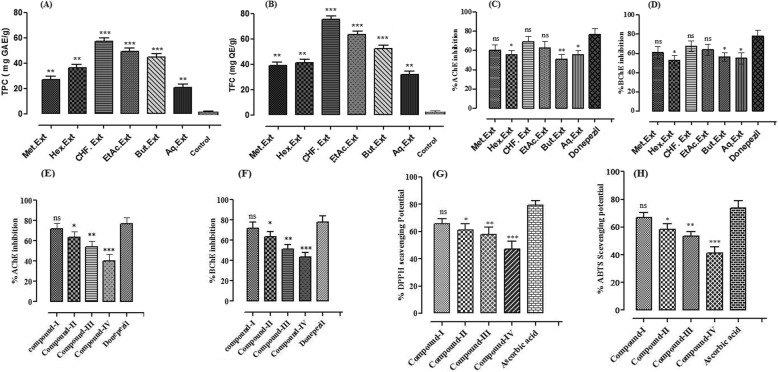
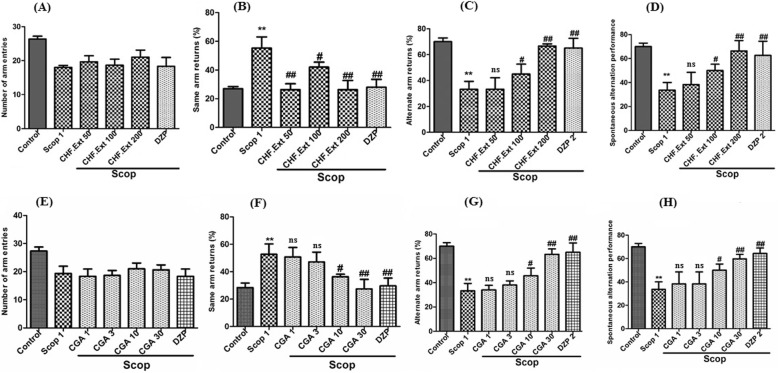
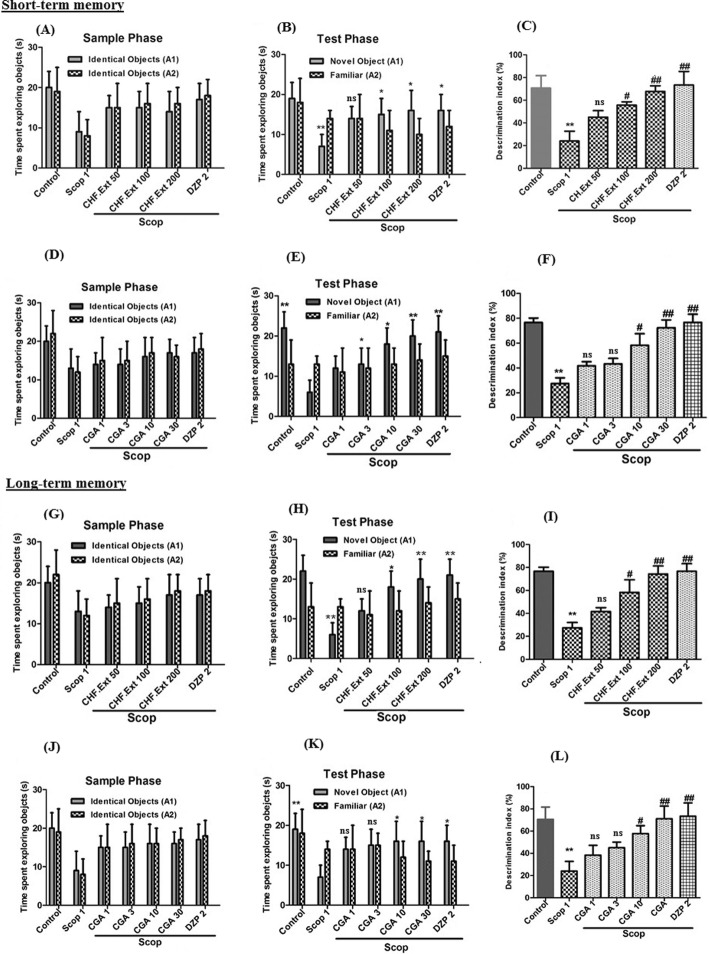
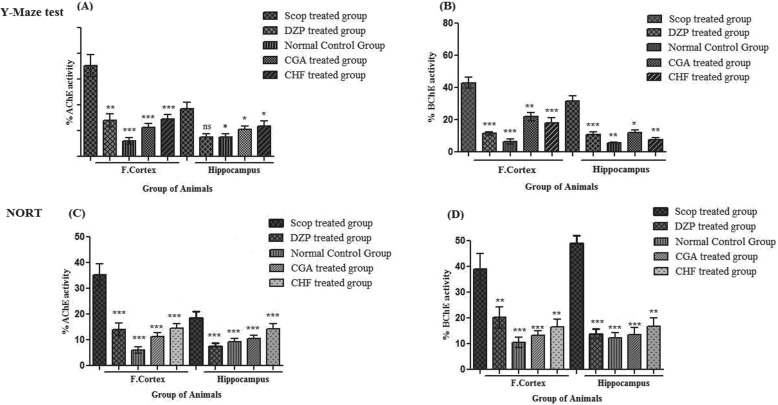
Background: Elaeagnus umbellata is abundantly found in Himalayan regions of Pakistan which is traditionally used to treat various health disorders. However, the experimental evidence supporting the anti-amnesic effect is limited. Therefore the study was aimed to evaluate the prospective beneficial effect of E. umbellata on learning and memory in mice. Objectives: To assess neuroprotective and anti-amnesic effects of E. umbellata fruit extracts and isolated compounds on the central nervous system. Methods: Major phytochemical groups present in methanolic extract of E. umbellata were qualitatively determined. The total phenolic and flavonoid contents were also determined in extract/fractions of E. umbellata. On the basis of in vitro promising anticholinesterases (AChE & BChE) and antioxidant activities observed for CHF. Ext and isolated compound-I (Chlorogenic acid = CGA), they were further evaluated for learning and memory in normal and scopolamine-induced cognitive impairment in mice using memory behavioral tests such as the Y maze and Novel object recognition using standard procedures. The test sample were further assessed for in vivo anticholinesterases (AChE & BChE) and DPPH free radical scavenging activities in mice brain sample and finally validated by molecular docking study using GOLD software. Results: The extract/fractions and isolated compounds were tested for their anticholinesterase and antioxidant potentials. The CHF. Ext and CGA showed maximum % inhibition of tested cholinesterases and free radicals. The CHF. Ext and CGA reversed the effects of scopolamine in mice. The CHF. Ext and CGA significantly increased the alternate arm returns and % spontaneous alteration performance while escape latency times (second) significantly decreased in Y maze test. The CHF. Ext and CGA significantly increased the time spent with novel object and also increased the discrimination index in the Novel object recognition test. Furthermore, molecular docking was used to validate the mechanism of cholinesterases inhibition of isolated compounds. Conclusion: The data obtained from behavioral and biochemical studies (AChE/BChE and DPPH/ABTS inhibition) have shown that E. umbellata possessed significant memory enhancing potency. These results suggest that E. umbellata extract possess potential antiamnesic effects and amongst the isolated compounds, compound I could be more effective anti-amnesic therapeutics. However, further studies are needed to identify the exact mechanism of action. Graphical abstract:
Overview
The claims and statistics of this paper haven’t been checked yet.
Free: it reads the open-access text and checks the first 5 claims that cite a source we can check. Create a free account to check every claim.
Integrity signals
Registry
Cites
Statistics
Figures
Verification
Claims the paper makes
The claims and statistics of this paper haven’t been checked yet.
Free: it reads the open-access text and checks the first 5 claims that cite a source we can check. Create a free account to check every claim.
Claims other papers make about this one
Each is checked against this paper’s own text: does it say what the citing paper says it does?
The source backs part of the claim, not all of it — or backs it for a different population, condition or comparison.
In the citing paper
“the administration of ethyl acetate extract of Ferula ammoniacum and hydro-methanolic extract of Elaeagnus umbellata significantly reduced AChE and BChE activity in the cortex and hippocampus, enhancing memory performance [25,26].”
From Cholinesterase Inhibitors from Plants and Their Potential in Alzheimer’s Treatment: Systematic Review (2025) · cites this paper as [26]
Experimental — accuracy not yet measured
Self-check
Percentages, sums and reported differences re-computed from the paper’s own numbers.
The self-check needs the paper’s full text.
Citations
Cites
A new and rapid colorimetric determination of acetylcholinesterase activity
Ellman, G. L., Courtney, K. D., Andres, V., & Featherstone, R. M. (1961) · Biochemical Pharmacology · doi:10.1016/0006-2952(61)90145-9 · Cited by 27,126 · cited 2×
“The homogenates were centrifuged at 10,000 rpm for 10 min at 4 °C, and the resulting supernatant was used for the estimation of anti-cholinesterase activity following Ellman’s [33] and antioxidants assays [34, 35].”
MethodAntioxidant activity applying an improved ABTS radical cation decolorization assay
Re, R., Pellegrini, N., Proteggente, A., Pannala, A., Yang, M., & Rice-Evans, C. (1999) · Free Radical Biology and Medicine · doi:10.1016/s0891-5849(98)00315-3 · Cited by 26,165 · cited 2×
“The homogenates were centrifuged at 10,000 rpm for 10 min at 4 °C, and the resulting supernatant was used for the estimation of anti-cholinesterase activity following Ellman’s [33] and antioxidants assays [34, 35].”
MethodUse of a Free Radical Method to Evaluate Antioxidant Activity
Brand-Williams, W., Cuvelier, M. E., & Berset, C. (1995) · LWT - Food Science and Technology · doi:10.1016/s0023-6438(95)80008-5 · Cited by 25,994 · cited 2×
“The homogenates were centrifuged at 10,000 rpm for 10 min at 4 °C, and the resulting supernatant was used for the estimation of anti-cholinesterase activity following Ellman’s [33] and antioxidants assays [34, 35].”
MethodFree radicals, antioxidants and functional foods: impact on human health
Lobo, V, Patil, A., Phatak, A., & Chandra, N. (2010) · Pharmacognosy Reviews · doi:10.4103/0973-7847.70902 · Cited by 5,435 · cited 1×
“Scientists all over the world are exploring novel compounds which could attenuate the neurological disorders and amnesia that may probably be due to the vulnerability of the brain cells to increased production of free radicals [12, 13].”
BackgroundImproved protein–ligand docking using GOLD
Verdonk, M. L., Cole, J. C., Hartshorn, M. J., Murray, C. W., & Taylor, R. D. (2003) · Proteins: Structure, Function, and Bioinformatics · doi:10.1002/prot.10465 · Cited by 3,067 · cited 2×
“3, Cambridge Crystallographic Data Center) [39].”
InfluentialAlzheimer’s disease: Clinical trials and drug development
Mangialasche, F., Solomon, A., Winblad, B., Mecocci, P., & Kivipelto, M. (2010) · The Lancet Neurology · doi:10.1016/s1474-4422(10)70119-8 · Cited by 1,217 · cited 2×
“The only standard drugs used as acetyl cholinesterase inhibitors for AD are galantamine, donepezil and rivastigmine [41].”
Hughes, R. N. (2004) · Neuroscience & Biobehavioral Reviews · doi:10.1016/j.neubiorev.2004.06.006 · Cited by 641 · cited 1×
“The Y-Maze test was designed to evaluate the short term memory in experimental mice using reported procedure [37].”
MethodRoles of Chlorogenic Acid on Regulating Glucose and Lipids Metabolism: A Review
Meng, S., Cao, J., Feng, Q., Peng, J., & Hu, Y. (2013) · Evidence-Based Complementary and Alternative Medicine · doi:10.1155/2013/801457 · Cited by 586 · cited 1×
“CGA is the key polyphenolic constituent that exhibits cardio-protective effects, inhibitory role against lipid hyper oxidation, anti-tumour activity and free radical scavenging potential [49].”
BackgroundSynaptic degeneration in Alzheimer's disease
Arendt, T. (2009) · Acta Neuropathologica · doi:10.1007/s00401-009-0536-x · Cited by 517
Kwon, S.-H., Lee, H.-K., Kim, J.-A., Hong, S.-I., Kim, H.-C., Jo, T.-H., Park, Y.-I., Lee, C.-K., Kim, Y.-B., Lee, S.-Y., et al. (2010) · European Journal of Pharmacology · doi:10.1016/j.ejphar.2010.09.001 · Cited by 437 · cited 1×
“Ext fraction is due to the presence of isolated compound chlorogenic acid which has strong neuroprotective effects on learning and memory impairment that may provide novel leads for the development of AChE inhibitors [27].”
BackgroundNew Acetylcholinesterase Inhibitors for Alzheimer's Disease
Mehta, M., Adem, A., & Sabbagh, M. (2012) · International Journal of Alzheimer's Disease · doi:10.1155/2012/728983 · Cited by 436 · cited 1×
“AChE inhibition is also considered as a remedial strategy for other types of neuronal disorders like dementia and Parkinson’s diseases [43].”
BackgroundErejuwa, O. O., Sulaiman, S. A., & Ab Wahab, M. S. (2012) · Molecules · doi:10.3390/molecules17044400 · Cited by 361 · cited 1×
“Natural products are the major source of antioxidants which delay the development of AD and attenuate neuronal cell death [14, 15].”
BackgroundNatural AChE Inhibitors from Plants and their Contribution to Alzheimer’s Disease Therapy
Murray, A., Faraoni, M., Castro, M., Alza, N., & Cavallaro, V. (2013) · Current Neuropharmacology · doi:10.2174/1570159x11311040004 · Cited by 341
Bouayed, J., Rammal, H., Dicko, A., Younos, C., & Soulimani, R. (2007) · Journal of the Neurological Sciences · doi:10.1016/j.jns.2007.06.028 · Cited by 277 · cited 1×
“Specifically, the antianxiety effects of CGA are associated with its antioxidant potential that significantly suppresses the second restraint-induced release of serotonin from the rat hippocampus, suggesting that CGA contributes to relaxation of restraint stress [50].”
BackgroundMüller, W. E., Eckert, A., Kurz, C., Eckert, G. P., & Leuner, K. (2010) · Molecular Neurobiology · doi:10.1007/s12035-010-8141-5 · Cited by 243 · cited 1×
“However, the ultimate cause of AD is still a mystery, there are several hypothesis about its causes [8].”
BackgroundScreening of Indian medicinal plants for acetylcholinesterase inhibitory activity
Mukherjee, P. K., Kumar, V., & Houghton, P. J. (2007) · Phytotherapy Research · doi:10.1002/ptr.2224 · Cited by 228 · cited 1×
“Many plant species from various parts of the world have been evaluated for anticholinesterase activity [44, 45].”
BackgroundAziz, M. A., Adnan, M., Khan, A. H., Shahat, A. A., Al-Said, M. S., & Ullah, R. (2018) · Journal of Ethnobiology and Ethnomedicine · doi:10.1186/s13002-017-0204-5 · Cited by 207 · cited 1×
“Medicinal plants received much attention due to the presence of important bioactive secondary metabolites, such as alkaloids, terpenoids, carotenoids, poly phenols, and flavonoids [16, 17].”
BackgroundShirazi, O. U., Khattak, M. M. A. K., Shukri, N. A. M., & Anuar, M. N. N. (2014) · Journal of Pharmacognosy and Phytochemistry · Cited by 179
Recent advances in the neurobiology and neuropharmacology of Alzheimer’s disease
Kumar, K., Kumar, A., Keegan, R. M., & Deshmukh, R. R. (2017) · Biomedicine & Pharmacotherapy · doi:10.1016/j.biopha.2017.12.053 · Cited by 179 · cited 1×
“They have also predicted that this number will be doubled by 2030 which would further increase to three folds of the existing level by 2050 [1, 2].”
BackgroundNeuroprotective effects of berry fruits on neurodegenerative diseases
Essa, M., Subash, S., Al-Adawi, S., Memon, M., Manivasagam, T., & Akbar, M. (2014) · Neural Regeneration Research · doi:10.4103/1673-5374.139483 · Cited by 168
Bioactive natural products as a potential source of new pharmacophores. A theory of memory
Atta-ur-Rahman, & Choudhary, M. I. (2001) · Pure and Applied Chemistry · doi:10.1351/pac200173030555 · Cited by 156 · cited 1×
“Inhibitions of these two enzymes are considered as a best strategy to treat AD, dementia, and Parkinsons disease [7].”
BackgroundPolyphenols Beyond Barriers: A Glimpse into the Brain
Figueira, I., Menezes, R., Macedo, D., Costa, I., & dos Santos, C. N. (2017) · Current Neuropharmacology · doi:10.2174/1570159x14666161026151545 · Cited by 128
Antioxidant Vitamin Supplement Use and Risk of Dementia or Alzheimer's Disease in Older Adults
Gray, S. L., Anderson, M. L., Crane, P. K., Breitner, J. C. S., McCormick, W., Bowen, J. D., Teri, L., & Larson, E. (2008) · Journal of the American Geriatrics Society · doi:10.1111/j.1532-5415.2007.01531.x · Cited by 127 · cited 1×
“Clinically, Alzheimer’s disease can be characterized by progressive memory deficits, inappropriate behaviour, and cognitive dysfunctions such as learning impairment and amnesia being the most remarkable age-related alterations [3].”
BackgroundRecent advances in the mechanisms of neuroinflammation and their roles in neurodegeneration
Niranjan, R. (2018) · Neurochemistry International · doi:10.1016/j.neuint.2018.07.003 · Cited by 124
Kim, S.-S., Park, R.-Y., Jeon, H.-J., Kwon, Y.-S., & Chun, W. (2005) · Phytotherapy Research · doi:10.1002/ptr.1652 · Cited by 117 · cited 1×
“In addition, chlorogenic acid derivatives have shown neuroprotective effects on hydrogen peroxide and amyloid beta (Aβ) - induced cell death in PC12 and SH-SY5Y cells [29].”
BackgroundDefining the earliest pathological changes of Alzheimer's disease
C. Vickers, J., Mitew, S., Woodhouse, A., M. Fernandez-Martos, C., T. Kirkcaldie, M., J. Canty, A., H. McCormack, G., & E. King, A. (2016) · Current Alzheimer Research · doi:10.2174/1567205013666151218150322 · Cited by 110
Amelioration of Scopolamine‐Induced Learning and Memory Impairment by α‐Pinene in C57BL/6 Mice
Gil-Yong, L., Lee, C., Park, G. H., & Jang, J. (2017) · Evidence-based Complementary and Alternative Medicine · doi:10.1155/2017/4926815 · Cited by 109
Jha, A. B., Panchal, S. S., & Shah, A. (2018) · Pharmacology Biochemistry and Behavior · doi:10.1016/j.pbb.2018.08.007 · Cited by 102
Nazir, N., Zahoor, M., Nisar, M., Khan, I., Karim, N., Abdel-Halim, H., & Ali, A. (2018) · BMC Complementary and Alternative Medicine · doi:10.1186/s12906-018-2381-8 · Cited by 87 · cited 1×
“fruits extract preparation and fractionation were carried out according to the method described in a previously published research article with slight modification [19].”
MethodSelf-citationOn the True Role of Oxygen Free Radicals in the Living State, Aging, and Degenerative Disorders
Zs‐Nagy, I. (2001) · Annals of the New York Academy of Sciences · doi:10.1111/j.1749-6632.2001.tb05649.x · Cited by 71 · cited 1×
“Scientists all over the world are exploring novel compounds which could attenuate the neurological disorders and amnesia that may probably be due to the vulnerability of the brain cells to increased production of free radicals [12, 13].”
BackgroundLahmadi, A., Filali, H., Samaki, H., Zaîd, A., & Aboudkhil, S. (2019) · Bioinformation · doi:10.6026/97320630015226 · Cited by 70
Medicinal Plant Biodiversity of Lesser Himalayas-Pakistan
Abbasi, A. M., Khan, M. A., Ahmad, M., & Zafar, M. N. (2011) · Springer eBooks · doi:10.1007/978-1-4614-1575-6 · Cited by 66
Antioxidant Pathways in Alzheimers Disease: Possibilities of Intervention
Vina, J., LLoret, A., Giraldo, E., C. Badia, M., & D. Alonso, M. (2011) · Current Pharmaceutical Design · doi:10.2174/138161211798357755 · Cited by 58 · cited 1×
“Natural products are the major source of antioxidants which delay the development of AD and attenuate neuronal cell death [14, 15].”
BackgroundHussain, I. (2011) · African Journal of Pharmacy and Pharmacology · doi:10.5897/ajpp11.175 · Cited by 55 · cited 1×
“umbellata fruit was investigated to identify major phytoconstituents like flavonoids, alkaloids, glycosides, terpenoids, anthraquinone, tannins and pigments using reported assays [30].”
MethodCurrent Approaches Against Alzheimer's Disease in Clinical Trials
Kuča, K., Soukup, O., Marešová, P., Korábečný, J., Nepovimová, E., Klímová, B., Honegr, J., Ramalho, T. C., & França, T. C. C. (2016) · Journal of the Brazilian Chemical Society · doi:10.5935/0103-5053.20160048 · Cited by 55 · cited 1×
“They have also predicted that this number will be doubled by 2030 which would further increase to three folds of the existing level by 2050 [1, 2].”
BackgroundNazir, N., Karim, N., Abdel‐Halim, H., Khan, I., Wadood, S. F., & Nisar, M. F. (2017) · Journal of Ethnopharmacology · doi:10.1016/j.jep.2017.08.026 · Cited by 50 · cited 1×
“One hour after administration of the drugs all animals were subjected to Ymaze and Novel object recognition test following standard procedure [10].”
MethodSelf-citationKhattak, K. F. (2012) · Journal of Medicinal Plants Research · doi:10.5897/jmpr11.1128 · Cited by 46
Karimi, E., Nohooji, M. G., Habibi, M., Ebrahimi, M. M., Mehrafarin, A., & Khalighi‐Sigaroodi, F. (2017) · Natural Product Research · doi:10.1080/14786419.2017.1359171 · Cited by 40 · cited 1×
“Many plant species from various parts of the world have been evaluated for anticholinesterase activity [44, 45].”
BackgroundAntibacterial activity of Elaeagnus umbellata (Thunb.) a medicinal plant from Pakistan.
Sabir, M. S., Ahmad, D. S., Hussain, I., & Tahir, K. M. (2007) · Saudi Medical Journal · doi:10.15537/1658-3175.3783 · Cited by 39 · cited 1×
“a wild spiny branched shrub that belongs to Elaeagnaceae family, is a very important plant as they have berries fruit [18].”
BackgroundRabiei, Z., & Setorki, M. (2018) · Pharmaceutical Biology · doi:10.1080/13880209.2018.1543330 · Cited by 29 · cited 2×
“Current results were in agreement with a previous study of Zahra R et al [48].”
ResultClassic and recent advances in understanding amnesia
Allen, R. J. (2018) · F1000Research · doi:10.12688/f1000research.13737.1 · Cited by 23
Mugwagwa, A. T., Gadaga, L. L., Pote, W., & Tagwireyi, D. (2015) · Journal of Neurodegenerative Diseases · doi:10.1155/2015/242505 · Cited by 20 · cited 1×
“A wash-out period of 5 days was allowed before the NORT to assess long-term memory in mice [38].”
MethodPhytochemical screening and biological activity of the aerial parts of Elaeagnus umbellata
Uddin, G., & Rauf, A. (2012) · Scientific Research and Essays · doi:10.5897/sre11.1607 · Cited by 18 · cited 1×
“umbellata extracts displayed various bioactive constituents including alkaloids, flavonoids, glycosides, tannins, terpenoids, anthraquinones and pigments provide a significant source of secondary metabolites which play a role as cholinesterase inhibitors [21, 22, 46].”
BackgroundKim, M.-J., Lim, J.-S., & Yang, S.-A. (2016) · Journal of the Korean Society of Food Science and Nutrition · doi:10.3746/jkfn.2016.45.6.828 · Cited by 14
LYCOPENE AND TOTAL PHENOL CONTENT OF AUTUMN OLIVE (Elaegnus umbellata) SELECTIONS
Perkins-Veazie, P. M., Black, B. L., Fordham, I., & Howard, L. R. (2005) · HortScience · doi:10.21273/hortsci.40.3.883f · Cited by 11 · cited 1×
“umbellata extracts displayed various bioactive constituents including alkaloids, flavonoids, glycosides, tannins, terpenoids, anthraquinones and pigments provide a significant source of secondary metabolites which play a role as cholinesterase inhibitors [21, 22, 46].”
BackgroundRafique, N., Khan, T., & Shah, A. J. (2016) · Bangladesh Journal of Pharmacology · doi:10.3329/bjp.v11i3.26101 · Cited by 7 · cited 1×
“umbellata extracts displayed various bioactive constituents including alkaloids, flavonoids, glycosides, tannins, terpenoids, anthraquinones and pigments provide a significant source of secondary metabolites which play a role as cholinesterase inhibitors [21, 22, 46].”
BackgroundEvaluation of anti-amnestic activity of few medicinal plants against scopolamine induced amnesia
Barua, C. C., Haloi, P., Patowary, P., Bora, M., Barua, A. G., Bordoloi, M. J., & Barua, I. C. (2015) · Cited by 7
Ahmadi, A., Roghani, M., Noori, S. K., & Nahri-Niknafs, B. (2018) · Mini-Reviews in Medicinal Chemistry · doi:10.2174/1389557518666180716122608 · Cited by 4
Phytochemical Investigations on Elaeagnus umbellata
Asghar, H.-U.-R. S. F. (2012) · Global Journal of Human Social Science · Cited by 2
Research works printed but not linked: 1
- Dassault Systemes BIOVIA BIOVIA discovery studio visualizer, release 17: 2.0. 16349 2016 Dassault Systemes San Diego
Cited by
Nguyen, V., Taine, E. G., Meng, D., Cui, T., & Tan, W. (2024) · Nutrients · doi:10.3390/nu16070924 · Cited by 378
“It has demonstrated its protective e ff ects against scopolamine-induced amnesia in mice [203,204], alcohol-induced neuronal injury in neonates [205], pilocarpine-induced oxidative stress [206], 3-ni-tropropionic acid-caused neurotoxicity and genotoxicity [207], kainic acid-induced cytotoxicity and…”
BackgroundNeuroprotective Effects of Coffee Bioactive Compounds: A Review
Socała, K., Szopa, A., Serefko, A., Poleszak, E., & Wlaź, P. (2020) · International Journal of Molecular Sciences · doi:10.3390/ijms22010107 · Cited by 248
Lahmadi, A., Filali, H., Samaki, H., Zaîd, A., & Aboudkhil, S. (2019) · Bioinformation · doi:10.6026/97320630015226 · Cited by 70
Nazir, N., Zahoor, M., Uddin, F., & Nisar, M. (2021) · BMC Complementary Medicine and Therapies · doi:10.1186/s12906-021-03228-y · Cited by 58
“umbellata verifies its antioxidant, antidiabetic, anticholinesterase, and neuroprotective potentials [13, 14].”
BackgroundSelf-citationA Review on Traditional Uses and Pharmacological Importance of Genus Elaeagnus Species
Nazir, N., Zahoor, M., & Nisar, M. (2020) · The Botanical Review · doi:10.1007/s12229-020-09226-y · Cited by 52
“…Elaeagnus species with their traditional uses and biological activities (Lev & Amar, 2002; Fordham et al., 2003; Penelope et al., 2005; Lee et al., 2007; Wu et al., 2010; Khattak, 2012; Kye Man & Ok Soo, 2014; Ishaq et al., 2015; Perveen et al., 2015; Shang et al., 2017; Nazir et al., 2018b, 2020).”
BackgroundInfluentialSelf-citation
Metadata
- Authors
- Nazir, N., Zahoor, M., Nisar, M., Karim, N., Latif, A., Ahmad, S., & Uddin, Z.
- Affiliations
- University of Malakand (PK)
- Sarhad University of Science and Information Technology (PK)
- COMSATS University Islamabad (PK)
- Corresponding author
- Nazir, Nausheen
- Venue
- BMC Complementary Medicine and Therapies
- Published
- 2020-05-12
- Volume
- 20
- Issue
- 1
- Pages
- 143-143
- ISSN
- 2662-7671 (ISSN-L)
- PMC
- PMC7216467
- OpenAlex
- W3026517281
- Semantic Scholar
- dffa250cd25e2b59a43b57a78eedc7a61e601d32
- Cited by
- 57
- References
- 49
- Citations by year
- 2026: 4 · 2025: 6 · 2024: 15 · 2023: 6 · 2022: 9 · 2021: 10 · 2020: 6
- FWCI
- 8.59
- Type
- journal article
- Language
- en
- Open access
- gold
- doi.org
- Licence
- cc-by
- creativecommons.org/licenses/by/4.0 (tdm)
- creativecommons.org/licenses/by/4.0 (vor)
- Locations
- BMC Complementary Medicine and Therapies (publishedVersion, cc-by)
- PubMed Central (publishedVersion, cc-by)
- PubMed (publishedVersion)
- DOAJ (DOAJ: Directory of Open Access Journals) (submittedVersion, cc-by-sa)
- Funders
- Higher Education Commision, Pakistan
- Topics
- Health Sciences › Medicine › Complementary and alternative medicine › Medicinal Plants and Neuroprotection
- Health Sciences › Medicine › Pharmacology (medical) › Cholinesterase and Neurodegenerative Diseases
- Health Sciences › Medicine › Complementary and alternative medicine › Ginkgo biloba and Cashew Applications
- Keywords
- neuroprotection, anti-amnesic effect, scopolamine-induced amnesia, learning and memory, chlorogenic acid, anticholinesterase activity, antioxidant activity, Y-maze, novel object recognition, phenolic and flavonoid content, molecular docking, medicinal plant extracts
- MeSH terms
- Amnesia, Animals, Antioxidants, Cholinesterase Inhibitors, Disease Models, Animal, Pakistan, Plant Extracts, Scopolamine, Neuroprotective Agents, Elaeagnaceae, Mice
About these checks
Registry, retraction, Cites and statistics results are computed, not judged, with one exception: a printed reference that no index lists is read once by a model before it counts as a citation error. Claims are extracted by a model and kept only when their quote appears verbatim in the text; each cited source is then checked, with a model’s help, for whether it says what the claim relies on. Those verdicts can be wrong — read the claim’s quote and the cited source before relying on one.
Statistics and arithmetic are recomputed, not judged.
Confidence bands are shown only for fields calibrated on our annotated test set. None is calibrated yet, so no band is shown.
What counts as a claim ›How we measure confidence ›How we check this ›
Are you an author, or do you see a problem with this page? Request a review
Data sources
Bibliographic data: Semantic Scholar, OpenAlex, Crossref.
Contains information from the Semantic Scholar Academic Graph Datasets, made available under the ODC Attribution License (ODC-BY 1.0).
Semantic Scholar’s data is described in: Kinney, R., et al. (2023). The Semantic Scholar Open Data Platform. arXiv:2301.10140.
