

Effects of qigong exercise on the physical and mental health of college students: a systematic review and Meta-analysis
Open accessThe DOI matches its Crossref record; 52 of the 52 references it cites were found in a registry or an index.
Abstract
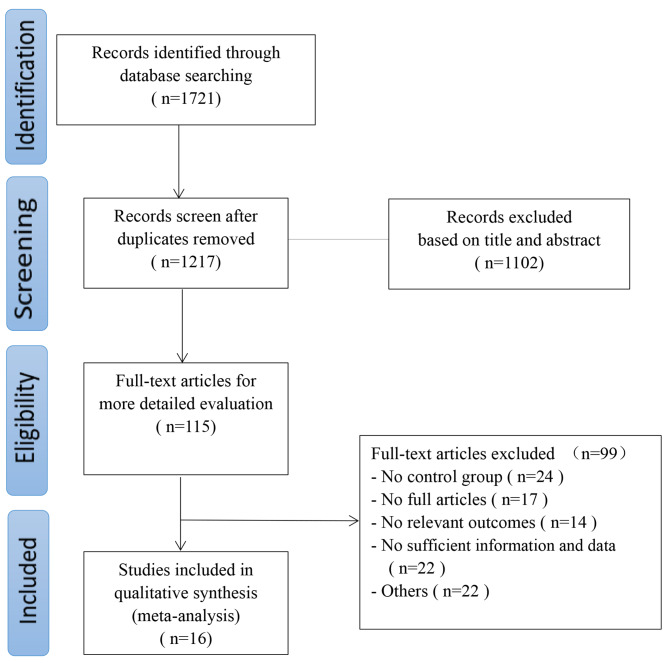
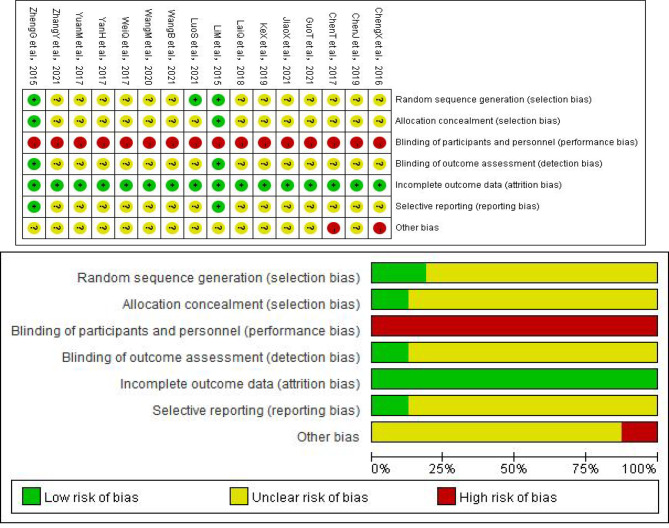
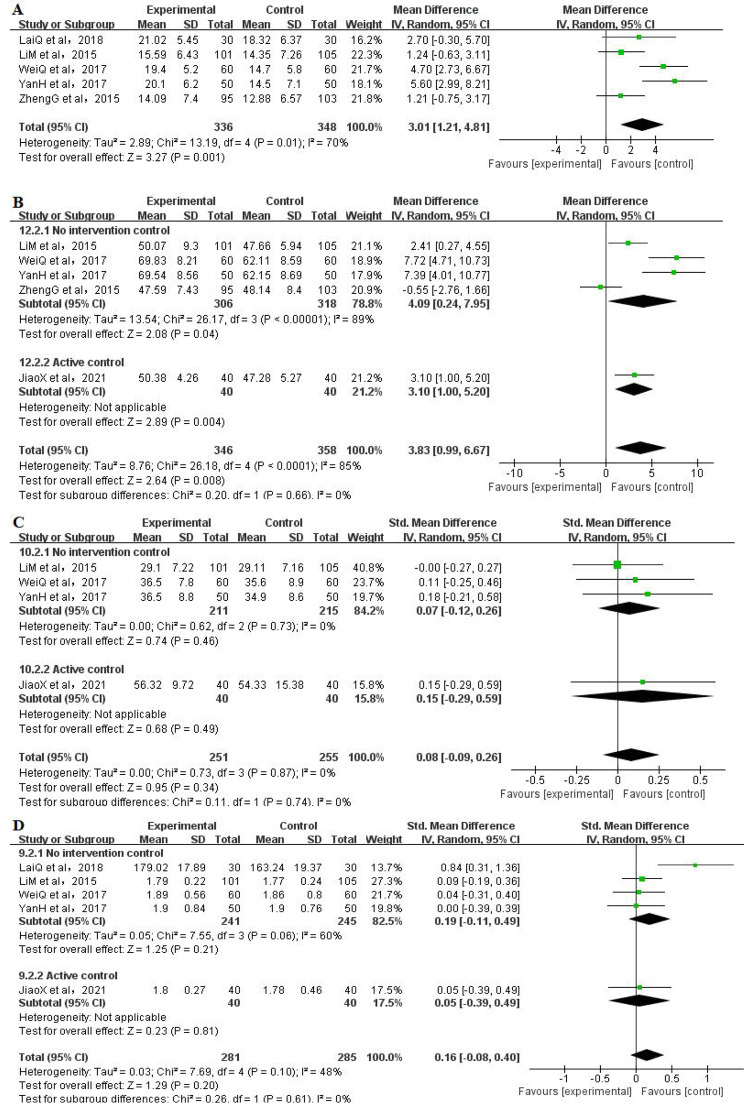
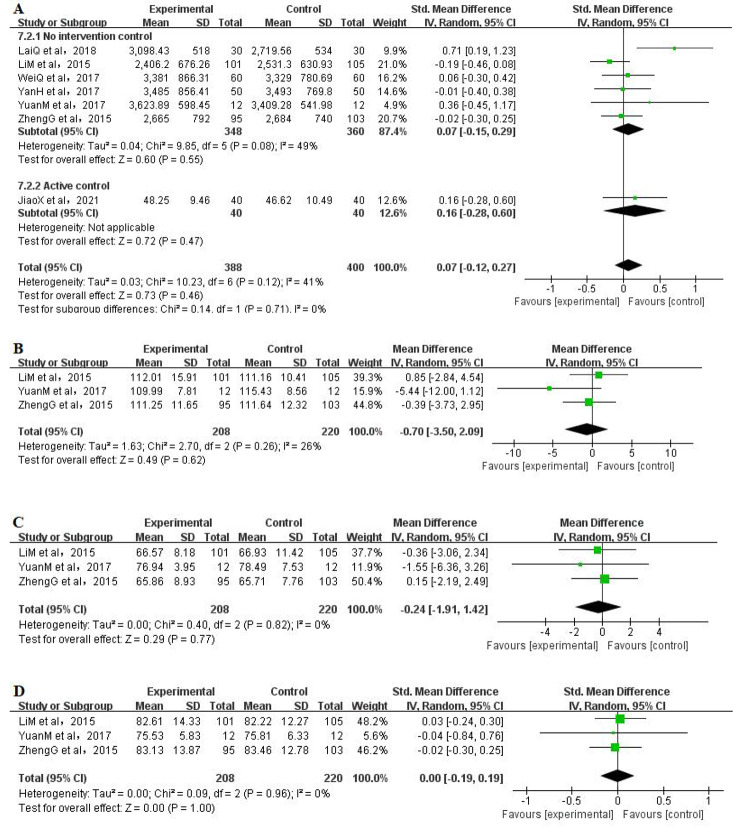
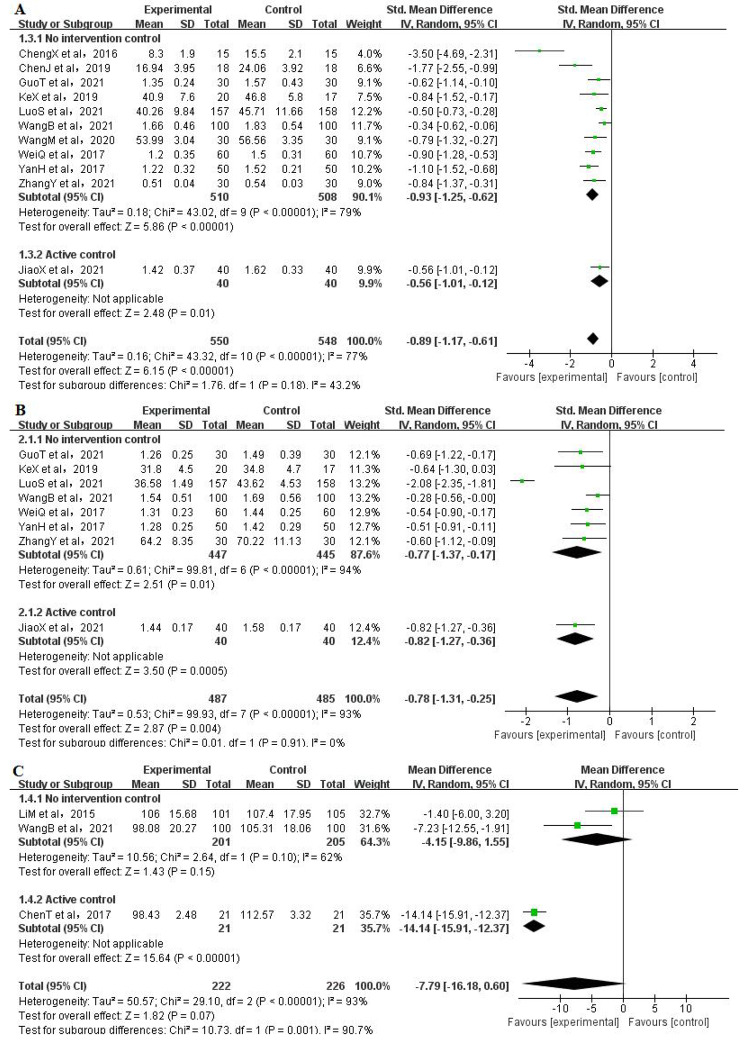
Background: Physical and mental health problems are becoming more serious among college students due to lifestyle changes and increased academic stress. Qigong exercise has been regarded as a potentially effective intervention to improve the physical and mental health of college students. Methods: Eleven databases were searched from their respective inception dates to April 2022. Relevant randomized controlled trials (RCTs) were included. Physical and psychological conditions, including limb muscle strength, flexibility, cardiorespiratory endurance, vital capacity, blood pressure and heart rate, as well as depression, anxiety and mood, were evaluated. The risk of bias was assessed with the Cochrane Collaboration tool. Results: Sixteen randomized controlled trials were included in the meta-analysis. Significant improvements in cardiorespiratory endurance (MD = 3.83, 95% CI: 0.99 to 6.67, P = 0.008) and flexibility (MD = 3.01, 95% CI: 1.21 to 4.81, P = 0.001) were observed. We also observed that Qigong exercise significantly reduced depression and anxiety symptoms (SMD=-0.89, 95% CI: -1.17 to -0.61, P < 0.00001; SMD=-0.78, 95% CI: -1.31 to -0.25, P = 0.004). Nevertheless, no significant effects on muscle strength, vital capacity, blood pressure, heart rate or mood were found. Conclusion: Qigong exercise was advantageous for college students in terms of improving flexibility and cardiorespiratory endurance and alleviating depression and anxiety to some extent. However, due to the limited number of eligible trials and the low methodological quality, more well-designed RCTs are needed in the future.
Overview
The claims and statistics of this paper haven’t been checked yet.
Free: it reads the open-access text and checks the first 5 claims that cite a source we can check. Create a free account to check every claim.
Integrity signals
Registry
Cites
Statistics
Figures
Verification
Claims the paper makes
The claims and statistics of this paper haven’t been checked yet.
Free: it reads the open-access text and checks the first 5 claims that cite a source we can check. Create a free account to check every claim.
Claims other papers make about this one
Each is checked against this paper’s own text: does it say what the citing paper says it does?
The source backs part of the claim, not all of it — or backs it for a different population, condition or comparison.
In the citing paper
“mind-body exercise SMD of -0.50 (95% CI: -0.67 to -0.32) from eight reviews 60 81 82 110 115-118 (9 meta-analyses, 74 component studies, 5,175 participants)”
From Effect of exercise on depression and anxiety symptoms: systematic umbrella review with meta-meta-analysis (2026) · cites this paper as [82]
Experimental — accuracy not yet measured
Self-check
Percentages, sums and reported differences re-computed from the paper’s own numbers.
The self-check needs the paper’s full text.
Citations
Cites
1 retracted
Gao, M. (2022) · Applied Bionics and Biomechanics · doi:10.1155/2022/7346946 · Cited by 7
RetractedPreferred Reporting Items for Systematic Reviews and Meta-Analyses: the PRISMA statement
Moher, D., Liberati, A., Tetzlaff, J., Altman, D. G., & for the PRISMA Group (2009) · BMJ · doi:10.1136/bmj.b2535 · Cited by 83,823
Preferred Reporting Items for Systematic Reviews and Meta-Analyses: The PRISMA Statement
Moher, D., Liberati, A., Tetzlaff, J., Altman, D. G., & The PRISMA Group (2009) · PLoS Medicine · doi:10.1371/journal.pmed.1000097 · Cited by 64,042
The Cochrane Collaboration's tool for assessing risk of bias in randomised trials
Higgins, J. P. T., Altman, D. G., Gotzsche, P. C., Juni, P., Moher, D., Oxman, A. D., Savovic, J., Schulz, K. F., Weeks, L., Sterne, J. A. C., et al. (2011) · BMJ · doi:10.1136/bmj.d5928 · Cited by 33,817
Dermyshi, E., Wang, Y., Yan, C., Hong, W., Qiu, G., Gong, X., & Zhang, T. (2017) · Neonatology · doi:10.1159/000454668 · Cited by 24,451
Wang, G., Ma, R., Qiao, G., Wada, K., Aizawa, Y., & Satoh, T. (2015) · Integrative Medicine International · doi:10.1159/000368408 · Cited by 18,657
Compendium of physical activities: an update of activity codes and MET intensities
AINSWORTH, B. E., HASKELL, W. L., WHITT, M. C., IRWIN, M. L., SWARTZ, A. M., STRATH, S. J., O???BRIEN, W. L., BASSETT, D. R., SCHMITZ, K. H., EMPLAINCOURT, P. O., et al. (2000) · Medicine & Science in Sports & Exercise · doi:10.1097/00005768-200009001-00009 · Cited by 8,497 · cited 1×
“[60] classified the intensity of Qigong, such as Tai Chi, as moderate Fig.”
BackgroundCumpston, M., Li, T., Page, M. J., Chandler, J., Welch, V. A., Higgins, J. P., & Thomas, J. (2019) · Cochrane Database of Systematic Reviews · doi:10.1002/14651858.ed000142 · Cited by 7,218
Guthold, R., Stevens, G. A., Riley, L. M., & Bull, F. C. (2018) · The Lancet Global Health · doi:10.1016/s2214-109x(18)30357-7 · Cited by 4,819 · cited 1×
“9 million participants from 168 countries revealed that more than a quarter of adults worldwide fail to achieve the recommended level of exercise [3].”
BackgroundDyrbye, L. N., Thomas, M. R., & Shanafelt, T. D. (2006) · Academic Medicine · doi:10.1097/00001888-200604000-00009 · Cited by 2,909 · cited 1×
“In addition, the proportion of college students experiencing depressive and anxiety symptoms has been increasing over the past decade [15], and these psychological problems are associated with poorer academic performance, unstable intimate relationships, and even suicidal behaviour [16].”
Background
Research works printed but not linked: 12
- Ke XJ Cui YS Zhang J Influence of Health Gigong Baduanjin on Psychological Characteristics of College Students with Neck-Shoulder Syndrome Chin Manipulation Rehabilitation Med 2019 10 2 9 11 10.19787/j.issn.1008-1879.2019.02.005 · doi:10.19787/j.issn.1008-1879.2019.02.005
- Lai QY Jing CX Chen CJ Jiao RY Pan HS Research on The Baduanjin on Health Promotion of Female College Students under the Background of Healthy China Fujian Sports Science and Technology 2018 37 1 44 6
- Wang M Zhao QW Wu H Research on Huatuo Wuqinxi’s Intervention Treatment for College Students with Mild Psychological Problems University(Social Sci Edition) 2020 18 1 60 2 10.13847/j.cnki.lnmu(sse).2020.01.017 · doi:10.13847/j.cnki.lnmu(sse).2020.01.017
- Wei QB Zhao Q Wu YC Study of Yi Jin Jing on Mental health and Body Constitution in College Students Shandong J Tradit Chin Med 2017 36 8 654 56 10.16295/j.cnki.0257-358x.2017.08.009 · doi:10.16295/j.cnki.0257-358x.2017.08.009
- Yuan MZ Xue HH Huang YM The influence of 20 weeks Taijiquan exercise on the physical function of college students J Military Phys Educ Sports 2017 36 3 85 8
- Chen J Li Y Wu Y Su X Effects of Taijiquan exercise on depression and serum inflammatory factors in female college students Chin J Sch Health 2019 40 7 1065 68 10.16835/j.cnki.1000-9817.2019.07.029 · doi:10.16835/j.cnki.1000-9817.2019.07.029
- Zhang YZ An Empirical Study on the Effect of Health Qigong Baduanjin on College Students’ Depression and Anxiety Wushu Stud 2021 6 12 131 3 10.13293/j.cnki.wskx.009327 · doi:10.13293/j.cnki.wskx.009327
- Wang B Wang XL Chang YJ Mao Y Peng J Research on the impact of online Baduanjin on the mental health of college freshmen under the new crown pneumonia epidemic Health Vocat Educ 2021 39 23 155 9
- Luo SS Research on the intervention effect of Taijiquan on sleep disorders of college students Chin J Convalescent Med 2021 30 12 1249 52 10.13517/j.cnki.ccm.2021.12.004 · doi:10.13517/j.cnki.ccm.2021.12.004
- Guo TR. Experimental Research on the Effects of Baduanjin on College Students’ Mental Health. Study of Science and Engineering at RTVU. 2021;(2):76–8. 10.19469/j.cnki.1003-3297.2021.02.0076. · doi:10.19469/j.cnki.1003-3297.2021.02.0076
- Jiao XX Ji H Chen J Effects of traditional Wuqinxi on physical fitness and mental health of female college students Chin J Sch Health 2021 42 9 1323 27 10.16835/j.cnki.1000-9817.2021.09.011 · doi:10.16835/j.cnki.1000-9817.2021.09.011
- Liu X Li R Cui J Liu F Smith L Chen X Zhang D The Effects of Tai Chi and Qigong Exercise on Psychological Status in Adolescents: A Systematic Review and Meta-Analysis Front Psychol 2021 12 746975 10.3389/fpsyg.2021.746975 34899487 PMC8652254 · DOI
Cited by
Gong, X., Wang, L., Rong, G., Zhang, D.-N., Zhang, A.-Y., & Liu, C. (2023) · Frontiers in Psychology · doi:10.3389/fpsyg.2023.1073647 · Cited by 86
“Research has shown that these exercise regimens can benefit practitioners’ physical and mental health (Zou et al., 2018; Li et al., 2019; Gong et al., 2022; Lin et al., 2022).”
BackgroundGuerriero, M. A., Dipace, A., Monda, A., Maria, A. D., Polito, R., Messina, G., Monda, M., di Padova, M., Basta, A., Ruberto, M., et al. (2025) · Brain Sciences · doi:10.3390/brainsci15010078 · Cited by 104
Influence of physical education on anxiety, depression, and self-esteem among college students
Fu, H., Wang, J., & Hu, J.-X. (2023) · World Journal of Psychiatry · doi:10.5498/wjp.v13.i12.1121 · Cited by 25
Qü, P., Zhu, X., Zhou, H., Kang, Z., Li, R., Wen, J., Pan, F., Liu, Y. S., Zhu, T., Cao, Q., et al. (2024) · Frontiers in Psychology · doi:10.3389/fpsyg.2024.1381009 · Cited by 25
“However, TCC may also provide an exercise alternative for young adults who live a sedentary lifestyle and are at risk of preventable diseases but lack the motivation to engage in more conventional exercise (Lin et al., 2022).”
BackgroundLiu, L., Xin, X., Wang, H., & Zhang, Y. (2025) · Frontiers in Psychology · doi:10.3389/fpsyg.2025.1612408 · Cited by 44
Munro, N. R., Teague, S., Somoray, K., Simpson, A., Budden, T., Jackson, B., Rebar, A., & Dimmock, J. (2026) · British Journal of Sports Medicine · doi:10.1136/bjsports-2025-110301 · Cited by 23
The Science of Tai Chi and Qigong as Whole Person Health-Part I: Rationale and State of the Science
Wayne, P. M., Ahn, A. C., Clark, J., Irwin, M. R., Kong, J., Lavretsky, H., Li, F., Manor, B. D., Mehling, W. E., Oh, B., et al. (2025) · Journal of Integrative and Complementary Medicine · doi:10.1089/jicm.2024.0957 · Cited by 27
Huang, H., Huang, S., Chen, S., Gao, X., Cai, J., Feng, Y., Liu, J., Su, X., Qiu, J., Zhang, S., et al. (2024) · International Journal of Clinical and Health Psychology · doi:10.1016/j.ijchp.2023.100431 · Cited by 26
“…about Baduanjin (SMD: (cid:0) 0.718, P-random effects: 0.01) (Lin et al., 2022), one about Wuqinxi (SMD: (cid:0) 1.455, P-random effects: 0.02) (Lin et al., 2022) one about Tai Chi (SMD: (cid:0) 0.555, P-random effects: 0.01) (Du et al., 2022), one about traditional Chinese exercises and (SMD:…”
BackgroundInfluentialSelf-citationMalagodi, F., Findon, J. L., Gardner, B., & Dommett, E. J. (2025) · Journal of College Student Mental Health · doi:10.1080/28367138.2025.2566914 · Cited by 28
Amaro, P., da Fonseca, C. J. V., Pereira, A., Afonso, A., Barros, M. D. L., Serra, I. D. C. C., Marques, M. F., Erfidan, C., Valente, S. N., Silva, R., et al. (2025) · BMJ Open · doi:10.1136/bmjopen-2024-091297 · Cited by 14
Zhao, W., Ju, H., & Zhu, K.-T. (2024) · The Aging Male · doi:10.1080/13685538.2023.2282977 · Cited by 12
Predicting Anxiety and Depression Among Erectile Dysfunction Patients: A Cross-Sectional Study
Nguyen, Q., Trường, L. V., Chung, E., Quang, B. V., Long, L. Q., Ngọc, N. T., Minh, N. A., Anh, D. M., Thành, N. Đ., & Nam, N. T. (2024) · American Journal of Men s Health · doi:10.1177/15579883231223502 · Cited by 11
“…research has consistently identified a significant negative association between the practice of psychological relaxation techniques, such as Qigong (Lin et al., 2022), deep breathing (Cheng et al., 2019), Yoga (Jonsson et al., 2020), Meditation (Saeed et al., 2019), and the occurrence of anxiety…”
Yeh, G. Y., Ahn, A. C., Clark, J., Irwin, M. R., Kong, J., Lavretsky, H., Li, F., Manor, B. D., Mehling, W. E., Oh, B., et al. (2025) · Journal of Integrative and Complementary Medicine · doi:10.1089/jicm.2024.0958 · Cited by 9
Sun, J., Yao, K., Zhao, R., Li, H., & Cicchella, A. (2025) · Frontiers in Public Health · doi:10.3389/fpubh.2025.1613384 · Cited by 11
Sun, W., Li, L., Zhang, Z., Duan, X., Wei, J., & Soh, K. L. (2025) · Frontiers in Medicine · doi:10.3389/fmed.2025.1619729 · Cited by 9
Xu, X., Abdullah, B., Samsudin, S., & Tan, Y. (2025) · PeerJ · doi:10.7717/peerj.19640 · Cited by 8
Zhang, Z., Liu, J., Li, J., & Li, J. (2023) · Frontiers in Physiology · doi:10.3389/fphys.2023.1117635 · Cited by 7
Indirect Interventions: Lifestyle Options to Treat Mental Disorders
Kazdin, A. E. (2025) · Healthcare · doi:10.3390/healthcare13050505 · Cited by 6
“• Observational studies show that tai chi and qigong are associated with lower levels of depression, anxiety, loneliness, social isolation, and stress and improvements in overall well-being [97–100].”
Integrating mental health interventions in higher education: An evidence-based umbrella review
García-Pérez, L., Ubago-Jiménez, J. L., González, M. D. M. C., & Ruz, R. P. (2025) · Mental health and physical activity · doi:10.1016/j.mhpa.2025.100708 · Cited by 3
Rostami, S., Bermudo-Gallaguet, A., Camins-Vila, N., Ferrer-Uris, B., Busquets, A., Ribera, M., Coll‐Planas, L., Vila, J. G., Martínez, R. O., Slater, M., et al. (2025) · PLoS ONE · doi:10.1371/journal.pone.0328538 · Cited by 5
“However, no statistically significant effects were observed for muscle strength, vital capacity, heart rate, or mood [32].”
Targeted exercise interventions on stress, anxiety, depression, and sleep disorders in PhD students
Wu, F., Yang, Q., Jiang, J., Yu, J., & Jin, Y. (2025) · World Journal of Psychiatry · doi:10.5498/wjp.v15.i12.109558 · Cited by 3
Zhang, D., Yang, H., Gao, Y., & Min, S. (2026) · Frontiers in Public Health · doi:10.3389/fpubh.2026.1767300 · Cited by 3
“Qigong is a traditional Chinese mind–body exercise that combines slow, flowing movements, controlled breathing, and focused meditative intention (29), characterized by body movement, spiritual guidance and controlled breathing (30).”
Self-citationZhong, K., Ma, X., He, F., Xu, Y., Ren, Y., Fu, L., Chen, Z., & Shen, G. (2026) · Frontiers in Public Health · doi:10.3389/fpubh.2026.1830203 · Cited by 6
“Tai Chi is characterized by moderate exercise intensity, a relatively low learning threshold, and minimal requirements for equipment and facilities, which may enhance exercise adherence among university students (17).”
Yuan, L., Li, B., Fan, S. J., & Chen, J. (2025) · Children and Youth Services Review · doi:10.1016/j.childyouth.2025.108267 · Cited by 2
The Use of Physical Activity in Coping with Test Anxiety Among Students: A Systematic Review
Amorim, S. C. D., Serafim, J. P. L., Filho, A. S. S., de Oliveira, L. V. F., Soares, V., Oliveira, C. S., de Oliveira, R. F., Cunha, R. M., Mello, J. B., & Silva, I. O. (2025) · International Journal of Environmental Research and Public Health · doi:10.3390/ijerph22121786 · Cited by 2
“Moreover, considering other studies [6,53,61,64,68,69,71,92,93], focused on the last ten years (2014–2024).”
Chao, M., Dev, R. D. O., Kamalden, T. F. T., Harun, M. M., & Liu, X. (2024) · Annals of Applied Sport Science · doi:10.61186/aassjournal.1412 · Cited by 2
Vollbehr, N. K., Hoenders, R. H. J., Bartels‐Velthuis, A. A., de Jong, P. J., & Ostafin, B. D. (2023) · Journal of Experimental Psychopathology · doi:10.1177/20438087231183777 · Cited by 1
Hemşirelik Uygulamalarında Tamamlayıcı ve Alternatif Bir Yaklaşım: Çigong
KUFACI, A. A., & Altay, B. (2023) · Bütünleyici ve Anadolu Tıbbı Dergisi · doi:10.53445/batd.1359107 · Cited by 1
Roh, J.-A., Leem, J., Lee, B., Kim, K., & Jung, H.-J. (2025) · Frontiers in Public Health · doi:10.3389/fpubh.2025.1410342 · Cited by 2
Cui, Y., Liu, J., & Jin, X. (2026) · Frontiers in Physiology · doi:10.3389/fphys.2026.1792981 · Cited by 1
“…shown that mindfulness-based practices such as Baduanjin enhance health through synchronized breathing and movement (Dong and Bergren, 2016), while meta-analyses have indicated that Qigong signi fi cantly improves fl exibility and cardiorespiratory fi tness in university students (Lin et al., 2022).”
Qingchun, W., Mu, L., Liu, G., Lyu, J., Liang, W., & Zhou, L. (2026) · Frontiers in Public Health · doi:10.3389/fpubh.2026.1792272 · Cited by 1
Educação somática e práticas de mente-corpo orientais
Amaral, P. (2024) · Revista Estud(i)os de Dança · doi:10.53072/red202401/00205 · Cited by 1
“…portu-gueses estão a vivenciar (Gaspar et al., 2022), o Qigong pode contribuir para o alívio da depressão e ansiedade dos estudantes universitários (Lin et al., 2022), enquanto que o Taichi pode regular o sono, reduzir o stress, ansie-dade e depressão, e aumentar a capacidade de atenção plena nos…”
BackgroundParallels between the Physical Vacuum and concept of Qi in Medical Qigong: comprehending oneness
Zhu, W., Sice, P. V., Zhang, W., Krajewska, K., & Zhao, Z. (2024) · Kybernetes · doi:10.1108/k-04-2024-1087 · Cited by 1
Design of a Column Deflection Detector Robot Using a Mechanical System and Artificial Vision
Jimenez, D. B. R., Quijano, S. A. C., & Coaquira-Rojo, C. A. (2023) · IEEE Annual Ubiquitous Computing, Electronics & Mobile Communication Conference (UEMCON) · doi:10.1109/uemcon59035.2023.10316105
“Nowadays we see an increase in academic and work stress, poor eating habits, very little physical activity, and as a consequence this is triggering many diseases such as depression, anxiety and various mental disorders [2].”
BackgroundImproving College Students’ Depression During an Acute Pandemic Disease with the KEEP Application
Chao, M., Kamalden, T. F. T., Der, R. D. O., Harun, M. M., & Xiao-xiao, L. (2024) · International Journal of Kinesiology and Sports Science · doi:10.7575/aiac.ijkss.v.12n.1p.1 · Cited by 2
“A study found that intervention through the Facebook social network via e-health may assist cancer survivors in receiving health education information and potentially promote physical activity and other related health behaviors (Lin et al., 2022).”
BackgroundCiacchini, R., Lazzarelli, A., Papini, G., Viti, A., Scafuto, F., Orrù, G., Gemignani, A., & Conversano, C. (2026) · Healthcare · doi:10.3390/healthcare14020202 · Cited by 2
“Improvements in emotional functioning have been reported not only in clinical populations (e.g., chronic illness, substance use disorders, trauma exposure) [43–49], but also in non-clinical samples, including college students [11,50–52].”
Chen, X. H., Bailey, R., Jiao, F. R., Fang, Q., & Samsudin, N. (2026) · Mental health and physical activity · doi:10.1016/j.mhpa.2026.100755
Perspective Chapter: Mechanisms Underlying Complementary Therapies for Cognitive Enhancement
Roy, A., Mahato, S. P., Bhat, D. P., Subramanya, P., Anjaladevi, M., & Mondal, S. (2026) · IntechOpen eBooks · doi:10.5772/intechopen.1014004
Extending the Reach of Interventions to Treat Mental Disorders
Kazdin, A. E. (2026) · Psychiatry International · doi:10.3390/psychiatryint7020078
“Even so, for both tai chi and qigong, reviews of research indicate the benefits in relation to reductions in depression, anxiety, loneliness, social isolation, and stress and improvements in overall well-being [122–125].”
Mental Health Care for Refugees, Immigrants, and Migrants in the United States
Gong, L., Friedman, J. R., Sala-Rabanal, M., Ling, R., Potler, N. V., Rolin, S. A., Lin, B. Y., Martínez, W., Mangurian, C. V., & Xu, K. Y. (2026) · Psychiatric Services · doi:10.1176/appi.ps.20250529
Zhao, X., Chen, X., Ma, J., Tang, J., Ai, X., & Zhao, Z. (2026) · Complementary Therapies in Medicine · doi:10.1016/j.ctim.2026.103397
Taoist Philosophy in Healing: Embracing Nonaction and Holistic Approaches
Zhang, Y., & Moodley, R. (2026) · Emerald Group Publishing Limited eBooks · doi:10.1108/978-1-80686-083-820261011
Yang, X., Guo, J., & Luo, B. (2026) · Frontiers in Psychology · doi:10.3389/fpsyg.2026.1887582
“These exercises combine physical movement, breath regulation, and mental focus, and include practices such as Tai Chi, Qigong, Baduanjin, Yijinjing, Liuzijue, and Daoyin (Zou et al., 2018b; Lin et al., 2022; Qi et al., 2022; Wang et al., 2025).”
Health Qigong engagement scale and wellbeing in Chinese older adults
Liu, J., & Fan, F. (2026) · Frontiers in Public Health · doi:10.3389/fpubh.2026.1889948
Elfahl, A. М., Elfeky, H. M., & Ismail, A. M. A. (2026) · EXPLORE · doi:10.1016/j.explore.2026.103538
Liu, G., Wang, J., Yan, S., Pingping, Y., & Wang, D. (2026) · Healthcare · doi:10.3390/healthcare14193196
“Evidence from qigong and traditional Chinese exercise studies suggests potential psychological and sleep‑related ben‑ efits, although intervention heterogeneity and methodological limitations preclude strong conclusions about Wuqinxi‑specific effects [17,18].”
Wang, N., Hong, H., Dong, M., Li, Y., Lan, L., & Zheng, J. (2026) · Frontiers in Psychiatry · doi:10.3389/fpsyt.2026.1921373
“Although accumulating evidence suggests that traditional Chinese fi tness exercises may bene fi t both the mental and physical health of college students, the existing evidence base remains fragmented (19).”
Tian, Z., Sun, G., Yao, J., Duan, Y., & Huang, L. (2026) · Journal of Developmental & Behavioral Pediatrics · doi:10.1097/dbp.0000000000001525
Metadata
- Authors
- Lin, J., Gao, Y. F., Guo, Y., Li, M., Zhu, Y., You, R., Chen, S., & Wang, S.
- Affiliations
- Fujian Medical University (CN)
- First Affiliated Hospital of Fujian Medical University (CN)
- Fujian University of Traditional Chinese Medicine (CN)
- Corresponding author
- Chen, Shaoqing
- Wang, Shizhong
- Venue
- BMC Complementary Medicine and Therapies
- Published
- 2022-11-08
- Volume
- 22
- Issue
- 1
- Pages
- 287-287
- ISSN
- 2662-7671 (ISSN-L)
- PMC
- PMC9641907
- OpenAlex
- W4308589391
- Semantic Scholar
- 51fea83c0249dcd14ccda0730455fa38d317cbe1
- Cited by
- 50
- References
- 50
- Citations by year
- 2026: 20 · 2025: 16 · 2024: 8 · 2023: 6
- FWCI
- 1.03
- Type
- journal article
- Language
- en
- Open access
- gold
- doi.org
- Licence
- cc-by
- creativecommons.org/licenses/by/4.0 (tdm)
- creativecommons.org/licenses/by/4.0 (vor)
- Locations
- BMC Complementary Medicine and Therapies (publishedVersion, cc-by)
- PubMed Central (publishedVersion, cc-by)
- PubMed (publishedVersion)
- DOAJ (DOAJ: Directory of Open Access Journals) (submittedVersion, cc-by-sa)
- Funders
- Youth Project of National Natural Science Foundation of China (81904317)
- General project of National Natural Science Foundation of China (81973924 and 81874501)
- Topics
- Health Sciences › Medicine › Complementary and alternative medicine › Biofield Effects and Biophysics
- Social Sciences › Psychology › Clinical Psychology › Mindfulness and Compassion Interventions
- Health Sciences › Medicine › Public Health, Environmental and Occupational Health › Physical Activity and Health
- Keywords
- qigong, university students, physical health, mental health, cardiorespiratory fitness, flexibility, depression, anxiety, mood, muscle strength, vital capacity, blood pressure, heart rate
- MeSH terms
- Anxiety, Humans, Mental Health, Students, Exercise, Qigong
About these checks
Registry, retraction, Cites and statistics results are computed, not judged, with one exception: a printed reference that no index lists is read once by a model before it counts as a citation error. Claims are extracted by a model and kept only when their quote appears verbatim in the text; each cited source is then checked, with a model’s help, for whether it says what the claim relies on. Those verdicts can be wrong — read the claim’s quote and the cited source before relying on one.
Statistics and arithmetic are recomputed, not judged.
Confidence bands are shown only for fields calibrated on our annotated test set. None is calibrated yet, so no band is shown.
What counts as a claim ›How we measure confidence ›How we check this ›
Are you an author, or do you see a problem with this page? Request a review
Data sources
Bibliographic data: Semantic Scholar, OpenAlex, Crossref.
Contains information from the Semantic Scholar Academic Graph Datasets, made available under the ODC Attribution License (ODC-BY 1.0).
Semantic Scholar’s data is described in: Kinney, R., et al. (2023). The Semantic Scholar Open Data Platform. arXiv:2301.10140.
