

Effects of qigong exercise on the physical and mental health of college students: a systematic review and Meta-analysis
Open accessThe DOI matches its Crossref record; 52 of the 52 references it cites were found in a registry or an index.
Abstract
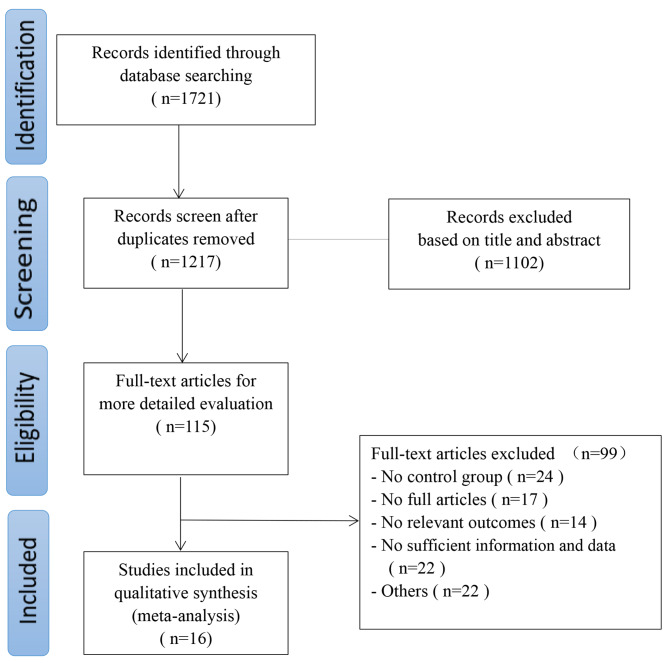
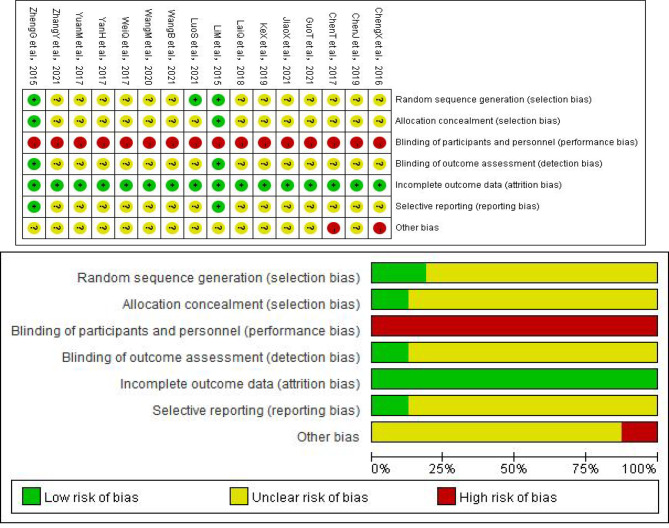
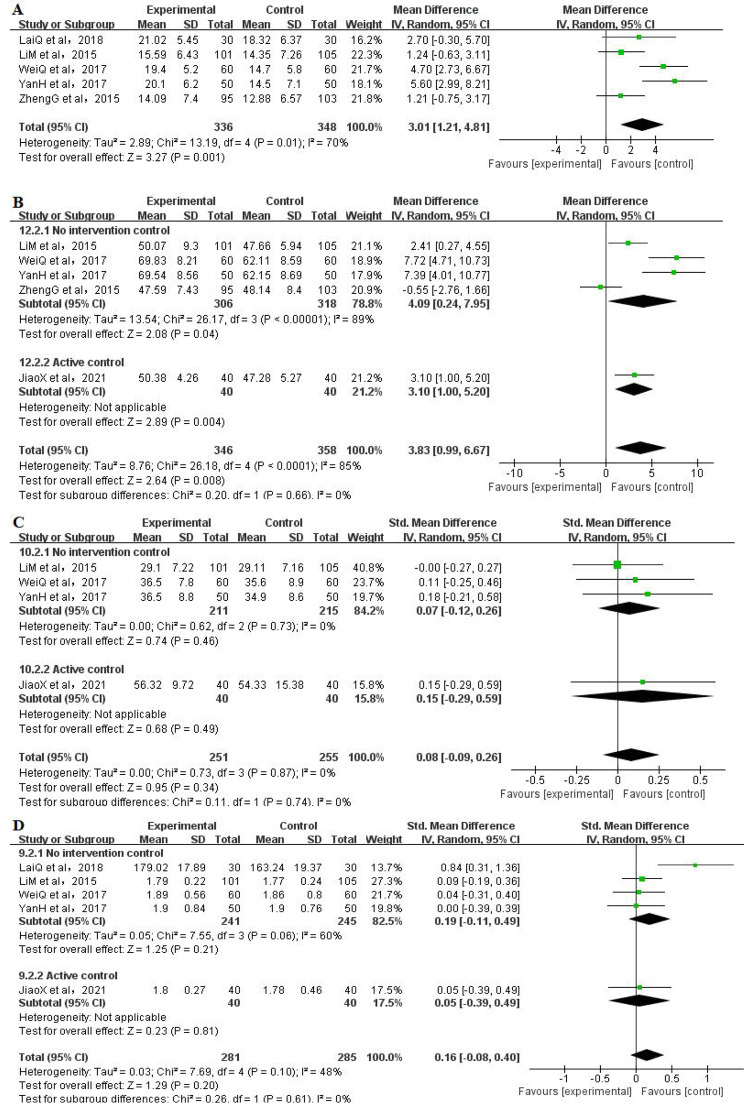
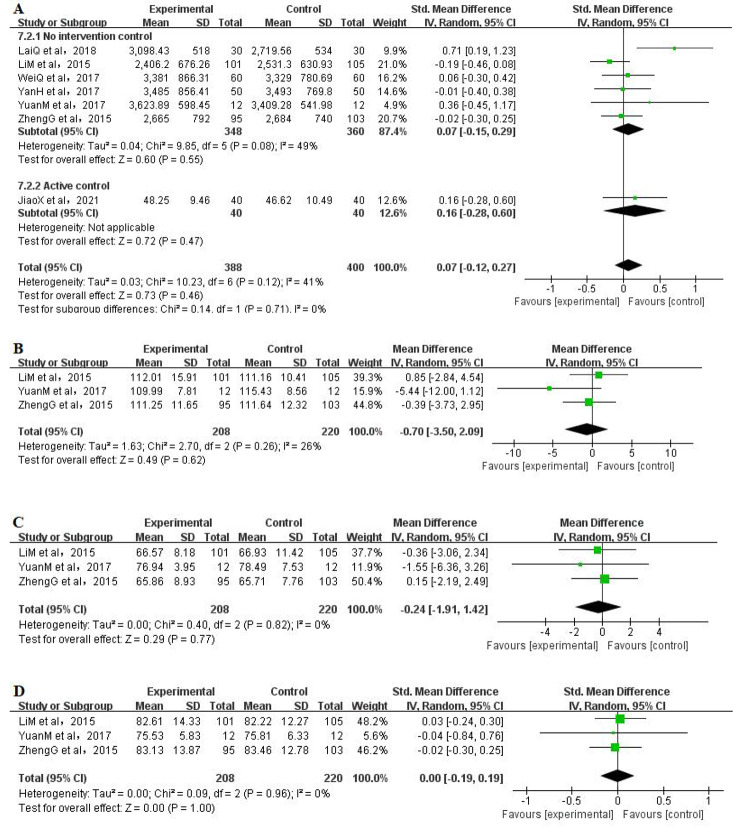
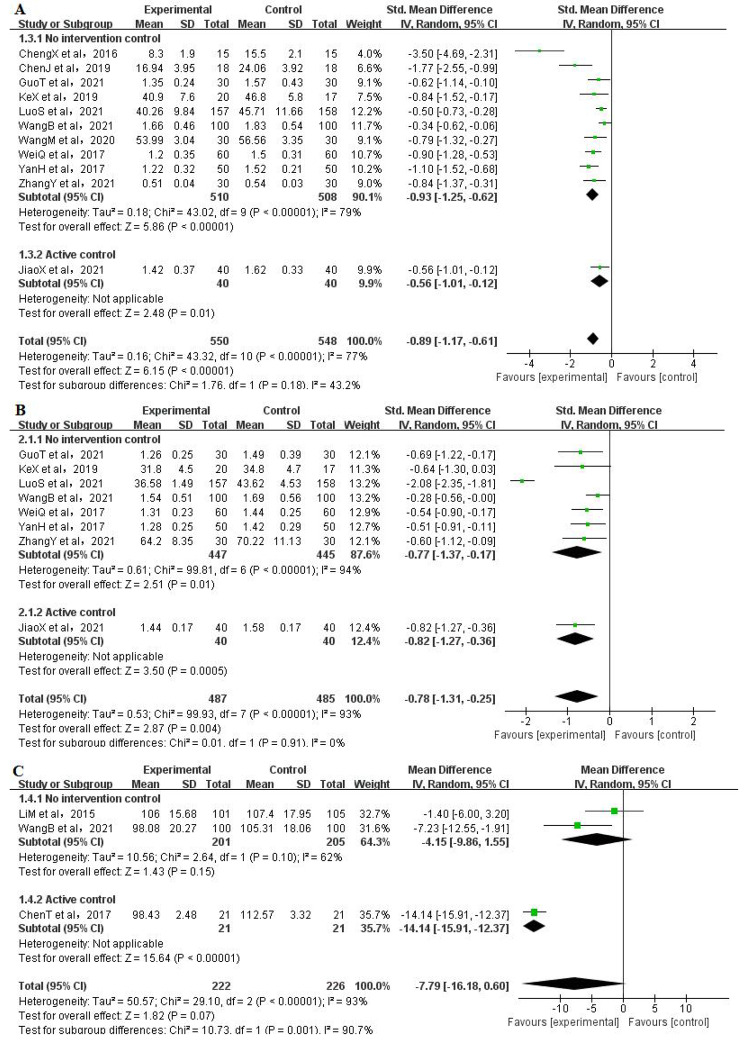
Background: Physical and mental health problems are becoming more serious among college students due to lifestyle changes and increased academic stress. Qigong exercise has been regarded as a potentially effective intervention to improve the physical and mental health of college students. Methods: Eleven databases were searched from their respective inception dates to April 2022. Relevant randomized controlled trials (RCTs) were included. Physical and psychological conditions, including limb muscle strength, flexibility, cardiorespiratory endurance, vital capacity, blood pressure and heart rate, as well as depression, anxiety and mood, were evaluated. The risk of bias was assessed with the Cochrane Collaboration tool. Results: Sixteen randomized controlled trials were included in the meta-analysis. Significant improvements in cardiorespiratory endurance (MD = 3.83, 95% CI: 0.99 to 6.67, P = 0.008) and flexibility (MD = 3.01, 95% CI: 1.21 to 4.81, P = 0.001) were observed. We also observed that Qigong exercise significantly reduced depression and anxiety symptoms (SMD=-0.89, 95% CI: -1.17 to -0.61, P < 0.00001; SMD=-0.78, 95% CI: -1.31 to -0.25, P = 0.004). Nevertheless, no significant effects on muscle strength, vital capacity, blood pressure, heart rate or mood were found. Conclusion: Qigong exercise was advantageous for college students in terms of improving flexibility and cardiorespiratory endurance and alleviating depression and anxiety to some extent. However, due to the limited number of eligible trials and the low methodological quality, more well-designed RCTs are needed in the future.
Overview
The claims and statistics of this paper haven’t been checked yet.
Free: it reads the open-access text and checks the first 5 claims that cite a source we can check. Create a free account to check every claim.
Integrity signals
Registry
Cites
Statistics
Figures
Verification
Claims the paper makes
The claims and statistics of this paper haven’t been checked yet.
Free: it reads the open-access text and checks the first 5 claims that cite a source we can check. Create a free account to check every claim.
Claims other papers make about this one
Each is checked against this paper’s own text: does it say what the citing paper says it does?
The source backs part of the claim, not all of it — or backs it for a different population, condition or comparison.
In the citing paper
“mind-body exercise SMD of -0.50 (95% CI: -0.67 to -0.32) from eight reviews 60 81 82 110 115-118 (9 meta-analyses, 74 component studies, 5,175 participants)”
From Effect of exercise on depression and anxiety symptoms: systematic umbrella review with meta-meta-analysis (2026) · cites this paper as [82]
Experimental — accuracy not yet measured
Self-check
Percentages, sums and reported differences re-computed from the paper’s own numbers.
The self-check needs the paper’s full text.
Citations
Cites
1 retracted
Gao, M. (2022) · Applied Bionics and Biomechanics · doi:10.1155/2022/7346946 · Cited by 7
RetractedPreferred Reporting Items for Systematic Reviews and Meta-Analyses: the PRISMA statement
Moher, D., Liberati, A., Tetzlaff, J., Altman, D. G., & for the PRISMA Group (2009) · BMJ · doi:10.1136/bmj.b2535 · Cited by 83,823
Preferred Reporting Items for Systematic Reviews and Meta-Analyses: The PRISMA Statement
Moher, D., Liberati, A., Tetzlaff, J., Altman, D. G., & The PRISMA Group (2009) · PLoS Medicine · doi:10.1371/journal.pmed.1000097 · Cited by 64,042
The Cochrane Collaboration's tool for assessing risk of bias in randomised trials
Higgins, J. P. T., Altman, D. G., Gotzsche, P. C., Juni, P., Moher, D., Oxman, A. D., Savovic, J., Schulz, K. F., Weeks, L., Sterne, J. A. C., et al. (2011) · BMJ · doi:10.1136/bmj.d5928 · Cited by 33,817
Dermyshi, E., Wang, Y., Yan, C., Hong, W., Qiu, G., Gong, X., & Zhang, T. (2017) · Neonatology · doi:10.1159/000454668 · Cited by 24,451
Wang, G., Ma, R., Qiao, G., Wada, K., Aizawa, Y., & Satoh, T. (2015) · Integrative Medicine International · doi:10.1159/000368408 · Cited by 18,657
Compendium of physical activities: an update of activity codes and MET intensities
AINSWORTH, B. E., HASKELL, W. L., WHITT, M. C., IRWIN, M. L., SWARTZ, A. M., STRATH, S. J., O???BRIEN, W. L., BASSETT, D. R., SCHMITZ, K. H., EMPLAINCOURT, P. O., et al. (2000) · Medicine & Science in Sports & Exercise · doi:10.1097/00005768-200009001-00009 · Cited by 8,497 · cited 1×
“[60] classified the intensity of Qigong, such as Tai Chi, as moderate Fig.”
BackgroundCumpston, M., Li, T., Page, M. J., Chandler, J., Welch, V. A., Higgins, J. P., & Thomas, J. (2019) · Cochrane Database of Systematic Reviews · doi:10.1002/14651858.ed000142 · Cited by 7,218
Guthold, R., Stevens, G. A., Riley, L. M., & Bull, F. C. (2018) · The Lancet Global Health · doi:10.1016/s2214-109x(18)30357-7 · Cited by 4,819 · cited 1×
“9 million participants from 168 countries revealed that more than a quarter of adults worldwide fail to achieve the recommended level of exercise [3].”
BackgroundDyrbye, L. N., Thomas, M. R., & Shanafelt, T. D. (2006) · Academic Medicine · doi:10.1097/00001888-200604000-00009 · Cited by 2,909 · cited 1×
“In addition, the proportion of college students experiencing depressive and anxiety symptoms has been increasing over the past decade [15], and these psychological problems are associated with poorer academic performance, unstable intimate relationships, and even suicidal behaviour [16].”
BackgroundAuerbach, R. P., Collaborators, W. W.-I., Mortier, P., Bruffaerts, R., Alonso, J., Benjet, C., Cuijpers, P., Demyttenaere, K., Ebert, D. D., Green, J. G., et al. (2018) · Journal of Abnormal Psychology · doi:10.1037/abn0000362 · Cited by 2,522
Global burden of disease in young people aged 10–24 years: a systematic analysis
Gore, F. M., Bloem, P. J., Patton, G. C., Ferguson, J., Joseph, V., Coffey, C., Sawyer, S. M., & Mathers, C. D. (2011) · The Lancet · doi:10.1016/s0140-6736(11)60512-6 · Cited by 2,301
Lattie, E. G., Adkins, E. C., Winquist, N., Stiles-Shields, C., Wafford, Q. E., & Graham, A. K. (2019) · Journal of Medical Internet Research · doi:10.2196/12869 · Cited by 843
Eisenberg, D., Hunt, J., & Speer, N. (2013) · Journal of Nervous & Mental Disease · doi:10.1097/nmd.0b013e31827ab077 · Cited by 728
Sedentary Behavior, Physical Activity, and the Metabolic Syndrome among U.S. Adults
Ford, E. S., Kohl, H. W., Mokdad, A. H., & Ajani, U. A. (2005) · Obesity Research · doi:10.1038/oby.2005.65 · Cited by 549
Personality and psychopathology of university students
Tosevski, D. L., Milovancevic, M. P., & Gajic, S. D. (2010) · Current Opinion in Psychiatry · doi:10.1097/yco.0b013e328333d625 · Cited by 261
Ang, L., Song, E., Lee, H. W., & Lee, M. S. (2020) · Journal of Clinical Medicine · doi:10.3390/jcm9051583 · Cited by 233
Zou, L., Sasaki, J. E., Wang, H., Xiao, Z., Fang, Q., & Zhang, M. (2017) · Evidence-Based Complementary and Alternative Medicine · doi:10.1155/2017/4548706 · Cited by 229
Lees, C., & Hopkins, J. (2013) · Preventing Chronic Disease · doi:10.5888/pcd10.130010 · Cited by 226
Tai Chi Chuan in Medicine and Health Promotion
Lan, C., Chen, S.-Y., Lai, J.-S., & Wong, A. M.-K. (2013) · Evidence-Based Complementary and Alternative Medicine · doi:10.1155/2013/502131 · Cited by 188
Self-citationLi, Z., Liu, S., Wang, L., & Smith, L. (2019) · International Journal of Environmental Research and Public Health · doi:10.3390/ijerph17010022 · Cited by 176
Zou, L., Yeung, A., Quan, X., Hui, S. S.-C., Hu, X., Chan, J. S. M., Wang, C., Boyden, S. D., Sun, L., & Wang, H. (2018) · International Journal of Environmental Research and Public Health · doi:10.3390/ijerph15020321 · Cited by 174
Changes in cytokine production in healthy subjects practicing Guolin Qigong : a pilot study
Jones, B. M. (2001) · BMC Complementary and Alternative Medicine · doi:10.1186/1472-6882-1-8 · Cited by 171
Tai Chi and Qigong for the Treatment and Prevention of Mental Disorders
Abbott, R., & Lavretsky, H. (2013) · Psychiatric Clinics of North America · doi:10.1016/j.psc.2013.01.011 · Cited by 167
Hendriks, T., de Jong, J., & Cramer, H. (2017) · The Journal of Alternative and Complementary Medicine · doi:10.1089/acm.2016.0334 · Cited by 166
Li, M., Fang, Q., Li, J., Zheng, X., Tao, J., Yan, X., Lin, Q., Lan, X., Chen, B., Zheng, G., et al. (2015) · PLOS ONE · doi:10.1371/journal.pone.0130544 · Cited by 150
Self-citationMikolajczyk, R. T., Brzoska, P., Maier, C., Ottova, V., Meier, S., Dudziak, U., Ilieva, S., & El Ansari, W. (2008) · BMC Public Health · doi:10.1186/1471-2458-8-215 · Cited by 150
A systematic review and meta-analysis of the effects of Qigong and Tai Chi for depressive symptoms
Liu, X., Clark, J. M., Siskind, D. J., Williams, G. M., Byrne, G. J., Yang, J., & Doi, S. A. R. (2015) · Complementary Therapies in Medicine · doi:10.1016/j.ctim.2015.05.001 · Cited by 123
Wehner, C., Blank, C., Arvandi, M., Wehner, C., & Schobersberger, W. (2021) · BMJ Open Sport & Exercise Medicine · doi:10.1136/bmjsem-2020-000817 · Cited by 123
Striving to Help College Students with Mental Health Issues
Cook, L. J. (2007) · Journal of Psychosocial Nursing and Mental Health Services · doi:10.3928/02793695-20070401-09 · Cited by 119 · cited 1×
“If mental health problems are ignored and untreated, they may lead to students suffering from dropping out of college, committing suicide, or engaging in other risky behaviours [17].”
BackgroundChang, P., Knobf, M. T., Oh, B., & Funk, M. (2019) · The American Journal of Chinese Medicine · doi:10.1142/s0192415x19500149 · Cited by 117
Jingjie, W., Yang, L., Jing, Y., Ran, L., Yiqing, X., & Zhou, N. (2022) · BMC Public Health · doi:10.1186/s12889-022-12728-6 · Cited by 111
Psycho-physical and neurophysiological effects of qigong on depressed elders with chronic illness
Tsang, H. W. H., Tsang, W. W. N., Jones, A. Y. M., Fung, K. M. T., Chan, A. H. L., Chan, E. P., & Au, D. W. H. (2013) · Aging & Mental Health · doi:10.1080/13607863.2012.732035 · Cited by 107
Xiao, T., Jiao, C., Yao, J., Yang, L., Zhang, Y., Liu, S., Grabovac, I., Yu, Q., Kong, Z., Yu, J. J., et al. (2021) · Evidence-based Complementary and Alternative Medicine · doi:10.1155/2021/8880716 · Cited by 106 · cited 1×
“Introduction With the number of cellphone users increasing dramatically [1], an increasing number of young people are spending a lot of time on electronic devices, resulting in a sedentary lifestyle being prevalent among college students worldwide.”
BackgroundZheng, G., Lan, X., Li, M., Ling, K., Lin, H., Chen, L., Tao, J., Li, J., Zheng, X., Bai, C., et al. (2015) · PLoS ONE · doi:10.1371/journal.pone.0132605 · Cited by 95 · cited 9×
“In the evaluation of physical indicators, seven studies reported vital capacity [4, 9, 40, 42–44, 52], five studies used a standing long jump to evaluate lower limb strength [4, 40, 42–43, 52], four studies reported hand grip force levels [4, 42– 43, 52], five studies reported using the Sit-and-Reach test to assess fl…”
BackgroundMethodResultInfluentialSelf-citationBaduanjin Mind-Body Intervention Improves the Executive Control Function
Chen, T., Yue, G. H., Tian, Y., & Jiang, C. (2017) · Frontiers in Psychology · doi:10.3389/fpsyg.2016.02015 · Cited by 87 · cited 8×
“Among them, in terms of psychological indicators, eleven studies evaluated depression by using the self-rating depression scale (SDS) [39, 41, 48, 50], SCL-90 Depression [42–43, 49, 51–52], center for epidemiologic studies depression scale (CES-D) [46] and hamilton depression scale (HAMD) [45]; eight studies used the…”
BackgroundMethodInfluentialTsang, H. W. H., & Fung, K. M. T. (2008) · Journal of Health Psychology · doi:10.1177/1359105308095057 · Cited by 76
Li, K., Walczak‐Kozłowska, T., Lipowski, M., Li, J., Krokosz, D., Su, Y., Yu, H., & Fan, H. (2022) · BMC Sports Science Medicine and Rehabilitation · doi:10.1186/s13102-022-00493-3 · Cited by 75
Chan, J. S. M., Li, A., Ng, S.-M., Ho, R. T. H., Xu, A., Yao, T.-J., Wang, X.-M., So, K.-F., & Chan, C. L. W. (2017) · Cell Transplantation · doi:10.3727/096368916x694238 · Cited by 71
Huang, X., Wang, X., Hu, J., Xue, Y., Wei, Y., Wan, Y., Song, X., Wang, R., Zhang, B., Fang, J. Q., et al. (2021) · Frontiers in Psychiatry · doi:10.3389/fpsyt.2021.753695 · Cited by 70
Liu, X. E., Li, R., Cui, J., Liu, F., Smith, L., Chen, X., & Zhang, D. (2021) · Frontiers in Psychology · doi:10.3389/fpsyg.2021.746975 · Cited by 62
Yeh, M., & Chung, Y.-C. (2016) · European Journal of Oncology Nursing · doi:10.1016/j.ejon.2016.05.003 · Cited by 57
Guo, L., Kong, Z., & Zhang, Y. (2019) · International Journal of Environmental Research and Public Health · doi:10.3390/ijerph16050826 · Cited by 46
Macías, N., Espinosa‐Montero, J., Monterrubio‐Flores, E., Hernández-Barrera, L., Medina-García, C., Gallegos-Carrillo, K., & Campos‐Nonato, I. (2021) · Preventing Chronic Disease · doi:10.5888/pcd18.210041 · Cited by 39
Qigong for healthcare: an overview of systematic reviews
Lee, M. S., Oh, B., & Ernst, E. (2011) · JRSM Short Reports · doi:10.1258/shorts.2010.010091 · Cited by 38
Qigong — Chinese Breathing Exercise
Koh, T. C. (1982) · The American Journal of Chinese Medicine · doi:10.1142/s0192415x82000142 · Cited by 37
A Comparison of Factors Associated with Physical Inactivity Among East Asian College Students
Seo, D., Torabi, M., Chin, M.-K., Huang, S. F., Chen, C. K., Mok, M. M. C., Wong, P., Chia, M., Lee, C. G., & Wang, C. (2011) · International Journal of Behavioral Medicine · doi:10.1007/s12529-011-9167-4 · Cited by 30
Bai, J., Wang, Y., Zhang, X. F., Ouyang, Y. F., Zhang, B., Wang, Z. H., Du, S. F., & Wang, H. (2021) · PubMed · doi:10.3967/bes2021.132 · Cited by 29
Shi, H., Liu, T., Dong, C., Zhen, K., Wang, Y., Liu, P., Si, G., Wang, L., & Wang, M. (2022) · BioMed Research International · doi:10.1155/2022/7728973 · Cited by 20 · cited 2×
“As a mind-body exercise, the key elements of Qigong are body movement, spiritual guidance and controlled breathing [21–22], and there are various forms of Qigong in China, including Tai Chi [23],Wuqinxi, Baduanjin, Yijinjing, and Liuzijue [24].”
BackgroundCheng, X., Wang, D., Chen, X., Wang, W., Liu, C., He, T., He, L., & Qin, Q. (2016) · PubMed · Cited by 19
[Review of centennial development of Qigong].
Huang, J., & Wang, X. (2012) · PubMed · Cited by 6
Cong, X. F., Liu, S. B., Xu, T., Wang, W. J., X, J., Chen, B., & Li, J. (2020) · PubMed · doi:10.3760/cma.j.cn112338-20190926-00705 · Cited by 2
Research works printed but not linked: 12
- Ke XJ Cui YS Zhang J Influence of Health Gigong Baduanjin on Psychological Characteristics of College Students with Neck-Shoulder Syndrome Chin Manipulation Rehabilitation Med 2019 10 2 9 11 10.19787/j.issn.1008-1879.2019.02.005 · doi:10.19787/j.issn.1008-1879.2019.02.005
- Lai QY Jing CX Chen CJ Jiao RY Pan HS Research on The Baduanjin on Health Promotion of Female College Students under the Background of Healthy China Fujian Sports Science and Technology 2018 37 1 44 6
- Wang M Zhao QW Wu H Research on Huatuo Wuqinxi’s Intervention Treatment for College Students with Mild Psychological Problems University(Social Sci Edition) 2020 18 1 60 2 10.13847/j.cnki.lnmu(sse).2020.01.017 · doi:10.13847/j.cnki.lnmu(sse).2020.01.017
- Wei QB Zhao Q Wu YC Study of Yi Jin Jing on Mental health and Body Constitution in College Students Shandong J Tradit Chin Med 2017 36 8 654 56 10.16295/j.cnki.0257-358x.2017.08.009 · doi:10.16295/j.cnki.0257-358x.2017.08.009
- Yuan MZ Xue HH Huang YM The influence of 20 weeks Taijiquan exercise on the physical function of college students J Military Phys Educ Sports 2017 36 3 85 8
- Chen J Li Y Wu Y Su X Effects of Taijiquan exercise on depression and serum inflammatory factors in female college students Chin J Sch Health 2019 40 7 1065 68 10.16835/j.cnki.1000-9817.2019.07.029 · doi:10.16835/j.cnki.1000-9817.2019.07.029
- Zhang YZ An Empirical Study on the Effect of Health Qigong Baduanjin on College Students’ Depression and Anxiety Wushu Stud 2021 6 12 131 3 10.13293/j.cnki.wskx.009327 · doi:10.13293/j.cnki.wskx.009327
- Wang B Wang XL Chang YJ Mao Y Peng J Research on the impact of online Baduanjin on the mental health of college freshmen under the new crown pneumonia epidemic Health Vocat Educ 2021 39 23 155 9
- Luo SS Research on the intervention effect of Taijiquan on sleep disorders of college students Chin J Convalescent Med 2021 30 12 1249 52 10.13517/j.cnki.ccm.2021.12.004 · doi:10.13517/j.cnki.ccm.2021.12.004
- Guo TR. Experimental Research on the Effects of Baduanjin on College Students’ Mental Health. Study of Science and Engineering at RTVU. 2021;(2):76–8. 10.19469/j.cnki.1003-3297.2021.02.0076. · doi:10.19469/j.cnki.1003-3297.2021.02.0076
- Jiao XX Ji H Chen J Effects of traditional Wuqinxi on physical fitness and mental health of female college students Chin J Sch Health 2021 42 9 1323 27 10.16835/j.cnki.1000-9817.2021.09.011 · doi:10.16835/j.cnki.1000-9817.2021.09.011
- Liu X Li R Cui J Liu F Smith L Chen X Zhang D The Effects of Tai Chi and Qigong Exercise on Psychological Status in Adolescents: A Systematic Review and Meta-Analysis Front Psychol 2021 12 746975 10.3389/fpsyg.2021.746975 34899487 PMC8652254 · DOI
Cited by
Gong, X., Wang, L., Rong, G., Zhang, D.-N., Zhang, A.-Y., & Liu, C. (2023) · Frontiers in Psychology · doi:10.3389/fpsyg.2023.1073647 · Cited by 86
“Research has shown that these exercise regimens can benefit practitioners’ physical and mental health (Zou et al., 2018; Li et al., 2019; Gong et al., 2022; Lin et al., 2022).”
BackgroundGuerriero, M. A., Dipace, A., Monda, A., Maria, A. D., Polito, R., Messina, G., Monda, M., di Padova, M., Basta, A., Ruberto, M., et al. (2025) · Brain Sciences · doi:10.3390/brainsci15010078 · Cited by 104
Influence of physical education on anxiety, depression, and self-esteem among college students
Fu, H., Wang, J., & Hu, J.-X. (2023) · World Journal of Psychiatry · doi:10.5498/wjp.v13.i12.1121 · Cited by 25
Qü, P., Zhu, X., Zhou, H., Kang, Z., Li, R., Wen, J., Pan, F., Liu, Y. S., Zhu, T., Cao, Q., et al. (2024) · Frontiers in Psychology · doi:10.3389/fpsyg.2024.1381009 · Cited by 25
“However, TCC may also provide an exercise alternative for young adults who live a sedentary lifestyle and are at risk of preventable diseases but lack the motivation to engage in more conventional exercise (Lin et al., 2022).”
BackgroundLiu, L., Xin, X., Wang, H., & Zhang, Y. (2025) · Frontiers in Psychology · doi:10.3389/fpsyg.2025.1612408 · Cited by 44
Metadata
- Authors
- Lin, J., Gao, Y. F., Guo, Y., Li, M., Zhu, Y., You, R., Chen, S., & Wang, S.
- Affiliations
- Fujian Medical University (CN)
- First Affiliated Hospital of Fujian Medical University (CN)
- Fujian University of Traditional Chinese Medicine (CN)
- Corresponding author
- Chen, Shaoqing
- Wang, Shizhong
- Venue
- BMC Complementary Medicine and Therapies
- Published
- 2022-11-08
- Volume
- 22
- Issue
- 1
- Pages
- 287-287
- ISSN
- 2662-7671 (ISSN-L)
- PMC
- PMC9641907
- OpenAlex
- W4308589391
- Cited by
- 50
- References
- 50
- Citations by year
- 2026: 20 · 2025: 16 · 2024: 8 · 2023: 6
- FWCI
- 1.03
- Type
- journal article
- Language
- en
- Open access
- gold
- doi.org
- Licence
- cc-by
- creativecommons.org/licenses/by/4.0 (tdm)
- creativecommons.org/licenses/by/4.0 (vor)
- Locations
- BMC Complementary Medicine and Therapies (publishedVersion, cc-by)
- PubMed Central (publishedVersion, cc-by)
- PubMed (publishedVersion)
- DOAJ (DOAJ: Directory of Open Access Journals) (submittedVersion, cc-by-sa)
- Funders
- Youth Project of National Natural Science Foundation of China (81904317)
- General project of National Natural Science Foundation of China (81973924 and 81874501)
- Topics
- Health Sciences › Medicine › Complementary and alternative medicine › Biofield Effects and Biophysics
- Social Sciences › Psychology › Clinical Psychology › Mindfulness and Compassion Interventions
- Health Sciences › Medicine › Public Health, Environmental and Occupational Health › Physical Activity and Health
- Keywords
- qigong, university students, physical health, mental health, cardiorespiratory fitness, flexibility, depression, anxiety, mood, muscle strength, vital capacity, blood pressure, heart rate
- MeSH terms
- Anxiety, Humans, Mental Health, Students, Exercise, Qigong
About these checks
Registry, retraction, Cites and statistics results are computed, not judged, with one exception: a printed reference that no index lists is read once by a model before it counts as a citation error. Claims are extracted by a model and kept only when their quote appears verbatim in the text; each cited source is then checked, with a model’s help, for whether it says what the claim relies on. Those verdicts can be wrong — read the claim’s quote and the cited source before relying on one.
Statistics and arithmetic are recomputed, not judged.
Confidence bands are shown only for fields calibrated on our annotated test set. None is calibrated yet, so no band is shown.
What counts as a claim ›How we measure confidence ›How we check this ›
Are you an author, or do you see a problem with this page? Request a review
Data sources
Bibliographic data: Semantic Scholar, OpenAlex, Crossref.
Contains information from the Semantic Scholar Academic Graph Datasets, made available under the ODC Attribution License (ODC-BY 1.0).
Semantic Scholar’s data is described in: Kinney, R., et al. (2023). The Semantic Scholar Open Data Platform. arXiv:2301.10140.
