

The DOI matches its Crossref record; 10 of the 10 references it cites were found in a registry or an index.
Sleepiness, sleep deprivation, quality of life, mental symptoms and perception of academic environment in medical students
Abstract
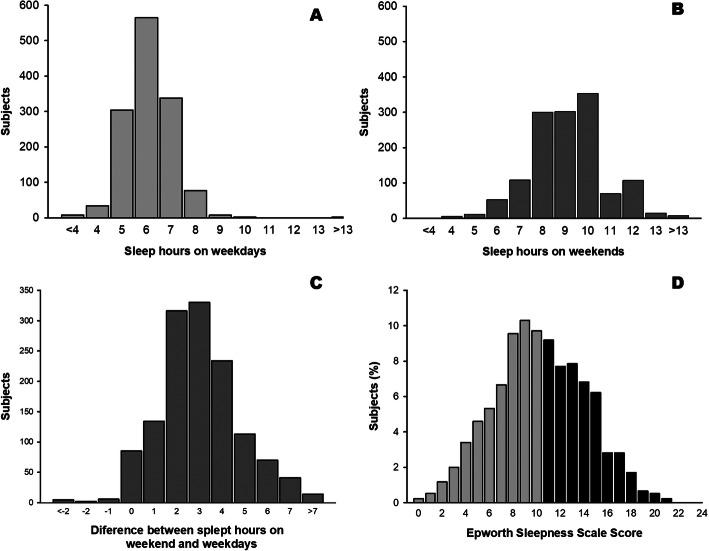
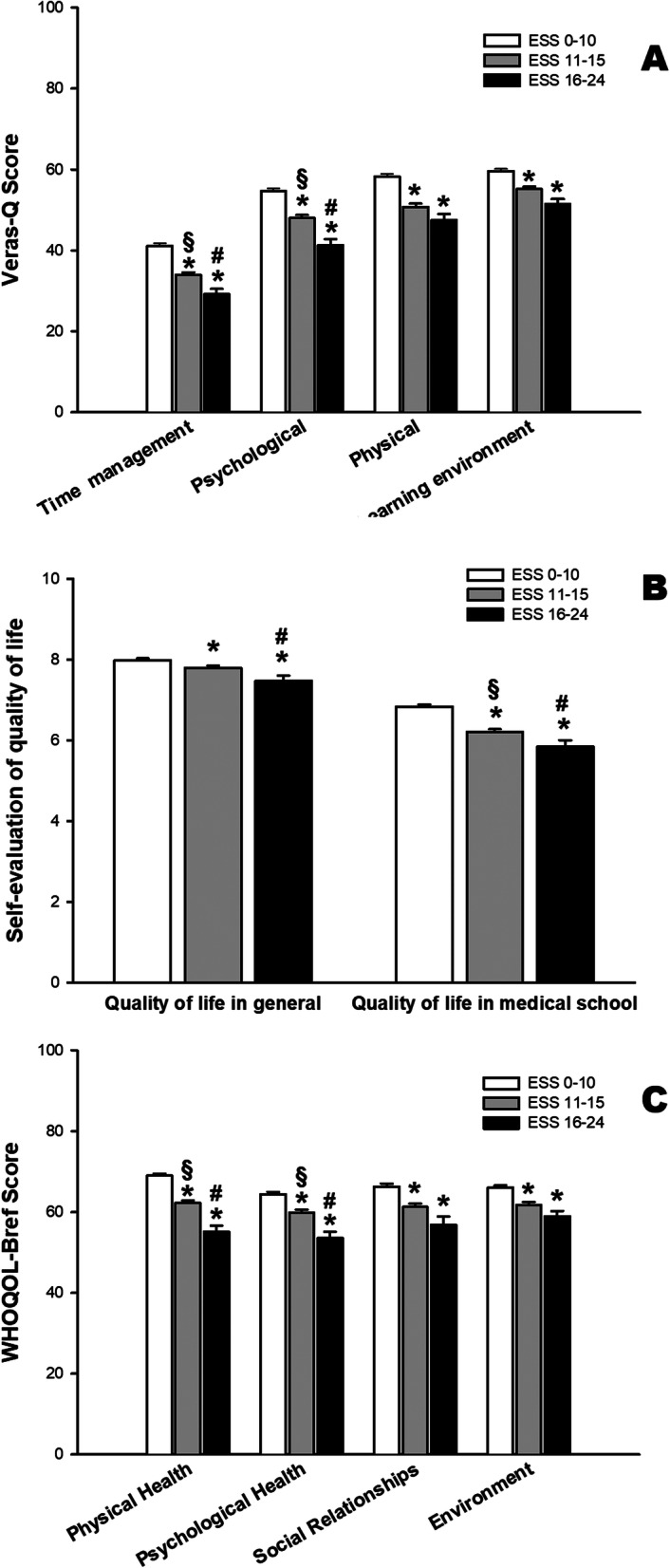
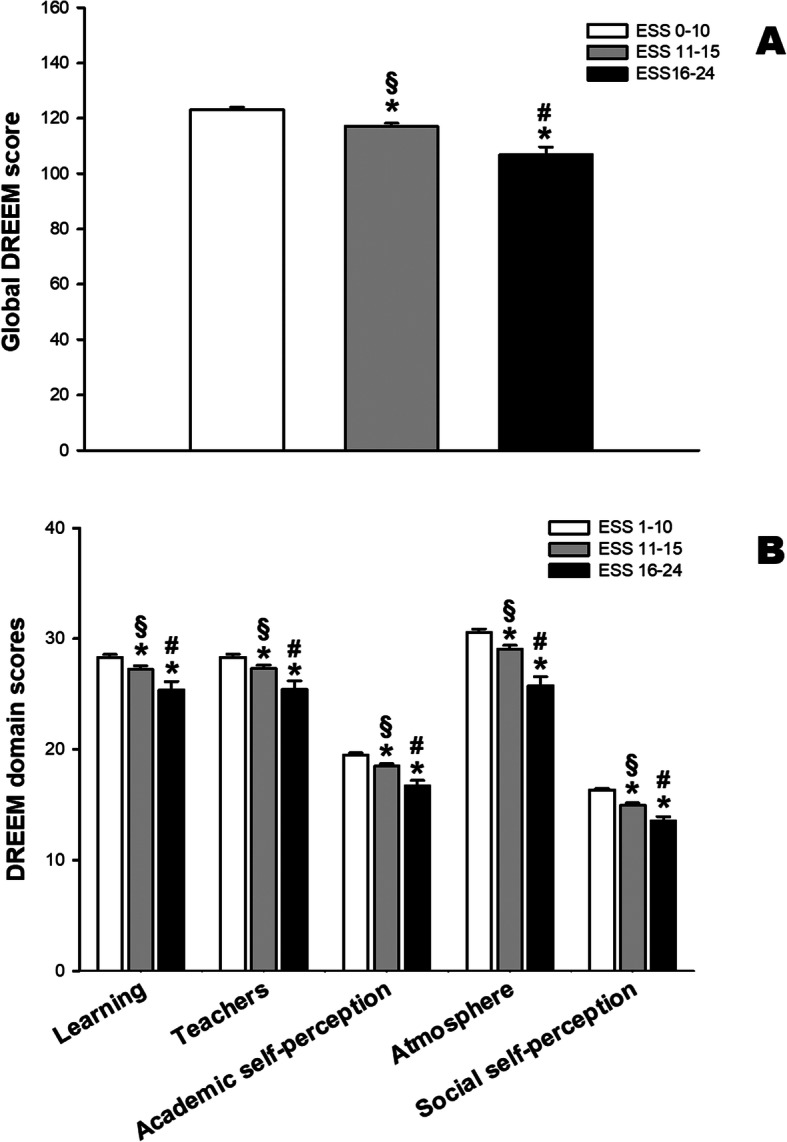
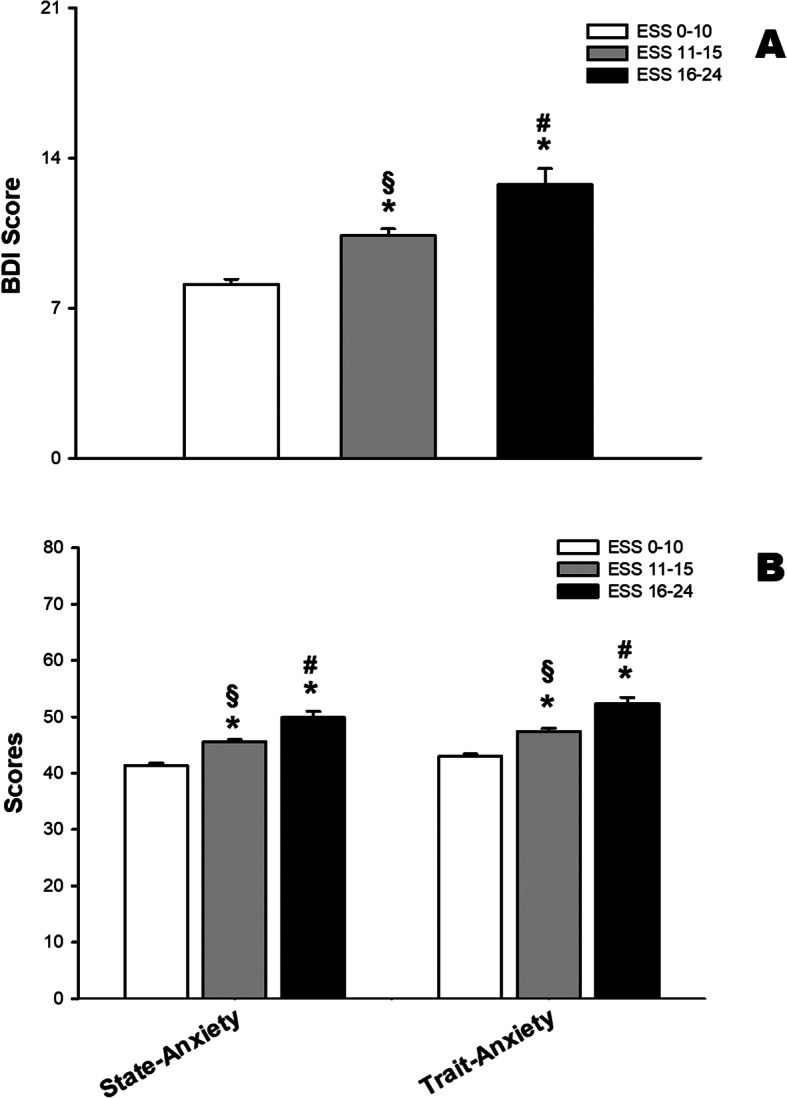
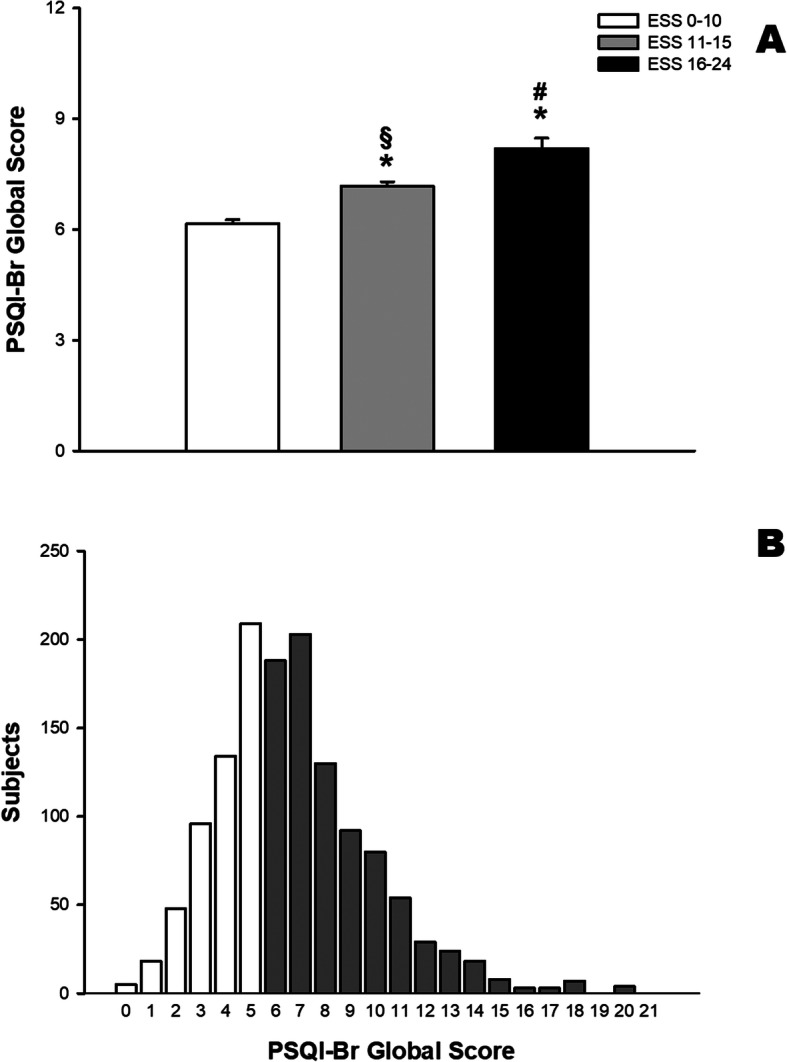
Background: It has been previously shown that a high percentage of medical students have sleep problems that interfere with academic performance and mental health. Methods: To study the impact of sleep quality, daytime somnolence, and sleep deprivation on medical students, we analyzed data from a multicenter study with medical students in Brazil (22 medical schools, 1350 randomized medical students). We applied questionnaires of daytime sleepiness, quality of sleep, quality of life, anxiety and depression symptoms and perception of educational environment. Results: 37.8% of medical students presented mild values of daytime sleepiness (Epworth Sleepiness Scale - ESS) and 8.7% presented moderate/severe values. The percentage of female medical students that presented ESS values high or very high was significantly greater than male medical students (p < 0.05). Students with lower ESS scores presented significantly greater scores of quality of life and perception of educational environment and lower scores of depression and anxiety symptoms, and these relationships showed a dose-effect pattern. Medical students reporting more sleep deprivation showed significantly greater odds ratios of presenting anxiety and depression symptoms and lower odds of good quality of life or perception of educational environment. Conclusions: There is a significant association between sleep deprivation and daytime sleepiness with the perception of quality of life and educational environment in medical students.
Overview
The claims and statistics of this paper haven’t been checked yet.
Run the check — free, no account needed. It reads the open-access text and checks the sources it cites.
Integrity signals
Registry
Cites
Statistics
Figures
Verification
Claims the paper makes
The claims and statistics of this paper haven’t been checked yet.
Run the check — free, no account needed. It reads the open-access text and checks the sources it cites.
Claims other papers make about this one
Each is checked against this paper’s own text: does it say what the citing paper says it does?
In the citing paper
“More and more jobs, such as doctors, workers, and pilots, are required to work overtime and even reverse day and night in high-risk work (79–82).”
From Sleep deprivation alters utilization of negative feedback in risky decision-making (2024) · cites this paper as [80]
Self-check
Percentages, sums and reported differences re-computed from the paper’s own numbers.
The self-check needs the paper’s full text.
Citations
Cites
A New Method for Measuring Daytime Sleepiness: The Epworth Sleepiness Scale
Johns, M. W. (1991) · Sleep · doi:10.1093/sleep/14.6.540 · Cited by 17,364
National Sleep Foundation's sleep time duration recommendations: methodology and results summary.
Hirshkowitz, M., Whiton, K., Albert, S. M., Alessi, C., Bruni, O., DonCarlos, L., Hazen, N., Herman, J., Katz, E. S., Kheirandish-Gozal, L., et al. (2015) · Sleep Health · doi:10.1016/j.sleh.2014.12.010 · Cited by 4,404
Sleep loss, learning capacity and academic performance
CURCIO, G., FERRARA, M., & DEGENNARO, L. (2006) · Sleep Medicine Reviews · doi:10.1016/j.smrv.2005.11.001 · Cited by 1,310
Insomnia and Its Treatment: Prevalence and Correlates
Mellinger, G. D. (1985) · Archives of General Psychiatry · doi:10.1001/archpsyc.1985.01790260019002 · Cited by 1,071
Cruess, R. L., Cruess, S. R., Boudreau, J. D., Snell, L., & Steinert, Y. (2015) · Academic Medicine · doi:10.1097/acm.0000000000000700 · Cited by 1,038
A cross-sectional measurement of medical student empathy
Chen, D., Lew, R., Hershman, W., & Orlander, J. (2007) · Journal of General Internal Medicine · doi:10.1007/s11606-007-0298-x · Cited by 547
Sleep disturbances among medical students: a global perspective
Azad, M. C., Fraser, K., Rumana, N., Abdullah, A. F., Shahana, N., Hanly, P. J., & Turin, T. C. (2015) · Journal of Clinical Sleep Medicine · doi:10.5664/jcsm.4370 · Cited by 456
The impact of school daily schedule on adolescent sleep
Hansen, M., Janssen, I., Schiff, A., Zee, P. C., & Dubocovich, M. L. (2005) · PEDIATRICS · doi:10.1542/peds.2004-1649 · Cited by 289
Sleep disorder among medical students: relationship to their academic performance
Abdulghani, H. M., Alrowais, N. A., Bin-Saad, N. S., Al-Subaie, N. M., Haji, A. M. A., & Alhaqwi, A. I. (2012) · Medical Teacher · doi:10.3109/0142159x.2012.656749 · Cited by 273
Alapin, I., Fichten, C. S., Libman, E., Creti, L., Bailes, S., & Wright, J. (2000) · Journal of Psychosomatic Research · doi:10.1016/s0022-3999(00)00194-x · Cited by 232
Research works printed but not linked: 48
- Palatty PL, Fernandes E, Suresh S, Baliga MS. Comparison of sleep pattern between medical and law students. Sleep Hypn. 2011;13:1–2.
- Wong JGWS, Patil NG, Beh SL, Cheung EPT, Wong V, Chan LC, et al. Cultivating psychological well-being in Hong Kong's future doctors. Med Teach. 2005;27:715–9. · DOI
- Gomes AA, Tavares J, de Azevedo MH. Sleep and academic performance in undergraduates: a multi-measure, multi-predictor approach. Chronobiol Int. 2011;28:786–801. · DOI · Paper page
- Enns SC, Perotta B, Paro HB, Gannam S, Peleias M, Mayer FB, et al. Medical students' perception of their educational environment and quality of life: is there a positive association? Acad Med. 2016;91:409–17. · DOI
- Mayer FB, Santos IS, Silveira PSP, Lopes MHI, Souza ARND, Campos EP, et al. Factors associated to depression and anxiety in medical students: a multicenter study. BMC Med Educ. 2016;16:282. · DOI · Paper page
- Paro HBMS, Silveira PSP, Perotta B, Gannam S, Enns SC, Giaxa RRB, et al. Empathy among medical students: is there a relation with quality of life and burnout? PLoS One. 2014;9:e94133.
- Tempski P, Santos IS, Mayer FB, Enns SC, Perotta B, Paro HBMS, et al. Relationship among medical student resilience, educational environment and quality of life. PLoS One. 2015;29:e0131535.
- Bertolazi AN, Fagondes SC, Hoff LS, DartoraI EG, Miozzo ICS, Barba MEF, et al. Validation of the Brazilian Portuguese version of the Pittsburgh sleep quality index. Sleep Med. 2011;12:70–5. · DOI · Paper page
- Buysse DJ, Berman SR, Kupfer DJ, Monk TH, Reynolds CF. The Pittsburgh sleep quality index: a new instrument for psychiatric practice and research. Psychiatry Res. 1989;28:193–213. · DOI · Paper page
- WHOQOL Group. The World Health Organization quality of life assessment (WHOQOL): position paper from the World Health Organization. Soc Sci Med. 1995;10:1403–9.
- Fleck MPA, Leal OF, Louzada S, Xavier M, Chachamovich E, Vieira G, et al. Desenvolvimento da versão em português do instrumento de avaliação de qualidade de vida da OMS. Rev Bras Psiquiatr. 1999;21:19–28. · DOI
- Tempski P, Perotta B, Pose RA, Vieira JE. A questionnaire on the quality of life of medical students. Med Educ. 2009;43:1107–8. · DOI
- Peleias M, Tempski P, Paro HBMS, Perotta B, Mayer FB, Enns SC, et al. Leisure time physical activity and quality of life in medical students: results from a multicentre study. BMJ Open Sport Exerc Med. 2017;3:e000213. · DOI
- Roff S, McAleer S, Harden RM, Al-Qahtani M, Ahmed AU, Deza H, et al. Development and validation of the Dundee ready education environment measure (DREEM). Med Teach. 1997;19:295–9. · DOI
- McAleer S, Roff S. A practical guide to using the Dundee ready education environment measure (DREEM). AMEE Education Guide No. 2001;23:29–33.
- de Oliveira Filho GR, Vieira JE, Schonhorst L. Psychometric properties of the Dundee ready educational environment measure (DREEM) applied to medical residents. Med Teach. 2005;27:343–7. · DOI
- Beck AT, Ward CH, Mendelson M, Mock J, Erbaugh J. An inventory for measuring depression. Arch Gen Psychiatry. 1961;4:561–71. · DOI · Paper page
- Gorenstein C, Andrade L. Validation of a Portuguese version of the Beck depression inventory and the state-trait anxiety inventory in Brazilian subjects. Braz J Med Biol Res. 1996;29:453–7.
- Spielberger GL. Manual for the state-trait anxiety inventory. Palo Alto: Consulting psychologists Press; 1983.
- Zailinawati AH, Teng CL, Chung YC, Teow TL, Lee PN, Jagmohni KS. Daytime sleepiness and sleep quality among Malaysian medical students. Med J Malaysia. 2009;64:108–10.
- Giri P, Baviskar M, Phalke D. Study ofsleep habits and sleep problems among medical students of Pravara Institute of Medical Sciences Ioni, Western Maharashtra, India. Ann Med Health Sci Res. 2013;3:51–4. · DOI
- Feng G, Chen J, Yang X. Study on the status and quality of sleep-related influencing factors in medical college students. Zhonghua Liu Xing Bing Xue Za Zhi. 2005;26:328–31.
- Medeiros ALD, Mendes DBF, Lima PF, Araujo JF. The relationships between sleep-wake cycle and academic performance in medical students. Biol Rhythm Res. 2001;32:263–70. · DOI
- Preišegolavičiūtė E, Leskauskas D, Adomaitienė V. Associations of quality of sleep with lifestyle factors and profile of studies among Lithuanian students. Medicina (Kaunas). 2010;46:482–9. · DOI
- Beijamini F, Knutson KL, Lorenzi-Filho G, Egan KJ, Taporoski TP, De Paula LKG, et al. Timing and quality of sleep in a rural Brazilian family-based cohort, the Baependi heart study. Sci Rep. 2016;6:39283. · DOI
- Arnal PJ, Sauvet F, Leger D, van Beers P, Bayon V, Bougard C, et al. Benefits of sleep extension on sustained attention and sleep pressure before and during total sleep deprivation and recovery. Sleep. 2015;38:1935–43. · DOI
- Harrison Y, Horne JA. Long-term extension to sleep--are we chronically sleep deprived. Psychophysiology. 1996;33:22–30. · DOI
- Kitamura S, Katayose Y, Nakazaki K, Motomura Y, Oba K, Katsunuma R, et al. Estimating individual optimal sleep duration and potential sleep debt. Sci Rep. 2016;24:35812. · DOI
- Klerman EB, Dijk D-J. Age-related reduction in the maximal capacity for sleep - implications for insomnia. Curr Biol. 2008;18:1118–23. · DOI
- Rajaratnam SMW, Middleton B, Stone BM, Arendt J, Dijk D-J. Melatonin advances the circadian timing of EEG sleep and directly facilitates sleep without altering its duration in extended sleep opportunities in humans. J Physiol. 2004;15:339–51. · DOI
- Wehr TA, Moul DE, Barbato G, Giesen HA, Seidel JA, Barker C, et al. Conservation of photoperiod-responsive mechanisms in humans. Am J Physiol Integr Comp Physiol. 1993;265:R846–57. · DOI · Paper page
- Daugherty SR, Baldwin DC. Sleep deprivation in senior medical students and first-year residents. Acad Med. 1996;71:S93–5. · DOI
- Tempski P, Bellodi PL, Paro HBMS, Enns SC, Martins MA, Schraiber LB. What do medical students think about their quality of life? A qualitative study. BMC Med Educ. 2012;12:106. · DOI
- Prenskly M. Digital natives, digital immigrants. MCB University Press. 2001;9:1–6.
- Anderson J, Beckitt D, Geal MA, Cocker P. How clinical students spend their time. Br J Med Educ. 1968;2:4–10. · DOI
- Johns MW, Hocking B. Daytime sleepiness and sleep habits of Australian workers. Sleep. 1997;20:844–9. · DOI
- Johns MW. Reliability and factor analysis of the Epworth sleepiness scale. Sleep. 1992;15:376–81. · DOI
- Webb E, Ashton CH, Kelly P, Kamali F. Alcohol and drug use in UK university students. Lancet. 1996;348:922–5. · DOI
- Killgore WDS, Kahn-Greene ET, Lipizzi EL, Newman RA, Kamimori GH, Balkin TJ. Sleep deprivation reduces perceived emotional intelligence and constructive thinking skills. Sleep Med. 2008;9:517–26. · DOI
- Kloster MC, Perotta B, Hauer JA, Paro HB, Tempski P. Sonolência diurna e habilidades sociais em estudantes de medicina. Rev Bras Educ Med. 2013;37:103–9. · DOI
- Loayza HMP, Ponte TS, Carvalho CG, Pedrotti MR, Nunes PV, Souza CM, et al. Association between mental health screening by self-report questionnaire and insomnia in medical students. Arq Neuropsiquiatr. 2001;59:180–5. · DOI
- Asghari A, Mohammadi F, Kamrava SK, Jalessi M, Farhadi M. Evaluation of quality of life in patients with obstructive sleep apnea. Eur Arch Otorhinolaryngol. 2013;270:1131–6. · DOI
- Uchmanowicz I, Koltuniuk A, Stepién A, Uchmanowicz B, Rosińczuk J. The influence of sleep disorders on the quality of life in patients with chronic low back pain. Scand J Caring Sci. 2019;33:119–27. · DOI
- Yosunkaya S, Kutlu R, Cihan FG. Evaluation of depression and quality of life in patients with obstructive sleep apnea syndrome. Niger J Clin Pract. 2016;19:573–9. · DOI
- Abraham R, Ramnarayan K, Vinod P, Torke S. Students’ perceptions of learning environment in an Indian medical school. BMC Med Educ. 2008;11:1–5.
- Aghamolaei T, Fazel I. Medical students’ perceptions of the educational environment at an Iranian Medical Sciences University. BMC Med Educ. 2010;29:87. · DOI
- Bouhaimed M, Thalib L, Doi SAR. Perception of the educational environment by medical students undergoing a curricular transition in Kuwait. Med Princ Pract. 2009;18:204–8. · DOI
- Jiffry MTM, McAleer S, Fernando S, Marasinghe RB. Using the DREEM questionnaire to gather baseline information on an evolving medical school in Sri Lanka. Med Teach. 2005;27:348–52. · DOI
Cited by
Sorted by citations
Sleep deprivation alters utilization of negative feedback in risky decision-making
Xu, W., Wang, L., Yang, L., Zhu, Y., & Chen, P. (2024) · Frontiers in Psychiatry · doi:10.3389/fpsyt.2024.1307408 · Cited by 2
Metadata
- Authors
- Perotta, B., Arantes-Costa, F. M., Enns, S. C., Figueiro-Filho, E. A., Paro, H., Santos, I. S., Lorenzi-Filho, G., Martins, M. A., & Tempski, P. Z.
- Venue
- BMC Medical Education
- Published
- 2021-02-17
- Volume
- 21
- Issue
- 1
- ISSN
- 1472-6920
- PMC
- PMC7890911
- Cited by
- 134
- References
- 10
- Language
- en
About these checks
Registry, retraction, Cites and statistics results are computed, not judged, with one exception: a printed reference that no index lists is read once by a model before it counts as a citation error. Claims are extracted by a model and kept only when their quote appears verbatim in the text; each cited source is then checked, with a model’s help, for whether it says what the claim relies on. Those verdicts can be wrong — read the claim’s quote and the cited source before relying on one.
Statistics and arithmetic are recomputed, not judged.
Confidence bands are shown only for fields calibrated on our annotated test set. None is calibrated yet, so no band is shown.
What counts as a claim ›How we measure confidence ›How we check this ›
Are you an author, or do you see a problem with this page? Request a review
