

The DOI matches its Crossref record; 41 of the 41 references it cites were found in a registry or an index.
Narrative medicine as a teaching strategy for nursing students to developing professionalism, empathy and humanistic caring ability: a randomized controlled trial
Open accessAbstract
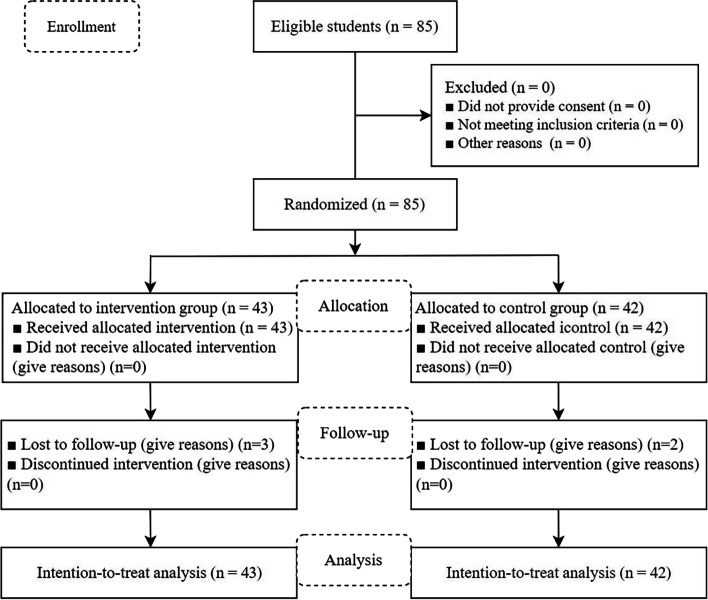
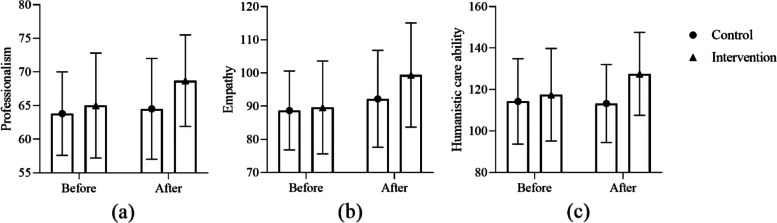
Background: Narrative medicine has become a solution to cultivate medical students’ ability of empathy and humanistic care. However, the role of narrative medicine is lacking in the study of professionalism. The aim of this study was to analyze the effects of narrative medical theory learning and narrative writing on professionalism, empathy and humanistic care ability of nursing students. Methods: This cluster randomized controlled trial was conducted between June 2021 and June 2022 in two universities in Jiangsu, China. The participants of this study were 85 nursing students who were randomly divided into the intervention group ( n = 43) or the control group ( n = 42). Participants in the intervention group were trained in narrative medical theory learning and narrative writing based on a Web-based platform, while those in the control group were not. Self-report questionnaires of professionalism, empathy and humanistic care ability were used before and after intervention. Results: The results showed that the professionalism score of the intervention group was (68.7 ± 6.8 vs. 64.5 ± 7.5; P = 0.005), empathy (99.4 ± 15.7 vs. 92.2 ± 14.6; P = 0.014) and humanistic care ability (127.6 ± 20.0 vs. 113.3 ± 18.8; P = 0.004) were better than the control group. Conclusion: The results of this quantitative study suggest that narrative medical theory education and narrative writing based on the network platform can promote the development of professionalism, empathy and humanistic care ability of nursing undergraduates.
Overview
The claims and statistics of this paper haven’t been checked yet.
Run the check — free, no account needed. It reads the open-access text and checks the sources it cites.
Integrity signals
Registry
Cites
Statistics
Figures
Verification
Claims the paper makes
The claims and statistics of this paper haven’t been checked yet.
Run the check — free, no account needed. It reads the open-access text and checks the sources it cites.
Claims other papers make about this one
Each is checked against this paper’s own text: does it say what the citing paper says it does?
The source backs part of the claim, not all of it — or backs it for a different population, condition or comparison.
In the citing paper
“These studies indicate that the long-term stability of teaching outcomes and the efficiency of translating knowledge comprehension into clinical decision-making capabilities remain critical challenges to be addressed [11–21].”
From Exploring the integration of AI and national quality courses in China: a study on teaching practices in nursing smart education (2025) · cites this paper as [12]
Experimental — accuracy not yet measured
Self-check
Percentages, sums and reported differences re-computed from the paper’s own numbers.
The self-check needs the paper’s full text.
Citations
Cites
Consort 2010 statement: extension to cluster randomised trials
Campbell, M. K., Piaggio, G., Elbourne, D. R., Altman, D. G., & for the CONSORT Group (2012) · BMJ · doi:10.1136/bmj.e5661 · Cited by 3,510
Charon, R. (2001) · JAMA · doi:10.1001/jama.286.15.1897 · Cited by 2,351
The Devil is in the Third Year: A Longitudinal Study of Erosion of Empathy in Medical School
Hojat, M., Vergare, M. J., Maxwell, K., Brainard, G. C., Herrine, S. K., Isenberg, G. A., Veloski, J. J., & Gonnella, J. S. (2009) · Academic Medicine · doi:10.1097/acm.0b013e3181b17e55 · Cited by 1,673 · cited 1×
“showed that the level of empathy did not change during the first 2 years of medical education, however, at the end of the third year, medical students showed a significant decline in empathy and this decline persisted until graduation, notably, the weakening of empathy occurred when the course was directed towards pat…”
BackgroundProfessionalization and Bureaucratization
Hall, R. H. (1968) · American Sociological Review · doi:10.2307/2092242 · Cited by 1,265
The Effects of Physician Empathy on Patient Satisfaction and Compliance
Kim, S. S., Kaplowitz, S., & Johnston, M. V. (2004) · Evaluation & the Health Professions · doi:10.1177/0163278704267037 · Cited by 1,063 · cited 1×
“There is growing evidence that improved empathy during clinical practice increases patient adherence to treatment and patient satisfaction and builds positive relationships between nurses and patients, leading to more effective treatment outcomes [25, 26].”
BackgroundEffectiveness of empathy in general practice: a systematic review
Derksen, F., Bensing, J., & Lagro-Janssen, A. (2013) · British Journal of General Practice · doi:10.3399/bjgp13x660814 · Cited by 1,034 · cited 1×
“Empathy is a multidimensional concept that includes emotional, cognitive, moral, behavioral and relational dimensions [21].”
BackgroundNursing: human science and human care. A theory of nursing.
Watson, J. (1988) · PubMed · Cited by 895
Narrative medicine as a medical education tool: A systematic review
Milota, M., van Thiel, G. J. M. W., & van Delden, J. J. M. (2019) · Medical Teacher · doi:10.1080/0142159x.2019.1584274 · Cited by 337 · cited 4×
“To help healthcare professionals truly understand patients from different perspectives and experience their inner feelings in future clinical practice, so as to improve the level of humanistic literacy [2].”
BackgroundInfluentialLiu, W., Zhao, S., Shi, L., Zhang, Z., Liu, X., Li, L., Duan, X., Li, G., Lou, F., Jia, X., et al. (2018) · BMJ Open · doi:10.1136/bmjopen-2017-019525 · Cited by 334 · cited 1×
“However, in the clinical environment, nursing students are faced with the high turnover rate of nurses, negative doctor-patient relationship, frequent workplace violence and other situations [16, 17], leading to cognitive deviation of nursing profession [18], which is not conducive to the cultivation of their professi…”
BackgroundThe Empathy Enigma: An Empirical Study of Decline in Empathy Among Undergraduate Nursing Students
Ward, J., Cody, J. W., Schaal, M., & Hojat, M. (2012) · Journal of Professional Nursing · doi:10.1016/j.profnurs.2011.10.007 · Cited by 321 · cited 1×
“found the greatest decline in empathy levels among those students with the most clinical exposure and those with healthcare work experience [12].”
Background
Research works printed but not linked: 11
- Yang NX, Li XY, Yan H, et al. Influence of narrative medical education on empathy ability and academic achievement of clinical medical students: a randomized controlled trial. Chinese J Clin Psychol. 2018;26(03):557–560+556.
- Shi HR, Zhou X, Shan BF, et al. The practice and effects of narrative nursing course for nursing undergraduates. Chinese J Nurs Educ. 2021;18(06):510–4.
- Wang YB, Wu SL, Wang L. Discussion on the application of narrative medicine in nursing psychology teaching. Med Philos. 2021;42(01):44–7.
- Li W, Li CJ, Chen BB, et al. Exploration and practice of narrative medicine education on promoting medical Students’Empathy ability. Chinese Health Ser Manage. 2022;39(09):678–83.
- Shan YW, Wu KL, Sun YN, et al. Application of moral education online teaching of surgical nursing science based on the medical narrative concept in undergraduate nursing teaching. Chin Nurs Res. 2021;35(23):4260–4.
- LZ, MX. Current situation investigation and countermeasures of medical students' professional identity. Xuexiao Dangjian Yu Sixiang Jiaoyu. 2016;21:72–4.
- ZQ. Study on the empathy status for higher vocational nursing students in Hunan Province: Sun Yat-sen University; 2010.
- YH. An empirical study on evaluation of humanistic Cadng ability of nursing undergraduates: Fujian Medical University; 2007.
- Fisher LD, Dixon DO, Herson J, et al. Intention to treatment in clinical trials. In: Issues in pharmaceutical drug development. New York: Statistical; 1989. p. 331–50.
- Hua QQ, Dai XY, Yi XH, et al. Cultivating path of medical Students' humanistic care ability from the perspective of narrative medicine. Med Philos. 2022;43(13):68–72.
- SL, ZD, ZL, et al. The mediating effect of emotional intelligence on perceived organizational care climate and humanistic care of undergraduate nursing students. J Nurs. 2021;28(11):46–50.
Cited by
Sorted by citations
Zhang, X., Pang, H.-F., & Duan, Z. (2023) · BMC Medical Education · doi:10.1186/s12909-023-04932-8 · Cited by 51
Özdemir, C., & Kaplan, A. (2024) · Journal of Clinical Nursing · doi:10.1111/jocn.16992 · Cited by 25
Yang, Y., & Wang, C. (2024) · Frontiers in Psychology · doi:10.3389/fpsyg.2023.1339194 · Cited by 22
A survey of ethical sensitivity among nursing students and its influencing factors
Juan, H., Chen, X., Khoshnood, K., Luo, E., Muramatsu, T., & Yang, M. H. (2024) · Nursing Ethics · doi:10.1177/09697330231225399 · Cited by 21
“21 Nurses can alleviate patients ’ pain and avoid harm if they face ethical issues from the perspective of humanistic care.”
Schwartzkopf, C. T., Alves, R. T., Lopes, P. C., Braux, J., Capucho, F., & Ribeiro, C. (2025) · BMC Medical Education · doi:10.1186/s12909-025-07038-5 · Cited by 20
“Twenty [26, 27, 29, 36–39, 41, 42, 44, 46, 48, 50, 51, 53, 57, 61–64] studies used the JSE, three [49, 52, 54] studies used the and the JSPPPE and two studies used the CARE [37, 38] questionnaire.”
Yu, Y., Wan, X., Sun, C., Ji, Y., Zhao, X., Cai, Y., & Cao, X. (2024) · Journal of Evaluation in Clinical Practice · doi:10.1111/jep.14046 · Cited by 17
Zhang, J., & Tian, Y. (2024) · BMC Medical Education · doi:10.1186/s12909-024-05377-3 · Cited by 16
“In the area of nursing humanistic education, current evidence has centered on experience of innovative teaching strategies [15, 16], study of humanistic literacy levels among faculties/students and their influencing factors [17–20], as well as the significance and impact of humanistic education on…”
BackgroundLi, Y., Kang, L., Zhang, R., Hu, Y., Zhang, L., Zeng, X., Wu, F., Xiao, H., Zhang, Y., Liu, J., et al. (2024) · Journal of Nursing Management · doi:10.1155/jonm/4466721 · Cited by 16
“…paid enough attention to the training of nurses’ medical narrative ability, and medical colleges have not incorporated narrative medicine or narrative nursing–related courses into nursing personnel training programs, making the concept of narrative nursing not yet popular in clinical practice [35].”
Zhang, Y., Li, S., Huang, Y., Song, C., Li, J., Chen, W., & Yang, Y. (2024) · BMC Nursing · doi:10.1186/s12912-024-02532-5 · Cited by 15
“Existing research shows that narrative medicine [62] and Balint groups [63] have positive effects on cultivating empathy in nursing students.”
Li, L., Feng, Z., Zhu, M., Yang, J., & Yang, L. (2023) · BMC Nursing · doi:10.1186/s12912-023-01603-3 · Cited by 16
“…nurses’ empathy, social-cognitive mindfulness emphasizes strong re-evaluation [86], Loving-kindness meditation [87], narrative medicine theory education based on online platform, and narrative writing contribute to the development of empathy, communication, and human-istic care ability [88].”
BackgroundZhou, Z.-Y., Hu, L., Wang, M., & Zhou, L. (2023) · SAGE Open · doi:10.1177/21582440231193948 · Cited by 15
“Most studies have focused on narrative education courses rather than integrating narrative education methods into existing curricula, which may increase the academic burden on students and waste faculty resources (C.-D. Huang et al., 2021; Petty, 2017; Xue et al., 2023).”
BackgroundWang, M., Liu, Y., Guo, W., Kang, T., & Jiang, Q. (2025) · Nurse Education in Practice · doi:10.1016/j.nepr.2025.104288 · Cited by 14
Self-citationHumanistic nursing care management strategies: from formulation to implementation
Lv, J., Su, Y., Tang, H., Jiang, X., & Chen, X. (2025) · Frontiers in Public Health · doi:10.3389/fpubh.2025.1591077 · Cited by 21
Xiao, L., Peng, D., Zhong, J., Fang, T., Dai, L., Peng, X., Yu, C., & Huang, F. (2025) · Frontiers in Medicine · doi:10.3389/fmed.2025.1587526 · Cited by 12
Li, Y., Lin, M., Lin, X., Chen, Q., Wang, F., Chen, W., & Huang, F. (2023) · Nurse Education Today · doi:10.1016/j.nedt.2023.106060 · Cited by 12
Pedagogical approaches to foster caring behaviors among nursing students: A scoping review
Labrague, L. J., & Obeidat, A. A. (2024) · Nurse Education Today · doi:10.1016/j.nedt.2024.106547 · Cited by 11
Guo, J., Deng, X., Zhu, J., Gao, S., Li, X., Huang, L., & Ye, M. (2025) · Nurse Education in Practice · doi:10.1016/j.nepr.2025.104348 · Cited by 11
Perceptions of Empathy Among Nursing Assistants in Long‐Term Care Facilities
Hu, H., Kuo, C., Wang, S., & Chuang, Y. (2024) · Journal of Nursing Management · doi:10.1155/2024/3072064 · Cited by 10
“Although the importance of empathy is widely recognized within the caregiving context, the majority of studies focused on issues around empathy in nursing students [15–18] or nurses in acute care settings [19–22].”
Zhao, Y., Wang, X., Zhang, Q., Li, H., Guo, S., Yang, S., Zhang, Y., & Ke, D. (2024) · International Nursing Review · doi:10.1111/inr.13067 · Cited by 10
Li, H. (2025) · Alexandria Engineering Journal · doi:10.1016/j.aej.2025.08.029 · Cited by 14
Jiang, J., Liu, M., Li, Y., Gao, H., & Tian, L. (2024) · Journal of Nursing Management · doi:10.1155/2024/7272296 · Cited by 7
“Intervention methods mainly include narrative medicine education [14], health communication courses [15], and penguin style training [16].”
InfluentialZhang, T., Zhang, L., Wen, X., & Li, H. (2023) · Geriatric Nursing · doi:10.1016/j.gerinurse.2023.05.007 · Cited by 7
Yang, M., Zhang, X., Han, R., Ding, X., Gao, R., Jing, Q., Cai, W., Ma, A., Gao, Q., & Li, H. (2025) · BMC Nursing · doi:10.1186/s12912-025-02889-1 · Cited by 5
“…mainly on Narrative nursing (Narrative nursing belonged to a kind of narrative medicine, which required nurses to respect patients’ life experiences and patiently listen to the stories behind their illnesses during the nursing process, and the core of which was nurses’ empathic ability [6–8].”
Application of Narrative Medicine in TCM Nursing Education
Zhang, H., Qin, Q., Hu, K., Yuan, Y., Hao, S., Shi, X. D., Lu, M. J., Yu, S., Shi, H. S., & Xia, Z. (2025) · The Clinical Teacher · doi:10.1111/tct.70110 · Cited by 6
“Narrative medicine underscores the holistic nursing perspective inherent in Chinese medical science, particularly its emphasis on the patient's experience [19, 20].”
Li, Y., Zhang, R., Kang, L., & Ma, G. (2025) · Frontiers in Health Services · doi:10.3389/frhs.2025.1648464 · Cited by 5
Wu, F., Li, Y., Wu, J., Zhang, L., Ma, G., Wu, S., & Hu, Y. (2026) · Frontiers in Health Services · doi:10.3389/frhs.2026.1718055 · Cited by 5
“This ability not only enhances emotional interaction with patients but also strengthens nurses’ identification with their professional roles (31).”
Jing, Z., & Mouhong, Z. (2025) · BMC Medical Education · doi:10.1186/s12909-025-08289-y · Cited by 4
Effects of a narrative medicine program on empathic ability of dental students: a comparative study
Liao, C., Zhong, T., Xu, M., zhan, Y., & Liu, X. (2025) · BMC Oral Health · doi:10.1186/s12903-025-05580-8 · Cited by 4
“Several studies demonstrated that the NM program could help cultivate empathic ability for medical students, clinical internships and residents who majored in public health, nursing, neurology, gynecology and obstetrics [18, 19, 20, 21, 22, 23, 24, 25].”
Haga, C., Takei, Y., Okamoto, N., Oda, M., & Yoshikawa, E. (2025) · Nurse Education in Practice · doi:10.1016/j.nepr.2025.104319 · Cited by 5
Wu, P., Liu, N., Chung, C.-H., Tseng, S.-M., Lu, W.-J., & Cheng, H.-H. (2025) · Nurse Education Today · doi:10.1016/j.nedt.2025.106874 · Cited by 4
Dong, J., Cai, Y., Zhang, L., Li, F., & Xu, Y. (2026) · Nurse Education Today · doi:10.1016/j.nedt.2026.107042 · Cited by 4
Lu, Y. P., Liu, Q., Dai, C., Zhai, S., Zhang, H., Liu, J., & Chen, C. (2026) · International Journal of Nursing Sciences · doi:10.1016/j.ijnss.2026.02.011 · Cited by 4
“The formation and enhancement of this ability depend on a supportive work environment and continuous humanistic education [23].”
Claudia, M., Mellucci, C., & Caterina, G. (2026) · The Clinical Teacher · doi:10.1111/tct.70366 · Cited by 5
Sun, X., Zhang, Y., Shang, X., Chen, Y., & Wu, B. (2025) · BMC Nursing · doi:10.1186/s12912-025-02791-w · Cited by 4
Qiu, H., Huang, J., Li, T., Yang, C., Pan, Y., Su, W., Qi, Q., Li, F., Yang, J., Wu, Y., et al. (2025) · BMC Nursing · doi:10.1186/s12912-025-02824-4 · Cited by 4
Li, S., Zhong, L., & Cai, Y. (2024) · Humanities and Social Sciences Communications · doi:10.1057/s41599-024-03046-w · Cited by 4
“However, some studies have also pointed out that maintaining the steady development of these understandings through continuous training is also crucial (Xue et al. 2023).”
The Relationship Between the Perception of Professional Values and Empathy in Nursing Students
Rezaei, R., Mohammadi, S. Z., & Yasini, F. (2024) · Modern Care Journal · doi:10.5812/mcj-148630 · Cited by 3
Learning about social suffering through illness narrative: possibilities and challenges
Paik, Y.-G., & Sung, J. (2025) · BMC Medical Education · doi:10.1186/s12909-025-07569-x · Cited by 3
“This gap is not unique to this cohort but reflects a broader trend in medical education worldwide [16, 32].”
Reimagining Empathy in the Digital Era
Fotis, T. G. (2025) · Journal of PeriAnesthesia Nursing · doi:10.1016/j.jopan.2025.07.014 · Cited by 3
Chen, Y., Bai, F., Luo, Y., Bai, J., Liu, H., Xu, W., Duan, W., Shi, A., Zhang, X., & Yin, H. (2025) · Nurse Education Today · doi:10.1016/j.nedt.2025.106948 · Cited by 3
Şahin, A., Tarsuslu, B., Yilmaz, A., Küni, F., & Durat, G. (2024) · BMC Nursing · doi:10.1186/s12912-024-02083-9 · Cited by 3
“In addition, when the relevant literature was examined, it was seen that the perception and implementation of care behaviours are affected by factors such as knowledge, education [28] and the duration of working directly with patients [29, 30].”
BackgroundA Framework for Transformative Healthcare Practice
Ungar-Sargon, J. Y. (2025) · American Journal of Medical and Clinical Research & Reviews · doi:10.58372/2835-6276.1313 · Cited by 3
Lopane, D., Mancin, S., Cosmai, S., Santagostino, A. M., Scollo, S., Chiari, C., Cattani, D., Provasoli, C., Cangelosi, G., Parozzi, M., et al. (2025) · Journal of Hospice and Palliative Nursing · doi:10.1097/njh.0000000000001145 · Cited by 4
Role of narrative education in cultivating humanistic care and empathy in nursing studentsPreprint
Huang, Q., Zhao, X., Liu, M., Tang, T., Song, J., & Li, H. (2023) · Research Square · doi:10.21203/rs.3.rs-3284130/v1 · Cited by 3
Eising, H. P., Leijenaar, E., Nasr, R., van Leuken, R., Bongers, M. Y., & Milota, M. (2025) · Medical Humanities · doi:10.1136/medhum-2024-013150 · Cited by 2
Olesinski, E. A., Horn, S. R. G.-V., Bergenholtz, S., & Hirsch, A. E. (2025) · Medical Science Educator · doi:10.1007/s40670-025-02450-4 · Cited by 2
“Studies have evaluated via participant surveys, reflective writing, and validated scales how narrative medicine programs enhance various skills, including self-reflection, patient-centeredness, communication, understanding of patient diagnoses, and professionalism [5, 10–13].”
Zhang, X., Wu, X., Du, N.-T., & Lu, X.-Q. (2025) · World Journal of Psychiatry · doi:10.5498/wjp.v15.i11.108684 · Cited by 2
“These approaches are novel and interesting, which increases the level of acceptance[39].”
Dai, L., Han, Y., Jiang, Q., Ge, W., Zhao, H., & Xu, P. (2025) · Frontiers in Medicine · doi:10.3389/fmed.2025.1635846 · Cited by 2
Lv, Y., Rao, J., Li, Y., Li, C., Li, C., Li, C., & Yang, X. (2026) · Scientific Reports · doi:10.1038/s41598-026-36625-9 · Cited by 2
Factors associated with medical narrative competence of nurses: a qualitative study
Zhao, H., Peng, X., Yi, Z., Huang, P., Xiao, H., & Li, Y. (2026) · Frontiers in Health Services · doi:10.3389/frhs.2026.1747696 · Cited by 2
A Literature Review on Narrative Medicine Education
Qimeng, S., Rahman, M. B. A., & Sha, X. (2024) · International Journal of Academic Research in Progressive Education and Development · doi:10.6007/ijarped/v13-i2/21384 · Cited by 1
“Smith et al (2023); Xue et al (2023) demonstrated that narrative medicine education is effective in enhancing professionalism, empathy, communication and the ability to provide humanistic care for nursing students, as well as in supporting interprofessional education in healthcare.”
InfluentialLazzari, C. G., Nikolou‐Walker, E., & Liu, L. (2025) · Iranian Journal of Nursing and Midwifery Research · doi:10.4103/ijnmr.ijnmr_5_24 · Cited by 1
Gu, B., Lv, Y., Zhu, J., Sun, X., & Li, K. (2025) · Frontiers in Medicine · doi:10.3389/fmed.2025.1601951 · Cited by 1
Tang, W., & Gao, Y. (2025) · International Journal of Nursing Sciences · doi:10.1016/j.ijnss.2025.06.011 · Cited by 1
“All scores of the intervention group were significantly higher than those of the control group ( P 0.01), which was consistent with the results of previous studies [33 – 35].”
InfluentialMiao, J., Zhang, Q., & Li, H. (2025) · Frontiers in Surgery · doi:10.3389/fsurg.2025.1652237 · Cited by 1
Liu, C.-C. (2025) · INQUIRY The Journal of Health Care Organization Provision and Financing · doi:10.1177/00469580251381578 · Cited by 1
Narváez, V. P. D., Gamarra‐Moncayo, J., García, R. E. V., de León, J. H., Palacio, L. M. A., Cuello-Pérez, M., Mesa, N. F., Saldaña, L. M., Jiménez, L. S., Estrada-Méndez, N., et al. (2025) · BMC Medical Education · doi:10.1186/s12909-025-08224-1 · Cited by 1
“Meanwhile, interventions assessing empathy before and after implementation [96, 97], including quasi-experimental [98] and problem-based simulation studies [99], have reported short-term improvements in study groups.”
Jalalkamali, E., Moradimajd, P., Maroufi, S. S., & Abolghasemi, J. (2025) · Journal of Education and Health Promotion · doi:10.4103/jehp.jehp_1318_24 · Cited by 1
“[15] In another study by Johnston et al . regarding simulated learning experiences, the results showed the positive effect of visual and auditory storytelling in undergraduate nursing students.”
Meng, Y., Jia, X., Hou, T., Deng, Y., & Song, J. (2026) · BMC Medical Education · doi:10.1186/s12909-026-08757-z · Cited by 2
“This relatively low competence level may stem from two factors: (1) narrative medicine remains a relatively novel concept for nursing students [10], and (2) despite the trainable nature of narrative competence, there is a lack of sufficient narrative care training programs in current nursing…”
Ahmed, R. S., & Shaban, M. (2026) · Teaching and learning in nursing · doi:10.1016/j.teln.2026.02.010 · Cited by 1
Abdi, Y. H., Abdullahi, Y. B., Ahmed, N., Abdi, M. S., Bashir, S., & Alasow, A. A. (2026) · International Journal for Equity in Health · doi:10.1186/s12939-026-02810-5 · Cited by 1
“Integrating narrative approaches into medical education fosters humility, reflexivity, and patient-centered communication [60–62].”
Li, X., Zhang, Y., Ma, J., Zheng, Y., Chen, P., & Wang, J. M. (2026) · Frontiers in Medicine · doi:10.3389/fmed.2026.1822143 · Cited by 1
Yu, X.-X., Song, S., Pei, Q., Yan, F., Yang, Q., & Tian, X. (2023) · Research Square · doi:10.21203/rs.3.rs-3160602/v1
Applying story theory as a systematic approach for obtaining a patient health history
Yimmee, S., & Duncan, C. (2023) · The Nurse Practitioner · doi:10.1097/01.npr.0000000000000124
Qimeng, S., Rahman, M. B. A., Jin-jian, W., Sha, X., Li, H., & Jiaqi, H. (2024) · International Journal of Academic Research in Progressive Education and Development · doi:10.6007/ijarped/v13-i3/22093
“…students, and there have been studies combining narrative medicine education with professional education in the form of close reading, reflective writing, public and dramas (Remein et al., 2020; Nash et al., 2023; Childress et al., 2022; Rueb et al., 2022; Zhao et al., 2023; Xue et al., 2023).”
BackgroundApplication of Narrative Medicine in Undergraduate Orthodontics Education
Huang, M., Zhao, L., He, X.-Y., Luo, Z.-J., Yang, R.-Y., & He, L. (2025) · Journal of Craniofacial Surgery · doi:10.1097/scs.0000000000011301
Diviani, N. (2025) · Springer eBooks · doi:10.1007/978-3-031-40858-8_441-1 · Cited by 1
Li, Y., Wu, J., Zhang, L., Zeng, X., Huang, Z., Yuan, P., Li, J., & Hu, Y. (2025) · Research Square · doi:10.21203/rs.3.rs-5870594/v1
Development of the Scale of Humanistic Care Competencies for Nursing Students
Acun, A., Kahraman, B. B., & Bilgiç, S. (2025) · European Journal of Education · doi:10.1111/ejed.70236
Development and Validation of the Professional Fit Scale in Nursing
Çatak, T., & Sönmez, B. (2025) · Nursing Open · doi:10.1002/nop2.70309
A Scoping Review of the Rain Classroom: An intelligent pedagogical tool for nursing education
Qin, X., Xu, L., Embong, H., Latif, R. A., & Prasetyo, Y. B. (2025) · Environment-Behaviour Proceedings Journal · doi:10.21834/e-bpj.v10isi35.7493
Koroglu, S., & Durat, G. (2025) · Western Journal of Nursing Research · doi:10.1177/01939459251392988
“The Short-Term Relationships subscale includes items 2, 6, 7, 8, 9, 15, 17, 18, 20, 21, and 22, which generally reflect attitudes toward brief social interactions or situations that do not involve close personal proximity.”
Zhang, X., Pang, H.-F., & Duan, Z. (2024) · Figshare · doi:10.6084/m9.figshare.24761951
Zhang, J., & Tian, Y. (2024) · Figshare · doi:10.6084/m9.figshare.26704407
Zhang, J., & Tian, Y. (2024) · Figshare · doi:10.6084/m9.figshare.26704404
Zhang, X., Pang, H.-F., & Duan, Z. (2023) · Figshare · doi:10.6084/m9.figshare.24761394
Zhang, X., Pang, H.-F., & Duan, Z. (2024) · Figshare · doi:10.6084/m9.figshare.26650392
Zhang, J., & Tian, Y. (2024) · Figshare · doi:10.6084/m9.figshare.26704410
Zhang, J., & Tian, Y. (2024) · Figshare · doi:10.6084/m9.figshare.26704401
Zhang, X., Pang, H.-F., & Duan, Z. (2024) · Figshare · doi:10.6084/m9.figshare.26650395
Şahin, A., Tarsuslu, B., Yilmaz, A., Küni, F., & Durat, G. (2024) · Figshare · doi:10.6084/m9.figshare.26143655
Hemşirelik Öğrencilerinin Hümanistik Bakım Becerilerinin Geliştirilmesi: Sistematik Derleme
Bilgiç, S., Acun, A., & Kahraman, B. B. (2025) · Hemşirelik Bilimi Dergisi · doi:10.54189/hbd.1637200
Kahraman, B. B., Acun, A., & Bilgiç, S. (2025) · Mersin üniversitesi sağlık bilimleri dergisi/Mersin üniversitesi sağlık bilimleri dergisi · doi:10.26559/mersinsbd.1669901
The Relationship Between Narrative Medicine and Nurse and Nurse Practitioner Well-Being
Thabault, P. J., & Gesner, E. (2026) · Nursing Reports · doi:10.3390/nursrep16010032
“Narrative Medicine promotes professionalism, empathy, and humanistic care in nursing practice [25].”
Zhang, L., Zhong, X., Liu, J., Yuan, T., Yang, W., Wang, M., Yuan, P., & Ding, X. (2026) · Journal of Nursing Management · doi:10.1155/jonm/3522503
Ravaldi, C., & Vannacci, A. (2026) · medRxiv · doi:10.64898/2026.02.06.26345631
Fostering Caring and Narrative Competence Through Reflective Storytelling: A Narrative Inquiry Study
Kuo, C., & Cheng, S. (2026) · Journal of Nursing Education · doi:10.3928/01484834-20250828-02
Xu, S., Zhang, L., Chen, W., Ning, L., Li, Q., & Li, M. (2026) · Psycho-Oncologie · doi:10.18282/po5696
Chai, G., & Zhai, X. (2026) · Advances in Medical Education and Practice · doi:10.2147/amep.s592495
Hsieh, T. T., Ju, Y.-J., Yang, H., Chiang, C., & Lee, M. (2026) · Scandinavian Journal of Caring Sciences · doi:10.1111/scs.70231
Ma, J., & Li, H. (2026) · Population Health Management · doi:10.1177/19427891261420084
Un approccio sobrio e rispettoso in dialogo con le storie di salute mentale
Bobbio, M., Marinelli, M., Arcadi, P., Milletti, T., & Berardinelli, D. (2026) · RIVISTA SPERIMENTALE DI FRENIATRIA · doi:10.3280/rsf2026-001008
Huang, Y., 陈朝霞, Liu, Q., Deng, H., & Hu, Y. (2026) · Implementation Science Communications · doi:10.1186/s43058-026-00937-8
“Though widely applied in patient care and nursing [16], its use in resolving cross-departmental, system-level QI challenges, especially in the pre-analytical phase, remains unexplored.”
Li, S., Ge, L., Zheng, J., Xiao, H., & Zeng, Y. (2026) · Nurse Educator · doi:10.1097/nne.0000000000002188
Shen, X., Bu, R., Geng, M., & Chen, Y. (2026) · BMC Medical Education · doi:10.1186/s12909-026-09584-y
“However, concerns have been raised that the dominance of the biomedical paradigm, with its emphasis on technological and diagnostic reasoning, may contribute to a decline in empathic engagement, resulting in the so-called “dehumanization” of clinical practice [5, 6].”
Liu, X., Ren, L., & Chen, X. (2026) · Frontiers in Medicine · doi:10.3389/fmed.2026.1810668
“(2) Emotion stimulation: Drawing on the “principle of emotional resonance” from narratology, this step guided students to empathize with patient experiences, supporting a deeper appreciation of nursing’s professional value (21).”
Accueillir la vulnérabilité en radiothérapie : à propos d’une expérience d’écriture
Bouvier, L., Castelli, J., & Marcucci, L. (2026) · Éthique & Santé · doi:10.1016/j.etiqe.2026.05.010
From Patient to Person: A Journey Through the Narrative of Disease
Giribets, M. A. L., Torné, P. S. I., Pujol, E. P., Pinyol, E. E., Solé, S., Fons, R. S., & Yuguero, O. (2026) · Journal of Medical Humanities · doi:10.1007/s10912-026-10008-7
Metadata
- Authors
- Xue, M., Sun, H., Xue, J., Zhou, J., Qu, J., Ji, S., Bu, Y., & Liu, Y.
- Affiliations
- Yangzhou University (CN)
- Corresponding author
- Liu, Yongbing
- Venue
- BMC Medical Education
- Published
- 2023-01-18
- Volume
- 23
- Issue
- 1
- Pages
- 38-38
- ISSN
- 1472-6920 (ISSN-L)
- PMC
- PMC9850682
- OpenAlex
- W4317361252
- Cited by
- 119
- References
- 41
- Citations by year
- 2026: 44 · 2025: 42 · 2024: 24 · 2023: 9
- FWCI
- 24.13
- Type
- journal article
- Language
- en
- Open access
- gold
- doi.org
- Locations
- BMC Medical Education (publishedVersion, cc-by)
- PubMed Central (publishedVersion, cc-by)
- PubMed (publishedVersion)
- DOAJ (DOAJ: Directory of Open Access Journals) (submittedVersion, cc-by-sa)
- Funders
- the Jiangsu Graduate Research and Innovation Program (KYCX21_3298)
- the 2020 Medical Education Research Project of the Medical Education Branch of the Chinese Medical Association and Medical Education Professional Committee of the Chinese Society of Higher Education (20A0576)
- the Interdisciplinary Research Project of Chinese Language and Literature Special Zone of Yangzhou University (yzuxk202019)
- Topics
- Health Sciences › Medicine › Psychiatry and Mental health › Empathy and Medical Education
- Social Sciences › Education › Innovations in Medical Education
- Health Sciences › Nursing › Leadership and Management › Healthcare Education and Workforce Issues
- Keywords
- narrative medicine, nursing students, professionalism, empathy, humanistic caring, narrative writing, online learning platforms, nursing education, undergraduate nursing education
- MeSH terms
- Professionalism, Narrative Medicine, Empathy, Humans, Students, Nursing, Narration
About these checks
Registry, retraction, Cites and statistics results are computed, not judged, with one exception: a printed reference that no index lists is read once by a model before it counts as a citation error. Claims are extracted by a model and kept only when their quote appears verbatim in the text; each cited source is then checked, with a model’s help, for whether it says what the claim relies on. Those verdicts can be wrong — read the claim’s quote and the cited source before relying on one.
Statistics and arithmetic are recomputed, not judged.
Confidence bands are shown only for fields calibrated on our annotated test set. None is calibrated yet, so no band is shown.
What counts as a claim ›How we measure confidence ›How we check this ›
Are you an author, or do you see a problem with this page? Request a review
