

The use of deliberate practice in simulation-based surgical training for laparoscopic surgery - a systematic review
Open accessThe DOI matches its Crossref record; 46 of the 46 references it cites were found in a registry or an index.
Abstract
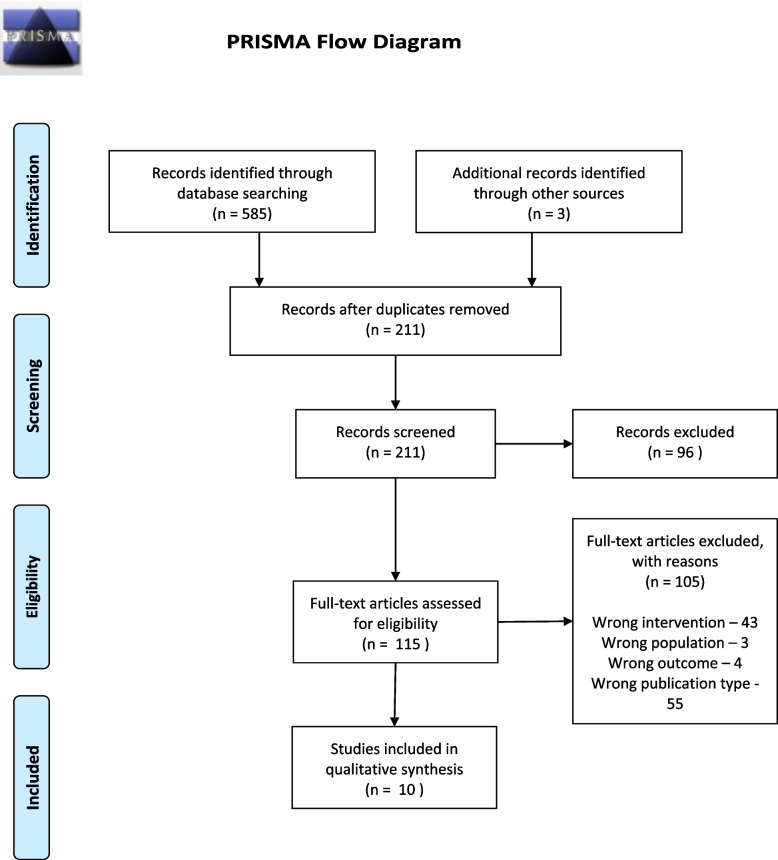
BACKGROUND: Minimally Invasive Surgery (MIS) has necessitated specialized training beyond traditional open surgical methods. Simulation-Based Surgical Training (SBST) offers a promising alternative, but its instructional design varies significantly. Deliberate Practice (DP), a concept originating from expertise research, may enhance SBST effectiveness. This systematic review evaluates the integration of DP within SBST for MIS. METHODS: A systematic literature search was conducted using MEDLINE, EMBASE, SCOPUS, ERIC, and Google Scholar, covering publications up to January 31, 2024. Randomized controlled trials and observational studies implementing DP in SBST for laparoscopic surgery were included. Data extraction focused on DP elements (task design, feedback, and repetition), learner motivation, training structure, and outcome measures. Study quality and risk of bias were assessed using the RoB2 and ROBINS-E tools. RESULTS: Ten studies met inclusion criteria, comprising five randomized controlled trials and five observational studies. Study participants were predominantly surgical trainees, with training programs utilizing box trainers or virtual reality simulators. DP-informed SBST was consistently associated with improved psychomotor skills, particularly when feedback was immediate, and training incorporated structured task progression. Task design varied, with only two studies tailoring training based on pre-existing skill levels. Stepwise task progression was reported in five studies. Feedback was delivered through either human mentors or automated simulator feedback, with mixed findings on their comparative effectiveness. While automated feedback ensured immediacy, human supervision was often deemed superior in guiding skill acquisition. Repetition was widely integrated, though session duration and spacing varied across studies. Learner motivation was explicitly assessed in one study, while two others incorporated motivation-enhancing interventions such as gamification and mentoring. DP-informed SBST resulted in improved accuracy, speed, confidence, and objective skill ratings. Some control groups also demonstrated skill improvements, though typically reaching performance plateaus earlier and at lower competency levels. Variability in DP adherence across studies influenced outcomes, with the most structured programs yielding the greatest benefits. CONCLUSIONS: DP-informed SBST is a promising approach for developing MIS skills. Adherence to DP principles significantly enhances skill acquisition but limited by resource requirements. Future research should focus on optimizing DP integration within SBST to maximize its impact on surgical education.
Overview
The claims and statistics of this paper haven’t been checked yet.
Free: it reads the open-access text and checks the first 5 claims that cite a source we can check. Create a free account to check every claim.
Integrity signals
Registry
Cites
Statistics
Figures
Verification
Claims the paper makes
The claims and statistics of this paper haven’t been checked yet.
Free: it reads the open-access text and checks the first 5 claims that cite a source we can check. Create a free account to check every claim.
Claims other papers make about this one
Each is checked against this paper’s own text: does it say what the citing paper says it does?
The source backs part of the claim, not all of it — or backs it for a different population, condition or comparison.
In the citing paper
“Notably, AI simulations that offer real-time feedback, adaptive scenario progression, and opportunities for repeated practice are associated with stronger learning outcomes, consistent with the principles of deliberate practice and experiential learning [56].”
From AI-Powered Simulation for Nursing Education: Mixed Methods Systematic Review (2026) · cites this paper as [56]
Experimental — accuracy not yet measured
Self-check
Percentages, sums and reported differences re-computed from the paper’s own numbers.
The self-check needs the paper’s full text.
Citations
Cites
RoB 2: a revised tool for assessing risk of bias in randomised trials
Sterne, J. A. C., Savović, J., Page, M. J., Elbers, R. G., Blencowe, N. S., Boutron, I., Cates, C. J., Cheng, H.-Y., Corbett, M. S., Eldridge, S. M., et al. (2019) · BMJ · doi:10.1136/bmj.l4898 · Cited by 34,787 · cited 1×
“The bias of the included studies was assessed using the RoB2 tool for randomized trials [34] and the Risk Of Bias In Non-randomised Studies—of Exposure effects (ROB-INS-E) for non-randomized studies [35].”
PRISMA-P Group, Moher, D., Shamseer, L., Clarke, M., Ghersi, D., Liberati, A., Petticrew, M., Shekelle, P., & Stewart, L. A. (2015) · Systematic Reviews · doi:10.1186/2046-4053-4-1 · Cited by 26,223 · cited 1×
“The literature search followed the Preferred Reporting Items for Systematic Reviews and Meta-Analyses (PRISMA) [30] guidelines.”
ROBINS-I: a tool for assessing risk of bias in non-randomised studies of interventions
Sterne, J. A., Hernán, M. A., Reeves, B. C., Savović, J., Berkman, N. D., Viswanathan, M., Henry, D., Altman, D. G., Ansari, M. T., Boutron, I., et al. (2016) · BMJ · doi:10.1136/bmj.i4919 · Cited by 20,329 · cited 1×
“The bias of the included studies was assessed using the RoB2 tool for randomized trials [34] and the Risk Of Bias In Non-randomised Studies—of Exposure effects (ROB-INS-E) for non-randomized studies [35].”
The role of deliberate practice in the acquisition of expert performance
Ericsson, K. A., Krampe, R. T., & Tesch-Römer, C. (1993) · Psychological Review · doi:10.1037/0033-295x.100.3.363 · Cited by 9,564 · cited 2×
“It is the only framework that attempts to achieve EP in all participants [19].”
Barry Issenberg, S., Mcgaghie, W. C., Petrusa, E. R., Lee Gordon, D., & Scalese, R. J. (2005) · Medical Teacher · doi:10.1080/01421590500046924 · Cited by 3,966
Ericsson, K. A. (2004) · Academic Medicine · doi:10.1097/00001888-200410001-00022 · Cited by 2,988 · cited 1×
“DP is also essential in maintaining and improving performance once the desired level is reached [26, 27].”
McGaghie, W. C., Issenberg, S. B., Cohen, E. R., Barsuk, J. H., & Wayne, D. B. (2011) · Academic Medicine · doi:10.1097/acm.0b013e318217e119 · Cited by 1,866 · cited 8×
“Except in the study by Hashimoto et al. [46], studies with human feedback did not explicitly state the timing of the feed-back but was most likely immediate.”
InfluentialEricsson, K. A. (2006) · The Cambridge Handbook of Expertise and Expert Performance · doi:10.1017/cbo9780511816796.038 · Cited by 1,629 · cited 1×
“DP is also essential in maintaining and improving performance once the desired level is reached [26, 27].”
Simulation in surgical training: educational issues and practical implications
Kneebone, R. (2003) · Medical Education · doi:10.1046/j.1365-2923.2003.01440.x · Cited by 619 · cited 1×
“Although time tested, this approach has been met with resistance more recently due to work hour restrictions limiting training opportunities [49], and concerns about ethics and patient safety on “practicing” a procedure on patients [3].”
Medical Errors Involving Trainees: A Study of Closed Malpractice Claims From 5 Insurers
Singh, H., Thomas, E. J., Petersen, L. A., & Studdert, D. M. (2007) · Archives of Internal Medicine · doi:10.1001/archinte.167.19.2030 · Cited by 407
Research works printed but not linked: 2
- Sharma D, Agrawal V, Bajajb J, Agarwala P. Low-cost simulation systems for surgical training: a narrative. J Surg Simul. 2020;5:1–20.
- Motta M. Facilitating the novice to expert transition in interpreter training: A ‘deliberate practice’framework proposal. Stud Univ Babes-Bolyai Philol. 2011;56(1):27–42.
Cited by
Nasirun, H., Mulyono, S., Hapsari, A. W. D., Wiradinata, H. H., & Ratu, M. (2026) · Nurse Education in Practice · doi:10.1016/j.nepr.2026.104847 · Cited by 25
Heidaridarani, M. M., Farzaneh, F., Rezvani, G., Ahmady, S., Ardakani, F. D., & Mahrooz, M. H. (2025) · BMC Medical Education · doi:10.1186/s12909-025-08045-2 · Cited by 7
“These findings are consistent with our results, where participants in the control group failed to demonstrate further improvement beyond a certain point, indicating a similar plateau in learning progression [28].”
AI-Powered Simulation for Nursing Education: Mixed Methods Systematic Review
Jiang, H., Wang, Z., Shen, W., Meng, M., Yang, D., Li, X., & Hao, Y. (2026) · Journal of Medical Internet Research · doi:10.2196/95167 · Cited by 4
“Notably, AI simulations that offer real-time feedback, adaptive scenario progression, and opportunities for repeated practice are associated with stronger learning outcomes, consistent with the principles of deliberate practice and experiential learning [56].”
Rios-García, W., Silva-Jiménez, S., Galvez-Rodriguez, E. B., Alberca-Naira, Y., Via-y-Rada-Torres, A. D., & Rios-Garcia, A. A. (2026) · Journal of Medical Systems · doi:10.1007/s10916-025-02334-5 · Cited by 2
“[ 62–64].”
Basil, B., Okoro, N. I., Okoli, U. J., & Mba, I. N. (2026) · International Journal of Research in Medical Sciences · doi:10.18203/2320-6012.ijrms20260991 · Cited by 1
Sa, H., & Farias, M. E. (2025) · Journal of surgical education · doi:10.1016/j.jsurg.2025.103805 · Cited by 1
Gan, T. (2025) · Clinics in Colon and Rectal Surgery · doi:10.1055/s-0045-1813251
“” 19 Instead, new complex surgical skills will require proctoring by senior partners, mentoring or coaching by experts.”
Wickramasinghe, D. P., & Vincent, J. (2025) · Simulation in Healthcare The Journal of the Society for Simulation in Healthcare · doi:10.1097/sih.0000000000000908 · Cited by 1
Self-citationZhao, Y., Wang, W., Zuo, Y., Ji, Z., & Xingcheng, W. (2026) · Frontiers in Medicine · doi:10.3389/fmed.2026.1736330
“…surgical training has historically relied on the apprenticeship model, characterized by opportunistic, unstructured learning where trainees gain experience through observation and gradual participation in clinical cases without standardized curricula or formal competency assessments (17, 18).”
Advanced Simulation: The End of the Sandbox
Yassin, A. (2026) · IntechOpen eBooks · doi:10.5772/intechopen.1014573
Metaverse enabled virtual reality and simulation training for medical education review
Chen, Z. (2026) · iScience · doi:10.1016/j.isci.2026.115656 · Cited by 4
“36 Similarly, in emergency medicine, students can develop their ability to recognize and manage acute and critical illnesses through first aid simulations in the metaverse.”
From Dry Box to Dry Cup: Portable Laparoscopic Training Through Task Decomposition
Iwai, T., Makino, H., & Yoshida, H. (2026) · Cureus · doi:10.7759/cureus.107119
“Recent systematic reviews have further highlighted the role of deliberate practice in enhancing simulation-based laparoscopic training outcomes [4].”
Kazlovich, K., Kosoy, H., Marshall, M. B., Yasufuku, K., & Donahoe, L. L. (2026) · JTCVS Open · doi:10.1016/j.xjon.2026.101880
Siddharth, A., Thomson, A., Ghosh, D., & Price, N. (2026) · Obstetrics Gynaecology & Reproductive Medicine · doi:10.1016/j.ogrm.2026.06.001
Ibrahim, M. F. B., Nor, M. T. M., Tan, W. S., Sanmugam, A., Nah, S. A., & Tan, Y. (2026) · Pediatric Surgery International · doi:10.1007/s00383-026-06523-2
Nondominant Hand Training in Laparoscopy for Surgical Interns: Feasibility and Impact
Santos‐Parker, J. R., Santos-Parker, K. S., Santhakumar, J., Hasty, B. N., O’Sullivan, P., & Chern, H. (2026) · Journal of surgical education · doi:10.1016/j.jsurg.2026.104103
Nøhr, A., Mikkelsen, P. T., Sørensen, M. S., & Andersen, S. A. W. (2026) · Simulation in Healthcare The Journal of the Society for Simulation in Healthcare · doi:10.1097/sih.0000000000000966
How to rock your general surgery residency: Ten principles for thriving in surgical training
Perini, D. (2026) · The American Journal of Surgery · doi:10.1016/j.amjsurg.2026.117289
Jin, X., Zhao, W., Lin, X., Xie, X., Mao, X., & 李卫林 (2026) · Critical Public Health · doi:10.1080/09581596.2026.2745340
Metadata
- Authors
- Wickramasinghe, D., & Vincent, J.
- Affiliations
- Lancaster University (GB)
- Corresponding author
- Wickramasinghe, Dakshitha
- Venue
- BMC Medical Education
- Published
- 2025-07-14
- Volume
- 25
- Issue
- 1
- Pages
- 1047-1047
- ISSN
- 1472-6920 (ISSN-L)
- PMC
- PMC12257738
- OpenAlex
- W4412385035
- Semantic Scholar
- 5cf1c12d1dcfc8231faab4d5fe641c65aeaaefb9
- Cited by
- 19
- References
- 45
- Citations by year
- 2026: 15 · 2025: 4
- FWCI
- 4.60
- Type
- journal article
- Language
- en
- Open access
- gold
- doi.org
- Licence
- cc-by-nc-nd
- creativecommons.org/licenses/by-nc-nd/4.0 (tdm)
- creativecommons.org/licenses/by-nc-nd/4.0 (vor)
- Locations
- BMC Medical Education (publishedVersion, cc-by-nc-nd)
- Europe PMC (PubMed Central) (publishedVersion, cc-by-nc-nd)
- PubMed Central (publishedVersion, cc-by-nc-nd)
- PubMed (publishedVersion)
- DOAJ (DOAJ: Directory of Open Access Journals) (submittedVersion, cc-by-sa)
- Lancaster EPrints (Lancaster University) (submittedVersion)
- Topics
- Health Sciences › Medicine › Surgery › Surgical Simulation and Training
- Social Sciences › Education › Innovations in Medical Education
- Social Sciences › Education › Simulation-Based Education in Healthcare
- Keywords
- deliberate practice, surgical simulation training, laparoscopic surgery, minimally invasive surgery, surgical skill acquisition, task design, feedback, repetition, student motivation, gamification, mentoring, virtual reality simulator, box trainer, psychomotor skills, surgical training
- MeSH terms
- Simulation Training, Clinical Competence, Humans, Laparoscopy, Randomized Controlled Trials as Topic
About these checks
Registry, retraction, Cites and statistics results are computed, not judged, with one exception: a printed reference that no index lists is read once by a model before it counts as a citation error. Claims are extracted by a model and kept only when their quote appears verbatim in the text; each cited source is then checked, with a model’s help, for whether it says what the claim relies on. Those verdicts can be wrong — read the claim’s quote and the cited source before relying on one.
Statistics and arithmetic are recomputed, not judged.
Confidence bands are shown only for fields calibrated on our annotated test set. None is calibrated yet, so no band is shown.
What counts as a claim ›How we measure confidence ›How we check this ›
Are you an author, or do you see a problem with this page? Request a review
Data sources
Bibliographic data: Semantic Scholar, OpenAlex, Crossref.
Contains information from the Semantic Scholar Academic Graph Datasets, made available under the ODC Attribution License (ODC-BY 1.0).
Semantic Scholar’s data is described in: Kinney, R., et al. (2023). The Semantic Scholar Open Data Platform. arXiv:2301.10140.
