

The use of deliberate practice in simulation-based surgical training for laparoscopic surgery - a systematic review
Open accessThe DOI matches its Crossref record; 46 of the 46 references it cites were found in a registry or an index.
Abstract
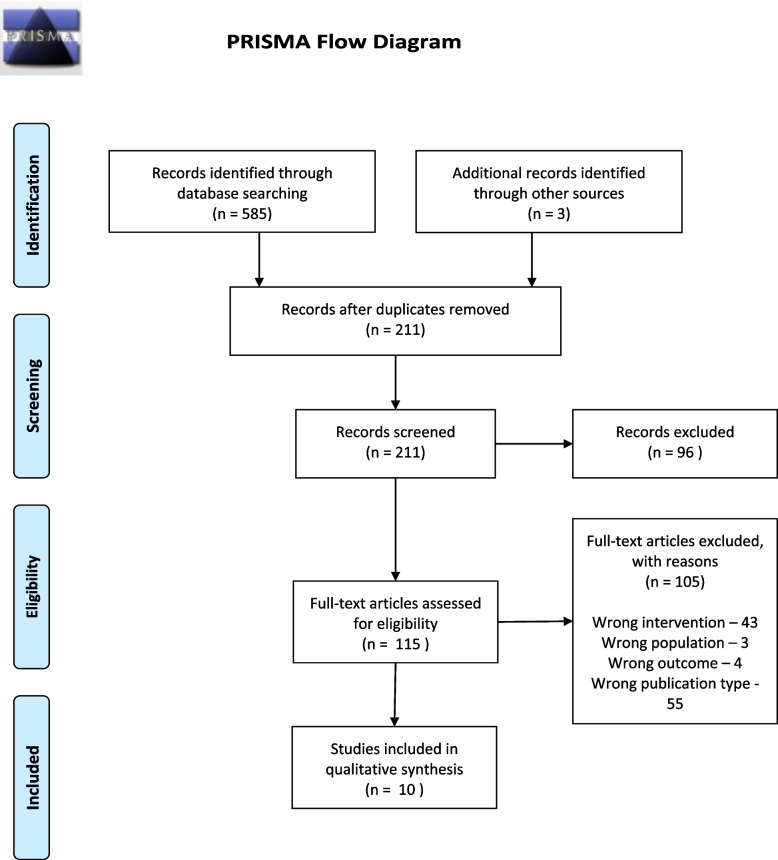
BACKGROUND: Minimally Invasive Surgery (MIS) has necessitated specialized training beyond traditional open surgical methods. Simulation-Based Surgical Training (SBST) offers a promising alternative, but its instructional design varies significantly. Deliberate Practice (DP), a concept originating from expertise research, may enhance SBST effectiveness. This systematic review evaluates the integration of DP within SBST for MIS. METHODS: A systematic literature search was conducted using MEDLINE, EMBASE, SCOPUS, ERIC, and Google Scholar, covering publications up to January 31, 2024. Randomized controlled trials and observational studies implementing DP in SBST for laparoscopic surgery were included. Data extraction focused on DP elements (task design, feedback, and repetition), learner motivation, training structure, and outcome measures. Study quality and risk of bias were assessed using the RoB2 and ROBINS-E tools. RESULTS: Ten studies met inclusion criteria, comprising five randomized controlled trials and five observational studies. Study participants were predominantly surgical trainees, with training programs utilizing box trainers or virtual reality simulators. DP-informed SBST was consistently associated with improved psychomotor skills, particularly when feedback was immediate, and training incorporated structured task progression. Task design varied, with only two studies tailoring training based on pre-existing skill levels. Stepwise task progression was reported in five studies. Feedback was delivered through either human mentors or automated simulator feedback, with mixed findings on their comparative effectiveness. While automated feedback ensured immediacy, human supervision was often deemed superior in guiding skill acquisition. Repetition was widely integrated, though session duration and spacing varied across studies. Learner motivation was explicitly assessed in one study, while two others incorporated motivation-enhancing interventions such as gamification and mentoring. DP-informed SBST resulted in improved accuracy, speed, confidence, and objective skill ratings. Some control groups also demonstrated skill improvements, though typically reaching performance plateaus earlier and at lower competency levels. Variability in DP adherence across studies influenced outcomes, with the most structured programs yielding the greatest benefits. CONCLUSIONS: DP-informed SBST is a promising approach for developing MIS skills. Adherence to DP principles significantly enhances skill acquisition but limited by resource requirements. Future research should focus on optimizing DP integration within SBST to maximize its impact on surgical education.
Overview
The claims and statistics of this paper haven’t been checked yet.
Free: it reads the open-access text and checks the first 5 claims that cite a source we can check. Create a free account to check every claim.
Integrity signals
Registry
Cites
Statistics
Figures
Verification
Claims the paper makes
The claims and statistics of this paper haven’t been checked yet.
Free: it reads the open-access text and checks the first 5 claims that cite a source we can check. Create a free account to check every claim.
Claims other papers make about this one
Each is checked against this paper’s own text: does it say what the citing paper says it does?
The source backs part of the claim, not all of it — or backs it for a different population, condition or comparison.
In the citing paper
“Notably, AI simulations that offer real-time feedback, adaptive scenario progression, and opportunities for repeated practice are associated with stronger learning outcomes, consistent with the principles of deliberate practice and experiential learning [56].”
From AI-Powered Simulation for Nursing Education: Mixed Methods Systematic Review (2026) · cites this paper as [56]
Experimental — accuracy not yet measured
Self-check
Percentages, sums and reported differences re-computed from the paper’s own numbers.
The self-check needs the paper’s full text.
Citations
Cites
RoB 2: a revised tool for assessing risk of bias in randomised trials
Sterne, J. A. C., Savović, J., Page, M. J., Elbers, R. G., Blencowe, N. S., Boutron, I., Cates, C. J., Cheng, H.-Y., Corbett, M. S., Eldridge, S. M., et al. (2019) · BMJ · doi:10.1136/bmj.l4898 · Cited by 34,787 · cited 1×
“The bias of the included studies was assessed using the RoB2 tool for randomized trials [34] and the Risk Of Bias In Non-randomised Studies—of Exposure effects (ROB-INS-E) for non-randomized studies [35].”
PRISMA-P Group, Moher, D., Shamseer, L., Clarke, M., Ghersi, D., Liberati, A., Petticrew, M., Shekelle, P., & Stewart, L. A. (2015) · Systematic Reviews · doi:10.1186/2046-4053-4-1 · Cited by 26,223 · cited 1×
“The literature search followed the Preferred Reporting Items for Systematic Reviews and Meta-Analyses (PRISMA) [30] guidelines.”
ROBINS-I: a tool for assessing risk of bias in non-randomised studies of interventions
Sterne, J. A., Hernán, M. A., Reeves, B. C., Savović, J., Berkman, N. D., Viswanathan, M., Henry, D., Altman, D. G., Ansari, M. T., Boutron, I., et al. (2016) · BMJ · doi:10.1136/bmj.i4919 · Cited by 20,329 · cited 1×
“The bias of the included studies was assessed using the RoB2 tool for randomized trials [34] and the Risk Of Bias In Non-randomised Studies—of Exposure effects (ROB-INS-E) for non-randomized studies [35].”
The role of deliberate practice in the acquisition of expert performance
Ericsson, K. A., Krampe, R. T., & Tesch-Römer, C. (1993) · Psychological Review · doi:10.1037/0033-295x.100.3.363 · Cited by 9,564 · cited 2×
“It is the only framework that attempts to achieve EP in all participants [19].”
Barry Issenberg, S., Mcgaghie, W. C., Petrusa, E. R., Lee Gordon, D., & Scalese, R. J. (2005) · Medical Teacher · doi:10.1080/01421590500046924 · Cited by 3,966
Ericsson, K. A. (2004) · Academic Medicine · doi:10.1097/00001888-200410001-00022 · Cited by 2,988 · cited 1×
“DP is also essential in maintaining and improving performance once the desired level is reached [26, 27].”
McGaghie, W. C., Issenberg, S. B., Cohen, E. R., Barsuk, J. H., & Wayne, D. B. (2011) · Academic Medicine · doi:10.1097/acm.0b013e318217e119 · Cited by 1,866 · cited 8×
“Except in the study by Hashimoto et al. [46], studies with human feedback did not explicitly state the timing of the feed-back but was most likely immediate.”
InfluentialEricsson, K. A. (2006) · The Cambridge Handbook of Expertise and Expert Performance · doi:10.1017/cbo9780511816796.038 · Cited by 1,629 · cited 1×
“DP is also essential in maintaining and improving performance once the desired level is reached [26, 27].”
Simulation in surgical training: educational issues and practical implications
Kneebone, R. (2003) · Medical Education · doi:10.1046/j.1365-2923.2003.01440.x · Cited by 619 · cited 1×
“Although time tested, this approach has been met with resistance more recently due to work hour restrictions limiting training opportunities [49], and concerns about ethics and patient safety on “practicing” a procedure on patients [3].”
Medical Errors Involving Trainees: A Study of Closed Malpractice Claims From 5 Insurers
Singh, H., Thomas, E. J., Petersen, L. A., & Studdert, D. M. (2007) · Archives of Internal Medicine · doi:10.1001/archinte.167.19.2030 · Cited by 407
Ericsson, K. A., & Harwell, K. W. (2019) · Frontiers in Psychology · doi:10.3389/fpsyg.2019.02396 · Cited by 370 · cited 3×
“Ericsson et al. have repeatedly emphasized the importance of adhering to the original definitions of the DP framework in research [28].”
InfluentialMcGaghie, W. C., Issenberg, S. B., Cohen, E. R., Barsuk, J. H., & Wayne, D. B. (2011) · Academic Medicine · doi:10.1097/acm.0b013e3182308d37 · Cited by 196 · cited 1×
“Better training has been associated with better patient outcomes [11, 12], commanding competency-based medical education with structured supplemental training strategies [13, 14].”
Simulation in Surgical Education
de Montbrun, S. L., & MacRae, H. (2012) · Clinics in Colon and Rectal Surgery · doi:10.1055/s-0032-1322553 · Cited by 182
Crochet, P., Aggarwal, R., Dubb, S. S., Ziprin, P., Rajaretnam, N., Grantcharov, T., Ericsson, K. A., & Darzi, A. (2011) · Annals of Surgery · doi:10.1097/sla.0b013e3182197016 · Cited by 173 · cited 5×
“One characteristic of the improvement in the control groups, however, is that it remained lower than the DP group, and the peak was achieved earlier [36].”
InfluentialThe Use of Simulation in Emergency Medicine: A Research Agenda
Bond, W. F., Lammers, R. L., Spillane, L. L., Smith‐Coggins, R., Fernandez, R., Reznek, M. A., Vozenilek, J. A., & Gordon, J. A. (2007) · Academic Emergency Medicine · doi:10.1197/j.aem.2006.11.021 · Cited by 172 · cited 6×
“The traditional approach of “see one, do one, teach one” is inefficient and risky [3].”
InfluentialPalter, V. N., & Grantcharov, T. P. (2014) · Annals of Surgery · doi:10.1097/sla.0000000000000254 · Cited by 171 · cited 2×
“One study [42] evaluated at Kirkpatrick level 1, while Palter et al. [43] used a Kirkpatrick level 4a evaluation.”
Grantcharov, T. P., & Funch-Jensen, P. (2009) · The American Journal of Surgery · doi:10.1016/j.amjsurg.2008.01.024 · Cited by 160 · cited 2×
“Studies have also shown that 8% will be incapable of learning MIS skills, despite adequate training [51].”
Roldan, C. A., Shively, B. K., & Crawford, M. H. (1996) · The American Journal of Cardiology · doi:10.1016/s0002-9149(96)00200-7 · Cited by 130 · cited 1×
“Better training has been associated with better patient outcomes [11, 12], commanding competency-based medical education with structured supplemental training strategies [13, 14].”
Balian, S., McGovern, S. K., Abella, B. S., Blewer, A. L., & Leary, M. (2019) · Heliyon · doi:10.1016/j.heliyon.2019.e02205 · Cited by 113 · cited 1×
“Better training has been associated with better patient outcomes [11, 12], commanding competency-based medical education with structured supplemental training strategies [13, 14].”
Hashimoto, D. A., Sirimanna, P., Gomez, E. D., Beyer-Berjot, L., Ericsson, K. A., Williams, N. N., Darzi, A., & Aggarwal, R. (2015) · Surgical Endoscopy · doi:10.1007/s00464-014-4042-4 · Cited by 91 · cited 5×
“Three studies [38, 42, 47] used automated feedback from the simulators, while the study by Palter et al. [44] used a combination of human feedback and metrics from the simulator.”
InfluentialResearch Opportunities in Simulation‐based Medical Education Using Deliberate Practice
McGaghie, W. C. (2008) · Academic Emergency Medicine · doi:10.1111/j.1553-2712.2008.00246.x · Cited by 88 · cited 2×
“Simulation is a safe and effective tool for education and evaluation [9, 15].”
The Evolution of Surgical Training: Perspectives on Educational Models from the Past to the Future
Franzese, C. B., & Stringer, S. P. (2007) · Otolaryngologic Clinics of North America · doi:10.1016/j.otc.2007.07.004 · Cited by 80 · cited 2×
“Multiple factors prevent the adoption of an ideal learning environment [8], including the apprenticeship-based format [5], poor awareness of education principles and existing evidence [9], and arbitrarily defined competence and expert performance [10].”
Deliberate Practice in Simulation-Based Surgical Skills Training: A Scoping Review
Higgins, M. A., Madan, C. R., & Patel, R. M. (2020) · Journal of surgical education · doi:10.1016/j.jsurg.2020.11.008 · Cited by 77 · cited 1×
“Surgical training has historically followed a Halstedian approach [48], where junior surgeons work as apprentices with a more senior surgeon and receive progressively increasing responsibility and autonomy in operating.”
Asmri, M. A., Haque, S. M., & Parle, J. (2023) · BMC Medical Education · doi:10.1186/s12909-023-04033-6 · Cited by 77
Literature Review: Instructional Design and Pedagogy Science in Healthcare Simulation
Schaefer, J. J., Vanderbilt, A. A., Cason, C. L., Bauman, E. B., Glavin, R., Lee, F. W., & Navedo, D. D. (2011) · Simulation in Healthcare The Journal of the Society for Simulation in Healthcare · doi:10.1097/sih.0b013e31822237b4 · Cited by 65 · cited 1×
“These indicate an immaturity of the field which prevents the development of recommendations founded on pedagogical principles [18].”
Kirkman, M. A. (2013) · Journal of surgical education · doi:10.1016/j.jsurg.2012.11.011 · Cited by 60 · cited 1×
“DP framework also assumes minimal transfer in skills between apparently similar domains [29].”
A simulator-based resident curriculum for laparoscopic common bile duct exploration
Teitelbaum, E. N., Soper, N. J., Santos, B. F., Rooney, D. M., Patel, P. B., Nagle, A. P., & Hungness, E. S. (2014) · Surgery · doi:10.1016/j.surg.2014.06.020 · Cited by 59 · cited 7×
“There was a wide range of formats used for this purpose, including video [37], simulator [42, 47], and direct supervision [38, 39].”
InfluentialPrice, A. J., Erturan, G., Akhtar, K., Judge, A., Alvand, A., & Rees, J. L. (2015) · The Bone & Joint Journal · doi:10.1302/0301-620x.97b10.35973 · Cited by 59 · cited 1×
“Multiple factors prevent the adoption of an ideal learning environment [8], including the apprenticeship-based format [5], poor awareness of education principles and existing evidence [9], and arbitrarily defined competence and expert performance [10].”
El-Beheiry, M. H., McCreery, G. L., & Schlachta, C. M. (2016) · Surgical Endoscopy · doi:10.1007/s00464-016-5152-y · Cited by 56 · cited 9×
“Three studies [38, 42, 47] used automated feedback from the simulators, while the study by Palter et al. [44] used a combination of human feedback and metrics from the simulator.”
InfluentialMan-machine aspects of minimally invasive surgery
STASSEN, H. G., Dankelman, J., Grimbergen, K. A., & Meijer, D. W. (2001) · Annual Reviews in Control · doi:10.1016/s1367-5788(01)00011-6 · Cited by 53 · cited 1×
“The most notable differences include the reduced working space. and loss of 3D vision and pro-prioception requiring the development of hand–eye coordination [1, 2].”
Deliberate practice as a framework for evaluating feedback in residency training
Gauthier, S. R., Cavalcanti, R. B., Goguen, J., & Sibbald, M. (2014) · Medical Teacher · doi:10.3109/0142159x.2014.956059 · Cited by 52
Deliberate Practice as a Theoretical Framework for Interprofessional Experiential Education
Wang, J. M., & Zorek, J. A. (2016) · Frontiers in Pharmacology · doi:10.3389/fphar.2016.00188 · Cited by 52 · cited 1×
“It has been used as a framework for evaluating training and education in medical [20–22] and non-medical fields [23–25].”
Abraham, R. M., & Singaram, V. S. (2019) · BMC Medical Education · doi:10.1186/s12909-019-1547-5 · Cited by 52 · cited 1×
“It has been used as a framework for evaluating training and education in medical [20–22] and non-medical fields [23–25].”
Shalhoub, J., Marshall, D. C., & Ippolito, K. (2017) · BMJ Open · doi:10.1136/bmjopen-2016-013417 · Cited by 50 · cited 4×
“DP-informed SBST should, therefore, optimize the learning outcomes from SBST. Repetition has consistently proven to improve psycho-motor skills [50], and this is the most likely explanation for the improvements we saw in the control groups in the included studies.”
InfluentialMentor-Guided Self-Directed Learning Affects Resident Practice
Aho, J. M., Ruparel, R. K., Graham, E., Zendejas, B., Heller, S. F., Farley, D. R., & Bingener, J. (2015) · Journal of surgical education · doi:10.1016/j.jsurg.2015.01.008 · Cited by 41 · cited 3×
“Crochet et al. [45] and Hashimoto et al. [46] assessed prior experience but did not use it in structuring the training.”
Win, G. D., Bruwaene, S. V., Aggarwal, R. K., Crea, N., Zhang, Z., Ridder, D. J. M. K. D., & Miserez, M. (2013) · Journal of surgical education · doi:10.1016/j.jsurg.2013.04.001 · Cited by 40
Transforming a fourth year modern optics course using a deliberate practice framework
Jones, D. J., Madison, K. W., & Wieman, C. (2015) · Physical Review Special Topics - Physics Education Research · doi:10.1103/physrevstper.11.020108 · Cited by 33 · cited 1×
“It has been used as a framework for evaluating training and education in medical [20–22] and non-medical fields [23–25].”
A research agenda for gastrointestinal and endoscopic surgery
Urbach, D. R., Horvath, K. D., Baxter, N. N., Jobe, B. A., Madan, A. K., Pryor, A. D., Khaitan, L., Torquati, A., Brower, S. T., Trus, T. L., et al. (2007) · Surgical Endoscopy · doi:10.1007/s00464-006-9141-4 · Cited by 25 · cited 1×
“The membership of the Society of American Gastrointestinal and Endoscopic Surgeons identified the effectiveness of simulation as a research priority in 2007 [16].”
Hoffmann, H., Oertli, D., Mechera, R., Dell‐Kuster, S., Rosenthal, R., Reznick, R. K., & MacDonald, H. (2016) · Journal of surgical education · doi:10.1016/j.jsurg.2016.07.013 · Cited by 24 · cited 1×
“Better training has been associated with better patient outcomes [11, 12], commanding competency-based medical education with structured supplemental training strategies [13, 14].”
Development of a structured virtual reality curriculum for laparoscopic appendicectomy
Sinitsky, D. M., Fernando, B., POTTS, H. W. W., Lykoudis, P. M., Hamilton, G., & Berlingieri, P. (2019) · The American Journal of Surgery · doi:10.1016/j.amjsurg.2019.04.020 · Cited by 24 · cited 7×
“Three studies [38, 42, 47] used automated feedback from the simulators, while the study by Palter et al. [44] used a combination of human feedback and metrics from the simulator.”
InfluentialCharokar, K., & Modi, J. N. (2021) · Journal of Education and Health Promotion · doi:10.4103/jehp.jehp_48_21 · Cited by 17 · cited 5×
“Another option available is video recording of student training, for tutors to review later and provide feedback, and has been attempted previously [40].”
InfluentialThe Case for Simulation-Based Mastery Learning Education Courses for Practicing Surgeons
Baumann, L. M., & Barsness, K. A. (2018) · Journal of Laparoendoscopic & Advanced Surgical Techniques · doi:10.1089/lap.2017.0656 · Cited by 15 · cited 8×
“The study by Bauman et al. [39] did not provide an opportunity for remedial training after feedback.”
InfluentialLam, C. K., Sundaraj, K., & Sulaiman, M. N. (2013) · International Journal of Human-Computer Interaction · doi:10.1080/10447318.2012.758530 · Cited by 14 · cited 1×
“A main limitation of published research on SBST is the emphasis on technology rather than pedagogy [17].”
Iqbal, M. H., Khan, O., & Aydın, A. (2021) · Arthroscopy The Journal of Arthroscopic and Related Surgery · doi:10.1016/j.arthro.2020.12.003 · Cited by 12
Pediatric minimally invasive surgery in Africa: limitations and current situation
Loveland, J., Numanoğlu, A., & Hay, S. A. (2012) · Seminars in Pediatric Surgery · doi:10.1053/j.sempedsurg.2012.01.008 · Cited by 11 · cited 2×
“In skills training, SBST provides an alternative to live mentoring [7].”
An Examination of the Deliberate Practice Framework in Quad Rugby
Kennedy, R. L., & Fairbrother, J. T. (2019) · Frontiers in Psychology · doi:10.3389/fpsyg.2019.01734 · Cited by 6 · cited 1×
“It has been used as a framework for evaluating training and education in medical [20–22] and non-medical fields [23–25].”
Research works printed but not linked: 2
- Sharma D, Agrawal V, Bajajb J, Agarwala P. Low-cost simulation systems for surgical training: a narrative. J Surg Simul. 2020;5:1–20.
- Motta M. Facilitating the novice to expert transition in interpreter training: A ‘deliberate practice’framework proposal. Stud Univ Babes-Bolyai Philol. 2011;56(1):27–42.
Cited by
Nasirun, H., Mulyono, S., Hapsari, A. W. D., Wiradinata, H. H., & Ratu, M. (2026) · Nurse Education in Practice · doi:10.1016/j.nepr.2026.104847 · Cited by 25
Heidaridarani, M. M., Farzaneh, F., Rezvani, G., Ahmady, S., Ardakani, F. D., & Mahrooz, M. H. (2025) · BMC Medical Education · doi:10.1186/s12909-025-08045-2 · Cited by 7
“These findings are consistent with our results, where participants in the control group failed to demonstrate further improvement beyond a certain point, indicating a similar plateau in learning progression [28].”
AI-Powered Simulation for Nursing Education: Mixed Methods Systematic Review
Jiang, H., Wang, Z., Shen, W., Meng, M., Yang, D., Li, X., & Hao, Y. (2026) · Journal of Medical Internet Research · doi:10.2196/95167 · Cited by 4
“Notably, AI simulations that offer real-time feedback, adaptive scenario progression, and opportunities for repeated practice are associated with stronger learning outcomes, consistent with the principles of deliberate practice and experiential learning [56].”
Rios-García, W., Silva-Jiménez, S., Galvez-Rodriguez, E. B., Alberca-Naira, Y., Via-y-Rada-Torres, A. D., & Rios-Garcia, A. A. (2026) · Journal of Medical Systems · doi:10.1007/s10916-025-02334-5 · Cited by 2
“[ 62–64].”
Basil, B., Okoro, N. I., Okoli, U. J., & Mba, I. N. (2026) · International Journal of Research in Medical Sciences · doi:10.18203/2320-6012.ijrms20260991 · Cited by 1
Metadata
- Authors
- Wickramasinghe, D., & Vincent, J.
- Affiliations
- Lancaster University (GB)
- Corresponding author
- Wickramasinghe, Dakshitha
- Venue
- BMC Medical Education
- Published
- 2025-07-14
- Volume
- 25
- Issue
- 1
- Pages
- 1047-1047
- ISSN
- 1472-6920 (ISSN-L)
- PMC
- PMC12257738
- OpenAlex
- W4412385035
- Cited by
- 19
- References
- 45
- Citations by year
- 2026: 15 · 2025: 4
- FWCI
- 4.60
- Type
- journal article
- Language
- en
- Open access
- gold
- doi.org
- Licence
- cc-by-nc-nd
- creativecommons.org/licenses/by-nc-nd/4.0 (tdm)
- creativecommons.org/licenses/by-nc-nd/4.0 (vor)
- Locations
- BMC Medical Education (publishedVersion, cc-by-nc-nd)
- Europe PMC (PubMed Central) (publishedVersion, cc-by-nc-nd)
- PubMed Central (publishedVersion, cc-by-nc-nd)
- PubMed (publishedVersion)
- DOAJ (DOAJ: Directory of Open Access Journals) (submittedVersion, cc-by-sa)
- Lancaster EPrints (Lancaster University) (submittedVersion)
- Topics
- Health Sciences › Medicine › Surgery › Surgical Simulation and Training
- Social Sciences › Education › Innovations in Medical Education
- Social Sciences › Education › Simulation-Based Education in Healthcare
- Keywords
- deliberate practice, surgical simulation training, laparoscopic surgery, minimally invasive surgery, surgical skill acquisition, task design, feedback, repetition, student motivation, gamification, mentoring, virtual reality simulator, box trainer, psychomotor skills, surgical training
- MeSH terms
- Simulation Training, Clinical Competence, Humans, Laparoscopy, Randomized Controlled Trials as Topic
About these checks
Registry, retraction, Cites and statistics results are computed, not judged, with one exception: a printed reference that no index lists is read once by a model before it counts as a citation error. Claims are extracted by a model and kept only when their quote appears verbatim in the text; each cited source is then checked, with a model’s help, for whether it says what the claim relies on. Those verdicts can be wrong — read the claim’s quote and the cited source before relying on one.
Statistics and arithmetic are recomputed, not judged.
Confidence bands are shown only for fields calibrated on our annotated test set. None is calibrated yet, so no band is shown.
What counts as a claim ›How we measure confidence ›How we check this ›
Are you an author, or do you see a problem with this page? Request a review
Data sources
Bibliographic data: Semantic Scholar, OpenAlex, Crossref.
Contains information from the Semantic Scholar Academic Graph Datasets, made available under the ODC Attribution License (ODC-BY 1.0).
Semantic Scholar’s data is described in: Kinney, R., et al. (2023). The Semantic Scholar Open Data Platform. arXiv:2301.10140.
