

Artificial intelligence for good health: a scoping review of the ethics literature.
Open accessPublished version of a preprint
The DOI matches its Crossref record; 96 of the 97 references it cites were found in a registry or an index.
Abstract
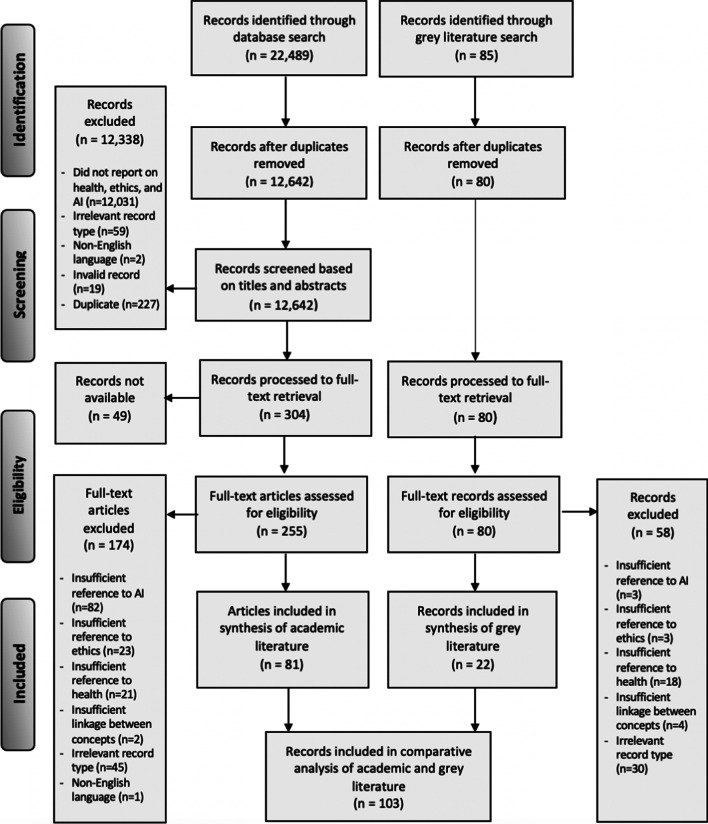
Background: Artificial intelligence (AI) has been described as the “fourth industrial revolution” with transformative and global implications, including in healthcare, public health, and global health. AI approaches hold promise for improving health systems worldwide, as well as individual and population health outcomes. While AI may have potential for advancing health equity within and between countries, we must consider the ethical implications of its deployment in order to mitigate its potential harms, particularly for the most vulnerable. This scoping review addresses the following question: What ethical issues have been identified in relation to AI in the field of health, including from a global health perspective? Methods: Eight electronic databases were searched for peer reviewed and grey literature published before April 2018 using the concepts of health, ethics, and AI, and their related terms. Records were independently screened by two reviewers and were included if they reported on AI in relation to health and ethics and were written in the English language. Data was charted on a piloted data charting form, and a descriptive and thematic analysis was performed. Results: Upon reviewing 12,722 articles, 103 met the predetermined inclusion criteria. The literature was primarily focused on the ethics of AI in health care, particularly on carer robots, diagnostics, and precision medicine, but was largely silent on ethics of AI in public and population health. The literature highlighted a number of common ethical concerns related to privacy, trust, accountability and responsibility, and bias. Largely missing from the literature was the ethics of AI in global health, particularly in the context of low- and middle-income countries (LMICs). Conclusions: The ethical issues surrounding AI in the field of health are both vast and complex. While AI holds the potential to improve health and health systems, our analysis suggests that its introduction should be approached with cautious optimism. The dearth of literature on the ethics of AI within LMICs, as well as in public health, also points to a critical need for further research into the ethical implications of AI within both global and public health, to ensure that its development and implementation is ethical for everyone, everywhere.
Overview
The claims and statistics of this paper haven’t been checked yet.
Free: it reads the open-access text and checks the first 5 claims that cite a source we can check. Create a free account to check every claim.
Integrity signals
Registry
Cites
Statistics
Figures
Verification
Claims the paper makes
The claims and statistics of this paper haven’t been checked yet.
Free: it reads the open-access text and checks the first 5 claims that cite a source we can check. Create a free account to check every claim.
Claims other papers make about this one
Each is checked against this paper’s own text: does it say what the citing paper says it does?
The check wasn’t confident either way, so it gives no verdict — never disputed.
In the citing paper
“AI and robotics enable remote patient monitoring, allowing healthcare providers to track patients’ vital signs, adherence to treatment plans, and overall health status.”
From Ethical implications of AI and robotics in healthcare: A review (2023) · cites this paper as [14]
Experimental — accuracy not yet measuredThe check wasn’t confident either way, so it gives no verdict — never disputed.
In the citing paper
“This reduces hospital readmissions and enhances the quality of care for chronic conditions.[14]”
From Ethical implications of AI and robotics in healthcare: A review (2023) · cites this paper as [14]
Experimental — accuracy not yet measured
Self-check
Percentages, sums and reported differences re-computed from the paper’s own numbers.
The self-check needs the paper’s full text.
Citations
Cites
LeCun, Y., Bengio, Y., & Hinton, G. (2015) · Nature · doi:10.1038/nature14539 · Cited by 84,126
PRISMA Extension for Scoping Reviews (PRISMA-ScR): Checklist and Explanation
Tricco, A. C., Lillie, E., Zarin, W., O'Brien, K. K., Colquhoun, H., Levac, D., Moher, D., Peters, M. D. J., Horsley, T., Weeks, L., et al. (2018) · Annals of Internal Medicine · doi:10.7326/m18-0850 · Cited by 43,565
Scoping studies: advancing the methodology
Levac, D., Colquhoun, H., & O'Brien, K. K. (2010) · Implementation Science · doi:10.1186/1748-5908-5-69 · Cited by 15,268
Methods for the thematic synthesis of qualitative research in systematic reviews
Thomas, J., & Harden, A. (2008) · BMC Medical Research Methodology · doi:10.1186/1471-2288-8-45 · Cited by 9,312
The global landscape of AI ethics guidelines
Jobin, A., Ienca, M., & Vayena, E. (2019) · Nature Machine Intelligence · doi:10.1038/s42256-019-0088-2 · Cited by 6,220
The role of artificial intelligence in achieving the Sustainable Development Goals
Vinuesa, R., Azizpour, H., Leite, I., Balaam, M., Dignum, V., Domisch, S., Felländer, A., Langhans, S. D., Tegmark, M., & Fuso Nerini, F. (2020) · Nature Communications · doi:10.1038/s41467-019-14108-y · Cited by 3,294
Opportunities and obstacles for deep learning in biology and medicine
Ching, T., Himmelstein, D. S., Beaulieu-Jones, B. K., Kalinin, A. A., Do, B. T., Way, G. P., Ferrero, E., Agapow, P.-M., Zietz, M., Hoffman, M. M., et al. (2018) · Journal of The Royal Society Interface · doi:10.1098/rsif.2017.0387 · Cited by 2,310
Deep Learning for Health Informatics
Ravì, D., Wong, C., Deligianni, F., Berthelot, M., Andreu-Perez, J., Lo, B., & Yang, G.-Z. (2017) · IEEE Journal of Biomedical and Health Informatics · doi:10.1109/jbhi.2016.2636665 · Cited by 2,000
Implementing Machine Learning in Health Care — Addressing Ethical Challenges
Char, D. S., Shah, N. H., & Magnus, D. (2018) · New England Journal of Medicine · doi:10.1056/nejmp1714229 · Cited by 1,857
Towards a common definition of global health
Koplan, J. P., Bond, T. C., Merson, M. H., Reddy, K. S., Rodriguez, M. H., Sewankambo, N. K., & Wasserheit, J. N. (2009) · The Lancet · doi:10.1016/s0140-6736(09)60332-9 · Cited by 1,511
Research works printed but not linked: 6
- Canadian Institute for Advanced Research 15. Canada, France, UK launch research workshops exploring societal implications of Artificial intelligence. 2019. https://www.cifar.ca/cifarnews/2019/04/15/canada-france-uk-launch-research-workshops-exploring-societal-implications-of-artificial-intelligence.
- World Health Organization. WHO guideline recommendations on digital interventions for health systems strengthening. 2019. 123 p. http://www.ncbi.nlm.nih.gov/books/NBK541902/. 31162915
- Crawford K, Whittaker M. The AI now report: the social and economic implications of artificial intelligence technologies in the near-term. White House and New York University’s Information Law Institute; (AI Now Public Symposium 2016).
- AI Now 2016 Symposium: The social implications of artificial intelligence technologies in the near-term. New York. 2016. (AI Now 2016 Primers.). https://ainowinstitute.org/AI_Now_2016_Primers.pdf.
- Hope M Computer-aided medicine: present and future issues of liability Comput Law J 1989 9 2 177 203
- Ethically aligned design: a vision for prioritizing human well-being with autonomous and intelligent systems. The IEEE global initiative on ethics of autonomous and intelligent systems. n.d. https://standards.ieee.org/content/dam/ieee-standards/standards/web/documents/other/ead1e.pdf.
Cited by
What factors contribute to the acceptance of artificial intelligence? A systematic review
Kelly, S., Kaye, S.-A., & Oviedo-Trespalacios, O. (2023) · Telematics and Informatics · doi:10.1016/j.tele.2022.101925 · Cited by 1,008
Lekadir, K., Frangi, A. F., Porras, A. R., Glocker, B., Cintas, C., Langlotz, C. P., Weicken, E., Asselbergs, F. W., Prior, F., Collins, G. S., et al. (2025) · BMJ · doi:10.1136/bmj-2024-081554 · Cited by 957
Ali, O., Abdelbaki, W., Shrestha, A., Elbasi, E., Alryalat, M. A. A., & Dwivedi, Y. K. (2023) · Journal of Innovation & Knowledge · doi:10.1016/j.jik.2023.100333 · Cited by 568
Esmaeilzadeh, P. (2024) · Artificial Intelligence in Medicine · doi:10.1016/j.artmed.2024.102861 · Cited by 377
Petersson, L., Larsson, I., Nygren, J. M., Nilsen, P., Neher, M., Reed, J. E., Tyskbo, D., & Svedberg, P. (2022) · BMC Health Services Research · doi:10.1186/s12913-022-08215-8 · Cited by 434
Ethical implications of AI and robotics in healthcare: A review
Elendu, C., Amaechi, D. C., Elendu, T. C., Jingwa, K. A., Okoye, O. K., John Okah, M., Ladele, J. A., Farah, A. H., & Alimi, H. A. (2023) · Medicine · doi:10.1097/md.0000000000036671 · Cited by 370
Using artificial intelligence to improve public health: a narrative review
Olawade, D. B., Wada, O. J., David-Olawade, A. C., Kunonga, E., Abaire, O., & Ling, J. (2023) · Frontiers in Public Health · doi:10.3389/fpubh.2023.1196397 · Cited by 274
The value of standards for health datasets in artificial intelligence-based applications
Arora, A., Alderman, J. E., Palmer, J., Ganapathi, S., Laws, E., McCradden, M. D., Oakden-Rayner, L., Pfohl, S. R., Ghassemi, M., McKay, F., et al. (2023) · Nature Medicine · doi:10.1038/s41591-023-02608-w · Cited by 294
“Similarly, this review does not extend into other ethical implications of the use of ML in healthcare, although this topic has been extensively studied previously and includes other issues of privacy, trust and accountability 43 .”
Karimian, G., Petelos, E., & Evers, S. M. A. A. (2022) · AI and Ethics · doi:10.1007/s43681-021-00131-7 · Cited by 279
“Another scoping review published in the beginning of 2021, indeed, highlights the critical need for exploring the ethical implications of AI within LMICs [7].”
BackgroundResultInfluentialČartolovni, A., Tomičić, A., & Lazić Mosler, E. (2022) · International Journal of Medical Informatics · doi:10.1016/j.ijmedinf.2022.104738 · Cited by 267
Fountzilas, E., Pearce, T., Baysal, M. A., Chakraborty, A., & Tsimberidou, A. M. (2025) · npj Digital Medicine · doi:10.1038/s41746-025-01471-y · Cited by 190
Gama, F., Tyskbo, D., Nygren, J., Barlow, J., Reed, J., & Svedberg, P. (2022) · Journal of Medical Internet Research · doi:10.2196/32215 · Cited by 216
Khawaja, Z., & Bélisle-Pipon, J.-C. (2023) · Frontiers in Digital Health · doi:10.3389/fdgth.2023.1278186 · Cited by 214
Ning, Y., Teixayavong, S., Shang, Y., Savulescu, J., Nagaraj, V., Miao, D., Mertens, M., Ting, D. S. W., Ong, J. C. L., Liu, M., et al. (2024) · The Lancet Digital Health · doi:10.1016/s2589-7500(24)00143-2 · Cited by 212
“26,39,63,64 Similar discussions are extending to GenAI, 16,25,30 possibly by adopting and expanding ethical frameworks from other domains to health care, 65 but they are not easily translated into improved research practice.”
BackgroundFisher, S., & Rosella, L. C. (2022) · BMC Public Health · doi:10.1186/s12889-022-14422-z · Cited by 174
Artificial Intelligence Applications in Health Care Practice: Scoping Review
Sharma, M., Savage, C., Nair, M., Larsson, I., Svedberg, P., & Nygren, J. M. (2022) · Journal of Medical Internet Research · doi:10.2196/40238 · Cited by 198
Green and sustainable AI research: an integrated thematic and topic modeling analysis
Raman, R., Pattnaik, D., Lathabai, H. H., Kumar, C., Govindan, K., & Nedungadi, P. (2024) · Journal of Big Data · doi:10.1186/s40537-024-00920-x · Cited by 145
“It includes considerations for environmental sustainability [39], ethical use of data [51], and the societal impact of AI applications towards the fulfillment of UN Sustainable Development Goals (SDGs) [84].”
BackgroundWitkowski, K., Dougherty, R. B., & Neely, S. R. (2024) · BMC Medical Ethics · doi:10.1186/s12910-024-01066-4 · Cited by 141
“Moreover, perspectives from key stake-holders, including public preferences on this technology, are often missing from these conversations [6, 7].”
BackgroundInfluentialAn introduction to digital determinants of health
Chidambaram, S., Jain, B., Jain, U., Mwavu, R., Baru, R., Thomas, B., Greaves, F., Jayakumar, S., Jain, P., Rojo, M., et al. (2024) · PLOS Digital Health · doi:10.1371/journal.pdig.0000346 · Cited by 175
Ramadan, O. M. E., Alruwaili, M. M., Alruwaili, A. N., Elsehrawy, M. G., & Alanazi, S. (2024) · BMC Nursing · doi:10.1186/s12912-024-02571-y · Cited by 184
Prakash, S., Balaji, J. N., Joshi, A., & Surapaneni, K. M. (2022) · Journal of Personalized Medicine · doi:10.3390/jpm12111914 · Cited by 159
Implementing AI in healthcare—the relevance of trust: a scoping review
Steerling, E., Siira, E., Nilsén, P., Svedberg, P., & Nygren, J. (2023) · Frontiers in Health Services · doi:10.3389/frhs.2023.1211150 · Cited by 159
Saheb, T., Saheb, T., & Carpenter, D. O. (2021) · Computers in Biology and Medicine · doi:10.1016/j.compbiomed.2021.104660 · Cited by 137
Marko, J. G. O., Neagu, D. C., & Anand, P. B. (2025) · BMC Medical Informatics and Decision Making · doi:10.1186/s12911-025-02884-1 · Cited by 156
“Our analysis identified pervasive biases in AI models, notably related to race, gender, and socioeconomic status, similar findings have been reported in recent studies, such as [144, 145], which corroborates our observations and highlights the urgency of addressing these biases.”
Contemporary Role and Applications of Artificial Intelligence in Dentistry
Bonny, T., Nassan, W. A., Obaideen, K., Mallahi, M. N. A., Mohammad, Y., & El-Damanhoury, H. M. (2023) · F1000Research · doi:10.12688/f1000research.140204.1 · Cited by 180
Javaid, M., Haleem, A., & Singh, R. P. (2024) · Informatics and Health · doi:10.1016/j.infoh.2024.05.001 · Cited by 167
Berbís, M. A., McClintock, D. S., Bychkov, A., Van der Laak, J., Pantanowitz, L., Lennerz, J. K., Cheng, J. Y., Delahunt, B., Egevad, L., Eloy, C., et al. (2023) · eBioMedicine · doi:10.1016/j.ebiom.2022.104427 · Cited by 113
Ratti, E., Morrison, M. C., & Jakab, I. (2025) · BMC Medical Ethics · doi:10.1186/s12910-025-01198-1 · Cited by 139
“The suitability of the scoping review approach to the ethics of AI in healthcare is reinforced by the fact that a number of similar reviews have already been published [11, 24, 46, 47].”
Trust in and Acceptance of Artificial Intelligence Applications in Medicine: Mixed Methods Study
Shevtsova, D., Ahmed, A., Boot, I. W. A., Sanges, C., Hudecek, M., Jacobs, J. J. L., Hort, S., & Vrijhoef, H. J. M. (2024) · JMIR Human Factors · doi:10.2196/47031 · Cited by 124
Wang, X., Fei, F., Wei, J., Huang, M., Xiang, F., Tu, J., Wang, Y., & Gan, J. (2024) · Frontiers in Public Health · doi:10.3389/fpubh.2024.1433252 · Cited by 133
“However, this issue is controversial (50, 51).”
López, D. M., Rico-Olarte, C., Blobel, B. G. M. E., & Hullin, C. (2022) · Frontiers in Medicine · doi:10.3389/fmed.2022.958097 · Cited by 128
Artificial Intelligence in Medicine and Dentistry
Vodanović, M., Subašić, M., Milošević, D., & Pavičin, I. S. (2023) · Acta Stomatologica Croatica · doi:10.15644/asc57/1/8 · Cited by 119
“Premda pacijenti imaju pozitivno stajalište prema primjeni umjetne inteligencije u dentalnoj medicini (148), kao i u medicini općenito, mogu se postaviti određena etička pitanja (149) koja se u najvećoj mjeri odnose na razboritost, pravičnost, privatnost, odgovornost, solidarnost, autonomiju i donošenje odluka u zdrav…”
Artificial intelligence in hematological diagnostics: Game changer or gadget?
Walter, W., Pohlkamp, C., Meggendorfer, M., Nadarajah, N., Kern, W., Haferlach, C., & Haferlach, T. (2022) · Blood Reviews · doi:10.1016/j.blre.2022.101019 · Cited by 101
Not all AI health tools with regulatory authorization are clinically validated
Fassi, S. C. E., Abdullah, A., Fang, Y., Natarajan, S., Masroor, A. B., Kayali, N., Prakash, S., & Henderson, G. E. (2024) · Nature Medicine · doi:10.1038/s41591-024-03203-3 · Cited by 102
The Impact of Artificial Intelligence on Health Equity in Oncology: Scoping Review
Istasy, P., Lee, W. S., Iansavichene, A., Upshur, R., Gyawali, B., Burkell, J., Sadikovic, B., Lazo-Langner, A., & Chin-Yee, B. (2022) · Journal of Medical Internet Research · doi:10.2196/39748 · Cited by 78
“As Murphy et al [185] note, concerns regarding implicit bias becoming embedded in AI algorithms have been widely voiced.”
Self-citationZafar, F., Fakhare Alam, L., Vivas, R. R., Wang, J., Whei, S. J., Mehmood, S., Sadeghzadegan, A., Lakkimsetti, M., & Nazir, Z. (2024) · Cureus · doi:10.7759/cureus.56472 · Cited by 55
“…valuable support in tasks like symptom monitoring and early detection of relapse, allowing clinicians to focus on building therapeutic relationships and delivering high-quality care as AI techniques will redefine mental illnesses more objectively than current practices such as the DSM-5 [10,115].”
BackgroundKinney, M. N., Anastasiadou, M., Naranjo-Zolotov, M., & Santos, V. (2024) · Heliyon · doi:10.1016/j.heliyon.2024.e28562 · Cited by 97
“On the one hand, the trustworthiness of these systems is key to increasing the likelihood of AI adoption, ensuring positive benefits are maximized while the potential for harm is reduced [2 – 4].”
BackgroundYu, L., & Zhai, X. (2024) · Public Health · doi:10.1016/j.puhe.2024.05.029 · Cited by 89
Use of Artificial Intelligence tools in supporting decision-making in hospital management
Alves, M., Seringa, J., Silvestre, T., & Magalhães, T. (2024) · BMC Health Services Research · doi:10.1186/s12913-024-11602-y · Cited by 96
“The ethical concerns expressed by managers are evident and expected [17].”
BackgroundSu, J., Wang, Y., Liu, H., Zhang, Z., Wang, Z., & Li, Z. (2025) · Scientific Reports · doi:10.1038/s41598-025-01897-0 · Cited by 98
Mirzaei, T., Amini, L., & Esmaeilzadeh, P. (2024) · BMC Medical Informatics and Decision Making · doi:10.1186/s12911-024-02656-3 · Cited by 66
“The themes associated with education, user experience, and trust in healthcare LLM systems resonate with the emphasis in the literature on the need for explainable, transparent, and trustworthy AI systems in healthcare [44].”
BackgroundChiang, S., Picard, R. W., Chiong, W., Moss, R., Worrell, G. A., Rao, V. R., & Goldenholz, D. M. (2021) · Neurology · doi:10.1212/wnl.0000000000012570 · Cited by 82
Shaw, J., Ali, J., Atuire, C., Cheah, P. Y., Español, A. G., Gichoya, J. W., Hunt, A., Jjingo, D., Littler, K., Paolotti, D., et al. (2024) · BMC Medical Ethics · doi:10.1186/s12910-024-01044-w · Cited by 89
“These issues take greater urgency in the context of global health [19].”
BackgroundConsidering a Unified Model of Artificial Intelligence Enhanced Social Work: A Systematic Review
Garkisch, M., & Goldkind, L. (2024) · Journal of Human Rights and Social Work · doi:10.1007/s41134-024-00326-y · Cited by 92
“This is particularly relevant in the human service sector, and it is already being discussed in the health care sector (Habli et al., 2020; Murphy et al., 2021).”
Perspectives on Managing AI Ethics in the Digital Age
Celsi, L. R., & Zomaya, A. Y. (2025) · Information · doi:10.3390/info16040318 · Cited by 86
“Systematic reviews and mapping studies (e.g., [34,35]) map the landscape of ethical issues and often highlight gaps in current knowledge.”
Artificial intelligence and urology: ethical considerations for urologists and patients
Cacciamani, G. E., Chen, A. W., Gill, I. S., & Hung, A. J. (2023) · Nature Reviews Urology · doi:10.1038/s41585-023-00796-1 · Cited by 80
“All involved health-care professionals and developers should be aware of their own responsibility when it concerns the development of AI systems with a direct effect on patients’ health 55 .”
Legal concerns in health-related artificial intelligence: a scoping review protocol
Da Silva, M., Horsley, T., Singh, D., Da Silva, E., Ly, V., Thomas, B., Daniel, R. C., Chagal-Feferkorn, K. A., Iantomasi, S., White, K., et al. (2022) · Systematic Reviews · doi:10.1186/s13643-022-01939-y · Cited by 56
Stivi, T., Padawer, D., Dirini, N., Nachshon, A., Batzofin, B., & Ledot, S. (2024) · Journal of Clinical Medicine · doi:10.3390/jcm13051505 · Cited by 74
Joshi, S., Sharma, M., Das, R. P., Rosak-Szyrocka, J., Żywiołek, J., Muduli, K., & Prasad, M. (2022) · Sustainability · doi:10.3390/su141811698 · Cited by 76
An Assessment of the Barriers Impacting Responsible Artificial Intelligence
Merhi, M. I. (2022) · Information Systems Frontiers · doi:10.1007/s10796-022-10276-3 · Cited by 70
“Biasness, fairness, and justice are all relevant and have been found to be a great issue in AI (Abosaq, 2019; Murphy et al., 2021; Trocin et al., 2021).”
BackgroundWhat do academics say about artificial intelligence ethics? An overview of the scholarship
Bakıner, O. (2022) · AI and Ethics · doi:10.1007/s43681-022-00182-4 · Cited by 69
Expectations for Artificial Intelligence (AI) in Psychiatry
Monteith, S., Glenn, T., Geddes, J., Whybrow, P. C., Achtyes, E., & Bauer, M. (2022) · Current Psychiatry Reports · doi:10.1007/s11920-022-01378-5 · Cited by 55
Neher, M., Petersson, L., Nygren, J. M., Svedberg, P., Larsson, I., & Nilsen, P. (2023) · Implementation Science Communications · doi:10.1186/s43058-023-00458-8 · Cited by 45
AI in dermatology: a comprehensive review into skin cancer detection
Behara, K., Bhero, E., & Agee, J. T. (2024) · PeerJ Computer Science · doi:10.7717/peerj-cs.2530 · Cited by 71
Communications of the Association for Information SystemsPreprint
Marabelli, M. (2025) · SSRN Electronic Journal · doi:10.2139/ssrn.5250701 · Cited by 60
Salas, H. V. A., & Porras, J. A. D. (2024) · Innovaciones educativas · doi:10.22458/ie.v26i41.4952 · Cited by 55
Biases in AI: acknowledging and addressing the inevitable ethical issues
Hofmann, B. (2025) · Frontiers in Digital Health · doi:10.3389/fdgth.2025.1614105 · Cited by 63
Machine Learning and Deep Learning based AI Tools for Development of Diagnostic Tools
Lepakshi, V. A. (2022) · Elsevier eBooks · doi:10.1016/b978-0-323-91172-6.00011-x · Cited by 69
“The medicine and healthcare system is one of the promising application areas of AI (Murphy et al., 2021), in which researchers have proposed and developed several successful systems for decision support related to health and disease diagnosis (Rong et al., 2020).”
Ethical Issues in AI-Enabled Disease Surveillance: Perspectives from Global Health
Borda, A., Molnar, A., Neesham, C., & Kostkova, P. (2022) · Applied Sciences · doi:10.3390/app12083890 · Cited by 58
Ethical Implications of Artificial Intelligence in the Healthcare Sector
Information Technology and Law Graduate Programme Ghana Institute of Management and Public Administration Greenhill, A., & Amedior, N. C. (2023) · Advances in Multidisciplinary and scientific Research Journal Publication · doi:10.22624/aims-/accrabespoke2023p1 · Cited by 8
“Patients need to be informed about how AI is being used by healthcare professionals and technology developers in their care and given the opportunity to opt-out if they do not feel comfortable (Murphy et al., 2021).”
InfluentialJohansson, J. V., Dembrower, K., Strand, F., & Grauman, Å. (2024) · BMJ Open · doi:10.1136/bmjopen-2024-084014 · Cited by 55
Antonissen, N. J. C., Tryfonos, O., Houben, I. B., Jacobs, C., de Rooij, M., & van Leeuwen, K. G. (2025) · European Radiology · doi:10.1007/s00330-025-11830-8 · Cited by 67
Bavli, I., Ho, A., Mahal, R., & McKeown, M. J. (2024) · AI & Society · doi:10.1007/s00146-023-01843-6 · Cited by 54
“Participants raised similar concerns about data protection as reported in other studies (Murphy et al. 2021; Paul et al. 2018), particularly around whether the data could be secured at all and who should own the data and be responsible for preventing and holding accountable potential data misuse…”
InfluentialCary, M. P., Gagne, J. C. D., Kauschinger, E. D., & Carter, B. M. (2024) · Creative Nursing · doi:10.1177/10784535241249193 · Cited by 49
“The “ black box ” nature of AI algorithms (i.e., the logic behind decisions or predictions is not fully understandable) complicates efforts to assess their accuracy, fairness, and potential biases (Khan et al., 2023; Murphy et al., 2021).”
BackgroundIsbanner, S., O’Shaughnessy, P., Steel, D., Wilcock, S., & Carter, S. (2022) · Journal of Medical Internet Research · doi:10.2196/37611 · Cited by 45
The aspects of running artificial intelligence in emergency care; a scoping review
(2023) · Archives of Academic Emergency Medicine · doi:10.22037/aaem.v11i1.1974 · Cited by 45
A multinational study on artificial intelligence adoption: Clinical implementers' perspectives
Marco-Ruiz, L., Hernández, M. Á. T., Ngo, P. D., Makhlysheva, A., Svenning, T. O., Dyb, K., Chomutare, T., Fernández-Llatas, C., Muñoz-Gama, J., & Tayefi, M. (2024) · International Journal of Medical Informatics · doi:10.1016/j.ijmedinf.2024.105377 · Cited by 53
A Literature Review on Ethics for AI in Biomedical Research and Biobanking
Kargl, M., Plass, M., & Müller, H. (2022) · Yearbook of Medical Informatics · doi:10.1055/s-0042-1742516 · Cited by 50
Funer, F., Liedtke, W., Tinnemeyer, S., Klausen, A. D., Schneider, D., Zacharias, H. U., Langanke, M., & Salloch, S. (2024) · Journal of Medical Ethics · doi:10.1136/jme-2022-108814 · Cited by 36
Pashangpour, S., & Nejat, G. (2024) · Robotics · doi:10.3390/robotics13080112 · Cited by 50
“There have been extensive separate reviews of the ethics of the use of LLMs in health-care [171–180] and the use of robots in healthcare [181–191].”
BackgroundStroud, A. M., Minteer, S. A., Zhu, X., Ridgeway, J. L., Miller, J. E., & Barry, B. A. (2025) · PLOS Digital Health · doi:10.1371/journal.pdig.0000826 · Cited by 49
The Ethics of AI in Healthcare: An Updated Mapping Review
Morley, J., & Floridi, L. (2025) · The International Library of Bioethics · doi:10.1007/978-3-031-94690-5_2 · Cited by 45
Vandemeulebroucke, T. (2024) · Pflügers Archiv - European Journal of Physiology · doi:10.1007/s00424-024-02984-3 · Cited by 44
“…in healthcare and medicine 1 Other multi-level approaches to the ethics of ai-systems in health-care and medicine can be found in Morley and colleagues [27] and Smallmann [44]. and perceived as more reliable, more objective, etc., inducing what is known as automation bias [11, 16, 27, 28, 45].”
InfluentialSvedberg, P., Reed, J., Nilsen, P., Barlow, J., Macrae, C., & Nygren, J. (2022) · JMIR Research Protocols · doi:10.2196/34920 · Cited by 39
“Despite the extensive and still increasing interest in and research on AI in health care, it is evident that there is a huge knowledge gap on how to tackle implementation challenges and how to successfully plan to increase the likeliness of sustainable adoption in practice [7-9].”
Managing Risk and Quality of AI in Healthcare: Are Hospitals Ready for Implementation?
Ranjbar, A., Mork, E. W., Ravn, J., Brøgger, H. M. B., Myrseth, P., Østrem, H. P., & Hallock, H. (2024) · Risk Management and Healthcare Policy · doi:10.2147/rmhp.s452337 · Cited by 42
Chanda, R. C., Zadeh, A. V., Hanifah, H. M., & Ramayah, T. (2025) · Education and Information Technologies · doi:10.1007/s10639-025-13360-8 · Cited by 44
“According to statistical projections from earlier research, the global AI market is expected to be valued at around $15.7 trillion USD by 2030 (Murphy et al., 2021).”
InfluentialEthical concerns of generative AI and mitigation strategies: A systematic mapping study
Huang, Y., Arora, C., Huong, W. C., Kanij, T., Madugalla, A. K., & Grundy, J. (2026) · Applied Soft Computing · doi:10.1016/j.asoc.2026.114789 · Cited by 50
Yapay Zekâ Etiği: Toplum Üzerine Etkisi
TURAN, T., TURAN, G., & Küçüksille, E. U. (2022) · Mehmet Akif Ersoy Üniversitesi Fen Bilimleri Enstitüsü Dergisi · doi:10.29048/makufebed.1058538 · Cited by 43
Brandão, M., Mendes, F., Martins, M., Cardoso, P., Macedo, G., Mascarenhas, T., & Mascarenhas, M. (2024) · Journal of Clinical Medicine · doi:10.3390/jcm13041061 · Cited by 49
Tomášik, J., Zsoldos, M., Majdáková, K., Fleischmann, A., Oravcová, Ľ., Ballová, D., & Thurzo, A. (2024) · Applied Sciences · doi:10.3390/app14177837 · Cited by 40
Artificial Intelligence for Dermatopathology: Current Trends and the Road Ahead
Chen, S. B., & Novoa, R. A. (2022) · Seminars in Diagnostic Pathology · doi:10.1053/j.semdp.2022.01.003 · Cited by 37
Maris, M., Koçar, A., Willems, D. L., Pols, J. J., Tan, H. L., Lindinger, G. L., & Bak, M. (2024) · BMC Medical Ethics · doi:10.1186/s12910-024-01042-y · Cited by 45
“…within the project aimed at exploring the potential of novel and promising risk markers for personalized risk prediction of SCD, including using AI-based analysis of twelve-lead ECGs. variety and scale, ethical challenges in the development and use of AI have proven significant [10, 11].”
BackgroundAI Through Ethical Lenses: A Discourse Analysis of Guidelines for AI in Healthcare
Ossa, L. A., Milford, S. R., Rost, M., Leist, A. K., Shaw, D., & Elger, B. S. (2024) · Science and Engineering Ethics · doi:10.1007/s11948-024-00486-0 · Cited by 39
“Common questions include what is necessary to trust AI, respect people’s autonomy, and avoid biases and discrimination (Floridi et al., 2018; Murphy et al., 2021).”
Responsibility Gap(s) Due to the Introduction of AI in Healthcare: An Ubuntu-Inspired Approach
Ferlito, B., Segers, S., Proost, M. D., & Mertes, H. (2024) · Science and Engineering Ethics · doi:10.1007/s11948-024-00501-4 · Cited by 40
“…AI in healthcare, this could mean that responsibility for the consequences of AI decisions is collectively shared among a network of stakeholders (Murphy et al., 2021), which includes developers, tech companies, engineers, politicians, governments, health-care professionals (HCPs), researchers,…”
BackgroundHo, C. W.-L., & Caals, K. (2021) · Seminars in Nephrology · doi:10.1016/j.semnephrol.2021.05.009 · Cited by 43
Langlais, É. L., Thériault-Lauzier, P., Marquis‐Gravel, G., Kulbay, M., So, D. Y. F., Tanguay, J., Ly, H. Q., Gallo, R., Lesage, F., & Avram, R. (2022) · Journal of Cardiovascular Translational Research · doi:10.1007/s12265-022-10260-x · Cited by 37
A Qualitative Approach to the Public Perception of AI
Hick, A., & Ziefle, M. (2022) · International Journal on Cybernetics & Informatics · doi:10.5121/ijci.2022.110401 · Cited by 36
Lehoux, P., Rivard, L., de Oliveira, R. R., Mörch, C., & Alami, H. (2022) · International Journal of Medical Informatics · doi:10.1016/j.ijmedinf.2022.104933 · Cited by 38
Gundlack, J., Negash, S., Thiel, C., Buch, C., Schildmann, J., Unverzagt, S., Mikolajczyk, R., & Frese, T. (2025) · Health Expectations · doi:10.1111/hex.70216 · Cited by 37
The human role to guarantee an ethical AI in healthcare: a five-facts approach
Iniesta, R. (2023) · AI and Ethics · doi:10.1007/s43681-023-00353-x · Cited by 34
“In 2021, a scoping review by Murphy et al. on ethical issues of integrating AI in healthcare involving 103 records identified four common ethical concerns [17].”
Artificial Intelligence and medical specialties: support or substitution?
Popa, S., Ismaiel, A., Brata, V. D., Turtoi, D. C., Bârsan, M., Czako, Z., Pop, C., Mureşan, L., Stănculete, M. F., & Dumitraşcu, D. I. (2024) · Medicine and Pharmacy Reports · doi:10.15386/mpr-2696 · Cited by 34
“Robust encryption protocols and access controls should be in place to safeguard sensitive medical information [46-48].”
BackgroundIntegrating artificial intelligence into an ophthalmologist’s workflow: obstacles and opportunities
Taribagil, P., Hogg, H. D. J., Balaskas, K., & Keane, P. A. (2023) · Expert Review of Ophthalmology · doi:10.1080/17469899.2023.2175672 · Cited by 40
Innovations in public health surveillance: An overview of novel use of data and analytic methods
Rilkoff, H., Struck, S., Ziegler, C., Faye, L. L., Paquette, D. M., & Buckeridge, D. L. (2024) · Canada Communicable Disease Report · doi:10.14745/ccdr.v50i34a02 · Cited by 36
“This is particularly true with AI methods, given the large quantity of information that is usually required to train the model (54,57,62,63).”
BackgroundMethodInfluentialArtificial intelligence and the politics of avoidance in global health
Shipton, L., & Vitale, L. (2024) · Social Science & Medicine · doi:10.1016/j.socscimed.2024.117274 · Cited by 33
Kareemi, H., Yadav, K., Price, C. M., Bobrovitz, N., Meehan, A., Li, H., Goel, G., Masood, S., Grant, L., Ben‐Yakov, M., et al. (2025) · Academic Emergency Medicine · doi:10.1111/acem.15099 · Cited by 35
Multidisciplinary considerations of fairness in medical AI: A scoping review
Wang, Y., Song, Y., Ma, Z., & Han, X. (2023) · International Journal of Medical Informatics · doi:10.1016/j.ijmedinf.2023.105175 · Cited by 34
Moyano-Fernández, C., Rueda, J., Delgado, J., & Ausín, T. (2024) · Global Bioethics · doi:10.1080/11287462.2024.2322208 · Cited by 34
Machine learning methods in physical therapy: A scoping review of applications in clinical context
dos Reis, F. J. J., de Carvalho, M. B. L., Neves, G. D. A., Nogueira, L. A. C., & Meziat‐Filho, N. (2024) · Musculoskeletal Science and Practice · doi:10.1016/j.msksp.2024.103184 · Cited by 39
Nesa, L., Rony, M. K. K., Chowdhury, S., Naznin, M. B., Halder, K., Ara, M. H., Akter, N. N., Mankhin, K., Shabnur, J. M., Alam, J., et al. (2025) · Journal of Evaluation in Clinical Practice · doi:10.1111/jep.70170 · Cited by 33
Is There a Place for Responsible Artificial Intelligence in Pandemics? A Tale of Two Countries
El-Haddadeh, R., Fadlalla, A. M., & Hindi, N. M. (2021) · Information Systems Frontiers · doi:10.1007/s10796-021-10140-w · Cited by 30
Metadata
- Authors
- Murphy, K., Di Ruggiero, E., Upshur, R., Willison, D. J., Malhotra, N., Cai, J. C., Malhotra, N., Lui, V., & Gibson, J.
- Affiliations
- University of Toronto (CA)
- Corresponding author
- Gibson, Jennifer
- Venue
- BMC Medical Ethics
- Published
- 2021-02-15
- Volume
- 22
- Issue
- 1
- Pages
- 14-14
- ISSN
- 1472-6939 (ISSN-L)
- PMC
- PMC7885243
- OpenAlex
- W3115247823
- Cited by
- 435
- References
- 97
- Citations by year
- 2026: 69 · 2025: 133 · 2024: 125 · 2023: 53 · 2022: 46 · 2021: 9
- FWCI
- 4.74
- Type
- journal article
- Language
- en
- Open access
- gold
- doi.org
- Licence
- cc-by
- creativecommons.org/licenses/by/4.0/ (tdm)
- creativecommons.org/licenses/by/4.0/ (vor)
- Locations
- BMC Medical Ethics (publishedVersion, cc-by)
- Research Square (acceptedVersion, cc-by)
- PubMed Central (publishedVersion, cc-by)
- PubMed (publishedVersion)
- TSpace (University of Toronto) (submittedVersion, cc-by)
- DOAJ (DOAJ: Directory of Open Access Journals) (submittedVersion, cc-by-sa)
- Funders
- Joint Centre for Bioethics Jus Innovation Fund
- Topics
- Health Sciences › Medicine › Health Informatics › Artificial Intelligence in Healthcare and Education
- Physical Sciences › Computer Science › Artificial Intelligence › Ethics and Social Impacts of AI
- Health Sciences › Medicine › Public Health, Environmental and Occupational Health › Ethics and bioethics in healthcare
- Keywords
- AI ethics, health care AI, global health, low- and middle-income countries, medical diagnostics, precision medicine, privacy, trust, accountability and responsibility, algorithmic bias, health equity
- MeSH terms
- Artificial Intelligence, Delivery of Health Care, Humans, Morals, Poverty, Caregivers
About these checks
Registry, retraction, Cites and statistics results are computed, not judged, with one exception: a printed reference that no index lists is read once by a model before it counts as a citation error. Claims are extracted by a model and kept only when their quote appears verbatim in the text; each cited source is then checked, with a model’s help, for whether it says what the claim relies on. Those verdicts can be wrong — read the claim’s quote and the cited source before relying on one.
Statistics and arithmetic are recomputed, not judged.
Confidence bands are shown only for fields calibrated on our annotated test set. None is calibrated yet, so no band is shown.
What counts as a claim ›How we measure confidence ›How we check this ›
Are you an author, or do you see a problem with this page? Request a review
Data sources
Bibliographic data: Semantic Scholar, OpenAlex, Crossref.
Contains information from the Semantic Scholar Academic Graph Datasets, made available under the ODC Attribution License (ODC-BY 1.0).
Semantic Scholar’s data is described in: Kinney, R., et al. (2023). The Semantic Scholar Open Data Platform. arXiv:2301.10140.
