

Artificial intelligence for good health: a scoping review of the ethics literature.
Open accessPublished version of a preprint
The DOI matches its Crossref record; 96 of the 97 references it cites were found in a registry or an index.
Abstract
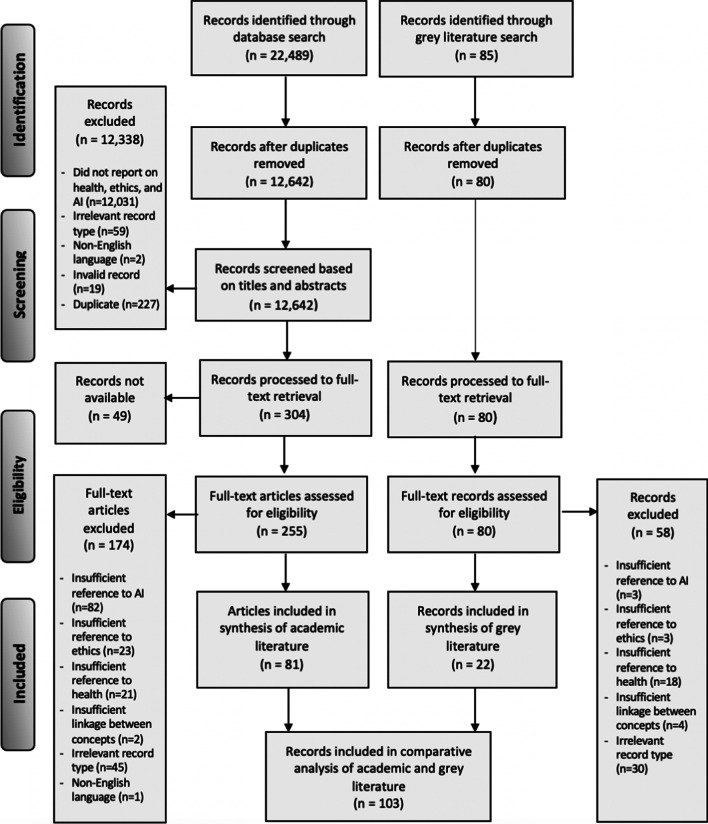
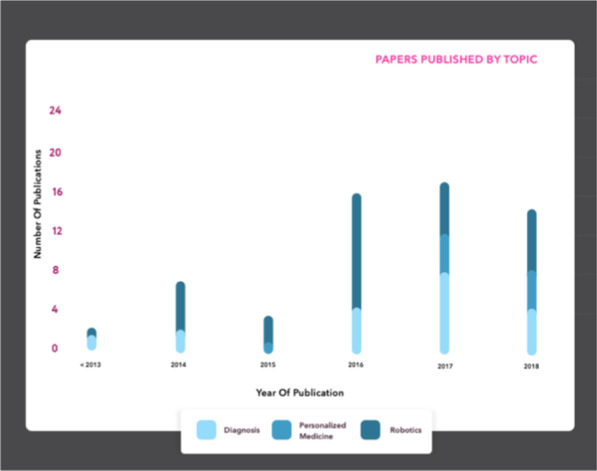
Background: Artificial intelligence (AI) has been described as the “fourth industrial revolution” with transformative and global implications, including in healthcare, public health, and global health. AI approaches hold promise for improving health systems worldwide, as well as individual and population health outcomes. While AI may have potential for advancing health equity within and between countries, we must consider the ethical implications of its deployment in order to mitigate its potential harms, particularly for the most vulnerable. This scoping review addresses the following question: What ethical issues have been identified in relation to AI in the field of health, including from a global health perspective? Methods: Eight electronic databases were searched for peer reviewed and grey literature published before April 2018 using the concepts of health, ethics, and AI, and their related terms. Records were independently screened by two reviewers and were included if they reported on AI in relation to health and ethics and were written in the English language. Data was charted on a piloted data charting form, and a descriptive and thematic analysis was performed. Results: Upon reviewing 12,722 articles, 103 met the predetermined inclusion criteria. The literature was primarily focused on the ethics of AI in health care, particularly on carer robots, diagnostics, and precision medicine, but was largely silent on ethics of AI in public and population health. The literature highlighted a number of common ethical concerns related to privacy, trust, accountability and responsibility, and bias. Largely missing from the literature was the ethics of AI in global health, particularly in the context of low- and middle-income countries (LMICs). Conclusions: The ethical issues surrounding AI in the field of health are both vast and complex. While AI holds the potential to improve health and health systems, our analysis suggests that its introduction should be approached with cautious optimism. The dearth of literature on the ethics of AI within LMICs, as well as in public health, also points to a critical need for further research into the ethical implications of AI within both global and public health, to ensure that its development and implementation is ethical for everyone, everywhere.
Overview
The claims and statistics of this paper haven’t been checked yet.
Free: it reads the open-access text and checks the first 5 claims that cite a source we can check. Create a free account to check every claim.
Integrity signals
Registry
Cites
Statistics
Figures
Verification
Claims the paper makes
The claims and statistics of this paper haven’t been checked yet.
Free: it reads the open-access text and checks the first 5 claims that cite a source we can check. Create a free account to check every claim.
Claims other papers make about this one
Each is checked against this paper’s own text: does it say what the citing paper says it does?
The check wasn’t confident either way, so it gives no verdict — never disputed.
In the citing paper
“AI and robotics enable remote patient monitoring, allowing healthcare providers to track patients’ vital signs, adherence to treatment plans, and overall health status.”
From Ethical implications of AI and robotics in healthcare: A review (2023) · cites this paper as [14]
Experimental — accuracy not yet measuredThe check wasn’t confident either way, so it gives no verdict — never disputed.
In the citing paper
“This reduces hospital readmissions and enhances the quality of care for chronic conditions.[14]”
From Ethical implications of AI and robotics in healthcare: A review (2023) · cites this paper as [14]
Experimental — accuracy not yet measured
Self-check
Percentages, sums and reported differences re-computed from the paper’s own numbers.
The self-check needs the paper’s full text.
Citations
Cites
LeCun, Y., Bengio, Y., & Hinton, G. (2015) · Nature · doi:10.1038/nature14539 · Cited by 84,126
PRISMA Extension for Scoping Reviews (PRISMA-ScR): Checklist and Explanation
Tricco, A. C., Lillie, E., Zarin, W., O'Brien, K. K., Colquhoun, H., Levac, D., Moher, D., Peters, M. D. J., Horsley, T., Weeks, L., et al. (2018) · Annals of Internal Medicine · doi:10.7326/m18-0850 · Cited by 43,565
Scoping studies: advancing the methodology
Levac, D., Colquhoun, H., & O'Brien, K. K. (2010) · Implementation Science · doi:10.1186/1748-5908-5-69 · Cited by 15,268
Methods for the thematic synthesis of qualitative research in systematic reviews
Thomas, J., & Harden, A. (2008) · BMC Medical Research Methodology · doi:10.1186/1471-2288-8-45 · Cited by 9,312
The global landscape of AI ethics guidelines
Jobin, A., Ienca, M., & Vayena, E. (2019) · Nature Machine Intelligence · doi:10.1038/s42256-019-0088-2 · Cited by 6,220
The role of artificial intelligence in achieving the Sustainable Development Goals
Vinuesa, R., Azizpour, H., Leite, I., Balaam, M., Dignum, V., Domisch, S., Felländer, A., Langhans, S. D., Tegmark, M., & Fuso Nerini, F. (2020) · Nature Communications · doi:10.1038/s41467-019-14108-y · Cited by 3,294
Opportunities and obstacles for deep learning in biology and medicine
Ching, T., Himmelstein, D. S., Beaulieu-Jones, B. K., Kalinin, A. A., Do, B. T., Way, G. P., Ferrero, E., Agapow, P.-M., Zietz, M., Hoffman, M. M., et al. (2018) · Journal of The Royal Society Interface · doi:10.1098/rsif.2017.0387 · Cited by 2,310
Deep Learning for Health Informatics
Ravì, D., Wong, C., Deligianni, F., Berthelot, M., Andreu-Perez, J., Lo, B., & Yang, G.-Z. (2017) · IEEE Journal of Biomedical and Health Informatics · doi:10.1109/jbhi.2016.2636665 · Cited by 2,000
Implementing Machine Learning in Health Care — Addressing Ethical Challenges
Char, D. S., Shah, N. H., & Magnus, D. (2018) · New England Journal of Medicine · doi:10.1056/nejmp1714229 · Cited by 1,857
Towards a common definition of global health
Koplan, J. P., Bond, T. C., Merson, M. H., Reddy, K. S., Rodriguez, M. H., Sewankambo, N. K., & Wasserheit, J. N. (2009) · The Lancet · doi:10.1016/s0140-6736(09)60332-9 · Cited by 1,511
Research works printed but not linked: 6
- Canadian Institute for Advanced Research 15. Canada, France, UK launch research workshops exploring societal implications of Artificial intelligence. 2019. https://www.cifar.ca/cifarnews/2019/04/15/canada-france-uk-launch-research-workshops-exploring-societal-implications-of-artificial-intelligence.
- World Health Organization. WHO guideline recommendations on digital interventions for health systems strengthening. 2019. 123 p. http://www.ncbi.nlm.nih.gov/books/NBK541902/. 31162915
- Crawford K, Whittaker M. The AI now report: the social and economic implications of artificial intelligence technologies in the near-term. White House and New York University’s Information Law Institute; (AI Now Public Symposium 2016).
- AI Now 2016 Symposium: The social implications of artificial intelligence technologies in the near-term. New York. 2016. (AI Now 2016 Primers.). https://ainowinstitute.org/AI_Now_2016_Primers.pdf.
- Hope M Computer-aided medicine: present and future issues of liability Comput Law J 1989 9 2 177 203
- Ethically aligned design: a vision for prioritizing human well-being with autonomous and intelligent systems. The IEEE global initiative on ethics of autonomous and intelligent systems. n.d. https://standards.ieee.org/content/dam/ieee-standards/standards/web/documents/other/ead1e.pdf.
Cited by
Items 301–400 of 512
A Comprehensive Risk Analysis Framework for Medical AI: A Mixed‐Methods Approach
Wang, Y., Deng, Z., Deng, Z., & Evans, R. (2026) · Risk Analysis · doi:10.1111/risa.70192 · Cited by 3
“Although AI has the potential to enhance health equity both within and across countries, its deployment also raises concerns regarding potential harms to vulnerable populations (Murphy et al. 2021 ).”
Privacy-Preserved Hierarchical Authentication and Key Agreement for AI-Enabled Telemedicine Systems
Lin, T., & Hsu, C.-L. (2022) · Smart innovation, systems and technologies · doi:10.1007/978-3-031-05491-4_14 · Cited by 2
Appropriate artificial intelligence algorithms will ultimately contribute to health equity
Kalina, J. (2024) · Elsevier eBooks · doi:10.1016/b978-0-443-21598-8.00008-7 · Cited by 3
Singha, S., & Singha, R. (2024) · Advances in computational intelligence and robotics book series · doi:10.4018/979-8-3693-0993-3.ch010 · Cited by 3
Rilkoff, H., Struck, S., Ziegler, C., Faye, L. L., Paquette, D. M., & Buckeridge, D. L. (2024) · Relevé des maladies transmissibles au Canada · doi:10.14745/ccdr.v50i34a02f · Cited by 2
“…des travaux plus importants sont nécessaires pour explorer, identifier et traiter les biais dans les algorithmes d’IA et dans les données utilisées pour former les algorithmes d’IA, afin de s’assurer que ces méthodes ne perpétuent pas des résultats nuisibles en conséquence d’entrées biaisées (57).”
InfluentialHudha, A. M., Husamah, H., Permatasari, I. K., Puspitasari, M. A., & Silvia, S. (2024) · Research and Development in Education (RaDEn) · doi:10.22219/raden.v4i1.32405 · Cited by 2
Adeyemi, D. A., Amedior, N. C., Longe, B.-P., Akintunwa, F., Omotosho, S., & Longe, O. B. (2021) · Advances in Multidisciplinary & Scientific Research Journal Publication · doi:10.22624/aims/sij/v9n3p4-1 · Cited by 2
Ethical and Social Consideration in Mechatronics
Mobarak, M. H., Hasan, M. J., Rahman, M., Rana, M., Shaikat, A. S., & Tasnim, R. (2024) · Emerging trends in mechatronics · doi:10.1007/978-981-97-7117-2_8 · Cited by 4
The Architecture of Immortality Through Neuroengineering
Moussa, D., & Moussa, H. N. (2024) · Philosophies · doi:10.3390/philosophies9060163 · Cited by 2
Yao, B., Liu, Y., Wu, Y., Mao, S., Zhang, H. X., Jiang, L., Fei, C., Wang, S., Tong, J., & Wu, J. (2024) · PeerJ · doi:10.7717/peerj.18391 · Cited by 2
Implementation of AI in healthcare challenges and potential
Zakiuddin, K. S., Dhale, S. A., & Fulzele, P. R. (2024) · AIP conference proceedings · doi:10.1063/5.0240525 · Cited by 4
Application of Artificial Intelligence in Healthcare Industry: A Critical Review
Godala, M. C., Toh, J. S., Li, M., & Chengzhe, L. (2024) · Journal of Business and Social Sciences · doi:10.61453/jobss.v2024no35 · Cited by 2
Digital transformations: A detailed examination of emerging solutions in the Asia-Pacific region
Shirah, B. H., & Zakour, M. O. (2025) · Elsevier eBooks · doi:10.1016/b978-0-443-30168-1.00001-3 · Cited by 2
Solic, K., Jurić, I., & Pakšić, B. H. (2025) · International Convention on Information and Communication Technology, Electronics and Microelectronics · doi:10.1109/mipro65660.2025.11131809 · Cited by 2
Philips, G. (2025) · Integritas Terbuka Peace and Interfaith Studies · doi:10.59029/int.v4i2.75 · Cited by 2
“This epistemological problem intensifies with the phenomenon known as AI hallucination, namely the tendency of AI systems to generate information that appears convincing but lacks valid referential grounding (Murphy et al., 2021).”
An Improved Merge-YOLOv5 Algorithm for Infant Monitoring
Zhang, Z., Lin, X., Yang, K., & Wang, H. (2022) · International Conference on Pattern Recognition and Artificial Intelligence (PRAI) · doi:10.1109/prai55851.2022.9904205 · Cited by 2
Wojda, T. R., Hoffman, C., Kindler, K., Desai, A., & Visweswaran, S. (2024) · Artificial intelligence · doi:10.5772/intechopen.114907 · Cited by 3
Digital public health technologies: rationale for a multidisciplinary research laboratoryPreprint
Андрейченко, А. Е., Gorbacheva, A. M., Denisova, D., Okhotin, A., Kriuchkova, A., Pushkina, N., & Барчук, А. А. (2022) · OSF Preprints (OSF Preprints) · doi:10.31219/osf.io/2kxbm · Cited by 2
Who Is an Author? Finding the Balance Between Contribution and Accountability
Regala, J. D., & Siemens, D. R. (2023) · The Journal of Urology · doi:10.1097/ju.0000000000003687 · Cited by 2
AI in Healthcare in India: Navigating the Ethical, Legal, and Social Implications
Upreti, K., Haque, M., Vats, P., Mittal, S., Parashar, J., & Pawar, V. V. (2024) · Smart innovation, systems and technologies · doi:10.1007/978-981-99-8612-5_6 · Cited by 1
Harmonizing Ethics With Artificial Intelligence: A Compassionate Path to Technological Advancement
Garwi, J. (2024) · Advances in computational intelligence and robotics book series · doi:10.4018/979-8-3693-8557-9.ch007 · Cited by 1
Campos, E. B., Camilo, C., & Pinheiro, G. G. (2025) · Campbell Systematic Reviews · doi:10.1002/cl2.70022 · Cited by 1
“…intelligence tools that can learn from experience and improve performance adapting to new information, without being explicitly programmed (Murphy et al. 2021 This encompasses a diverse range of approaches, including screening and monitoring tools, as well as counselling through digital…”
Travel Health: The Application of Artificial Intelligence and Machine Learning
Verma, S., Tiwari, R. K., & Sharma, V. (2025) · IGI Global eBooks · doi:10.4018/979-8-3693-8774-0.ch005 · Cited by 1
dos Reis, F. J. J., Neves, G. D. A., de Carvalho, M. B. L., Nogueira, L. A. C., Meziat‐Filho, N., Medeiros, F. C., & Ferreira, A. D. S. (2025) · European Journal of Physiotherapy · doi:10.1080/21679169.2025.2497780 · Cited by 2
AI Algorithms in Sustainable Healthcare
Vișan, A. I., & Neguț, I. (2025) · Advances in computational intelligence and robotics book series · doi:10.4018/979-8-3693-9725-1.ch001 · Cited by 1
Participatory Health and Artificial Intelligence: A Literature Review
Denecke, K., López–Campos, G., Ropero, J., Santos-Olmo, R. M. T., Rivera-Romero, O., Martin-Sanchez, F. J., & Gabarrón, E. (2025) · Studies in health technology and informatics · doi:10.3233/shti250617 · Cited by 2
Mares, V., Reiter, G. S., Feitosa, A., Gumpinger, M., Bogunović, H., Schmidt-Erfurth, U. M., & Nehemy, M. B. (2025) · International Journal of Retina and Vitreous · doi:10.1186/s40942-025-00695-0 · Cited by 1
The Evolving Role of the Medical Profession and Medical Graduates
Taha, M. H., Mukhtar, W. N. O., & Preston, R. (2025) · Springer eBooks · doi:10.1007/978-3-031-94435-2_2 · Cited by 2
Interpreting Literature Through an AI Lens: Cross-Cultural Dynamics and Insights
Rapi, M. (2025) · Advances in computational intelligence and robotics book series · doi:10.4018/979-8-3373-1057-2.ch005 · Cited by 2
Environmental Inequities and Global Health
Ernawati, K. (2025) · IGI Global eBooks · doi:10.4018/979-8-3373-1992-6.ch003 · Cited by 1
Directors as Ethical Leaders in Digital Education
Zogopoulos, K., & Παναγιωτόπουλος, Γ. (2025) · European Journal of Contemporary Education and E-Learning · doi:10.59324/ejceel.2025.3(4).07 · Cited by 1
“Indeed, the need for leadership that transparently anticipates and addresses such issues is now considered imperative in the age of advanced technologies (Murphy et al., 2021; Ogrezeanu et al., 2022).”
InfluentialAI in Facial Cosmetic Surgery: Surgeon’s Perspective Summary
Hamrah, D., Eidson, B. K., & Vargas, N. (2025) · The American Journal of Cosmetic Surgery · doi:10.1177/07488068251343281 · Cited by 1
Artificial intelligence in endoscopy: navigating risk, responsibility and ethical challenges
Olabintan, O., Fearnley, L., Iniesta, R., Mori, Y., Gulati, S., Haji, A., Habli, I., & Hayee, B. (2025) · Frontline Gastroenterology · doi:10.1136/flgastro-2025-103107 · Cited by 2
“44 A practical approach to implementing shared responsibility in healthcare AI is to embed responsibility frameworks within governance structures.”
INTELIGÊNCIA ARTIFICIAL EM PESQUISA CLÍNICA: REVISÃO SISTEMÁTICA DE LITERATURA
Sardinha, S. S., Robles, J. I. S., Kückelhaus, C. D. S., & Teixeira, T. M. (2025) · Aracê. · doi:10.56238/arev7n11-332 · Cited by 2
Ethical considerations in artificial intelligence-powered patient counseling
Patne, A. Y., & Suryawanshic, M. (2025) · Elsevier eBooks · doi:10.1016/b978-0-443-43823-3.00011-x · Cited by 2
Explaining the Slow Adoption of AI Innovations in Health Care: Network Analysis Approach
Apell, P., Locher, S., Milde, A., & Eriksson, H. (2026) · JMIR AI · doi:10.2196/60458 · Cited by 1
“Capturing the full value of AI technology involves numerous obstacles and challenges, such as ethical considerations [7,8] and regulations [9,10], and lessons learned from implementation and innovation sciences suggest that each individual factor is less important than the dynamic interactions…”
Entre Algoritmos e Humanidade Desafios Bioéticos na Inteligência Artificial e no Big Data em Saúde
de Amorim, R. L. L. (2026) · Revista JRG de Estudos Acadêmicos · doi:10.55892/jrg.v9i20.2912 · Cited by 1
Potas, N., ERKILIÇ, C. E., Caner, S., & Fritsch, S. J. (2026) · Work · doi:10.1177/10519815261429412 · Cited by 1
Ethical, legal, and social issues of AI use in emergency healthcare: a scoping review
Lim, J., Siddiqui, F. J., Ballantyne, A., Dunn, M., Prince, S., Wilkinson, D. J. C., Lewis, J., Yoon, S., Savulescu, J., & Schaefer, G. O. (2026) · BMC Medical Informatics and Decision Making · doi:10.1186/s12911-026-03355-x · Cited by 1
“Other scoping reviews identified privacy and security [46–49], trust [48], accountability and responsibility [47–50], bias [47, 48], explicability/ transparency/ explainability/ interpretability [46, 47, 49, 50], autonomy or consent [10, 46, 47], prevention of harm and patient safety [46, 49, 50],…”
Liebowitz, J. E., Meng, C. F., Pisetsky, D. S., & Panush, R. S. (2026) · Arthritis Care & Research · doi:10.1002/acr.80084 · Cited by 2
A Comparative Evaluation of Large Language Models on Pediatric Board-Style Examinations
Schönberg, N., Deschler, D. J. P., Hauer, J., & Zeumer, M. (2026) · Hospital Pediatrics · doi:10.1542/hpeds.2025-009153 · Cited by 1
Convenience or risk? Understanding users' continuance intention toward AI health assistants
Li, Y., Yang, Y., & Bao, S. (2026) · Acta Psychologica · doi:10.1016/j.actpsy.2026.106929 · Cited by 1
Ethical monitoring in intelligent health support systems
Abuchaim, R. R., & de Araujo, D. B. (2026) · Revista Bioética · doi:10.1590/1983-803420263995en · Cited by 1
Unveiling Factors Influencing University Students’ Intention to Adopt AI-Based Teaching Assistance
So, I. G., Chanda, R. C., Zhang, M. L., Gui, A., Bachri, S., & Kowirya, P. C. (2025) · International Conference on Intelligent & Innovative Practices in Engineering & Management (IIPEM) · doi:10.1109/iipem65914.2025.11548378 · Cited by 1
“A primary benefit of artificial intelligence is the personalized experiences it offers [2], and it is anticipated that this technology's global market will reach USD 15.7 trillion by 2030 [3].”
InfluentialHaule, L. A. S., Mloka, D., & Aboud, M. (2026) · BMC Medical Ethics · doi:10.1186/s12910-026-01541-0 · Cited by 1
“The emergence of artificial intelligence (AI) in health research introduces distinct ethical and operational complexities that extend beyond traditional biomedical research oversight [12, 13].”
Stoiacovici, C. A., Ilie, A. C., Marc, F., Brad, S., Tănase, A. D., & Branea, H. S. (2026) · Healthcare · doi:10.3390/healthcare14162465 · Cited by 1
“…education, addressing both the knowledge driver and the legal-concern constraint in a single intervention—an approach increasingly advocated for trustworthy and patient-centred AI deployment [17,28,29] and especially pertinent to digitally maturing health systems such as Romania’s [16,30].”
Governing AI for Pharmacovigilance in Low-Income Countries: Systems Perspective
Dut, G. M. (2026) · Journal of Medical Internet Research · doi:10.2196/96374 · Cited by 1
“Relegation of these low-income contexts within a “good AI society” [132] could impoverish global adoption of AI in pharmacovigilance.”
Li, X., Chong, H. G., Zhang, M., Delgado, J., Macieira, T. G. R., Rossetti, S. C., Chen, L. A., Hui, V. C. C., Gosak, L., Chu, C. H., et al. (2026) · International Journal of Nursing Studies · doi:10.1016/j.ijnurstu.2026.105722 · Cited by 1
Perspectives of Artificial Intelligence (AI) in Health Care Management: Prospect and Protest
Singh, A. S. S. P., Prakash, N. S., Chandran, L., & Sivakumar, M. K. (2022) · The Chinese Journal of Artificial Intelligence · doi:10.2174/2666782701666220920091940 · Cited by 2
Korngiebel, D. M., Solomonides, A. E., & Goodman, K. W. (2022) · Cognitive informatics in biomedicine and healthcare · doi:10.1007/978-3-031-09108-7_18 · Cited by 2
Upreti, K., Poonia, R. C., Verma, A., Divakaran, P., Mittal, S., Vats, P., & Biswas, S. S. (2024) · Lecture notes in networks and systems · doi:10.1007/978-981-99-9531-8_32 · Cited by 1
Toward Population Health Intelligence: When Artificial Intelligence Meets Population Health Research
Wang, J., Chen, L., Lycett, D., Vernon, D., & Zheng, D. (2024) · Computer · doi:10.1109/mc.2023.3283857 · Cited by 1
Artificial intelligence: Blessing or curse?
Briganti, G. (2024) · Elsevier eBooks · doi:10.1016/b978-0-443-23655-6.00005-8 · Cited by 1
Jafarova, L. A. G. (2024) · Politikon IAPSS Journal of Political Science · doi:10.22151/politikon.58.1 · Cited by 1
Survey on Ethical Challenges of Implementing AI in Healthcare
Lalwani, N., Rahim, M. A. B. U., Anand, A., Shaik, S. P., Moghe, G. S., & Datta, D. (2024) · International Conference on Pattern Recognition and Artificial Intelligence (PRAI) · doi:10.1109/prai62207.2024.10827739 · Cited by 1
Ongwere, T., Nguyen, T., & Sadowski, Z. (2025) · Information · doi:10.3390/info16030237 · Cited by 1
Voices of Innovation - AI: Fulfilling the Promise of AI in Healthcare
Marx, E. W., Dhingra, S., Papay, F., & Mathur, P. (2025) · Productivity Press eBooks · doi:10.4324/9781032715155 · Cited by 1
A Delphi Study on the Conceptualization and Item Generation of AI Health Ethics Literacy
Lee, H., & Eom, J. (2025) · Journal of Digital Contents Society · doi:10.9728/dcs.2025.26.4.1091 · Cited by 1
ARTIFICIAL INTELLIGENCE AND BEHAVIOR CHANGE: IMPLEMENTING AI STARTUPS IN SPORTS AND HEALTH DOMAINS
Ahanjan, S., Pasban, M., Miri, H., Jaybashi, B., & Ahanjan, G. (2025) · Journal of Population Therapeutics and Clinical Pharmacology · doi:10.53555//f1wy8807 · Cited by 1
Comment on “Artificial intelligence and machine learning in pediatrics and neonatology healthcare”
Malerbi, F. K., Krakauer, M., & Schaan, B. D. (2022) · Revista da Associação Médica Brasileira · doi:10.1590/1806-9282.20220948 · Cited by 1
Keast, J., Smith, L., Ghannam, S., & Dambha‐Miller, H. (2025) · Research Square · doi:10.21203/rs.3.rs-7500570/v1 · Cited by 1
Ethical issues using artificial intelligence in healthcare
Lemonnier, N. (2021) · Jyväskylä University Digital Archive (University of Jyväskylä) · Cited by 3
Yee, A. V. (2023) · eScholarship@McGill (McGill) · doi:10.82308/43627 · Cited by 3
The Benefits of Artificial Intelligence Technology in the Health Sector
Marchi, N. (2021) · Trinity Student Medical Journal
Feature Paper Special Issue for Editorial Board Members (EBMs) of Diseases
Battino, M. A. (2022) · Diseases · doi:10.3390/diseases10020018
Trends in Cardiovascular Engineering and Its Advances
Sikkander, A. M., & Kandula, R. (2022) · Transaction on Biomedical Engineering Applications and Healthcare · doi:10.36647/tbeah/03.02.a001
Qouhafa, M., Benaji, B., Lebbar, S., Soulaymani, A., Moukhtari, A., Elyoussfialaoui, M. H., & Nsiri, B. (2023) · Lecture notes in networks and systems · doi:10.1007/978-3-031-35248-5_36 · Cited by 1
Artificial Intelligence and Medicine: Advances and ChallengesPreprint
López, M. J. C., & Casados, J. C. (2023) · Preprints.org · doi:10.20944/preprints202309.1342.v1
The Role of AI in Mental Health Applications and Liability
Müllerová, P. (2023) · YSEC yearbook of socio-economic constitutions · doi:10.1007/16495_2023_60
Designing Novel Approaches to Personalise Behaviour Change in Intelligent Systems
Scott, D. (2024) · Cronfa (Swansea University) · doi:10.23889/suthesis.65829 · Cited by 1
Incidental findings in development and use of digital health ecosystems for older people
Tanui, A. K., & Aholaakko, T. (2024) · Open Research Europe · doi:10.12688/openreseurope.16869.1
Artificial Intelligence: Revolutionizing the Medicolegal Field
Brigham, C. R., Buttar, W. A., Bucksbaum, M., & Talmage, J. B. (2023) · AMA guides newsletter · doi:10.1001/amaguidesnewsletters.2023.sepoct01 · Cited by 1
Keshavarzi, M. H., Kohan, N., Koohestani, H. R., Mahmoudi, T., & Soltani, R. (2024) · SSRN Electronic Journal · doi:10.2139/ssrn.4865255
Machine learning-based techniques for computer-aided diagnosis
Lakshminarayana, M., Dhananjay, B., Hiremath, B. V., Narayanappa, C. K., Neelapu, B. C., & Sivaraman, J. (2024) · Advances in computers · doi:10.1016/bs.adcom.2024.06.002
Investigating Acceptance to Conversational Artificial Intelligence: A Case Study in Vietnam
Pho, H. (2024) · Practice, progress, and proficiency in sustainability · doi:10.4018/979-8-3693-2827-9.ch012 · Cited by 1
Empirical Investigation of Values Affected by AI Systems for Fire Services
Mioch, T., Aldewereld, H., & Neerincx, M. A. (2024) · Proceedings of the ... International ISCRAM Conference · doi:10.59297/rwranc78 · Cited by 1
Chaturvedi, A., Tiwari, R. V., Agrawal, S., & Kamble, S. (2024) · Advances in finance, accounting, and economics book series · doi:10.4018/979-8-3693-7580-8.ch019
Sharna, M., Gupta, P., Shah, J. K., & Joshi, S. (2024) · Advances in human services and public health (AHSPH) book series · doi:10.4018/979-8-3373-0240-9.ch005 · Cited by 2
Lapteva, A., Bubela, T. M., Chandler, J. A., Knoppers, B. M., Upshur, R. E. G., Ravitsky, V., & Illes, J. (2024) · Canadian Journal of Bioethics · doi:10.7202/1114961ar
“…Council for Canada would be pivotal in enhancing Canada ’ s ethical deliberation on pressing topics, including concerns about the climate crisis and impact on human health (10), the ethical implications of artificial intelligence (11), and the ongoing need for robust pandemic preparedness (12).”
Self-citationValadares, J. V. P., & Ferreira, E. D. F. (2024) · Revista Foco · doi:10.54751/revistafoco.v17n12-112
Use of AI with Optimization Techniques: Case Study, Challenges, and Future Trends
Mittal, A., Parul, P., Gupta, C., & Tayal, D. K. (2025) · Wiley eBooks · doi:10.1002/9781394280735.ch11
Ethical concerns about the deployment of artificial intelligence applications in veterinary practice
Zavlaris, M. (2025) · In Practice · doi:10.1002/inpr.508
Intelligence artificielle et psychiatrie : un défi collaboratif
Gauld, C. (2025) · Soins Cadres · doi:10.1016/j.scad.2024.12.010
Upreti, K., Divakaran, P., Chaturvedi, V. M., Upreti, S., Vats, P., & Goyal, K. (2025) · International Conference on Intelligent Control, Computing and Communications (IC3) · doi:10.1109/ic363308.2025.10956744 · Cited by 1
“There's a unique feature of cryptocurrency. modifying information once it is initially uploaded to the distributed database is extremely difficult [7].”
Morgan, G. B., Stamatis, A., Yager, C. C., & Boolani, A. (2025) · Informatics in Medicine Unlocked · doi:10.1016/j.imu.2025.101649
AI in Health and Environmental Sustainability
Gupta, S. P., & Bhardwaj, A. (2025) · Advances in computational intelligence and robotics book series · doi:10.4018/979-8-3373-0680-3.ch014
Enhancing Patient Confidentiality with AI-Based Data De-Identification Methods
Kotte, G. (2024) · International Journal of Enhanced Research In Science Technology & Engineering · doi:10.55948/ijerste.2024.0112
Quantum leaps in pandemic prediction: AI synergy in the prediction of future pandemics
Leong, P. Y., Chaw, J. K., & Ijab, M. T. (2025) · Elsevier eBooks · doi:10.1016/b978-0-443-33871-7.00007-6
Dijitalleşen Muhasebe: Etik Sorunlar, Zorluklar ve Geleceğe Yönelik Çözümler
Güney, A. (2025) · Özgür Yayınları eBooks · doi:10.58830/ozgur.pub758.c3106
Judijanto, L. (2025) · Journal of Information System Technology and Engineering · doi:10.61487/jiste.v3i2.145 · Cited by 1
Artificial Intelligence: Applications in Global Health Radiology
Elahi, A., Mango, V. L., Schweitzer, A. L., Merkle, A. N., Pollack, E. B., McGee, E., Robinson, S., Hernández-García, C., Surratt, S., Mollura, D. J., et al. (2025) · Springer eBooks · doi:10.1007/978-3-031-86485-8_28
Sak, J., & Pawlikowski, J. (2025) · Routledge eBooks · doi:10.4324/9781032634487-11
MAIN CONCEPTS ABOUT ARTIFICIAL INTELLIGENCE. GENERATIVE AI
BOZINTAN, A. G., & Crișan, E. L. (2025) · Annals of Faculty of Economics · doi:10.47535/1991auoes34(1)048
Changing Expectations of Healthcare Consumers and Implications
Kar, A., & Kaya, M. (2025) · IGI Global eBooks · doi:10.4018/979-8-3373-6561-9.ch003 · Cited by 1
Ethical and legal issues of artificial intelligence in English Teaching
Yuan, Z. (2025) · Journal of Computational Methods in Sciences and Engineering · doi:10.1177/14727978251364134
Braga, R. D. C., Cintra, L. P., de Andrade, R. M., Cruz, S. A., & Barbosa, A. C. Q. (2025) · Encontro Nacional de Economia Industrial e da Inovação (ENEI) · doi:10.29327/anais-encontro-nacional-de-economia-industrial-enei.1243792
The Role of GenAI in Business Model Innovation
Tripathi, A. A., Dhote, T., Pathak, P., Pillai, S., & Yadav, V. (2025) · Lecture notes in networks and systems · doi:10.1007/978-981-96-6060-5_3 · Cited by 1
Artificial Intelligence, Bioethics, and Semantic Knowledge Representation
Yadav, B. P., Selvakumar, P., Srivastava, N., Toni, M., Das, A., Mythili, R., & Manjunath, T. C. (2025) · Advances in computational intelligence and robotics book series · doi:10.4018/979-8-3373-5646-4.ch012
Estudo comparativo entre Chat GPT e Google IA Overviews em relação à respostas sobre a raiva
Francischetti, G. S., & Pogliani, F. C. (2024) · doi:10.11606/003242953
Metadata
- Authors
- Murphy, K., Di Ruggiero, E., Upshur, R., Willison, D. J., Malhotra, N., Cai, J. C., Malhotra, N., Lui, V., & Gibson, J.
- Affiliations
- University of Toronto (CA)
- Corresponding author
- Gibson, Jennifer
- Venue
- BMC Medical Ethics
- Published
- 2021-02-15
- Volume
- 22
- Issue
- 1
- Pages
- 14-14
- ISSN
- 1472-6939 (ISSN-L)
- PMC
- PMC7885243
- OpenAlex
- W3115247823
- Cited by
- 435
- References
- 97
- Citations by year
- 2026: 69 · 2025: 133 · 2024: 125 · 2023: 53 · 2022: 46 · 2021: 9
- FWCI
- 4.74
- Type
- journal article
- Language
- en
- Open access
- gold
- doi.org
- Licence
- cc-by
- creativecommons.org/licenses/by/4.0/ (tdm)
- creativecommons.org/licenses/by/4.0/ (vor)
- Locations
- BMC Medical Ethics (publishedVersion, cc-by)
- Research Square (acceptedVersion, cc-by)
- PubMed Central (publishedVersion, cc-by)
- PubMed (publishedVersion)
- TSpace (University of Toronto) (submittedVersion, cc-by)
- DOAJ (DOAJ: Directory of Open Access Journals) (submittedVersion, cc-by-sa)
- Funders
- Joint Centre for Bioethics Jus Innovation Fund
- Topics
- Health Sciences › Medicine › Health Informatics › Artificial Intelligence in Healthcare and Education
- Physical Sciences › Computer Science › Artificial Intelligence › Ethics and Social Impacts of AI
- Health Sciences › Medicine › Public Health, Environmental and Occupational Health › Ethics and bioethics in healthcare
- Keywords
- AI ethics, health care AI, global health, low- and middle-income countries, medical diagnostics, precision medicine, privacy, trust, accountability and responsibility, algorithmic bias, health equity
- MeSH terms
- Artificial Intelligence, Delivery of Health Care, Humans, Morals, Poverty, Caregivers
About these checks
Registry, retraction, Cites and statistics results are computed, not judged, with one exception: a printed reference that no index lists is read once by a model before it counts as a citation error. Claims are extracted by a model and kept only when their quote appears verbatim in the text; each cited source is then checked, with a model’s help, for whether it says what the claim relies on. Those verdicts can be wrong — read the claim’s quote and the cited source before relying on one.
Statistics and arithmetic are recomputed, not judged.
Confidence bands are shown only for fields calibrated on our annotated test set. None is calibrated yet, so no band is shown.
What counts as a claim ›How we measure confidence ›How we check this ›
Are you an author, or do you see a problem with this page? Request a review
Data sources
Bibliographic data: Semantic Scholar, OpenAlex, Crossref.
Contains information from the Semantic Scholar Academic Graph Datasets, made available under the ODC Attribution License (ODC-BY 1.0).
Semantic Scholar’s data is described in: Kinney, R., et al. (2023). The Semantic Scholar Open Data Platform. arXiv:2301.10140.
