

Deep learning with sentence embeddings pre-trained on biomedical corpora improves the performance of finding similar sentences in electronic medical records
Open accessThe DOI matches its Crossref record; 38 of the 39 references it cites were found in a registry or an index.
Abstract
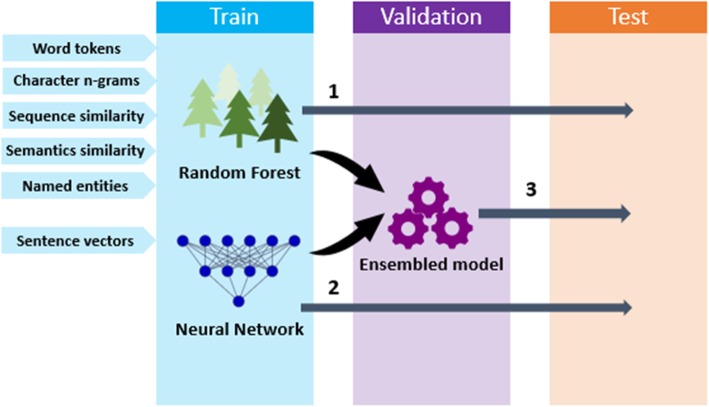
Background: Capturing sentence semantics plays a vital role in a range of text mining applications. Despite continuous efforts on the development of related datasets and models in the general domain, both datasets and models are limited in biomedical and clinical domains. The BioCreative/OHNLP2018 organizers have made the first attempt to annotate 1068 sentence pairs from clinical notes and have called for a community effort to tackle the Semantic Textual Similarity (BioCreative/OHNLP STS) challenge. Methods: We developed models using traditional machine learning and deep learning approaches. For the post challenge, we focused on two models: the Random Forest and the Encoder Network. We applied sentence embeddings pre-trained on PubMed abstracts and MIMIC-III clinical notes and updated the Random Forest and the Encoder Network accordingly. Results: The official results demonstrated our best submission was the ensemble of eight models. It achieved a Person correlation coefficient of 0.8328 – the highest performance among 13 submissions from 4 teams. For the post challenge, the performance of both Random Forest and the Encoder Network was improved; in particular, the correlation of the Encoder Network was improved by ~ 13%. During the challenge task, no end-to-end deep learning models had better performance than machine learning models that take manually-crafted features. In contrast, with the sentence embeddings pre-trained on biomedical corpora, the Encoder Network now achieves a correlation of ~ 0.84, which is higher than the original best model. The ensembled model taking the improved versions of the Random Forest and Encoder Network as inputs further increased performance to 0.8528. Conclusions: Deep learning models with sentence embeddings pre-trained on biomedical corpora achieve the highest performance on the test set. Through error analysis, we find that end-to-end deep learning models and traditional machine learning models with manually-crafted features complement each other by finding different types of sentences. We suggest a combination of these models can better find similar sentences in practice.
Overview
The claims and statistics of this paper haven’t been checked yet.
Free: it reads the open-access text and checks the first 5 claims that cite a source we can check. Create a free account to check every claim.
Integrity signals
Registry
Cites
Statistics
Figures
Verification
Claims the paper makes
The claims and statistics of this paper haven’t been checked yet.
Free: it reads the open-access text and checks the first 5 claims that cite a source we can check. Create a free account to check every claim.
Claims other papers make about this one
Each is checked against this paper’s own text: does it say what the citing paper says it does?
The source backs part of the claim, not all of it — or backs it for a different population, condition or comparison.
In the citing paper
“Each celery worker uses the 'stacking ensemble learning method' to provide the best document classification results, suitable for the variable number of publications and variable nature of training datasets submitted by our users, which might not be suitable for one specific classifier.”
From LitSuggest: a web-based system for literature recommendation and curation using machine learning (2021) · cites this paper as [20]
Experimental — accuracy not yet measuredThe cited source says what the claim attributes to it.
In the citing paper
“This method has achieved the best performance in previous biomedical text mining open challenge tasks (20) and is known to show stable results in text classification methods (21,22).”
From LitSuggest: a web-based system for literature recommendation and curation using machine learning (2021) · cites this paper as [20]
Self-check
Percentages, sums and reported differences re-computed from the paper’s own numbers.
The self-check needs the paper’s full text.
Citations
Cites
Binary Codes capable of currecting deletions, insertions, and reversals
Levenshtein, V. I. (1965) · Soviet physics. Doklady · Cited by 15,165
Convolutional Neural Networks for Sentence Classification
Kim, Y. (2014) · Proceedings of the 2014 Conference on Empirical Methods in Natural Language Processing (EMNLP) · doi:10.3115/v1/d14-1181 · Cited by 14,831 · cited 3×
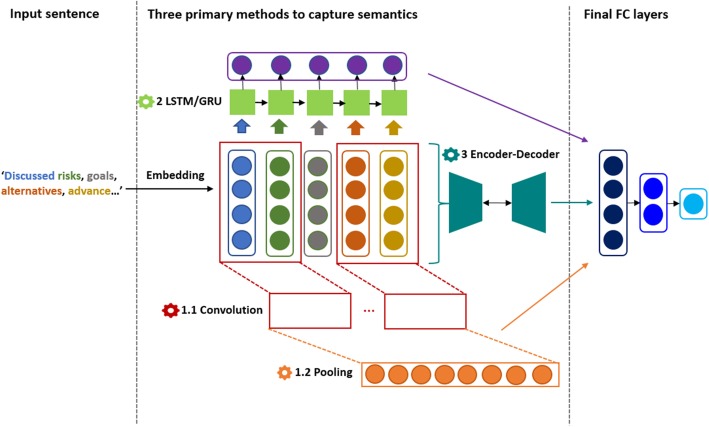
“Then to further process the matrix, existing studies have employed (1) Convolutional Neural Network (CNN) [35], the most popular architecture for computer vision, where the main components are convolutional layers (applying convolutional operations to generate feature maps from input layers) and pooling layers (reduci…”
MethodMeasures of the Amount of Ecologic Association Between Species
Dice, L. R. (1945) · Ecology · doi:10.2307/1932409 · Cited by 11,874
Needleman, S. B., & Wunsch, C. D. (1970) · Journal of Molecular Biology · doi:10.1016/0022-2836(70)90057-4 · Cited by 11,288
MIMIC-III, a freely accessible critical care database
Johnson, A. E. W., Pollard, T. J., Shen, L., Lehman, L.-W. H., Feng, M., Ghassemi, M., Moody, B., Szolovits, P., Anthony Celi, L., & Mark, R. G. (2016) · Scientific Data · doi:10.1038/sdata.2016.35 · Cited by 8,141
A STATISTICAL INTERPRETATION OF TERM SPECIFICITY AND ITS APPLICATION IN RETRIEVAL
SPARCK JONES, K. (1972) · Journal of Documentation · doi:10.1108/eb026526 · Cited by 4,505
From Word Embeddings To Document Distances
Kusner, M. J., Sun, Y., Kolkin, N., & Weinberger, K. Q. (2015) · PolyPublie (École Polytechnique de Montréal) · Cited by 2,746
Supervised Learning of Universal Sentence Representations from Natural Language Inference Data
Conneau, A., Kiela, D., Schwenk, H., Barrault, L., & Bordes, A. (2017) · Proceedings of the 2017 Conference on Empirical Methods in Natural Language Processing · doi:10.18653/v1/d17-1070 · Cited by 2,049 · cited 1×
“Originally, we used Universal Sentence Encoder [38] and inferSent [39], the sentence embeddings trained on the general domain.”
MethodUniversal Sentence Encoder for English
Cer, D., Yang, Y., Kong, S.-Y., Hua, N., Limtiaco, N., St. John, R., Constant, N., Guajardo-Cespedes, M., Yuan, S., Tar, C., et al. (2018) · Proceedings of the 2018 Conference on Empirical Methods in Natural Language Processing: System Demonstrations · doi:10.18653/v1/d18-2029 · Cited by 1,750
SemEval-2017 Task 1: Semantic Textual Similarity Multilingual and Crosslingual Focused Evaluation
Cer, D., Diab, M., Agirre, E., Lopez-Gazpio, I., & Specia, L. (2017) · Proceedings of the 11th International Workshop on Semantic Evaluation (SemEval-2017) · doi:10.18653/v1/s17-2001 · Cited by 1,562 · cited 2×
“In the general domain, long-term efforts have been made to develop semantic sentence similarity datasets and associated models [6].”
BackgroundMethodAdvances in Record-Linkage Methodology as Applied to Matching the 1985 Census of Tampa, Florida
Jaro, M. A. (1989) · Journal of the American Statistical Association · doi:10.1080/01621459.1989.10478785 · Cited by 1,401
Cer, D., Yang, Y., Kong, S.-Y., Hua, N., Limtiaco, N., John, R. S., Constant, N., Guajardo-Cespedes, M., Yuan, S., Tar, C., et al. (2018) · arXiv · doi:10.48550/arxiv.1803.11175 · Cited by 1,267 · cited 1×
“Originally, we used Universal Sentence Encoder [38] and inferSent [39], the sentence embeddings trained on the general domain.”
MethodSiamese Recurrent Architectures for Learning Sentence Similarity
Mueller, J., & Thyagarajan, A. (2016) · Proceedings of the AAAI Conference on Artificial Intelligence · doi:10.1609/aaai.v30i1.10350 · Cited by 935 · cited 3×
“Then to further process the matrix, existing studies have employed (1) Convolutional Neural Network (CNN) [35], the most popular architecture for computer vision, where the main components are convolutional layers (applying convolutional operations to generate feature maps from input layers) and pooling layers (reduci…”
BackgroundA Hierarchical Latent Variable Encoder-Decoder Model for Generating Dialogues
Serban, I., Sordoni, A., Lowe, R., Charlin, L., Pineau, J., Courville, A., & Bengio, Y. (2017) · Proceedings of the AAAI Conference on Artificial Intelligence · doi:10.1609/aaai.v31i1.10983 · Cited by 697 · cited 1×
“model [37], where the encoder component aims to capture the most important features of sentences (often in the format of a vector) and the decoder component aims to regenerate the sentence from the encoder output.”
BackgroundSmith, T. F., & Waterman, M. S. (1981) · Advances in Applied Mathematics · doi:10.1016/0196-8858(81)90046-4 · Cited by 677
Approximate string-matching with q-grams and maximal matches
Ukkonen, E. (1992) · Theoretical Computer Science · doi:10.1016/0304-3975(92)90143-4 · Cited by 605
PubTator central: automated concept annotation for biomedical full text articles
Wei, C.-H., Allot, A., Leaman, R., & Lu, Z. (2019) · Nucleic Acids Research · doi:10.1093/nar/gkz389 · Cited by 400
Self-citationExploring the similarity space
Zobel, J., & Moffat, A. (1998) · ACM SIGIR Forum · doi:10.1145/281250.281256 · Cited by 378 · cited 2×
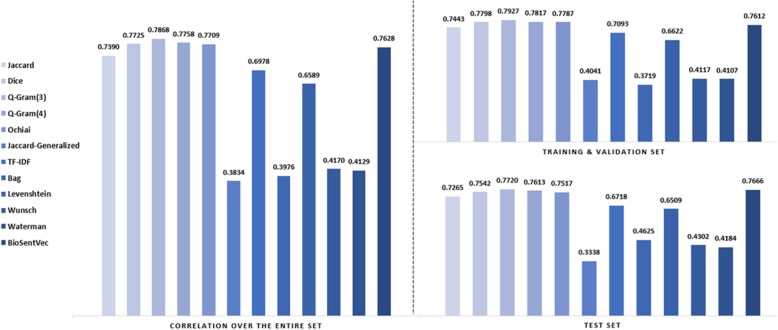
“Zobel and Moffat [15] analyzed more than 50 similarity measures with different settings in information retrieval and found that there was no one-size-fits-all metric – no metric consistently worked better than others.”
BackgroundCLAMP – a toolkit for efficiently building customized clinical natural language processing pipelines
Soysal, E., Wang, J., Jiang, M., Wu, Y., Pakhomov, S., Liu, H., & Xu, H. (2018) · Journal of the American Medical Informatics Association · doi:10.1093/jamia/ocx132 · Cited by 360
Zoogeographical Studies on the Soleoid Fishes found in Japan and its Neighbouring Regions-I
OCHIAI, A. (1957) · NIPPON SUISAN GAKKAISHI · doi:10.2331/suisan.22.522 · Cited by 272
Zoogeographical Studies on the Soleoid Fishes Found in Japan and its Neighhouring Regions-II
OCHIAI, A. (1957) · NIPPON SUISAN GAKKAISHI · doi:10.2331/suisan.22.526 · Cited by 257
Extracting psychiatric stressors for suicide from social media using deep learning
Du, J., Zhang, Y., Luo, J., Jia, Y., Wei, Q., Tao, C., & Xu, H. (2018) · BMC Medical Informatics and Decision Making · doi:10.1186/s12911-018-0632-8 · Cited by 161
Self-citationQuantifying clinical narrative redundancy in an electronic health record
Wrenn, J. O., Stein, D. M., Bakken, S., & Stetson, P. D. (2010) · Journal of the American Medical Informatics Association · doi:10.1197/jamia.m3390 · Cited by 153 · cited 2×
“s is also because the sentences are collected from the same corpus, where it is possible that clinicians use controlled vocabularies, extract sentences in templates and copy-paste from existing notes [22]. For example, we observe that snippet No Barriers to learning were identified[ occurs frequently in the dataset. S…”
BackgroundMethodML-Net: multi-label classification of biomedical texts with deep neural networks
Du, J., Chen, Q., Peng, Y., Xiang, Y., Tao, C., & Lu, Z. (2019) · Journal of the American Medical Informatics Association · doi:10.1093/jamia/ocz085 · Cited by 133 · cited 1×
“Capturing the semantic similarity between sentences has many direct applications in biomedical and clinical domains, such as biomedical sentence search [1], evidence sentence retrieval [2] and classification [3] as well as indirect applications, such as biomedical question answering [4] and biomedical document labelin…”
BackgroundSelf-citationMedSTS: a resource for clinical semantic textual similarity
Wang, Y., Afzal, N., Fu, S., Wang, L., Shen, F., Rastegar-Mojarad, M., & Liu, H. (2020) · Language Resources and Evaluation · doi:10.1007/s10579-018-9431-1 · Cited by 124 · cited 4×
“The BioCreative/OHNLP organizers have made the first attempt to annotate 1068 sentence pairs from clinical notes and have called for a community effort to tackle the Semantic Textual Similarity (BioCreative/OHNLP STS) challenge [8].”
BackgroundMethodInfluentialBioSentVec: creating sentence embeddings for biomedical texts
Chen, Q., Peng, Y., & Lu, Z. (2019) · 2019 IEEE International Conference on Healthcare Informatics (ICHI) · doi:10.1109/ichi.2019.8904728 · Cited by 108 · cited 1×
“NLTK toolkit [11]; and (4) removing punctuation and stopwords.”
BackgroundSelf-citationWei, C.-H., Phan, L., Feltz, J., Maiti, R., Hefferon, T., & Lu, Z. (2018) · Bioinformatics · doi:10.1093/bioinformatics/btx541 · Cited by 93
Self-citationHow user intelligence is improving PubMed
Fiorini, N., Leaman, R., Lipman, D. J., & Lu, Z. (2018) · Nature Biotechnology · doi:10.1038/nbt.4267 · Cited by 93
Self-citationChen, Q., Zobel, J., & Verspoor, K. M. (2017) · Database · doi:10.1093/database/baw163 · Cited by 81 · cited 1×
“In fact, sequence-based measures are very effective in clinical and biomedical informatics; for example, they are the primary measures used in previous studies on the detection of redundancy in clinical notes [22] and duplicate records in biological databases [23].”
MethodSelf-citationIslamaj Doğan, R., Kim, S., Chatr-aryamontri, A., Wei, C.-H., Comeau, D. C., Antunes, R., Matos, S., Chen, Q., Elangovan, A., Panyam, N. C., et al. (2019) · Database · doi:10.1093/database/bay147 · Cited by 76
Self-citationSarrouti, M., & Alaoui, S. O. E. (2017) · Journal of Biomedical Informatics · doi:10.1016/j.jbi.2017.03.001 · Cited by 66
A multi-task deep learning model for the classification of Age-related Macular DegenerationPreprint
Chen, Q., Peng, Y., Keenan, T. D. L., Dharssi, S., Agrón, E., Wong, W. T., Chew, E. Y., & Lu, Z. (2018) · PubMed Central · doi:10.48550/arxiv.1812.00422 · Cited by 61 · cited 1×
“To date, deep learning has demonstrated state-of-the-art performance in many biomedical and clinical applications, such as medical image classification [32], mental health text mining [33], and biomedical document triage [34].”
BackgroundSelf-citationEvaluating measures of redundancy in clinical texts.
Zhang, R., Pakhomov, S., McInnes, B. T., & Melton, G. B. (2011) · PubMed Central · Cited by 57
Ravikumar, K. E., Rastegar-Mojarad, M., & Liu, H. (2017) · Database · doi:10.1093/database/baw156 · Cited by 56 · cited 1×
“Capturing the semantic similarity between sentences has many direct applications in biomedical and clinical domains, such as biomedical sentence search [1], evidence sentence retrieval [2] and classification [3] as well as indirect applications, such as biomedical question answering [4] and biomedical document labelin…”
BackgroundLitSense: making sense of biomedical literature at sentence level
Allot, A., Chen, Q., Kim, S., Vera Alvarez, R., Comeau, D. C., Wilbur, W. J., & Lu, Z. (2019) · Nucleic Acids Research · doi:10.1093/nar/gkz289 · Cited by 56 · cited 1×
“Capturing the semantic similarity between sentences has many direct applications in biomedical and clinical domains, such as biomedical sentence search [1], evidence sentence retrieval [2] and classification [3] as well as indirect applications, such as biomedical question answering [4] and biomedical document labelin…”
BackgroundSelf-citationbigNN: An open-source big data toolkit focused on biomedical sentence classification
Tafti, A. P., Behravesh, E., Assefi, M., LaRose, E. R., Badger, J. C., Mayer, J. G., Doan, A., Page, D., & Peissig, P. L. (2017) · IEEE International Conference on Big Data (BigData) · doi:10.1109/bigdata.2017.8258394 · Cited by 18
Supervised Learning for Detection of Duplicates in Genomic Sequence Databases
Chen, Q., Zobel, J., Zhang, X., & Verspoor, K. M. (2016) · PLoS ONE · doi:10.1371/journal.pone.0159644 · Cited by 17
Self-citationSentence Similarity Measures Revisited: Ranking Sentences in PubMed Documents
Chen, Q., Kim, S., Wilbur, W. J., & Lu, Z. (2018) · ACM International Conference on Bioinformatics, Computational Biology, and Health Informatics (ACM-BCB) · doi:10.1145/3233547.3233640 · Cited by 9
Self-citation
Research works printed but not linked: 4
- Chen Q, Du J, Kim S, Wilbur WJ, Lu Z. Combining rich features and deep learning for finding similar sentences in electronic medical records. Proceedings of Biocreative/OHNLP challenge. 2018;2018.
- Chen Q Peng Y Lu Z BioSentVec: creating sentence embeddings for biomedical texts The 7th IEEE international conference on healthcare informatics 2019
- Jaccard P Lois de distribution florale dans la zone alpine Bull Soc Vaud Sci Nat 1902 38 69 130
- Navarro G. Multiple approximate string matching by counting. In WSP 1997, 4th South American Workshop on String Processing. 2011. p. 95–111.
Cited by
Pre-trained Language Models in Biomedical Domain: A Systematic Survey
Wang, B., Xie, Q., Pei, J., Chen, Z., Tiwari, P., Li, Z., & Fu, J. (2024) · ACM Computing Surveys · doi:10.1145/3611651 · Cited by 169
“Chen et al [34] combined BERT with the one-dimensional convolutional neural network (1d-CNN) to fine-tune the medical relation extraction.”
BackgroundInfluentialMeasurement of Semantic Textual Similarity in Clinical Texts: Comparison of Transformer-Based Models
Yang, X., He, X., Zhang, H., Ma, Y., Bian, J., & Wu, Y. (2020) · JMIR Medical Informatics · doi:10.2196/19735 · Cited by 78
“However, up until now, only a few studies [29-31] have explored STS in the clinical domain due to the limited data resources for developing and benchmarking clinical STS tasks.”
BackgroundChen, Q., Lee, K., Yan, S., Kim, S., Wei, C.-H., & Lu, Z. (2020) · PLOS Computational Biology · doi:10.1371/journal.pcbi.1007617 · Cited by 62
“Averaged vectors are used as a strong baseline for many embedding-related tasks, such as sentence similarity [44] and sentiment analysis [45].”
MethodSelf-citationLitSuggest: a web-based system for literature recommendation and curation using machine learning
Allot, A., Lee, K., Chen, Q., Luo, L., & Lu, Z. (2021) · Nucleic Acids Research · doi:10.1093/nar/gkab326 · Cited by 61
“This method has achieved the best performance in previous biomedical text mining open challenge tasks (20) and is known to show stable results in text classification methods (21,22).”
MethodSelf-citationA comprehensive survey for automatic text summarization: Techniques, approaches and perspectives
Luo, M., Xue, B., & Niu, B. (2024) · Neurocomputing · doi:10.1016/j.neucom.2024.128280 · Cited by 34
Metadata
- Authors
- Chen, Q., Du, J., Kim, S., Wilbur, W. J., & Lu, Z.
- Affiliations
- National Institutes of Health (US)
- Corresponding author
- Lu, Zhiyong
- Venue
- BMC Medical Informatics and Decision Making
- Published
- 2020-04
- Volume
- 20
- Issue
- S1
- Pages
- 73-73
- ISSN
- 1472-6947 (ISSN-L)
- PMC
- PMC7191680
- OpenAlex
- W3020931369
- Cited by
- 19
- References
- 39
- Citations by year
- 2025: 1 · 2024: 1 · 2023: 3 · 2022: 5 · 2021: 7 · 2020: 2
- FWCI
- 1.77
- Type
- journal article
- Language
- en
- Open access
- gold
- doi.org
- Licence
- cc-by
- creativecommons.org/licenses/by/4.0/ (tdm)
- creativecommons.org/licenses/by/4.0/ (vor, 29 d)
- Locations
- BMC Medical Informatics and Decision Making (publishedVersion, cc-by)
- PubMed Central (publishedVersion, cc-by)
- PubMed (publishedVersion)
- arXiv (Cornell University) (submittedVersion)
- DOAJ (DOAJ: Directory of Open Access Journals) (submittedVersion, cc-by-sa)
- arXiv (Cornell University)
- Funders
- University of Texas Health Science Center at Houston (RP160015)
- National Institutes of Health (RP160015)
- U.S. National Library of Medicine
- Topics
- Physical Sciences › Computer Science › Artificial Intelligence › Topic Modeling
- Physical Sciences › Computer Science › Artificial Intelligence › Machine Learning in Healthcare
- Health Sciences › Medicine › Health Informatics › Biomedical Text Mining and Ontologies
- Keywords
- semantic textual similarity, sentence embeddings, biomedical text mining, electronic health records, clinical notes, pre-trained language models, MIMIC-III, PubMed abstracts, ensemble learning, random forest, encoder network, error analysis
- MeSH terms
- Machine Learning, Deep Learning, Humans, Language, Information Storage and Retrieval, PubMed, Data Mining, Electronic Health Records
About these checks
Registry, retraction, Cites and statistics results are computed, not judged, with one exception: a printed reference that no index lists is read once by a model before it counts as a citation error. Claims are extracted by a model and kept only when their quote appears verbatim in the text; each cited source is then checked, with a model’s help, for whether it says what the claim relies on. Those verdicts can be wrong — read the claim’s quote and the cited source before relying on one.
Statistics and arithmetic are recomputed, not judged.
Confidence bands are shown only for fields calibrated on our annotated test set. None is calibrated yet, so no band is shown.
What counts as a claim ›How we measure confidence ›How we check this ›
Are you an author, or do you see a problem with this page? Request a review
Data sources
Bibliographic data: Semantic Scholar, OpenAlex, Crossref.
Contains information from the Semantic Scholar Academic Graph Datasets, made available under the ODC Attribution License (ODC-BY 1.0).
Semantic Scholar’s data is described in: Kinney, R., et al. (2023). The Semantic Scholar Open Data Platform. arXiv:2301.10140.
