

The effect of diabetes self-management education on HbA1c and quality of life in African-Americans: a systematic review and meta-analysis
Open accessThe DOI matches its Crossref record; 47 of the 48 references it cites were found in a registry or an index.
Abstract
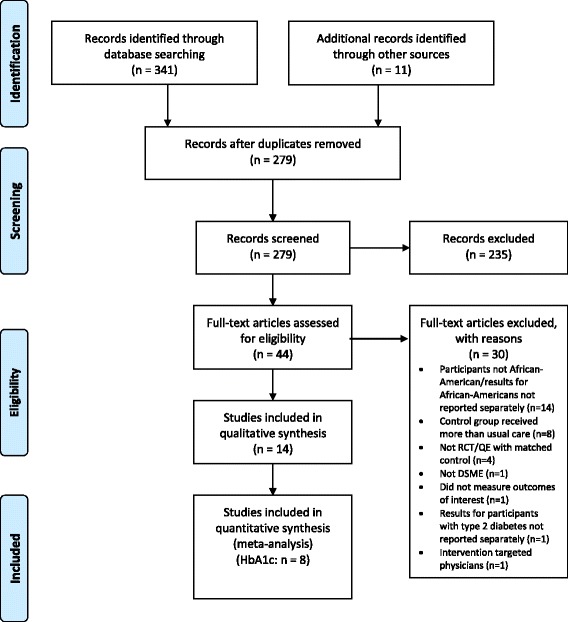
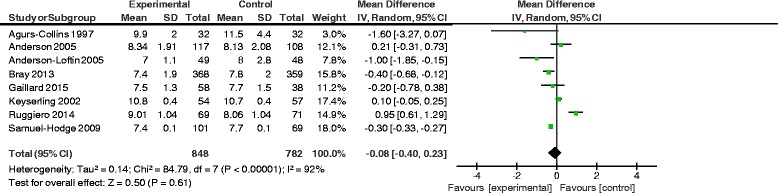
Type 2 diabetes presents a major morbidity and mortality burden in the United States. Diabetes self-management education (DSME) is an intervention associated with improved hemoglobin A1c(HbA1c) and quality of life(QOL), and is recommended for all individuals with type 2 diabetes. African-Americans have disproportionate type 2 diabetes morbidity and mortality, yet no prior meta-analyses have examined DSME outcomes exclusively in this population. This systematic review and meta-analysis examined the impact of DSME on HbA1c and QOL in African-Americans compared to usual care. Randomized controlled trials, cluster-randomized trials, and quasi-experimental interventions were included. 352 citations were retrieved; 279 abstracts were reviewed, and 44 full-text articles were reviewed. Fourteen studies were eligible for systematic review and 8 for HbA1c meta-analysis; QOL measures were too heterogeneous to pool. Heterogeneity of HbA1c findings was assessed with Cochran’s Q and I2. HbA1c weighted mean difference between intervention and usual care participants was not significant: − 0.08%[− 0.40–0.23];χ2 = 84.79 (p < .001), I2 = 92%, (n = 1630). Four of five studies measuring QOL reported significant improvements for intervention participants. Meta-analysis results showed non-significant effect of DSME on HbA1c in African-Americans. QOL did show improvement and is an important DSME outcome to measure in future trials. Further research is needed to understand effectiveness of DSME on HbA1c in this population. PROSPERO registration: CRD42017057282 .
Overview
The claims and statistics of this paper haven’t been checked yet.
Free: it reads the open-access text and checks the first 5 claims that cite a source we can check. Create a free account to check every claim.
Integrity signals
Registry
Cites
Statistics
Figures
Verification
Claims the paper makes
The claims and statistics of this paper haven’t been checked yet.
Free: it reads the open-access text and checks the first 5 claims that cite a source we can check. Create a free account to check every claim.
Claims other papers make about this one
Each is checked against this paper’s own text: does it say what the citing paper says it does?
The cited source says what the claim attributes to it.
In the citing paper
“Evidence indicates that DSMES imparts enhanced knowledge of DM and self-care practices resulting in improved A1C values,909,912,1449–1451 modest reductions in weight, better QoL,912,1451,1452 and lower mortality risk,1453 while at the same time leading to a reduction in health care costs.1454,1455”
From American Association of Clinical Endocrinology Clinical Practice Guideline: Developing a Diabetes Mellitus Comprehensive Care Plan-2022 Update. (2022) · cites this paper as [1452]
Self-check
Percentages, sums and reported differences re-computed from the paper’s own numbers.
The self-check needs the paper’s full text.
Citations
Cites
Preferred Reporting Items for Systematic Reviews and Meta-Analyses: the PRISMA statement
Moher, D., Liberati, A., Tetzlaff, J., Altman, D. G., & for the PRISMA Group (2009) · BMJ · doi:10.1136/bmj.b2535 · Cited by 83,823
Measuring inconsistency in meta-analyses
Higgins, J. P. T., Thompson, S. G., Deeks, J. J., & Altman, D. G. (2003) · BMJ · doi:10.1136/bmj.327.7414.557 · Cited by 63,139
Preferred reporting items for systematic reviews and meta-analyses: The PRISMA statement
Moher, D., Liberati, A., Tetzlaff, J., Altman, D. G., & the PRISMA Group* (2009) · Annals of Internal Medicine · doi:10.7326/0003-4819-151-4-200908180-00135 · Cited by 37,554
The Cochrane Collaboration's tool for assessing risk of bias in randomised trials
Higgins, J. P. T., Altman, D. G., Gotzsche, P. C., Juni, P., Moher, D., Oxman, A. D., Savovic, J., Schulz, K. F., Weeks, L., Sterne, J. A. C., et al. (2011) · BMJ · doi:10.1136/bmj.d5928 · Cited by 33,817
Dermyshi, E., Wang, Y., Yan, C., Hong, W., Qiu, G., Gong, X., & Zhang, T. (2017) · Neonatology · doi:10.1159/000454668 · Cited by 24,451
GRADE: an emerging consensus on rating quality of evidence and strength of recommendations
Guyatt, G. H., Oxman, A. D., Vist, G. E., Kunz, R., Falck-Ytter, Y., Alonso-Coello, P., & Schünemann, H. J. (2008) · BMJ · doi:10.1136/bmj.39489.470347.ad · Cited by 23,305 · cited 1×
“Factors that can increase a rating include a large magnitude of effect, a dose-response continuum, and plausible residual confounding in observational studies [26].”
BackgroundThe case of the misleading funnel plot
Lau, J., Ioannidis, J. P. A., Terrin, N., Schmid, C. H., & Olkin, I. (2006) · BMJ · doi:10.1136/bmj.333.7568.597 · Cited by 1,766 · cited 1×
“When fewer than ten studies are included in a meta-analysis, tests for forest plot asymmetry are not recommended due the low power to detect a real asymmetry [25].”
BackgroundSelf-Management Education for Adults With Type 2 Diabetes
Norris, S. L., Lau, J., Smith, S. J., Schmid, C. H., & Engelgau, M. M. (2002) · Diabetes Care · doi:10.2337/diacare.25.7.1159 · Cited by 1,750 · cited 6×
“The smaller number of DSME interventions measuring QOL relative to HbA1c is consistent with prior DSME meta-analyses, which have found a greater focus on surrogate outcomes such as HbA1c rather than patient-reported outcomes such as QOL [14].”
BackgroundResultInfluentialRubin, R. R., & Peyrot, M. (1999) · Diabetes/Metabolism Research and Reviews · doi:10.1002/(sici)1520-7560(199905/06)15:3<205::aid-dmrr29>3.0.co;2-o · Cited by 1,138 · cited 1×
“Individuals with diabetes report lower QOL than individuals without chronic illnesses [10].”
BackgroundNicolucci, A., Kovacs Burns, K., Holt, R. I. G., Comaschi, M., Hermanns, N., Ishii, H., Kokoszka, A., Pouwer, F., Skovlund, S. E., Stuckey, H., et al. (2013) · Diabetic Medicine · doi:10.1111/dme.12245 · Cited by 739
Research works printed but not linked: 2
- Cunningham AT, LaNoue MD, Crittendon D. Diabetes self-management education for African-Americans: a systematic review and meta-analysis. PROSPERO 2017:CRD42017057282. 2017. Available from: http://www.crd.york.ac.uk/PROSPERO/display_record.asp?ID=CRD42017057282 PMC5956958 29769078
- The Cochrane Collaboration. Review Manager (RevMan) [Computer program]. Copenhagen: The Nordic Cochrane Centre; 2014. Available from: http://community.cochrane.org/help/tools-and-software/revman-5.
Cited by
Blonde, L., Umpierrez, G. E., Reddy, S. S., McGill, J. B., Berga, S. L., Bush, M., Chandrasekaran, S., DeFronzo, R. A., Einhorn, D., Galindo, R. J., et al. (2022) · Endocrine Practice · doi:10.1016/j.eprac.2022.08.002 · Cited by 507
Ernawati, U., Wihastuti, T. A., & Utami, Y. W. (2021) · Journal of Public Health Research · doi:10.4081/jphr.2021.2240 · Cited by 191
McCall, A. L., Lieb, D. C., Gianchandani, R., MacMaster, H., Maynard, G. A., Murad, M. H., Seaquist, E., Wolfsdorf, J. I., Wright, R. F., & Wiercioch, W. (2023) · The Journal of Clinical Endocrinology & Metabolism · doi:10.1210/clinem/dgac596 · Cited by 123
Pérez-Panero, A. J., Ruiz‐Muñoz, M., Vargas, A. I. C., & González‐Sánchez, M. (2019) · Medicine · doi:10.1097/md.0000000000016877 · Cited by 167
Hermanns, N., Ehrmann, D., Finke‐Groene, K., & Kulzer, B. (2020) · Diabetic Medicine · doi:10.1111/dme.14256 · Cited by 117
Hildebrand, J. A., Billimek, J., Lee, J.-A., Sorkin, D. H., Olshansky, E. F., Clancy, S. L., & Evangelista, L. S. (2020) · Patient Education and Counseling · doi:10.1016/j.pec.2019.09.009 · Cited by 97
Nkhoma, D., Soko, C. J., Bowrin, P., Manga, Y. B., Greenfield, D., Househ, M. S., Li, Y., & Iqbal, U. (2021) · Computer Methods and Programs in Biomedicine · doi:10.1016/j.cmpb.2021.106370 · Cited by 120
Azmiardi, A., Murti, B., Febrinasari, R. P., & Tamtomo, D. G. (2021) · Epidemiology and Health · doi:10.4178/epih.e2021090 · Cited by 111
“The evidence suggests that mean values of HbA1c baseline less than 9% are associated with glycemic control enhancement [45].”
Singh, H., Fulton, J., Mirzazada, S., Saragosa, M., Uleryk, E. M., & Nelson, M. L. A. (2022) · Journal of Racial and Ethnic Health Disparities · doi:10.1007/s40615-022-01474-5 · Cited by 96
“Two previous reviews examined culturally tailored diabetes interventions for Black adults [31, 56] and have added valuable insights into diabetes-specific culturally tailored programs for these communities.”
BackgroundLynch, E. B., Mack, L., Avery, E., Wang, Y., Dawar, R., Richardson, D., Keim, K. S., Ventrelle, J., Appelhans, B. M., Tahsin, B., et al. (2019) · Journal of General Internal Medicine · doi:10.1007/s11606-019-04894-y · Cited by 65
Tajaddini, A., Roshanravan, N., Mobasseri, M., Aeinehchi, A., Azar, P. S., Hadi, A., & Ostadrahimi, A. (2021) · International Journal of Clinical Practice · doi:10.1111/ijcp.14334 · Cited by 56
Hilmarsdóttir, E., Sigurðardóttir, Á. K., & Arnardóttir, R. H. (2021) · Journal of Diabetes Science and Technology · doi:10.1177/1932296820942286 · Cited by 50
Wadi, N. M., Asantewa-Ampaduh, S., Rivas, C. A., & Goff, L. M. (2021) · Public Health Nutrition · doi:10.1017/s1368980021003682 · Cited by 89
“tion specifically in populations of Black African ancestry found no effect on HbA1c in these populations(17).”
Subrata, S. A., Phuphaibul, R., Grey, M. J., Siripitayakunkit, A., & Piaseu, N. (2020) · Diabetes & Metabolic Syndrome Clinical Research & Reviews · doi:10.1016/j.dsx.2020.05.028 · Cited by 57
Smith, J. M., Jarrin, O. F., Lin, H., Dharamdasani, T., Tsui, J., & Thomas‐Hawkins, C. (2021) · International Journal of Environmental Research and Public Health · doi:10.3390/ijerph18063196 · Cited by 49
“to optimize glycemic control and prevent complications [11,12].”
BackgroundHashimoto, K., Urata, K., Yoshida, A., Horiuchi, R., Yamaaki, N., Yagi, K., & Arai, K. (2019) · Journal of Pharmaceutical Health Care and Sciences · doi:10.1186/s40780-019-0132-8 · Cited by 56
Wadi, N., Asantewa-Ampaduh, S., Rivas, C. A., & Goff, L. (2022) · UCL Discovery (University College London) · Cited by 37
Shiyanbola, O. O., Maurer, M. A., Schwerer, L., Sarkarati, N., Wen, M., Salihu, E. Y., Nordin, J., Xiong, P., Egbujor, U. M., & Williams, S. D. (2022) · Patient Preference and Adherence · doi:10.2147/ppa.s384974 · Cited by 38
“A 2018 meta-analysis found no significant effect of DSME on hemoglobin A1c (A1C) in African Americans, especially at follow-up.(16) Lynch et al, 2019 concluded that a brief intervention focused on medication adherence may be a more efficient strategy to achieve improved glycemic control among African Americans.”
BackgroundQiu, T., Huang, J., & Wang, W. (2020) · International Journal of Endocrinology · doi:10.1155/2020/2393150 · Cited by 32
Ethnic Disparities in Diabetes
Mikhail, N. E., Wali, S., & Brown, A. F. (2021) · Endocrinology and Metabolism Clinics of North America · doi:10.1016/j.ecl.2021.05.006 · Cited by 34
Ferdinand, A. O., Akinlotan, M. A., Callaghan, T., Towne Jr, S. D., & Bolin, J. (2019) · Journal of Diabetes and its Complications · doi:10.1016/j.jdiacomp.2019.01.007 · Cited by 27
Smith, J. M., Jarrin, O. F., 林海群, Thomas‐Hawkins, C., & Tsui, J. (2021) · International Journal of Environmental Research and Public Health · doi:10.3390/ijerph18115623 · Cited by 28
“diabetes by evaluating and reinforcing diabetes self-management skills, medication management, nutritional support, and glucose monitoring to prevent complications [9-11].”
BackgroundDiabetes self-management education (DSME) for older persons in Western countries: A scoping review
Plazas, P. C., Robertson, M. A., Alvarado, B., Paré, G. C., Costa, I. G., & Duhn, L. (2023) · PLoS ONE · doi:10.1371/journal.pone.0288797 · Cited by 48
Diriba, D. C., Leung, D. Y. P., & Suen, L. K. P. (2021) · Diabetic Medicine · doi:10.1111/dme.14501 · Cited by 29
Wang, L. J., Li, L., Qiu, Y., Li, S., & Wang, Z. (2024) · JMIR Public Health and Surveillance · doi:10.2196/54402 · Cited by 24
“Currently, some international studies have also indicated a poorer QoL among rural patients with diabetes [17,18].”
Romadlon, D. S., Tu, Y., Chen, Y., Hasan, F., Kurniawan, R., & Chiu, H. (2024) · Diabetes/Metabolism Research and Reviews · doi:10.1002/dmrr.3840 · Cited by 41
Sociodemographic disparities in the management of type 2 diabetes in the United States
Tan, X., Lee, L. K., Huynh, S., Pawaskar, M. D., & Rajpathak, S. N. (2020) · Current Medical Research and Opinion · doi:10.1080/03007995.2020.1756764 · Cited by 27
Gao, R., Guo, H., Li, F. Y., Li, F. Y., shen, M., Linqi, X., Xu, L., & Li, F. (2022) · BMJ Open · doi:10.1136/bmjopen-2021-055329 · Cited by 29
Ajuwon, A. M., & Insel, K. C. (2022) · Journal of the American Association of Nurse Practitioners · doi:10.1097/jxx.0000000000000763 · Cited by 27
“They are often poorer, have less education, are more likely to live in a distressed neighborhood and household, and are less able to access quality health care (Cunningham et al., 2018; Noonan et al., 2016).”
BackgroundLamptey, R., Amoakoh‐Coleman, M., Agbinko‐Djobalar, B., Grobbee, D. E., Adjei, G. O., & Klipstein‐Grobusch, K. (2023) · PLoS ONE · doi:10.1371/journal.pone.0286974 · Cited by 37
Batalha, A. P. D. B., Ponciano, I. C., Chaves, G., Felício, D. C., Britto, R. R., & da Silva, L. P. (2021) · Journal of Diabetes & Metabolic Disorders · doi:10.1007/s40200-021-00846-8 · Cited by 31
Lamptey, R., Amoakoh‐Coleman, M., Barker, M. M., Iddi, S., Hadjiconstantinou, M., Davies, M. J., Darko, D., Agyepong, I. A., Acheampong, F., Commey, M., et al. (2023) · BMC Health Services Research · doi:10.1186/s12913-023-09188-y · Cited by 27
“However, in a systematic review focusing on studies in African American populations, no association between HbA1c and intervention contact, and provider time was observed [28].”
BackgroundTimmermans, L., Golder, E., Decat, P., Foulon, V., Hecke, A. V., & Schoenmakers, B. (2023) · Health Policy · doi:10.1016/j.healthpol.2023.104880 · Cited by 34
Patient and Provider Perspectives on Postsurgical Recovery of Cushing Syndrome
Acree, R., Miller, C. M., Abel, B. S., Neary, N. M., Campbell, K. K., & Nieman, L. K. (2021) · Journal of the Endocrine Society · doi:10.1210/jendso/bvab109 · Cited by 24
“in patients with diabetes mellitus (30-32), chronic kidney disease (33), chronic heart failure (34), and cancer (35,36) who participated in educational programs.”
BackgroundCharzyńska, E., Kocur, D. J., Działach, S., & Brenner, R. E. (2020) · Mindfulness · doi:10.1007/s12671-020-01450-2 · Cited by 22
Alibrahim, A., AlRamadhan, D., Johny, S., Alhashemi, M., Alduwaisan, H., & Al‐Hilal, M. (2020) · Diabetes Research and Clinical Practice · doi:10.1016/j.diabres.2020.108567 · Cited by 26
Anim, S. B., Spurlark, R. S., Turkson‐Ocran, R., Bohr, N. L., Soco, C., & Simonovich, S. D. (2023) · Journal of Racial and Ethnic Health Disparities · doi:10.1007/s40615-023-01751-x · Cited by 21
“Compared to Whites, Black Americans with T2DM are less likely to achieve controlled hemoglobin A1C (HbA1C) and carry a 50–100% greater burden of disease complications [7, 8].”
InfluentialKabeza, C. B., Harst, L., Schwarz, P. E. H., & Timpel, P. (2019) · Therapeutic Advances in Endocrinology and Metabolism · doi:10.1177/2042018819845318 · Cited by 22
“(P3) According to the qualitative analysis, the following functions were either mentioned by the participants (see above) or can be deducted from their mentioned needs and expectations: (1) Education provision tool using Kinyarwanda and English (including informational content on disease in general, medication and med…”
BackgroundInfluentialEquity in the Provision of Diabetes Self-Management Education and Support
Blanchette, J. E., Aaron, S., Allen, N. A., & Litchman, M. L. (2022) · Diabetes Spectrum · doi:10.2337/dsi22-0005 · Cited by 20
Rao, D., Meyer, J., Maurer, M. A., & Shiyanbola, O. O. (2021) · Exploratory Research in Clinical and Social Pharmacy · doi:10.1016/j.rcsop.2021.100057 · Cited by 18
“A systematic review and meta-analysis of African American patients' outcomes in diabetes selfmanagement education courses showed that quality of life was significantly improved, but HbA1c (a measure of glycemic control) did not change.(11) Interestingly, 12 of the 14 interventions were deemed by the authors to be cult…”
BackgroundOkeyo, H. M., Biddle, M., & Williams, L. B. (2023) · The Science of Diabetes Self-Management and Care · doi:10.1177/26350106231213400 · Cited by 15
Potential Methods to Improve Self-management in Those with Type 2 Diabetes: A Narrative Review
Sukartini, T., Nursalam, N., Pradipta, R. O., & Ubudiyah, M. (2023) · Intern J Endocrinol Metab · doi:10.5812/ijem-119698 · Cited by 26
Hassan, D. A., Helaluddin, F., Chahestani, O. H., Mohamed, O., & Islam, N. (2022) · Healthcare · doi:10.3390/healthcare10112124 · Cited by 22
“Additionally, a magnitude of studies have pointed to the importance of DSM practices as a way to improve quality of life, making HRQOL a significantly important outcome for individuals with diabetes [13,14].”
BackgroundThe effectiveness of social media intervention in people with diabetes: An integrative review
Yaagoob, E., Hunter, S., & Chan, S. W. (2022) · Journal of Clinical Nursing · doi:10.1111/jocn.16354 · Cited by 18
Venkataraghavan, S., Pankow, J. S., Boerwinkle, E., Fornage, M., Selvin, E., & Ray, D. (2025) · Diabetologia · doi:10.1007/s00125-024-06352-9 · Cited by 13
“Black adults with diabetes have an increased risk of developing retinopathy and kidney disease [3] and are more likely to die from CVD [4] than White adults with diabetes.”
Carr, D. H., Kappagoda, M., Boseman, L. A., Cloud, L. K., & Croom, B. (2020) · Journal of Public Health Management and Practice · doi:10.1097/phh.0000000000001109 · Cited by 13
“panic populations, for example—may help address diabetes-related health disparities.(31,38,46,47) Although the reasons that patients do not access DSME/T are complex, this research focused on 1 strategy for facilitating delivery of and access to high-quality DSME/T: ensuring that existing health”
BackgroundMustapa, A., Justine, M., & Manaf, H. (2022) · Malaysian Family Physician · doi:10.51866/rv.208 · Cited by 17
Karki, A., Vandelanotte, C., Khalesi, S., Dahal, P. K., & Rawal, L. B. (2023) · PLoS ONE · doi:10.1371/journal.pone.0293028 · Cited by 22
“Statistically significant reductions were seen in metabolic outcomes (HbA1c, FBG), also supported by multiple reviews [6,15,89].”
ResultJohari, S. M., Razalli, N. H., Chua, K. J., & Shahar, S. (2024) · Diabetology & Metabolic Syndrome · doi:10.1186/s13098-024-01379-9 · Cited by 17
“This reduction aligns with a meta-analysis study by Cun-ningham et al. [10], which reported improvements in HbA1c ranging from a 0.44% to 0.76% decline with self-management education for diabetes patients.”
MethodInfluentialPahn, J., Youngran, Y., & Kim, S. H. (2025) · International Journal of Nursing Studies Advances · doi:10.1016/j.ijnsa.2025.100349 · Cited by 15
“Higher diabetes knowledge allows individuals to better understand medical guidelines related to diet, nutrition, physical activity, medication, and lifestyle and to use appropriate strategies to address health issues in a timely manner (Cunningham et al., 2018).”
Zhao, Y., Ma, Y., Zhao, C., Lu, J., Jiang, H., Cao, Y., & Xu, Y. (2022) · BMC Health Services Research · doi:10.1186/s12913-022-07838-1 · Cited by 10
“It is a measure of average blood glucose over several months, so it is the most common index used to assess the severity of diabetes [48].”
MethodWen, M., Maurer, M. A., Schwerer, L., Sarkarati, N., Egbujor, U. M., Nordin, J., Williams, S. D., Liu, Y., & Shiyanbola, O. O. (2022) · International Journal of Environmental Research and Public Health · doi:10.3390/ijerph191912814 · Cited by 12
“Non-Hispanic Blacks are also more likely to develop diabetic kidney disease and retinopathy, and have the highest rates of hospitalization and mortality related to diabetes [2].”
BackgroundGong, D., Peng, Y., Liu, X., Zhang, J., Deng, M., Yang, T., & Yang, Y. (2023) · Frontiers in Public Health · doi:10.3389/fpubh.2023.1101913 · Cited by 13
Diriba, D. C., Leung, D. Y. P., & Suen, L. K. P. (2021) · Diabetic Medicine · doi:10.1111/dme.14587 · Cited by 15
Alam, A. S., Samiasih, A., Mubin, M. F., Pranata, S., & Dhamanik, R. (2023) · Current Diabetes Reviews · doi:10.2174/1573399820666230829103016 · Cited by 20
Diriba, D. C., Leung, D. Y. P., & Suen, L. K. P. (2024) · International Journal of Nursing Practice · doi:10.1111/ijn.13245 · Cited by 22
Tarfa, A., Nordin, J., Mott, M., Maurer, M. A., & Shiyanbola, O. O. (2023) · BMC Public Health · doi:10.1186/s12889-023-15059-2 · Cited by 10
“Increasing attention is being given to racial and ethnic minority groups—including African-Americans--and development of diabetes self-management peer support programs that are culturally-adapted [17].”
BackgroundZhang, F., Fu, L., Wang, L., Xing, L., Liu, K., & Jiang, X. (2023) · International Journal of Nursing Practice · doi:10.1111/ijn.13138 · Cited by 12
HUBUNGAN MEKANISME KOPING DENGAN KUALITAS HIDUP PADA PENDERITA DIABETES MELITUS TIPE 2
Dewi, R., Anugrah, I. H., Permana, I., Budhiana, J., & Melinda, F. (2021) · JURNAL KESEHATAN INDRA HUSADA · doi:10.36973/jkih.v9i1.276 · Cited by 9
“Kejadian stress akan membawa perubahan dalam tubuh dengan memprovokasi respon tubuh dari sistem saraf otonom dan mempengaruhi perubahan kadar hormon yang terlibat dalam metabolisme glukosa (Cunningham et al., 2018; Firmansyah, 2019; Mahmoud et al., 2018).”
BackgroundKumar, R., Rehman, S., Baloch, G. M., Vankwani, M., Somrongthong, R., & Pongpanich, S. (2022) · BMC Endocrine Disorders · doi:10.1186/s12902-022-01110-7 · Cited by 25
“The similar type of studies shows the significant improvement in the knowledge of population after the health education intervention [12, 14, 15, 19].”
BackgroundTazangi, R. M., Bijani, M., Karimi, S., Naghizadeh, M. M., Jeihooni, A. K., & Rahimzahedi, M. (2022) · Clinical Diabetology · doi:10.5603/dk.a2022.0031 · Cited by 19
“In this regard, the results of studies have shown that peer training improves the quality of life of patients with type 2 diabetes [28, 29].”
BackgroundWen, M., Salihu, E. Y., Yang, C., Maurer, M. A., & Shiyanbola, O. O. (2024) · Pharmacy · doi:10.3390/pharmacy12030075 · Cited by 7
“Despite its success, similar to other diabetes self-management programs, African Americans are less likely to participate in HLWD and have better diabetes outcomes [36–38].”
ResultKiçaj, E., Saliaj, A., Çerçizaj, R., Prifti, V., Qirko, S., & Rogozea, L. M. (2025) · Nursing Reports · doi:10.3390/nursrep15060201 · Cited by 10
“By effectively taking control of their condition, patients improve their physical health and enhance their overall enjoyment of life [12].”
Disparities in Text Messaging Interventions to Improve Diabetes Management in the United States
Eyler, A. A., Gachupin, F. C., Johnston, S., Kapp, J. M., Parra, D. C., & Popescu, M. (2020) · Diabetes Spectrum · doi:10.2337/ds19-0071 · Cited by 8
Increasing Access to Diabetes Education in Rural Alabama Through Telehealth
Ladner, K. A., Berry, S. R., & Hardy, J. (2022) · AJN American Journal of Nursing · doi:10.1097/01.naj.0000874116.81000.33 · Cited by 9
Ory, M. G., Han, G., Nsobundu, C., Carpenter, K., Towne, S. D. C., Jr., & Smith, M. L. (2025) · Frontiers in Public Health · doi:10.3389/fpubh.2025.1543298 · Cited by 14
Menezes, F. R. (2023) · International Journal of Advances in Nursing Management · doi:10.52711/2454-2652.2023.00048 · Cited by 8
Afify, M. A., Ahmed, I. G. G., Alkahtani, T. A., Altulayhi, R. I., Alrowili, A. S. M., Ghozy, S. A., Bin-Jumah, M. N., & Abdel‐Daim, M. M. (2020) · Environmental Science and Pollution Research · doi:10.1007/s11356-020-11267-0 · Cited by 6
Matin, H., Nadrian, H., Sarbakhsh, P., & Shaghaghi, A. (2019) · Behavioral Sciences · doi:10.3390/bs9050050 · Cited by 6
“Competence is generally reflected on the patients’ nutritional behavior, physical activity pattern, stress control, and maintaining type 2 diabetes compatible life style [4,5].”
BackgroundA machine learning approach to predict foot care self-management in older adults with diabetes
Özgür, S., Mum, S., Benzer, H., Toran, M. K., & Toygar, İ. (2024) · Diabetology & Metabolic Syndrome · doi:10.1186/s13098-024-01480-z · Cited by 8
“On the other hand, there are studies reporting the effect of diabetes self-management on A1c [34, 35].”
Background‘Teaching: individual’ to improve adherence in hypertension and type 2 diabetes
Parra, D. I., Guevara, S. L. R., & Rojas, L. Z. (2021) · British Journal of Community Nursing · doi:10.12968/bjcn.2021.26.2.84 · Cited by 10
Harbi, S. S. A., Alajmi, M. M., Algabbas, S. M., & Alharbi, M. S. (2022) · Journal of Family Medicine and Primary Care · doi:10.4103/jfmpc.jfmpc_2087_21 · Cited by 10
“[56‑58] In contrast, a recent meta‑analysis has found no significant effect of the self‑management interventions on HbA1c in African‑Americans.”
BackgroundMethodCarter, N., Nalbant, G., Chahal, P., & Chattopadhyay, K. (2024) · JBI Evidence Synthesis · doi:10.11124/jbies-23-00273 · Cited by 15
Church, E., Kelley, E. L., Maniglia, T., Kohli, R., Sajatovic, M., & Levin, J. B. (2024) · Journal of Women s Health · doi:10.1089/jwh.2024.0600 · Cited by 5
“The existing literature to date provides evidence that self-management programs for stroke 14 and diabetes 15 are ef fi cacious for Black individuals.”
Moody, J. G. (2024) · Journal of Holistic Nursing · doi:10.1177/08980101241296402 · Cited by 5
“Researchers examining African Americans and DM complications have shown this population also has the largest number of microvascular disparities (Barnes et al., 2020; Cunningham et al. 2018).”
InfluentialWen, M., Maurer, M. A., Pickard, A. L., Hansen, M., & Shiyanbola, O. O. (2025) · Frontiers in Public Health · doi:10.3389/fpubh.2025.1474027 · Cited by 4
Concept analysis of diabetes-related quality of life
Wicaksana, A. L., & Hertanti, N. S. (2025) · Health and Quality of Life Outcomes · doi:10.1186/s12955-025-02354-2 · Cited by 11
“Diabetes education refers to activities that empower, enhance, or increase a patient’s understanding of diabetes and its care [41, 42].”
Owolabi, E. O., Boakye, M. D. S., Omololu, S. O., Smalls, B. L., & Shaibi, G. Q. (2024) · Current Diabetes Reports · doi:10.1007/s11892-024-01553-3 · Cited by 9
“Engagement in self-management programs improves self-management behaviors, health outcomes [5, 6], and quality of life [7] while reducing healthcare costs [8, 9].”
Sittipreechachan, P., Pichayapinyo, P., Lagampan, S., & Chongsuwat, R. (2022) · Journal of Primary Care & Community Health · doi:10.1177/21501319221077960 · Cited by 12
Fidan, C., & AĞIRBAŞ, İ. (2024) · Endocrine · doi:10.1007/s12020-024-03824-1 · Cited by 4
“In addition, meta-analysis studies evaluating HRQoL in patients with T1DM and T2DM provide evidence-based information to assess health outcomes, health status problems, disease outcomes, and management effectiveness in DM patients [1 – 5, 9 – 12, 21 – 30].”
InfluentialHealth Impact of a Mobile-Delivered Diabetes Intervention to Control Blood Pressure in Older Adults
Goodman, K. S., & Locke, E. R. (2024) · AJPM Focus · doi:10.1016/j.focus.2024.100244 · Cited by 5
“43,44,56,57 This framework is a collaboration of healthcare professionals to develop a person-centered model to improve both behavioral and clinical outcomes with a goal of a better quality of life among those diagnosed with diabetes or prediabetes.”
BackgroundInfluentialZhang, W., Zhu, X., Que, X., & Zhang, X. (2024) · Digital Health · doi:10.1177/20552076241272514 · Cited by 11
“44 This study measured the self-management ability of diabetes patients to consider the impact of SDM-informed dietary intervention and found that dietary intervention improved the self-management ability of older adults with T2DM, which was an outcome that was less concerned by previous studies on…”
ResultRelationship between quality of life and adolescent glycolipid metabolism disorder: A cohort study
Liang, X., Ren, Y.-L., Liang, X., Chen, J., Qü, P., & Tang, X. (2022) · World Journal of Diabetes · doi:10.4239/wjd.v13.i7.566 · Cited by 3
Baroni, I., Caruso, R., Arrigoni, C., Fabrizi, D., Pinto, F., Luciani, M., & Ausili, D. (2023) · The Science of Diabetes Self-Management and Care · doi:10.1177/26350106231192354 · Cited by 4
“Time dedicated to caregiving, h/d (N = 234) 3 (1-6)”
Moore, A. P., Rivas, C. A., Harding, S., & Goff, L. M. (2025) · BMC Public Health · doi:10.1186/s12889-025-21767-8 · Cited by 4
“Attendance at structured education is associated with improved glycaemic control [9], but people from minority ethnicities are less likely to attend [10], and, for Black participants, attendance is less likely to be associated with improved outcomes [11].”
Monari, E. N., Younas, A., & Salimi, S. (2025) · Journal of Advanced Nursing · doi:10.1111/jan.16971 · Cited by 3
Fadilah, T. N., Kurniawan, T., & Pebrianti, S. (2023) · Jurnal Ilmiah Kesehatan Keperawatan · doi:10.26753/jikk.v19i2.1100 · Cited by 5
“Pengetahuan yang baik tentang manajemen diri terkait diet dan gizi, aktivitas fisik, pengobatan, pemeriksaan gula darah dan gaya hidup memiliki keunggulan dalam mengatasi masalah kesehatan pasien diabates melitus tipe 2 secara tepat waktu (Cunningham et al., 2018).”
BackgroundThe Effectiveness of Telenursing for Diabetes Self-management Education: A Scoping Review
Marlina, T. T., Haryani, H., Widyawati, W., & Febriani, D. H. (2023) · The Open Nursing Journal · doi:10.2174/18744346-v17-230815-2023-38 · Cited by 9
Significance of Educational Literature and Diabetes Log Sheet on Hemoglobin A1c
Padda, J., Khalid, K., Zubair, U., Hennawi, H. A., Khedr, A., Patel, V., Cooper, A. C., & Jean-Charles, G. (2022) · Cureus · doi:10.7759/cureus.21667 · Cited by 2
Türkiye’de Öz Bakım Gücü ve Yaşam Kalitesi Arasındaki İlişki: Bir Meta Analiz Çalışması
Fidan, C. (2024) · Ordu Üniversitesi Hemşirelik Çalışmaları Dergisi · doi:10.38108/ouhcd.1339082 · Cited by 2
Nordheim, D. V., Herrick, C., Verdecias, N., Garg, R., Kreuter, M. W., & McQueen, A. (2024) · Diabetes Spectrum · doi:10.2337/ds23-0067 · Cited by 1
Malini, H., Kardila, I. Y., & Alhofaian, A. (2025) · Belitung Nursing Journal · doi:10.33546/bnj.3882 · Cited by 1
“T2DM is a chronic condition that not only affects an individual’s physical health but also poses substantial obstacles to their overall quality of life (Cunningham et al., 2018).”
Maurer, M., Wen, M., Deheck, J., Szymanski, S., Hansen, M., Pickard, A., Onchiri, L., Quinn, T., Kansariwala, T., & Shiyanbola, O. O. (2025) · Diabetes Metabolic Syndrome and Obesity · doi:10.2147/dmso.s548440 · Cited by 2
Culturally adapting diabetes self-management education: a community engaged co-design approach
Kansariwala, T., Maurer, M. A., Wen, M., Pickard, A. L., & Shiyanbola, O. O. (2026) · Translational Behavioral Medicine · doi:10.1093/tbm/ibag002 · Cited by 1
HAWKINS, J. M., Ewen, A. M., Moya, M., Kloss, K. A., Burgess, H., Sengupta, S., Funnell, M. M., Nwankwo, R. B., & Piatt, G. (2026) · Frontiers in Clinical Diabetes and Healthcare · doi:10.3389/fcdhc.2026.1755183 · Cited by 1
Dughmosh, R., Hamdan, A., Moghassabi, W., Alkahlout, L., Syed, A., Alwisi, N., Al-Sharief, N., Othman, M., & Doi, S. A. R. (2026) · Diabetes Research and Clinical Practice · doi:10.1016/j.diabres.2026.113375 · Cited by 4
Perspektien digitaler Diabetesprävention: wo wollen wir hin?
Lantzsch, H., Harst, L., & Timpel, P. (2018) · Diabetes aktuell · doi:10.1055/a-0804-6239 · Cited by 1
Inequalities in Diabetes in the USA
Mikhail, N. E. (2020) · Archives of Diabetes & Obesity · doi:10.32474/ado.2020.02.000148 · Cited by 1
“However, another meta-analysis of 8 African American studies did not find any significant impact of DSME in improving HbA1c values [34].”
BackgroundCampbell, J. A., Yan, Q., Walker, R. E., Weinhardt, L. S., Wang, Y., Walker, R. J., & Egede, L. E. (2021) · The Science of Diabetes Self-Management and Care · doi:10.1177/0145721721996287 · Cited by 1
Effect of self-efficacy-based training on metabolic control of patients with type 2 diabetes.
Babak, A., Golshiri, P., & Farasatkish, S. (2022) · PubMed · Cited by 5
Metadata
- Authors
- Cunningham, A. T., Crittendon, D. R., White, N., Mills, G. D., Diaz, V., & LaNoue, M. D.
- Affiliations
- Thomas Jefferson University (US)
- Thomas Jefferson University Hospital (US)
- Corresponding author
- Cunningham, Amy T.
- Venue
- BMC Health Services Research
- Published
- 2018-05-16
- Volume
- 18
- Issue
- 1
- Pages
- 367-367
- ISSN
- 1472-6963 (ISSN-L)
- PMC
- PMC5956958
- OpenAlex
- W2805767128
- Cited by
- 142
- References
- 48
- Citations by year
- 2026: 13 · 2025: 14 · 2024: 18 · 2023: 26 · 2022: 26 · 2021: 18 · 2020: 15 · 2019: 9 · 2018: 3
- FWCI
- 1.73
- Type
- journal article
- Language
- en
- Open access
- gold
- doi.org
- Licence
- cc-by
- creativecommons.org/licenses/by/4.0/ (tdm)
- Locations
- BMC Health Services Research (publishedVersion, cc-by)
- Europe PMC (PubMed Central) (publishedVersion, other-oa)
- PubMed Central (publishedVersion, cc-by)
- PubMed (publishedVersion)
- The Medicine Forum (submittedVersion, cc-by)
- DOAJ (DOAJ: Directory of Open Access Journals) (submittedVersion, cc-by-sa)
- Funders
- Thomas Jefferson University
- Topics
- Health Sciences › Medicine › Endocrinology, Diabetes and Metabolism › Diabetes Management and Education
- Health Sciences › Medicine › Endocrinology, Diabetes and Metabolism › Diabetes Management and Research
- Health Sciences › Medicine › Endocrinology, Diabetes and Metabolism › Diabetes, Cardiovascular Risks, and Lipoproteins
- Keywords
- diabetes self-management education, type 2 diabetes, African Americans, HbA1c, glycemic control, quality of life, usual care comparison
- MeSH terms
- Self-Management, Black or African American, Diabetes Mellitus, Type 2, Female, Glycated Hemoglobin, Humans, Male, Middle Aged, Patient Education as Topic, Quality of Life, United States, Randomized Controlled Trials as Topic
About these checks
Registry, retraction, Cites and statistics results are computed, not judged, with one exception: a printed reference that no index lists is read once by a model before it counts as a citation error. Claims are extracted by a model and kept only when their quote appears verbatim in the text; each cited source is then checked, with a model’s help, for whether it says what the claim relies on. Those verdicts can be wrong — read the claim’s quote and the cited source before relying on one.
Statistics and arithmetic are recomputed, not judged.
Confidence bands are shown only for fields calibrated on our annotated test set. None is calibrated yet, so no band is shown.
What counts as a claim ›How we measure confidence ›How we check this ›
Are you an author, or do you see a problem with this page? Request a review
Data sources
Bibliographic data: Semantic Scholar, OpenAlex, Crossref.
Contains information from the Semantic Scholar Academic Graph Datasets, made available under the ODC Attribution License (ODC-BY 1.0).
Semantic Scholar’s data is described in: Kinney, R., et al. (2023). The Semantic Scholar Open Data Platform. arXiv:2301.10140.
