

Exercise in the treatment of clinical anxiety in general practice – a systematic review and meta-analysis
Open accessThe DOI matches its Crossref record; 55 of the 55 references it cites were found in a registry or an index.
Abstract
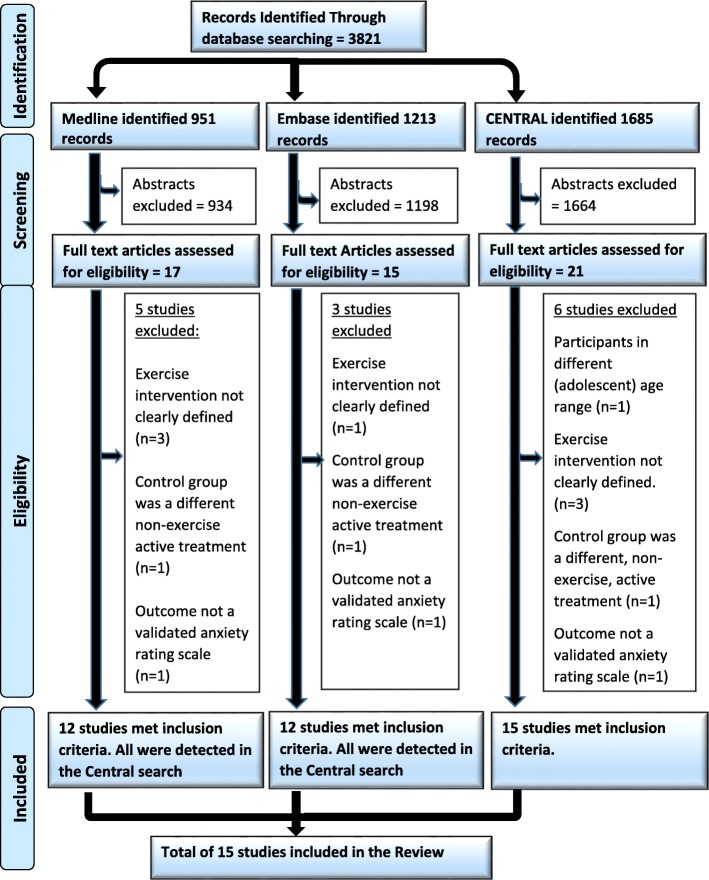
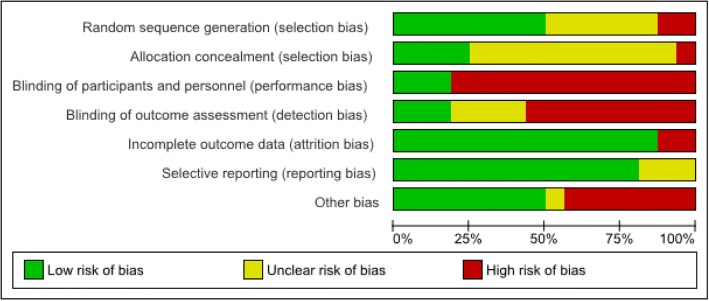
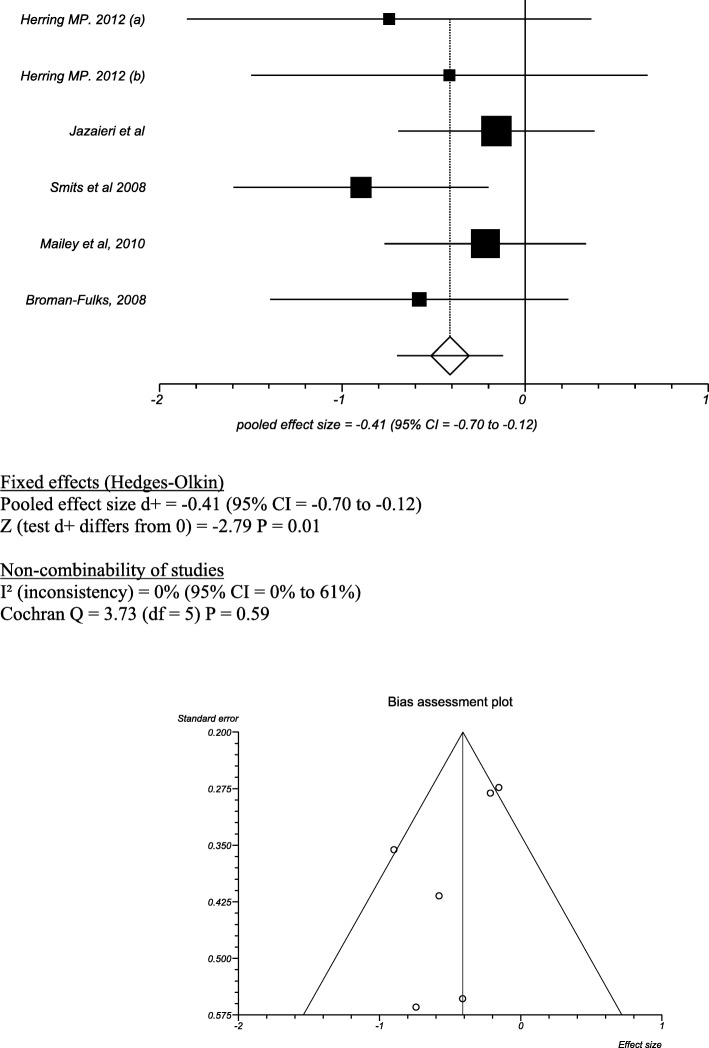
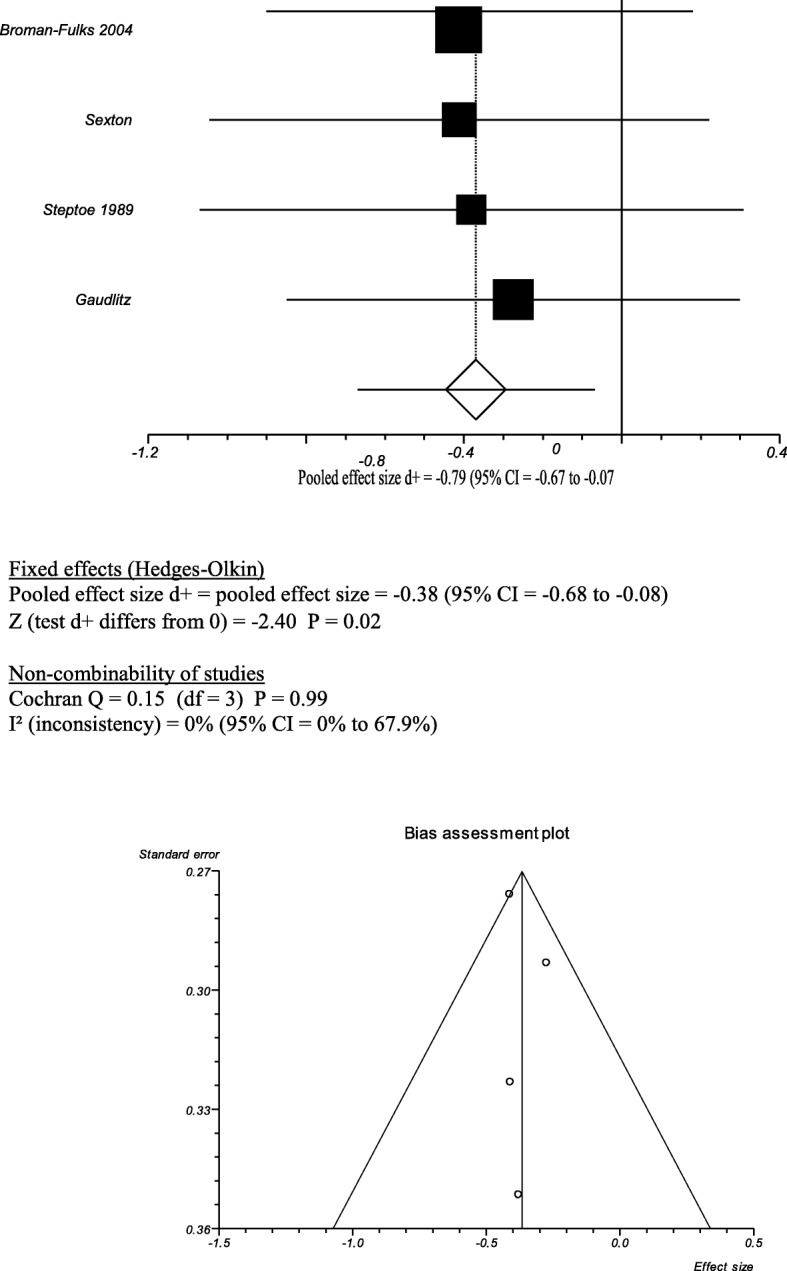
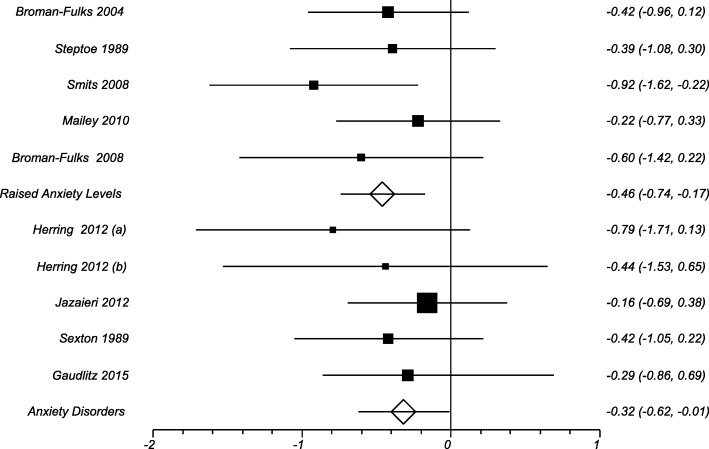
BACKGROUND: Anxiety disorders are common, yet treatment options in general practice are often limited to medication or CBT. There is a lack of evidence for the effectiveness of exercise in the treatment of anxiety in patients who present to general practice and also about the intensity of exercise required to lead to improvement. The aim of this systematic review was to assess the use of exercise versus waiting list control groups in the treatment of anxiety and also to assess the benefit of high intensity exercise vs low intensity exercise. Long term follow up scores were also analysed. We included patients who met diagnostic criteria for anxiety disorders or had clinically raised anxiety levels on a validated rating scale and performed a subgroup analysis of the outcomes between the two groups. The intervention was any aerobic exercise programme carried out for at least two weeks, or exercise carried out at high intensity for at least two weeks. The comparison groups were either a waiting list control group or low intensity exercise. METHOD: Systematic review of randomised controlled trials. Three databases were searched; CENTRAL, Medline and Embase. Outcome assessment was based on validated anxiety rating scales. The quality of the studies was appraised according to the Cochrane Risk of Bias tool. Effect sizes were calculated using the standardised mean difference. RESULTS: Fifteen studies were identified with a total of 675 patients. Nine trials had participants with diagnosed anxiety disorders and six trials had participants with raised anxiety on a validated rating scale. Aerobic exercise was effective in the treatment of raised anxiety compared to waiting list control groups (effect size - 0.41, 95% CI = - 0.70 to - 0.12). High intensity exercise programmes showed greater effects than low intensity programmes. There was no significant difference in outcomes between groups of patients with diagnosed anxiety disorders and patients who had raised anxiety on a rating scale. Conclusions were limited by the small number of studies and wide variation in the delivery of exercise interventions. CONCLUSION: Exercise programmes are a viable treatment option for the treatment of anxiety. High intensity exercise regimens were found to be more effective than low intensity regimens. The results have implications for the use of exercise schemes in General Practice.
Overview
The claims and statistics of this paper haven’t been checked yet.
Free: it reads the open-access text and checks the first 5 claims that cite a source we can check. Create a free account to check every claim.
Integrity signals
Registry
Cites
Statistics
Figures
Verification
Claims the paper makes
The claims and statistics of this paper haven’t been checked yet.
Free: it reads the open-access text and checks the first 5 claims that cite a source we can check. Create a free account to check every claim.
Claims other papers make about this one
Each is checked against this paper’s own text: does it say what the citing paper says it does?
The source backs part of the claim, not all of it — or backs it for a different population, condition or comparison.
In the citing paper
“These lower volumes are common across trials with adolescents, young adults and other adults with mental ill-health conditions ( Aylett 2018; Bailey 2018; Carter 2021; Cooney 2013);”
From Exercise for the treatment of anxiety in children and adolescents (2022) · cites this paper as Aylett 2018
Experimental — accuracy not yet measuredThe source backs part of the claim, not all of it — or backs it for a different population, condition or comparison.
In the citing paper
“These trials generally show low-certainty evidence for improved symptoms or rates of remission, when exercise is compared to control conditions, including no-treatment/waitlist, attention placebo, treatment as usual (TAU) or lower intensity exercise (e.g.stretching).”
From Exercise for the treatment of anxiety in children and adolescents (2022) · cites this paper as Aylett 2018
Experimental — accuracy not yet measuredThe source backs part of the claim, not all of it — or backs it for a different population, condition or comparison.
In the citing paper
“Exercise may therefore incorporate gradual exposure with response prevention in the context of training, similar to conventional psychotherapy paradigms using desensitization techniques through gradual exposure (80–82).”
From The Role of Exercise in Management of Mental Health Disorders: An Integrative Review (2021) · cites this paper as [81]
Experimental — accuracy not yet measuredThe source backs part of the claim, not all of it — or backs it for a different population, condition or comparison.
In the citing paper
“Additionally, the evidence suggests high-intensity exercise to be more effective at reducing anxiety, but both high- and low-intensity exercise were significantly more effective relative to no exercise [146].”
From The Cyclical Battle of Insomnia and Mental Health Impairment in Firefighters: A Narrative Review (2024) · cites this paper as [146]
Experimental — accuracy not yet measuredThe cited source says what the claim attributes to it.
In the citing paper
“For example, in adults with anxiety, head-to-head trials show a potential for greater symptom reduction in higher-versus lower-intensity exercise (Aylett 2018).”
From Exercise for the treatment of anxiety in children and adolescents (2022) · cites this paper as Aylett 2018
7 more claims about this paper
Create a free account to see every claim other papers make about this one.
Self-check
Percentages, sums and reported differences re-computed from the paper’s own numbers.
The self-check needs the paper’s full text.
Citations
Cites
Dermyshi, E., Wang, Y., Yan, C., Hong, W., Qiu, G., Gong, X., & Zhang, T. (2017) · Neonatology · doi:10.1159/000454668 · Cited by 24,451
GRADE guidelines: 1. Introduction—GRADE evidence profiles and summary of findings tables
Guyatt, G., Oxman, A. D., Akl, E. A., Kunz, R., Vist, G., Brozek, J., Norris, S., Falck-Ytter, Y., Glasziou, P., & deBeer, H. (2011) · Journal of Clinical Epidemiology · doi:10.1016/j.jclinepi.2010.04.026 · Cited by 10,681
Why Most Published Research Findings Are False
Ioannidis, J. P. A. (2005) · PLoS Medicine · doi:10.1371/journal.pmed.0020124 · Cited by 10,505
Diagnostic and Statistical Manual of Mental Disorders (DSM-IV)
Hu, R. J. (2003) · Encyclopedia of the Neurological Sciences · doi:10.1016/b0-12-226870-9/01070-4 · Cited by 9,117
Cochrane Handbook for Systematic Reviews of Interventions Version 5.0.1. The Cochrane Collaboration
Higgins, J. P. T., Green, S. R., & Higgins, J. P. T. (2008) · Cited by 7,261
Why Most Published Research Findings Are False
Ioannidis, J. P. A. (2005) · CHANCE · doi:10.1080/09332480.2005.10722754 · Cited by 4,702 · cited 1×
“A further limitation in study selection is the risk of Publication Bias, where there is a chance that only trials with positive results will be published, this can invalidate the results of a meta-analysis and is a particular risk in reviews where the number of studies is small [49] We sought to limit publication bias…”
MethodNorderyd, O. M., Koch, G., Papias, A., Köhler, A. A., Helkimo, A. N., Brahm, C., Lindmark, U., Lindfors, N., Mattsson, A., Rolander, B., et al. (2015) · PubMed · Cited by 3,584
Toward a unified treatment for emotional disorders
Barlow, D. H., Allen, L. B., & Choate, M. L. (2004) · Behavior Therapy · doi:10.1016/s0005-7894(04)80036-4 · Cited by 1,430 · cited 1×
“Finally, the Distraction Theory posits that exercise may provide “time out” from daily activities and decrease anxious rumination, allowing the patient to think anxiolytic thoughts instead [8].”
BackgroundPetruzzello, S. J., Landers, D. M., Hatfield, B. D., Kubitz, K. A., & Salazar, W. (1991) · Sports Medicine · doi:10.2165/00007256-199111030-00002 · Cited by 908
Physical activity dose-response effects on outcomes of depression and anxiety
DUNN, A. L., TRIVEDI, M. H., & O???NEAL, H. A. (2001) · Medicine and Science in Sports and Exercise · doi:10.1097/00005768-200106001-00027 · Cited by 816 · cited 1×
“Those that did explore this issue were inconclusive [13, 14, 16].”
Background
Research works printed but not linked: 2
- Review Manager (RevMan) [Computer program] Version 5.3. Copenhagen: The Nordic Cochrane Centre, The Cochrane Collaboration 2014
- StatsDirect Ltd StatsDirect statistical software 2013 London StatsDirect Ltd
Cited by
Items 201–240 of 240
de Carvalho, L. D. S. (2023) · Digital Library of Theses and Dissertations (Universidade de São Paulo) · doi:10.11606/d.100.2023.tde-26062023-072027
Biological mechanisms underlying susceptibility to traumatic stress: evidence from rodent models
An, N. (2024) · Research Publications (Maastricht University) · doi:10.26481/dis.20240116an
Effekte von Sporttraining bei psychischen Störungen
Oertel, V., Mehler, P., & Hänsel, F. (2023) · Springer eBooks · doi:10.1007/978-3-662-67880-0_2
Han, B., Duan, Y., Zhang, P., Zeng, L., Pi, P., Chen, J., & Du, G. (2024) · Research Square · doi:10.21203/rs.3.rs-4338122/v1
Yılmaz, S., Şanlıer, N., Göbel, P., Özyalçın, B., Açıkalın, B., & Kocabaş, Ş. (2024) · Revista de Nutrição · doi:10.1590/1678-9865202437e220250 · Cited by 1
Skinner, G., Teychenne, M. J., & Murphy, J. (2024) · Cogent Mental Health · doi:10.1080/28324765.2024.2380500 · Cited by 7
“Both aerobic and resistance exercise can benefit mental health by improving symptoms including stress, anxiety and depression (Aylett et al., 2018; Gordon et al., 2017, 2018; Mikkelsen et al., 2017; Morres et al., 2019; Portugal et al., 2013; Smith & Merwin, 2020).”
Psychological Impact of COVID-19 Pandemic on University Students and Staffs in Saudi Arabia
Alam, M. M. (2024) · King Khalid University journal of health sciences. · doi:10.4103/kkujhs.kkujhs_21_23
Salisbury, D. L., Warry, W., Soderlund, P. D., Cruikshank, K. R., Fergen, J. T., & Jacklin, K. M. (2024) · Journal of Clinical Exercise Physiology · doi:10.31189/2165-6193-13.3.69
Safe Deprescribing of Benzodiazepines and Z‐drugs
(2024) · Wiley eBooks · doi:10.1002/9781394291052.mdg003
A Causal Analysis of Five Population-Wide Health Interventions: Evidence From New Zealand Panel Data
Kempthorne, J. (2025) · Open Access Victoria University of Wellington | Te Herenga Waka (Figshare) · doi:10.26686/wgtn.29474216
Javanbakht, A. (2021) · The Conversation · doi:10.64628/aai.rcmkr5w5q
Lear, S. A. (2023) · The Conversation · doi:10.64628/aam.ery47tp9f
Physical Medicine and Rehabilitation Strategies in Cancer Treatment-Induced Cardiotoxicity
Aavula, M., Kandikattu, S., Agrawal, D. K., & Fraix, M. P. (2025) · Advances in biochemistry in health and disease · doi:10.1007/978-3-031-90598-8_40
Fight, Flight, or Fitness: Exercise as a Tool to Complete the Stress Cycle and Help Manage Anxiety
Hathaway, L., & Greenspoon, L. A. (2025) · ACSMʼs Health & Fitness Journal · doi:10.1249/fit.0000000000001100
Exercise and cognition in people with degenerative cerebellar ataxia: a narrative review
Macpherson, C. E., Bjalme-Evans, M., Awad, F., Kuo, S., & Quinn, L. (2025) · Neurodegenerative Disease Management · doi:10.1080/17582024.2025.2594396
Sleep quality and pain after different types of acute aerobic exercise
José, S. P. D. S., de Souza, J. F. T., Santos, I. D., Tufik, S. B., & Antunes, H. K. M. (2025) · Brazilian Journal of Kinanthropometry and Human Performance · doi:10.1590/1980-0037.2025v27e93696
Wang, G., Yang, M., Hong, M. R., Krauss, J., & Bailey, J. F. (2022) · Figshare · doi:10.6084/m9.figshare.19350002
Han, B., Duan, Y., Zhang, P., Zeng, L., Pi, P., Chen, J., & Du, G. (2024) · Figshare · doi:10.6084/m9.figshare.26211357
Fiedler, D. V., Rosenstiel, S., Zeibig, J.-M., Seiffer, B., Welkerling, J., Frei, A. K., Studnitz, T., Baur, J., Helmhold, F., Ray, A. M., et al. (2024) · Figshare · doi:10.6084/m9.figshare.26589588
Wolf, S., Seiffer, B., Zeibig, J.-M., Welkerling, J., Bauer, L. L., Frei, A. K., Studnitz, T., Rosenstiel, S., Fiedler, D. V., Helmhold, F., et al. (2021) · Figshare · doi:10.6084/m9.figshare.16909996
Jennings, C. A., Singh, B., Oni, H., Mazzacano, A., & Maher, C. (2024) · Figshare · doi:10.6084/m9.figshare.26578004
Wang, G., Yang, M., Hong, M. R., Krauss, J., & Bailey, J. F. (2022) · Figshare · doi:10.6084/m9.figshare.19349999
Javanbakht, A. (2021) · The Conversation · doi:10.64628/aak.7upumpyvv
Bergsport und Angststörungen und posttraumatische Belastungsstörungen
Bichler, C. S., Stürz, K., Hüfner, K., & Kopp, M. (2025) · Springer eBooks · doi:10.1007/978-3-662-70316-8_12
Störungsspezifische Behandlung von Angsterkrankungen: Eine aktuelle Betrachtung
Rausch, M., Pyrkosch, L., & Wehrheim, A. (2026) · Die Psychotherapie · doi:10.1007/s00278-025-00822-0
Liu, J., Wang, H., Lan, Y., Yuan, D., Du, B., Zhou, Y., Zhang, W., Ke, X., Jiang, Q., Wang, F., et al. (2026) · Psychology Research and Behavior Management · doi:10.2147/prbm.s570270 · Cited by 1
“71 Thus, this study not only validates previous research findings but also offers a comprehensive comparison and ranking of various exercise interventions, reinforcing the pivotal role of exercise in anxiety management.”
Sang, Y., Wang, X., Jiang, J., Zeng, Z., Huang, Y., & Lun, L. I. (2026) · Frontiers in Psychology · doi:10.3389/fpsyg.2026.1754190
Transtornos de ansiedade em mulheres: a carga biopsicossocial
Abramov, A. K., Kubrusly, R. C. C., & Silva, B. T. (2025) · Neurociências & Sociedade · doi:10.22409/nes.v2i1.66481 · Cited by 2
Dong, J., Lv, X., & Chi, J. (2026) · BMC Pregnancy and Childbirth · doi:10.1186/s12884-026-09149-3 · Cited by 2
“In contrast, established literature on broader clinical populations demonstrates that higher-intensity modalities—such as moderate-to-vigorous structured aerobic or functional resistance training—are highly effective in treating clinical anxiety [59].”
Su, H., Li, L., Wu, J., Nguyen, M. C., Ding, H., Wei, C., & Zhang, Z. (2026) · BMC Sports Science Medicine and Rehabilitation · doi:10.1186/s13102-026-01728-3 · Cited by 1
“However, despite this theoretical rationale, study [17] indicated that high intensity exercise might yield more pronounced effects.”
Chong, T. W. H., Partovi, A., McCurry, J., Curran, E. M., Ames, D. J., Anstey, K. J., Bahar‐Fuchs, A., BRYANT, C., Cox, K. L., Loi, S., et al. (2026) · BJPsych Open · doi:10.1192/bjo.2026.12008
Rice, J. M., O'Sullivan, D. T., Gordon, B. R., Lindheimer, J. B., Monroe, D. C., Lyons, M., & Herring, M. P. (2026) · Mental health and physical activity · doi:10.1016/j.mhpa.2026.100796
Workforce constraints and the sustainability of older adult leisure time physical activity
Yeomans, C., Bowell, P., & Butson, M. L. (2026) · Managing Sport and Leisure · doi:10.1080/23750472.2026.2690172
Kramer, B., Wright, K. E., Jackson, B., Simpson, A., & Furzer, B. J. (2026) · Mental health and physical activity · doi:10.1016/j.mhpa.2026.100801
Gao, Y., Zhang, J., Ma, J., & Lyu, Z. (2026) · Frontiers in Psychiatry · doi:10.3389/fpsyt.2026.1871522
Małyszek, P., Papińska, J., Lengier, M., Świderska, M., Pastuszak, F. C., Zych, S., Świstak, S., Powęska, N., Buziak, J., & Pielacha, J. (2026) · International Journal of Innovative Technologies in Social Science · doi:10.31435/ijitss.3(51).2026.6240
Zheng, H., Yuan, M., Ling, Z., Chen, Y., Gao, Q., Huang, B., Fan, S., Li, Y., Wang, R., Zhu, Z., et al. (2026) · International Journal of Clinical Practice · doi:10.1155/ijcp/8816329 · Cited by 1
Błaszkowski, B., Cemaga, R., Hebda, P., Król, M., Kołodziej, P., Kubicki, M., Michnowska, W., Wolski, A., Czapliński, M., & Patalong, M. (2026) · International Journal of Innovative Technologies in Social Science · doi:10.31435/ijitss.3(51).2026.6139
Mühlbacher, M., Schennach, R., Boesl, T., Bamberg, C., Koch, S., & Voderholzer, U. (2026) · Psychotherapy and Psychosomatics · doi:10.1159/pps/aemag016
Chatzoglou, E., Fishstrom, S., McFadden, K., & Vaughn, S. R. (2026) · Learning Disabilities Research and Practice · doi:10.1177/09388982261496951
Metadata
- Authors
- Aylett, E., Small, N., & Bower, P.
- Affiliations
- University of Manchester (GB)
- Corresponding author
- Aylett, Elizabeth
- Venue
- BMC Health Services Research
- Published
- 2018-07-16
- Volume
- 18
- Issue
- 1
- Pages
- 559-559
- ISSN
- 1472-6963 (ISSN-L)
- PMC
- PMC6048763
- OpenAlex
- W2883255049
- Cited by
- 242
- References
- 55
- Citations by year
- 2026: 20 · 2025: 27 · 2024: 38 · 2023: 47 · 2022: 40 · 2021: 39 · 2020: 24 · 2019: 6 · 2018: 1
- FWCI
- 2.30
- Type
- journal article
- Language
- en
- Open access
- gold
- doi.org
- Licence
- cc-by
- creativecommons.org/licenses/by/4.0/ (tdm)
- Locations
- BMC Health Services Research (publishedVersion, cc-by)
- Europe PMC (PubMed Central) (publishedVersion, cc-by)
- PubMed Central (publishedVersion, cc-by)
- PubMed (publishedVersion)
- Research Explorer (The University of Manchester) (acceptedVersion, other-oa)
- DOAJ (DOAJ: Directory of Open Access Journals) (submittedVersion, cc-by-sa)
- Funders
- National Institute for Health Research
- Topics
- Health Sciences › Medicine › Public Health, Environmental and Occupational Health › Physical Activity and Health
- Social Sciences › Psychology › Experimental and Cognitive Psychology › Anxiety, Depression, Psychometrics, Treatment, Cognitive Processes
- Health Sciences › Medicine › Cardiology and Cardiovascular Medicine › Cardiac Health and Mental Health
- Keywords
- exercise therapy, anxiety disorders, aerobic exercise, high-intensity exercise, low-intensity exercise, general practice, primary care treatment, waitlist control, long-term follow-up, anxiety rating scales
- MeSH terms
- Anxiety Disorders, Exercise Therapy, Humans, Waiting Lists, Exercise, Randomized Controlled Trials as Topic, Outcome Assessment, Health Care, Control Groups, General Practice
About these checks
Registry, retraction, Cites and statistics results are computed, not judged, with one exception: a printed reference that no index lists is read once by a model before it counts as a citation error. Claims are extracted by a model and kept only when their quote appears verbatim in the text; each cited source is then checked, with a model’s help, for whether it says what the claim relies on. Those verdicts can be wrong — read the claim’s quote and the cited source before relying on one.
Statistics and arithmetic are recomputed, not judged.
Confidence bands are shown only for fields calibrated on our annotated test set. None is calibrated yet, so no band is shown.
What counts as a claim ›How we measure confidence ›How we check this ›
Are you an author, or do you see a problem with this page? Request a review
Data sources
Bibliographic data: Semantic Scholar, OpenAlex, Crossref.
Contains information from the Semantic Scholar Academic Graph Datasets, made available under the ODC Attribution License (ODC-BY 1.0).
Semantic Scholar’s data is described in: Kinney, R., et al. (2023). The Semantic Scholar Open Data Platform. arXiv:2301.10140.
