

The DOI matches its Crossref record; 37 of the 37 references it cites were found in a registry or an index.
Applying the RE-AIM framework to evaluate a holistic caregiver-centric hospital-to-home programme: a feasibility study on Carer Matters
Open accessAbstract
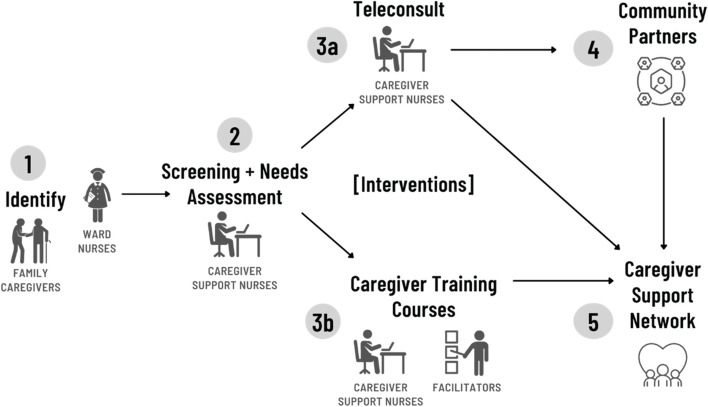
Background: Prolonged caregiving of an older adult can cause family caregivers to be overwhelmed, potentially affecting the well-being of both the caregivers and their care-recipients. Carer Matters is a holistic hospital-to-home programme, centred on caregivers’ needs as their care-recipients transit from hospital to home. The programme was piloted to support caregivers through caregivers needs assessment, tailored resources, tele-support, training courses, and community support network. This study aimed to examine the feasibility of Carer Matters in a tertiary hospital in Singapore. Methods: This feasibility study was conducted on the pilot implementation from January to December 2021, during the Covid-19 pandemic. It adopted the Reach, Effectiveness, Adoption, Implementation, and Maintenance (RE-AIM) framework. The study highlighted quantitative data collected from key process indicators, such as number of caregivers screened, assessed on their needs and provided with assistance. Additionally, qualitative data was collected from in-depth interviews with 51 stakeholders involved in the implementation to examine their perspectives and experiences. These included family caregivers, clinician caregiver support nurses, hospital leaders and community partners. Results: During the pilot, 550 caregivers were enrolled. All caregivers received educational resources when they completed the needs assessment, while 69 of them who reported high burden were given tele-support and 252 attended our caregiver training courses. Despite initial recruitment challenges and obstacles to adoption, stakeholders interviewed found Carer Matters to be effective in providing caregivers with emotional support, knowledge and skills that improved their caregiving abilities, and reduced their sense of isolation and caregiving stress. Among caregivers, the training courses were effective with majority of caregivers agreeing that the courses addressed their needs (99%) and improved their knowledge of the relevant disease conditions (97%). Programme maintenance considered among stakeholders included strategies such as multipronged approach in recruiting caregivers and inviting caregiver advocates to share their experiences. Conclusion: This feasibility study highlights that Carer Matters is a valuable component to the ecosystem of support for family caregivers and their care recipients. Carer Matters extends the current patient-centric care model to a more holistic post-discharge continuity of care for both caregivers and their care-recipients, improving and maintaining their overall well-being to better allow transition from hospital-to home. Trial registration: Feasibility Study of Project Carer Matters for Family Caregivers of Persons with Dementia (NCT number: NCT05205135).
Overview
The claims and statistics of this paper haven’t been checked yet.
Run the check — free, no account needed. It reads the open-access text and checks the sources it cites.
Integrity signals
Registry
Cites
Statistics
Figures
Verification
Claims the paper makes
The claims and statistics of this paper haven’t been checked yet.
Run the check — free, no account needed. It reads the open-access text and checks the sources it cites.
Claims other papers make about this one
Each is checked against this paper’s own text: does it say what the citing paper says it does?
The cited source says what the claim attributes to it.
In the citing paper
“In the literature, transitional care support remains patient-focused, which may mean that interventions to improve capability to care may be limited by a failure to support the needs of the carer [112].”
From Do hospital-to-home transitions work for older adults with multiple long-term conditions including dementia? A realist review (2025) · cites this paper as [112]
Self-check
Percentages, sums and reported differences re-computed from the paper’s own numbers.
The self-check needs the paper’s full text.
Citations
Cites
Using thematic analysis in psychology
Braun, V., & Clarke, V. (2006) · Qualitative Research in Psychology · doi:10.1191/1478088706qp063oa · Cited by 194,414
The Hospital Anxiety and Depression Scale
Zigmond, A. S., & Snaith, R. P. (1983) · Acta Psychiatrica Scandinavica · doi:10.1111/j.1600-0447.1983.tb09716.x · Cited by 47,139
Depression and quality of life in older persons: A review
Sivertsen, H., Bjørkløf, G. H., Engedal, K., Selbæk, G., & Helvik, A.-S. (2015) · Dementia and Geriatric Cognitive Disorders · doi:10.1159/000437299 · Cited by 14,152
Pearlin, L. I., & Schooler, C. (1978) · Journal of Health and Social Behavior · doi:10.2307/2136319 · Cited by 7,791 · cited 14×
“Glasgow RE, Vogt TM, Boles SM. Evaluating the public health impact of health promotion interventions: the RE-AIM framework.”
MethodInfluentialEvaluating the public health impact of health promotion interventions: the RE-AIM framework.
Glasgow, R. E., Vogt, T. M., & Boles, S. M. (1999) · American Journal of Public Health · doi:10.2105/ajph.89.9.1322 · Cited by 7,217 · cited 1×
“Other questionnaires captured psychological indicators such as the use of task-focused or emotion-focused coping, caregiver burden, caregiver anxiety and depression, caregiver competence, and caregiver mastery; utilising the Coping Inventory for Stressful Situations, a modified version of the Zarit Burden Inventory [2…”
MethodPearlin, L. I., & Schooler, C. (1978) · PubMed · Cited by 6,764
Relatives of the Impaired Elderly: Correlates of Feelings of Burden
Zarit, S. H., Reever, K. E., & Bach-Peterson, J. (1980) · The Gerontologist · doi:10.1093/geront/20.6.649 · Cited by 5,810
Caregiving and the stress process: an overview of concepts and their measures
Pearlin, L. I., Mullan, J. T., Semple, S. J., & Skaff, M. M. (1990) · The Gerontologist · doi:10.1093/geront/30.5.583 · Cited by 4,810
But is it rigorous? Trustworthiness and authenticity in naturalistic evaluation
Lincoln, Y. S., & Guba, E. G. (1986) · New Directions for Program Evaluation · doi:10.1002/ev.1427 · Cited by 3,668
Kirkwood, B. R., & Sterne, J. A. C. (2014) · Bristol Research (University of Bristol) · Cited by 2,820
Caregiver Burden: A Clinical Review
Adelman, R. D., Tmanova, L. L., Delgado, D., Dion, S., & Lachs, M. S. (2014) · JAMA · doi:10.1001/jama.2014.304 · Cited by 2,002
The RE-AIM framework: a systematic review of use over time
Gaglio, B., Shoup, J. A., & Glasgow, R. E. (2013) · American Journal of Public Health · doi:10.2105/ajph.2013.301299 · Cited by 1,029
Normative data for the HADS from a large non-clinical sample
Crawford, J. R., Henry, J. D., Crombie, C., & Taylor, E. P. (2001) · British Journal of Clinical Psychology · doi:10.1348/014466501163904 · Cited by 815 · cited 1×
“Our findings are in congruence with current literature which suggests that much like healthcare providers, family caregivers tend to prioritize the care of patients, often causing the latter to neglect their own well-being [9, 10, 35].”
ResultCaregiver burden: A concept analysis
Liu, Z., Heffernan, C., & Tan, J. (2020) · International Journal of Nursing Sciences · doi:10.1016/j.ijnss.2020.07.012 · Cited by 749
Triangulation in research, with examples
Noble, H., & Heale, R. (2019) · Evidence Based Nursing · doi:10.1136/ebnurs-2019-103145 · Cited by 728
Qualitative approaches to use of the RE-AIM framework: rationale and methods
Holtrop, J. S., Rabin, B. A., & Glasgow, R. E. (2018) · BMC Health Services Research · doi:10.1186/s12913-018-2938-8 · Cited by 404
Xie, B., Charness, N. H., Fingerman, K. L., Kaye, J. A., Kim, M. T., & Khurshid, A. (2020) · Journal of Aging & Social Policy · doi:10.1080/08959420.2020.1771237 · Cited by 364
Identifying keys to success in reducing readmissions using the ideal transitions in care framework
Burke, R. E., Guo, R., Prochazka, A. V., & Misky, G. J. (2014) · BMC Health Services Research · doi:10.1186/1472-6963-14-423 · Cited by 164
“If We Build It, Will It Stay?” A Case Study of the Sustainability of Whole‐System Change in London
Greenhalgh, T., Macfarlane, F., BARTON‐SWEENEY, C., & Woodard, F. (2012) · Milbank Quarterly · doi:10.1111/j.1468-0009.2012.00673.x · Cited by 114
Chan, E., Glass, G. F., Chua, K., Ali, N., & Lim, W. S. (2018) · The journal of nutrition health & aging · doi:10.1007/s12603-018-1098-1 · Cited by 88
Self-citationShyu, Y. L. (2000) · Journal of Advanced Nursing · doi:10.1046/j.1365-2648.2000.01519.x · Cited by 74
Experiences of Formal and Informal Caregivers of Older Persons in Singapore
Mehta, K. K., & Thang, L. L. (2017) · Journal of Cross-Cultural Gerontology · doi:10.1007/s10823-017-9329-1 · Cited by 67
Health Impacts of Caregiving for Older Adults With Functional Limitations
Chan, A. W.-M., Malhotra, C., Malhotra, R., Rush, A. J., & Østbye, T. (2013) · Journal of Aging and Health · doi:10.1177/0898264313494801 · Cited by 65
Challenges Faced by Family Caregivers: Multiple Perspectives on Eldercare
Strommen, J., Fuller, H. R., Sanders, G. F., & Elliott, D. M. (2018) · Journal of Applied Gerontology · doi:10.1177/0733464818813466 · Cited by 57
Improving caregiving competence, stress coping, and mental well-being in informal dementia carers
Chiu, M. (2013) · World Journal of Psychiatry · doi:10.5498/wjp.v3.i3.65 · Cited by 50
Nurjono, M., Shrestha, P., Ang, I. Y. H., Shiraz, F., Eh, K. X., Toh, S.-A. E. S., & Vrijhoef, H. J. (2020) · BMC Health Services Research · doi:10.1186/s12913-020-05263-w · Cited by 47
Lau, J. H., Abdin, E., Jeyagurunathan, A., Seow, E., Ng, L. L., Vaingankar, J. A., Chong, S. A., & Subramaniam, M. (2021) · BMC Geriatrics · doi:10.1186/s12877-021-02014-2 · Cited by 42
Garand, L., Morse, J. Q., ChiaRebecca, L., Barnes, J. L., Dadebo, V., López, O. L., & Dew, M. A. (2019) · International Journal of Geriatric Psychiatry · doi:10.1002/gps.5095 · Cited by 38
Chan, E., Ni, P. K., Glass, G. F., & Lim, W. S. (2019) · Geriatric Nursing · doi:10.1016/j.gerinurse.2019.03.015 · Cited by 35
Self-citationHospital to Home: Supporting the Transition From Hospital to Home for Older Adults
Barber, B. V., Weeks, L. E., Steeves-Dorey, L., McVeigh, W., Stevens, S., Moody, E., & Warner, G. (2021) · Canadian Journal of Nursing Research · doi:10.1177/08445621211044333 · Cited by 23
Chan, E., Lim, Z.-X., Ding, Y.-Y., Chan, Y., & Lim, W. (2019) · The Journal of Nutrition, Health & Aging · doi:10.1007/s12603-019-1197-7 · Cited by 20
Self-citationImplementing Caregiver Support Programs in a Regional Stroke System
Tseung, V., Jaglal, S. B., Salbach, N. M., & Cameron, J. I. (2019) · Stroke · doi:10.1161/strokeaha.119.026660 · Cited by 17
Ong, Z. L., Chew, E. Y. H., Glass, G. F., & Chan, E. (2022) · Geriatric Nursing · doi:10.1016/j.gerinurse.2021.12.016 · Cited by 16
Self-citationTowle, R. M., Low, L. L., Tan, S. B., & Hendrix, C. C. (2020) · BMJ Open Quality · doi:10.1136/bmjoq-2019-000873 · Cited by 15
Caregiving‐related needs of family caregivers of older Singaporeans
Ajay, S., Østbye, T., & Malhotra, R. (2017) · Australian Journal on Ageing · doi:10.1111/ajag.12370 · Cited by 13
Chan, E., & Glass, G. F. (2022) · Journal of Advanced Nursing · doi:10.1111/jan.15210 · Cited by 10
Self-citationHospital to Home: Supporting the Transition from Hospital to Home for Older AdultsPreprint
Barber, B. V., Weeks, L. E., Steeves-Dorey, L., McVeigh, W., Stevens, S., Moody, E., & Warner, G. (2021) · Research Square · doi:10.21203/rs.3.rs-275757/v1 · Cited by 7
Research works printed but not linked: 1
- Yin RK. Case study research: design and methods. (3rd Ed). Thousand Oaks: Sage Publications, Inc; 2003.
Cited by
Sorted by citations
Liu, W., Jiang, F., Han, C., Yu, G., Shi, B., & Sun, J. (2026) · BMC Sports Science Medicine and Rehabilitation · doi:10.1186/s13102-026-01628-6 · Cited by 39
Using Implementation Science in Nursing Research
Roberts, N. A., Young, A., & Duff, J. S. (2023) · Seminars in Oncology Nursing · doi:10.1016/j.soncn.2023.151399 · Cited by 33
‘24/7’ Caregiving: A Qualitative Analysis of an Emerging Phenomenon of Interest in Caregiving
Chew, E. Y. H., Ong, Z. L., Glass, G. F., & Chan, E. (2022) · International Journal of Environmental Research and Public Health · doi:10.3390/ijerph192417046 · Cited by 12
Self-citationLawson, L., Cooper, M., Tolley, C., Hand, A., & Nazar, H. (2025) · BMC Geriatrics · doi:10.1186/s12877-025-06123-0 · Cited by 10
“In the literature, transitional care support remains patient-focused, which may mean that interventions to improve capability to care may be limited by a failure to support the needs of the carer [112].”
Why do pressure injuries still occur? A multicenter qualitative study of nurses and caregivers
Sim, W., Michelle, T. H. S. C., Lim, N. Q. B. I., Loh, V. M. P., Chua, C. W. X., Er, J., Er, J. B. T., Phan, P., & Choi, E. C.-E. (2024) · JAAD International · doi:10.1016/j.jdin.2024.05.006 · Cited by 9
Metadata
- Authors
- Chan, E. Y., Wu, L. T., Ng, E. J. Y., Glass, G. F., & Tan, R. H. T.
- Affiliations
- National University of Singapore (SG)
- Tan Tock Seng Hospital (SG)
- Corresponding author
- Chan, Ee Yuee
- Venue
- BMC Health Services Research
- Published
- 2022-07-19
- Volume
- 22
- Issue
- 1
- Pages
- 933-933
- ISSN
- 1472-6963 (ISSN-L)
- PMC
- PMC9296119
- OpenAlex
- W4286213876
- Cited by
- 19
- References
- 37
- Citations by year
- 2026: 5 · 2025: 4 · 2024: 6 · 2023: 3 · 2022: 1
- FWCI
- 5.24
- Type
- journal article
- Language
- en
- Open access
- gold
- doi.org
- Locations
- BMC Health Services Research (publishedVersion, cc-by)
- PubMed Central (publishedVersion, cc-by)
- PubMed (publishedVersion)
- DOAJ (DOAJ: Directory of Open Access Journals) (submittedVersion, cc-by-sa)
- Funders
- Geriatric Education and Research Institute (GERI1626)
- Topics
- Health Sciences › Nursing › Research and Theory › Nursing care and research
- Health Sciences › Health Professions › General Health Professions › Health Policy Implementation Science
- Health Sciences › Medicine › Geriatrics and Gerontology › Geriatric Care and Nursing Homes
- Keywords
- family caregivers, hospital-to-home transition, caregiver burden, dementia, RE-AIM framework, program feasibility, caregiver needs assessment, caregiver education, continuity of care, post-discharge care, caregiver well-being, caregiver isolation
- MeSH terms
- COVID-19, Aftercare, Aged, Feasibility Studies, Hospitals, Humans, Patient Discharge, Social Support, Caregivers, Ecosystem, Pandemics
About these checks
Registry, retraction, Cites and statistics results are computed, not judged, with one exception: a printed reference that no index lists is read once by a model before it counts as a citation error. Claims are extracted by a model and kept only when their quote appears verbatim in the text; each cited source is then checked, with a model’s help, for whether it says what the claim relies on. Those verdicts can be wrong — read the claim’s quote and the cited source before relying on one.
Statistics and arithmetic are recomputed, not judged.
Confidence bands are shown only for fields calibrated on our annotated test set. None is calibrated yet, so no band is shown.
What counts as a claim ›How we measure confidence ›How we check this ›
Are you an author, or do you see a problem with this page? Request a review
