

Effect of leadership styles on turnover intention among staff nurses in private hospitals: the moderating effect of perceived organizational support
Open accessThe DOI matches its Crossref record; 65 of the 65 references it cites were found in a registry or an index.
Abstract
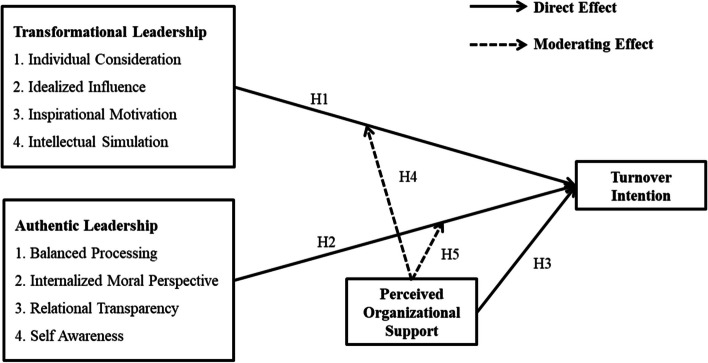
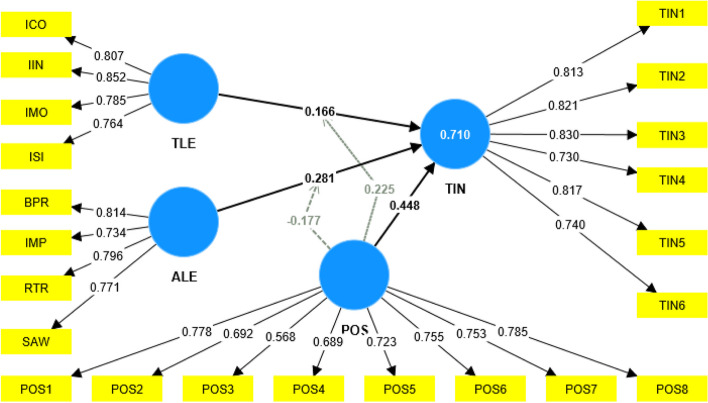
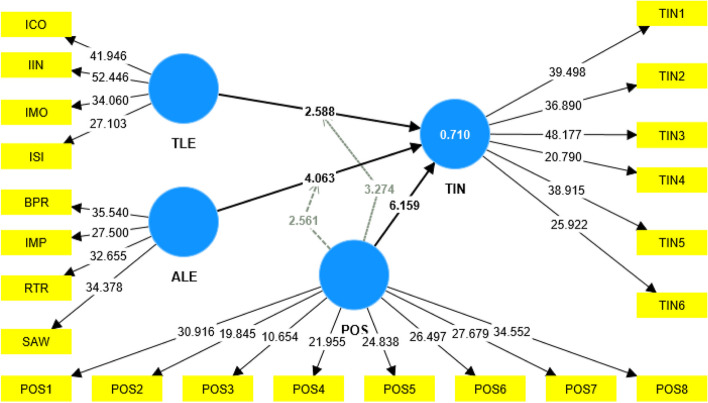
Leadership styles have often been proven to support employees in performing their duties better and with more efficiency while enabling them to have extended organizational tenures. Staff nurses are an essential resource of hospitals to ensure proper administration and quality patient health care. The study aims to determine how transformational and authentic leadership styles affect the staff nurses’ turnover intention in private hospitals. In addition, it also finds the moderating effect of perceived organizational support. An explanatory quantitative research design with a cross-sectional investigation and a stratified sampling strategy was used for the study. Data from 296 nurses from the eight chosen private hospitals in the Kingdom of Bahrain were gathered using a questionnaire with 24 items. Smart-PLS was employed to conduct PLS-SEM (partial least squares structural equation modeling) to measure direct and indirect effects. The result indicates that transformational, authentic leadership styles and perceived organizational support significantly negatively affect nurses’ turnover intention. The study confirms the negative moderating effect of perceived organizational support between transformational leadership and turnover intention and the positive moderating effect of perceived organizational support between authentic leadership and turnover intention. Managers should concentrate on the leadership style to avoid its impact on turnover intention. By considering human resource practices such as communication and training strategies to cope with the negative effect of turnover intention, organizations can enhance employee engagement, improve job satisfaction, and foster a more stable and productive work environment. The present research revealed the adverse impact of turnover intention within hospitals by examining its association with leadership styles. The research made a significant contribution to the existing literature by delving into the impact of leadership styles on turnover intention, focusing on the moderating effect of perceived organizational support. The study’s findings shed light on the intricate relationship between leadership practices and employee turnover, providing valuable insights for both scholars and practitioners in the field. The study used a cross-sectional design to collect data and ensured the absence of standard method variance. The research enhanced the social dominance theory (SDT) by examining how perceived organizational support moderates the relationship between leadership styles and turnover intention.
Overview
The claims and statistics of this paper haven’t been checked yet.
Free: it reads the open-access text and checks the first 5 claims that cite a source we can check. Create a free account to check every claim.
Integrity signals
Registry
Cites
Statistics
Figures
Verification
Claims the paper makes
The claims and statistics of this paper haven’t been checked yet.
Free: it reads the open-access text and checks the first 5 claims that cite a source we can check. Create a free account to check every claim.
Self-check
Percentages, sums and reported differences re-computed from the paper’s own numbers.
The self-check needs the paper’s full text.
Citations
Cites
1 retracted
Srivastava, S., & Agrawal, S. (2020) · Journal of Organizational Change Management · doi:10.1108/jocm-02-2020-0063 · Cited by 212
RetractedEvaluating Structural Equation Models with Unobservable Variables and Measurement Error
Fornell, C., & Larcker, D. F. (1981) · Journal of Marketing Research · doi:10.2307/3151312 · Cited by 109,314
Evaluating structural equation models with unobservable variables and measurement error
Fornell, C., & Larcker, D. F. (1981) · Journal of Marketing Research · doi:10.1177/002224378101800104 · Cited by 109,190
A new criterion for assessing discriminant validity in variance-based structural equation modeling
Henseler, J., Ringle, C. M., & Sarstedt, M. (2015) · Journal of the Academy of Marketing Science · doi:10.1007/s11747-014-0403-8 · Cited by 38,459
When to Use and How to Report the Results of PLS-SEM
Hair, J. F., Risher, J. J., Sarstedt, M., & Ringle, C. M. (2019) · European Business Review · doi:10.1108/ebr-11-2018-0203 · Cited by 27,541
Multivariate data analysis : a global perspective
Hair, J. F. (2010) · Cited by 19,929
Determining sample size for research activities
Krejcie, R. V., & Morgan, D. W. (1970) · Educational and Psychological Measurement · doi:10.1177/001316447003000308 · Cited by 18,930
Using pls path modeling in new technology research: updated guidelines
Henseler, J., Hubona, G., & Ray, P. A. (2016) · Industrial Management & Data Systems · doi:10.1108/imds-09-2015-0382 · Cited by 7,173 · cited 1×
“An approximate model fit needs to be utilized to evaluate the model fit [74, 75].”
MethodAuthentic leadership development: Getting to the root of positive forms of leadership
Avolio, B. J., & Gardner, W. L. (2005) · The Leadership Quarterly · doi:10.1016/j.leaqua.2005.03.001 · Cited by 5,478
Structural Equation Modeling With AMOS: Basic Concepts, Applications, and Programming, Third Edition
Byrne, B. M. (2016) · doi:10.4324/9781315757421 · Cited by 4,653
Research works printed but not linked: 5
- Eisenberger R, Malone GP, Presson WD. Optimizing perceived organi- zational support to enhance employee engagement. Soc Hum Resour Manag Soc Ind Organ Psychol. 2016;2:1-22.
- Puni AA. Leadership styles, employee turnover intentions and counter- productive work behaviours. Int J Innov Res Dev. 2016;5:1-7.
- Alzoubi RHM, Jaaffar AH. Leadership styles, Crisis Management, and Hotel performance: a conceptual perspective of the Jordanian hotel. J Crit Rev. 2020;7:556-62.
- Kline RB. Principles and practices of structural equation modelling, 4th Editio. New York: The Guilford Press; 2015.
- Baykal E. Mediator effect of perceived organizational support in the rela- tionship between authentic leadership and organizational commitment. Manas J Soc Stud. 2020;9:1674-88.
Cited by
Prevalence of turnover intention among emergency nurses worldwide: a meta-analysis
Ren, H., Xue, Y., Li, P., Yin, X., Xin, W., & Li, H. (2024) · BMC Nursing · doi:10.1186/s12912-024-02284-2 · Cited by 46
Singh, B., Malviya, R., & Kaunert, C. (2024) · Advances in human resources management and organizational development book series · doi:10.4018/979-8-3693-3470-6.ch014 · Cited by 26
Terry, D. R., Jacobs, S., Moloney, W., East, L., Ryan, L., Elliott, J., Tulleners, T., Masamba, H., & Peck, B. (2025) · Journal of Advanced Nursing · doi:10.1111/jan.16817 · Cited by 24
Artificial Intelligence and Employee Well-Being: Projecting Psychological and Physical Healthcare
Singh, B., Kaunert, C., & Ravesangar, K. (2024) · Advances in human resources management and organizational development book series · doi:10.4018/979-8-3693-6412-3.ch005 · Cited by 16
Workplace Gaslighting Is Associated with Nurses’ Job Burnout and Turnover Intention in Greece
Moisoglou, I., Katsiroumpa, A., Konstantakopoulou, O., Papathanasiou, I. V., Katsapi, A., Prasini, I., Chatzi, M., & Galanis, P. (2025) · Healthcare · doi:10.3390/healthcare13131574 · Cited by 22
Hassanein, F. R., Daouk, A., Zakhem, N. B., Sayed, R. E., Tahan, S. A., Houmani, H., & Dilby, H. K. A. (2025) · Administrative Sciences · doi:10.3390/admsci15060204 · Cited by 27
Antecedents of Patient Loyalty: Exploring Mediating and Moderating Paradigms in Public Hospitals
Hussain, A., Kanwel, S., Khan, S., Alonazi, W. B., Malik, A., & Khan, A. A. (2025) · Patient Preference and Adherence · doi:10.2147/ppa.s492710 · Cited by 24
Othman, A. A., Mahran, H. M., & Ali, H. I. (2025) · BMC Nursing · doi:10.1186/s12912-025-03301-8 · Cited by 18
Xu, H., Wu, C., Chen, C., Yan, B., Zha, N., Zhang, K., Liu, F., & Lang, H. (2025) · Intensive and Critical Care Nursing · doi:10.1016/j.iccn.2025.104136 · Cited by 12
Jimenez-Caceres, A., Agusti-Boada, A., Caro, C., & Monistrol, O. (2025) · BMC Nursing · doi:10.1186/s12912-025-03573-0 · Cited by 21
The Relationship Between Quality of Life and Nurses’ Turnover Intentions: A Cross‐Sectional Study
Alshmemri, M. (2025) · Journal of Nursing Management · doi:10.1155/jonm/4951493 · Cited by 14
Mutonyi, B. R., Fredheim, R., & Slåtten, T. (2025) · Cogent Social Sciences · doi:10.1080/23311886.2025.2458060 · Cited by 15
Hussain, A., Ruowei, W., Xu, X., Kanwel, S., Chunhong, S., & Jameel, A. (2025) · BMC Nursing · doi:10.1186/s12912-025-03173-y · Cited by 21
Effect of authentic leadership on Nurses’ psychological distress and turnover intention
Abousoliman, A. D., & Hamed, H. M. (2024) · International Journal of Africa Nursing Sciences · doi:10.1016/j.ijans.2024.100722 · Cited by 24
Islam, M. R., Prieto, L., & Talukder, M. F. (2025) · Administrative Sciences · doi:10.3390/admsci15090344 · Cited by 24
Influence of Transformational Leadership Competence on Nurses’ Intent to Stay: Cross-Sectional Study
Adalin, N. M., Guino-o, T. A., Hnaidi, B. J. A., Alshamlani, Y., Adalin, H. F., Silang, J. P. B., Alanazi, R., & Tumala, R. B. (2025) · Nursing Reports · doi:10.3390/nursrep15110399 · Cited by 15
ABUALRUB, R. F., MRAYYAN, M. T., & Bani-Younes, L. M. (2026) · SAGE Open Nursing · doi:10.1177/23779608251409852 · Cited by 5
Shahid, M. S., Begum, R., & Ambreen, U. (2026) · Journal of Professional & Applied Psychology · doi:10.52053/jpap.v7i1.480 · Cited by 8
Transformational leadership: emerging lines of research
Zapata, R. E., Caraballo, L. J., & Anido, J. (2024) · Health Leadership and Quality of Life · doi:10.56294/hl2024.437 · Cited by 5
Chen, X., Jian, C., Shen, X., Liu, R., Pu, Y., & Wang, S. (2025) · Frontiers in Public Health · doi:10.3389/fpubh.2025.1618077 · Cited by 4
Assimilating Employee Well-Being Into Sustainable Business Practices for Successful Organization
Singh, B. (2025) · IGI Global eBooks · doi:10.4018/979-8-3373-2210-0.ch007 · Cited by 4
Alsaleh, K., Ali, T. M., Alhalafi, F., Ali, F. A., Alfotais, M., & Salem, O. A. (2025) · BMJ Leader · doi:10.1136/leader-2024-001021 · Cited by 7
Benabou, A., & Touhami, F. (2025) · International journal of organizational analysis · doi:10.1108/ijoa-12-2024-5117 · Cited by 3
Hassanein, F. R., & Daouk, A. (2026) · Administrative Sciences · doi:10.3390/admsci16020062 · Cited by 3
Impact of socio-economic dynamic of SMEs and large enterprises in GCC
Qahtani, H. A., & N.A., J. P. S. (2024) · Journal of Infrastructure Policy and Development · doi:10.24294/jipd.v8i8.5310 · Cited by 7
Ebrahimi, S. H., Sadeghi, A., Tapak, L., & Purfarzad, Z. (2025) · Perspectives In Psychiatric Care · doi:10.1155/ppc/3425405 · Cited by 2
Raynak, A., Mihaljevic, V., Wood, B., Polonoski, H., & Seagris, S. (2025) · Journal of Advanced Nursing · doi:10.1111/jan.70255 · Cited by 3
Çakır, F. S., Adıgüzel, Z., & Salamzadeh, Y. (2025) · EuroMed Journal of Business · doi:10.1108/emjb-12-2024-0350 · Cited by 5
Baweja, J., Coe, J. B., Kamal, M., Noorloos, J., Saragosa, M., Nowrouzi‐Kia, B., & Gohar, B. (2026) · INQUIRY The Journal of Health Care Organization Provision and Financing · doi:10.1177/00469580261417528 · Cited by 2
Afriana, R., Komariah, M., Mediawati, A. S., & Aziz, M. A. (2026) · Journal of Healthcare Leadership · doi:10.2147/jhl.s556120 · Cited by 3
Mutonyi, B. R., Bjerke, V. R., & Slåtten, T. (2026) · Cogent Social Sciences · doi:10.1080/23311886.2026.2650842 · Cited by 2
de Souza, A. C., Oliveira, H. C., & Guirardello, E. D. B. (2026) · Nursing Research and Practice · doi:10.1155/nrp/8868659 · Cited by 2
Gori, F., Cesaro, E., Daniele, E., Daicampi, C., & Veronese, M. (2026) · Intensive and Critical Care Nursing · doi:10.1016/j.iccn.2026.104489 · Cited by 2
Babin, K., Harder, E., Rezayee, A., King, N., Dangal, K., & Gabriel, A. (2024) · Journal of Workplace Behavioral Health · doi:10.1080/15555240.2024.2443215 · Cited by 2
Effect of female leadership styles on employee performance: Mediating role of work engagement
Thi, N. L., & Thu, T. D. (2025) · Problems and Perspectives in Management · doi:10.21511/ppm.23(2).2025.33 · Cited by 3
Autonomy with Ardent Factors and Nurses’ Performance: A Systematic Review
Qamar, M. R., Mahmood, H., & Rauf, A. (2025) · Journal of Management & Social Science · doi:10.63075/yw8ck027 · Cited by 2
Khajehpour, M. H., Soltani-Nejad, F., & Mehdipour‐Rabori, R. (2026) · BMC Nursing · doi:10.1186/s12912-026-04425-1 · Cited by 3
Ebraheem, S. M. A., Elborai, A. S. A. A., Gaber, M., & Rayan, H. N. (2026) · BMC Nursing · doi:10.1186/s12912-026-04349-w · Cited by 1
A meta-analysis of authentic leadership research in healthcare sector
Wu, Y., Awang, S. R., Zou, D., Li, W., & Ahmad, T. (2026) · Leadership & Organization Development Journal · doi:10.1108/lodj-08-2025-0700 · Cited by 1
Li, Z., Liu, L., & Yan, L. (2026) · PLoS ONE · doi:10.1371/journal.pone.0350574 · Cited by 1
Hassanein, F. (2026) · Administrative Sciences · doi:10.3390/admsci16060274 · Cited by 1
Alwali, J., & Alwali, W. (2025) · Research Square · doi:10.21203/rs.3.rs-6627878/v1 · Cited by 1
ÖZSARI, A., & Tek, T. (2024) · International Journal of Recreation and Sports Science · doi:10.46463/ijrss.1453138
Hemşirelerin Yöneticilerinde Algıladıkları Liderlik Davranışlarının İş performanslarına Etkisi
Acar, N., & Özlük, B. (2024) · KTO Karatay Üniversitesi Sağlık Bilimleri Dergisi · doi:10.59244/ktokusbd.1484125
Setyawan, D. B., Supratno, H., & Roesminingsih, E. (2024) · IJORER International Journal of Recent Educational Research · doi:10.46245/ijorer.v5i4.611
Enhancing Employer-Employee Relationships: Cornerstone of Recruitment and Retention Success
Chandra, S., Tolani, K. C., & Singh, B. (2024) · Advances in human resources management and organizational development book series · doi:10.4018/979-8-3693-6602-8.ch004 · Cited by 1
Singh, B., Kaunert, C., Ravesangar, K., Raghav, A. S., Jermsittiparsert, K., & Chandra, S. (2025) · Advances in computational intelligence and robotics book series · doi:10.4018/979-8-3693-7858-8.ch008
Influence of Leadership Styles on Turnover Intentions in Technology Startups
Fayyaz, S., & Majeed, S. (2025) · Journal of Professional & Applied Psychology · doi:10.52053/jpap.v6i1.348 · Cited by 1
Song, Z. E., Xu, Z., Tang, B. M., & Leong, W. N. (2025) · PLoS ONE · doi:10.1371/journal.pone.0323811 · Cited by 8
Amjad, M., & Haroon, D. M. (2025) · Journal of Business and Management Research · doi:10.64105/jbmr.04.02.429
Sate, M. R., Valencia, D. L., Ribas, J. M. B. I., Mezacapo, C. G., & González, M. E. (2025) · LATAM Revista Latinoamericana de Ciencias Sociales y Humanidades · doi:10.56712/latam.v6i3.4169
Barahona, E. G. N., & Espinosa‐Cristia, J. F. (2025) · Journal Managment & Business Studies · doi:10.32457/jmabs.v7i1.3107
Barahona, E. G. N. (2025) · Región Científica · doi:10.58763/rc2025495 · Cited by 1
Alkorashy, H. A. E., & Alsahli, D. A. (2025) · Healthcare · doi:10.3390/healthcare13192506
Alanazi, M. A., Mutairi, T. A., Alanazi, T. O., Onaizi, M. F. A., Althomily, R. M., Malki, A. S. A., & Alotaibi, H. S. (2025) · European Journal of Medical and Health Research · doi:10.59324/ejmhr.2025.3(6).04
Ashwini, P., & Padhy, P. C. (2025) · Journal of Loss and Trauma · doi:10.1080/15325024.2025.2588301
Recommendations and Implications
Zumitzavan, V. (2025) · Springer eBooks · doi:10.1007/978-981-95-4318-2_12
Drivers of Employee Performance in Women-Owned SMEs: A Mediated-Moderated Model
Thi, N. L. (2025) · African Journal of Employee Relations · doi:10.25159/2664-3731/19461
Saukkonen, P., Helminen, M., Viinikainen, S. M., Green, P. D., Paavilainen, E., & Suominen, T. (2026) · BMC Nursing · doi:10.1186/s12912-026-04478-2
Healthcare Leaders: What Impact Do They Have on Organizational Performance?
Chakib, S. (2026) · The Pinnacle A Journal by Scholar-Practitioners · doi:10.61643/c43745
Drivers of burnout and turnover among Queensland educators: A mixed-methods study
Hassmén, P., & Nicholson, A. (2026) · Acta Psychologica · doi:10.1016/j.actpsy.2026.106647 · Cited by 1
Prevenir a Saída dos Enfermeiros: O Papel da Liderança Transformacional – Uma Revisão Integrativa
Boas, A. C. V., Sendim, F., Costa, F., Rocha, V., & Alves, C. M. (2026) · TER ISAVE · doi:10.71399/2j6k4j86
From Accountability to Ownership
Dent, B., & Hickling, M. (2026) · Nurse Leader · doi:10.1016/j.mnl.2026.102761
Scheffert, A., & Timbers, V. L. (2026) · Journal of Workplace Behavioral Health · doi:10.1080/15555240.2026.2662410
Cong, H., Qin, A., Bian, X., Nie, H., & Xu, L. (2026) · BMC Health Services Research · doi:10.1186/s12913-026-14626-8
Saari, N. I. L., & Vasudevan, H. (2026) · Journal of Organizational and Human Resource Development Strategies · doi:10.56741/iistr.ohds.002118
Castro, K. W. V., & Villacís, S. I. C. (2026) · Arandu-UTIC. · doi:10.69639/arandu.v13i2.2209
Analysis of Factors Influencing Judicial Staff Turnover at Lusaka District Court, Zambia
Sibonginkosi, M. M., & Phiri, M. (2026) · African Journal of Commercial Studies · doi:10.59413/ajocs/v7.i3.61
Awamleh, A. E. A., Al-Tamimi, A. N. A., Naim, S., & Al-khrabsheh, A. A. (2026) · WSEAS TRANSACTIONS ON BUSINESS AND ECONOMICS · doi:10.37394/23207.2026.23.69
Al-Emam, A. M., & Koburtay, T. (2026) · International Journal of Productivity and Performance Management · doi:10.1108/ijppm-09-2024-0675
Authentic Leadership and Nursing Practice Environments: A Structural Equation Modeling
Gilio, A. P. F., Bernardes, A., Cunha, I. C. K. O., Gasparino, R. C., Filho, C. A. L., & Balsanelli, A. P. (2026) · JONA The Journal of Nursing Administration · doi:10.1097/nna.0000000000001786
Ratau, L. (2026) · Frontiers in Psychology · doi:10.3389/fpsyg.2026.1859948
Why employees quit: The hidden link between authentic leadership, bullying, and workgroup identity
Prakash, D., Rastogi, S. G., & Laxmi, D. (2026) · Journal of Workplace Behavioral Health · doi:10.1080/15555240.2026.2728072
Shetu, S. H., Khan, A. G., & Sheemanta, M. U. R. (2026) · Strategy and Leadership · doi:10.1108/sl-11-2025-0396
Alqahtani, N., & Albylwi, A. M. (2026) · Journal of Nursing Management · doi:10.1155/jonm/4705174
Metadata
- Authors
- Pattali, S., Sankar, J. P., Al Qahtani, H., Menon, N., & Faizal, S.
- Affiliations
- University of Technology Bahrain (BH)
- Venue
- BMC Health Services Research
- Published
- 2024-02-14
- Volume
- 24
- Issue
- 1
- Pages
- 199-199
- ISSN
- 1472-6963 (ISSN-L)
- PMC
- PMC10865721
- OpenAlex
- W4391818081
- Cited by
- 76
- References
- 64
- Citations by year
- 2026: 31 · 2025: 34 · 2024: 11
- FWCI
- 34.63
- Type
- journal article
- Language
- en
- Open access
- gold
- doi.org
- Licence
- cc-by
- creativecommons.org/licenses/by/4.0 (tdm)
- creativecommons.org/licenses/by/4.0 (vor)
- Locations
- BMC Health Services Research (publishedVersion, cc-by)
- PubMed Central (publishedVersion, cc-by)
- PubMed (publishedVersion)
- DOAJ (DOAJ: Directory of Open Access Journals) (submittedVersion, cc-by-sa)
- Topics
- Health Sciences › Nursing › Research and Theory › Nursing education and management
- Health Sciences › Nursing › Leadership and Management › Healthcare Education and Workforce Issues
- Social Sciences › Business, Management and Accounting › Organizational Behavior and Human Resource Management › Job Satisfaction and Organizational Behavior
- Keywords
- leadership styles, turnover intention, transformational leadership, authentic leadership, perceived organizational support, staff nurses, private hospitals, moderating effect, social dominance theory, nurse retention
- MeSH terms
- Cross-Sectional Studies, Humans, Job Satisfaction, Leadership, Nursing Staff, Hospital, Personnel Turnover, Surveys and Questionnaires, Hospitals, Private, Intention
About these checks
Registry, retraction, Cites and statistics results are computed, not judged, with one exception: a printed reference that no index lists is read once by a model before it counts as a citation error. Claims are extracted by a model and kept only when their quote appears verbatim in the text; each cited source is then checked, with a model’s help, for whether it says what the claim relies on. Those verdicts can be wrong — read the claim’s quote and the cited source before relying on one.
Statistics and arithmetic are recomputed, not judged.
Confidence bands are shown only for fields calibrated on our annotated test set. None is calibrated yet, so no band is shown.
What counts as a claim ›How we measure confidence ›How we check this ›
Are you an author, or do you see a problem with this page? Request a review
Data sources
Bibliographic data: Semantic Scholar, OpenAlex, Crossref.
Contains information from the Semantic Scholar Academic Graph Datasets, made available under the ODC Attribution License (ODC-BY 1.0).
Semantic Scholar’s data is described in: Kinney, R., et al. (2023). The Semantic Scholar Open Data Platform. arXiv:2301.10140.
