

Safety and efficacy of anti-PCSK9 antibodies: a meta-analysis of 25 randomized, controlled trials
Open accessThe DOI matches its Crossref record; 49 of the 50 references it cites were found in a registry or an index.
Abstract
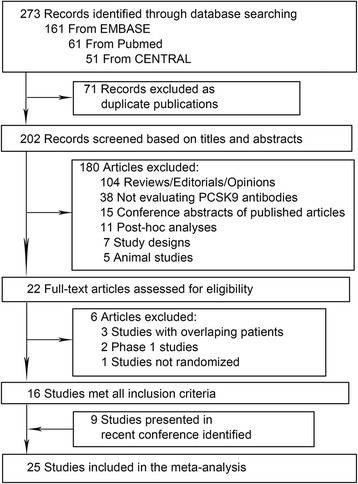
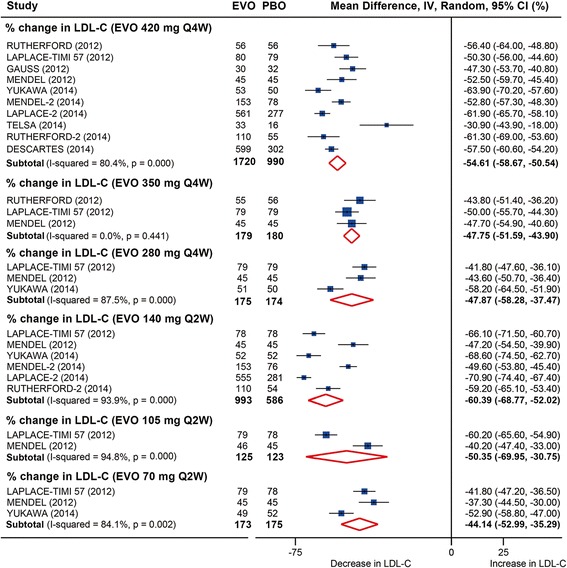
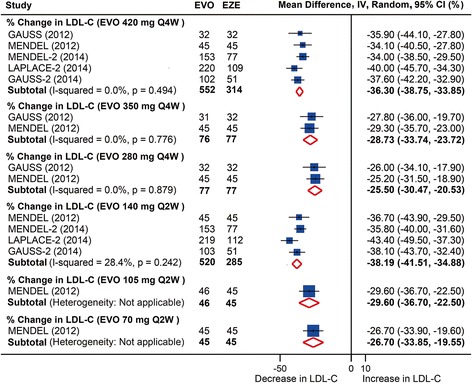
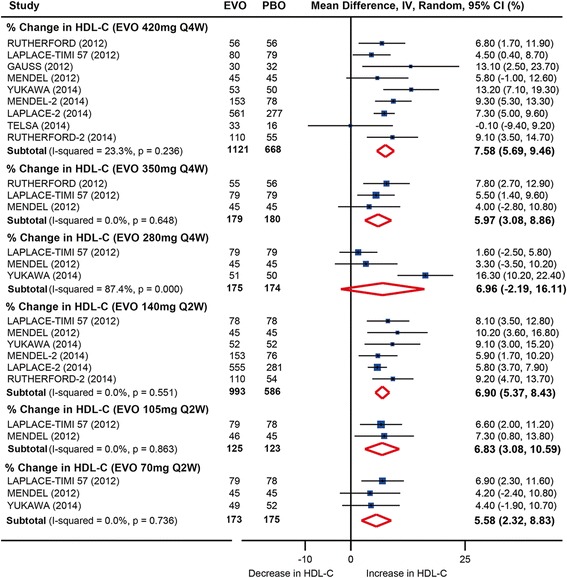
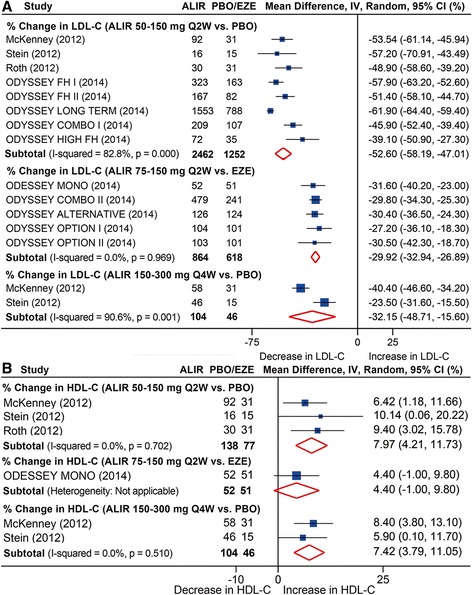
BACKGROUND: Inhibition of proprotein convertase subtilisin/kexin type 9 (PCSK9) has been intensively studied to lower low-density lipoprotein cholesterol (LDL-C) levels. The purpose of this meta-analysis was to evaluate the safety and efficacy of anti-PCSK9 antibodies in randomized, controlled trials (RCTs). METHODS: PubMed, EMBASE, CENTRAL databases, and recent conferences were searched. Safety outcomes were rates of common adverse events. Efficacy outcomes included percentages of LDL-C lowering and other lipid changes compared with placebo and ezetimibe, respectively. RESULTS: Twenty-five RCTs encompassing 12,200 patients were included. The rates of common adverse events were firstly reported in our study by pooling together all evidence in RCTs, showing largely no significant difference between anti-PCSK9 antibodies and placebo (or ezetimibe), except that alirocumab was associated with reduced rates of death (relative risk (RR): 0.43, 95 % confidence interval (CI): 0.19 to 0.96, P = 0.04) and an increased rate of injection-site reactions (RR: 1.48, 95 % CI: 1.05 to 2.09, P = 0.02); evolocumab reduced the rate of abnormal liver function (RR: 0.43, 95 % CI: 0.20 to 0.93, P = 0.03), both compared with placebo. No significant difference in safety outcomes was detected between monthly 420 mg and biweekly 140 mg evolocumab treatments. Monthly 420 mg evolocumab treatment significantly reduced LDL-C by -54.6 % (95 % CI: -58.7 to -50.5 %) and by absolute -78.9 mg/dl (95 % CI: -88.9 to -68.9 mg/dl) versus placebo, and by -36.3 % (95 % CI: -38.8 to -33.9 %) versus ezetimibe, and increased high-density lipoprotein cholesterol (HDL-C) by 7.6 % (95 % CI: 5.7 to 9.5 %) versus placebo and 6.4 % (95 % CI: 4.3 to 8.4 %) versus ezetimibe. An equal or even greater change was observed following biweekly 140 mg administration. Significant and favorable changes were also detected in other lipids following evolocumab treatment. Biweekly 50 to 150 mg alirocumab lowered LDL-C by -52.6 % (95 % CI: -58.2 to -47.0 %) versus placebo, by -29.9 % (95 % CI: -32.9 to -26.9 %) versus ezetimibe, and increased HDL-C by 8.0 % (95 % CI: 4.2 to 11.7 %) versus placebo. CONCLUSIONS: Evolocumab and alirocumab were safe and well-tolerated from our most-powered analyses. Both antibodies substantially reduced the LDL-C level by over 50 %, increased the HDL-C level, and resulted in favorable changes in other lipids.
Overview
The claims and statistics of this paper haven’t been checked yet.
Free: it reads the open-access text and checks the first 5 claims that cite a source we can check. Create a free account to check every claim.
Integrity signals
Registry
Cites
Statistics
Figures
Verification
Claims the paper makes
The claims and statistics of this paper haven’t been checked yet.
Free: it reads the open-access text and checks the first 5 claims that cite a source we can check. Create a free account to check every claim.
Claims other papers make about this one
Each is checked against this paper’s own text: does it say what the citing paper says it does?
The cited source doesn’t support the claim as written.
In the citing paper
“The cardioprotective effects of PCSK9 inhibitors were subsequently confirmed in other clinical trials and meta-analyses [80–85].”
From Established and Emerging Lipid-Lowering Drugs for Primary and Secondary Cardiovascular Prevention (2023) · cites this paper as [84]
Checked by a reasoning model — may be wrong.
Experimental — accuracy not yet measuredThe source backs part of the claim, not all of it — or backs it for a different population, condition or comparison.
In the citing paper
“Placebo-controlled trials evaluating the addition of the PCSK9 inhibitors evolocumab and alirocumab to maximum tolerated doses of statin therapy in participants who were at high risk for ASCVD demonstrated an average reduction in LDL cholesterol ranging from 36 to 59%.”
From 10. Cardiovascular Disease and Risk Management: Standards of Care in Diabetes—2023 (2023) · cites this paper as [114]
Experimental — accuracy not yet measuredThe source backs part of the claim, not all of it — or backs it for a different population, condition or comparison.
In the citing paper
“The addition of the PCSK9 inhibitors evolocumab and alirocumab to maximum tolerated doses of statin therapy in participants who were at high risk for ASCVD demonstrated an average reduction in LDL cholesterol ranging from 36% to 59% (126,127).”
From 10. Cardiovascular Disease and Risk Management: Standards of Care in Diabetes—2025 (2025) · cites this paper as [127]
Experimental — accuracy not yet measured
Self-check
Percentages, sums and reported differences re-computed from the paper’s own numbers.
The self-check needs the paper’s full text.
Citations
Cites
Toprak, O., Kurt, H., Sarı, Y., Şarkış, C., Us, H., & Kırık, A. (2017) · Kidney and Blood Pressure Research · doi:10.1159/000468530 · Cited by 29,627
Grundy, S. M., Bilheimer, D. W., Chait, A., Clark, L. T., Denke, M. A., Havel, R. J., Hazzard, W. R., Hulley, S. B., Hunninghake, D. B., Kreisberg, R. A., et al. (1993) · JAMA · doi:10.1001/jama.269.23.3015 · Cited by 27,947
Expert Panel on Detection, E. (2001) · JAMA: The Journal of the American Medical Association · doi:10.1001/jama.285.19.2486 · Cited by 26,011
Cochrane Handbook for Systematic Reviews of Interventions: Cochrane Book Series
(2008) · doi:10.1002/9780470712184 · Cited by 25,048
Stone, N. J., Robinson, J. G., Lichtenstein, A. H., Bairey Merz, C. N., Blum, C. B., Eckel, R. H., Goldberg, A. C., Gordon, D., Levy, D., Lloyd-Jones, D. M., et al. (2014) · Circulation · doi:10.1161/01.cir.0000437738.63853.7a · Cited by 7,081
Cholesterol Treatment Trialists' (CTT) Collaboration (2010) · The Lancet · doi:10.1016/s0140-6736(10)61350-5 · Cited by 6,550
Cochrane Handbook for Systematic Reviews of Interventions
Tarsilla, M. (2010) · Journal of MultiDisciplinary Evaluation · doi:10.56645/jmde.v6i14.284 · Cited by 5,178
Stone, N. J., Robinson, J. G., Lichtenstein, A. H., Bairey Merz, C. N., Blum, C. B., Eckel, R. H., Goldberg, A. C., Gordon, D., Levy, D., Lloyd-Jones, D. M., et al. (2014) · Journal of the American College of Cardiology · doi:10.1016/j.jacc.2013.11.002 · Cited by 3,845
Sequence Variations in PCSK9, Low LDL, and Protection against Coronary Heart Disease
Cohen, J. C., Boerwinkle, E., Mosley, T. H., & Hobbs, H. H. (2006) · New England Journal of Medicine · doi:10.1056/nejmoa054013 · Cited by 3,181 · cited 1×
“However, the probable clinical benefits could be preliminarily inferred based on current evidence: 1) anti-PCSK9 antibodies substantially reduced LDL-C, non-HDL-C and ApoB levels, all of which are positively associated with CVD events [46], and ‘a lower LDL-C, a better outcome’ has been indicated not only in the era o…”
ResultMutations in PCSK9 cause autosomal dominant hypercholesterolemia
Abifadel, M., Varret, M., Rabès, J.-P., Allard, D., Ouguerram, K., Devillers, M., Cruaud, C., Benjannet, S., Wickham, L., Erlich, D., et al. (2003) · Nature Genetics · doi:10.1038/ng1161 · Cited by 2,985 · cited 1×
“The role of proprotein convertase subtilisin/kexin type 9 (PCSK9) in cholesterol regulation has been established since PCSK9 mutations were first discovered in autosomal dominant hypercholesterolemia (ADH) in 2003 [4].”
Background
Research works printed but not linked: 7
- Robinson JG Long-term safety, tolerability and efficacy of alirocumab versus placebo in high cardiovascular risk patients: first results from the ODYSSEY LONG TERM study in 2,341 patients 2014 Barcelona Paper presented at 2014 Scientific Sessions of European Society of Cardiology
- Luscher TF Efficacy and safety of alirocumab: results from the ODYSSEY COMBO II study and results of ODYSSEY FH I and FH II studies 2014 Barcelona Paper presented at 2014 Scientific Sessions of European Society of Cardiology
- Cannon CP Efficacy and safety of alirocumab in high cardiovascular risk patients with inadequately controlled hypercholesterolaemia on maximally tolerated daily statin: results from the ODYSSEY COMBO II study 2014 Barcelona Paper presented at 2014 Scientific Sessions of European Society of Cardiology
- Moriarty PM ODYSSEY ALTERNATIVE: efficacy and safety of the proprotein convertase subtilisin/kexin type 9 monoclonal antibody, alirocumab, versus ezetimibe, in patients with statin intolerance as defined by a placebo run-in and statin rechallenge arm 2014 Chicago Paper presented at 2014 Scientific Sessions of American Heart Association
- Kereiakes DJ Efficacy and safety of alirocumab in high cardiovascular risk patients with suboptimally controlled hypercholesterolemia on maximally tolerated doses of statins: the ODYSSEY COMBO I Study 2014 Chicago Paper presented at 2014 Scientific Sessions of American Heart Association
- Ginsberg HN ODYSSEY HIGH FH: efficacy and safety of alirocumab in patients with severe heterozygous familial hypercholesterolemia 2014 Chicago Paper presented at 2014 Scientific Sessions of American Heart Association
- Cannon CP IMPROVE-IT trial: a comparison of ezetimibe/simvastatin versus simvastatin monotherapy on cardiovascular outcomes after acute coronary syndromes 2014 Chicago Paper presented at 2014 Scientific Sessions of American Heart Association
Cited by
Items 101–200 of 266
Gonna, H., & Ray, K. K. (2019) · Diabetes Obesity and Metabolism · doi:10.1111/dom.13691 · Cited by 33
An Updated Meta-Analysis for Safety Evaluation of Alirocumab and Evolocumab as PCSK9 Inhibitors
Choi, H. D., & Kim, J. H. (2023) · Cardiovascular Therapeutics · doi:10.1155/2023/7362551 · Cited by 33
PCSK9 Inhibitors in Secondary Prevention—An Opportunity for Personalized Therapy
Chase Board, Kelly, M. S., Shapiro, M. D., & Dixon, D. L. (2020) · Journal of Cardiovascular Pharmacology · doi:10.1097/fjc.0000000000000809 · Cited by 30
Novel lipid modifying drugs to lower LDL cholesterol
Cupido, A. J., Reeskamp, L. F., & Kastelein, J. J. P. (2017) · Current Opinion in Lipidology · doi:10.1097/mol.0000000000000428 · Cited by 33
Safety of proprotein convertase subtilisin/kexin 9 inhibitors: a systematic review and meta-analysis
Li, J., Du, H., Wang, Y., Aertgeerts, B., Guyatt, G. H., Hao, Q., Shen, Y., Li, L., Su, N., Delvaux, N., et al. (2022) · Heart · doi:10.1136/heartjnl-2021-320556 · Cited by 31
G-Protein Coupled Receptor Targeting on Myeloid Cells in Atherosclerosis
van der Vorst, E. P. C., Peters, L. J. F., Müller, M., Gencer, S., Yan, Y., Weber, C., & Döring, Y. (2019) · Frontiers in Pharmacology · doi:10.3389/fphar.2019.00531 · Cited by 30
Xu, M., Zhu, X., Wu, J., Zhang, Y., Zhao, D., Wang, X., Ding, Y., Cao, Y., Li, C., Hu, W. M., et al. (2022) · BMC Medicine · doi:10.1186/s12916-021-02208-w · Cited by 30
Targeting low‐density lipoprotein cholesterol with PCSK9 inhibitors
Scherer, D. J., Nelson, A. J., Psaltis, P. J., & Nicholls, S. J. (2017) · Internal Medicine Journal · doi:10.1111/imj.13451 · Cited by 30
van Bruggen, F. H., Nijhuis, G. B. J., Zuidema, S. U., & Luijendijk, H. J. (2020) · Expert Review of Clinical Pharmacology · doi:10.1080/17512433.2020.1787832 · Cited by 28
“Our review did not yield an increased risk for diabetes mellitus or neurocognitive events in PCSK9 inhibitor use compared to placebo in line with most published reviews [3,11,66].”
ResultJaworski, K., Jankowski, P., & KOSIOR, D. A. (2017) · Archives of Medical Science · doi:10.5114/aoms.2017.65239 · Cited by 29
“ezetimibe, as well as increasing HDL-C by 8% [95].”
BackgroundWhite, C. M. (2015) · Annals of Pharmacotherapy · doi:10.1177/1060028015608487 · Cited by 30
“PCSK9 inhibitors have some limited data in patients who were not statin tolerant and, in these trials, reduced LDL concentrations potently either alone or in combination with ezetimibe.(31,32,38) PCSK9 monoclonal antibodies are joining a large number of FDA-approved drugs that can reduce LDL levels in monotherapy and…”
BackgroundMethodPeng, W., Qiang, F., Peng, W., Qian, Z., Ke, Z., Yi, L., Zhong, J., & Chong-Rong, Q. (2016) · International Journal of Cardiology · doi:10.1016/j.ijcard.2016.07.239 · Cited by 29
Yang, Y., Kim, H., Kim, S., & Moon, M. K. (2023) · Journal of Lipid and Atherosclerosis · doi:10.12997/jla.2023.12.1.12 · Cited by 30
Bai, J., Gong, L., Li, Q., & Wang, Z. (2018) · Journal of clinical lipidology · doi:10.1016/j.jacl.2018.01.004 · Cited by 26
Kalra, S., Chen, Z., Deerochanawong, C., Shyu, K., Tan, R., Tomlinson, B., & Yeh, H. (2021) · Journal of Atherosclerosis and Thrombosis · doi:10.5551/jat.56762 · Cited by 26
Yang, Y., Kim, H., Kim, S., Moon, M. K., & Korean Society of Lipid and Atherosclerosis (2023) · Diabetes & Metabolism Journal · doi:10.4093/dmj.2022.0448 · Cited by 26
“org evolocumab and alirocumab were added for patients with a high risk of CVD or T2DM who were using statins at the maximum tolerated dose; LDL-C concentration was further reduced by 36% to 59% [40-42].”
BackgroundDiabetes and Vascular Disease: Is It All About Glycemia?
Vecchié, A., Montecucco, F., Carbone, F., Dallegri, F., & Bonaventura, A. (2019) · Current Pharmaceutical Design · doi:10.2174/1381612825666190830181944 · Cited by 24
Asbeutah, A. A., Asbeutah, S. A., & Abu-Assi, M. A. (2020) · The American Journal of Cardiology · doi:10.1016/j.amjcard.2020.05.024 · Cited by 24
Consensus clinical recommendations for the management of plasma lipid disorders in the Middle East
Sayed, N., Waili, K. A., Alawadi, F., Al-Ghamdi, S. M. G., Almahmeed, W. A., Alnouri, F., Rukhaimi, M. A., Al‐Rasadi, K., Awan, Z. A., Farghaly, M., et al. (2016) · International Journal of Cardiology · doi:10.1016/j.ijcard.2016.09.081 · Cited by 23
Geng, Q., Li, X., Sun, Q., & Wang, Z. (2021) · Cardiology Journal · doi:10.5603/cj.a2021.0110 · Cited by 25
Busuioc, R., Covic, A. C., Kanbay, M., Banach, M., Burlacu, A., & Mircescu, G. (2019) · Nephrology Dialysis Transplantation · doi:10.1093/ndt/gfz108 · Cited by 22
Chen, Q., Wu, G., Li, C., Qin, X., Liu, R., & Zhang, M. (2019) · American Journal of Cardiovascular Drugs · doi:10.1007/s40256-019-00386-w · Cited by 23
Self-citationMolecular aspects of hypercholesterolemia treatment: current perspectives and hopes
Ahangari, N., Ghayour‐Mobarhan, M., Sahebkar, A., & Pasdar, A. (2018) · Annals of Medicine · doi:10.1080/07853890.2018.1457795 · Cited by 24
“Several recent studies and clinical trials focused on using these small RNAs to target the most causative genes including LDLR [70], ApoB [71,72], PCSK9 [73] and LDLRAP [74,75] as culprit genes in FH.”
BackgroundPCSK9 inhibition: the dawn of a new age in cholesterol lowering?
Preiss, D., & Mafham, M. (2016) · Diabetologia · doi:10.1007/s00125-016-4178-y · Cited by 25
Emerging drugs for the treatment of hypercholesterolemia
Bove, M., Cicero, A. F. G., & Borghi, C. (2019) · Expert Opinion on Emerging Drugs · doi:10.1080/14728214.2019.1591372 · Cited by 21
Immunomodulatory Nanomedicine for the Treatment of Atherosclerosis
Peters, L. J. F., Jans, A., Bartneck, M., & van der Vorst, E. P. C. (2021) · Journal of Clinical Medicine · doi:10.3390/jcm10143185 · Cited by 20
Chen, T., Wang, Z., Xie, J., Xiao, S., Li, W., & Liu, N. (2023) · Nutrition Metabolism and Cardiovascular Diseases · doi:10.1016/j.numecd.2023.05.033 · Cited by 20
Self-citationEvolocumab: A Review in Hyperlipidemia
Keating, G. M. (2016) · American Journal of Cardiovascular Drugs · doi:10.1007/s40256-015-0153-0 · Cited by 19
“There are currently no studies directly comparing evolocumab with alirocumab, although results of systematic reviews indicate that both agents are associated with marked reductions in LDL-C levels [48, 49].”
ResultGlueck, C. J., Shah, P. K., Goldenberg, N., Prince, M., Lee, K., Jetty, V., Kumar, A., Goldenberg, M., & Wang, P. (2016) · Lipids in Health and Disease · doi:10.1186/s12944-016-0227-2 · Cited by 20
“[16] “detected largely no significant difference in major adverse events rates between antibody administration and control treatment, and no difference between different dosages of Evolocumab.”
BackgroundNew Biological Therapies for Low-Density Lipoprotein Cholesterol
Gill, P. K., & Hegele, R. A. (2023) · Canadian Journal of Cardiology · doi:10.1016/j.cjca.2023.08.003 · Cited by 20
Standards of Care in Diabetes. The position of Diabetes Poland – 2024
Araszkiewicz, A., Bandurska-Stankiewicz, E. M., Borys, S., Broncel, M., Budzynski, A. Z., Cyganek, K., Cypryk, K., CYRANKA, K. M., Czupryniak, L., Dzida, G. J., et al. (2024) · Current Topics in Diabetes · doi:10.5114/ctd/183052 · Cited by 33
Elamin, A., Grafton‐Clarke, C., Chen, K. W., Obafemi, T., Luvai, A., Katira, R., & Davis, G. K. (2019) · Postgraduate Medical Journal · doi:10.1136/postgradmedj-2018-136171 · Cited by 19
Aguchem, R. N., Okagu, I. U., Okorigwe, E. M., Uzoechina, J. O., Nnemolisa, S. C., & Ezeorba, T. P. C. (2024) · Life Sciences · doi:10.1016/j.lfs.2024.122823 · Cited by 18
Weisshaar, S., & Zeitlinger, M. A. (2018) · Drugs · doi:10.1007/s40265-018-0915-5 · Cited by 18
Ge, X.-Y., Zhu, T., Zeng, H., Yu, X., Li, J., Xie, S., Wan, J., Yang, H., Huang, K., & Zhang, W. (2021) · BioMed Research International · doi:10.1155/2021/8032978 · Cited by 19
RetractedPatient versus physician preferences for lipid‐lowering drug therapy: A discrete choice experiment
Zhang, L., Chen, J., Cao, Z., Zhang, M., Ma, R., Zhang, P., Yao, G., & Li, X. (2024) · Health Expectations · doi:10.1111/hex.14043 · Cited by 17
“5,35,36 Nevertheless, our DCE study is unique in that it evaluates the significance of these differences from the patient and physician perspectives.”
BackgroundSelf-citationCicero, A. F. G., Bove, M., & Borghi, C. (2017) · Expert Opinion on Drug Metabolism & Toxicology · doi:10.1080/17425255.2018.1416094 · Cited by 18
Doonan, L. M., Fisher, E. A. A., & Brodsky, J. L. (2018) · Biochimica et Biophysica Acta (BBA) - Molecular and Cell Biology of Lipids · doi:10.1016/j.bbalip.2018.03.010 · Cited by 22
Basiak, M., Hachuła, M., Kosowski, M., Machnik, G., Maligłówka, M., Dziubinska-Basiak, M., Krysiak, R. G., & Okopień, B. (2023) · Molecules · doi:10.3390/molecules28155928 · Cited by 18
“8% for aliroocumab in the long-term follow-up [52].”
BackgroundRegulation of Lipoprotein Homeostasis by Self-Assembling Peptides
Harbour, V., Casillas, C., Siddiqui, Z., Sarkar, B., Sanyal, S., Nguyen, P. K., Kim, K. K., Roy, A., Iglesias-Montoro, P., Patel, S., et al. (2020) · ACS Applied Bio Materials · doi:10.1021/acsabm.0c01229 · Cited by 16
Squizzato, A., Suter, M. B., Nerone, M., Giugliano, R. P., Dentali, F., Maresca, A. M., Campiotti, L., Grandi, A. M., & Guasti, L. (2017) · Internal and Emergency Medicine · doi:10.1007/s11739-017-1708-7 · Cited by 18
Hyperlipidemia: Management with Proprotein Convertase Subtilisin/Kexin Type 9 (PCSK9) Inhibitors
Shahreyar, M., Salem, S. A., Nayyar, M., George, L. K., Garg, N., & Koshy, S. K. G. (2018) · The Journal of the American Board of Family Medicine · doi:10.3122/jabfm.2018.04.170447 · Cited by 18
“48, 6%) and with a lower risk of death when compared with placebo at 52 weeks.(12,20) Patients receiving evolocumab had injection-site reactions occurring in 2.”
BackgroundPrevention of cardiovascular diseases
Hobbs, R. F. (2015) · BMC Medicine · doi:10.1186/s12916-015-0507-0 · Cited by 21
“[27–30], this article collection, Prevention of cardiovascular diseases, should be of interest to all BMC Medicine readers.”
BackgroundShah, P. K., Glueck, C. J., Jetty, V., Goldenberg, N., Rothschild, M., Riaz, R., Duhon, G., & Wang, P. (2016) · Lipids in Health and Disease · doi:10.1186/s12944-016-0302-8 · Cited by 15
“If, speculatively, CVD and stroke incidence could be halved by PCSK9 therapy [11, 14, 16], direct annual savings would be estimated to be $160 billion, and indirect annual savings might be $85 billion [21], altogether $245 billion savings, in the middle of the range of estimated PCSK9 inhibitor costs of $185–342 billi…”
BackgroundHoekstra, M., & Eck, M. V. (2016) · Journal of Lipid Research · doi:10.1194/jlr.m066019 · Cited by 15
PCSK9 in African Americans and Caucasians in Relation to Lp(a) Level, Apo(a) Size and Heritability
Enkhmaa, B., Kim, K., Zhang, W., Prakash, N., Truax, K., Anuurad, E., & Berglund, L. (2020) · Journal of the Endocrine Society · doi:10.1210/jendso/bvaa073 · Cited by 16
“PCSK9 inhibitioninduced LDL-C reductions are substantial and evident across heterogeneous patient groups [1-5].”
BackgroundHuang, Y.-T., Ho, L., Hsu, H., Tu, Y., & Chien, K. (2022) · Frontiers in Pharmacology · doi:10.3389/fphar.2022.832614 · Cited by 19
Managing the lipid profile of coronary heart disease patients
Drakopoulou, M. I., Toutouzas, K. P., Stathogiannis, K. E., Synetos, A. G., Trantalis, G., & Tousoulis, D. M. (2016) · Expert Review of Cardiovascular Therapy · doi:10.1080/14779072.2016.1221341 · Cited by 16
Ocular disorders associated with PCSK9 inhibitors: A pharmacovigilance disproportionality analysis
Zhao, X., Wu, J., & Zhu, S. (2022) · British Journal of Clinical Pharmacology · doi:10.1111/bcp.15494 · Cited by 14
“Moreover, the results of meta-analyses revealed that evolocumab and alirocumab were safe and well-tolerated, with no significant differences in the common and severe adverse events (AEs) compared with non-PCSK9 inhibitors or placebo.(5,6) However, ocular AEs (oAEs) have been reported in several alirocumab-related clin…”
ResultHeidemann, B. E., Koopal, C., van Lennep, J. E. R., Stroes, E. S. G., Riksen, N. P., Mulder, M. T., van der Zee, L. C. V. V. –., Blackhurst, D., Marais, A. D., & Visseren, F. L. J. (2022) · Journal of clinical lipidology · doi:10.1016/j.jacl.2022.10.006 · Cited by 16
PCSK9 Inhibition in Atherosclerotic Cardiovascular Disease
Delialis, D., Dimopoulou, M., Papaioannou, M., Kotsira, G., Maneta, E., Mavraganis, G., Loutos, C., Georgiopoulos, G. A., & Stamatelopoulos, K. S. (2023) · Current Pharmaceutical Design · doi:10.2174/1381612829666230412105238 · Cited by 14
Proprotein convertase subtilisin/kexin type 9: from genetics to clinical trials
Stoekenbroek, R. M., & Kastelein, J. J. P. (2018) · Current Opinion in Cardiology · doi:10.1097/hco.0000000000000517 · Cited by 14
Descamps, O. S., Fraass, U., Dent, R. E., März, W., & Gouni‐Berthold, I. (2017) · International Journal of Clinical Practice · doi:10.1111/ijcp.12979 · Cited by 14
The Link between miRNAs and PCKS9 in Atherosclerosis
Mačvanin, M., Gluvic, Z. M., Klisic, A. N., Manojlovic, M. S., Suri, J. S., Rizzo, M., & Isenović, E. R. (2023) · Current Medicinal Chemistry · doi:10.2174/0109298673262124231102042914 · Cited by 14
Zhu, F.-L., Zhang, N., Ma, X., Yang, J., Sun, W., Shen, Y., Wen, Y., Yuan, S., Zhao, D., Zhang, H., et al. (2019) · Scientific Reports · doi:10.1038/s41598-018-38298-5 · Cited by 14
Effects of PCSK9 inhibitors on metabolic-associated fatty liver disease: a short review
Jakielska, E., Głuszak, P., Walczak, M., & Bryl, W. (2023) · Gastroenterology Review · doi:10.5114/pg.2023.126054 · Cited by 13
“showed that there is no significantly increased risk of adverse events in the group treated with PCSK9 inhibitors, in comparison to placebo or ezetimibe; PCSK9 inhibitors are safe and well-tolerated by patients [45].”
BackgroundCheng, Z., Gao, M., Liu, Y., Yan, W., Zhang, Z., Jiao, N., & Li, C. (2024) · Nutrition Metabolism and Cardiovascular Diseases · doi:10.1016/j.numecd.2024.10.017 · Cited by 12
Calorically restricted diets decrease PCSK9 in overweight adolescents
Levenson, A. E., Milliren, C. E., Biddinger, S. B., Ebbeling, C. B., Feldman, H. A., Ludwig, D. S., & de Ferranti, S. D. (2017) · Nutrition Metabolism and Cardiovascular Diseases · doi:10.1016/j.numecd.2016.12.010 · Cited by 13
Safety, adherence and efficacy of PCSK9 inhibitors: a retrospective real-world study
Chng, B. L. K., Heng, W. M. P., Soon, Y. M., Hon, J. S., Lau, Y. H., Tan, R. S., & Tan, J. W. C. (2022) · Proceedings of Singapore Healthcare · doi:10.1177/20101058221144115 · Cited by 11
Jamadade, P., Nupur, N., Maharana, K. C., & Singh, S. (2024) · Current Atherosclerosis Reports · doi:10.1007/s11883-024-01228-0 · Cited by 11
Pezzoli, A., Abenavoli, L., Scarcella, M., Rasetti, C., Svegliati‐Baroni, G., Tack, J. F., & Scarpellini, E. (2025) · Medicina · doi:10.3390/medicina61030387 · Cited by 11
PCSK9 Inhibitors: An Innovative Approach to Treating Hyperlipidemia
Sible, A. M., Nawarskas, J. J., & Anderson, J. R. (2016) · Cardiology in Review · doi:10.1097/crd.0000000000000102 · Cited by 13
“However, PCSK9 inhibitors do not appear to cause muscle-related adverse effects such as myalgia and elevated creatine kinase or elevated liver enzymes.(21) It bears noting that most evolocumab trials included 12 weeks of follow-up, except Open-Label Study of Long-Term Evaluation against LDL Cholesterol (OSLER) and DES…”
InfluentialPCSK9 inhibitors in the current management of atherosclerosis
Whayne, T. F. (2016) · Archivos de cardiología de México · doi:10.1016/j.acmx.2016.11.013 · Cited by 11
Gupta, S. (2016) · Vascular Health and Risk Management · doi:10.2147/vhrm.s83719 · Cited by 11
Bouzoni, E., Perakakis, N., Connelly, M. A., Angelidi, A. M., Pilitsi, E., Farr, O. M., Stefanakis, K., & Mantzoros, C. S. (2022) · Metabolism · doi:10.1016/j.metabol.2022.155265 · Cited by 10
Iqbal, S., Sabbour, H. M., Siddiqui, M. S., Tikriti, A. A., Santos, R. D., & Buckley, A. J. (2022) · Clinical Therapeutics · doi:10.1016/j.clinthera.2022.08.005 · Cited by 11
He, X., Zhang, R., Zuo, P.-Y., Liu, Y., Zha, X., Shan, S., & Liu, C. (2016) · European Journal of Internal Medicine · doi:10.1016/j.ejim.2016.10.009 · Cited by 10
The efficacy of anti-PCSK9 antibodies: Results from recent trials
Gouni‐Berthold, I. (2017) · Atherosclerosis Supplements · doi:10.1016/j.atherosclerosissup.2017.05.030 · Cited by 11
Wierzbicki, A. S., & Grant, P. S. (2016) · Clinical Medicine · doi:10.7861/clinmedicine.16-4-353 · Cited by 11
Is a PCSK9 Inhibitor Right for Your Patient? A Review of Treatment Data for Individualized Therapy
Beltran, R. A., Zemeir, K., Kimberling, C. R., Kneer, M. S., Mifflin, M. D., & Broderick, T. L. (2022) · International Journal of Environmental Research and Public Health · doi:10.3390/ijerph192416899 · Cited by 10
Shah, P. K., Glueck, C. J., Goldenberg, N., Min, S., Mahida, C., Schlam, I. M., Rothschild, M., Huda, A. N., & Wang, P. (2017) · Lipids in Health and Disease · doi:10.1186/s12944-017-0416-7 · Cited by 9
Velidakis, N., Stachteas, P., Gkougkoudi, E., Papadopoulos, C. E., & Kadoglou, N. P. E. (2024) · Pharmaceuticals · doi:10.3390/ph17050568 · Cited by 9
“Fibrates demonstrate a favorable impact on diabetic dyslipidemia management through the activation of peroxisome proliferator-activated receptor α (PPAR-α ).”
BackgroundProprotein Convertase Subtilisin Kexin 9 Inhibitors
Pirillo, A., & Catapano, A. L. (2018) · Cardiology Clinics · doi:10.1016/j.ccl.2017.12.006 · Cited by 8
A review on the efficacy and safety of lipid-lowering drugs in neurodegenerative disease
Rajabian, A., McCloskey, A. P., Jamialahmadi, T., Moallem, S. A., & Sahebkar, A. (2023) · Reviews in the Neurosciences · doi:10.1515/revneuro-2023-0005 · Cited by 7
The past, present and future of lipidlowering therapy
Najam, O., Lambert, G. C., & Ray, K. K. (2015) · Clinical Lipidology · doi:10.2217/clp.15.40 · Cited by 7
Primary and secondary prevention of cardiovascular disease in patients with hyperlipoproteinemia (a)
Grützmacher, P., Öhm, B., Szymczak, S., Dorbath, C., Brzoska, M., & Kleinert, C. (2017) · Clinical Research in Cardiology Supplements · doi:10.1007/s11789-017-0090-3 · Cited by 10
Alirocumab as add-on therapy to statins: current evidence and clinical potential
Auer, J., & Berent, R. (2018) · Therapeutic Advances in Cardiovascular Disease · doi:10.1177/1753944718775352 · Cited by 9
Challenges with Evidence-Based Management of Stable Ischemic Heart Disease
Patel, A., & Bangalore, S. (2017) · Current Cardiology Reports · doi:10.1007/s11886-017-0820-7 · Cited by 7
Choi, J., Khan, A. M., Jarmin, M., Goldenberg, N., Glueck, C. J., & Wang, P. (2017) · Lipids in Health and Disease · doi:10.1186/s12944-017-0493-7 · Cited by 10
Clinical outcomes of PCSK9Is: a meta-analysis of randomized clinical trials
Ghadban, R., Enezate, T. H., Omran, J., Almourani, R., Singla, A., & Balla, S. (2017) · Cardiovascular Diagnosis and Therapy · doi:10.21037/cdt.2017.08.16 · Cited by 7
“A meta-analysis published in 2015 reported more than 50% reduction in LDL levels with no significant difference in adverse effects compared to control groups (14).”
BackgroundLipoprotein(a) and CKD: Insights into New Therapeutic Opportunities
Enkhmaa, B., Roshanravan, B., & Berglund, L. (2025) · Clinical Journal of the American Society of Nephrology · doi:10.2215/cjn.0000000968 · Cited by 7
Qureshi, N., Woods, B. S., Faria, R., Saramago, P., Cox, E., Leonardi‐Bee, J., Condon, L. A., Weng, S. F., Akyea, R. K., Iyen, B., et al. (2023) · Health Technology Assessment · doi:10.3310/ctmd0148 · Cited by 7
The hinterland of familial hypercholesterolaemia: what do we not know?
Wierzbicki, A. S., & Watts, G. F. (2015) · Current Opinion in Lipidology · doi:10.1097/mol.0000000000000238 · Cited by 7
Berkelmans, G. F. N., Greving, J. P., van der Graaf, Y., Visseren, F. L. J., & Dorresteijn, J. A. N. (2020) · Diagnostic and Prognostic Research · doi:10.1186/s41512-020-00072-5 · Cited by 6
Familial Hypercholesterolaemia in the Era of Genetic Testing
Hughes, D., Viljoen, A., & Wierzbicki, A. S. (2016) · Current Cardiology Reports · doi:10.1007/s11886-016-0723-z · Cited by 6
Pryor, J. B., Weber, B. R., Weber, J. V., Lockridge, J. B., & Olyaei, A. J. (2019) · Drugs & Therapy Perspectives · doi:10.1007/s40267-019-00646-4 · Cited by 7
Rubio‐Serrano, J., Gullón, A., & Fernández, C. S. (2023) · Advances in Laboratory Medicine / Avances en Medicina de Laboratorio · doi:10.1515/almed-2023-0150 · Cited by 6
Li, B., Hao, P., Zhang, Y., Yin, R.-H., Kong, Q., Cai, X., Zhao, Z., Qi, J., Li, Y., Xiao, J., et al. (2016) · Oncotarget · doi:10.18632/oncotarget.10762 · Cited by 6
“The efficiency and safety of PCSK9 inhibitor therapy for hypercholesterolemia has been evaluated [22-24], but a pooled analysis of the therapy for FH is lacking.”
BackgroundBaliga, R. R., Yang, E. H., & Bossone, E. (2020) · European Journal of Preventive Cardiology · doi:10.1093/eurjpc/zwaa032 · Cited by 6
Hageman, S. H. J., Dorresteijn, J. A. N., Bots, M. L., Asselbergs, F. W., Westerink, J., van der Meulen, M. P., Mosterd, A., Visseren, F. L. J., the UCC-SMART Study Group, Asselbergs, F. W., et al. (2021) · European Journal of Preventive Cardiology · doi:10.1093/eurjpc/zwab028 · Cited by 7
Focus on alirocumab: A PCSK9 antibody to treat hypercholesterolemia
Devito, F., Zito, A., Ricci, G., Carbonara, R., Dentamaro, I., Cortese, F., Carbonara, S., & Ciccone, M. M. (2015) · Pharmacological Research · doi:10.1016/j.phrs.2015.09.021 · Cited by 6
Mellor, R., Ardolino, L., Scheinberg, T., Fitzpatrick, M., Lin, H., Bonnitcha, P., Sullivan, D., Meikle, P. J., Stockler, M. R., Moujaber, T., et al. (2024) · Therapeutic Advances in Medical Oncology · doi:10.1177/17588359241307814 · Cited by 5
Potential Link Between Proprotein Convertase Subtilisin/Kexin Type 9 and Alzheimer’s Disease
CE, O., & D, L. (2018) · International Journal of Biomedical Investigation · doi:10.31531/2581-4745.1000106 · Cited by 6
Mele, A. A., Mahmood, R., Ogbuagu, H., & Fombi, J. (2022) · Cureus · doi:10.7759/cureus.31411 · Cited by 5
“conducted a meta-analysis of 25 randomized control trials demonstrating that Evolocumab was not associated with liver enzyme abnormalities compared to a placebo [10].”
MethodLorenzatti, D., Greenberg, G. S., Filtz, A., Scotti, A., Jaspan, V. N., Park, C. M., Kalich, B. A., Jones, L. K., Kathe, N. J., Palo, K. E. D., et al. (2025) · JACC Advances · doi:10.1016/j.jacadv.2025.102075 · Cited by 4
Effect of Statins and PCSK9 Inhibition on Metabolic Dysfunction–Associated Steatotic Liver Disease
Theocharidou, E., & Gossios, T. D. (2025) · Journal of Digestive Diseases · doi:10.1111/1751-2980.70011 · Cited by 4
“Notably, a meta-analysis of 25 RCTs that included 12 200 patients showed no increased risk of liver injury with alirocumab and evolocumab [26].”
PCSK9 inhibitors: when statins aren't enough
Chaplin, S. (2017) · Prescriber · doi:10.1002/psb.1616 · Cited by 4
Ou, Z., Wang, F., Chen, Y., Liu, X., Ran, B., Yin, Y., & Cui, K. (2024) · Cardiovascular Drugs and Therapy · doi:10.1007/s10557-024-07622-9 · Cited by 7
“These findings are theoretically reasonable given that PCSK9 inhibitor generated a greater reduction in LDL-C than NPC1L1 inhibitor [38], and lower achieved LDL-C levels are associated with lower rates of major vascular events [39, 40].”
Hamad, M. A., Muhammad, J. S., Rah, B., Hasan, H. A., Taneera, J., Soofi, A., & Awadallah, S. M. (2023) · Advanced Therapeutics · doi:10.1002/adtp.202300107 · Cited by 3
Hypercholesterolemia of Cholestasis
Charlat, M., Poltiyelova, E., Silverman, J., Lit, A., Frishman, W. H., & Lebovics, E. (2025) · Cardiology in Review · doi:10.1097/crd.0000000000000994 · Cited by 3
Metadata
- Authors
- Zhang, X.-L., Zhu, Q.-Q., Zhu, L., Chen, J.-Z., Chen, Q.-H., Li, G.-N., Xie, J., Kang, L.-N., & Xu, B.
- Affiliations
- Nanjing Drum Tower Hospital (CN)
- Corresponding author
- Xu, Biao
- Venue
- BMC Medicine
- Published
- 2015-06-23
- Volume
- 13
- Issue
- 1
- Pages
- 123-123
- ISSN
- 1741-7015 (ISSN-L)
- PMC
- PMC4477483
- OpenAlex
- W1890541571
- Semantic Scholar
- 4332175d98d83040cd053c5ed5dee55f95c21710
- Cited by
- 260
- References
- 50
- Citations by year
- 2026: 5 · 2025: 16 · 2024: 13 · 2023: 21 · 2022: 21 · 2021: 9 · 2020: 21 · 2019: 24 · 2018: 32 · 2017: 45 · 2016: 38 · 2015: 14
- FWCI
- 8.24
- Type
- journal article
- Language
- en
- Open access
- gold
- doi.org
- Locations
- BMC Medicine (publishedVersion, cc-by)
- Europe PMC (PubMed Central) (publishedVersion, cc-by)
- PubMed Central (publishedVersion, cc-by)
- PubMed (publishedVersion)
- Funders
- National Natural Science Foundation of China (81200148, 81070195, 81270281)
- Topics
- Health Sciences › Medicine › Cardiology and Cardiovascular Medicine › Lipoproteins and Cardiovascular Health
- Health Sciences › Medicine › Cardiology and Cardiovascular Medicine › Lipid metabolism and disorders
- Life Sciences › Biochemistry, Genetics and Molecular Biology › Biochemistry › Cholesterol and Lipid Metabolism
- Keywords
- PCSK9 inhibition, alirocumab, evolocumab, LDL cholesterol lowering, lipid-lowering therapy, adverse events, injection site reactions, hypertriglyceridemia, HDL cholesterol, ezetimibe, statins, hypercholesterolemia, cardiovascular risk reduction, drug safety and efficacy, dose comparison
- MeSH terms
- Proprotein Convertase 9, Antibodies, Monoclonal, Anticholesteremic Agents, Humans, Hypercholesterolemia, Cholesterol, HDL, Cholesterol, LDL, Serine Endopeptidases, Randomized Controlled Trials as Topic, Treatment Outcome, Proprotein Convertases, Lipid Metabolism, Antibodies, Monoclonal, Humanized
About these checks
Registry, retraction, Cites and statistics results are computed, not judged, with one exception: a printed reference that no index lists is read once by a model before it counts as a citation error. Claims are extracted by a model and kept only when their quote appears verbatim in the text; each cited source is then checked, with a model’s help, for whether it says what the claim relies on. Those verdicts can be wrong — read the claim’s quote and the cited source before relying on one.
Statistics and arithmetic are recomputed, not judged.
Confidence bands are shown only for fields calibrated on our annotated test set. None is calibrated yet, so no band is shown.
What counts as a claim ›How we measure confidence ›How we check this ›
Are you an author, or do you see a problem with this page? Request a review
Data sources
Bibliographic data: Semantic Scholar, OpenAlex, Crossref.
Contains information from the Semantic Scholar Academic Graph Datasets, made available under the ODC Attribution License (ODC-BY 1.0).
Semantic Scholar’s data is described in: Kinney, R., et al. (2023). The Semantic Scholar Open Data Platform. arXiv:2301.10140.
