

Safety and efficacy of anti-PCSK9 antibodies: a meta-analysis of 25 randomized, controlled trials
Open accessThe DOI matches its Crossref record; 49 of the 50 references it cites were found in a registry or an index.
Abstract
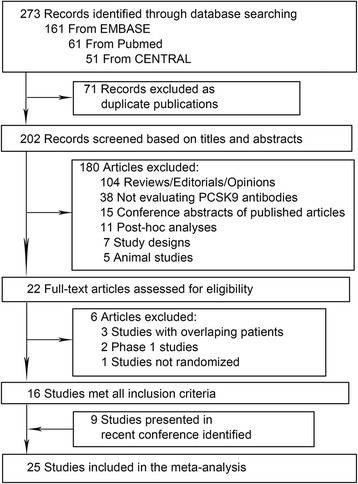
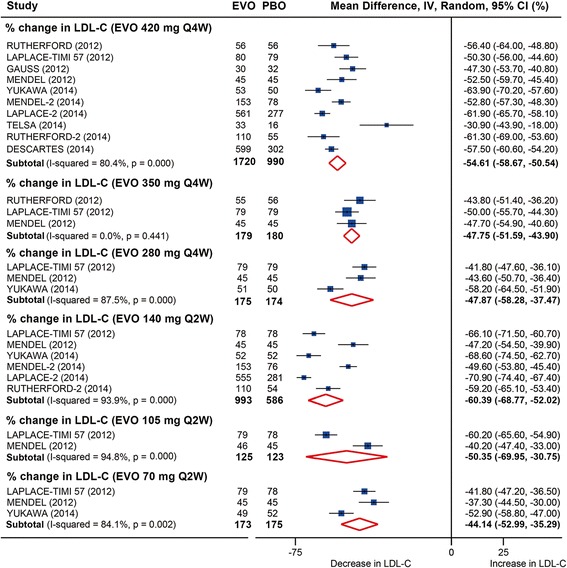
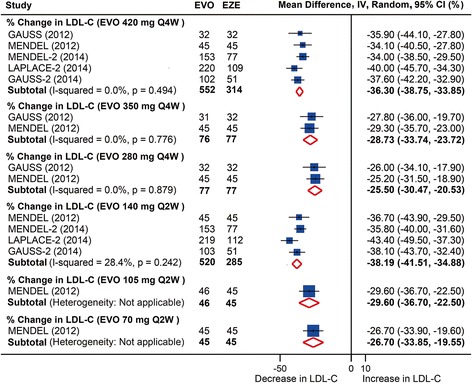
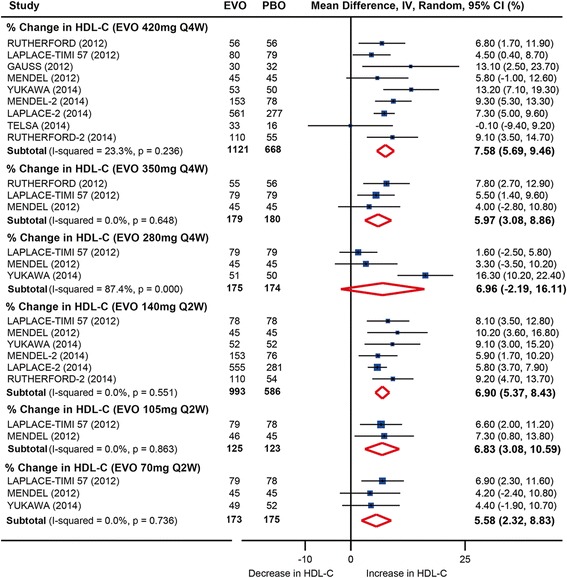
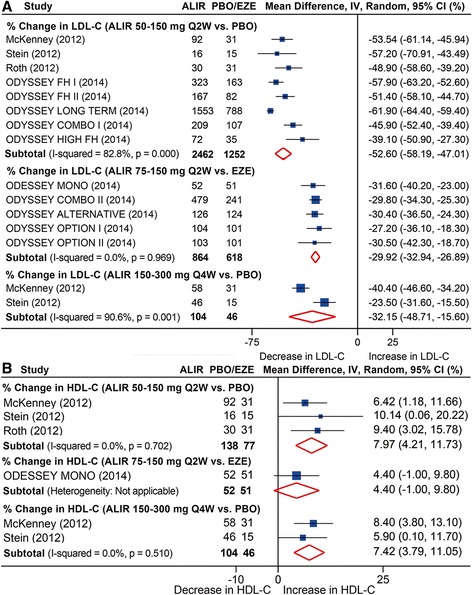
BACKGROUND: Inhibition of proprotein convertase subtilisin/kexin type 9 (PCSK9) has been intensively studied to lower low-density lipoprotein cholesterol (LDL-C) levels. The purpose of this meta-analysis was to evaluate the safety and efficacy of anti-PCSK9 antibodies in randomized, controlled trials (RCTs). METHODS: PubMed, EMBASE, CENTRAL databases, and recent conferences were searched. Safety outcomes were rates of common adverse events. Efficacy outcomes included percentages of LDL-C lowering and other lipid changes compared with placebo and ezetimibe, respectively. RESULTS: Twenty-five RCTs encompassing 12,200 patients were included. The rates of common adverse events were firstly reported in our study by pooling together all evidence in RCTs, showing largely no significant difference between anti-PCSK9 antibodies and placebo (or ezetimibe), except that alirocumab was associated with reduced rates of death (relative risk (RR): 0.43, 95 % confidence interval (CI): 0.19 to 0.96, P = 0.04) and an increased rate of injection-site reactions (RR: 1.48, 95 % CI: 1.05 to 2.09, P = 0.02); evolocumab reduced the rate of abnormal liver function (RR: 0.43, 95 % CI: 0.20 to 0.93, P = 0.03), both compared with placebo. No significant difference in safety outcomes was detected between monthly 420 mg and biweekly 140 mg evolocumab treatments. Monthly 420 mg evolocumab treatment significantly reduced LDL-C by -54.6 % (95 % CI: -58.7 to -50.5 %) and by absolute -78.9 mg/dl (95 % CI: -88.9 to -68.9 mg/dl) versus placebo, and by -36.3 % (95 % CI: -38.8 to -33.9 %) versus ezetimibe, and increased high-density lipoprotein cholesterol (HDL-C) by 7.6 % (95 % CI: 5.7 to 9.5 %) versus placebo and 6.4 % (95 % CI: 4.3 to 8.4 %) versus ezetimibe. An equal or even greater change was observed following biweekly 140 mg administration. Significant and favorable changes were also detected in other lipids following evolocumab treatment. Biweekly 50 to 150 mg alirocumab lowered LDL-C by -52.6 % (95 % CI: -58.2 to -47.0 %) versus placebo, by -29.9 % (95 % CI: -32.9 to -26.9 %) versus ezetimibe, and increased HDL-C by 8.0 % (95 % CI: 4.2 to 11.7 %) versus placebo. CONCLUSIONS: Evolocumab and alirocumab were safe and well-tolerated from our most-powered analyses. Both antibodies substantially reduced the LDL-C level by over 50 %, increased the HDL-C level, and resulted in favorable changes in other lipids.
Overview
The claims and statistics of this paper haven’t been checked yet.
Free: it reads the open-access text and checks the first 5 claims that cite a source we can check. Create a free account to check every claim.
Integrity signals
Registry
Cites
Statistics
Figures
Verification
Claims the paper makes
The claims and statistics of this paper haven’t been checked yet.
Free: it reads the open-access text and checks the first 5 claims that cite a source we can check. Create a free account to check every claim.
Claims other papers make about this one
Each is checked against this paper’s own text: does it say what the citing paper says it does?
The cited source doesn’t support the claim as written.
In the citing paper
“The cardioprotective effects of PCSK9 inhibitors were subsequently confirmed in other clinical trials and meta-analyses [80–85].”
From Established and Emerging Lipid-Lowering Drugs for Primary and Secondary Cardiovascular Prevention (2023) · cites this paper as [84]
Checked by a reasoning model — may be wrong.
Experimental — accuracy not yet measuredThe source backs part of the claim, not all of it — or backs it for a different population, condition or comparison.
In the citing paper
“Placebo-controlled trials evaluating the addition of the PCSK9 inhibitors evolocumab and alirocumab to maximum tolerated doses of statin therapy in participants who were at high risk for ASCVD demonstrated an average reduction in LDL cholesterol ranging from 36 to 59%.”
From 10. Cardiovascular Disease and Risk Management: Standards of Care in Diabetes—2023 (2023) · cites this paper as [114]
Experimental — accuracy not yet measuredThe source backs part of the claim, not all of it — or backs it for a different population, condition or comparison.
In the citing paper
“The addition of the PCSK9 inhibitors evolocumab and alirocumab to maximum tolerated doses of statin therapy in participants who were at high risk for ASCVD demonstrated an average reduction in LDL cholesterol ranging from 36% to 59% (126,127).”
From 10. Cardiovascular Disease and Risk Management: Standards of Care in Diabetes—2025 (2025) · cites this paper as [127]
Experimental — accuracy not yet measured
Self-check
Percentages, sums and reported differences re-computed from the paper’s own numbers.
The self-check needs the paper’s full text.
Citations
Cites
Toprak, O., Kurt, H., Sarı, Y., Şarkış, C., Us, H., & Kırık, A. (2017) · Kidney and Blood Pressure Research · doi:10.1159/000468530 · Cited by 29,627
Grundy, S. M., Bilheimer, D. W., Chait, A., Clark, L. T., Denke, M. A., Havel, R. J., Hazzard, W. R., Hulley, S. B., Hunninghake, D. B., Kreisberg, R. A., et al. (1993) · JAMA · doi:10.1001/jama.269.23.3015 · Cited by 27,947
Expert Panel on Detection, E. (2001) · JAMA: The Journal of the American Medical Association · doi:10.1001/jama.285.19.2486 · Cited by 26,011
Cochrane Handbook for Systematic Reviews of Interventions: Cochrane Book Series
(2008) · doi:10.1002/9780470712184 · Cited by 25,048
Stone, N. J., Robinson, J. G., Lichtenstein, A. H., Bairey Merz, C. N., Blum, C. B., Eckel, R. H., Goldberg, A. C., Gordon, D., Levy, D., Lloyd-Jones, D. M., et al. (2014) · Circulation · doi:10.1161/01.cir.0000437738.63853.7a · Cited by 7,081
Cholesterol Treatment Trialists' (CTT) Collaboration (2010) · The Lancet · doi:10.1016/s0140-6736(10)61350-5 · Cited by 6,550
Cochrane Handbook for Systematic Reviews of Interventions
Tarsilla, M. (2010) · Journal of MultiDisciplinary Evaluation · doi:10.56645/jmde.v6i14.284 · Cited by 5,178
Stone, N. J., Robinson, J. G., Lichtenstein, A. H., Bairey Merz, C. N., Blum, C. B., Eckel, R. H., Goldberg, A. C., Gordon, D., Levy, D., Lloyd-Jones, D. M., et al. (2014) · Journal of the American College of Cardiology · doi:10.1016/j.jacc.2013.11.002 · Cited by 3,845
Sequence Variations in PCSK9, Low LDL, and Protection against Coronary Heart Disease
Cohen, J. C., Boerwinkle, E., Mosley, T. H., & Hobbs, H. H. (2006) · New England Journal of Medicine · doi:10.1056/nejmoa054013 · Cited by 3,181 · cited 1×
“However, the probable clinical benefits could be preliminarily inferred based on current evidence: 1) anti-PCSK9 antibodies substantially reduced LDL-C, non-HDL-C and ApoB levels, all of which are positively associated with CVD events [46], and ‘a lower LDL-C, a better outcome’ has been indicated not only in the era o…”
ResultMutations in PCSK9 cause autosomal dominant hypercholesterolemia
Abifadel, M., Varret, M., Rabès, J.-P., Allard, D., Ouguerram, K., Devillers, M., Cruaud, C., Benjannet, S., Wickham, L., Erlich, D., et al. (2003) · Nature Genetics · doi:10.1038/ng1161 · Cited by 2,985 · cited 1×
“The role of proprotein convertase subtilisin/kexin type 9 (PCSK9) in cholesterol regulation has been established since PCSK9 mutations were first discovered in autosomal dominant hypercholesterolemia (ADH) in 2003 [4].”
Background
Research works printed but not linked: 7
- Robinson JG Long-term safety, tolerability and efficacy of alirocumab versus placebo in high cardiovascular risk patients: first results from the ODYSSEY LONG TERM study in 2,341 patients 2014 Barcelona Paper presented at 2014 Scientific Sessions of European Society of Cardiology
- Luscher TF Efficacy and safety of alirocumab: results from the ODYSSEY COMBO II study and results of ODYSSEY FH I and FH II studies 2014 Barcelona Paper presented at 2014 Scientific Sessions of European Society of Cardiology
- Cannon CP Efficacy and safety of alirocumab in high cardiovascular risk patients with inadequately controlled hypercholesterolaemia on maximally tolerated daily statin: results from the ODYSSEY COMBO II study 2014 Barcelona Paper presented at 2014 Scientific Sessions of European Society of Cardiology
- Moriarty PM ODYSSEY ALTERNATIVE: efficacy and safety of the proprotein convertase subtilisin/kexin type 9 monoclonal antibody, alirocumab, versus ezetimibe, in patients with statin intolerance as defined by a placebo run-in and statin rechallenge arm 2014 Chicago Paper presented at 2014 Scientific Sessions of American Heart Association
- Kereiakes DJ Efficacy and safety of alirocumab in high cardiovascular risk patients with suboptimally controlled hypercholesterolemia on maximally tolerated doses of statins: the ODYSSEY COMBO I Study 2014 Chicago Paper presented at 2014 Scientific Sessions of American Heart Association
- Ginsberg HN ODYSSEY HIGH FH: efficacy and safety of alirocumab in patients with severe heterozygous familial hypercholesterolemia 2014 Chicago Paper presented at 2014 Scientific Sessions of American Heart Association
- Cannon CP IMPROVE-IT trial: a comparison of ezetimibe/simvastatin versus simvastatin monotherapy on cardiovascular outcomes after acute coronary syndromes 2014 Chicago Paper presented at 2014 Scientific Sessions of American Heart Association
Cited by
Items 201–266 of 266
Masson, W. M., Barbagelata, L., & Nogueira, J. P. (2025) · Journal of Lipid and Atherosclerosis · doi:10.12997/jla.2025.14.3.273 · Cited by 4
Zhang, L., Zhang, L., Zhao, J., Zhang, W. Y., & Zhang, H. (2025) · Molecular Neurobiology · doi:10.1007/s12035-025-05424-0 · Cited by 3
“…a potential biological link—Marais et al. identified that combined statin and PCSK9 inhibitor use may promote cholesterol accumulation in pancreatic islets [190], potentially explaining the 1.8% diabetes incidence observed in previously non-diabetic patients initiating PCSK9 inhibition [191].”
InfluentialPrinciples of Diabetes Care and Lifestyle Modification
Moon, M. K. (2021) · Stroke revisited · doi:10.1007/978-981-16-5123-6_8 · Cited by 3
Rubio‐Serrano, J., Gullón, A., & Fernández, C. S. (2023) · Advances in Laboratory Medicine / Avances en Medicina de Laboratorio · doi:10.1515/almed-2023-0090 · Cited by 3
Shen, F., Chu, C., Chen, J., Kuo, C., Hsu, C., Lin, C., Sheen, Y., Su, S., Tien, K., Lu, C., et al. (2024) · Journal of Diabetes Investigation · doi:10.1111/jdi.14222 · Cited by 4
“Evolocumab and alirocumab, PCSK9 inhibitors, effectively lower LDL-C levels by 36 – 59% when added to the maximum tolerated statin therapy in high-risk ASCVD patients 54,55 .”
BackgroundSelf-citationEvolving Concepts in LDL-Lowering Strategies: Are We There?
Cimmino, G., Loffredo, F. S., Arena, G., & Golino, P. (2016) · Journal of Clinical & Experimental Cardiology · doi:10.4172/2155-9880.1000468 · Cited by 3
“In two recent meta-analysis, including up to 25 randomized controlled trials, the significant effect of PCSK9 inhibitors in decreasing LDL cholesterol with a good safety and tolerability profile has been confirmed [61,62].”
MethodPCSK9 inhibition: A promise fulfilled?
Solaru, K. W., Mohan, C., & Rocco, M. B. (2016) · Cleveland Clinic Journal of Medicine · doi:10.3949/ccjm.83.s2.05 · Cited by 5
Nuglozeh, E. (2017) · JOURNAL OF CLINICAL AND DIAGNOSTIC RESEARCH · doi:10.7860/jcdr/2017/28156.10143 · Cited by 3
Atherothrombose: Neue Behandlungsstrategien
Soehnlein, O. (2017) · Herz · doi:10.1007/s00059-017-4659-x · Cited by 3
Bioteknologi Teori dan AplikasiPreprint
Syam, S., & Kurniati, S. (2022) · OSF Preprints (OSF Preprints) · doi:10.31219/osf.io/v62hm · Cited by 3
Fit but not immune from the risk: the hidden burden of dyslipidemia in elite athletes
Celeski, M., Lavisci, P., Loddo, E. B., Calandri, C., Kowalczyk, J., Ferrera, A., Crotta, S., Rizzi, M., Sposato, B., Volterrani, M., et al. (2025) · European Journal of Preventive Cardiology · doi:10.1093/eurjpc/zwaf607 · Cited by 2
Jetty, V., Glueck, C. J., Lee, K., Goldenberg, N., Prince, M., Kumar, A., Goldenberg, M., Anand, I., & Wang, P. (2017) · Vascular Health and Risk Management · doi:10.2147/vhrm.s133690 · Cited by 2
“10,14,15,18,24,26,49 The paradigm-shifting improvement in LDLC lowering by ALI or EVO, 13,15,50 however, comes at an annual price of $14,000–14,600 per patient.”
BackgroundInfluentialЈаnkovic, S., Tešić, D., Anđelković, J., & Kostić, M. (2018) · Expert Review of Pharmacoeconomics & Outcomes Research · doi:10.1080/14737167.2018.1501679 · Cited by 2
“However, alirocumab was associated with reduced death rates and an increase in injection-site reactions; evolocumab was not associated with an increased rate of abnormal liver function, both in comparison to placebo [36].”
BackgroundImmune Homeostasis Maintenance Through Advanced Immune Therapeutics to Target Atherosclerosis
Geng, S., Wu, Y., & Li, L. (2024) · Methods in molecular biology · doi:10.1007/978-1-0716-3754-8_2 · Cited by 2
Update on PCSK9 therapies for the treatment of dyslipidemia
Singh, A., & Davidson, M. H. (2016) · Expert Review of Endocrinology & Metabolism · doi:10.1586/17446651.2016.1131120 · Cited by 2
“This slight increase in injection site reactions, typically pain or a rash, with alirocumab, was confirmed in a large safety meta-analysis.[51] Additional side effects reported include upper respiratory tract infection, nasopharyngitis, influenza, arthralgias, diarrhea and nausea.”
BackgroundAnti-PCSK9 antibodies — beneficial or inducers of diabetes?
Verbeek, R., & Hovingh, G. K. (2017) · Nature Reviews Endocrinology · doi:10.1038/nrendo.2017.145 · Cited by 3
. Identification of Proteins Interacting with PCSK9 Using a Protoarray Human Protein Microarray
Lopez, D. (2019) · International Journal of Biomedical Investigation · doi:10.31531/2581-4745.1000120 · Cited by 4
“The main problem with these inhibitors is their cost and the possibility of developing severe side effects [30,31].”
BackgroundZhang, X. (2023) · JACC Advances · doi:10.1016/j.jacadv.2023.100667 · Cited by 2
Self-citationPCSK9 - new perspectives for lipid-lowering pharmacotherapy in patients with coronary artery disease
Pauli, N., & Rać, M. E. (2020) · Farmacja Polska · doi:10.32383/farmpol/125671 · Cited by 1
Iqhrammullah, M., Muzaffar, A., Rampengan, D. D. C. H., Ichwan, C., Kalaij, A. G. I., Al‐Gunaid, S. T., Purba, N. A., Sufri, M. R., Purnawarman, A., & Gusti, N. (2025) · Global Cardiology Science and Practice · doi:10.21542/gcsp.2025.19 · Cited by 1
“According to data from the American College of Cardiology, the age-specific mortality rate for cardiovascular disease ranges from 73.6 per 100,000 in the high-income Asia Pacific to 432.3 per 100,000 in Eastern Europe in 2022 6 .”
InfluentialBreaking barriers: Innovative therapies for managing homozygous familial hypercholesterolemia
Huang, S.-J., Huang, P. H., Song, N.-N., Jia, X.-H., Gao, H., Lu, Z., & Wen, X. (2025) · Experimental and Molecular Pathology · doi:10.1016/j.yexmp.2025.105003 · Cited by 1
Proprotein Convertase Subtilisin/Kexin Type 9 Inhibition—The Dream of Translational Medicine
Uppugunduri, C. R. S., & George, M. (2015) · Journal of Cardiovascular Pharmacology · doi:10.1097/fjc.0000000000000324 · Cited by 1
“These inhibitors have been shown to provide 40%–70% reduction in LDL cholesterol in several studies with and without concomitant standard background lipidmodifying therapy such as statins.(5) Although statins have been proven to have an excellent track record in terms of safety and improvement of primary cardiovascula…”
BackgroundStatins: why do they cause muscle pains?
der Sandt, N. V., Schoeman, J., & Schellack, N. (2016) · Pharmacy management · Cited by 1
Atherosclerosis and Lipid Lowering: is there a Need for New Agents?
Roever, L., Resende, E. S., & Biondi‐Zoccai, G. (2016) · Cited by 1
Inhibidores de PCSK-9, efectos sobre el cLDL e implicaciones futuras: lo que se debe saber
Corral, P., & Ruiz, Á. J. (2017) · Hipertensión y Riesgo Vascular · doi:10.1016/j.hipert.2017.06.001 · Cited by 1
Genetic Disorders of Lipoprotein Metabolism: Diagnosis and Management
Cupido, A. J., Stoekenbroek, R. M., & Kastelein, J. J. P. (2016) · Springer eBooks · doi:10.1007/978-3-319-44203-7_21 · Cited by 1
Personalized Therapy of Cardiovascular Disorders
Jain, K. K. (2020) · Springer eBooks · doi:10.1007/978-3-030-62080-6_13 · Cited by 1
Development and therapeutic applications of monoclonal antibodies
Akash, M. S. H., Rehman, K., Irshad, K., & Chen, S. (2023) · Elsevier eBooks · doi:10.1016/b978-0-443-19135-0.00008-2 · Cited by 1
Advances in Hypercholesterolemia
Pirillo, A., Norata, G. D., & Catapano, A. L. (2016) · Elsevier eBooks · doi:10.1016/b978-0-12-409547-2.12435-7 · Cited by 3
The Japan Statin Treatment Against Recurrent Stroke (J-STARS) Trial: Where to Now?
Hankey, G. J. (2015) · EBioMedicine · doi:10.1016/j.ebiom.2015.08.007 · Cited by 1
“It now behoves researchers to explore the hypothesis that more intense reductions in LDL-cholesterol by higher doses of statins (and other lipid-lowering interventions, such as anti-PCSK9 antibodies (Zhang et al., 2015)) may be safe and effective in preventing recurrent ischaemic stroke due to atherothrombosis, and re…”
BackgroundThe role of proprotein convertase subtilisin/kexin type 9 inhibitors in managing cardiovascular risk
Schellack, N., Schellack, G., & Bronkhorst, E. M. (2016) · South African Family Practice · doi:10.4102/safp.v58i1.4439
Cholesterol, cardiovascular disease and statin use in older persons
Upmeier, E. (2016) · UTUPub (University of Turku) · Cited by 1
PCSK9 Inhibitors for Lowering Cholesterol: Ready for Prime Time?
Knickelbine, T. (2017) · Journal of the Minneapolis Heart Institute Foundation · doi:10.21925/mplsheartjournal-d-16-00013lrh.1
AMCP Partnership Forum: Driving New Advances in Dyslipidemia Management
(2016) · Journal of Managed Care & Specialty Pharmacy · doi:10.18553/jmcp.2016.22.4.426
“Available evidence demonstrates that PCSK9 inhibitors lower LDL-C approximately 50%-60% compared with standard therapy among patients who are already taking statins or who cannot tolerate them.(15,16) Whether these lower cholesterol levels will translate into lower ASCVD rates is currently being investigated in long-t…”
BackgroundThe Regulation of Proprotein Convertase Subtilisin/ Kexin Type 9 and Its Liver Involvement
Mihăilă, R. G. (2017) · Journal of Advances in Medicine and Medical Research · doi:10.9734/bjmmr/2017/33548
“In addition, evolocumab was able to decrease the rate of abnormal hepatic function [45].”
BackgroundRyan, A., Nevitt, S. J., Byrne, C. D., & Cook, P. R. (2018) · Cochrane Database of Systematic Reviews · doi:10.1002/14651858.cd012917
The management of familial hypercholesterolaemia with statinassociated muscle symptoms N
Schellack, N., Schellack, G., Bronkhorst, E., der Sandt, N. V., Schoeman, J., & Klerk, H. D. (2018) · South African Pharmaceutical Journal
Hyperlipidemia Management in Proprotein Convertase Subtilisin- Kexin Type 9 (PCSK 9) Inhibitors Era
Kinsara, A. J. (2019) · International Journal of Clinical Cardiology · doi:10.23937/2378-2951/1410146
Familial hypercholesterolemia: From genetic and clinical diversity towards tailored therapy
Hartgers, M. L. (2020) · UvA-DARE (University of Amsterdam)
緩和ケア病棟にみる患者のためのチームづくり--仏教系ホスピス「ビハーラ病棟」での取り組み (医療チームのつくり方--緩和ケアにみる他職種との協働)
畠中, 孝. (2007) · 看護部マネジメント
Evaluación positiva de medicamentos: marzo/abril/mayo 2015
Hernández, R. A., Luque, A. G., Morán, M. J. P., & López, P. S. (2015) · Sanidad militar: revista de sanidad de las Fuerzas Armadas de España · doi:10.4321/s1887-85712015000300006
Prevention of Stroke by Lowering Blood Cholesterol Concentrations
Paciaroni, M. (2020) · Cambridge University Press eBooks · doi:10.1017/9781316286234.017
Lin, C., Chien, S., Lin, Y., Wu, Y., Su, C., & Yeh, H. (2017) · 內科學誌 · doi:10.6314/jimt.2017.28(4).05
Gallagher, A., Agresta, B., Smyth, B. J., Jardine, M., Ferro, C. J., & Morton, R. L. (2021) · Clinical Kidney Journal · doi:10.1093/ckj/sfab288
Genetic Disorders of Lipoprotein Metabolism: Diagnosis and Management
Cupido, A. J., Stoekenbroek, R. M., & Kastelein, J. J. P. (2020) · Springer eBooks · doi:10.1007/978-3-030-45457-9_23
Research Progress of Inclisiran
王, 玉. (2022) · Advances in Clinical Medicine · doi:10.12677/acm.2022.1281061
Genetic lipid disorders, the APOE gene and Familial Dysbetalipoproteinemia
Heidemann, B. E. (2022) · Utrecht University Repository (Utrecht University) · doi:10.33540/1408
Secondary Diseases of the Kidney
Natale, P., Wong, M. G., Strippoli, G. F., Tunnicliffe, D. J., Cooper, T. E., & Pollock, C. A. (2022) · Wiley eBooks · doi:10.1002/9781119105954.ch24
Berberoğlu, Z. (2018) · EMJ Diabetes · doi:10.33590/emjdiabet/10311250
Research Progress of PCSK9 Inhibitors in Lipid-Lowering Therapy
宫, 喜. (2023) · Advances in Clinical Medicine · doi:10.12677/acm.2023.1381874
Khalil, Y. A. (2021) · theses.fr (ABES) · doi:10.70675/1964fe3fz37bfz493azb98czc7caecac12cf
Chen, L., Li, M., Deng, Y., Chen, Z., Huang, R., Yang, X., & Huang, Z. (2025) · British Journal of Clinical Pharmacology · doi:10.1002/bcp.70072
Application of a PCSK9 inhibitor in the treatment of lipid disorders – a comprehensive literature
Rzyczniok, P., Rasińska, A., Rasińska, W., Rzyczniok, A., Matusik, J., Pasierb, N., Kupisiak, S., Rostkowska, A., Bala, P., Rebizak, A., et al. (2025) · Quality in Sport · doi:10.12775/qs.2025.41.59955
“They may be used alone or in combination with other lipid-lowering agents [39].”
Frazier, C. (2025) · American Diabetes Association eBooks · doi:10.2337/9781580408462-ch21
Cardiovascular Disease and Risk Management
(2025) · American Diabetes Association eBooks · doi:10.2337/9781580408462-ch17
Berkelmans, G. F. N., Greving, J. P., van der Graaf, Y., Visseren, F. L. J., & Dorresteijn, J. A. N. (2020) · Figshare · doi:10.6084/m9.figshare.12134064
Cost-Effectiveness of Lipid-Lowering Therapies for Cardiovascular Prevention
Michaeli, D. T. (2024) · heiDOK (Heidelberg University) · doi:10.11588/heidok.00035637
DAS, P., & BORAH, M. (2026) · International Journal of Current Pharmaceutical Research · doi:10.22159/ijcpr.2026v18i1.7091
Kulikov, A. Y., & Serpik, V. G. (2025) · Pharmacoeconomics theory and practice · doi:10.30809/phe.2.2025.3
Chen, Z., Ma, S., Zhang, J., Zhang, R., Zhou, M., Li, C., Chen, Y., Wang, H., & He, Y. (2026) · BMJ Open · doi:10.1136/bmjopen-2025-112947
“48 49 Bleeding events and immune-related laboratory parameters will be closely monitored throughout follow-up to ensure participant safety.”
Santoso, A., & Dwiputra, B. (2026) · The Indonesian Biomedical Journal · doi:10.18585/inabj.v18i2.4041
Hypocholesterolemia in liver and cardiovascular disease: Friend or foe?
Flagiello, V., Barreby, E., Gentilucci, U. V., & Romeo, S. (2026) · Journal of Internal Medicine · doi:10.1111/joim.70142
Chen, H., & Li, L. (2026) · Medicine · doi:10.1097/md.0000000000050089
“[7-20] The EMC registration study found that 16.2% of patients treated with PCSK9i developed upper respiratory tract infections, with nasopharyngitis being the most common; this was also the most frequently reported adverse event in the VigiLyze and Lareb databases.”
InfluentialPCSK9 inhibitors usage in South China: A Multi-Center Real-World Study
Yu, Q., Ma, T., Huang, F., Monteiro, O., Lao, E. P. L., Vong, I. C., Ung, S. I., Li, S., Wu, S., Wang, J., et al. (2026) · Drugs - Real World Outcomes · doi:10.1007/s40801-026-00586-2
Metadata
- Authors
- Zhang, X.-L., Zhu, Q.-Q., Zhu, L., Chen, J.-Z., Chen, Q.-H., Li, G.-N., Xie, J., Kang, L.-N., & Xu, B.
- Affiliations
- Nanjing Drum Tower Hospital (CN)
- Corresponding author
- Xu, Biao
- Venue
- BMC Medicine
- Published
- 2015-06-23
- Volume
- 13
- Issue
- 1
- Pages
- 123-123
- ISSN
- 1741-7015 (ISSN-L)
- PMC
- PMC4477483
- OpenAlex
- W1890541571
- Semantic Scholar
- 4332175d98d83040cd053c5ed5dee55f95c21710
- Cited by
- 260
- References
- 50
- Citations by year
- 2026: 5 · 2025: 16 · 2024: 13 · 2023: 21 · 2022: 21 · 2021: 9 · 2020: 21 · 2019: 24 · 2018: 32 · 2017: 45 · 2016: 38 · 2015: 14
- FWCI
- 8.24
- Type
- journal article
- Language
- en
- Open access
- gold
- doi.org
- Locations
- BMC Medicine (publishedVersion, cc-by)
- Europe PMC (PubMed Central) (publishedVersion, cc-by)
- PubMed Central (publishedVersion, cc-by)
- PubMed (publishedVersion)
- Funders
- National Natural Science Foundation of China (81200148, 81070195, 81270281)
- Topics
- Health Sciences › Medicine › Cardiology and Cardiovascular Medicine › Lipoproteins and Cardiovascular Health
- Health Sciences › Medicine › Cardiology and Cardiovascular Medicine › Lipid metabolism and disorders
- Life Sciences › Biochemistry, Genetics and Molecular Biology › Biochemistry › Cholesterol and Lipid Metabolism
- Keywords
- PCSK9 inhibition, alirocumab, evolocumab, LDL cholesterol lowering, lipid-lowering therapy, adverse events, injection site reactions, hypertriglyceridemia, HDL cholesterol, ezetimibe, statins, hypercholesterolemia, cardiovascular risk reduction, drug safety and efficacy, dose comparison
- MeSH terms
- Proprotein Convertase 9, Antibodies, Monoclonal, Anticholesteremic Agents, Humans, Hypercholesterolemia, Cholesterol, HDL, Cholesterol, LDL, Serine Endopeptidases, Randomized Controlled Trials as Topic, Treatment Outcome, Proprotein Convertases, Lipid Metabolism, Antibodies, Monoclonal, Humanized
About these checks
Registry, retraction, Cites and statistics results are computed, not judged, with one exception: a printed reference that no index lists is read once by a model before it counts as a citation error. Claims are extracted by a model and kept only when their quote appears verbatim in the text; each cited source is then checked, with a model’s help, for whether it says what the claim relies on. Those verdicts can be wrong — read the claim’s quote and the cited source before relying on one.
Statistics and arithmetic are recomputed, not judged.
Confidence bands are shown only for fields calibrated on our annotated test set. None is calibrated yet, so no band is shown.
What counts as a claim ›How we measure confidence ›How we check this ›
Are you an author, or do you see a problem with this page? Request a review
Data sources
Bibliographic data: Semantic Scholar, OpenAlex, Crossref.
Contains information from the Semantic Scholar Academic Graph Datasets, made available under the ODC Attribution License (ODC-BY 1.0).
Semantic Scholar’s data is described in: Kinney, R., et al. (2023). The Semantic Scholar Open Data Platform. arXiv:2301.10140.
