

Short Physical Performance Battery and all-cause mortality: systematic review and meta-analysis
Open accessThe DOI matches its Crossref record; 44 of the 47 references it cites were found in a registry or an index.
Abstract
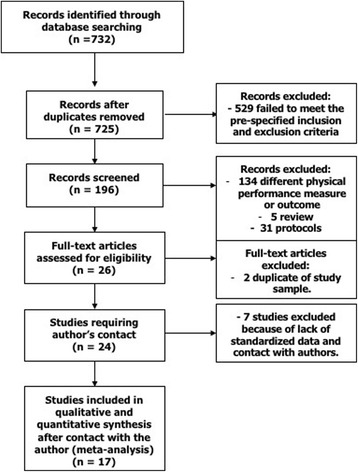
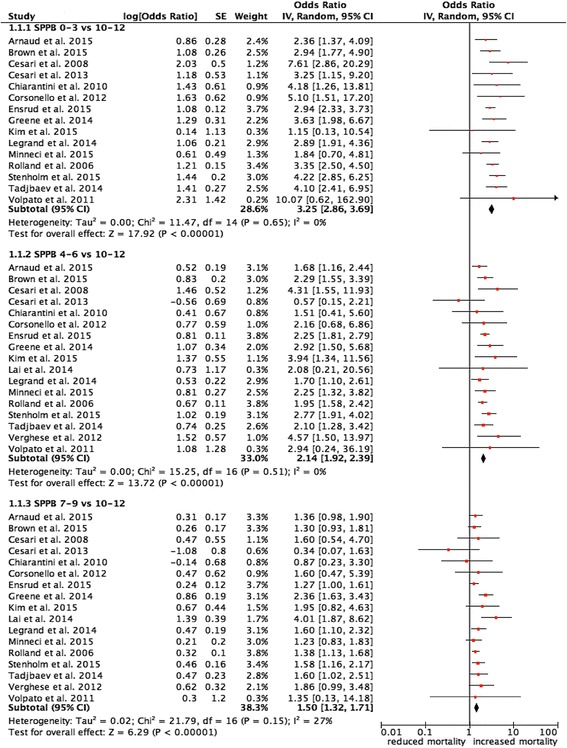
BACKGROUND: The Short Physical Performance Battery (SPPB) is a well-established tool to assess lower extremity physical performance status. Its predictive ability for all-cause mortality has been sparsely reported, but with conflicting results in different subsets of participants. The aim of this study was to perform a meta-analysis investigating the relationship between SPPB score and all-cause mortality. METHODS: Articles were searched in MEDLINE, the Cochrane Library, Google Scholar, and BioMed Central between July and September 2015 and updated in January 2016. Inclusion criteria were observational studies; >50 participants; stratification of population according to SPPB value; data on all-cause mortality; English language publications. Twenty-four articles were selected from available evidence. Data of interest (i.e., clinical characteristics, information after stratification of the sample into four SPPB groups [0-3, 4-6, 7-9, 10-12]) were retrieved from the articles and/or obtained by the study authors. The odds ratio (OR) and/or hazard ratio (HR) was obtained for all-cause mortality according to SPPB category (with SPPB scores 10-12 considered as reference) with adjustment for age, sex, and body mass index. RESULTS: Standardized data were obtained for 17 studies (n = 16,534, mean age 76 ± 3 years). As compared to SPPB scores 10-12, values of 0-3 (OR 3.25, 95%CI 2.86-3.79), 4-6 (OR 2.14, 95%CI 1.92-2.39), and 7-9 (OR 1.50, 95%CI 1.32-1.71) were each associated with an increased risk of all-cause mortality. The association between poor performance on SPPB and all-cause mortality remained highly consistent independent of follow-up length, subsets of participants, geographic area, and age of the population. Random effects meta-regression showed that OR for all-cause mortality with SPPB values 7-9 was higher in the younger population, diabetics, and men. CONCLUSIONS: An SPPB score lower than 10 is predictive of all-cause mortality. The systematic implementation of the SPPB in clinical practice settings may provide useful prognostic information about the risk of all-cause mortality. Moreover, the SPPB could be used as a surrogate endpoint of all-cause mortality in trials needing to quantify benefit and health improvements of specific treatments or rehabilitation programs. The study protocol was published on PROSPERO (CRD42015024916).
Overview
The claims and statistics of this paper haven’t been checked yet.
Free: it reads the open-access text and checks the first 5 claims that cite a source we can check. Create a free account to check every claim.
Integrity signals
Registry
Cites
Statistics
Figures
Verification
Claims the paper makes
The claims and statistics of this paper haven’t been checked yet.
Free: it reads the open-access text and checks the first 5 claims that cite a source we can check. Create a free account to check every claim.
Claims other papers make about this one
Each is checked against this paper’s own text: does it say what the citing paper says it does?
In the citing paper
“Minimally significant changes for SPPB is 0.3 to 0.8 points [37, 38].”
From Pilot study of a telehealth perioperative physical activity intervention for older adults with cancer and their caregivers (2020) · cites this paper as [37]
In the citing paper
“Short Physical Performance Battery (SPPB) score is a group of physical performance measures including gait speed, chair rises, and balance test, and it was associated with an increased risk of all-cause mortality in a meta-analysis (79).”
From Health Consequences of Sarcopenic Obesity: A Narrative Review (2020) · cites this paper as [79]
In the citing paper
“The SPPB also predicts outcomes,[90] but it is more often used in research than in clinical assessment because the battery of tests takes at least 10 minutes to administer.”
From Sarcopenia: revised European consensus on definition and diagnosis (2019) · cites this paper as [90]
Self-check
Percentages, sums and reported differences re-computed from the paper’s own numbers.
The self-check needs the paper’s full text.
Citations
Cites
Measuring inconsistency in meta-analyses
Higgins, J. P. T., Thompson, S. G., Deeks, J. J., & Altman, D. G. (2003) · BMJ · doi:10.1136/bmj.327.7414.557 · Cited by 63,139 · cited 2×
“Publication bias was appraised by graphical evaluation of funnel plots and through Begg and Mazumdar rank correlation, Egger’s regression intercept, and Duval and Tweedie trim and fill [36].”
BackgroundMethodMeta-analysis in clinical trials
DerSimonian, R., & Laird, N. (1986) · Controlled Clinical Trials · doi:10.1016/0197-2456(86)90046-2 · Cited by 39,552 · cited 1×
“Point estimates and standard errors were extracted from individual studies and combined by the generic inverse variance method [35], computing risk estimates with 95% confidence intervals according to logarithmic transformation of the hazard measures.”
MethodLiberati, A., Altman, D. G., Tetzlaff, J., Mulrow, C., Gøtzsche, P. C., Ioannidis, J. P. A., Clarke, M., Devereaux, P. J., Kleijnen, J., & Moher, D. (2009) · PLoS Medicine · doi:10.1371/journal.pmed.1000100 · Cited by 28,164
Frailty in Older Adults: Evidence for a Phenotype
Fried, L. P., Tangen, C. M., Walston, J., Newman, A. B., Hirsch, C., Gottdiener, J., Seeman, T., Tracy, R., Kop, W. J., Burke, G., et al. (2001) · The Journals of Gerontology Series A: Biological Sciences and Medical Sciences · doi:10.1093/gerona/56.3.m146 · Cited by 24,907 · cited 1×
“frailty, functional decline, and other adverse health outcomes, as well as death [1, 2].”
BackgroundDermyshi, E., Wang, Y., Yan, C., Hong, W., Qiu, G., Gong, X., & Zhang, T. (2017) · Neonatology · doi:10.1159/000454668 · Cited by 24,451
Meta-analysis of Observational Studies in Epidemiology<SUBTITLE>A Proposal for Reporting</SUBTITLE>
Stroup, D. F. (2000) · JAMA · doi:10.1001/jama.283.15.2008 · Cited by 20,623
Liberati, A., Altman, D. G., Tetzlaff, J., Mulrow, C., Gotzsche, P. C., Ioannidis, J. P. A., Clarke, M., Devereaux, P. J., Kleijnen, J., & Moher, D. (2009) · BMJ · doi:10.1136/bmj.b2700 · Cited by 17,648
(2014) · Medical Entomology and Zoology · Cited by 17,633
Guralnik, J. M., Simonsick, E. M., Ferrucci, L., Glynn, R. J., Berkman, L. F., Blazer, D. G., Scherr, P. A., & Wallace, R. B. (1994) · Journal of Gerontology · doi:10.1093/geronj/49.2.m85 · Cited by 9,792 · cited 5×
“It is an objective tool for measuring the lower extremity physical performance status [4].”
BackgroundMethodInfluentialSelf-citationCochrane Handbook for Systematic Reviews of Interventions Version 5.0.1. The Cochrane Collaboration
Higgins, J. P. T., Green, S. R., & Higgins, J. P. T. (2008) · Cited by 7,226
Cited by
Items 101–200 of 904
The final word on nutritional screening and assessment in older persons
Cereda, E., Veronese, N., & Caccialanza, R. (2018) · Current Opinion in Clinical Nutrition & Metabolic Care · doi:10.1097/mco.0000000000000431 · Cited by 40
Fusco, D., Ferrini, A., Pasqualetti, G., Giannotti, C., Cesari, M., Laudisio, A., Ballestrero, A., Scabini, S., Odetti, P. R., Colloca, G. F., et al. (2020) · European Journal of Clinical Investigation · doi:10.1111/eci.13347 · Cited by 45
Self-citationHofbauer, L. C., Witvrouw, R., Varga, Z., Shiota, N., Cremer, M., Tanko, L. B., Rooks, D., Auberson, L. Z., Arkuszewski, M., Fretault, N., et al. (2021) · The Lancet Healthy Longevity · doi:10.1016/s2666-7568(21)00084-2 · Cited by 38
Golledge, J., Leicht, A. S., Yip, L., Rowbotham, S. E., Pinchbeck, J. L., Jenkins, J. S., Clapperton, R., Dally-Watkins, M., Singh, M. A. F., Mavros, Y., et al. (2020) · European Journal of Vascular and Endovascular Surgery · doi:10.1016/j.ejvs.2020.02.006 · Cited by 41
Treat-to-target in axial spondyloarthritis — what about physical function and activity?
Braun, J., Baraliakos, X., & Kiltz, U. (2021) · Nature Reviews Rheumatology · doi:10.1038/s41584-021-00656-5 · Cited by 46
Updates in Cancer Cachexia: Clinical Management and Pharmacologic Interventions
Pandey, S., Bradley, L., & Fabbro, E. D. (2024) · Cancers · doi:10.3390/cancers16091696 · Cited by 48
“A SPPB score 10 is predictive of decreased overall survival (OS) in older patients with leukemia [40], increased post-operative complications [41], and adverse events with lower chemo completion in NSCLC [42,43].”
BackgroundPhysical Performance Trajectories and Mortality Among Older Mexican Americans
Mutambudzi, M. S., Chen, N.-W., Howrey, B. T., García, M. A., & Markides, K. S. (2018) · The Journals of Gerontology Series A · doi:10.1093/gerona/gly013 · Cited by 41
Hornsby, W., Sareini, M.-A., Golbus, J. R., Willer, C. J., McNamara, J. L., Konerman, M. C., & Hummel, S. L. (2018) · Journal of Cardiac Failure · doi:10.1016/j.cardfail.2018.09.002 · Cited by 42
“A recent meta-analysis of 17 studies (n = 16,534, mean age 76 ± 3 years) using SPPB as a measure of frailty reported that a score ≤9 predicted increased all-cause mortality (27).”
MethodExercise Intervention to Improve Functional Capacity in Older Adults After Acute Coronary Syndrome
Campo, G. C., Tonet, E., Chiaranda, G., Sella, G., Maietti, E., Mazzoni, G., Biscaglia, S., Pavasini, R., MYERS, J. N., & Grazzi, G. (2019) · Journal of the American College of Cardiology · doi:10.1016/j.jacc.2019.10.010 · Cited by 44
Self-citationPrusynski, R. A., Gustavson, A. M., Shrivastav, S. R., & Mroz, T. M. (2021) · Physical Therapy · doi:10.1093/ptj/pzaa230 · Cited by 40
Coelho‐Júnior, H. J., Uchida, M. C., Gonçalves, I. O., Calvani, R., Rodrigues, B., Picca, A., Onder, G., Landi, F., Bernabei, R., & Marzetti, E. (2019) · Journal of Geriatric Physical Therapy · doi:10.1519/jpt.0000000000000246 · Cited by 42
Self-citationBrar, R., Whitlock, R. H., Komenda, P. V. J., Rigatto, C., Prasad, B., Bohm, C. J., & Tangri, N. (2021) · Clinical Journal of the American Society of Nephrology · doi:10.2215/cjn.12480720 · Cited by 37
“This cutoff is on the basis of previous study protocol and has been associated with all-cause mortality (4,14,15).”
BackgroundWarmerdam, E., Romijnders, R., Geritz, J., Elshehabi, M., Maetzler, C., Otto, J. C., Reimer, M., Stürner, K. H., Baron, R., Paschen, S., et al. (2021) · Sensors · doi:10.3390/s21175833 · Cited by 48
Xue, W., Zhang, X., & Xiaoyan, Z. (2022) · Journal of International Medical Research · doi:10.1177/03000605211044320 · Cited by 48
“The SPPB is a useful and wellestablished tool for assessing the physical ability of elderly people,.(24) The SPPB 4 Journal of International Medical Research”
MethodKeevil, V. L., Luben, R., Hayat, S. A., Sayer, A. A., Wareham, N. J., & Khaw, K. (2017) · Archives of Gerontology and Geriatrics · doi:10.1016/j.archger.2017.10.001 · Cited by 39
“A recent meta-analysis of the short physical performance battery (SPPB), which combines performance on UWS, TCS and SB tests, aimed to address part of this evidence gap and did demonstrate a linear relationship between the SPPB score and mortality in a range of community and patient populations in different geographic…”
BackgroundMethodFrailty in patients admitted to hospital for acute coronary syndrome: when, how and why?
Tonet, E., Pavasini, R., Biscaglia, S., & Campo, G. C. (2019) · PubMed · doi:10.11909/j.issn.1671-5411.2019.02.005 · Cited by 44
Self-citationFrailty in lung transplantation: a systematic review
MONTGOMERY, E. E., Macdonald, P. S., Newton, P. J., Jha, S. R., & Malouf, M. A. (2019) · Expert Review of Respiratory Medicine · doi:10.1080/17476348.2020.1702527 · Cited by 39
Schaenman, J. M. D., Castellon, L., Liang, E. C., Nanayakkara, D. D., Abdalla, B. A., Sarkisian, C. A., & Goldwater, D. S. (2019) · Pilot and Feasibility Studies · doi:10.1186/s40814-019-0534-2 · Cited by 38
Hanada, M., Yamauchi, K., Miyazaki, S., Oyama, Y., Yanagita, Y., Sato, S., Miyazaki, T., Nagayasu, T., & Kozu, R. (2020) · Chronic Respiratory Disease · doi:10.1177/1479973120961846 · Cited by 36
“It is a useful and well-established tool for evaluating physical performance of the elderly.(10,11) The SPPB is used widely as a performance-based, three-part assessment to measure functional status.”
MethodOtobe, Y., Rhee, C. M., Nguyen, M. D. T. L., Kalantar‐Zadeh, K., & Kopple, J. D. (2021) · Current Opinion in Nephrology & Hypertension · doi:10.1097/mnh.0000000000000763 · Cited by 48
Wickerson, L. M., Rozenberg, D., Gottesman, C., Helm, D., Mathur, S., & Singer, L. G. (2020) · Clinical Transplantation · doi:10.1111/ctr.14095 · Cited by 38
Frailty phenotype and multi-domain impairments in older patients with chronic kidney disease
Vettoretti, S., Caldiroli, L., Porata, G., Vezza, C., Cesari, M., & Messa, P. (2020) · BMC Geriatrics · doi:10.1186/s12877-020-01757-8 · Cited by 39
“Physical performance was considered impaired when SPPB score was < 10 [21].”
BackgroundSelf-citationJung, H., Baek, J. Y., Jang, I., Guralnik, J. M., Rockwood, K. J., Lee, E., & Kim, D. H. (2021) · The Journals of Gerontology Series A · doi:10.1093/gerona/glab087 · Cited by 47
“According to previous literature (11,21), we initially categorized individuals into 2 groups: those with a total SPPB score of 9 or less and those with 10 or higher.”
MethodSelf-citationBraun, T., Thiel, C., Peter, R. S., Bahns, C., Büchele, G., Rapp, K., Becker, C., & Grüneberg, C. (2022) · Ageing Research Reviews · doi:10.1016/j.arr.2022.101704 · Cited by 40
Physical Function and Frailty for Predicting Adverse Outcomes in Older Primary Care Patients
O’Hoski, S., Bean, J. F., Ma, J., So, H. Y., Kuspinar, A., Richardson, J. A., Wald, J., & Beauchamp, M. (2019) · Archives of Physical Medicine and Rehabilitation · doi:10.1016/j.apmr.2019.11.013 · Cited by 40
Farsijani, S., Santanasto, A. J., Miljkovic, I., Boudreau, R. M., Goodpaster, B. H., Kritchevsky, S. B., & Newman, A. B. (2021) · The Journals of Gerontology: Series A · doi:10.1093/gerona/glaa161 · Cited by 30
“12 10 (9, 11) 10 (9, 11) 10 (8, 11) 9 (8, 10) <.”
Dorhout, B. G., Haveman‐Nies, A., van Dongen, E. J. I., Wezenbeek, N. L. W., Doets, E. L., Bulten, A., de Wit, G. A., & de Groot, C. P. G. M. (2021) · Journal of the American Medical Directors Association · doi:10.1016/j.jamda.2020.12.036 · Cited by 36
“3 Educational level, n (%)* Low 2 (2) 4 (5) Intermediate 54 (66) 42 (49) High 26 (32) 40 (47)”
Behrendt, T., Bielitzki, R., Behrens, M., Glazachev, O. S., & Schega, L. (2022) · Frontiers in Physiology · doi:10.3389/fphys.2022.899096 · Cited by 42
“However, it has been reported that measures of cognitive and physical performance are predictors for all-cause mortality, disability, and the onset and progression of dementia and could therefore be used as a surrogate endpoint to quantify the efficiency and health benefits of specific treatments in older adults (Wilk…”
BackgroundWalking Stability and Risk of Falls
Promsri, A., Cholamjiak, P., & Federolf, P. (2023) · Bioengineering · doi:10.3390/bioengineering10040471 · Cited by 41
“For example, the SPPS measures lower-limb performance in terms of time spent performing standing balance, walking speed, and chair stand tests [47].”
BackgroundMethodReliability of mobility measures in older medical patients with cognitive impairment
Braun, T., Thiel, C., Schulz, R. J., & Grüneberg, C. (2019) · BMC Geriatrics · doi:10.1186/s12877-019-1036-z · Cited by 37
Frailty, Sarcopenia, and Malnutrition in Cirrhotic Patients
Aby, E. S., & Saab, S. (2019) · Clinics in Liver Disease · doi:10.1016/j.cld.2019.06.001 · Cited by 36
Fermont, J. M., Mohan, D., Fisk, M., Bolton, C. E., MacNee, W., Cockcroft, J. R., McEniery, C. M., Fuld, J. P., Cheriyan, J., Tal‐Singer, R., et al. (2020) · Age and Ageing · doi:10.1093/ageing/afaa138 · Cited by 40
“The SPPB itself was divided into 10–12, 7–9, 4–6 and <4 based on the distribution of data and cut-off score of <10 to define functional limitation [19,20].”
MethodXu, J. J., Reijnierse, E. M., Pacifico, J., Wan, C. S., & Maier, A. B. (2021) · Age and Ageing · doi:10.1093/ageing/afab134 · Cited by 34
“Although the association of low physical performance and mortality could not be analysed in this study, previous meta-analyses have reported that low physical performance (SPPB < 10) [60] and a slower gait speed [60] are associated with higher risk of mortality.”
BackgroundResultSuikkanen, S. A., Soukkio, P. K., Aartolahti, E. M., Kääriä, S. M., Kautiainen, H., Hupli, M. T., Pitkälä, K. H., Sipilä, S., & Kukkonen-Harjula, K. T. (2021) · Archives of Physical Medicine and Rehabilitation · doi:10.1016/j.apmr.2021.06.017 · Cited by 44
Perceived Physical Fatigability Predicts All-Cause Mortality in Older Adults
Glynn, N. W., Gmelin, T. A., Renner, S. W., Qiao, Y., Boudreau, R. M., Feitosa, M. F., Wojczynski, M. K., Cosentino, S., Andersen, S. L., Christensen, K., et al. (2021) · The Journals of Gerontology Series A · doi:10.1093/gerona/glab374 · Cited by 36
Romani, M., Berger, M. M., & D’Amelio, P. (2022) · Nutrients · doi:10.3390/nu14030483 · Cited by 38
“Nutrients 2022, 14, 483. https://doi.org/10.3390/nu14030483 https://www.mdpi.com/journal/nutrients Nutrients 2022, 14, 483 2 of 19 ALM: appendicular lean mass; SD: standard deviation; SPPB: short performance physical battery; TUG: timed up and go test.”
MethodInfluentialFortes-Filho, S. D. Q., Aliberti, M. J. R., Apolinário, D., Melo-Fortes, J. A., Sitta, M. D. C., Jacob-Filho, W., & Leme, L. E. G. (2019) · The journal of nutrition health & aging · doi:10.1007/s12603-019-1279-6 · Cited by 35
“Physical performance proved a vital and early sign indicative of vulnerability that reflects several underlying physiological impairments (24).”
BackgroundHatanaka, S., Osuka, Y., Kojima, N., Motokawa, K., Hayakawa, M., Mikami, Y., Iwasaki, M., Inagaki, H., Miyamae, F., Okamura, T., et al. (2023) · Nutrition · doi:10.1016/j.nut.2023.112289 · Cited by 33
Casals, C., Ávila‐Cabeza‐de‐Vaca, L., González‐Mariscal, A., Marín-Galindo, A., Costilla, M., Ponce‐González, J. G., Vázquez‐Sánchez, M. Á., & Corral‐Pérez, J. (2023) · Frontiers in Public Health · doi:10.3389/fpubh.2023.1267666 · Cited by 43
Skelton, D. A., & Mavroeidi, A. (2018) · Journal of Frailty Sarcopenia and Falls · doi:10.22540/jfsf-03-074 · Cited by 39
Corrêa, L. C. D. A. C., Pirkle, C. M., Wu, Y. Y., Vafaei, A., Curcio, C., & da Câmara, S. M. A. (2018) · Journal of Aging and Health · doi:10.1177/0898264318799223 · Cited by 36
“Previous studies have reported that low scores in the SPPB are associated with adverse health conditions such as loss of physical abilities and premature mortality (Pavasini et al., 2016; Rolland et al., 2006; Studenski et al., 2003).”
ResultCoelho‐Júnior, H. J., Calvani, R., Gonçalves, I. O., Rodrigues, B., Picca, A., Landi, F., Bernabei, R., Uchida, M. C., & Marzetti, E. (2019) · Aging Clinical and Experimental Research · doi:10.1007/s40520-019-01216-4 · Cited by 34
Self-citationBrady, E. M., Hall, A. P., Baldry, E. L., Chatterjee, S., Daniels, L. J., Edwardson, C. L., Khunti, K., Patel, M., Henson, J. J., Rowlands, A. V., et al. (2019) · BMJ Open · doi:10.1136/bmjopen-2018-027773 · Cited by 32
Lim, J. P., Yew, S., Tay, L., Chew, J. L., Yeo, A., Ismail, N. H., Ding, Y. Y., & Lim, W. S. (2020) · The journal of nutrition health & aging · doi:10.1007/s12603-020-1461-x · Cited by 35
Self-citationMultidomain Rehabilitation for Older Patients with Myocardial Infarction
Tonet, E., Raisi, A., Zagnoni, S., Chiaranda, G., Pasanisi, G., Aschieri, D., D'Intino, P. E., Pavasini, R., Cimaglia, P., Campana, R., et al. (2025) · New England Journal of Medicine · doi:10.1056/nejmoa2502799 · Cited by 35
Self-citationCustodero, C., Wu, Q., Ghita, G. L., Anton, S. D., Brakenridge, S. C., Brumback, B., Efron, P. A., Gardner, A. K., Leeuwenburgh, C., Moldawer, L. L., et al. (2019) · Critical Care · doi:10.1186/s13054-019-2505-7 · Cited by 34
Beckmann, M., Bruun‐Olsen, V., Pripp, A. H., Bergland, A., Smith, T. O., & Heiberg, K. E. (2020) · Physiotherapy · doi:10.1016/j.physio.2020.04.009 · Cited by 41
Bischoff, L. L., Cordes, T., Meixner, C., Schoene, D., Voelcker‐Rehage, C., & Wollesen, B. (2020) · Aging Clinical and Experimental Research · doi:10.1007/s40520-020-01615-y · Cited by 36
Picca, A., Saini, S. K., Mankowski, R. T., Kamenov, G. D., Anton, S. D., Manini, T. M., Buford, T. W., Wohlgemuth, S. E., Xiao, R., Calvani, R., et al. (2020) · Cells · doi:10.3390/cells9122579 · Cited by 33
Self-citationAccelerometer‐Measured Sedentary Patterns are Associated with Incident Falls in Older Women
Rosenberg, D. E., Rillamas‐Sun, E., Bellettiere, J., LaMonte, M. J., Büchner, D. M., Di, C., Hunt, J. R., Marshall, S. W., Stefanick, M. L., Zhang, Y., et al. (2020) · Journal of the American Geriatrics Society · doi:10.1111/jgs.16923 · Cited by 35
“To evaluate whether observed associations were heavily influenced by women with poor physical functioning, we completed a sensitivity analysis excluding women with SPPB scores greater than 4.(37) Reported injuries and types of medical care received were examined by quartiles of total sedentary time for women with fall…”
MethodKim, J. (2021) · International Journal of Environmental Research and Public Health · doi:10.3390/ijerph19010039 · Cited by 38
“Several previous studies have shown that a lower level of physical function and chronic disease are linked with a higher risk of mortality [35,36].”
BackgroundAmasene, M., Medrano, M., Echeverria, I., Urquiza, M., Rodriguez‐Larrad, A., Diez, A., Labayen, I., & Ariadna, B.-B. (2022) · Frontiers in Nutrition · doi:10.3389/fnut.2022.920485 · Cited by 34
Jäggi, S., Wachter, A., Adcock, M., de Bruin, E. D., Möller, J. C., Marks, D., Schweinfurther, R., & Giannouli, E. (2023) · European journal of medical research · doi:10.1186/s40001-022-00963-x · Cited by 36
“Short physical performance battery (SPPB) The Short Physical Performance Battery (SPPB) was used as an objective assessment for lower extremity motor functioning in older adults [45].”
MethodProspective associations between white matter hyperintensities and lower extremity function
Moon, S. Y., Barreto, P. D. S., Rolland, Y., Chupin, M., Bouyahia, A., Fillon, L., Mangin, J., Andrieu, S., Cesari, M., Vellas, B. J., et al. (2018) · Neurology · doi:10.1212/wnl.0000000000005289 · Cited by 36
“Performancebased tests of LEF can identify older persons with a preclinical stage of disability who may benefit from interventions to prevent negative health outcomes, such as falls,(3) institutionalization,(2) and death.(1,2,4) The Short Physical Performance Battery (SPPB)(5,6) has been utilized in multiple studies(1…”
BackgroundMethodSelf-citationBehiry, M. E., Mogawer, S., Ali, A. Y., Rakha, M., Awad, R., Emad, N., & Abdelfatah, Y. (2019) · International Journal of Hepatology · doi:10.1155/2019/8092865 · Cited by 35
“In addition, the SPPB only requires 5 to 10 minutes to complete, so it can be integrated into patient management without excessive time consumption [25].”
BackgroundSnowsill, T., Stathi, A., Green, C., Withall, J., Greaves, C. J., Thompson, J. L., Taylor, G. J., Gray, S. F., Johansen‐Berg, H., Bilzon, J., et al. (2022) · The Lancet Public Health · doi:10.1016/s2468-2667(22)00030-5 · Cited by 41
Self-citationPicca, A., Lozanoska‐Ochser, B., Calvani, R., Coelho‐Júnior, H. J., Leewenburgh, C., & Marzetti, E. (2023) · Experimental Gerontology · doi:10.1016/j.exger.2023.112204 · Cited by 33
“Exercise has also been indicated as a strategy for circumventing the inexorable decline of SC function, which along with its direct effect on muscle fibers, leads to activation of SCs and muscle hypertrophy (Cartee et al., 2016; Chen et al., 2020; McCormick and Thomas, 1992; Petrella et al., 2008).”
BackgroundMultidisciplinary approach to sarcopenia: a narrative review
Park, W.-T., Shon, O., & Kim, G. B. (2023) · Journal of Yeungnam Medical Science · doi:10.12701/jyms.2023.00724 · Cited by 43
“Low muscle strength is defined as a handgrip strength of <28 kg for men and <18 kg for women. mortality in older adults [61].”
BackgroundPedauyé-Rueda, B., García-Fernández, P., Maicas-Pérez, L., Maté‐Muñoz, J. L., & Hernández-Lougedo, J. (2024) · Journal of Clinical Medicine · doi:10.3390/jcm13092520 · Cited by 36
“The EWGSOP2 includes tests for the evaluation of physical performance, the TUG and SPPB, both of which are related to mortality [57,58].”
MethodTonet, E., Maietti, E., Chiaranda, G., Vitali, F., Serenelli, M., Bugani, G., Mazzoni, G., Ruggiero, R., MYERS, J. N., VILLANI, G. Q., et al. (2018) · BMC Cardiovascular Disorders · doi:10.1186/s12872-018-0839-8 · Cited by 34
“As shown by a recent meta-analysis, SPPB is also predictive of all-cause mortality in a dose-response manner [45].”
ResultSelf-citationSarcopenia Assessment Techniques
Guttikonda, D., & Smith, A. L. (2021) · Clinical Liver Disease · doi:10.1002/cld.1111 · Cited by 36
Sánchez-Torralvo, F. J., González‐Poveda, I., García‐Olivares, M., Porras, N., Gonzalo‐Marín, M., Tapia, M. J., Velasco, S. M., Toval-Mata, J. A., Ruiz‐López, M., Campos, J. C., et al. (2022) · Nutrients · doi:10.3390/nu14071484 · Cited by 40
“The Short Physical Performance Battery (SPPB) is a useful, three-part assessment and well-established tool for evaluating physical performance [9,18].”
MethodSarcopenia: how to determine and manage
Chung, J. Y., Kim, S., Kim, S. H., & Park, C. H. (2025) · Knee Surgery and Related Research · doi:10.1186/s43019-025-00265-6 · Cited by 38
“Physical performance is assessed using the SPPB (score ≤ 9), the 6 min walking test (walking speed 1.0 m/s), or the five-time chair stand test ( ≥ 12 s to complete) [8, 62].”
InfluentialAssessment and Management of Declining Physical Function in Aging Dogs
McKenzie, B. A., & Chen, F. L. (2022) · Topics in companion animal medicine · doi:10.1016/j.tcam.2022.100732 · Cited by 33
Sattar, S., Kenis, C., Haase, K. R., Burhenn, P., Stolz-Baskett, P., Milisen, K., Ayala, A. P., & Puts, M. T. E. (2019) · Journal of Geriatric Oncology · doi:10.1016/j.jgo.2019.03.020 · Cited by 33
Mickute, M., Henson, J., Rowlands, A. V., Sargeant, J. A., Webb, D., Hall, A. P., Edwardson, C. L., Baldry, E. L., Brady, E. M., Khunti, K., et al. (2021) · Diabetic Medicine · doi:10.1111/dme.14393 · Cited by 29
Diago-Galmés, A., Guillamón-Escudero, C., Tenías, J. M., Soriano, J. M., & Garrido, J. F. (2021) · Biology · doi:10.3390/biology10020093 · Cited by 35
Gao, S., Xia, Y., Wu, Q., Chang, Q., & Zhao, Y. (2021) · Frontiers in Medicine · doi:10.3389/fmed.2021.659107 · Cited by 35
Sex Differences in Recovery Across Multiple Domains Among Older Adults With Hip Fracture
Orwig, D., Abraham, D. S., Hochberg, M. C., Gruber‐Baldini, A. L., Guralnik, J. M., Cappola, A. R., Golden, J., Hicks, G. E., Miller, R. R., Resnick, B. M., et al. (2021) · The Journals of Gerontology Series A · doi:10.1093/gerona/glab271 · Cited by 30
Self-citationTack, W., Cock, A. D., Dirinck, E. L., Bastijns, S., Ariën, F., & Perkisas, S. (2023) · Diabetes Obesity and Metabolism · doi:10.1111/dom.15321 · Cited by 42
“87 With recent developments in diagnostic testing possibilities, it should be possible to quickly screen for sarcopenia during regular check-ups in people with T2D by assessing hand-grip strength, then referring patients for further investigation if the result is abnormal.”
BackgroundZhuang, M., Gu, Y., Wang, Z., He, X., & Chen, N. (2025) · Scientific Reports · doi:10.1038/s41598-025-91644-2 · Cited by 40
“Strong evidence showed that SPPB scores were associated with all-cause mortality 52 .”
Voss, L., Nóbrega, M., Bandeira, L., Griz, L., Rocha‐Filho, P. A. S., & Bandeira, F. A. F. (2020) · Bone · doi:10.1016/j.bone.2020.115583 · Cited by 32
Prevalence of Sarcopenia in Community-Dwelling Older Adults in Valencia, Spain
Guillamón-Escudero, C., Diago-Galmés, A., Tenías, J. M., Soriano, J. M., & Garrido, J. F. (2020) · International Journal of Environmental Research and Public Health · doi:10.3390/ijerph17239130 · Cited by 38
“, standing with their feet as close together, after semi-tandem and finally tandem position, for 10 s in each position), speed (studied population developed to travel 4 m at a usual pace) and force (being pretested to fold their arms across their chest and stand up from the chair; if the pretest was carried out, parti…”
BackgroundSoh, Y., & Won, C. W. (2021) · Medicine · doi:10.1097/md.0000000000024400 · Cited by 35
“In previous studies, SPPB scores of 9 showed 81% to 92% sensitivity and 52% to 80% specificity for identifying frailty andwere associated with an increased risk of all-cause mortality.([28,30]) Thus, these cutoff points were used to classify the participants with poor physical performance.”
BackgroundMethodKiernan, S., Cheallaigh, C. N., Murphy, N., Dowds, J., & Broderick, J. (2021) · Scientific Reports · doi:10.1038/s41598-021-88590-0 · Cited by 25
Hori, K., Usuba, K., Sakuyama, A., Adachi, Y., Hirakawa, K., Nakayama, A., Nagayama, M., Shimokawa, T., Takanashi, S., & Isobe, M. (2021) · Circulation Reports · doi:10.1253/circrep.cr-21-0057 · Cited by 33
Sinikumpu, S., Keränen, M., Jokelainen, J. J., Keinanen-Kiukaanniemi, S. M., & Huilaja, L. (2021) · BMC Geriatrics · doi:10.1186/s12877-021-02528-9 · Cited by 30
Canine Geriatric Syndrome: A Framework for Advancing Research in Veterinary Geroscience
McKenzie, B. A., Chen, F. L., Gruen, M. E., & Olby, N. J. (2022) · Frontiers in Veterinary Science · doi:10.3389/fvets.2022.853743 · Cited by 36
Otobe, Y., Rhee, C. M., Nguyen, M. D. T. L., Kalantar‐Zadeh, K., & Kopple, J. D. (2022) · eScholarship (California Digital Library) · Cited by 28
Cacciatore, S., Marzetti, E., Calvani, R., Picca, A., Salini, S., Russo, A., Tosato, M., & Landi, F. (2024) · Aging Clinical and Experimental Research · doi:10.1007/s40520-024-02822-7 · Cited by 31
Self-citationPhysical Impairment and Access to Kidney Transplantation
Haugen, C. E., Agoons, D. D., Chu, N. M., Liyanage, L., Long, J. J., Desai, N. M., Norman, S. P., Brennan, D. C., Segev, D. L., & McAdams‐DeMarco, M. (2019) · Transplantation · doi:10.1097/tp.0000000000002778 · Cited by 30
Xu, C. Q., Yao, F., Mohamad, Y., Wong, R. J., Kent, D. S., Seetharaman, S., Srisengfa, Y. T., & Lai, J. C. (2021) · Transplantation Direct · doi:10.1097/txd.0000000000001097 · Cited by 28
Self-citationCruz, B. D. P., Perales, F., Alfonso‐Rosa, R. M., & del Pozo-Cruz, J. (2021) · American Journal of Preventive Medicine · doi:10.1016/j.amepre.2021.02.003 · Cited by 34
Olfaction and Physical Functioning in Older Adults: A Longitudinal Study
Yuan, Y., Li, C., Luo, Z., Simonsick, E. M., Shiroma, E. J., & Chen, H. (2021) · The Journals of Gerontology Series A · doi:10.1093/gerona/glab233 · Cited by 28
Longitudinal Sex‐Specific Physical Function Trends by Age, Race/Ethnicity, and Weight Status
Xu, F., Cohen, S. A., Greaney, M. L., Earp, J. E., & Delmonico, M. J. (2020) · Journal of the American Geriatrics Society · doi:10.1111/jgs.16638 · Cited by 30
Sugi, T., Enomoto, T., Ohara, Y., Furuya, K., Kitaguchi, D., Moue, S., Akashi, Y., Ogawa, K., Owada, Y., & Oda, T. (2023) · Annals of Gastroenterological Surgery · doi:10.1002/ags3.12676 · Cited by 26
Fatores associados a capacidade funcional de idosos adscritos à Estratégia de Saúde da Família
Moreira, L. B., da Silva, S. L. A., Castro, A. E. F. D., Lima, S. S., Estevam, D. O., de Freitas, F. A. S., Vieira, É. L. M., & Pereira, D. S. (2020) · Ciência & Saúde Coletiva · doi:10.1590/1413-81232020256.26092018 · Cited by 89
Attitudes toward deprescribing among adults with heart failure with preserved ejection fraction
Navid, P., Nguyen, L. K., Jaber, D. A., Zarzuela, K., Musse, M., Wang, M. L., Requijo, T., Kozlov, E., Creber, R. M., Hilmer, S. N., et al. (2021) · Journal of the American Geriatrics Society · doi:10.1111/jgs.17204 · Cited by 29
“We defined score <10 on the Short Physical Performance Battery as frail.(17,18) We defined a score <6 on the Katz Index of Independence in Activities of Daily Living as functional impairment.”
MethodMilte, R., Petersen, J. M., Boylan, J., Henwood, T. R., Hunter, S. C., Lange, B. S., Lawless, M., Torode, S., & Lewis, L. K. (2022) · BMC Geriatrics · doi:10.1186/s12877-022-03101-8 · Cited by 30
“Previous research has suggested that a total score of 10 or under in the SPPB is predictive of mobility disability [31] and allcause mortality [32] in community dwelling older adults.”
BackgroundMcKenna, C. F., Salvador, A. F., Keeble, A. R., Khan, N. A., De Lisio, M., Konopka, A. R., Paluska, S. A., & Burd, N. A. (2022) · Journal of Applied Physiology · doi:10.1152/japplphysiol.00186.2022 · Cited by 26
Randriambelonoro, M., Franck, C. P., Herrmann, F. R., Carmona, G. A., Geissbühler, A., Graf, C. E., & Frangos, E. (2023) · JMIR Rehabilitation and Assistive Technologies · doi:10.2196/39543 · Cited by 32
“This test is associated with the risk of falls, the risk of functional decline, and the risk of death [22-24].”
BackgroundBasu, A. (2019) · Kidney International Reports · doi:10.1016/j.ekir.2019.09.014 · Cited by 27
Giné‐Garriga, M., Dall, P., Sandlund, M., Jerez‐Roig, J., CHASTIN, S. F. M., & Skelton, D. A. (2020) · International Journal of Environmental Research and Public Health · doi:10.3390/ijerph17082866 · Cited by 33
“To assess the preliminary effects of the GET READY intervention (GR), each participant (accompanied by the personal legal representative if necessary) was individually interviewed and the following outcomes were assessed at both time points (baseline and post-intervention): (a) self-rated health and health-related qua…”
MethodDevelopment and Validation of 2D-LiDAR-Based Gait Analysis Instrument and Algorithm
Yoon, S., Jung, H., Jung, H., Kim, K., Hong, S. K., Roh, H., & Oh, B. (2021) · Sensors · doi:10.3390/s21020414 · Cited by 28
“In older people, a spectrum of physical performance has been studied for its importance in numerous aspects such as biomarkers of clinical outcome prediction [3], criteria for selecting population eligible for certain intervention programs [4], and outcome measures per se [5].”
BackgroundArnal‐Gómez, A., Iranzo, M. À. C. I., Tomás, J. M., Chuliá, M. Á. T., Balasch‐Bernat, M., Sentandreu‐Mañó, T., Forcano, S., & Serrano, N. C. (2021) · Journal of Clinical Medicine · doi:10.3390/jcm10051018 · Cited by 31
“Although the SPPB also predicts outcomes [34], it is a more time-consuming test to apply and therefore, it is more used in research than in clinical practice.”
MethodReis, J. M. S., Alves, L. S., & Vogt, B. P. (2021) · Journal of Renal Nutrition · doi:10.1053/j.jrn.2021.06.011 · Cited by 32
Mortality Risks after Two Years in Frail and Pre-Frail Older Adults Admitted to Hospital
Cano‐Escalera, G., Graña, M., Irazusta, J., Labayen, I., González-Pinto, A. M., & Besga, A. (2023) · Journal of Clinical Medicine · doi:10.3390/jcm12093103 · Cited by 28
“A recent study showed that An SPPB score less than 10 is predictive of mortality, thus systematic implementation of the SPPB in clinical practice settings can provide useful prognostic information on the risk of all-cause mortality [94].”
BackgroundHealth factors associated with cognitive frailty in older adults living in the community
Corral‐Pérez, J., Casals, C., Ávila‐Cabeza‐de‐Vaca, L., González‐Mariscal, A., Martínez-Zaragoza, I., Villa‐Estrada, F., Reina-Campos, R., & Vázquez‐Sánchez, M. Á. (2023) · Frontiers in Aging Neuroscience · doi:10.3389/fnagi.2023.1232460 · Cited by 28
“The Short Physical Performance Battery (SPPB) was utilized to assess the physical function of the participants, which is a valid and reliable tool for older individuals (Pavasini et al., 2016).”
MethodNo effect of topical ampicillin prophylaxis in elective operations of the colon or rectum.
Raahave, D., Hesselfeldt, P., Pedersen, T., Zachariassen, A., Kann, D., & Hansen, O. H. (1989) · PubMed · Cited by 30
Biomarkers of chronic kidney disease in older individuals: navigating complexity in diagnosis
Muglia, L., Dio, M. D., Filicetti, E., Greco, G. I., Volpentesta, M., Beccacece, A., Fabbietti, P., Lattanzio, F., Corsonello, A., Gembillo, G., et al. (2024) · Frontiers in Medicine · doi:10.3389/fmed.2024.1397160 · Cited by 38
Self-citation
Metadata
- Authors
- Pavasini, R., Guralnik, J., Brown, J. C., di Bari, M., Cesari, M., Landi, F., Vaes, B., Legrand, D., Verghese, J., Wang, C., Stenholm, S., Ferrucci, L., Lai, J. C., Bartes, A. A., Espaulella, J., Ferrer, M., Lim, J.-Y., Ensrud, K. E., Cawthon, P., Turusheva, A., Frolova, E., Rolland, Y., Lauwers, V., Corsonello, A., Kirk, G. D., Ferrari, R., Volpato, S., & Campo, G.
- Affiliations
- Arcispedale Sant'Anna (IT)
- University of Maryland, Baltimore (US)
- Dana-Farber Cancer Institute (US)
- Université Toulouse III - Paul Sabatier (FR)
- Università Cattolica del Sacro Cuore (IT)
- UCLouvain (BE)
- Albert Einstein College of Medicine (US)
- University of Turku (FI)
- National Institute on Aging (US)
- University of California, San Francisco (US)
- Seoul National University (KR)
- University of Minnesota (US)
- California Pacific Medical Center (US)
- North-Western State Medical University named after I.I. Mechnikov (RU)
- Inserm (FR)
- Istituto Nazionale di Riposo e Cura per Anziani (IT)
- Johns Hopkins University (US)
- Maria Cecilia Hospital (IT)
- University of Ferrara (IT)
- Corresponding author
- Pavasini, Rita
- ORCID
- Pavasini, Rita
- Guralnik, Jack
- Brown, Justin C.
- Cesari, Matteo
- Landi, Francesco
- Vaes, Bert
- Legrand, Delphine
- Verghese, Joe
- Wang, Cuiling
- Stenholm, Sari
- Ferrucci, Luigi
- Lai, Jennifer C.
- Espaulella, Joan
- Lim, Jae-Young
- Ensrud, Kristine E.
- Cawthon, Peggy
- Turusheva, Anna
- Frolova, Elena
- Rolland, Yves
- Corsonello, Andrea
- Kirk, Gregory D.
- Ferrari, Roberto
- Volpato, Stefano
- Campo, Gianluca
- Venue
- BMC Medicine
- Published
- 2016-12
- Volume
- 14
- Issue
- 1
- Pages
- 215-215
- ISSN
- 1741-7015 (ISSN-L)
- PMC
- PMC5178082
- OpenAlex
- W2561222867
- Cited by
- 911
- References
- 47
- Citations by year
- 2026: 111 · 2025: 114 · 2024: 99 · 2023: 111 · 2022: 129 · 2021: 135 · 2020: 86 · 2019: 70 · 2018: 34 · 2017: 14
- FWCI
- 3.89
- Type
- journal article
- Language
- en
- Open access
- gold
- doi.org
- Licence
- cc-by
- creativecommons.org/licenses/by/4.0/ (tdm)
- creativecommons.org/licenses/by/4.0/ (vor, 21 d)
- Locations
- BMC Medicine (publishedVersion, cc-by)
- PubMed Central (publishedVersion, cc-by)
- PubMed (publishedVersion)
- eScholarship (California Digital Library) (submittedVersion, cc-by)
- Florence Research (University of Florence) (submittedVersion, cc-by)
- UTUPub (University of Turku) (submittedVersion)
- Archivio Istituzionale della Ricerca (Universita Degli Studi Di Milano) (submittedVersion, other-oa)
- eScholarship (California Digital Library) (submittedVersion)
- Archive of Doctoral Theses and Digital Collections (University of Calabria) (submittedVersion)
- Repositori digital de la UPF (Universitat Pompeu Fabra) (submittedVersion, cc-by)
- Institutional Research Information System University of Ferrara (University of Ferrara) (submittedVersion, cc-by)
- Funders
- Fondation Louvain
- National Institute on Aging
- Fund for health research Spain
- European Regional Development Fund
- National Institutes of Health
- President of the Russian Federation
- Foundation Louvain
- National Institutes of Health US
- Topics
- Health Sciences › Medicine › Geriatrics and Gerontology › Frailty in Older Adults
- Health Sciences › Medicine › Physiology (medical) › Nutrition and Health in Aging
- Health Sciences › Health Professions › Physical Therapy, Sports Therapy and Rehabilitation › Balance, Gait, and Falls Prevention
- Keywords
- Short Physical Performance Battery, all-cause mortality, physical performance, lower limb function, prognostic factors, older adults, mortality prediction, diabetes mellitus, sex differences, age differences, clinical practice implementation, frailty assessment, functional assessment tools, fall risk assessment, balance assessment, walking speed, muscle strength, endurance
- MeSH terms
- Aged, Exercise Test, Female, Humans, Male, Mortality, Prognosis, Geriatric Assessment, Odds Ratio, Risk Assessment, Lower Extremity
About these checks
Registry, retraction, Cites and statistics results are computed, not judged, with one exception: a printed reference that no index lists is read once by a model before it counts as a citation error. Claims are extracted by a model and kept only when their quote appears verbatim in the text; each cited source is then checked, with a model’s help, for whether it says what the claim relies on. Those verdicts can be wrong — read the claim’s quote and the cited source before relying on one.
Statistics and arithmetic are recomputed, not judged.
Confidence bands are shown only for fields calibrated on our annotated test set. None is calibrated yet, so no band is shown.
What counts as a claim ›How we measure confidence ›How we check this ›
Are you an author, or do you see a problem with this page? Request a review
Data sources
Bibliographic data: Semantic Scholar, OpenAlex, Crossref.
Contains information from the Semantic Scholar Academic Graph Datasets, made available under the ODC Attribution License (ODC-BY 1.0).
Semantic Scholar’s data is described in: Kinney, R., et al. (2023). The Semantic Scholar Open Data Platform. arXiv:2301.10140.
