

Short Physical Performance Battery and all-cause mortality: systematic review and meta-analysis
Open accessThe DOI matches its Crossref record; 44 of the 47 references it cites were found in a registry or an index.
Abstract
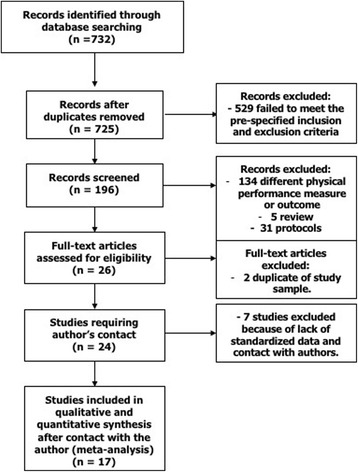
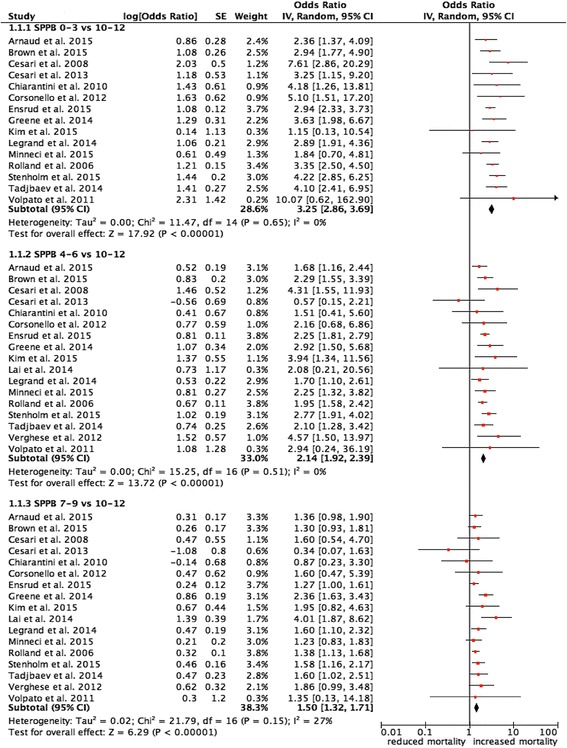
BACKGROUND: The Short Physical Performance Battery (SPPB) is a well-established tool to assess lower extremity physical performance status. Its predictive ability for all-cause mortality has been sparsely reported, but with conflicting results in different subsets of participants. The aim of this study was to perform a meta-analysis investigating the relationship between SPPB score and all-cause mortality. METHODS: Articles were searched in MEDLINE, the Cochrane Library, Google Scholar, and BioMed Central between July and September 2015 and updated in January 2016. Inclusion criteria were observational studies; >50 participants; stratification of population according to SPPB value; data on all-cause mortality; English language publications. Twenty-four articles were selected from available evidence. Data of interest (i.e., clinical characteristics, information after stratification of the sample into four SPPB groups [0-3, 4-6, 7-9, 10-12]) were retrieved from the articles and/or obtained by the study authors. The odds ratio (OR) and/or hazard ratio (HR) was obtained for all-cause mortality according to SPPB category (with SPPB scores 10-12 considered as reference) with adjustment for age, sex, and body mass index. RESULTS: Standardized data were obtained for 17 studies (n = 16,534, mean age 76 ± 3 years). As compared to SPPB scores 10-12, values of 0-3 (OR 3.25, 95%CI 2.86-3.79), 4-6 (OR 2.14, 95%CI 1.92-2.39), and 7-9 (OR 1.50, 95%CI 1.32-1.71) were each associated with an increased risk of all-cause mortality. The association between poor performance on SPPB and all-cause mortality remained highly consistent independent of follow-up length, subsets of participants, geographic area, and age of the population. Random effects meta-regression showed that OR for all-cause mortality with SPPB values 7-9 was higher in the younger population, diabetics, and men. CONCLUSIONS: An SPPB score lower than 10 is predictive of all-cause mortality. The systematic implementation of the SPPB in clinical practice settings may provide useful prognostic information about the risk of all-cause mortality. Moreover, the SPPB could be used as a surrogate endpoint of all-cause mortality in trials needing to quantify benefit and health improvements of specific treatments or rehabilitation programs. The study protocol was published on PROSPERO (CRD42015024916).
Overview
The claims and statistics of this paper haven’t been checked yet.
Free: it reads the open-access text and checks the first 5 claims that cite a source we can check. Create a free account to check every claim.
Integrity signals
Registry
Cites
Statistics
Figures
Verification
Claims the paper makes
The claims and statistics of this paper haven’t been checked yet.
Free: it reads the open-access text and checks the first 5 claims that cite a source we can check. Create a free account to check every claim.
Claims other papers make about this one
Each is checked against this paper’s own text: does it say what the citing paper says it does?
In the citing paper
“Minimally significant changes for SPPB is 0.3 to 0.8 points [37, 38].”
From Pilot study of a telehealth perioperative physical activity intervention for older adults with cancer and their caregivers (2020) · cites this paper as [37]
In the citing paper
“Short Physical Performance Battery (SPPB) score is a group of physical performance measures including gait speed, chair rises, and balance test, and it was associated with an increased risk of all-cause mortality in a meta-analysis (79).”
From Health Consequences of Sarcopenic Obesity: A Narrative Review (2020) · cites this paper as [79]
In the citing paper
“The SPPB also predicts outcomes,[90] but it is more often used in research than in clinical assessment because the battery of tests takes at least 10 minutes to administer.”
From Sarcopenia: revised European consensus on definition and diagnosis (2019) · cites this paper as [90]
Self-check
Percentages, sums and reported differences re-computed from the paper’s own numbers.
The self-check needs the paper’s full text.
Citations
Cites
Measuring inconsistency in meta-analyses
Higgins, J. P. T., Thompson, S. G., Deeks, J. J., & Altman, D. G. (2003) · BMJ · doi:10.1136/bmj.327.7414.557 · Cited by 63,139 · cited 2×
“Publication bias was appraised by graphical evaluation of funnel plots and through Begg and Mazumdar rank correlation, Egger’s regression intercept, and Duval and Tweedie trim and fill [36].”
BackgroundMethodMeta-analysis in clinical trials
DerSimonian, R., & Laird, N. (1986) · Controlled Clinical Trials · doi:10.1016/0197-2456(86)90046-2 · Cited by 39,552 · cited 1×
“Point estimates and standard errors were extracted from individual studies and combined by the generic inverse variance method [35], computing risk estimates with 95% confidence intervals according to logarithmic transformation of the hazard measures.”
MethodLiberati, A., Altman, D. G., Tetzlaff, J., Mulrow, C., Gøtzsche, P. C., Ioannidis, J. P. A., Clarke, M., Devereaux, P. J., Kleijnen, J., & Moher, D. (2009) · PLoS Medicine · doi:10.1371/journal.pmed.1000100 · Cited by 28,164
Frailty in Older Adults: Evidence for a Phenotype
Fried, L. P., Tangen, C. M., Walston, J., Newman, A. B., Hirsch, C., Gottdiener, J., Seeman, T., Tracy, R., Kop, W. J., Burke, G., et al. (2001) · The Journals of Gerontology Series A: Biological Sciences and Medical Sciences · doi:10.1093/gerona/56.3.m146 · Cited by 24,907 · cited 1×
“frailty, functional decline, and other adverse health outcomes, as well as death [1, 2].”
BackgroundDermyshi, E., Wang, Y., Yan, C., Hong, W., Qiu, G., Gong, X., & Zhang, T. (2017) · Neonatology · doi:10.1159/000454668 · Cited by 24,451
Meta-analysis of Observational Studies in Epidemiology<SUBTITLE>A Proposal for Reporting</SUBTITLE>
Stroup, D. F. (2000) · JAMA · doi:10.1001/jama.283.15.2008 · Cited by 20,623
Liberati, A., Altman, D. G., Tetzlaff, J., Mulrow, C., Gotzsche, P. C., Ioannidis, J. P. A., Clarke, M., Devereaux, P. J., Kleijnen, J., & Moher, D. (2009) · BMJ · doi:10.1136/bmj.b2700 · Cited by 17,648
(2014) · Medical Entomology and Zoology · Cited by 17,633
Guralnik, J. M., Simonsick, E. M., Ferrucci, L., Glynn, R. J., Berkman, L. F., Blazer, D. G., Scherr, P. A., & Wallace, R. B. (1994) · Journal of Gerontology · doi:10.1093/geronj/49.2.m85 · Cited by 9,792 · cited 5×
“It is an objective tool for measuring the lower extremity physical performance status [4].”
BackgroundMethodInfluentialSelf-citationCochrane Handbook for Systematic Reviews of Interventions Version 5.0.1. The Cochrane Collaboration
Higgins, J. P. T., Green, S. R., & Higgins, J. P. T. (2008) · Cited by 7,226
Cited by
Items 801–900 of 904
Swinnen, N., Vandenbulcke, M., de Bruin, E. D., Akkerman, R., Stubbs, B., Firth, J., & Vancampfort, D. (2021) · Figshare · doi:10.6084/m9.figshare.14344453
Swinnen, N., Vandenbulcke, M., de Bruin, E. D., Akkerman, R., Stubbs, B., Firth, J., & Vancampfort, D. (2021) · Figshare · doi:10.6084/m9.figshare.14344447
Davies, T., van Gassel, R. J. J., van de Poll, M. C. G., Gunst, J., Casaer, M. P., Christopher, K. B., Preiser, J. C., Hill, A., Gündoğan, K., Reintam-Blaser, A., et al. (2022) · Figshare · doi:10.6084/m9.figshare.20445496
Gladin, A., Katzman, W. B., Fukuoka, Y., Parimi, N., Wong, S., & Lane, N. E. (2021) · Figshare · doi:10.6084/m9.figshare.14091537
Gladin, A., Katzman, W. B., Fukuoka, Y., Parimi, N., Wong, S., & Lane, N. E. (2021) · Figshare · doi:10.6084/m9.figshare.14091540
Swinnen, N., Vandenbulcke, M., de Bruin, E. D., Akkerman, R., Stubbs, B., Firth, J., & Vancampfort, D. (2021) · Figshare · doi:10.6084/m9.figshare.14344450
Braun, T., Thiel, C., Schulz, R.-J., & Grüneberg, C. (2021) · Figshare · doi:10.6084/m9.figshare.14140081
Sinvani, L., Marziliano, A. M., Makhnevich, A., Tarima, S. S., Liu, Y., Qiu, M., Zhang, M., Ardito, S., Carney, M. T., Diefenbach, M. A., et al. (2021) · Figshare · doi:10.6084/m9.figshare.16815782
Braun, T., Thiel, C., Schulz, R.-J., & Grüneberg, C. (2021) · Figshare · doi:10.6084/m9.figshare.14140075
Kouzuki, M., Tanaka, N., Miyamoto, M., & Urakami, K. (2023) · Figshare · doi:10.6084/m9.figshare.23597470
Davies, T., Kelly, E., van Gassel, R. J. J., van de Poll, M. C. G., Gunst, J., Casaer, M. P., Christopher, K. B., Preiser, J. C., Hill, A., Gündoğan, K., et al. (2024) · Figshare · doi:10.6084/m9.figshare.26642695
The Road to Sarcopenia Management: Causes and Therapeutic Options
Gwon, D. Y., Kim, H. S., & Lee, J. W. (2025) · The Journal of the Korean Orthopaedic Association · doi:10.4055/jkoa.2025.60.4.286
Caraivan, N. F., Burcea, C.-C., Sporea, C., Iconaru, E. I., Mihăilă, I., Potop, V., & Georgescu, L. (2025) · Balneo and PRM Research Journal · doi:10.12680/balneo.2025.925
Yildirim, T. Y., Kalaoğlu, E., Aydin, T., Türker, K. S., & Karacan, İ. (2026) · Irish Journal of Medical Science (1971 -) · doi:10.1007/s11845-025-04263-1
Ozawa, T., Inoue, T., Naruke, T., Sato, R., Shimoda, N., & Yuge, M. (2026) · Circulation Reports · doi:10.1253/circrep.cr-25-0166 · Cited by 2
Hua, N., Harris, R. G., Ahuja, S., Tan, X., Chua, K., Mo, Y., & Fitzpatrick, J. (2026) · GeroScience · doi:10.1007/s11357-025-02072-z
“The SPPB is convenient to use and can predict sar-copenia-related outcomes [60].”
Lower Extremity Function Evaluation System at the Workplace Using Azure Kinect
Mikami, H., Sakata, M., Shima, K., Nagara, T., Yamashita, M., & Shimatani, K. (2026) · IEEE Access · doi:10.1109/access.2026.3654067
Meng, J., Wen, G., Zhang, L., Yang, Y., Xu, R., & Wang, R. (2026) · Egyptian Journal of Bronchology · doi:10.1186/s43168-025-00510-2
Nakfoor, B. M., & Fairman, C. M. (2026) · Frontiers in Oncology · doi:10.3389/fonc.2026.1711875
Hwang, J., Liu, C., Winesett, S. P., Fettow, T., Shah, V. A., Chatterjee, S. A., Manini, T. M., Hass, C. J., Seidler, R. D., Ferris, D. P., et al. (2026) · Frontiers in Aging Neuroscience · doi:10.3389/fnagi.2025.1644741
“Older adults were categorized into their respective physical function groups based on their SPPB scores (Pavasini et al., 2016), with SPPB scores ≥ 10 indicating high physical function ( n = 29) and scores 10 indicating low physical function ( n = 15).”
Shimizu, K., Matsuzawa, R., Nakamura, S., Murakawa, K., Miyoshi, H., Kawakami, H., Gotake, Y., Ohnaka, M., Matsumori, M., & Tamaki, A. (2026) · Canadian Journal of Cardiology · doi:10.1016/j.cjca.2026.02.014
Erarslan, S., Bahadır, Z., & Yılmaz, B. (2026) · BMC Geriatrics · doi:10.1186/s12877-026-07146-x · Cited by 1
“This tool is widely recognized for its clinical utility in evaluating lower limb function and mobility within geriatric populations [18].”
Tan, A., Ong, R. H. S., Toh, V., Lim, L. K., Soh, N., Kho, C., Kaur, N., Tan, K. T., & Hu, P. L. (2026) · Digital Health · doi:10.1177/20552076261425399 · Cited by 1
Perry, A., O’Connor, C. M., Pavicic, M., Sheng, Q., Farber‐Eger, E. H., Sarkar, A., Lin, P., Evans, P. D., Tanrıverdi, K., Risitano, A., et al. (2026) · medRxiv · doi:10.64898/2026.02.12.26346203
Fernandes, A. L., Pereira, R. M. R., Caparbo, V. F., Figueredo, C. S., Gomes, C. M. D. F., Borba, E. F., & Domiciano, D. S. (2026) · Frontiers in Aging · doi:10.3389/fragi.2026.1765052 · Cited by 2
“Lower-extremity function was assessed using the five-times chair stand test, in which participants are timed while rising from and sitting back down on a chair five consecutive times without using their arms (Pavasini et al., 2016).”
Reid, J., Blair, C., Slee, A., McKeaveney, C., Maxwell, A. P., Adell, V., Carson, M., Awan, F., Brown, M., Davenport, A., et al. (2026) · Pilot and Feasibility Studies · doi:10.1186/s40814-026-01784-z · Cited by 1
“Physical function Short Physical Performance Battery (SPPB) [44] will provide co-efficacy endpoints of both muscle strength and functionality which are clinically meaningful outcome measures for sarcopenia and frailty and well established in haemodialysis patient populations.”
Coker, N. A., Germain, M. J., Ikizler, T. A., Cornelius, A. E., Evans, E. E., O’Neill, E., Mette, C. D., Sha, F., Friedman, S., & Headley, S. (2026) · BMC Nephrology · doi:10.1186/s12882-025-04207-y
“…of isometric familiarization, participants completed functional testing using the SPPB and the 6MWT. SPPB and 6MWT have previously been shown to be valid and reliable for the assessment of physical capacities of older adults [20, 21] For the SPPB, participants completed three performance tests.”
Peng, L., Hauer, K. A., Holleczek, B., Calderazzo, S., Brenner, H., & Schöttker, B. (2026) · Journal of the American Medical Directors Association · doi:10.1016/j.jamda.2026.106161 · Cited by 1
von der Warth, R., Brühmann, B. A., Farin-Glattacker, E., Kentischer, F., Maun, A., Maurer, C., Minin, V., Ritzi, A., Salm, C., & Voigt-Radloff, S. (2026) · Aging Clinical and Experimental Research · doi:10.1007/s40520-026-03349-9
Loneliness and sarcopenia in aged care: the mediating role of fatigability
Yeh, T., Lin, Y.-K., Kuo, F.-L., Liu, P., Bai, D. L., & Chen, I. (2026) · Innovation in Aging · doi:10.1093/geroni/igag023
“42 The finding of full mediation implies that physical fatigability may be the principal conduit through which loneliness compromises functional mobility.”
Njegovan-Zvonarević, T., Jurak, I., Telebuh, M., Ćuić, A. M., Pulić, E., Kocijan, I., Bertić, Ž., Franić, M., Filipčić, I., Brezac, V., et al. (2026) · Geriatrics · doi:10.3390/geriatrics11020033
“…time, minimal equipment requirements, and robust metric properties support its use in routine geriatric assessment, sarcopenia screening, rehabilitation monitoring, and population-based research, in line with current international recommendations for functional assessment in older populations [42].”
Li, T. Y., Yu, A. P., Hui, S. S., Chan, D. K. C., Cheng, C. P., Fong, D., Irwin, M. R., & Siu, P. M. (2026) · Mental health and physical activity · doi:10.1016/j.mhpa.2026.100768 · Cited by 1
Kołakowski, M., Lupica, A., Bader, S. B., Ayadi, J., Gilardi, L., Consoli, A., Mocanu, I. G., Cramariuc, O. T., Ferrazzini, L., Reithner, E., et al. (2025) · JMIR Aging · doi:10.2196/79862
“…Questionnaire [49] Sensory system Sensory domain (ad hoc questionnaire) Functional mobility in older adults Short Physical Performance Battery [50] Sleep quality Sleep Quality Scale [51] Perceived spiritual quality of life Spiritual Well-Being scale [52] User’s goals/needs User-Centered Goals…”
Soares, L. A., Teixeira, L. A. C., Nobre, J. N. P., Mourão, M. F. S., Oliveira, M. C. M., Barbosa, B. R., Trindade, A. F. V., Gonçalves, G. T., dos Santos, J. M., Santos, J. N. V., et al. (2026) · The journal of nutrition health & aging · doi:10.1016/j.jnha.2026.100829
“Limited locomotion was defined as SPPB ≤ 9 points [2,19], usual gait speed ≤ 0.8 m/s [20,21], five-times chair stand test > 15 seconds or inability to perform the test [22], or TUG ≥ 20 seconds [23].”
InfluentialExercise and aging: Unlocking health beyond 65 years old
Puche, J. E. (2026) · Aging advances. · doi:10.4103/agingadv.agingadv-d-25-00036
Stages of objective memory impairment are associated with accelerated brain aging
Flo, B. K., Skouras, S., Matziorinis, A. M., Bashevkin, T., Gaser, C., & Koelsch, S. (2026) · Scientific Reports · doi:10.1038/s41598-026-41282-z
Zhang, L., Xi, X., Xu, R., Yang, Y., Duan, T., & Wen, G. (2026) · BMC Pulmonary Medicine · doi:10.1186/s12890-026-04288-x
“[41, 43]: balance, gait speed and lower limb strength, which are assessed through three stages: balance test (feet in parallel, semi-parallel and serial positions), 4 m walking speed test (time spent during walking) and repeated chair standing test (five times sitting on the chair).”
Kim, J.-Y. (2026) · Juvenis scientia · doi:10.32415/jscientia_2026_12_1_38-55
Khan, N., Davidson, L., Sarkar, N., & Cole, K. R. (2026) · Digital Health · doi:10.1177/20552076261444097
“…capacity tests (e.g., gait speed over a fixed walkway, the Timed Up and Go, 21 the Berg Balance Scale, 22 or the Short Physical Performance Battery 23 ) standardize conditions and improve reliability, yet they strip away natural environmental demands and dual-tasking, limiting ecological validity…”
Tkacheva, O. N., Рунихина, Н. К., Cherdak, M. A., Шарашкина, Н. В., Lysenkov, S. N., Mkhitaryan, E. A., Arefieva, M. S., & Popov, E. E. (2026) · S S Korsakov Journal of Neurology and Psychiatry · doi:10.17116/jnevro202612604213
Zhou, H., He, Z., Ding, X., Zhang, R., Hao, J., Zhang, X. S., Ding, X., & Yan, L. L. (2026) · Archives of Gerontology and Geriatrics Plus · doi:10.1016/j.aggp.2026.100282
Wu, D., Yang, L., Lu, M., Zhang, K., Tian, C., Xu, X., & Shen, Y. (2026) · Hearing Research · doi:10.1016/j.heares.2026.109651
Physical Function Decline Among Adults With Moderate-to-Severe CKD
Schrauben, S. J., Brown, R., Shlipak, M. G., Tangri, N., Zhang, X., Nair, D., Leonard, M. B., Bauer, S., Lash, J. P., Balantrapu, S., et al. (2026) · Kidney International Reports · doi:10.1016/j.ekir.2026.106584 · Cited by 1
Nakaya, Y., Ogimoto, A., & Kitaoka, H. (2026) · Circulation Reports · doi:10.1253/circrep.cr-26-0001
Effect of sleep quality on physical performance in the elderly
Roy, N., Jahagirdar, S., Kumar, S., Singh, R. K., Rohilla, P., Mattu, S., & Maurya, N. K. (2026) · Journal of Bodywork and Movement Therapies · doi:10.1016/j.jbmt.2026.05.018
Bencosme, N. B., Parra, J. E. H., Rodríguez, J. G., & Delgado, M. G. (2026) · Revista Española de Geriatría y Gerontología · doi:10.1016/j.regg.2026.101790
Ramos-Hernández, R., Pascual-Fernández, J., Álvarez-Pardo, S., Fernández‐Lázaro, D., Martínez‐Ferrán, M., Busto, N., & Mielgo‐Ayuso, J. (2026) · Clinical Nutrition ESPEN · doi:10.1016/j.clnesp.2026.103356
Cheng, J., Yang, Q., Shen, T., Wang, Y., Xiao, Y., Li, G. H., Jiang, Y., Zhan, M., Li, D., Wang, L., et al. (2026) · Journal of Interventional Cardiology · doi:10.1155/joic/6671535
Sánchez‐Conde, M., Montégut, L., Martín‐Pedraza, L., Martins, I., Luna, L., Martínez, M., Ryan, P., López-Otín, C., Kroemer, G., & Brañas, F. (2026) · The Journals of Gerontology Series A · doi:10.1093/gerona/glag136 · Cited by 1
Douglas, G., Wong, E. Y. L., Orr, A., Wearne, J., & Bigaran, A. (2026) · Cancer Survivorship Research & Care · doi:10.1080/28352610.2026.2679644
Relação entre deficiência de vitamina D, risco de disfagia e sarcopenia em mulheres idosas
Almeida, J. P. D. A., Viana, J. D. S., Stival, M. M., & Cerceau, V. R. (2026) · Health Residencies Journal - HRJ · doi:10.51723/hrj.v7i34.1116
Knell, G., Meeker, K. L., Zhou, Z., Petersen, M. E., Hall, J. R., & O’Bryant, S. E. (2026) · Journal of Alzheimer s Disease · doi:10.1177/13872877261449514
“44,45 Descriptive statistics, comprising means and standard deviations and frequencies and percentages, were computed overall and by race and ethnicity group for age, sex, education, comorbid conditions, MRI scanner model, TUG time (seconds; high/low functioning), SPPB score (score; high/ low…”
Measures of wellbeing in the elderly and links with frailty
Mier, A., Casals, C., & Corral‐Pérez, J. (2026) · Elsevier eBooks · doi:10.1016/b978-0-443-27346-9.00002-9
Vaquero‐Barbosa, N., Castillo‐Martínez, L., Garduño‐Espinosa, J., Aguilar-Curiel, J. V., Gavia-García, G., Flores-Bello, C., Correa‐Muñoz, E., & Mendoza-Núñez, V. M. (2026) · Sports · doi:10.3390/sports14090372
“…demonstrated that an SPPB test score below 10 points is predictive of all-cause mortality, making maintaining this level throughout life beneficial for healthy aging [48]. https://doi.org/10.3390/sports14090372 Our findings showed no significant differences in the SPPB total score between groups.”
InfluentialFunctional stratification reveals speed-independent gait impairments beyond chronological age
Wu, Y., Xiang-rui, W., Manini, T. M., & Hu, B. (2026) · Clinical Biomechanics · doi:10.1016/j.clinbiomech.2026.106891
Cacciatore, S., Bravo, B., Zeidan, R. S., Calvani, R., Yoon, H., Tosato, M., Russo, A., Leeuwenburgh, C., Anton, S. D., Marzetti, E., et al. (2026) · GeroScience · doi:10.1007/s11357-026-02370-0
“This finding is consistent with evidence showing that mobility measures such as gait speed and the SPPB are strong predictors of mortality and adverse outcomes in older adults [74, 75].”
Self-citationClassification of physical function using a single IMU during walking in stroke patients
Yang, S., Kim, J., Youn, I., Kim, S., & Han, S. (2026) · Biomedical Engineering Letters · doi:10.1007/s13534-026-00591-y
“This threshold was selected based on the clinical interpretation of SPPB scores reported in previous studies [41, 42].”
Knell, G., Hall, J. R., Petersen, M. E., & O’Bryant, S. E. (2026) · Journal of Geriatric Physical Therapy · doi:10.1519/jpt.0000000000000506
Bencosme, N. B., Parra, J. E. H., Montes, L. A., Santiago, S. E. R., Delgado, M. G., & Rodríguez, J. G. (2026) · Medicina Clínica · doi:10.1016/j.medcli.2026.107515
Age‐Related Structural–Functional Discrepancy in Muscle Indicators Among Rural Korean Older Women
Park, J., & Song, Y. (2026) · Journal of Aging Research · doi:10.1155/jare/5833371
Yabu, K.-I., Miura, T., Lin, Y., Xu, J., Hachisuka, S., Koseki, Y., Uchiyama, E., Venture, G., & Son, B. (2026) · Lecture notes in computer science · doi:10.1007/978-3-032-30414-8_9
Iida, K., Hamazaki, N., Kamiya, K., Yamashita, M., Uchida, S., Noda, T., Ueno, K., Hotta, K., Maekawa, E., Yamaoka‐Tojo, M., et al. (2026) · Respiratory Medicine · doi:10.1016/j.rmed.2026.109026
Yokobatake, K., Kitaoka, H., Kato, M., Iida, Y., Iwata, K., Sakurada, K., Funami, Y., Nakatani, E., & Takahashi, T. (2026) · Archives of Gerontology and Geriatrics · doi:10.1016/j.archger.2026.106359
Is psoas muscle index an effective predictor of outcomes following robotic total hip arthroplasty?
Schaffer, O., Saba, B. V., Saba, B. A., Cohen-Rosenblum, A. R., Schwarzkopf, R. M., & Arsoy, D. (2026) · Bulletin of the Hospital for Joint Diseases/Bulletin of the Hospital for Joint Disease · doi:10.1097/bh9.0000000000000056
Prognostic impact of impairments on geriatric assessment in older adults with acute myeloid leukemia
Ellithi, M., Zhan, Y., Wichman, C., Koll, T. T., Wildes, T. M., Haddadin, M., Maness, L. J., Gundabolu, K., & Bhatt, V. R. (2026) · Journal of Geriatric Oncology · doi:10.1016/j.jgo.2026.103067
Sheill, G., Orfali, N. M., Grehan, S., Chonghaile, M. N., Galligan, C.-A., Campbell, K. L., Walsh, C., O’Mahony, J. F., Robinson, K., Clifford, R., et al. (2026) · HRB Open Research · doi:10.12688/hrbopenres.14465.1
Alrashidi, F. S., Alonazi, R. A., Alazmi, N. N. M., Alrufayyiq, N., & Al-Humaidi, K. (2026) · Cureus · doi:10.7759/cureus.113062
“Finally, ERAS studies in kidney transplantation are still relatively limited, with variable pathway components and outcomes, making it difficult to determine which individual interventions provide the greatest benefit [17-20].”
InfluentialVenkatesan, A., Srinivasan, R., Vacha, S., Stevenson, A., Dhillon, A., Das, A., Konduru, K., & Sharma, G. (2026) · Journal of Cardiothoracic and Vascular Anesthesia · doi:10.1053/j.jvca.2026.07.043
Bencosme, N. B., Parra, J. E. H., Montes, L. A., Santiago, S. E. R., Delgado, M. G., & Rodríguez, J. G. (2026) · Medicina Clínica (English Edition) · doi:10.1016/j.medcle.2026.107515
Early postoperative exercise enhances recovery after gastrectomy: a randomized clinical trial
Lee, T. H., Park, D., Kim, H. Y., Lee, Y. J., Lee, D. H., Lee, H. S., Park, S. H., Cho, G. S., Kim, Y. M., Hyung, W. J., et al. (2026) · International Journal of Surgery · doi:10.1097/js9.0000000000005525
Papamichael, E., Themistocleous, I.-C., Hadjisavvas, S., & Michailidou, C. (2026) · Frontiers in Human Neuroscience · doi:10.3389/fnhum.2026.1870647
“Variability in outcome measures, particularly in the motor and functional domains, also restricts the ability to detect consistent effects, as studies employed diverse assessment tools with limited standardization (Maggio et al., 2025b; Perry et al., 2019; Negm et al., 2019; Pavasini et al., 2016).”
Faheem, M. S. B., Hassan, S. T., Ilyas, A. F., Amer, Z.-E.-R. F., & Rani, A. (2026) · European Journal of Surgical Oncology · doi:10.1016/j.ejso.2026.112037
Zhang, Y., Mao, Y., Guo, Z., Gao, W., Wang, J., & Jin, J. (2026) · Frontiers in Medicine · doi:10.3389/fmed.2026.1890107
“The SPPB is a well-established and validated tool for assessing lower-extremity physical performance in older adults and has been widely used to predict disability and other adverse health outcomes (37, 38).”
SPPB or chair stand test: Which is associated with mortality risk in high-functioning older adults?
Máximo, R. D. O., Luiz, M. M., Steptoe, A., de Oliveira, C. M., & Alexandre, T. D. S. (2026) · Maturitas · doi:10.1016/j.maturitas.2026.109080
Merchant, R. A., Liu, Y., Tan, B. Y. Q., Sia, C., Wong, A. L. A., Tan, L. F., Duque, G., Arai, H., Vellas, B. J., & Woo, J. (2026) · GeroScience · doi:10.1007/s11357-026-02461-y
Akdağli, Ş., & Sertel, M. (2026) · Journal of Bodywork and Movement Therapies · doi:10.1016/j.jbmt.2026.08.003
Ma, R., Gou, L., Ma, S., Mei, Y., Wang, X., Zhu, W., & Guo, Y. (2026) · Frontiers in Medicine · doi:10.3389/fmed.2026.1841875 · Cited by 1
Lekka, C., Chynkiamis, N., Vontetsianos, A., Anagnostopoulou, C., Grammoustianou, Μ., Tsamis, I., Kotsakis, A. P., Surigos, K., & Saloustros, E. S. (2026) · CHEST Pulmonary · doi:10.1016/j.chpulm.2026.100294 · Cited by 1
Ceolin, C., Pasolini, G., Papa, M. V., Scotti, G., Bobbo, A., Macchia, E., Ghidini, A., Romeo, Z., Sergi, G., RUI, M. D., et al. (2026) · The journal of nutrition health & aging · doi:10.1016/j.jnha.2026.100943
“• The Short Physical Performance Battery (SPPB) [15] was evaluated to assess balance (side-by-side stands, semi-tandem test, and tandem test), gait speed (4-meter walk), and lower limb strength (5-repetition chair stands test); the final scores ranged between 0 and 12, with higher scores indicating…”
Wong, K., Ng, L. C. K., Lim, N.-A., Lim, F., Ong, S. Y., Tuy, T. T., Ang, C. H., Poon, M., Chan, E., Ling, V., et al. (2026) · Transplantation and Cellular Therapy · doi:10.1016/j.jtct.2026.08.028 · Cited by 1
Passo, B. D., Tonet, E., Raisi, A., Zagnoni, S., Chiaranda, G., Pasanisi, G., Pavasini, R., Cimaglia, P., Piva, T., Casella, G., et al. (2026) · Circulation Population Health and Outcomes · doi:10.1161/circoutcomes.126.013410
Self-citationTavenier, J., Berglind, M., Hach, L. F., Christensen, L. W. S., Masarikova, M. J., Yahya, R., Lindstroem, M. B., Jawad, B. N., Zatkova, A., Nielsen, R. L., et al. (2026) · Basic & Clinical Pharmacology & Toxicology · doi:10.1111/bcpt.70290
“Assessed using the 4-m gait speed test (usual gait speed) [61], 30-s chair-stand test [62], handgrip strength measured using a hand dynamometer [63], and balance evaluated with the Short Physical Performance Battery balance test [64, 65].”
Tallis, J. A., Richardson, D., Shelley, S. P., Clarke, N. D., Broom, D. R., & Duncan, M. (2026) · Digital Health · doi:10.1177/20552076261481297
“16 More specifically, poor performance in functional fitness assessments is linked to increased risk of non-communicable disease, falls and premature mortality, 17–19 thus the value of assessment is without question.”
Prieto, M., Inzitari, M., Gallart, L., Pardina, A., Ortiz, J. C., & Sabaté, S. (2026) · Medicina Clínica · doi:10.1016/j.medcli.2026.107590
Verhoeff, R., Hullekes, F. E., Jaffe, E., Cataldo, J., Rockenbach, M. A. B. C., Bizzo, B. C., Pratt, H. M., Foster, P., Lee, S. A., Melaragno, N., et al. (2026) · American Journal of Transplantation · doi:10.1016/j.ajt.2026.08.014
Wu, Y., Wang, X., Manini, T. M., Wanigatunga, A. A., & Hu, B. (2026) · Proceedings of the Human Factors and Ergonomics Society Annual Meeting · doi:10.1177/10711813261485897
Chada, R. R., Chandrasekaran, A., Balakrishna, N., Gala, J. P., Saha, A., Dasari, K., Modak, S., Rao, G. V., Karunakaran, M., & Talukdar, R. (2026) · Clinical Nutrition ESPEN · doi:10.1016/j.clnesp.2026.105106
Kim, S., Quagliato, L., Cho, J.-S., Yang, J., Lee, J., Park, S., Ryu, J., & Lee, T. (2026) · Biomedical Signal Processing and Control · doi:10.1016/j.bspc.2026.111325
Raisi, A., Zerbini, V., Tonet, E., Zagnoni, S., Chiaranda, G., Aschieri, D., Pasanisi, G., D'Intino, P. E., Pavasini, R., Cimaglia, P., et al. (2026) · European Journal of Preventive Cardiology · doi:10.1093/eurjpc/zwag390 · Cited by 1
Self-citationDevelopment of a Wearable Sensor Platform for Fall Risk Assessment and Fall Detection
Imperato, A., Caporaso, M., Pascalis, V. D., Gironimo, G. D., Lanzotti, A., Grazioso, S., Palomba, A., & Caporaso, T. (2026) · Sensors · doi:10.3390/s26185867 · Cited by 2
Iida, Y., Kato, M., Kono, Y., Kamiya, K., Saitoh, M., Sakurada, K., Taya, M., Iwata, K., Funami, Y., Morisawa, T., et al. (2026) · Archives of Gerontology and Geriatrics · doi:10.1016/j.archger.2026.106419
Holtzer, R., Motl, R. W., Wagshul, M. E., Carera, G., İzzetoğlu, M., Foley, F. W., & Hernandez, M. E. (2026) · Archives of Physical Medicine and Rehabilitation · doi:10.1016/j.apmr.2026.09.014
Heigold, H., Ruth, P. S., Muccini, J., Lee, D., Barta, S., Rodrigues, A. R., Hastie, T. J., Steenerson, K. K., & Delp, S. L. (2026) · bioRxiv (Cold Spring Harbor Laboratory) · doi:10.64898/2026.09.16.750744
“The Mini-BESTest, 9,10 4-Stage Balance Test, 11,12 and SPPB 13,14 included tasks that are also part of the StaBLE balance protocol and are evaluated with ordinal scales.”
InfluentialAssessing frailty in lung transplantation candidatesPreprint
Pascual, B. P., Bello, I., Fernández-Piñar, V., Spiliopoulou, S., Deu, M. T. A., Ballesteros-Reviriego, G., Berastegui-García, C., Ribas-Ball, M., & Gómez, A. (2026) · medRxiv · doi:10.64898/2026.09.24.26363958
Mahdi, A., Buchner, T., Werner, C., Hu, Y., & Mombaur, K. (2026) · JMIR Rehabilitation and Assistive Technologies · doi:10.2196/101303
“Physical function was evaluated using the SPPB (0 ‐ 12; higher =better function) under standardized instructions, with established interpretive bands in older adults: approximately 10 ‐ 12 (near-normal), 6 ‐ 9 (moderate limitation), and less than 6 (marked limitation) [33].”
Lim, O.-B., & Park, C. (2026) · Journal of Mechanics in Medicine and Biology · doi:10.1142/s0219519426401056
Spanoudaki, M., Giaginis, C., Cheimaras, A. T., Pellios, S., Sela, D., Pritsa, A. A., Moschos, I., Koidou, E., & Papadopoulou, S. Κ. (2026) · Geriatrics · doi:10.3390/geriatrics11050142
Yang, G., & Park, E. J. (2026) · Antioxidants · doi:10.3390/antiox15101306
“SPPB scores range from 0 to 12, with higher scores indicating better physical performance [17,18].”
Influential
Metadata
- Authors
- Pavasini, R., Guralnik, J., Brown, J. C., di Bari, M., Cesari, M., Landi, F., Vaes, B., Legrand, D., Verghese, J., Wang, C., Stenholm, S., Ferrucci, L., Lai, J. C., Bartes, A. A., Espaulella, J., Ferrer, M., Lim, J.-Y., Ensrud, K. E., Cawthon, P., Turusheva, A., Frolova, E., Rolland, Y., Lauwers, V., Corsonello, A., Kirk, G. D., Ferrari, R., Volpato, S., & Campo, G.
- Affiliations
- Arcispedale Sant'Anna (IT)
- University of Maryland, Baltimore (US)
- Dana-Farber Cancer Institute (US)
- Université Toulouse III - Paul Sabatier (FR)
- Università Cattolica del Sacro Cuore (IT)
- UCLouvain (BE)
- Albert Einstein College of Medicine (US)
- University of Turku (FI)
- National Institute on Aging (US)
- University of California, San Francisco (US)
- Seoul National University (KR)
- University of Minnesota (US)
- California Pacific Medical Center (US)
- North-Western State Medical University named after I.I. Mechnikov (RU)
- Inserm (FR)
- Istituto Nazionale di Riposo e Cura per Anziani (IT)
- Johns Hopkins University (US)
- Maria Cecilia Hospital (IT)
- University of Ferrara (IT)
- Corresponding author
- Pavasini, Rita
- ORCID
- Pavasini, Rita
- Guralnik, Jack
- Brown, Justin C.
- Cesari, Matteo
- Landi, Francesco
- Vaes, Bert
- Legrand, Delphine
- Verghese, Joe
- Wang, Cuiling
- Stenholm, Sari
- Ferrucci, Luigi
- Lai, Jennifer C.
- Espaulella, Joan
- Lim, Jae-Young
- Ensrud, Kristine E.
- Cawthon, Peggy
- Turusheva, Anna
- Frolova, Elena
- Rolland, Yves
- Corsonello, Andrea
- Kirk, Gregory D.
- Ferrari, Roberto
- Volpato, Stefano
- Campo, Gianluca
- Venue
- BMC Medicine
- Published
- 2016-12
- Volume
- 14
- Issue
- 1
- Pages
- 215-215
- ISSN
- 1741-7015 (ISSN-L)
- PMC
- PMC5178082
- OpenAlex
- W2561222867
- Cited by
- 911
- References
- 47
- Citations by year
- 2026: 111 · 2025: 114 · 2024: 99 · 2023: 111 · 2022: 129 · 2021: 135 · 2020: 86 · 2019: 70 · 2018: 34 · 2017: 14
- FWCI
- 3.89
- Type
- journal article
- Language
- en
- Open access
- gold
- doi.org
- Licence
- cc-by
- creativecommons.org/licenses/by/4.0/ (tdm)
- creativecommons.org/licenses/by/4.0/ (vor, 21 d)
- Locations
- BMC Medicine (publishedVersion, cc-by)
- PubMed Central (publishedVersion, cc-by)
- PubMed (publishedVersion)
- eScholarship (California Digital Library) (submittedVersion, cc-by)
- Florence Research (University of Florence) (submittedVersion, cc-by)
- UTUPub (University of Turku) (submittedVersion)
- Archivio Istituzionale della Ricerca (Universita Degli Studi Di Milano) (submittedVersion, other-oa)
- eScholarship (California Digital Library) (submittedVersion)
- Archive of Doctoral Theses and Digital Collections (University of Calabria) (submittedVersion)
- Repositori digital de la UPF (Universitat Pompeu Fabra) (submittedVersion, cc-by)
- Institutional Research Information System University of Ferrara (University of Ferrara) (submittedVersion, cc-by)
- Funders
- Fondation Louvain
- National Institute on Aging
- Fund for health research Spain
- European Regional Development Fund
- National Institutes of Health
- President of the Russian Federation
- Foundation Louvain
- National Institutes of Health US
- Topics
- Health Sciences › Medicine › Geriatrics and Gerontology › Frailty in Older Adults
- Health Sciences › Medicine › Physiology (medical) › Nutrition and Health in Aging
- Health Sciences › Health Professions › Physical Therapy, Sports Therapy and Rehabilitation › Balance, Gait, and Falls Prevention
- Keywords
- Short Physical Performance Battery, all-cause mortality, physical performance, lower limb function, prognostic factors, older adults, mortality prediction, diabetes mellitus, sex differences, age differences, clinical practice implementation, frailty assessment, functional assessment tools, fall risk assessment, balance assessment, walking speed, muscle strength, endurance
- MeSH terms
- Aged, Exercise Test, Female, Humans, Male, Mortality, Prognosis, Geriatric Assessment, Odds Ratio, Risk Assessment, Lower Extremity
About these checks
Registry, retraction, Cites and statistics results are computed, not judged, with one exception: a printed reference that no index lists is read once by a model before it counts as a citation error. Claims are extracted by a model and kept only when their quote appears verbatim in the text; each cited source is then checked, with a model’s help, for whether it says what the claim relies on. Those verdicts can be wrong — read the claim’s quote and the cited source before relying on one.
Statistics and arithmetic are recomputed, not judged.
Confidence bands are shown only for fields calibrated on our annotated test set. None is calibrated yet, so no band is shown.
What counts as a claim ›How we measure confidence ›How we check this ›
Are you an author, or do you see a problem with this page? Request a review
Data sources
Bibliographic data: Semantic Scholar, OpenAlex, Crossref.
Contains information from the Semantic Scholar Academic Graph Datasets, made available under the ODC Attribution License (ODC-BY 1.0).
Semantic Scholar’s data is described in: Kinney, R., et al. (2023). The Semantic Scholar Open Data Platform. arXiv:2301.10140.
