

Short Physical Performance Battery and all-cause mortality: systematic review and meta-analysis
Open accessThe DOI matches its Crossref record; 44 of the 47 references it cites were found in a registry or an index.
Abstract
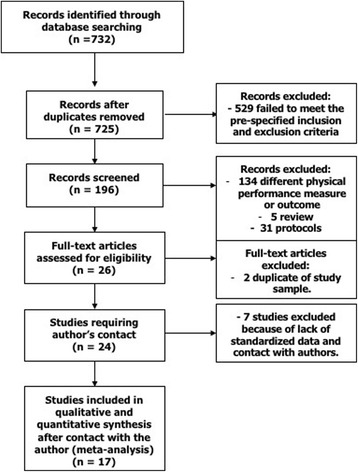
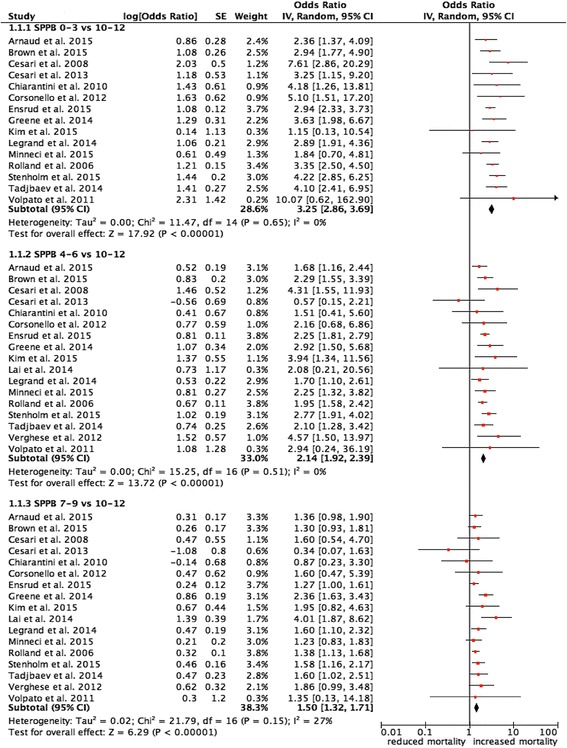
BACKGROUND: The Short Physical Performance Battery (SPPB) is a well-established tool to assess lower extremity physical performance status. Its predictive ability for all-cause mortality has been sparsely reported, but with conflicting results in different subsets of participants. The aim of this study was to perform a meta-analysis investigating the relationship between SPPB score and all-cause mortality. METHODS: Articles were searched in MEDLINE, the Cochrane Library, Google Scholar, and BioMed Central between July and September 2015 and updated in January 2016. Inclusion criteria were observational studies; >50 participants; stratification of population according to SPPB value; data on all-cause mortality; English language publications. Twenty-four articles were selected from available evidence. Data of interest (i.e., clinical characteristics, information after stratification of the sample into four SPPB groups [0-3, 4-6, 7-9, 10-12]) were retrieved from the articles and/or obtained by the study authors. The odds ratio (OR) and/or hazard ratio (HR) was obtained for all-cause mortality according to SPPB category (with SPPB scores 10-12 considered as reference) with adjustment for age, sex, and body mass index. RESULTS: Standardized data were obtained for 17 studies (n = 16,534, mean age 76 ± 3 years). As compared to SPPB scores 10-12, values of 0-3 (OR 3.25, 95%CI 2.86-3.79), 4-6 (OR 2.14, 95%CI 1.92-2.39), and 7-9 (OR 1.50, 95%CI 1.32-1.71) were each associated with an increased risk of all-cause mortality. The association between poor performance on SPPB and all-cause mortality remained highly consistent independent of follow-up length, subsets of participants, geographic area, and age of the population. Random effects meta-regression showed that OR for all-cause mortality with SPPB values 7-9 was higher in the younger population, diabetics, and men. CONCLUSIONS: An SPPB score lower than 10 is predictive of all-cause mortality. The systematic implementation of the SPPB in clinical practice settings may provide useful prognostic information about the risk of all-cause mortality. Moreover, the SPPB could be used as a surrogate endpoint of all-cause mortality in trials needing to quantify benefit and health improvements of specific treatments or rehabilitation programs. The study protocol was published on PROSPERO (CRD42015024916).
Overview
The claims and statistics of this paper haven’t been checked yet.
Free: it reads the open-access text and checks the first 5 claims that cite a source we can check. Create a free account to check every claim.
Integrity signals
Registry
Cites
Statistics
Figures
Verification
Claims the paper makes
The claims and statistics of this paper haven’t been checked yet.
Free: it reads the open-access text and checks the first 5 claims that cite a source we can check. Create a free account to check every claim.
Claims other papers make about this one
Each is checked against this paper’s own text: does it say what the citing paper says it does?
In the citing paper
“Minimally significant changes for SPPB is 0.3 to 0.8 points [37, 38].”
From Pilot study of a telehealth perioperative physical activity intervention for older adults with cancer and their caregivers (2020) · cites this paper as [37]
In the citing paper
“Short Physical Performance Battery (SPPB) score is a group of physical performance measures including gait speed, chair rises, and balance test, and it was associated with an increased risk of all-cause mortality in a meta-analysis (79).”
From Health Consequences of Sarcopenic Obesity: A Narrative Review (2020) · cites this paper as [79]
In the citing paper
“The SPPB also predicts outcomes,[90] but it is more often used in research than in clinical assessment because the battery of tests takes at least 10 minutes to administer.”
From Sarcopenia: revised European consensus on definition and diagnosis (2019) · cites this paper as [90]
Self-check
Percentages, sums and reported differences re-computed from the paper’s own numbers.
The self-check needs the paper’s full text.
Citations
Cites
Measuring inconsistency in meta-analyses
Higgins, J. P. T., Thompson, S. G., Deeks, J. J., & Altman, D. G. (2003) · BMJ · doi:10.1136/bmj.327.7414.557 · Cited by 63,139 · cited 2×
“Publication bias was appraised by graphical evaluation of funnel plots and through Begg and Mazumdar rank correlation, Egger’s regression intercept, and Duval and Tweedie trim and fill [36].”
BackgroundMethodMeta-analysis in clinical trials
DerSimonian, R., & Laird, N. (1986) · Controlled Clinical Trials · doi:10.1016/0197-2456(86)90046-2 · Cited by 39,552 · cited 1×
“Point estimates and standard errors were extracted from individual studies and combined by the generic inverse variance method [35], computing risk estimates with 95% confidence intervals according to logarithmic transformation of the hazard measures.”
MethodLiberati, A., Altman, D. G., Tetzlaff, J., Mulrow, C., Gøtzsche, P. C., Ioannidis, J. P. A., Clarke, M., Devereaux, P. J., Kleijnen, J., & Moher, D. (2009) · PLoS Medicine · doi:10.1371/journal.pmed.1000100 · Cited by 28,164
Frailty in Older Adults: Evidence for a Phenotype
Fried, L. P., Tangen, C. M., Walston, J., Newman, A. B., Hirsch, C., Gottdiener, J., Seeman, T., Tracy, R., Kop, W. J., Burke, G., et al. (2001) · The Journals of Gerontology Series A: Biological Sciences and Medical Sciences · doi:10.1093/gerona/56.3.m146 · Cited by 24,907 · cited 1×
“frailty, functional decline, and other adverse health outcomes, as well as death [1, 2].”
BackgroundDermyshi, E., Wang, Y., Yan, C., Hong, W., Qiu, G., Gong, X., & Zhang, T. (2017) · Neonatology · doi:10.1159/000454668 · Cited by 24,451
Meta-analysis of Observational Studies in Epidemiology<SUBTITLE>A Proposal for Reporting</SUBTITLE>
Stroup, D. F. (2000) · JAMA · doi:10.1001/jama.283.15.2008 · Cited by 20,623
Liberati, A., Altman, D. G., Tetzlaff, J., Mulrow, C., Gotzsche, P. C., Ioannidis, J. P. A., Clarke, M., Devereaux, P. J., Kleijnen, J., & Moher, D. (2009) · BMJ · doi:10.1136/bmj.b2700 · Cited by 17,648
(2014) · Medical Entomology and Zoology · Cited by 17,633
Guralnik, J. M., Simonsick, E. M., Ferrucci, L., Glynn, R. J., Berkman, L. F., Blazer, D. G., Scherr, P. A., & Wallace, R. B. (1994) · Journal of Gerontology · doi:10.1093/geronj/49.2.m85 · Cited by 9,792 · cited 5×
“It is an objective tool for measuring the lower extremity physical performance status [4].”
BackgroundMethodInfluentialSelf-citationCochrane Handbook for Systematic Reviews of Interventions Version 5.0.1. The Cochrane Collaboration
Higgins, J. P. T., Green, S. R., & Higgins, J. P. T. (2008) · Cited by 7,226
Cited by
Items 301–400 of 904
Takara, Y., Saitoh, M., Morisawa, T., Takahashi, T., Yoshida, N., Sakiyama, M., Nakamura, R., Tei, I., & Fujiwara, T. (2021) · Cardiology Research · doi:10.14740/cr1306 · Cited by 21
“SPPB total scores < 10 indicate physical frailty and are associated with all-cause mortality [22].”
BackgroundThe impact of long COVID on physical and cardiorespiratory parameters: A systematic review
Salmam, I., Dubé, M.-O., Zahouani, I., Ramos, A., Desmeules, F., Best, K. L., & Roy, J. (2025) · PLoS ONE · doi:10.1371/journal.pone.0318707 · Cited by 19
van Maldegem, S. J. M. V. C. –., Hoedjes, M., Seidell, J. C., van de Poll-Franse, L. V., Buffart, L. M., Mols, F., & Beijer, S. (2022) · Journal of Clinical Nursing · doi:10.1111/jocn.16299 · Cited by 20
Silva, C. D. F. R., Ohara, D. G., Matos, A. P., Pinto, A. C. P. N., & Pegorari, M. S. (2022) · PeerJ · doi:10.7717/peerj.13630 · Cited by 21
“Several studies have suggested that the assessment of physical performance may be useful in the clinical evaluation of older patients, especially because it may lead to early identification of individuals at a heightened risk of adverse health outcomes (Pahor et al., 2014; Pavasini et al., 2016).”
BackgroundResultInfluentialTelerehabilitation in Older Thai Community-Dwelling Adults
Stonsaovapak, C., Sangveraphunsiri, V., Jitpugdee, W., & Piravej, K. (2022) · Life · doi:10.3390/life12122029 · Cited by 16
Sarcopenia in end-stage liver disease and after liver transplantation
Leunis, S., Vandecruys, M., Craenenbroeck, A. H. V., Cornelissen, V., Bogaerts, S., Smet, S. D., & Monbaliu, D. R. L. (2023) · Acta gastro-enterologica belgica · doi:10.51821/86.2.11412 · Cited by 21
Fernández‐Rodríguez, R., Martínez‐Vizcaíno, V., Reina‐Gutiérrez, S., Bizzozero‐Peroni, B., Torres-Costoso, A. I., Rodríguez‐Gutiérrez, E., Goñi, V. D., & Cadenas‐Sánchez, C. (2024) · The World Journal of Men s Health · doi:10.5534/wjmh.230257 · Cited by 19
“In addition, components of physical function are associated with all-cause mortality in older people [8,9].”
Westman, A. W., Combs-Miller, S. A., Moore, J. L., & Ehrlich‐Jones, L. (2018) · Archives of Physical Medicine and Rehabilitation · doi:10.1016/j.apmr.2018.06.003 · Cited by 15
“Information is available to support using the test results in clinical decision making including cutoff scores, standard error of measurement, minimum detectable change scores, and the minimum clinically important difference values.(2,3,7) This abbreviated summary provides a review of the psychometric properties of th…”
MethodDanilovich, M., Díaz, L., Corcos, D. M., & Ciolino, J. D. (2018) · Geriatrics · doi:10.3390/geriatrics3030051 · Cited by 15
“Scores less than 10 are predictive of all-cause mortality [26].”
BackgroundEfficacy and safety of whole body vibration in maintenance hemodialysis patients - A pilot study.
Seefried, L., Genest, F., Luksche, N., Schneider, M., Fazeli, G., Brandl, M., Bahner, U., & Heidland, A. A. (2017) · PubMed Central · Cited by 18
Menezes, K. V. R. S., Auger, C., Barbosa, J. F. S., Gomes, C. D. S., Menezes, W. R. D. S., & Guerra, R. O. (2019) · Journal of Geriatric Physical Therapy · doi:10.1519/jpt.0000000000000255 · Cited by 21
Alajlouni, D. A., Bliuc, D., Tran, T. S., Blank, R. D., Cawthon, P. M., Ensrud, K. E., Lane, N. E., ORWOLL, E. S., Cauley, J. A., & Jacqueline R Center (2020) · Journal of Bone and Mineral Research · doi:10.1002/jbmr.4619 · Cited by 14
“Although extensively studied in the general population,((25-29)) the associations between poormuscle strength and physical performance and mortality have rarely been investigated in people with incident osteoporotic fractures.”
Self-citationExtracorporeal photopheresis in the management of graft-versus-host disease
Bredeson, C., Rumble, R. B., Varela, N. P., Kuruvilla, J. G., & Kouroukis, C. T. (2014) · Current Oncology · doi:10.3747/co.21.1882 · Cited by 15
Association of body composition with function in women with early breast cancer
Aleixo, G. F. P., Deal, A. M., Nyrop, K. A., Muss, H. B., Damone, E., Williams, G. R., Yu, H., & Shachar, S. S. (2020) · Breast Cancer Research and Treatment · doi:10.1007/s10549-020-05624-3 · Cited by 20
Davies, T., van Gassel, R. J. J., van de Poll, M. C. G., Gunst, J., Casaer, M. P., Christopher, K. B., Preiser, J., Hill, A., Gündoğan, K., Blaser, A. R., et al. (2022) · Research Square · doi:10.21203/rs.3.rs-1693172/v1 · Cited by 15
Buitrago-Restrepo, C. M., Villada, F. A. P., & Arango-Paternina, C. M. (2024) · Journal of Aging and Physical Activity · doi:10.1123/japa.2023-0192 · Cited by 23
Lai, T., Park, J., Jang, M., Chen, J., Shin, M., Moon, E., Kang, J. M., Lee, J. W., Cho, Y. J., Liao, Y., et al. (2025) · Journal of the International Society of Sports Nutrition · doi:10.1080/15502783.2025.2536693 · Cited by 18
“This cut-point is based on the seminal work of Guralnik et al. that first demonstrated the SPPB’s predictive validity for future disability, and is further supported by large-scale meta-analyses linking lower scores to increased all-cause mortality [20,22].”
Walking Speed and Mortality: An Updated Systematic Review
Rosmaninho, I., Ribeirinho-Soares, P., & Nunes, J. P. L. (2021) · Southern Medical Journal · doi:10.14423/smj.0000000000001318 · Cited by 21
“Although the Battery may have better discrimination and be more specific than other scores,(67) gait speed stands out as less time-consuming, more applicable and reproductible in clinical practice scenario, and able to predict mortality.(66,67) In summary, since slowness is a hallmark of aging and deterioration of the…”
BackgroundBaek, J. Y., Na, S. H., Lee, H., Jung, H., Lee, E., Jo, M., Park, Y. R., & Jang, I. (2022) · Scientific Reports · doi:10.1038/s41598-022-05963-9 · Cited by 19
Marcos-Pardo, P. J., González-Gálvez, N., Carbonell‐Baeza, A., Jiménez‐Pavón, D., & Vaquero‐Cristóbal, R. (2022) · Experimental Gerontology · doi:10.1016/j.exger.2022.112044 · Cited by 17
Interrelation between functional decline and dementia: The potential role of balance assessment
Biasin, F., Ceolin, C., Celli, S., Terziotti, C., Raffaelli, C., Bontempi, C., Devita, M., RUI, M. D., Sergi, G., & Coin, A. (2023) · Human Movement Science · doi:10.1016/j.humov.2023.103095 · Cited by 18
Terminal Decline in Physical Function in Older Adults
Stolz, E., Mayerl, H., Terrera, G. M., & Gill, T. M. (2023) · The Journals of Gerontology Series A · doi:10.1093/gerona/glad119 · Cited by 16
“Physical function declines during old age (1–4), and low levels of physical performance in mobility, balance, and muscle strength are associated with increased mortality (5–7).”
BackgroundDefinition and evolution of the concept of sarcopenia
Tocino, M. L. S., Guldris, S. C., Ureña, P., González‐Casaus, M. L., Mas, S., Gracia-Iguacel, C., Ortiz, A., & González‐Parra, E. (2024) · Nefrología (English Edition) · doi:10.1016/j.nefroe.2023.08.007 · Cited by 36
Manzia, T. M., Antonelli, B., Carraro, A., Conte, G., Guglielmo, N., Lauterio, A., Mameli, L., Cillo, U., Carlis, L. G. D., Gaudio, M. D., et al. (2024) · Hepatology International · doi:10.1007/s12072-024-10703-4 · Cited by 17
Broderick, J. M., Kiernan, S., Murphy, N., Dowds, J., & Cheallaigh, C. N. (2021) · International Journal of Environmental Research and Public Health · doi:10.3390/ijerph18031035 · Cited by 12
“Short Physical Performance Battery (SPPB) [18] Lower extremity physical function Performance-based measure Consists of 3 tasks: (i) a balance task, (ii) 5 timed chair stands, (iii) a short timed walk 0–12 Higher scores indicated better performance <10: indicates one or more mobility limitations [19]”
MethodMurray, E. M., Whellan, D. J., Chen, H., Bertoni, A. G., Duncan, P. W., Pastva, A. M., Kitzman, D. W., & Mentz, R. J. (2021) · The American Journal of Medicine · doi:10.1016/j.amjmed.2021.08.001 · Cited by 16
Yatsugi, H., Chen, T., Chen, S., Liu, X., & Kishimoto, H. (2021) · International Journal of Environmental Research and Public Health · doi:10.3390/ijerph19010369 · Cited by 19
Falqueto, H., dos Santos, M. R., & Manfredi, L. H. (2022) · Frontiers in Physiology · doi:10.3389/fphys.2022.838526 · Cited by 18
Evensen, S., Bourke, A. K., Lydersen, S., Sletvold, O., Saltvedt, I. T., Wyller, T. B., & Taraldsen, K. (2019) · BMJ Open · doi:10.1136/bmjopen-2018-026401 · Cited by 14
“An SPPB score below 10 predicts all-cause mortality.(22) We retrospectively completed the Global Deterioration Scale(23) as a measure of prehospital cognitive impairment (1–7, an increasing score indicates worse cognitive function) and the Barthel Index(24) as a measure of prehospital personal activities of daily livi…”
MethodDavies, T., Kelly, E., van Gassel, R. J. J., van de Poll, M. C. G., Gunst, J., Casaer, M. P., Christopher, K. B., Preiser, J., Hill, A., Gündoğan, K., et al. (2023) · Critical Care · doi:10.1186/s13054-023-04729-7 · Cited by 14
“…Physical Component Score (SF-36 PCS) [11], 30 s sit-to-stand (30STS) [12], 6-min walk test (6MWT) [13], Short Physical Performance Battery (SPPB) [14], Barthel Index [15], Katz Index [16], Lawton Instrumental Activities of Daily Living (IADL) [17], Global Leadership Initiative on Malnu-trition…”
Rao, A., Shi, S., Afilalo, J., Popma, J. J., Khabbaz, K. R., Laham, R. J., Guibone, K. A., Marcantonio, E. R., & Kim, D. H. (2020) · Clinical Interventions in Aging · doi:10.2147/cia.s257079 · Cited by 13
Frailty assessment of older adults, first-time applicants of public home care service in Norway
Laukli, I., Sandvik, L., & Ormstad, H. (2021) · Scandinavian Journal of Primary Health Care · doi:10.1080/02813432.2021.1880069 · Cited by 15
“These differences were considered clinically significant [13,14].”
BackgroundTonet, E., Ariza‐Solé, A., Serenelli, M., Formiga, F., Sanchís, J. M., Pavasini, R., Díez‐Villanueva, P., Vitali, F., Bonanad, C., Grazzi, G., et al. (2022) · BMC Medicine · doi:10.1186/s12916-021-02211-1 · Cited by 13
“However, previous studies demonstrated that SPPB had a better prognostic role than other frailty tools in several populations, including older ACS adults [16, 17].”
BackgroundResultSelf-citationKirk, B., Lieu, N., Vogrin, S., Sales, M., Pasco, J. A., & Duque, G. (2022) · The Journals of Gerontology Series A · doi:10.1093/gerona/glac008 · Cited by 14
Corsonello, A., Soraci, L., Ärnlöv, J., Carlsson, A. C., Roller‐Wirnsberger, R., Wirnsberger, G. H., Mattace-Raso, F. U. S., Tap, L., Formiga, F., Moreno‐González, R., et al. (2022) · Age and Ageing · doi:10.1093/ageing/afac168 · Cited by 15
“Impaired physical performance [9], dependency in basic activities of daily living (BADL) [10], cognitive impairment [11] and malnutrition [12] are known to affect prognosis in older populations.”
BackgroundSelf-citationMatziorinis, A. M., Flo, B. K., Skouras, S., Dahle, K., Henriksen, A., Hausmann, F., Sudmann, T. T., Gold, C., & Koelsch, S. (2023) · Pilot and Feasibility Studies · doi:10.1186/s40814-023-01287-1 · Cited by 21
“The standardised neuropsychological test battery included the following questionnaires: The Consortium to Establish a Registry for Alzheimer’s Disease (CERAD; (62)) World List Memory Test, Lawton Activities of Daily Living (Instrumental and Personal) (I and P-ADL; (63)), Geriatric Depression Scale (GDS; (64)), Mini-Me…”
MethodSui, S. X., Hordacre, B. G., & Pasco, J. A. (2021) · Biomedicines · doi:10.3390/biomedicines9020223 · Cited by 15
“The short physical performance battery (SPPB) is a validated tool that evaluates lower extremity physical performance using three tests: standing balance, walking speed, and chair stand tests [75].”
MethodKure, Y., Okai, T., Izumiya, Y., Shimizu, M., Yahiro, R., Yamaguchi, T., Ogawa, M., Kishimoto, N., Shibata, A., Ito, A., et al. (2021) · Journal of Cardiology · doi:10.1016/j.jjcc.2021.09.014 · Cited by 15
Cognitive impairment in candidates for allogeneic hematopoietic stem cell transplantation
Smith, P. J., Lew, M., Lowder, Y. P., Romero, K. M., Thompson, J. C., Bohannon, L. M., Pittman, A., Artica, A., Ramalingam, S., Choi, T., et al. (2021) · Bone Marrow Transplantation · doi:10.1038/s41409-021-01470-z · Cited by 14
Hernandez, H. H. C., Ong, E. H., Heyzer, L., Tan, C. N., Ghazali, F., Yang, D. Z., Jung, H., Ismail, N. H., & Lim, W. S. (2022) · Annals of Geriatric Medicine and Research · doi:10.4235/agmr.22.0022 · Cited by 12
“Additionally, the SPPB has been suggested as a relevant tool to measure outcomes for interventions targeting frailty and sarcopenia in older adults (4, 7, 10, 13).”
BackgroundMethodThe Longitudinal Association Between Physical Activity and Physical Function in Older Women
Ward‐Ritacco, C. L., Greaney, M. L., Clark, P. G., & Riebe, D. A. (2022) · Frontiers in Sports and Active Living · doi:10.3389/fspor.2022.879025 · Cited by 17
Modern guidelines for the diagnosis of sarcopenia
Golounina, O. O., Fadeev, V. V., & Belaya, Z. E. (2023) · Clinical Medicine (Russian Journal) · doi:10.30629/0023-2149-2023-101-4-5-198-207 · Cited by 20
Nutritional approaches targeting mitochondria for the prevention of sarcopenia
Hahm, J., Nirmala, F. S., Ha, T. Y., & Ahn, J. (2023) · Nutrition Reviews · doi:10.1093/nutrit/nuad084 · Cited by 13
Casals, C., Corral‐Pérez, J., Ávila‐Cabeza‐de‐Vaca, L., González‐Mariscal, A., Carrión‐Velasco, Y., Rodríguez-Martínez, M. D. C., Jiménez‐Cebrián, A. M., & Vázquez‐Sánchez, M. Á. (2024) · International Journal of Geriatric Psychiatry · doi:10.1002/gps.6078 · Cited by 15
Golledge, J., Yip, L., Fernando, M. E., Pinchbeck, J. L., Rowbotham, S. E., Jenkins, J. S., & Leicht, A. S. (2021) · Annals of Vascular Surgery · doi:10.1016/j.avsg.2021.03.038 · Cited by 12
The short physical performance battery and incident heart failure among older women: the OPACH study
Bellettiere, J., Nguyen, S., Eaton, C. B., Liles, S., Laddu, D., Di, C., Stefanick, M. L., LaCroix, A. Z., & LaMonte, M. J. (2021) · American Journal of Preventive Cardiology · doi:10.1016/j.ajpc.2021.100247 · Cited by 13
dos Santos, L. P., Santo, R. C. D. E., Pena, É., Dória, L. D., Hax, V., Brenol, C. V., Monticielo, O. A., Chakr, R. M. D. S., & Xavier, R. M. (2021) · Diagnostics · doi:10.3390/diagnostics11112014 · Cited by 16
“A score ≤8 points indicates poor physical performance [42,47,48].”
BackgroundPhysical performance reference values for Japanese oldest old: a SONIC study
Matsumoto, K., Gondo, Y., Masui, Y., Yasumoto, S., Yoshida, Y., Ikebe, K., Arai, Y., Kabayama, M., Kamide, K., Akasaka, H., et al. (2022) · BMC Geriatrics · doi:10.1186/s12877-022-03299-7 · Cited by 15
“Even the oldest old can perform it safely, and it has been validated to predict a wide range of indicators such as mortality and nursing care status [31, 32].”
BackgroundCrook‐Rumsey, M., Daniels, S., Abulikemu, S., Lai, H., Rapeaux, A., Hadjipanayi, C., Soreq, E., Li, L. M., Bashford, J., Jeyasingh‐Jacob, J., et al. (2023) · BMJ Open · doi:10.1136/bmjopen-2023-072094 · Cited by 15
Burm, S. W., Hong, N., Lee, S. H., Yu, M., Kim, J. H., Park, K. K., & Rhee, Y. (2021) · Calcified Tissue International · doi:10.1007/s00223-021-00846-z · Cited by 14
Sinvani, L., Marziliano, A. M., Makhnevich, A., Tarima, S. S., Liu, Y., Qiu, M., Zhang, M., Ardito, S., Carney, M. T., Diefenbach, M. A., et al. (2021) · BMC Geriatrics · doi:10.1186/s12877-021-02527-w · Cited by 13
Louis, J. B., Bennett, S. E., Owens, D. J., Tiollier, E., Brocherie, F., Carneiro, M. A. S., Nunes, P. R. P., Costa, B. D. D. V., Castro-e-Souza, P., Lima, L., et al. (2022) · Journal of Applied Physiology · doi:10.1152/japplphysiol.00613.2022 · Cited by 14
Park, C. M., Jung, H., Jang, I., Baek, J. Y., Yoon, S., Roh, H., & Lee, E. (2021) · Sensors · doi:10.3390/s21155147 · Cited by 12
“Across numerous studies, investigators focused on the predictive value of SPPB in various settings for different clinical outcomes [4,20,21].”
BackgroundDasgupta, K., Boulé, N. G., Henson, J. J., Chevalier, S., Redman, E., Chan, D., McCarthy, M., Champagne, J., Arsenyadis, F., Rees, J., et al. (2022) · BMJ Open · doi:10.1136/bmjopen-2022-063888 · Cited by 11
López-García, L., Lorenzo-Villalba, N., Molina-Puente, J. I., Kishta, A. A. K., Sánchez-Sauce, B., Aguilar-Rodríguez, F., Bernabeu‐Wittel, M., Muñoz‐Rivas, N., Rangel, L. S., Fernández-Carmena, L., et al. (2023) · Journal of Clinical Medicine · doi:10.3390/jcm12185974 · Cited by 12
“The SPPB was categorized according to the latest studies for analysis into very low (0–3 points), low (4–6 points), moderate (7–9 points), and high (10–12 points) [22].”
Hepatocellular carcinoma and sarcopenia: a narrative review
Revoredo, S., & Fabbro, E. D. (2023) · Annals of Palliative Medicine · doi:10.21037/apm-23-332 · Cited by 13
Paneroni, M., Scalvini, S., Perger, E., Zampogna, E., Govetto, S., Oliva, F. M., Matrone, A., Bernocchi, P., Rosa, D., & Vitacca, M. (2024) · Annals of Physical and Rehabilitation Medicine · doi:10.1016/j.rehab.2023.101815 · Cited by 12
Liao, J., Shen, X., Du, Z., Wang, X., & Miao, L. (2024) · Clinical Interventions in Aging · doi:10.2147/cia.s483481 · Cited by 12
Alzheimer's disease plasma biomarkers and physical functioning in a diverse sample of adults
Knell, G., Hall, J. R., Large, S., Abdullah, L. B., Petersen, M. E., Johnson, L. A., & O’Bryant, S. E. (2025) · Alzheimer s & Dementia · doi:10.1002/alz.14322 · Cited by 12
“For the TUG, the cutoff used was 13.5 s, 52 where greater than or equal to this time indicates a greater risk of falls, and for the SPPB a cutoff of 10 total score was used, 53,54 where a score under this time indicates a greater risk of mobility limitations.”
InfluentialWu, Y.-C., Chen, C., Shen, S.-F., Chen, L., Peng, L., & Tung, H. (2025) · The journal of nutrition health & aging · doi:10.1016/j.jnha.2025.100496 · Cited by 17
“Moreover,ittakeslessthan10mintoadminister and has been validated as a reliable measure of physical function in older adults across diverse populations [60].”
Physical domain of the Kihon Checklist: A possible surrogate for physical function tests
Satake, S., Kinoshita, K., Matsui, Y., & Arai, H. (2020) · Geriatrics and gerontology international/Geriatrics & gerontology international · doi:10.1111/ggi.13916 · Cited by 12
Carvalho, J., Borges‐Machado, F., Barros, D. G. M., Sampaio, A., Marques‐Aleixo, I., Bohn, L., Pizarro, A. I. N., Teixeira, L., Magalhães, J., & Ribeiro, Ó. M. (2021) · BMC Geriatrics · doi:10.1186/s12877-021-02104-1 · Cited by 22
“The main outcomes will be physical function as measured by the Short Physical Performance Battery (SPPB) and cognitive function evaluated using the Alzheimer Disease Assessment Scale – Cognitive (ADAS-Cog) at baseline, after 6-months and 3-months after the end of intervention.”
MethodInfluentialDevelopment of a Novel Accelerometry-Based Performance Fatigability Measure for Older Adults
Qiao, Y., Harezlak, J., Moored, K., Urbanek, J. K., Boudreau, R. M., Toto, P. E., Hawkins, M., Santanasto, A. J., Schrack, J. A., Simonsick, E. M., et al. (2022) · Medicine & Science in Sports & Exercise · doi:10.1249/mss.0000000000002966 · Cited by 13
“These clinically relevant measures predict health status, disability, and mortality (36,45).”
BackgroundMuollo, V., Tatangelo, T., Ghiotto, L., Cavedon, V., Milanese, C., Zamboni, M. M., Schena, F. F., & Rossi, A. P. (2022) · Nutrition Metabolism and Cardiovascular Diseases · doi:10.1016/j.numecd.2022.06.018 · Cited by 14
Schoenfelder, A., Metcalf, B. S., Langford, J., Stathi, A., Western, M. J., & Hillsdon, M. M. (2023) · Sensors · doi:10.3390/s23115122 · Cited by 11
“The SPPB score is a clinically based measure of physical function associated with all-cause mortality, hospitalisation, future functional decline, and long-term disability [51,52].”
BackgroundCampo, G. C., Guiducci, V., Escaned, J., Moreno, R., Casella, G., Cavazza, C., Cerrato, E., Contarini, M., Arena, M., Íñiguez, A., et al. (2024) · Circulation Cardiovascular Quality and Outcomes · doi:10.1161/circoutcomes.123.010490 · Cited by 11
Self-citationDiastolic dysfunction, frailty and prognosis in elderly patients with acute coronary syndromes
Pavasini, R., Cardelli, L. S., Piredda, A., Tonet, E., Campana, R., Vitali, F., Cimaglia, P., Maietti, E., Caglioni, S., Morelli, M. C., et al. (2020) · International Journal of Cardiology · doi:10.1016/j.ijcard.2020.11.056 · Cited by 11
Self-citationAli, N. A. M., Granger, C. L., Denehy, L., Royse, A. G., Royse, C. F., Clarke, S., & El‐Ansary, D. (2018) · Cardiopulmonary Physical Therapy Journal · doi:10.1097/cpt.0000000000000070 · Cited by 12
“The SPPB has been used widely in older adult populations and in individuals with stable cardiovascular disease.(16,18,22) The results of the present study are the first to determine theMCID of SPPB for an adult cardiac surgery population and indicate that theMCID is between 0.”
BackgroundMethodÁlvarez-Bustos, A., Laosa, O., Marzetti, E., Carnicero, J. A., Castro-Rodriguez, M., Landi, F., Sinclair, A. J., & Rodriguez-Mañas, L. (2024) · Age and Ageing · doi:10.1093/ageing/afad253 · Cited by 10
Self-citationGidgup, M. J. R., Kickett, M., Jacques, A., Weselman, T., Hill, K., Coombes, J., Ivers, R., Bowser, N., Palacios, V., & Hill, A. (2022) · Frontiers in Public Health · doi:10.3389/fpubh.2022.904158 · Cited by 11
Jiang, Z., Han, X., Wang, Y., Hou, T., Dong, Y., Han, X., Welmer, A., Launer, L. J., Du, Y., & Qiu, C. (2022) · Aging Clinical and Experimental Research · doi:10.1007/s40520-022-02187-9 · Cited by 11
Whellan, D. J., McCarey, M. M., Chen, H., Nelson, M. B., Pastva, A. M., Duncan, P. W., Mentz, R. J., Kitzman, D. W., Reeves, G. R., & Reed, S. D. (2022) · Circulation Heart Failure · doi:10.1161/circheartfailure.122.009695 · Cited by 12
Kolasa, S., Bogen, B. E., Nilsen, R. M., Nordahl, S. H. G., Goplen, F. K., Engdahl, B., Meldrum, D., Berge, J. E., Wilhelmsen, K. T., Thingstad, P., et al. (2022) · European Geriatric Medicine · doi:10.1007/s41999-022-00713-6 · Cited by 10
do Nascimento, W. L. C., Moura, D. M., Almeida, K. D. O., Neto, M. G., Jezler, S. F. D. O., & Alves, I. G. N. (2023) · Revista da Associação Médica Brasileira · doi:10.1590/1806-9282.20221436 · Cited by 13
Corral‐Pérez, J., Ávila‐Cabeza‐de‐Vaca, L., Valero-Cantero, I., González‐Mariscal, A., Ponce‐González, J. G., Vázquez‐Sánchez, M. Á., & Casals, C. (2024) · The Journals of Gerontology Series A · doi:10.1093/gerona/glae072 · Cited by 11
Tele-rehabilitation for Type II diabetics with heart failure with preserved ejection fraction
Yuan, M., Xu, H., Zhao, D., Shi, D., Su, L., Zhu, H., Lu, S., & Wei, J. (2024) · Frontiers in Endocrinology · doi:10.3389/fendo.2024.1433297 · Cited by 13
“The SPPB has been validated in frail older adults and is known to predict a broad spectrum of clinical outcomes (20 – 22).”
BackgroundZarco-Martín, M. T., Freire, C., Andreo-López, M. C., Leyva-Martínez, S., & Fernández‐Soto, M. L. (2024) · Nutrients · doi:10.3390/nu16162625 · Cited by 13
“We assessed functionality with the SPPB, which has demonstrated its value as a predictor of all-cause mortality [42].”
MethodReliability of the Short Physical Performance Battery (SPPB): a systematic review with meta-analysis
Eusepi, D., Pellicciari, L., Ugolini, A., Graziani, L., Coppari, A., Carlizza, A., Caselli, S., Porta, F. L., Paci, M., Bari, M. D., et al. (2025) · European Geriatric Medicine · doi:10.1007/s41999-025-01277-x · Cited by 17
“Physical performance assessment has emerged as a key element in the clinical evaluation of older patients due to the ongoing increase in life expectancy [1, 2].”
Caregiving Needs Are Unmet for Many Older Homeless Adults: Findings from the HOPE HOME Study
Semere, W., Kaplan, L. M., Valle, K. A., Guzman, D., Ramsey, C., Garcia, C. M., & Kushel, M. (2022) · Journal of General Internal Medicine · doi:10.1007/s11606-022-07438-z · Cited by 12
Holanda, C. M. D. A., Nóbrega, P. V. D. N., & Maciel, Á. C. C. (2022) · Geriatric Nursing · doi:10.1016/j.gerinurse.2022.07.002 · Cited by 12
Saadeh, M., Xia, X., Verspoor, E., Welmer, A., Dekhtyar, S., Vetrano, D. L., Fratiglioni, L., Melis, R. J. F., & Calderón‐Larrañaga, A. (2023) · Innovation in Aging · doi:10.1093/geroni/igad040 · Cited by 11
Gladin, A., Katzman, W. B., Fukuoka, Y., Parimi, N., Wong, S., & Lane, N. E. (2021) · BMC Geriatrics · doi:10.1186/s12877-021-02062-8 · Cited by 14
Abo, S., Ritchie, D., Denehy, L., Panek‐Hudson, Y., Irving, L. B., & Granger, C. L. (2021) · Bone Marrow Transplantation · doi:10.1038/s41409-021-01411-w · Cited by 11
Papadopoulos, E., Helal, A. A., Jin, R., Monginot, S., Berger, A. S., Romanovsky, L., & Alibhai, S. M. H. (2022) · Age and Ageing · doi:10.1093/ageing/afac152 · Cited by 11
Yamaguchi, T., Yabe, H., Mitake, Y., Chishiki, A., Katogi, T., & Fujii, T. (2020) · Therapeutic Apheresis and Dialysis · doi:10.1111/1744-9987.13587 · Cited by 10
“Additionally, studies in community-dwelling elderly and patients with heart failure have shown that low SPPB is associated with various factors, such as falls,(31) hospitalization, cardiovascular events, and death.(32,33) The 2.”
BackgroundYuan, Y., Lin, S., Lin, W., Huang, F., & Zhu, P. (2022) · Experimental Gerontology · doi:10.1016/j.exger.2022.111792 · Cited by 10
“Excessive sleep duration increases the risk of death by sympathetic nervous system activation, sleep fragmentation, and the elevation of inflammatory factors such as interleukin-6 and C-reactive protein (Prather et al., 2015).”
BackgroundGuimar�ães, V., Sousa, I., de Bruin, E. D., Pais, J., & Correia, M. V. (2023) · BMC Geriatrics · doi:10.1186/s12877-023-04042-6 · Cited by 9
“An SPPB score lower than 10 is predictive of all-cause mortality [63] and is usually accepted as a threshold for functional impairment [64].”
BackgroundZhang, Y., Luo, A., Hou, L., Chen, S., Zhang, W., Schwartz, A., & Clouston, S. (2023) · PLoS ONE · doi:10.1371/journal.pone.0284935 · Cited by 12
“Physical health of the participants was assessed by the Short Physical Performance Battery (SPPB) to assess balance, lower extremity strength, and overall functional capacity of older adults [28].”
MethodZhang, H., Hao, M., Li, Y., Hu, Z., Liu, Z., Jiang, S., Li, J., & Wang, X. (2023) · Innovation in Aging · doi:10.1093/geroni/igad118 · Cited by 11
Coelho‐Júnior, H. J., Araújo, E. M., Uchida, M. C., Marzetti, E., & Aguiar, S. D. S. (2024) · Archives of Gerontology and Geriatrics · doi:10.1016/j.archger.2024.105353 · Cited by 11
Qaisar, R., Burki, A., Karim, A., Ustrana, S., & Ahmad, F. (2024) · Calcified Tissue International · doi:10.1007/s00223-024-01233-0 · Cited by 9
“These include measuring postural balance, walking speed, and lower limb strength using an unassisted sit-to-stand test The Association of Intestinal Leak with Sarcopenia and Physical Disability in Patients with… from a chair [4].”
Bhatt, V. R., Wichman, C., Koll, T. T., Fisher, A. L., Wildes, T. M., Haddadin, M., Berger, A. M., Armitage, J. O., Holstein, S. A., Maness, L. J., et al. (2025) · American Journal of Hematology · doi:10.1002/ajh.27694 · Cited by 11
“The cutoffs used to determine impairment in these geriatric assessment measures are based on previously well-established criteria for various measures (Table 1) [9, 22–25].”
Martone, A. M., Levati, E., Ciciariello, F., Galluzzo, V., Salini, S., Calvani, R., Marzetti, E., & Landi, F. (2025) · Aging · doi:10.18632/aging.206260 · Cited by 16
Self-citationHetherington‐Rauth, M., Mansfield, T. A., Lenchik, L., Weaver, A. A., & Cawthon, P. M. (2025) · Journal of the American Geriatrics Society · doi:10.1111/jgs.19583 · Cited by 12
“…density have been related to lower survival given that both muscle metrics have been associated with strength/functional outcomes across multiple anatomical sites, and weakness/declines in physical performance have consistently been associated with increased risk of mortality in older adults [44].”
Self-citationBeyond the Health Deficit Count: Examining Deficit Patterns in a Deficit‐Accumulation Frailty Index
Olivieri‐Mui, B. L., Shi, S., McCarthy, E. P., Habtemariam, D. A., & Kim, D. H. (2020) · Journal of the American Geriatrics Society · doi:10.1111/jgs.16955 · Cited by 11
Olsen, P. Ø., Tully, M. A., Cruz, B. D. P., Wegner, M., & Caserotti, P. (2022) · Age and Ageing · doi:10.1093/ageing/afac137 · Cited by 11
Correlation between Physical Performance and Stabilometric Parameters in Older Adults
Labata‐Lezaun, N., González-Rueda, V., Rodríguez‐Sanz, J., López-de–Celis, C., Llurda-Almuzara, L., Rodríguez-Rubio, P. R., & Pérez‐Bellmunt, A. (2022) · Medicina · doi:10.3390/medicina58091211 · Cited by 12
“Results of functional tests such as the Short Physical Performance Battery (SPPB) [19] or the walking speed test [17] have also been shown to be associated with the risk of falls [23], disability [21], and even mortality [19,20].”
BackgroundRuiz-Cárdenas, J. D., Montemurro, A., Martínez-García, M. D. M., & Rodríguez-Juan, J. J. (2023) · Aging Clinical and Experimental Research · doi:10.1007/s40520-023-02451-6 · Cited by 10
Fall status and risk factors in older Chinese adults: A cross‐sectional study
Wen, P., Sun, L., Cheng, L., Zhou, C., Wang, Z., & Wang, Z. (2023) · Journal of Clinical Nursing · doi:10.1111/jocn.16965 · Cited by 16
Functional Performance Measures and Assessment for Older Adults
Avers, D. (2019) · Elsevier eBooks · doi:10.1016/b978-0-323-60912-8.00007-5 · Cited by 16
Metadata
- Authors
- Pavasini, R., Guralnik, J., Brown, J. C., di Bari, M., Cesari, M., Landi, F., Vaes, B., Legrand, D., Verghese, J., Wang, C., Stenholm, S., Ferrucci, L., Lai, J. C., Bartes, A. A., Espaulella, J., Ferrer, M., Lim, J.-Y., Ensrud, K. E., Cawthon, P., Turusheva, A., Frolova, E., Rolland, Y., Lauwers, V., Corsonello, A., Kirk, G. D., Ferrari, R., Volpato, S., & Campo, G.
- Affiliations
- Arcispedale Sant'Anna (IT)
- University of Maryland, Baltimore (US)
- Dana-Farber Cancer Institute (US)
- Université Toulouse III - Paul Sabatier (FR)
- Università Cattolica del Sacro Cuore (IT)
- UCLouvain (BE)
- Albert Einstein College of Medicine (US)
- University of Turku (FI)
- National Institute on Aging (US)
- University of California, San Francisco (US)
- Seoul National University (KR)
- University of Minnesota (US)
- California Pacific Medical Center (US)
- North-Western State Medical University named after I.I. Mechnikov (RU)
- Inserm (FR)
- Istituto Nazionale di Riposo e Cura per Anziani (IT)
- Johns Hopkins University (US)
- Maria Cecilia Hospital (IT)
- University of Ferrara (IT)
- Corresponding author
- Pavasini, Rita
- ORCID
- Pavasini, Rita
- Guralnik, Jack
- Brown, Justin C.
- Cesari, Matteo
- Landi, Francesco
- Vaes, Bert
- Legrand, Delphine
- Verghese, Joe
- Wang, Cuiling
- Stenholm, Sari
- Ferrucci, Luigi
- Lai, Jennifer C.
- Espaulella, Joan
- Lim, Jae-Young
- Ensrud, Kristine E.
- Cawthon, Peggy
- Turusheva, Anna
- Frolova, Elena
- Rolland, Yves
- Corsonello, Andrea
- Kirk, Gregory D.
- Ferrari, Roberto
- Volpato, Stefano
- Campo, Gianluca
- Venue
- BMC Medicine
- Published
- 2016-12
- Volume
- 14
- Issue
- 1
- Pages
- 215-215
- ISSN
- 1741-7015 (ISSN-L)
- PMC
- PMC5178082
- OpenAlex
- W2561222867
- Cited by
- 911
- References
- 47
- Citations by year
- 2026: 111 · 2025: 114 · 2024: 99 · 2023: 111 · 2022: 129 · 2021: 135 · 2020: 86 · 2019: 70 · 2018: 34 · 2017: 14
- FWCI
- 3.89
- Type
- journal article
- Language
- en
- Open access
- gold
- doi.org
- Licence
- cc-by
- creativecommons.org/licenses/by/4.0/ (tdm)
- creativecommons.org/licenses/by/4.0/ (vor, 21 d)
- Locations
- BMC Medicine (publishedVersion, cc-by)
- PubMed Central (publishedVersion, cc-by)
- PubMed (publishedVersion)
- eScholarship (California Digital Library) (submittedVersion, cc-by)
- Florence Research (University of Florence) (submittedVersion, cc-by)
- UTUPub (University of Turku) (submittedVersion)
- Archivio Istituzionale della Ricerca (Universita Degli Studi Di Milano) (submittedVersion, other-oa)
- eScholarship (California Digital Library) (submittedVersion)
- Archive of Doctoral Theses and Digital Collections (University of Calabria) (submittedVersion)
- Repositori digital de la UPF (Universitat Pompeu Fabra) (submittedVersion, cc-by)
- Institutional Research Information System University of Ferrara (University of Ferrara) (submittedVersion, cc-by)
- Funders
- Fondation Louvain
- National Institute on Aging
- Fund for health research Spain
- European Regional Development Fund
- National Institutes of Health
- President of the Russian Federation
- Foundation Louvain
- National Institutes of Health US
- Topics
- Health Sciences › Medicine › Geriatrics and Gerontology › Frailty in Older Adults
- Health Sciences › Medicine › Physiology (medical) › Nutrition and Health in Aging
- Health Sciences › Health Professions › Physical Therapy, Sports Therapy and Rehabilitation › Balance, Gait, and Falls Prevention
- Keywords
- Short Physical Performance Battery, all-cause mortality, physical performance, lower limb function, prognostic factors, older adults, mortality prediction, diabetes mellitus, sex differences, age differences, clinical practice implementation, frailty assessment, functional assessment tools, fall risk assessment, balance assessment, walking speed, muscle strength, endurance
- MeSH terms
- Aged, Exercise Test, Female, Humans, Male, Mortality, Prognosis, Geriatric Assessment, Odds Ratio, Risk Assessment, Lower Extremity
About these checks
Registry, retraction, Cites and statistics results are computed, not judged, with one exception: a printed reference that no index lists is read once by a model before it counts as a citation error. Claims are extracted by a model and kept only when their quote appears verbatim in the text; each cited source is then checked, with a model’s help, for whether it says what the claim relies on. Those verdicts can be wrong — read the claim’s quote and the cited source before relying on one.
Statistics and arithmetic are recomputed, not judged.
Confidence bands are shown only for fields calibrated on our annotated test set. None is calibrated yet, so no band is shown.
What counts as a claim ›How we measure confidence ›How we check this ›
Are you an author, or do you see a problem with this page? Request a review
Data sources
Bibliographic data: Semantic Scholar, OpenAlex, Crossref.
Contains information from the Semantic Scholar Academic Graph Datasets, made available under the ODC Attribution License (ODC-BY 1.0).
Semantic Scholar’s data is described in: Kinney, R., et al. (2023). The Semantic Scholar Open Data Platform. arXiv:2301.10140.
