

Short Physical Performance Battery and all-cause mortality: systematic review and meta-analysis
Open accessThe DOI matches its Crossref record; 44 of the 47 references it cites were found in a registry or an index.
Abstract
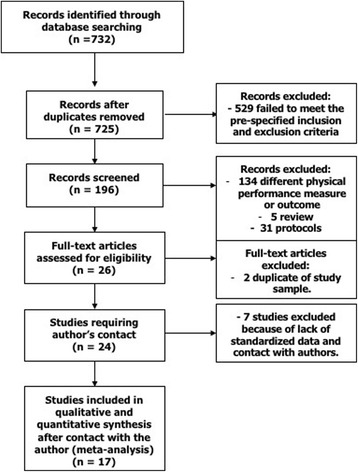
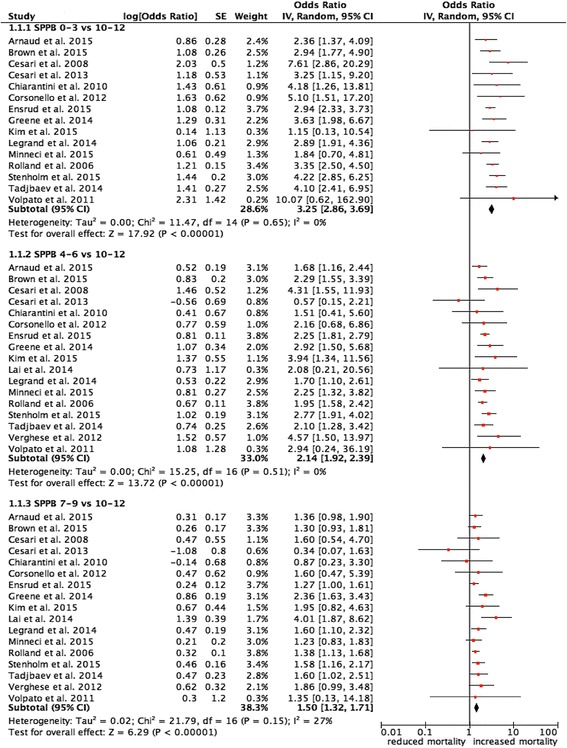
BACKGROUND: The Short Physical Performance Battery (SPPB) is a well-established tool to assess lower extremity physical performance status. Its predictive ability for all-cause mortality has been sparsely reported, but with conflicting results in different subsets of participants. The aim of this study was to perform a meta-analysis investigating the relationship between SPPB score and all-cause mortality. METHODS: Articles were searched in MEDLINE, the Cochrane Library, Google Scholar, and BioMed Central between July and September 2015 and updated in January 2016. Inclusion criteria were observational studies; >50 participants; stratification of population according to SPPB value; data on all-cause mortality; English language publications. Twenty-four articles were selected from available evidence. Data of interest (i.e., clinical characteristics, information after stratification of the sample into four SPPB groups [0-3, 4-6, 7-9, 10-12]) were retrieved from the articles and/or obtained by the study authors. The odds ratio (OR) and/or hazard ratio (HR) was obtained for all-cause mortality according to SPPB category (with SPPB scores 10-12 considered as reference) with adjustment for age, sex, and body mass index. RESULTS: Standardized data were obtained for 17 studies (n = 16,534, mean age 76 ± 3 years). As compared to SPPB scores 10-12, values of 0-3 (OR 3.25, 95%CI 2.86-3.79), 4-6 (OR 2.14, 95%CI 1.92-2.39), and 7-9 (OR 1.50, 95%CI 1.32-1.71) were each associated with an increased risk of all-cause mortality. The association between poor performance on SPPB and all-cause mortality remained highly consistent independent of follow-up length, subsets of participants, geographic area, and age of the population. Random effects meta-regression showed that OR for all-cause mortality with SPPB values 7-9 was higher in the younger population, diabetics, and men. CONCLUSIONS: An SPPB score lower than 10 is predictive of all-cause mortality. The systematic implementation of the SPPB in clinical practice settings may provide useful prognostic information about the risk of all-cause mortality. Moreover, the SPPB could be used as a surrogate endpoint of all-cause mortality in trials needing to quantify benefit and health improvements of specific treatments or rehabilitation programs. The study protocol was published on PROSPERO (CRD42015024916).
Overview
The claims and statistics of this paper haven’t been checked yet.
Free: it reads the open-access text and checks the first 5 claims that cite a source we can check. Create a free account to check every claim.
Integrity signals
Registry
Cites
Statistics
Figures
Verification
Claims the paper makes
The claims and statistics of this paper haven’t been checked yet.
Free: it reads the open-access text and checks the first 5 claims that cite a source we can check. Create a free account to check every claim.
Claims other papers make about this one
Each is checked against this paper’s own text: does it say what the citing paper says it does?
In the citing paper
“Minimally significant changes for SPPB is 0.3 to 0.8 points [37, 38].”
From Pilot study of a telehealth perioperative physical activity intervention for older adults with cancer and their caregivers (2020) · cites this paper as [37]
In the citing paper
“Short Physical Performance Battery (SPPB) score is a group of physical performance measures including gait speed, chair rises, and balance test, and it was associated with an increased risk of all-cause mortality in a meta-analysis (79).”
From Health Consequences of Sarcopenic Obesity: A Narrative Review (2020) · cites this paper as [79]
In the citing paper
“The SPPB also predicts outcomes,[90] but it is more often used in research than in clinical assessment because the battery of tests takes at least 10 minutes to administer.”
From Sarcopenia: revised European consensus on definition and diagnosis (2019) · cites this paper as [90]
Self-check
Percentages, sums and reported differences re-computed from the paper’s own numbers.
The self-check needs the paper’s full text.
Citations
Cites
Measuring inconsistency in meta-analyses
Higgins, J. P. T., Thompson, S. G., Deeks, J. J., & Altman, D. G. (2003) · BMJ · doi:10.1136/bmj.327.7414.557 · Cited by 63,139 · cited 2×
“Publication bias was appraised by graphical evaluation of funnel plots and through Begg and Mazumdar rank correlation, Egger’s regression intercept, and Duval and Tweedie trim and fill [36].”
BackgroundMethodMeta-analysis in clinical trials
DerSimonian, R., & Laird, N. (1986) · Controlled Clinical Trials · doi:10.1016/0197-2456(86)90046-2 · Cited by 39,552 · cited 1×
“Point estimates and standard errors were extracted from individual studies and combined by the generic inverse variance method [35], computing risk estimates with 95% confidence intervals according to logarithmic transformation of the hazard measures.”
MethodLiberati, A., Altman, D. G., Tetzlaff, J., Mulrow, C., Gøtzsche, P. C., Ioannidis, J. P. A., Clarke, M., Devereaux, P. J., Kleijnen, J., & Moher, D. (2009) · PLoS Medicine · doi:10.1371/journal.pmed.1000100 · Cited by 28,164
Frailty in Older Adults: Evidence for a Phenotype
Fried, L. P., Tangen, C. M., Walston, J., Newman, A. B., Hirsch, C., Gottdiener, J., Seeman, T., Tracy, R., Kop, W. J., Burke, G., et al. (2001) · The Journals of Gerontology Series A: Biological Sciences and Medical Sciences · doi:10.1093/gerona/56.3.m146 · Cited by 24,907 · cited 1×
“frailty, functional decline, and other adverse health outcomes, as well as death [1, 2].”
BackgroundDermyshi, E., Wang, Y., Yan, C., Hong, W., Qiu, G., Gong, X., & Zhang, T. (2017) · Neonatology · doi:10.1159/000454668 · Cited by 24,451
Meta-analysis of Observational Studies in Epidemiology<SUBTITLE>A Proposal for Reporting</SUBTITLE>
Stroup, D. F. (2000) · JAMA · doi:10.1001/jama.283.15.2008 · Cited by 20,623
Liberati, A., Altman, D. G., Tetzlaff, J., Mulrow, C., Gotzsche, P. C., Ioannidis, J. P. A., Clarke, M., Devereaux, P. J., Kleijnen, J., & Moher, D. (2009) · BMJ · doi:10.1136/bmj.b2700 · Cited by 17,648
(2014) · Medical Entomology and Zoology · Cited by 17,633
Guralnik, J. M., Simonsick, E. M., Ferrucci, L., Glynn, R. J., Berkman, L. F., Blazer, D. G., Scherr, P. A., & Wallace, R. B. (1994) · Journal of Gerontology · doi:10.1093/geronj/49.2.m85 · Cited by 9,792 · cited 5×
“It is an objective tool for measuring the lower extremity physical performance status [4].”
BackgroundMethodInfluentialSelf-citationCochrane Handbook for Systematic Reviews of Interventions Version 5.0.1. The Cochrane Collaboration
Higgins, J. P. T., Green, S. R., & Higgins, J. P. T. (2008) · Cited by 7,226
Cited by
Items 201–300 of 904
Neurocognitive deficits in older patients with cancer
Edwards, B. J.-A., Zhang, X., Sun, M., Holmes, H. M., Ketonen, L., Guha‐Thakurta, N., Khalil, P., Song, J., Kesler, S. R., Shah, J. B., et al. (2018) · Journal of Geriatric Oncology · doi:10.1016/j.jgo.2018.02.010 · Cited by 26
“For mobility, nutrition, and comorbidity we used the short physical performance battery [20], the mini nutritional assessment [21] and the Charlson comorbidity index [22].”
MethodLee, B. P., Pilling, L. C., Bandinelli, S., Ferrucci, L., Melzer, D. R., & Harries, L. W. (2019) · Biogerontology · doi:10.1007/s10522-019-09819-0 · Cited by 28
“Multivariate outliers were identified using a regression model with Mahalanobis distance as an output, followed by comparison of the calculated Mahalanobis distances with the critical v2 value for the dataset (Rasmussen 1988).”
MethodSelf-citationRecovery and prediction of physical function 1 year following hip fracture
Beckmann, M., Bruun‐Olsen, V., Pripp, A. H., Bergland, A., Smith, T. O., & Heiberg, K. E. (2022) · Physiotherapy Research International · doi:10.1002/pri.1947 · Cited by 33
Fernández‐García, Á. I., Moradell, A., Navarrete‐Villanueva, D., Subías-Perié, J., Pérez‐Gómez, J., Ara, I., González‐Gross, M., Casajús, J. A., Vicente‐Rodríguez, G., & Gómez‐Cabello, A. (2022) · International Journal of Environmental Research and Public Health · doi:10.3390/ijerph191912417 · Cited by 33
Su, H., Zhou, H., Gong, Y., Xiang, S., Shao, W., Zhao, X., Ling, H., Chen, G., Tong, P., & Ju, L. (2024) · Frontiers in Medicine · doi:10.3389/fmed.2024.1348212 · Cited by 30
Kim, U., Lim, J., Park, Y., & Bae, Y. (2025) · Scientific Reports · doi:10.1038/s41598-025-02128-2 · Cited by 35
“Therefore, when interpreting the results of this study, additional factors other than the SPPB (e.g., demographic characteristics 49 and fall risk factors such as muscle strength and neurological factors 50 need to be considered in addition to the SPPB. Future studies should also include more…”
Self-citationYan, R., Jia, S., Lu, D., Song, W., Zhang, W., Sun, J., & Li, D. (2025) · The journal of nutrition health & aging · doi:10.1016/j.jnha.2025.100718 · Cited by 33
“Prior evidence indicates that individuals scoring ≤ 6 have nearly double the risk of all-cause mortality compared with those scoring ≥ 10, underscoring the prognostic importance of this gain [75].”
Amasene, M., Besga, A., Medrano, M., Urquiza, M., Rodriguez‐Larrad, A., Tobalina, I., Barroso, J., Irazusta, J., & Labayen, I. (2021) · Clinical Nutrition · doi:10.1016/j.clnu.2021.09.034 · Cited by 28
“10 decided to classify those inpatients with scores ranging from 0 to 9 as “frail” and those with scores ranging from 10 to 12 as “non-frail” [13, 29, 30].”
BackgroundMethodInfluentialHu, X. F., Mok, Y., Ding, N., Sullivan, K., Lutsey, P. L., Schrack, J. A., Palta, P., & Matsushita, K. (2022) · Journal of the American Heart Association · doi:10.1161/jaha.121.025780 · Cited by 29
Ambegaonkar, J. P., Matto, H. C., Ihara, E. S., Tompkins, C. J., Caswell, S. V., Cortés, N., Davis, R., Coogan, S. M., Fauntroy, V. N., Glass, E., et al. (2022) · Journal of Dance Medicine & Science · doi:10.12678/1089-313x.121522f · Cited by 30
Li, Y., He, Y., & Li, X. (2022) · International Urology and Nephrology · doi:10.1007/s11255-022-03397-w · Cited by 26
Picca, A., Triolo, M., Wohlgemuth, S. E., Martenson, M. S., Mankowski, R. T., Anton, S. D., Marzetti, E., Leeuwenburgh, C., & Hood, D. A. (2023) · Cells · doi:10.3390/cells12010183 · Cited by 23
Practical approaches to managing cancer patients with weight loss
Fabbro, E. D., Orr, T., & Stella, S. M. (2017) · Current Opinion in Supportive and Palliative Care · doi:10.1097/spc.0000000000000300 · Cited by 24
Nunes, P. R. P., Martins, F. M., Souza, A. P., Carneiro, M. A. S., Nomelini, R. S., Michelin, M. A., Murta, E. F. C., de Oliveira, E. P., & Orsatti, F. L. (2019) · Menopause The Journal of The North American Menopause Society · doi:10.1097/gme.0000000000001399 · Cited by 27
“The chair stand test provides a valid measure of physical function.(11,13,14,31) In the present”
Capozzi, L., Daun, J. T., Francis, G. J., Wilding, M. D. G., Urgoiti, G. B. R., Langelier, D. M., & Culos-Reed, N. S. (2023) · Current Oncology · doi:10.3390/curroncol30070461 · Cited by 23
“The previous literature on frailty suggests a score of lower than 10 indicates one or more mobility limitations and is predictive for all-cause mortality [43,44].”
BackgroundDefinition and diagnosis of sarcopenia: Asia-Pacific perspectives
Huang, W.-F., Chen, Y., Chang, C., & Wu, C. (2025) · Osteoporosis and Sarcopenia · doi:10.1016/j.afos.2025.05.004 · Cited by 26
“Although EWGSOP2 defines low physical function as SPPB ≤ 8 [11], studies have shown that SPPB ≤ 9 indicating impaired mobility is more predictive of overall mortality [64].”
Impact of the HOP-UP-PT program on older adults at risk to fall: a randomized controlled trial
Arena, S. K., Wilson, C. M., Boright, L. E., & Peterson, E. L. (2021) · BMC Geriatrics · doi:10.1186/s12877-021-02450-0 · Cited by 24
Medina‐Mirapeix, F., Valera-Novella, E., Morera‐Balaguer, J., & Bernabéu-Mora, R. (2021) · Annals of Physical and Rehabilitation Medicine · doi:10.1016/j.rehab.2021.101598 · Cited by 26
Isanejad, M., Tajik, B., McArdle, A., Tuppurainen, M. T., Sirola, J. P., Kröger, H., Rikkonen, T., & Erkkilä, A. T. (2021) · European Journal of Nutrition · doi:10.1007/s00394-021-02773-z · Cited by 31
Sui, S. X., Hendy, A. M., Teo, W., Moran, J. T., Nuzum, N. D., & Pasco, J. A. (2022) · Brain Sciences · doi:10.3390/brainsci12080968 · Cited by 28
“Additionally, the short physical performance battery (SPPB) is a validated tool that evaluates lower-extremity physical performance using three timed tests: standing balance, walking speed, and chair stand tests [6].”
MethodYin, Y., Liu, J. Y. W., & Valimaki, M. A. (2023) · BMC Geriatrics · doi:10.1186/s12877-023-04327-w · Cited by 28
“SPPB To assess a person’s physical function from three aspects [52], scores range from 0 (worst performance) to 12 (best performance).”
BackgroundCoelho‐Júnior, H. J., Calvani, R., Álvarez‐Bustos, A., Tosato, M., Russo, A., Landi, F., Picca, A., & Marzetti, E. (2024) · Aging Clinical and Experimental Research · doi:10.1007/s40520-024-02693-y · Cited by 23
“These age-related changes are associated with numerous negative events, such as reduced mobility, falls, institutionalization, and mortality [3, 4].”
BackgroundSelf-citationSantilli, G., Mangone, M., Agostini, F., Paoloni, M., Bernetti, A., Diko, A., Tognolo, L., Coraci, D., Vigevano, F., Vetrano, M., et al. (2024) · Journal of Functional Morphology and Kinesiology · doi:10.3390/jfmk9040176 · Cited by 28
Tana, C., Lauretani, F., Ticinesi, A., Prati, B., Nouvenne, A., & Meschi, T. (2018) · International Journal of Molecular Sciences · doi:10.3390/ijms19051299 · Cited by 23
“The SPPB score is extensively validated worldwide and in different medical settings to identify frail older persons, and it is capable of predicting negative outcomes such as hospitalization, falls and admission to nursing home and dying [60], despite multimorbidity of the subjects [61].”
BackgroundUrrunaga‐Pastor, D., Runzer-Colmenares, F. M., Arones, T. M., Meza-Cordero, R., Taipe-Guizado, S., Guralnik, J. M., & Parodi, J. F. (2019) · F1000Research · doi:10.12688/f1000research.17513.1 · Cited by 25
Self-citationBraun, T., Thiel, C., Schulz, R. J., & Grüneberg, C. (2021) · Health and Quality of Life Outcomes · doi:10.1186/s12955-021-01690-3 · Cited by 26
Berner, C., Haider, S., Grabovac, I., Lamprecht, T., Fenzl, K. H., Erlacher, L., Quittan, M., & Dorner, T. E. (2018) · International Journal of Rheumatology · doi:10.1155/2018/3756207 · Cited by 29
Association of Physical Function With Driving Space and Crashes Among Older Adults
Ng, L. S., Guralnik, J. M., Man, C., DiGuiseppi, C. G., Strogatz, D. S., Eby, D. W., Ryan, L. H., Molnar, L. J., Betz, M. E., Hill, L. L., et al. (2019) · The Gerontologist · doi:10.1093/geront/gny178 · Cited by 28
“The SPPB is a measure of lower extremity functioning and has been established as a predictor of adverse health outcomes including nursing home admission, disability, and mortality (Guralnik et al., 1994; Guralnik et al., 2000; Guralnik, Ferrucci, Simonsick, Salive, & Wallace, 1995; Pavasini et al., 2016; Penninx et al…”
BackgroundSelf-citationAn update on frailty in lung transplantation
Varughese, R. A., Rozenberg, D., & Singer, L. G. (2020) · Current Opinion in Organ Transplantation · doi:10.1097/mot.0000000000000762 · Cited by 24
“Recent findings There have been several frailty indices used in lung transplantation, specifically the Frailty Phenotype, Short Physical Performance Battery (SPPB), and Cumulative Deficits.”
MethodInfluentialNelson, M. B., Gilbert, O. N., Duncan, P. W., Kitzman, D. W., Reeves, G. R., Whellan, D. J., Mentz, R. J., Chen, H., Hewston, L. A., Taylor, K. M., et al. (2022) · Journal of the American Heart Association · doi:10.1161/jaha.121.024246 · Cited by 30
Nakanishi, N., Matsushima, S., Tatsuno, J., Liu, K., Tamura, T., Yonekura, H., Yamamoto, N., Unoki, T., Kondo, Y., & Nakamura, K. (2022) · Nutrients · doi:10.3390/nu14224849 · Cited by 25
“Secondary outcomes were as follows: (1) muscle strength and physical functions, including handgrip strength, Medical Research Council-sum scores [12], Short Physical Performance Battery [13], and the 6-min walk distance [14] at the time of hospital discharge or in the follow-up period for up to 1 year; (2) Changes in…”
MethodAssociations Between Physical Activity Intensities and Physical Function in Stroke Survivors
Gothe, N. P., & Bourbeau, K. (2020) · American Journal of Physical Medicine & Rehabilitation · doi:10.1097/phm.0000000000001410 · Cited by 21
“The SPPB scores of lower than 10 have been used to indicate mobility disability(26) and have been associated with all-cause mortality.(27) The function component of the LLFDI has been correlated with performance-based measures of function, including the SPPB, and measures of”
MethodBhanji, R. A., & Watt, K. D. S. (2021) · Liver Transplantation · doi:10.1002/lt.26052 · Cited by 21
“5).(39) Following participation in a short exercise program (6 weeks), there was an improvement in SPPB scores (median increase from 9.”
BackgroundSarcopenia assessed by 4-step EWGSOP2 in elderly hemodialysis patients: Feasibility and limitations
Tocino, M. L. S., Serrano, B. M., Gracia-Iguacel, C., de-Alba-Peñaranda, A. M., Mas, S., López-González, A., Villoria-González, S., Pereira, M., Ortíz, A., & González‐Parra, E. (2022) · PLoS ONE · doi:10.1371/journal.pone.0261459 · Cited by 26
“8 TUG (s) [14] �20 SPPB (points) [15, 16] � 8”
Brown, J. D., Lo-Ciganic, W.-H., Shao, H., Pahor, M., & Manini, T. M. (2020) · Journal of Clinical Medicine · doi:10.3390/jcm9082332 · Cited by 20
Self-citationAssociation of Zinc Intake With Risk of Impaired Physical Function and Frailty Among Older Adults
Vega-Cabello, V., Caballero, F. F., Lana, A., Arias‐Fernández, L., Banegas, J. R., Rodríguez‐Artalejo, F., López‐García, E., & Struijk, E. A. (2022) · The Journals of Gerontology Series A · doi:10.1093/gerona/glac014 · Cited by 21
Exercise Training in Patients with Heart Failure: From Pathophysiology to Exercise Prescription
Cuomo, G., Lorenzo, A. D., Tramontano, A. L., Iannone, F. P., D’Angelo, A., Pezzella, R., Testa, C., Parlato, A., Merone, P., Pacileo, M., et al. (2022) · Reviews in Cardiovascular Medicine · doi:10.31083/j.rcm2304144 · Cited by 25
“…and could be easily adopted as outcome measure in frail elderly patients when cardiopulmonary exercise stress testing is not feasible or available [ 113]; and the adoption of other outcomes measures to evaluate the effects of exercise training in specific cohorts of patients (i.e., frail elderly…”
BackgroundWiley, E., Noguchi, K. S., Moncion, K., Stratford, P. W., & Tang, A. (2022) · Physical Therapy · doi:10.1093/ptj/pzac077 · Cited by 23
Huang, W. W., Mao, H., Lee, H.-M., & Chi, W. (2022) · Healthcare · doi:10.3390/healthcare10061139 · Cited by 23
“The SPPB is a validated clinical tool for the prediction of future disability [31,32], mortality [34], and hospitalization in older adults [33].”
MethodCahalin, L. P., Formiga, M. F., Anderson, B., Cipriano, G., Hernández-Álvarez, E. D., Owens, J. G., & Hughes, L. (2022) · Frontiers in Physiology · doi:10.3389/fphys.2022.924614 · Cited by 26
“SPPB (0–12 points) ≤8 points ≤8 points (Guralnik et al., 1995; Pavasini et al., 2016)”
Brighton, L. J., Nolan, C. M., Barker, R. E., Patel, S., Walsh, J. A., Polgar, O., Kon, S. S. C., Gao, W., Evans, C., Maddocks, M. M., et al. (2023) · International Journal of COPD · doi:10.2147/copd.s375142 · Cited by 24
“As there is no consensus over optimal cutoffs when using the SPPB, we also conducted sensitivity analyses using alternative cut-off values of ≤8(23) and ≤9.(24)”
MethodFunctional Aging: Integrating Functionality to a Multidimensional Assessment of Healthy Aging
Frangos, E., Graf, C. E., & Samaras, N. (2023) · Current Gerontology and Geriatrics Research · doi:10.1155/2023/9409918 · Cited by 32
“An SPPB score lower than 10 is predictive of all-cause mortality [53], risk of ADL impairment, falls, and mobility impairment [54].”
BackgroundOmega-3 polyunsatured fatty acids and physical performance across the lifespan: a narrative review
Azzolino, D., Bertoni, C., Cosmi, V. D., Spolidoro, G. C. I., Agostoni, C. V., Lucchi, T. A., & Mazzocchi, A. (2024) · Frontiers in Nutrition · doi:10.3389/fnut.2024.1414132 · Cited by 28
Fan, L., Zhao, J., Hu, Y., Zhang, J., Wang, X., Wang, F., Wu, M., & Lin, T. (2024) · Journal of the American Medical Informatics Association · doi:10.1093/jamia/ocae224 · Cited by 22
Ida, S., Kaneko, R., Imataka, K., Ôkubo, K., Shirakura, Y., Azuma, K., Fujiwara, R., Takahashi, H., & Murata, K. (2020) · Aging Clinical and Experimental Research · doi:10.1007/s40520-020-01585-1 · Cited by 25
Farrugia, M. K., Erickson, K. R., Wendel, E., Platek, M. E., Ji, W., Attwood, K. M., Ma, S. J., Gu, F., Singh, A. K., & Ray, A. D. (2021) · Cancers · doi:10.3390/cancers13071638 · Cited by 24
“Scoring < 10 total points is associated with increased risk for complications and comorbidities, including survival in cancer [30].”
BackgroundHepatogenous Diabetes: A Primer
Nath, P., & Anand, A. C. (2021) · Journal of Clinical and Experimental Hepatology · doi:10.1016/j.jceh.2021.04.012 · Cited by 26
de Bruin, E. D., Baur, H., Bruelhart, Y., Luijckx, E., Hinrichs, T., & Rogan, S. (2020) · Frontiers in Medicine · doi:10.3389/fmed.2020.507155 · Cited by 26
“The threshold for fulfilling the criteria of “being frail” in elderly in need of care was set on a SPPB total score of ≤6 points (52), a score associated with falls (53), functional disability (54), and an increased risk of all-cause mortality (55).”
BackgroundDepressive symptoms predict low physical performance among older Mexican Americans
Patino, J., Rodriguez, M. A., & Snih, S. A. (2021) · Aging Clinical and Experimental Research · doi:10.1007/s40520-020-01781-z · Cited by 23
Silva, M. Z. C., Antônio, K. J., Reis, J. M. S., Alves, L. S., Caramori, J. C. T., & Vogt, B. P. (2021) · Kidney Research and Clinical Practice · doi:10.23876/j.krcp.20.159 · Cited by 26
“Poor physical function is associated with increased risk of outcomes such as cognitive impairment, institutionalization, falls [18], disability [7], cardiovascular events [19], and mortality [7,20].”
BackgroundAlmugbel, F. A., Timilshina, N., Papadopoulos, E., Al-Showbaki, L., & Alibhai, S. M. H. (2021) · Journal of Geriatric Oncology · doi:10.1016/j.jgo.2021.12.002 · Cited by 22
Neville, C. E., Young, I. S., Kee, F., Hogg, R. E., Scott, A., Burns, F., Woodside, J. V., & McGuinness, B. (2023) · BMC Public Health · doi:10.1186/s12889-023-15355-x · Cited by 25
“At a population level, impaired physical function is known to be associated with frailty [10], increased mortality [11] and greater utilisation of health services [12].”
BackgroundRelationship between klotho and physical function in healthy aging
Arroyo, E., Leber, C. A., Burney, H. N., Narayanan, G., Moorthi, R. N., Avin, K. G., Warden, S. J., Moe, S. M., & Lim, K. J. (2023) · Scientific Reports · doi:10.1038/s41598-023-47791-5 · Cited by 30
“An SPPB score 10 is predictive of all-cause mortality 33 and a score ≤ 8 has been established as the cutoff for severe sarcopenia 34 .”
BackgroundTwardzik, E., Schrack, J. A., Freedman, V. A., Reed, N. S., Ehrlich, J. R., & Martínez-Amezcua, P. (2023) · The Journals of Gerontology Series A · doi:10.1093/gerona/glad271 · Cited by 19
Which Comprehensive Geriatric Assessment (CGA) instruments are currently used in Germany: a survey
Kudelka, J., Ollenschläger, M., Dodel, R. C., Eskofier, B. M., Hobert, M. A., Jahn, K., Klucken, J., Labeit, B., Polidori, M. C., Prell, T., et al. (2024) · BMC Geriatrics · doi:10.1186/s12877-024-04913-6 · Cited by 20
“The SPPB is highlighted in the S1 guideline for level 2 CGA because of its high predictive value for adverse health outcomes such as falls [58], hospitalization [59] and mortality [60].”
BackgroundSiebentritt, H. M., Sproesser, G., Gingrich, A., Spiegel, A., Skurk, T., Brandl, B., Hauner, H., Renner, B., Volkert, D., Sieber, C. C., et al. (2019) · Appetite · doi:10.1016/j.appet.2019.01.024 · Cited by 25
Arias‐Fernández, L., Struijk, E. A., Rodríguez‐Artalejo, F., López‐García, E., & Lana, A. (2020) · Clinical Nutrition · doi:10.1016/j.clnu.2020.03.018 · Cited by 24
Association between Dietary Habits and Physical Function in Brazilian and Italian Older Women
Coelho‐Júnior, H. J., Calvani, R., Picca, A., Gonçalves, I. O., Landi, F., Bernabei, R., Cesari, M., Uchida, M. C., & Marzetti, E. (2020) · Nutrients · doi:10.3390/nu12061635 · Cited by 22
Self-citationWelch, C., Greig, C. A., Masud, T., Pinkney, T. D., & Jackson, T. (2020) · BMC Geriatrics · doi:10.1186/s12877-020-01626-4 · Cited by 21
Wagner, P. P., Whittier, D. E., Foesser, D., Boyd, S. K., Chapurlat, R. D., & Szulc, P. (2021) · The Journal of Clinical Endocrinology & Metabolism · doi:10.1210/clinem/dgab506 · Cited by 29
Tocino, M. L. S., González‐Parra, E., Serrano, B. M., Gracia-Iguacel, C., de-Alba-Peñaranda, A. M., López-González, A., Olegario, M. G., Ortíz, A., & Mas, S. (2022) · Clinical Kidney Journal · doi:10.1093/ckj/sfac046 · Cited by 24
Jung, H., Jin, T., Baek, J. Y., Yoon, S., Lee, E., Guralnik, J. M., & Jang, I. (2020) · Clinical Interventions in Aging · doi:10.2147/cia.s280542 · Cited by 22
Self-citationPavanello, S., Campisi, M., Grassi, A., Mastrangelo, G., Durante, E., Veronesi, A., & Gallucci, M. (2021) · Journal of Clinical Medicine · doi:10.3390/jcm10163700 · Cited by 19
“Our results are in line with one of the most complete meta-analyses with a proper sample size that definitively discovered the association between SPPB score and all-cause mortality [42].”
ResultMaeda, S. S., Albergaria, B., Szejnfeld, V. L., Lazaretti‐Castro, M., Arantes, H. P., Ushida, M., Domiciano, D. S., Pereira, R. M. R., Marin-Mio, R. V., de Oliveira, M. L., et al. (2022) · Revista Brasileira de Reumatologia · doi:10.1186/s42358-022-00240-9 · Cited by 32
Coelho‐Júnior, H. J., Calvani, R., Picca, A., & Marzetti, E. (2023) · Archives of Gerontology and Geriatrics · doi:10.1016/j.archger.2023.105059 · Cited by 19
Hajj‐Boutros, G., Sonjak, V., Faust, A., Balram, S., Lagacé, J., St‐Martin, P., Divsalar, D. N., Sadeghian, F., Liu-Ambrose, T. Y. L., Blaber, A. P., et al. (2024) · Experimental Physiology · doi:10.1113/ep091473 · Cited by 19
Aging and Sensitivity to Illusory Target Motion With or Without Secondary Tasks
de Dieuleveult, A. L., Brouwer, A.-M., Siemonsma, P. C., van Erp, J. B. F., & Brenner, E. (2017) · Multisensory Research · doi:10.1163/22134808-00002596 · Cited by 18
Dimori, S., Leoni, G., Fior, L., & Gasparotto, F. (2017) · Aging Clinical and Experimental Research · doi:10.1007/s40520-017-0859-8 · Cited by 23
Hanada, M., Soyama, A., Hidaka, M., Nagura, H., Oikawa, M., Tsuji, A., Kasawara, K. T., Mathur, S., Reid, W. D., Takatsuki, M., et al. (2019) · Clinical Rehabilitation · doi:10.1177/0269215518821718 · Cited by 18
Pavasini, R., Maietti, E., Tonet, E., Bugani, G., Tebaldi, M., Biscaglia, S., Cimaglia, P., Serenelli, M., Ruggiero, R., Vitali, F., et al. (2019) · Cardiovascular Drugs and Therapy · doi:10.1007/s10557-019-06911-y · Cited by 18
Self-citationExecutive functions predict fracture risk in postmenopausal women assessed for osteoporosis
Catalano, A., Sardella, A., Bellone, F., Lasco, C. G., Martino, G., & Morabito, N. (2019) · Aging Clinical and Experimental Research · doi:10.1007/s40520-019-01426-w · Cited by 25
The Short Physical Performance Battery (ASSESSMENT)
Ronai, P., & Gallo, P. M. (2019) · ACSMʼs Health & Fitness Journal · doi:10.1249/fit.0000000000000519 · Cited by 23
Bernard, C., Font, H., Diallo, Z., Ahonon, R., Tine, J. M., Abouo, F., Tanon, A., Messou, E., Seydi, M., Dabis, F., et al. (2020) · PLoS ONE · doi:10.1371/journal.pone.0240906 · Cited by 19
Bellieni, A., Fusco, D., Sánchez, A. M., Franceschini, G., Capua, B. D., Allocca, E., Stasio, E. D., Marazzi, F., Tagliaferri, L., Masetti, R., et al. (2021) · Journal of Personalized Medicine · doi:10.3390/jpm11040243 · Cited by 19
Effects of Qigong Exercise on Physical and Psychological Health among African Americans
Chang, P., Lu, Y. Y.-F., Nguyen, C. M., Suh, Y., Luciani, M., Ofner, S., & Powell, S. (2020) · Western Journal of Nursing Research · doi:10.1177/0193945920959067 · Cited by 20
“A score ≤10 indicates mobility limitations (Vasunilashorn et al., 2009) and is predictive of all-cause mortality (Pavasini et al., 2016).”
BackgroundFeasibility and Safety of Whole-Body Electromyostimulation in Frail Older People—A Pilot Trial
Bloeckl, J., Raps, S., Weineck, M., Kob, R., Bertsch, T., KEMMLER, W. K., & Schoene, D. (2022) · Frontiers in Physiology · doi:10.3389/fphys.2022.856681 · Cited by 21
Jeng, B., Šilić, P., Bollaert, R. E., Sandroff, B. M., & Motl, R. W. (2023) · Multiple Sclerosis and Related Disorders · doi:10.1016/j.msard.2023.104624 · Cited by 21
Jiang, G., Tan, X., Wang, H., Xu, M., & Wu, X. (2023) · PeerJ · doi:10.7717/peerj.15182 · Cited by 30
“, 2014; Campbell, Seymour & Primrose, 2004), and increased mortality (Justice et al., 2016; Pavasini et al., 2016).”
BackgroundDefinición y evolución del concepto de sarcopenia
Tocino, M. L. S., Cigarrán, S., Ureña, P., González‐Casaus, M. L., Mas, S., Iguacel, C. G., Ortíz, A., & Parra, E. G. (2023) · Nefrología · doi:10.1016/j.nefro.2023.08.001 · Cited by 38
Sarcopenic Obesity in Community-Dwelling Spanish Adults Older than 65 Years
Diago-Galmés, A., Guillamón-Escudero, C., Tenías, J. M., Soriano, J. M., & Garrido, J. F. (2023) · Nutrients · doi:10.3390/nu15234932 · Cited by 21
“The SPPB test included three assessments for balance, gait speed, and lower body strength [33,34].”
MethodPhysical Function Trajectories and Mortality in Older Adults With Multisensory Impairment
Vohra, V., Simonsick, E. M., Kamath, V. J., Bandeen‐Roche, K., Agrawal, Y., & Rowan, N. R. (2024) · JAMA Otolaryngology–Head & Neck Surgery · doi:10.1001/jamaoto.2023.4378 · Cited by 19
Shibata, K., Kameshima, M., Adachi, T., Kito, H., Tanaka, C., Sano, T., Tanaka, M., Suzuki, Y., Tamaki, M., & Kitamura, H. (2024) · Journal of Cachexia Sarcopenia and Muscle · doi:10.1002/jcsm.13514 · Cited by 18
“21”
MEFAP Group, Castell, M. V., Gutiérrez-Misis, A., Sánchez-Martínez, M., Prieto, M. A., Moreno, B., Núñez, S. R., Triano, R., de Antonio, M. P., Mateo, C., et al. (2019) · BMC Geriatrics · doi:10.1186/s12877-018-1024-8 · Cited by 25
Verduzco-Aguirre, H. C., Gómez‐Moreno, C., Chávarri-Guerra, Y., & Soto‐Pérez‐de‐Celis, E. (2019) · Current Oncology Reports · doi:10.1007/s11912-019-0821-3 · Cited by 17
Aubertin‐Leheudre, M., Martel, D., Narici, M. V., & Bonnefoy, M. (2019) · Experimental Gerontology · doi:10.1016/j.exger.2019.110678 · Cited by 23
Silva, C. D. F. R., Pegorari, M. S., Matos, A. P., & Ohara, D. G. (2020) · Sao Paulo Medical Journal · doi:10.1590/1516-3180.2019.0428.r1.09122019 · Cited by 17
Han, X., Wang, X., Wang, C., Wang, P., Han, X., Zhao, M., Han, Q., Jiang, Z., Mao, M., Chen, S., et al. (2022) · Journal of Sports Sciences · doi:10.1080/02640414.2022.2122321 · Cited by 19
Self-citationAkehurst, E., Scott, D. S., Rodriguez, J. P., Gonzalez, C. A., Murphy, J., McCarthy, H., Dorgo, S., & Hayes, A. (2021) · BMC Geriatrics · doi:10.1186/s12877-021-02212-y · Cited by 23
Chang, Y., Hung, C., Chiang, Y.-Y., Chen, C., Liao, L., Huei‐Ming, M., Hwang, J., Hsu, C., Lee, C. B., Fu, S., et al. (2025) · Age and Ageing · doi:10.1093/ageing/afaf017 · Cited by 20
“SPPB score ≤ 9 indicates one or more mobility limitations [20].”
Self-citationIron Metabolism and Muscle Aging: Where Ferritinophagy Meets Mitochondrial Quality Control
Lorenzo, R. D., Marzetti, E., Coelho‐Júnior, H. J., Calvani, R., Pesce, V., Landi, F., Leeuwenburgh, C., & Picca, A. (2025) · Cells · doi:10.3390/cells14090672 · Cited by 21
“Older adults with functional limitations experience a more rapid decline in physical function compared to those with better physical performance [132–134].”
Self-citationLeft Ventricular Assist Device Therapy in Older Adults: Addressing Common Clinical Questions
DeFilippis, E. M., Nakagawa, S., Maurer, M. S., & Topkara, V. K. (2019) · Journal of the American Geriatrics Society · doi:10.1111/jgs.16105 · Cited by 17
“In addition, the Short Physical Performance Battery, an assessment of lower-extremity physical performance, has been shown to be predictive of major adverse cardiac events and all-cause mortality, although not specifically studied in LVAD patients.(33,34) While available prospective data are not yet available, several…”
BackgroundCaballero, F. F., Struijk, E. A., Lana, A., Soto, A. B., Rodríguez‐Artalejo, F., & López‐García, E. (2021) · Scientific Reports · doi:10.1038/s41598-021-82912-y · Cited by 18
Llurda-Almuzara, L., Rodríguez‐Sanz, J., López-de–Celis, C., Aiguadé, R., Arán-Jové, R., Labata‐Lezaun, N., Fernández‐de‐las‐Peñas, C., Bosch, J., & Pérez‐Bellmunt, A. (2022) · International Journal of Environmental Research and Public Health · doi:10.3390/ijerph192416619 · Cited by 25
Sarcopenia in systemic sclerosis: prevalence and impact—a systematic review and meta-analysis
Tu, X., Lin, T., Ju, Y., Shu, X., Jiang, T., Ge, N., & Yue, J. (2024) · BMJ Open · doi:10.1136/bmjopen-2023-078034 · Cited by 19
Prefrontal cortical activity during uneven terrain walking in younger and older adults
Hwang, J., Liu, C., Winesett, S. P., Chatterjee, S. A., Gruber, A. D., Swanson, C. W., Manini, T. M., Hass, C. J., Seidler, R. D., Ferris, D. P., et al. (2024) · Frontiers in Aging Neuroscience · doi:10.3389/fnagi.2024.1389488 · Cited by 18
“Older adults were categorized into their respective mobility function groups based on their Short Physical Performance Battery (SPPB) scores, with SPPB ≥ 10 indicating better mobility function and SPPB 10 indicating worse mobility function (Pavasini et al., 2016).”
MethodJacob, M. E., Travison, T. G., Ward, R. E., Latham, N. K., Leveille, S. G., Jette, A. M., & Bean, J. F. (2018) · The Journals of Gerontology Series A · doi:10.1093/gerona/gly102 · Cited by 20
Physical performance as a predictor of midterm outcome after mitral valve surgery
Ashikaga, K., Saji, M., Takanashi, S., Nagayama, M., Akashi, Y. J., & Isobe, M. (2019) · Heart and Vessels · doi:10.1007/s00380-019-01397-y · Cited by 15
Trajectories of physical performance in nursing home residents with dementia
Sverdrup, K., Bergh, S., Selbæk, G., Benth, J. Š., Røen, I., Husebo, B. S., & Tangen, G. G. (2020) · Aging Clinical and Experimental Research · doi:10.1007/s40520-020-01499-y · Cited by 21
González-Correa, C. H., Mejía, F. M., González, P. A. C., Claros, J. A. V., & Arroyave, H. D. C. (2020) · Physiological Measurement · doi:10.1088/1361-6579/ab8e5f · Cited by 16
Romeo, L., Marani, R., Petitti, A., Milella, A., D’Orazio, T., & Cicirelli, G. (2020) · Lecture notes in computer science · doi:10.1007/978-3-030-61746-2_10 · Cited by 16
Metadata
- Authors
- Pavasini, R., Guralnik, J., Brown, J. C., di Bari, M., Cesari, M., Landi, F., Vaes, B., Legrand, D., Verghese, J., Wang, C., Stenholm, S., Ferrucci, L., Lai, J. C., Bartes, A. A., Espaulella, J., Ferrer, M., Lim, J.-Y., Ensrud, K. E., Cawthon, P., Turusheva, A., Frolova, E., Rolland, Y., Lauwers, V., Corsonello, A., Kirk, G. D., Ferrari, R., Volpato, S., & Campo, G.
- Affiliations
- Arcispedale Sant'Anna (IT)
- University of Maryland, Baltimore (US)
- Dana-Farber Cancer Institute (US)
- Université Toulouse III - Paul Sabatier (FR)
- Università Cattolica del Sacro Cuore (IT)
- UCLouvain (BE)
- Albert Einstein College of Medicine (US)
- University of Turku (FI)
- National Institute on Aging (US)
- University of California, San Francisco (US)
- Seoul National University (KR)
- University of Minnesota (US)
- California Pacific Medical Center (US)
- North-Western State Medical University named after I.I. Mechnikov (RU)
- Inserm (FR)
- Istituto Nazionale di Riposo e Cura per Anziani (IT)
- Johns Hopkins University (US)
- Maria Cecilia Hospital (IT)
- University of Ferrara (IT)
- Corresponding author
- Pavasini, Rita
- ORCID
- Pavasini, Rita
- Guralnik, Jack
- Brown, Justin C.
- Cesari, Matteo
- Landi, Francesco
- Vaes, Bert
- Legrand, Delphine
- Verghese, Joe
- Wang, Cuiling
- Stenholm, Sari
- Ferrucci, Luigi
- Lai, Jennifer C.
- Espaulella, Joan
- Lim, Jae-Young
- Ensrud, Kristine E.
- Cawthon, Peggy
- Turusheva, Anna
- Frolova, Elena
- Rolland, Yves
- Corsonello, Andrea
- Kirk, Gregory D.
- Ferrari, Roberto
- Volpato, Stefano
- Campo, Gianluca
- Venue
- BMC Medicine
- Published
- 2016-12
- Volume
- 14
- Issue
- 1
- Pages
- 215-215
- ISSN
- 1741-7015 (ISSN-L)
- PMC
- PMC5178082
- OpenAlex
- W2561222867
- Cited by
- 911
- References
- 47
- Citations by year
- 2026: 111 · 2025: 114 · 2024: 99 · 2023: 111 · 2022: 129 · 2021: 135 · 2020: 86 · 2019: 70 · 2018: 34 · 2017: 14
- FWCI
- 3.89
- Type
- journal article
- Language
- en
- Open access
- gold
- doi.org
- Licence
- cc-by
- creativecommons.org/licenses/by/4.0/ (tdm)
- creativecommons.org/licenses/by/4.0/ (vor, 21 d)
- Locations
- BMC Medicine (publishedVersion, cc-by)
- PubMed Central (publishedVersion, cc-by)
- PubMed (publishedVersion)
- eScholarship (California Digital Library) (submittedVersion, cc-by)
- Florence Research (University of Florence) (submittedVersion, cc-by)
- UTUPub (University of Turku) (submittedVersion)
- Archivio Istituzionale della Ricerca (Universita Degli Studi Di Milano) (submittedVersion, other-oa)
- eScholarship (California Digital Library) (submittedVersion)
- Archive of Doctoral Theses and Digital Collections (University of Calabria) (submittedVersion)
- Repositori digital de la UPF (Universitat Pompeu Fabra) (submittedVersion, cc-by)
- Institutional Research Information System University of Ferrara (University of Ferrara) (submittedVersion, cc-by)
- Funders
- Fondation Louvain
- National Institute on Aging
- Fund for health research Spain
- European Regional Development Fund
- National Institutes of Health
- President of the Russian Federation
- Foundation Louvain
- National Institutes of Health US
- Topics
- Health Sciences › Medicine › Geriatrics and Gerontology › Frailty in Older Adults
- Health Sciences › Medicine › Physiology (medical) › Nutrition and Health in Aging
- Health Sciences › Health Professions › Physical Therapy, Sports Therapy and Rehabilitation › Balance, Gait, and Falls Prevention
- Keywords
- Short Physical Performance Battery, all-cause mortality, physical performance, lower limb function, prognostic factors, older adults, mortality prediction, diabetes mellitus, sex differences, age differences, clinical practice implementation, frailty assessment, functional assessment tools, fall risk assessment, balance assessment, walking speed, muscle strength, endurance
- MeSH terms
- Aged, Exercise Test, Female, Humans, Male, Mortality, Prognosis, Geriatric Assessment, Odds Ratio, Risk Assessment, Lower Extremity
About these checks
Registry, retraction, Cites and statistics results are computed, not judged, with one exception: a printed reference that no index lists is read once by a model before it counts as a citation error. Claims are extracted by a model and kept only when their quote appears verbatim in the text; each cited source is then checked, with a model’s help, for whether it says what the claim relies on. Those verdicts can be wrong — read the claim’s quote and the cited source before relying on one.
Statistics and arithmetic are recomputed, not judged.
Confidence bands are shown only for fields calibrated on our annotated test set. None is calibrated yet, so no band is shown.
What counts as a claim ›How we measure confidence ›How we check this ›
Are you an author, or do you see a problem with this page? Request a review
Data sources
Bibliographic data: Semantic Scholar, OpenAlex, Crossref.
Contains information from the Semantic Scholar Academic Graph Datasets, made available under the ODC Attribution License (ODC-BY 1.0).
Semantic Scholar’s data is described in: Kinney, R., et al. (2023). The Semantic Scholar Open Data Platform. arXiv:2301.10140.
