

Preoperative optimization of patient expectations improves long-term outcome in heart surgery patients: results of the randomized controlled PSY-HEART trial
Open accessThe DOI matches its Crossref record; 38 of the 40 references it cites were found in a registry or an index.
Abstract
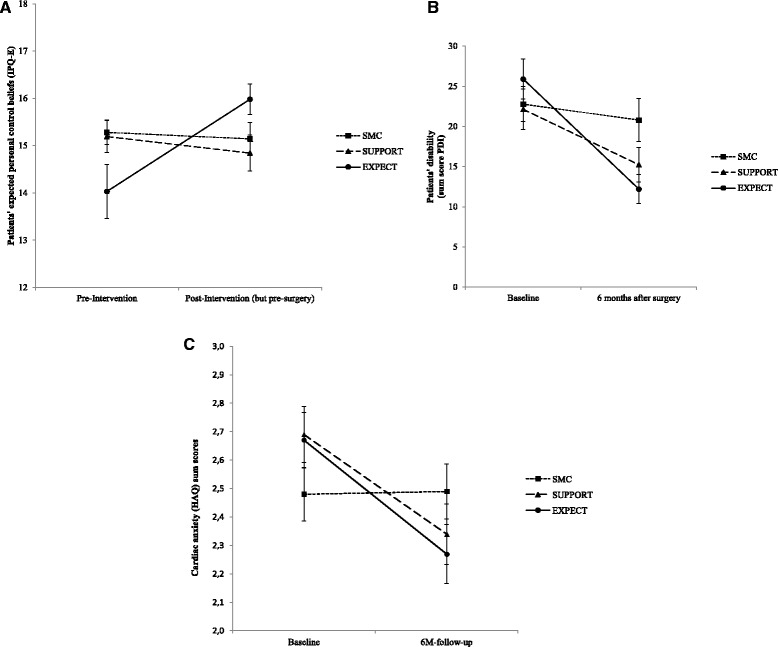
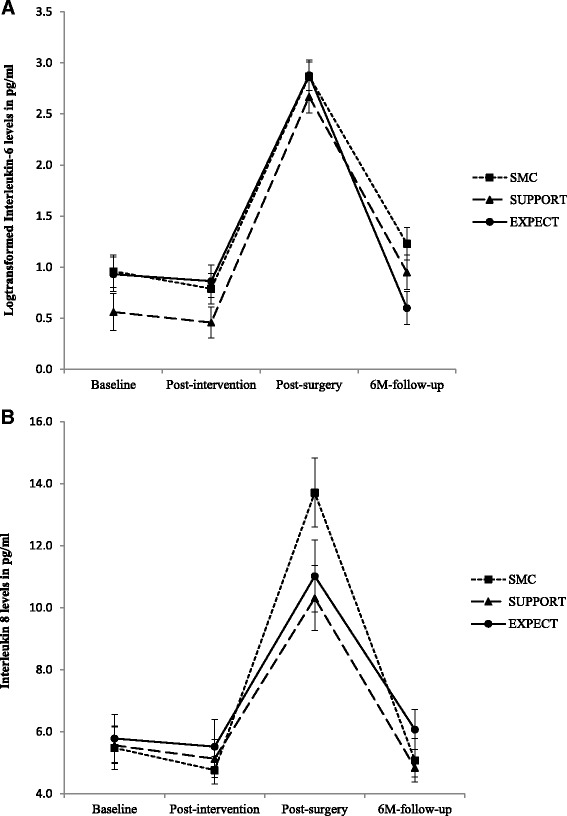
BACKGROUND: Placebo effects contribute substantially to outcome in most fields of medicine. While clinical trials typically try to control or minimize these effects, the potential of placebo mechanisms to improve outcome is rarely used. Patient expectations about treatment efficacy and outcome are major mechanisms that contribute to these placebo effects. We aimed to optimize these expectations to improve outcome in patients undergoing coronary artery bypass graft (CABG) surgery. METHODS: In a prospective three-arm randomized clinical trial with a 6 month follow-up, 124 patients scheduled for CABG surgery were randomized to either a brief psychological pre-surgery intervention to optimize outcome expectations (EXPECT); or a psychological control intervention focusing on emotional support and general advice, but not on expectations (SUPPORT); or to standard medical care (SMC). Interventions were kept brief to be feasible with a heart surgery environment; "dose" of therapy was identical for both pre-surgery interventions. Primary outcome was disability 6 months after surgery. Secondary outcomes comprised further clinical and immunological variables. RESULTS: Patients in the EXPECT group showed significantly larger improvements in disability (-12.6; -17.6 to -7.5) than the SMC group (-1.9; -6.6 to +2.7); patients in the SUPPORT group (-6.7; -11.8 to 1.7) did not differ from the SMC group. Comparing follow-up scores and controlling for baseline scores of EXPECT versus SUPPORT on the variable disability only revealed a trend in favor of the EXPECT group (P = 0.09). Specific advantages for EXPECT compared to SUPPORT were found for mental quality of life and fitness for work (hours per week). Both psychological pre-surgery interventions induced less pronounced increases in pro-inflammatory cytokine concentrations reflected by decreased interleukin-8 levels post-surgery compared to changes in SMC patients and lower interleukin-6 levels in patients of the EXPECT group at follow-up. Both pre-surgery interventions were characterized by great patient acceptability and no adverse effects were attributed to them. Considering the innovative nature of this approach, replication in larger, multicenter trials is needed. CONCLUSIONS: Optimizing patients' expectations pre-surgery helps to improve outcome 6 months after treatment. This implies that making use of placebo mechanisms has the potential to improve long-term outcome of highly invasive medical interventions. Further studies are warranted to generalize this approach to other fields of medicine. TRIAL REGISTRATION: Ethical approval for the study was obtained from the IRB of the Medical School, University of Marburg, and the trial was registered at ( NCT01407055 ) on July 25, 2011.
Overview
The claims and statistics of this paper haven’t been checked yet.
Free: it reads the open-access text and checks the first 5 claims that cite a source we can check. Create a free account to check every claim.
Integrity signals
Registry
Cites
Statistics
Figures
Verification
Claims the paper makes
The claims and statistics of this paper haven’t been checked yet.
Free: it reads the open-access text and checks the first 5 claims that cite a source we can check. Create a free account to check every claim.
Claims other papers make about this one
Each is checked against this paper’s own text: does it say what the citing paper says it does?
The check wasn’t confident either way, so it gives no verdict — never disputed.
In the citing paper
“the scientific evidence for persistent physical symptoms in chronic somatic conditions is just beginning to emerge”
From Persistent physical symptoms: definition, genesis, and management (2024) · cites this paper as [53]
Experimental — accuracy not yet measured
Self-check
Percentages, sums and reported differences re-computed from the paper’s own numbers.
The self-check needs the paper’s full text.
Citations
Cites
(1992) · PubMed · Cited by 33,716
The MOS 36-ltem Short-Form Health Survey (SF-36): I. Conceptual Framework and Item Selection
Ware, J. E., & Sherbourne, C. D. (1992) · Medical Care · doi:10.1097/00005650-199206000-00002 · Cited by 30,033 · cited 10×
“The better outcome for the EXPECT group was further confirmed by QoL data as assessed by the Short-Form Health Survey.”
MethodInfluentialInternational physical activity questionnaire: 12-country reliability and validity
CRAIG, C. L., MARSHALL, A. L., SJ??STR??M, M., BAUMAN, A. E., BOOTH, M. L., AINSWORTH, B. E., PRATT, M., EKELUND, U., YNGVE, A., SALLIS, J. F., et al. (2003) · Medicine & Science in Sports & Exercise · doi:10.1249/01.mss.0000078924.61453.fb · Cited by 21,619 · cited 1×
“physical activity with the International Physical Activity Questionnaire (IPAQ), which allows the computation of metabolic equivalents of physical exercise [21].”
Method(2017) · Cited by 16,319
European system for cardiac operative risk evaluation (EuroSCORE)
Nashef, S. A. M., Roques, F., Michel, P., Gauducheau, E., Lemeshow, S., & Salamon, R. (1999) · European Journal of Cardio-Thoracic Surgery · doi:10.1016/s1010-7940(99)00134-7 · Cited by 3,362 · cited 1×
“It included the New York Heart Association Classification, EuroSCORE II (European System for Cardiac Operative Risk Evaluation [25]), left ventricular ejection fraction (LVEF), comorbid medical conditions, body mass index, smoking status, and history of myocardial infarction.”
MethodThe revised illness perception questionnaire (IPQ-R)
Moss-Morris, R., Weinman, J., Petrie, K., Horne, R., Cameron, L., & Buick, D. (2002) · Psychology & Health · doi:10.1080/08870440290001494 · Cited by 2,949 · cited 2×
“Expected personal control beliefs were assessed by the four items from the Expected Illness Perception Questionnaire “personal control subscale”, such as “6 months after CABG surgery, there is a lot I can do myself to control my symptoms”.”
MethodSelf-citationPsychosomatic medicine in Germany: more timely than ever
Zipfel, S., Herzog, W., Kruse, J., & Henningsen, P. (2016) · Psychotherapy and Psychosomatics · doi:10.1159/000447701 · Cited by 2,323
THE MOS 36- ITEM SHORT FORM HEALTH SURVEY (SF- 36) CONCEPTUAL FRAMEWORK AND ITEM SELECTION
J.E.Jr., W., & Sherburne, C. D. (1992) · Cited by 1,586
Eurp-pean system for cardiac operative risk evaluation (Euro SCORE)
Nashef, S. A. M. (1999) · Medical Entomology and Zoology · Cited by 1,349
Components of placebo effect: randomised controlled trial in patients with irritable bowel syndrome
Kaptchuk, T. J., Kelley, J. M., Conboy, L. A., Davis, R. B., Kerr, C. E., Jacobson, E. E., Kirsch, I., Schyner, R. N., Nam, B. H., Nguyen, L. T., et al. (2008) · BMJ · doi:10.1136/bmj.39524.439618.25 · Cited by 1,196
Research works printed but not linked: 1
- Wittchen HU Schramm E Zaudig M Unland H SKID. Stukturiertes klinisches Interview für DSM-IV, Achse I, deutsche Version (Structured clinical interview for DSM-IV, German Version) 1997 Göttingen Hogrefe
Cited by
(2020) · doi:10.1056/nejmra1907805 · Cited by 634
Howick, J., Moscrop, A., Mebius, A., Fanshawe, T. R., Lewith, G., Bishop, F. L., Mistiaen, P., Roberts, N. W., Dieninytė, E., Hu, X.-Y., et al. (2018) · Journal of the Royal Society of Medicine · doi:10.1177/0141076818769477 · Cited by 455
Petrie, K. J., & Rief, W. (2019) · Annual Review of Psychology · doi:10.1146/annurev-psych-010418-102907 · Cited by 309
Self-citationRossettini, G., Carlino, E., & Testa, M. (2018) · BMC Musculoskeletal Disorders · doi:10.1186/s12891-018-1943-8 · Cited by 307
“In particular, it is crucial to identify patients with low expectations in order to work with them with the aim of improving their belief [174].”
BackgroundPersistent physical symptoms: definition, genesis, and management
Löwe, B., Toussaint, A., Rosmalen, J. G. M., Huang, W.-L., Burton, C., Weigel, A., Levenson, J. L., & Henningsen, P. (2024) · The Lancet · doi:10.1016/s0140-6736(24)00623-8 · Cited by 280
Laferton, J. A. C., Kube, T., Salzmann, S., Auer, C. J., & Shedden-Mora, M. C. (2017) · Frontiers in Psychology · doi:10.3389/fpsyg.2017.00233 · Cited by 267
“Recently, several clinical intervention studies have shown that patients’ expectations can be optimized via brief psychological interventions and that these interventions ultimately lead to improved health outcomes (Broadbent et al., 2009; von Blanckenburg et al., 2013, 2015; Rief et al., 2017).”
BackgroundMethodSelf-citationPerioperative Pain Management and Opioid Stewardship: A Practical Guide
Hyland, S. J., Brockhaus, K. K., Vincent, W. R., Spence, N. Z., Lucki, M. M., Howkins, M. J., & Cleary, R. K. (2021) · Healthcare · doi:10.3390/healthcare9030333 · Cited by 206
Philippi, P., Baumeister, H., Apolinário-Hagen, J., Ebert, D. D., Hennemann, S., Kott, L., Lin, J., Messner, E.-M., & Terhorst, Y. (2021) · Internet Interventions · doi:10.1016/j.invent.2021.100459 · Cited by 200
Albus, C., Waller, C., Fritzsche, K., Gunold, H., Haass, M., Hamann, B., Kindermann, I., Köllner, V., Leithäuser, B., Marx, N., et al. (2019) · Clinical Research in Cardiology · doi:10.1007/s00392-019-01488-w · Cited by 178
When Beliefs Face Reality: An Integrative Review of Belief Updating in Mental Health and Illness
Kube, T., & Rozenkrantz, L. (2021) · Perspectives on Psychological Science · doi:10.1177/1745691620931496 · Cited by 136
“Because this expectation-optimization intervention was also superior to an unspecific supportive psychological intervention in terms of reducing disability, this study suggests a specific effect of patients’ expectations on symptom improvement (Rief et al., 2017).”
ResultLöwe, B., Andresen, V., Van den Bergh, O., Huber, T. B., von dem Knesebeck, O., Lohse, A. W., Nestoriuc, Y., Schneider, G., Schneider, S. W., Schramm, C., et al. (2022) · BMJ Open · doi:10.1136/bmjopen-2021-057596 · Cited by 121
Placebo 2.0: the impact of expectations on analgesic treatment outcome
Bingel, U. (2020) · Pain · doi:10.1097/j.pain.0000000000001981 · Cited by 113
Revisiting the Cognitive Model of Depression: The Role of Expectations
Rief, W., & Joormann, J. (2019) · Clinical Psychology in Europe · doi:10.32872/cpe.v1i1.32605 · Cited by 94
“gery, patients in this arm showed the lowest disability scores six month after surgery (Rief et al., 2017).”
BackgroundSelf-citationKube, T., Rozenkrantz, L., Rief, W., & Barsky, A. (2020) · Clinical Psychology Review · doi:10.1016/j.cpr.2020.101829 · Cited by 91
Self-citationMora, M. C. S., Alberts, J., Petrie, K. J., Laferton, J. A. C., von Blanckenburg, P., Kohlmann, S., Nestoriuc, Y., & Löwe, B. (2023) · PLoS ONE · doi:10.1371/journal.pone.0280472 · Cited by 100
“The TEX-Q is designed to assess the effects of expectation-focused psychological interventions [46], as in our clinical trials optimizing expectations prior to cardiac surgery [47], or targeting dysfunctional expectations to reduce side effect burden of cancer treatment [48].”
BackgroundSelf-citationNocebos in rheumatology: emerging concepts and their implications for clinical practice
Kravvariti, E., Kitas, G. D., Mitsikostas, D. D., & Sfikakis, P. P. (2018) · Nature Reviews Rheumatology · doi:10.1038/s41584-018-0110-9 · Cited by 85
Expectancy Effects in Psychedelic Trials
Szigeti, B., & Heifets, B. D. (2024) · Biological Psychiatry Cognitive Neuroscience and Neuroimaging · doi:10.1016/j.bpsc.2024.02.004 · Cited by 120
Are Blue Pills Better Than Green? How Treatment Features Modulate Placebo Effects
Meißner, K., & Linde, K. (2018) · International review of neurobiology · doi:10.1016/bs.irn.2018.07.014 · Cited by 95
Psychological Preparation for Cardiac Surgery
Salzmann, S., Salzmann-Djufri, M., Wilhelm, M., & Euteneuer, F. (2020) · Current Cardiology Reports · doi:10.1007/s11886-020-01424-9 · Cited by 72
Self-citationWhy We should Assess Patients’ Expectations in Clinical Trials
Frisaldi, E., Shaibani, A. I., & Benedetti, F. (2017) · Pain and Therapy · doi:10.1007/s40122-017-0071-8 · Cited by 81
“[16] have shown that enhancing positive expectations improves the clinical outcomes in invasive medical interventions such as coronary artery bypass graft surgery.”
BackgroundA randomized trial of an optimism training intervention in patients with heart disease
Mohammadi, N., Aghayousefi, A., Nikrahan, G. R., Adams, C. N., Alipour, A., Sadeghi, M., Roohafza, H., Celano, C. M., & Huffman, J. C. (2017) · General Hospital Psychiatry · doi:10.1016/j.genhosppsych.2017.12.004 · Cited by 80
Chuang, Y., & Kuo, H. (2017) · The Journal of Urology · doi:10.1016/j.juro.2017.02.021 · Cited by 69
“1) A specific design optimizing patient expectations of the bladder condition before treatment and compromising placebo effects may be indicated.(25) 2) Patient selection was not limited to those with recent refractory IC/BPS.”
BackgroundKube, T., Glombiewski, J. A., & Rief, W. (2018) · Psychosomatic Medicine · doi:10.1097/psy.0000000000000596 · Cited by 62
Self-citationMittinty, M. M., Vanlint, S., Stocks, N. P., Mittinty, M. M., & Moseley, G. L. (2018) · Scandinavian Journal of Pain · doi:10.1515/sjpain-2018-0023 · Cited by 72
“Expectations about recovery are often investigated in acute or subacute pain populations [24, 25], and in pre-surgical groups [26, 27], but not in chronic pain patients.”
BackgroundPsychological interventions for acute pain after open heart surgery
Ziehm, S., Rosendahl, J., Barth, J., Strauss, B. M., Mehnert, A., & Koranyi, S. (2017) · Cochrane Database of Systematic Reviews · doi:10.1002/14651858.cd009984.pub3 · Cited by 56
Albus, C., Waller, C. F., Fritzsche, K., Gunold, H., Haass, M., Hamann, B., Kindermann, I., Köllner, V., Leithäuser, B., Marx, N., et al. (2018) · Der Kardiologe · doi:10.1007/s12181-018-0271-4 · Cited by 74
Nadinda, P. G., van Ryckeghem, D. M. L., & Peters, M. L. (2022) · Pain · doi:10.1097/j.pain.0000000000002521 · Cited by 51
“Three studies reported only pain outcomes,(12,18,21) and 2 studies reported only disability outcomes.(39,43) Of the disability outcomes, 6 studies included objective measures of disability outcomes in addition to subjective measures of disability outcomes.”
BackgroundBenedetti, F., Frisaldi, E., & Shaibani, A. I. (2021) · The Annual Review of Pharmacology and Toxicology · doi:10.1146/annurev-pharmtox-052120-104536 · Cited by 62
Implementing a Cardiac Enhanced Recovery After Surgery Protocol: Nuts and Bolts
Lu, S., Lai, Y., & Dalia, A. A. (2019) · Journal of Cardiothoracic and Vascular Anesthesia · doi:10.1053/j.jvca.2019.12.022 · Cited by 52
Haas, J. W., Ongaro, G., Jacobson, E., Conboy, L. A., Nee, J. W., Iturrino, J., Rangan, V., Lembo, A. J., Kaptchuk, T. J., & Ballou, S. (2022) · BMC Psychology · doi:10.1186/s40359-022-00731-w · Cited by 50
Hall, A. E., Nguyen, N. H., Cascavita, C. T., Shariati, K., Patel, A. K., Chen, W., Kang, Y., Ren, X., Tseng, C.-H., Hidalgo, M. A., et al. (2025) · Annals of Surgery · doi:10.1097/sla.0000000000006677 · Cited by 52
“27,40,42 Regarding intervention type, 70% of studies employed CBT, 25% consisted of SP, and 5% were based on ACT.”
Deceptive and Nondeceptive Placebos to Reduce Pain: An Experimental Study in Healthy Individuals
Κube, T., Rief, W., Vivell, M.-B., Schäfer, N. L., Vermillion, T., Körfer, K., & Glombiewski, J. A. (2019) · Clinical Journal of Pain · doi:10.1097/ajp.0000000000000781 · Cited by 50
Self-citationMora, M. C. S., Pan, Y., Heisig, S. R., von Blanckenburg, P., Rief, W., Witzel, I., Albert, U., & Nestoriuc, Y. (2020) · Clinical Psychology in Europe · doi:10.32872/cpe.v2i1.2695 · Cited by 49
“Our findings are in line with previous evidence from the PSY-HEART trial targeting expectations prior to cardiac surgery (Laferton et al., 2016; Rief et al., 2017), an RCT addressing illness perceptions after myocardial infarction (Broadbent, Ellis, Thomas, Gamble, & Petrie, 2009), and experimental pain research (Peer…”
MethodResultSelf-citationMeister, R., Jansen, A., Härter, M. C., Nestoriuc, Y., & Kriston, L. (2017) · Journal of Affective Disorders · doi:10.1016/j.jad.2017.03.024 · Cited by 43
Salzmann, S., Euteneuer, F., Laferton, J. A. C., Auer, C. J., Shedden-Mora, M. C., Schedlowski, M., Moosdorf, R., & Rief, W. (2017) · Psychosomatic Medicine · doi:10.1097/psy.0000000000000483 · Cited by 40
“A closer look at the postoperative stress response might help to explain the findings on patients‟ disability 6 months after surgery in the PSY-HEART trial(15).”
BackgroundResultSelf-citationAuer, C. J., Laferton, J. A. C., Mora, M. C. S., Salzmann, S., Moosdorf, R., & Rief, W. (2017) · Journal of Psychosomatic Research · doi:10.1016/j.jpsychores.2017.04.008 · Cited by 41
Self-citationEngelmann, P., Löwe, B., Brehm, T. T., Weigel, A., Ullrich, F., Addo, M. M., Wiesch, J. S. Z., Lohse, A. W., & Toussaint, A. C. (2022) · Frontiers in Psychology · doi:10.3389/fpsyg.2022.1022203 · Cited by 46
Expectation-Focused Psychotherapy to Improve Clinical Outcomes
Doering, B. K., Glombiewski, J. A., & Rief, W. (2018) · International review of neurobiology · doi:10.1016/bs.irn.2018.02.004 · Cited by 43
Self-citationNocebo Effects: Neurobiological Mechanisms and Strategies for Prevention and Optimizing Treatment
Kleine‐Borgmann, J., & Bingel, U. (2018) · International review of neurobiology · doi:10.1016/bs.irn.2018.02.005 · Cited by 41
What is new in the psychology of chronic itch?
Evers, A. W. M., Peerdeman, K. J., & van Laarhoven, A. I. M. (2019) · Experimental Dermatology · doi:10.1111/exd.13992 · Cited by 35
Ajtahed, S. S., Rezapour, T., Etemadi, S., Moradi, H., Habibi, M., & Ekhtiari, H. (2019) · Frontiers in Psychology · doi:10.3389/fpsyg.2019.01759 · Cited by 52
Harnessing placebo: Lessons from psychedelic science
Pronovost-Morgan, C., Hartogsohn, I., & Ramaekers, J. G. (2023) · Journal of Psychopharmacology · doi:10.1177/02698811231182602 · Cited by 41
Benson, S., Hagen, S., Hoffmann, O., Pasler, A., Bingel, U., Schedlowski, M., Peters, J., Elsenbruch, S., & Frey, U. H. (2019) · Pain · doi:10.1097/j.pain.0000000000001546 · Cited by 37
“Importantly, in the positive expectation condition, study physicians also conveyed an optimistic and positive attitude towards the therapy, which has previously been shown to enhance treatment effects.(40,45,46)”
Self-citationLaferton, J. A. C., Oeltjen, L., Neubauer, K., Ebert, D. D., & Münder, T. (2020) · Health Psychology Review · doi:10.1080/17437199.2020.1854051 · Cited by 34
“…this, psychological interventions to manipulate patients’ expectations have been successfully employed in patients undergoing cardiac surgery (Laferton et al., 2015b; Rief et al., 2017), abdominal surgery (van der Meij et al., 2018) and endocrine breast cancer treatment (Shedden-Mora et al., 2020).”
BackgroundSelf-citationExpectations and Prior Experiences Associated With Adverse Effects of COVID-19 Vaccination
Schäfer, I., Oltrogge, J. H., Nestoriuc, Y., Warren, C. V., Brassen, S., Blattner, M., Lühmann, D., Tinnermann, A., Scherer, M., & Büchel, C. (2023) · JAMA Network Open · doi:10.1001/jamanetworkopen.2023.4732 · Cited by 33
Ballesio, A., Zagaria, A., Vacca, M., Pariante, C. M., & Lombardo, C. (2023) · Brain Behavior and Immunity · doi:10.1016/j.bbi.2023.05.006 · Cited by 32
“…2021; O ’ Toole et al., 2020; Pakiz et al., 2011; Paredes et al., 2021; Parsons et al. 2007, 2018; Penedo et al., 2021; Reig-Ferrer et al., 2014; Rief et al., 2017; Rigsby et al., 1992; Rodrigues de Oliveira et al., 2021; Ruzyla-Smith et al., 1995; Saban et al., 2022; Sanabria-Mazo et al.,…”
Introducing an EXperimental Paradigm to investigate Expectation Change (EXPEC).
Kube, T., Rief, W., Gollwitzer, M., & Glombiewski, J. (2018) · Journal of Behavior Therapy and Experimental Psychiatry · doi:10.1016/j.jbtep.2017.12.002 · Cited by 31
Self-citationOptimizing expectations and distraction leads to lower cortisol levels after acute stress
Salzmann, S., Euteneuer, F., Strahler, J., Laferton, J. A. C., Nater, U. M., & Rief, W. (2018) · Psychoneuroendocrinology · doi:10.1016/j.psyneuen.2017.12.011 · Cited by 28
“Recently it was shown that psychological interventions focusing on optimizing expectations improved coping with stress and illness (Rief et al., 2017; Salzmann et al., 2017).”
BackgroundSelf-citationColloca, L. (2018) · International review of neurobiology · doi:10.1016/s0074-7742(18)30027-8 · Cited by 27
“A presurgery expectation optimization program, applied to patients scheduled for coronary artery bypass grafting, resulted in lower disability scores at 6-month postsurgery follow-ups (Rief et al., 2017).”
Carrière, J. S., Pimentel, S. D., Saba, S. B., Boehme, B. A. E., Berbiche, D., Coutu, M., & Durand, M. (2022) · Pain · doi:10.1097/j.pain.0000000000002789 · Cited by 39
An Analysis of the Basic Processes of Formation and Change of Placebo Expectations
Geers, A. L., Briñol, P., & Petty, R. E. (2018) · Review of General Psychology · doi:10.1037/gpr0000171 · Cited by 31
“Researchers are now viewing placebo effects as a vital component in successful medical care and are searching for reliable techniques to enhance these effects (e.g., Bishop et al., 2017; Kaptchuk et al., 2010; Rief et al., 2017).”
Placebo prevents rumination: An experimental study
Lea, R., Schäfer, L. N., Κube, T., Ehmke, V., & Rief, W. (2020) · Journal of Affective Disorders · doi:10.1016/j.jad.2020.06.010 · Cited by 29
Self-citationRushton, A., Jadhakhan, F., Masson, A., Athey, V., Staal, J. B., Verra, M. L., Emms, A., Reddington, M., Cole, A., Willems, P. C. P. H., et al. (2020) · PLoS ONE · doi:10.1371/journal.pone.0241931 · Cited by 27
“It is also consistent with the placebo literature [32], and a narrative synthesis informing development of a framework that identified the importance of meaningful activities, experiences and interactions to establishment of hope following a stroke [33].”
Kindermann, I., Köllner, V., Albus, C., Boer, J., Dannberg, G., Fritzsche, K., Gunold, H., Herrmann‐Lingen, C., Leithäuser, B., Meesmann, M., et al. (2024) · Die Kardiologie · doi:10.1007/s12181-024-00708-6 · Cited by 30
Improving Patients’ Treatment Expectations
Laferton, J. A. C., Rief, W., & Mora, M. C. S. (2025) · JAMA · doi:10.1001/jama.2025.6261 · Cited by 35
Self-citationBlackburn, J., van der Oest, M. J. W., Chen, N. C., Feitz, R., Duraku, L. S., Zuidam, J. M., Vranceanu, A., Selles, R. W., & and the Hand-Wrist Study Group (2020) · Clinical Orthopaedics and Related Research · doi:10.1097/corr.0000000000001577 · Cited by 27
“Positive or negative outcome expectations of treatments can be shaped by doctors [5], both in the way an intervention is explained [21] and their Fig.”
Backgroundvan der Oest, M. J. W., Hoogendam, L., Wouters, R. M., Vermeulen, G. M., Slijper, H. P., Selles, R. W., Vranceanu, A., Porsius, J. T., & the Hand-Wrist Study Group (2021) · Disability and Rehabilitation · doi:10.1080/09638288.2021.1936661 · Cited by 26
Barth, J., Muff, S., Kern, A., Zieger, A., Keiser, S., Zoller, M., Rosemann, T. J., Brinkhaus, B., Held, L., & Witt, C. M. (2021) · JAMA Network Open · doi:10.1001/jamanetworkopen.2021.21418 · Cited by 25
Erwartungsfokussierte psychotherapeutische Interventionen bei Personen mit depressiver Symptomatik
Κube, T., Glombiewski, J. A., & Rief, W. (2019) · Verhaltenstherapie · doi:10.1159/000496944 · Cited by 23
“Allerdings gibt es bereits exzellente Ergebnisse bei herzchirurgischen Patientinnen und Patienten [Rief et al., 2017] sowie Patientinnen und Patienten mit chronischen Rückenschmerzen [Glombiewski et al., 2018], bei denen durch EFPI in sehr wenigen Sitzungen die Beeinträchtigung der Patientinnen und…”
BackgroundSelf-citationPsychophysical health of elderly inpatients in cardiac rehabilitation: a retrospective cohort study
Balestroni, G., Panzeri, A., Omarini, P., Cerutti, P., Sacco, D., Giordano, A., Pistono, M., Komici, K., & Rossi Ferrario, S. (2020) · European Journal of Physical and Rehabilitation Medicine · doi:10.23736/s1973-9087.20.05970-5 · Cited by 20
Riecke, J., Zerth, S. F., Schubert, A., Wiesmann, T., Dinges, H., Wulf, H., & Volberg, C. (2023) · BMJ Open · doi:10.1136/bmjopen-2022-069977 · Cited by 33
Poelstra, R., Selles, R. W., Slijper, H. P., van der Oest, M. J. W., Feitz, R., Hovius, S. E. R., Porsius, J. T., & the Hand-Wrist Study Group (2018) · Journal of Hand Surgery (European Volume) · doi:10.1177/1753193418780187 · Cited by 25
“, 2016), which in turn can have a beneficial effect on treatment (Howe et al., 2017; Rief et al., 2017).”
BackgroundSalzmann, S., Euteneuer, F., Laferton, J. A. C., Mora, M. C. S., Schedlowski, M., Moosdorf, R., & Rief, W. (2020) · Brain Behavior and Immunity · doi:10.1016/j.bbi.2020.09.028 · Cited by 20
Self-citationPreoperative frailty and chronic pain after cardiac surgery: a prospective observational study
Arends, B. C., Timmerman, L., Vernooij, L. M., Verwijmeren, L., Biesma, D. H., van Dongen, E. P. A., Noordzij, P. G., & van Oud‐Alblas, H. J. B. (2022) · BMC Anesthesiology · doi:10.1186/s12871-022-01746-x · Cited by 20
Placebo und Nocebo: Wie einsetzen bzw. vermeiden?
Hansen, E., Zech, N., & Meißner, K. (2017) · Der Internist · doi:10.1007/s00108-017-0294-0 · Cited by 23
Horn, N., Laferton, J. A. C., Mora, M. C. S., Moosdorf, R., Rief, W., & Salzmann, S. (2022) · Journal of Behavioral Medicine · doi:10.1007/s10865-022-00319-0 · Cited by 22
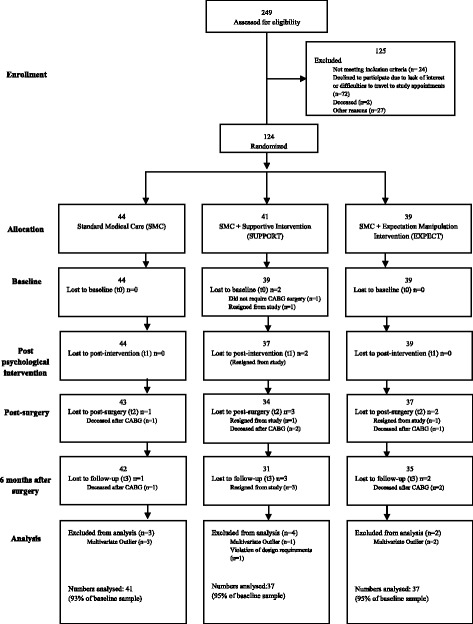
“Study’s flow chart of the PSYHEART trial (Rief et al., 2017).”
MethodSelf-citationKlotz, S., Ketels, G., Behrendt, C., König, H., Kohlmann, S., Löwe, B., Petersen, J., Stock, S., Vettorazzi, E., Zapf, A., et al. (2022) · Trials · doi:10.1186/s13063-022-06455-x · Cited by 25
“Moreover, patients could be motivated to be active partners in the whole treatment process, be more physically active, and gain more perceived selfcontrol [9].”
BackgroundResultSalzmann, S., Laferton, J. A. C., Mora, M. C. S., Horn, N., Gärtner, L., Schröder, L., Rau, J., Schade‐Brittinger, C., Murmann, K., Rastan, A. J., et al. (2022) · American Heart Journal · doi:10.1016/j.ahj.2022.07.008 · Cited by 22
Self-citationStalujanis, E., Neufeld, J., Stalder, M. G., Belardi, A., Tegethoff, M., & Meinlschmidt, G. (2020) · JMIR mhealth and uhealth · doi:10.2196/20329 · Cited by 21
“Accordingly, Rief et al [43] encouraged study participants of the PSY-HEART study to develop very clear expectations of how their daily life would change after successful heart surgery.”
Zaouter, C., Damphousse, R., Moore, A. W., Stevens, L., Gauthier, A., & Carrier, F. M. (2021) · Journal of Cardiothoracic and Vascular Anesthesia · doi:10.1053/j.jvca.2021.01.035 · Cited by 20
Changing Mindsets About Side Effects of the COVID-19 Vaccination: A Randomized Controlled Trial
Crum, A. J., Heathcote, L. C., Morrison, Z., Yielder, R., Leibowitz, K. A., Petousis‐Harris, H., Thomas, M. G., Prober, C. G., Berek, J. S., & Petrie, K. J. (2023) · Annals of Behavioral Medicine · doi:10.1093/abm/kaad020 · Cited by 22
“The study results add to a growing literature showing that paying attention to the social and psychological context in which a treatment is delivered can meaningfully influence treatment decisions, adherence, experience, and outcomes [13, 25, 33, 34].”
ResultSelf-citationWolmeister, A. S., Schiavo, C. L., Nazário, K. C. K., Castro, S. M. D. J., de Souza, A., Caetani, R. P., Caumo, W., & Stefani, L. P. C. (2020) · PLoS ONE · doi:10.1371/journal.pone.0227441 · Cited by 21
“They had a better mental quality of life and fitness for work within six-months and less pro-inflammatory cytokines in the postoperative period [35].”
BackgroundStuhlreyer, J., & Klinger, R. (2022) · Frontiers in Psychiatry · doi:10.3389/fpsyt.2022.840270 · Cited by 21
Quality of Life Is Improved 1 Year After Cardiac Surgery
Curcio, N., Bennett, M., Hebeler, K. R., Warren, A. M., & Edgerton, J. R. (2020) · The Annals of Thoracic Surgery · doi:10.1016/j.athoracsur.2020.07.063 · Cited by 19
Optimizing Expectations via Mobile Apps: A New Approach for Examining and Enhancing Placebo Effects
Gruszka, P., Burger, C., & Jensen, M. P. (2019) · Frontiers in Psychiatry · doi:10.3389/fpsyt.2019.00365 · Cited by 15
Shao, K., Taylor, L., Miller, C. J., Etzkorn, J. R., Shin, T. M., Higgins, H. W., Giordano, C. N., & Sobanko, J. F. (2020) · Facial Plastic Surgery & Aesthetic Medicine · doi:10.1089/fpsam.2020.0228 · Cited by 16
“Setting realistic expectations affects patient perceptions of outcomes.(5,6) Patients are more likely to be satisfied with their care when preoperative expectations are achieved.”
Löwe, B., Nestoriuc, Y., Andresen, V., Vettorazzi, E., Zapf, A., Hübener, S., Maehder, K., Peters, L., & Lohse, A. W. (2022) · BMJ Open · doi:10.1136/bmjopen-2021-059529 · Cited by 15
Meißner, K., Talsky, N., Olliges, E., Jacob, C., Stötzer, O. J., Salat, C., Braun, M., & Flondor, R. (2019) · Frontiers in Pharmacology · doi:10.3389/fphar.2019.00410 · Cited by 16
Oxytocin and the social facilitation of placebo effects
Itskovich, E., Bowling, D. L., Garner, J. P., & Parker, K. J. (2022) · Molecular Psychiatry · doi:10.1038/s41380-022-01515-9 · Cited by 19
Krauß, P., Reinartz, F., Sonnleitner, C., Vazan, M., Ringel, F. A., Meyer, B., & Meyer, H. S. (2022) · Spine · doi:10.1097/brs.0000000000004351 · Cited by 21
Are Patient and Surgeon Expectations after ACL Reconstruction Realistic?
Weekes, D. G., Campbell, R. E., Shi, W. J., Ciccotti, M. G., Salvo, J. P., Cohen, S. A., Tucker, B. S., Pepe, M. D., Freedman, K. B., & Tjoumakaris, F. P. (2020) · Clinical Orthopaedics and Related Research · doi:10.1097/corr.0000000000001082 · Cited by 15
“[17] demonstrated that the development of realistic expectations through psychological intervention can improve patient outcomes 6 months after heart surgery.”
BackgroundSadlonova, M., Nagel, J., Becker, S., Neumann, S., Staab, J., Meyer, T., Celano, C. M., Amonoo, H. L., Fangauf, S. V., Herrmann‐Lingen, C., et al. (2022) · European Journal of Cardio-Thoracic Surgery · doi:10.1093/ejcts/ezac041 · Cited by 14
Nocebo in Biosimilars and Generics in Neurology: A Systematic Review
Spanou, I., Mavridis, T., & Mitsikostas, D. D. (2019) · Frontiers in Pharmacology · doi:10.3389/fphar.2019.00809 · Cited by 14
Krauß, P., Sonnleitner, C., Reinartz, F., Meyer, B., & Meyer, H. S. (2020) · Surgeries · doi:10.3390/surgeries1020008 · Cited by 16
Colloca, L. (2018) · International review of neurobiology · doi:10.1016/s0074-7742(18)30087-4 · Cited by 14
Baker, J., Gamer, M., Rauh, J., & Brassen, S. (2022) · Scientific Reports · doi:10.1038/s41598-022-09342-2 · Cited by 16
Writing Group for the CODA Collaborative, Abouzeid, M., Alam, H. B., Arif, H., Ballman, K. V., Bennion, R. S., Bernardi, K., Burris, D., Carter, D. W., Chee, P., et al. (2022) · JAMA Surgery · doi:10.1001/jamasurg.2022.4765 · Cited by 14
Engelmann, P., Büchel, C., Frommhold, J., Klose, H. F. E., Lohse, A. W., Maehder, K., Nestoriuc, Y., Scherer, M., Suling, A. I., Toussaint, A. C., et al. (2023) · BJPsych Open · doi:10.1192/bjo.2023.591 · Cited by 13
“27 However, patients may develop severe somatic complications of Long COVID or other medical conditions.”
BackgroundMethodInfluentialSalzmann, S., Laferton, J. A. C., Auer, C. J., Mora, M. C. S., Wambach, K., & Rief, W. (2018) · Verhaltenstherapie · doi:10.1159/000485430 · Cited by 16
“Die Ergebnisse der Studie wurden kürzlich veröffentlicht und zeigen, dass Patienten von dieser zusätzlichen präoperativen psychologischen Intervention profitierten, indem sie 6 Monate nach der Operation weniger beeinträchtigt waren (verglichen mit Patienten, die nur eine medizinische Standardbehandlung erhielten), ein…”
BackgroundInfluentialSelf-citationAkroyd, A., Gunn, K., Rankin, S., Douglas, M., Kleinstäuber, M., Rief, W., & Petrie, K. J. (2020) · British Journal of Health Psychology · doi:10.1111/bjhp.12435 · Cited by 16
Self-citationSeifart, C., Koch, M., Leppin, N., Nagelschmidt, K., Knorrenschild, J. R., Timmesfeld, N., Rief, W., & von Blanckenburg, P. (2020) · BMC Palliative Care · doi:10.1186/s12904-020-00629-7 · Cited by 14
“Supportive interventions have been used as an unspecific control condition in several studies [27, 28].”
Self-citationExpectations of outcomes in patients with colorectal cancer
Young, A. L., Lee, E., Absolom, K. L., Baxter, H., Christophi, C., Lodge, J. P. A., Glaser, A., & Toogood, G. J. (2018) · BJS Open · doi:10.1002/bjs5.73 · Cited by 13
Nocebo and Placebo Effects and Their Implications in Psychotherapy
Rief, W., & Wilhelm, M. (2024) · Psychotherapy and Psychosomatics · doi:10.1159/000540791 · Cited by 13
“The optimization of treatment expectations demonstrated its value in patients receiving heart surgery [19].”
Self-citationZerth, S. F., Basedow, L. A., Rief, W., Bingel, U., Euteneuer, F., Riecke, J., Wilhelm, M., & Salzmann, S. (2025) · Scientific Reports · doi:10.1038/s41598-025-98614-8 · Cited by 16
Self-citationThe role of placebo effects in immune-related conditions: mechanisms and clinical considerations
Smits, R. M., Veldhuijzen, D. S., Wulffraat, N. M., & Evers, A. W. M. (2018) · Expert Review of Clinical Immunology · doi:10.1080/1744666x.2018.1516144 · Cited by 18
Placebo Economics: A Systematic Review About the Economic Potential of Utilizing the Placebo Effect
Hamberger, J., Meißner, K., Hinterberger, T., Loew, T. H., & Weimer, K. (2019) · Frontiers in Psychiatry · doi:10.3389/fpsyt.2019.00653 · Cited by 14
Patients' expectations and experiences of stem cell therapy for the treatment of knee osteoarthritis
Kenihan, L., McTier, L., & Phillips, N. M. (2020) · Health Expectations · doi:10.1111/hex.13113 · Cited by 12
Braun-Koch, K., & Rief, W. (2022) · Frontiers in Psychiatry · doi:10.3389/fpsyt.2022.836227 · Cited by 13
“These include, for example, control expectations (39), expectations regarding the length of treatment (40), or the acceptance of treatment (19, 38).”
BackgroundSelf-citationPre-treatment expectations and their influence on subjective symptom change in Crohn's disease
Basedow, L. A., Zerth, S. F., Salzmann, S., Uecker, C., Bauer, N., Elsenbruch, S., Rief, W., & Langhorst, J. (2023) · Journal of Psychosomatic Research · doi:10.1016/j.jpsychores.2023.111567 · Cited by 14
Self-citationvan Middendorp, H., Berende, A., Vos, F. J., ter Hofstede, H. J. M., Kullberg, B. J., & Evers, A. W. M. (2021) · Clinical Rheumatology · doi:10.1007/s10067-021-05760-1 · Cited by 12
Metadata
- Authors
- Rief, W., Shedden-Mora, M. C., Laferton, J. A. C., Auer, C., Petrie, K. J., Salzmann, S., Schedlowski, M., & Moosdorf, R.
- Affiliations
- Philipps University of Marburg (DE)
- University of Auckland (NZ)
- Essen University Hospital (DE)
- Corresponding author
- Rief, Winfried
- Venue
- BMC Medicine
- Published
- 2017-01-10
- Volume
- 15
- Issue
- 1
- Pages
- 4-4
- ISSN
- 1741-7015 (ISSN-L)
- PMC
- PMC5223324
- OpenAlex
- W2569106442
- Cited by
- 261
- References
- 40
- Citations by year
- 2026: 33 · 2025: 33 · 2024: 23 · 2023: 28 · 2022: 45 · 2021: 15 · 2020: 30 · 2019: 21 · 2018: 18 · 2017: 15
- FWCI
- 13.19
- Type
- journal article
- Language
- en
- Open access
- gold
- doi.org
- Licence
- cc-by
- Locations
- BMC Medicine (publishedVersion, cc-by)
- PubMed Central (publishedVersion, cc-by)
- PubMed (publishedVersion)
- DuEPublico (University of Duisburg-Essen) (submittedVersion, cc-by)
- Universitätsbibliographie, Universität Duisburg-Essen (submittedVersion, cc-by)
- Funders
- Deutsche Forschungsgemeinschaft (Ri574/21)
- Topics
- Life Sciences › Neuroscience › Cognitive Neuroscience › Pain Management and Placebo Effect
- Health Sciences › Medicine › Cardiology and Cardiovascular Medicine › Cardiac Health and Mental Health
- Health Sciences › Medicine › Surgery › Cardiac and Coronary Surgery Techniques
- Keywords
- patient expectations, placebo effect, coronary artery bypass grafting, preoperative psychological intervention, emotional support, disability, quality of life, fitness for work, interleukin-8, interleukin-6, inflammatory cytokines, inflammation, patient acceptability, long-term outcomes, psychoneuroimmunology
- MeSH terms
- Coronary Artery Bypass, Female, Humans, Male, Middle Aged, Preoperative Care, Prospective Studies, Quality of Life, Treatment Outcome
About these checks
Registry, retraction, Cites and statistics results are computed, not judged, with one exception: a printed reference that no index lists is read once by a model before it counts as a citation error. Claims are extracted by a model and kept only when their quote appears verbatim in the text; each cited source is then checked, with a model’s help, for whether it says what the claim relies on. Those verdicts can be wrong — read the claim’s quote and the cited source before relying on one.
Statistics and arithmetic are recomputed, not judged.
Confidence bands are shown only for fields calibrated on our annotated test set. None is calibrated yet, so no band is shown.
What counts as a claim ›How we measure confidence ›How we check this ›
Are you an author, or do you see a problem with this page? Request a review
Data sources
Bibliographic data: Semantic Scholar, OpenAlex, Crossref.
Contains information from the Semantic Scholar Academic Graph Datasets, made available under the ODC Attribution License (ODC-BY 1.0).
Semantic Scholar’s data is described in: Kinney, R., et al. (2023). The Semantic Scholar Open Data Platform. arXiv:2301.10140.
