

Preoperative optimization of patient expectations improves long-term outcome in heart surgery patients: results of the randomized controlled PSY-HEART trial
Open accessThe DOI matches its Crossref record; 40 of the 40 references it cites were found in a registry or an index.
Abstract
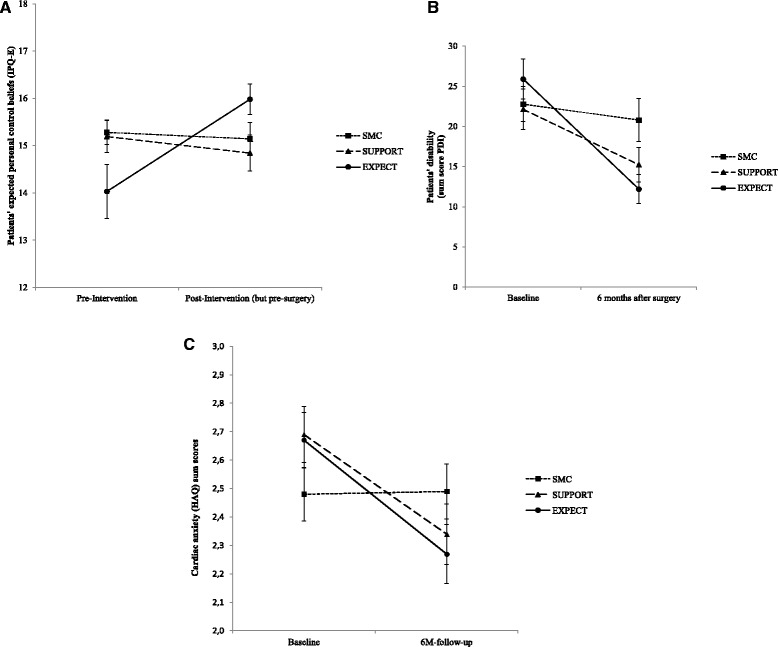
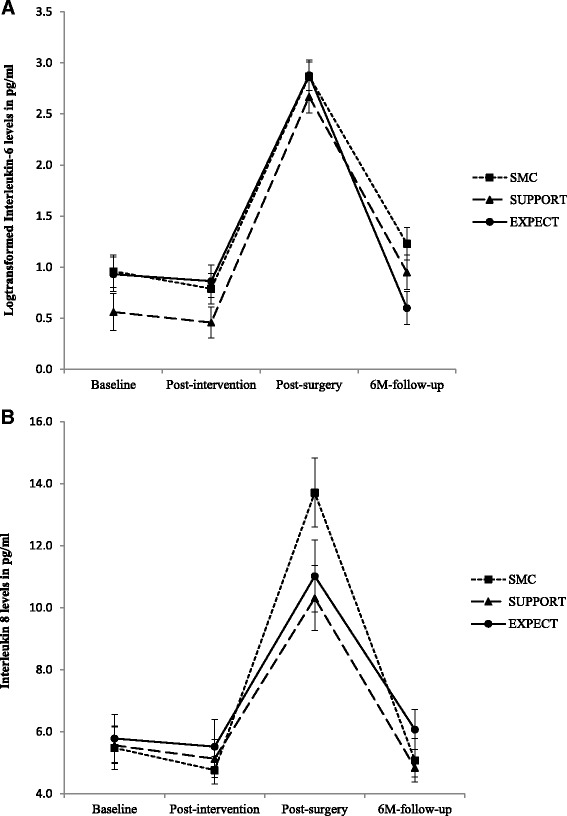
BACKGROUND: Placebo effects contribute substantially to outcome in most fields of medicine. While clinical trials typically try to control or minimize these effects, the potential of placebo mechanisms to improve outcome is rarely used. Patient expectations about treatment efficacy and outcome are major mechanisms that contribute to these placebo effects. We aimed to optimize these expectations to improve outcome in patients undergoing coronary artery bypass graft (CABG) surgery. METHODS: In a prospective three-arm randomized clinical trial with a 6 month follow-up, 124 patients scheduled for CABG surgery were randomized to either a brief psychological pre-surgery intervention to optimize outcome expectations (EXPECT); or a psychological control intervention focusing on emotional support and general advice, but not on expectations (SUPPORT); or to standard medical care (SMC). Interventions were kept brief to be feasible with a heart surgery environment; "dose" of therapy was identical for both pre-surgery interventions. Primary outcome was disability 6 months after surgery. Secondary outcomes comprised further clinical and immunological variables. RESULTS: Patients in the EXPECT group showed significantly larger improvements in disability (-12.6; -17.6 to -7.5) than the SMC group (-1.9; -6.6 to +2.7); patients in the SUPPORT group (-6.7; -11.8 to 1.7) did not differ from the SMC group. Comparing follow-up scores and controlling for baseline scores of EXPECT versus SUPPORT on the variable disability only revealed a trend in favor of the EXPECT group (P = 0.09). Specific advantages for EXPECT compared to SUPPORT were found for mental quality of life and fitness for work (hours per week). Both psychological pre-surgery interventions induced less pronounced increases in pro-inflammatory cytokine concentrations reflected by decreased interleukin-8 levels post-surgery compared to changes in SMC patients and lower interleukin-6 levels in patients of the EXPECT group at follow-up. Both pre-surgery interventions were characterized by great patient acceptability and no adverse effects were attributed to them. Considering the innovative nature of this approach, replication in larger, multicenter trials is needed. CONCLUSIONS: Optimizing patients' expectations pre-surgery helps to improve outcome 6 months after treatment. This implies that making use of placebo mechanisms has the potential to improve long-term outcome of highly invasive medical interventions. Further studies are warranted to generalize this approach to other fields of medicine. TRIAL REGISTRATION: Ethical approval for the study was obtained from the IRB of the Medical School, University of Marburg, and the trial was registered at ( NCT01407055 ) on July 25, 2011.
Overview
The claims and statistics of this paper haven’t been checked yet.
Free: it reads the open-access text and checks the first 5 claims that cite a source we can check. Create a free account to check every claim.
Integrity signals
Registry
Cites
Statistics
Figures
Verification
Claims the paper makes
The claims and statistics of this paper haven’t been checked yet.
Free: it reads the open-access text and checks the first 5 claims that cite a source we can check. Create a free account to check every claim.
Claims other papers make about this one
Each is checked against this paper’s own text: does it say what the citing paper says it does?
The check wasn’t confident either way, so it gives no verdict — never disputed.
In the citing paper
“the scientific evidence for persistent physical symptoms in chronic somatic conditions is just beginning to emerge”
From Persistent physical symptoms: definition, genesis, and management (2024) · cites this paper as [53]
Experimental — accuracy not yet measured
Self-check
Percentages, sums and reported differences re-computed from the paper’s own numbers.
The self-check needs the paper’s full text.
Citations
Cites
(1992) · PubMed · Cited by 33,716
The MOS 36-ltem Short-Form Health Survey (SF-36): I. Conceptual Framework and Item Selection
Ware, J. E., & Sherbourne, C. D. (1992) · Medical Care · doi:10.1097/00005650-199206000-00002 · Cited by 30,033 · cited 10×
“The better outcome for the EXPECT group was further confirmed by QoL data as assessed by the Short-Form Health Survey.”
MethodInfluentialInternational physical activity questionnaire: 12-country reliability and validity
CRAIG, C. L., MARSHALL, A. L., SJ??STR??M, M., BAUMAN, A. E., BOOTH, M. L., AINSWORTH, B. E., PRATT, M., EKELUND, U., YNGVE, A., SALLIS, J. F., et al. (2003) · Medicine & Science in Sports & Exercise · doi:10.1249/01.mss.0000078924.61453.fb · Cited by 21,619 · cited 1×
“physical activity with the International Physical Activity Questionnaire (IPAQ), which allows the computation of metabolic equivalents of physical exercise [21].”
Method(2017) · Cited by 16,319
European system for cardiac operative risk evaluation (EuroSCORE)
Nashef, S. A. M., Roques, F., Michel, P., Gauducheau, E., Lemeshow, S., & Salamon, R. (1999) · European Journal of Cardio-Thoracic Surgery · doi:10.1016/s1010-7940(99)00134-7 · Cited by 3,362 · cited 1×
“It included the New York Heart Association Classification, EuroSCORE II (European System for Cardiac Operative Risk Evaluation [25]), left ventricular ejection fraction (LVEF), comorbid medical conditions, body mass index, smoking status, and history of myocardial infarction.”
MethodThe revised illness perception questionnaire (IPQ-R)
Moss-Morris, R., Weinman, J., Petrie, K., Horne, R., Cameron, L., & Buick, D. (2002) · Psychology & Health · doi:10.1080/08870440290001494 · Cited by 2,949 · cited 2×
“Expected personal control beliefs were assessed by the four items from the Expected Illness Perception Questionnaire “personal control subscale”, such as “6 months after CABG surgery, there is a lot I can do myself to control my symptoms”.”
MethodSelf-citationPsychosomatic medicine in Germany: more timely than ever
Zipfel, S., Herzog, W., Kruse, J., & Henningsen, P. (2016) · Psychotherapy and Psychosomatics · doi:10.1159/000447701 · Cited by 2,323
THE MOS 36- ITEM SHORT FORM HEALTH SURVEY (SF- 36) CONCEPTUAL FRAMEWORK AND ITEM SELECTION
J.E.Jr., W., & Sherburne, C. D. (1992) · Cited by 1,586
Eurp-pean system for cardiac operative risk evaluation (Euro SCORE)
Nashef, S. A. M. (1999) · Medical Entomology and Zoology · Cited by 1,349
Components of placebo effect: randomised controlled trial in patients with irritable bowel syndrome
Kaptchuk, T. J., Kelley, J. M., Conboy, L. A., Davis, R. B., Kerr, C. E., Jacobson, E. E., Kirsch, I., Schyner, R. N., Nam, B. H., Nguyen, L. T., et al. (2008) · BMJ · doi:10.1136/bmj.39524.439618.25 · Cited by 1,196
Research works printed but not linked: 1
- Wittchen HU Schramm E Zaudig M Unland H SKID. Stukturiertes klinisches Interview für DSM-IV, Achse I, deutsche Version (Structured clinical interview for DSM-IV, German Version) 1997 Göttingen Hogrefe
Cited by
Items 101–200 of 260
Preoperative optimization and rapid discharge after coronary artery bypass grafting
Ponnambalam, M., & Alex, R. M. (2023) · Current Opinion in Cardiology · doi:10.1097/hco.0000000000001076 · Cited by 11
“Copyright © 2023 Wolters Kluwer H benefit for patients undergoing CABG [10].”
BackgroundInfluentialΚube, T., Meyer, J., Grieshaber, P., Moosdorf, R., Böning, A., & Rief, W. (2019) · Psychology Health & Medicine · doi:10.1080/13548506.2019.1659986 · Cited by 12
“In previous studies, the IPQ-E has shown good psychometric properties (Laferton, Auer, Shedden-Mora, Moosdorf, & Rief, 2016; Rief et al., 2017).”
BackgroundMethodResultSelf-citationSchaal, N. K., Assmann, A., Rosendahl, J., Mayer-Berger, W., Icks, A., Ullrich, S., Lichtenberg, A., Akhyari, P., Heil, M., Ennker, J., et al. (2020) · International Journal of Surgery · doi:10.1016/j.ijsu.2020.02.047 · Cited by 11
Glattacker, M., Rudolph, M., Bengel, J., & von der Warth, R. (2022) · Patient Preference and Adherence · doi:10.2147/ppa.s390596 · Cited by 13
Salzmann, S., de Vroege, L., Engelmann, P., Fink, P., Fischer, S., Frisch, S., Gormsen, L. K., Hüfner, K., Kop, W. J., Köteles, F. G., et al. (2025) · BMC Medicine · doi:10.1186/s12916-025-03927-0 · Cited by 12
“While the recommendations provide a comprehensive set of outcome domains applicable to both settings, a distinct coreset of measures Illness‑related disability (Original) Pain Disability Index (PDI) [78] PDI (adapted version) [149] 7 ‑ is highlighted for clinical practice.”
Self-citationAichner, S., Haile, A., Hoffmann, V. S., Olliges, E., Tschöp, M. H., & Meißner, K. (2019) · Frontiers in Neuroscience · doi:10.3389/fnins.2019.01212 · Cited by 10
“, 2010), as well as for gastrointestinal and cardiovascular systems (Meissner, 2009, 2011; Meissner and Ziep, 2011; Meissner et al., 2011; Ronel et al., 2011; Meissner, 2014; Rief et al., 2017) and immune responses (Hadamitzky et al.”
BackgroundBrooks, J. M., Bratley, R., Jones, L., KING, N. M., & Lucock, M. P. (2020) · British Journal of Guidance and Counselling · doi:10.1080/03069885.2019.1707167 · Cited by 10
“The efficacy of brief psychological interventions to optimise patient expectations and improve outcomes has been demonstrated in other (surgical) settings (Rief et al., 2017).”
BackgroundPedersen, S. S., Andersen, C. M., Denollet, J., & Habibović, M. (2017) · General Hospital Psychiatry · doi:10.1016/j.genhosppsych.2017.12.002 · Cited by 11
“Optimization of patients’ treatment expectations may also be achieved through a brief psychological intervention, as in the recent PSY-HEART study in patients undergoing coronary artery bypass graft (CABG) surgery, which led to improvement in mental quality of life and reduced length of hospitalization post surgery (1…”
BackgroundPrehabilitation before elective coronary artery bypass grafting surgery: a scoping review
Olsen, D. B., Pedersen, P. U., & Nørgaard, M. W. (2023) · JBI Evidence Synthesis · doi:10.11124/jbies-22-00265 · Cited by 18
Klauß, H., Kunkel, A., Müßgens, D., Haaker, J., & Bingel, U. (2024) · Frontiers in Psychology · doi:10.3389/fpsyg.2024.1293975 · Cited by 13
Nestoriuc, Y., Pauls, F., Blankenburg, K., Hahn, S., Wittenbecher, H., Löwe, B., & Toussaint, A. C. (2024) · BMJ Open · doi:10.1136/bmjopen-2023-083500 · Cited by 10
Kunkel, A., & Bingel, U. (2023) · Der Schmerz · doi:10.1007/s00482-022-00685-3 · Cited by 12
“Dies konnte für schmerztherapeutische Kontexte wie die Schmerzbehandlung nach Brust- [96] oder Knieoperation [97], aber auch im Zusammenhang mit schweren somatischen Grunderkrankungen, wie bei der Genesung nach einem Myokardinfarkt [98] oder nach elektiven Herzoperationen [99], gezeigt werden.”
BackgroundEwen, A.-C. I., Bleichhardt, G. M., Rief, W., von Blanckenburg, P., Wambach, K., & Wilhelm, M. (2023) · BMJ Open · doi:10.1136/bmjopen-2022-065946 · Cited by 10
Self-citationSkvortsova, A., Rodrigues, T. C., de Buisonjé, D. R., Kowatsch, T., Santhanam, P., Veldhuijzen, D. S., van Middendorp, H., & Evers, A. W. M. (2021) · Journal of Medical Internet Research · doi:10.2196/32130 · Cited by 15
“For example, it has been demonstrated that optimizing the expectations of patients undergoing bypass surgery leads to lower disability in these patients 6 months after surgery [10].”
Stuhlreyer, J., Schwartz, M., Friedheim, T., Zöllner, C., & Klinger, R. (2022) · BMJ Open · doi:10.1136/bmjopen-2021-059044 · Cited by 9
Horn, N., Gärtner, L., Rastan, A. J., Andrási, T. B., Lenz, J., Böning, A., Salzmann-Djufri, M., Puvogel, U., Genovese, M., Kus, S., et al. (2023) · Frontiers in Cardiovascular Medicine · doi:10.3389/fcvm.2023.1105507 · Cited by 9
Self-citationCormier, S., & Lévesque-Lacasse, A. (2020) · Clinical Journal of Pain · doi:10.1097/ajp.0000000000000885 · Cited by 13
Prehabilitation in Patients Undergoing Cardiac Procedures
Steinmetz, C., Tran, P. T., Heinemann, S., Arroyo‐Ariza, D., Jurayj, J. S., Katz, N. B., Hartog, J., Schmidt, T., Scheenstra, B., Amonoo, H. L., et al. (2026) · JACC Advances · doi:10.1016/j.jacadv.2026.102587 · Cited by 18
Preoperative patient expectations and pain improvement after adult spinal deformity surgery
Raad, M., Harris, A. B., Puvanesarajah, V., Dafrawy, M. H. E., Kebaish, F. N., Neuman, B. J., Skolasky, R. L., Cohen, D. B., & Kebaish, K. M. (2020) · Journal of Neurosurgery Spine · doi:10.3171/2020.3.spine191311 · Cited by 8
Lunde, S. J., Vase, L., Hall, K. T., Meißner, K., Hohenschurz‐Schmidt, D., Kaptchuk, T. J., Maier, C., & Vollert, J. (2025) · Pain · doi:10.1097/j.pain.0000000000003615 · Cited by 8
Assmann, A. K., Assmann, A., Waßenberg, S., Kojcici, B., Schaal, N. K., Lichtenberg, A., Ennker, J., & Albert, A. (2023) · Interdisciplinary CardioVascular and Thoracic Surgery · doi:10.1093/icvts/ivad014 · Cited by 7
Schmid, M. E., Stock, S., & Girdauskas, E. (2024) · PLoS ONE · doi:10.1371/journal.pone.0303399 · Cited by 14
Salzmann, S., Herrmann, M., Henning, M., Schwertner, L., Euteneuer, F., Goldau, L., Bahr, C., Berwanger, C., & Rief, W. (2024) · Journal of Psychosomatic Research · doi:10.1016/j.jpsychores.2024.111902 · Cited by 9
Self-citationMehmood, S., Dale, C., Parry, M. J. E., Snead, C., & Valiante, T. A. (2017) · Epilepsy & Behavior · doi:10.1016/j.yebeh.2017.06.042 · Cited by 8
Salzmann, S., Wilhelm, M., Schindler, S., Rief, W., & Euteneuer, F. (2022) · Stress and Health · doi:10.1002/smi.3128 · Cited by 10
Self-citationJacobs, W. L., Schagen, S. B., Brouwer, S. M., Kieffer, J. M., Baas, I. O., Los, M., Sonke, G. S., & Das, E. (2022) · Clinical Breast Cancer · doi:10.1016/j.clbc.2022.03.001 · Cited by 10
Horn, N., Gärtner, L., Rastan, A. J., Andrási, T. B., Lenz, J., Böning, A., Salzmann-Djufri, M., Puvogel, U., Niemann, B., Genovese, M., et al. (2025) · American Heart Journal · doi:10.1016/j.ahj.2025.01.006 · Cited by 9
Self-citationPatients’ Expectations and Perspectives on Follow-up Care after Bariatric Surgery in Germany
Wagner, J., Roll, M., Lautenbach, A., Notz, S., Plitzko, G., Izbicki, J. R., Mann, O., Hackert, T., Duprée, A., Brodersen, F., et al. (2025) · Obesity Surgery · doi:10.1007/s11695-025-07890-w · Cited by 9
“In a randomized controlled trial, a brief psychological intervention to manage patient expectations before coronary artery bypass graft surgery improved outcomes [29, 30].”
Werthman, E., Colloca, L., & Oswald, L. M. (2022) · PAIN Reports · doi:10.1097/pr9.0000000000001013 · Cited by 7
Özdemir, B., & Önler, E. (2020) · Journal of Perioperative Practice · doi:10.1177/1750458920936915 · Cited by 14
“Rief et al (2017) found that 'optimising’ CABG patients’ expectations pre-surgery helps to improve outcomes, in particular disability and quality of life, six months after treatment.”
BackgroundFinan, P. H., & Colloca, L. (2025) · Pain · doi:10.1097/j.pain.0000000000003654 · Cited by 5
Eilertsen, M., Hansen, T., Bidonde, J., Reneflot, A., Nilsen, T. S., Czajkowski, N. O., & Nes, R. B. (2025) · International Journal of Applied Positive Psychology · doi:10.1007/s41042-025-00258-6 · Cited by 10
How expectations and therapeutic style influence counselling outcome
Schamong, I., D’Astolfo, L., Bollmann, S., Brakemeier, E., & Κube, T. (2022) · Counselling and Psychotherapy Research · doi:10.1002/capr.12609 · Cited by 6
Schmidt, J., Reinold, J., Klinger, R., & Benson, S. (2021) · Der Schmerz · doi:10.1007/s00482-021-00602-0 · Cited by 7
Clifford, C., Girdauskas, E., Klotz, S., Kurz, S., Löwe, B., & Kohlmann, S. (2024) · Frontiers in Cardiovascular Medicine · doi:10.3389/fcvm.2024.1338964 · Cited by 8
Treatment expectations of patients and clinicians: a cross-sectional study
Li, J., Xiao, C., Li, T., Duan, Y., Jiang, Y., Shi, L., Hong, X., Geng, W., Hu, J., Wang, Y., et al. (2024) · Frontiers in Psychiatry · doi:10.3389/fpsyt.2024.1447405 · Cited by 7
Re-evaluation of Significance and the Implications of Placebo Effect in Antidepressant Therapy
Ćurković, M., Košec, A., & Savić, A. (2019) · Frontiers in Psychiatry · doi:10.3389/fpsyt.2019.00143 · Cited by 6
“Again, different means could be used for that purpose, for example harnessing and maximizing expectations or even including additional specific interventions (such as some form of specific psychotherapy—being previously conceived as inherently expectation modulatory treatment) (46).”
BackgroundWas kann die Psychotherapie vom Placeboeffekt lernen?
Rief, W. (2022) · Psychotherapeut · doi:10.1007/s00278-022-00586-x · Cited by 5
“Gleichzeitig gibt es bereits erste Beispiele, dass therapeutische Interventionen durch eine solche Fokussierung auch in zeitlich sehr kondensiertem Format hoch effektiv sein können (Rief et al. 2017).”
BackgroundSelf-citationDoes Mental Distress Predict Cardiac Surgical Outcome?
Buschmann, K., Wiltink, J., Ghazy, A., Bremerich, D. H., Emrich, A. L., Beutel, M. E., & Treede, H. (2022) · The Thoracic and Cardiovascular Surgeon · doi:10.1055/s-0042-1758824 · Cited by 5
Selbsteinschätzung von TherapeutInnen
Schott, T., & Hoyer, J. (2019) · PiD - Psychotherapie im Dialog · doi:10.1055/a-0771-7694 · Cited by 4
Rodrigues, S. N., Henriques, H. R., & Henriques, M. A. (2022) · Nursing Open · doi:10.1002/nop2.1206 · Cited by 6
Hirsing, N., Meyrose, A., Buchweitz, O., & Nestoriuc, Y. (2023) · BMJ Open · doi:10.1136/bmjopen-2022-067497 · Cited by 4
Santoro, F., Biase, L. D., Curcio, A., Margaglione, A., Tritto, M. V., Baldi, E., Ragnatela, I., Anselmino, M., Nigro, G., Leccisotti, I., et al. (2025) · npj Cardiovascular Health · doi:10.1038/s44325-024-00042-6 · Cited by 4
Bendel, Y., Pinquart, M., Schulz-Quach, C., & von Blanckenburg, P. (2022) · OMEGA - Journal of Death and Dying · doi:10.1177/00302228221110726 · Cited by 6
“Therefore, a number of interventions targeting the optimization of expectations have already been developed in this area, for instance in cancer care and cardiology (Rief et al., 2015, 2017; Shedden-Mora et al., 2020).”
BackgroundGražulytė, D., Kazlauskas, E., Norkienė, I., Kolevinskaitė, S., Kezyte, G., Urbanavičiūtė, I., Sabestinaitė, A., Korsakaitė, G., Želvienė, P., Ringaitienė, D., et al. (2019) · Acta medica Lituanica · doi:10.6001/actamedica.v26i1.3960 · Cited by 4
Laferton, J. A. C., Oeltjen, L., Neubauer, K., Ebert, D. D., & Münder, T. (2020) · PsyArXiv (OSF Preprints) · doi:10.31234/osf.io/y39xu · Cited by 4
Self-citationTotal Hip Replacement or Resistance Training for Severe Hip Osteoarthritis
Rören, A., Lefèvre‐Colau, M., & Nguyen, C. (2025) · New England Journal of Medicine · doi:10.1056/nejmc2414958 · Cited by 4
Thomann, V., Gomaa, N., Stang, M., Funke, S. A., & Meißner, K. (2025) · BMC Women s Health · doi:10.1186/s12905-025-03784-2 · Cited by 12
“Expectation management strategies [47] and the use of open-label placebos [48] could help reframe anticipatory pain beliefs, while cognitive behavioral therapy (CBT) has been shown to be effective in reducing pain-related distress and maladaptive cognitions [49].”
Lazaridou, A., Sivakumar, S., Biefer, H. R. C., Weilenmann, S., Princip, M., Zuccarella‐Hackl, C., Petzschner, F. H., Heinzle, J., Stephan, K. E., Dzemali, O., et al. (2025) · BMJ Open · doi:10.1136/bmjopen-2025-108061 · Cited by 5
“16 A secondary moderator analysis of this trial suggested that for patients with elevated depressive symptoms before surgery, both optimising expectations and providing emotional support pre-surgery decreased depressive symptoms at 6 months after CABG more than standard medical treatment.”
Spotts, E. K., & Geers, A. L. (2025) · Social and Personality Psychology Compass · doi:10.1111/spc3.70094 · Cited by 3
Maehder, K., Peters, L., Hübener, S., Matysiak, A., Huber, S., Toussaint, A. C., Zapf, A., Vettorazzi, E., Weber, P., Stahlmann, K., et al. (2025) · EClinicalMedicine · doi:10.1016/j.eclinm.2025.103663 · Cited by 4
Salzmann, S., Stenzel, K. L., Sadlonova, M., Euteneuer, F., Horn, N., Rastan, A. J., Lenz, J., Böning, A., Salzmann-Djufri, M., Niemann, B., et al. (2025) · Scientific Reports · doi:10.1038/s41598-025-93467-7 · Cited by 5
“For more details regarding methodological aspects or outcomes, please refer to the respective PSY-HEART I 28 and ValvEx 39 papers.”
Self-citationHausteiner‐Wiehle, C., & Henningsen, P. (2025) · PPmP - Psychotherapie · Psychosomatik · Medizinische Psychologie · doi:10.1055/a-2564-6206 · Cited by 4
Psychologie in der Herzchirurgie: Praxisrelevante Daten und Handlungsempfehlungen
Tigges‐Limmer, K., Albert, W., & Gummert, J. F. (2017) · Zeitschrift für Herz- Thorax- und Gefäßchirurgie · doi:10.1007/s00398-017-0157-y · Cited by 5
“Patientenwurden dabei angeleitet, sich bewusstGenesungsziele zu visualisieren, sich eine positive Zukunft nach der Operation vorzustellen, Beschwerden realistisch einzuschätzen und von unwahrscheinlichen Komplikationen abzugrenzen [46].”
MethodMücke, J., Brinks, R., Dimitriou, A., Richter, J., & Schneider, M. A. (2021) · Therapeutic Advances in Musculoskeletal Disease · doi:10.1177/1759720x211015829 · Cited by 4
Colloca, L., Taj, A., Massalee, R., Haycock, N. R., Murray, R. S., Wang, Y., McDaniel, E., Scalea, T. M., Fouche, Y. L., & Murthi, S. B. (2022) · Frontiers in Psychiatry · doi:10.3389/fpsyt.2022.853745 · Cited by 6
“A recent study conducted during the pre-surgery window of patients undergoing heart surgery, demonstrated that an educational session targeting expectations related to the post-surgery recover and outcomes as compared to standard information, improved post-surgical heart-related outcomes including lower post-surgery i…”
Resultvan der Kluit, M. J., & Dijkstra, G. J. (2022) · Age and Ageing · doi:10.1093/ageing/afac166 · Cited by 3
“Nevertheless, several authors advise patient education about expectations before surgery [26, 31, 32], which has been shown to be an effective way to modify expectations [32] and can have positive effects on outcomes [33].”
BackgroundGuevarra, D. A., Dutcher, E. G., Crum, A. J., Prather, A. A., & Epel, E. S. (2024) · Brain Behavior & Immunity - Health · doi:10.1016/j.bbih.2024.100818 · Cited by 3
Funk, M., Reinke, M., Löwe, B., & Engelmann, P. (2025) · PLoS ONE · doi:10.1371/journal.pone.0317905 · Cited by 7
“Psychological interventions aiming to modify patient expectations via elements of cognitive behavioral therapy (CBT) have shown to improve clinical outcomes in several medical conditions, including coronary heart disease, cancer, and chronic pain [18,19].”
Biosimilars und der Nocebo-Effekt
Braun, J., Tsiami, S., Buehring, B., KIEFER, D. M., Andreica, I., Baraliakos, X., & Kiltz, U. (2019) · Zeitschrift für Rheumatologie · doi:10.1007/s00393-019-00729-7 · Cited by 5
“Eine erfolgreiche Demonstration des Werts dieser Ansätze ist eine aktuelle Studie zu Patienten nach einer Herzoperation, in der eine psychologische Interventionen mit Erweckung positiverErwartungendasOutcomeverbesserte [71].”
BackgroundLevels of stress and dispositional optimism among patients hospitalized in cardiology departments
Białek, K. I. (2021) · Medical Studies · doi:10.5114/ms.2021.104997 · Cited by 3
“[30] explicitly stated that the intervention focused on optimism in patients after heart surgery led to greater improvement of disability and their quality of life 6 months later.”
BackgroundBehandlungserwartungen bei postoperativen Schmerzen
Stuhlreyer, J., & Klinger, R. (2021) · Der Schmerz · doi:10.1007/s00482-021-00575-0 · Cited by 5
Jetlag Expectations, not Circadian Parameters, Predict Jetlag Symptom Severity in TravelersPreprint
Ullrich, M., Fischer, D. R., Deutsch, S., Meißner, K., & Winnebeck, E. C. (2021) · bioRxiv (Cold Spring Harbor Laboratory) · doi:10.1101/2021.04.23.441149 · Cited by 3
Klotz, S., Ketels, G., Behrendt, C., König, H., Kohlmann, S., Löwe, B., Petersen, J., Stock, S., Vettorazzi, E., Zapf, A., et al. (2022) · Research Square · doi:10.21203/rs.3.rs-1464277/v1 · Cited by 3
Influence of Placebo Analgesia in Pharmacological Treatment of Pain
Sanders, D., Colloca, L., & Finniss, D. G. (2020) · Future Drug Discovery · doi:10.4155/fdd-2019-0028 · Cited by 2
Boussageon, R., Gueyffier, F., Moreau, A., Serrau, V., & Ferchakhi, W. (2024) · HEGEL - HEpato-GastroEntérologie Libérale · doi:10.3917/heg.134.0325 · Cited by 2
Leon, B., Honig, E. L., Kaveeshwar, S., Ventimiglia, D. J., Henry, L. E., Baker, A., Leong, N. L., Meredith, S. J., Packer, J. D., & Henn, R. F. (2024) · Journal of Orthopaedics · doi:10.1016/j.jor.2024.12.036 · Cited by 2
Lin, C. Q., Chmait, H. R., Conroy, J. P., Nelms, N. J., & Blankstein, M. (2025) · Arthroplasty Today · doi:10.1016/j.artd.2025.101701 · Cited by 2
Placebo and the doctor–patient interaction and communication
Evers, A. W. M., Broekman, F. L., Janine, W., Van Vliet Liesbeth, M., & H., M. (2025) · Handbook of clinical neurology · doi:10.1016/b978-0-443-29884-4.00015-7 · Cited by 2
Klotz, S., Ketels, G., Petersen, J., Stock, S., & Girdauskas, E. (2022) · Clinical Nutrition ESPEN · doi:10.1016/j.clnesp.2022.06.098 · Cited by 2
Raitez, S. R., Rocha, F. R., Jung, L., Oliveira, L. D. S., Venancio, W. F., Mittelmann, I. C., Gallas, F., Fontes, A. M., Fernandes, M. S., & Gonçalves, K. D. S. (2023) · Seven Editora eBooks · doi:10.56238/globalhealthprespesc-040 · Cited by 2
Setting up and assessing a therapeutic education program for asthmatic patients
Abed, H. E., Ragala, M. A., Hilaly, J. E., Zarrouq, B., Lahsen, H. A.-T., Benjelloun, M. C., & Halim, K. (2023) · Journal of Education and Health Promotion · doi:10.4103/jehp.jehp_1868_22 · Cited by 3
“[42] We see the emergence of beliefs during the discussion group in two ways: verbally articulated and conveyed during speaking, and infra‑cognitive when it occurs in response to ideas brought up by peers during the conversation.”
BackgroundKinsey, D., Febrey, S., Briscoe, S., Kneale, D., Coon, J. T., Carrieri, D., Lovegrove, C., McGrath, J. S., Hemsley, A. G., Meléndez‐Torres, G. J., et al. (2023) · Health and Social Care Delivery Research · doi:10.3310/ghty5117 · Cited by 3
Can caloric restriction improve outcomes of elective surgeries?
Caron, J. P., Ernyey, H., & Rosenthal, M. D. (2024) · Journal of Parenteral and Enteral Nutrition · doi:10.1002/jpen.2642 · Cited by 2
Rief, W., & Κube, T. (2024) · Der Nervenarzt · doi:10.1007/s00115-024-01784-5 · Cited by 4
Self-citationAsan, L., Gronen, J. S., Peters, L., Kleinschnitz, C., Holle-Lee, D., Benson, S., & Bingel, U. (2025) · Frontiers in Psychology · doi:10.3389/fpsyg.2025.1521978 · Cited by 3
Pre-operative expectations in patients with endometriosis – a qualitative interview study
Hirsing, N., Nestoriuc, Y., Buchweitz, O., & Meyrose, A. (2025) · BMC Women s Health · doi:10.1186/s12905-025-03686-3 · Cited by 4
“As a result, expectations have been addressed in treatment processes, leading to optimized treatment outcomes, i.e. in heart surgery or breast cancer patients [2, 3].”
Proulx-Bégin, L., Babiloni, A. H., Bouferguène, S., Roy, M., Lavigne, G. J., Arbour, C., & Beaumont, L. D. (2022) · Frontiers in Psychiatry · doi:10.3389/fpsyt.2022.768288 · Cited by 3
“For instance, it has been shown that improving patients’ preoperative expectations and placebo effects was associated with fewer days of hospitalization and better long-term outcomes in patients undergoing cardiac surgery (74, 75) and reduced opioid intake after spine surgery (76).”
BackgroundUhlenbusch, N., Manthey, C. F., Nestoriuc, Y., Andresen, V., Lohse, A. W., & Löwe, B. (2022) · PPmP - Psychotherapie · Psychosomatik · Medizinische Psychologie · doi:10.1055/a-1785-5496 · Cited by 2
Rossettini, G., Carlino, E., & Testa, M. (2023) · MSK – Muskuloskelettale Physiotherapie · doi:10.1055/a-2140-6317 · Cited by 1
Assessment of treatment expectations in people with suspected endometriosis: A psychometric analysis
Meyrose, A., Basedow, L. A., Hirsing, N., Buchweitz, O., Rief, W., & Nestoriuc, Y. (2024) · F1000Research · doi:10.12688/f1000research.145377.1 · Cited by 7
Self-citationChanging expectations toward end-of-life communication: An experimental investigation
Bendel, Y., Pinquart, M., Schulz-Quach, C., & von Blanckenburg, P. (2024) · Patient Education and Counseling · doi:10.1016/j.pec.2024.108571 · Cited by 2
Leon, B., Ventimiglia, D. J., Honig, E. L., Henry, L. E., Tran, A., McCurdy, M. A., Packer, J. D., Meredith, S. J., Leong, N. L., & Henn, R. F. (2025) · Journal of Orthopaedics · doi:10.1016/j.jor.2025.01.024 · Cited by 1
Abadi, P. D., Zakerimoghadam, M., Dolatabadi, Z. A., Rahmanian, M., Riahi, S. M., & Khanipour-Kencha, A. (2025) · BMJ Open · doi:10.1136/bmjopen-2024-090256 · Cited by 2
The role of mindsets in placebo effects and healthcare
Gasteiger, C., & Crum, A. J. (2025) · Handbook of clinical neurology · doi:10.1016/b978-0-443-29884-4.00001-7 · Cited by 2
“Traditionally, research has focused on how expectations and implicit learning contribute to the placebo effect, leading to interventions that leverage these psychological processes (Peerdeman et al., 2016; Rief et al., 2017).”
Placebo effects in mental disorders
Wilhelm, M., Rief, W., & Salzmann, S. (2025) · Handbook of clinical neurology · doi:10.1016/b978-0-443-29884-4.00016-9 · Cited by 2
Self-citationWedekind, L., Hönig, K., Frisch, S., Gündel, H., Menne, B., Müller, G., Tepohl, L., Jankowiak, S., Kaluscha, R., & Weimer, K. (2026) · Frontiers in Psychiatry · doi:10.3389/fpsyt.2026.1686494 · Cited by 1
Neubert, M., Sünkel, E. T., Planert, J., Hildebrand, A. S., & Klucken, T. (2026) · Internet Interventions · doi:10.1016/j.invent.2026.100915 · Cited by 1
“As demonstrated by previous research on treatment outcome expectations, positive outcome expectations are associated with better post-treatment outcomes for psychotherapy (Constantino et al., 2018) as well as medical procedures (Rief et al., 2017).”
Smith, M. L., Oldenhof, E., Byrne, J. E. M., McNeill, I. M., Sweetman, A., & Staiger, P. K. (2026) · Sleep Medicine Reviews · doi:10.1016/j.smrv.2026.102269 · Cited by 2
Salzmann, S., Euteneuer, F., Domroese, R., Boeken, U., Lichtenberg, A., Dinger, U., Zimmermann, C., Neumann, M., Schäfer, R., & Markser, A. M. (2026) · Brain Behavior & Immunity - Health · doi:10.1016/j.bbih.2026.101306 · Cited by 1
“Psychological interventions delivered prior to surgery can yield clinically relevant benefits, including improved quality of life, reduced post-operative limitations, and attenuated inflammatory responses (Rief et al., 2017).”
Self-citationGuo, X., Wang, Y., & Yuan, Y. (2024) · Gastroenterology · doi:10.1053/j.gastro.2024.08.041 · Cited by 1
New Developments in Psycho-oncology
Rief, W., Seifart, C., & Nestoriuc, Y. (2017) · Springer eBooks · doi:10.1007/978-3-319-64550-6_3 · Cited by 1
Self-citationDas Angstbewältigungsinventar für medizinische Situationen (ABI-MS)
Sturmbauer, S. C., Höck, M., Rathner, E., & Schwerdtfeger, A. R. (2019) · Diagnostica · doi:10.1026/0012-1924/a000233 · Cited by 2
Understanding and Improving Patient Satisfaction in Orthopaedic Surgical Procedures: A Review
Johnson, P. J. (2019) · UNM’s Digital Repository (University of New Mexico) · Cited by 1
Laferton, J. A. C., Mora, M. C. S., Salzmann, S., Horn, N., Gärtner, L., Wambach, K., & Rief, W. (2023) · PsyArXiv (OSF Preprints) · doi:10.31234/osf.io/jm3gx · Cited by 3
Self-citationJoußen, N., Meyrose, A., Hirsing, N., Buchweitz, O., & Nestoriuc, Y. (2024) · Research Square · doi:10.21203/rs.3.rs-4303538/v1 · Cited by 1
Laferton, J. A. C., Mora, M. C. S., Salzmann, S., Horn, N., Gärtner, L., Wambach, K., & Rief, W. (2023) · doi:10.31234/osf.io/jm3gx_v1 · Cited by 1
Self-citationMehmood, S. (2018) · TSpace (University of Toronto)
Weitere wichtige Krankheitsbilder und Interventionen in der Kardiologie
Albus, C., Herrmann‐Lingen, C., Kindermann, I., Köllner, V., Sadlonova, M., & Titscher, G. (2019) · Springer eBooks · doi:10.1007/978-3-662-58899-4_6
Hypnotherapie in der Herzchirurgie
Tigges‐Limmer, K. (2021) · PiD - Psychotherapie im Dialog · doi:10.1055/a-1215-1239
“Patienten werden angeleitet, Genesungsziele zu visualisieren, sich eine positive Zukunft nach der Operation vorzustellen, Beschwerden realistisch einzuschätzen und von unwahrscheinlichen Komplikationen abzugrenzen [13].”
Background
Metadata
- Authors
- Rief, W., Shedden-Mora, M. C., Laferton, J. A. C., Auer, C., Petrie, K. J., Salzmann, S., Schedlowski, M., & Moosdorf, R.
- Affiliations
- Philipps University of Marburg (DE)
- University of Auckland (NZ)
- Essen University Hospital (DE)
- Corresponding author
- Rief, Winfried
- Venue
- BMC Medicine
- Published
- 2017-01-10
- Volume
- 15
- Issue
- 1
- Pages
- 4-4
- ISSN
- 1741-7015 (ISSN-L)
- PMC
- PMC5223324
- OpenAlex
- W2569106442
- Cited by
- 261
- References
- 40
- Citations by year
- 2026: 33 · 2025: 33 · 2024: 23 · 2023: 28 · 2022: 45 · 2021: 15 · 2020: 30 · 2019: 21 · 2018: 18 · 2017: 15
- FWCI
- 13.19
- Type
- journal article
- Language
- en
- Open access
- gold
- doi.org
- Licence
- cc-by
- Locations
- BMC Medicine (publishedVersion, cc-by)
- PubMed Central (publishedVersion, cc-by)
- PubMed (publishedVersion)
- DuEPublico (University of Duisburg-Essen) (submittedVersion, cc-by)
- Universitätsbibliographie, Universität Duisburg-Essen (submittedVersion, cc-by)
- Funders
- Deutsche Forschungsgemeinschaft (Ri574/21)
- Topics
- Life Sciences › Neuroscience › Cognitive Neuroscience › Pain Management and Placebo Effect
- Health Sciences › Medicine › Cardiology and Cardiovascular Medicine › Cardiac Health and Mental Health
- Health Sciences › Medicine › Surgery › Cardiac and Coronary Surgery Techniques
- Keywords
- patient expectations, placebo effect, coronary artery bypass grafting, preoperative psychological intervention, emotional support, disability, quality of life, fitness for work, interleukin-8, interleukin-6, inflammatory cytokines, inflammation, patient acceptability, long-term outcomes, psychoneuroimmunology
- MeSH terms
- Coronary Artery Bypass, Female, Humans, Male, Middle Aged, Preoperative Care, Prospective Studies, Quality of Life, Treatment Outcome
About these checks
Registry, retraction, Cites and statistics results are computed, not judged, with one exception: a printed reference that no index lists is read once by a model before it counts as a citation error. Claims are extracted by a model and kept only when their quote appears verbatim in the text; each cited source is then checked, with a model’s help, for whether it says what the claim relies on. Those verdicts can be wrong — read the claim’s quote and the cited source before relying on one.
Statistics and arithmetic are recomputed, not judged.
Confidence bands are shown only for fields calibrated on our annotated test set. None is calibrated yet, so no band is shown.
What counts as a claim ›How we measure confidence ›How we check this ›
Are you an author, or do you see a problem with this page? Request a review
Data sources
Bibliographic data: Semantic Scholar, OpenAlex, Crossref.
Contains information from the Semantic Scholar Academic Graph Datasets, made available under the ODC Attribution License (ODC-BY 1.0).
Semantic Scholar’s data is described in: Kinney, R., et al. (2023). The Semantic Scholar Open Data Platform. arXiv:2301.10140.
