

Preoperative optimization of patient expectations improves long-term outcome in heart surgery patients: results of the randomized controlled PSY-HEART trial
Open accessThe DOI matches its Crossref record; 38 of the 40 references it cites were found in a registry or an index.
Abstract
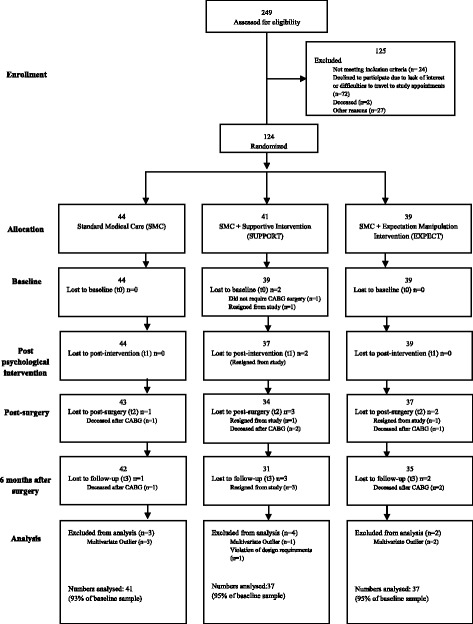
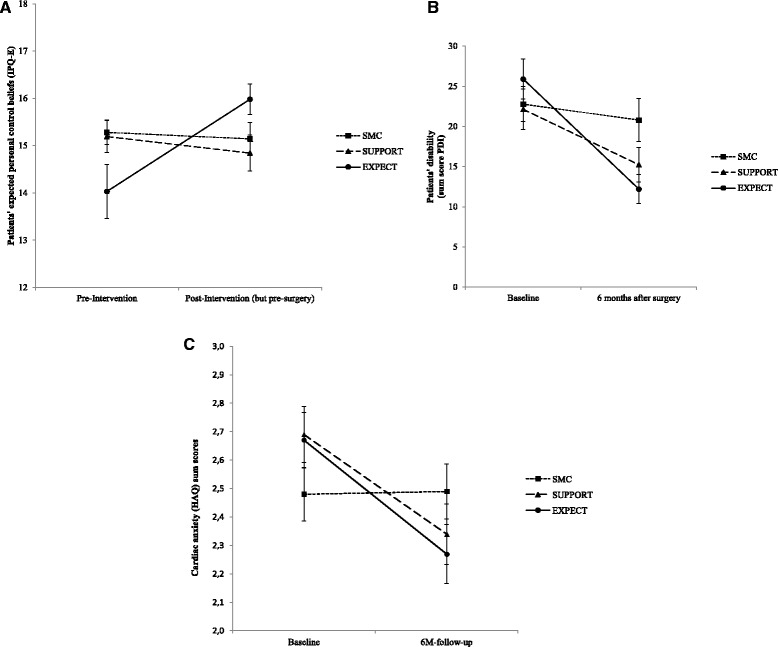
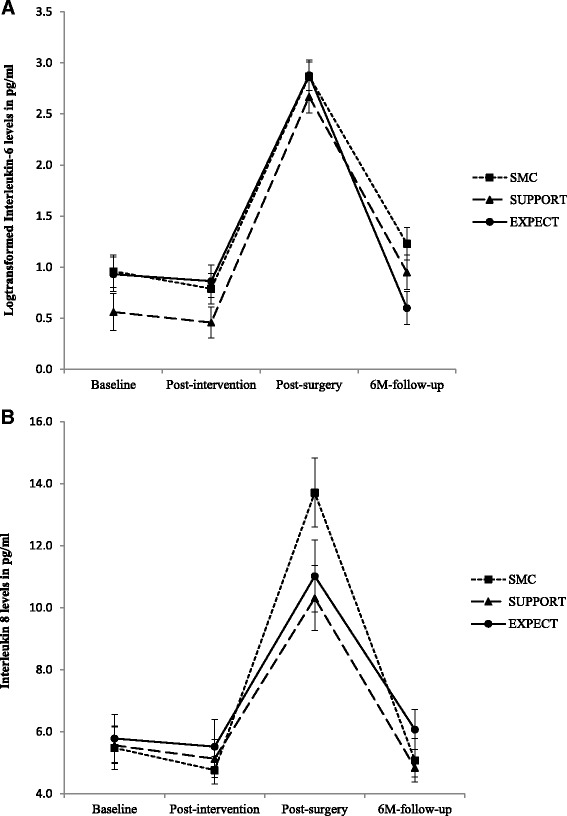
BACKGROUND: Placebo effects contribute substantially to outcome in most fields of medicine. While clinical trials typically try to control or minimize these effects, the potential of placebo mechanisms to improve outcome is rarely used. Patient expectations about treatment efficacy and outcome are major mechanisms that contribute to these placebo effects. We aimed to optimize these expectations to improve outcome in patients undergoing coronary artery bypass graft (CABG) surgery. METHODS: In a prospective three-arm randomized clinical trial with a 6 month follow-up, 124 patients scheduled for CABG surgery were randomized to either a brief psychological pre-surgery intervention to optimize outcome expectations (EXPECT); or a psychological control intervention focusing on emotional support and general advice, but not on expectations (SUPPORT); or to standard medical care (SMC). Interventions were kept brief to be feasible with a heart surgery environment; "dose" of therapy was identical for both pre-surgery interventions. Primary outcome was disability 6 months after surgery. Secondary outcomes comprised further clinical and immunological variables. RESULTS: Patients in the EXPECT group showed significantly larger improvements in disability (-12.6; -17.6 to -7.5) than the SMC group (-1.9; -6.6 to +2.7); patients in the SUPPORT group (-6.7; -11.8 to 1.7) did not differ from the SMC group. Comparing follow-up scores and controlling for baseline scores of EXPECT versus SUPPORT on the variable disability only revealed a trend in favor of the EXPECT group (P = 0.09). Specific advantages for EXPECT compared to SUPPORT were found for mental quality of life and fitness for work (hours per week). Both psychological pre-surgery interventions induced less pronounced increases in pro-inflammatory cytokine concentrations reflected by decreased interleukin-8 levels post-surgery compared to changes in SMC patients and lower interleukin-6 levels in patients of the EXPECT group at follow-up. Both pre-surgery interventions were characterized by great patient acceptability and no adverse effects were attributed to them. Considering the innovative nature of this approach, replication in larger, multicenter trials is needed. CONCLUSIONS: Optimizing patients' expectations pre-surgery helps to improve outcome 6 months after treatment. This implies that making use of placebo mechanisms has the potential to improve long-term outcome of highly invasive medical interventions. Further studies are warranted to generalize this approach to other fields of medicine. TRIAL REGISTRATION: Ethical approval for the study was obtained from the IRB of the Medical School, University of Marburg, and the trial was registered at ( NCT01407055 ) on July 25, 2011.
Overview
The claims and statistics of this paper haven’t been checked yet.
Free: it reads the open-access text and checks the first 5 claims that cite a source we can check. Create a free account to check every claim.
Integrity signals
Registry
Cites
Statistics
Figures
Verification
Claims the paper makes
The claims and statistics of this paper haven’t been checked yet.
Free: it reads the open-access text and checks the first 5 claims that cite a source we can check. Create a free account to check every claim.
Claims other papers make about this one
Each is checked against this paper’s own text: does it say what the citing paper says it does?
The check wasn’t confident either way, so it gives no verdict — never disputed.
In the citing paper
“the scientific evidence for persistent physical symptoms in chronic somatic conditions is just beginning to emerge”
From Persistent physical symptoms: definition, genesis, and management (2024) · cites this paper as [53]
Experimental — accuracy not yet measured
Self-check
Percentages, sums and reported differences re-computed from the paper’s own numbers.
The self-check needs the paper’s full text.
Citations
Cites
(1992) · PubMed · Cited by 33,716
The MOS 36-ltem Short-Form Health Survey (SF-36): I. Conceptual Framework and Item Selection
Ware, J. E., & Sherbourne, C. D. (1992) · Medical Care · doi:10.1097/00005650-199206000-00002 · Cited by 30,033 · cited 10×
“The better outcome for the EXPECT group was further confirmed by QoL data as assessed by the Short-Form Health Survey.”
MethodInfluentialInternational physical activity questionnaire: 12-country reliability and validity
CRAIG, C. L., MARSHALL, A. L., SJ??STR??M, M., BAUMAN, A. E., BOOTH, M. L., AINSWORTH, B. E., PRATT, M., EKELUND, U., YNGVE, A., SALLIS, J. F., et al. (2003) · Medicine & Science in Sports & Exercise · doi:10.1249/01.mss.0000078924.61453.fb · Cited by 21,619 · cited 1×
“physical activity with the International Physical Activity Questionnaire (IPAQ), which allows the computation of metabolic equivalents of physical exercise [21].”
Method(2017) · Cited by 16,319
European system for cardiac operative risk evaluation (EuroSCORE)
Nashef, S. A. M., Roques, F., Michel, P., Gauducheau, E., Lemeshow, S., & Salamon, R. (1999) · European Journal of Cardio-Thoracic Surgery · doi:10.1016/s1010-7940(99)00134-7 · Cited by 3,362 · cited 1×
“It included the New York Heart Association Classification, EuroSCORE II (European System for Cardiac Operative Risk Evaluation [25]), left ventricular ejection fraction (LVEF), comorbid medical conditions, body mass index, smoking status, and history of myocardial infarction.”
MethodThe revised illness perception questionnaire (IPQ-R)
Moss-Morris, R., Weinman, J., Petrie, K., Horne, R., Cameron, L., & Buick, D. (2002) · Psychology & Health · doi:10.1080/08870440290001494 · Cited by 2,949 · cited 2×
“Expected personal control beliefs were assessed by the four items from the Expected Illness Perception Questionnaire “personal control subscale”, such as “6 months after CABG surgery, there is a lot I can do myself to control my symptoms”.”
MethodSelf-citationPsychosomatic medicine in Germany: more timely than ever
Zipfel, S., Herzog, W., Kruse, J., & Henningsen, P. (2016) · Psychotherapy and Psychosomatics · doi:10.1159/000447701 · Cited by 2,323
THE MOS 36- ITEM SHORT FORM HEALTH SURVEY (SF- 36) CONCEPTUAL FRAMEWORK AND ITEM SELECTION
J.E.Jr., W., & Sherburne, C. D. (1992) · Cited by 1,586
Eurp-pean system for cardiac operative risk evaluation (Euro SCORE)
Nashef, S. A. M. (1999) · Medical Entomology and Zoology · Cited by 1,349
Components of placebo effect: randomised controlled trial in patients with irritable bowel syndrome
Kaptchuk, T. J., Kelley, J. M., Conboy, L. A., Davis, R. B., Kerr, C. E., Jacobson, E. E., Kirsch, I., Schyner, R. N., Nam, B. H., Nguyen, L. T., et al. (2008) · BMJ · doi:10.1136/bmj.39524.439618.25 · Cited by 1,196
Research works printed but not linked: 1
- Wittchen HU Schramm E Zaudig M Unland H SKID. Stukturiertes klinisches Interview für DSM-IV, Achse I, deutsche Version (Structured clinical interview for DSM-IV, German Version) 1997 Göttingen Hogrefe
Cited by
Items 201–260 of 260
Friehs, T., & Κube, T. (2022) · Psychotherapeut · doi:10.1007/s00278-022-00591-0
“…Techniken in einer Intervention zur Veränderung von Behandlungserwartungen bei Patienten vor einer Herzoperation zu einer signifikanten Verbesserung der krankheitsbedingten Beeinträchtigung nach der Operation, höherer Lebensqualität und verbesserter Arbeitsfähigkeit beitragen (Rief et al. 2017).”
BackgroundBiosimilars und der Nocebo-Effekt
Braun, J., Tsiami, S., Buehring, B., KIEFER, D. M., Andreica, I., Baraliakos, X., & Kiltz, U. (2020) · rheuma plus · doi:10.1007/s12688-020-00366-y
Bingel, U. (2020) · Elsevier eBooks · doi:10.1016/b978-0-12-805408-6.00039-7
Becker, S. M. (2022) · eDiss (Georg-August-Universität Göttingen) · doi:10.53846/goediss-9503
Other Important Clinical Pictures and Interventions in Cardiology
Albus, C., Herrmann‐Lingen, C., Köllner, V., & Titscher, G. (2022) · Springer eBooks · doi:10.1007/978-3-662-65322-7_6
Psychological Healing and Leveraging the Placebo Effect
Grossman, M. (2022) · Springer eBooks · doi:10.1007/978-3-031-06101-1_12
Le remède médecin et l'effet placebo
Boussageon, R., & Moreau, A. (2022) · Elsevier eBooks · doi:10.1016/b978-2-294-76710-4.00010-3
Grossman, M. (2022) · Springer eBooks · doi:10.1007/978-3-031-06101-1_16
Knowledge Discovery and AI Approaches for the Life Sciences
Apke, A., Weil, V., Dörpinghaus, J., & Schaaf, S. (2022) · Studies in big data · doi:10.1007/978-3-031-08411-9_7
Goals and outcomes of hospitalisation in older adults
van der Kluit, M. (2023) · University of Groningen research database (University of Groningen / Centre for Information Technology) · doi:10.33612/diss.590139323
Predictors of Quality of Life among Patients with Cardiovascular Diseases
Suryasree, K., & Kadhiravan, S. (2023) · Cognition Brain Behavior An Interdisciplinary Journal · doi:10.24193/cbb.2023.27.04
Raitez, S. R., Rocha, F. R., Jung, L., Oliveira, L. D. S., Venancio, W. F., Mittelmann, I. C., Gallas, F., Fontes, A. M., Fernandes, M. S., & Gonçalves, K. D. S. (2023) · Seven International Medical and Nursing Congress · doi:10.56238/iicongressmedicalnursing-146
Putting placebos into practice: From mechanisms to making patients better
Finniss, D. G., Howick, J., & Bąbel, P. (2023) · Oxford University Press eBooks · doi:10.1093/med/9780197645444.003.0020
Placebos meet proteomics: Predicting and monitoring placebo effects by plasma proteins
Meißner, K., von Toerne, C., Lutter, D., Hauck, S. M., & Tschoep, M. H. (2023) · Oxford University Press eBooks · doi:10.1093/med/9780197645444.003.0008
Kapfhammer, H. (2023) · Springer eBooks · doi:10.1007/978-3-662-68309-5_4
Larki, K. N., Mohammadi, T., Zakerimoghadam, M., & Sayadi, L. (2024) · The Journal of Tehran University Heart Center · doi:10.18502/jthc.v18i4.14826 · Cited by 1
Azevedo, B. O. (2023) · Digital Library of Theses and Dissertations (Universidade de São Paulo) · doi:10.11606/d.17.2023.tde-05012024-154154
Hasani, Z. S., Mazloomzadeh, S., Khaleghparast, S., Hosseini, S., & Taghiloo, H. (2024) · Preventive Care In Nursing and Midwifery Journal · doi:10.61186/pcnm.14.1.34
Eitenmüller, P., Fiesel, A. M., Köhler, S., von Blanckenburg, P., & Christiansen, H. (2024) · Journal of Affective Disorders Reports · doi:10.1016/j.jadr.2024.100861 · Cited by 3
Göçer, S., Artiran, M. K., İlkeli, E., & Sapancı, A. (2025) · The International Journal of Artificial Organs · doi:10.1177/03913988251331469
“10,11 Such interventions help set realistic expectations, mitigate anxiety, and foster a sense of control among patients, which are crucial for navigating the postoperative period.”
Überblick über psychosoziale Kerndomänen bei der Behandlung und Erforschung von Post-COVID
Salzmann, S., Rief, W., & EURONET-SOMA-Gruppe (2025) · Verhaltenstherapie · doi:10.1159/000547743
Self-citationCardiac prehabilitation: Is there a role in cardiac surgery
Giambattista, C. D., Buyck, K., & Shepherd, S. J. (2025) · Best practice & research. Clinical anaesthesiology · doi:10.1016/j.bpa.2025.08.008 · Cited by 2
Compère, V. N., Balci, S., Heinz, C., Schade‐Brittinger, C., Rastan, A. J., Salzmann-Djufri, M., Niemann, B., Boening, A., Choi, Y., Zarski, A., et al. (2025) · BMJ Open · doi:10.1136/bmjopen-2024-092482
Self-citationSchmid, G. B. (2025) · Springer eBooks · doi:10.1007/978-3-662-70831-6_2
»Man kann nicht nicht erwarten«: Erwartungsfokussierte Psychotherapie beim Post-COVID-Syndrom
Wedekind, L., Fritzsche, L., Gündel, H., & Frisch, S. (2025) · Ärztliche Psychotherapie · doi:10.21706/aep-20-4-244
Calabuig, J. A. M. (2025) · Cirugía Cardiovascular · doi:10.1016/j.circv.2025.11.001
Arends, B. C., Timmerman, L., Vernooij, L. M., Verwijmeren, L., Biesma, D. H., van Dongen, E. P. A., Noordzij, P. G., & van Oud-Alblas, H. J. B. (2022) · Figshare · doi:10.6084/m9.figshare.20218341
Arends, B. C., Timmerman, L., Vernooij, L. M., Verwijmeren, L., Biesma, D. H., van Dongen, E. P. A., Noordzij, P. G., & van Oud-Alblas, H. J. B. (2022) · Figshare · doi:10.6084/m9.figshare.20218335
Arends, B. C., Timmerman, L., Vernooij, L. M., Verwijmeren, L., Biesma, D. H., van Dongen, E. P. A., Noordzij, P. G., & van Oud-Alblas, H. J. B. (2022) · Figshare · doi:10.6084/m9.figshare.20218338
Arends, B. C., Timmerman, L., Vernooij, L. M., Verwijmeren, L., Biesma, D. H., van Dongen, E. P. A., Noordzij, P. G., & van Oud-Alblas, H. J. B. (2022) · Figshare · doi:10.6084/m9.figshare.20218329
Arends, B. C., Timmerman, L., Vernooij, L. M., Verwijmeren, L., Biesma, D. H., van Dongen, E. P. A., Noordzij, P. G., & van Oud-Alblas, H. J. B. (2022) · Figshare · doi:10.6084/m9.figshare.20218332
Wessels, J., Pawlik, R. J., Foerster, C., Erlenwein, J., Benson, S., Sondermann, W., Elsenbruch, S., & Aulenkamp, J. (2026) · BMC Anesthesiology · doi:10.1186/s12871-025-03579-w
“Participants deemed placebo effects acceptable and reported improvements attributable to placebo effects, reflecting both familiarity with and ability to detect these mechanisms in daily practice [1, 3, 32].”
InfluentialKievernagel, S., Bendel, Y., Schulz-Quach, C., & von Blanckenburg, P. (2026) · OMEGA - Journal of Death and Dying · doi:10.1177/00302228251414755
(2026) · Zeitschrift für psychosomatische Medizin und Psychotherapie · doi:10.13109/zptm.2026.72.1.22
Culié, D., Schiappa, R., Viellard, T., Poissonnet, G., Bozec, A., Delcour-Delembert, S., Ammirati, P., Eudeline, J., Villarme, A., & Chamorey, E. (2026) · Journal of the American College of Surgeons · doi:10.1097/xcs.0000000000001912
Oyediran, O. O., ODESANMIRN, A. T., Faronbi, J. O., Ayandiran, E. O., Ojo, I. O., & Oladosu, T. O. (2022) · International Journal of Nursing · doi:10.15640/ijn.v9n1a4 · Cited by 2
“Present study is in agreement with the study of Rief, et al, (2017)that behavioural and treatment outcome expectations distinguishable expectations of benefits and side effects.”
Salzmann, S., Euteneuer, F., Lishewski, P., Trenker, C., Schäfer, J., Mack, E., Sohlbach, K., Neubauer, A., Beilharz, L., Rief, W., et al. (2026) · Journal of Psychosomatic Research · doi:10.1016/j.jpsychores.2026.112640
Self-citationSchaeuffele, C., Heinrich, M., Haering, S., Kampisiou, C., Bellu, L., Burchert, S., Puetz, M., Wabiszczewicz, J., Wilhelm, M., Zagorscak, P., et al. (2026) · Trials · doi:10.1186/s13063-026-09626-2 · Cited by 1
“While in other contexts, expectation-focused interventions have been shown to improve outcomes [57], this has yet to be explored in IMIs.”
Self-citationPatients’ Experience With Enhanced Recovery After Cardiac Surgery
Anastasakis, E., Mani, K., Smith, A., Nana, C., Gukop, P. S., Charaf, A., Nowell, J. L., Kanagasabay, R. R., & Jahangiri, M. (2026) · Interdisciplinary CardioVascular and Thoracic Surgery · doi:10.1093/icvts/ivag051 · Cited by 2
“26 The ValvEx study, a multicentre RCT, showed that expectation-focused intervention may optimize outcomes after valve surgery for patients with a high need for information.”
What people want to know before surgery – The role of sex and expectation
Horn, N., Gärtner, L., Rief, W., & Salzmann, S. (2026) · Patient Education and Counseling · doi:10.1016/j.pec.2026.109599
Self-citationSever, S., Üzel, Z., Aydemir, E., & Duyğun, C. (2026) · Medical Records · doi:10.37990/medr.1792950
Abaidoo, B., Essuman, A., Essuman, V. A., Tagoe, N. N., Akpalu, J., Barnes, N. A., Owusu‐Asare, L. P., Essuman, Y. A., Beyuo, V. M., Ofori-Adjei, I.-O. D.-B., et al. (2026) · Health Science Reports · doi:10.1002/hsr2.72435
“Experiences on beliefs, perceptions, and expectations may influence the physical, social, and psychological aspects of the health of a patient [18, 19].”
Cantenys, W., Yoldas, Z., Masset, L., Romier, A., Samion, L., Imbault, M., Tran, T.-M. T., Garcia, F. M., Soltani, S., Marradi, M., et al. (2026) · medRxiv · doi:10.64898/2026.04.23.26351276
Henrich, L., Basedow, L. A., Maser, D., Schmidt, K., Bingel, U., & Rief, W. (2026) · BMJ Open · doi:10.1136/bmjopen-2024-097959
Self-citationHughes, E., Lotto, R. R., Dawson, E. A., Saber, M., Richards, E., Morris, A. I., Mayhew, D., Faraz, F., Ashrafi, R., & Jones, J. (2026) · Journal of Clinical Medicine · doi:10.3390/jcm15103821 · Cited by 1
Chen, Y. S., Zhao, N., Wang, Q., Zang, S., & Xu, Y. (2026) · Critical Public Health · doi:10.1080/09581596.2026.2658311
Salzmann, S., Salzmann-Djufri, M., & Wilhelm, M. (2026) · Kardiologie up2date · doi:10.1055/a-2755-8438
Self-citationPrehabilitation in Cardiac Surgery
Catena, D., Germinario, L., Mohsen, G., Hellner, N., Apaydin, S., & Stoppe, C. (2026) · Cardiology Clinics · doi:10.1016/j.ccl.2026.05.001
Expectations predict early pregnancy-related symptom burden
Mora, M. C. S., Schymanski, V., Albers, R., Beth, B., Garthus‐Niegel, S., Crum, A. J., & Autzen, L. (2026) · Scientific Reports · doi:10.1038/s41598-026-57961-w
“56,57 Expectation-focused interventions have demonstrated benefits for improving both expectations and clinical outcomes in pain treatment, 58 cardiac surgery, 59 the management of side effects of breast cancer treatment, 55 among others.”
Salzmann, S., Euteneuer, F., Melzig, C. A., Rief, W., & Benke, C. (2026) · Journal of Clinical Psychology · doi:10.1002/jclp.70194
“…growing body of placebo literature, which highlights that positive expectations can amplify the effects of both medical and psychological interventions by clinically harnessing placebo mechanisms to boost patients' therapeutic responses after an intervention (Akroyd et al. 2020; Rief et al. 2017).”
Self-citationBerna, C., Deforges, C., Lacroix, A., & Horsch, A. (2026) · European Journal of Psychotraumatology · doi:10.1080/20008066.2026.2686478
“However, intervening on expectations has become part of non-pharmacological pre-operative interventions, as shown with positive outcomes in cardiac surgery (Rief et al., 2017).”
Fabian, A., Laferton, J. A. C., Grund, N., Schulz, C. F., Wittenstein, O., Schmalz, C., Liethmann, K., Rades, D., & Krug, D. A. (2026) · Technical Innovations & Patient Support in Radiation Oncology · doi:10.1016/j.tipsro.2026.100422
“Such interventional trials have shown promising results in improving outcomes following cardiac or abdominal surgery [44,45].”
Self-citationKruahong, S., Olawole, W., Aryal, S., Zakaria, S., Turnbull, A. E., Himmelfarb, C. D., & Saylor, M. A. (2026) · The Journal of Cardiovascular Nursing · doi:10.1097/jcn.0000000000001369
Beyond Bayesian integration: how meaning shapes placebo effects
Wiech, K., Eippert, F., Jensen, K. B., Vase, L., & Bingel, U. (2026) · Trends in Neurosciences · doi:10.1016/j.tins.2026.07.005 · Cited by 2
Renz, K. E., Mminele, K., Härter, M. C., & Nestoriuc, Y. (2026) · Research Square · doi:10.21203/rs.3.rs-9030047/v1
Kim, M.-Y., Lee, B., Kim, S. Y., Shin, H. J., Lin, L., Kang, S., Bai, S. J., & Kim, N. Y. (2026) · Journal of Religion and Health · doi:10.1007/s10943-026-02770-8
Psychotherapie bei körperlichen Krankheiten
Rief, W., & von Blanckenburg, P. (2026) · Elsevier eBooks · doi:10.1016/b978-3-437-21352-6.00042-0
Self-citationPsychologische Prähabilitation durch die gezielte Modulation von Placebo- und Nocebo-Mechanismen
Meißner, K. (2026) · Deutsche Zeitschrift für Akupunktur · doi:10.1007/s42212-026-00841-1
Stathakios, J., Tsai, R. N., Marzoughi, M., Gardner, M., Szczygiel, L. A., Lagisetty, P., Waljee, J. F., & Bicket, M. C. (2026) · Surgery · doi:10.1016/j.surg.2026.110701
Reinke, M., Clara, S., Maehder, K., Toussaint, A. C., Löwe, B., & Engelmann, P. (2026) · Journal of Psychosomatic Research · doi:10.1016/j.jpsychores.2026.113008
Metadata
- Authors
- Rief, W., Shedden-Mora, M. C., Laferton, J. A. C., Auer, C., Petrie, K. J., Salzmann, S., Schedlowski, M., & Moosdorf, R.
- Affiliations
- Philipps University of Marburg (DE)
- University of Auckland (NZ)
- Essen University Hospital (DE)
- Corresponding author
- Rief, Winfried
- Venue
- BMC Medicine
- Published
- 2017-01-10
- Volume
- 15
- Issue
- 1
- Pages
- 4-4
- ISSN
- 1741-7015 (ISSN-L)
- PMC
- PMC5223324
- OpenAlex
- W2569106442
- Cited by
- 261
- References
- 40
- Citations by year
- 2026: 33 · 2025: 33 · 2024: 23 · 2023: 28 · 2022: 45 · 2021: 15 · 2020: 30 · 2019: 21 · 2018: 18 · 2017: 15
- FWCI
- 13.19
- Type
- journal article
- Language
- en
- Open access
- gold
- doi.org
- Licence
- cc-by
- Locations
- BMC Medicine (publishedVersion, cc-by)
- PubMed Central (publishedVersion, cc-by)
- PubMed (publishedVersion)
- DuEPublico (University of Duisburg-Essen) (submittedVersion, cc-by)
- Universitätsbibliographie, Universität Duisburg-Essen (submittedVersion, cc-by)
- Funders
- Deutsche Forschungsgemeinschaft (Ri574/21)
- Topics
- Life Sciences › Neuroscience › Cognitive Neuroscience › Pain Management and Placebo Effect
- Health Sciences › Medicine › Cardiology and Cardiovascular Medicine › Cardiac Health and Mental Health
- Health Sciences › Medicine › Surgery › Cardiac and Coronary Surgery Techniques
- Keywords
- patient expectations, placebo effect, coronary artery bypass grafting, preoperative psychological intervention, emotional support, disability, quality of life, fitness for work, interleukin-8, interleukin-6, inflammatory cytokines, inflammation, patient acceptability, long-term outcomes, psychoneuroimmunology
- MeSH terms
- Coronary Artery Bypass, Female, Humans, Male, Middle Aged, Preoperative Care, Prospective Studies, Quality of Life, Treatment Outcome
About these checks
Registry, retraction, Cites and statistics results are computed, not judged, with one exception: a printed reference that no index lists is read once by a model before it counts as a citation error. Claims are extracted by a model and kept only when their quote appears verbatim in the text; each cited source is then checked, with a model’s help, for whether it says what the claim relies on. Those verdicts can be wrong — read the claim’s quote and the cited source before relying on one.
Statistics and arithmetic are recomputed, not judged.
Confidence bands are shown only for fields calibrated on our annotated test set. None is calibrated yet, so no band is shown.
What counts as a claim ›How we measure confidence ›How we check this ›
Are you an author, or do you see a problem with this page? Request a review
Data sources
Bibliographic data: Semantic Scholar, OpenAlex, Crossref.
Contains information from the Semantic Scholar Academic Graph Datasets, made available under the ODC Attribution License (ODC-BY 1.0).
Semantic Scholar’s data is described in: Kinney, R., et al. (2023). The Semantic Scholar Open Data Platform. arXiv:2301.10140.
