

The cross-national epidemiology of social anxiety disorder: Data from the World Mental Health Survey Initiative
Open accessThe DOI matches its Crossref record; 26 of the 26 references it cites were found in a registry or an index; 3 of the 10 sources its claims cite were checked for support.
Abstract
BACKGROUND: There is evidence that social anxiety disorder (SAD) is a prevalent and disabling disorder. However, most of the available data on the epidemiology of this condition originate from high income countries in the West. The World Mental Health (WMH) Survey Initiative provides an opportunity to investigate the prevalence, course, impairment, socio-demographic correlates, comorbidity, and treatment of this condition across a range of high, middle, and low income countries in different geographic regions of the world, and to address the question of whether differences in SAD merely reflect differences in threshold for diagnosis. METHODS: Data from 28 community surveys in the WMH Survey Initiative, with 142,405 respondents, were analyzed. We assessed the 30-day, 12-month, and lifetime prevalence of SAD, age of onset, and severity of role impairment associated with SAD, across countries. In addition, we investigated socio-demographic correlates of SAD, comorbidity of SAD with other mental disorders, and treatment of SAD in the combined sample. Cross-tabulations were used to calculate prevalence, impairment, comorbidity, and treatment. Survival analysis was used to estimate age of onset, and logistic regression and survival analyses were used to examine socio-demographic correlates. RESULTS: SAD 30-day, 12-month, and lifetime prevalence estimates are 1.3, 2.4, and 4.0% across all countries. SAD prevalence rates are lowest in low/lower-middle income countries and in the African and Eastern Mediterranean regions, and highest in high income countries and in the Americas and the Western Pacific regions. Age of onset is early across the globe, and persistence is highest in upper-middle income countries, Africa, and the Eastern Mediterranean. There are some differences in domains of severe role impairment by country income level and geographic region, but there are no significant differences across different income level and geographic region in the proportion of respondents with any severe role impairment. Also, across countries SAD is associated with specific socio-demographic features (younger age, female gender, unmarried status, lower education, and lower income) and with similar patterns of comorbidity. Treatment rates for those with any impairment are lowest in low/lower-middle income countries and highest in high income countries. CONCLUSIONS: While differences in SAD prevalence across countries are apparent, we found a number of consistent patterns across the globe, including early age of onset, persistence, impairment in multiple domains, as well as characteristic socio-demographic correlates and associated psychiatric comorbidities. In addition, while there are some differences in the patterns of impairment associated with SAD across the globe, key similarities suggest that the threshold for diagnosis is similar regardless of country income levels or geographic location. Taken together, these cross-national data emphasize the international clinical and public health significance of SAD.
Overview
CoChat Summary
## TL;DR
This WMH cross-national survey study found that social anxiety disorder (SAD) is common worldwide, with 4.0% lifetime, 2.4% 12-month, and 1.3% 30-day prevalence across all countries. Despite cross-national differences in prevalence, the paper reports consistent global patterns of early onset, persistence, impairment, socio-demographic correlates, comorbidity, and treatment access.
## Key findings
- Across all countries, SAD prevalence was 4.0% lifetime, 2.4% 12-month, and 1.3% 30-day.
- Average prevalence was highest in high-income countries (5.5% lifetime, 3.1% 12-month, 1.7% 30-day) and lowest in low/lower-middle-income countries (1.6%, 1.0%, 0.5%).
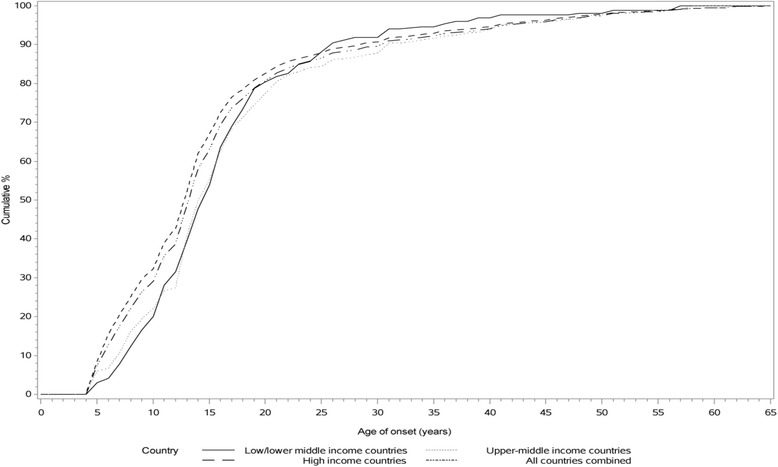
- Projected lifetime risk for SAD across the globe was 4.4%; the paper describes onset as early, with risk spanning from the mid-late adolescence to the early 40s.
- Among respondents with 12-month SAD, between one-third and one-half had severe role impairment in at least one domain; 38% of those with 12-month SAD received any treatment in the past 12 months, and treatment among those with any impairment ranged from 18.0% in low/lower-income countries to 44.2% in high-income countries.
## Methods
- Data came from 28 community surveys in the WMH Survey Initiative, totaling 142,405 respondents, spanning high-, upper-middle-, and low/lower-middle-income countries across multiple world regions.
- SAD was assessed with the WHO Composite International Diagnostic Interview (CIDI 3.0); impairment was measured with the Sheehan Disability Scale, and treatment use was assessed by self-report of contact with listed providers.
- Analyses used cross-tabulations for prevalence/impairment/comorbidity/treatment, survival analysis for age of onset and projected lifetime risk, and logistic regression and survival analyses for socio-demographic correlates; weighted clustered data were handled with Taylor series linearization.
## Limitations
- The paper states that response rates differed widely across surveys, and that some severe cases may have been less likely to participate, especially where treatment was less available.
- The surveys were not fully uniform: some were metropolitan-only or otherwise non-national, which the paper says may have affected prevalence estimates.
- The paper notes that the surveys excluded institutionalized patients and people too intoxicated to be interviewed, and that only two African countries were studied, limiting geographic comparisons.
- The text also makes evident that the SAD measure may under-detect culturally shaped presentations because the CIDI screening stem questions were limited and did not address fear of offending others; this is stated in the discussion as a measurement limitation.
Model-written summary. Check it against the paper before relying on it.
Integrity signals
Registry
Cites
Statistics
Figures
Verification
Claims the paper makes
2 Valid · 1 Not valid · 6 Not checked · 54 Own results and interpretations
At least one cited source doesn’t support this claim or points to a different paper, and none confirmed it — see the verdicts below.
In the paper
“It is relevant to emphasize that in countries where blinded clinical reappraisal interviews were undertaken, there was no evidence for systematic bias in the diagnostic threshold for SAD [18].”
§ The cross-national epidemiology of social anxiety disorder: Data from the World Mental Health Survey Initiative > Discussion
What the sources say
- Disputedcites [18] Haro JM Arbabzadeh-Bouchez S Brugha TS de Girolamo G Guyer ME Jin R Lepine JP Mazzi F Reneses B Vilagut G Sampson NA Kessler RC Concordance of the Composite International Diagnostic Interview Version 3.0 (CIDI 3.0) with standardized clinical assessments in the WHO World Mental Health surveys Int J Methods Psychiatr Res 2006 15 167 80 10.1002/mpr.196 17266013 PMC6878271 sourceExperimental — accuracy not yet measured
Our copy reports the opposite for SAD: 'Lifetime aggregate concordance' states the McNemar tests of CIDI-versus-SCID lifetime prevalence are insignificant only for panic disorder, agoraphobia, specific phobia and bipolar I-II and 'are significant for all other disorders', with CIDI estimates conservative (PPV consistently higher than SN), while 'Lifetime individual-level concordance' places social phobia in the fair accuracy band (AUC 0.6-0.7). The 'Summary' goes further, saying 'the CIDI probably underestimates lifetime prevalence because its diagnostic thresholds are too high', and attributes the apparently unbiased 12-month aggregates (any anxiety, any mood only) to two cancelling biases rather than to an unbiased threshold. The design section also contradicts the premise of the citing sentence: the WMH study deliberately modified 'the conventional blinded clinical reinterview design' by unblinding interviewers to CIDI stem-question endorsement, and disorder-specific (as opposed to aggregate) reappraisal results were obtained only in the US NCS-R sample, with ESEMeD (France, Italy, Spain) analysed at the level of any-anxiety/any-mood classes. No passage in our copy states there was no evidence of systematic threshold bias for SAD. (LLM, conf=0.72)
Checked by a reasoning model — may be wrong.
plain- Asserted: passes — The authors put it forward as true.
- Checkable: passes — It can be checked against evidence.
- Load-bearing: unclear — It is unclear whether the paper’s conclusions depend on it.
- Based: passes — The paper gives a reason why it holds.
- Disputed
The cited sources support only part of this claim — read each source’s verdict below.
In the paper
“As detailed elsewhere, good CIDI-SCID diagnostic concordance was found for SAD — area under the curve (AUC) = 0.67 — and most other DSM-IV/CIDI disorders [18].”
§ The cross-national epidemiology of social anxiety disorder: Data from the World Mental Health Survey Initiative > Methods > Measures
What the sources say
- Partly supportedcites [18] Haro JM Arbabzadeh-Bouchez S Brugha TS de Girolamo G Guyer ME Jin R Lepine JP Mazzi F Reneses B Vilagut G Sampson NA Kessler RC Concordance of the Composite International Diagnostic Interview Version 3.0 (CIDI 3.0) with standardized clinical assessments in the WHO World Mental Health surveys Int J Methods Psychiatr Res 2006 15 167 80 10.1002/mpr.196 17266013 PMC6878271 sourceExperimental — accuracy not yet measured
The Abstract and the 'Lifetime individual-level concordance' section support the second half of the sentence — 'Moderate to good individual-level CIDI-SCID concordance was found for lifetime prevalence estimates of most disorders', with individual-disorder AUC in the range 0.62–0.93. However, for social anxiety/phobia the source explicitly places it in the weakest band: concordance is 'fair (AUC in the range 0.6–0.7) for the remaining disorders (specific phobia, social phobia, PTSD, drug dependence)' (Lifetime individual-level concordance). So an AUC of 0.67 is consistent with the reported range, but the source characterises SAD concordance as fair, not good — the citing sentence overstates that part. Our copy's retrievable Table 1 rows do not print the exact social phobia AUC value (only Adult ADHD 0.861 and Any disorder 0.76 appear), so the precise figure 0.67 could not be verified verbatim. (LLM, conf=0.82)
plainstates an association- Asserted: passes — The authors put it forward as true.
- Checkable: passes — It can be checked against evidence.
- Load-bearing: unclear — It is unclear whether the paper’s conclusions depend on it.
- Based: passes — The paper gives a reason why it holds.
- Partly supported
A result the paper reports from its own data — it cites no other source for it, so there is none to check. The quote shows it is in the paper.
In the paper
“SAD recurrence is particularly highly associated with lower education (with no education having an odds ratio [OR] of 5.6, confidence interval [CI] 2.2–14.4)”
§ The cross-national epidemiology of social anxiety disorder: Data from the World Mental Health Survey Initiative > Results > Socio-demographic correlates
plainstates an association- Asserted: passes — The authors put it forward as true.
- Checkable: passes — It can be checked against evidence.
- Load-bearing: unclear — It is unclear whether the paper’s conclusions depend on it.
- Based: passes — The paper gives a reason why it holds.
A result the paper reports from its own data — it cites no other source for it, so there is none to check. The quote shows it is in the paper.
In the paper
“in both cases around 80% of such respondents meet lifetime criteria for any other mental disorder.”
§ The cross-national epidemiology of social anxiety disorder: Data from the World Mental Health Survey Initiative > Results > Comorbidity
plainstates an association- Asserted: passes — The authors put it forward as true.
- Checkable: passes — It can be checked against evidence.
- Load-bearing: unclear — It is unclear whether the paper’s conclusions depend on it.
- Based: passes — The paper gives a reason why it holds.
A result the paper reports from its own data — it cites no other source for it, so there is none to check. The quote shows it is in the paper.
In the paper
“Across all countries, the risk period for onset of SAD ranges from the mid-late adolescence to the early 40s.”
§ The cross-national epidemiology of social anxiety disorder: Data from the World Mental Health Survey Initiative > Results > Age of onset
plain- Asserted: passes — The authors put it forward as true.
- Checkable: passes — It can be checked against evidence.
- Load-bearing: unclear — It is unclear whether the paper’s conclusions depend on it.
- Based: passes — The paper gives a reason why it holds.
21 more claims
Create a free account to see all 63 claims and to verify the 7 references still open.
- Probably not a substantial claim. 6
- It may state two separate claims as one. 35
Claims other papers make about this one
Each is checked against this paper’s own text: does it say what the citing paper says it does?
The source backs part of the claim, not all of it — or backs it for a different population, condition or comparison.
In the citing paper
“SAD is estimated to have a lifetime prevalence of 5.5% in high-income countries and 3% in Western Europe (Stein et al., 2017)”
From Virtual Reality exposure therapy in the treatment of public speaking anxiety and social anxiety disorder (2024) · cites this paper as Stein et al., 2017
Experimental — accuracy not yet measuredThe source backs part of the claim, not all of it — or backs it for a different population, condition or comparison.
In the citing paper
“SAD has its most frequent onset during adolescence (i.e., before the age of 18) [4,5,6].”
From The Prevalence of Adolescent Social Fears and Social Anxiety Disorder in School Contexts (2022) · cites this paper as [4]
Experimental — accuracy not yet measuredThe source backs part of the claim, not all of it — or backs it for a different population, condition or comparison.
In the citing paper
“Both these disorders tend to reveal a chronic course that may fluctuate by evolving into other ADs or mood disorders in adulthood [21, 68, 69].”
From Acceptance and commitment therapy as a transdiagnostic approach to adolescents with different anxiety disorders: study protocol. (2025) · cites this paper as [69]
Experimental — accuracy not yet measuredThe cited source says what the claim attributes to it.
In the citing paper
“Difficulties associated with SAD usually start in adolescence (Stein et al., 2017; Knappe et al., 2015)”
From Psychological inflexibility explains social anxiety over time: a mediation analyses with a clinical adolescent sample (2024) · cites this paper as Stein et al., 2017
The check wasn’t confident either way, so it gives no verdict — never disputed.
In the citing paper
“Accumulating evidence from preclinical studies suggests that activation of α7-nAChR signalling results in suppression or prevention of anxiety. 20–22”
From Efficacy and safety of an alpha 7-nicotinic acetylcholine receptor agonist, VQW-765, in subjects with performance anxiety: randomised, double-blind, placebo-controlled trial (2025) · cites this paper as [20]
Experimental — accuracy not yet measured
1 more claim about this paper
Create a free account to see every claim other papers make about this one.
Citations
Cites
Kessler, R. C., & Üstün, T. B. (2004) · International Journal of Methods in Psychiatric Research · doi:10.1002/mpr.168 · Cited by 4,771 · cited 1×
“0) [15], a fully structured lay-administered interview.”
Self-citationSheehan, D. V., Harnett-Sheehan, K., & Raj, B. A. (1996) · International Clinical Psychopharmacology · doi:10.1097/00004850-199606003-00015 · Cited by 1,440 · cited 6×
“Among those with 12-month SAD, the percentage reporting treatment of any kind (i.e., specialty mental health, general medical care, health care, human services, complementary and alternative medicine, non-health care) in the past Lifetime comorbidityf Lifetime 47.0 1.0 59.8 1.0 19.3 0.8 26.7 0.8 78.8 0.8 12-month 49.8…”
MethodInfluentialIntroduction to Variance Estimation.
King, B. F., & Wolter, K. M. (1987) · Journal of the American Statistical Association · doi:10.2307/2289497 · Cited by 1,377
Haro, J. M., Arbabzadeh-Bouchez, S., Brugha, T. S., De Girolamo, G., Guyer, M. E., Jin, R., Lepine, J. P., Mazzi, F., Reneses, B., Vilagut, G., et al. (2006) · International Journal of Methods in Psychiatric Research · doi:10.1002/mpr.196 · Cited by 1,082 · cited 2×
“It is relevant to emphasize that in countries where blinded clinical reappraisal interviews were undertaken, there was no evidence for systematic bias in the diagnostic threshold for SAD [18].”
BackgroundSelf-citationAgoraphobia, simple phobia, and social phobia in the National Comorbidity Survey
Magee, W. J. (1996) · Archives of General Psychiatry · doi:10.1001/archpsyc.1996.01830020077009 · Cited by 996 · cited 1×
“While it has previously been demonstrated that SAD more likely follows other anxiety disorders, and precedes depression [1], here we provide novel data on the comorbidity of SAD with impulse control disorders; this is valuable given that a link between social anxiety and aggression has been posited in the animal and c…”
BackgroundSelf-citationThe WHO World Mental Health Surveys: Global Perspectives on the Epidemiology of Mental Disorders
Kessler, R. C., & Üstün, T. B. (2008) · Cited by 872
Self-citationSocial fears and social phobia in the USA: results from the National Comorbidity survey replication
Ruscio, A. M., Brown, T. A., Chiu, W. T., Sareen, J., Stein, M. B., & Kessler, R. C. (2008) · Psychological Medicine · doi:10.1017/s0033291707001699 · Cited by 835
Self-citationIntroduction to Variance Estimation
Hidiroglou, M. A. (1986) · Technometrics · doi:10.1080/00401706.1986.10488138 · Cited by 820
Mini-SPIN: A brief screening assessment for generalized social anxiety disorder
Connor, K. M., Kobak, K. A., Churchill, L. E., Katzelnick, D., & Davidson, J. R. T. (2001) · Depression and Anxiety · doi:10.1002/da.1055 · Cited by 537 · cited 1×
“Research in clinical settings has also indicated that SAD is a prevalent and disabling condition in this context [5, 6].”
BackgroundEpidemiology of Anxiety Disorders
Kessler, R. C., Ruscio, A. M., Shear, K., & Wittchen, H.-U. (2009) · Current Topics in Behavioral Neurosciences · doi:10.1007/7854_2009_9 · Cited by 496 · cited 1×
“In each of these surveys, SAD age of onset was early, comorbidity with other mental disorders was high, and subsequent impairment was notable [3, 4].”
BackgroundSelf-citation
Research works printed but not linked: 3
- Pennell B-E Mneimneh Z Bowers A Chardoul S Welles J Viana M Dinkelmann K Gebler N Florescu S He Y Huang Y Tomov T Vilagut G Kessler R Ustun T Implementation of the World Mental Health Surveys Initiative The WHO World Mental Health Surveys: global perspectives on the epidemiology of mental disorders 2008 New York Cambridge University Press 33 57
- First MB Spitzer RL Gibbon M Williams BJ Structured Clinical Interview for Axis I DSM-IV Disorders 1994 New York Biometrics Research, New York State Psychiatric Institute
- Institute RT SUDAAN: Professional Software for Survey Data Analysis 2002 Research Triangle Park Research Triangle Institute
Cited by
Items 401–500 of 605
Duddeck, L., Schulz, A., Renneberg, B., Berger, T., & Boettcher, J. (2025) · Cognitive Behaviour Therapy · doi:10.1080/16506073.2025.2521126 · Cited by 1
Tsekova, V., Gharehgazlou, A., Koerner, N., & Antony, M. M. (2025) · Anxiety Stress & Coping · doi:10.1080/10615806.2025.2539985 · Cited by 1
“Individuals with SAD experience impairments in various life domains (Stein et al., 2017).”
Cultural shaping of social anxiety
Norasakkunkit, V., & Asnaani, A. (2025) · Elsevier eBooks · doi:10.1016/b978-0-443-14146-1.00001-2 · Cited by 1
Yang, Y., Zhao, J., Zhang, H., Kou, H., Zhou, Y., Tian, J., & Guo, C. (2025) · Journal of Affective Disorders · doi:10.1016/j.jad.2025.120402 · Cited by 2
SOCIAL ANXIETY DISORDER : DARI DEFINISI HINGGA PROGNOSIS – LITERATUR REVIEW
Praditna, L. M. A., Maulidiva, S. Z., Setyadi, M. R. W., & Elizar, L. J. A. (2025) · Jurnal Kesehatan Tambusai · doi:10.31004/jkt.v6i3.50044 · Cited by 1
“Secara global, studi menunjukkan bahwa negara berpendapatan tinggi memiliki prevalensi seumur hidup sekitar 5,5%, negara berpendapatan menengah atas sebesar 2,9%, dan negara berpendapatan rendah hingga menengah bawah sekitar 1,6% (Stein et al., 2017).”
Fear of Negative Evaluation and Social Anxiety in Autism: A Case for Multi-method Assessment
Kalinyak, A., Simmons, G. L., Corbett, B. A., Lerner, M. D., & White, S. W. (2025) · Journal of Autism and Developmental Disorders · doi:10.1007/s10803-025-07119-w · Cited by 1
Bravo, M. A., Binette, M.-A., Lepage, M., Abdel‐Baki, A., Villeneuve, M., & Lecomte, T. (2025) · Journal of Affective Disorders · doi:10.1016/j.jad.2025.120898 · Cited by 1
Bardezard, Y. A., Dolatshahi, B., Porsharifi, H., & Barahmand, U. (2026) · Journal of Education and Health Promotion · doi:10.4103/jehp.jehp_1307_24 · Cited by 2
Rizkiyani, F., Srisayekti, W., Fitriana, E., Kumalasari, A. D., & King, A. L. S. (2026) · Discover Psychology · doi:10.1007/s44202-026-00587-w · Cited by 2
Bernal‐Vega, S., Vázquez-Manjarrez, N., Villegas-Romero, M., Ortiz-Lopez, R., de la Barquera, J. A. O.-S., Pérez‐Maya, A. A., & Camacho‐Morales, A. (2026) · Frontiers in Cellular Neuroscience · doi:10.3389/fncel.2026.1777048 · Cited by 1
“Accordingly, anxiety substantially aects socioeconomic stability, driven by reduced productivity, increased healthcare use, and high rates of comorbidity with depression and other chronic medical disorders (Kalin, 2020; Stein et al., 2017).”
Norén, M., Lindqvist, K., Lilliengren, P., & Mechler, J. (2026) · BMC Psychology · doi:10.1186/s40359-026-04306-x · Cited by 1
“Prevalence estimates of SAD vary considerably across regions and income levels, ranging from 5.5% in high-income countries to 2.9% in middle-income and 1.6% in the lowest-income countries, reflecting a global lifetime prevalence of approximately 4.0% [2].”
InfluentialThe Role of Social Skills Training in the Treatment of Social Anxiety: A Systematic Review
Heller, I., Bolliger, C., Holmer, P., Schladerer, S. P., & Michel, G. (2026) · SAGE Open · doi:10.1177/21582440251409451 · Cited by 1
“As the prevalence of social anxiety is high, there is a need for complementary and low-threshold interventions (Stein et al., 2017).”
InfluentialModelling social fear in mice: advancements in social fear conditioning and social defeat paradigms
Xu, H. (2026) · Neuroscience · doi:10.1016/j.neuroscience.2026.03.026 · Cited by 1
de la Cruz, L. F., Isomura, K., Kuja‐Halkola, R., Pol-Fuster, J., Chang, Z., D'Onofrio, B. M., Larsson, H., Lichtenstein, P., Sidorchuk, A., & Mataix‐Cols, D. (2026) · Epidemiology and Psychiatric Sciences · doi:10.1017/s2045796026100535 · Cited by 1
“SAD is one of the most common anxiety disorders, with a lifetime prevalence of around 12% (Ruscio et al. , 2008), and is associated with significant impairment and societal costs (Patel et al. , 2002; Stein et al. , 2017; Vilaplana-Pérez et al. , 2021).”
López-Dueñas, D., Vargas-Nieto, J. C., & Ariza-Jaimes, N. (2026) · Journal of Behavioral and Cognitive Therapy · doi:10.1016/j.jbct.2026.100596 · Cited by 1
Lear, K. M., Chwyl, C., & Luoma, J. B. (2026) · Mindfulness · doi:10.1007/s12671-026-02804-y · Cited by 1
Xiong, Y., Xiao, N., Ding, X., Zhang, J., & Luo, H.-S. (2026) · Frontiers in Psychology · doi:10.3389/fpsyg.2026.1787151 · Cited by 1
“Epidemiological evidence indicates that the lifetime prevalence of SAD ranges from 4.0 to 18.7% (Stein et al., 2017; Van Ameringen et al., 2003).”
InfluentialAdamis, A. M., Gardner, J. S., & Olatunji, B. O. (2026) · Cognitive Therapy and Research · doi:10.1007/s10608-026-10746-x · Cited by 1
“…anxiety group was younger and more likely to select “Other” for their gender identity than the low social anxiety group, as is reflective of typical demographic characteristics of patients with SAD (i.e., younger age, sexual/gender identity minorities; Mahon et al., 2022; D. J. Stein et al., 2017).”
Social anxiety disorder in Canada: sociodemographic and psychosocial correlates
Chau, T.-L. N., Oliver, S., & Fuller‐Thomson, E. (2026) · Psychiatry Research · doi:10.1016/j.psychres.2026.117252 · Cited by 1
Gegieckaitė, G., Zamalijeva, O., Petraškaitė, K., Nagevice, E., Lindner, P., Carlbring, P., Daele, T. V., Andersson, G., & Eimontas, J. (2026) · JMIR Research Protocols · doi:10.2196/89612 · Cited by 1
“Anxiety disorders are one of the most common mental health problems, with social anxiety disorder (SAD) being found to affect 4% ‐ 12.5% of the general population in their lifetime [1, 2].”
Influentialvan Duinkerken, A., Bosmans, M. W. G., Rahmon, I. J., Marra, E., Baliatsas, C., & Dückers, M. (2026) · European Journal of Psychotraumatology · doi:10.1080/20008066.2026.2700829 · Cited by 1
“However, prior international evidence using WHO Mental Health Survey data (Dückers & Brewin, 2016; Ruscio et al., 2017; Stein et al., 2017) and Global Burden of Disease data (Choi et al., 2024; Javaid et al., 2023) suggests substantial mental health burden across settings, with higher estimates…”
Self Concept and Social Anxiety Correlation in Adolescents
Rahmah, A. A., & Nastiti, D. (2026) · Psikologia Jurnal Psikologi · doi:10.21070/psikologia.v10i2.2142 · Cited by 1
Dobos, B. (2019) · Mentálhigiéné és Pszichoszomatika · doi:10.1556/0406.20.2019.008 · Cited by 1
Ramos‐García, V., Toledo‐Chávarri, A., Trujillo‐Martín, M. M., del Pino‐Sedeño, T., Castro, W. P., & Pérez, L. P. (2020) · New Trends in Qualitative Research · doi:10.36367/ntqr.3.2020.331-346 · Cited by 1
Vilaplana-Pérez, A., Pérez-Vigil, A., Sidorchuk, A., Brander, G., Isomura, K., Hesselmark, E., Larsson, H., Mataix‐Cols, D., & de la Cruz, L. F. (2019) · European Neuropsychopharmacology · doi:10.1016/j.euroneuro.2019.09.240 · Cited by 1
Psychoanalytic Perspectives of Social Phobia: Based on Dazai Osamu’s Novel ‘Human Lost’
Choi, H. Y., & Ha, J. H. (2021) · Psychoanalysis · doi:10.18529/psychoanal.2021.32.2.41 · Cited by 1
Empathic Communication Among Women with High or Low Social Anxiety
Byrne, S. E., & Rapee, R. M. (2021) · Cognitive Therapy and Research · doi:10.1007/s10608-021-10248-y · Cited by 1
Social anxiety and eating disorders in medical students
Афанасьев, С. О., Ширяев, О. Ю., & Махортова, И. С. (2021) · Neurology Bulletin · doi:10.17816/nb71580 · Cited by 1
PREVALENCE AND SOCIODEMOGRAPHIC CORRELATES OF SOCIAL ANXIETY DISORDER AMONG MEDICAL UNDERGRADUATES
Guganeshwari, I., Ravishankar, M., & Anand, V. (2022) · GLOBAL JOURNAL FOR RESEARCH ANALYSIS · doi:10.36106/gjra/5000252 · Cited by 1
Examining the Latent Dimensions of Social Anxiety Disorder
Mordeno, I. G., Bigcas, J. D., & Mordeno, E. R. (2023) · Psychological Reports · doi:10.1177/00332941231156815 · Cited by 1
“It is a disabling mental disorder with an average worldwide lifetime prevalence of 4% (Stein et al., 2017) and was found to be a major problem among college students (Hakami et al., 2017; Purdon et al., 2001; Stewart & Mandrusiak, 2007) as well as emerging adults (Brockveld et al., 2014; Mercer et…”
Turan, Ç., Önen, S., Bakırcı, G., YERLİ, M. S., & Ünal, S. (2023) · Genel Tıp Dergisi · doi:10.54005/geneltip.1314327 · Cited by 1
Ghadim, M. B. A., Amir, M., Neisy, A., & Zahra, K. (2023) · Journal of Advanced Biomedical Sciences · doi:10.18502/jabs.v13i4.13898 · Cited by 1
Goikolea-Vives, A., Fernandes, C., Thomas, M. S. C., Thornton, C., & Stolp, H. B. (2024) · Developmental Neuroscience · doi:10.1159/000536641 · Cited by 1
“By contrast, depression and anxiety disorder has a higher prevalence in females (1:2) [7].”
Neuropsychological correlates of social anxiety
Zovetti, N., Girelli, F., Rossetti, M. G., Perlini, C., & Bellani, M. (2024) · Minerva Psychiatry · doi:10.23736/s2724-6612.22.02393-4 · Cited by 1
Analisis Klaster Kriteria Gangguan Kecemasan Sosial Berdasarkan Fase Perawatannya
Wiwaha, P. Y., Toba, H., & Karnalim, O. (2024) · Jurnal Teknik Informatika dan Sistem Informasi · doi:10.28932/jutisi.v10i1.8400 · Cited by 1
“Berdasarkan data yang dimuat oleh National Comorbidity Survey (NCS) dan National Comorbidity Survey Replication (NCS-R), SAD merupakan jenis gangguan mental yang umum terjadi pada 16% dan 12,1% dari total populasi survey [4].”
BackgroundTowards an Understanding of the Cognitive Mechanisms Involved in Threat Processing and Perception
Zsido, A. N., Coelho, C. M., March, D. S., Hout, M. C., & Polák, J. (2024) · Frontiers research topics · doi:10.3389/978-2-8325-4998-8 · Cited by 1
Sosyal Kaygı Bozukluğunun Bilişsel Davranışçı Terapisi: Kapsamlı Bir Gözden Geçirme
Akkuş, K. (2024) · Mediterranean Journal of Humanities · doi:10.13114/mjh.1476738 · Cited by 2
Trend of anxiety disorders in China from 1990 to 2019: An age-period-cohort analysis study
He, Y., Cai, Y., Chen, Y., Tang, Z., Ma, L., & Zhou, Y. (2025) · Public Health · doi:10.1016/j.puhe.2025.01.024 · Cited by 1
Self-citationEmotional Schema Therapy for Social Phobia in Medical Students
Thanoon, A. H., Adnan, M., Jasim, M. A., Adhab, A. H., & Abdulkareem, Z. T. (2022) · International journal of body, mind and culture · doi:10.22122/ijbmc.v9i3.407 · Cited by 1
Sunderland, M., Afzali, M. H., Forbes, M. K., Stapinski, L. A., & Baillie, A. (2019) · Addiction Research & Theory · doi:10.1080/16066359.2019.1691537 · Cited by 1
Bas, J. M. (2020) · Leiden Repository (Leiden University) · Cited by 2
Kajitani, K., Tsuchimoto, R., Omodaka, Y., Matsushita, T., Fukumori, H., Sato, T., & Nagano, J. (2021) · Research Square · doi:10.21203/rs.3.rs-282705/v1 · Cited by 1
Karki, P., Katwal, G. B. J., Chandra, A., & Chandra, A. (2019) · Research Square · doi:10.21203/rs.2.16888/v1 · Cited by 1
Mnemonic Discrimination and Social Anxiety: The Role of State Anxiety
Ponzini, G. T. (2020) · The Research Repository @ WVU (West Virginia University) · doi:10.33915/etd.7659 · Cited by 1
A perfekcionizmus személyiségjellemzőkkel való összefüggéseinek vizsgálata fiatal felnőttek körében
Dobos, B. (2022) · SZTE Repository of Dissertations (University of Szeged) · doi:10.14232/phd.11187 · Cited by 2
Xing, W., Liu, C., Zhang, K., Peng, Y., Li, X., Li, K., Wei, X., Wu, S., Ren, L., & Liu, X. (2024) · SSRN Electronic Journal · doi:10.21203/rs.3.rs-3933883/v1 · Cited by 3
Okamura, L., Ueji, Y., Izumi, T., Fujikane, D., Ukisu, T., Murakami, H., Shioiri, T., & Ohi, K. (2026) · Dialogues in clinical neuroscience · doi:10.1080/19585969.2026.2661986
“…50% of individuals experience onset by age 13, and approximately 90% experience onset by age 23 (Hofmann et al. 2004; Kessler et al. 2005; D. J. Stein et al. 2017; M. B. Stein 2006; wong and Rapee 2015). early onset, particularly before adolescence, is often associated with traits such as…”
Social anxiety disorder : Functional neuroimaging and social cognitive features
Doruyter, A. (2018) · SUNScholar (Stellenbosch University)
Thew, G. R. (2018) · Oxford University Research Archive (ORA) (University of Oxford) · doi:10.5287/ora-8jnq80xbr
The social and anticipatory geographies of social anxiety
Boyle, L. E. (2019) · Enlighten: Theses (The University of Glasgow) · doi:10.5525/gla.thesis.74345 · Cited by 8
Cultural Considerations in Behavioral Health Service Delivery for Social Anxiety
Gonzalez, F. R. (2020) · Springer eBooks · doi:10.1007/978-3-030-32229-8_19
A Theoretical Framework for Understanding Social Anxiety in the Context of Career Development
Yu, C. M. (2019) · The Journal of Macrodynamic Analysis (Memorial University of Newfoundland) · doi:10.82396/cjcd.v18i1.3142 · Cited by 2
Anxiety Disorders and OCD in Men
Goodman, R., Löchner, C., & Stein, D. J. (2021) · Cambridge University Press eBooks · doi:10.1017/9781108646765.010
Self-citationYoshizawa, K., Ishizaka, I., Yasuda, N., Fukuda, M., Yukimoto, Y., Hata, W., Higashikawa, M., & Hara, Y. (2021) · The Japan Journal of Logopedics and Phoniatrics · doi:10.5112/jjlp.62.24
Graham, A. A., Terrill, D. R., Boyd, S. I., Benjamin, I., Ward, M., & Zimmerman, M. (2021) · American Journal of Undergraduate Research · doi:10.33697/ajur.2020.033
Афанасьев, С. О., Shiryaev, O. Y., & Махортова, И. С. (2021) · Collection of scientific papers · doi:10.18411/scienceconf-03-2021-12
The Magnitude of the Problem of Psychiatric Illness Presenting in the Emergency Department
Larkin, G. L., & Tahir, A. (2021) · Springer eBooks · doi:10.1007/978-3-030-52520-0_1
Examining the Relationship between Social Gaming, Social Anxiety and Social Functioning
Doyle, A. (2020) · NORMA
An Overview of Epidemiology in Clinical Psychology
Sommer, J. L., Grocott, B. B., & El-Gabalawy, R. M. (2021) · Elsevier eBooks · doi:10.1016/b978-0-12-818697-8.00093-5
The Role of Social Phobia Disorder among Cigarette Addicts in Abstaining from Cessation Programs
Aldaim, A. M. K. A., & Noor, S. S. B. M. (2021) · Turkish Online Journal of Qualitative Inquiry
Social Anxiety and Theory of Mind: A Comparison of Self-Report and Objective MeasuresPreprint
Paricos, A. (2019) · Thesis Commons (OSF Preprints) · doi:10.31237/osf.io/w6hrf
Wilson, G. A., Krause, K. L., & Antony, M. M. (2022) · Elsevier eBooks · doi:10.1016/b978-0-323-91497-0.00189-2
du Toit, S. A., Schweizer, S., & Wong, Q. J. J. (2023) · PsyArXiv (OSF Preprints) · doi:10.31234/osf.io/yp6qd
Social Phobia Prevalence among Academicians in Cumhuriyet University
Özdemır, L., KOŞAROĞLU, N. E., ALYILMAZ, A. İ., BAYAZİT, T., Gündoğdu, G., Kılıç, E., & Sümer, H. (2023) · Cumhuriyet Tıp Dergisi/Cumhuriyet Üniversitesi Tıp Fakültesi dergisi · doi:10.7197/cmj.1237614
Parents Matter: Accepting Parents Have Less Anxious Gender Expansive Children
Xiao, S. X., Hoffer, A. L., Benoit, R., Scrofani, S., & Martin, C. L. (2023) · Sex Roles · doi:10.1007/s11199-023-01387-5
“The present study is focused on children’s social anxiety, a central aspect of social well-being and, at the clinical level, one of the most prevalent mental health issues in children (e.g., Stein et al., 2017 ).”
Treatment of Anxiety Disorders in Children and Adolescents
Picou, P., Adenuga, P., Dupré, A. S., & Davis, T. E. (2023) · Autism and child psychopathology series · doi:10.1007/978-3-031-24926-6_49
Аврамчук, О. С. (2024) · Перспективи та інновації науки · doi:10.52058/2786-4952-2024-2(36)-587-597
Аврамчук, О. С. (2023) · Lviv University Herald Series Psychological sciences · doi:10.30970/ps.2023.18.1
Anxiety Disorders and Post-traumatic Stress Disorder
Baker, A. W., Dekel, S., Jagodnik, K. M., Pace-Schott, E. F., Post, L. M., & Orr, S. P. (2024) · Elsevier eBooks · doi:10.1016/b978-0-443-11844-9.00031-x
Topluluk Önünde Konuşma Kaygısı Olan Bir Ergenle Çalışma: Akılcı Duygusal Davranışçı Müdahale
Turan, S., & Sevim, S. (2024) · Okul Psikolojik Danışmanlığı Dergisi · doi:10.58433/opdd.1472357
Brief Treatments for Social Anxiety Disorder
O’Shannessy, D. M. (2024) · CBT: science into practice · doi:10.1007/978-3-031-60746-2_10
Urdu Adaptation and Validation of Social Interaction Anxiety Scale: A Confirmatory Factor Analysis.
Ilyas, U., & Dawood, S. (2024) · PubMed Central
iSukoon: An App to Manage Social Anxiety in Designers
Arackal, M. N., Devadula, S., & Kumar, T. (2024) · Lecture notes in networks and systems · doi:10.1007/978-3-031-67431-0_31
Akwetey, G., & De-Veer, T. P. (2024) · Ilomata International Journal of Social Science · doi:10.61194/ijss.v5i4.1355
Vasiliadis, H., Roberge, P., Spagnolo, J., Lamoureux‐Lamarche, C., Chapdelaine, A., Brodeur, M., Grenier, J., Mahoney, A., Koszycki, D., Chomienne, M., et al. (2024) · BMC Psychiatry · doi:10.1186/s12888-024-06082-7 · Cited by 1
“Global estimates report lifetime prevalence reaching up to 12.1% in adults [2–5].”
BackgroundInfluentialKaiya, H., Hasegawa, A., Komatsu, C., Noda, S., Minami, F., Goldin, P. R., & Hasegawa, Y. (2024) · F1000Research · doi:10.12688/f1000research.152730.1
Social anxiety and social media
Biglbauer, S. (2024) · doi:10.17234/diss.2024.190858 · Cited by 1
Neurocognitive and Biological Bases of Social Anxiety Disorder
Tei, S., & Fujino, J. (2024) · Springer eBooks · doi:10.1007/978-3-031-32035-4_92-1
周, 湘. (2025) · Advances in Psychology · doi:10.12677/ap.2025.153164
Febrianthi, A. N. A., & Yudiarso, A. (2025) · Journal Psikogenesis · doi:10.24854/jps.v13i1.4615
Meyerbröker, K., & Emmelkamp, P. M. G. (2025) · CBT: science into practice · doi:10.1007/978-3-031-91439-3_11
Dodig, M., & Erceg, I. (2025) · Annual of Social Work · doi:10.3935/ljsr.v31i3.538
Designing Digital Spaces for Digital Art
Grossi, L., & Guerrini, L. (2025) · DIID · doi:10.30682/diid8525g
Dong, A. (2025) · Research Review · doi:10.52845/cs/2025-5-4-13
Iêgo, S., & Ribeiro, M. (2025) · Estudos de Psicologia (Campinas) · doi:10.1590/1982-0275202542e220114
Neurocognitive and Biological Bases of Social Anxiety Disorder
Tei, S., & Fujino, J. (2025) · Springer eBooks · doi:10.1007/978-3-031-73368-0_92
Lim, Y. (2025) · ALPHA PSYCHIATRY · doi:10.31083/ap46107
“Social anxiety disorder is one of the most common types of anxiety disorders, with a lifetime prevalence rate of 4.0– 12.1% [2–4].”
InfluentialLee, H., Hong, B., Lee, E., Park, J. Y., Jung, J., Kim, W. J., & Shin, J. (2025) · BJPsych Open · doi:10.1192/bjo.2025.10803
Youth social anxiety disorder treatment
Chong, L. J., & Silverman, W. K. (2025) · Elsevier eBooks · doi:10.1016/b978-0-443-14146-1.00015-2
Emotion-/self-regulation models of social anxiety
Larrazabal, M., & Teachman, B. A. (2025) · Elsevier eBooks · doi:10.1016/b978-0-443-14146-1.00017-6
Carr, B., Dang, A. B., Kiropoulos, L. A., & Krug, I. (2025) · European Eating Disorders Review · doi:10.1002/erv.70036
Social Anxiety Disorder and the Myths That Perpetuate IT
Goodman, F. R., Silva, G. M., & Birg, J. A. (2025) · Wiley eBooks · doi:10.1002/9781118410868.wbehibs1098
Matsumoto, K., Hamatani, S., Mizuno, Y., Maeno, A., Kasai, M., Watanabe, K., Kamashita, R., Sunami, N., Ikeda, M., Nagata, S., et al. (2025) · Psychiatry and Clinical Neurosciences Reports · doi:10.1002/pcn5.70236 · Cited by 1
Sette, S., Coplan, R. J., Ooi, L. L., Zuffianò, A., Xiao, B., Wong, Q. J. J., Rapee, R. M., Oh, W., Liu, J., Kim, Y., et al. (2025) · Journal of Anxiety Disorders · doi:10.1016/j.janxdis.2025.103092
Wan, Q., & Wen, S. (2025) · Research Square · doi:10.21203/rs.3.rs-8044731/v1
Roelofs, E. F., Groenewold, N. A., Farkas, K., Zhu, A. H., Gao, S., Borgers, T., Dannlowski, U., Flinkenflügel, K., Grotegerd, D., Hahn, T., et al. (2025) · Biological Psychiatry Cognitive Neuroscience and Neuroimaging · doi:10.1016/j.bpsc.2025.11.007
Self-citationNoda, S., Shirotsuki, K., Kodama, Y., Nakao, M., & Kaiya, H. (2025) · Psychiatry and Clinical Neurosciences Reports · doi:10.1002/pcn5.70264
“1 SAD has a relatively high prevalence 2 and is frequently comorbid with major depressive disorder (MDD).”
Metadata
- Authors
- Collaborators, W. W. M. H. S., Stein, D. J., Lim, C. C. W., Roest, A. M., de Jonge, P., Aguilar-Gaxiola, S., Al-Hamzawi, A., Alonso, J., Benjet, C., Bromet, E. J., Bruffaerts, R., de Girolamo, G., Florescu, S., Gureje, O., Haro, J. M., Harris, M. G., He, Y., Hinkov, H., Horiguchi, I., Hu, C., Karam, A., Karam, E. G., Lee, S., Lepine, J.-P., Navarro-Mateu, F., Pennell, B.-E., Piazza, M., Posada-Villa, J., ten Have, M., Torres, Y., Viana, M. C., Wojtyniak, B., Xavier, M., Kessler, R. C., & Scott, K. M.
- Affiliations
- University of Cape Town (ZA)
- University Medical Center Groningen (NL)
- University of Al-Qadisiyah (IQ)
- Universitat Pompeu Fabra (ES)
- Instituto Nacional de Psiquiatría Ramón de la Fuente Muñiz (MX)
- Stony Brook University (US)
- Centro San Giovanni di Dio Fatebenefratelli (IT)
- University College Hospital, Ibadan (NG)
- The University of Queensland (AU)
- Shanghai Mental Health Center (CN)
- National Center of Public Health and Analyses (BG)
- Shenzhen KangNing Hospital (CN)
- University of Balamand (LB)
- Inserm (FR)
- Universidad Peruana Cayetano Heredia (PE)
- Universidad CES (CO)
- Narodowy Instytut Zdrowia Publicznego PZH – Państwowy Instytut Badawczy (PL)
- Harvard University (US)
- University of Otago (NZ)
- Corresponding author
- Stein, Dan J.
- ORCID
- Venue
- BMC Medicine
- Published
- 2017-07-31
- Volume
- 15
- Issue
- 1
- Pages
- 143-143
- ISSN
- 1741-7015 (ISSN-L)
- PMC
- PMC5535284
- OpenAlex
- W2741980530
- Cited by
- 520
- References
- 26
- Citations by year
- 2026: 59 · 2025: 86 · 2024: 91 · 2023: 74 · 2022: 51 · 2021: 74 · 2020: 39 · 2019: 33 · 2018: 11 · 2017: 1
- FWCI
- 29.91
- Type
- journal article
- Language
- en
- Open access
- gold
- doi.org
- Licence
- cc-by
- creativecommons.org/licenses/by/4.0/ (tdm)
- creativecommons.org/licenses/by/4.0/ (vor)
- Locations
- BMC Medicine (publishedVersion, cc-by)
- Europe PMC (PubMed Central) (publishedVersion, cc-by)
- PubMed Central (publishedVersion, cc-by)
- PubMed (publishedVersion)
- RECERCAT (Consorci de Serveis Universitaris de Catalunya) (publishedVersion, other-oa)
- Digital Access to Scholarship at Harvard (DASH) (Harvard University) (submittedVersion, cc-by)
- Dipòsit Digital de la Universitat de Barcelona (Universitat de Barcelona) (submittedVersion, cc-by)
- DOAJ (DOAJ: Directory of Open Access Journals) (submittedVersion, cc-by-sa)
- Open University of Cape Town (University of Cape Town) (submittedVersion, cc-by)
- Open University of Cape Town (University of Cape Town) (submittedVersion)
- University of Groningen research database (University of Groningen / Centre for Information Technology) (submittedVersion, cc-by)
- Repositori digital de la UPF (Universitat Pompeu Fabra) (submittedVersion, cc-by)
- Portuguese National Funding Agency for Science, Research and Technology (RCAAP Project by FCT) (submittedVersion, other-oa)
- Greater South Information System
- Funders
- National Institute of Mental Health (R01 MH070884)
- John D. and Catherine T. MacArthur Foundation
- Pfizer Foundation
- U.S. Public Health Service (R13-MH066849, R01-MH069864, R01 DA016558)
- Fogarty International Center (FIRCA R03-TW006481)
- Pan American Health Organization
- Eli Lilly and Company
- Ortho-McNeil Pharmaceutical Inc.
- GlaxoSmithKline
- Bristol-Myers Squibb
- Topics
- Social Sciences › Psychology › Experimental and Cognitive Psychology › Anxiety, Depression, Psychometrics, Treatment, Cognitive Processes
- Health Sciences › Medicine › Psychiatry and Mental health › Mental Health Treatment and Access
- Social Sciences › Psychology › Clinical Psychology › Child and Adolescent Psychosocial and Emotional Development
- Keywords
- social anxiety disorder, prevalence, age of onset, role impairment, psychiatric comorbidity, treatment rates, sociodemographic correlates, income level, geographic region, diagnostic thresholds, World Mental Health Survey Initiative, low- and middle-income countries, gender differences, education and income, disability burden, access to mental health care
- MeSH terms
- Phobia, Social, Adolescent, Adult, Africa, Aged, Child, Child, Preschool, Female, Health Surveys, Humans, Income, Male, Middle Aged, Global Health, Comorbidity, Prevalence, Young Adult
About these checks
Registry, retraction, Cites and statistics results are computed, not judged, with one exception: a printed reference that no index lists is read once by a model before it counts as a citation error. Claims are extracted by a model and kept only when their quote appears verbatim in the text; each cited source is then checked, with a model’s help, for whether it says what the claim relies on. Those verdicts can be wrong — read the claim’s quote and the cited source before relying on one.
The claim verdicts this report counts are experimental: their accuracy is not yet measured.
A language model drew the claims from the paper on 2026-10-11, under version 3 of the claim definition (model deepseek-v4.1-flash, prompt extract-v3).
A second model labelled each claim on 2026-10-11 (model jev-1.13-20260917, definition revision gold-guideline-v0.2).
Cited sources are checked with a language model’s help (qwen3.8-omni-flash).
Statistics and arithmetic are recomputed, not judged.
Confidence bands are shown only for fields calibrated on our annotated test set. None is calibrated yet, so no band is shown.
What counts as a claim ›How we measure confidence ›How we check this ›
Are you an author, or do you see a problem with this page? Request a review
Data sources
Bibliographic data: Semantic Scholar, OpenAlex, Crossref.
Contains information from the Semantic Scholar Academic Graph Datasets, made available under the ODC Attribution License (ODC-BY 1.0).
Semantic Scholar’s data is described in: Kinney, R., et al. (2023). The Semantic Scholar Open Data Platform. arXiv:2301.10140.
