

The cross-national epidemiology of social anxiety disorder: Data from the World Mental Health Survey Initiative
Open accessThe DOI matches its Crossref record; 26 of the 26 references it cites were found in a registry or an index; 3 of the 10 sources its claims cite were checked for support.
Abstract
BACKGROUND: There is evidence that social anxiety disorder (SAD) is a prevalent and disabling disorder. However, most of the available data on the epidemiology of this condition originate from high income countries in the West. The World Mental Health (WMH) Survey Initiative provides an opportunity to investigate the prevalence, course, impairment, socio-demographic correlates, comorbidity, and treatment of this condition across a range of high, middle, and low income countries in different geographic regions of the world, and to address the question of whether differences in SAD merely reflect differences in threshold for diagnosis. METHODS: Data from 28 community surveys in the WMH Survey Initiative, with 142,405 respondents, were analyzed. We assessed the 30-day, 12-month, and lifetime prevalence of SAD, age of onset, and severity of role impairment associated with SAD, across countries. In addition, we investigated socio-demographic correlates of SAD, comorbidity of SAD with other mental disorders, and treatment of SAD in the combined sample. Cross-tabulations were used to calculate prevalence, impairment, comorbidity, and treatment. Survival analysis was used to estimate age of onset, and logistic regression and survival analyses were used to examine socio-demographic correlates. RESULTS: SAD 30-day, 12-month, and lifetime prevalence estimates are 1.3, 2.4, and 4.0% across all countries. SAD prevalence rates are lowest in low/lower-middle income countries and in the African and Eastern Mediterranean regions, and highest in high income countries and in the Americas and the Western Pacific regions. Age of onset is early across the globe, and persistence is highest in upper-middle income countries, Africa, and the Eastern Mediterranean. There are some differences in domains of severe role impairment by country income level and geographic region, but there are no significant differences across different income level and geographic region in the proportion of respondents with any severe role impairment. Also, across countries SAD is associated with specific socio-demographic features (younger age, female gender, unmarried status, lower education, and lower income) and with similar patterns of comorbidity. Treatment rates for those with any impairment are lowest in low/lower-middle income countries and highest in high income countries. CONCLUSIONS: While differences in SAD prevalence across countries are apparent, we found a number of consistent patterns across the globe, including early age of onset, persistence, impairment in multiple domains, as well as characteristic socio-demographic correlates and associated psychiatric comorbidities. In addition, while there are some differences in the patterns of impairment associated with SAD across the globe, key similarities suggest that the threshold for diagnosis is similar regardless of country income levels or geographic location. Taken together, these cross-national data emphasize the international clinical and public health significance of SAD.
Overview
CoChat Summary
## TL;DR
This WMH cross-national survey study found that social anxiety disorder (SAD) is common worldwide, with 4.0% lifetime, 2.4% 12-month, and 1.3% 30-day prevalence across all countries. Despite cross-national differences in prevalence, the paper reports consistent global patterns of early onset, persistence, impairment, socio-demographic correlates, comorbidity, and treatment access.
## Key findings
- Across all countries, SAD prevalence was 4.0% lifetime, 2.4% 12-month, and 1.3% 30-day.
- Average prevalence was highest in high-income countries (5.5% lifetime, 3.1% 12-month, 1.7% 30-day) and lowest in low/lower-middle-income countries (1.6%, 1.0%, 0.5%).
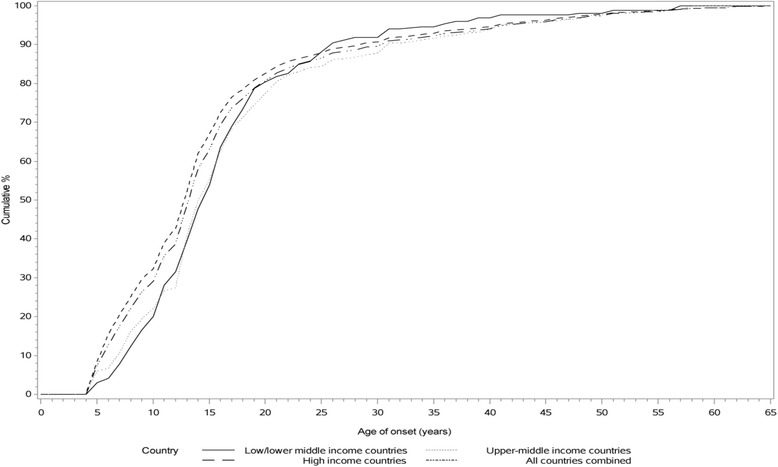
- Projected lifetime risk for SAD across the globe was 4.4%; the paper describes onset as early, with risk spanning from the mid-late adolescence to the early 40s.
- Among respondents with 12-month SAD, between one-third and one-half had severe role impairment in at least one domain; 38% of those with 12-month SAD received any treatment in the past 12 months, and treatment among those with any impairment ranged from 18.0% in low/lower-income countries to 44.2% in high-income countries.
## Methods
- Data came from 28 community surveys in the WMH Survey Initiative, totaling 142,405 respondents, spanning high-, upper-middle-, and low/lower-middle-income countries across multiple world regions.
- SAD was assessed with the WHO Composite International Diagnostic Interview (CIDI 3.0); impairment was measured with the Sheehan Disability Scale, and treatment use was assessed by self-report of contact with listed providers.
- Analyses used cross-tabulations for prevalence/impairment/comorbidity/treatment, survival analysis for age of onset and projected lifetime risk, and logistic regression and survival analyses for socio-demographic correlates; weighted clustered data were handled with Taylor series linearization.
## Limitations
- The paper states that response rates differed widely across surveys, and that some severe cases may have been less likely to participate, especially where treatment was less available.
- The surveys were not fully uniform: some were metropolitan-only or otherwise non-national, which the paper says may have affected prevalence estimates.
- The paper notes that the surveys excluded institutionalized patients and people too intoxicated to be interviewed, and that only two African countries were studied, limiting geographic comparisons.
- The text also makes evident that the SAD measure may under-detect culturally shaped presentations because the CIDI screening stem questions were limited and did not address fear of offending others; this is stated in the discussion as a measurement limitation.
Model-written summary. Check it against the paper before relying on it.
Integrity signals
Registry
Cites
Statistics
Figures
Verification
Claims the paper makes
2 Valid · 1 Not valid · 6 Not checked · 54 Own results and interpretations
At least one cited source doesn’t support this claim or points to a different paper, and none confirmed it — see the verdicts below.
In the paper
“It is relevant to emphasize that in countries where blinded clinical reappraisal interviews were undertaken, there was no evidence for systematic bias in the diagnostic threshold for SAD [18].”
§ The cross-national epidemiology of social anxiety disorder: Data from the World Mental Health Survey Initiative > Discussion
What the sources say
- Disputedcites [18] Haro JM Arbabzadeh-Bouchez S Brugha TS de Girolamo G Guyer ME Jin R Lepine JP Mazzi F Reneses B Vilagut G Sampson NA Kessler RC Concordance of the Composite International Diagnostic Interview Version 3.0 (CIDI 3.0) with standardized clinical assessments in the WHO World Mental Health surveys Int J Methods Psychiatr Res 2006 15 167 80 10.1002/mpr.196 17266013 PMC6878271 sourceExperimental — accuracy not yet measured
Our copy reports the opposite for SAD: 'Lifetime aggregate concordance' states the McNemar tests of CIDI-versus-SCID lifetime prevalence are insignificant only for panic disorder, agoraphobia, specific phobia and bipolar I-II and 'are significant for all other disorders', with CIDI estimates conservative (PPV consistently higher than SN), while 'Lifetime individual-level concordance' places social phobia in the fair accuracy band (AUC 0.6-0.7). The 'Summary' goes further, saying 'the CIDI probably underestimates lifetime prevalence because its diagnostic thresholds are too high', and attributes the apparently unbiased 12-month aggregates (any anxiety, any mood only) to two cancelling biases rather than to an unbiased threshold. The design section also contradicts the premise of the citing sentence: the WMH study deliberately modified 'the conventional blinded clinical reinterview design' by unblinding interviewers to CIDI stem-question endorsement, and disorder-specific (as opposed to aggregate) reappraisal results were obtained only in the US NCS-R sample, with ESEMeD (France, Italy, Spain) analysed at the level of any-anxiety/any-mood classes. No passage in our copy states there was no evidence of systematic threshold bias for SAD. (LLM, conf=0.72)
Checked by a reasoning model — may be wrong.
plain- Asserted: passes — The authors put it forward as true.
- Checkable: passes — It can be checked against evidence.
- Load-bearing: unclear — It is unclear whether the paper’s conclusions depend on it.
- Based: passes — The paper gives a reason why it holds.
- Disputed
The cited sources support only part of this claim — read each source’s verdict below.
In the paper
“As detailed elsewhere, good CIDI-SCID diagnostic concordance was found for SAD — area under the curve (AUC) = 0.67 — and most other DSM-IV/CIDI disorders [18].”
§ The cross-national epidemiology of social anxiety disorder: Data from the World Mental Health Survey Initiative > Methods > Measures
What the sources say
- Partly supportedcites [18] Haro JM Arbabzadeh-Bouchez S Brugha TS de Girolamo G Guyer ME Jin R Lepine JP Mazzi F Reneses B Vilagut G Sampson NA Kessler RC Concordance of the Composite International Diagnostic Interview Version 3.0 (CIDI 3.0) with standardized clinical assessments in the WHO World Mental Health surveys Int J Methods Psychiatr Res 2006 15 167 80 10.1002/mpr.196 17266013 PMC6878271 sourceExperimental — accuracy not yet measured
The Abstract and the 'Lifetime individual-level concordance' section support the second half of the sentence — 'Moderate to good individual-level CIDI-SCID concordance was found for lifetime prevalence estimates of most disorders', with individual-disorder AUC in the range 0.62–0.93. However, for social anxiety/phobia the source explicitly places it in the weakest band: concordance is 'fair (AUC in the range 0.6–0.7) for the remaining disorders (specific phobia, social phobia, PTSD, drug dependence)' (Lifetime individual-level concordance). So an AUC of 0.67 is consistent with the reported range, but the source characterises SAD concordance as fair, not good — the citing sentence overstates that part. Our copy's retrievable Table 1 rows do not print the exact social phobia AUC value (only Adult ADHD 0.861 and Any disorder 0.76 appear), so the precise figure 0.67 could not be verified verbatim. (LLM, conf=0.82)
plainstates an association- Asserted: passes — The authors put it forward as true.
- Checkable: passes — It can be checked against evidence.
- Load-bearing: unclear — It is unclear whether the paper’s conclusions depend on it.
- Based: passes — The paper gives a reason why it holds.
- Partly supported
A result the paper reports from its own data — it cites no other source for it, so there is none to check. The quote shows it is in the paper.
In the paper
“SAD recurrence is particularly highly associated with lower education (with no education having an odds ratio [OR] of 5.6, confidence interval [CI] 2.2–14.4)”
§ The cross-national epidemiology of social anxiety disorder: Data from the World Mental Health Survey Initiative > Results > Socio-demographic correlates
plainstates an association- Asserted: passes — The authors put it forward as true.
- Checkable: passes — It can be checked against evidence.
- Load-bearing: unclear — It is unclear whether the paper’s conclusions depend on it.
- Based: passes — The paper gives a reason why it holds.
A result the paper reports from its own data — it cites no other source for it, so there is none to check. The quote shows it is in the paper.
In the paper
“in both cases around 80% of such respondents meet lifetime criteria for any other mental disorder.”
§ The cross-national epidemiology of social anxiety disorder: Data from the World Mental Health Survey Initiative > Results > Comorbidity
plainstates an association- Asserted: passes — The authors put it forward as true.
- Checkable: passes — It can be checked against evidence.
- Load-bearing: unclear — It is unclear whether the paper’s conclusions depend on it.
- Based: passes — The paper gives a reason why it holds.
A result the paper reports from its own data — it cites no other source for it, so there is none to check. The quote shows it is in the paper.
In the paper
“Across all countries, the risk period for onset of SAD ranges from the mid-late adolescence to the early 40s.”
§ The cross-national epidemiology of social anxiety disorder: Data from the World Mental Health Survey Initiative > Results > Age of onset
plain- Asserted: passes — The authors put it forward as true.
- Checkable: passes — It can be checked against evidence.
- Load-bearing: unclear — It is unclear whether the paper’s conclusions depend on it.
- Based: passes — The paper gives a reason why it holds.
21 more claims
Create a free account to see all 63 claims and to verify the 7 references still open.
- Probably not a substantial claim. 6
- It may state two separate claims as one. 35
Claims other papers make about this one
Each is checked against this paper’s own text: does it say what the citing paper says it does?
The source backs part of the claim, not all of it — or backs it for a different population, condition or comparison.
In the citing paper
“SAD is estimated to have a lifetime prevalence of 5.5% in high-income countries and 3% in Western Europe (Stein et al., 2017)”
From Virtual Reality exposure therapy in the treatment of public speaking anxiety and social anxiety disorder (2024) · cites this paper as Stein et al., 2017
Experimental — accuracy not yet measuredThe source backs part of the claim, not all of it — or backs it for a different population, condition or comparison.
In the citing paper
“SAD has its most frequent onset during adolescence (i.e., before the age of 18) [4,5,6].”
From The Prevalence of Adolescent Social Fears and Social Anxiety Disorder in School Contexts (2022) · cites this paper as [4]
Experimental — accuracy not yet measuredThe source backs part of the claim, not all of it — or backs it for a different population, condition or comparison.
In the citing paper
“Both these disorders tend to reveal a chronic course that may fluctuate by evolving into other ADs or mood disorders in adulthood [21, 68, 69].”
From Acceptance and commitment therapy as a transdiagnostic approach to adolescents with different anxiety disorders: study protocol. (2025) · cites this paper as [69]
Experimental — accuracy not yet measuredThe cited source says what the claim attributes to it.
In the citing paper
“Difficulties associated with SAD usually start in adolescence (Stein et al., 2017; Knappe et al., 2015)”
From Psychological inflexibility explains social anxiety over time: a mediation analyses with a clinical adolescent sample (2024) · cites this paper as Stein et al., 2017
The check wasn’t confident either way, so it gives no verdict — never disputed.
In the citing paper
“Accumulating evidence from preclinical studies suggests that activation of α7-nAChR signalling results in suppression or prevention of anxiety. 20–22”
From Efficacy and safety of an alpha 7-nicotinic acetylcholine receptor agonist, VQW-765, in subjects with performance anxiety: randomised, double-blind, placebo-controlled trial (2025) · cites this paper as [20]
Experimental — accuracy not yet measured
1 more claim about this paper
Create a free account to see every claim other papers make about this one.
Citations
Cites
Kessler, R. C., & Üstün, T. B. (2004) · International Journal of Methods in Psychiatric Research · doi:10.1002/mpr.168 · Cited by 4,771 · cited 1×
“0) [15], a fully structured lay-administered interview.”
Self-citationSheehan, D. V., Harnett-Sheehan, K., & Raj, B. A. (1996) · International Clinical Psychopharmacology · doi:10.1097/00004850-199606003-00015 · Cited by 1,440 · cited 6×
“Among those with 12-month SAD, the percentage reporting treatment of any kind (i.e., specialty mental health, general medical care, health care, human services, complementary and alternative medicine, non-health care) in the past Lifetime comorbidityf Lifetime 47.0 1.0 59.8 1.0 19.3 0.8 26.7 0.8 78.8 0.8 12-month 49.8…”
MethodInfluentialIntroduction to Variance Estimation.
King, B. F., & Wolter, K. M. (1987) · Journal of the American Statistical Association · doi:10.2307/2289497 · Cited by 1,377
Haro, J. M., Arbabzadeh-Bouchez, S., Brugha, T. S., De Girolamo, G., Guyer, M. E., Jin, R., Lepine, J. P., Mazzi, F., Reneses, B., Vilagut, G., et al. (2006) · International Journal of Methods in Psychiatric Research · doi:10.1002/mpr.196 · Cited by 1,082 · cited 2×
“It is relevant to emphasize that in countries where blinded clinical reappraisal interviews were undertaken, there was no evidence for systematic bias in the diagnostic threshold for SAD [18].”
BackgroundSelf-citationAgoraphobia, simple phobia, and social phobia in the National Comorbidity Survey
Magee, W. J. (1996) · Archives of General Psychiatry · doi:10.1001/archpsyc.1996.01830020077009 · Cited by 996 · cited 1×
“While it has previously been demonstrated that SAD more likely follows other anxiety disorders, and precedes depression [1], here we provide novel data on the comorbidity of SAD with impulse control disorders; this is valuable given that a link between social anxiety and aggression has been posited in the animal and c…”
BackgroundSelf-citationThe WHO World Mental Health Surveys: Global Perspectives on the Epidemiology of Mental Disorders
Kessler, R. C., & Üstün, T. B. (2008) · Cited by 872
Self-citationSocial fears and social phobia in the USA: results from the National Comorbidity survey replication
Ruscio, A. M., Brown, T. A., Chiu, W. T., Sareen, J., Stein, M. B., & Kessler, R. C. (2008) · Psychological Medicine · doi:10.1017/s0033291707001699 · Cited by 835
Self-citationIntroduction to Variance Estimation
Hidiroglou, M. A. (1986) · Technometrics · doi:10.1080/00401706.1986.10488138 · Cited by 820
Mini-SPIN: A brief screening assessment for generalized social anxiety disorder
Connor, K. M., Kobak, K. A., Churchill, L. E., Katzelnick, D., & Davidson, J. R. T. (2001) · Depression and Anxiety · doi:10.1002/da.1055 · Cited by 537 · cited 1×
“Research in clinical settings has also indicated that SAD is a prevalent and disabling condition in this context [5, 6].”
BackgroundEpidemiology of Anxiety Disorders
Kessler, R. C., Ruscio, A. M., Shear, K., & Wittchen, H.-U. (2009) · Current Topics in Behavioral Neurosciences · doi:10.1007/7854_2009_9 · Cited by 496 · cited 1×
“In each of these surveys, SAD age of onset was early, comorbidity with other mental disorders was high, and subsequent impairment was notable [3, 4].”
BackgroundSelf-citation
Research works printed but not linked: 3
- Pennell B-E Mneimneh Z Bowers A Chardoul S Welles J Viana M Dinkelmann K Gebler N Florescu S He Y Huang Y Tomov T Vilagut G Kessler R Ustun T Implementation of the World Mental Health Surveys Initiative The WHO World Mental Health Surveys: global perspectives on the epidemiology of mental disorders 2008 New York Cambridge University Press 33 57
- First MB Spitzer RL Gibbon M Williams BJ Structured Clinical Interview for Axis I DSM-IV Disorders 1994 New York Biometrics Research, New York State Psychiatric Institute
- Institute RT SUDAAN: Professional Software for Survey Data Analysis 2002 Research Triangle Park Research Triangle Institute
Cited by
Items 501–600 of 605
Developing Virtual Reality-Based Exposure for Adults with Social Anxiety Disorder
Ernst, M. T. (2024) · University of Southern Denmark Research Portal (University of Southern Denmark) · doi:10.21996/313v-2k02
Javaid, S. F., Hashim, I. J., Hashim, M. J., Stip, É., Samad, M. A., & Ahbabi, A. A. (2024) · Figshare · doi:10.6084/m9.figshare.26579618
Shanmugalingam, N., Ng, J., Suraweera, A., Kazi, S., Mohammed, A. A. A., Watteweva, D. G., Bilal, S. U., Dhanasekaran, P., Jayarajan, M., & Chuan, L. Z. (2023) · Quest International Journal of Medical and Health Sciences · doi:10.5281/zenodo.10533135
Additional file 2 of Social phobia of Ethiopian students: meta-analysis and systematic review
Melkam, M., Segon, T., & Nakie, G. (2023) · Figshare · doi:10.6084/m9.figshare.22626319
Chapdelaine, A., Vasiliadis, H., Provencher, M. D., Norton, P. J., & Roberge, P. (2023) · Figshare · doi:10.6084/m9.figshare.23435029
A social identity approach to facilitating therapy groups
Robertson, A. M. (2025) · ANU Open Research (Australian National University) · doi:10.25911/x056-jt92
Jackson, H. M. (2025) · ANU Open Research (Australian National University) · doi:10.25911/frqy-2d78 · Cited by 1
Chapdelaine, A., Vasiliadis, H., Provencher, M. D., Norton, P. J., & Roberge, P. (2023) · Figshare · doi:10.6084/m9.figshare.23435035
Javaid, S. F., Hashim, I. J., Hashim, M. J., Stip, É., Samad, M. A., & Ahbabi, A. A. (2024) · Figshare · doi:10.6084/m9.figshare.26579621
A Social Identity Approach to Social Anxiety
Donaldson, J. L. (2024) · ANU Open Research (Australian National University) · doi:10.25911/5yed-wq40
Additional file 1 of Social phobia of Ethiopian students: meta-analysis and systematic review
Melkam, M., Segon, T., & Nakie, G. (2023) · Figshare · doi:10.6084/m9.figshare.22626316
Exploring social anxiety in digital platforms within novel experimental laboratory paradigms
Özhan, N. (2024) · ePrints Soton (University of Southampton)
The influence of behavioural inhibition and parental expression on childhood anxiety.
Webster, R. M. (2023) · ePrints Soton (University of Southampton)
Educational Impairment in Social Anxiety Disorder and Post-Traumatic Stress Disorder
Vilaplana-Pérez, A. (2020) · Repository of Digital Objects for Teaching Research and Culture (University of Valencia)
Exploring Neuropeptides Implicated in Social Anxiety-related Behaviors
Luo, P. X. (2023) · eScholarship (California Digital Library)
Ansiedade e evitamento em situações sociais e de desempenho : o papel da personalidade
Oliveira, L. R. C. (2019) · Repositório Institucional da Universidade Católica Portuguesa (Universidade Católica Portuguesa)
Weniger, M. (2024) · Qucosa (Saxon State and University Library Dresden)
Lived Experiences of College Students with Social Anxiety Disorder Accessing Support Services
Broaden, P. N. (2023) · ScholarWorks (Walden University) · Cited by 4
Antunes, A. B. (2024) · Portuguese National Funding Agency for Science, Research and Technology (RCAAP Project by FCT)
Lamoureux, A. A., & Talbot, F. (2025) · Dialnet (Universidad de la Rioja)
The determinants and experience of social anxiety among sexual minority individuals
Mahon, C. P. (2021) · Dublin City University Open Access Institutional Repository (Dublin City University)
Sanchez Mogollon, B. L., & Sanchez Mogollon, B. L. (2024) · Repositorio de Tesis USAT (Santo Toribio de Mogrovejo Catholic University)
Examining the associations between social anxiety and cannabis outcomes in emerging adulthood
Single, A. N. (2024) · Mspace (University of Manitoba)
Predictores de la Ansiedad Social desde una perspectiva transdiagnóstica: un estudio piloto
Roquete, M. D. (2018) · Docta Complutense (Universidad Complutense de Madrid)
À procura de emprego: estratégias de regulação emocional para lidar com o stress social
Santos, A. C. (2018) · Repositório do ISCTE-IUL · Cited by 1
Carrascosa, V. L., & Resino, D. A. (2018) · Library Open Repository (Universidad Complutense Madrid)
Affective working memory updating task as a predictor for daily social anxiety
Uibopuu, S. L. (2025) · DSpace repository (University of Tartu)
Schüller, J. S., Kujat, J., Schittenhelm, J. M., von Rechenberg, R., Čerič, A., Hoyer, J., & Stangier, U. (2025) · doi:10.23668/psycharchives.21281
Adnan, Z. H., Ahmad, Z., Mohammed, A., & Jawan, J. (2024) · Universiti Putra Malaysia Institutional Repository (Universiti Putra Malaysia)
Timlin, K. (2025) · Repository@Hull (Worktribe) (University of Hull)
Khatib, R. A., Alsabagh, P. M., Abudouleh, A., Hussein, M. H., AlAyyaf, A. E., Ali, K., Hussein, A., & Kamath, D. (2025) · Cureus · doi:10.7759/cureus.99669
Adeyemo, O., Akpunne, B. C., Okeniyi, O. A., & Akpunne, E. N. (2025) · Türkiye Halk Sağlığı Dergisi · doi:10.20518/tjph.1558074
Is EMDR an Alternative Therapy for Adolescents With Social Anxiety Disorder?
İzmir, S. B. İ. (2026) · Clinical Child Psychology and Psychiatry · doi:10.1177/13591045251413046
“SAD most commonly begins during adolescence, typically before the age of 18, with the average onset reported between 13 and 18 years (Kessler et al., 2005; Knappe et al., 2015; Stein et al., 2017).”
Visual scanpaths predict treatment response in children and adolescents with social anxiety disorder
Kleberg, J. L., Nord, M., Cervin, M., Serlachius, E., & Högström, J. (2026) · Development and Psychopathology · doi:10.1017/s0954579425101089
“The period from late childhood to adolescence is a critical time for the emergence of social anxiety symptoms, with many individuals first meeting diagnostic criteria during these years (Beesdo et al., 2007; Stein et al., 2017).”
Hauffe, V. (2025) · FreiDok plus (Universitätsbibliothek Freiburg) · doi:10.6094/unifr/263951
Hallel, H., Maharat, E., Sheppes, G., & Lazarov, A. (2026) · Computers in Human Behavior Reports · doi:10.1016/j.chbr.2026.100961
Internet Interventions for Social Anxiety Among College Students
Oliveira, C. P. L., Pacheco, M., Meira, L., & Santos, A. (2026) · Springer eBooks · doi:10.1007/978-3-032-08980-9_13
Moreau, A. L., Li, L. Y., White, J., & Shankman, S. A. (2026) · Journal of Anxiety Disorders · doi:10.1016/j.janxdis.2026.103134
Schüller, J. S., Kujat, J., Schittenhelm, J. M., von Rechenberg, R., Čerič, A., Hoyer, J., & Stangier, U. (2026) · Clinical Psychology in Europe · doi:10.32872/cpe.15687
“However, less than 20% of SAD patients receive adequate treatment (Alonso et al., 2018; Stein et al., 2017) due to shame, fear of stigma, uncertainty about treatment access or long waiting times (Goetter et al., 2020; Heinig et al., 2021).”
InfluentialGök, B. G., Ișıklı, S., Aslan, S. T., & Demirsöz, T. (2026) · Psychiatric Quarterly · doi:10.1007/s11126-025-10245-4
Enhancing internet-based cognitive behavioral therapy efficacy for social anxiety disorder
Wen, X. (2026) · Dokumentenrepositorium der RUB (Ruhr University Bochum) · doi:10.13154/294-13925
Estudio poblacional de Salud Mental, Sabaneta 2018
Torres, Y., Bernal, D. P. R., Pérez, G. A. C., Silva, J. B., Sierra-Hincapié, G. M., Zapata, C. S., & Salazar, C. B. (2018) · Repositorio CES · Cited by 4
Self-citationSosiaalinen ahdistuneisuus esteenä nuorten avun hakemiselle mielialahuoliin
Metsäkylä, T., & Viinamäki, E. (2025) · Tampere University Institutional Repository (Tampere University)
Saari, P. (2025) · Tampere University Institutional Repository (Tampere University)
Brain Dysfunction and Cannabis Use in Individuals with Social Anxiety Disorder (SAD)
Elsaid, S. (2024) · TSpace (University of Toronto)
Kärkkäinen, K. (2024) · Tampere University Institutional Repository (Tampere University)
Dietel, H., Wenk, T., Kersting, A., Suslow, T., & Günther, V. (2026) · Frontiers in Psychiatry · doi:10.3389/fpsyt.2026.1712931
Lee, J., & Jeon, E. (2026) · IEEE Access · doi:10.1109/access.2026.3671727
“Numerous studies have demonstrated that SAD exhibits high prevalence and substantial persistence across countries [2].”
Xiao, G., & Liu, M. (2026) · Behaviour Research and Therapy · doi:10.1016/j.brat.2026.105013 · Cited by 1
Social Anxiety and Its Treatment in Young People During COVID-19: A Systematic Review
Dryland, A. (2023) · Tuwhera (Auckland University of Technology)
Cole, E., Su, S., Zhang, M., Walls, J. K., & Thang, J. (2026) · Journal of Immigrant & Refugee Studies · doi:10.1080/15562948.2026.2641523
Calderón, C., Montoya-Rodríguez, M. M., Lobato, D., Polín, E., & Montesinos, F. (2026) · Research Square · doi:10.21203/rs.3.rs-8960405/v1
Kneubühler, A., Possehl, A., Schulz, A., & Berger, T. (2026) · Internet Interventions · doi:10.1016/j.invent.2026.100936
“Social anxiety disorder (SAD) is among the most common mental illnesses, with a lifetime prevalence of approximately 4 – 15% (Kessler et al., 2005, 2009; Stein et al., 2017).”
Durar, E., & Soylu, F. K. (2026) · Archives of Psychiatric Nursing · doi:10.1016/j.apnu.2026.152122
Zamalijeva, O., Petraškaitė, K., Rupšys, G., Jurevičiūtė, I., Gegieckaitė, G., Liebowitz, M. R., & Eimontas, J. (2026) · Frontiers in Psychiatry · doi:10.3389/fpsyt.2026.1787195 · Cited by 1
“Pre-pandemic worldwide 12-month prevalence of SAD was 2.4%, with slight variations between high-and low-income countries (6).”
InfluentialCaycho-Caja, A., Domínguez-Lara, S., Orihuela-Manrique, E. J., Montes-Iturrizaga, I., & Sallo, Z. B. (2026) · Ciencias Psicológicas · doi:10.22235/cp.v20i1.4236
“Depression is among the most prevalent mental disorders worldwide (WHO, 2023a) and in Peru (INSM HD-HN, 2023), as is social anxiety (Stein et al., 2017).”
Стрельников, С. В., & Kovalev, A. I. (2026) · Theoretical and experimental psychology · doi:10.11621/tep-26-10
Psychoeducational Approaches to Mental Health for Educators and Students
(2026) · Frontiers research topics · doi:10.3389/978-2-8325-7850-6 · Cited by 1
Jin, Y., Chen, X., Chen, L., Yin, N., Liu, M., Wilson, A. D., Luo, X., Zhang, X., & Wang, Y. (2026) · Brain Science and Child Development · doi:10.1016/j.bscd.2026.100011
Ishikawa, R., Endo, K., Yoshinaga, N., Thew, G. R., Ishigaki, T., Asakura, S., Nishiguchi, Y., & Aoki, A. (2026) · Current Psychology · doi:10.1007/s12144-026-09441-7
“Epidemiological data indicate that the 12-month prevalence of SAD is around 2.4% across diverse regions, including Africa, the Americas, Europe, the Western Pacific, and Eastern Mediterranean (Stein et al., 2017).”
InfluentialPsychological aspects of sexuality in adults with social anxiety disorder
Elling, C., Chung, M., Forstner, A. J., Spitzer, C., Rambau, S., Ramm, M., Geiser, F., Schumacher, J., Ernstmann, N., Brenk-Franz, K., et al. (2026) · BMC Psychiatry · doi:10.1186/s12888-026-08138-2
Xiao, G., & Liu, M. (2026) · Psychophysiology · doi:10.1111/psyp.70317
“Social anxiety disorder (SAD) is a highly prevalent psychiatric condition, with a lifetime prevalence of approximately 4% world-wide (Huang et al. 2019; Stein et al. 2017).”
Hede, J. P., Malouff, J. M., & Meynadier, J. (2026) · International Journal of Applied Positive Psychology · doi:10.1007/s41042-026-00297-7
“However, lower rates are reported in non-Western and low-income countries (Stein et al., 2017).”
Digital Fugue: An Ineffective Coping Method in the Digital Age
Kanbay, Y., Babaoğlu, E., Yalçıntürk, A. A., & Akçam, A. (2026) · Psikiyatride Guncel Yaklasimlar - Current Approaches in Psychiatry · doi:10.18863/pgy.1895496
Mashayekhi-Ghoyonlu, S., Mashhadi, A., Bigdeli, I., & Maleki, Z. H. (2026) · Journal of Psychopathology and Behavioral Assessment · doi:10.1007/s10862-026-10298-0
“Global lifetime prevalence is reported at roughly 4.0% (Stein et al., 2017).”
InfluentialLuoma, J. B., Lear, M. K., Pilecki, B. C., LeJeune, J. T., Yi, K., Chwyl, C., Mehr, S., Sarparast, A., Kennedy, L., Lucas, W., et al. (2026) · Journal of Affective Disorders · doi:10.31234/osf.io/a9x6d_v1
Liu, M., Xiao, G., Zeng, X., Li, L., & Zhou, L. (2026) · Cognition & Emotion · doi:10.1080/02699931.2026.2683602
Dynamic Weighted Spatio-Temporal-Spectral Fusion for EEG-Based Social Anxiety Detection
Sun, W., Xiao, G., Liu, X. Y., Gao, J., Song, S., & Zheng, Y. (2026) · IEEE Transactions on Affective Computing · doi:10.1109/taffc.2026.3702831
“S OCIAL anxiety (SA), characterized by persistent fear of social scrutiny and avoidance behaviors, represents a mental disorder affecting approximately 7% of the global population [1], [2].”
Lamp, K. (2026) · DSpace repository (University of Tartu)
Blake, K. V., Ipser, J., Amod, A. R., Kaufmann, T., Bar‐Haim, Y., Bauer, J., Bayram, A., Beesdo‐Baum, K., Blanco‐Hinojo, L., Borgers, T., et al. (2026) · medRxiv · doi:10.64898/2026.07.02.26357108
Self-citationA Scoping Review of Nonverbal Synchrony Between Individuals With Social Anxiety and Others
Yanagida, A., Matsumoto, A., Taito, S., Banno, M., Oi, H., Iwayama, T., Nakajima, S., Noma, H., Saneyoshi, A., & Nakamura‐Taira, N. (2026) · Psychological Reports · doi:10.1177/00332941261464108
Pirke, J., Schürmann‐Vengels, J., Leibing, E., Margraf, J., Odyniec, P., Schulte, D., Teismann, T., & Willutzki, U. (2026) · Journal of Anxiety Disorders · doi:10.1016/j.janxdis.2026.103209
景智, & Ma, Z. (2026) · Research Square · doi:10.21203/rs.3.rs-10287142/v1
Craig, S. M., Hamlin, J. K., & Birch, S. (2026) · Behavioral Sciences · doi:10.3390/bs16071228
“Age of onset occurs as early as preschool, though it more commonly emerges in middle childhood and adolescence (Baartmans et al., 2020; Halldorsson & Creswell, 2017; D. J. Stein et al., 2017; Stuijfzand & Dodd, 2017; Rapee et al., 2019).”
The relationship between childhood traumatic life experiences and social anxiety disorders
Ekim, A., & Çöpür, M. (2026) · South African Journal of Psychiatry · doi:10.4102/sajpsychiatry.v32i0.2634
Maia, B., Marques, M., Moreira, H., Carvalho, F., & Leite, Â. M. T. (2026) · Psychology the Journal of the Hellenic Psychological Society · doi:10.12681/psy_hps.44026
Hager, N., Milam, A. L., Hamrick, H. C., Swanson, B. J., & Judah, M. R. (2026) · Journal of Clinical Psychology · doi:10.1002/jclp.70204
Li, Y. L., Shen, J., & Huang, G. (2026) · npj Digital Medicine · doi:10.1038/s41746-026-03055-w
Chapdelaine, A. (2022) · Knowledge UdeS (Institutional Deposit of the University of Sherbrooke)
Zagaceta, A. A. V. (2025) · Repositorio Institucional USAT (Universidad Católica Santo Toribio de Mogrovejo)
Stoliarov, A. S., Wichert, F., Melzig, C. A., & Benke, C. (2026) · Behaviour Research and Therapy · doi:10.1016/j.brat.2026.105138
Schaefer, T., Keller, D., Santos, F. D. L., Bludau, A., Krinner, A., Korotkova, T., Neumann, I. D., & Menon, R. (2026) · bioRxiv (Cold Spring Harbor Laboratory) · doi:10.64898/2026.08.08.743644
Al‐Gawahiri, M., Godding, L. T. H., de Jong, E. M. G. J., Limbeek, D. R., Janssen, V. R., van den Reek, J. M. P. A., & Seyger, M. M. B. (2026) · Archives of Dermatological Research · doi:10.1007/s00403-026-04843-w · Cited by 1
“Patients with psoriasis have an increased prevalence of depression and anxiety compared to the general population [1 ].”
Internalized Shame, Self-Focused Attention, and Post-Event Processing in Everyday Social Anxiety
Lee, W. (2026) · STARS (University of Central Florida)
The Role of Negative Automatic Thoughts and Metacognitions in Explaining Social Anxiety
Çopuroğlu, A. V., Altun, F., & Yazıcı, H. (2026) · Cukurova University Faculty of Education Journal · doi:10.14812/cuefd.1678635
Lamoureux, A.-A. (2024) · ScriptoriUM
Sweet, D., Elliott, A., Reeves, R., Dyer, K. F. W., Hanna, D., & Curran, D. B. (2026) · SSRN Electronic Journal · doi:10.2139/ssrn.7395280
Laizane, P., Ritola, V., Smith, C. B., Saarni, S. E., Rutan, M. L., Karpov, B., Pihlaja, S., Stenberg, J., & Joffe, G. (2026) · Journal of Medical Internet Research · doi:10.2196/85676
“Social anxiety disorder (SAD), or social phobia, is a common mental health condition with an annual prevalence of around 2.4% [1].”
InfluentialSteele, K. R., & Newby, J. M. (2026) · BMC Psychology · doi:10.1186/s40359-026-05515-0
Social anxiety disorder and sexual dysfunctions: A systematic review of a bidirectional relationship
Pailloux, L., Achour, V., Faugère, M., Verney, P., Lançon, C., & Korchia, T. (2026) · L Encéphale · doi:10.1016/j.encep.2026.06.011
Association Between Childhood Trauma and Social Phobia Among University Students in Accra, GhanaPreprint
Boahen, E. A. A., Afriyie, J., Ambrose, E., Blankson, E.-S., Iddrisu, A. I., Painstil, S., & Osei-Owusu, P. (2026) · Research Square · doi:10.21203/rs.3.rs-11192021/v1
Du, M., Hancox, J. E., Hooper, O., & Sandford, R. A. (2026) · International Journal of Sport and Exercise Psychology · doi:10.1080/1612197x.2026.2740791
Pino, O., Squadroni, L., & Borghese, N. A. (2024) · Acta bio-medica dell'Ateneo parmense/Acta biomedica · doi:10.23750/abm.v95i2.15683 · Cited by 1
The Etiology of Social Anxiety Disorder from the Perspective of Cognitive Psychology
Raasakka, M. (2025) · UEF eRepo (University of Eastern Finland)
Realidad Virtual para el Tratamiento de la Ansiedad Social: Revisión Sistemática
Veintimilla, O. N. M., & Morales-Urrutia, E. (2026) · DATEH. · doi:10.61236/eqtweg94
JAUNŲ SUAUGUSIŲJŲ SUVOKIAMO TĖVYSTĖS STILIAUS, PERFEKCIONIZMO IR SOCIALINIO NERIMO RYŠYS
Seniutienė, D., & Grikšelytė, E. (2026) · Visuomenes saugumas ir viesoji tvarka/Visuomenės saugumas ir viešoji tvarka
Peng, S., Zhou, M., Yue, L., Xiaojing, H., Li, Z., Kong, F., Zhang, T., Ren, X., & Song, Y. (2026) · BMC Psychology · doi:10.1186/s40359-026-05211-z · Cited by 1
“According to the World Mental Health Survey, approximately 4% of the global population experiences lifetime SAD, with notable cross-national variation [2].”
Symes, E. R., Santo, T., Sutherland, R., Lynch, M. A., Taylor, S., Lewis, P., & Degenhardt, L. J. (2026) · Psychological Medicine · doi:10.1017/s0033291726106254 · Cited by 1
Social anxiety among undergraduate medical students
Arifuzzaman, M., Sarkar, M., & Maruf, M. M. (2026) · Bangladesh Journal of Psychiatry · doi:10.3329/bjpsy.v39i2.93770
Ohi, K., Ukisu, T., Inada, K., Shimizu, Y., & Fujikane, D. (2026) · European Child & Adolescent Psychiatry · doi:10.1007/s00787-026-03236-8
Metadata
- Authors
- Collaborators, W. W. M. H. S., Stein, D. J., Lim, C. C. W., Roest, A. M., de Jonge, P., Aguilar-Gaxiola, S., Al-Hamzawi, A., Alonso, J., Benjet, C., Bromet, E. J., Bruffaerts, R., de Girolamo, G., Florescu, S., Gureje, O., Haro, J. M., Harris, M. G., He, Y., Hinkov, H., Horiguchi, I., Hu, C., Karam, A., Karam, E. G., Lee, S., Lepine, J.-P., Navarro-Mateu, F., Pennell, B.-E., Piazza, M., Posada-Villa, J., ten Have, M., Torres, Y., Viana, M. C., Wojtyniak, B., Xavier, M., Kessler, R. C., & Scott, K. M.
- Affiliations
- University of Cape Town (ZA)
- University Medical Center Groningen (NL)
- University of Al-Qadisiyah (IQ)
- Universitat Pompeu Fabra (ES)
- Instituto Nacional de Psiquiatría Ramón de la Fuente Muñiz (MX)
- Stony Brook University (US)
- Centro San Giovanni di Dio Fatebenefratelli (IT)
- University College Hospital, Ibadan (NG)
- The University of Queensland (AU)
- Shanghai Mental Health Center (CN)
- National Center of Public Health and Analyses (BG)
- Shenzhen KangNing Hospital (CN)
- University of Balamand (LB)
- Inserm (FR)
- Universidad Peruana Cayetano Heredia (PE)
- Universidad CES (CO)
- Narodowy Instytut Zdrowia Publicznego PZH – Państwowy Instytut Badawczy (PL)
- Harvard University (US)
- University of Otago (NZ)
- Corresponding author
- Stein, Dan J.
- ORCID
- Venue
- BMC Medicine
- Published
- 2017-07-31
- Volume
- 15
- Issue
- 1
- Pages
- 143-143
- ISSN
- 1741-7015 (ISSN-L)
- PMC
- PMC5535284
- OpenAlex
- W2741980530
- Cited by
- 520
- References
- 26
- Citations by year
- 2026: 59 · 2025: 86 · 2024: 91 · 2023: 74 · 2022: 51 · 2021: 74 · 2020: 39 · 2019: 33 · 2018: 11 · 2017: 1
- FWCI
- 29.91
- Type
- journal article
- Language
- en
- Open access
- gold
- doi.org
- Licence
- cc-by
- creativecommons.org/licenses/by/4.0/ (tdm)
- creativecommons.org/licenses/by/4.0/ (vor)
- Locations
- BMC Medicine (publishedVersion, cc-by)
- Europe PMC (PubMed Central) (publishedVersion, cc-by)
- PubMed Central (publishedVersion, cc-by)
- PubMed (publishedVersion)
- RECERCAT (Consorci de Serveis Universitaris de Catalunya) (publishedVersion, other-oa)
- Digital Access to Scholarship at Harvard (DASH) (Harvard University) (submittedVersion, cc-by)
- Dipòsit Digital de la Universitat de Barcelona (Universitat de Barcelona) (submittedVersion, cc-by)
- DOAJ (DOAJ: Directory of Open Access Journals) (submittedVersion, cc-by-sa)
- Open University of Cape Town (University of Cape Town) (submittedVersion, cc-by)
- Open University of Cape Town (University of Cape Town) (submittedVersion)
- University of Groningen research database (University of Groningen / Centre for Information Technology) (submittedVersion, cc-by)
- Repositori digital de la UPF (Universitat Pompeu Fabra) (submittedVersion, cc-by)
- Portuguese National Funding Agency for Science, Research and Technology (RCAAP Project by FCT) (submittedVersion, other-oa)
- Greater South Information System
- Funders
- National Institute of Mental Health (R01 MH070884)
- John D. and Catherine T. MacArthur Foundation
- Pfizer Foundation
- U.S. Public Health Service (R13-MH066849, R01-MH069864, R01 DA016558)
- Fogarty International Center (FIRCA R03-TW006481)
- Pan American Health Organization
- Eli Lilly and Company
- Ortho-McNeil Pharmaceutical Inc.
- GlaxoSmithKline
- Bristol-Myers Squibb
- Topics
- Social Sciences › Psychology › Experimental and Cognitive Psychology › Anxiety, Depression, Psychometrics, Treatment, Cognitive Processes
- Health Sciences › Medicine › Psychiatry and Mental health › Mental Health Treatment and Access
- Social Sciences › Psychology › Clinical Psychology › Child and Adolescent Psychosocial and Emotional Development
- Keywords
- social anxiety disorder, prevalence, age of onset, role impairment, psychiatric comorbidity, treatment rates, sociodemographic correlates, income level, geographic region, diagnostic thresholds, World Mental Health Survey Initiative, low- and middle-income countries, gender differences, education and income, disability burden, access to mental health care
- MeSH terms
- Phobia, Social, Adolescent, Adult, Africa, Aged, Child, Child, Preschool, Female, Health Surveys, Humans, Income, Male, Middle Aged, Global Health, Comorbidity, Prevalence, Young Adult
About these checks
Registry, retraction, Cites and statistics results are computed, not judged, with one exception: a printed reference that no index lists is read once by a model before it counts as a citation error. Claims are extracted by a model and kept only when their quote appears verbatim in the text; each cited source is then checked, with a model’s help, for whether it says what the claim relies on. Those verdicts can be wrong — read the claim’s quote and the cited source before relying on one.
The claim verdicts this report counts are experimental: their accuracy is not yet measured.
A language model drew the claims from the paper on 2026-10-11, under version 3 of the claim definition (model deepseek-v4.1-flash, prompt extract-v3).
A second model labelled each claim on 2026-10-11 (model jev-1.13-20260917, definition revision gold-guideline-v0.2).
Cited sources are checked with a language model’s help (qwen3.8-omni-flash).
Statistics and arithmetic are recomputed, not judged.
Confidence bands are shown only for fields calibrated on our annotated test set. None is calibrated yet, so no band is shown.
What counts as a claim ›How we measure confidence ›How we check this ›
Are you an author, or do you see a problem with this page? Request a review
Data sources
Bibliographic data: Semantic Scholar, OpenAlex, Crossref.
Contains information from the Semantic Scholar Academic Graph Datasets, made available under the ODC Attribution License (ODC-BY 1.0).
Semantic Scholar’s data is described in: Kinney, R., et al. (2023). The Semantic Scholar Open Data Platform. arXiv:2301.10140.
