

The DOI matches its Crossref record; 98 of the 111 references it cites were found in a registry or an index.
Performance of the Framingham risk models and pooled cohort equations for predicting 10-year risk of cardiovascular disease: a systematic review and meta-analysis
Open accessAbstract
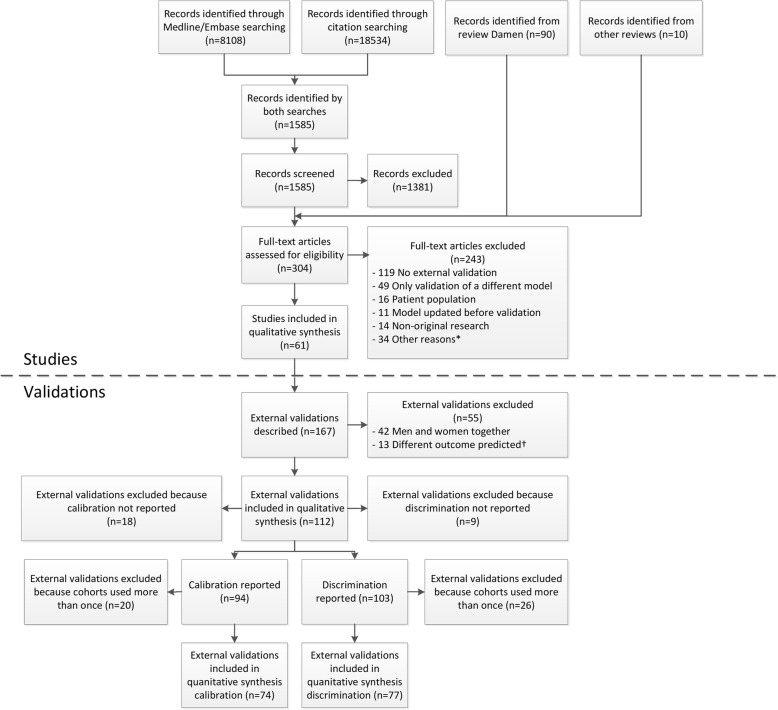
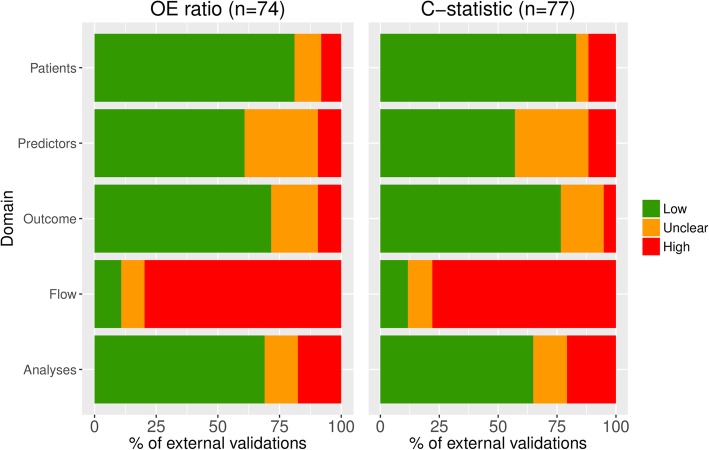
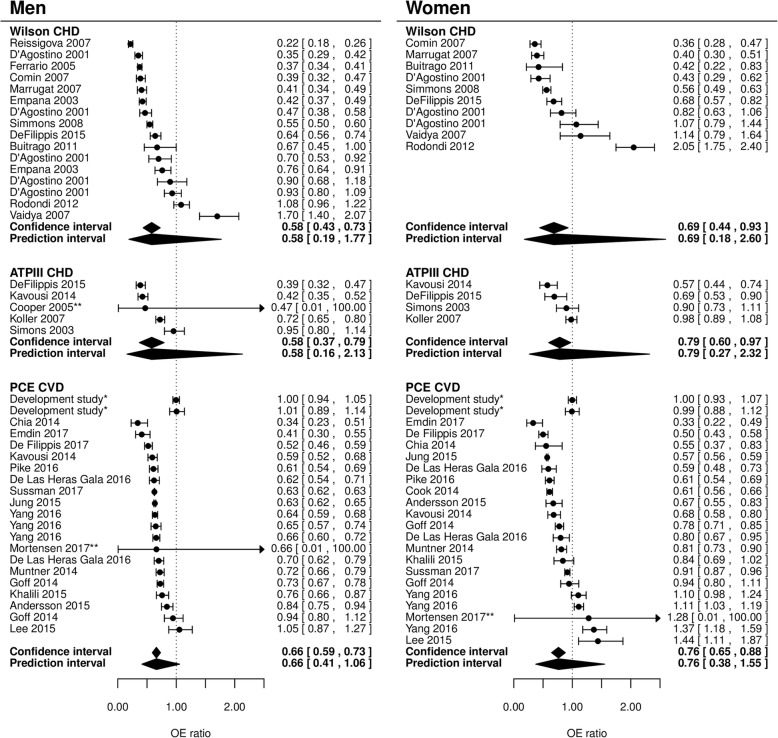
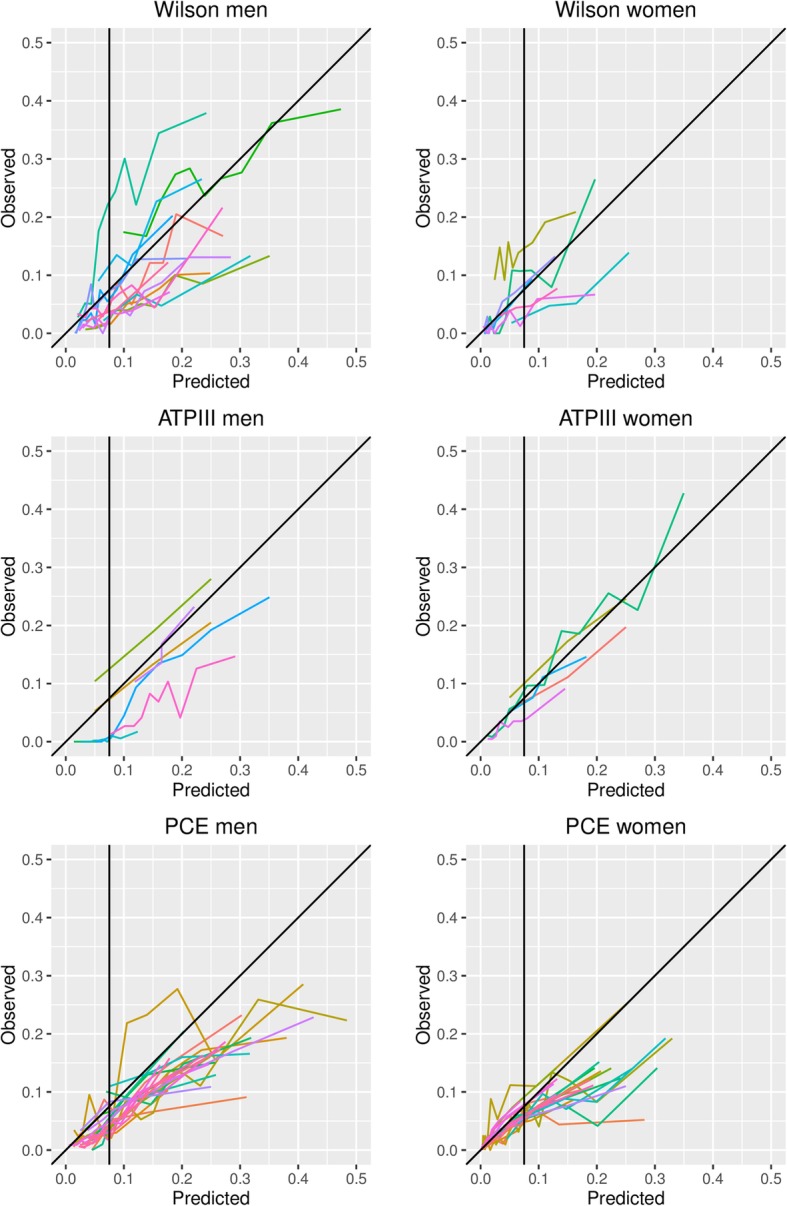
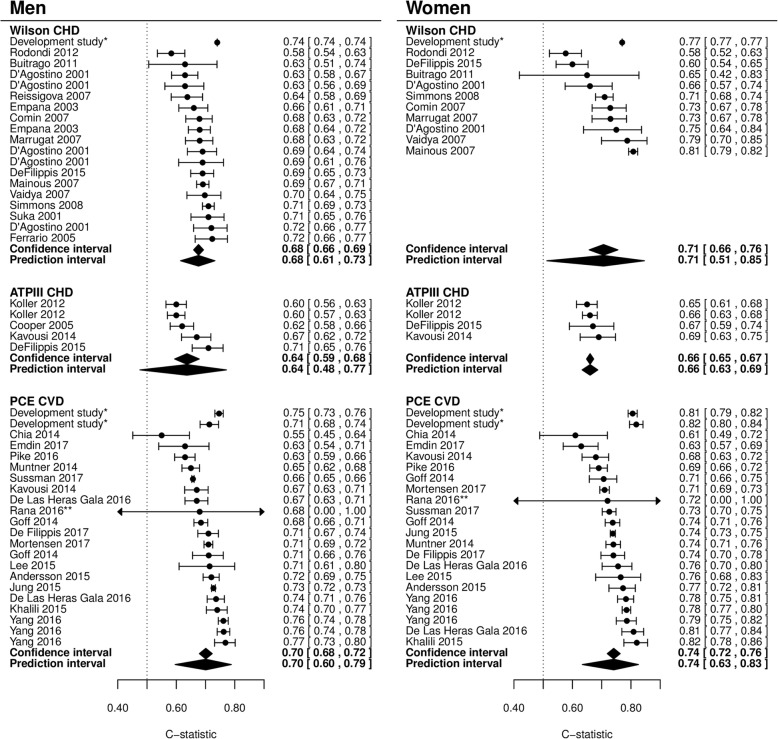
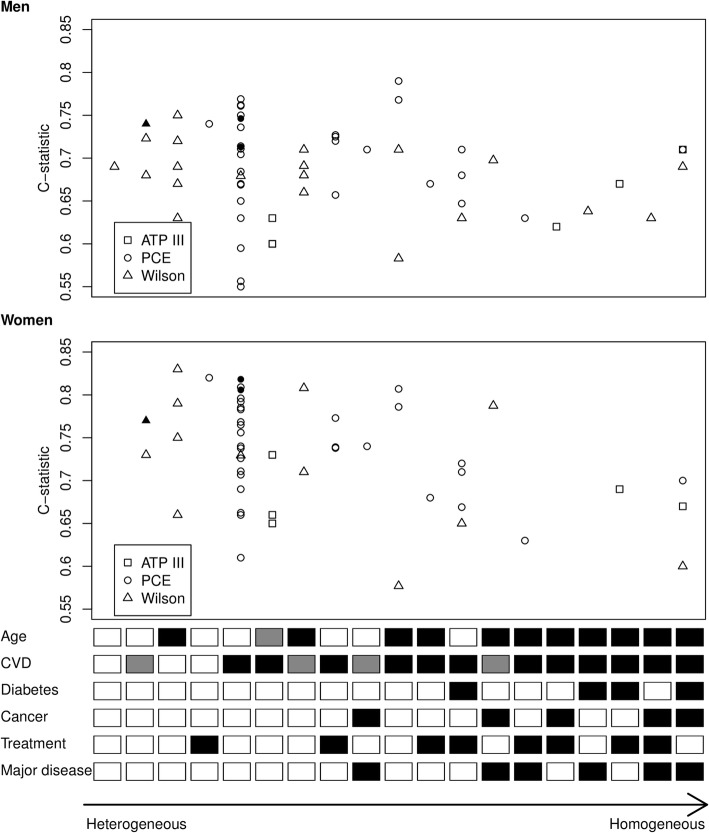
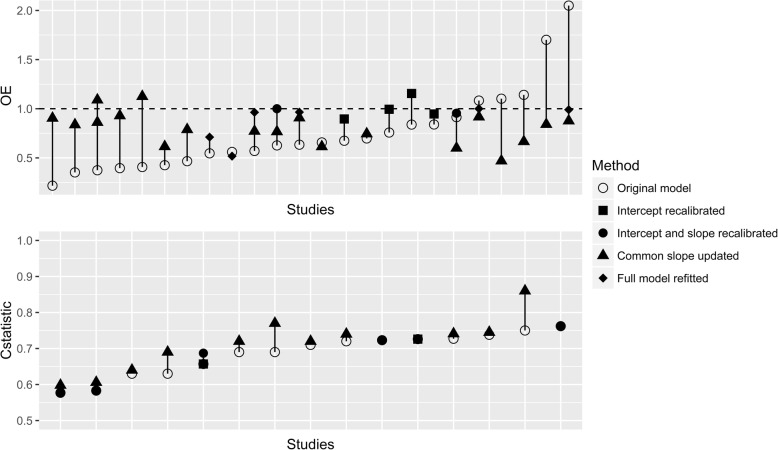
BACKGROUND: The Framingham risk models and pooled cohort equations (PCE) are widely used and advocated in guidelines for predicting 10-year risk of developing coronary heart disease (CHD) and cardiovascular disease (CVD) in the general population. Over the past few decades, these models have been extensively validated within different populations, which provided mounting evidence that local tailoring is often necessary to obtain accurate predictions. The objective is to systematically review and summarize the predictive performance of three widely advocated cardiovascular risk prediction models (Framingham Wilson 1998, Framingham ATP III 2002 and PCE 2013) in men and women separately, to assess the generalizability of performance across different subgroups and geographical regions, and to determine sources of heterogeneity in the findings across studies. METHODS: A search was performed in October 2017 to identify studies investigating the predictive performance of the aforementioned models. Studies were included if they externally validated one or more of the original models in the general population for the same outcome as the original model. We assessed risk of bias for each validation and extracted data on population characteristics and model performance. Performance estimates (observed versus expected (OE) ratio and c-statistic) were summarized using a random effects models and sources of heterogeneity were explored with meta-regression. RESULTS: The search identified 1585 studies, of which 38 were included, describing a total of 112 external validations. Results indicate that, on average, all models overestimate the 10-year risk of CHD and CVD (pooled OE ratio ranged from 0.58 (95% CI 0.43-0.73; Wilson men) to 0.79 (95% CI 0.60-0.97; ATP III women)). Overestimation was most pronounced for high-risk individuals and European populations. Further, discriminative performance was better in women for all models. There was considerable heterogeneity in the c-statistic between studies, likely due to differences in population characteristics. CONCLUSIONS: The Framingham Wilson, ATP III and PCE discriminate comparably well but all overestimate the risk of developing CVD, especially in higher risk populations. Because the extent of miscalibration substantially varied across settings, we highly recommend that researchers further explore reasons for overprediction and that the models be updated for specific populations.
Overview
Integrity signals
Registry
Cites
Statistics
Figures
Verification
Claims the paper makes
Claims other papers make about this one
Each is checked against this paper’s own text: does it say what the citing paper says it does?
In the citing paper
“Furthermore, the Framingham predicted 10-year CVD risk equations are well accepted and widely used in clinical practice.28”
From Tirzepatide compared with semaglutide and 10-year cardiovascular disease risk reduction in obesity: post-hoc analysis of the SURMOUNT-5 trial (2025) · cites this paper as [28]
Citations
Cites
Fitting Linear Mixed-Effects Models Using lme4
Bates, D., Mächler, M., Bolker, B., & Walker, S. (2015) · Journal of Statistical Software · doi:10.18637/jss.v067.i01 · Cited by 86,835
Conducting Meta-Analyses in R with the metafor Package
Viechtbauer, W. (2010) · Journal of Statistical Software · doi:10.18637/jss.v036.i03 · Cited by 20,464
2013 ACCF/AHA Guideline for the Management of Heart Failure
Yancy, C. W., Jessup, M., Bozkurt, B., Butler, J., Casey, D. E., Drazner, M. H., Fonarow, G. C., Geraci, S. A., Horwich, T., Januzzi, J. L., et al. (2013) · Journal of the American College of Cardiology · doi:10.1016/j.jacc.2013.05.019 · Cited by 12,536
Prediction of coronary heart disease using risk factor categories
Wilson, P. W. F., D’Agostino, R. B., Levy, D., Belanger, A. M., Silbershatz, H., & Kannel, W. B. (1998) · Circulation · doi:10.1161/01.cir.97.18.1837 · Cited by 9,581
Stone, N. J., Robinson, J. G., Lichtenstein, A. H., Bairey Merz, C. N., Blum, C. B., Eckel, R. H., Goldberg, A. C., Gordon, D., Levy, D., Lloyd-Jones, D. M., et al. (2014) · Circulation · doi:10.1161/01.cir.0000437738.63853.7a · Cited by 7,081
Estimation of ten-year risk of fatal cardiovascular disease in Europe: the SCORE project
Conroy, R. (2003) · European Heart Journal · doi:10.1016/s0195-668x(03)00114-3 · Cited by 5,290 · cited 3×
“We did not include other prediction models such as the SCORE [21] or QRISK [22] models in this review, as these were developed on European populations and we wanted to focus on truly competing models for the American population.”
MethodMoons, K. G. M., Altman, D. G., Reitsma, J. B., Ioannidis, J. P. A., Macaskill, P., Steyerberg, E. W., Vickers, A. J., Ransohoff, D. F., & Collins, G. S. (2015) · Annals of Internal Medicine · doi:10.7326/m14-0698 · Cited by 5,147
Self-citation2013 ACC/AHA Guideline on the Assessment of Cardiovascular Risk
Goff, D. C., Lloyd-Jones, D. M., Bennett, G., Coady, S., D’Agostino, R. B., Gibbons, R., Greenland, P., Lackland, D. T., Levy, D., O’Donnell, C. J., et al. (2014) · Journal of the American College of Cardiology · doi:10.1016/j.jacc.2013.11.005 · Cited by 4,945
Stone, N. J., Robinson, J. G., Lichtenstein, A. H., Bairey Merz, C. N., Blum, C. B., Eckel, R. H., Goldberg, A. C., Gordon, D., Levy, D., Lloyd-Jones, D. M., et al. (2014) · Journal of the American College of Cardiology · doi:10.1016/j.jacc.2013.11.002 · Cited by 3,845
Research works printed but not linked: 6
- Beswick AD, Brindle P, Fahey T, Ebrahim S. A systematic review of risk scoring methods and clinical decision aids used in the primary prevention of coronary heart disease (supplement). London: Royal College of General Practitioners; 2008.
- Harrell F. Regression modeling strategies: with applications to linear models, logistic and ordinal regression, and survival analysis. Switzerland: Springer; 2015. · DOI · Paper page
- Debray TP. Metamisc: Diagnostic and Prognostic Meta-Analysis; 2017.
- Marrugat J, Subirana I, Comin E, Cabezas C, Vila J, Elosua R, Nam BH, Ramos R, Sala J, Solanas P, et al. Validity of an adaptation of the Framingham cardiovascular risk function: the VERIFICA Study. J Epidemiol Community Health. 2007;61(1):40–7. · DOI
- Knottnerus JA. Diagnostic prediction rules: principles, requirements and pitfalls. Prim Care. 1995;22(2):341–63. · DOI · Paper page
- Goff DC Jr, D’Agostino RB Sr, Pencina M, Lloyd-Jones DM. Calibration and discrimination among multiple cardiovascular risk scores in a modern multiethnic cohort. Ann Intern Med. 2015;163(1):68. · DOI
Cited by
Sorted by citations
Items 201–221 of 221
Yan, H.-B., Jiang, Y., Wang, B.-J., Liu, W.-T., Wang, J., Zhang, Y.-N., Meng, S., Yang, Z.-C., Wang, X.-H., & He, H. (2026) · International journal of clinical practice · doi:10.1155/ijcp/9975352
Liu, S., Meng, S., Li, Y., Wang, X., Liu, L., Lian, J., Ma, C.-Y., Zhang, R., & Gao, R. (2026) · International Journal of Clinical Practice · doi:10.1155/ijcp/6817934
Merlo, A., & Rubaiyyat, T. (2025) · Cureus · doi:10.7759/cureus.95956
Shi, Q., Jang, H., Wang, M., Yeung, S. L. A., Luo, S., Wan, E. Y. F., Sharp, S. J., Brage, S., Wareham, N. J., & Kim, Y. (2025) · Scientific Reports · doi:10.1038/s41598-025-99536-1
“Following the recommended procedures, 12,19 we recalibrated the PCE and SCORE2 in order to match the PCE and SCORE2 predictors to the variables of the UK Biobank database incorporating information on age, sex, smoking status (yes or no), total and high-density lipoprotein cholesterol (mmol/l),…”
Influence of inflammatory bowel diseases on the risk of early atherosclerosis
Isaev, G., Trushina, O., Isaikina, M. A., Bestavashvili, A., Zadykyan, E. S., Yurazh, M. A., Dzyundzya, A. N., Kopylov, P., Mnatsakanyan, M., & Fomin, V. V. (2025) · Consilium Medicum · doi:10.26442/20751753.2025.5.203263
Manikpurage, H. D., Bourgault, J., Houessou, U., Paulin, A., Zamani, P., Gagnon, É., Li, Z., Boudreau, D. K., Eslami, A., Voisine, P., et al. (2025) · Communications Medicine · doi:10.1038/s43856-025-00981-w · Cited by 1
“However, the accuracy of these clinical scores has been shown to vary according to populations and local settings 7 .”
Isaev, G., Trushina, O., Isaikina, M. A., Bestavashvili, A., Zadykyan, E. S., Yurazh, M. A., Kopylov, P., Mnatsakanyan, M., & Fomin, V. V. (2025) · Eurasian heart journal · doi:10.38109/2225-1685-2025-2-58-64
Zeng, X.-Y., Hu, Y., Xiao, S., Chen, N., Zhou, Y., & Luo, M. (2025) · BMJ Open · doi:10.1136/bmjopen-2024-092714
“12 Since 2003, several large-sample prediction models for CVD risk have been established for Chinese adults.”
Mitigating population drift in MACE risk prediction using causal reasoning
Pi, J., Farina, J., Chao, C., Ayoub, C., Arsanjani, R., & Banerjee, I. (2025) · SPIE Medical Imaging: Image Processing · doi:10.1117/12.3047162
Wulandari, A., Qodir, A., & Soelistyoningsih, D. (2025) · Jurnal Kesehatan Tambusai · doi:10.31004/jkt.v6i1.40793
“Hal ini dipengaruhi selain karena heterogenitas populasi juga dipengaruhi oleh program perubahan gaya hidup dan pengobatan medis yang diterima oleh tiap populasi (Al-Shamsi, 2020; Damen et al., 2019).”
Bockarie, A., Ayisi-Boateng, N., Nguah, S. B., Appiah, L., Fiattor, T., Afriyie-Ansah, S., MacCready, E., Sam, V. A., Mensah, N., Tagge, R., et al. (2025) · Research Square · doi:10.21203/rs.3.rs-6175913/v1
Jiang, Z.-R. (2024) · Highlights in Science Engineering and Technology · doi:10.54097/yvgtrg09
“Although there have been concerns about its applicability in European populations, several studies have reported that the outcomes predicted by the Framingham risk score are generally accurate [12, 13].”
Dulcey, L., León, J. S. T., Peña, V. C., Strauch, R. G. P., Caltagirone, R., Blanco, E., & Artavia, M. P. C. (2024) · Crea Ciencia Revista Científica · doi:10.69789/creaciencia.v16i1.678
机器学习驱动的冠心病风险评估:1999至2018年NHANES数据分析
Lu, J., Hu, H.-C., Xiu, J., Yang, Y., Zhu, Q.-F., Dai, H., Liu, X.-B., & Wang, J. (2024) · Zhong nan da xue xue bao. Yi xue ban = Journal of Central South University. Medical sciences · doi:10.11817/j.issn.1672-7347.2024.240394
“…[20] 。近期研 究 [21] 显示糖尿病患者硒水平升高与 CHD 高风险相关。 然而,另一项包括 16 个随机对照试验的荟萃分析 [22] 结果显示补充硒可减轻 CHD 的氧化应激和炎症反应, Framingham 风险评分对于 CHD 的预测能力存在局限 性 [23] 。一项荟萃分析 [24] 结果显示 Framingham 风险评 分、汇总队列方程等预测模型均高估了心血管疾病 发生的风险,尤其是在高危人群中。随着大数据分 析的深入,机器学习通过探索潜在因素之间的多维 非线性关系将多元的变量纳入 CHD 风险预测模型, 为个体化风险评估提供了新的方法 [25] 。一项基于…”
Shan, Y., Zhang, Y., Zhao, Y., Lu, Y., Chen, B., Yang, L., Tan, C., Bai, Y., Sang, Y., Liu, J., et al. (2022) · medRxiv · doi:10.1101/2022.02.27.22271588
“A previous study reported that CVD 331 models should better be developed among specific populations (29).”
Kartoun, U., Khurshid, S. S., Kwon, B. C., Patel, A. P., Batra, P., Philippakis, A., Khera, A. V., Ellinor, P. T., Lubitz, S. A., & Ng, K. (2021) · Research Square · doi:10.21203/rs.3.rs-936366/v1 · Cited by 1
Néri, A. K. M., da Silva, G. B., Meneses, G. C., Lino, D. O. D. C., Martins, A. M. C., Lázaro, A. P. P., Cairutas, R. V. B. D. M., Júnior, J. H. D. S., Lima, J. M. D. O., & Silva, R. P. (2021) · Research Square · doi:10.21203/rs.3.rs-555350/v1
Peláez, I. M., Cuixart, C. B., Valverde, D. F., Puig‐Asensio, M., Bonacho, E. C., Muñoz, P., Romero, C. C., & Quevedo-Aguado, L. (2021) · Revista Clínica Española (English Edition) · doi:10.1016/j.rceng.2020.12.008 · Cited by 2
Marcolino, M., Oliveira, J. A., Cimini, C., Maia, J., Pinto, V., Sá, T., Amancio, K., Coelho, L., Ribeiro, L. B., Cardoso, C., et al. (2020) · doi:10.2196/preprints.18872
Zhai, S., Guo, K., Shin, H., Kim, H., Xu, Y., Liang, W., Jin, Y., & Choi, W. (2026) · Journal of Korean Medical Science · doi:10.3346/jkms.2026.41.e323
Oxygen Sensors in Atherosclerosis
Demandt, J. (2020) · doi:10.26481/dis.20200130jd
Metadata
- Authors
- Damen, J. A., Pajouheshnia, R., Heus, P., Moons, K. G. M., Reitsma, J. B., Scholten, R. J. P. M., Hooft, L., & Debray, T. P. A.
- Affiliations
- Utrecht University (NL)
- Corresponding author
- Damen, Johanna A.
- ORCID
- Venue
- BMC Medicine
- Published
- 2019-06-13
- Volume
- 17
- Issue
- 1
- Pages
- 109-109
- ISSN
- 1741-7015 (ISSN-L)
- PMC
- PMC6563379
- OpenAlex
- W2953059279
- Cited by
- 250
- References
- 111
- Citations by year
- 2026: 33 · 2025: 45 · 2024: 37 · 2023: 41 · 2022: 37 · 2021: 27 · 2020: 25 · 2019: 3
- FWCI
- 3.76
- Type
- journal article
- Language
- en
- Open access
- gold
- doi.org
- Locations
- BMC Medicine (publishedVersion, cc-by)
- Europe PMC (PubMed Central) (publishedVersion, cc-by)
- PubMed Central (publishedVersion, cc-by)
- PubMed (publishedVersion)
- DOAJ (DOAJ: Directory of Open Access Journals) (submittedVersion, cc-by-sa)
- Utrecht University Repository (Utrecht University) (submittedVersion, other-oa)
- Funders
- Cochrane Methods Innovation Funds Round 2 (MTH001F)
- Cochrane Trusted methods and Support for Cochrane Reviews of Prognostic studies (-)
- Netherlands Organization for Scientific Research (918.10.615, 91208004, 91617050)
- CREW NHS project (2013T083)
- Topics
- Health Sciences › Medicine › Public Health, Environmental and Occupational Health › Health Promotion and Cardiovascular Prevention
- Health Sciences › Medicine › Cardiology and Cardiovascular Medicine › Lipoproteins and Cardiovascular Health
- Health Sciences › Medicine › Cardiology and Cardiovascular Medicine › Cardiovascular Health and Risk Factors
- Keywords
- Framingham risk score, Pooled Cohort Equations, cardiovascular risk prediction, coronary heart disease risk, risk overestimation, model calibration, discrimination (statistics), sex differences, population heterogeneity
- MeSH terms
- Aged, Cardiovascular Diseases, Female, Humans, Male, Models, Theoretical, Predictive Value of Tests, Prognosis, Risk Factors, Cohort Studies, Risk Assessment
About these checks
Registry, retraction, Cites and statistics results are computed, not judged, with one exception: a printed reference that no index lists is read once by a model before it counts as a citation error. Claims are extracted by a model and kept only when their quote appears verbatim in the text; each cited source is then checked, with a model’s help, for whether it says what the claim relies on. Those verdicts can be wrong — read the claim’s quote and the cited source before relying on one.
Statistics and arithmetic are recomputed, not judged.
Confidence bands are shown only for fields calibrated on our annotated test set. None is calibrated yet, so no band is shown.
What counts as a claim ›How we measure confidence ›How we check this ›
Are you an author, or do you see a problem with this page? Request a review
