

The DOI matches its Crossref record; 53 of the 53 references it cites were found in a registry or an index.
The research burden of randomized controlled trial participation: a systematic thematic synthesis of qualitative evidence
Open accessAbstract
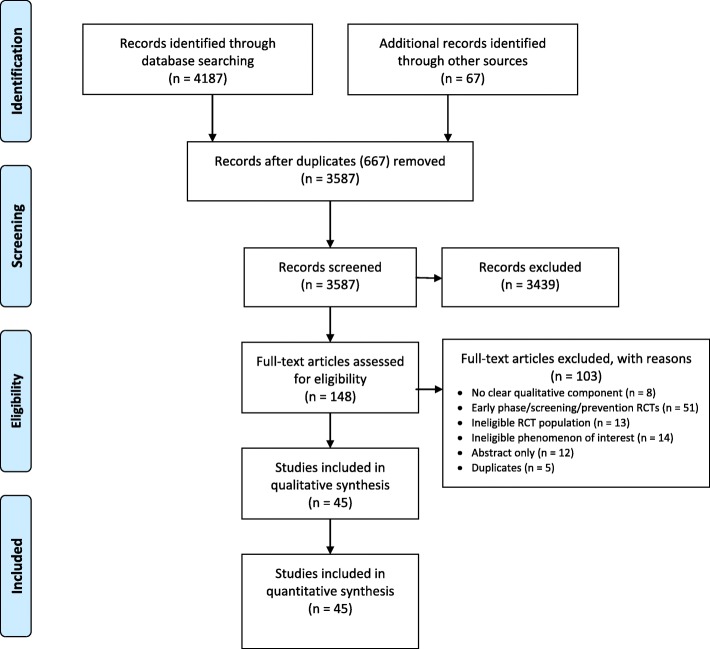
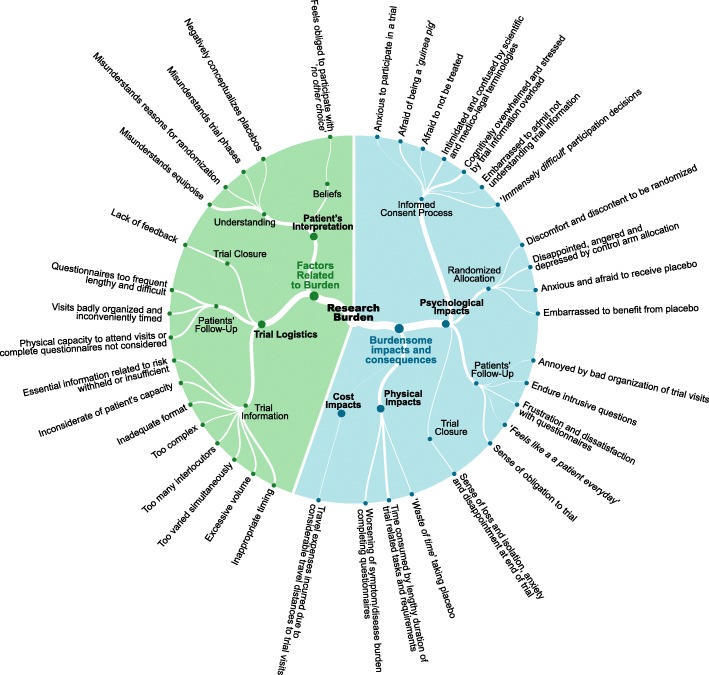
BACKGROUND: Participation in randomized controlled trials (RCTs) may be quite demanding and could represent an important burden for patients. We aimed to explore this research burden (i.e., the psychological, physical, and financial burdens) experienced by patients through their participation in a RCT. METHODS: We conducted a systematic review of qualitative studies exploring adult patients' experiences with RCT participation. We searched MEDLINE (PubMed), CINAHL, PSYCHINFO, and Embase (search date March 2018) for eligible reports. Qualitative data coding and indexing were assisted by NVivo. The quality of reports was assessed by using the Critical Appraisal Skills Program (CASP) tool. RESULTS: We included 45 qualitative studies that involved 1732 RCT participants. Important psychological burdens were identified at every stage of the trial process. Participants reported feeling anxiety and being afraid of "being a 'guinea pig'" and described undergoing randomization and allocation to a placebo as particularly difficult resulting in disappointment, anger, and depression. Patients' follow-up and trial closure were also responsible for a wide range of psychological, physical, and financial burdens. Furthermore, factors related to burdensome impacts and consequences were discerned. These factors involved trial information, poorly organized and too-demanding follow-up, and lack of appropriate management when the patient's participation ended. Trial participation was also associated with beneficial effects such as the satisfaction of feeling "useful," gaining "a sense of control," and receiving special attention. CONCLUSIONS: Our finding provides a detailed description of research burden across the whole RCT process. Many of the burdens described could be anticipated, and some avoided in a movement toward minimally disruptive clinical research. Such an approach could improve trial recruitment and retention. REVIEW REGISTRATION: PROSPERO CRD42018098994.
Overview
The claims and statistics of this paper haven’t been checked yet.
Run the check — free, no account needed. It reads the open-access text and checks the sources it cites.
Integrity signals
Registry
Cites
Statistics
Figures
Verification
Claims the paper makes
The claims and statistics of this paper haven’t been checked yet.
Run the check — free, no account needed. It reads the open-access text and checks the sources it cites.
Claims other papers make about this one
Each is checked against this paper’s own text: does it say what the citing paper says it does?
The source backs part of the claim, not all of it — or backs it for a different population, condition or comparison.
In the citing paper
“The feasibility of participant recruitment and retention in RCTs can differ from that in one-group pretest-posttest design studies due to additional psychological burdens in participants that arise from the RCT process, such as a lack of control and anxiety that result from random allocation and disappointment when allocated to a less favorable control group condition”
From The feasibility and preliminary effects of a pilot randomized controlled trial: Videoconferencing acceptance and commitment therapy in distressed family caregivers of people with dementia. (2023) · cites this paper as Naidoo et al., 2020
Experimental — accuracy not yet measured
Self-check
Percentages, sums and reported differences re-computed from the paper’s own numbers.
The self-check needs the paper’s full text.
Citations
Cites
Preferred Reporting Items for Systematic Reviews and Meta-Analyses: the PRISMA statement
Moher, D., Liberati, A., Tetzlaff, J., Altman, D. G., & for the PRISMA Group (2009) · BMJ · doi:10.1136/bmj.b2535 · Cited by 83,823
Preferred Reporting Items for Systematic Reviews and Meta-Analyses: The PRISMA Statement
Moher, D., Liberati, A., Tetzlaff, J., Altman, D. G., & The PRISMA Group (2009) · PLoS Medicine · doi:10.1371/journal.pmed.1000097 · Cited by 64,042 · cited 1×
“To ensure transparency, we adhered to the reporting guidelines set out by PRISMA [10] and ENTREQ (Additional file 1) [11].”
Preferred reporting items for systematic reviews and meta-analyses: the PRISMA Statement.
(2009) · PubMed Central · Cited by 44,859
Methods for the thematic synthesis of qualitative research in systematic reviews
Thomas, J., & Harden, A. (2008) · BMC Medical Research Methodology · doi:10.1186/1471-2288-8-45 · Cited by 9,312
Enhancing transparency in reporting the synthesis of qualitative research: ENTREQ
Tong, A., Flemming, K., McInnes, E., Oliver, S., & Craig, J. (2012) · BMC Medical Research Methodology · doi:10.1186/1471-2288-12-181 · Cited by 3,569
Qualitative Research: Rigour and qualitative research
Mays, N., & Pope, C. (1995) · BMJ · doi:10.1136/bmj.311.6997.109 · Cited by 2,715
Methley, A. M., Campbell, S., Chew-Graham, C., McNally, R., & Cheraghi-Sohi, S. (2014) · BMC Health Services Research · doi:10.1186/s12913-014-0579-0 · Cited by 2,706
External validity of randomised controlled trials: “To whom do the results of this trial apply?”
Rothwell, P. M. (2005) · The Lancet · doi:10.1016/s0140-6736(04)17670-8 · Cited by 2,544
Chlebowski, R. T., Hendrix, S. L., Langer, R. D., Stefanick, M. L., Gass, M. L. S., Lane, D. S., Rodabough, R. J., Gilligan, M. A., Cyr, M. G., Thomson, C. A., et al. (2003) · JAMA · doi:10.1001/jama.289.24.3243 · Cited by 1,871
Patient engagement in research: a systematic review
Domecq, J. P., Prutsky, G., Elraiyah, T., Wang, Z., Nabhan, M., Shippee, N., Brito, J. P., Boehmer, K., Hasan, R., Firwana, B., et al. (2014) · BMC Health Services Research · doi:10.1186/1472-6963-14-89 · Cited by 1,773
Research works printed but not linked: 2
- Booth A: Chapter 3: searching for studies. In: Supplementary guidance for inclusion of qualitative research in Cochrane systematic reviews of interventions. Edited by Noyes J BA, Hannes K, Harden A, Harris J, Lewin S, Lockwood C, vol. version 1 (updated August 2011): Cochrane Collaboration Qualitative Methods Group, 2011; 2011.
- Lingler JH, Schmidt KL, Gentry AL, Hu L, Terhorst LA. A new measure of research participant burden: brief report. J Empir Res Hum Res Ethics. 2014;9(4):46–9. · DOI
Cited by
Sorted by citations
Qualitative Evidence Synthesis: Where Are We at?
Flemming, K., & Noyes, J. (2021) · International Journal of Qualitative Methods · doi:10.1177/1609406921993276 · Cited by 369
“Exploring patient expectations and experiences of remote monitoring for chronic diseases (Walker et al., 2019) Examining the research burden of randomized controlled trial participation (Naidoo et al., 2020).”
BackgroundTremblay, S. M., Castiglione, S. A., Audet, L., Desmarais, M., Horace, M., & Peláez, S. (2021) · International Journal of Qualitative Methods · doi:10.1177/16094069211009679 · Cited by 221
“The exploration of research burden in quantitative research was undertaken in a recent systematic review of qualitative studies in participants of randomized controlled trials (Naidoo et al., 2020).”
MethodEvidence from ClinicalTrials.gov on the growth of Digital Health Technologies in neurology trials
Masanneck, L., Gieseler, P., Gordon, W. J., Meuth, S. G., & Stern, A. D. (2023) · npj Digital Medicine · doi:10.1038/s41746-023-00767-1 · Cited by 94
Under-Enrollment of Women in Stroke Clinical Trials
Carcel, C., & Reeves, M. J. (2021) · Stroke · doi:10.1161/strokeaha.120.033227 · Cited by 83
Parental Views of Facilitators and Barriers to Research Participation: Systematic Review
Nathe, J. M., Oskoui, T., & Weiss, E. M. (2022) · PEDIATRICS · doi:10.1542/peds.2022-058067 · Cited by 75
Garrity, K., Guerra, K. K., Hart, H., Al-Muhanna, K., Kunkler, E. C., Braun, A. C., Poppe, K. I., Johnson, K., Lazor, E., Liu, Y., et al. (2024) · Advances in Nutrition · doi:10.1016/j.advnut.2023.100156 · Cited by 87
Ismailov, M., Chiu, T. K. F., Dearden, J., Yamamoto, Y., & Djalilova, N. (2021) · Sustainability · doi:10.3390/su132212642 · Cited by 79
COllaborative open platform E-cohorts for research acceleration in trials and epidemiology
Tran, V.-T., & Ravaud, P. (2020) · Journal of Clinical Epidemiology · doi:10.1016/j.jclinepi.2020.04.021 · Cited by 51
Self-citationHoenemeyer, T. W., Cole, W. W., Oster, R. A., Pekmezi, D., Pye, A., & Demark‐Wahnefried, W. (2022) · Cancers · doi:10.3390/cancers14041075 · Cited by 41
Hall, C. L., Sanderson, C., Brown, B. J., Andrén, P., Bennett, S. D., Chamberlain, L. R., Davies, E. B., Khan, K., Kouzoupi, N., Mataix‐Cols, D., et al. (2020) · Trials · doi:10.1186/s13063-020-04902-1 · Cited by 36
Han, A., Yuen, H. K., & Jenkins, J. (2023) · Journal of Health Psychology · doi:10.1177/13591053221141131 · Cited by 30
“…pretestposttest design studies due to additional psychological burdens in participants that arise from the RCT process, such as a lack of control and anxiety that result from random allocation and disappointment when allocated to a less favorable control group condition (Naidoo et al., 2020).”
BackgroundAguayo, G., Goetzinger, C., Scibilia, R., Fischer, A., Seuring, T., Tran, V.-T., Ravaud, P., Bereczky, T., Huiart, L., & Fagherazzi, G. (2021) · Journal of Medical Internet Research · doi:10.2196/25743 · Cited by 32
“Nevertheless, when done properly, patients can associate their participation with feelings such as usefulness, empowerment, and consideration [150].”
Self-citationShankar, M., Hazfiarini, A., Zahroh, R. I., Vogel, J. P., McDougall, A. R. A., Condron, P., Goudar, S. S., Pujar, Y. V., Somannavar, M. S., Charantimath, U., et al. (2024) · PLoS Medicine · doi:10.1371/journal.pmed.1004405 · Cited by 32
van der Hout, A., van Uden-Kraan, C. F., Holtmaat, K., Jansen, F., Lissenberg-Witte, B. I., Nieuwenhuijzen, G. A. P., Hardillo, J. A., Baatenburg de Jong, R. J., Tiren-Verbeet, N. L., Sommeijer, D. W., et al. (2021) · Internet Interventions · doi:10.1016/j.invent.2021.100429 · Cited by 29
Ferrar, J., Griffith, G. J., Skirrow, C., Cashdollar, N. M., Taptiklis, N., Dobson, J., Cree, F., Cormack, F. K., Barnett, J. H., & Munafo, M. R. (2021) · Journal of Medical Internet Research · doi:10.2196/26004 · Cited by 23
“Individuals with the lowest levels of functioning may be the least likely to participate in, or the first to drop out from, clinical trials because participation might be too burdensome [63].”
BackgroundTrial Participation in Neurodegenerative Diseases: Barriers and Facilitators
Weemering, D. N., Beelen, A., Kliest, T., van Leeuwen, L. A. G., van den Berg, L. H., & van Eijk, R. P. A. (2024) · Neurology · doi:10.1212/wnl.0000000000209503 · Cited by 23
Which Benefits Can Justify Risks in Research?
van Rijssel, T. I., van Thiel, G. J. M. W., Gardarsdóttir, H., van Delden, J. J. M., & on behalf of the Trials@Home consortium (2024) · The American Journal of Bioethics · doi:10.1080/15265161.2023.2296404 · Cited by 22
“By increasing visits to the hospital, participation in a clinical trial adds substantially to the time-and travel burdens and expenses of patients (Naidoo et al. 2020).”
Stone, B., Sambo, J. A. M., Sawadogo‐Lewis, T., & Roberton, T. (2020) · BMC Health Services Research · doi:10.1186/s12913-020-05807-0 · Cited by 20
Pilot Trial Characteristics, Postpilot Design Modifications, and Feasibility of Full-Scale Trials
Ying, X., & Ehrhardt, S. (2023) · JAMA Network Open · doi:10.1001/jamanetworkopen.2023.33642 · Cited by 24
Madruga‐Garrido, M., Vazquez-Costa, J. F., Medina-Cantillo, J., Brañas, M., Cattinari, M. G., de Lemus, M., Díaz-Abós, P., Sánchez-Menéndez, V., Terrancle, Á., Rebollo, P., et al. (2021) · Neurology and Therapy · doi:10.1007/s40120-020-00229-w · Cited by 19
“effort required by the respondent, the amount of stress, and the length and frequency of scales and questionnaires [23].”
BackgroundImplementation of digital health technology in clinical trials: the 6R framework
Duran, C., Bonam, M., Björk, E., Hughes, R., Ghiorghiu, S., Massacesi, C., Campbell, A., Hutchison, E. R., Pangalos, M. N., & Galbraith, S. M. (2023) · Nature Medicine · doi:10.1038/s41591-023-02489-z · Cited by 19
Chi, P. C., Owino, E. A., Jao, I., Olewe, F. O., Ogutu, B. R., Bejon, P., Kapulu, M. C., Kamuya, D., Marsh, V., CHMI-SIKA Study Team, et al. (2021) · Trials · doi:10.1186/s13063-021-05455-7 · Cited by 19
“The diverse nature of burdens and benefits has also been shown for different forms of research; a systematic review of qualitative studies around randomised clinical trials (largely in high resource settings) highlighted the existence of physical, psychological and cost-related burdens, including psychological burdens…”
BackgroundKnowlson, C. N., Dean, A., Doherty, L., Fairhurst, C. M., Brealey, S., & Torgerson, D. J. (2021) · Contemporary Clinical Trials · doi:10.1016/j.cct.2021.106665 · Cited by 18
Meskell, P., Biesty, L., Dowling, M., Roche, K. F., Meehan, E., Glenton, C., Devane, D., Shepperd, S., Booth, A., Cox, R. J., et al. (2023) · Cochrane Database of Systematic Reviews · doi:10.1002/14651858.mr000065.pub2 · Cited by 17
Nguyen, V. T., Ravaud, P., Tran, V. T., Young, B., & Boutron, I. (2022) · Journal of Medical Internet Research · doi:10.2196/29691 · Cited by 17
“Evidence shows that participating in RCTs can be burdensome for patients, particularly due to the ways informed consent is managed, follow-up visits organized, and trial results communicated [5,6].”
BackgroundSelf-citationClinical Trial Participation: A Pilot Study of Patient-Identified Barriers
McKinney, M., Bell, R., Samborski, C., Attwood, K., Dean, G., Eakle, K., & Edge, S. (2021) · Clinical journal of oncology nursing · doi:10.1188/21.cjon.647-654 · Cited by 17
“This has been examined extensively in the literature (Manne et al., 2015; Mills et al., 2006; Naidoo et al., 2020; Nielsen & Berthelsen, 2019; Sedrak et al., 2021).”
Designing clinically useful psychopharmacological trials: challenges and ways forward
Chevance, A., Ravaud, P., Cornelius, V. R., Mayo‐Wilson, E., & Furukawa, T. A. (2022) · The Lancet Psychiatry · doi:10.1016/s2215-0366(22)00041-4 · Cited by 18
Self-citationRønsbo, T. N., Laigaard, J., Pedersen, C., Mathiesen, O., & Karlsen, A. P. H. (2021) · Trials · doi:10.1186/s13063-021-05233-5 · Cited by 16
“The authors concluded that these burdens could be anticipated by conducting minimally disruptive clinical research, which in terms could improve trial recruitment and retention [23].”
BackgroundBaker, F. A., Blauth, L., Bloska, J., Bukowska, A. A., Flynn, L. M., Hsu, M., Janus, E., Johansson, K., Odell‐Miller, H., Miller, H., et al. (2023) · Contemporary Clinical Trials Communications · doi:10.1016/j.conctc.2023.101079 · Cited by 17
“Increased participant burden is a factor influencing the decision whether to participate in research [4].”
BackgroundNew horizons in evidence-based care for older people: individual participant data meta-analysis
Clegg, A. P., Bandeen‐Roche, K., Farrin, A. J., Förster, A., Gill, T. M., Gladman, J. R. F., Kerse, N. M., Lindley, R. I., McManus, R. J., Melis, R. J. F., et al. (2022) · Age and Ageing · doi:10.1093/ageing/afac090 · Cited by 20
“Given the relative paucity of empirical evidence [33], future work should evaluate potential data collection burden while attempting to develop CDEs and COMs.”
Time Burdens for Participants With Advanced Cancer in Phase I Trials: A Cross-Sectional Study
Iskander, R., Robart, A. M., Moyer, H., Nipp, R. D., Gupta, A., & Kimmelman, J. (2024) · JCO Oncology Practice · doi:10.1200/op.24.00334 · Cited by 14
French Public Familiarity and Attitudes toward Clinical Research during the COVID-19 Pandemic
Schultz, É., Ward, J. K., Atlani-Duault, L., Holmes, S. M., & Mancini, J. (2021) · International Journal of Environmental Research and Public Health · doi:10.3390/ijerph18052611 · Cited by 14
Understanding the Termination of Urologic Cancer Clinical Trials: Insights and Challenges
Alhajahjeh, A. A., Hmeidan, M., Elatrsh, M., Al-Abbadi, F., Kakish, D. R. K., Sukerji, R., Salah, M., Awamlh, B. A. H. A., Lee, D. I., & Shahait, M. (2024) · JCO Global Oncology · doi:10.1200/go.23.00349 · Cited by 11
Knapp, P., Bower, P., Lidster, A., O'Hare, H., Sol, L. F., Golder, S., Keyworth, C., Parker, A., & Sheridan, R. (2025) · Trials · doi:10.1186/s13063-025-08850-6 · Cited by 16
“%) included only qualitative studies [32, 41, 50, 52, 56, 69, 72–74, 77, 89], three (4.3”
InfluentialMacDonald, S., Trubey, R., Noyes, J., Vinnicombe, S., Morgan, H. E., Willis, S., Boffey, M., Meléndez‐Torres, G. J., Robling, M. R., Wooders, C., et al. (2023) · Children and Youth Services Review · doi:10.1016/j.childyouth.2023.107266 · Cited by 14
“Supporting carers, other participants and other stakeholders to manage these burdens, including different burdens experienced across the intervention process, is a future priority given its implications for intervention recruitment and retention (Lingler et al., 2014; Naidoo et al., 2020).”
BackgroundRegret and Therapeutic Decisions in Multiple Sclerosis Care: Literature Review and Research Protocol
Saposnik, G., Bueno-Gil, G., Sempere, Á. P., Antigüedad, A. R., del Río, B., Baz, M., Terzaghi, M., Ballesteros, J., & Mauriño, J. (2021) · Frontiers in Neurology · doi:10.3389/fneur.2021.675520 · Cited by 13
“Finally, we acknowledge that increased response burden may be associated with lower response rates (57, 58).”
BackgroundBurden of cancer trial participation: A qualitative sub-study of the INTERIM feasibility RCT
Nwolise, C. H., Corrie, P. G., Fitzpatrick, R. M., Gupta, A., Jenkinson, C., Middleton, M. R., & Matin, R. (2021) · Chronic Illness · doi:10.1177/17423953211060253 · Cited by 12
“Participants also identified positive reinforcement and feedback in research studies as enabling factors, in line with the literature.(12) These findings underscore the need to encourage patients to acknowledge their burdens and communicate what could be done to better support them.”
BackgroundResultInfluentialElfeky, A., Treweek, S. P., Hannes, K., Bruhn, H., Fraser, C. M., & Gillies, K. (2022) · BMJ Open · doi:10.1136/bmjopen-2021-055521 · Cited by 17
“15 Likewise, a recent thematic synthesis of 45 qualitative studies 16 exploring adult patients’ experiences with RCT participation identified the diverse psychological, physical and financial burdens experienced by patients across the whole process of the trial.”
Freund, O., Meoded, O., Arnaout, T., Regev, I. F., Kupershmidt, A., Enghelberg, S., Cohn‐Schwartz, D., Levy, L., & Bar‐Shai, A. (2025) · International Journal of COPD · doi:10.2147/copd.s525781 · Cited by 11
“18 Considering the above, although an RCT provides the highest level of evidence, its generalizability to real-life may be limited, hence requiring further real-world evidence.”
van Lieshout, E. C., Jacobs, L. D., Pelsma, M., Dijkhuizen, R. M., & Visser‐Meily, J. M. A. (2020) · BMC Neurology · doi:10.1186/s12883-020-01936-5 · Cited by 11
Hanlon, P., Butterly, E. W., Shah, A. S. V., Hannigan, L. J., Wild, S. H., Guthrie, B., Mair, F. S., Dias, S., Welton, N. J., & McAllister, D. (2022) · BMC Medicine · doi:10.1186/s12916-022-02594-9 · Cited by 10
“Although not always an explicit exclusion criterion, investigators also routinely exclude people who have concerns over an individual’s ability to manage the burdens of trial participation [2], in order to minimise loss to follow-up [3].”
BackgroundFurness, K., Huggins, C. E., Truby, H., Croagh, D. G., & Haines, T. P. (2020) · JMIR Formative Research · doi:10.2196/23979 · Cited by 11
“These psychological and emotional effects on participants at the conclusion of trials have been reported in a number of other qualitative articles examining postintervention transition to usual care, with participants reporting a sense of loss, disappointment, anxiety, and isolation [32,33].”
BackgroundAssessment of inverse publication bias in safety outcomes: an empirical analysis
Xing, X., Zhu, J., Shi, L., Xu, C., & Lin, L. (2024) · BMC Medicine · doi:10.1186/s12916-024-03707-2 · Cited by 9
Jones, K., Naisby, J., Baker, K., & Tew, G. A. (2023) · Crohn s & Colitis 360 · doi:10.1093/crocol/otad019 · Cited by 11
“38,39 Personal benefit was also influential, with some individuals hoping it would further their knowledge of the condition and exercise and would lead to alternative treatment options.”
BackgroundRacial and Ethnic Diversity in Studies Funded Under the Best Pharmaceuticals for Children Act
Abdel‐Rahman, S. M., Paul, I. M., Hornik, C. D., Sullivan, J. E., Wade, K. C., Delmore, P., Sharma, G., Benjamin, D. K., & Zimmerman, K. O. (2021) · PEDIATRICS · doi:10.1542/peds.2020-042903 · Cited by 9
Stinissen, L., Bouma, S., Böhm, J., van Tienen, J., Fischer, H., Hughes, Z., Lennox, A., Ward, E. D., Wood, M., Foley, A. R., et al. (2023) · Neuromuscular Disorders · doi:10.1016/j.nmd.2023.12.014 · Cited by 8
Disseminating clinical study results to trial participants in Ethiopia: insights and lessons learned
Degaga, T. S., Weston, S., Tego, T. T., Tadesse, D., Assefa, A., Wayessa, A., Price, R. N., Hailu, A., & Thriemer, K. (2020) · Malaria Journal · doi:10.1186/s12936-020-03279-5 · Cited by 8
Lawson, L. M., Foster, L. H., Hamner, K., & Wright, L. (2022) · Occupational Therapy International · doi:10.1155/2022/3540271 · Cited by 11
“autistic children thrive on routine, parent stress may have been impacted by change in routine to introduce the sensory garments [10, 13] or the potential burden of research participation [42].”
BackgroundPaulissen, J. M. J., Zegers, C. M. L., Nijsten, I. R., Reiters, P. H. C. M., Houben, R. M. A., Eekers, D. B. P., & Roelofs, E. (2022) · Technical Innovations & Patient Support in Radiation Oncology · doi:10.1016/j.tipsro.2022.10.005 · Cited by 9
“This can cause a significant burden with a typical dropout rate of 25 % for clinical cancer trials (CCTs) [7 – 9].”
BackgroundImplementing Decentralized Clinical Trials in Australia through Teletrials: Where to From Here?
Symons, T. J., Woollett, A., Zalcberg, J. R., & Eckstein, L. (2024) · Therapeutic Innovation & Regulatory Science · doi:10.1007/s43441-024-00658-x · Cited by 7
“Trial-related travel is perceived by many participants as inconvenient and burdensome [1, 2].”
Jörger, P., Nigg, C., Mader, L., Strebel, S., Kompis, M., Tomášiková, Z., Schindera, C., Michel, G., von der Weid, N., Ansari, M., et al. (2025) · JMIR Research Protocols · doi:10.2196/63627 · Cited by 7
Czwikla, J., Herzberg, A., Kapp, S., Kloep, S., Rothgang, H., Nitschke, I., Haffner, C., & Hoffmann, F. (2022) · Trials · doi:10.1186/s13063-022-06470-y · Cited by 6
Informed Consent Documents from Psychedelic Clinical Trials: A Descriptive Ethical Analysis
Cheung, K., Propes, C., Graziosi, M., Patch, K., & Yaden, D. B. (2025) · AJOB Empirical Bioethics · doi:10.1080/23294515.2025.2526339 · Cited by 6
“These challenges are part of a broader conversation about the burdens that trial participation places on individuals (e.g., financial, psychological, and physical) and measures that can be used to alleviate them 3 (Naidoo et al. 2020).”
Watson, J. M., Coleman, E., Jackson, C., Bell, K. J., Maynard, C., Hickson, L. M. H., Förster, A., Fairhurst, C. M., Hewitt, C. E., Gardner, R., et al. (2021) · BMJ Open · doi:10.1136/bmjopen-2020-043364 · Cited by 6
Facilitated transition in HIV drug trial closure: A conceptual model for HIV post-trial care
Nalubega, S., Cox, K., Mugerwa, H., & Evans, C. (2021) · PLoS ONE · doi:10.1371/journal.pone.0250698 · Cited by 6
Insights from UKCTOCS for design, conduct and analyses of large randomised controlled trials
Menon, U., Gentry‐Maharaj, A., Burnell, M., Apostolidou, S., Ryan, A., Kalsi, J., Singh, N., Fallowfield, L. J., McGuire, A. J., Campbell, S. C., et al. (2023) · Health Technology Assessment · doi:10.3310/cldc7214 · Cited by 5
The Human Cost: Patient Contribution to Clinical Trials in Neurology
Reoma, L. B., & Karp, B. I. (2022) · Neurotherapeutics · doi:10.1007/s13311-022-01292-x · Cited by 5
“Numbers alone are not indicative of patient burden for those joining clinical trials, including the “psychological, physical and financial burdens” due to research participation [14].”
BackgroundDibley, L. B., Hart, A. L., Duncan*, J., Knowles, C. H., Kerry, S., Lanz, D., Berdunov, V., Madurasinghe, V., Wade, T., Terry, H., et al. (2023) · Journal of Wound Ostomy and Continence Nursing · doi:10.1097/won.0000000000000979 · Cited by 5
Kushnir, I., Clemons, M. J., Fergusson, D. A., Bossé, D., & Reaume, M. N. (2022) · Journal of Evaluation in Clinical Practice · doi:10.1111/jep.13669 · Cited by 4
“Unfortunately, in addition to missing any potential benefit of the investigational treatment arm, patients randomized to the placebo arm often suffer inconveniences of being on placebo including travel expenses, multiple appointments, work absence and loss of income and venipuncture.(5,6) An open‐label nonintervention…”
BackgroundPluess-Hall, H., Smith, P. C., & Menzies, J. C. (2024) · Clinical Trials · doi:10.1177/17407745241296864 · Cited by 4
“These practical issues contribute to the burden experienced when participating in clinical research 26 and are more challenging at short notice.”
A Just Genomics Needs an ELSI of Translation
Halley, M. C., Olson, N. W., Ashley, E. A., Goldenberg, A. J., & Tabor, H. K. (2024) · The Hastings Center Report · doi:10.1002/hast.4938 · Cited by 4
Vorderstrasse, A. A., Reagan, L., Melkus, G. D., Nowlin, S. Y., Birdsall, S. B., Burd, A., Cho, Y. H., Jang, M., & Johnson, C. (2021) · Contemporary Clinical Trials · doi:10.1016/j.cct.2021.106399 · Cited by 4
Knowlson, C. N., Tharmanathan, P., Arundel, C., James, S., Flett, L., Gascoyne, S., Welch, C., Warwick, D. J., & Dias, J. J. (2022) · Research Methods in Medicine & Health Sciences · doi:10.1177/26320843221128296 · Cited by 4
“Additionally this benefits the patients by minimising the time and financial burden of attending hospital appointments, which could improve recruitment and retention.(33) When the first nationwide lockdown was announced in 2020, the initial changes to data collection by post or telephone were straightforward for the D…”
Seery, C., Rushiti, F., Krasniqi, S. P., Çarkaxhiu, S. I., Xhemaili, V. D., Limani, D. A., Prapashtica, Q., Turjaka, V., Zekaj, N., Salihu, M., et al. (2024) · Clinical Psychology & Psychotherapy · doi:10.1002/cpp.3039 · Cited by 3
Massey, H. C., Denton, H., Burlingham, A., Violato, M., Bibby-Jones, A.-M., Cunningham, R., Ciccognani, S., Robertson, S., Jhans, A., Pollard, J., et al. (2025) · Mental health and physical activity · doi:10.1016/j.mhpa.2025.100723 · Cited by 3
Tian, Y., Lu, H., Zhou, W., Doi, S. A. R., Furuya‐Kanamori, L., Lin, L., Loke, Y. K., Vohra, S., Xu, C., & Xu, Z. (2025) · Journal of Clinical Epidemiology · doi:10.1016/j.jclinepi.2025.111813 · Cited by 3
Challenges in Cardiomyopathy Gene Therapy Clinical Trial Design
Satish, T., Hong, K. N., Kaski, J. P., & Greenberg, B. H. (2024) · JACC Heart Failure · doi:10.1016/j.jchf.2024.08.024 · Cited by 3
Lucas, P., Boyd, S. C., Milloy, M., & Walsh, Z. (2021) · Journal of Cannabis Research · doi:10.1186/s42238-021-00089-7 · Cited by 3
Garner, J. A., Hanson, K. L., Pitts, S. J., Kolodinsky, J., Sitaker, M., Ammerman, A. S., Kenkel, D., & Seguin‐Fowler, R. A. (2023) · International Journal of Behavioral Nutrition and Physical Activity · doi:10.1186/s12966-023-01481-7 · Cited by 5
“This is especially true given the equity implications of interventions that transfer additional burden onto resource-constrained segments of the population [15, 16].”
BackgroundThe Patient Experience Driver Toolkit: Centering Patients in the Design of New Care Pathways
O’Neill, D., Noortman, R., Burghoorn, A. W., Deckers, E., Wensveen, S. S. A. G., & Birk, M. V. (2025) · International Journal of Human-Computer Interaction · doi:10.1080/10447318.2025.2490400 · Cited by 2
Langerak, A. J., van der Gun, G. J., Meskers, C. G. M., Bussmann, J. B. J., van Wegen, E. E. H., Kwakkel, G., & Selles, R. W. (2025) · Neurorehabilitation and neural repair · doi:10.1177/15459683251369467 · Cited by 2
Xu, C., Doi, S. A. R., Vohra, S., Furuya‐Kanamori, L., Wang, Y., Tang, L., Tian, Y., Fan, S., Peng, Z., Mayo‐Wilson, E., et al. (2026) · BMC Medicine · doi:10.1186/s12916-026-04709-y · Cited by 2
“Randomized controlled trials (RCTs) are used to evaluate medication-related harms [9, 10].”
Planned time burden for patients participating in phase 2 cancer trials
Ouimet, C., Iskander, R., Nipp, R. D., & Kimmelman, J. (2026) · The Oncologist · doi:10.1093/oncolo/oyag096 · Cited by 2
Avilés, N. R., Zapata, J. F., Keuneke, A., Petroff, D., Etz, C. D., & Epstein, D. M. (2022) · Contemporary Clinical Trials Communications · doi:10.1016/j.conctc.2022.100987 · Cited by 2
“For many respondents, it was not simply that they did not fully understand the concepts of a control group or random allocation—they disliked and resisted them [9].”
BackgroundThallner, R., Gumbinger, C., Hohmann, A., Wick, A., Wick, W., & Busetto, L. (2024) · Cancer Management and Research · doi:10.2147/cmar.s447407 · Cited by 2
“15,16 Due to limited therapeutic options, treatment may be considered to take place in an interventional trial.”
BackgroundSeoane, M. C., Jake‐Schoffman, D. E., Mobley, A. R., & McVay, M. A. (2024) · Journal of Immigrant and Minority Health · doi:10.1007/s10903-024-01632-3 · Cited by 2
Thombs, B. D., Adams, C., Nassar, E., Carrier, M., Golberg, M., Bharthi, K., Wurz, A. J., South, A., Kwakkenbos, L., Hoa, S. A.-T., et al. (2025) · Trials · doi:10.1186/s13063-025-08846-2 · Cited by 2
“Many people participate in research, despite burdens involved [1, 2], because of a desire to help others [3], and most participants want to learn results [4–6].”
Fernández, M. J., Velez, M. A., Glenn, B. A., Cummings, A. L., Segarra-Vázquez, B., Gorbatov, S. D., Park, S. J., Shen, C., Lind-Lebuffe, J. P., Unger, J. M., et al. (2025) · The Oncologist · doi:10.1093/oncolo/oyaf313 · Cited by 2
Anticipatory Burden in Adult-Child Caregivers: A Concept Analysis
She, H., & Man, Y. (2022) · Healthcare · doi:10.3390/healthcare10020356 · Cited by 2
Martínez, C., Feliu, A., Torres, N., Nieva, G., Pinet, C., Raich, A., Mondón, S., Barrio, P., Andreu, M., Hernández‐Ribas, R., et al. (2022) · Drug and Alcohol Dependence · doi:10.1016/j.drugalcdep.2022.109390 · Cited by 2
Blomberg, H., Kroll, C., & Tarkiainen, L. (2024) · Journal of European Social Policy · doi:10.1177/09589287241284780 · Cited by 2
“On the one hand, trial participation can have bene fi cial effects such as the satisfaction of feeling ‘ useful ’ for future research and being able to make a ‘ worthwhile ’ contribution (Carey et al., 2001; Naidoo et al., 2020).”
InfluentialRix, J., Docherty, S., Breen, A. C., Sewell, P., & Branney, J. (2021) · Health Expectations · doi:10.1111/hex.13304 · Cited by 2
Neurorehabilitation for upper limb recovery after stroke
van Lieshout, E. C. (2021) · doi:10.33540/420 · Cited by 2
Kluge, L., Holter, H., Bergh, C., & Thurin‐Kjellberg, A. (2023) · Reproductive Female and Child Health · doi:10.1002/rfc2.48 · Cited by 2
Abdel‐Rahman, S. M., Sund, Z. M., Alderman, C., Abella, K., & Kennel, P. (2025) · Therapeutic Innovation & Regulatory Science · doi:10.1007/s43441-025-00760-8 · Cited by 1
“…similarly constructed burden scores and the probability of unfavorable trial outcomes (e.g. screen failure, poor compliance, study withdrawal, lengthy trial durations), all of which can limit the representativeness of a study population and challenge the validity of a study’s findings [2, 18–22].”
McPhee, N., Hughes, D., & Ristevski, E. (2025) · Trials · doi:10.1186/s13063-025-08731-y · Cited by 1
“Consistent with our results, the benefits of clinical trial participation in this study included altruism, satisfaction resulting from feeling “useful”, and the benefit of close monitoring [35].”
Zhang, Y., Rong, J., Wang, X., Schramm, E., Pathiravasan, C. H., Borrelli, B., Faro, J. M., Benjamin, E. J., Trinquart, L., Liu, C., et al. (2025) · Journal of Medical Internet Research · doi:10.2196/73972 · Cited by 3
“A systematic review of RCT participation burden found that more frequent questionnaires increased patient workload, where they compared daily versus weekly assessments [51].”
Nowojewski, A., Wheal, A., Dott, W., Ruscica, D., Ghiorghiu, S., & Valastro, B. (2025) · BMJ Open · doi:10.1136/bmjopen-2024-094596 · Cited by 1
Furman, C. R., & Volz, S. C. (2026) · Applied Psychology Health and Well-Being · doi:10.1111/aphw.70110 · Cited by 1
“Furthermore, their accessibility to the general public may remove barriers associated with clinical interventions or randomized controlled trials (e.g., availability, transportation, trial duration, and restrictive eligibility criteria; Fogel, 2018; Naidoo et al., 2020; Nipp et al., 2019).”
The undue burdens of clinical trial participation: implications for equity, diversity, and inclusion
Law, E., & Chatfield, K. (2026) · Trials · doi:10.1186/s13063-026-09540-7 · Cited by 1
“[18] From their systematic review of 45 qualitative studies exploring adult patients’ experiences with randomised controlled trial (RCT) participation, Naidoo et al. [19] identified such hardships across all phases of the clinical trial.”
Shaping the future of clinical trials through strategic foresight
Lee, S., McIntyre, J., Robertson, T., Kallsen, K., Bauer, M., Berardi, R., Boisvert-Huneault, C., Clerisme-Beaty, E. M., Denton, C. P., Fakra, É., et al. (2026) · Clinical Trials · doi:10.1177/17407745251414680 · Cited by 1
“12 While advances in digitalization and artificial intelligence (AI) offer opportunities for clinical trials through data linkage, decentralization and automated data collection, 13–15 the adoption of technology in clinical trials has typically been slow.”
Faiela, C., Moon, T. D., Sidat, M., & Sevene, E. (2026) · Implementation Science Communications · doi:10.1186/s43058-026-00957-4 · Cited by 1
“An increased participation rate in randomized controlled trials can be achieved when participants perceive that they will receive better care and extra attention [33].”
Disclosing the Possibility of Early Trial Termination to Prospective Clinical Trial Participants
Hutchinson, N., Gelinas, L. C., & Bierer, B. E. (2026) · The American Journal of Bioethics · doi:10.1080/15265161.2026.2675905 · Cited by 1
The DCM Project Portal: A direct-to-participant platform of The DCM Research Project
Jordan, E. S., Grover, P. L., Lin, J., Starkey, C. A., Finley, E., Ni, H., & Hershberger, R. E. (2023) · American Heart Journal Plus Cardiology Research and Practice · doi:10.1016/j.ahjo.2023.100356 · Cited by 1
“S1), and decrease the burden of unnecessary in person visits [24].”
Caring for Patients in an Evidence-Limited World
Ramaswamy, R., & Leipzig, R. M. (2024) · Springer eBooks · doi:10.1007/978-3-030-74720-6_3 · Cited by 1
Kelley, A. T., Incze, M. A., Baumgärtner, M., Campbell, A. N. C., Nunes, E. V., & Scharfstein, D. O. (2024) · Drug and Alcohol Dependence · doi:10.1016/j.drugalcdep.2024.111368 · Cited by 1
Sherratt, F. C., McCarthy, C., Jiménez-Tomàs, A., Perry, J., Kuruvilla, R., Ho, M. W., Fedele, S., Daunt, M., Moorhouse, S., Shaw, R., et al. (2025) · BMJ Open · doi:10.1136/bmjopen-2025-101326 · Cited by 1
Self-citationCaring for Patients in an Evidence-Limited World
Ramaswamy, R., & Leipzig, R. M. (2021) · Springer eBooks · doi:10.1007/978-3-030-01782-8_3-1 · Cited by 1
Gu, J., Dunlop, A. D., Donovan, L., & Chaput, K. H. (2025) · medRxiv · doi:10.1101/2025.11.17.25340428 · Cited by 1
“13,14 In addition, qualitative studies do not allow for the generation of quantitative evidence and are challenging to standardise across research practice, which limit the comparability of findings across different studies.”
Borderline microscopic organism and lockdown impacted across the borders—global shakers
Suleman, S., Farooqui, A., Sharma, P., Malhotra, N., Yadav, N., Narang, J., Hasnain, M. S., & Nayak, A. K. (2021) · Environmental Science and Pollution Research · doi:10.1007/s11356-021-17641-w
Metadata
- Authors
- Naidoo, N., Nguyen, V. T., Ravaud, P., Young, B., Amiel, P., Schanté, D., Clarke, M., & Boutron, I.
- Affiliations
- Inserm (FR)
- University of Liverpool (GB)
- Institut National du Cancer (FR)
- Queen's University Belfast (GB)
- Corresponding author
- Boutron, Isabelle
- ORCID
- Venue
- BMC Medicine
- Published
- 2020-01-20
- Volume
- 18
- Issue
- 1
- Pages
- 6-6
- ISSN
- 1741-7015 (ISSN-L)
- PMC
- PMC6970283
- OpenAlex
- W2999900278
- Cited by
- 144
- References
- 53
- Citations by year
- 2026: 27 · 2025: 22 · 2024: 19 · 2023: 18 · 2022: 22 · 2021: 30 · 2020: 6
- FWCI
- 3.18
- Type
- journal article
- Language
- en
- Open access
- gold
- doi.org
- Locations
- BMC Medicine (publishedVersion, cc-by)
- PubMed Central (publishedVersion, cc-by)
- PubMed (publishedVersion)
- HAL (submittedVersion, cc-by)
- DOAJ (DOAJ: Directory of Open Access Journals) (submittedVersion)
- Columbia Academic Commons (Columbia University)
- Funders
- Institut National Du Cancer
- Topics
- Health Sciences › Medicine › Public Health, Environmental and Occupational Health › Ethics in Clinical Research
- Health Sciences › Health Professions › General Health Professions › Health Policy Implementation Science
- Health Sciences › Health Professions › General Health Professions › Mental Health and Patient Involvement
- Keywords
- research burden, randomized controlled trials, patient experience, psychological burden, physical burden, financial burden, trial follow-up, trial closure, randomization, trial recruitment, trial retention
- MeSH terms
- Humans, Volunteers, Randomized Controlled Trials as Topic, Cost of Illness, Qualitative Research
About these checks
Registry, retraction, Cites and statistics results are computed, not judged, with one exception: a printed reference that no index lists is read once by a model before it counts as a citation error. Claims are extracted by a model and kept only when their quote appears verbatim in the text; each cited source is then checked, with a model’s help, for whether it says what the claim relies on. Those verdicts can be wrong — read the claim’s quote and the cited source before relying on one.
Statistics and arithmetic are recomputed, not judged.
Confidence bands are shown only for fields calibrated on our annotated test set. None is calibrated yet, so no band is shown.
What counts as a claim ›How we measure confidence ›How we check this ›
Are you an author, or do you see a problem with this page? Request a review
